Ultimate Montenegro Travel Guide: Bays, Beaches & Black Mountains

Everything you need to know about travelling Montenegro, from sun-soaked shores and majestic mountain scenery to historic towns and hidden gems.

This post may contain affiliate links, which means we might earn a small commission on anything purchased through these links at no extra cost to you. Learn more on our disclaimer page.
Before visiting, we’d seen snippets of Montenegro on social media. We were aware of the postcard view of the dazzlingly blue Bay of Kotor and the rugged peaks, glacial lakes, and deep canyons of the country’s mountainous interior. We saw social media liken the mountains to a cheaper and quieter version of the Italian Dolomites, and we also heard complaints of cruise ship crowds and mass tourism on the coast. So we went to investigate for ourselves, spending five weeks driving around Montenegro, exploring its national parks, coastal towns, mountain villages, and plenty of places we’d barely seen mentioned online.
We quickly fell in love with just how much there is to explore beyond the better-known destinations, but travelling Montenegro has its challenges. Some remote areas are difficult to reach without a car, information about attractions can be limited, local services can be patchy or outdated, and there’s a big difference between visiting Montenegro in peak summer and exploring during the quieter shoulder seasons.
This guide is the culmination of over 50 travel guides we’ve written about Montenegro. We’ll share everything you need to know about visiting Montenegro, including the best places to visit, things to do, where to stay, when to go, how to get around, and how to plan an itinerary that takes in both the coast and the mountains. We’ll also share our honest experiences and practical tips to help you make the most of your time in Montenegro.
Montenegro at a glance

More from Montenegro
About Montenegro
Montenegro is a small country with a surprisingly long and complicated history, having been shaped by Illyrian, Roman, Byzantine, Venetian, Ottoman, and Slavic influences.
It was internationally recognised as an independent state at the Congress of Berlin in 1878, became a kingdom in 1910, and later formed part of Yugoslavia before entering a state union with Serbia.
Montenegro regained its independence following a referendum in 2006, making it one of Europe’s newest countries.
Montenegro has changed rapidly in recent years, with a huge boom in tourism, ongoing development, and its push towards EU membership bringing noticeable changes to infrastructure, services, and the travel experience.
Tourism is especially important around Kotor and Budva, although some of Montenegro’s national parks and rural regions are also attracting more visitors. Despite its growing popularity, Montenegro still has plenty of quieter areas where traditional villages, family-run businesses, and outdoor activities remain a big part of everyday life. It’s one of the most diverse and beautiful places we’ve travelled to, and what we really liked was how authentic much of the country still feels.
But planning a trip to Montenegro can be surprisingly difficult, especially when so much of the information online is generic, outdated, or simply doesn’t reflect what the country is like today. Read on to find out why we love Montenegro and whether it’s the right destination for you.
Planning a trip to Montenegro?
Montenegro is gaining popularity quickly, so be sure to book in advance as early as possible!
Top Experiences in Montenegro
Top Hotels in Kotor
Rent a Car in Montenegro
Best eSIM for Montenegro
Where is Montenegro?
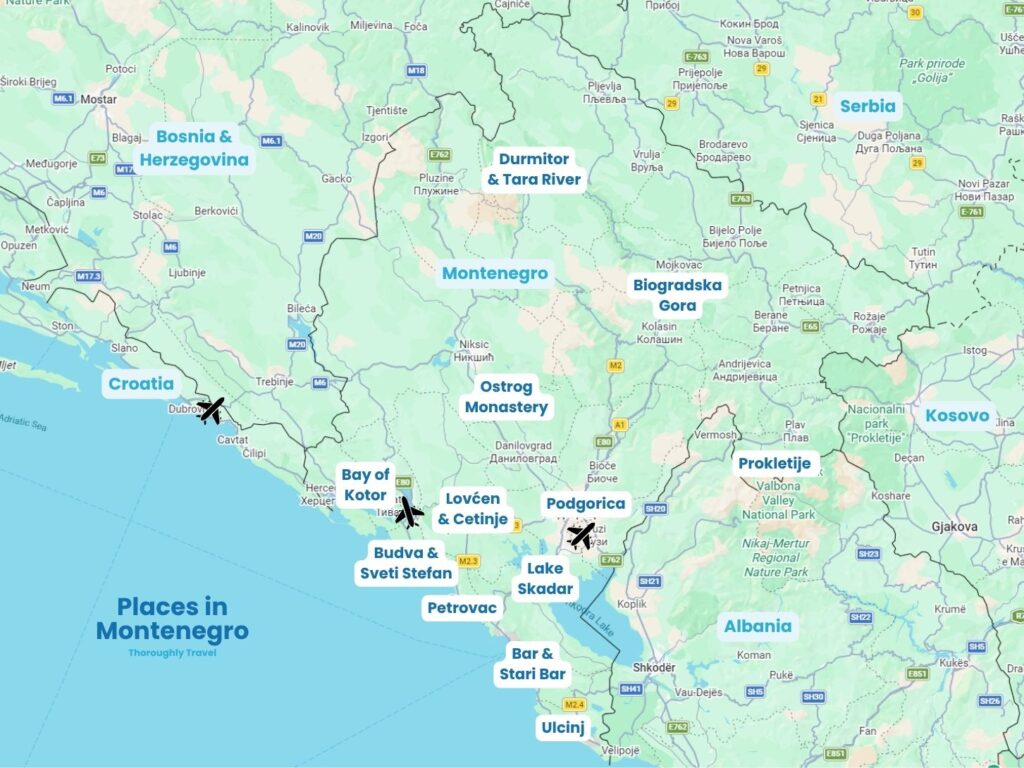
Montenegro lies in southeastern Europe, on the Balkan Peninsula, with a coastline along the Adriatic Sea. It has a long coastline – around 182 miles (approximately 293 km), with the Bay of Kotor forming its largest natural harbour and one of its best-known geographical features. Italy lies directly across the Adriatic, while international road and bus routes connect Montenegro with its Balkan neighbours, Croatia, Bosnia and Herzegovina, Serbia, Kosovo, and Albania.
Montenegro covers just 5,333 square miles (13,812 km²), making it one of Europe’s smallest countries, but it has an incredibly diverse geography, so there’s a lot to explore within a relatively short space.
Montenegro Map
Montenegro borders five other Balkan countries.
Why visit Montenegro?
Montenegro is one of the most diverse places we’ve travelled to. It’s a particularly good destination if you want to combine a coastal holiday with hiking, road trips, and time exploring historic towns. It works well as an alternative vacation destination to busier European countries (we holidayed here with my family), but it’s also well-suited for backpacking and road-tripping (Dan and I originally visited on a Balkans backpacking trip and then spent 5 weeks driving around the country).
It’s also a good option for outdoor enthusiasts, with opportunities for hiking, rafting, canyoning, kayaking, cycling, and SCUBA diving. The reason we visited as a couple was to get out in nature and go hiking. We weren’t super experienced, but Montenegro has such a mix of beginner-friendly and challenging routes that it was the perfect place for us to learn.
Montenegro also has a relatively affordable reputation compared with some neighbouring Adriatic destinations like Croatia, but there are plenty of luxury options if you know where to look and prefer a bit of comfort.
Below, we’ve expanded on all our favourite aspects of Montenegro.
Landscapes and scenery
There are a couple of core reasons to visit Montenegro, but perhaps the main one is its varied scenery, including:
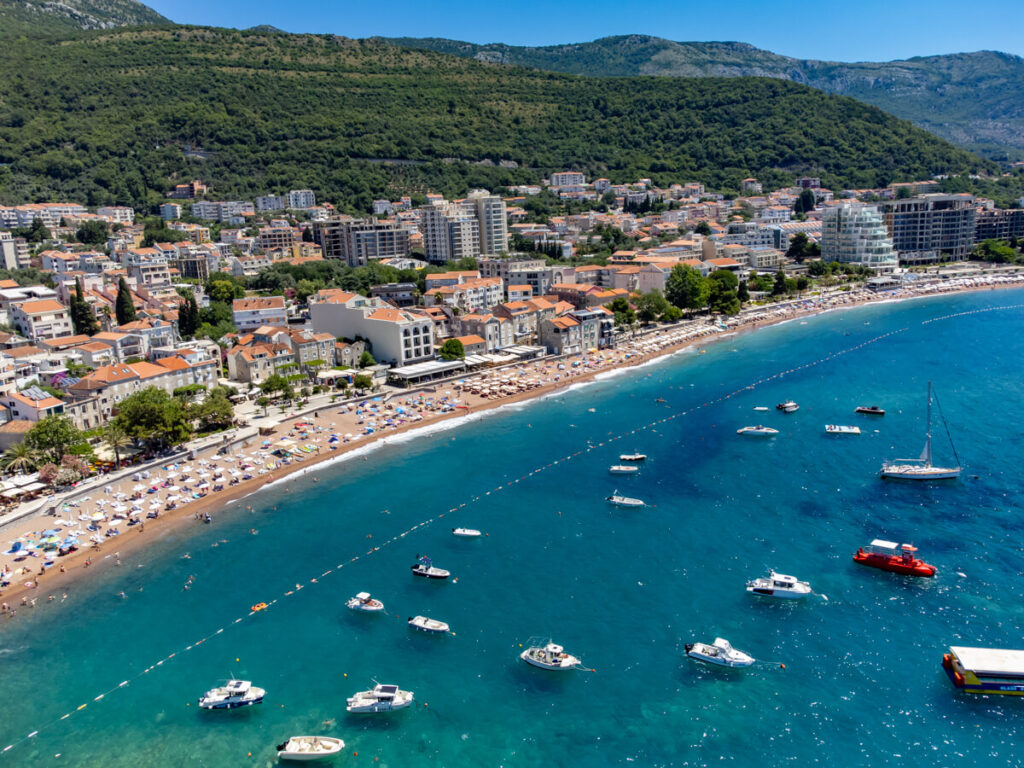
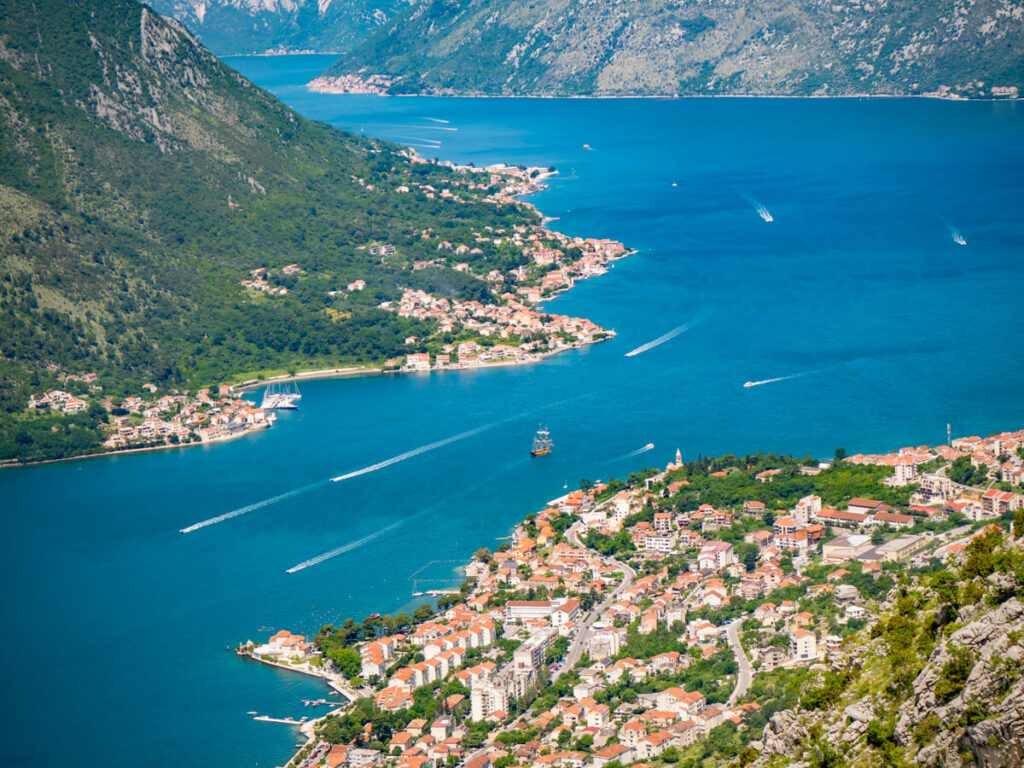
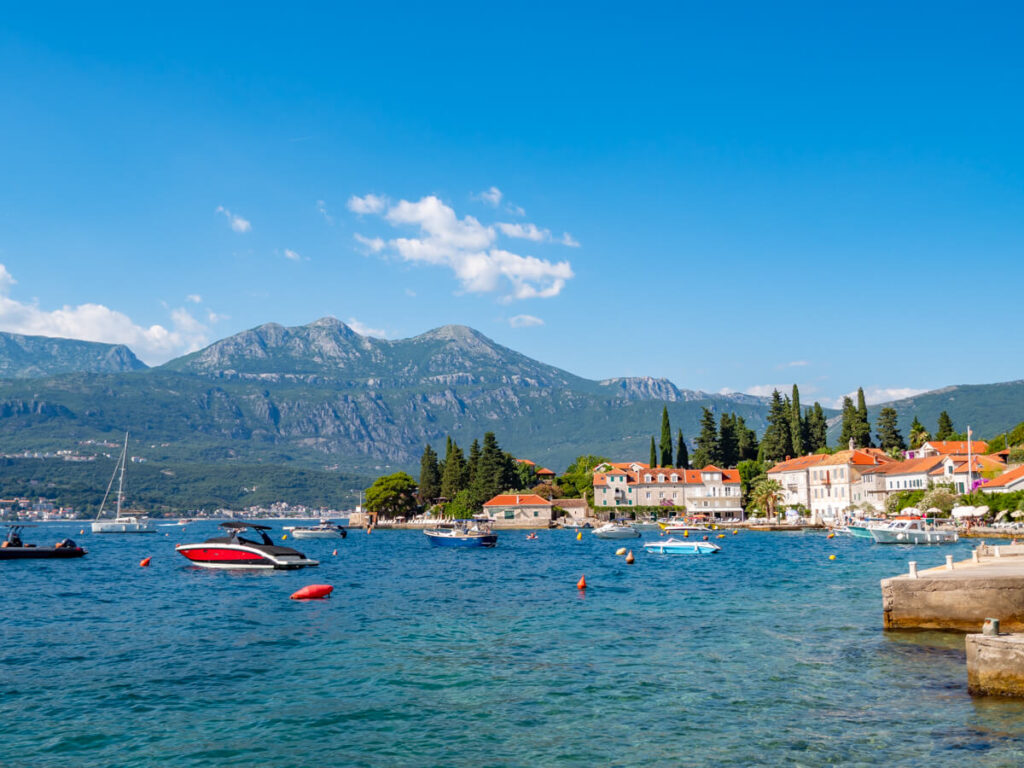
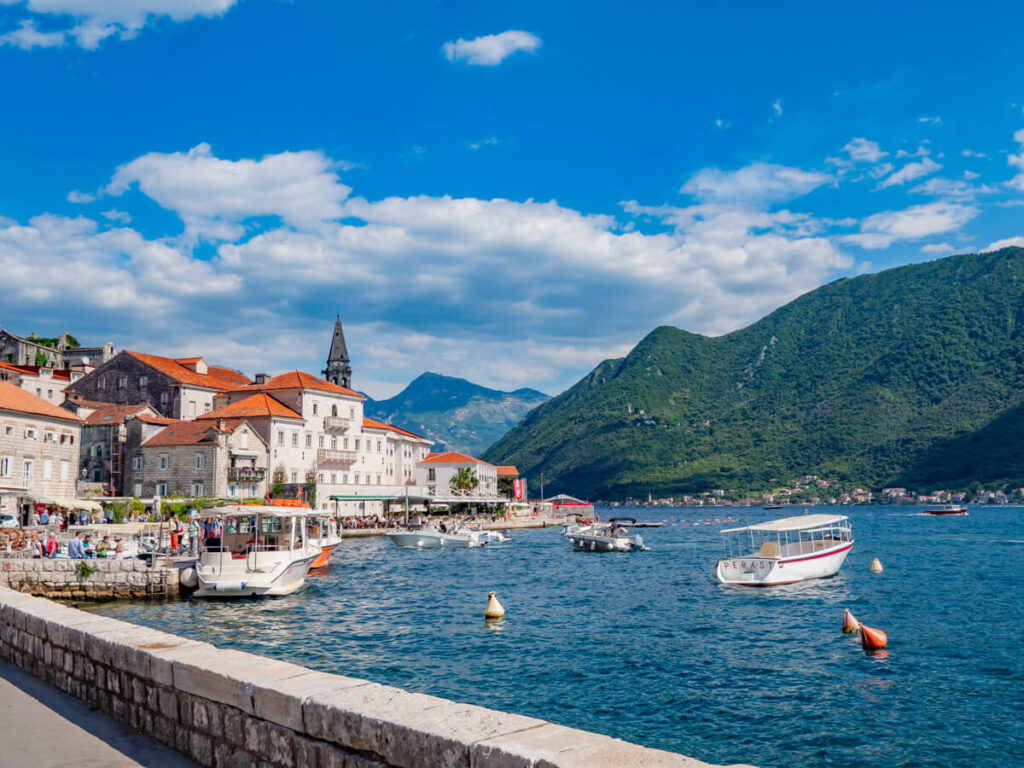
Montenegro’s coastline is characterised by sheltered bays, rocky headlands, beach resorts, small fishing villages, and a mixture of sandy and pebble beaches. The Bay of Kotor is particularly popular for its picture-postcard scenery of lush mountains melting into the deep blue bay, with historic towns like Kotor Old Town, Perast, and Herceg Novi being popular bases, although we also really liked the more rural Luštica Peninsula.
Montenegro gets its name from the iconic Mt. Lovćen, with the term ‘Crna Gora‘, meaning ‘Black Mountain‘, referring to the dark, forested appearance of the mountain when viewed from the coast.
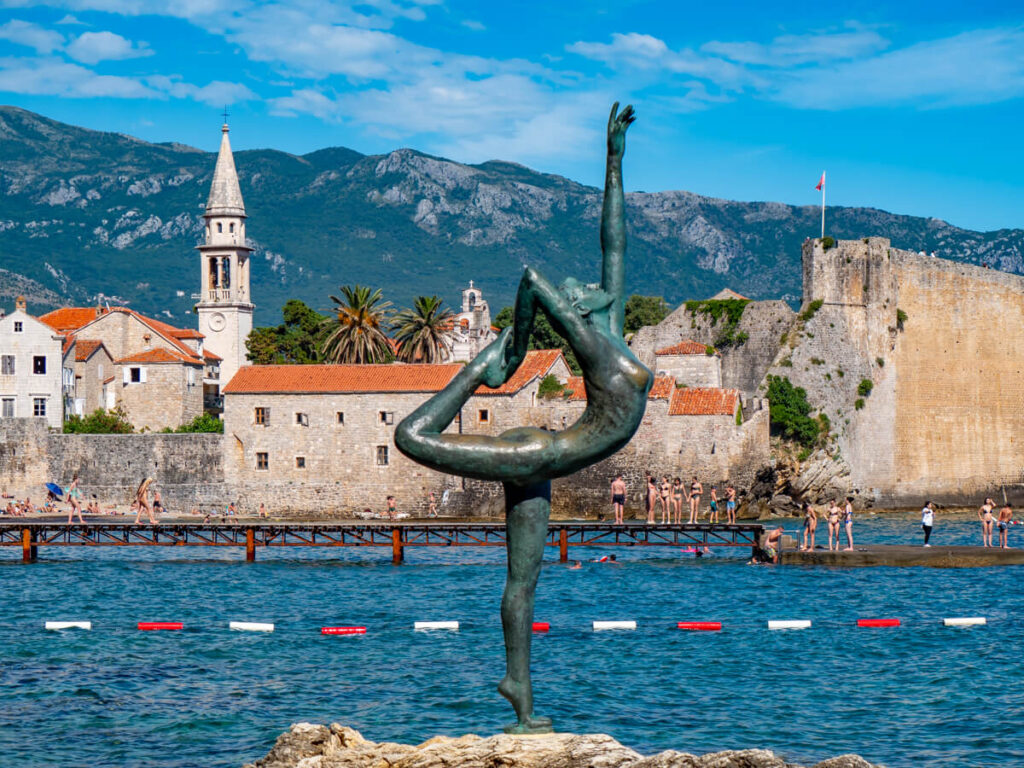
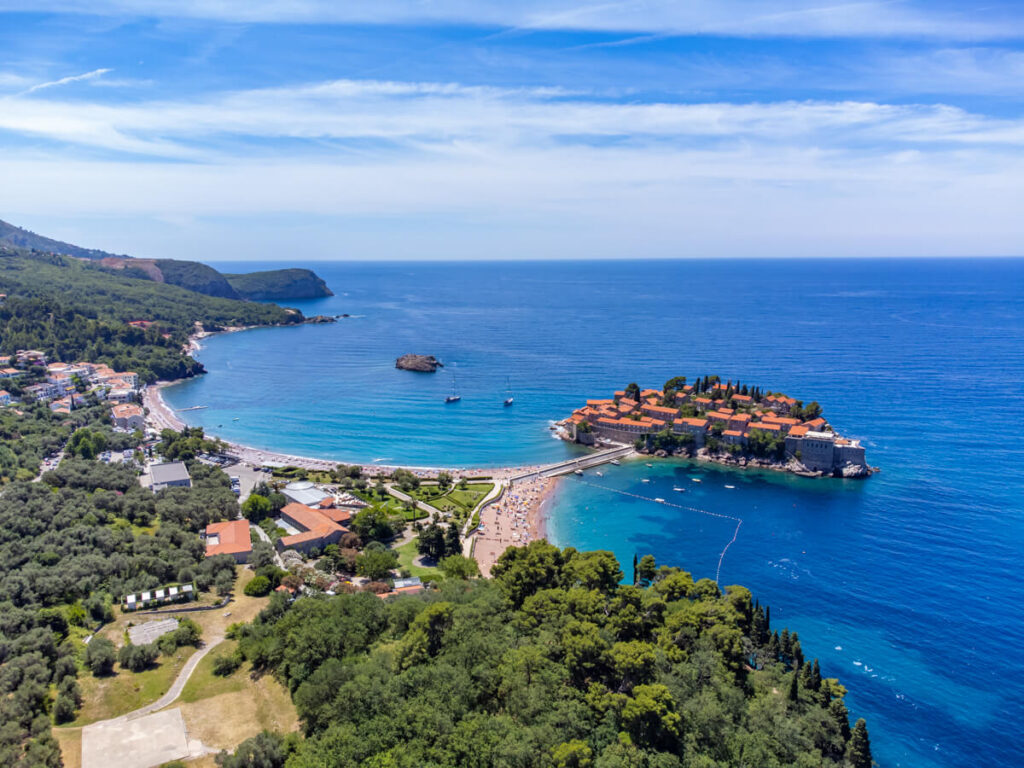
As you head south along the coast, you’ll pass popular beach resorts like Budva, Sveti Stefan, and Petrovac, with the coast becoming flatter and more open towards Albania.
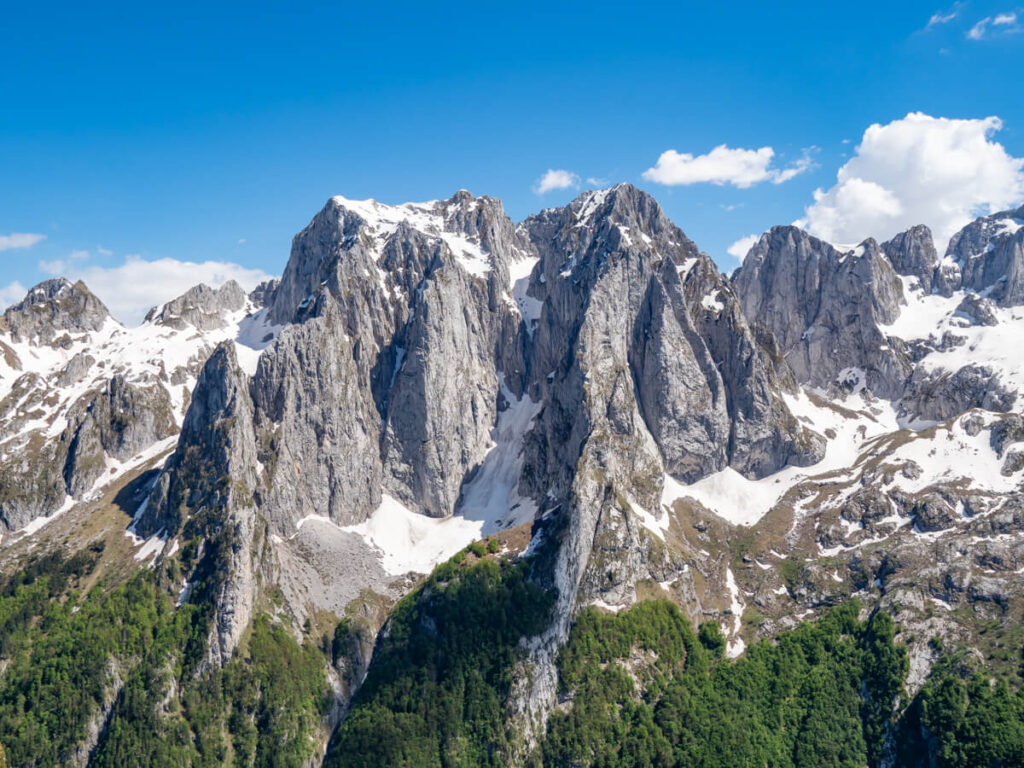
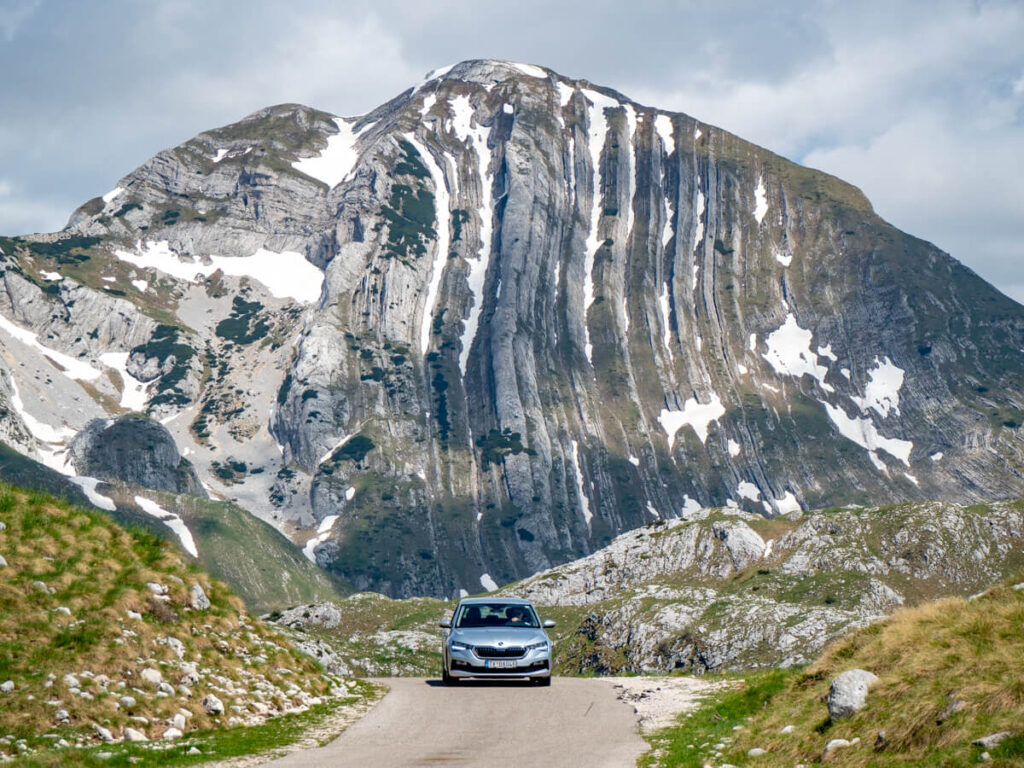
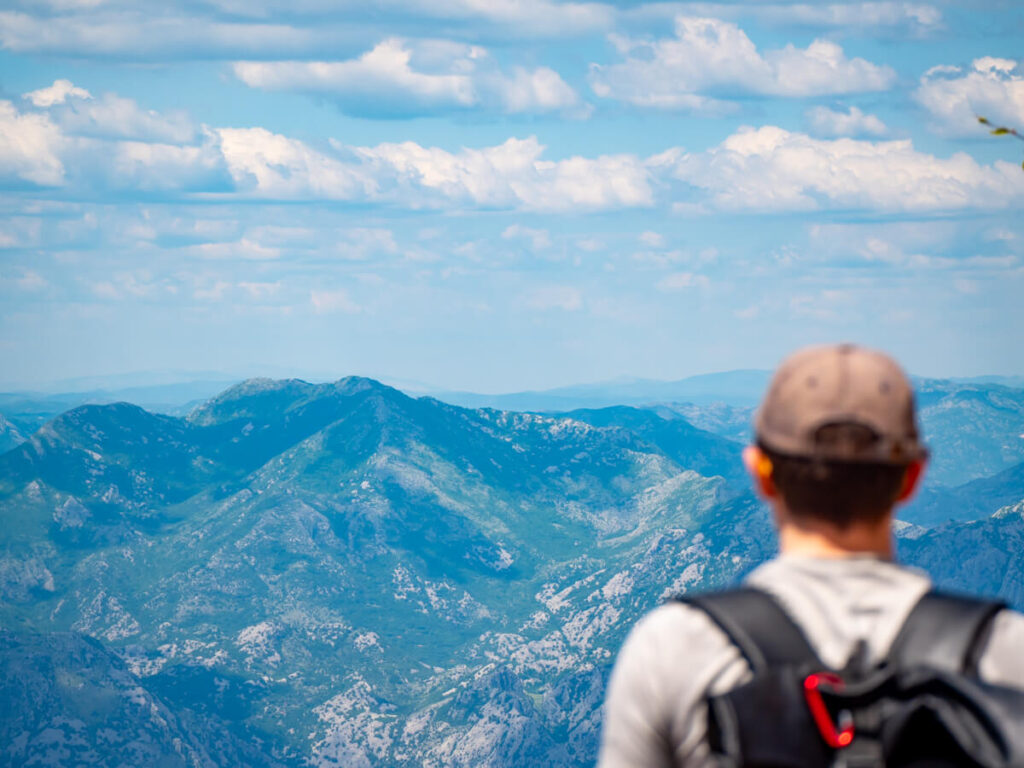
Inland, the landscape changes considerably, with deep river valleys, forested mountains, alpine meadows, and glacial lakes scattered throughout the north along the Dinaric Alps. In the west, you’ll find the dark cliffs of Durmitor National Park, while the jagged limestone peaks of Prokletije National Park are part of one of the most beautiful places we’ve ever been to.
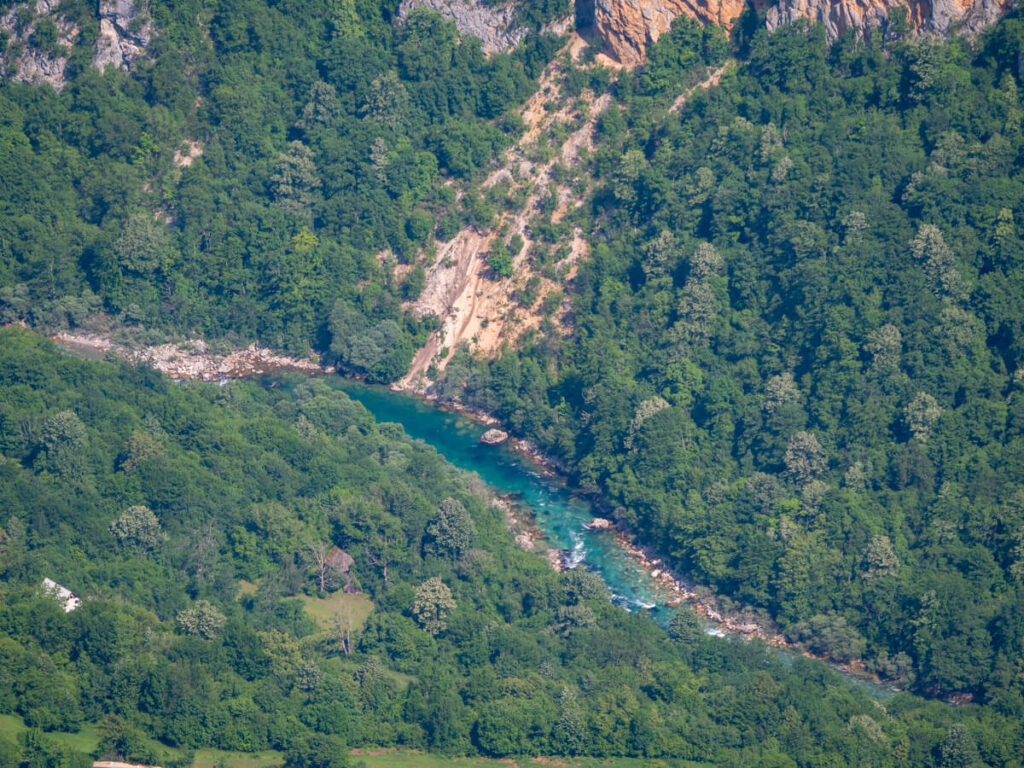
Montenegro is also home to the Tara River Canyon, which reaches approximately 1,333 metres (4,373 ft) deep and is widely recognised as the deepest canyon in Europe.
Lake Skadar, shared with Albania, is the largest lake in the Balkans and an important wetland habitat for birds and other wildlife, too.
The contrast between the Mediterranean coast and the mountainous interior is one of the reasons we’d recommend exploring unique places in Montenegro beyond the beach resorts.
Not got long?
A great way to maximise your time is to pick a base and explore multiple locations on combined day trips. The top tours we recommend are:


Montenegro’s national parks
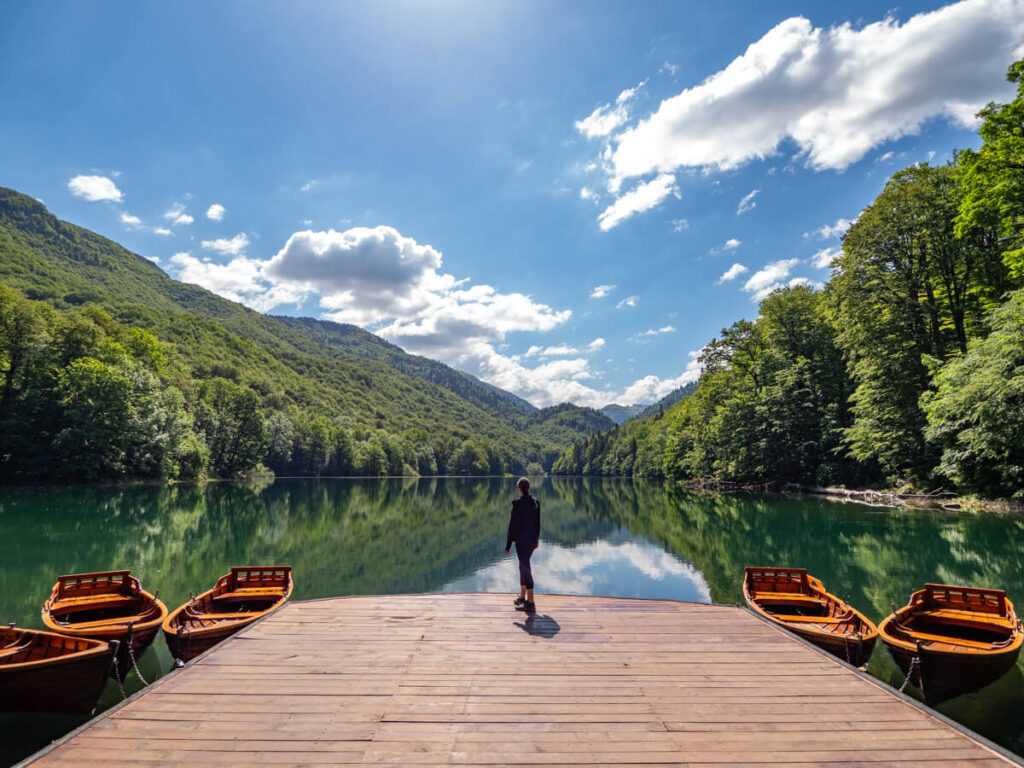
There are five national parks in Montenegro: Durmitor, Biogradska Gora, Prokletije, Lovćen, and Lake Skadar, together protecting some of the country’s most important natural landscapes.
They cover everything from high mountain peaks and glacial lakes to ancient woodland, wetlands, and Mediterranean karst scenery, so each park has a noticeably different character.
We explored all five in five weeks, and they were some of our favourite places we visited, each with different scenery, views, and activities.
You can get an annual pass for €13.50, which covers entry into all five parks, which is a great cost-saving option if you plan to visit a few during your trip. You can get it in person at the park entrances or buy it online in advance.
Our Handy Hiking Guide



History, culture, and religion
Montenegro’s history is closely tied to its position between the Adriatic coast and the inland Balkans, where different empires, trading powers, and religious traditions have influenced the country over centuries.
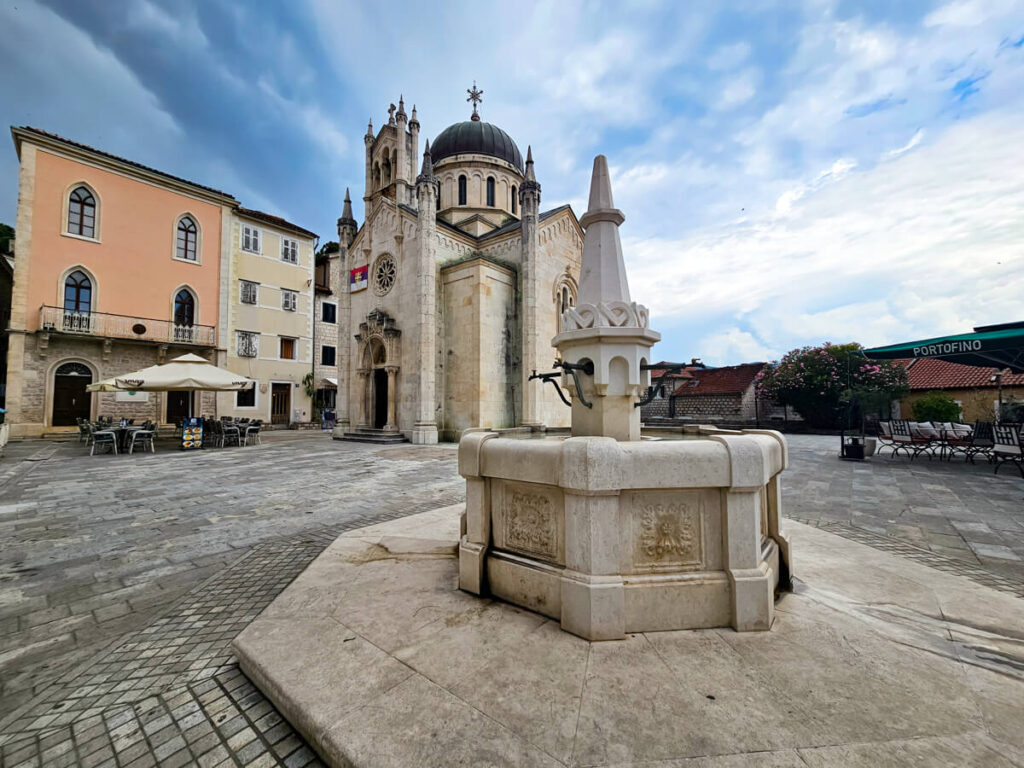
The coast was particularly shaped by Venetian rule, which is still visible in the architecture of Kotor, Perast, and other historic settlements around the bay.
Inland, Montenegro developed a strong tradition of local clans, tribal communities, and Orthodox Christianity, with the Petrović-Njegoš dynasty playing an important role in the country’s political and religious history. This religious heritage is particularly apparent at Ostrog Monastery, one of the country’s most important Orthodox pilgrimage sites, dramatically built into a sheer cliff face.
Today, Eastern Orthodox Christianity is the largest religious tradition, alongside significant Muslim and Roman Catholic communities.
The capital of Montenegro is Podgorica, while Cetinje is the country’s historic royal capital and an important centre of Montenegrin culture. The official language is Montenegrin, a South Slavic language that is mutually intelligible with Serbian, Croatian, and Bosnian, which are also spoken, and both Latin and Cyrillic scripts are used.
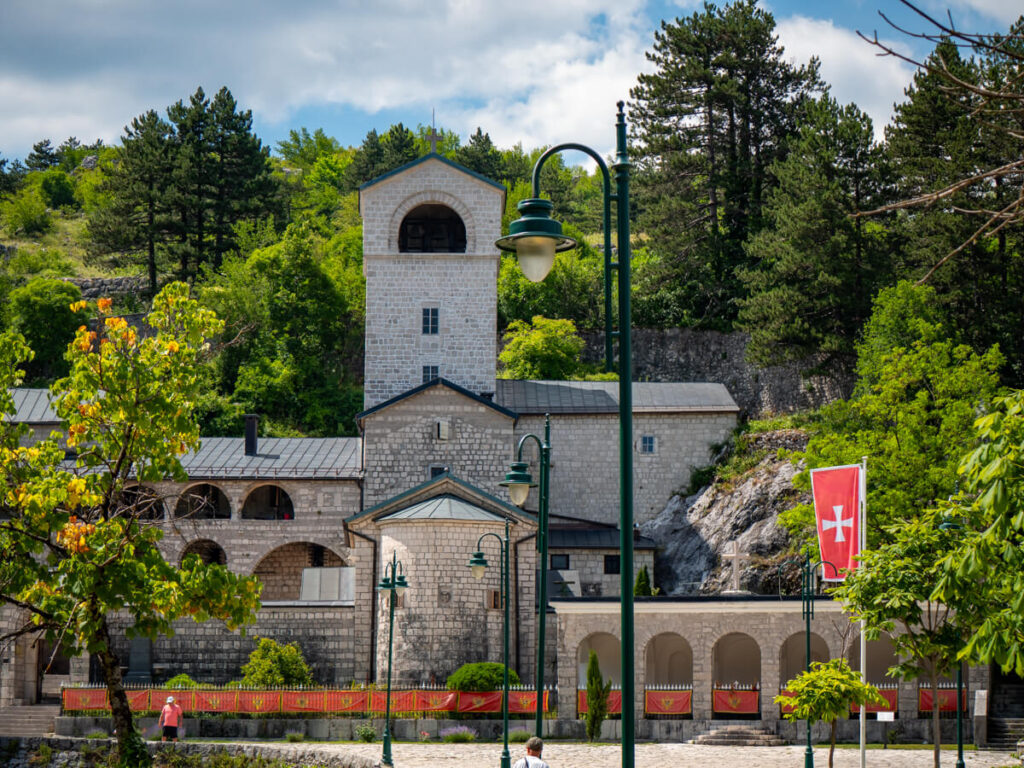
Cetinje 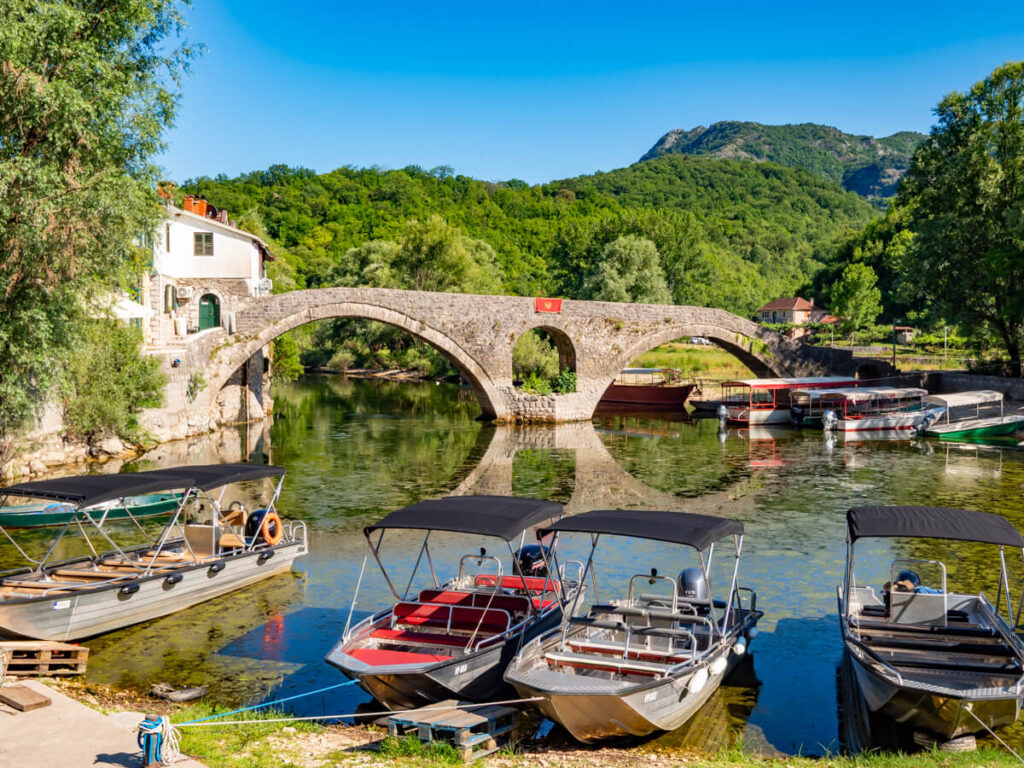
Rijeka Crnojevića 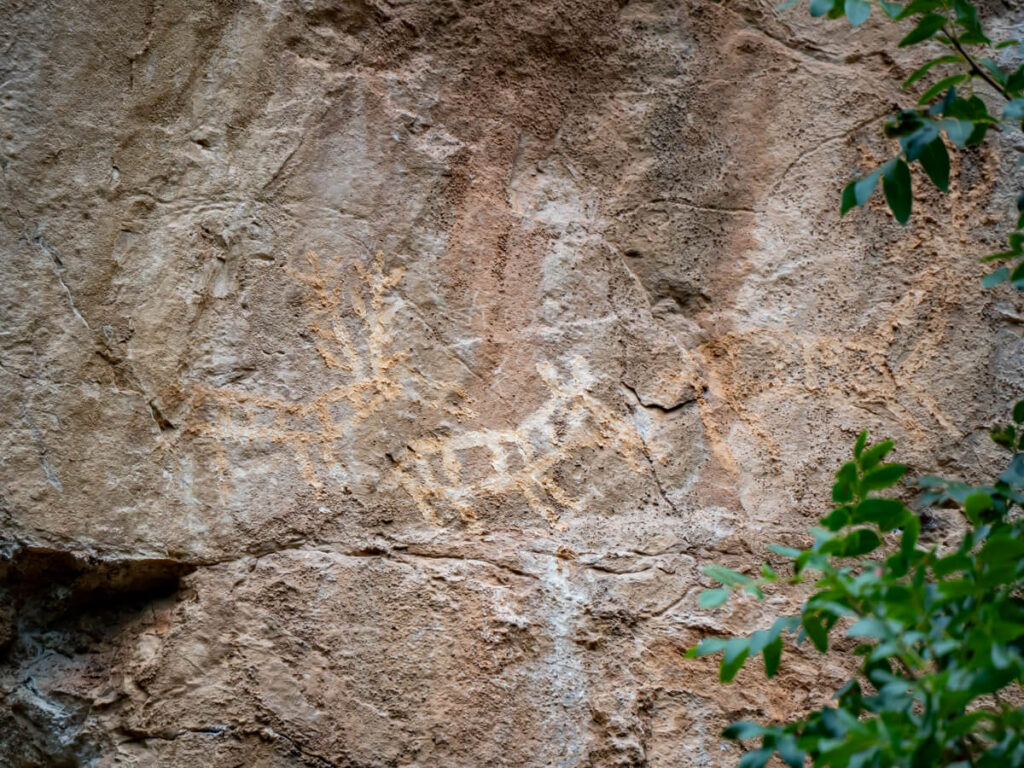
Lipci
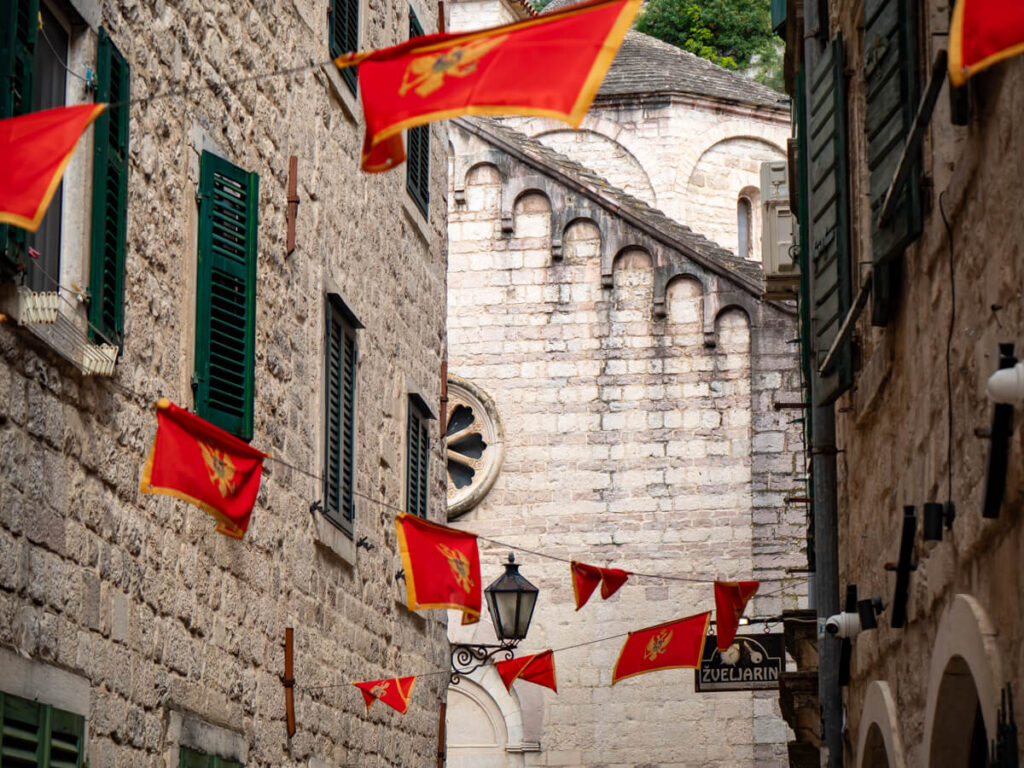

Activities
There are lots of fun things to do in Montenegro beyond sightseeing, especially if you enjoy spending time outdoors.
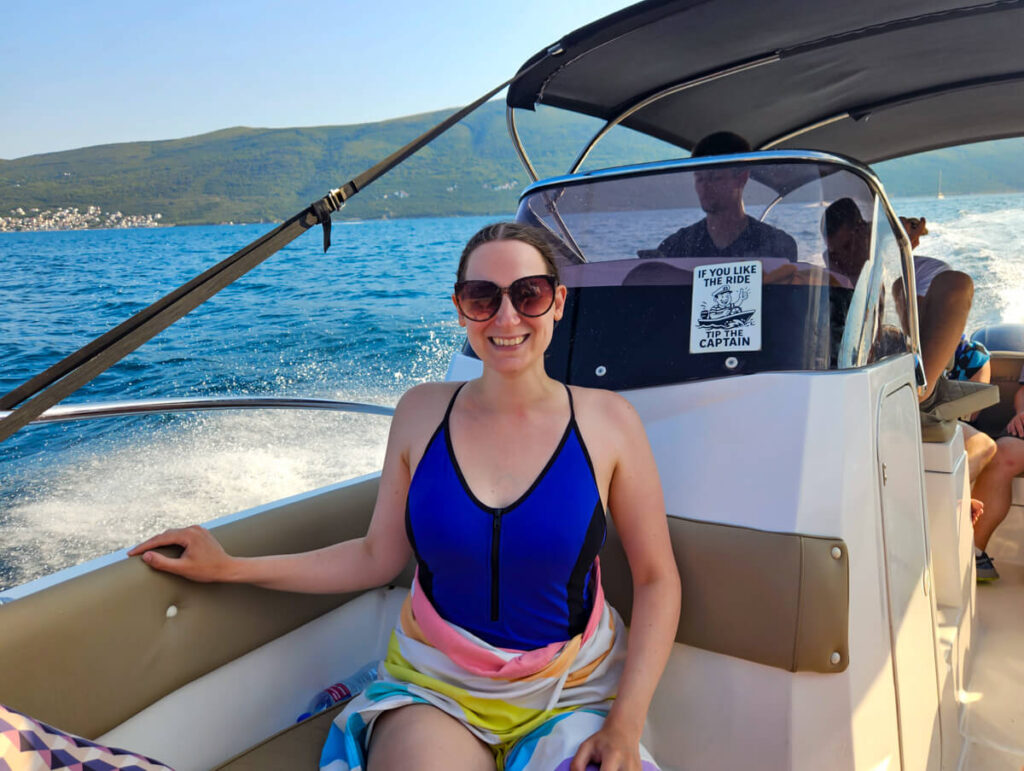
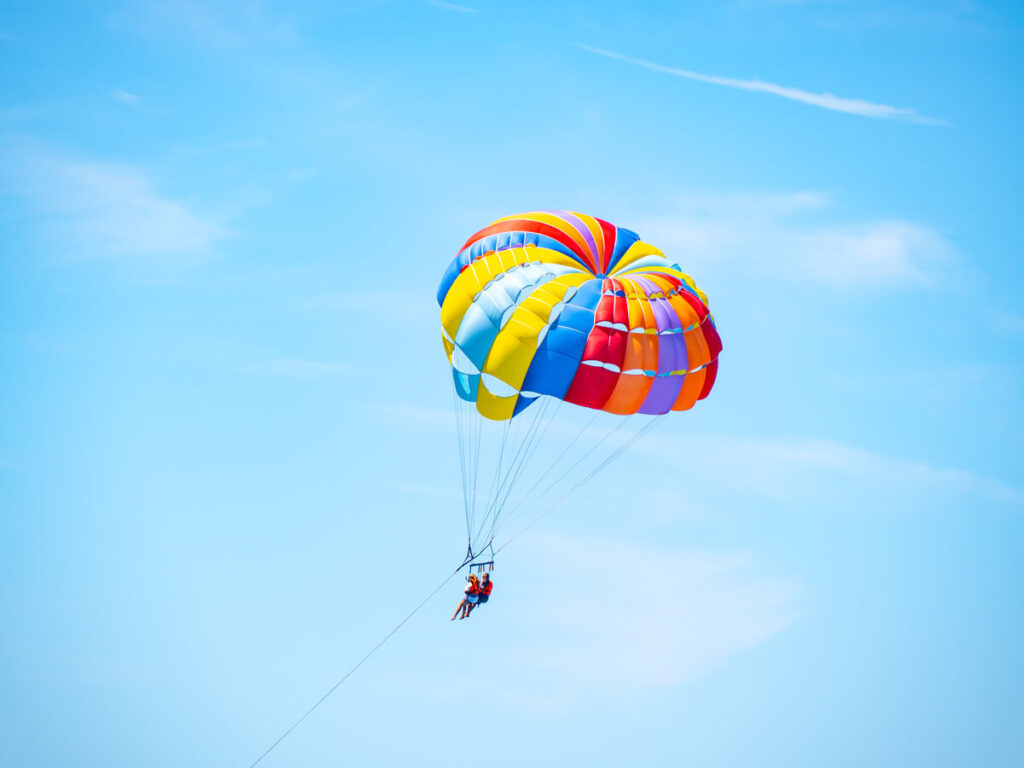
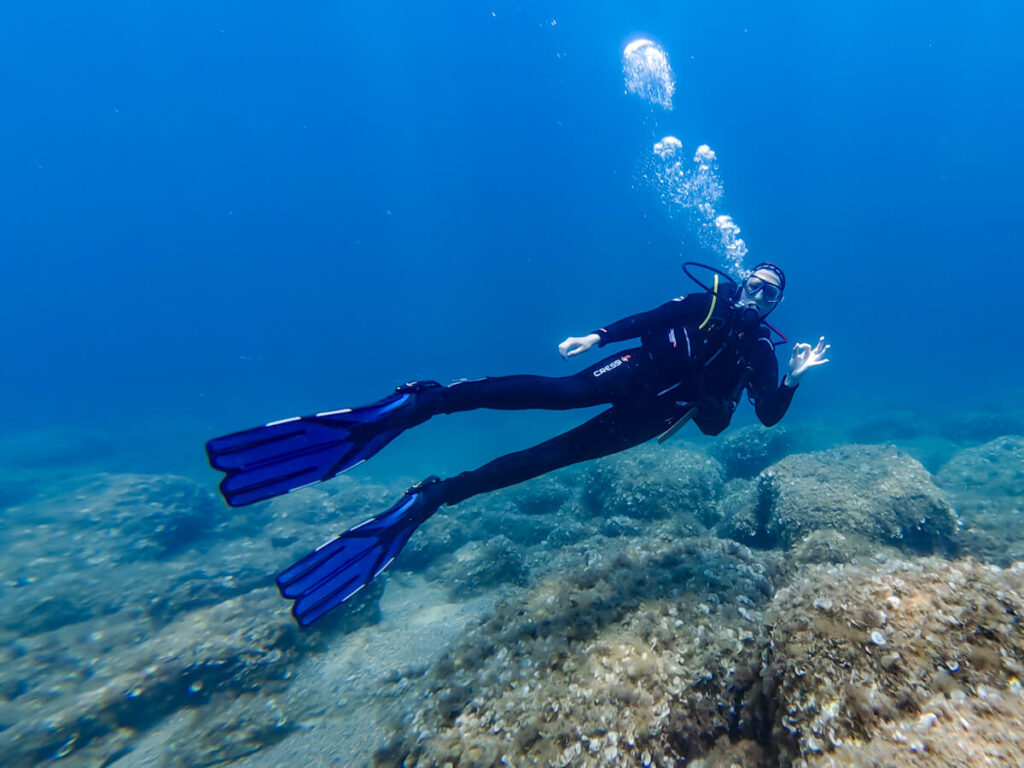
Along the coast, you can go swimming, kayaking, sailing, snorkelling, and even SCUBA diving (which we were thrilled to find).
Inland, the rivers and mountains provide opportunities for hiking, white-water rafting, canyoning, and mountain biking, with the Tara Canyon being one of the country’s best-known adventure destinations.
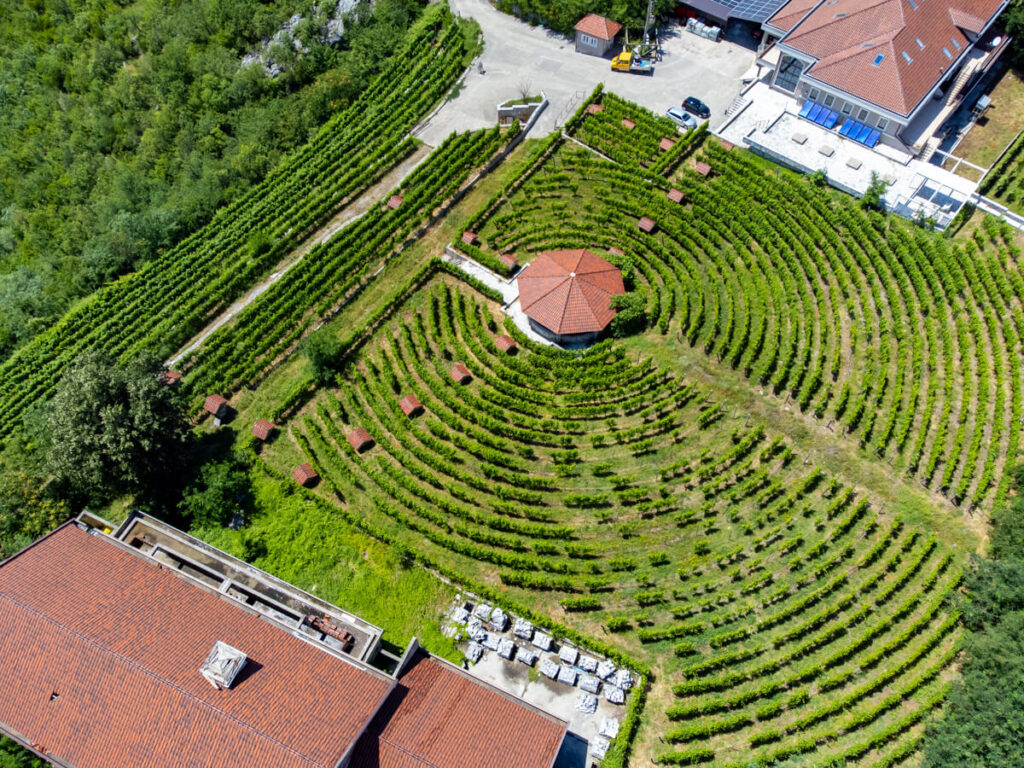
Lake Skadar is also great for boat trips and birdwatching, while the vineyards around Podgorica and Lake Skadar provide opportunities for wine tasting and visiting smaller family producers. There are also plenty of historic sites to explore, including Kotor’s medieval fortifications, Ostrog Monastery, and the former royal capital of Cetinje. We’d recommend allowing enough time to try a mixture of activities rather than treating Montenegro as somewhere to simply drive between viewpoints.

Hiking
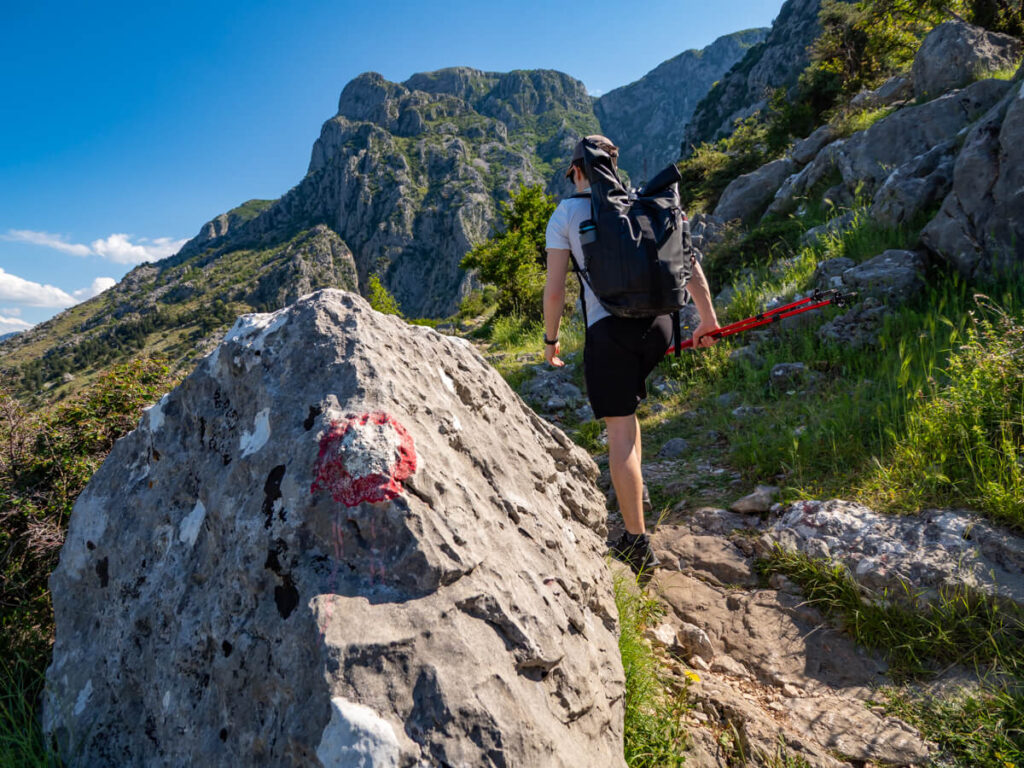
Hiking is pretty much the primary reason we visited Montenegro. We’re not expert hikers, but after climbing Guatemala’s Acatenango Volcano, we packed our poles with a newfound self-confidence and headed for Montenegro’s peaks.
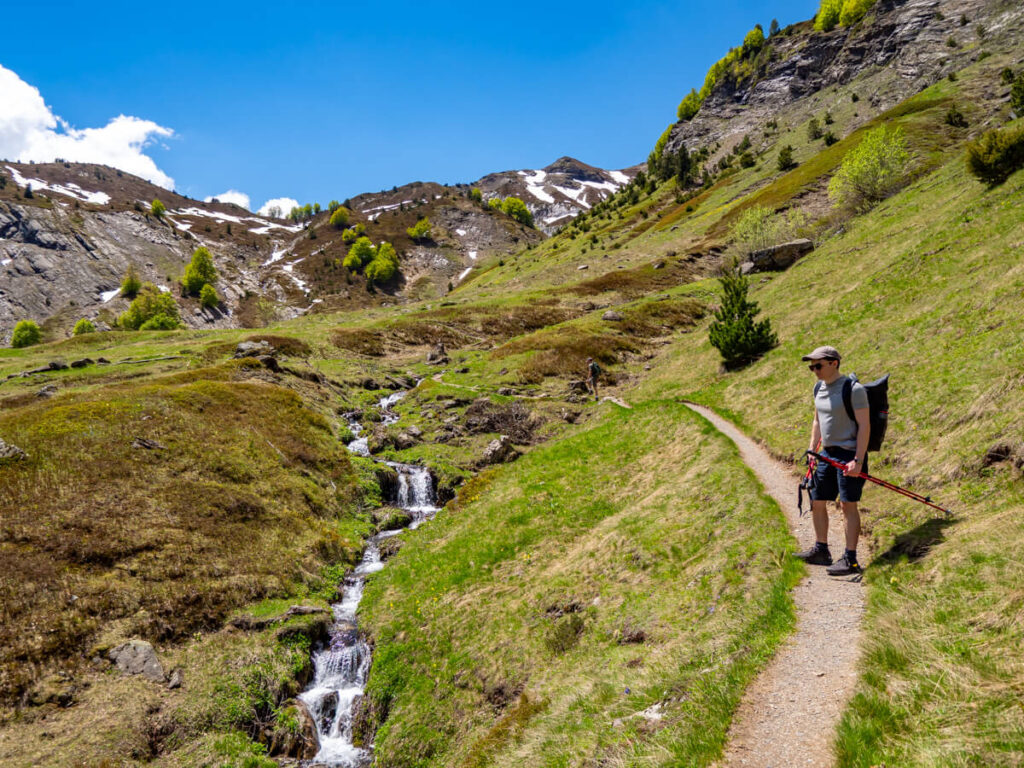
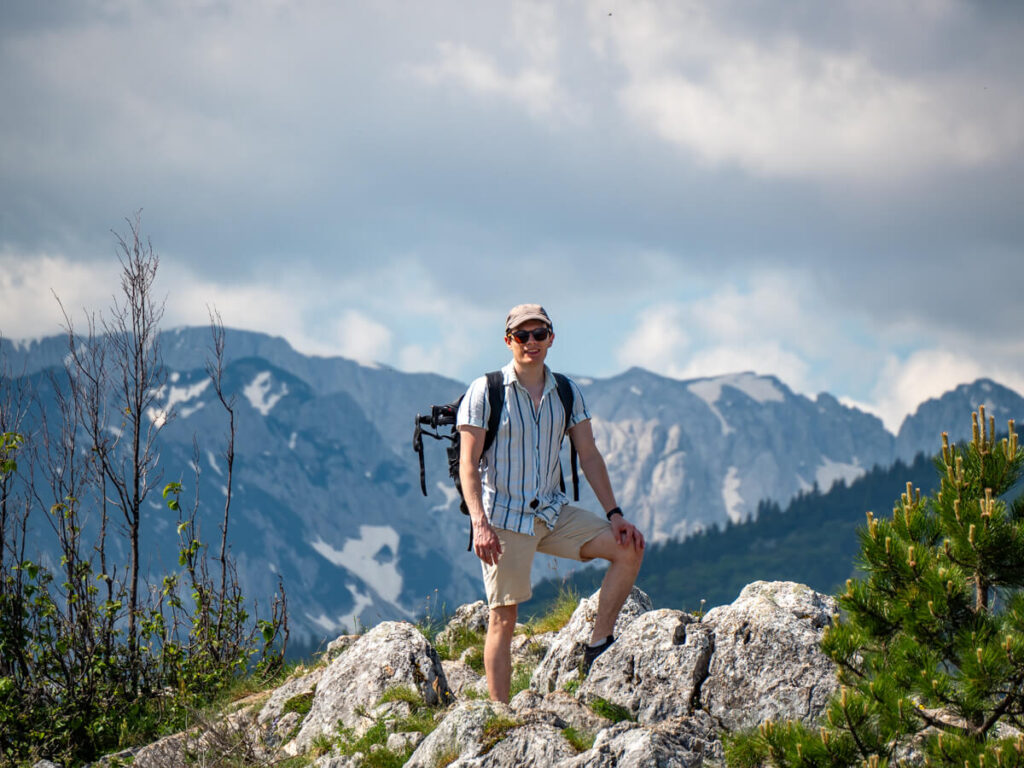
There are some lovely trails on the coast, but the northern mountains are where it’s at, with trails to suit a range of abilities and experience levels. We loved exploring the country’s easier walks and tackled moderate-to-challenging trails that were HARD, but the scenery blew us away.
Hiking in Durmitor National Park is the most accessible starting point for many visitors, with routes around its glacial lakes, mountain passes, and higher summits, including the demanding ascent of Bobotov Kuk, the country’s highest peak that’s entirely within its borders at 2,523 metres (8,278 ft).
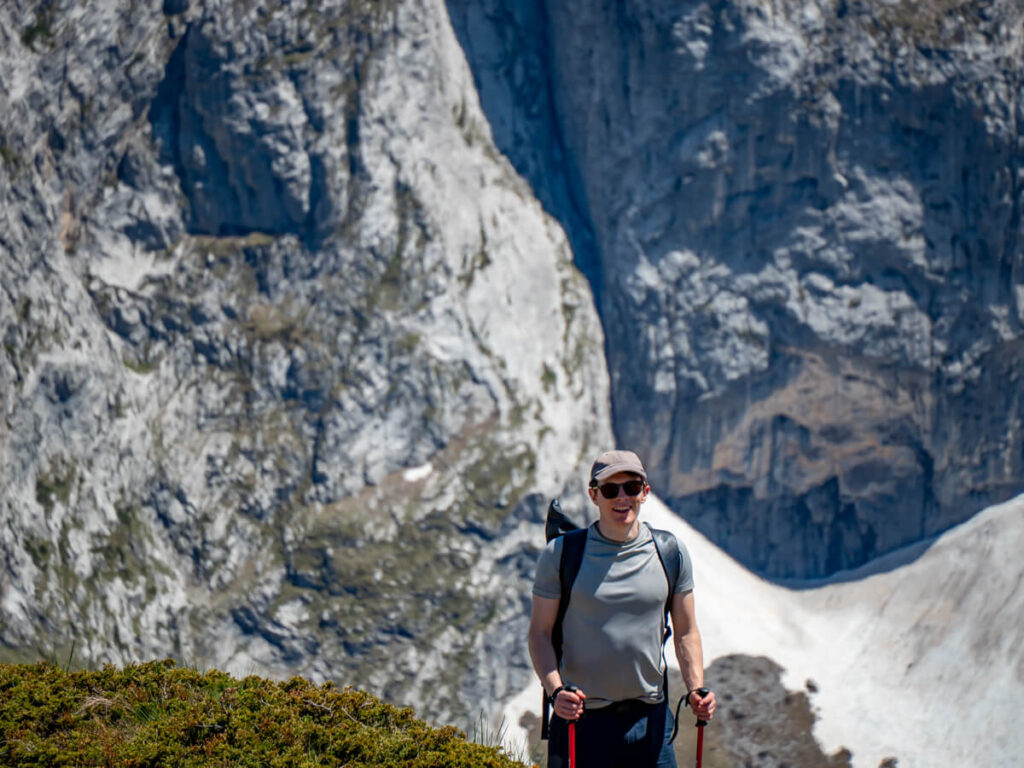
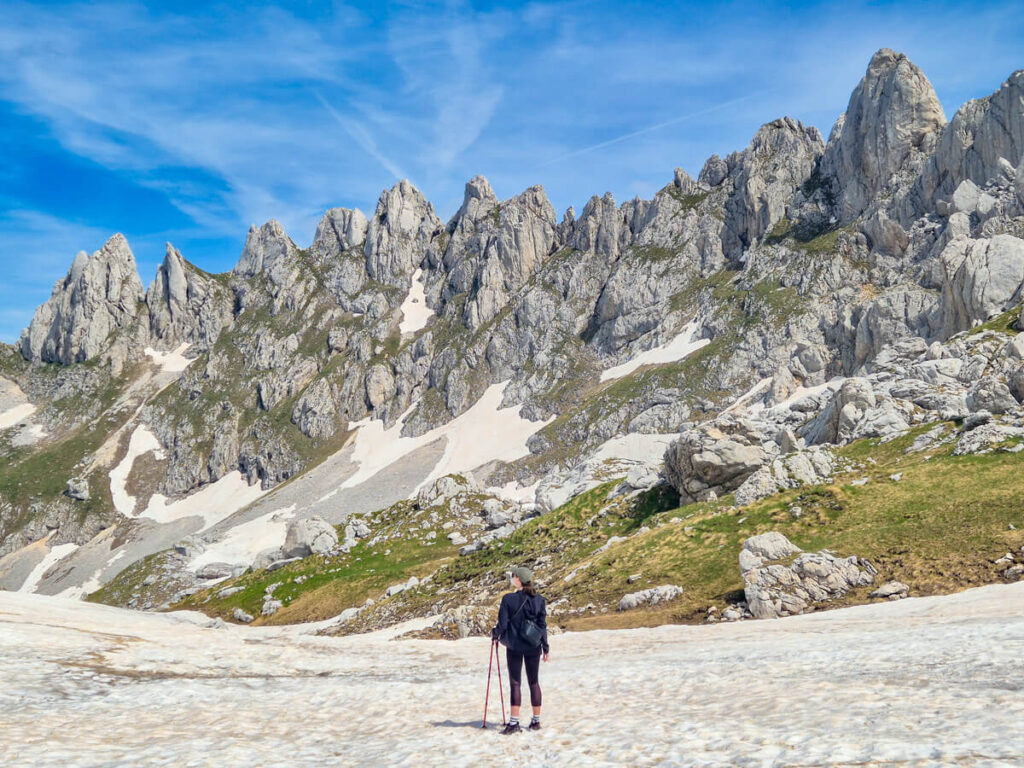
Hiking in Prokletije National Park is considerably more remote and has some of the country’s most dramatic mountain scenery, with challenging routes around peaks such as Zla Kolata, which is the country’s actual highest mountain, reaching 2,534 metres (8,314 ft) and straddling the border with Albania.
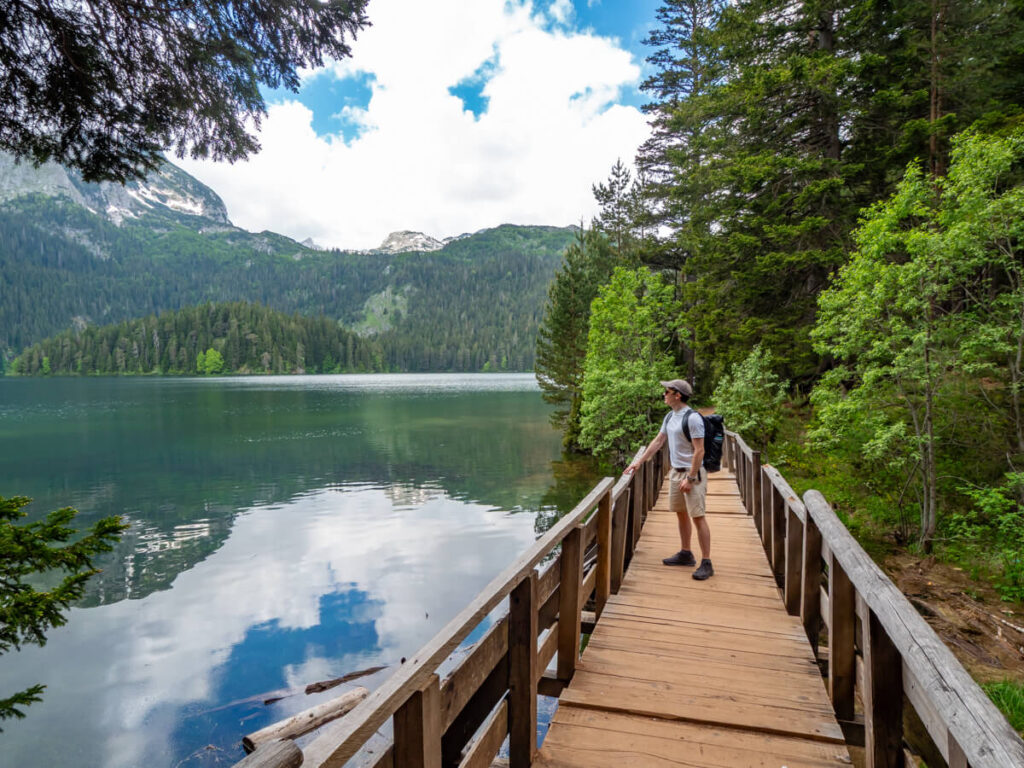
Biogradska Gora National Park is a good alternative if you prefer woodland trails and gentler walks, while Lovćen National Park has routes offering mountain scenery with views of the sparkling turquoise sea.
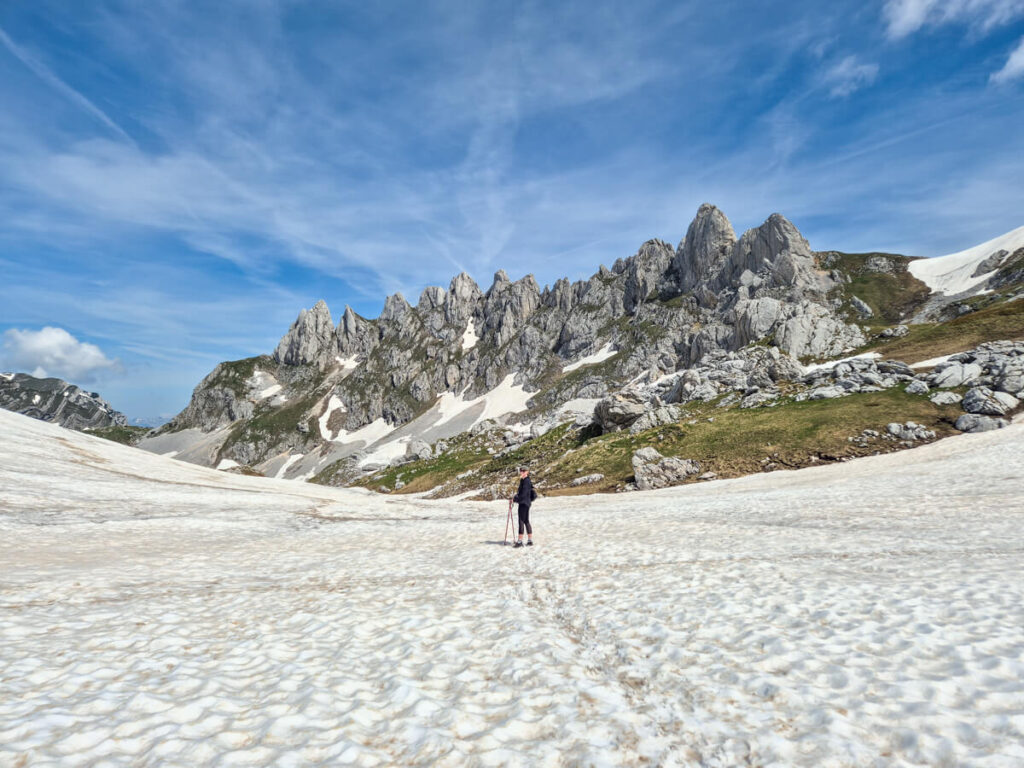
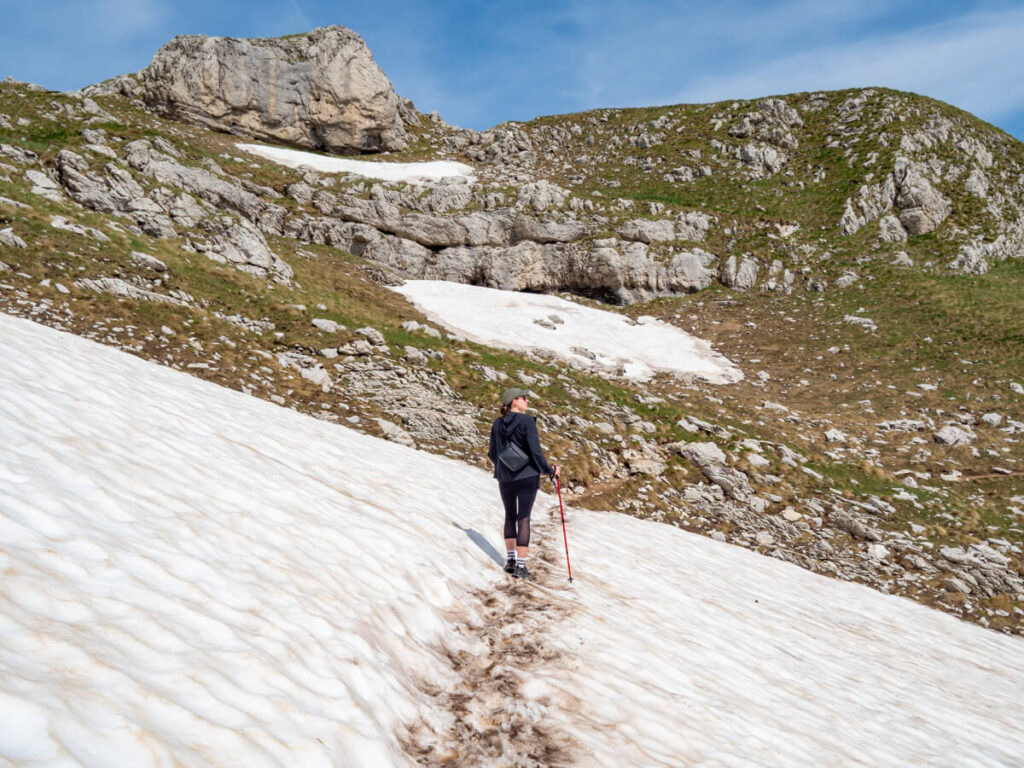
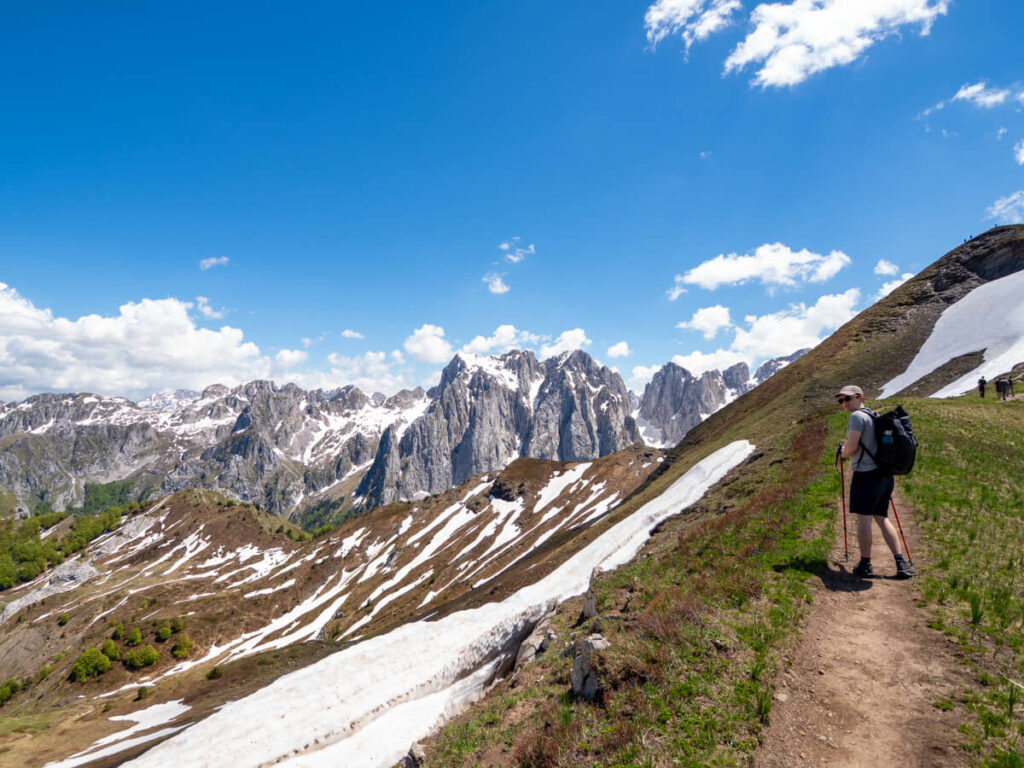
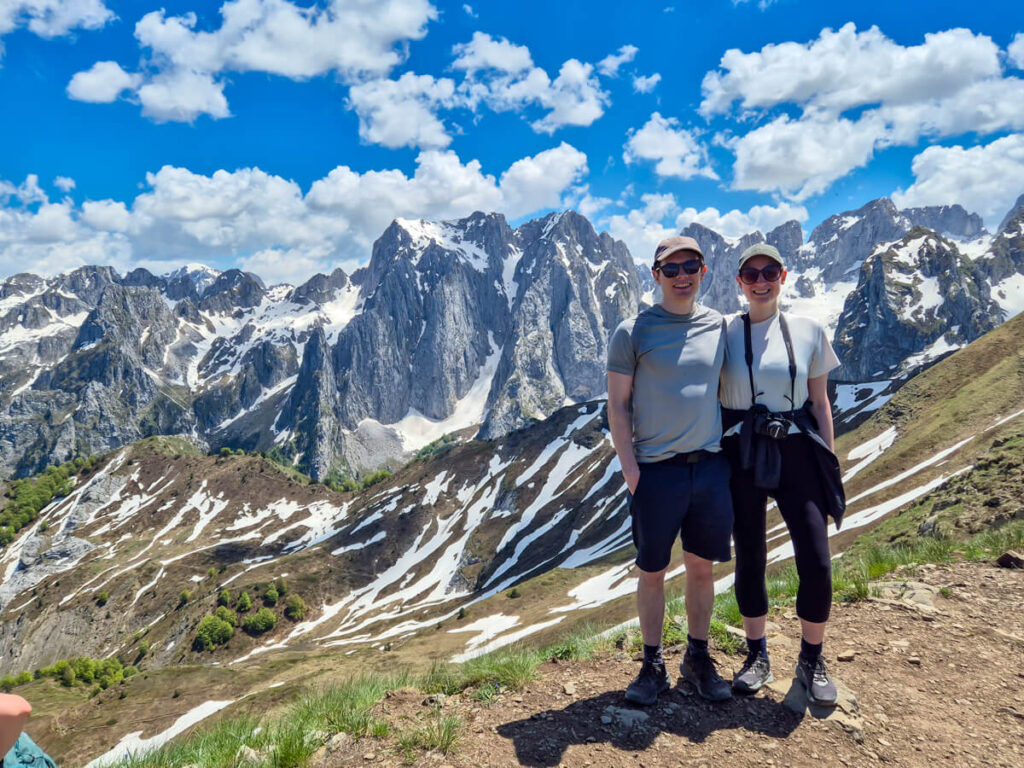
The hiking season generally runs from late spring into autumn, although snow can remain at higher elevations well into summer, particularly on more exposed routes. We visited in late May, which was super aesthetic for Prokletije – the trails were clear, but the peaks were still dusted in snow – but even early June was too early for Durmitor, and Bobotov Kuk was too snowy to fully summit.


Accommoddation
There’s a wide range of accommodation in Montenegro, from hostels and budget apartments in the coastal towns to boutique hotels, traditional stone houses, and larger beachfront resorts. Most people choose from the towns and hotels to stay in around the Bay of Kotor, but the rest of the country is worth considering too.
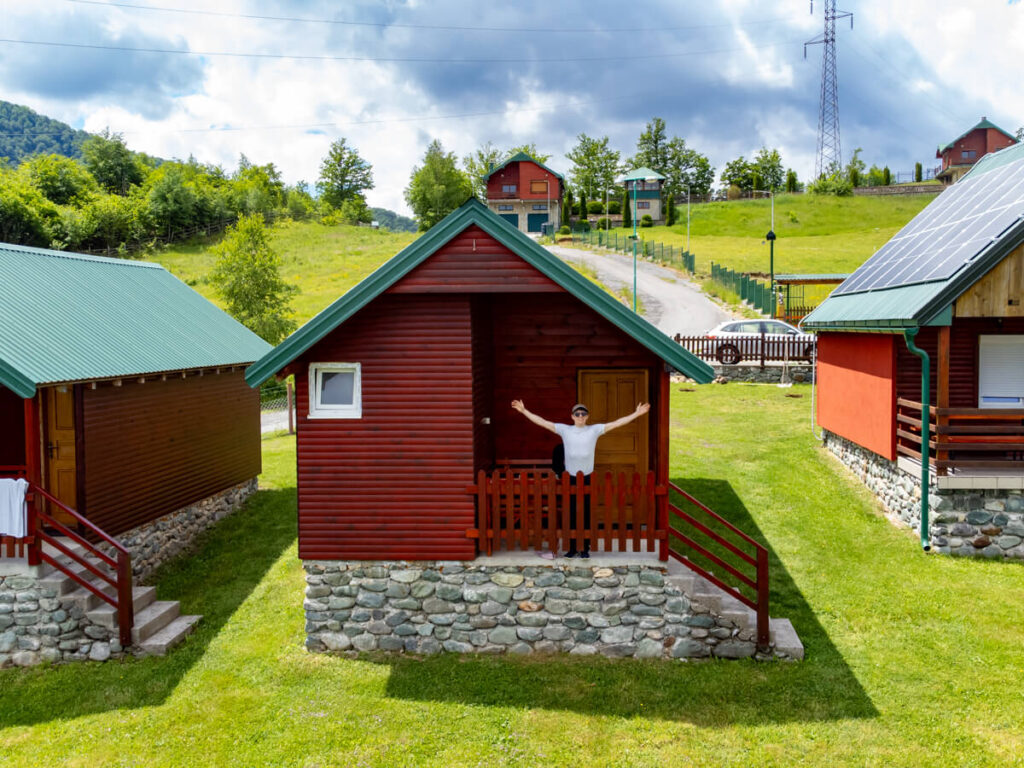
In the mountains, you’ll also find unique places to stay, like smaller guesthouses, mountain lodges, wooden cabins, and traditional katuns – seasonal pastoral settlements that have increasingly been adapted for guests.
Around Lake Skadar, you’ll also find family-run vineyards in the wine region and rural guesthouses, giving you a different experience from the busier coastal hotels.
Prices vary considerably depending on the location and season, with July and August generally being the most expensive months to visit.
We’d encourage you to look beyond the larger international hotel chains where possible, as independent accommodation and locally owned guesthouses can give you a closer connection to the places you’re visiting and are a great way to travel more responsibly.


Food and drink
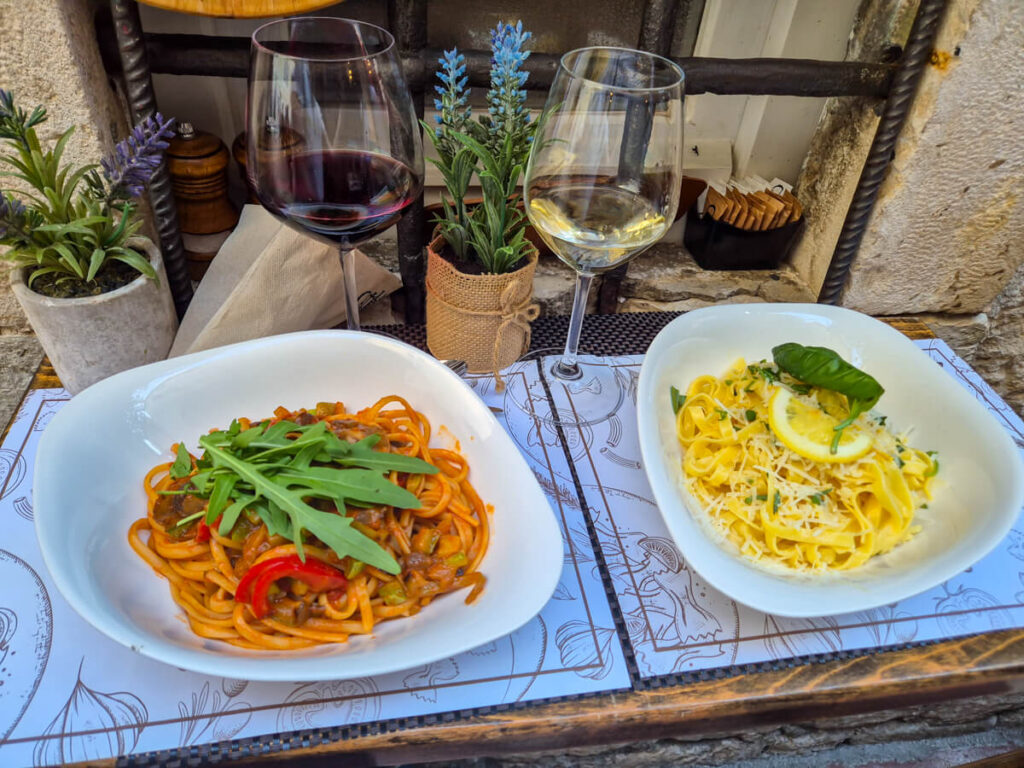
Montenegrin food reflects the country’s mix of Mediterranean, Balkan, and Ottoman influences, with noticeable differences between the coast and the mountainous interior.
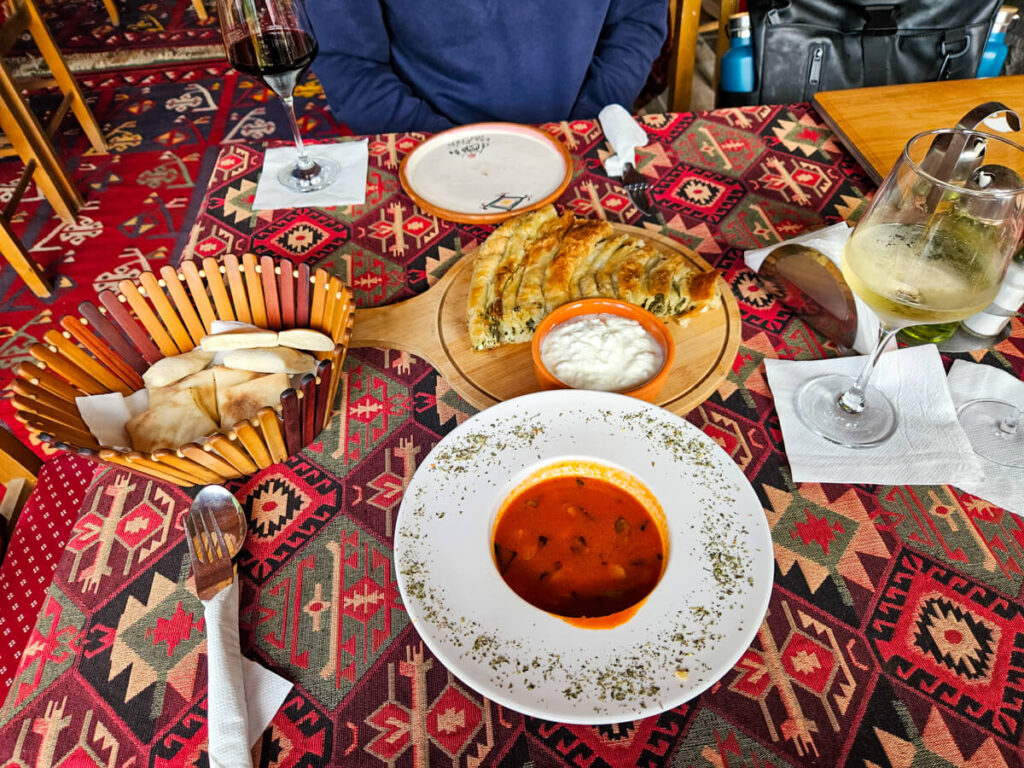
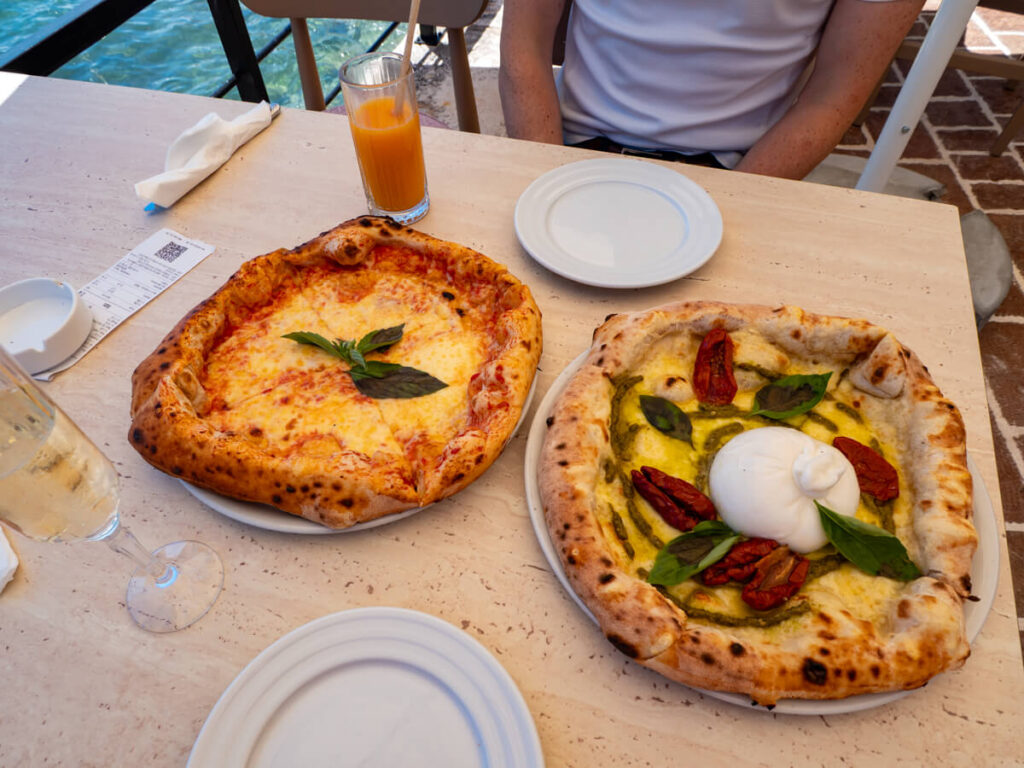
Along the Adriatic coast, seafood is a big part of the menu, whereas inland, meals tend to be heartier, with grilled meats, cured meats, slow-cooked dishes, local cheeses, and dishes like kačamak, a delish combination of potatoes, cornmeal, and dairy products.
Eating vegetarian and vegan isn’t super easy, but there are options if you know what to look for, and we had some incredible meat-free meals out.
Montenegro also has a growing wine scene, especially around Lake Skadar and the central region, where the indigenous Vranac grape is used to produce full-bodied red wines.

When to visit Montenegro?
The best time to visit Montenegro is generally between May and September, when the weather is warm, the days are longer, and most of the country’s attractions are open.
We’d personally recommend May, June, and September for the best balance of sunshine, comfortable temperatures and fewer crowds. We spent the latter half of May and all of June in Montenegro – we’d recommend May for the coast and June for the mountains.
However, the best time to visit really depends on what you’d like to do.
Late June or September are fantastic for hiking in Montenegro’s mountains without dangerous snow, exploring its national parks while they’re quiet, and sightseeing along the coast while avoiding the intense summer heat.
July and August are best for beach holidays, swimming, sailing and making the most of Montenegro’s beautiful Adriatic coastline, although these are also the busiest and hottest months. Prices can be higher, and there are more cruise ships flooding the towns with crowds, so it’s worth booking accommodation and activities well in advance.
Early October can also be a good time for exploring, although rainfall becomes more frequent as the month goes on.
Montenegro Weather
Montenegro has a varied climate, with Mediterranean weather along the Adriatic coast and a more continental and alpine climate inland. This means temperatures and weather conditions can vary quite considerably depending on where you’re visiting.
The coastal regions enjoy hot, sunny summers and mild but wetter winters, while the mountainous interior experiences colder winters, plenty of snowfall and cooler summer temperatures.
How to get to Montenegro?
Montenegro is easy to reach by air, land, and sea, although your best arrival point will depend on where you’re planning to visit.
By air
Montenegro has two international airports:
Dubrovnik Airport (DBV) in Croatia can also be a useful alternative, especially if you’re visiting the Bay of Kotor, which is what my family did when they met us.
Overland
If you’re travelling overland through the Balkans, there are international buses that you can easily book on FlixBus and Bookaway from Croatia, Bosnia and Herzegovina, Albania, and Serbia, as well as connections via the famous Belgrade-Bar railway.
We arrived into Kotor on the bus from Mostar before renting a car in Tivat.
How to get around Montenegro?
Getting around Montenegro is relatively straightforward, although it’s not always as quick or convenient as the distances on a map might suggest.
By car
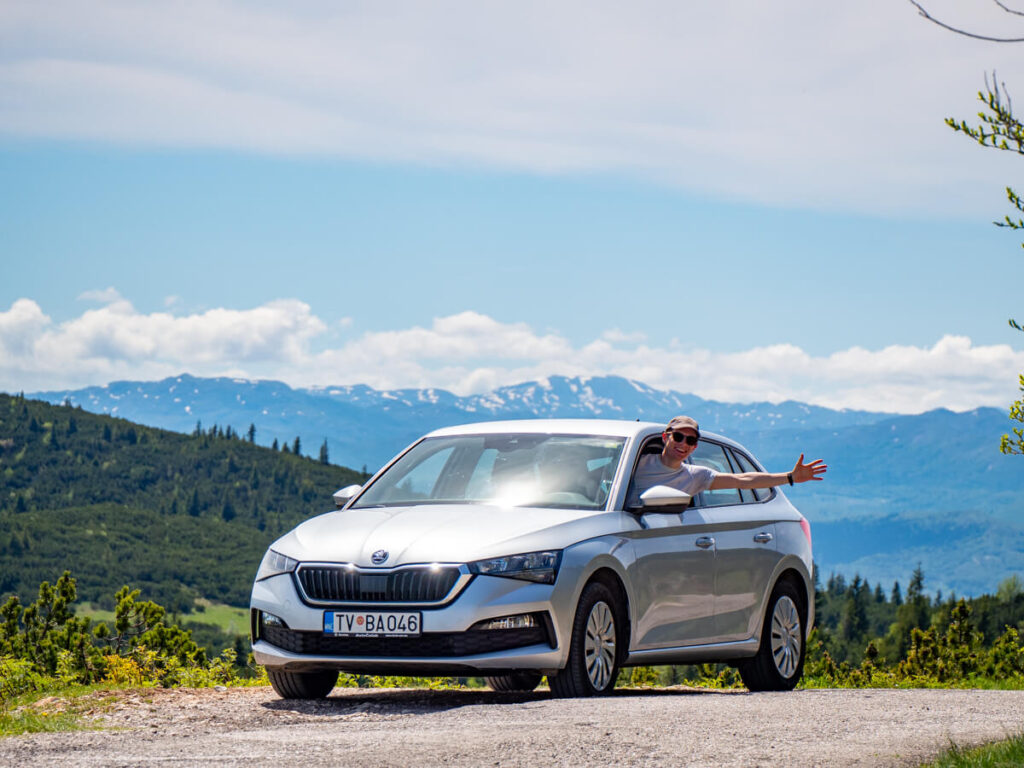
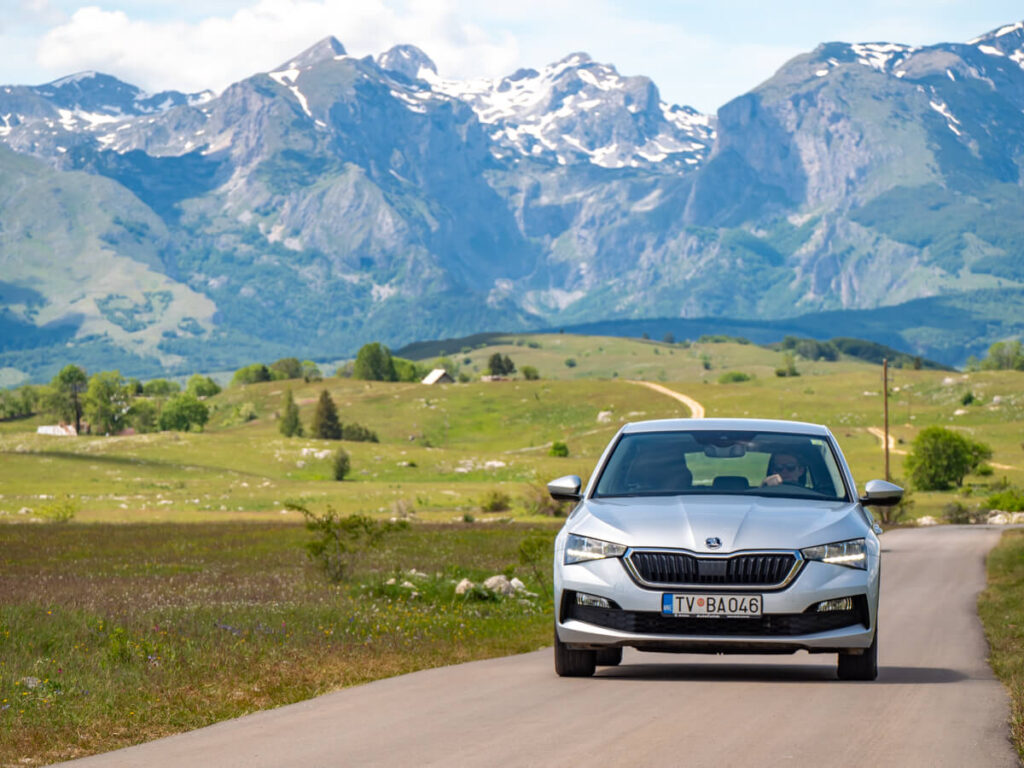
A rental car is our preferred way to explore Montenegro, especially if you’re planning to visit more than just the main coastal towns. Having your own vehicle gives you the flexibility to explore at your own pace, stop at scenic viewpoints, and visit places that aren’t well connected by public transport.
If you’re driving around the Bay of Kotor, taking the Kamenari-Lepetane Ferry is a great time-saving tip and means you don’t need to get stuck in traffic, which can be really congested in summer. You can also drive the epic Kotor Serpentine for panoramic views of the bay if you’re up for an adventure.
It’s worth reading up on driving in Montenegro before getting behind the wheel. Mountainous geography means that journeys can take considerably longer than you’d expect, and a seemingly short drive can involve winding mountain roads, steep climbs, and plenty of hairpin bends.
By bus
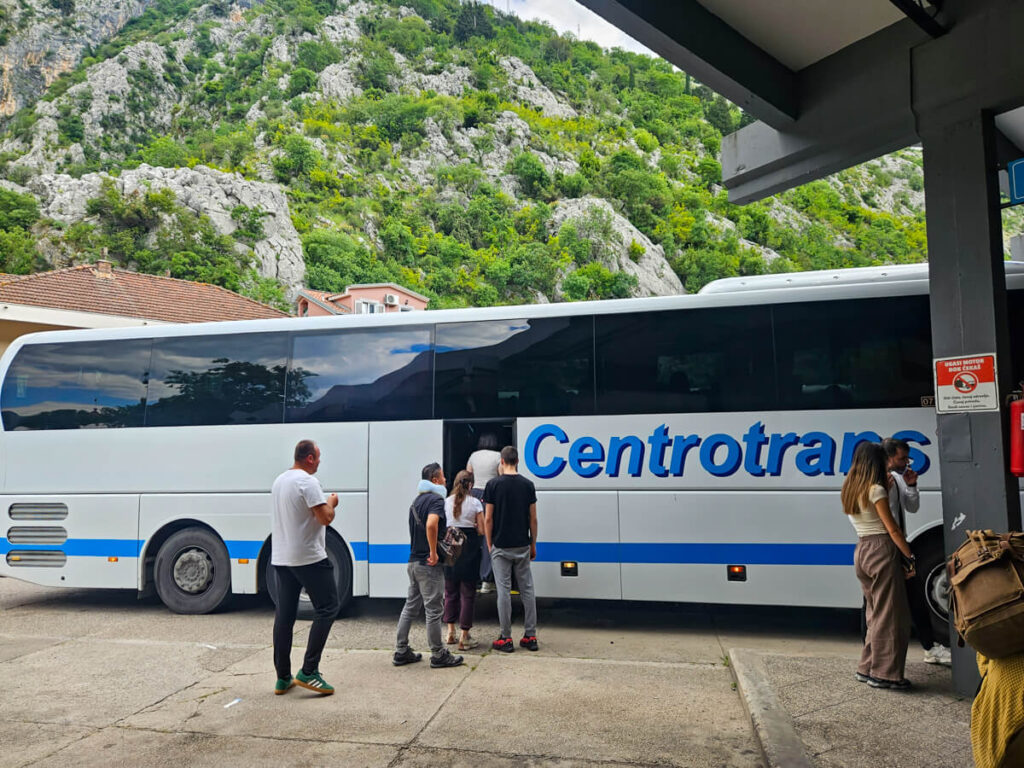
Montenegro has a reasonably useful intercity bus network, with regular connections between the main coastal towns and larger inland cities. Public buses are one of the cheapest ways to travel around Montenegro.
Some of the most useful routes include:
You can check routes and schedules on Busticket4.Me.
However, there are a few things worth knowing before relying on public transport. Firstly, bus frequencies vary depending on the route and time of year. Coastal routes are generally well served during the summer, but reaching smaller villages or remote attractions can be much more difficult. Secondly, buses don’t always run exactly to schedule. Traffic, road conditions, and border crossings can all cause delays, so avoid booking tight onward connections.
Finally, some bus stations charge additional fees for using the platforms or storing luggage, so keep a little extra cash handy.
By taxi
Taxis are readily available in Montenegro’s main towns and tourist destinations, making them a convenient option for shorter journeys or getting somewhere that’s difficult to reach by public transport.
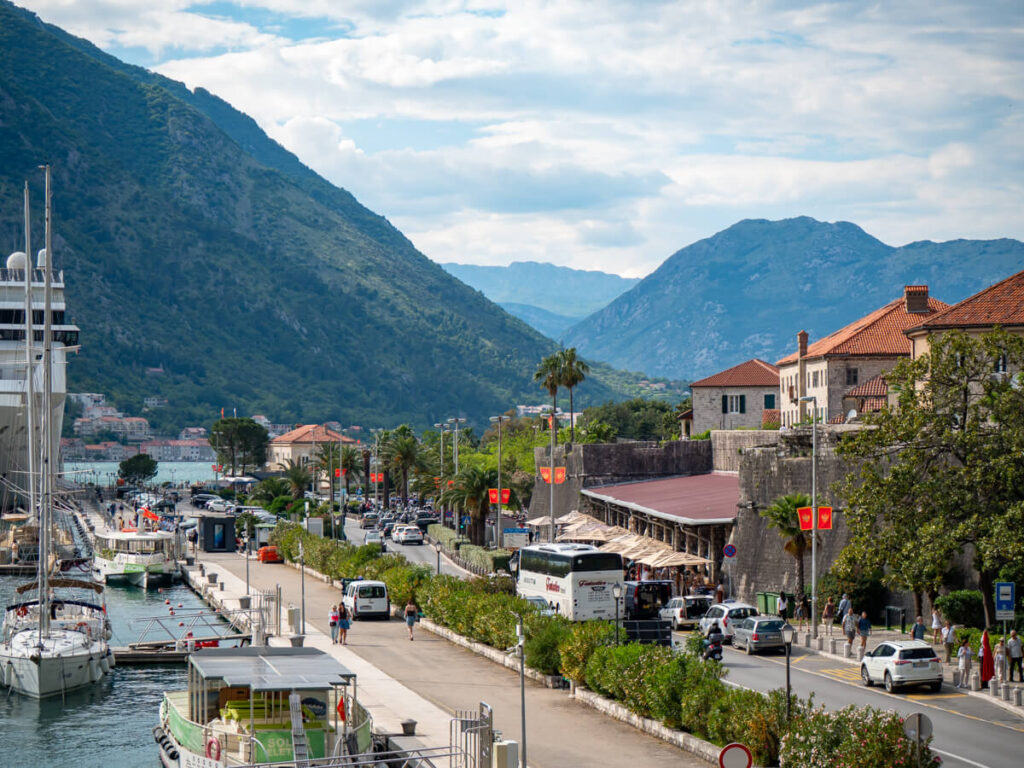
But taxis can be incredibly expensive, especially in popular tourist areas during the summer. There’s no Uber, so taxis can set rates pretty much how they like – some of the quotes we got in Kotor, especially around the cruise ship, were ridiculous.
We opted to use RedTaxi and arranged lifts via WhatsApp, as we found it most affordable. We’d always recommend agreeing on the fare before getting into the vehicle.
By tour
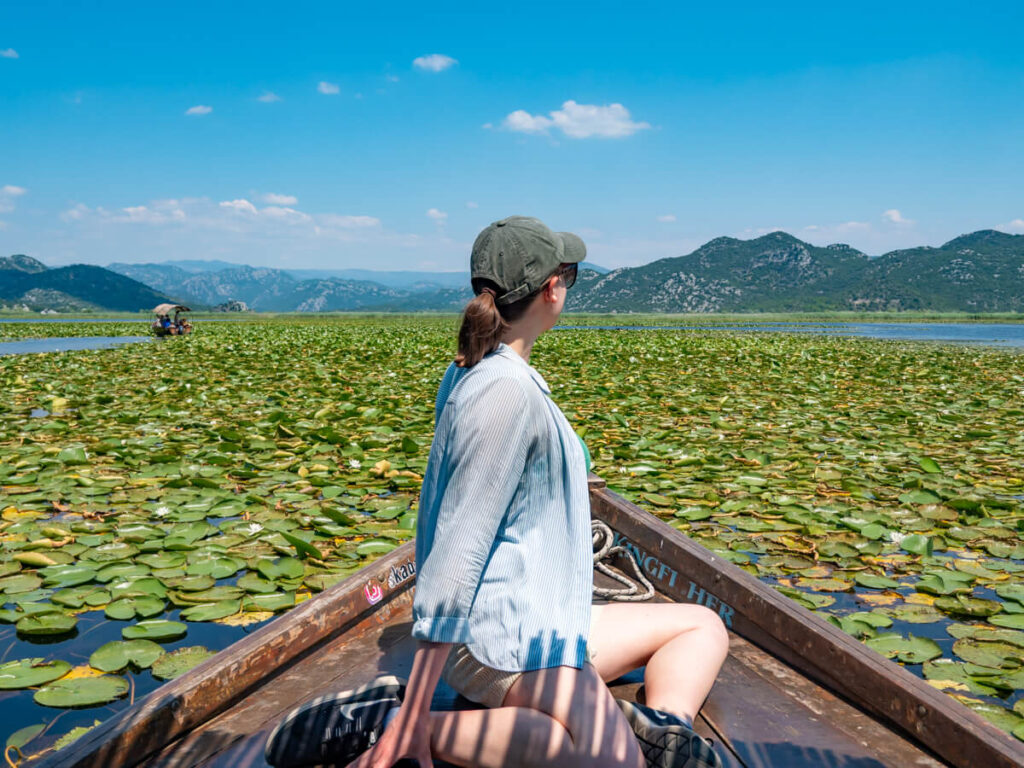
Organised tours are a great alternative if you don’t want to hire a car or deal with public transport timetables. There are plenty of day trips and multi-stop excursions available throughout Montenegro, covering everything from coastal sightseeing to national parks and mountain adventures.
Some of the most popular tours include:
How long to spend in Montenegro?
Montenegro might be a small country, but there’s a surprising amount to see. We’d recommend spending at least 7-10 days in Montenegro if you want to experience a good mix of the coast, mountains, national parks, and historic towns. You can see some of the main highlights in 4-5 days, but you’ll be rushing around and won’t have much time to explore beyond the most popular destinations.
For a more comprehensive road trip, two to three weeks would be ideal. You could explore the entire country without constantly packing up and moving accommodation, including some of the less-visited areas in the north and east.
Here’s how we’d break it down:
Is Montenegro worth visiting?
We’d definitely recommend visiting Montenegro. It’s one of the most varied countries in the Balkans, with a ridiculous amount of beautiful scenery packed into a relatively small area.
The combination of the Adriatic coastline, dramatic mountains, historic towns, glacial lakes, deep river canyons, and beautiful national parks makes it a great destination for all kinds of travellers. We were really surprised how much we loved it.
Another reason we’d recommend Montenegro is that it’s still relatively affordable compared to many other European holiday destinations, especially if you’re travelling outside the peak summer season.
It’s also a fantastic country for a road trip. The distances are relatively short, the scenery changes dramatically as you travel around, and there are plenty of places to stop along the way. You can go from the coast to the mountains in just a couple of hours, which is something you can’t do in many countries.
However, it’s not perfect. Kotor, Budva, and other popular destinations can get incredibly crowded, particularly when cruise ships and coach tours arrive. Traffic can be horrendous, parking is insanely difficult, and accommodation prices increase considerably in the peak months.
We’d also say that Montenegro isn’t quite as easy to explore independently as some other European countries. Public transport is useful between the main towns, but getting to some of the more remote attractions can be difficult without a car or tour.
But overall, we’d say Montenegro is absolutely worth visiting, especially if you enjoy nature, outdoor adventures, stunning natural landscapes, beautiful historic towns, and exploring somewhere a little different.
Is Montenegro safe?
Montenegro is generally a safe country to visit, and we’d have no hesitation recommending it for independent travellers, couples, solo travellers, and families. It’s a popular tourist destination, and most visitors enjoy their trip without experiencing any problems.
As with anywhere, it’s worth taking sensible precautions, especially in busy tourist areas and when travelling around independently. Petty theft can happen, especially in crowded places like Kotor Old Town, Budva’s beaches, bus stations, and busy nightlife areas. Pickpocketing and bag-snatching are the main things we’d be aware of, so keep an eye on your belongings and avoid leaving valuables unattended.
Probably the biggest thing we’d be cautious about is driving. Driving standards can be unpredictable, etiquette might not be what you’re used to, and busy coastal roads and winding mountain routes can be challenging. Some roads are narrow, with steep drops and tight bends, while summer traffic can become incredibly congested.
Another risk is the great outdoors. Weather conditions can change quickly and some hikes are much more challenging than they initially appear, which isn’t helped by people romanticising them on Instagram. Stick to marked trails, check the weather forecast, take plenty of water and snacks, and carry a fully charged phone. If you’re tackling a more challenging mountain route, consider hiring a local guide.
Travel insurance can save you $$$ if things go wrong
Don’t forget to buy travel insurance! From lost luggage to emergency medical care abroad, travel insurance gives you peace of mind so you can solely focus on the adventure. It might not be exciting, but you’ll be very glad you have it if something goes wrong. A few of our favourite companies are:
Get 8 weeks of electronic theft coverage free with SafetyWing Travel Insurance with our code: THOROUGHLY8 (new members only). Simply click the pink camera and laptop icon on the Nomad Essential page to redeem the reward before creating a new account.
Find out more: 6 Best Travel Insurance Companies for Every Kind of Trip
Is Montenegro expensive?
Montenegro is quite affordable compared to many other European holiday destinations, especially if you’re travelling outside the peak summer season. It’s generally cheaper than neighbouring Croatia and most of Western Europe, although it’s noticeably more expensive than other Balkan countries like Albania and Bosnia and Herzegovina.
But it’s not the bargain destination it once was. Its growing popularity has pushed up prices, specifically along the coast, and places like Kotor, Budva, and Sveti Stefan can be surprisingly expensive in July and August.
The good news is that you can still visit Montenegro on a fairly modest budget if you’re happy to stay in apartments, eat at local restaurants, and use public transport.
Here are some approximate prices to help you budget for your trip:
Here are some approximate prices to help you budget for your trip:

Montenegro Travel Information
To help you plan your trip to Montenegro, here’s some quick-fire, helpful travel information.
Visas
Most visitors don’t need a visa to visit Montenegro for a short holiday, although the exact rules depend on your nationality.
British citizens can visit Montenegro visa-free for up to 90 days in any 180-day period. This is separate from the Schengen allowance, as Montenegro isn’t part of the Schengen Area. Time spent in Montenegro won’t count towards your 90 days in the Schengen zone, and vice versa.
US citizens can also visit visa-free for up to 90 days, while EU citizens can stay for up to 90 days with a passport, or up to 30 days using a valid national ID card. Many other nationalities are also eligible for visa-free entry, but the permitted stay varies.
Your passport must have been issued less than 10 years before the date you enter Montenegro and have at least 3 months of validity remaining after the day you plan to leave. Make sure your passport is stamped when you enter and leave the country, as this helps avoid any confusion about how long you’ve stayed.
One thing that’s easy to overlook is that all visitors must register their stay with the authorities within 24 hours of arrival. Hotels and many holiday rentals should do this for you, so don’t be surprised if they ask for your passport on check-in, but it’s worth checking with your accommodation provider that they’ve registered you. If you’re staying somewhere that doesn’t offer this service, like an Airbnb, you’ll need to register with the local tourist organisation or police yourself.
Currency
The official currency in Montenegro is the euro (€), despite Montenegro not being a member of the European Union or the eurozone (yet!).
You’ll find euro banknotes in denominations of €5, €10, €20, €50, €100, €200, and €500, alongside coins ranging from 1 cent to €2.
Money and ATMs
Card payments are widely accepted throughout Montenegro, particularly in hotels, restaurants, supermarkets, shops, and larger tourist areas. Visa and Mastercard are generally the easiest options, although some smaller cafés, bakeries, local markets, and family-run businesses may only accept cash. Quite a few accommodations we stayed in specifically asked for payment in cash.
ATMs are easy to find in cities and popular coastal towns, including Kotor, Budva, Tivat, and Podgorica. However, they’re less common in remote villages and mountain areas, so it’s worth withdrawing some cash before heading inland. We didn’t find any brand to be particularly preferable.
Be aware that ATM withdrawals can come with fees from both the local bank and your own card provider. The machine should display any local withdrawal fee before you confirm the transaction – always decline the conversion (or choose to be charged in the local currency), as you’ll get a better rate.
Connectivity
Staying connected in Montenegro is pretty easy, with Wi-Fi widely available in hotels, guesthouses, restaurants, and cafés, although connections can be less reliable in remote mountain areas.
One important thing to remember is that Montenegro isn’t in the EU, so EU roaming arrangements don’t automatically apply. Depending on your mobile provider, using your usual UK or European SIM could result in expensive roaming charges.
The main mobile networks are Crnogorski Telekom, One, and m. You can buy a local prepaid SIM card from operator shops and other retailers, with tourist packages available if you need a larger amount of data or are staying for a while.
If your phone supports eSIMs, it’s much easier to buy a data package online before you arrive. We used Airalo, which we’ve always found more affordable than competitors, and our signal was always good.
Gorceries
Buying groceries in Montenegro is easy in larger towns and tourist destinations, where you’ll find plenty of supermarkets and smaller convenience stores. Some of the main supermarket chains include:
Opening hours vary, but many grocery stores typically operate from around 7:00 AM to 10:00 PM from Monday to Saturday – closed Sundays.
What to pack to visit Montenegro
It’s best to be prepared when you visit Montenegro. Don’t forget to pack your:
If you’re planning to bring a drone, be aware that you need to apply for a permit before importing it into Montenegro, and it’s illegal to fly it in Montenegro’s national parks or near airports.
Montenegro Travel FAQs
Planning a trip to Montenegro? Here are some quick answers to the most frequently asked questions to help you get organised before you go.
Is Montenegro good for a holiday?
Montenegro is an amazing holiday destination, especially if you enjoy a mix of beaches, historic towns, beautiful scenery, and outdoor activities. You can explore the Bay of Kotor, relax on the Adriatic coast, visit mountain national parks, and enjoy some of the best scenery in the Balkans, all within a relatively small country in one trip.
What is the best month to go to Montenegro?
June and September are two of the best months to visit Montenegro, as you can enjoy warm weather without quite as many crowds as in July and August. May and October are also lovely for sightseeing and exploring the national parks, although the sea may be cooler, and some seasonal businesses may have shorter opening hours. July and August are best if you’re visiting primarily for a beach holiday, but expect higher prices, busy roads, and crowded coastal towns. For hiking in the mountains, mid-June to early October is generally the best window.
What to be careful of in Montenegro?
The main things to be aware of are busy summer roads, winding mountain routes, and petty theft in crowded tourist areas. Take extra care when driving, particularly on narrow mountain roads, and allow more time for journeys during July and August. If you’re swimming, watch out for speedboats and other watercraft operating close to the shore, and stick to designated swimming areas where possible. When hiking, stay on marked trails, check the weather forecast, and take enough water and supplies. It’s also worth keeping an eye on wildfire warnings during hot, dry weather.
Is Montenegro a part of Croatia?
No, Montenegro is an independent country in the Balkans, bordering Croatia to the north-west. The two countries were both part of Yugoslavia, but Montenegro declared independence from Serbia and Montenegro on 3 June 2006. Although they’re separate countries, they’re easy to combine into one trip, particularly if you’re visiting Dubrovnik and the Bay of Kotor or want to spend some time in Croatia’s highlands. Although they’re separate countries, they’re easy to combine into one trip, particularly if you’re visiting Dubrovnik and the Bay of Kotor. Just remember that you’ll need to cross an international border, so allow extra time for passport checks, especially during the busy summer season.
Which is nicer, Croatia or Montenegro?
Both Croatia and Montenegro are beautiful, so it really depends on what you’re looking for. Croatia has a longer coastline, a wider choice of islands, and more established tourist destinations, making it a great option for island hopping, historic cities, and a classic Mediterranean holiday. Montenegro is smaller and more compact, with dramatic mountain scenery, a beautiful coastline, and the spectacular Bay of Kotor. It’s better for hiking or a road trip where you want to combine coastal towns, beaches, lakes, and national parks without travelling huge distances.
Can you speak English in Montenegro?
nglish is widely spoken in Montenegro’s main tourist destinations, particularly in hotels, restaurants, cafés, and tour companies. You’ll generally find it easy to get by in places such as Kotor, Budva, Tivat, and Podgorica, especially with younger people and those working in tourism. We’d recommend learning a few basic words, such as hvala (thank you) and molim (please), as it’s always appreciated.
Can you drink the tap water in Montenegro?
Tap water is generally safe to drink in many towns and popular tourist destinations in Montenegro, so you can usually refill your reusable water bottle rather than buying bottled water every day. However, water quality can vary depending on the local supply, particularly in rural areas and some coastal properties. We’d recommend asking your accommodation provider whether the tap water is safe to drink locally. We had our filter water bottles with us, so we didn’t need to worry.

Read next:
2-3 Week Montenegro Road Trip Itinerary: From Adriatic Coast to Alpine Altitudes
12+ Authentic Places in Montenegro We Love: Which to Visit + Where Not to Go
5 Local Accommodations in Montenegro Reviewed: Cool Katuns + Eco Hotels
22 Magnificent Things to Do in Montenegro Beyond the Tourist Trail
Traditional Foods in Montenegro to Try & Meat-Free Options for Local Dishes
All 5 Montenegro National Parks Compared + Our Favourites
A Handy Guide to Hiking in Montenegro & Our Top 10 Trails
A Detailed Guide to Driving in Montenegro + Our Top Tips
Renting a Car in Montenegro: Complete Guide + Kombo Rent a Car Review
Our Montenegro Destination Guides:
