A Day Trip Guide to Sveti Stefan: Montenegro’s Iconic Island

A complete guide to visiting Sveti Stefan, from what to do and where to eat to accommodation options and practical tips like parking and public transport.
This post may contain affiliate links, which means we might earn a small commission on anything purchased through these links at no extra cost to you. Learn more on our disclaimer page.
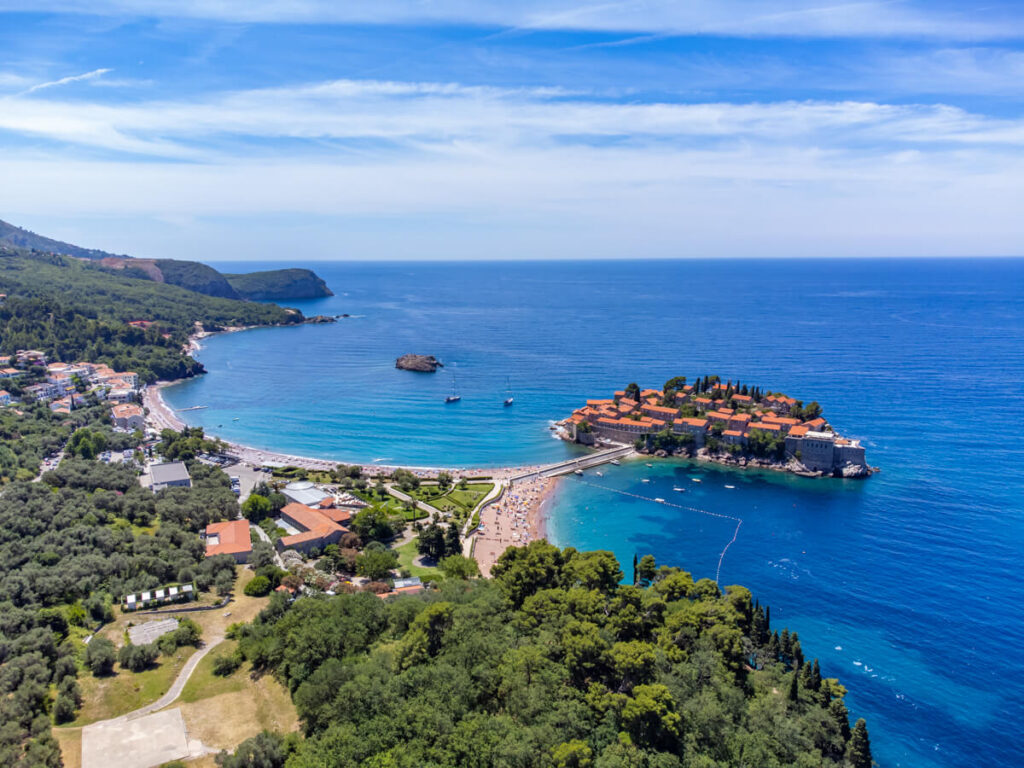
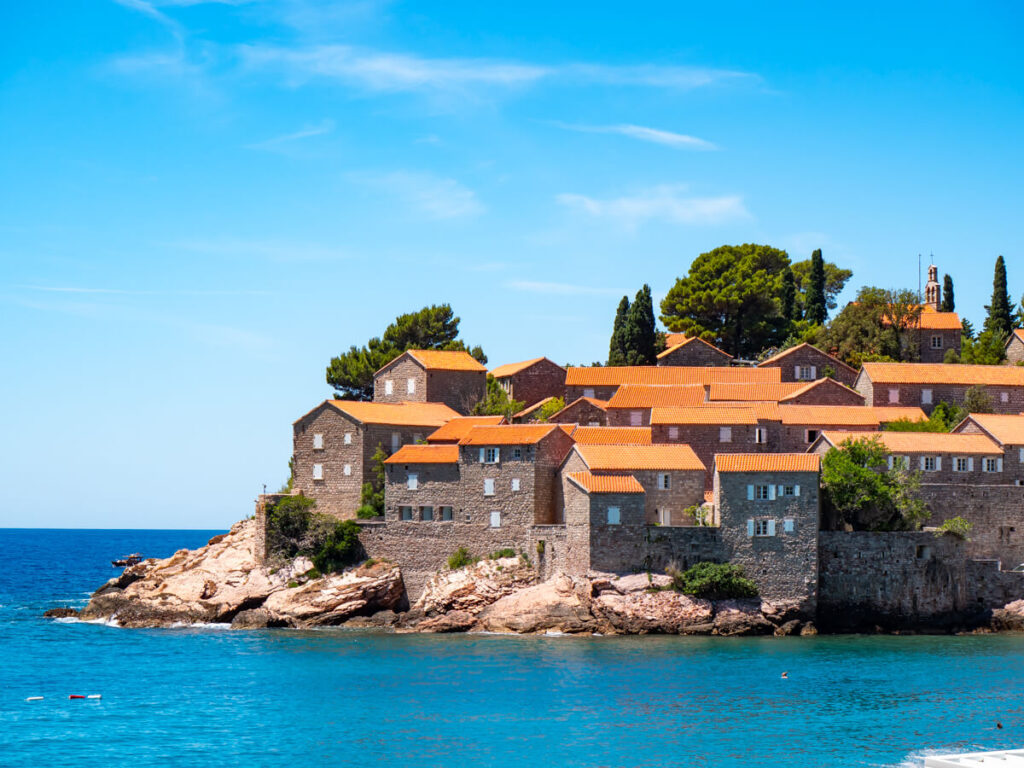
With its tawny terracotta rooftops, stalwart stone houses, and narrow natural causeway connecting the island to the mainland, Sveti Stefan is one of Montenegro’s most iconic coastal views. It’s a beautiful spot to visit on a day trip from Kotor or Budva, with pebble beaches, clear water, and scenic coastal walks, but the reality is a little different from what some travel guides suggest.
We visited Sveti Stefan during our Montenegro road trip and found that a lot of the information online is either outdated or misleading. Any guide claiming Sveti Stefan is still a quiet, undiscovered destination is about a decade out of date, while details about the island’s privatisation, access restrictions, and whether it’s open to visitors can be confusing or no longer accurate. In this guide, we’ll explain how to visit Sveti Stefan on a day trip (with accommodation options if you’d like to linger a little longer), including the best viewpoints, beaches, coastal walks, how to get here, what to do, where to eat, and what you can and can’t access, plus what to know before you go, and if it’s even worth the expensive parking fee.
Sveti Stefan at a glance
More from Montenegro
About Sveti Stefan
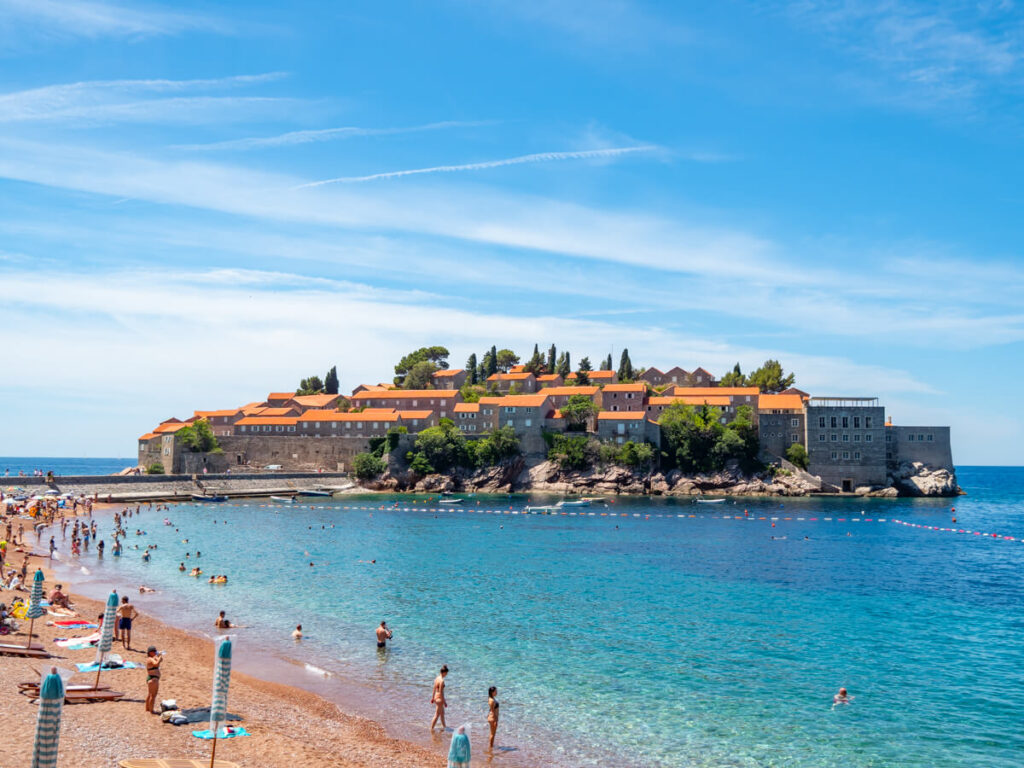
Sveti Stefan is one of the most recognisable places in Montenegro, known for its cluster of stone houses and terracotta roofs sitting on a tiny island just off the mainland. A narrow natural causeway connects it to the shore, with beaches on either side and the mountains rising behind the village.
Although it’s now associated with luxury hotels and expensive waterfront restaurants, Sveti Stefan began as a fortified settlement. The island was developed in the 15th century by the Paštrovići, a coastal community that used it as a defensive stronghold. Its position made it useful for protecting the local coastline, and the settlement was rebuilt after being damaged during conflicts between the Ottoman and Venetian powers.
By the middle of the 20th century, the village had fallen into decline, with only a small number of residents remaining. The Yugoslav authorities relocated the remaining inhabitants and transformed the settlement into a hotel, turning Sveti Stefan into an exclusive holiday destination. It subsequently attracted celebrities and international visitors, including Elizabeth Taylor, Richard Burton, Kirk Douglas, and Sophia Loren, becoming one of the best-known hotspots of the Montenegrin coast.
The resort later came under the management of Aman Sveti Stefan. The complex closed in 2020 during the COVID-19 pandemic and, despite expectations that it would reopen, it remained shut the following year as a dispute developed over access to the surrounding beaches.
The disagreement centred on the balance between the resort’s demand for privacy for its guests and the public’s right to access the coastline. Due to the dispute, the resort remained closed for five years while negotiations continued. A settlement was finally reached in 2026, clearing the way for Aman Sveti Stefan to reopen on 1 July 2026.
Today, Sveti Stefan is one of the most iconic places to visit in Montenegro, even if the island itself remains closed to all except resort guests.

Planning a trip to Budva?
Montenegro is gaining popularity quickly, so be sure to book in advance as early as possible!
Top Experiences in Budva
Top Hotels in Budva
Rent a Car in Montenegro
Best eSIM for Montenegro
Where is Sveti Stefan?
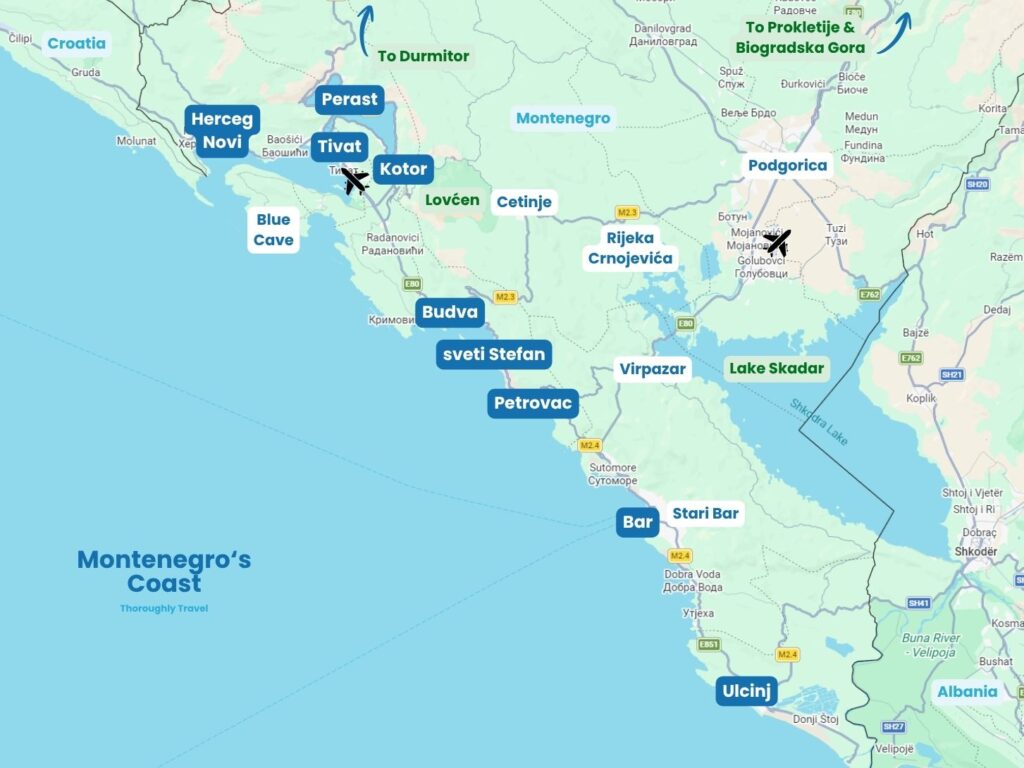
Sveti Stefan sits on Montenegro’s Adriatic coast, around 6 miles (10 km) southeast of Budva and roughly 5.5 miles (9 km) northwest of Petrovac by road. It sits along the Budva Riviera, a stretch of coastline known for its beaches, small seaside settlements, and mountainous backdrop, making it one of the best day trips from Budva.
It’s also easily reachable from Kotor, 18.5 miles (30 km) away, and it’s possible to day trip to it from other towns on the Bay of Kotor like Perast and Herceg Novi, or from the Luštica Peninsula.
The island is connected to the mainland by a narrow strip of sand and shingle, topped with a cement walkway, with the main village and accommodation spread along the hillside above the coast.
Sveti Stefan Map
Sveti Stefan is perfectly positioned to explore on a day trip.
Why visit Sveti Stefan?
The main reason to visit Sveti Stefan is the view of the island itself. The stone buildings, red roofs, and narrow causeway are an iconic sight and a total contrast to the larger resort cities along the coast.
The beaches here are another reason to come, boasting clear water and a mix of sand and pebbles, although it gets busy in summer and the organised sections can be expensive. We noticed the sea was much calmer with smaller waves than in other coastal towns like Petrovac.
Sveti Stefan is also well placed for exploring more of the Budva Riviera. Budva is close enough for an evening out or a day exploring the Old Town.
The island’s reputation for luxury can be its own downfall, though, with hefty prices for parking and eating out, and privatised beaches and parks.
The best things to do in Sveti Stefan
Although Sveti Stefan is best known for its iconic island, there’s enough to do in the surrounding area to make it worth spending more than an hour here, from coastal walks and viewpoints to nearby monasteries and seaside restaurants.
1. Take a picture from the viewpoint
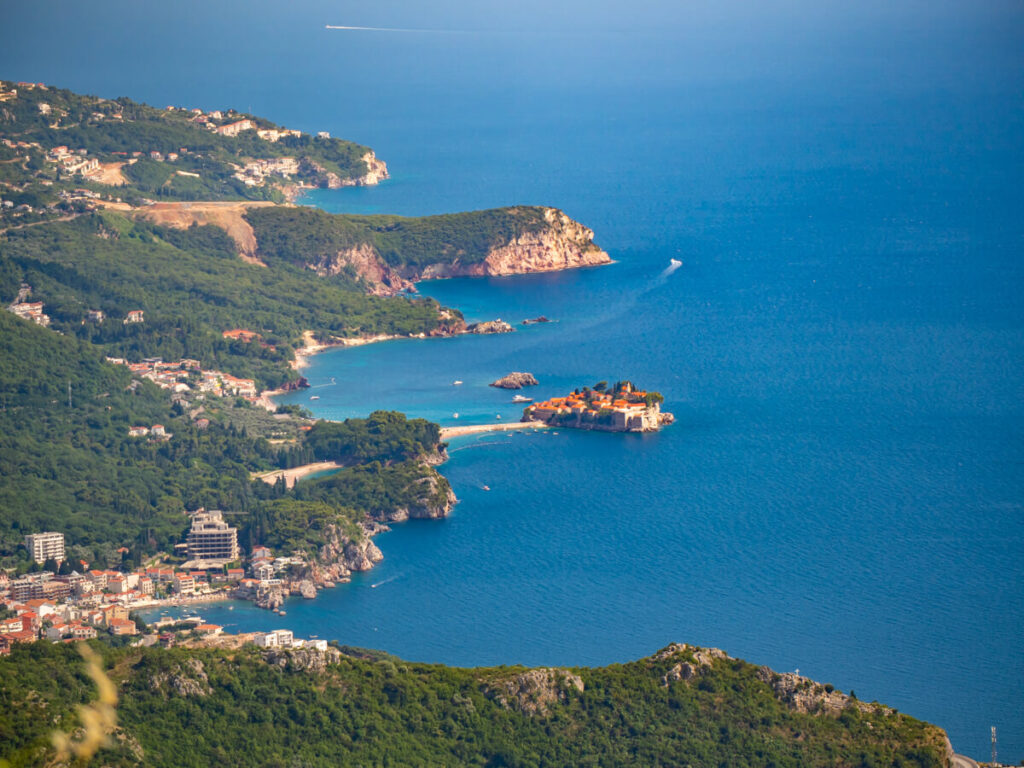
One of the best things to do in Sveti Stefan happens before you even get to town and its island. As you drive along the E65 coastal highway, there are several roadside pull-offs where you can stop and look towards the island.
It’s worth pinning where you’d like to stop on Google Maps, like this viewpoint, before your journey, and arriving early, as many viewpoints have very limited spaces to pull into and can be very popular.
For a higher and slightly less chaotic viewpoint, head up towards St Sava Church, a small Orthodox chapel in the hills above Sveti Stefan, in the village of Đenaši. The original church dates back to the 17th century, and the elevated position gives you a different perspective over the coastline and the island below.
Early morning and late afternoon are particularly good times for photography, when the light is softer, and the island’s russet red roofs stand out against the dark green trees and the blue of the Adriatic Sea.
2. Relax on the beach
The beaches are one of the main reasons to visit Sveti Stefan, with clear water, rose-tinted pebbles, and views of the island from the shore. There are several beaches within walking distance, including:
Some have been privatised by Aman Sveti Stefan, while others are public and free to sunbathe on. We’ve expanded on each below, but you can also check out the beaches near Budva for better public options.
Inconveniently, there are no public toilets in Sveti Stefan, but there are several beach clubs that you can use the facilities of if you buy something.

Sveti Stefan Beach
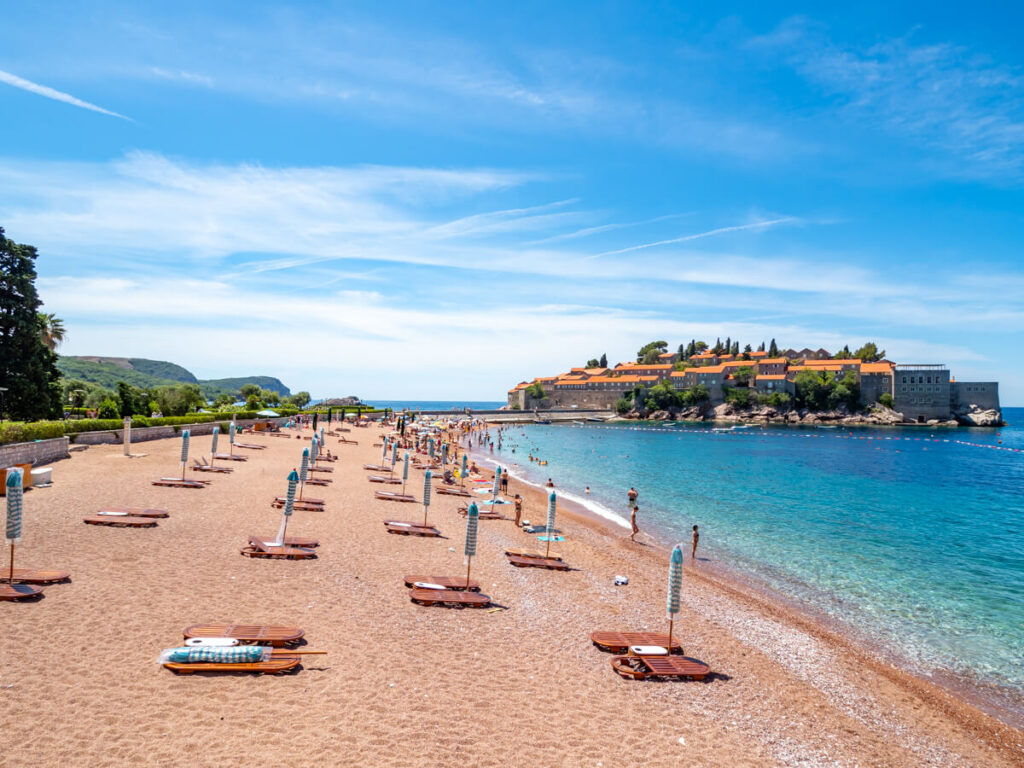
Sveti Stefan Beach is the main public beach beside the causeway and the obvious choice if you want to swim with the island directly in front of you. It’s on the southern side of the causeway (left side as you look at the sea), open to the public, and free to access.
There are organised sections with sun loungers and umbrellas for rent for around €30-60 a day, depending on which row you go for, as well as areas where you can lay down your own towel for free.

Sveti Stefan Beach II
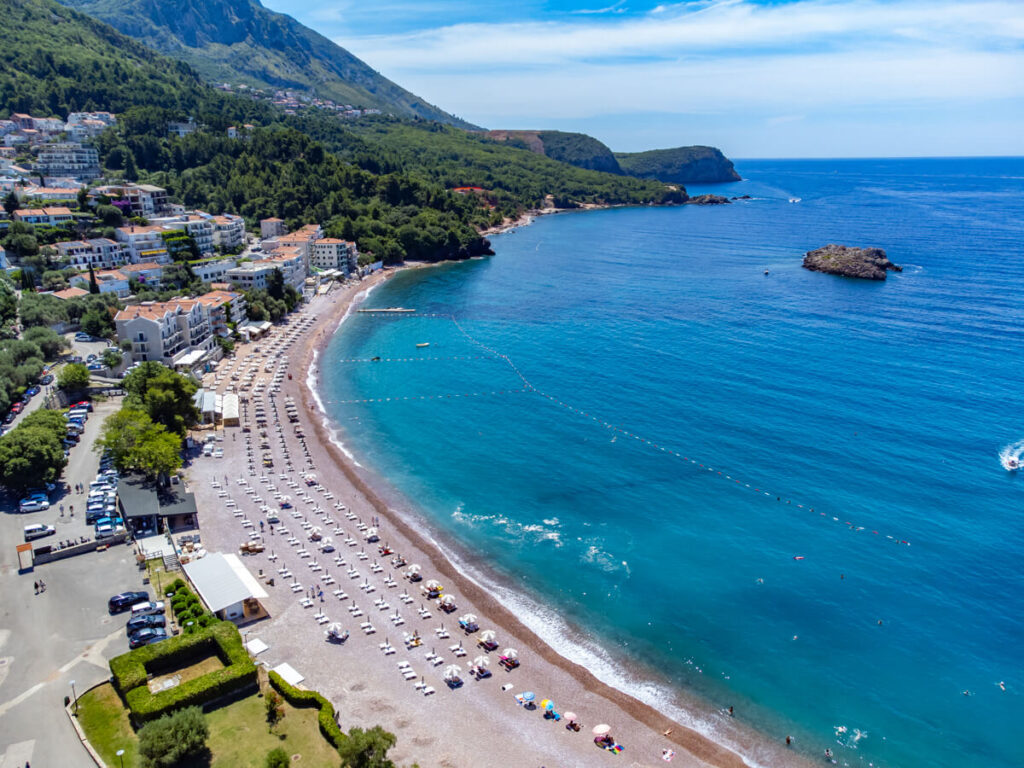
Sveti Stefan Beach II, on the northern side of the causeway, is associated with the Aman resort, and is therefore private. Apparently, you can pay for access for a whopping €220 per day for a standard set of two loungers and one umbrella.

Miločer Beach
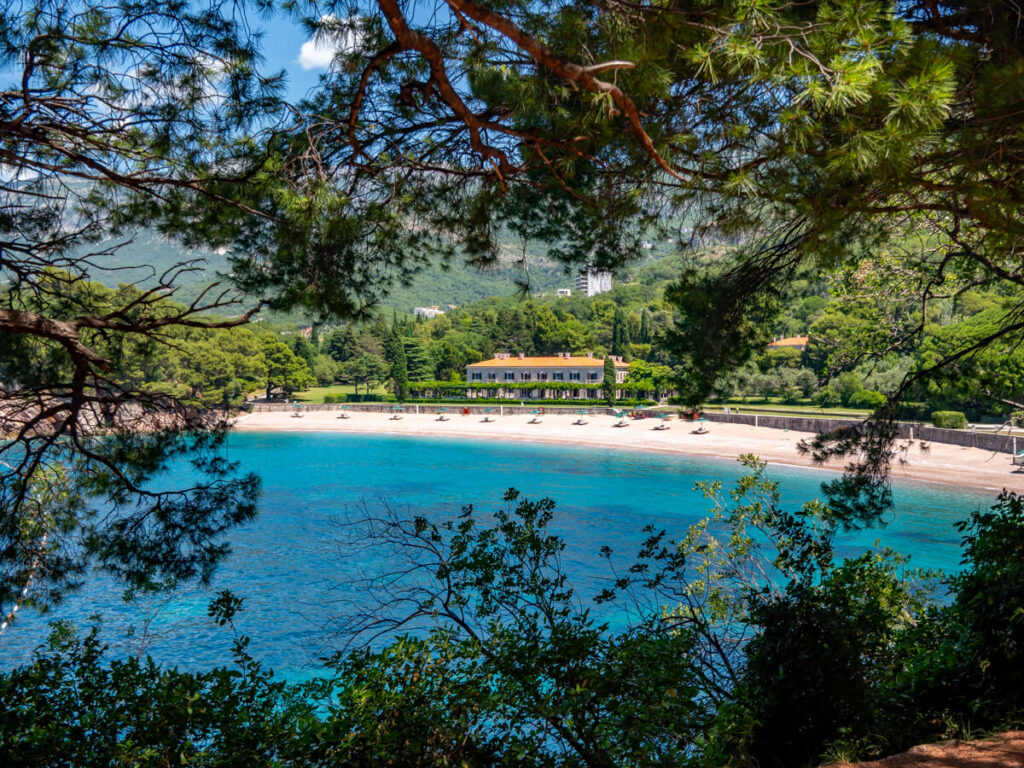
Miločer Beach, also known as King’s Beach, sits below Villa Miločer, the former summer residence of Queen Marija Karađorđević. The elegant stone villa and the trees surrounding the beach give this stretch of coast a different feel from the busier beach beside Sveti Stefan.
Following Aman resort’s reopening after COVID-19, King’s Beach was made accessible to the public, but after the reopening again in summer 2026, it’s been re-privatised, and it was closed when we visited. It’s a shame, as it’s really beautiful and there wasn’t a single person on it.

Queen’s Beach
Queen’s Beach, or Kraljičina Plaža, is a smaller cove further north along the coast from Miločer Beach. It was associated with the royal estate and is surrounded by trees, making it feel more secluded than the main beach. However, under the current arrangements, it is reserved for Aman guests during the day, so it’s not somewhere ordinary folk can enjoy.

Crvena Glavica
Further south of Sveti Stefan’s main beach, Crvena Glavica is a series of smaller coves and a more rugged setting. There’s a designated nudist beach in the area, and the coastline is particularly known for its vibrant red rock.

3. Walk around the headland
One of the nicest ways to explore the stretch of coast around Sveti Stefan is on foot. You can walk from Sveti Stefan towards Miločer, and if you fancy something a bit longer, continue in the direction of Pržno, a small fishing village with a waterfront lined with restaurants.
You’ll get amazing sea views with stretches of the path winding beneath pine and olive trees, making it a good alternative to spending the whole day on the beach. The route takes you past some of the privatised beaches, so you can admire them even if you can’t go on them.
Allow around 20-30 minutes to reach Pržno, depending on your pace and where you start.

4. Chill out in Miločer Park
Miločer Park is a wooded coastal estate between Sveti Stefan and Pržno, with pine trees, cedars, olive trees and paths running through the grounds. It was originally part of the royal estate around Villa Miločer, and today it’s a welcome change from the exposed beaches and busy coastal road.
Bear in mind that access through the park isn’t entirely straightforward following the resort’s reopening. The lower path near Queen’s Beach has been subject to daytime restrictions, although an upper route may remain available. Check the signs and current arrangements when you arrive, but I’m sure a local security guard will also let you know where you can’t go.
5. Visit Praskvica Monastery
For a little history away from the beach, head uphill to Praskvica Monastery, an Orthodox monastery set among the olive groves above Sveti Stefan. The monastery has a long history linked to the Paštrovići community, and its church and grounds offer a quieter look at the region’s religious heritage.
It’s not the scale of Ostrog Monastery, which is a long day trip away, but it’s a worthwhile stop if you’re interested in Montenegro’s history and want to see something beyond the beaches and luxury hotels.

6. Go paragliding
If you’d rather see the coastline from above, tandem paragliding trips operate in the wider Budva Riviera, with launch sites in the hills above the coast. Flights can give you sweeping views over the Adriatic, the beaches, and the surrounding mountains, with Sveti Stefan sometimes forming part of the view depending on the route and conditions.
You’ll need to arrange a flight with a local operator nearby, as availability depends on the weather, particularly wind conditions, so book with an established operator and confirm the launch location, flight duration, and what is included before paying.

7. SCUBA dive in the Adriatic
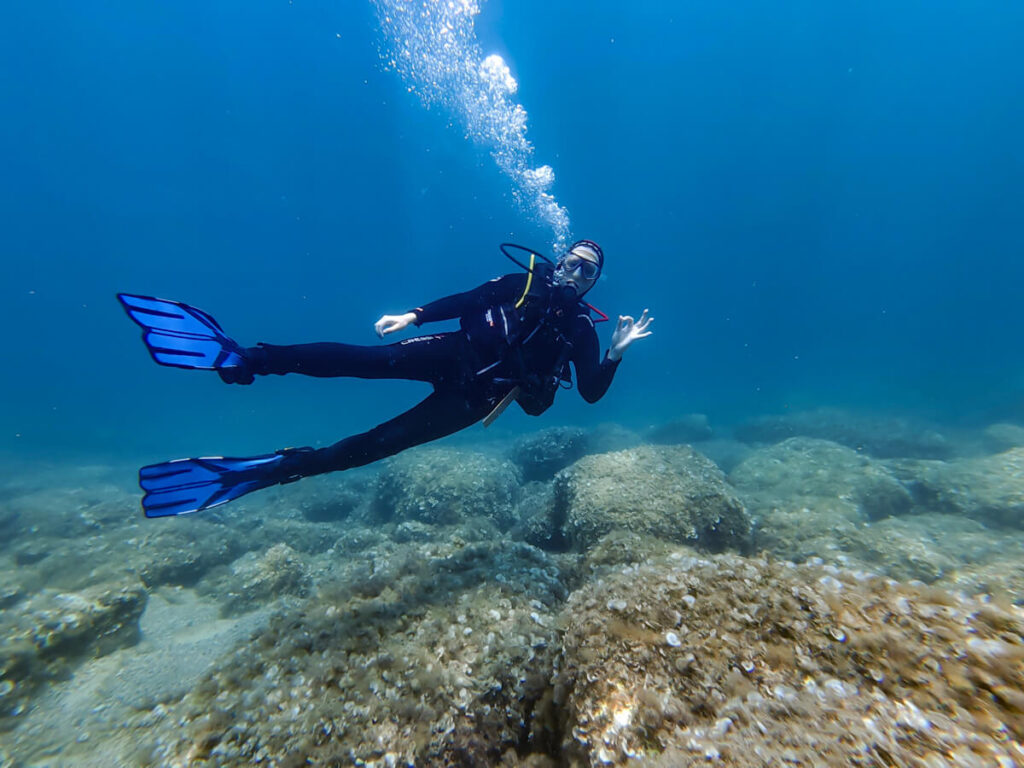
The Adriatic coast around Sveti Stefan is well placed for exploring Montenegro’s underwater world, with rocky reefs, underwater caves, and marine life to look out for. Only 15 minutes away, you can go SCUBA diving in Budva, where local dive centres run boat trips and diving tours to nearby sites suitable for different experience levels, with discover SCUBA experiences for newbies and trips for certified divers separately.
Where to eat in Sveti Stefan?
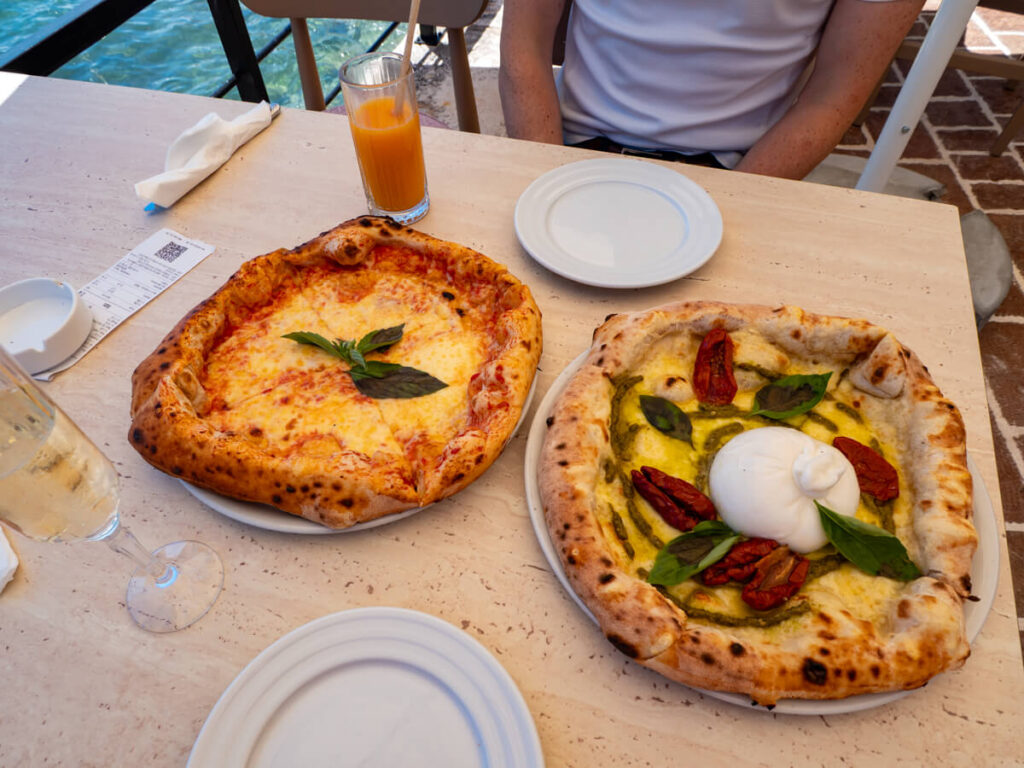
Sveti Stefan isn’t very big, so it has limited dining options, but there are some nice (if not overpriced) cafés and restaurants, mainly focusing on Montenegrin and wider Adriatic cuisine, with seafood featuring heavily on menus along the waterfront.
There are a mix of traditional konobas, family-run restaurants, hotel dining rooms, and more upmarket places with terraces overlooking the island. The view is a big part of the appeal, but restaurants in the most obvious waterfront locations can charge accordingly, particularly during July and August, so it can be pricey.
If you’re on a budget, it might be worth looking around Sveti Stefan for a few hours and then eating elsewhere – Petrovac and Budva are good options for combined day trips with nice (and more budget-friendly) dining out options.
Sveti Stefan Restaurants
Where to stay in Sveti Stefan?
Accommodation around Sveti Stefan is mostly made up of apartments, guesthouses, boutique hotels, and private villas, with a smaller number of luxury properties. Where you stay makes a difference because the village is built into the hillside, so a property that looks close to the beach on a map may involve a steep walk or a lot of steps.
Around the village and hillside, you’ll find plenty of apartments and smaller hotels, often with balconies or terraces overlooking the island. Near the beach, there are hotels and apartments that make it easier to spend most of your time by the water. These tend to be more expensive during the main summer season, and not every property has direct beach access, so it’s worth checking.
Around Miločer and Pržno, you’ll find a quieter alternative, with waterfront accommodation, leafy surroundings and access to the coastal walking paths.
We don’t actually recommend staying in Sveti Stefan – we think it makes a much better day trip destination than a base, so we’d recommend staying in Budva, where you’ll have a much wider choice of accommodation, restaurants, and things to do in the evening. But if you’d like to stay the night, you’ll be rewarded with being able to explore once the day-trippers have left.
Top Hotels in Sveti Stefan
Aman Sveti Stefan
If you’re looking for somewhere special to stay, it doesn’t get more magical than the island itself. Aman Sveti Stefan is a luxury resort set within the restored stone houses of the historic island village.
Rather than standard hotel rooms, accommodation ranges from smaller village rooms to private cottages and spacious suites, with original stonework, traditional details, and views over the rooftops, gardens, or Adriatic Sea. Some of the larger options have separate living areas and private terraces, while the most exclusive suites include features such as a private pool.
Following its lengthy closure and dispute over public beach access, the island reopened for the summer season in July 2026, but it’s closed annually in the off-season. It’s an exceptionally exclusive place to stay, but prices and restricted access make it a very different experience from staying in the surrounding village.

Villa Miločer
Villa Miločer is the mainland part of Aman Sveti Stefan, housed in a 19th-century former royal summer residence once used by Queen Marija Karađorđević. Surrounded by trees, it has a more secluded feel than the island, with spacious suites that combine historic character with contemporary comforts.
The Sea View Suites have Juliet balconies overlooking the Adriatic, while the Garden View Suites look out over the surrounding greenery. Both feature separate living areas, fireplaces, and bathrooms with freestanding baths.
Guests also have access to the resort’s spa facilities, including an indoor-outdoor pool and hydrotherapy areas, making Villa Miločer a year-round option even when the island accommodation is closed.

How to get to Sveti Stefan
Sveti Stefan is just south of Budva, so it’s relatively easy to reach if you’re staying along the coast.
By plane
The closest airport to Sveti Stefan is Tivat Airport (TIV), around 18 miles (29 km) from Sveti Stefan by road. The journey takes less than an hour. It’s easy to simply follow the E80/E65 Adriatic Highway along the coast.
Podgorica Airport (TGD) is roughly 35 miles (56 km) away as the crow flies, but the drive is longer, while Dubrovnik Airport (DBV) in Croatia is another option if you don’t mind crossing the border.
By car
Renting a car in Montenegro gives you the most flexibility if you’re planning to explore more of Montenegro beyond Sveti Stefan. The town is just off the coastal road between Budva and Petrovac, making it straightforward to reach from either direction.
The main drawback if you do rent a car is that parking in Sveti Stefan is a nightmare and can be limited and expensive, so check what your accommodation provides or where you plan to park when you get there.
Ignore any signs or Google Maps pins for “free parking”, as it’s not true. There are very limited spaces on the main road where you can park and then walk down, but they’re primarily temporary viewpoint pull-ins or owned by hotels or restaurants, not actually free parking spaces.
We also failed to find any free parking in the town itself, as all the roads have yellow lines on them (no parking), and are hilly, narrow, and winding.
We didn’t realise that once you reach the bottom of the hill, there’s a barrier to enter the waterfront, where you’ll be directed to a car park and charged to stay. In the end, we snagged a space in this car park, which was full by 11:00 AM on a Tuesday in mid-June, so arrive early if you’re planning to park. We were charged €4 an hour.

By taxi
Taxis are a convenient option for getting to Sveti Stefan if you’re coming from nearby, especially if you’re only visiting Sveti Stefan for the day. Agree the fare before setting off if the taxi isn’t metered, or confirm the price with the company when booking, and make sure to arrange your return journey in advance, as you can’t rely on there being taxis in Sveti Stefan.
By bus
If you’re travelling on a budget, public buses run along the coast between Sveti Stefan, Budva, and Petrovac, with further connections available from Budva to other towns in Montenegro. Services can be useful for a day trip, especially since it’s cheaper than parking, but timetables and frequencies vary by season, and buses may be busy in summer.
You can get the Mediterranean Express bus from Budva to Sveti Stefan from this bus stop near the marina (you’ll be dropped off on the main road and need to walk down to the beaches), while the bus back to Budva leaves from this bus stop in the village. There are also transfers to Sveti Stefan, which are affordable and more convenient.
It’s also easy to take the bus from Kotor to Sveti Stefan, which takes around an hour and costs about €6. From the south, you can take the bus from Bar to Sveti Stefan for around €5, and it’s about 45 minutes.
Check the latest departure times before travelling, especially if you need to get back in the evening. You can check routes and book tickets through BusTicket4.me and Bookaway.

How to get around Sveti Stefan
Sveti Stefan is small enough to explore on foot, so you won’t need a car or taxi just to get around the village and nearby coastline. The main viewpoint, beach, and waterfront are all within walking distance, while a coastal path through Miločer Park connects Sveti Stefan with Pržno.
Just bear in mind that some routes involve steps or steep sections, particularly between the main road and the beach.
We also think it’s worth walking up the causeway, even if you can’t go on the island, as it gives lovely views across the beaches and back to town.

When to visit Sveti Stefan
The best time to visit Sveti Stefan is in May, June, or September, when the weather is generally warm enough for the beach, but the area is less busy than during the peak summer months.
July and August are the hottest months, and also the busiest, with more people on the beaches, heavier traffic along the coast, and greater demand for accommodation. We visited in June, and it was nice for a few hours, but still quite busy – we wouldn’t have wanted to navigate parking and the crowds in peak summer. The sea is usually warmer in September after heating up through summer.
May and October can also be pleasant for walking and sightseeing, although the sea may be cooler, and some seasonal businesses may have limited opening hours.

Sveti Stefan Weather
Sveti Stefan has a Mediterranean climate, with hot, dry summers and mild, wetter winters.

How long to stay in Sveti Stefan?
If you’re visiting Sveti Stefan as part of a wider Montenegro trip, we’d allow half a day to see the island from the viewpoints, spend some time on the beach, and have lunch overlooking the water. You can fit the main sights into an hour or two, but staying longer gives you time to explore some of the nearby coves or enjoy a leisurely lunch.
If you enjoy beach holidays and want somewhere small and more characterful than Budva, staying for 1-2 nights gives you more time to enjoy the coastline without rushing.
However, if you’re mainly interested in seeing the island, taking photographs, and having a swim, you don’t need to stay overnight. We’d personally use Budva as a base and visit Sveti Stefan for the day, as it gives you more choice of restaurants, accommodation, and evening activities.
Is Sveti Stefan worth visiting?
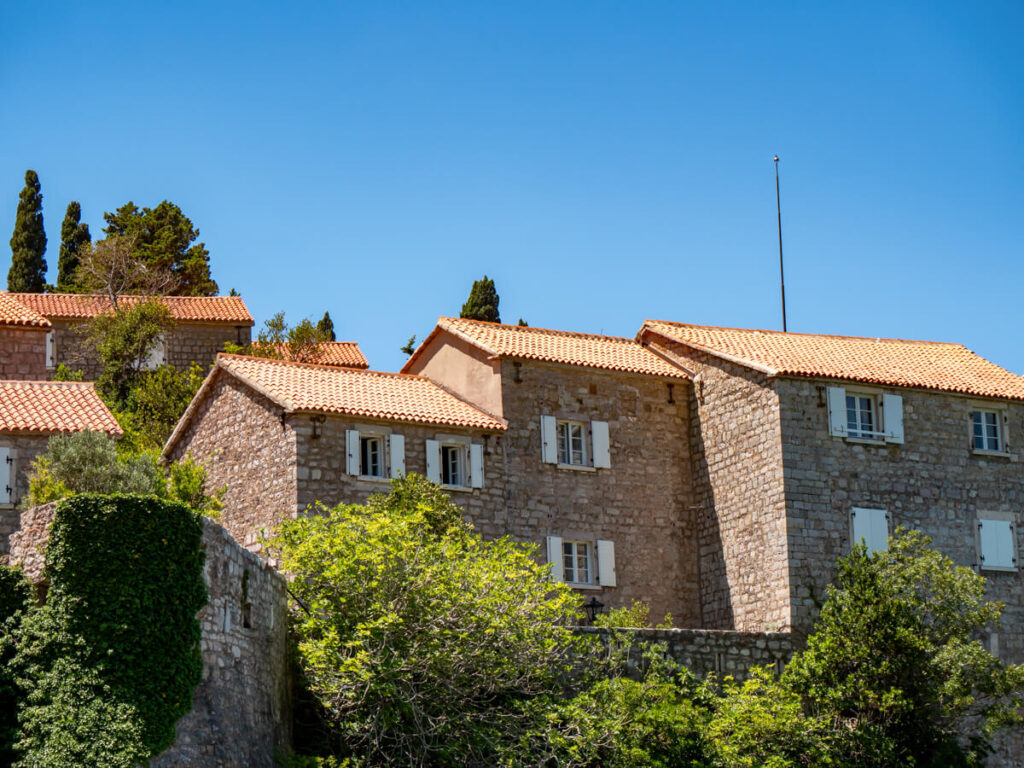
We think Sveti Stefan is worth visiting, but we’d approach it as a scenic day trip rather than somewhere to spend several days as a base. The island’s distinctive stone buildings and terracotta roofs make it one of Montenegro’s most iconic views – but you can actually see the island from the road without going into the town at all.
There are also a few things to consider before visiting. The island is operated as an exclusive resort, so you can’t simply wander around its narrow streets as you would in a traditional Old Town. Non-guests cannot use the privatised beaches and prices in the area have inflated in keeping with the town’s luxury reputation.
Sveti Stefan is also small, and once you’ve taken in the views and explored the surrounding coastline, there isn’t a huge amount else to fill your time.
In all honesty, we didn’t like Sveti Stefan nearly as much as other coastal towns like Petrovac, and it doesn’t have the charm of the Bay of Kotor towns like Perast and Kotor. But we’re still glad we visited for the day and experienced it for ourselves. It is super scenic, and we can see the appeal if you’re looking for a beach destination for the day.
Pros
Cons
We totally think it’s worth stopping and snapping a picture from a roadside viewpoint. But we honestly don’t think it’s really worth going into the town, paying for parking, and walking around unless you have a few hours to kill or are really keen for a beach day in a scenic spot.
We visited as part of our road trip, and we later explored the surrounding area with family, who were happy enough to take pictures from a distance and heeded our advice that there are other fun things to do in Montenegro that should take precedence if you have limited time to explore the country on holiday.

Combining Sveti Stefan with other attractions in one day
Sveti Stefan is easy to combine with other stops along the Budva Riviera, so it’s easy to treat as part of a wider day out rather than planning a full day around the island. You could spend an hour or two taking in the views and exploring the coastline, then head to Petrovac for a wander along the promenade and lunch by the sea. Alternatively, Budva is just a short drive north and has a much larger Old Town, more restaurants, and plenty of places to spend the afternoon.
If you’ve got a rental car, you can also use Sveti Stefan as a starting point for exploring further inland. Lake Skadar National Park is a good option for a change of scenery, with boat trips, lakeside villages, birdwatching, and viewpoints over the largest lake in the Balkans. You could also head to Cetinje, Montenegro’s former royal capital, or drive into Lovćen National Park for mountain scenery and views across the coast.

What to pack to visit Sveti Stefan?
It’s best to be prepared when you visit Sveti Stefan. Don’t forget to pack your:

Sveti Stefan FAQs
To help you plan your trip to Sveti Stefan, we’ve answered these frequently asked questions.
What is Sveti Stefan known for?
Sveti Stefan is best known for its fortified island village, with stone houses and terracotta rooftops connected to the mainland by a cement walkway on a narrow strip of sand. It’s one of Montenegro’s most recognisable coastal views, although the island itself is now part of an exclusive luxury resort.
What are the must-see attractions in Sveti Stefan?
The main attraction is the view of Sveti Stefan Island from the roadside viewpoints above the coast. You can also relax on the public beach, walk through Miločer Park, visit Praskvica Monastery, or follow the coastal path towards Pržno. If you’d like to explore the historic village itself, check whether guided island tours are available during your visit.
Who owns Sveti Stefan island?
Sveti Stefan is part of Montenegro’s state-owned hotel property, leased to Adriatic Properties, which operates the resort under the Aman brand. Aman manages the luxury accommodation, but it doesn’t own the island outright. The resort reopened in summer 2026 following a lengthy dispute over the lease and public access to nearby beaches.
What is on Sveti Stefan island?
Inside the fortified walls, you’ll find historic stone houses that have been converted into luxury hotel accommodation, along with narrow lanes, courtyards, and small churches. The island isn’t a traditional village with independent shops and cafés to browse, as the buildings form part of the Aman resort.
Does anyone live on Sveti Stefan?
No one lives on Sveti Stefan Island as part of an ordinary residential community today. The remaining residents were moved to the mainland when the village was converted into a hotel during the 1950s. The mainland settlement of Sveti Stefan is still inhabited, with homes, restaurants, and other accommodation.
Can you go inside Sveti Stefan?
Yes, but access is restricted to hotel guests only. The island is primarily for Aman guests, although guided tours for non-guests were available during the 2026 summer season. These tours have operated at set times and may be cancelled or change, so contact the resort to confirm access before visiting. You can still admire the island from the mainland viewpoints and surrounding public areas without going inside.
Why is Sveti Stefan resort closed?
After reopening after the COVID-19 pandemic, Aman Sveti Stefan closed again in 2021 following a dispute over access to nearby beaches and the terms under which the resort operated. Local residents and campaigners objected to restrictions on beaches they considered public, while the resort sought to maintain privacy for its guests. The disagreement led to a lengthy legal dispute between the state and the leaseholder. An agreement was reached in 2026, allowing the resort to reopen for the summer season on 1 July.
Is it better to stay in Budva or Sveti Stefan?
We’d recommend staying in Budva for most trips. It has a wider choice of accommodation, restaurants, shops, and evening activities, and you can easily visit Sveti Stefan for a few hours. Sveti Stefan is a better fit if you’re specifically looking for a quieter beach stay or want to splurge on a special stay at the Aman resort, but it can be expensive, and there’s less to do once you’ve explored the surrounding coast.
How do I get from Budva to Sveti Stefan?
Sveti Stefan is around 6 miles (10 km) southeast of Budva by road. You can drive there in roughly 15-25 minutes, depending on traffic, or take a local bus along the coast. Taxis are also available, although traffic and parking can be frustrating during summer. If you’re visiting by car, we’d check parking options before setting off, particularly if you’re only planning a short stop.

Read next:
A Traveller’s Guide to Budva: Beautiful Bay or Busy Beach Resort Town?
28 Best Things to Do in Budva Beyond the Beach + Top Day Trips & Tours
A Complete Guide to SCUBA Diving in Budva: Montenegro’s Riviera
A Traveller’s Guide to the Bay of Kotor: Europe’s Southernmost Fjord
How to Spend One Day in Kotor & Our Free DIY Old Town Walking Tour Route + Map
A Traveller’s Guide to Petrovac: Montenegro’s Most Underrated Beach Town
