How to Visit Lovćen National Park & Mausoleum of Petar II Petrović-Njegoš

Discover everything you need to know about visiting Lovćen National Park, Montenegro’s namesake, and the famous Njegoš Mausoleum.
This post may contain affiliate links, which means we might earn a small commission on anything purchased through these links at no extra cost to you. Learn more on our disclaimer page.
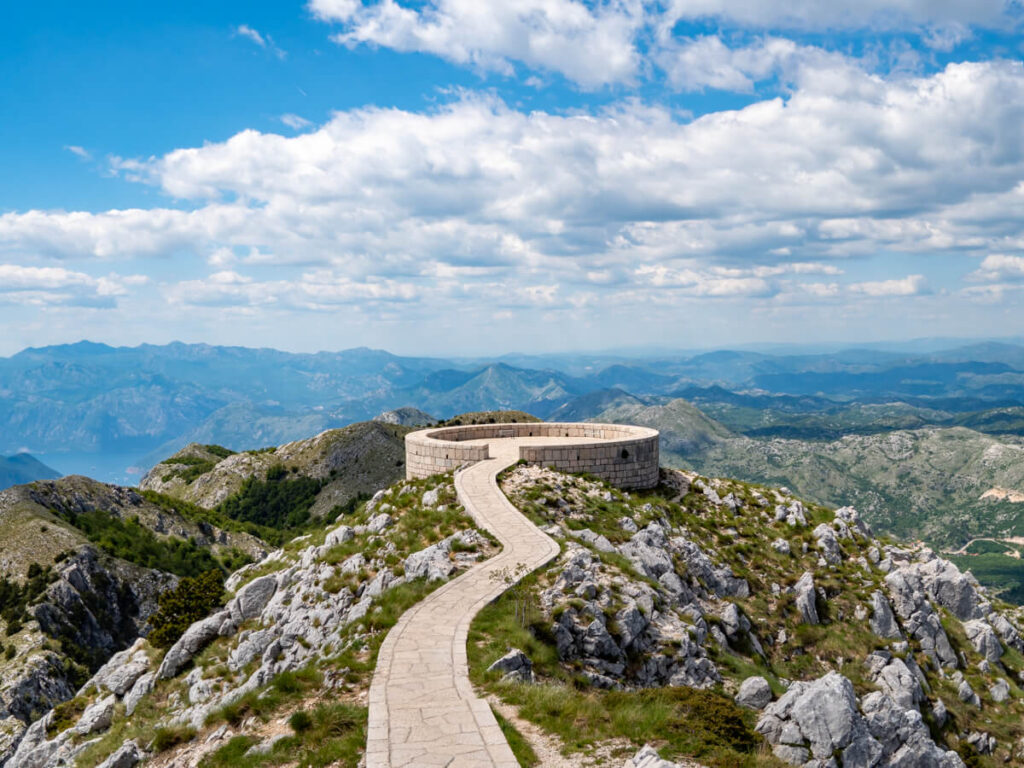
Rising between Kotor and Montenegro’s rugged centre, Lovćen National Park is the most accessible, and perhaps the most scenic, of Montenegro’s five national parks. Winding mountain roads climb through dense forest and rocky landscapes before opening up to expansive views across the Bay of Kotor, while the striking Njegoš Mausoleum sits tall on the mountain’s summit overlooking everything.
Lovćen National Park was the very first stop on our Montenegro road trip, and what an introduction it was. The drive itself took us through some of the country’s most dramatic scenery, and there are countless viewpoints, some of Montenegro’s best hiking trails, and traditional villages to explore along the way. It’s also a welcome escape from the swarms of people and sweltering heat of the coast, particularly in summer when cruise ship crowds descend on the cities.
Discover everything you need to know about visiting Lovćen National Park, including the best things to do, hiking trails, viewpoints, the climb to Njegoš Mausoleum, how to get there, where to stay, when to visit, and our practical tips for exploring the park.
Lovćen National Park at a glance
More from Kotor
About Lovćen National Park
Lovćen National Park is one of Montenegro’s most important natural and cultural landmarks. Exactly what it is can be a little confusing, so we’ve simplified the areas below:
Lovćen literally gave Montenegro its name, with the term ‘Crna Gora‘, meaning ‘Black Mountain‘, traditionally referring to the dark, forested appearance of the mountain when viewed from the coast.
Mount Lovćen itself rises dramatically between the Adriatic coast and the interior of Montenegro, with the park ranging from 939 metres to 1,749 metres above sea level. Its two highest peaks are Štirovnik (1,749 metres) and Jezerski Vrh (1,657 metres).
Jezerski Vrh is home to the Mausoleum of Petar II Petrović-Njegoš, one of the country’s most influential rulers, poets, and philosophers. It’s allegedly the highest mausoleum in the world.
The national park was established in 1952 to protect the mountain’s forests, karst landscapes, wildlife, and important cultural sites, making it one of Montenegro’s oldest protected areas.
Top Lovćen National Park Tours

Planning a trip to Kotor?
Montenegro is gaining popularity quickly, so be sure to book in advance as early as possible!
Top Experiences in Kotor
Top Hotels in Kotor
Rent a Car in Montenegro
Best eSIM for Montenegro
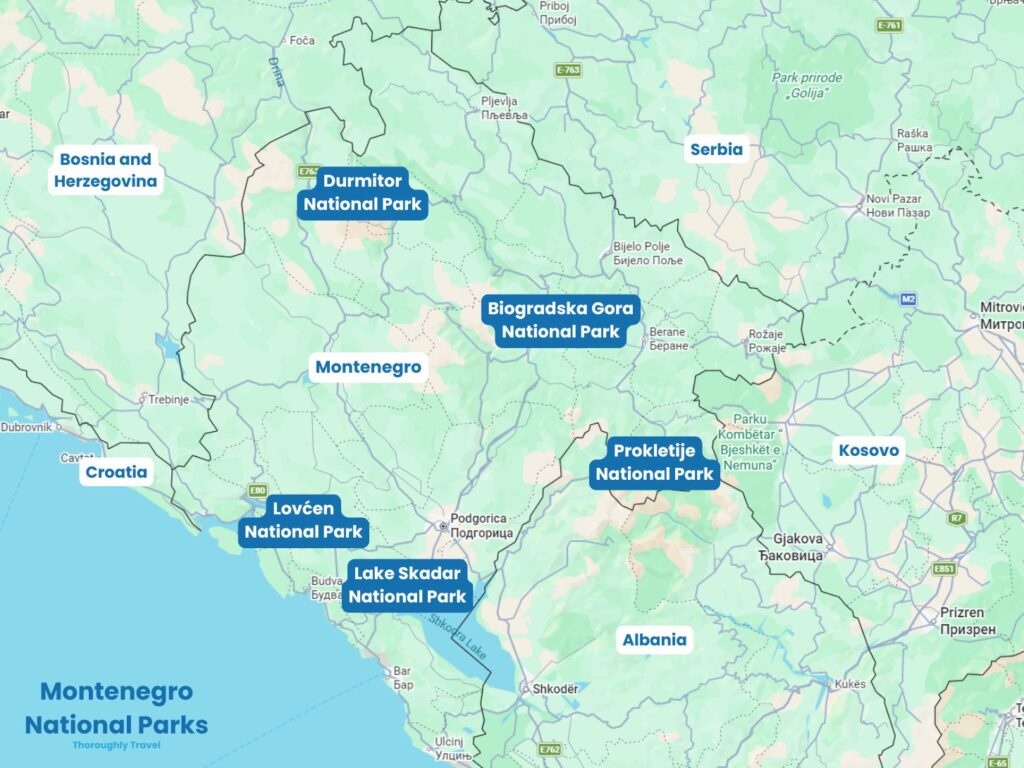
Where is Lovćen National Park?
Lovćen National Park sits in southwestern Montenegro, immediately inland from the Bay of Kotor and above the coastal towns of Kotor and Budva. To the mausoleum, Kotor is roughly 21 miles (34 km) away, while Budva is around 30 miles (50 km) away.
It’s also just south of Cetinje, Montenegro’s historic royal capital, making it particularly easy to combine with a visit to the city as it’s only about 12 miles (20 km) away.
Lovćen National Park Map
Lovćen is the closest national park to busy tourist hubs like Kotor and Budva.
Why visit Lovćen National Park?
Possibly the biggest draw of Lovćen National Park is its proximity to prominent tourist towns and cities around the Bay of Kotor and northern Adriatic coastline. The park is home to two of Montenegro’s most recognisable attractions: the Njegoš Mausoleum and the Kotor Cable Car, which are super fun attractions outside the cities.
But for us, the appeal was being able to experience dramatic mountain scenery, panoramic coastal views, and dense forests without having to go very far from the city. Unlike the remote mountains of Prokletije National Park, and even the popular but pretty far away Durmitor National Park, Lovćen National Park allows you to escape to a mountain landscape in one day, without the need for a long road trip.
The park is home to more than 1,000 plant species, alongside beech and conifer forests, alpine grasslands, and a variety of wildlife.
It’s also a great place to escape the heat and crowds of the coast. The higher elevations are noticeably cooler than Kotor and Budva in summer (we even saw some remnants of snow in June!), while the combination of forests, meadows, and mountain roads makes the park ideal for hiking, cycling, and outdoor adventures where it’s not too hot.
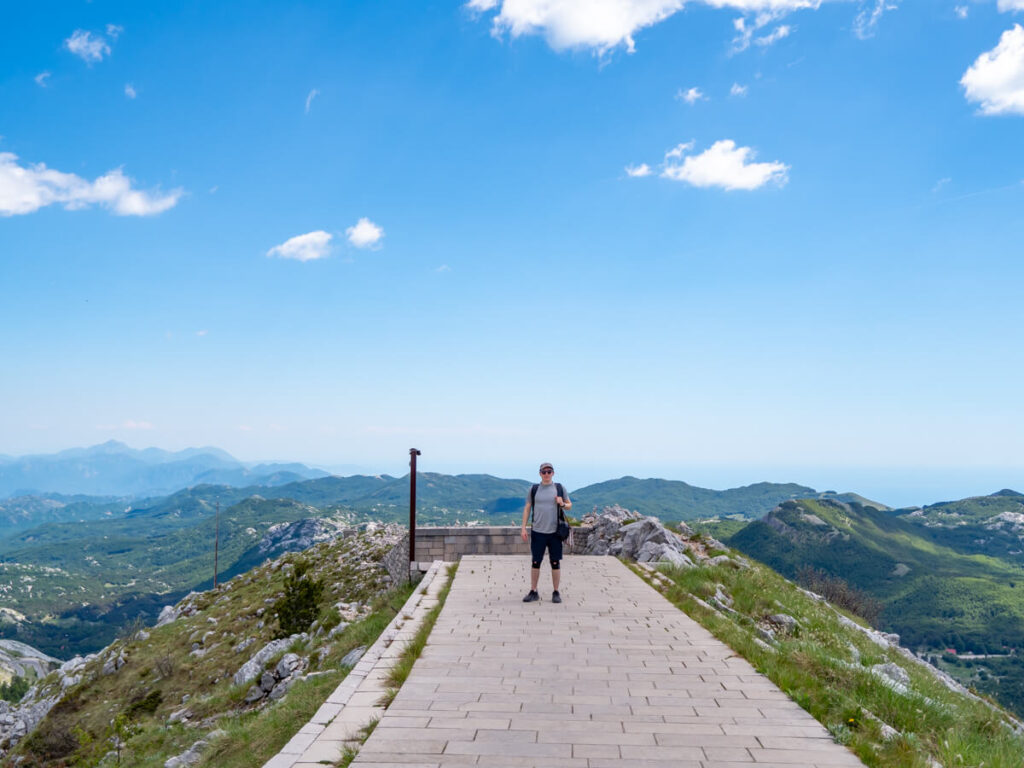
The best things to do in Lovćen National Park
For a relatively compact national park, Lovćen has a surprising amount to do spread out across the mountaintops. You can head to the top just for the views, but there are plenty of ways to turn your visit into a proper day out. Here are the best things to do in Lovćen National Park.
1. Take in the views
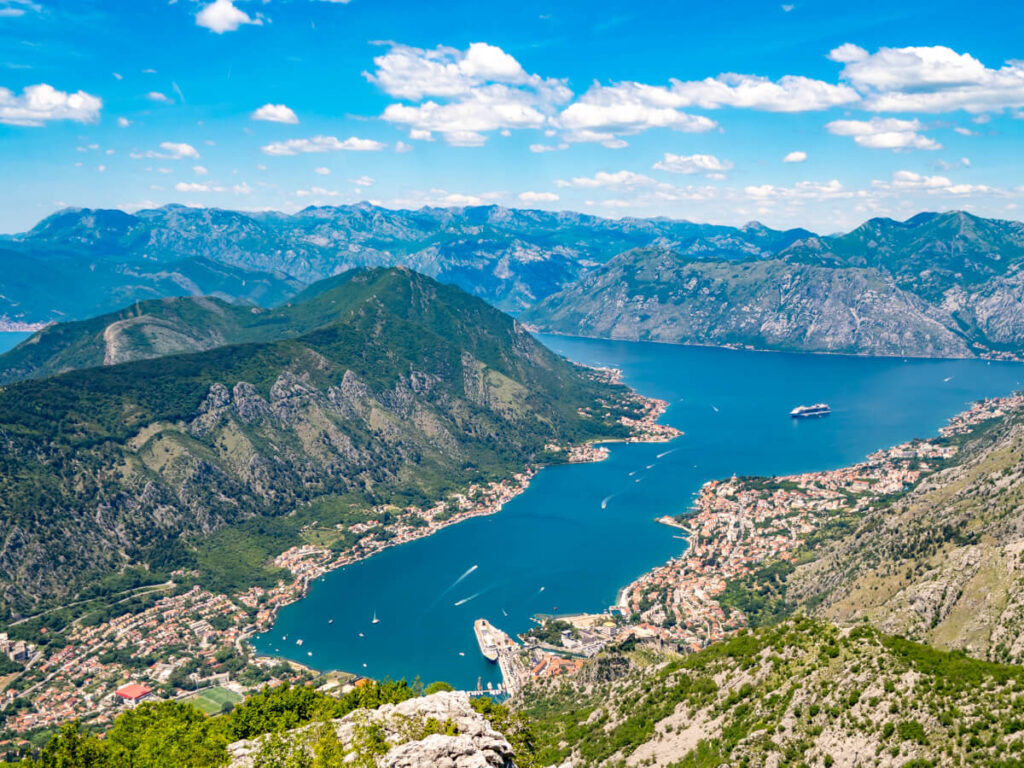
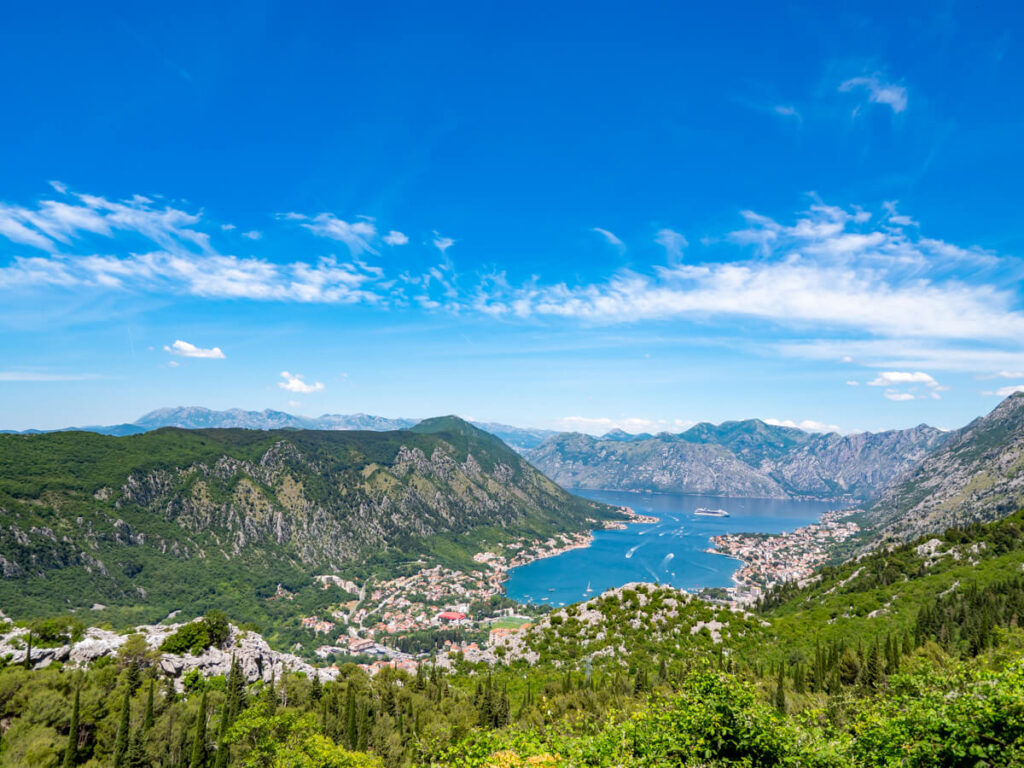
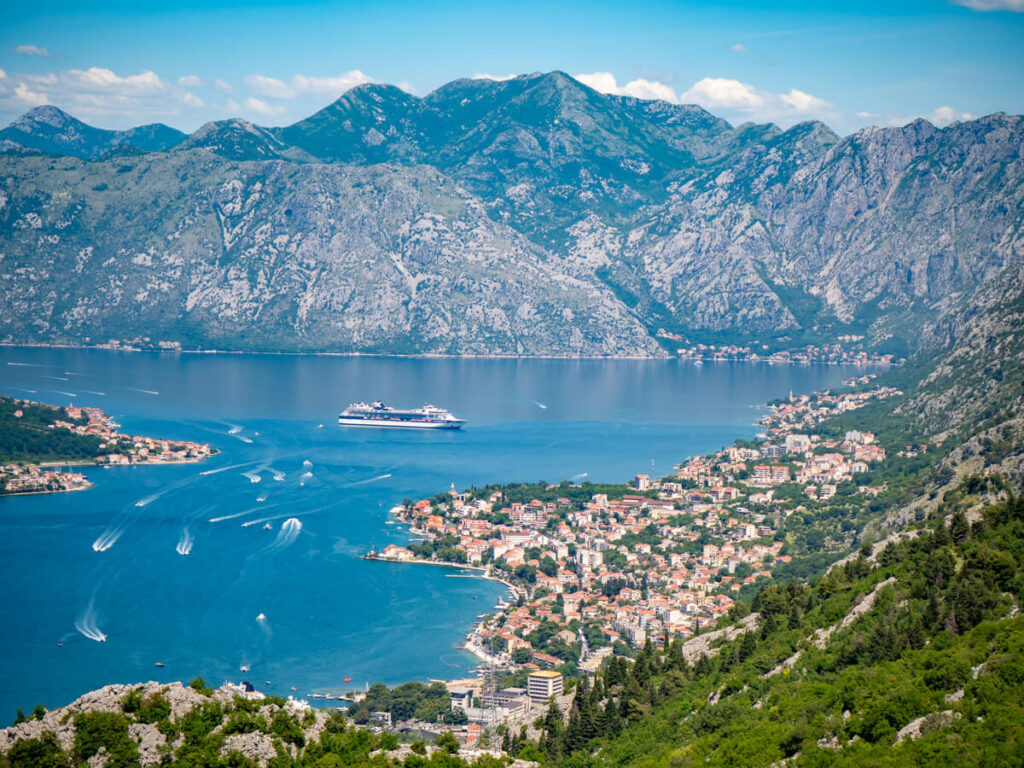
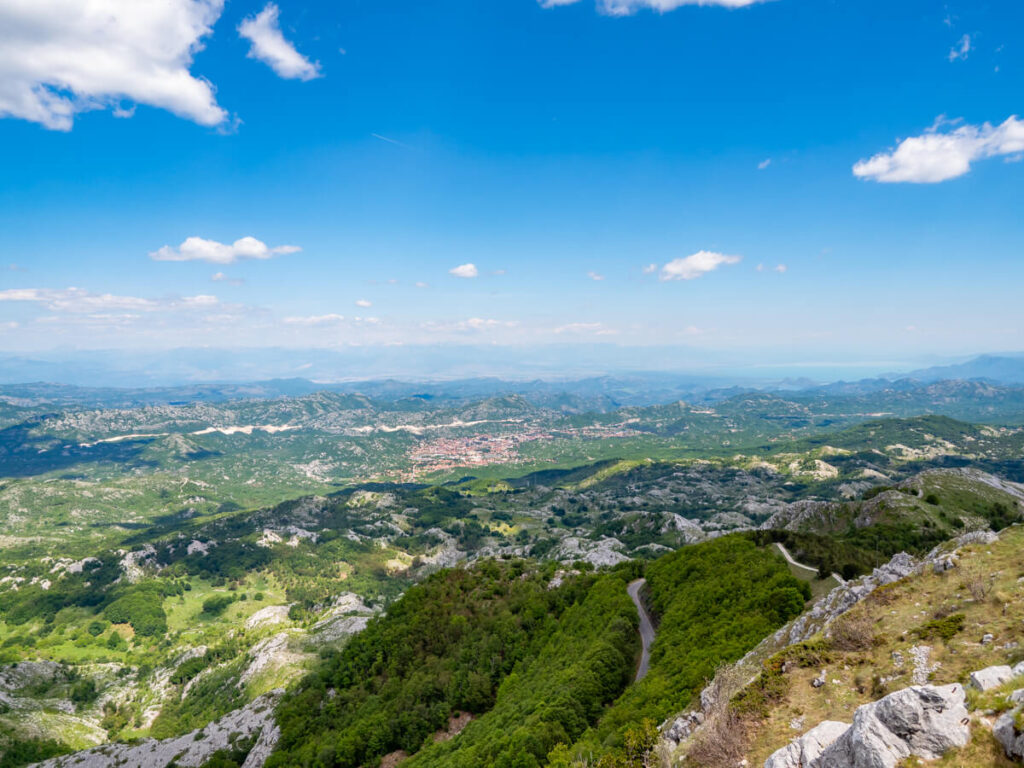
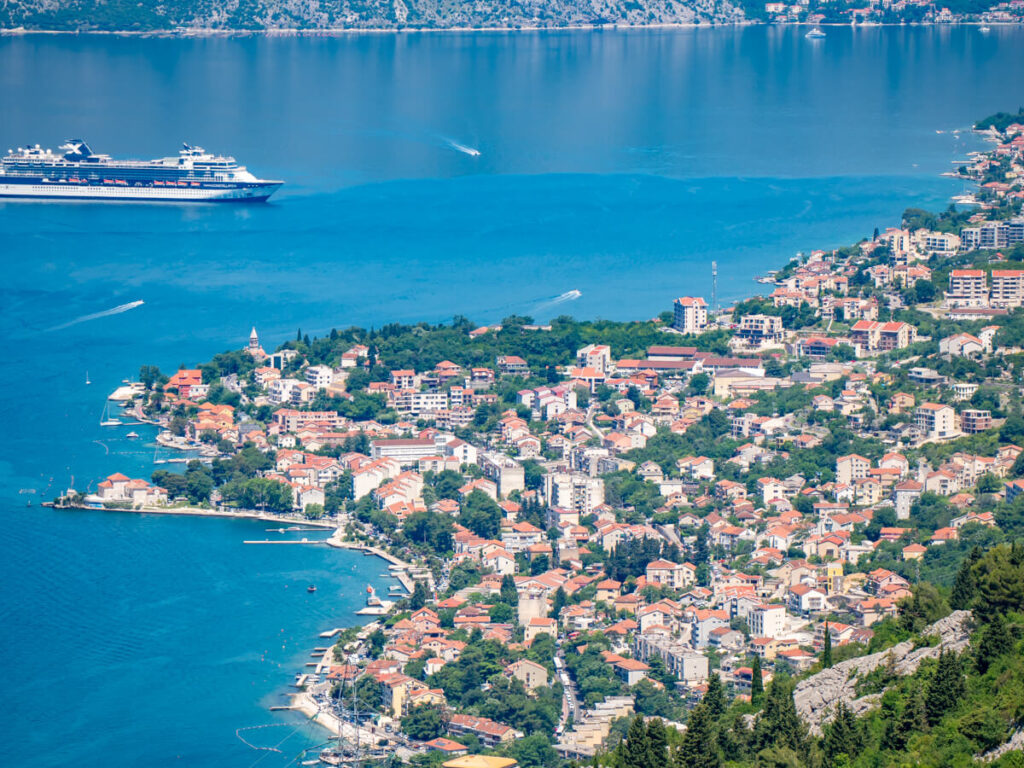
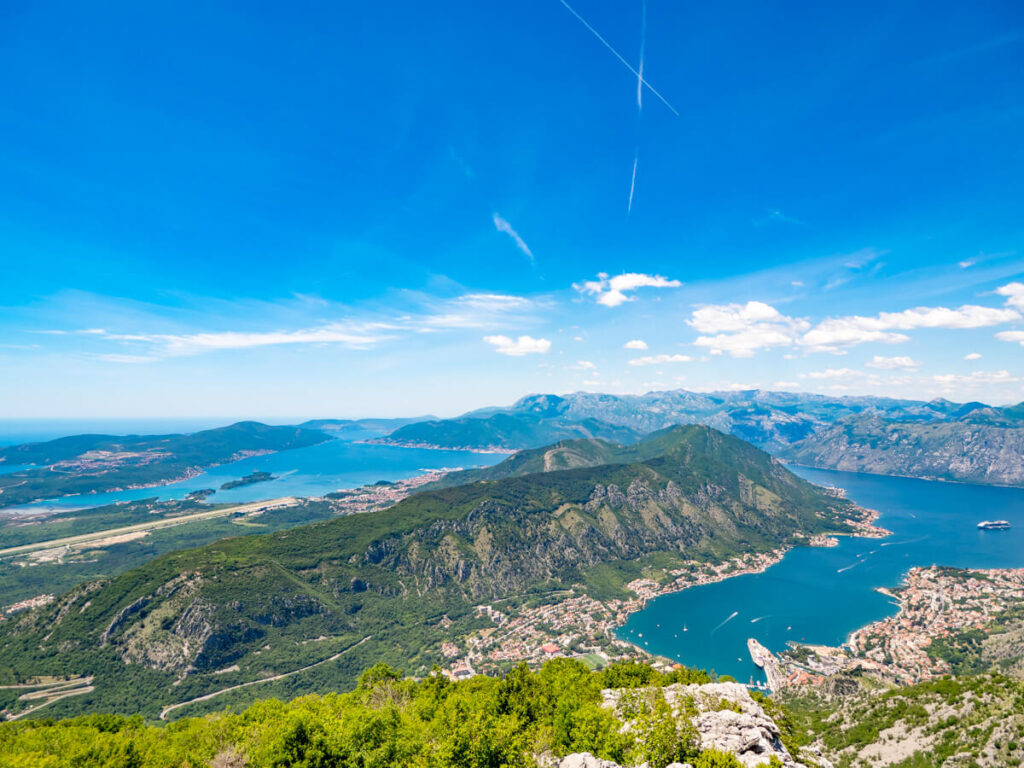
Probably the most famous reason to go up Lovćen is to look back down at the Bay of Kotor. From the higher slopes, the contrast between the rugged limestone mountains and the deep blue Adriatic is spectacular.
This is the classic picture-postcard view, and taking in the sight with your own eyes is undoubtedly one of the best things to do in Kotor. There are plenty of places to stop and take it all in, including:
2. Climb to the Njegoš Mausoleum
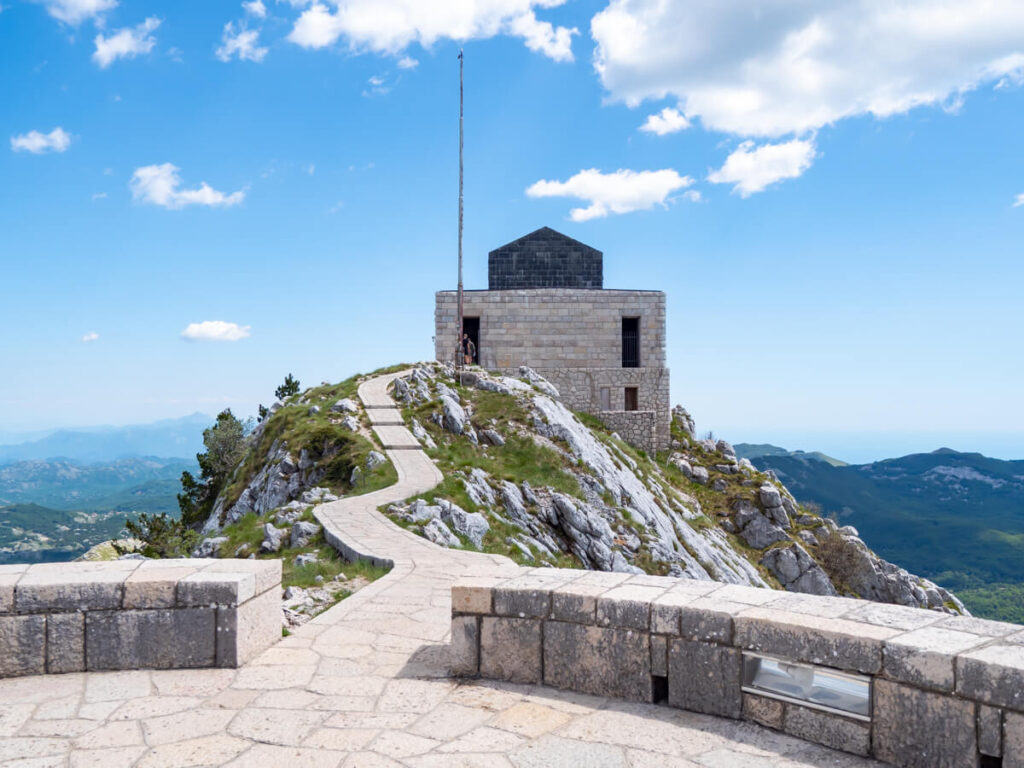
The mountain’s history is closely connected to Petar II Petrović-Njegoš, Montenegro’s celebrated 19th-century ruler, Orthodox bishop, philosopher, and poet. Born in nearby Njeguši, Njegoš chose Lovćen as his final resting place.
His original burial chapel was eventually replaced by the enormous Njegoš Mausoleum, designed by the Croatian sculptor Ivan Meštrović and opened in 1974. Reaching it involves passing through a mountain tunnel and climbing 461 steps, but the effort is rewarded with enormous views from the summit.
3. Take the Kotor Cable Car
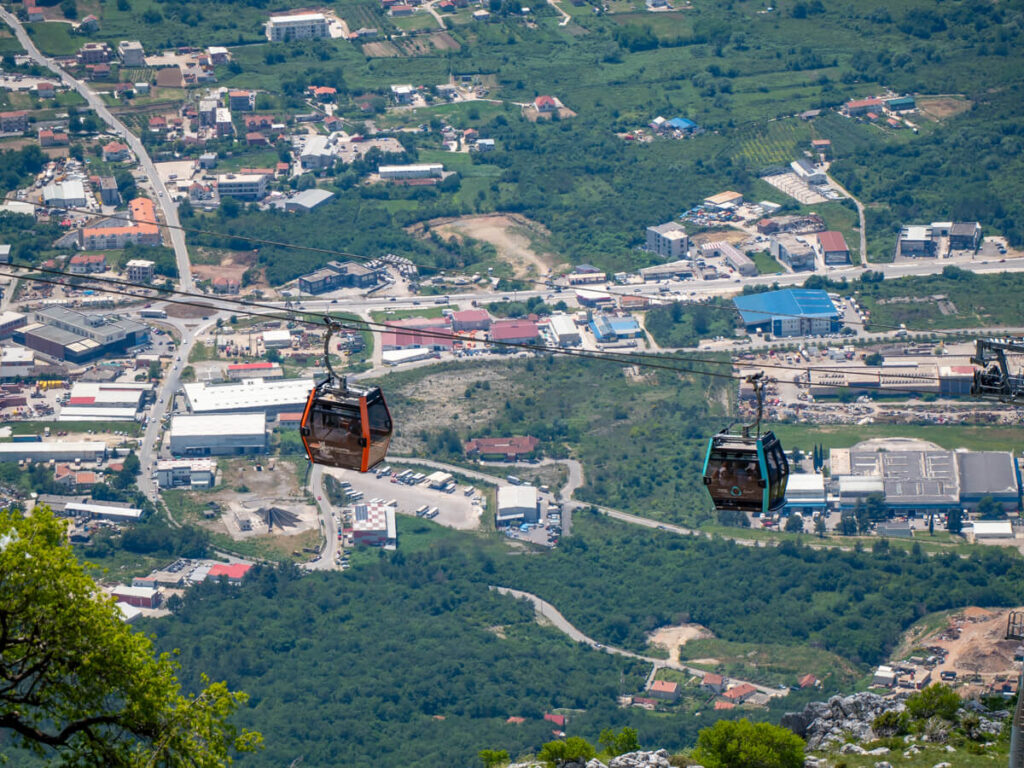
The Kotor Cable Car is one of the easiest ways to experience Lovćen without committing to a long mountain drive or hike. The journey from the coast to the upper station takes around 11 minutes, rising more than 1,300 metres while giving you increasingly spectacular views over the Bay of Kotor.
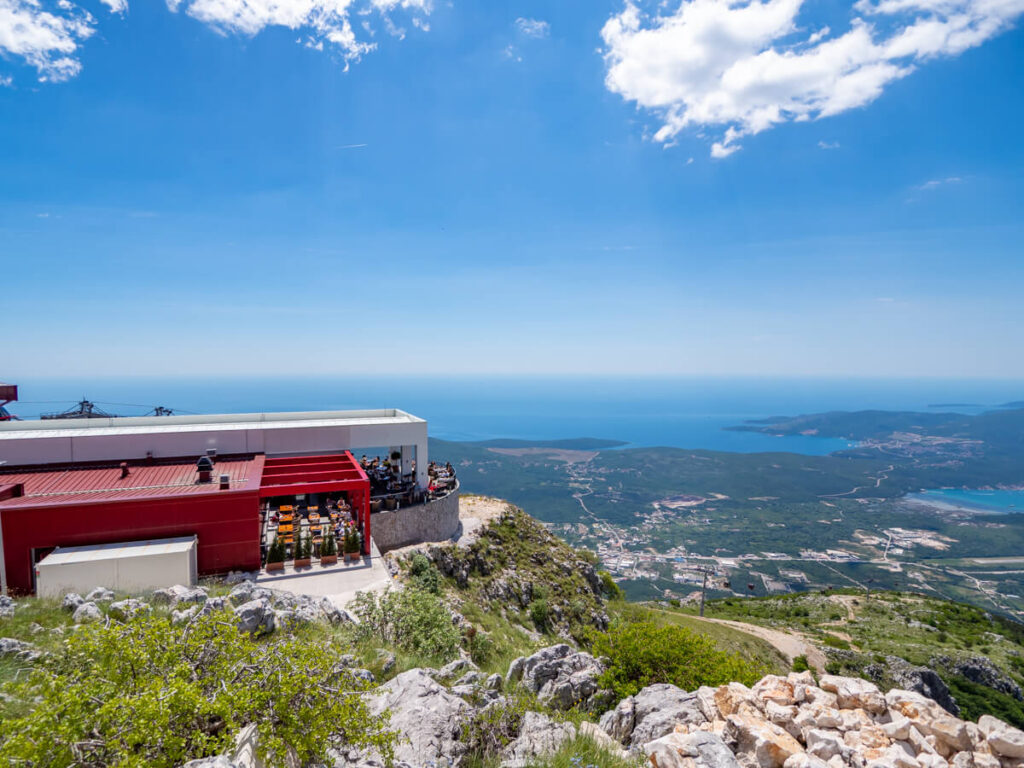
And it’s more than simply a way of getting up the mountain. Once you’re at the top station, you can enjoy a wealth of activities, from restaurants, bars, and viewpoints to hiking trails and the iconic Alpine Coaster.
4. Ride the Alpine Coaster
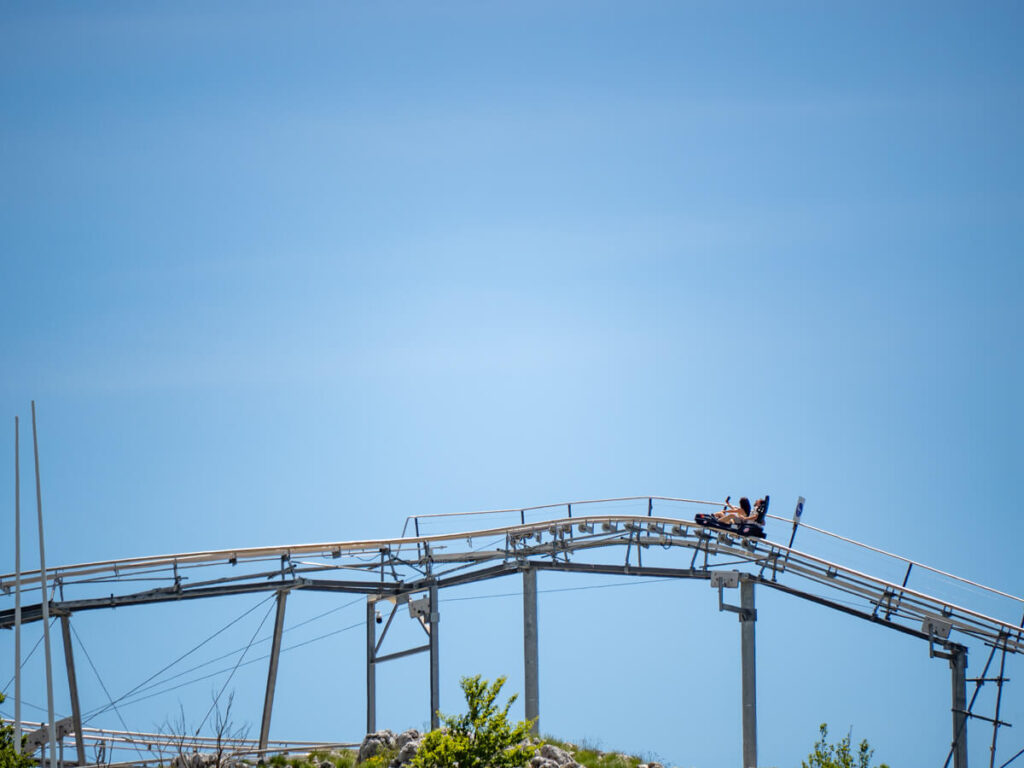
If you’re looking for something a little more exciting than admiring the scenery, head to the Alpine Coaster beside the cable car’s upper station. The winding track is around 1,056 metres (3,464 ft) long, and you control your own speed as you descend through the Lovćen landscape.
You’ve probably seen it on Instagram, and it is one of the most touristy things to do in the area, but it’s also fun. We’d particularly recommend it if you’re travelling with children or simply fancy doing something different between the cable car and your next viewpoint. Also, the coaster is very exposed so if you don’t like heights, we don’t advise riding it!
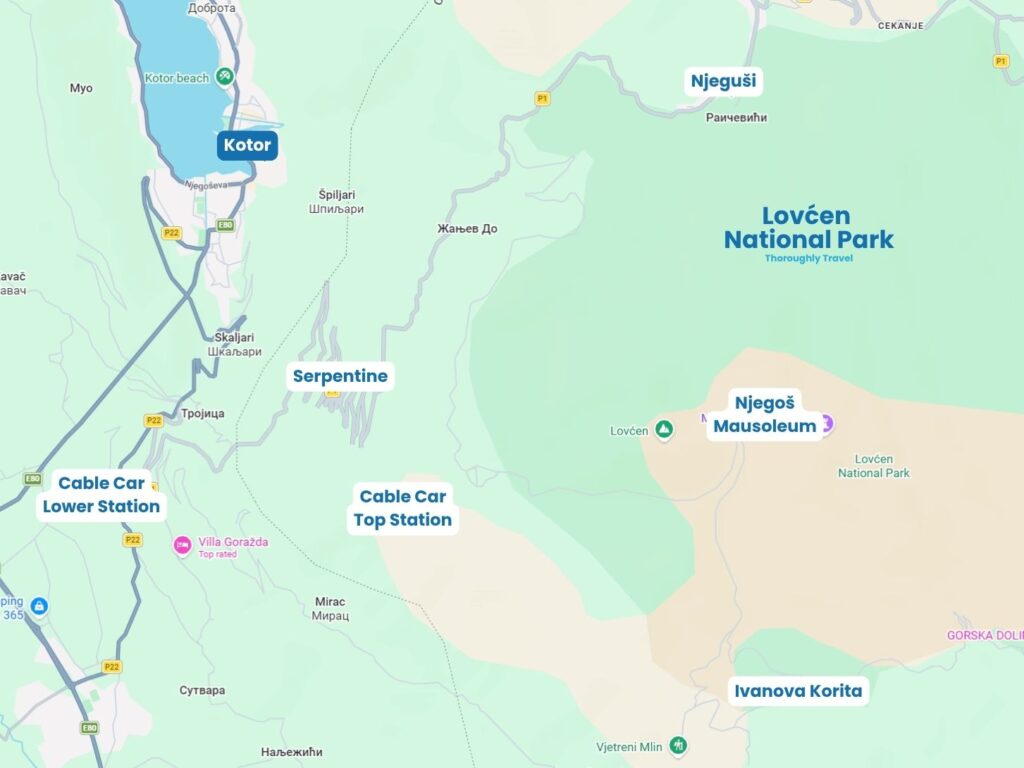
5. Drive the Kotor Serpentine
If you’ve rented a car in Montenegro, there’s no road more thrilling to drive than the Kotor Serpentine. It’s one of Montenegro’s most famous (and purportedly dangerous) roads, and for good reason.
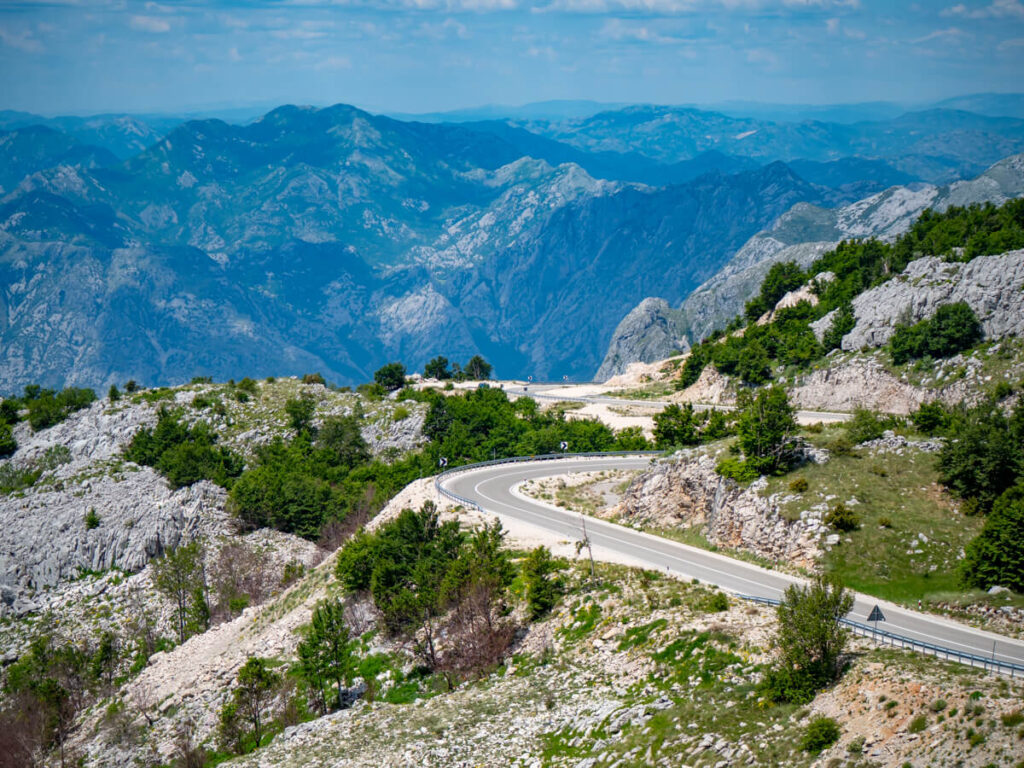
If you’re comfortable driving in Montenegro, we’d choose the Serpentine over simply rushing up and down the mountain. The historic route climbs steeply away from Kotor towards Njeguši and Lovćen, with a series of 25 tight hairpin bends and increasingly impressive views over the bay.
The drive itself isn’t particularly long, but the journey can take hours if there’s a bottleneck further up the mountain, which is common in summer as tourist buses get stuck. Check Google Maps’ traffic before going, and don’t even bother if it’s yellow.

6. Go hiking
Lovćen National Park has a network of marked trails ranging from relatively gentle woodland walks to more strenuous mountain routes. The terrain is typically a mixture of limestone ridges, forest, open grassland and rocky mountain paths, so you can experience quite a lot of the park without needing to tackle a huge summit. Not all of the trails are well-maintained, so it’s best to seek local advice from the park’s rangers at the entrance booth before heading out.
While we wouldn’t really call it a hike, the short but steep climb to the Mausoleum of Petar II Petrović-Njegoš (AllTrails) goes up 461 stairs and gains around 120 metres (400 ft) elevation, depending on where you park, so it’s a pretty sweet and incredibly rewarding walk.
One of the easiest proper hikes in Lovćen National Park is Ivanova Korita (AllTrails), a 2.5-mile (5,6 km) loop through a scenic mountain basin. The Wolf Trail (Wikiloc) is another popular circuit option at around 4.5 miles (7 km) that leads through forest, the small village of Dolovi, and along mostly flat terrain to Babina Glava peak – you can also do a small detour to Trestenik peak for epic views of the bay.
Another option is Pestingrad (AllTrails), a dramatic limestone peak roughly 1,000 meters (3,280 ft) above sea level. The trailhead starts just outside the national park boundary and follows a route along the slope of the mountain to epic viewpoints of the bay.
7. Try Njeguši pršut
One of the most famous foods associated with the Lovćen region is Njeguški pršut, a traditional smoked and cured ham like prosciutto produced in the mountain village of Njeguši. The ham is traditionally smoked over beech wood and cured for around six months, giving it its distinctive flavour.
As non-meat eaters, this wasn’t super high on our list, but even we could appreciate how closely Montenegrin food is tied to the landscape and history of the area. The town also makes its own Njeguški sir (cheese).
The tiny village itself is also worth exploring, with its traditional stone houses and local zipline.
How to get to Lovćen National Park
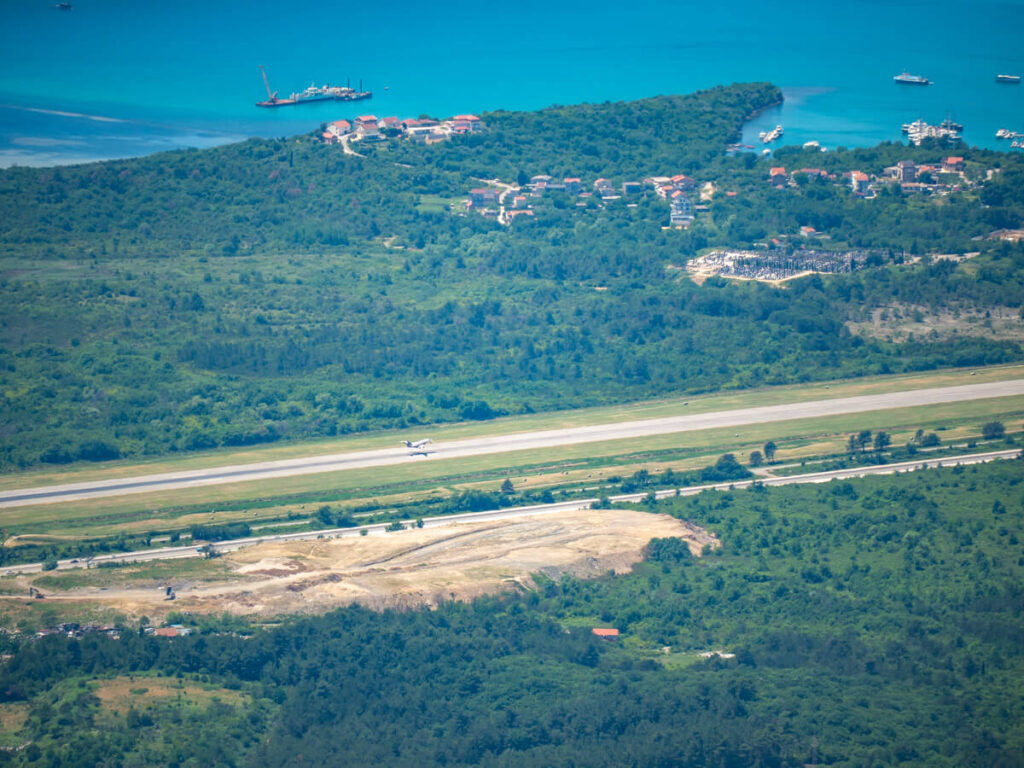
The closest international airport to Lovćen National Park is Tivat Airport (TIV), roughly 23 miles (37 km) from the Kotor side. You can literally watch the planes land on the runway from the mountain’s viewpoints.
Alternatively, Podgorica Airport (TGD) serves the country’s capital city and is around 36 miles (58 km) away.
Dubrovnik Airport (DBV) is also an option if you’re coming from Croatia, but travel times will be longer as they include the border crossing.
By car
The easiest way to get to Lovćen National Park is to rent a car and drive.
One of the most spectacular ways to reach Lovćen National Park from Kotor is via the famous Serpentine (part of the P1). The road climbs sharply away from the bay through a series of 25 tight hairpin bends, with increasingly insane views over the Bay of Kotor as you gain altitude.
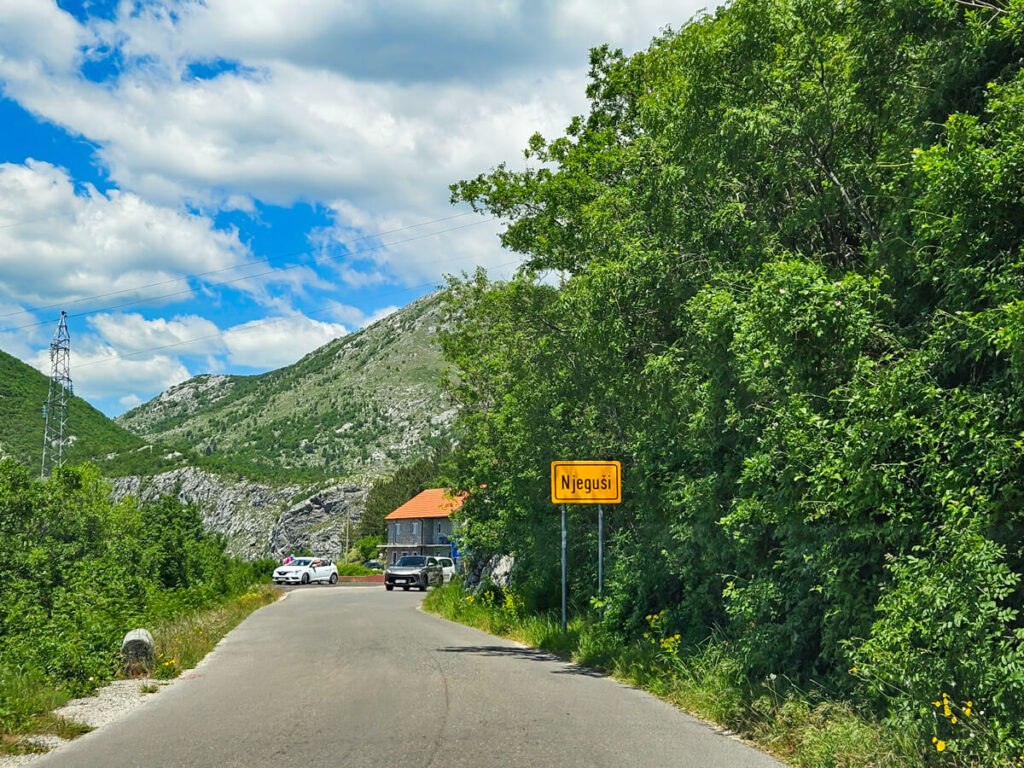
There’s an obvious turn-off for the national park just as you arrive on the edge of the tiny village of Njeguši.
Another option is to approach the park from Cetinje, where you can either take the P15 to Njeguši, then turn into the national park towards the cable car top station, or take the Lovcenska road towards the southern entrance to the national park and the Njegoš Mausoleum.
While approaching from the east side means you don’t have to contend with the Serpentine, the roads are still pretty mountainous with some hairpin switchbacks, but nowhere near the same number or tightness.
From Budva, you have the choice to drive west towards Kotor and drive up the Serpentine, or to drive east to Cetinje and approach through the mountains.
We drove into Lovćen National Park following the P1 up the Serpentine road from Kotor, stopping at viewpoints along the way. We turned into the national park just before Njeguši and also stopped at the cable car top station. After visiting the Mausoleum of Petar II Petrović-Njegoš, we headed along the southern road to Cetinje.

By taxi
Taking a taxi from Cetinje or Kotor is possible, but we’d only consider this if you’re happy to arrange a return journey and agree on the price and waiting time with the driver beforehand.
There isn’t a conventional taxi drop-off that suddenly puts you in the middle of the park – you’ll need to arrange where you want to go and how long the driver will wait. This can make a taxi considerably more expensive than a bus or shared tour, particularly if you’re travelling alone.
Taxis in Kotor and Budva are exceedingly overpriced, and there’s no standardised pricing system or app options like Uber. We were quoted €40 outside the cruise port and €20 outside the bus station just to do the 20-minute journey to Perast, so we dread to think how expensive going up Lovćen by taxi is. If you’re keen to do it, we’d recommend reaching out to Red Taxi (who we found reasonable for getting to the Airport) on WhatsApp and asking for rates.
By transfer
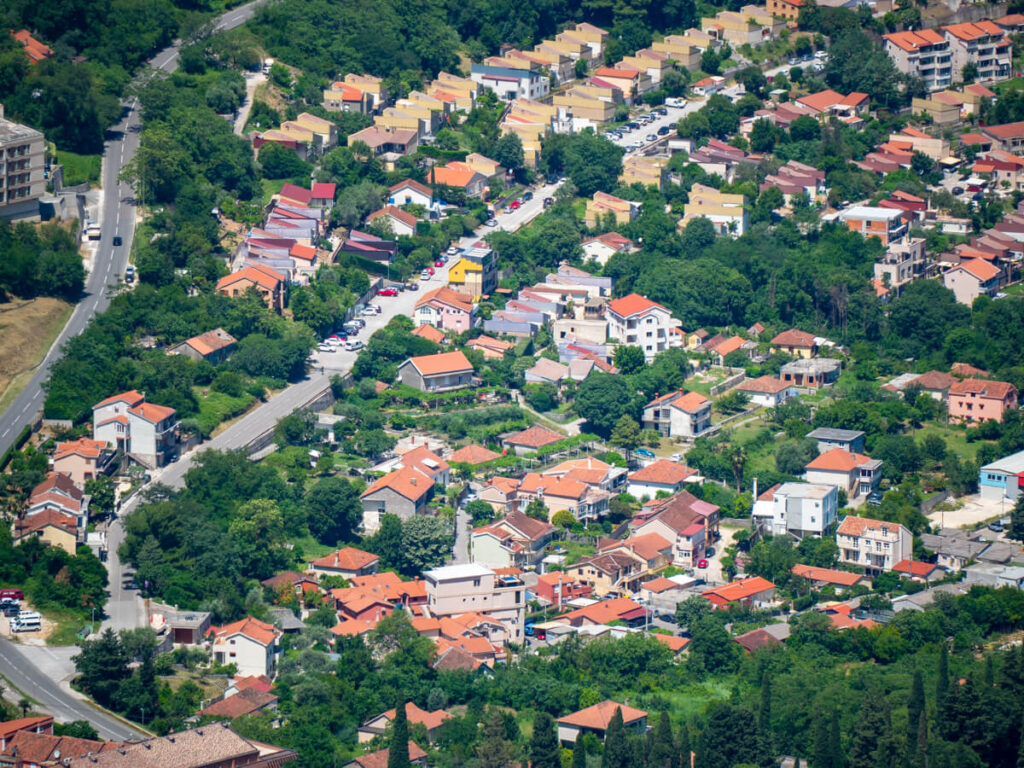
A better option than a taxi is to arrange a private transfer. It’s a good middle ground if you don’t want to drive but also don’t want to join a group tour. You can arrange a driver to collect you from Kotor, Budva, Tivat, or Cetinje and take you directly to the sights you want to visit.
This is particularly useful if you’re travelling as a small group, as the cost can be split between several people. We’d recommend agreeing on the itinerary, waiting time, and total price before setting off.
By bus
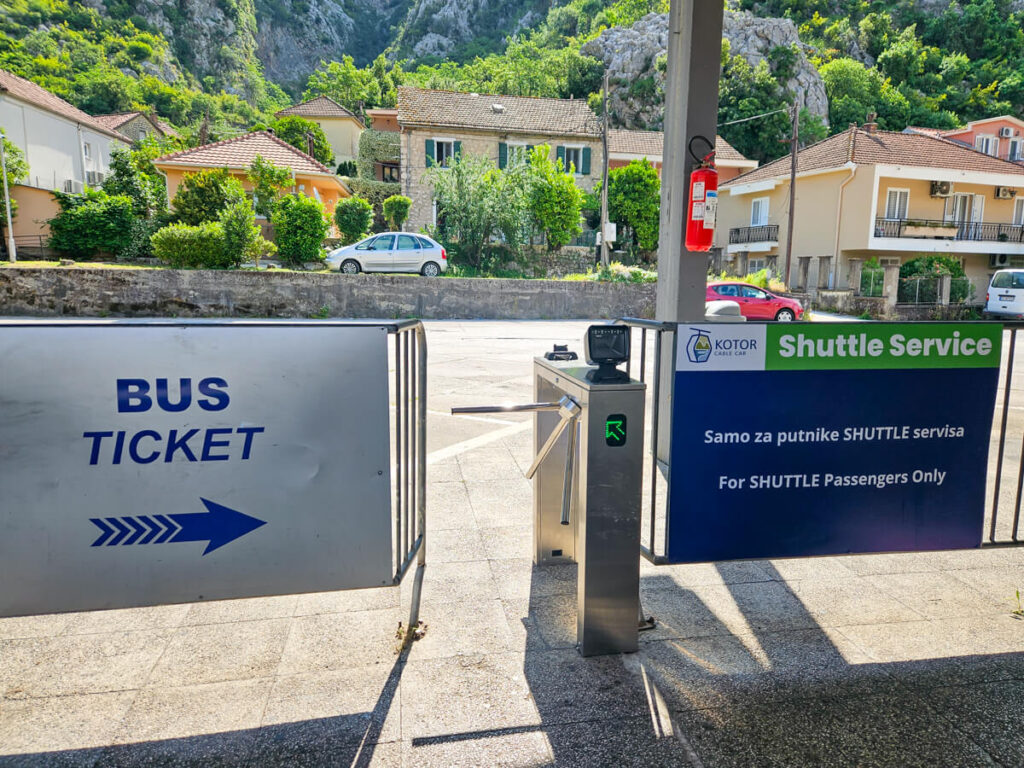
There is only one way to get to Lovćen National Park by bus, and that’s if you’re taking the cable car. There’s a shuttle bus from the Kotor Main Bus Station to the lower cable car station, taking 10-15 minutes.
Tickets for the bus are €10 one-way for adults ( €5 for children) or €15 for a round trip for adults (€10 for children). You can also opt for the €36 cable car and shuttle combo ticket (€14 for children), which saves you a little money, since the cable car return trip on its own is €25 for adults (€7 for children).
In all honesty, the insane prices of the cable car – and the fact they just keep increasing – were partly the reason we chose to drive instead.
There are also regular bus connections to Cetinje from places including Kotor, Budva, Bar, and Podgorica, and then you can arrange a taxi into the national park, which would be cheaper than a taxi for the whole journey.
By cable car
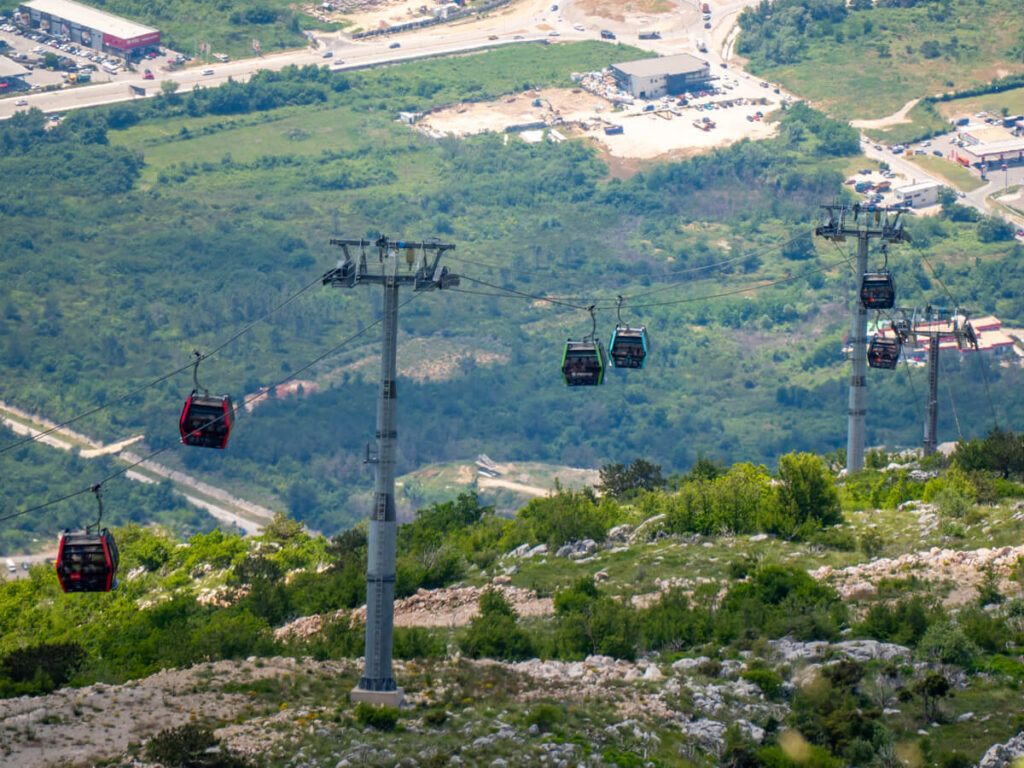
The Kotor Cable Car is the easiest option if you’re staying in Kotor and mainly want to experience the lower slopes of Mt Lovćen. The cable car runs from Dub station, just outside Kotor, up to Kuk (the top station), taking around 11 minutes.
However, it’s important to note that the cable car does not take you directly to the Njegoš Mausoleum or near the hiking trails. From the upper cable car station, you’ll need additional transport if you want to continue deeper into Lovćen National Park, and there aren’t many options at the top.
By tour
For visitors staying in Kotor or Budva who don’t want to drive the Serpentine, joining an organised tour to Lovćen is probably the easiest option. Tours typically combine attractions like the alpine coaster, a stop in Njeguši, a walking tour of Cetinje, and the Njegoš Mausoleum, meaning you can see several of the region’s highlights in one day without having to worry about mountain roads or parking.
If you want to experience the Kotor Serpentine as a passenger, we’d choose a tour that specifically includes the road rather than assuming every Lovćen excursion does. A private Lovćen tour may be better if you want to dictate the itinerary. Likewise, check whether entrance fees and the Njegoš Mausoleum are included in the advertised price.
Lovćen National Park Entrance Fee
As with all of Montenegro’s national parks, there is an entrance fee to enter Lovćen National Park.
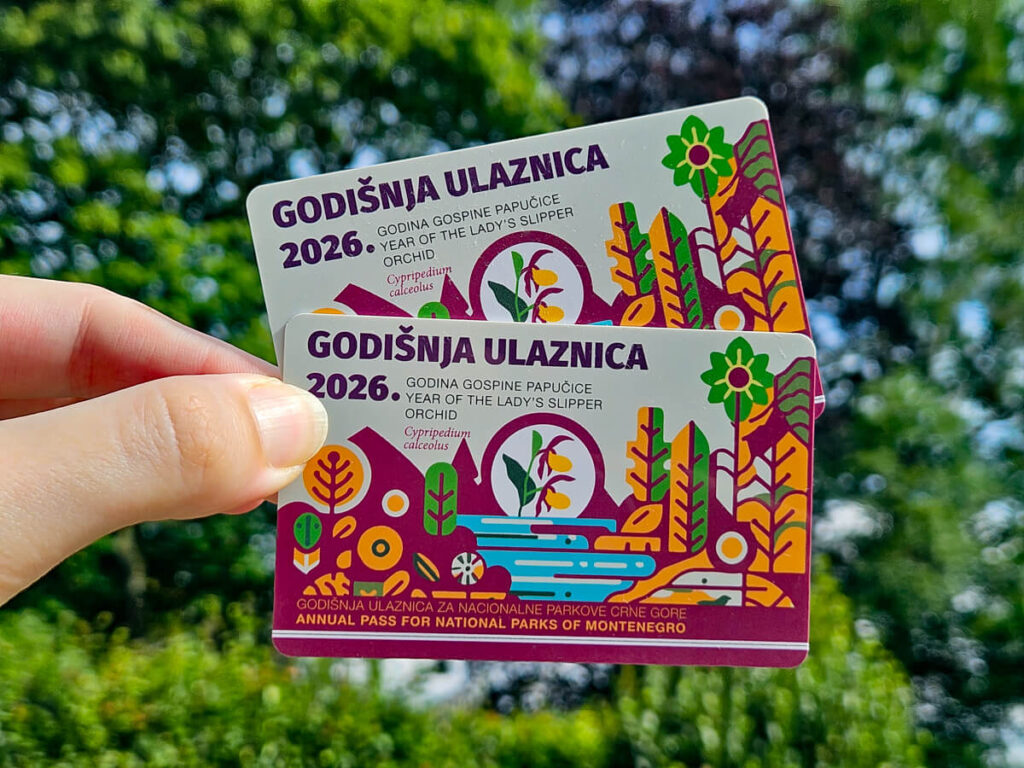
Lovćen National Park tickets cost €3 per person per day, but we’d highly recommend getting the annual pass for €13.50 if you plan to visit the other national parks too. You can also buy it online in advance.
We bought our Montenegro national park passes at the entrance to Lovćen, as it was the first park we visited on our road trip. It was a fairly easy process – the ranger just needed our passports to register our details.
Bring cash in case the card terminal isn’t working. Then keep your ticket with you if you’re planning to spend the day exploring, as you may encounter checks elsewhere in the park.
How to get around Lovćen National Park
Getting around Lovćen National Park is relatively straightforward if you have your own vehicle, but public transport is practically non-existent. The park is spread across a mountainous landscape, so it’s important to know that you can’t just hop between attractions on foot or rely on buses.
You really do need to have a rental car to independently explore the national park. It’s the only way to get between Njeguši, the cable car, and the Njegoš Mausoleum.
If you’re limited to public transport, we’d recommend taking the cable car from Kotor and exploring the top station, or staying in Cetinje and using it as a base to arrange taxis into the park. The easiest way to explore the park without a car, especially if you want to visit the Njegoš Mausoleum, is on a day tour.
We picked up a lovely but exhausted pair of Polish hitchhikers who had spent the better part of the afternoon hiking along the road from the cable car top station towards the mausoleum. They’d underestimated just how far the attractions were from one another, and spent more time walking in the strong sun than seeing the sights.
How to visit the Mausoleum of Petar II Petrović-Njegoš
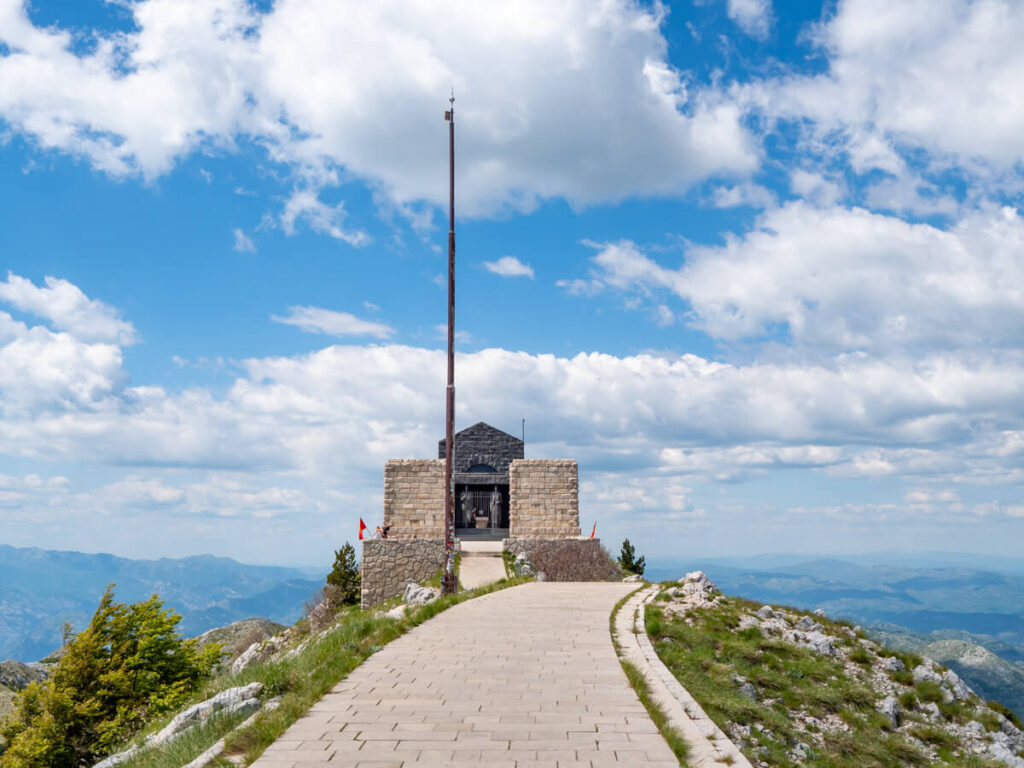
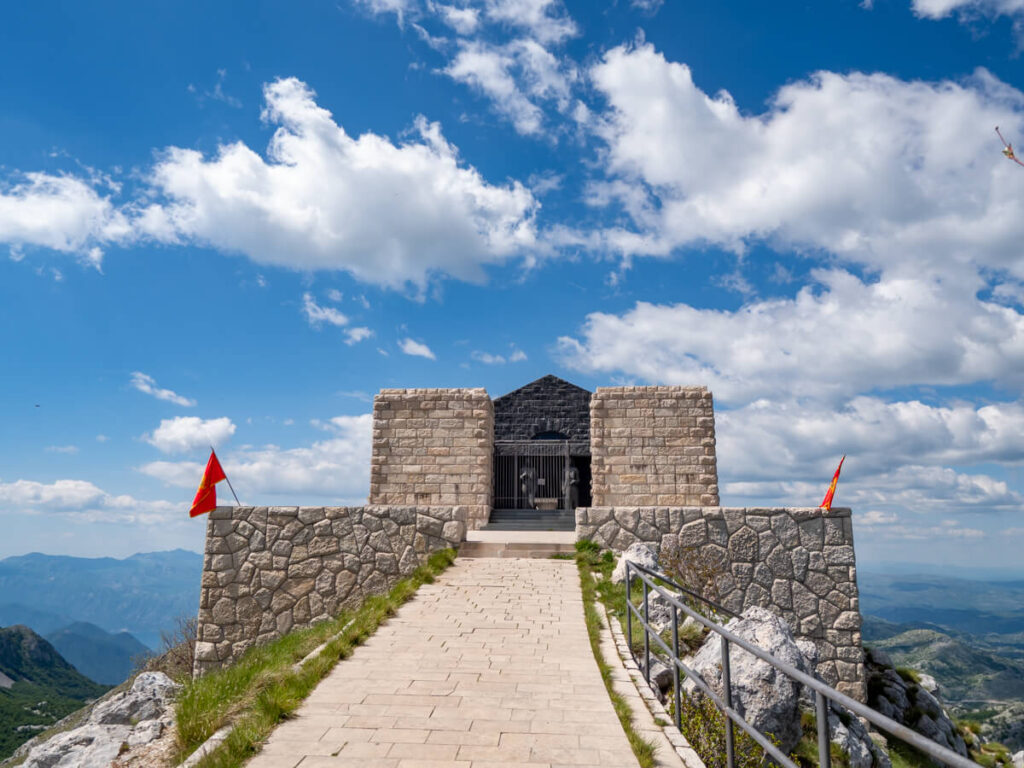
The Njegoš Mausoleum sits on Jezerski Vrh, one of the two main peaks of Lovćen, at around 1,657 metres (5,436 ft) above sea level. It’s an iconic landmark and one of the main reasons for visiting Lovćen National Park.
You can drive to the Njegoš Mausoleum along the winding road from near Njeguši that passes by the cable car top station. If you’re coming from Cetinje, you can either take the northern P15 road to Njeguši and also follow the aforementioned route, or take the southern Lovcenska route towards the national park.
There is a shuttle company, FUNIVIA Transfers, at the cable car top station that runs transfers to Njeguši, Cetinje, and the Njegoš Mausoleum. I don’t believe you can book in advance or online, and there’s no guarantee anyone will be available to fulfil your lift. It’s about €15 per person to get to the mausoleum, not including the park entry fee. Honestly, it’s almost better value to book a guided tour of Lovćen National Park on a different day from the cable car.
Njegoš Mausoleum Parking
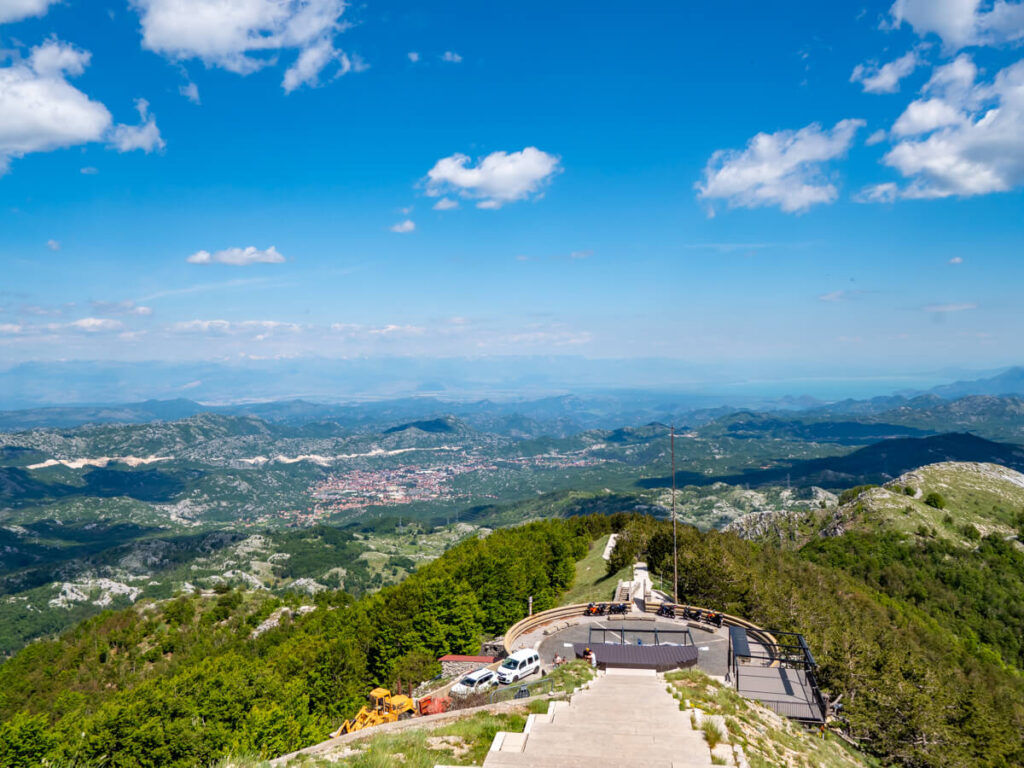
There’s very limited parking space in the turning circle right outside the entrance, near the Vladika Restaurant. We wouldn’t recommend blocking it up, although some motorbikes were parked to the side on our visit. Instead, cars can be parked along the roadside leading down the hill here for free. We parked in a nice space on the corner here for free, which was only a couple of minutes’ walk uphill to the entrance.
The road gets steeper and narrower as you go up. If you’re in a campervan, we’d recommend stopping at this private parking area, which is more spacious. We don’t recommend it if you’re in a car, though, as it’s further away, privately owned, and charges a fee.
Njegoš Mausoleum Tickets
Njegoš Mausoleum charges a separate entrance fee to Lovćen National Park. Tickets are €8 per adult and €4 per child or student, to be paid in cash only – try to have the exact change.
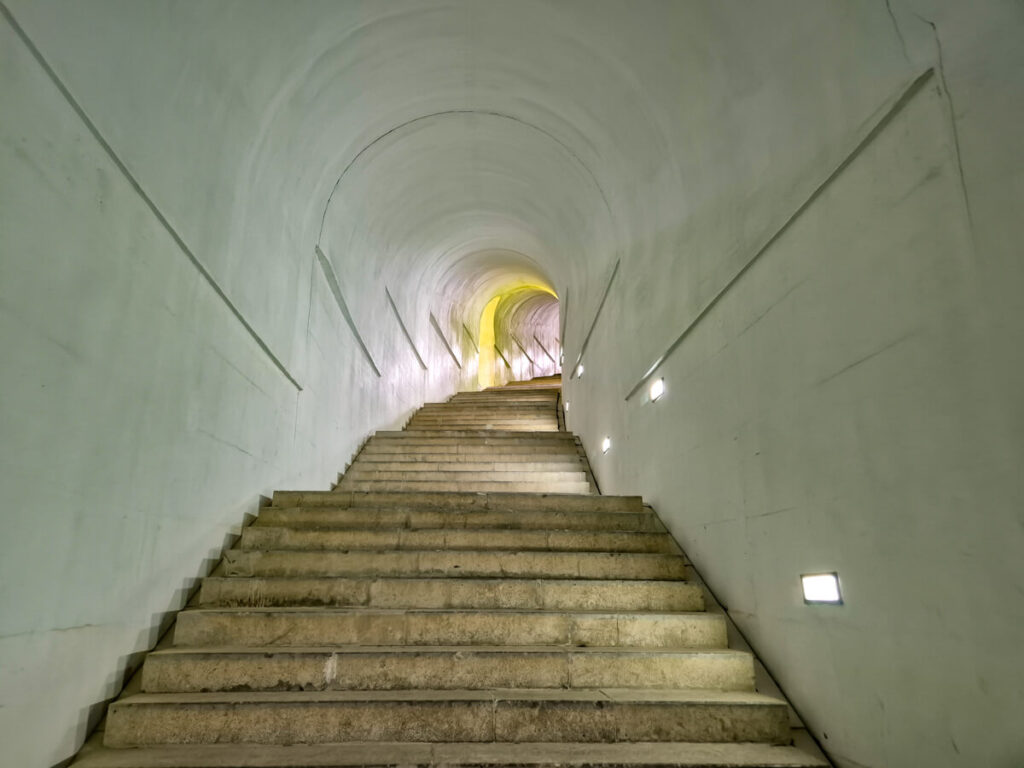
You can pay at the manned booth at the start of the tunnel.
Njegoš Mausoleum Hike
We found it quite tricky to find information about the walk itself to the mausoleum. Is it a hike? How long does it take? Can we do it in part of a day while on a road trip? Here’s what we found.
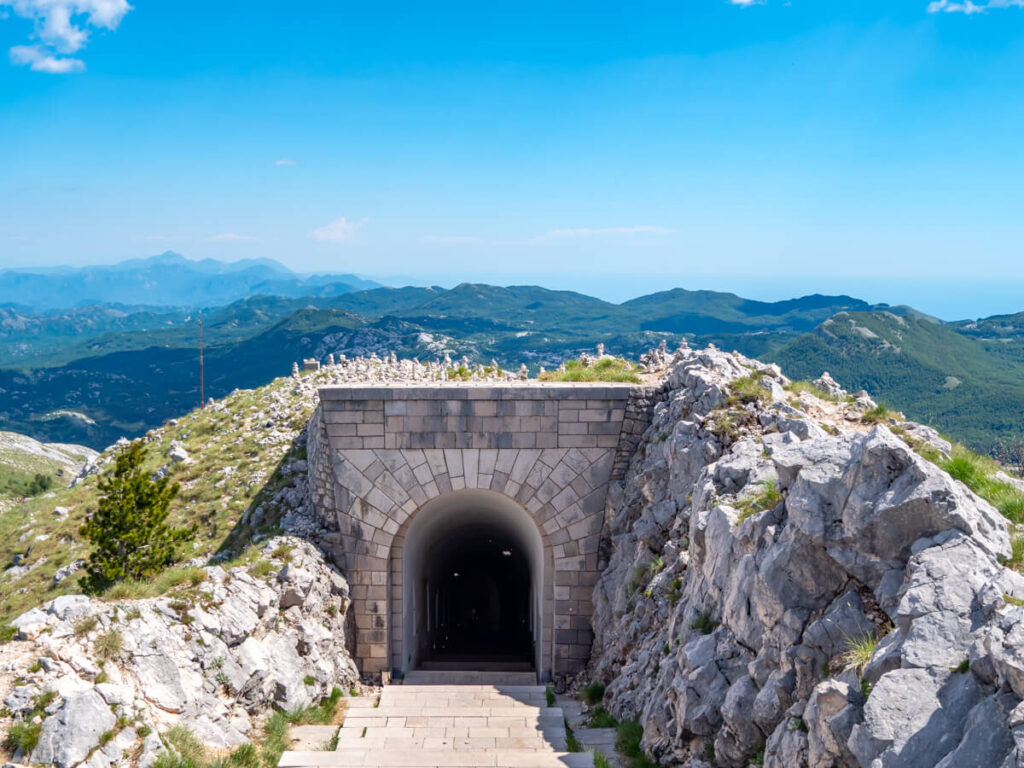
There are 461 steps to the Njegoš Mausoleum. Most of it is inside a tunnel, which means it’s nice and shaded, and you don’t need to worry about sun exposure. The temperature is much cooler than on the coast too, since you’re at a much higher elevation.
It takes about 15-20 minutes to reach the top, depending on your pace.
We wouldn’t really call it a hike, but it does require a decent level of fitness and the ability to climb stairs and ascend elevation. It’s wide enough for you to pull over and catch your breath if needed.



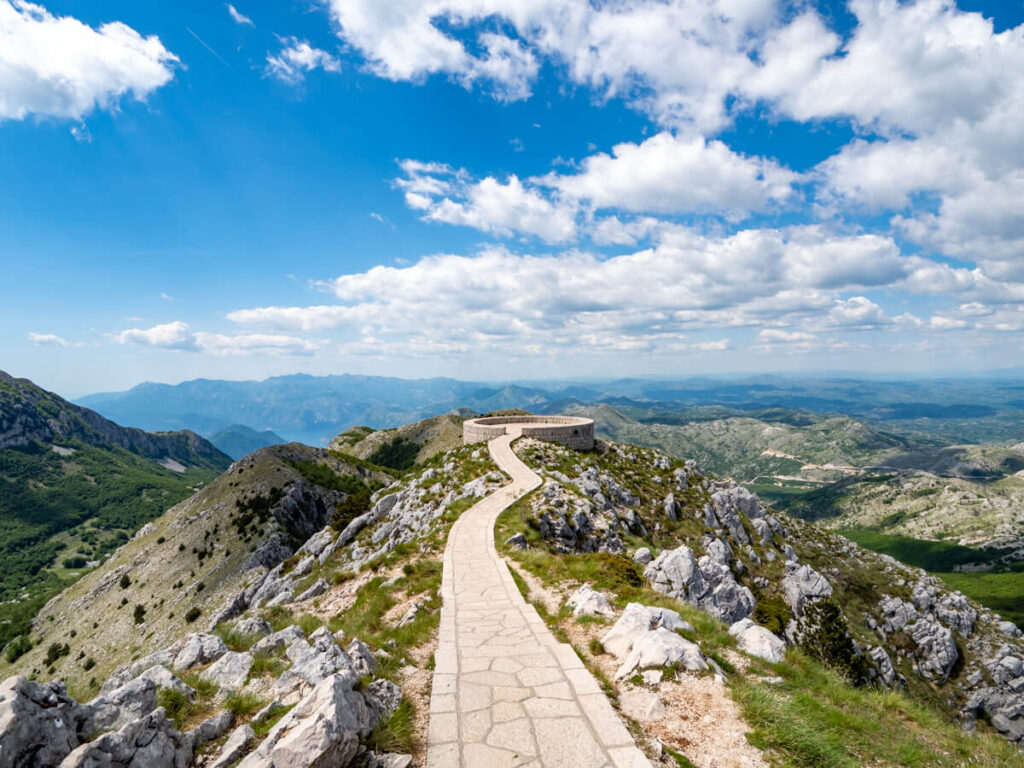
Once you reach the top, there are paved paths around the monument. You can pass through the mausoleum to a fairly narrow pavement that leads to the viewpoint. It contains a few more steps, so look out for them so you don’t trip.
There are fairly steep drops on either side, so we wouldn’t recommend leaving the path or letting children run around. We’d also not recommend it if you’re prone to vertigo.
Inside Njegoš Mausoleum
The mausoleum itself is home to the Petrović-Njegoš dynasty, commemorating Petar II Petrović-Njegoš. He was a 19th-century prince-bishop, ruler, philosopher, and poet who was born in nearby Njeguši and became an important symbol of Montenegrin identity.
Njegoš wanted to be buried on Lovćen, and his original burial chapel stood in the same spot as the modern-day memorial. The present mausoleum was designed by the Croatian sculptor Ivan Meštrović and was opened in 1974.
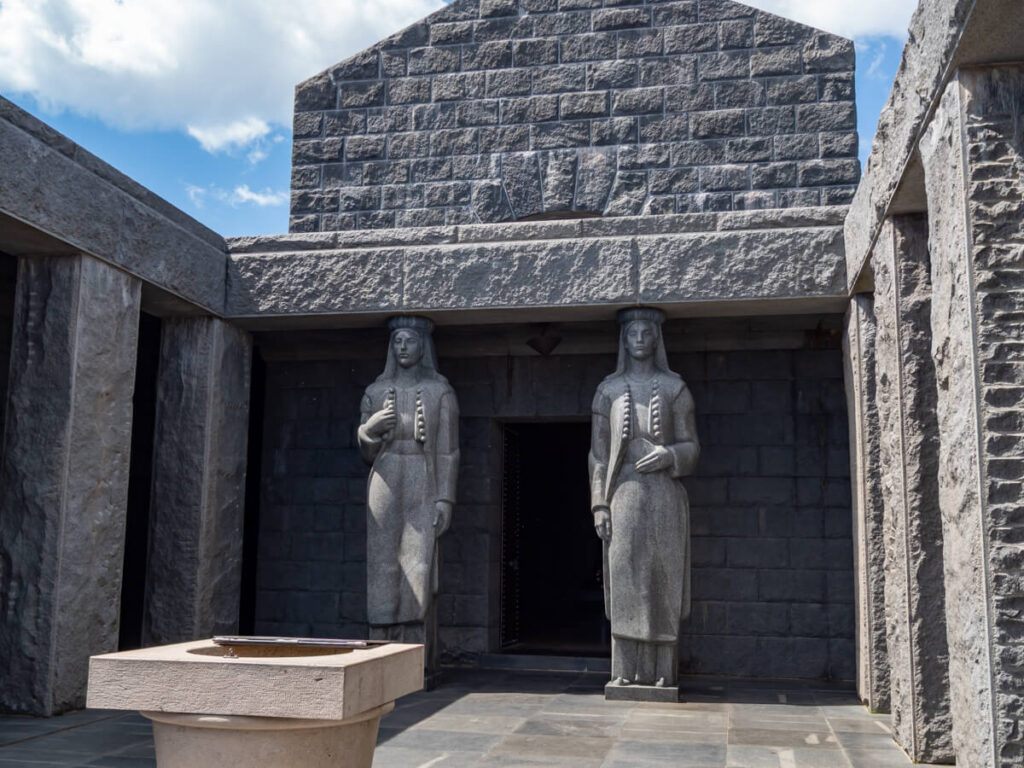
The entrance is guarded by two enormous female figures carved from black granite, representing Montenegrin women. Inside, the most striking feature is the vast golden mosaic covering the ceiling, made from approximately 200,000 gilded tiles.
At the centre of the mausoleum is the marble sarcophagus of Njegoš, who is also referred to as Bishop Rade. The combination of the dark stone, golden mosaic, and imposing sculpture makes the interior feel much more monumental than you might expect from its relatively remote mountain location.


Njegoš Mausoleum Views
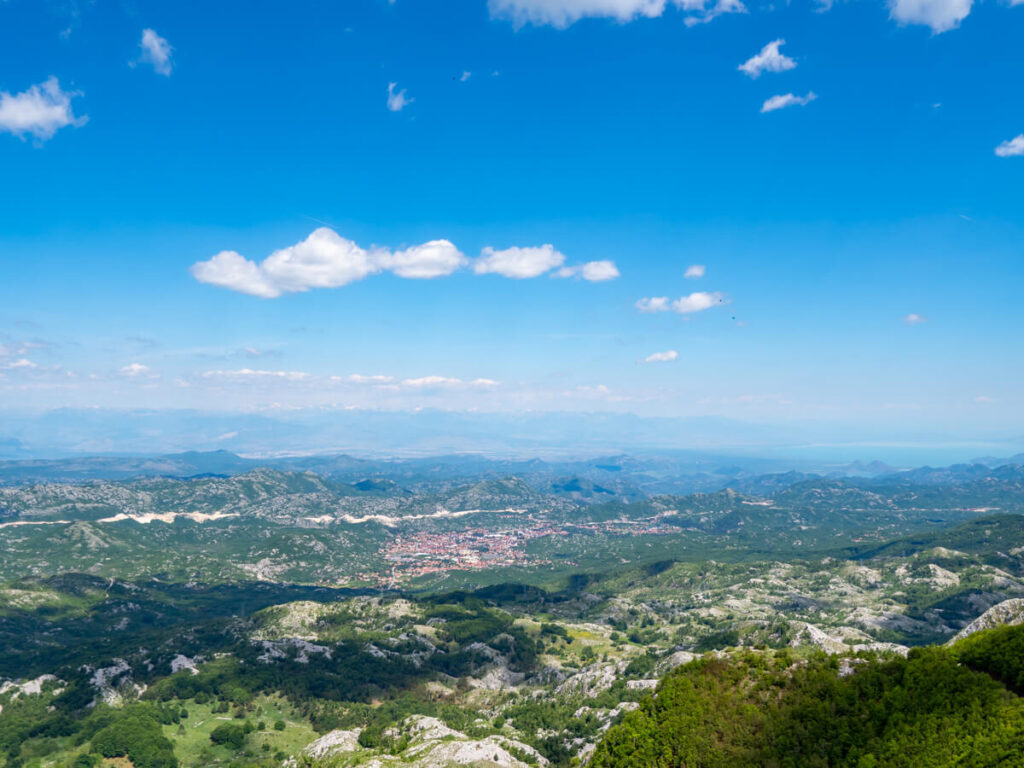
For us, the views are arguably the biggest reason to make the climb to the top of the mountain. Once you’re outside the mausoleum, you’re standing high above the surrounding mountains with an enormous panorama stretching across Montenegro.
You can see the Bay of Kotor poking through a gap in the mountains in the distance, but it’s not the iconic vistas you get from the Serpentine and cable car top station.


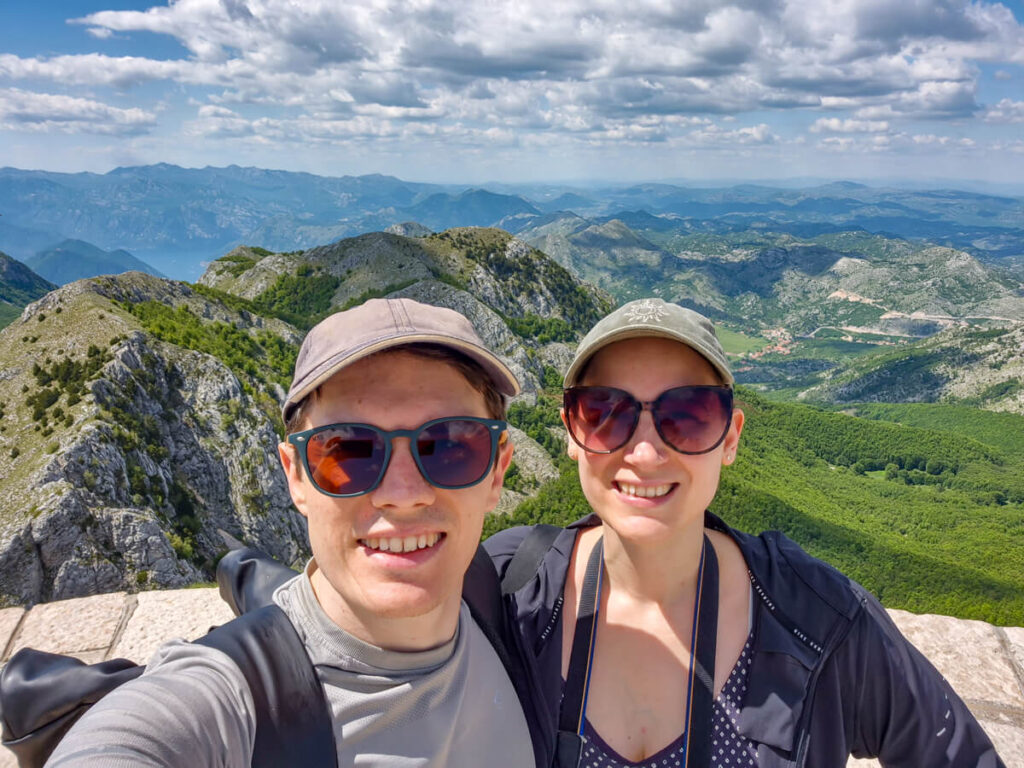
On a clear day, you can look across the rugged Lovćen massif, the surrounding karst mountains, and the landscapes around Cetinje. We could even see as far as Lake Skadar, where we went later in our trip. Apparently, you can even see Italy and Albania on really clear days!

How to spend one day in Lovćen National Park
If you’re visiting Lovćen National Park as a day trip from Kotor, we’d recommend starting early to avoid traffic on the Serpentine:
If you’re not driving, you can start a little later:

When to visit Lovćen National Park?
The best time to visit Lovćen National Park is from late spring to early autumn, when the mountain roads, viewpoints, and hiking trails are generally at their most accessible. We’d particularly recommend the shoulder months of May, June, September, and early October, when you can enjoy the mountains without the intense heat and peak-season crowds found along the coast in summer. Spring brings fresh greenery and wildflowers, while autumn is particularly beautiful as the beech forests begin to change colour.
July and August are the busiest months, but Lovćen can actually be a welcome escape from the summer heat around Kotor and Budva if you do visit during this time. The higher elevations are noticeably cooler, although the weather can change quickly once you’re up in the mountains.
Winter can be atmospheric if you’re looking for snow, but mountain roads and trails can become much more difficult, so we’d check local conditions before setting off.
Lovćen National Park weather
Lovćen’s weather is noticeably different from the warm Mediterranean climate around the Bay of Kotor. The park climbs from around 939 metres to 1,749 metres (3,080 ft to 5,738 ft), so temperatures can drop considerably as you gain elevation, and conditions can change surprisingly quickly.
How long to spend in Lovćen National Park?
You can see the main highlights of Lovćen National Park in a day, and that’s how most visitors (including us) experience it. A well-planned day gives you enough time to drive through the mountains, stop at viewpoints, visit Njeguši, ride the alpine coaster and cable car, explore the Njegoš Mausoleum, and enjoy some of the park’s more adventurous attractions.
If you’re interested in hiking, we’d recommend spending 2 days instead, using either Kotor or Cetinje as a base. This gives you time to explore a longer trail without having to squeeze it between sightseeing stops.

Where to stay near Lovćen National Park
For most visitors, we’d recommend staying in Kotor or Cetinje and visiting Lovćen as part of a wider Montenegro itinerary. Kotor is particularly convenient if you’re already exploring the Bay of Kotor, while Cetinje puts you much closer to the heart of the mountain.
If you want to wake up surrounded by forest rather than in a town, Ivanova Korita is the most appealing option within the park itself. There are a small number of accommodation options here, including traditional-style mountain katuns, and you’re much better placed for early morning walks and exploring the surrounding trails. This is also where the national park’s visitor centre is located.
Another option is Njeguši, particularly if you’re interested in staying somewhere quieter and experiencing the traditional mountain village atmosphere, but it’s really tiny with few amenities.
Top Kotor Hotels
Camping in Lovćen National Park
Camping can be a good option if you’d rather stay close to nature. Wild camping is illegal in Montenegro, although often tolerated in more remote areas – not being too far from the coast, Lovćen isn’t that remote.
Unlike Biogradska Gora, there isn’t an established campsite by the national park itself either. Much of the surrounding land is privately owned, so we’d recommend using an established campsite or designated camping area rather than wild camping.
There are also campsites around the Bay of Kotor that work well as a base for a day trip into Lovćen. This can be a better option if you have a car and want to combine mountain adventures with time on the coast.

Where to eat near Lovćen National Park
Restaurant options inside Lovćen National Park itself are relatively limited compared with Kotor or Cetinje. The main places to eat are around Ivanova Korita and the surrounding settlements, with further choices in Njeguši. We’ve also done a whole guide on our favourite restaurants in Kotor if you’re looking for great places to eat.
Lovćen National Park Restaurants
If you don’t take your own picnic, you can check out:
Is Lovćen National Park worth visiting?
We’d definitely recommend visiting Lovćen National Park, particularly if you’re staying around Kotor or Budva. Its biggest advantage is that you can experience a completely different side of Montenegro without committing to a long journey into the country’s more remote mountains.
What makes Lovćen particularly interesting is its combination of dramatic karst scenery, coastal views, dense forests, historic villages, and important cultural landmarks. You can drive the Serpentine or take the cable car, eat traditional food in Njeguši, ride the alpine coaster, walk through the forest, and visit the Njegoš Mausoleum, all in one day.
It’s also a good choice if you’re travelling with a mixed group. Not everyone needs to be a keen hiker or history buff to enjoy Lovćen, as there are scenic drives, viewpoints, restaurants, and even theme-park-style attractions alongside the walking trails and mausoleum.
But Lovćen National Park isn’t necessarily for everyone, particularly if you’re already short on time or mainly interested in Montenegro’s beaches and coastal towns. If you’re expecting dramatic high-altitude hiking as you’d find in Durmitor or Prokletije, you might find Lovćen a little underwhelming. We’d also skip it if the weather is poor, as much of the appeal comes from the panoramic views over the Bay of Kotor and surrounding mountains.
We’d also like to flag that the cable car top station is very commercial-feeling, and the cable car itself is not cheap, especially if you’re a family. It’s fun for a day out or if you like rides, but it’s not the most authentically Montenegrin experience in the region. It’s also nowhere near the mausoleum, and getting between the two is practically impossible without a car.
What to pack for Lovćen National Park
It’s best to be prepared when you visit Lovćen National Park. Don’t forget to pack your:
Leave your drone in your accommodation, as it’s illegal to fly in the national park (be aware that you need to apply for a permit before importing it into Montenegro anyway).

Lovćen National Park FAQs
To help you plan your trip to Lovćen National Park, we’ve answered these frequently asked questions.
What to do at Lovćen National Park?
The main things to do in Lovćen National Park are to visit the Njegoš Mausoleum, take the Kotor Cable Car, drive the Kotor Serpentine, explore Njeguši, enjoy the viewpoints, and go hiking around Ivanova Korita and the surrounding mountains.
Is Lovćen National Park free?
No, Lovćen National Park isn’t free to enter as it’s a national park. Fees can change, so we’d recommend checking the current price before visiting. The Njegoš Mausoleum has an additional entrance fee to the national park.
Can you walk from Kotor to Lovćen National Park?
While you can, we’d really advise against walking from Kotor to Lovćen National Park unless you’re deliberately looking for a very long mountain hike. While it’s technically possible to hike Mt Lovćen from Kotor, we’d really advise against it. Even if you do the full Ladder of Kotor hike, which can take you as far as Restaurant Nevjesta Jadrana just outside Njeguši, you’re still miles away from the park’s main attractions, including the cable car and mausoleum. You’d need at least 10-12 hours to do it as a return trip. You could shorten it by starting at the cable car top station, but it’s still really not very practical, as you’ll be following the road for most of the walk.
It’s much easier to drive or arrange lifts to the mausoleum and enjoy the short uphill hike to the viewpoint there, or to enjoy one of the other hikes in Lovćen National Park.
How long does it take to hike Lovćen?
It depends entirely on the route, as Lovćen has everything from short walks to demanding mountain hikes. The walk up to the Njegoš Mausoleum is only a short uphill section from the car park, although you’ll need to tackle 461 steps, while longer routes such as the Wolf Trail can take several hours. We’d allow at least half a day if hiking is one of your main reasons for visiting.
What are the best hikes in Lovćen National Park?
The best hikes in Lovćen National Park are the popular Wolf Trail circuit and the loop around Ivanova Korita. You can also enjoy the out-and-back Pestingrad hike, which sits just outside the park boundary. And of course, the walk to the Mausoleum of Petar II Petrović-Njegoš is the most popular.
Where can I park at Lovćen National Park?
Parking is available throughout Lovćen National Park, most notably at the cable car top station and on the road near the entrance to the Njegoš Mausoleum. There’s also parking at trailheads and viewpoints.
How high is Lovćen National Park?
Lovćen National Park ranges from around 939 metres (3,081 ft) to 1,749 metres (5,738 ft) above sea level. The highest point is Štirovnik at 1,749 metres (5,738 ft), while Jezerski Vrh, home to the Njegoš Mausoleum, reaches 1,657 metres (5,436 ft).
Read next:
Driving the Kotor Serpentine vs Taking the Kotor Cable Car: Lovćen From Kotor
All 5 Montenegro National Parks Compared + Our Favourites
A Traveller’s Guide to the Bay of Kotor: Europe’s Southernmost Fjord
Where to Stay in Kotor Bay: Top Towns + Best Hotels From Budget to Boutique
27 Cool Things to Do in Kotor + What Not to Do
How to Spend One Day in Kotor & Our Free DIY Old Town Walking Tour Route + Map
10 Fun Day Trips from Kotor + 2 Tours Not to Book
11 Best Montenegro Blue Cave Boat Tours + Is It Even Worth It?
Our 15 Favourite Cafés, Bars & Restaurants in Kotor + Veggie/Vegan Options
What It’s Really Like to Hike the Ladder of Kotor
How to See & Support Kotor’s Cats
A Quick Guide to Taking the Kamenari-Lepetane Ferry in the Bay of Kotor
A Traveller’s Guide to the Luštica Peninsula
How to Find the Lipci Rock Art: Prehistoric Petroglyphs in the Bay of Kotor
