A Traveller’s Guide to the Bay of Kotor: Europe’s Southernmost Fjord

Discover Europe’s Southernmost Fjord, from towns and transportation to activities and accommodation in Montenegro’s beautiful Boka Bay.

This post may contain affiliate links, which means we might earn a small commission on anything purchased through these links at no extra cost to you. Learn more on our disclaimer page.
The Bay of Kotor is one of the most visually stunning places in Montenegro, surrounded by towering mountains, historic towns, and crystal-clear water. While Kotor Old Town is the main draw, there’s much more to explore around the bay, from quiet fishing villages and traditional towns to scenic viewpoints and sandy beaches.
We spent a couple of weeks exploring the Kotor area, starting our Montenegro road trip here and returning back again to meet family for a week-long holiday. We fell in love with the tiny towns and epic sea views, and can see why this is quickly becoming such a popular holiday hotspot.
In this guide, we’ll cover everything you need to know about visiting the Bay of Kotor, including the best places to visit, things to do, how to get around, where to stay, when to visit, and our practical tips for exploring the area.
The Bay of Kotor at a glance
More from Kotor
What is the Bay of Kotor?
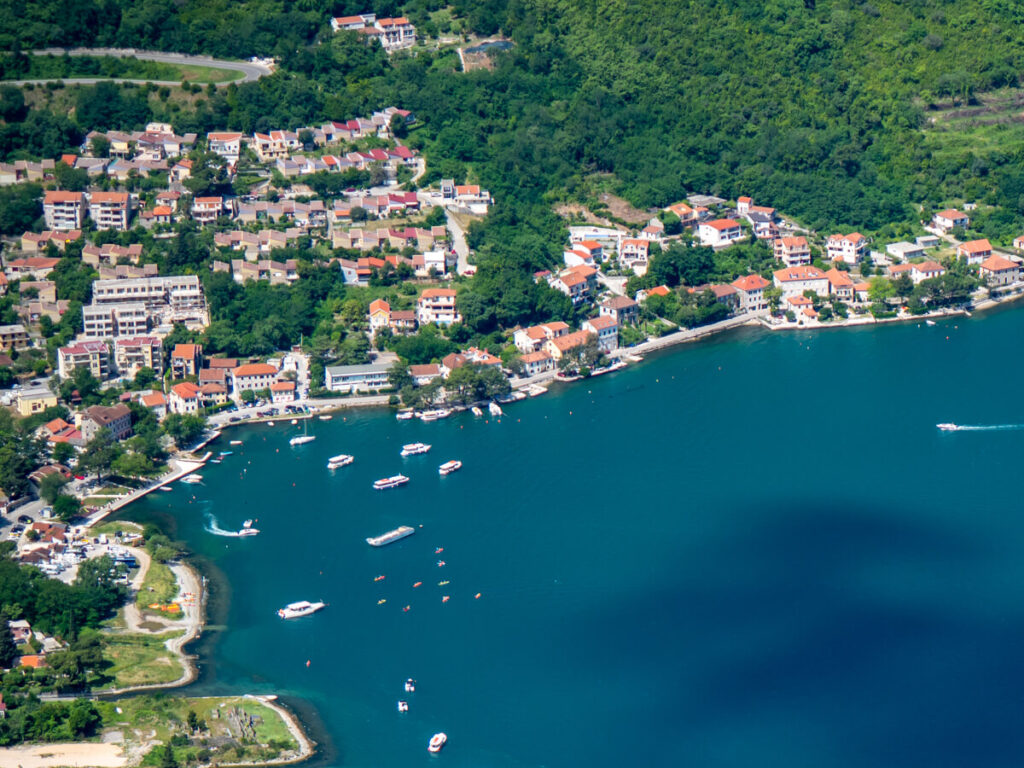
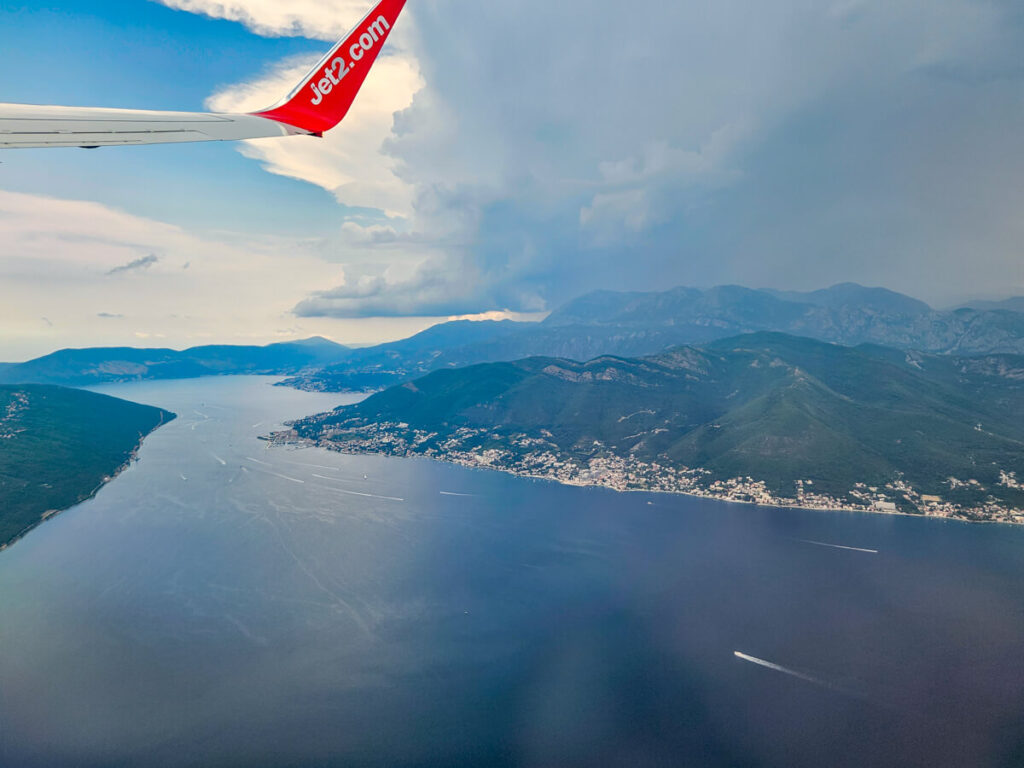
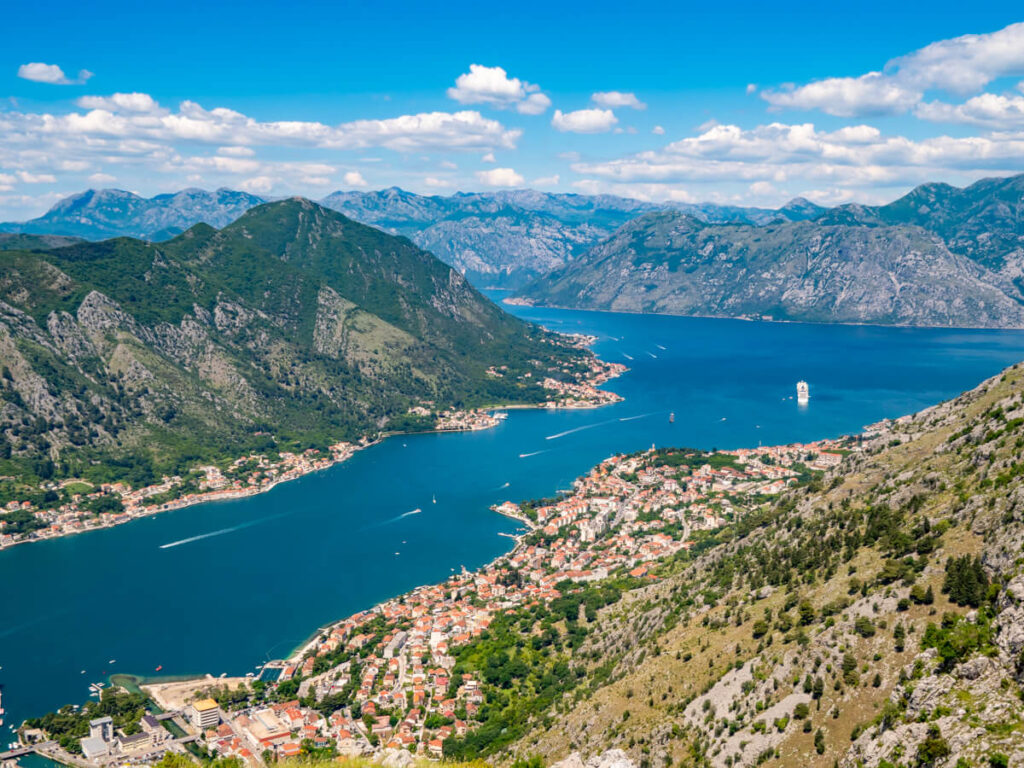
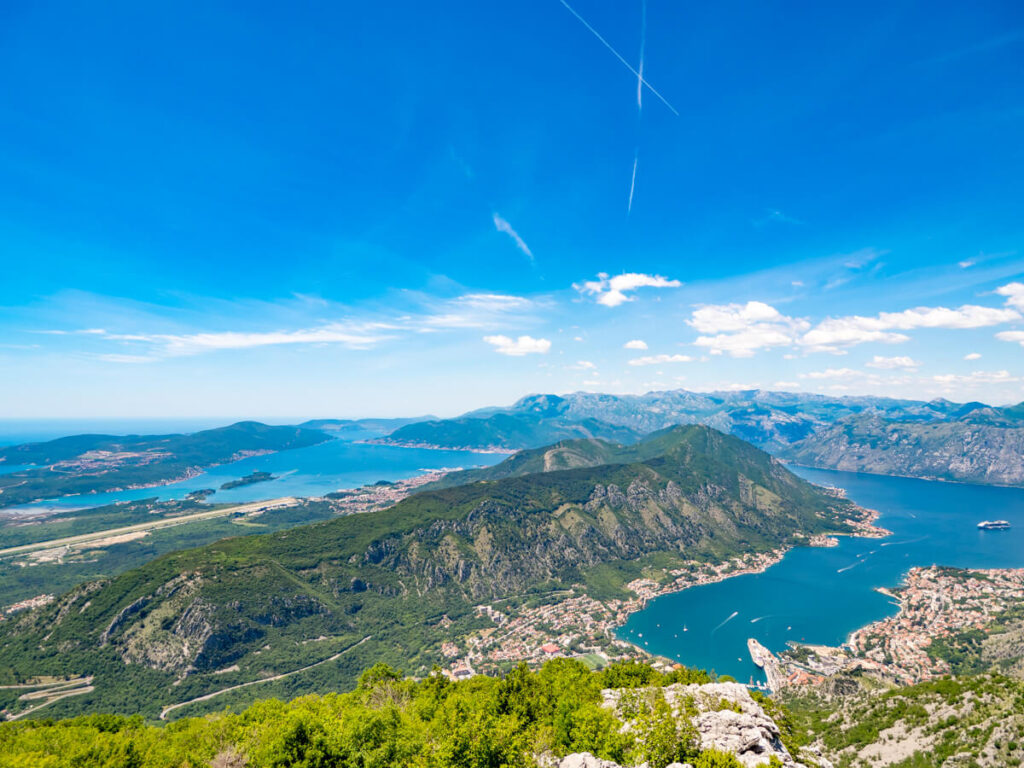
The Bay of Kotor, also called the Gulf of Kotor and known locally as Boka Kotorska (or just Boka Bay), is often described as Europe’s southernmost fjord due to its series of interconnected bays filled with the sparkling Adriatic Sea and lined with enormous limestone mountains, medieval towns, tiny villages, churches, beaches, marinas, and old stone houses.
But in actuality, it’s a ria, a submerged river valley rather than a true fjord. Its distinctive shape was created by the flooding of an ancient river valley, leaving behind the steep-sided landscape you see today.
The bay is made up of several interconnected sections, including the bays of Herceg Novi, Tivat, Risan, and Kotor, with the narrow Verige Strait connecting the larger outer and inner sections.
There’s a bit of confusion around the actual names for parts of the bay:
Plus, there are numerous towns and villages nestled on the bay’s shore besides Kotor, including Dobrota, Perast, Herceg Novi, and Tivat.
Planning a trip to Kotor?
Montenegro is gaining popularity quickly, so be sure to book in advance as early as possible!
Top Experiences in Kotor
Top Hotels in Kotor
Rent a Car in Montenegro
Best eSIM for Montenegro
Where is the Bay of Kotor?
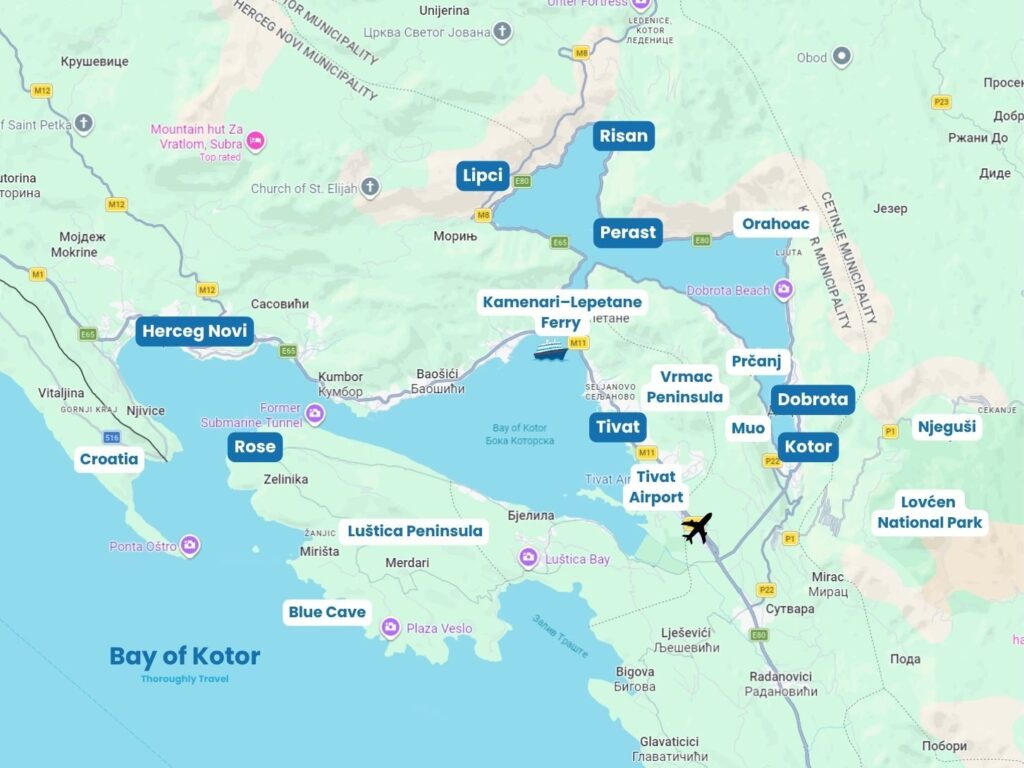
The Bay of Kotor lies in southwestern Montenegro, on the Adriatic Coast, which is sandwiched between the borders with Croatia and Albania.
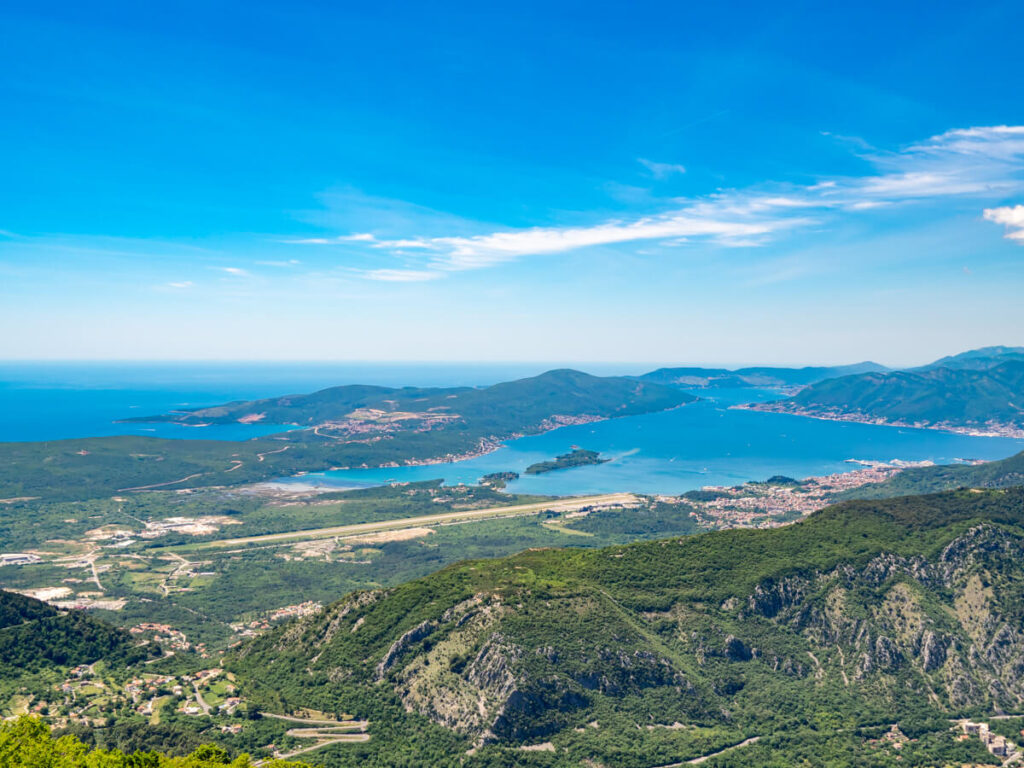
It stretches around several different towns and villages, with the Luštica Peninsula forming much of its southern side.
Kotor itself sits at the innermost end of the bay, surrounded by some of the most dramatic mountains in the region.
Tivat, where the international airport can be found, lies further west on the Vrmac Peninsula.
Bay of Kotor Map
We’ve highlighted the key towns and attractions around the Bay of Kotor on the map below.
Why visit the Bay of Kotor?
The biggest appeal of visiting the Bay of Kotor is the sheer variety packed into such a small area. You don’t have to choose between a beach holiday, a city break, a hiking trip, or a cultural escape – you can do a bit of everything.
With pleasant weather, stunning views, and a wealth of things to see and do, it’s no wonder the Bay of Kotor is such an up-and-coming holiday destination.
Landscapes
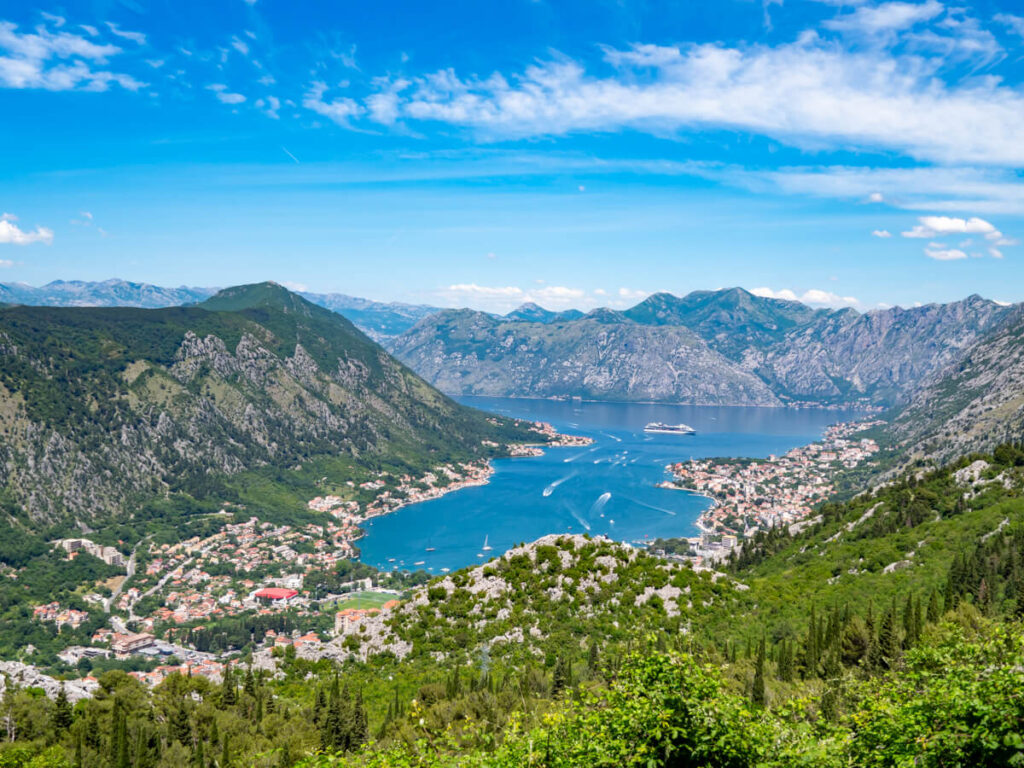
Without a doubt, the first thing you notice when you reach the Bay of Kotor, whether you fly in or drive the scenic road, is just how beautiful it is.
The whole bay is part of the UNESCO-listed Natural and Culturo-Historical Region of Kotor, which covers 14,600 hectares (146 sq km), with a much larger 36,491-hectare (365 sq km) buffer zone.
The mountains rise dramatically from the water, reaching nearly 1,500 metres (4,921 ft), producing jagged peaks, sheer cliffs, and deep valleys. They’re part of the Dinaric Alps, a mountain range that stretches across much of the western Balkans.
Nestled at the mountains’ bases and on their slopes are historic settlements, cultivated terraces, and a highly indented coastline.
History
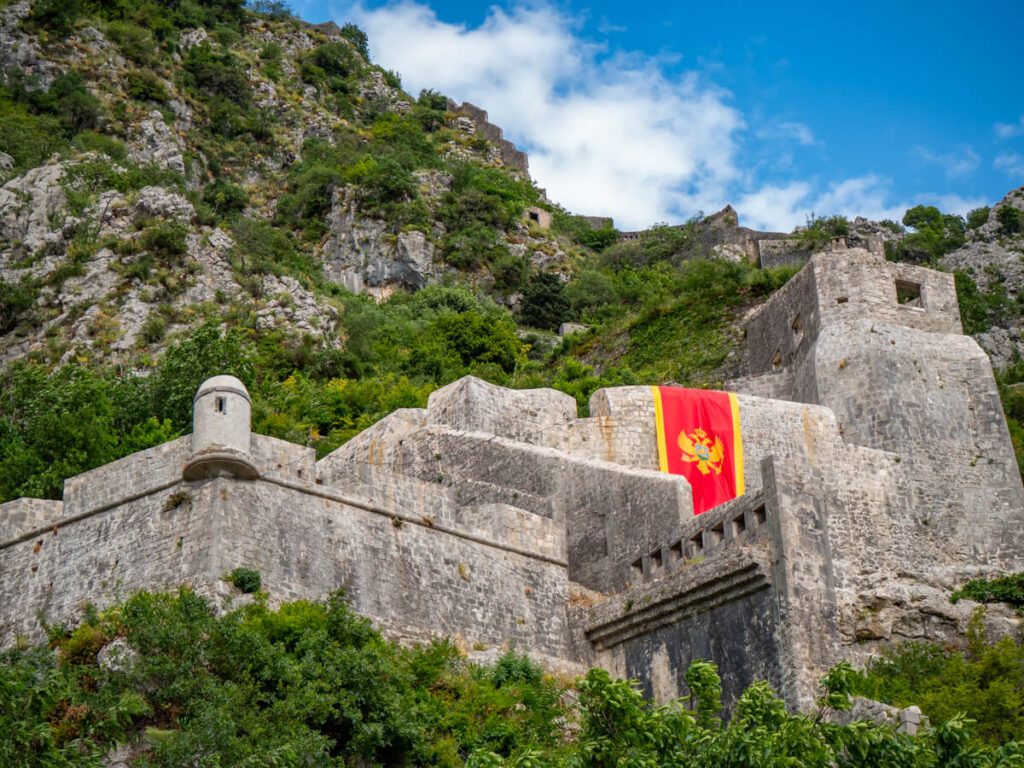
The Bay of Kotor has been strategically important for thousands of years, largely because of its sheltered natural harbour and position on the Adriatic Sea.
The area was inhabited in antiquity and later became part of the Roman world, before falling under Byzantine influence.
During the Middle Ages, the settlements around the bay developed into important maritime and trading centres, with Kotor becoming particularly wealthy and influential.
From the 15th century onwards, Venetian influence became dominant, and the architecture and cuisine you find around the bay today still reflect that period. Kotor and Perast in particular developed strong maritime traditions, with wealthy shipowners and captains funding churches, palaces, and elaborate stone houses.
The bay subsequently came under Austrian and Austro-Hungarian rule, followed by the political upheavals of the 20th century and its incorporation into Yugoslavia.
One of the most important events here in modern history was the 1979 earthquake, which caused enormous damage across the region. Kotor’s medieval buildings, churches, and fortifications were particularly badly affected, but international conservation efforts, including substantial UNESCO assistance, helped restore much of the bay’s heritage.
Culture
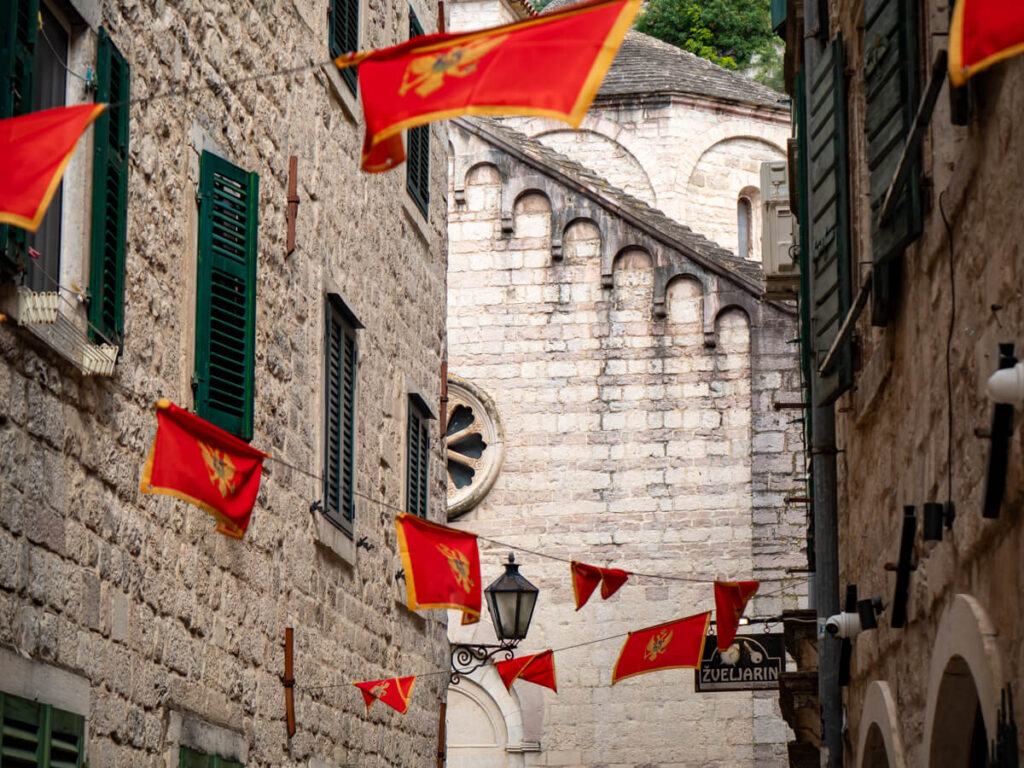
The culture of the Bay of Kotor is strongly tied to the sea. For centuries, local communities depended on shipping, fishing, shipbuilding, and maritime trade, and the wealth generated by these industries helped shape the elaborate churches and stone houses around the bay.
One of Kotor’s best-known highlights is its many cats, which are rumoured to have resulted from seafaring times when they were used as pest control aboard ships.
One particularly interesting tradition is the Boka Navy (Bokeljska mornarica), a historic maritime organisation based in Kotor. Its traditions date back centuries and include ceremonial processions and dances connected with the bay’s seafaring heritage.
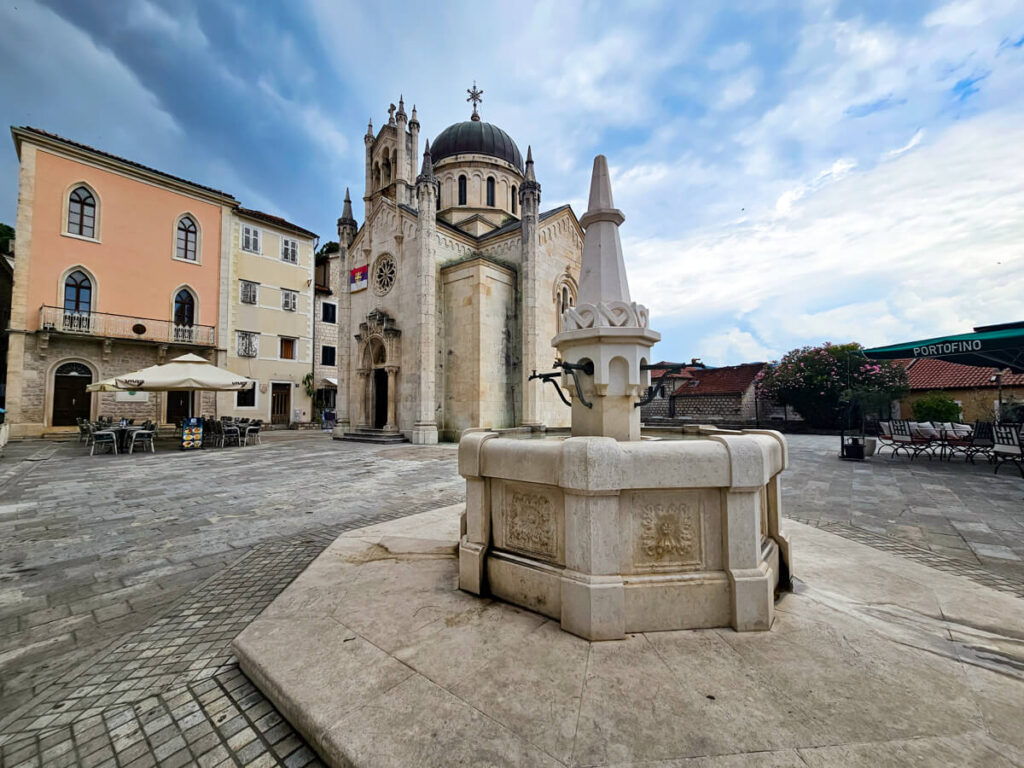
Religion is another important part of local culture. The bay contains a mixture of Catholic and Orthodox churches and monasteries, reflecting its position at the meeting point of different Mediterranean and Balkan cultural influences.
Today, the bay remains an important centre for yachting, cruise tourism, fishing, shellfish farming, and hospitality.
Activities
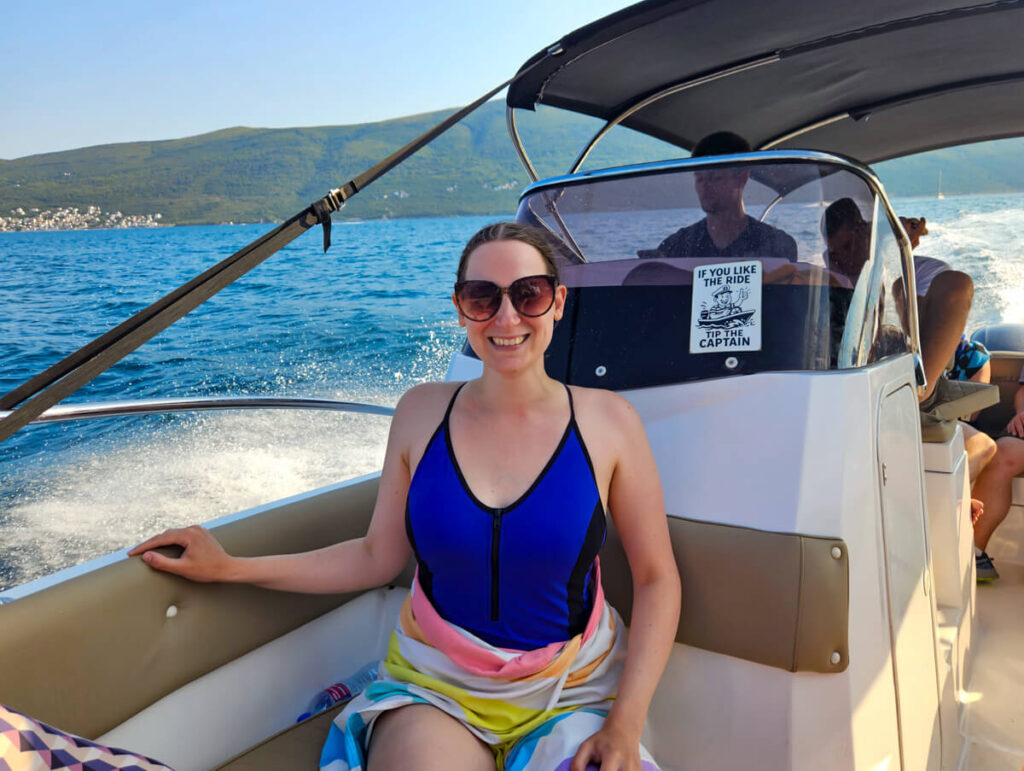
The great thing about the Bay of Kotor is that you don’t need to choose one type of holiday. There is an enormous range of fun things to do in Kotor, so there’s something for everyone to enjoy, even if you’re travelling in a group with mixed interests.
Some highlights include:
Top Tours in Kotor
Accommodation
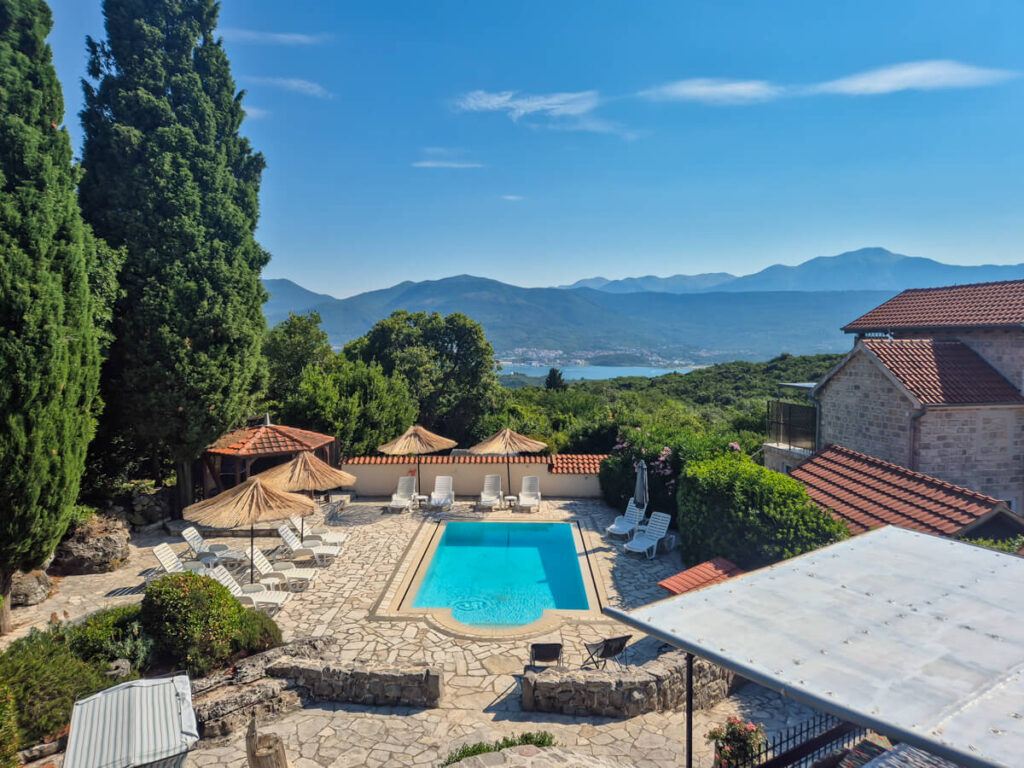
There is accommodation for pretty much every budget around the Bay of Kotor, although prices can vary dramatically depending on exactly where you stay and when you visit.
It’s also worth thinking about which town you want to stay in and use as a base for exploring, because each has a different vibe and access to amenities.
You can find apartments, guesthouses, budget hostels, boutique hotels, luxury resorts, campsites, and traditional accommodation scattered throughout the towns, as well as in more rural areas and on the peninsulas.
Choosing where to stay around the Bay of Kotor can be tricky, but here are our top picks to help simplify things.
Top Bay of Kotor Hotels
Food and drink
Food around the bay reflects its position between the Adriatic, Mediterranean, and Balkan worlds. You’ll find plenty of fresh seafood alongside hearty meat dishes, local cheeses, cured meats, and Mediterranean-style vegetables. But even as veggie/vegans, we were pleased there were quite a lot of options.
Seafood is obviously a big part of the local diet. Look out for mussels, oysters, and freshly caught fish, particularly around Risan and the northern reaches of the bay, where shellfish farming remains an important tradition.
You’ll also see Njeguški pršut and local cheeses on menus and sharing boards, while traditional breads, honey, and seasonal vegetables appear frequently.
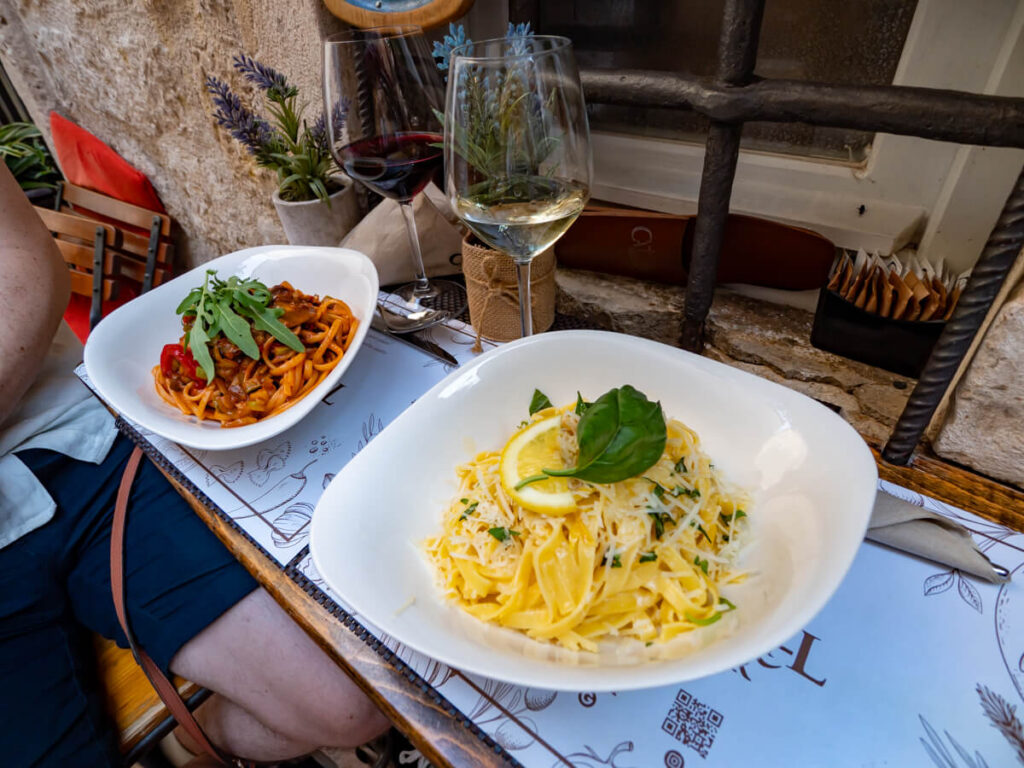
Thanks to Venetian influence, you’ll also find some great pizza and pasta dishes, alongside the iconic Aperol Spritz and other cocktails.
Wine is another important part of the region’s food culture. Montenegro’s indigenous Vranac grape produces rich red wines, while Krstač is one of the country’s best-known white varieties.
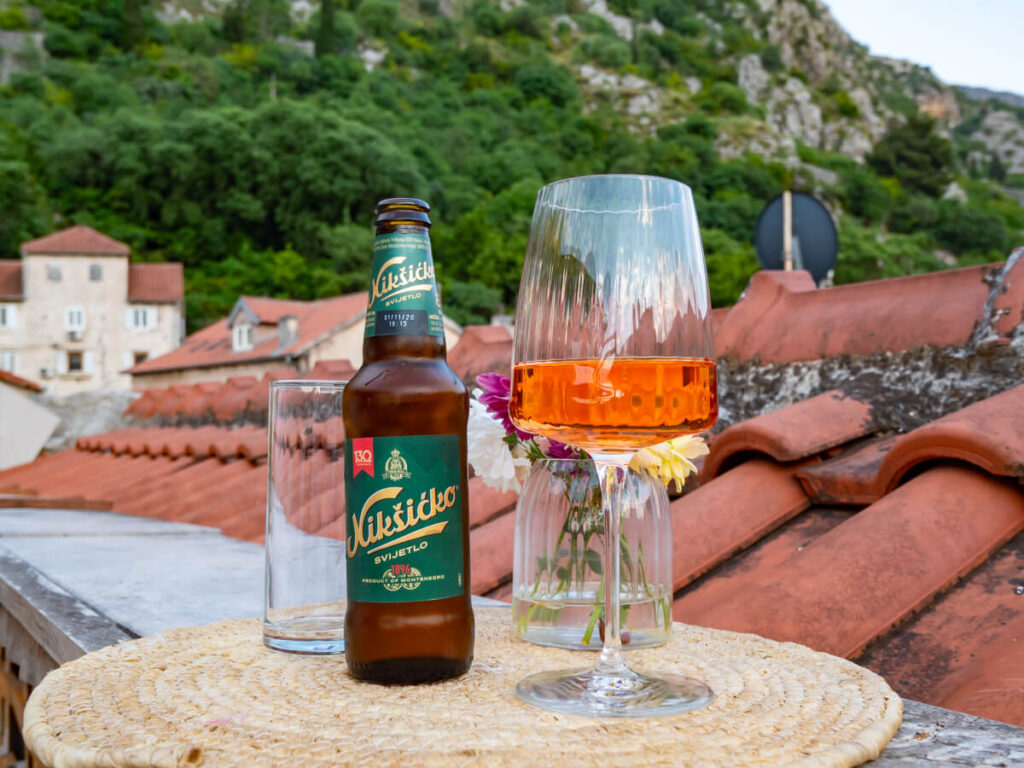
Beer is also widely available – Nikšićko is Montenegro’s best-known local beer, and you’ll find it in restaurants, bars, and cafés around the bay. And of course, if you like a cocktail, there’s a wide variety on offer, including the iconic Aperol Spritz.
How to get to Kotor
The Bay of Kotor is easy to reach by air, land, and sea, although there isn’t an airport or train station in Kotor itself. Most visitors to the Bay of Kotor either fly into Tivat, Podgorica, or Dubrovnik, or arrive by bus from elsewhere in Montenegro or the surrounding countries. Unfortunately, you can’t get directly to Kotor by train. Montenegro’s railway network doesn’t reach Kotor. But you might have heard of the famous Belgrade-Bar railway, which can take you as far as either Bar or Podgorica. Then you can continue onwards by bus or taxi.
By plane
More and more flights to Montenegro are being added by airlines as the country grows in popularity.
The main airports for visiting the Bay of Kotor are:
Tivat to Kotor
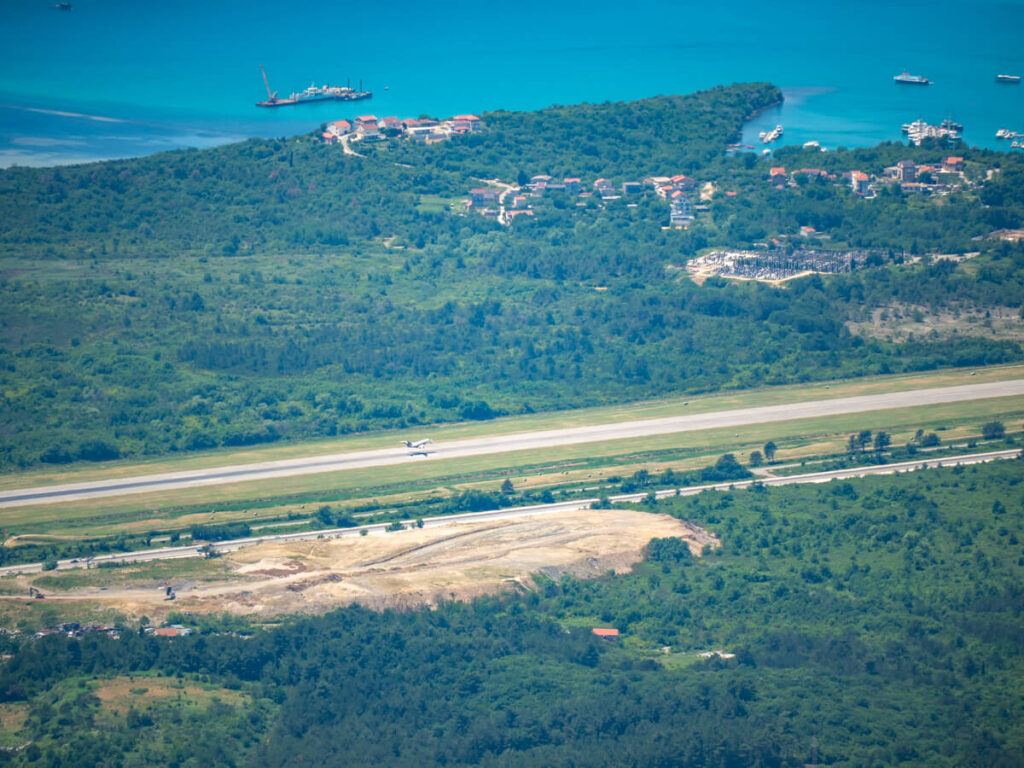
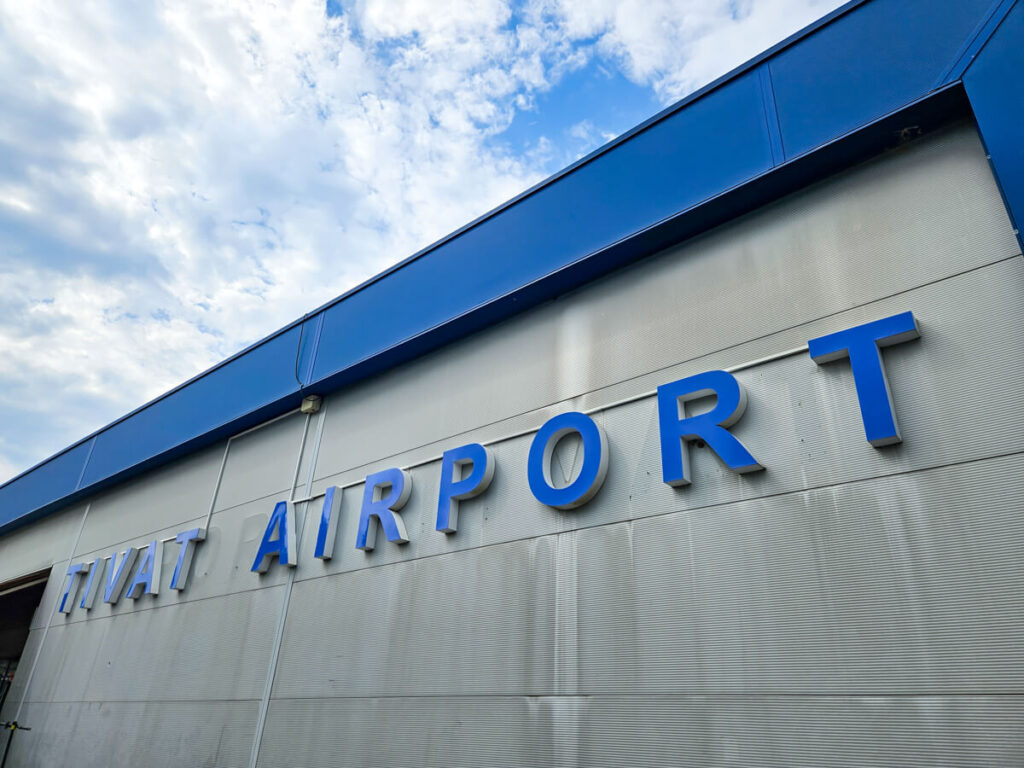
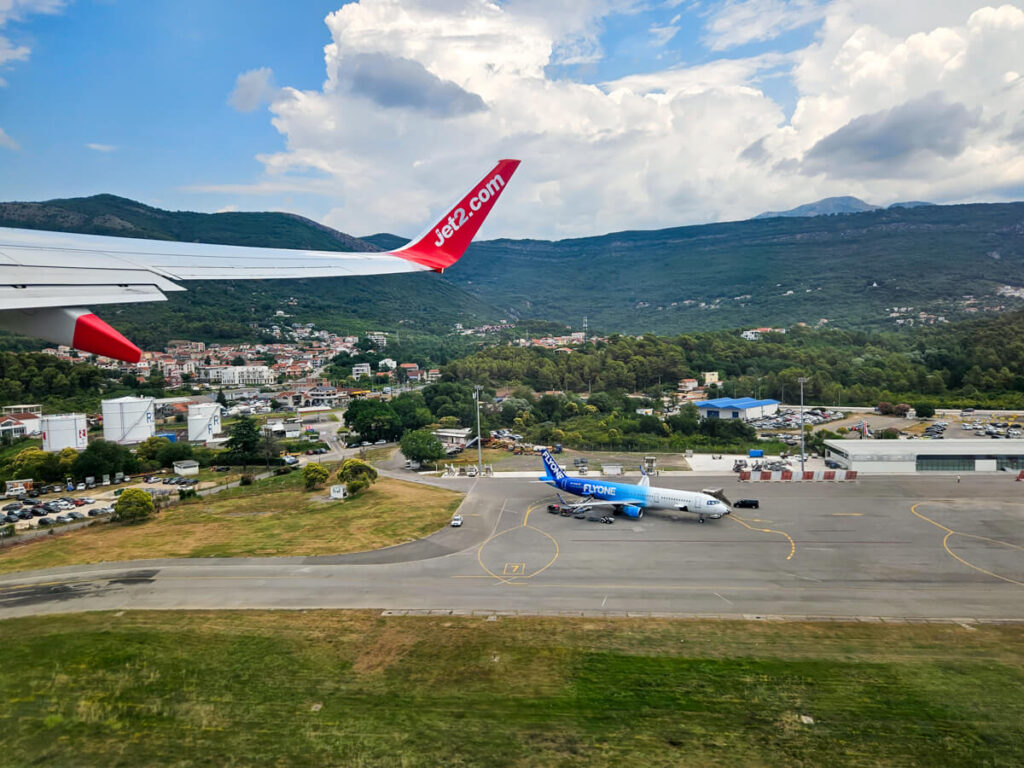
The easiest airport for Kotor is Tivat Airport (TIV), which is only around 5 miles (8 km) from the town. It’s a small airport, but it has a surprisingly good selection of European flights, particularly during the summer, including direct services from the UK, Germany, France, Serbia, and Turkey. We flew out of it and found it to be a little chaotic. It’s being developed but hasn’t caught up to the increase in tourism yet.
Hiring a car when you land makes most sense if you’re planning to explore more of Montenegro on day trips from Kotor during your stay. Several rental companies operate from Tivat Airport, and you’ll be in Kotor within around 20 minutes of collecting the car. Just remember that parking in Kotor can be difficult in summer, so check if your accommodation includes a free space. We rented a car from Kombo Rent a Car (who will meet you at the airport with a car) and we had a great experience with them.
Taxis are also available outside the terminal at Tivat Airport, taking you into Kotor in around 20 minutes and costing €20-25, although prices can vary depending on the operator and time of day – budget more if you’re staying in another town like Perast. Agree the price before getting in rather than assuming the meter will give you the fare you expected.
Pre-booking a transfer from Tivat to Kotor gives you a fixed price and means someone will be waiting when you land. They’re great if you want a smoother arrival, are travelling with lots of luggage, or are in a group, with prices starting at around €20-30, although larger vehicles and late-night pickups can cost more.
Sadly, there isn’t a dedicated airport bus in Kotor. You can walk out to the main road and catch a coastal bus towards the town, but it’s not reliable or particularly convenient with luggage. Reviews we read said it never came, so we didn’t risk it.
Podgorica to Kotor
Podgorica Airport (TGD) is the country’s main airport and has a much wider range of flights, including numerous European routes. It’s around 56 miles (90 km) from Kotor, so you’ll need to allow roughly 1.5 hours for the drive, depending on traffic.
Again, the easiest way to get to Kotor is to rent a car at Podgorica Airport. It has a slightly larger selection of rental cars than Tivat, and you can drive directly towards Kotor after collecting your vehicle.
If you’re not renting a car, we’d recommend booking a transfer to Kotor from Podgorica over a taxi, as it’ll be better value for money. You’ll have a fixed price and a driver waiting for you, costing around €50 per person for a private car.
There isn’t a useful direct airport bus to Kotor, but there are public buses if you’re on a budget and don’t have much luggage. There’s a bus stop outside the airport for Podgorica, Bar, Sutomore, and Ulcinj, although it’s badly reviewed, as the buses are often late or don’t show up.
To reach Kotor, you first need to get from the airport to Podgorica Bus Station by taxi or bus, then take an intercity bus to Kotor. Buses from Podgorica to Kotor go regularly throughout the day and cost around €7-10, taking roughly 2 hours, but you’ll need to factor in the additional airport transfer and waiting time.
Dubrovnik to Kotor
Another option is Dubrovnik Airport (DBV) in Croatia, particularly if you can find a much better flight or are combining Kotor with a trip around Croatia. It’s around 43 miles (70 km) from Kotor, but you’ll need to cross the Croatia-Montenegro border, so the journey can take considerably longer than the average 2-hour journey time, especially during the summer when the border wait times can average 2-3 hours+.
Renting a car in Dubrovnik is the best way to reach the Bay of Kotor, giving you the freedom to explore both countries on one trip. This is what my family did when they met us in Kotor, and the pick-up process and journey went really smoothly for them in mid-June.
If you’re on a budget, there are loads of buses from Dubrovnik to Kotor, but none of them goes directly from the airport. You first need to get to Dubrovnik before transferring onto a bus to Kotor, which we’ve detailed below in the buses section.
A transfer from Dubrovnik to Kotor is the option we’d recommend if you’re not driving. Go private if you’re a group, as a driver will collect you from the airport, take care of the border crossing and drop you at your accommodation, which is much smoother than faffing with the bus. It’s around €250-350 per car, but not bad when split between multiple people.
By bus
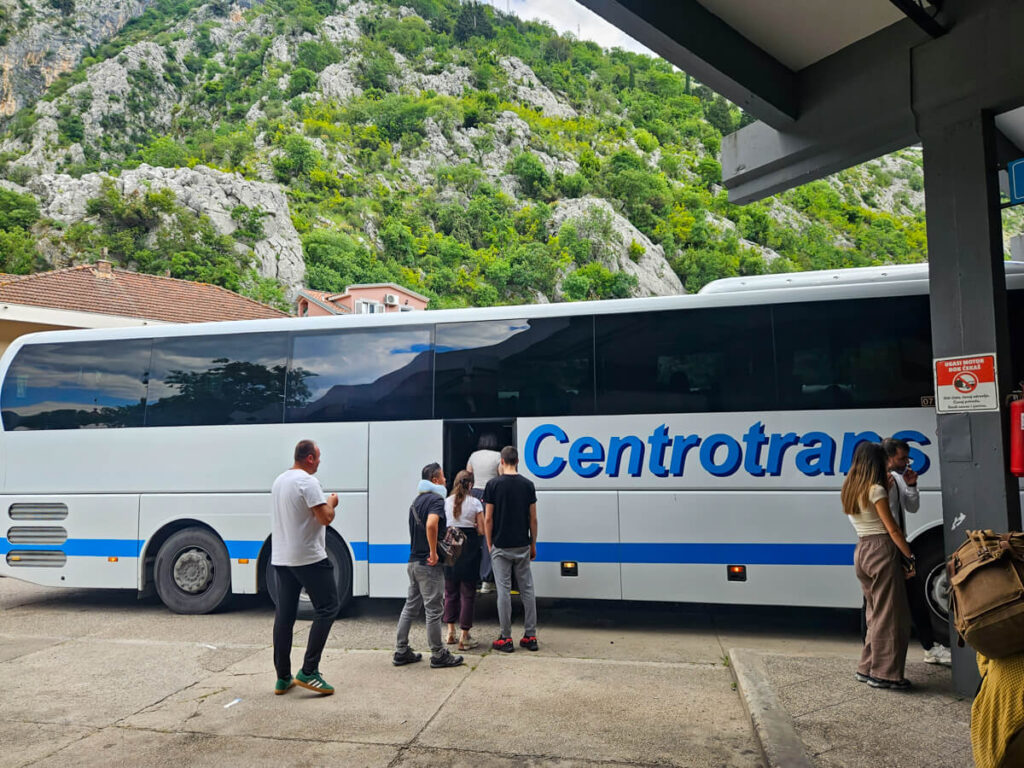
Kotor’s Bus Station has an extensive network of domestic and international services, making the bus one of the easiest ways to reach the town without hiring a car. We were dropped off here when we first arrived in Montenegro, and wanted to get out of it pretty much immediately. It’s small, gets very busy, and is right on the congested road into Kotor, but it’s only a 5-10 minute walk to the Old Town, so it’s functional. However, there are some useful systems if you know what you’re looking for.
The bus station is primarily the main hub for:
*Note: Public buses to Perast go from the roadside stops outside the Old Town Walls, not from the main bus station.
There are a variety of domestic and international routes that serve Kotor, with long-distance buses to and from Dubrovnik, Split, Mostar, Sarajevo, Belgrade, Novi Sad, Tirana, Shkodër, and other cities across the Balkans. Services and frequencies vary considerably by season, so we’d check the current timetable before relying on a particular route.
Here are our top tips for bus travel in Montenegro and throughout the Balkans:
From Croatia
The main connection from Croatia is buses to Kotor from Dubrovnik, with several services linking the two towns depending on the season. The journey is only around 57 miles (92 km) by road, taking 2-2.5 hours, but you’ll need to cross the Croatia-Montenegro border, which can add hours to your journey time during the summer. We’ve heard of people getting stuck at the border for 5 hours.
There are also longer-distance connections from places like Split, although these are much less consistent and can be seasonal. They take considerably longer, between 7 and 9 hours, not including the border waiting time and often involve either a stop or a change in Dubrovnik.
FlixBus (our fave long-distance coach company throughout Europe) runs several direct options from Dubrovnik Bus Station, stopping in Herceg Novi and Kotor and costing around €35 per person.
From Bosnia and Herzegovina
While some buses change in Dubrovnik, there are direct buses from Mostar to Kotor, which is the route we took when backpacking the Balkans the first time. We booked the Centrotrans coach with Bookaway (get 5% off with our code THOROUGHLY5), which worked really well. It took around 5 hours and cost us around €35 each.
You can also pick up buses to Kotor from Sarajevo, which take roughly 7 hours and cost around €40 per person.
From Albania
There are several direct daily buses from Tirana to Kotor, passing through Budva, Podgorica, and Shkodër on the way. The journey to Tirana takes roughly 6.5 hours, and one-way tickets with FlixBus and on Bookaway cost around €40, while the bus from Shkodër costs around €30.
From Serbia
There are frequent long-distance buses from Belgrade to Kotor, including overnight services. The journey is roughly 12 hours, covering around 367 miles (590 km), with current one-way fares generally around €35-40 depending on the operator. You can find them on both FlixBus and Bookaway.
Within Montenegro
Kotor is well connected to other parts of the country, particularly the coastal towns. Within Montenegro, there are frequent connections with Budva, Tivat, Herceg Novi, Cetinje, Podgorica, and Bar, as well as services further inland to places such as Nikšić and Žabljak.
You can check routes and schedules on BusTicket4.me.
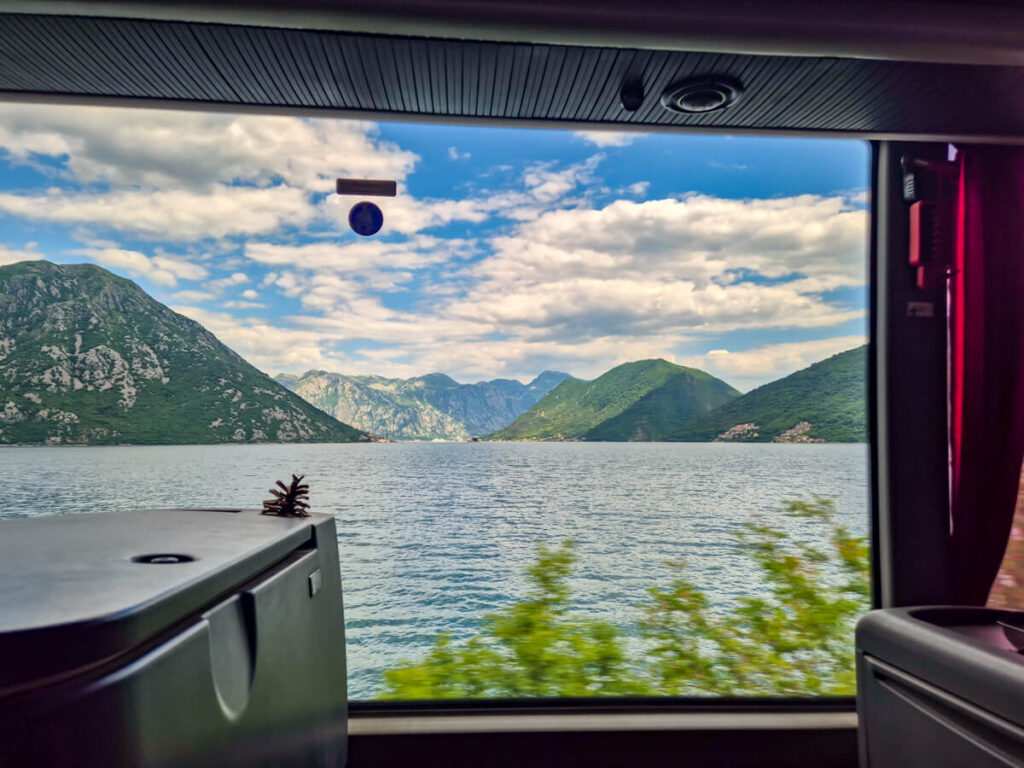
By car
Driving in Montenegro is a good option if you’re planning to explore more than just Kotor, particularly if you’re coming from elsewhere in the country or crossing in from Croatia, Bosnia and Herzegovina, Serbia, or Albania.
If you’re flying into Montenegro, you can rent a car from Tivat or Podgorica airports and drive straight to Kotor or the surrounding towns quite easily.
Driving from Croatia is also straightforward in principle, although the border crossing can become very slow during the summer. The same applies when arriving from Bosnia and Herzegovina or Albania, so we’d leave plenty of extra time if you’re travelling in July or August.
One thing to remember is that Kotor Old Town is pedestrianised, so you won’t be driving directly to your accommodation if you’re staying inside the walls.
Parking can also be difficult during the busiest periods, so we’d book somewhere with parking or arrange where you’re leaving the car before arriving. Parking Autoboka was our go-to car park, as we found it always had spaces, was only a short walk from the Old Town, and was a reasonable €0.90 an hour.
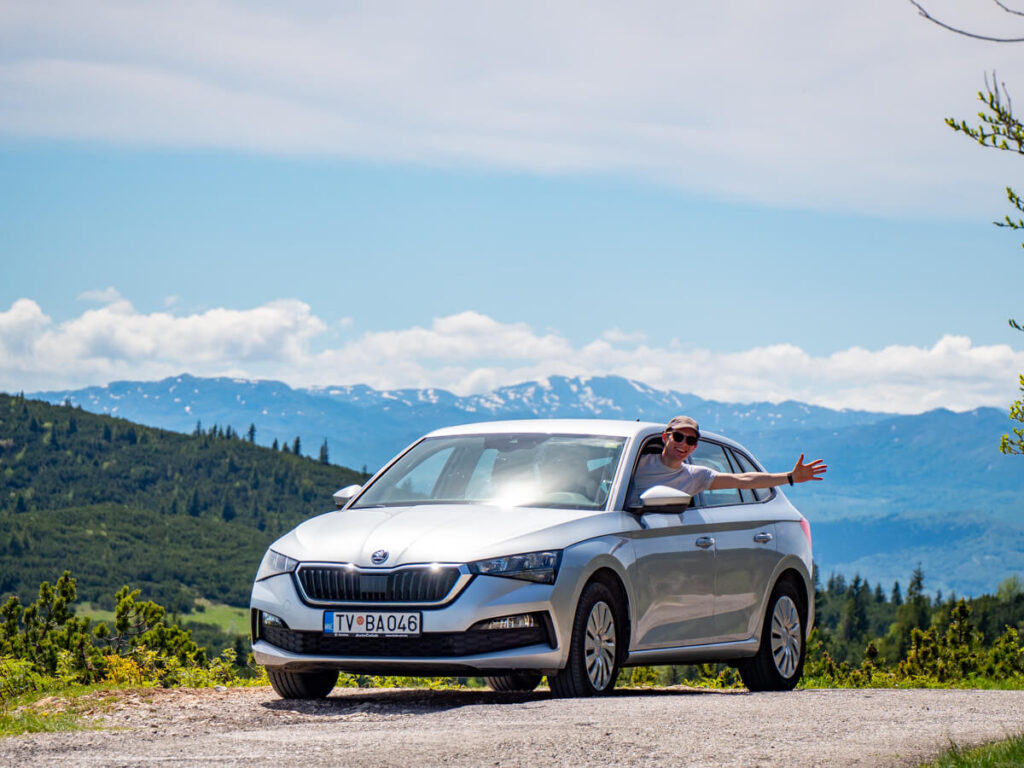
By ferry
There is a seasonal passenger ferry between Dubrovnik and Kotor, which is a particularly scenic way to arrive if you’re combining the two destinations. The journey takes around 3 hours, with services generally running between June and September, although the exact schedule varies. It’s run by Adriatic Lines and you can check the schedule on their website.
The ferry arrives right beside Kotor Old Town, so there’s very little hassle once you get off the boat. It also means you avoid the road traffic and border queues, although the service is seasonal and doesn’t carry cars.
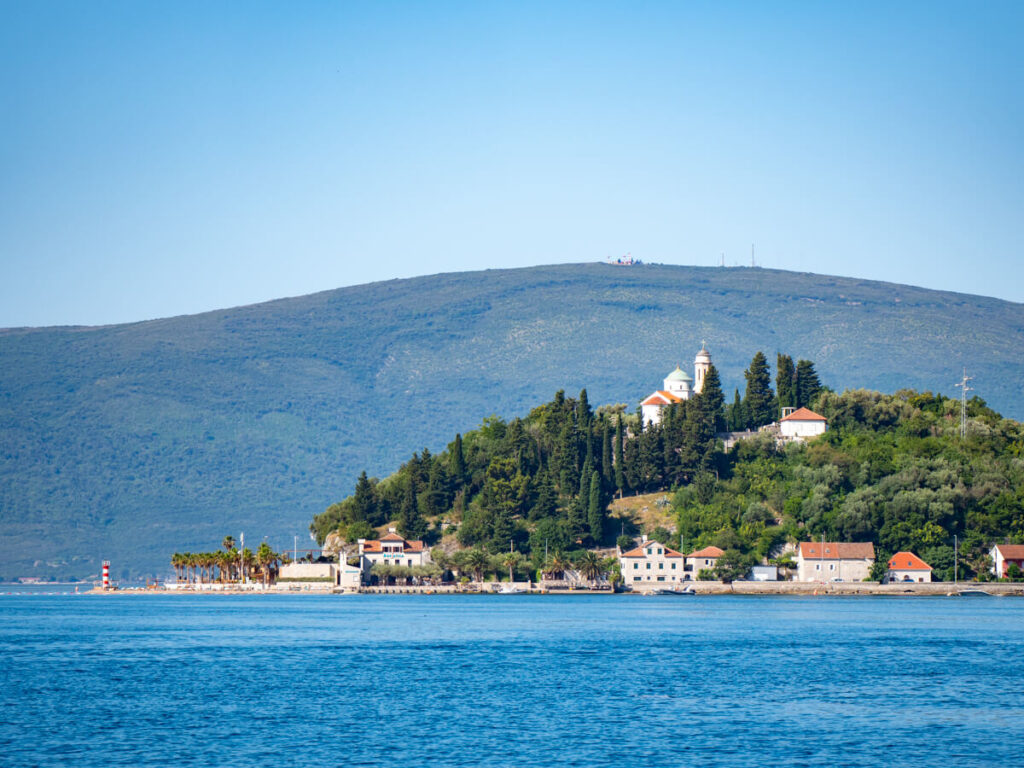
By cruise ship
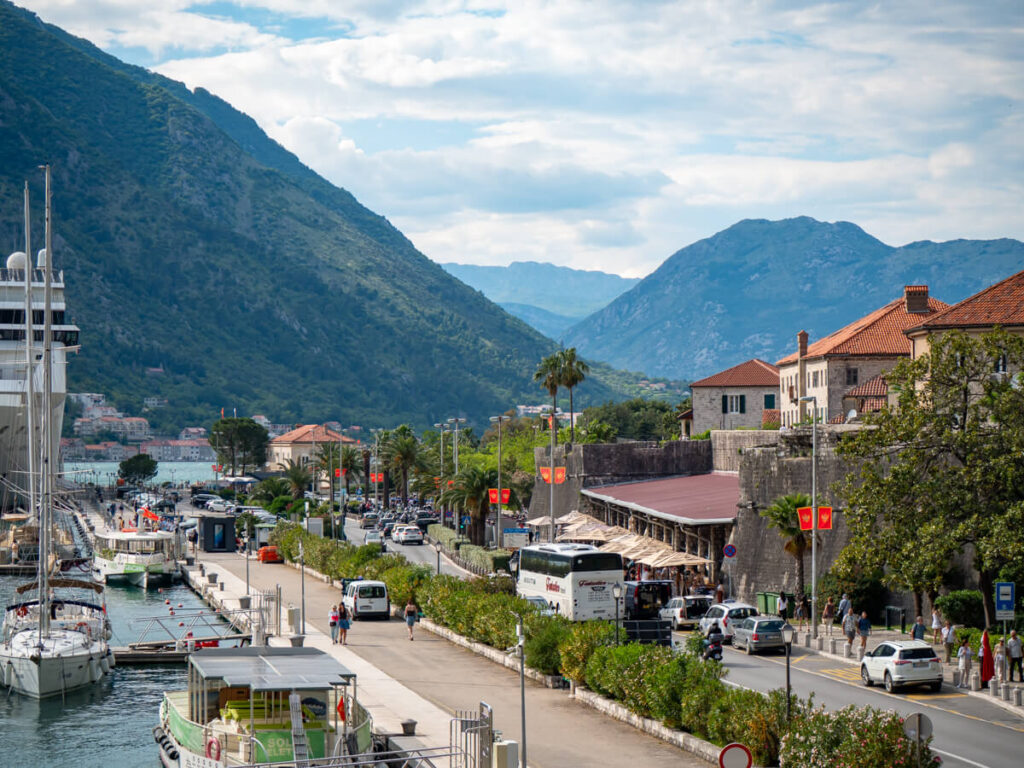
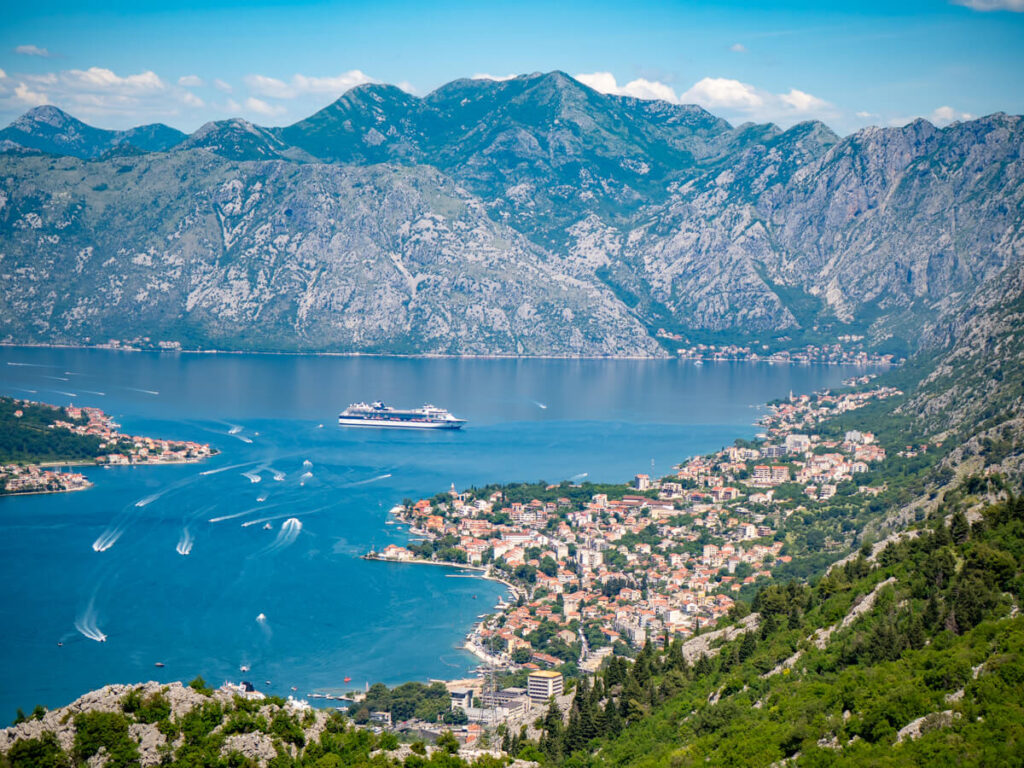
Kotor is one of the major cruise stops on the Adriatic, with cruise ships docking in the port just outside the Old Town. It’s about as convenient as cruise ports get, as you can walk from the ship into the historic centre in just a few minutes.
The downside is that Kotor can become extremely busy when several ships arrive at once, with up to four of these gargantuan floating cities docked in the bay each day in the middle of summer.
If you’re visiting by cruise, we’d make the most of the early morning before the main crowds arrive and check out the Old Town – you can follow our DIY walking tour of the Old Town to see all the main sights.

How to get around the Bay of Kotor
Getting around the Bay of Kotor is quite easy, although the geography can make journeys and traffic look much shorter on a map than they actually are. The main coastal road follows the shoreline and can become really congested. Add to that navigating the minefield of rush hour traffic, tiny pedestrianised towns, limited and expensive car parks, nearly impossible-to-find free street parking, and you might start questioning why you even left your hotel. But with a mixture of buses, boats, taxis, a rental car, and our advice, there’s no reason not to see the best of the bay.
On foot
Walking is the best way to explore the individual towns around the bay, which have compact centres, particularly Kotor Old Town, Perast, and parts of Herceg Novi. You can also walk between some of the smaller waterfront villages, with a nice promenade connecting Kotor and Dobrota. But we wouldn’t attempt to walk around the entire bay – it’s far too spread out, there are busy roads in places, and there are much nicer places to hike in Montenegro.

By car
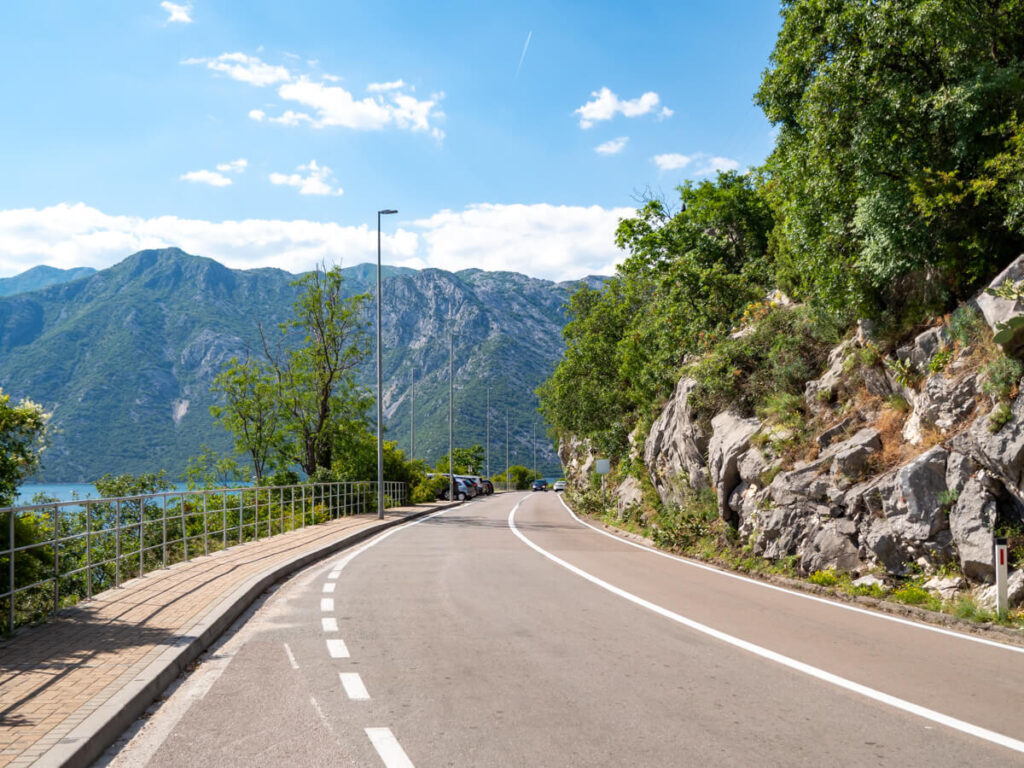
A rental car gives you the most flexibility to explore the Bay of Kotor, particularly if you want to explore more rural or quieter places like Risan, Lipci, Orahovac, or the Luštica Peninsula, rather than sticking to the main towns.
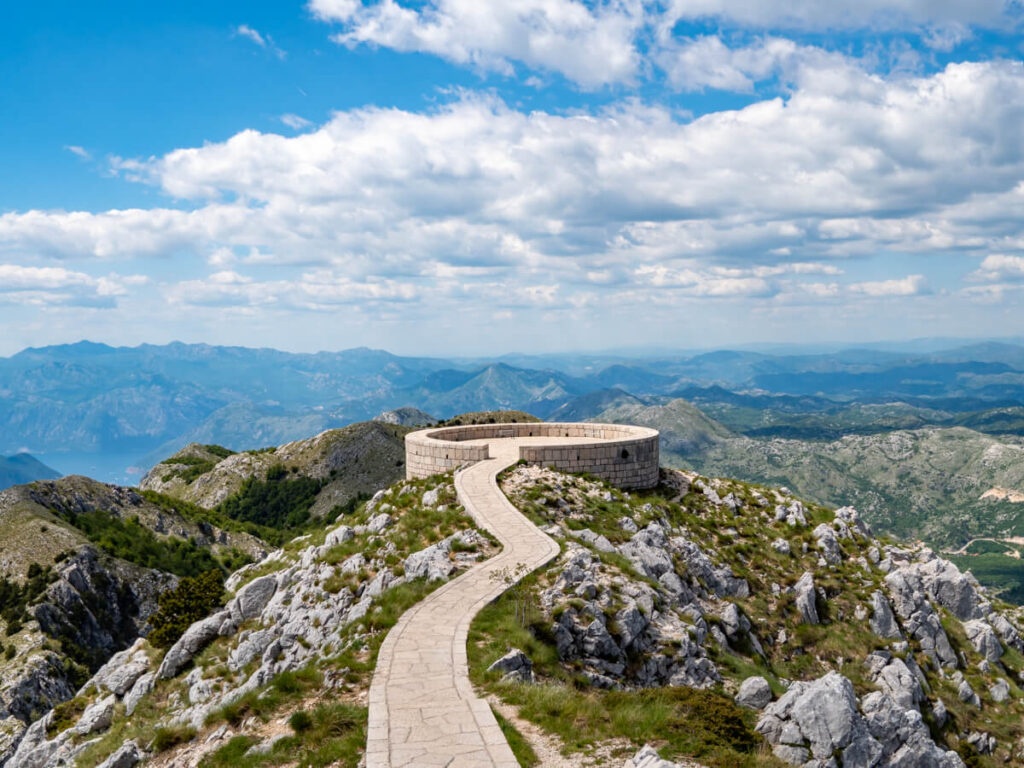
It also allows you to get out into nature and visit places like Lovćen National Park, without needing to go nearly as far as other mountain regions like Durmitor National Park.
You can also tackle the adventurous Kotor Serpentine for epic views over the bay. Then, you can stop wherever you like and aren’t tied to bus timetables.
Although the coastal road can become seriously congested in summer, which leads us on to our next transport method and a major hack when driving around the bay.
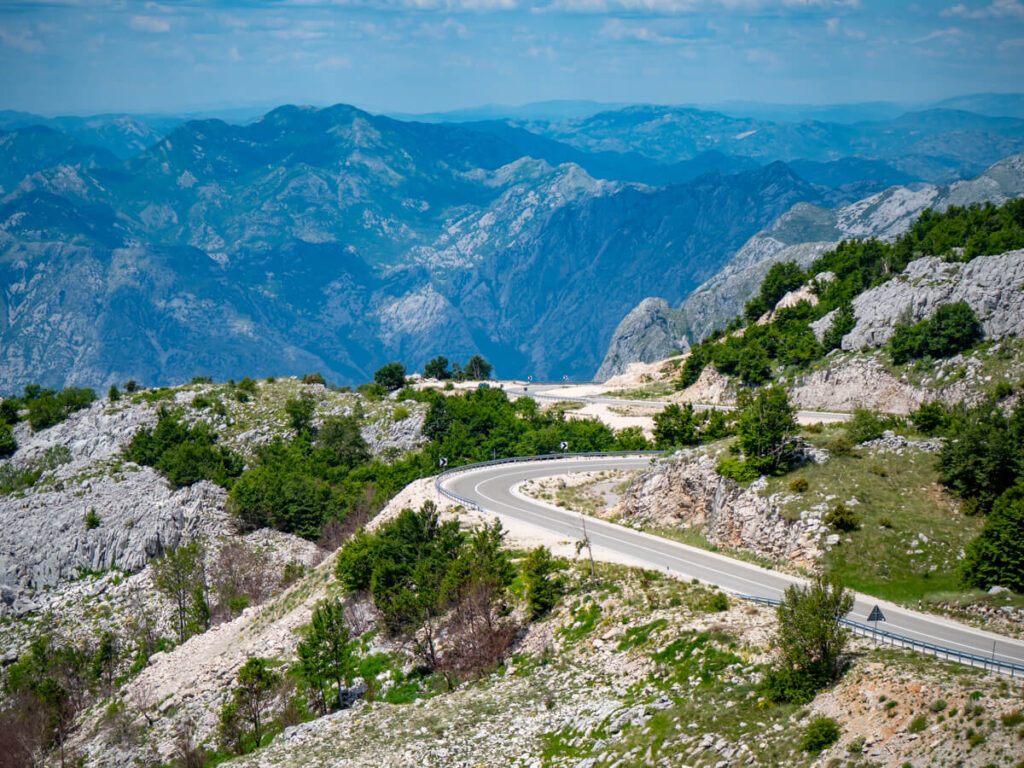
By ferry
The Kamenari-Lepetane Ferry is one of the most useful ways to get around the bay if you’re driving. It crosses the narrowest part between the Tivat and Herceg Novi sides, allowing you to avoid driving all the way around the bay.
Multiple ferries run in tandem, so they’re roughly every 5-10 minutes. There’s no schedule, but they’re just constantly filling them up and running them across the bay when they’re full.
It’s €5 per car, you buy the ticket in person from the little booth at the head of the queue, and you can pay in card or cash.
The crossing takes about 10 minutes, is very scenic, and saves you around an hour of driving, especially when traffic is bad around Kotor.

By public bus
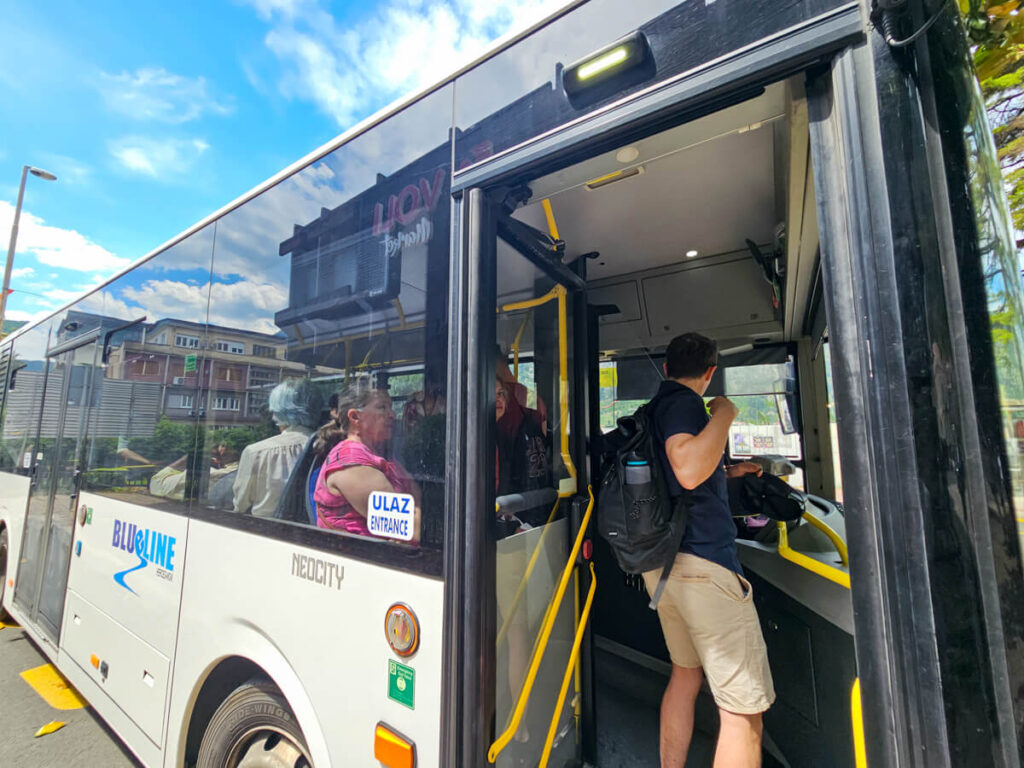
The public bus network is actually pretty useful around the bay, particularly along the main coastal road. Blue Line operates local services around the Kotor area, with routes connecting places such as Kotor, Dobrota, Perast, Herceg Novi, and Tivat.
Tickets can be bought directly from the driver in cash, so make sure to have some change in Euros. The bus from Kotor to Perast cost us €2 each. You can check the schedule here, but they are notorious for running late.
On our visit, we saw a sign in the ticket office in the main Kotor bus station stating that buses to Perast do not leave from there, despite many online sites stating the opposite. You can catch the bus from this bus stop outside the city walls, and there’s another bus stop outside Voli.
Apparently, it’s usual for it to be 15-30 minutes late, and some reviews have reported it not showing up at all, but we found it fairly reliable, even on a public holiday when they were fewer and further between.
If in doubt, you can ask the tourist information kiosk outside the Sea Gate for up-to-date bus information.
By taxi
Taxis are readily available in the main towns around the Bay of Kotor, but they are insanely expensive. There’s no Uber or any kind of ride-hailing app in Montenegro, and there aren’t very good regulations around standardised pricing, so the taxis can essentially charge what they like – and they do.
Never ask for a taxi outside the cruise terminal, as it’ll be heavily marked up. For a one-way taxi from Kotor to Perast, we were quoted €40 outside the cruise terminal and €20 outside the bus station – it’s only a 20-minute journey, and it cost €2 on the bus! Kotor to Herceg Novi will cost around €50.
We found Red Taxi to be most reliable and affordable – you can contact them on WhatsApp. It cost us €20 to get from Kotor Old Town to Tivat Airport, but that’s on the cheap side compared to what a lot of taxis charge.
So yeah, taxis are handy for getting around, but they’re going to set you back a pretty penny if they’re your only form of transport.
By cable car
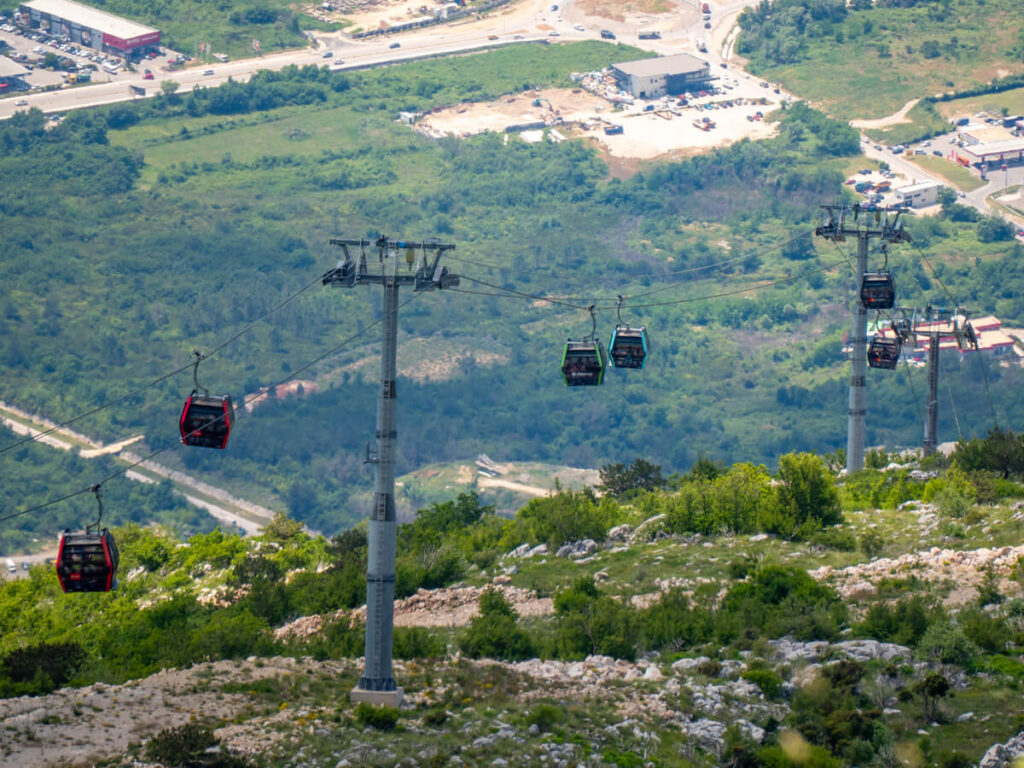
The Kotor Cable Car is more of an attraction than a practical way to get around, but it does give you another way to reach the mountains above Kotor without a car. The 2.4-mile (3.9 km) route climbs from Dub near Kotor to Kuk on Mount Lovćen, with the journey taking around 11 minutes and covering an altitude difference of 1,316 metres (4,318 ft).
By tour
Organised tours in Kotor are a great option if you don’t want to deal with the roads, parking, or bus timetables. There are boat trips around the bay, as well as driving tours that combine places including Kotor, Perast, Our Lady of the Rocks, Budva, Lovćen, and the Blue Cave.
We’d particularly recommend a tour if you’re only in Kotor for a day or two and want to see several places without spending half your holiday working out the logistics or forking out for lots of pricey taxis.
When is the best time to visit Kotor?
The best time to visit Kotor is generally in the warmer months between Spring and Autumn. We’d personally recommend May, June, September and early October. You’ll get warm weather without the worst of the summer heat and crowds, and it’s a much nicer time for hiking and exploring the Old Town.
July and August are the busiest months, particularly when cruise ships arrive, but they’re hot hot hot!
Winter is mild around the bay compared with inland Montenegro, but it’s also the wettest time of year.
Bay of Kotor Weather
Kotor has a Mediterranean climate, with hot, relatively dry summers and mild but much wetter winters. Summer temperatures around Montenegro’s coast average around 27°C (81°F), although it can get considerably hotter during heatwaves.
Temperatures are generally much warmer around the coast than in Montenegro’s mountain regions.
We noticed a few bitey insects around the Bay of Kotor, especially in the evening, by the waterfront, and by the rivers, so we’d recommend carrying a natural insect repellent, especially if you’re sitting outside after sunset.

How long to spend in Kotor?
We’d recommend 2-3 days in Kotor if you want to explore the Old Town, walk the walls, do a hike or climb to the fortress, and have time for a boat trip, day tour, or a slower afternoon. You can see the main sights in a day, but you’ll be rushing around and won’t have much time to explore beyond the obvious attractions.
If you’re using Kotor as a base for the wider Bay of Kotor, we’d stay for 4-5 days or longer. That gives you time to visit Perast, Risan, and Herceg Novi, explore some of the smaller villages, take a boat trip, and spend some time hiking or swimming.
We spent 5 nights in Kotor’s Old Town and found that perfect for really getting a good feel for Kotor, with enough time to also day trip to Perast. We later returned with my family to use the Kotor area as a base for a week-long holiday, which was the perfect amount of time to show them the Old Town, other villages around the bay, and to do some longer day trips to places like Lake Skadar.

Is Kotor expensive?
Part of the reason Montenegro is becoming such a popular destination is that it’s cheaper than many other European countries.
But Kotor isn’t the cheapest place in Montenegro, particularly in July and August and inside the Old Town. Accommodation prices rise considerably in peak season, while Kotor’s restaurants in the busiest squares can charge noticeably more than places away from the main tourist areas.
Here are some average costs we noticed on our trip:
We’d recommend a mid-range budget of around €100 per person per day, including accommodation, food, transport, and sightseeing, although you can spend considerably less by staying outside the Old Town and eating locally. If you’re utilising hostels and public buses, you can bring that down to about €50 per person per day.
Tipping is not mandatory in Montenegro but appreciated. It’s a lot easier to pay by card than in neighbouring Bosnia and Herzegovina, and we found asking if you can tip on card worked 9/10 times. But it’s also a good idea to carry some cash on you, especially if you’re visiting more rural areas, as not all businesses will accept cards.
Is Kotor safe to visit?
Kotor is generally a safe place to visit, and we’d have no hesitation recommending it for independent travellers, couples, and families. As with most busy tourist destinations, pickpocketing can happen, particularly around tourist hotspots, beaches, public transport, and crowded areas.
As with anywhere, it’s best to use common sense. Keep an eye on your belongings in crowded areas, don’t leave valuables unattended in a parked car or on the beach, and use licensed taxis rather than accepting random offers on the street.
The bigger thing we’d be careful about is traffic. Roads around the bay can be extremely busy in summer, and drivers don’t always stop when you’re expecting them to, so take care when crossing roads. Driving etiquette (or lack thereof) isn’t the same as in other European countries either, so check out our guide to driving in Montenegro before getting behind the wheel, so you know what to expect.
If you’re hiking, don’t underestimate the mountains either – stick to marked routes, check the weather before going out, and carry enough water, snacks, and a charged phone.
Travel insurance can save you $$$ if things go wrong
Don’t forget to buy travel insurance! From lost luggage to emergency medical care abroad, travel insurance gives you peace of mind so you can solely focus on the adventure. It might not be exciting, but you’ll be very glad you have it if something goes wrong. A few of our favourite companies are:
Get 8 weeks of electronic theft coverage free with SafetyWing Travel Insurance with our code: THOROUGHLY8 (new members only). Simply click the pink camera and laptop icon on the Nomad Essential page to redeem the reward before creating a new account.
Find out more: 6 Best Travel Insurance Companies for Every Kind of Trip
Sustainability in Kotor
Tourism is a complicated issue in Kotor. The town and wider bay depend heavily on tourism, but the sheer number of visitors – particularly cruise passengers arriving during the summer – puts considerable pressure on the Old Town and the wider UNESCO World Heritage site.
Kotor is now one of the Adriatic’s major cruise destinations. Research published on Kotor’s cruise industry found that cruise visitors significantly outnumbered people actually staying in the city – in 2024, 476 cruise ships delivered 586,403 cruise passengers to the town – more than double the 226,479 overnight tourists.
The scale of cruise tourism gives you an idea of how much pressure Kotor can face on busy days. Overtourism like this brings congestion, overcrowding, and pressure on infrastructure, while research has also identified negative effects, both environmental and social, associated with the growth of cruise tourism.
There is also the issue of tourism leakage, where money generated by visitors doesn’t stay within the local economy. This is one reason we’d favour spending money with independent restaurants, local accommodation providers, small tour operators, and other local businesses rather than simply relying on large international companies.
The good news is, Kotor has started taking sustainability more seriously. The city has worked with the Global Sustainable Tourism Council on a destination assessment, looking at areas including visitor management, community involvement, cultural heritage, and environmental resources.
We have an impact too. As a visitor, sustainable travel doesn’t have to mean making huge changes. Staying for several nights rather than visiting for a few hours, travelling outside the busiest months, using local businesses, taking public transport where practical, and exploring beyond the Old Town can all help spread the benefits of tourism.
To travel more responsibly around the bay, don’t litter, avoid damaging historic buildings or natural areas, use refillable water bottles where possible to cut down on plastic pollution, and remember that Kotor is a living town with real residents rather than simply a tourist attraction.
Kotor is still worth visiting, but it’s worth being aware of the pressures that come with its popularity. The best way to experience it is to slow down, spend some money locally, and explore more of the authentic side of the Bay of Kotor rather than adding to the concentration of visitors in the Old Town for a couple of hours.
Is Kotor worth visiting?
We’d definitely recommend visiting Kotor. The combination of a genuinely interesting historic town, dramatic mountains, the Bay of Kotor, and the sheer number of things you can do nearby makes it one of the most varied destinations in Montenegro.
It’s also more than just the Old Town. You can hike above the bay, visit tiny waterfront villages, take boat trips, swim, explore old military sites, eat excellent food, and use Kotor as a base for exploring places like Lovćen, Perast, and the Luštica Peninsula.
The main downside is its popularity. Kotor can be very crowded in summer, particularly when cruise ships are in port, and prices are higher than in many other parts of Montenegro. We’d therefore avoid judging the whole place based on a couple of hours wandering around a packed Old Town in the middle of August. Stay for a few days, get out around the bay, and you’ll get a much better feel for what makes Kotor worth visiting.
What to pack to visit Kotor
It’s best to be prepared when you visit Kotor. Don’t forget to pack your:
If you’re planning to bring a drone, be aware that you need to apply for a permit before importing it into Montenegro, and it’s illegal to fly it in Montenegro’s national parks or near airports.
Tips for visiting the Bay of Kotor
Here are our top tips for visiting the Bay of Kotor:
Bay of Kotor FAQs
To help you plan your visit to the Bay of Kotor, we’ve answered these frequently asked questions.
What country is the Bay of Kotor in?
The Bay of Kotor is in Montenegro, on the country’s Adriatic coast. It’s in the southwest of the country, close to the border with Croatia.
Is the Bay of Kotor worth visiting?
The Bay of Kotor is one of our favourite parts of Montenegro, with dramatic mountains, historic towns, clear water, and plenty of places to explore. You can easily spend several days here, whether you’re interested in history, beaches, boat trips, hiking, or simply enjoying the scenery.
What language is spoken in Kotor, Montenegro?
The official language of Montenegro is Montenegrin, although Serbian, Croatian, and Bosnian are also widely spoken. English is commonly understood in tourist areas, particularly in Kotor, so you shouldn’t have too much trouble communicating.
Can you drink the tap water in Kotor?
Yes, the tap water in Kotor is generally safe to drink. Montenegro has good-quality drinking water, although we’d always check locally if there has been heavy rainfall or any temporary issue affecting the supply. We always carry filter bottles, so we don’t need to worry about getting sick.
Can you swim in the Bay of Kotor?
Yes, swimming is very popular around the Bay of Kotor. You’ll find designated beaches as well as rocky waterfronts and concrete bathing platforms where locals swim. The water can be surprisingly warm during summer, although it’s worth being aware of boat traffic around busy areas.
Which airport is closest to Kotor Bay?
Tivat Airport is the closest airport to Kotor, located around 5 miles (8 km) from Kotor Old Town. Podgorica Airport and Dubrovnik Airport in Croatia are further away but can also be useful depending on flight availability and your wider itinerary.
What is nicer, Kotor or Budva?
Kotor is better suited to history, dramatic scenery, and exploring the Bay of Kotor, while Budva has more of a traditional beach-resort feel, with sandy beaches, nightlife, and a livelier atmosphere. We’d choose Kotor for sightseeing and Budva if beaches and nightlife are your main priorities.
Is it better to stay in Kotor or Perast?
Kotor is the better choice if you want more restaurants, attractions, and things to do within walking distance. Perast is much smaller and quieter, making it a good option if you’d prefer a peaceful waterfront stay. It’s also easy to visit Perast from Kotor, so you don’t necessarily need to choose one over the other.
Which is better, Kotor or Tivat?
Kotor is perfect if you’re interested in history, architecture and dramatic scenery, while Tivat is more modern and centred around its marina, restaurants, and waterfront. We’d use Kotor as a base for exploring the bay and choose Tivat if you prefer a more contemporary resort atmosphere.
Which is better, Dubrovnik or Kotor?
Both are beautiful historic destinations, but they offer quite different experiences. Dubrovnik has a larger and more famous Old Town (largely thanks to Game of Thrones), while Kotor is smaller, surrounded by dramatic mountains, and gives you easy access to the wider bay. Kotor also tends to be a little less expensive than Dubrovnik, although prices vary considerably depending on the season.
What is the prettiest town in Montenegro?
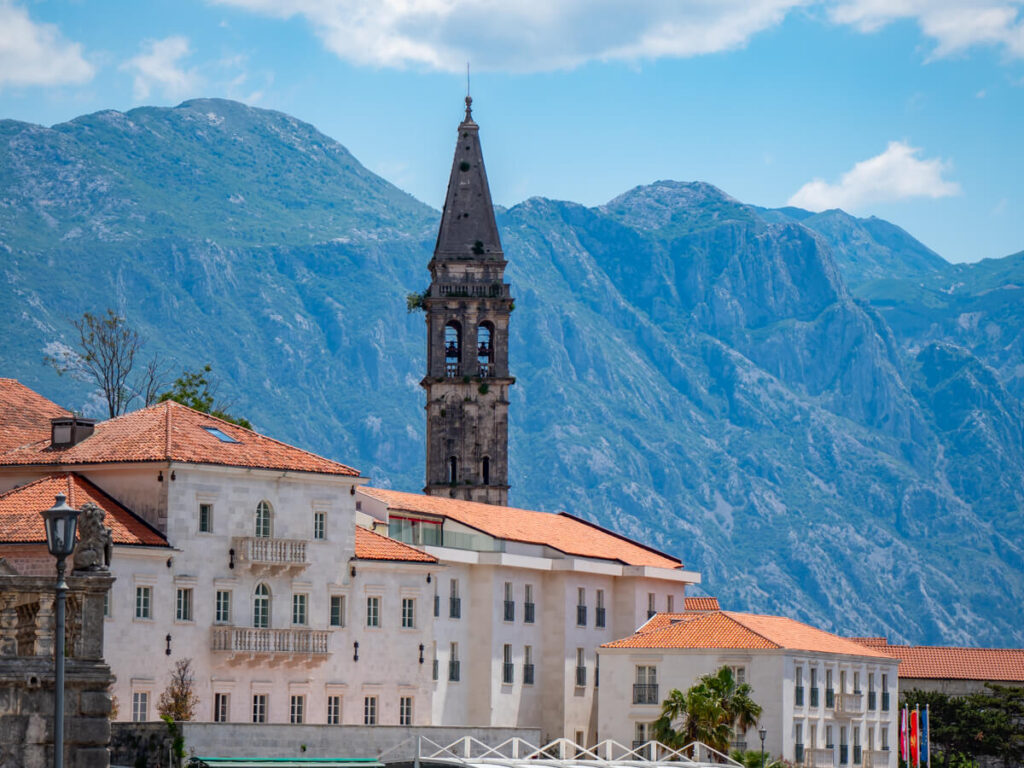
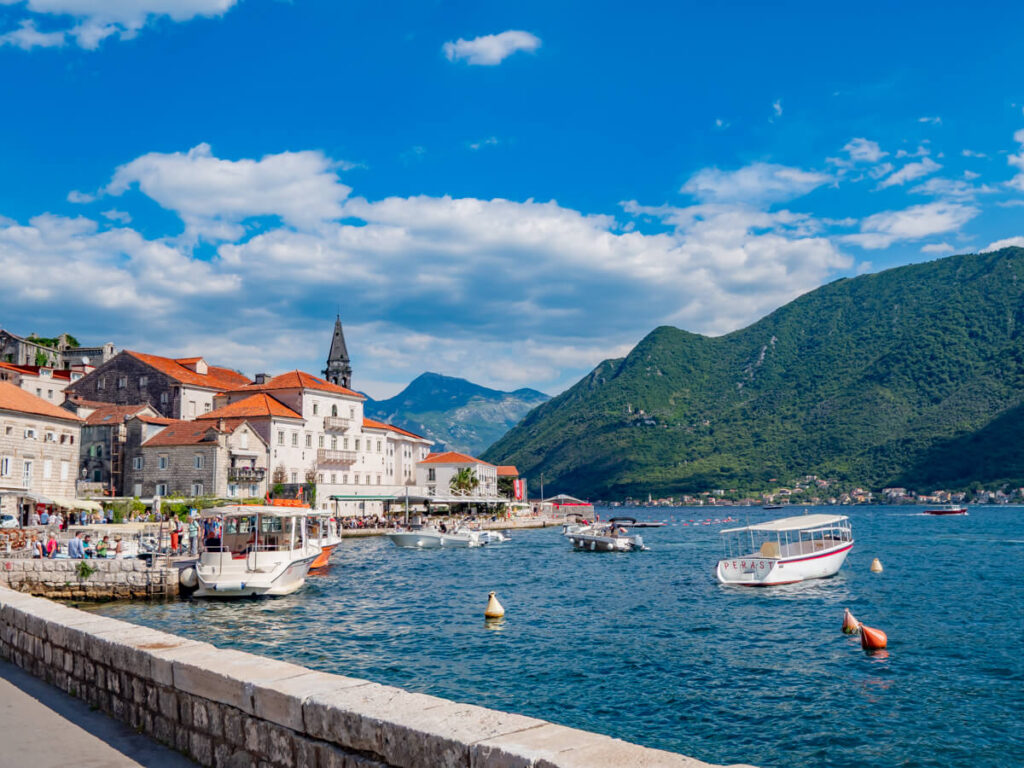
Perast is one of the towns we’d put high on the list of prettiest towns in Montenegro. Its small collection of stone buildings sits directly on the waterfront, with the mountains rising behind it and the islands of Our Lady of the Rocks and St George just offshore. Kotor’s Old Town is also beautiful.
How many days are enough for Kotor?
We’d recommend 2-3 days in Kotor itself, or around 4-5 days if you also want to explore the wider Bay of Kotor. With longer, you can comfortably add day trips to Lovćen, Cetinje, Budva, Lake Skadar or Dubrovnik.
What should I be careful of in Kotor?
The biggest things we’d watch out for are pickpockets in crowded tourist areas, traffic when crossing roads, and the heat when hiking. If you’re heading into the mountains, check the weather, stick to marked trails, take plenty of water and wear proper footwear.
What is the best time to visit Kotor?
May, June, September and early October are our favourite months, when the weather is generally pleasant without the worst summer crowds. July and August can be extremely busy, particularly when cruise ships are in the bay.

Read next:
Where to Stay in Kotor Bay: Top Towns + Best Hotels From Budget to Boutique
27 Cool Things to Do in Kotor + What Not to Do
How to Spend One Day in Kotor & Our Free DIY Old Town Walking Tour Route + Map
8 Fun Day Trips from Kotor + 2 Tours Not to Book
11 Best Montenegro Blue Cave Boat Tours + Is It Even Worth It?
How to Visit Lovćen National Park & Mausoleum of Petar II Petrović-Njegoš
Driving the Kotor Serpentine vs Taking the Kotor Cable Car
Our 15 Favourite Cafés, Bars & Restaurants in Kotor + Veggie/Vegan Options
What It’s Really Like to Hike the Ladder of Kotor
How to See & Support Kotor’s Cats
A Quick Guide to Taking the Kamenari-Lepetane Ferry in the Bay of Kotor
A Traveller’s Guide to the Luštica Peninsula
How to Find the Lipci Rock Art: Prehistoric Petroglyphs in the Bay of Kotor
