All 5 Montenegro National Parks Compared + Our Favourites

Read our comparison of all 5 national parks in Montenegro, including our rankings and favourites, in this guide.

This post may contain affiliate links, which means we might earn a small commission on anything purchased through these links at no extra cost to you. Learn more on our disclaimer page.
Montenegro may not be huge, but it’s home to some of the most visually stunning and diverse places in Europe. But despite its incredible geographical variety, it has just five national parks.
It might seem easy to tick off all five in one trip, but with the parks being spread across the country, each requiring a different amount of time to explore, and some being much more remote and difficult to reach than others, narrowing down your itinerary and choosing which ones to visit can be surprisingly difficult. Each park has a very different character, and landscapes differ wildly, from the dramatic limestone peaks and glacial lakes of Durmitor and Prokletije to the ancient forests of Biogradska Gora, the wetlands of Lake Skadar, and the historic mountain landscapes of Lovćen.
We visited Montenegro purely for its natural protected areas. We set ourselves the goal of exploring all five national parks over the course of our five-week Montenegro road trip, really going deep and getting a proper feel for each one individually. Whether you’re visiting for epic hiking, scenic viewpoints, elusive wildlife, pretty drives, rich history, or simply to get out and immerse in nature, discover Montenegro’s five national parks and which to visit in this guide.
More from Montenegro
How many national parks are there in Montenegro?
Montenegro has five national parks, covering some of the country’s most spectacular landscapes. Together, they protect mountain ranges, glacial lakes, ancient forests, expansive canyons, winding rivers, vast wetlands, and the sparkling Adriatic.
Together, they cover around 5,332 square miles (13,812 sq km) – about 10% of the country’s total territory.
The five national parks in Montenegro are:
Read on to find out what makes each one special, the best things to do, how long you need, when to visit, how difficult they are to explore, and which ones we think are worth prioritising.
Where are Montenegro’s National Parks?
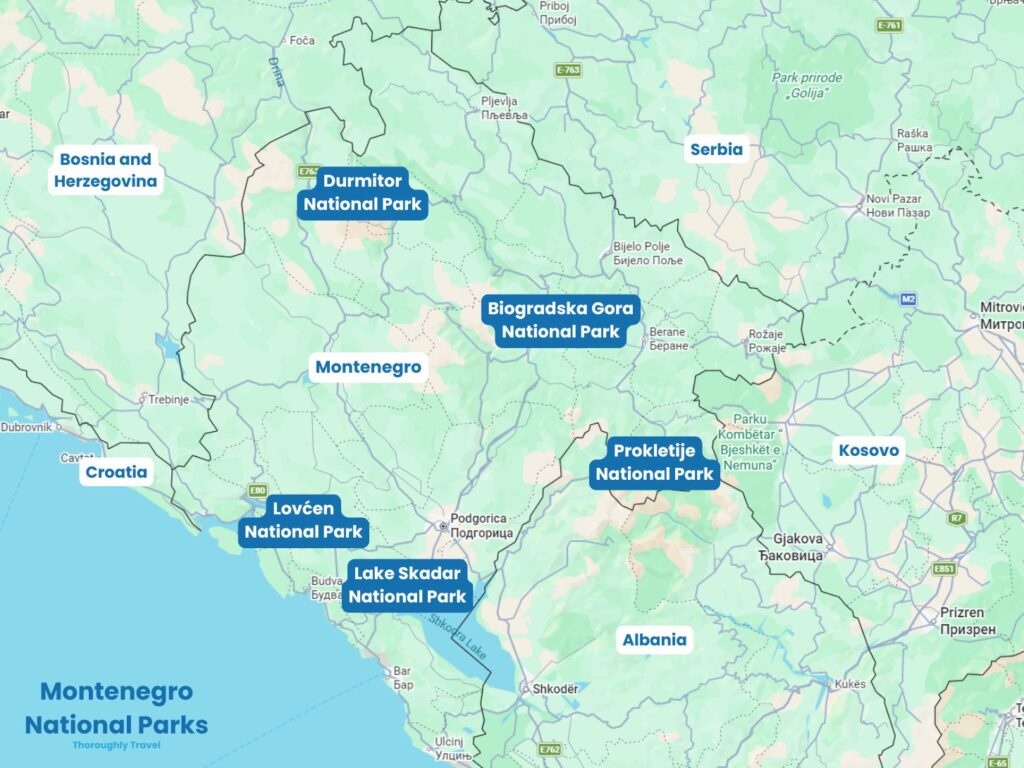
Montenegro’s five national parks are spread across the country, from the rugged mountains of the north to the Adriatic coast in the southwest.
Durmitor National Park and Biogradska Gora National Park are in the mountainous north, while Prokletije National Park lies in the far northeast near the borders with Albania and Kosovo.
Lovćen National Park sits close to the Bay of Kotor and the historic town of Cetinje, while Lake Skadar National Park stretches around the country’s largest lake in the south near the border with Albania.
If you’re planning to visit several of the national parks, we’d definitely recommend driving in Montenegro, as having your own car makes it much easier to reach remote trailheads, mountain villages, and scenic viewpoints.
Montenegro National Parks Map
We’ve highlighted the location of each national park on the map below.
Montenegro’s National Parks
Despite being a relatively small country, Montenegro has an impressive variety of landscapes in its five national parks. There’s a park for almost every type of traveller, whether you’re into serious mountain hiking and wooden cabins in the middle of nowhere or easy breezy boat trips and family-friendly day trips. Here they are.

1. Lovćen National Park
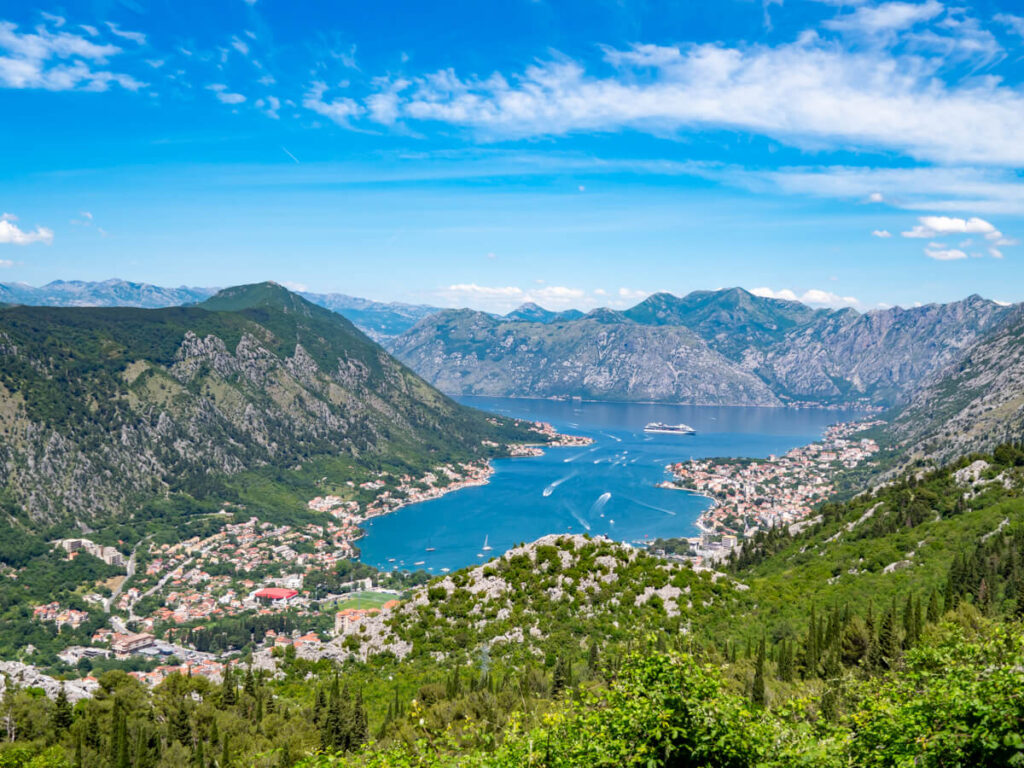
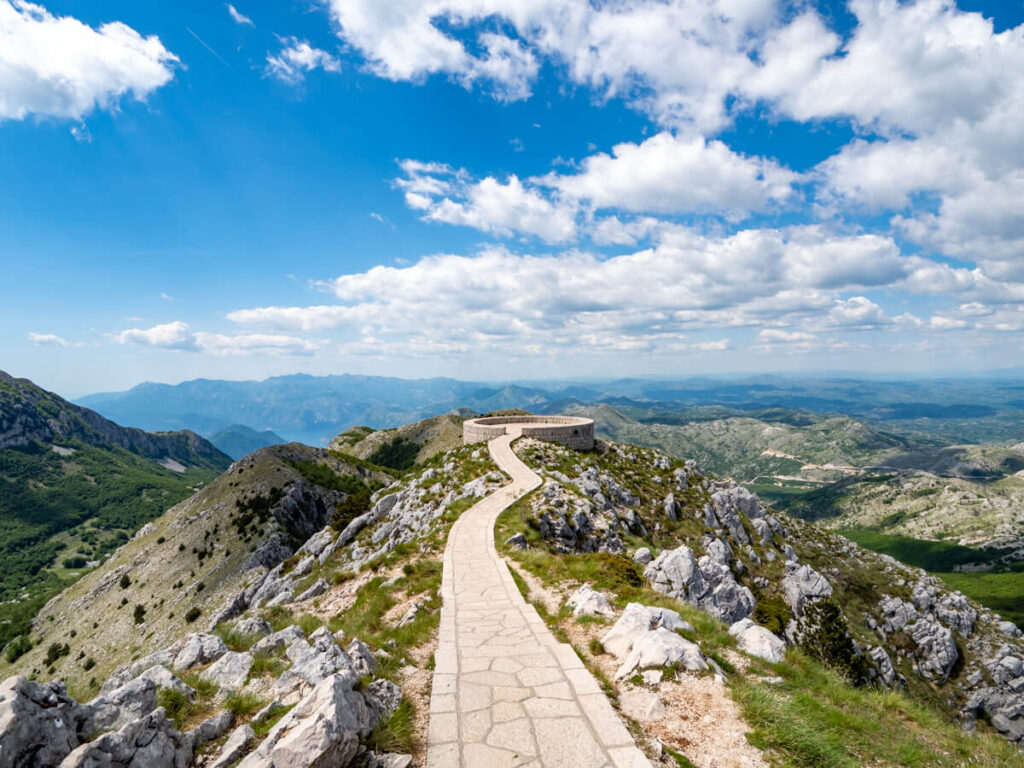
Rising directly behind the Bay of Kotor‘s V-shaped submerged river canyon, Lovćen National Park is Montenegro’s most accessible mountain national park and was the first of the five we visited. Being so close to the popular tourist hubs of Kotor and Budva, it’s an easy day trip from Kotor and one of the most popular of the five national parks in Montenegro.
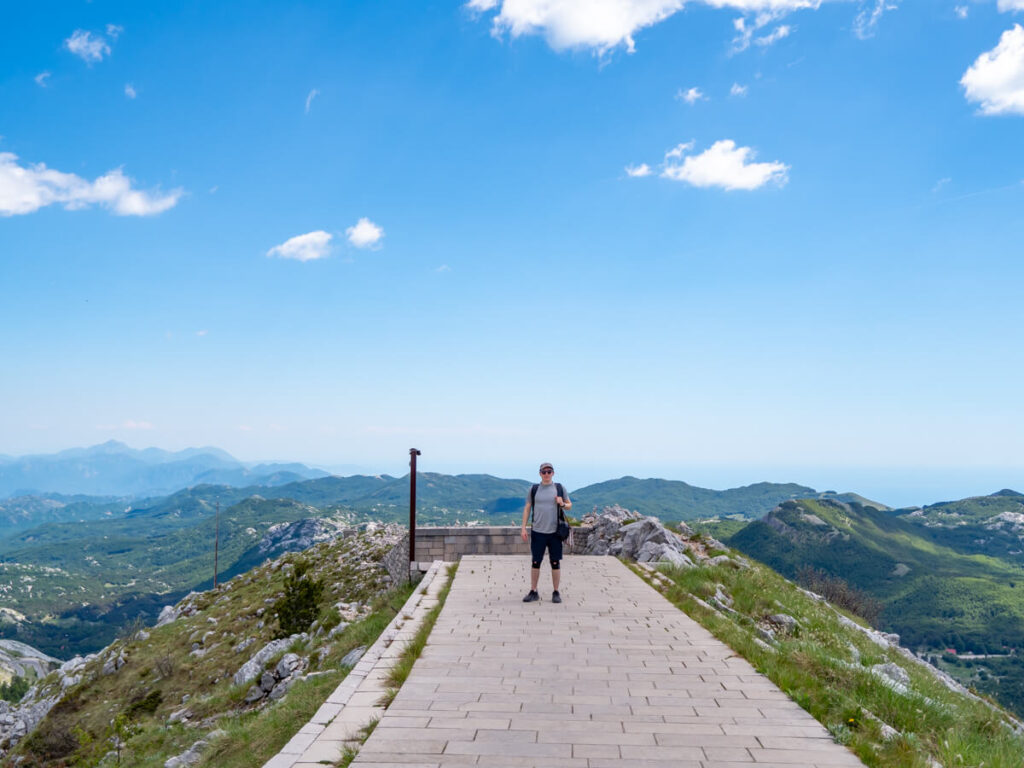
The park’s main attraction is the Njegoš Mausoleum on Jezerski Vrh, a peak that is reached by climbing 461 steps to a monument surrounded by huge limestone mountains at 1,657 metres (5,436 ft) high. From the top, you can enjoy sweeping views across Montenegro, including as far as Italy on a clear day.
While you technically hike here from the top of the Ladder of Kotor, the mausoleum is best reached by rental car or day tour, as there’s no public transport throughout the park. However, the Kotor Cable Car provides a spectacular alternative way to reach the mountain from the coast. At the top station, you can enjoy theme-park-style attractions, including the iconic alpine coaster and panoramic bars.
We’d also recommend driving the famous Kotor Serpentine, which winds its way up from Kotor along 25 hairpin switchbacks to the tiny mountain village of Njeguši, where you can try local pršut (like prosciutto) and cheese.
Many day trips also combine Lovćen National Park with the historic capital Cetinje, allowing you to explore the former seat of Montenegro’s royal family alongside the mountain scenery, museums, monasteries, and historic buildings of the old capital. We visited Lovćen on the first day of our road trip, leaving Kotor behind and staying the night in Cetinje.
Best Things to Do
Where to Stay
2. Lake Skadar National Park
Stretching to the Albanian border in southern Montenegro, Lake Skadar National Park encompasses an enormous freshwater lake and a completely different experience from the country’s other national parks. Being neither altitudinous nor remote, the national park features wide wetlands, reed beds, rocky islands, and dramatic karst mountains rising around the basin.
Lake Skadar is the largest lake in Southern Europe and one of the continent’s most important bird habitats. Birdwatching on Lake Skadar is very popular, and you can see all kinds of species, including the rare Dalmatian pelican, which is exciting even if you’re not a twitcher.
The best way to experience it is from the water itself, with Lake Skadar boat trips offering close-up views of water birds, secluded bays, floating vegetation, and tiny islands topped with historic monasteries and ruined fortresses.
On land, there are lots of fun things to do around Lake Skadar, from the historic tiny town Rijeka Crnojevića and the iconic Pavlova Strana viewpoint to visiting traditional fishing villages and relaxing at lakeside swimming spots.
Lake Skadar is also closely linked to Montenegro’s wine country, and day trips commonly combine boat trips with a visit to a local vineyard. One of our favourite parts of our trip was staying in a remote local vineyard in the wine region, and we would highly recommend choosing accommodation near Lake Skadar that adds to your experience rather than just being a place to lay your head at night.
Best Things to Do
Where to Stay

3. Durmitor National Park
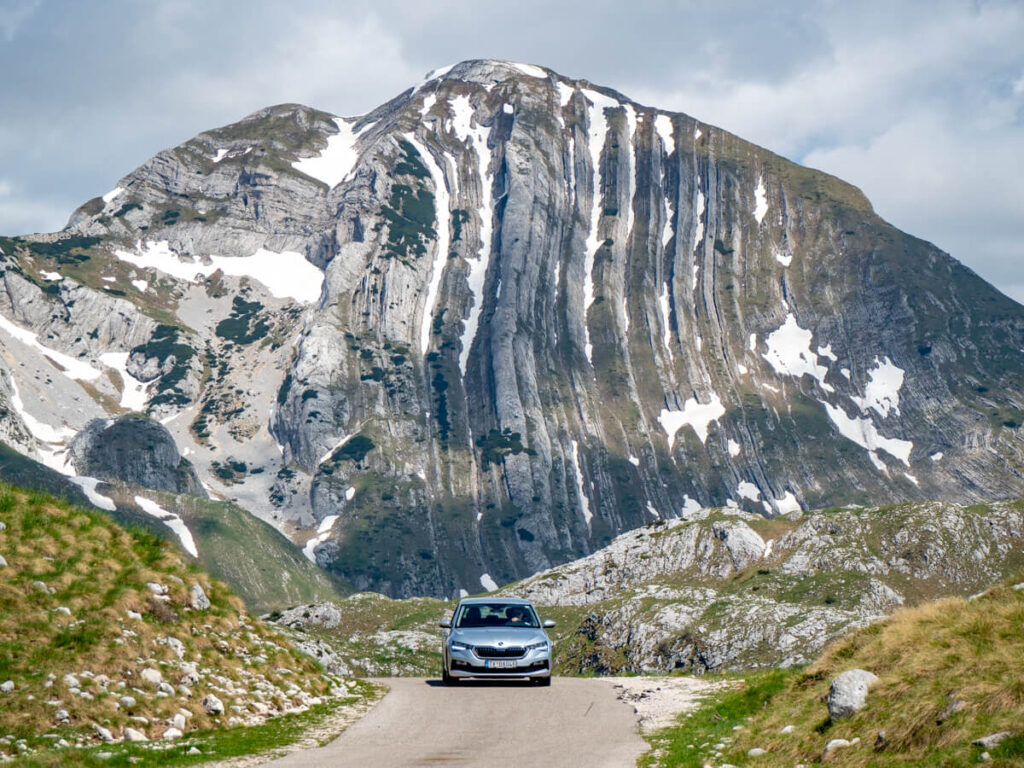
Lying in northern Montenegro, Durmitor National Park is possibly the most scenic national park in Montenegro (and it’s just as popular to boot). Centred around a spectacular limestone massif carved by glaciers and surrounded by deep valleys, alpine meadows, and crystal-clear mountain lakes, the park’s combination of relatively easy access and dramatic views makes it a top choice for visitors choosing between the five national parks.
While most people flock to the famous Black Lake, the real attraction is the enormous choice of outdoor adventures, especially along the crazy beautiful Durmitor Ring Road. From viewpoints of the Tara River Canyon to glacial lakes, the region is one of the most diverse places we’ve been, and there’s an almost endless list of fun things to do in Durmitor National Park.
Durmitor National Park is also one of the best places for hiking in Montenegro. It has everything from the easy lakeside circuit at the Black Lake to demanding climbs like Bobotov Kuk, Montenegro’s highest mountain completely contained within its borders. The number of hikes in Durmitor National Park and its proximity to coastal towns like Kotor (only a few hours’ drive) make it the most popular option for combining the real rugged mountains with the coast.
Winter transforms Durmitor into a snowy mountain destination, with Žabljak (the main town that acts as a gateway to the national park) providing access to skiing and other cold-weather activities.
While Žabljak is the obvious base with the most amenities and a wide variety of tours, we loved getting off the beaten path and staying in a wooden cabin with views of Savin Kuk, followed by a local guesthouse on the edge of the park. We’d recommend factoring accommodation near Durmitor National Park into your itinerary as an attraction in its own right.
Best Things to Do
Where to Stay
4. Prokletije National Park
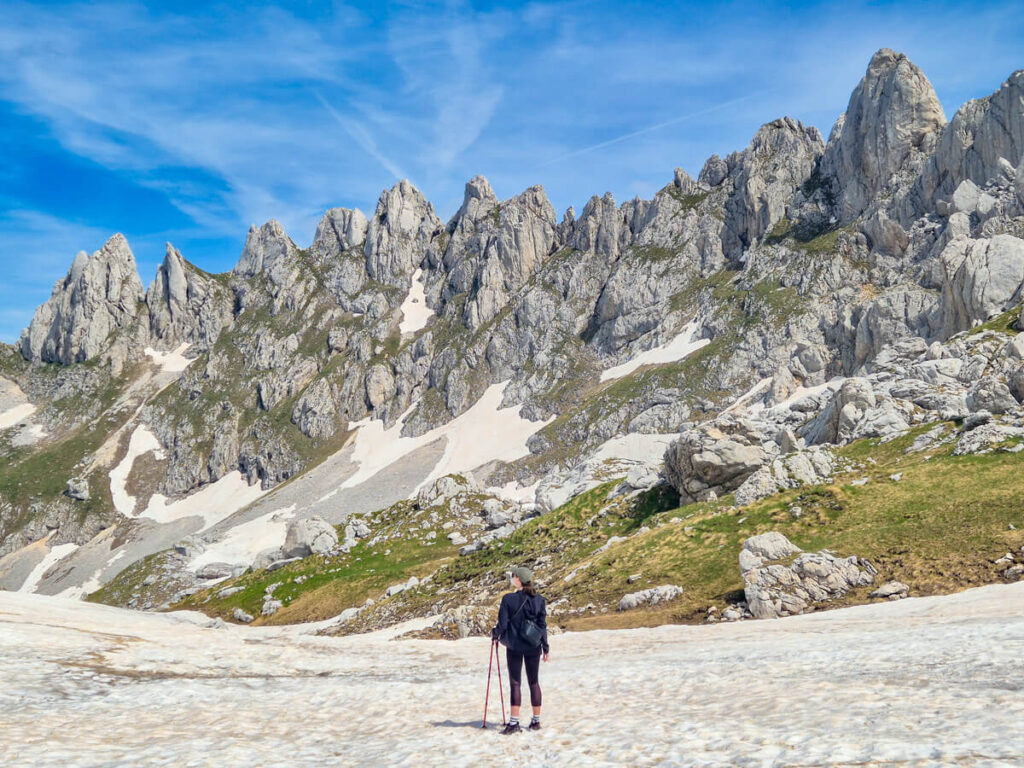
Tucked away in the far northeast of Montenegro near the Albanian and Kosovo borders, Prokletije National Park protects some of the country’s most remote and spectacular mountain scenery, with the jagged peaks of the Accursed Mountains rising dramatically above deep valleys.
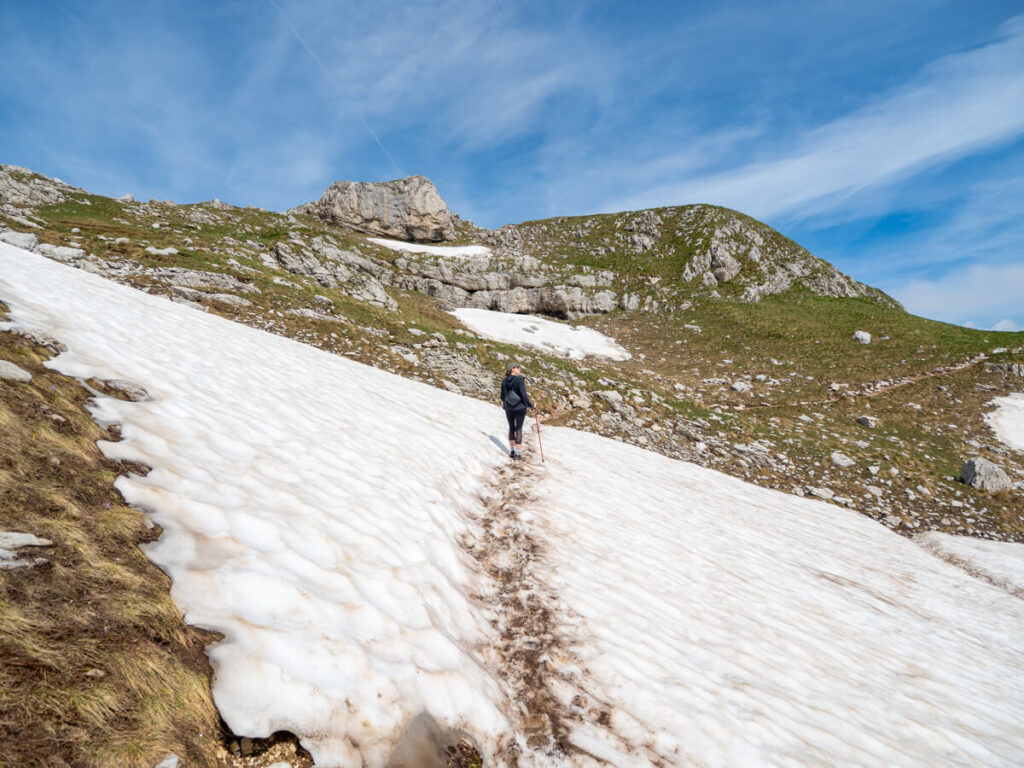
You can explore the Grebaje Valley and Ropojana Valley, visit waterfalls, relax at natural springs, and enjoy a plethora of hikes in Prokletije National Park. This was our first proper mountain experience, and we fell so in love with the epic views of snow-capped pinnacles and lush glacial basins.
The main reason to visit Prokletije National Park is its hiking opportunities, which aren’t as beginner-friendly as in other parts of the country. You can enjoy the moderate but full-day Three Peaks hike for what we think are the best views in the whole of Montenegro or climb Zla Kolata, Montenegro’s actual highest peak, straddling the Albanian border. You can also access a variety of cross-border routes, including the famous Peaks of the Balkans Trail.
The main bases are Gusinje, Vusanje, and Plav, but we’d argue accommodation in Prokletije is half the experience, with countless locally owned guesthouses and traditional etno villages – our stay in Eko Katun Rosi was one of our favourite parts of our whole trip.
Summer and early autumn are the best periods for most high-altitude hiking, when snow has receded from the main routes, although conditions can still change quickly in the mountains. It’s more remote than the other national parks, but possibly the most rewarding.
Best Things to Do
Where to Stay

5. Biogradska Gora National Park
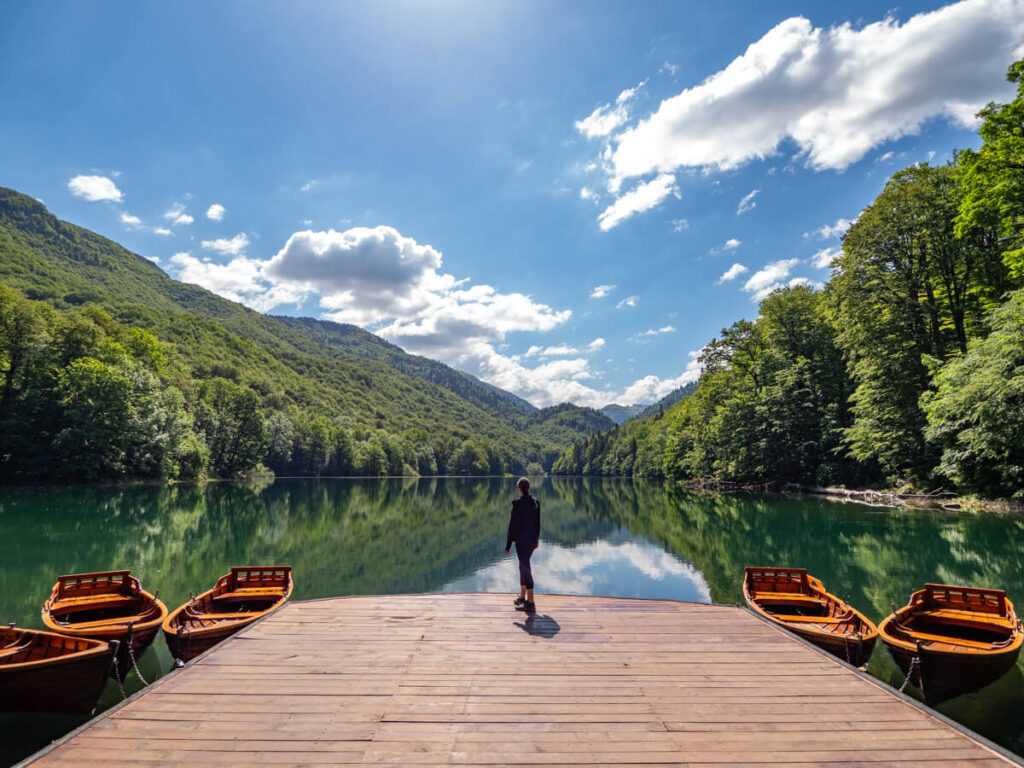
Located in the Bjelasica Mountains of central Montenegro, Biogradska Gora National Park is famous for its exceptionally old-growth forest, tranquil mountain lakes, and wonderfully lush landscapes that feel very different from the exposed limestone scenery of other Montenegrin national parks.
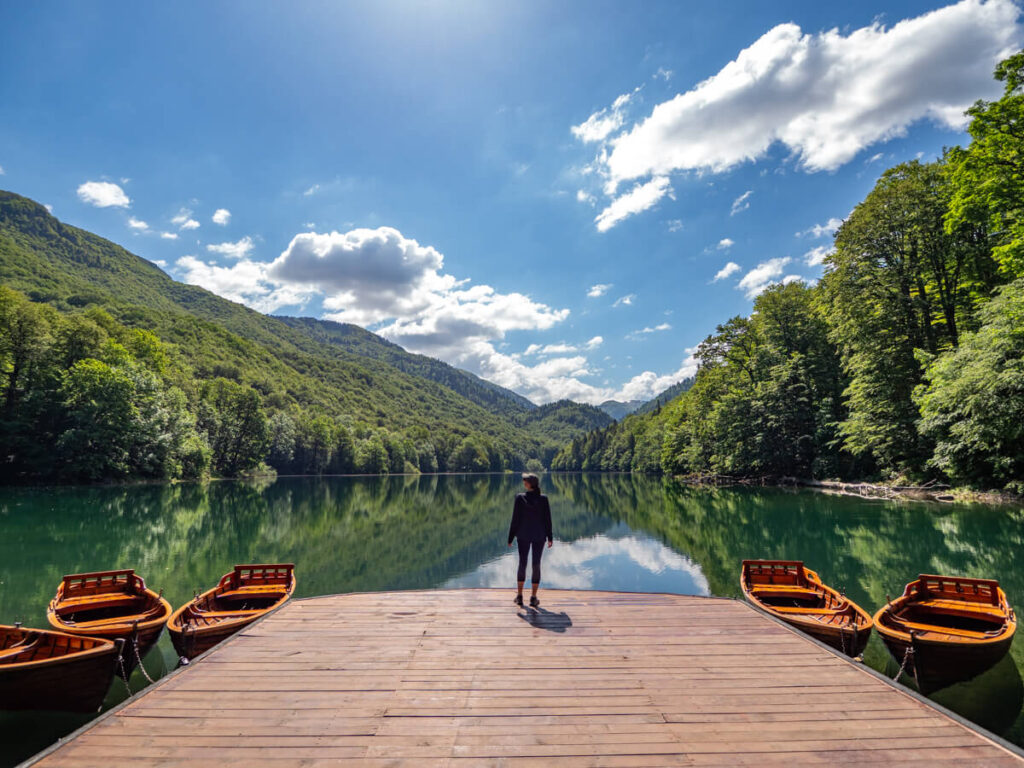
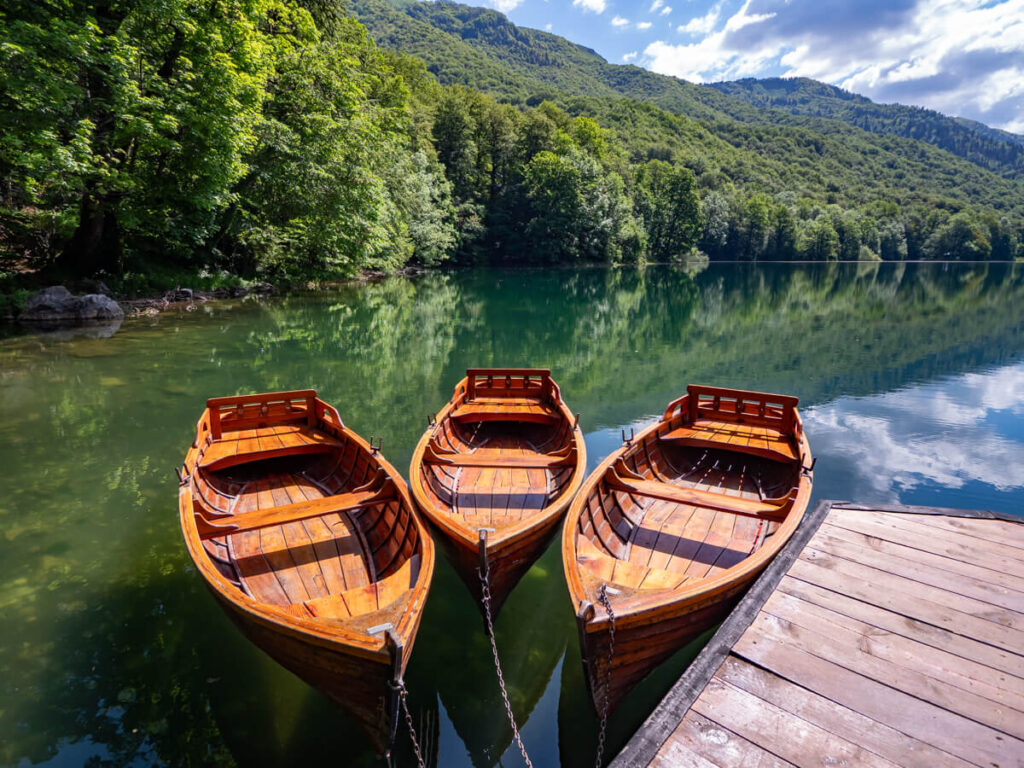
At its heart is Lake Biograd, an emerald-green glacial lake surrounded by one of Europe’s remaining primaeval forests, where enormous beech, fir, and spruce trees create a cool, almost enchanted atmosphere. You can walk the easy 1-hour trail around the lake, hike deeper into the forest and mountains, or tackle longer routes towards other peaks and alpine lakes.
The forest is especially beautiful in late spring and summer, when everything is intensely green, while autumn brings spectacular golden and orange foliage and is arguably the most atmospheric time to visit.
Because of its sheltered, heavily forested landscape, Biogradska Gora is also a particularly good option when you want a quieter day in nature without the exposed ridges and high-altitude scrambling found elsewhere. For us, it was the perfect place to slow down, stay in a cabin in the forest (there are some great accommodation options near Biogradska Gora), and enjoy some walks in nature.
Best Things to Do
Where to Stay
What is the best national park in Montenegro?
Sorry to say, there’s no single best national park in Montenegro, as each one offers something quite different. So it’s most important to just choose the one that fits you and your trip best.
Durmitor National Park is probably the best all-rounder, with dramatic peaks, glacial lakes, hiking, the Tara Canyon, and plenty of adventure activities.
Prokletije National Park is the one we’d choose for serious hiking and wild mountain scenery, while Lovćen National Park is best if you’d like a taste of the mountains without having to leave the Kotor area.
Lake Skadar National Park is the obvious choice for boat trips, birdwatching, wine, and peaceful waterside landscapes, while Biogradska Gora National Park is perfect if you want ancient forest, tranquil lakes, and gentler walks.
Ultimately, the answer wildly depends on your interests, itinerary, and budget. If you only have time for one, we’d choose based on what you want to experience rather than simply picking the most famous park.

Hiking in Montenegro National Parks
Montenegro’s national parks offer everything from easy lakeside walks to demanding alpine routes requiring proper mountain experience. Durmitor and Prokletije have the most challenging hiking, with steep limestone peaks, exposed ridges, scree and high-altitude terrain, while Lovćen and Biogradska Gora have plenty of shorter easy-to-moderate routes that are more accessible to casual hikers. Around Lake Skadar, walking is generally more about exploring the surrounding hills, villages, and viewpoints than tackling high mountain trails.
Conditions can change quickly at altitude, particularly in Durmitor and Prokletije, so we’d always check the weather, allow plenty of time, and carry appropriate clothing, water, navigation equipment, and footwear.
Montenegro National Parks Tickets
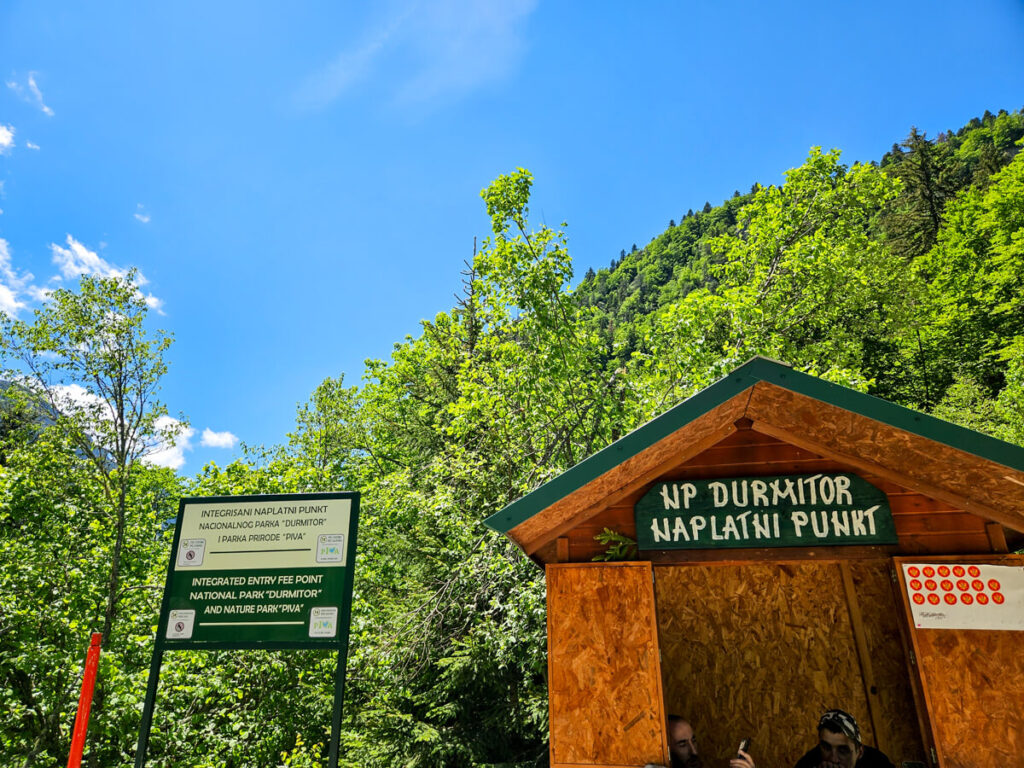
You’ll generally need to pay an entrance fee to visit Montenegro’s national parks, although the price varies between parks. Under the current national park tariff, a day ticket is:
Each relevant ticket also covers visitor centres and educational trails where specified, but only lasts one day – if you wanted to return on multiple days, you’d need to pay the entrance fee each day.
Children under 15 can enter the national parks free of charge.
There are also certain designated days during the year when entrance is free, so it’s worth checking the official national park website before your visit rather than assuming the current prices will remain unchanged.
Montenegro National Parks Annual Pass
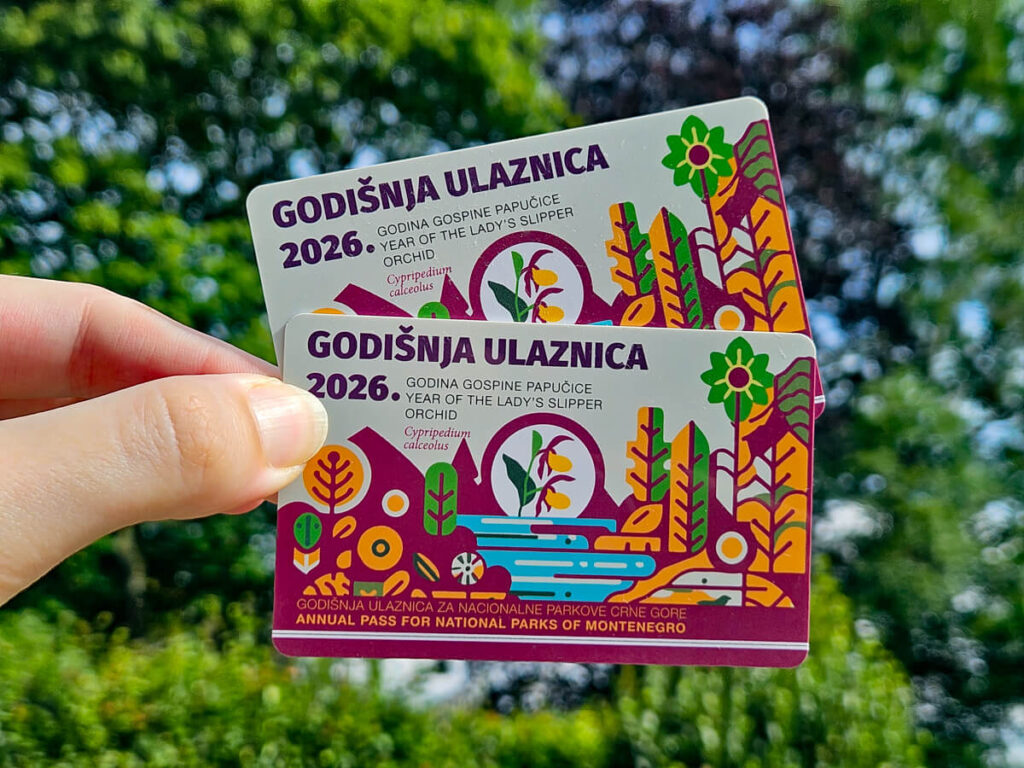
If you’re planning to visit several parks, the Montenegro national parks annual pass is exceptionally good value.
The current cost for the annual pass is €13.50 per person and allows unlimited visits to all five national parks from 1 January to 31 December. We picked ours up in Lovćen, our first national park, and used it countless times.
The pass is issued to individuals with a valid ID (have your passport with you) and can be purchased at national park ticket points or online in advance through the official national parks website.
Montenegro National Parks Tours
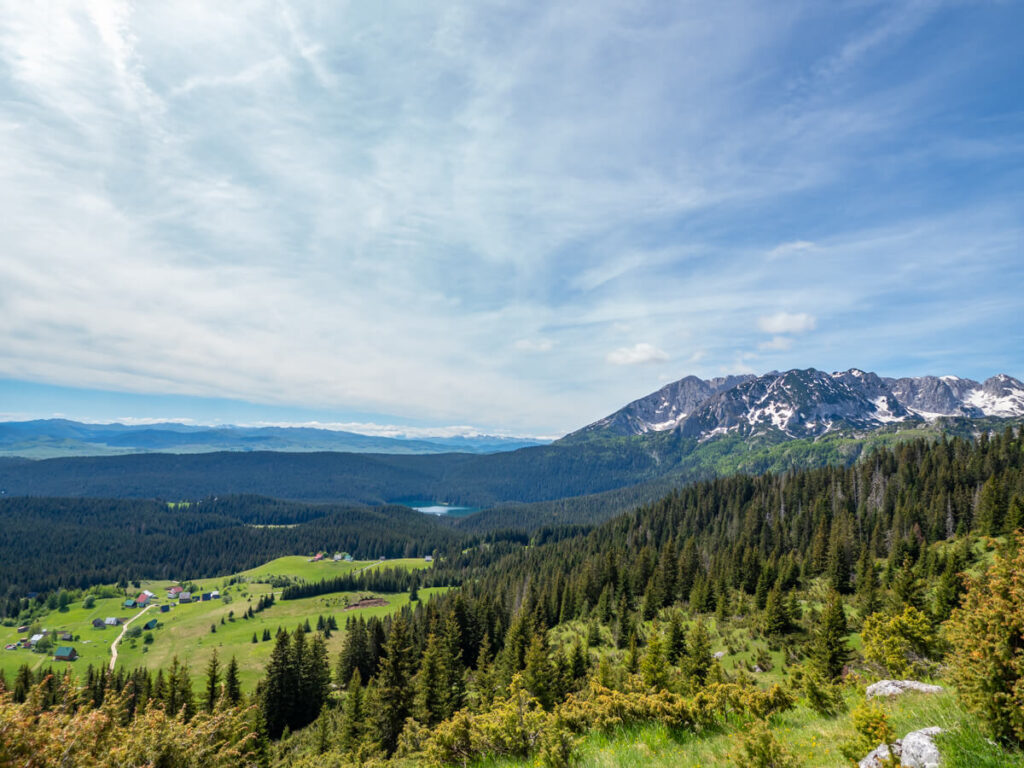
Organised tours are a useful option if you haven’t rented a car in Montenegro or simply don’t want to deal with Montenegro’s mountain roads.
Lake Skadar is particularly well suited to guided boat trips, while Durmitor tours often combine Black Lake, the Durmitor Ring, and Tara Canyon in a single day.
From Kotor, excursions to Lovćen also visit Njeguši and Cetinje. Prokletije is slightly harder to visit by tour, just as it’s so remote, but we’d consider a local hiking guide if you’re tackling the more remote or challenging routes and don’t have mountain experience.
Montenegro National Parks Accommodation
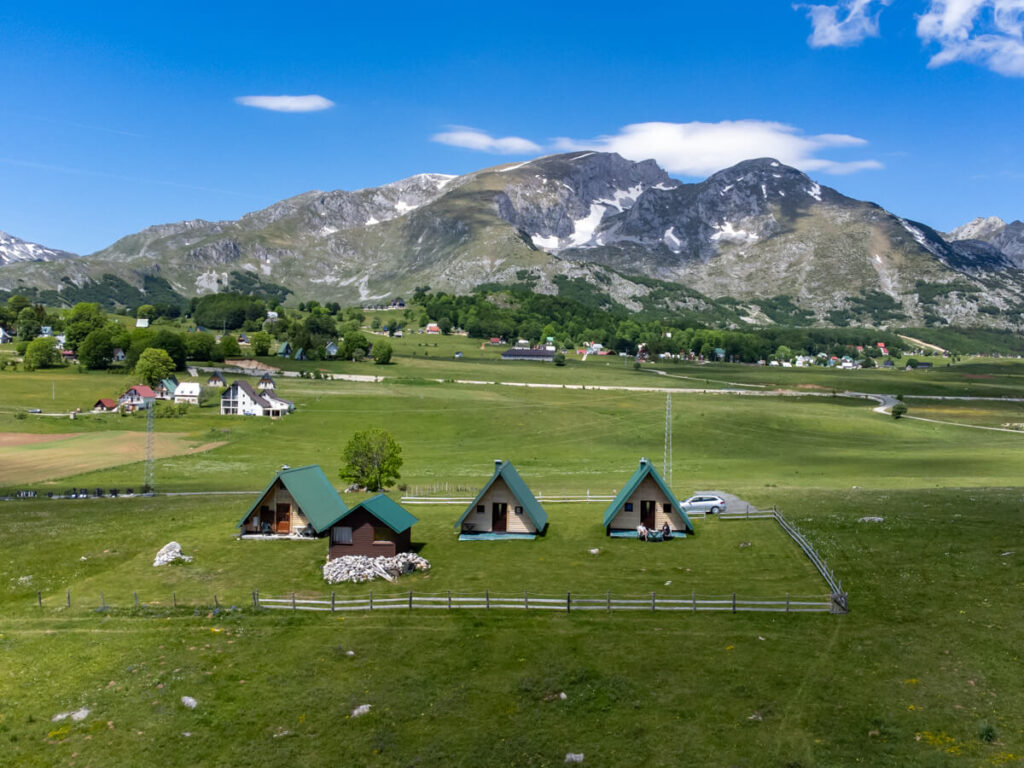
Where you stay depends heavily on which park you’re visiting, as some are much more developed than others.
Žabljak is the obvious base for Durmitor National Park, with the widest choice of accommodation and easy access to many hiking routes. If you’re planning to spend a few nights in the area, our guide to where to stay near Durmitor covers the best bases, from hostels and hotels in Žabljak to quieter cabin stays in the countryside.
Plav, Gusinje, and Vusanje are the main bases for Prokletije National Park, with guesthouses and smaller mountain stays putting you within easy reach of the park’s valleys, lakes and hiking trails. Our guide to where to stay in Prokletije covers the differences between each area and which works best for different types of trips.
For Lovćen National Park, we’d look at Kotor’s Old Town or Cetinje for convenience, or stay closer to Ivanova Korita or Njeguši for a quieter mountain experience. There are a variety of lovely places to stay in Kotor Bay, while the surrounding bay is home to quaint towns and the beautiful Luštica Peninsula, which offer alternative bases to the Old Town.
Around Lake Skadar, you can stay in places like Virpazar (the lake’s main gateway) and Rijeka Crnojevića, which are the most convenient bases for boat trips, while the wine region offers a different kind of experience from a town. If you’re planning to stay overnight, our guide to where to stay around Lake Skadar breaks down the best areas and what they’re like.
Biogradska Gora National Park is most popularly visited from Kolašin or Mojkovac, but we’d argue having a car and staying in one of the mountain accommodations around the park is best. Our guide to where to stay near Biogradska Gora covers the best options in Kolašin, Mojkovac and the quieter mountain stays around the park.
Montenegro National Parks Camping
Camping is possible in Montenegro’s national parks, but we’d stick to designated or authorised camping areas rather than simply pitching a tent wherever you fancy.
Some national parks, like Prokletije and Biogradska, have dedicated free or cheap campsites, while others have nothing official. The official tariff lists €3 per day for using space to pitch a tent and €20 per day for using an organised camping area, although availability and facilities vary considerably between parks.
Wild camping is illegal in Montenegro, although widely tolerated in the more remote regions. You have to be more careful closer to the coast and in busier tourist areas.
If you’re camping independently, check the rules and current conditions with the relevant park authority before setting up, and never light fires outside designated areas.

Montenegro National Parks Compared
Montenegro’s national parks are surprisingly different from one another, so choosing between them isn’t simply a case of picking the one you’ve seen most on Instagram.
Durmitor is the strongest all-rounder for dramatic mountain scenery and hiking, Prokletije is wilder and more remote, Lake Skadar offers a completely different experience centred around water and birdlife, Lovćen combines mountains with culture and easy access from the coast, while Biogradska Gora is all about ancient forest and peaceful mountain landscapes.
Pitting them against each other is pretty tricky, because they’re really nothing alike, but here’s how we’d rank them if we were forced to.

Prokletije National Park vs Durmitor National Park
Durmitor National Park and Prokletije National Park are the most similar of all Montenegro’s National Parks in that they’re the most mountainous and remote. Both sit in the north of the country – in the east and west, respectively.
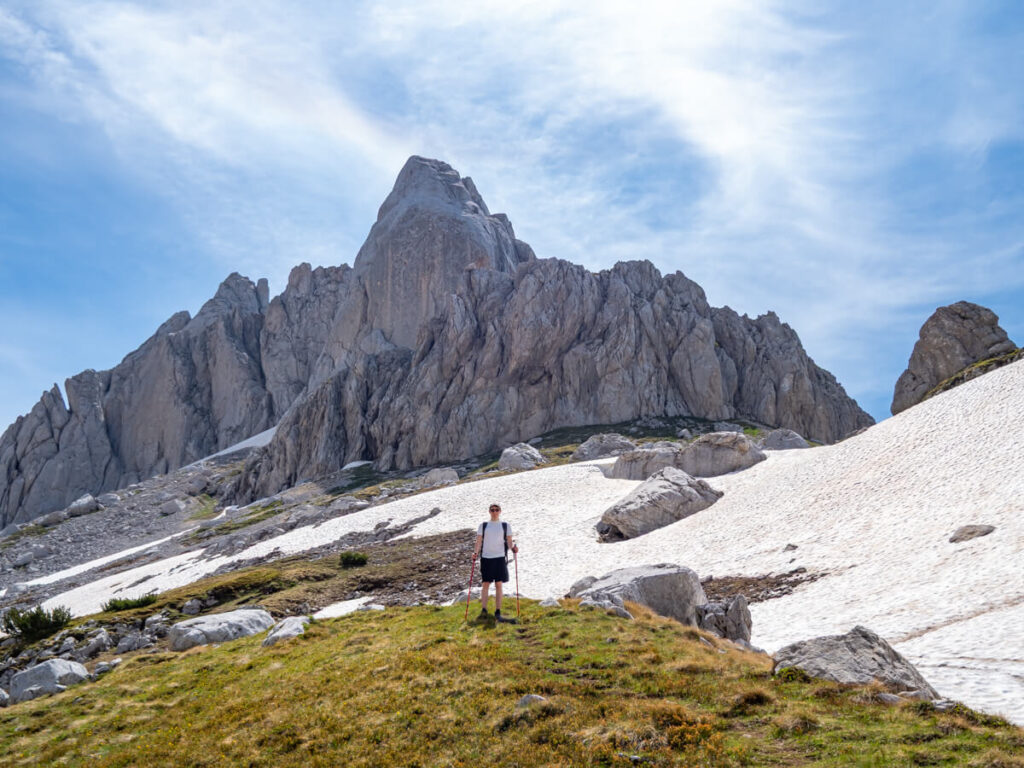
Prokletije is definitely more remote, requiring a rental car, with more serious mountain hiking. We’d also argue it has the best mountain views – we were obsessed with the snow-dappled peaks of the Accursed Mountains.
Durmitor has a better range of moderate and beginner-friendly hikes, as well as some challenging routes. It’s also arguably more accessible, with better public transport links and more tours on offer, although the park itself is still best explored by car. The views are equally stunning, with a dramatic limestone massif and glacial lakes, but not the same jagged pinnacles that you see in Prokletije.
Choose Prokletije if you:
Choose Durmitor if you:
We’d pick Prokletije if you’ve already seen Durmitor and want something more remote, or if hiking is the main purpose of your trip. But if it’s your first time in Montenegro, or you want to combine hiking with the coast, Durmitor is our overall pick.
| Prokletije National Park | Durmitor National Park | |
|---|---|---|
| Best for: | Serious hikers, solitude, authentic mountain culture | First-time visitors, iconic viewpoints, varied outdoor activities |
| Atmosphere: | Quiet, remote, off-the-beaten-path | More developed and tourist-friendly |
| Crowds: | Very low | Moderate to busy in summer |
| Hiking: | Three Peaks Trail, Zla Kolata, Volušnica, Peaks of the Balkans | Bobotov Kuk, Black Lake, Prutaš, Ice Cave |
| Landscape: | Jagged limestone peaks, narrow glacial valleys, karst springs, alpine meadows | High plateaus, glacial lakes, deep canyons, rolling mountain ridges |
| Difficulty: | Generally more demanding | Wider range of easy to challenging hikes |
| Facilities: | Limited | Excellent by Montenegrin standards |
| Accommodation: | Traditional katuns, guesthouses, eco-lodges | Hostels, apartments, cabins, campsites, guesthouses, boutique and luxury hotels |
| Base: | Grebaje, Ropojana, Gusinje, Vusanje | Žabljak, the countryside |
Durmitor National Park vs Lake Skadar
Durmitor National Park and Lake Skadar really couldn’t be more different if they tried. I think people compare them because they’re a similar distance from Kotor and Budva – and in totally opposite directions, you might have to choose between them if you’re short on time.
Durmitor is the obvious choice for mountain peaks, glacial lakes, hiking, scenic drives, and outdoor adventure, while Lake Skadar is much better for slow boat trips, birdwatching, traditional villages, viewpoints, and combining nature with Montenegro’s wine country.
Durmitor suits travellers who want to spend their days being active, whereas Lake Skadar works particularly well if you want a more relaxed itinerary with plenty of time on or around the water. If you have enough time, they’re different enough that we’d definitely visit both rather than choosing between them if you can.

Lovćen National Park vs Durmitor National Park
Durmitor National Park and Lovćen National Park are the two most popular mountainous national parks, since Prokletije is more remote. Lovćen is more easily accessible, being an easy day trip from Kotor and Budva. Durmitor requires spending a few nights in the north of the country, but has more to see and do over multiple days.
Durmitor feels like a true high-mountain destination, with bigger peaks, lakes, forests, and much more demanding hiking, whereas Lovćen is more compact. It doesn’t have the impressive mountain scenery, but it does give you panoramic views over the Bay of Kotor, so they’re pretty 50/50 when it comes to scenery, just different.
Lovćen also is more commercially developed in places, with attractions that you simply won’t find in Durmitor, including the Kotor Cable Car and alpine coaster.
We’d pick Lovćen if you’re staying on the coast and only have a day to spare, but we’d make the journey to Durmitor if hiking and wilderness are among your main reasons for visiting Montenegro.
Biogradska Gora National Park vs Durmitor National Park
Despite being relatively close to each other, Durmitor National Park and Biogradska Gora National Park are really quite different. They do both offer winter sports like skiing, and if anything, Biogradska Gora is an analogous but more peaceful version of Durmitor’s Black Lake. But the scenery and views do differ.
For big mountain scenery and adventure, we’d choose Durmitor, while Biogradska Gora is the better option for forests, peaceful walks, and a slower pace. They do both offer hikes, but at the end of the day, Durmitor has considerably more variety for an active trip, with trails, scenic drives, canyon viewpoints, and adventure activities all within reach of Žabljak.
We’d choose Biogradska Gora for a peaceful couple of days in nature and Durmitor if we wanted the more spectacular and varied mountain experience.
Montenegro National Parks FAQs
To help you choose which of Montenegro’s national parks to visit, we’ve answered these frequently asked questions.
What is the best national park in Montenegro?
For most visitors, we’d choose Durmitor National Park as the best national park in Montenegro because it offers the best combination of dramatic scenery, hiking, glacial lakes, scenic drives, and outdoor activities. However, Lovćen is better for easy access from the coast, and Lake Skadar is another possible day trip option, with wildlife and boat trips found nowhere else. Biogradska Gora is another unique park for its ancient forests and peaceful walks. And our personal favourite is the remoteness and peace of Prokletije, with its stunning mountain views and gorgeous valley hikes.
What is a must-see in Montenegro?
If you only have time for a few highlights, many people prioritise the Bay of Kotor, but we really found that Montenegro’s national parks were our favourite parts of the country. Durmitor, Prokletije, Biogradska Gora, Lake Skadar, and Lovćen are all so different, and even if you don’t have time for all of them, there’s a beautiful natural protected area for every kind of traveller. For us, the biggest mistake would be spending your entire trip on the coast without seeing Montenegro’s mountains and national parks.
What are some hidden gems in Montenegro?
Some of our favourite lesser-known places are focused around Montenegro’s national parks and protected areas, including the Grebaja and Ropojana Valleys in Prokletije National Park, Rijeka Crnojevića near Lake Skadar, Piva Canyon and the Durmitor Ring Road, and the quieter villages around Lovćen like Cetinje and Njeguši.
Are Montenegro’s national parks worth visiting?
Absolutely, particularly if you enjoy hiking, wildlife, scenic drives, or simply getting into the mountains. The five parks are remarkably different, so we’d recommend visiting at least one even if you’re mainly travelling to Montenegro for the coast. We’d have had major FOMO if we hadn’t been able to see all five for ourselves, as they’re all so diverse.
Which Montenegro national park is best for hiking?
Durmitor National Park has the best variety of hiking, ranging from easy walks around Black Lake to demanding summit routes such as Bobotov Kuk. For experienced hikers who want something more remote, we’d seriously consider Prokletije National Park instead, which links up to the iconic Peaks of the Balkans trail.
Which Montenegro national park is best for families?
Lovćen National Park is probably the easiest choice for families because you can combine the cable car, viewpoints, the Njegoš Mausoleum, Njeguši, and short walks without committing to a long mountain hike. It’s also super easy to access from Kotor or Budva, so perfect for a day out during a holiday, without needing to road trip. Biogradska Gora is another good option if your family prefers gentle forest walks and lakes, escaping the coastal crowds for the quieter central part of the country. Lake Skadar is also a great place to go as a family, especially if the kids are a little older and enjoy activities like birdwatching and kayaking.
Can you visit Montenegro’s national parks without hiking?
Yes, you definitely don’t need to be a keen hiker to enjoy Montenegro’s national parks. Lake Skadar is ideal for boat trips and scenic viewpoints; Lovćen has scenic roads, viewpoints, and major cultural attractions that don’t require walking, while Durmitor can be enjoyed through scenic drives and easy walks around places such as Black Lake without committing to serious mountain trails.
How many days do you need to visit Montenegro’s national parks?
We’d allow at least 5-7 days if you want to experience several national parks without constantly being on the road. If you’re only interested in one national park in Montenegro, 2-3 days is usually enough to see the main attractions while leaving time for a hike or two. If you can, we’d recommend even longer – 2 to 3 weeks would be the perfect amount of time to road trip your way around all five national parks and really experience them properly.
Can you visit Montenegro’s national parks all year round?
Technically, you can visit Montenegro’s national parks all year round, but access and activities vary considerably by season. Summer and early autumn are the most reliable periods for high-altitude hiking, while spring and autumn can be particularly pleasant for lower-level walks and Lake Skadar. Winter brings snow to the mountain parks and can make roads and trails considerably more difficult to access. A lot of attractions, restaurants, and guesthouses close in the winter season too, especially in more remote areas. Biogradska Gora and Durmitor are great in winter, specifically for winter sports like skiing, but we’d avoid the mountain roads, Lake Skadar, Lovćen, and Prokletije.
Read next:
How to Visit Lovćen National Park & Mausoleum of Petar II Petrović-Njegoš
A Traveller’s Guide to Lake Skadar National Park: Valleys, Viewpoints & Vineyards
Our Ultimate Guide to Visiting Durmitor National Park
A Complete Guide to Visiting Prokletije National Park: Montenegro’s Accursed Alps
How to Visit Biogradska Gora National Park: Europe’s Last Remaining Rainforest
