A Traveller’s Guide to Budva: Beautiful Bay or Busy Beach Resort Town?

Discover Budva, Montenegro’s Riviera, from where to stay and what to see to how to get here and where to eat.
This post may contain affiliate links, which means we might earn a small commission on anything purchased through these links at no extra cost to you. Learn more on our disclaimer page.
Budva is one of Montenegro’s most popular coastal towns, known for its historic Old Town, sandy beaches, lively nightlife, and long stretch of Adriatic coastline. It’s considerably busier and more developed than places like Kotor, but that also means there’s a much wider choice of accommodation, restaurants, bars, and things to do in Budva.
We visited Budva during our Montenegro road trip and found it a bit overwhelming. It’s big, busy, and boiling hot – a total contrast to the mountainous national parks we’d just been exploring. But if you’ve planned ahead and done the research (we’ve done it for you), Budva can be a great base for exploring the coast. In this guide, we’ll cover everything you need to know about visiting Budva, including the best areas to stay, how to get here, how to get around, what to do, when to visit, how long to stay, and our practical tips for planning your trip to Montenegro’s Riviera.
Budva at a glance
More from Budva
About Budva
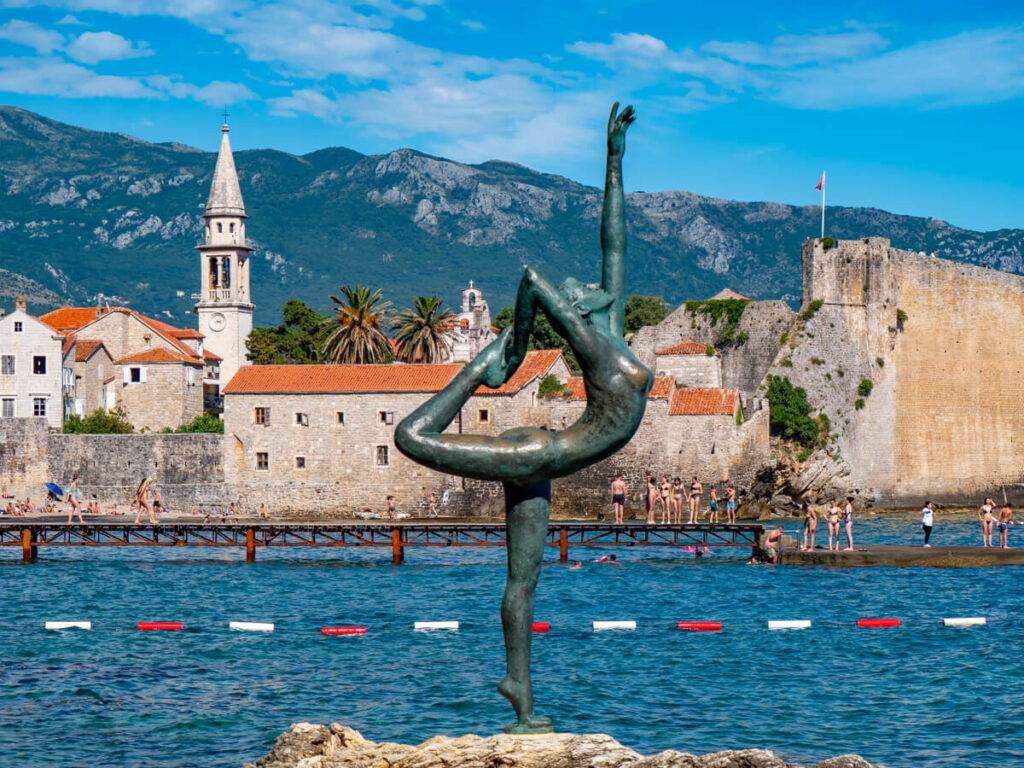
Budva is Montenegro’s main coastal resort, with a historic walled Old Town and a long stretch of beaches, alongside waterfront promenades, restaurants, bars, and a lively nightlife scene.
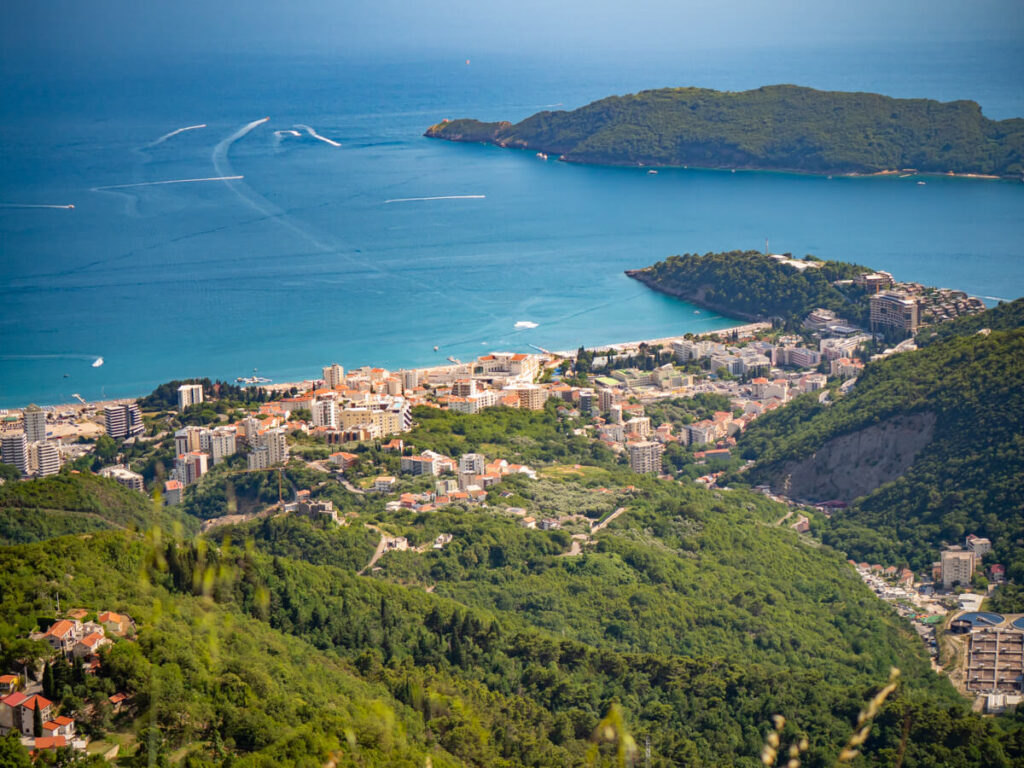
The Budva Riviera is also where you’ll find some of the only high-rise buildings on the Montenegrin coast outside the country’s capital.
The town itself has a history stretching back more than 2,500 years, although the Budva you’ll see today is a mixture of old and new. Budva is one of the oldest urban settlements on the Adriatic, known in antiquity as Buthoe, Buthos, or Butua, and ancient Greek and Roman writers referred to it as a city of Illyria.
There is evidence of settlement dating back to at least the 5th or 6th century BC, although local tradition gives the city a much older and rather more colourful origin story involving the Greek mythological hero Cadmus, who apparently established the town after being exiled from Thebes after killing a sacred serpent of Ares.
The town has changed hands many times. Saracen raiders destroyed Budva in 841 AD, while from the late 12th century it was ruled by the Nemanjić dynasty and developed as a trading port with its own fleet, shipbuilding and salt trade. Venice took control in 1442 and ruled for more than 350 years, until the Venetian Republic collapsed in 1797.
Then, Budva passed through Austrian, French, and Austro-Hungarian rule before becoming part of Yugoslavia in the 20th century.
Tourism began developing during the interwar period, particularly after the Cetinje-Budva road opened in 1931 and the first modern Hotel Avala opened in 1939. The 1979 earthquake badly damaged the Old Town, but the historic centre was subsequently reconstructed. The rebuilding also led to major archaeological excavations, revealing remains from several periods of Budva’s history.
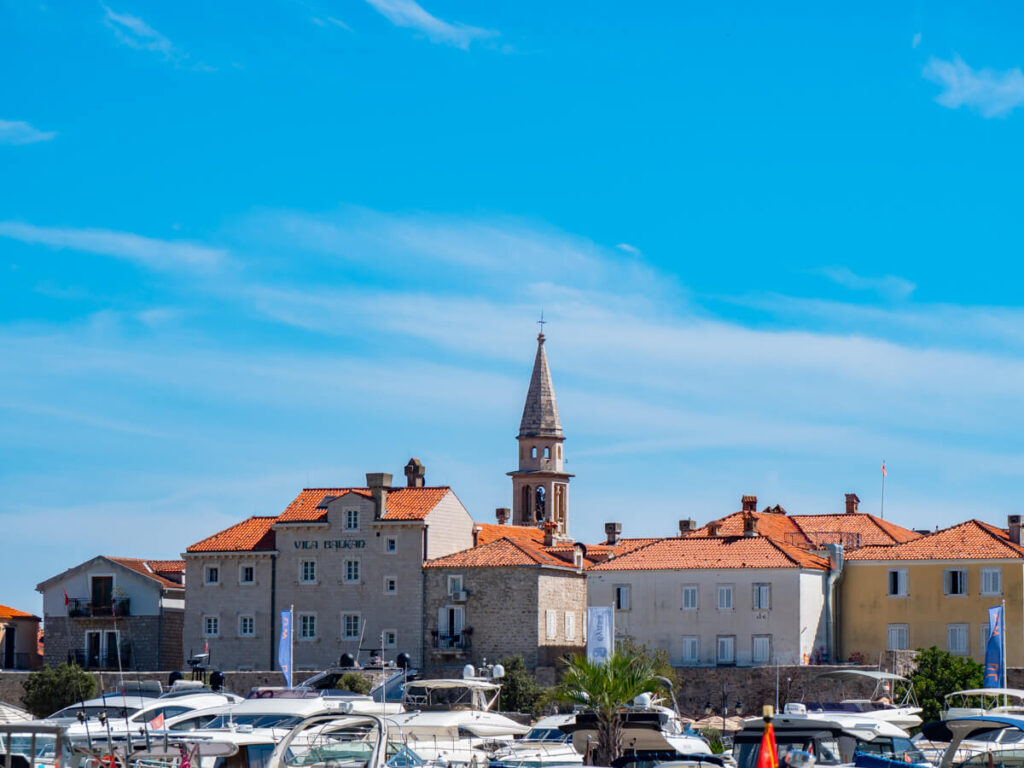
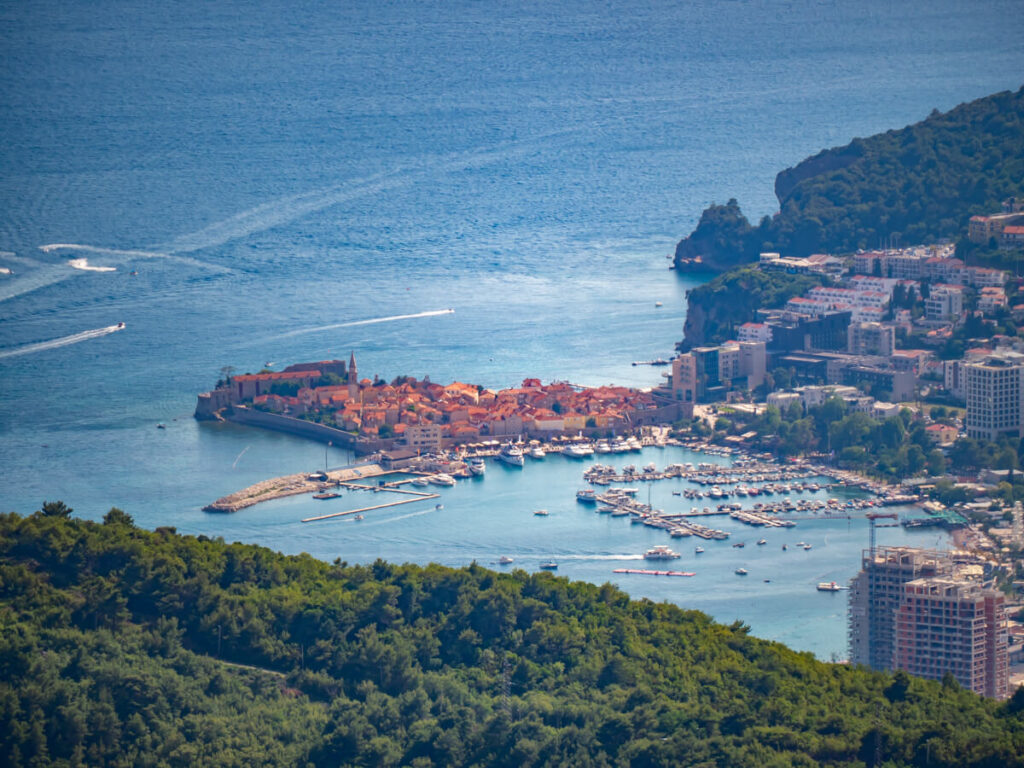
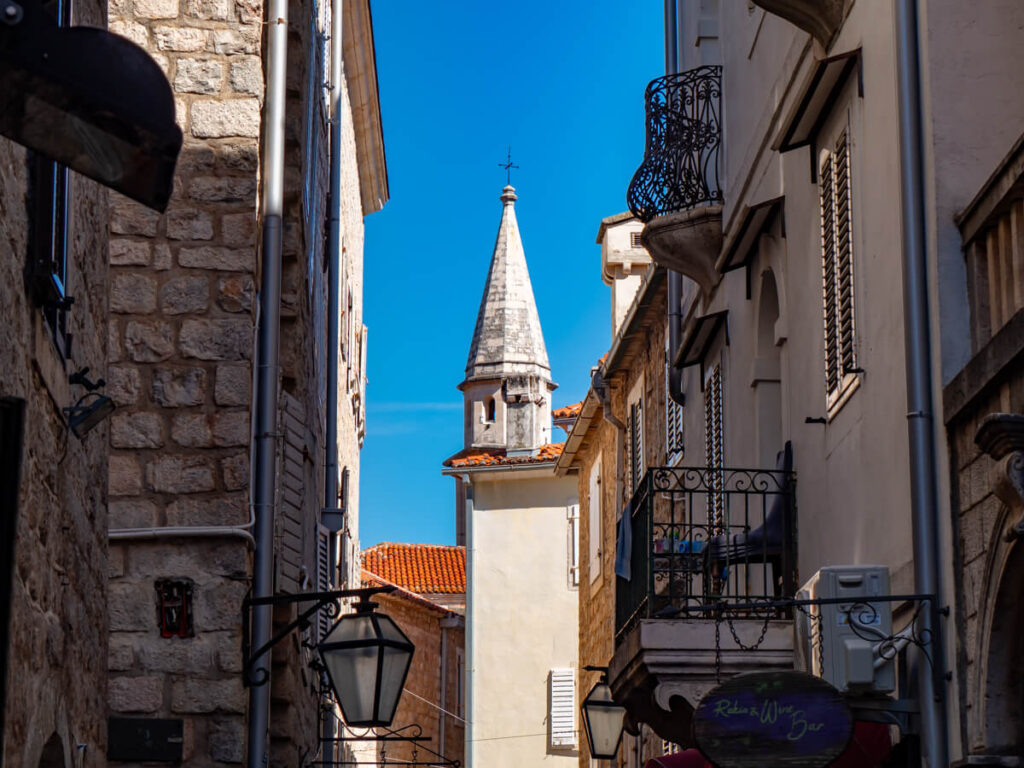
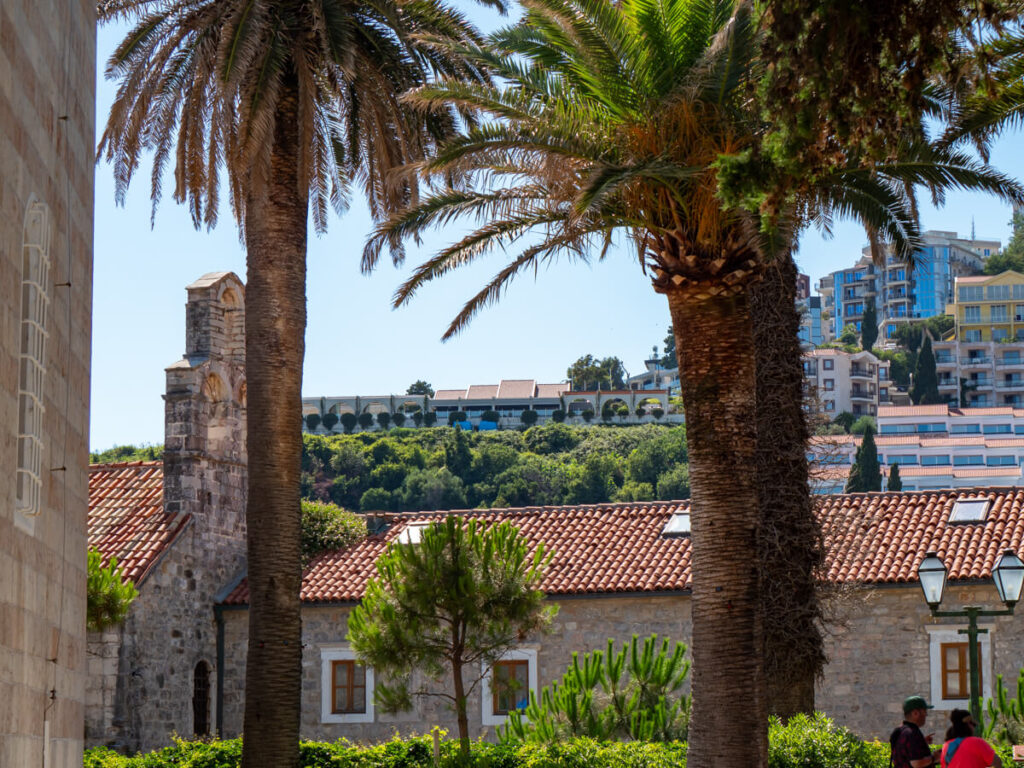
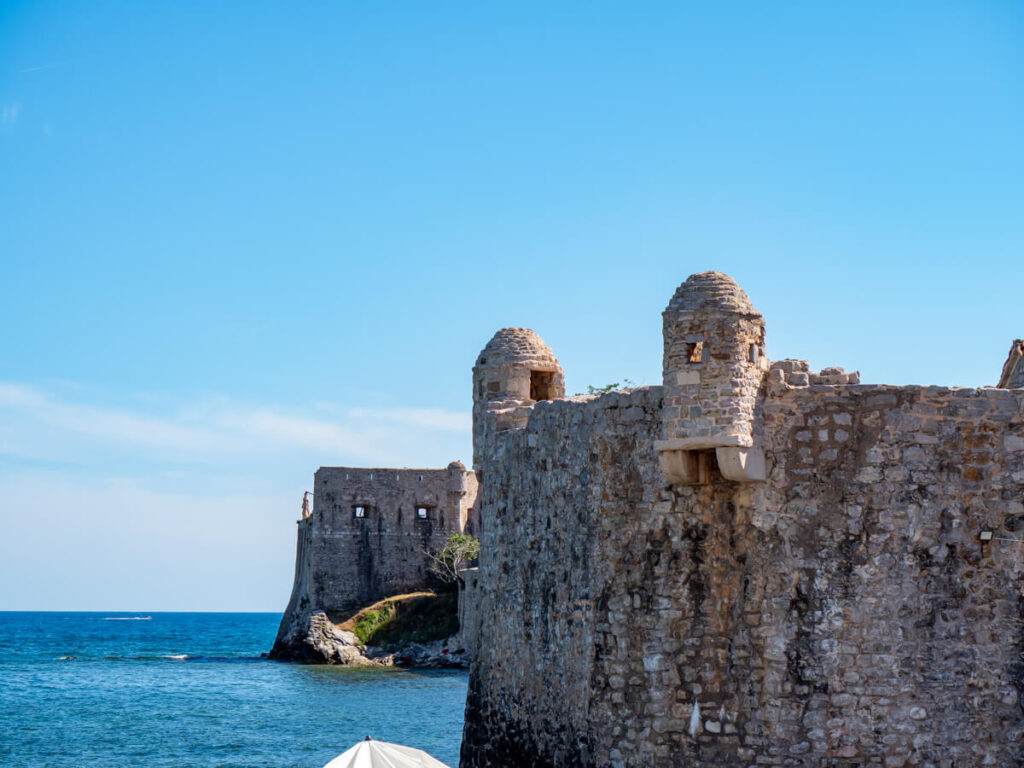
Today, the compact Old Town sits on a small peninsula surrounded by medieval walls, while the modern town has spread considerably along the coast behind it. But you’ll still see remains of medieval walls, churches, and Roman buildings scattered throughout the narrow streets of the Old Town.
Planning a trip to Budva?
Montenegro is gaining popularity quickly, so be sure to book in advance as early as possible!
Top Experiences in Budva
Top Hotels in Budva
Rent a Car in Montenegro
Best eSIM for Montenegro
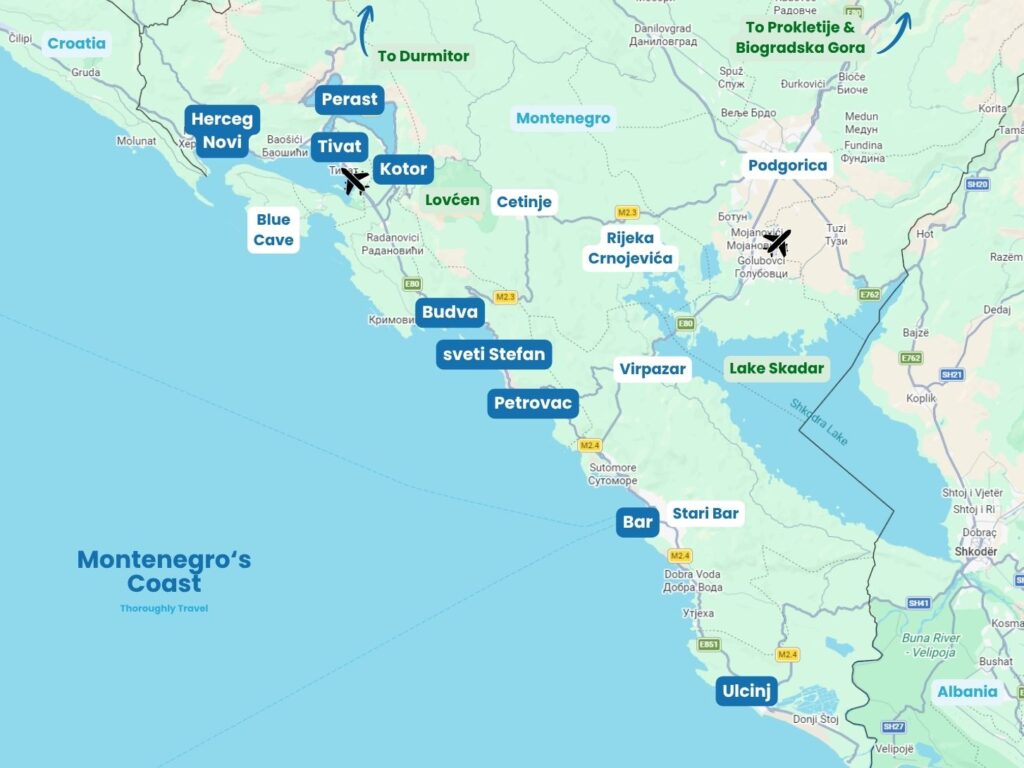
Where is Budva?
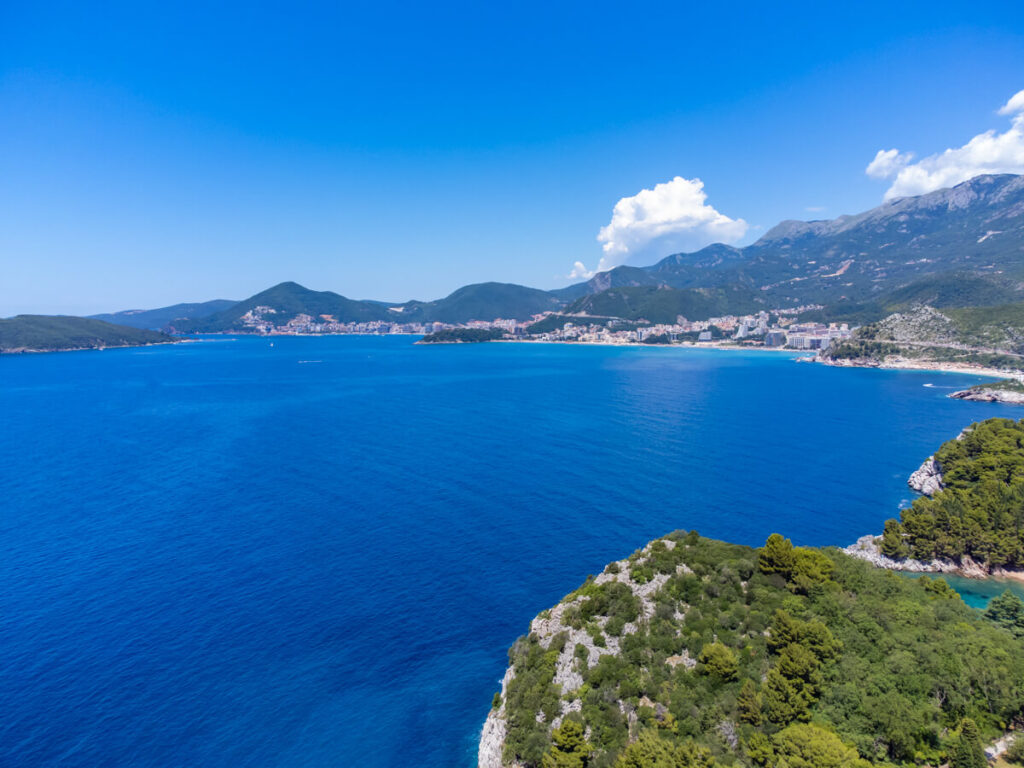
Budva sits on Montenegro’s Adriatic coast, roughly halfway between Kotor and Bar. It’s around 14 miles (23 km) from Kotor by road and about 23 miles (37 km) from Bar, although journey times can increase significantly during the summer when traffic builds up along the main coastal road (M1/E80).
The town is really quite large by Montenegrin standards, spread along a fairly developed section of coastline, with the Old Town at its centre and beaches extending in both directions. The smaller towns of Bečići and Rafailovići continue eastwards along the coast, while Jaz Beach lies west of the town.
Budva is also reasonably well placed for exploring other parts of Montenegro. Kotor and other towns on the Bay of Kotor like Perast and Herceg Novi are an easy day trip, and the Luštica Peninsula lies even closer, while Lake Skadar, Cetinje, and the southern coast beyond Petrovac are all within driving distance.
Budva Map
Budva is perfectly positioned to explore the surrounding sights.
Why visit Budva?
Budva is popular because it’s diverse. At first glance, its main appeal is its beaches, which consist of large bays of golden sand, something that’s hard to find in the Bay of Kotor. But it also has a surprising mixture of history, boutique hotels, local restaurants, and a lively nightlife scene, so there’s something for everyone.
We weren’t originally going to visit Budva, preferring the remote national parks and smaller and more authentic towns around the Bay of Kotor as bases for a holiday. But Budva drew us in because of a few things: its beaches, its Old Town, and its activities, particularly SCUBA diving. We try to dive every 6 months or so to stay certified, and we couldn’t pass up the opportunity to detour to Budva and get back in the water after a few weeks of hiking in the mountains. We decided it was a great opportunity to really see if Budva was the beautiful beach resort it’s heralded as in guidebooks or if it’s the busy tourist trap we feared it might be.
Budva Old Town
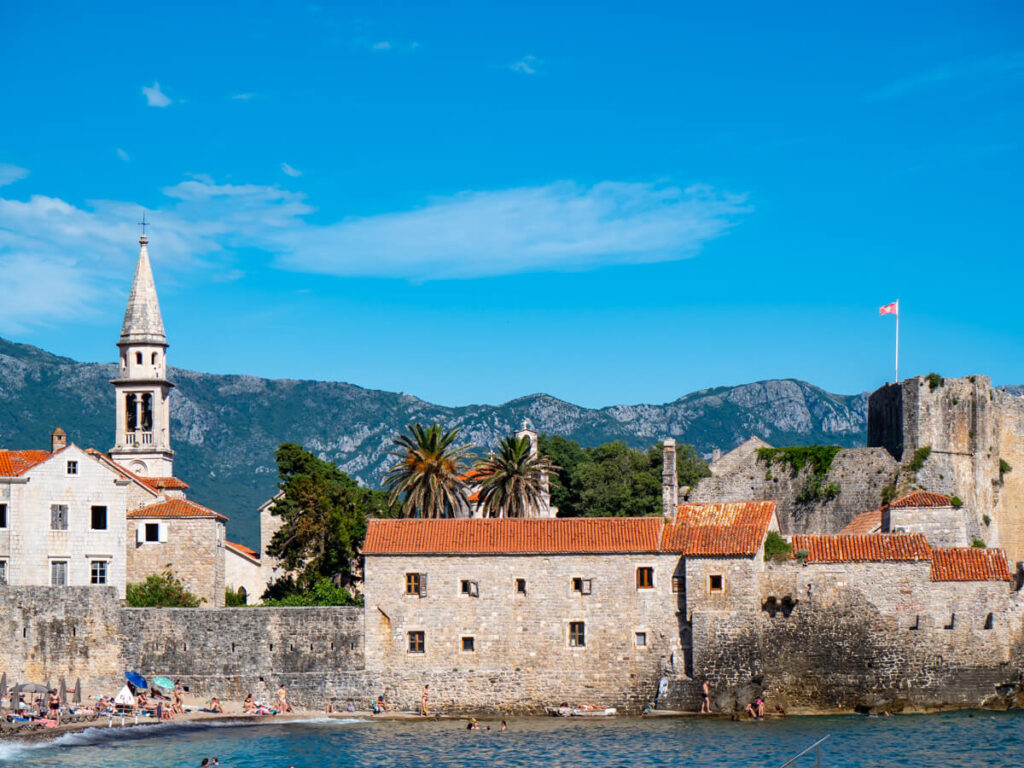
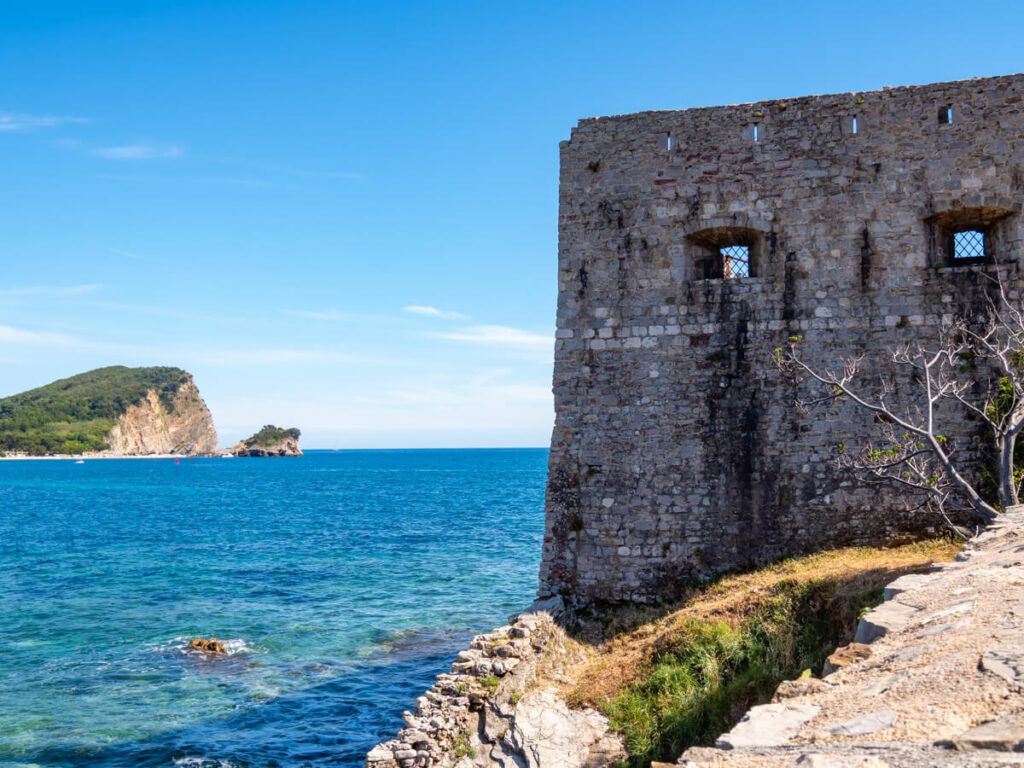
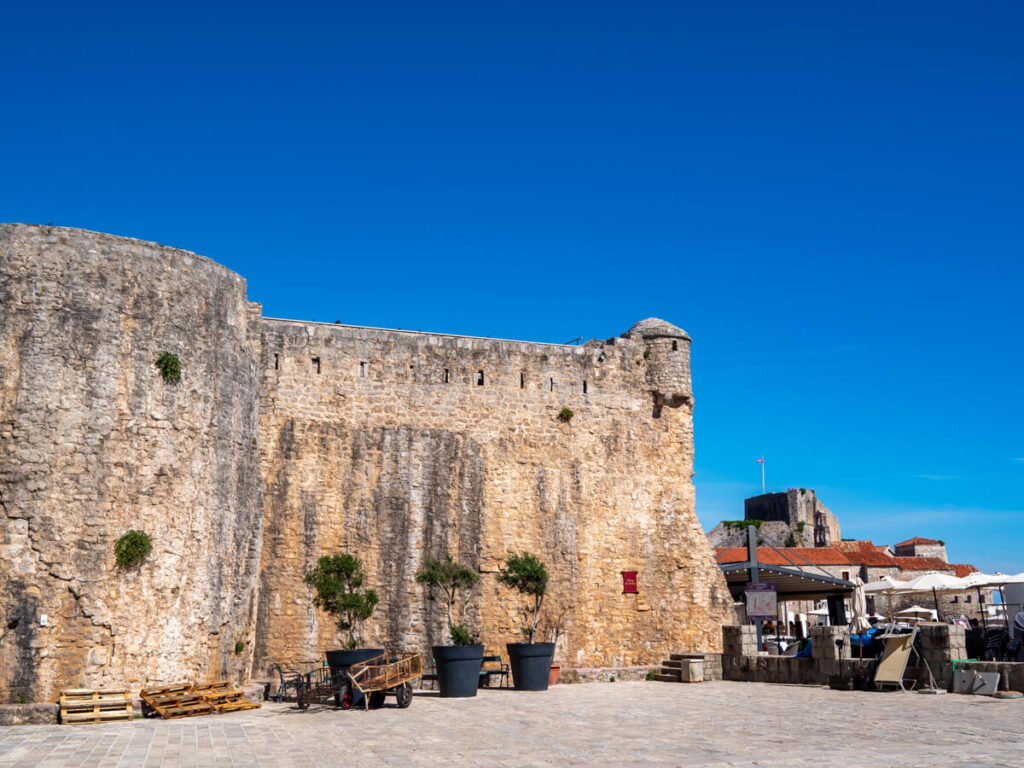
Budva’s Old Town (Stari Grad) is the main historic attraction and sits on a small peninsula surrounded by medieval defensive walls. The settlement itself has much older roots, although much of the architecture visible today dates from the medieval and Venetian periods.
The archaeological evidence that was found here is quite interesting. Budva’s ancient necropolis was discovered just outside the Old Town’s Main Gate in 1936-38 during construction work for what became Hotel Avala, revealing graves containing gold and silver jewellery, pottery, glassware, weapons, and other objects. Later excavations, especially after the 1979 earthquake, uncovered around 450 graves dating from the 4th century BC to the 2nd century AD. You can still see Roman ruins on-site there today.
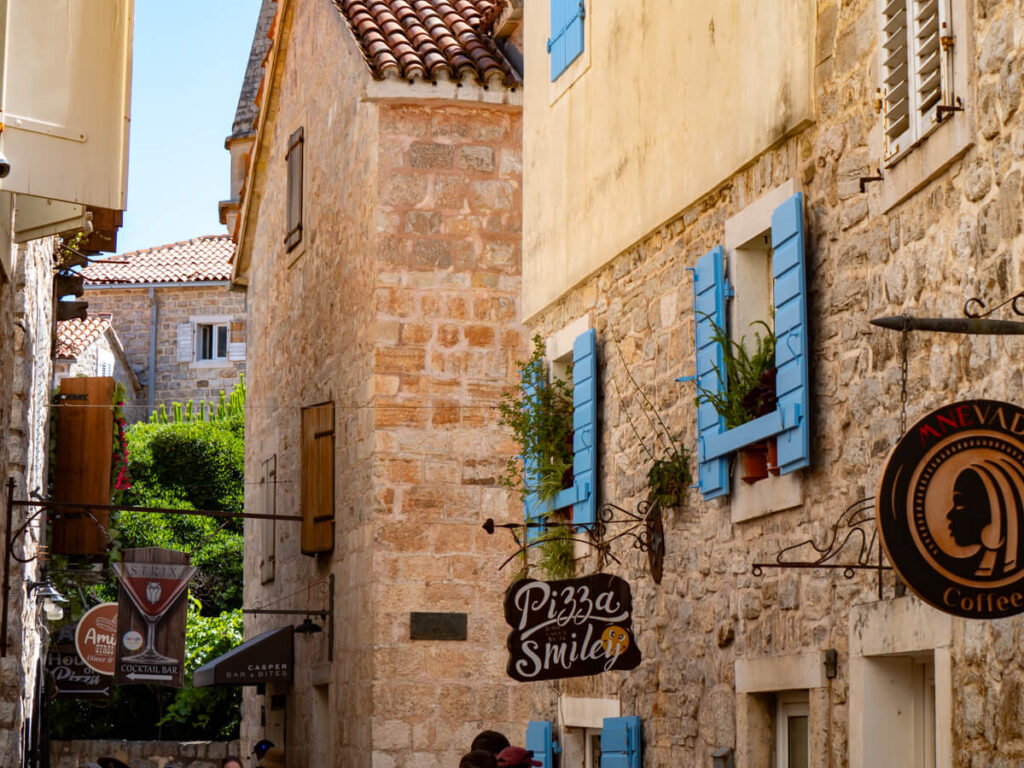
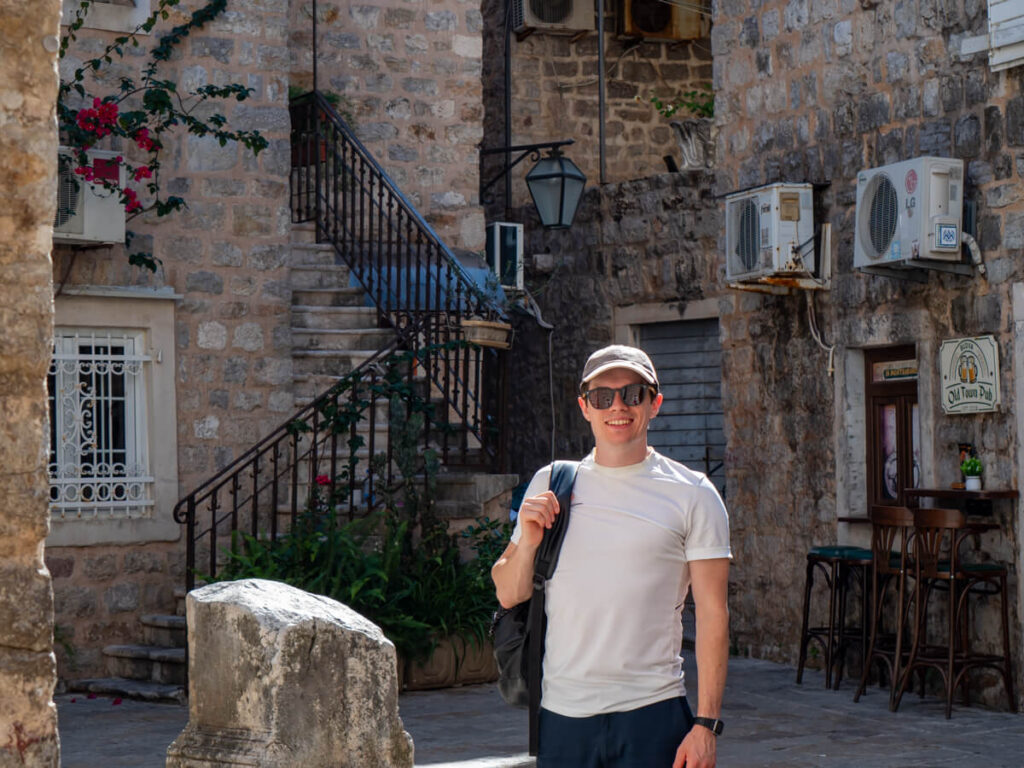
What’s great about Budva’s Old Town is that it’s compact enough to explore on foot in a few hours. Inside the walls you’ll find narrow stone lanes, small squares, churches, old houses, museums, and cafés.
Budva Beaches
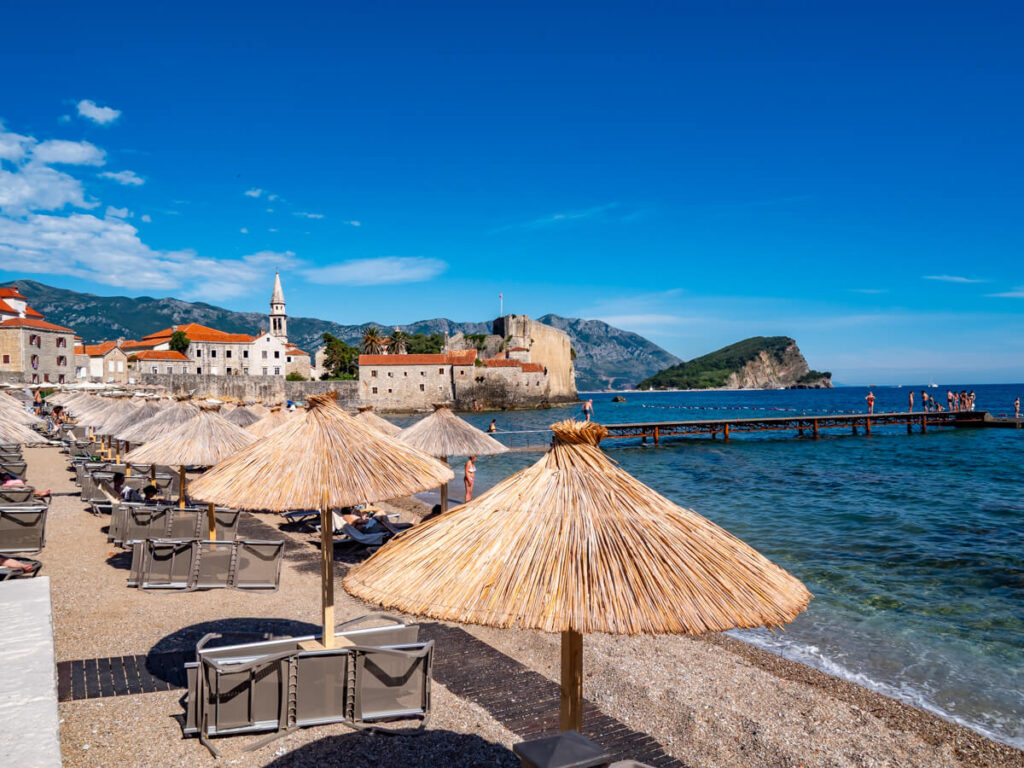
Budva has a huge number of beaches along the surrounding coastline, varying from small coves and pebbly stretches to larger developed beaches lined with sun loungers, restaurants, and beach bars. As an established beach resort, these plažas, dotted with parasols and pulsing with pounding playlists, are part of the town’s main appeal.
Slovenska Plaža is the main beach in central Budva and runs along the waterfront just outside the Old Town. It’s convenient if you’re staying in the centre, but it can become extremely busy in summer. Mogren Beach is a much smaller pair of coves tucked beneath the cliffs west of the Old Town. It’s one of the more scenic options within walking distance of central Budva, reached via a coastal path and tunnel through the rocks.
Further west, Jaz Beach is considerably larger, making it a better option if you want more space and don’t mind travelling out of the centre by bus or car for a beach day.
Budva Activities
But there’s more to do in Budva than lying on the beach. The combination of mountains, coastline, and relatively warm summer weather means there are plenty of ways to spend a day away from the Old Town.
Boat trips leave Budva for various parts of the coastline, with trips around Sveti Nikola Island, nearby beaches and the wider Budva Riviera. We wanted to explore a little deeper (pun intended) and booked to go on a SCUBA diving tour in Budva, which was an epic day.
You’ll find various watersports around the main beaches during summer, including kayaks, paddleboards, and other activities.
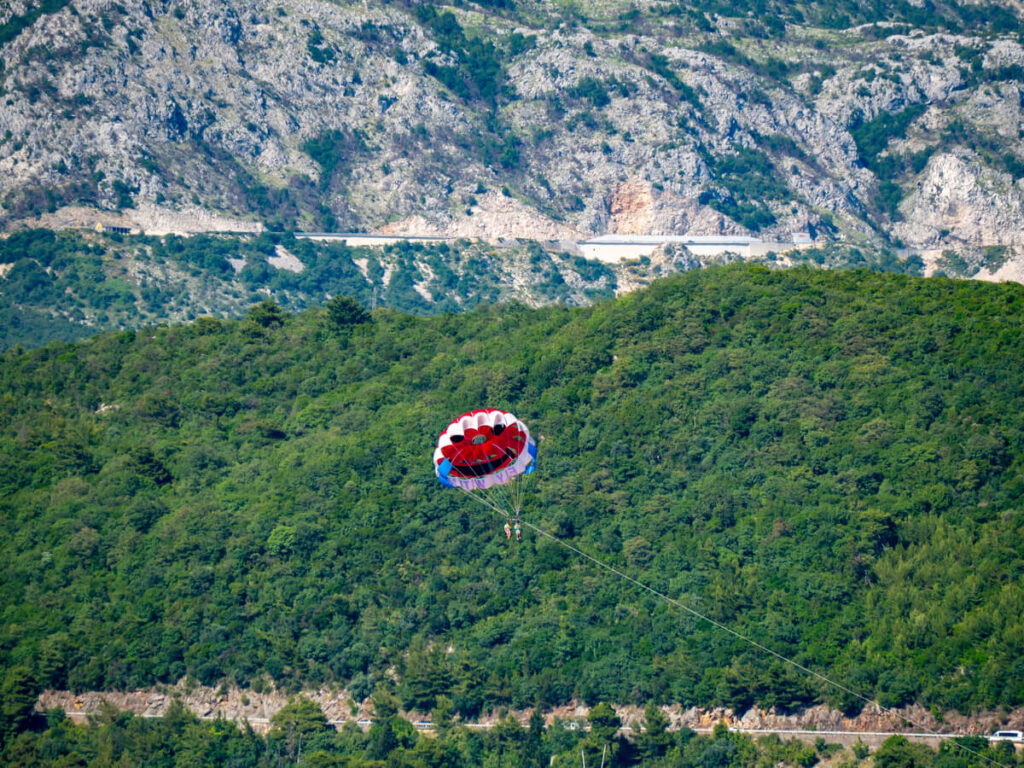
If you’d rather leave the coast behind for a day, the mountains immediately behind Budva provide plenty of opportunities to go hiking and even paragliding over Budva.
Where to stay in Budva?
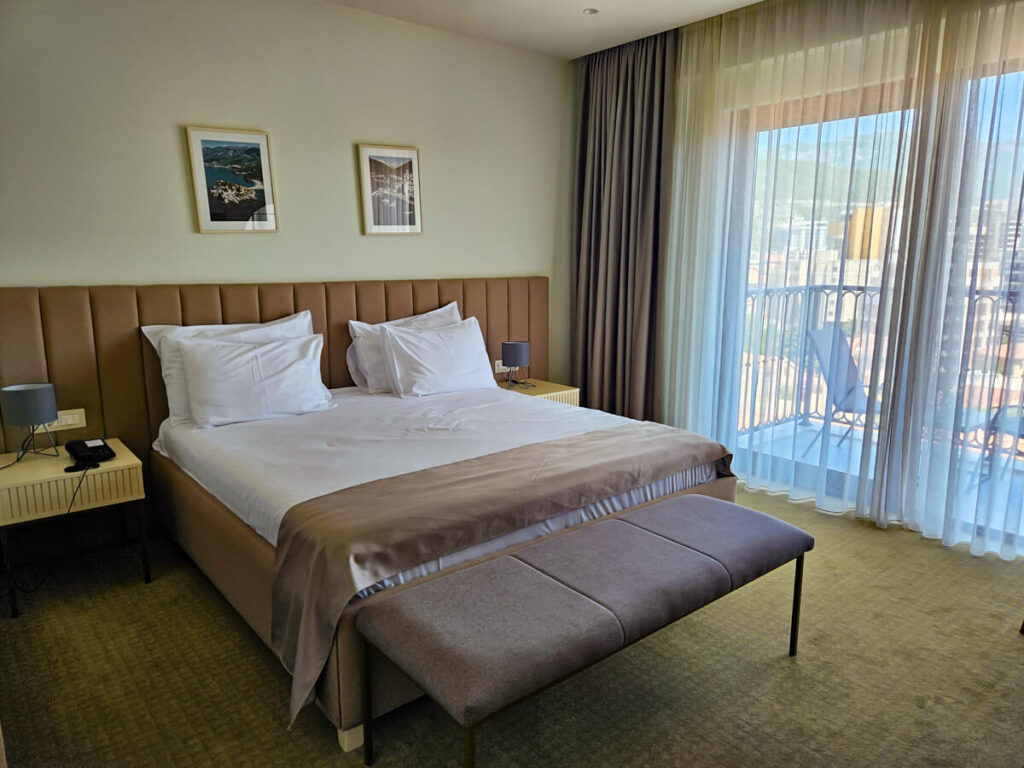
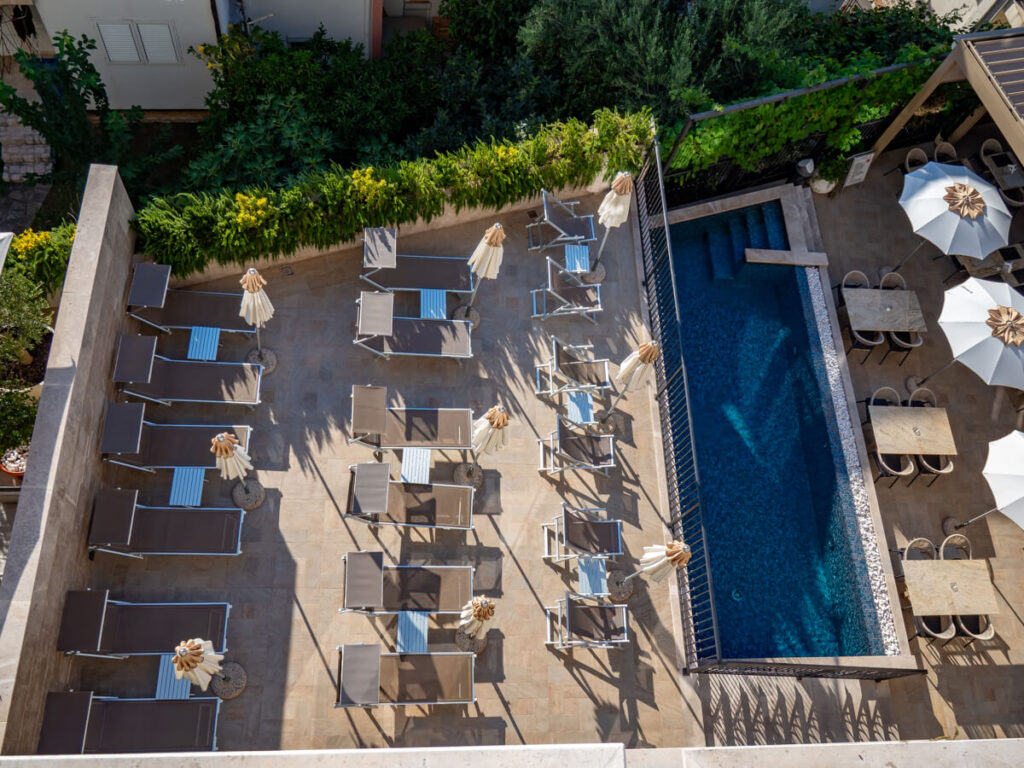
Budva has a huge amount of accommodation, from apartments and budget guesthouses to large hotels and luxury resorts. Its lovely variety of boutique and luxury hotels was another reason Dan and I visited, as we were keen to splurge on a night in a nice hotel after weeks of road-tripping and staying in remote cabins.
Where you stay in Budva makes quite a difference to your trip, because the different parts of the town have very different atmospheres and a lot of it is spread far and wide.
The Old Town is a great choice if you want to be close to the historic sights and restaurants, although accommodation inside the walls can be expensive and noisy in summer.
Off Slovenska Beach and into the town centre is convenient for beach access, restaurants, shops, and nightlife. This is probably the most practical area if you want everything within walking distance, but it’s also one of the busiest.
If you’re happy to stay a little further out, Bečići is a good option for a beach with more space than central Budva, while Rafailovići and Pržno are further along the coast and have a smaller-scale feel.
You could, of course, choose to visit Budva on a day trip, in which case staying around the Bay of Kotor can be a good option, especially if you’d also like to explore Kotor, Perast, and the surrounding coastline. Budva is around 14 miles (23 km) from Kotor by road, so it’s close enough to visit without changing accommodation. Alternatively, the Luštica Peninsula makes a great base for a holiday, with a variety of villas and smaller towns that are far less busy than the bay. We stayed here with my family for a week, and it was dreamy.
Top Budva Hotels
Where to eat in Budva?
Budva has one of the widest choices of restaurants on the Montenegrin coast, so you won’t struggle to find somewhere to eat. The downside is that some of the restaurants around the waterfront and Old Town are aimed squarely at tourists, so prices can be noticeably higher in the busiest areas and the food isn’t necessarily as good as elsewhere.
You’ll find plenty of seafood and Mediterranean dishes, alongside traditional Montenegrin meals, pizza, pasta, burgers, and international food. There are also an increasing number of speciality coffee shops (which made us happy as we love starting our day with a proper oat latte) and more modern restaurants outside the Old Town.
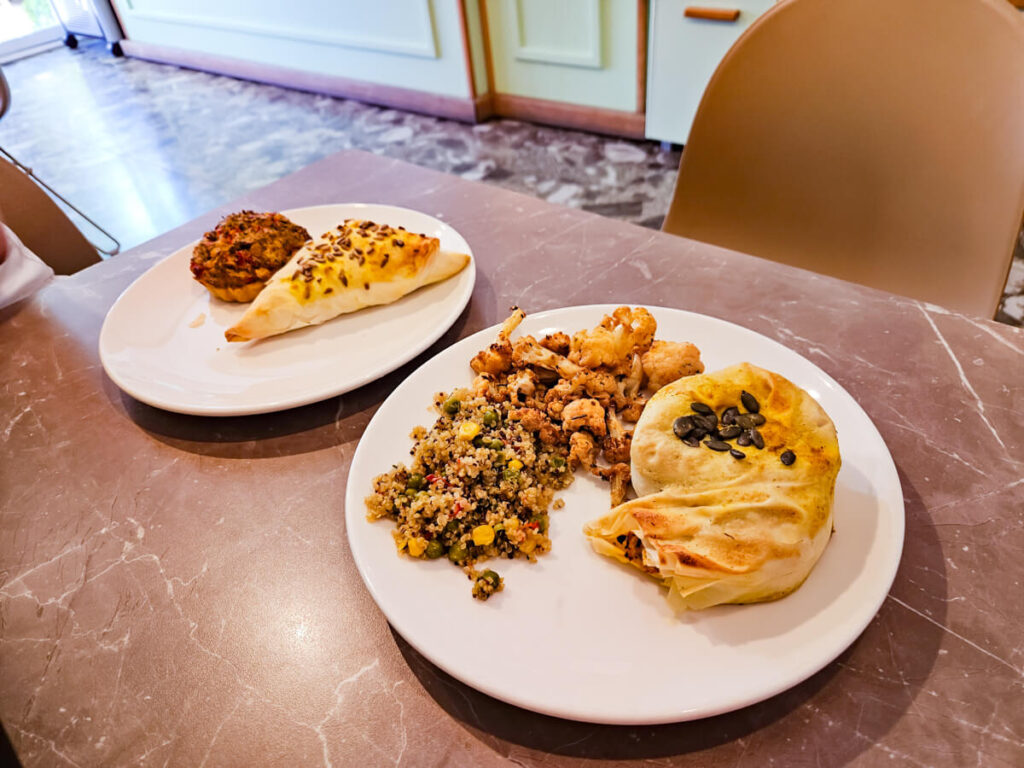
We were also super thrilled to find real vegetarian and vegan options that were healthy and used ingredients like tofu that were almost impossible to find elsewhere in Montenegro. After weeks of cheese and bread or pasta and pizza, we were so happy to eat out in Budva.
There are also plenty of supermarkets (Voli, Aroma, Idea) for groceries and the local Green Market for fresh produce. If you’re staying in an apartment and want to cook, self-catering can make a noticeable difference to the cost of a longer stay.
Top Budva Restaurants
Here are our top picks:
How to get to Budva?
Budva is one of the easiest places to reach on Montenegro’s coast, with good road connections to Kotor, Podgorica, Bar, and Herceg Novi. It’s even reasonably easy to reach from neighbouring countries like Croatia and Albania, while nearby airports make flying in internationally super easy. It’s not a major cruise ship port like Kotor, but you can even take the seasonal passenger ferry between Dubrovnik and Budva, which is a particularly scenic way to arrive if you’re combining the two destinations.
By plane
The closest airport to Budva is Tivat Airport (TIV), around 12 miles (20 km) away – only a 30-minute drive.
Podgorica Airport (TGD) is around 37 miles (60 km) away in the east, while Dubrovnik Airport (DBV) is west in Croatia and roughly 40 miles (65 km) away.
Tivat is the most convenient option if you’re flying directly to the Montenegrin coast, although flight availability varies considerably depending on the season, so Podgorica can be a good option too, while Dubrovnik works best if you’re also planning on visiting Croatia.
From the airport, you can rent a car, take a taxi, or arrange an airport transfer. There isn’t a direct train to Budva, and public transport from the airports can involve changing buses, so it’s not the simplest option if you’re arriving with luggage.
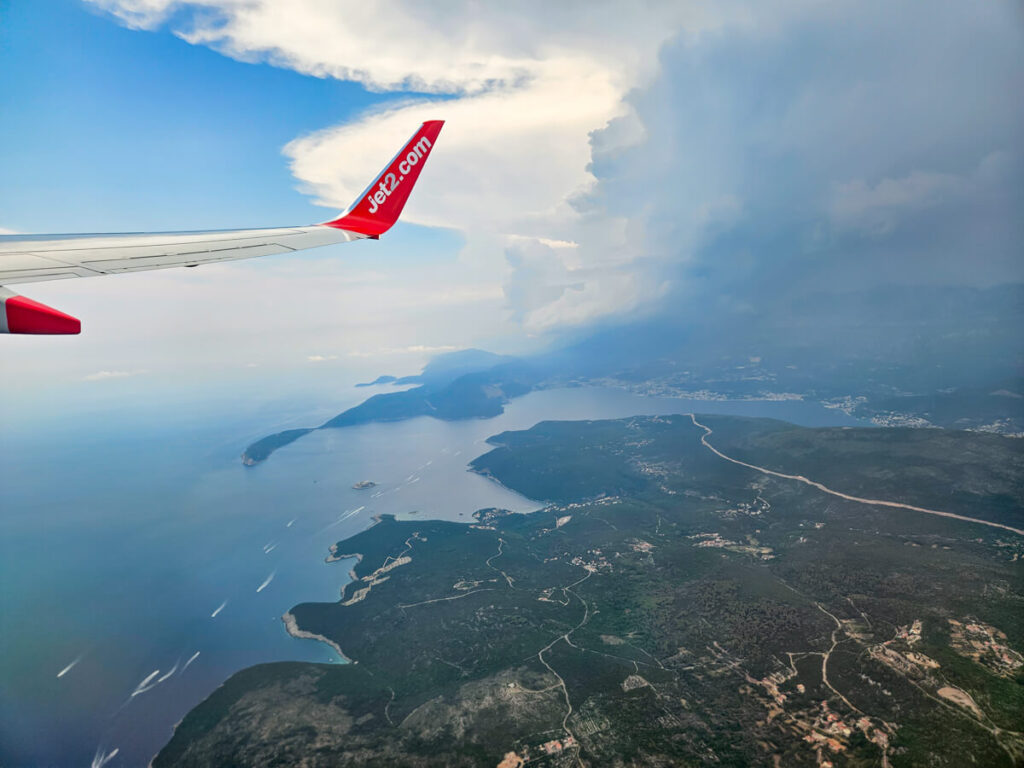
By car
Hiring a car in Montenegro is one of the easiest ways to reach Budva and gives you much more flexibility for exploring the surrounding coast. The main coastal road, the M1/E65/E80, connects Budva with Kotor to the north and Bar and Ulcinj to the south, while the M2.3 heads inland towards Cetinje and Podgorica. We drove both routes and didn’t have a problem, but it’s worth reading up on driving in Montenegro before getting behind the wheel, so you know what to expect when it comes to rules, local driving habits, and road conditions.
If you’re coming from the east side of the Bay of Kotor or Croatia, you can take the Kamenari-Lepetane Ferry, which saves you an hour of driving around the bay.
The main thing to be aware of is summer traffic. The coastal road can become seriously congested in July and August, particularly around Budva where it goes right through the centre of town, so don’t assume that a relatively short distance will mean a quick journey.
We really didn’t enjoy driving through Budva. The road goes from two to three lanes and is horribly busy, especially in the middle of the day. There are traffic-light-controlled intersections, so it’s a lot os top-start driving, and you need to watch for all kinds of hazards like pedestrians, local drivers squeezing into tiny gaps, and motorbikes weaving in and out of traffic.
There’s one specific intersection we want to highlight, as it caught us out the first time and we warned my family about it on our return visit. It’s on the way towards Kotor if you’re driving east to west, just after this Adriatic Bank, where the right lane becomes a right-turn, and everyone suddenly tries to merge back into the left lane, which is now the middle lane.
Side roads aren’t any better. We accidentally ended up in a hilly system of one-way streets with narrow corners and lots of roadside parked cars.
Parking in Budva
Driving in Budva is a nightmare, and unfortunately, parking isn’t any better. Thankfully, we were staying in a hotel with underground parking (Hotel Pima). We’d recommend checking that parking is included with your accommodation before arrival. It also meant we could leave the car and walk to the Old Town and seafront promenade on foot.
There are numerous car parks around Budva. Parking Slovenska Plaza is probably the best located, charging around €2 an hour. During peak season, prices for car parks can reach a whopping €5.00 an hour, so you’re better off finding somewhere that has a flat fee like €15-20 a day.
By taxi
A taxi is a convenient way to get to Budva, especially if you’re travelling with luggage or as a group. There are numerous taxi companies operating in Budva and outside the airports, with official taxi ranks around the town and at several nearby resorts.
As with taxis elsewhere in Montenegro, there are no apps like Uber, and there’s no standardised pricing. So while taxis are convenient, they’re often very expensive. Be sure to agree the fare before setting off if you’re travelling a longer distance.
Grabbing a taxi outside Tivat Airport can cost €50-70 (and higher in summer), so we’d recommend contacting Red Taxi (who we used from Kotor) on WhatsApp, who should quote you a more reasonable price between €30-45.
By transfer
Arranging an airport transfer is a much more straightforward option than faffing with taxis, particularly if you’re arriving late, travelling as a group or with children, or don’t want to deal with hiring a car.
You can arrange for a driver to meet you at Tivat or Podgorica Airport and take you directly to your accommodation. A private transfer is usually around €50-100 per car, and slightly more from Dubrovnik.
By bus
The Budva Central Bus Station has regular connections with towns and cities throughout Montenegro and the wider Balkans. This includes Kotor, Herceg Novi, Bar, and Podgorica, as well as international destinations depending on the season. Our bus from Mostar to Kotor also went as far as Budva and stopped to pick up and drop off at Herceg Novi Bus Station and Kotor’s Bus Station.
The bus is a particularly useful option if you’re travelling along the coast without a car, although journey times can be affected by the same summer traffic as cars. There’s also a bus stop for Sveti Stefan, Petrovac, and Jaz Beach near the Old Town, which is handy for day trips.
How to get around Budva?
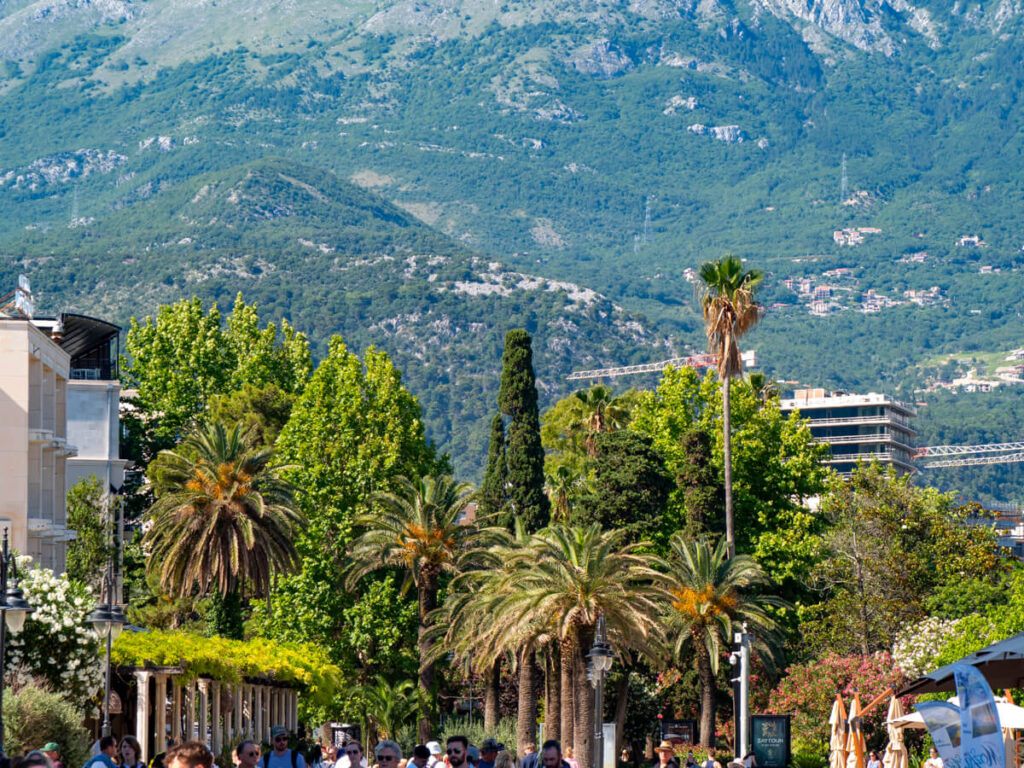
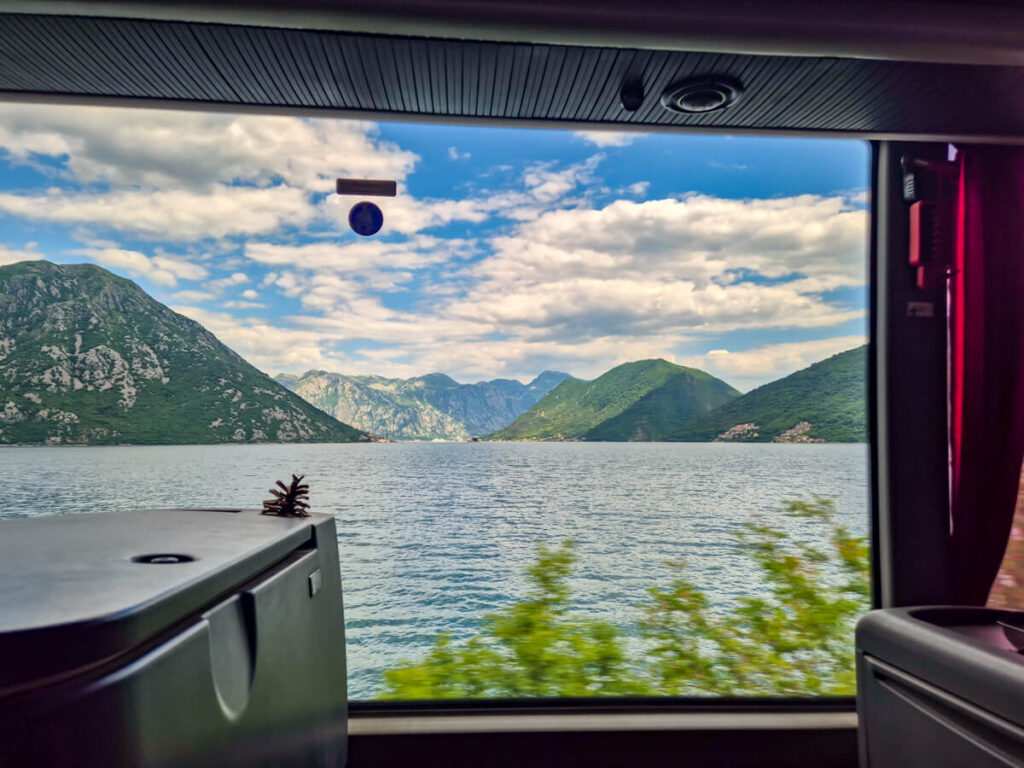
Budva is relatively easy to explore without a car, particularly if you’re staying in or around the Old Town. The historic centre, main beaches, and central promenade are all within walking distance, although summer heat can make longer walks less appealing.
For destinations further along the coast, local buses run between Budva, Bečići, Rafailovići, Pržno, Sveti Stefan, and Petrovac, while other local services connect Budva with places like Jaz Beach and Trsteno.
Taxis are plentiful and operate 24 hours, so they’re useful if you’re heading somewhere without a convenient bus connection. Agree on the fare before setting off.
When to visit Budva?
The best time to visit Budva depends on whether you’re coming mainly for the beaches or want to explore the town without dealing with the summer crowds. June (when we visited) and September are a good compromise, with warm weather and plenty of places open.
July and August are the hottest and busiest months, and we’d recommend avoiding them.
If you’re more interested in sightseeing than swimming, May and early October can also work well, with lower prices, but less reliable weather.
We’d particularly avoid the middle of the day in July and August if you’re planning to explore the Old Town, as the combination of heat and crowds can make wandering around the narrow streets much less enjoyable.
The town is noticeably quieter outside the main summer season, although some beach bars, restaurants, and tourist businesses operate seasonally.
If you’re interested in events and nightlife, summer is when Budva really comes alive. The Grad Teatar Budva festival runs through July and August, with theatre, music, literature and other performances in the Old Town, while 13th July is marked with concerts and celebrations for Montenegro’s Statehood Day. The Sea Dance has also returned to the Budva area, with the festival taking place in late August at Bečići, bringing large electronic music acts to the coast.
Budva Weather
Budva has a Mediterranean climate, with hot, mostly dry summers and mild, wetter winters. Summer is the main beach season, while spring and early autumn are generally more comfortable for walking around the Old Town and exploring the surrounding coast.
How long to stay in Budva?
1 full day is enough to explore Budva Old Town, walk the waterfront, and visit one or two of the nearby beaches. You can also fit in the Citadel and a relaxed lunch without rushing too much, so Budva is one of the best day trips from Kotor and other nearby areas.
We’d stay 2-3 days if you want to properly enjoy the beaches, take a boat trip, explore the wider Budva Riviera, and have some time to enjoy the restaurants and nightlife. This is what we did, which gave us enough time to see the Old Town, go SCUBA diving, and relax on the beach.
If you’re using Budva as a base for exploring the surrounding coast and taking day trips further afield, 4-5 days+ gives you a good amount of holiday time without needing to rush around. You could easily combine Budva with trips to Sveti Stefan, Petrovac, Lake Skadar, or the Bay of Kotor if you have longer.
Is Budva worth visiting?
Budva is definitely worth visiting if you want a Montenegro destination that combines a historic Old Town with good beaches, lots of restaurants, and plenty going on in the evenings. The Old Town is genuinely interesting, particularly if you take the time to learn about its long history, while the surrounding coastline gives you plenty of options for swimming and boat trips.
But Budva isn’t for everyone. It’s a busy, developed resort, particularly in July and August, and the modern town surrounding the Old Town can feel much more commercial than places like Perast and even Kotor with its cruise ship crowds. The main beaches are also heavily developed, with rows of expensive sun loungers, loud beach bars, and chain hotels rather than the secluded coves you might picture when thinking about Montenegro.
It’s also worth pointing out that the Old Town is very similar to Kotor’s, so if you’ve seen one, you don’t really need to see the other unless you’re super interested in history. It’s also smaller than Kotor’s and doesn’t take long to see.
We think Budva is perfect if you’re after a proper beach holiday while still having a historic old town to explore. Just don’t arrive expecting a sleepy coastal village. For us, it was a great base for a brief visit to do some cool water activities, but we didn’t feel the need to stay longer than a few days, since there are so many other amazing places in Montenegro to see.
What to pack to visit Budva?
It’s best to be prepared when you visit Budva. Don’t forget to pack your:
Budva FAQs
To help you plan your trip to Budva, we’ve answered these frequently asked questions.
Why is Budva famous?
Budva is best known for its historic Old Town, beaches and lively summer nightlife. The Old Town dates back more than 2,500 years, while the wider Budva Riviera has a long stretch of beaches including Slovenska, Mogren, and Jaz.
Is Budva a party town?
Budva has plenty of bars, clubs and beach venues, and the town becomes noticeably livelier during the peak season. Check out Caspar Bar and Mañana Cocktail Bar And Food. That said, you can stay away from the main nightlife areas and still enjoy the beaches, Old Town, and waterfront without making your trip all about partying.
How many days is enough in Budva?
We’d recommend 2-3 days in Budva for most trips. This gives you enough time to explore the Old Town, walk the waterfront, visit a couple of beaches, and have a relaxed evening without rushing. If you want to use Budva as a base for exploring more of the Riviera, we’d stay for 4-5 days.
Is it expensive in Budva?
Budva isn’t particularly expensive by Western European standards, but prices can climb considerably in the summer and around the waterfront and Old Town. You can still eat cheaply if you look beyond the most touristy restaurants, while accommodation varies from affordable hostels and apartments to expensive beachfront hotels.
Is Budva safe to walk at night?
Budva is generally safe to walk around at night, particularly in the busy central areas and the Old Town. We’d still use the usual precautions: keep an eye on your belongings in busy areas, avoid isolated spots if you’re walking alone, and use a licensed taxi if you’re heading somewhere quieter late at night.
Which is nicer, Kotor or Budva?
Kotor has the more dramatic setting than Budva, with its UNESCO-listed Old Town surrounded by steep mountains and the Bay of Kotor, while Budva is better suited to a beach-focused trip with more nightlife, swimming spots, and a livelier resort atmosphere. We didn’t choose one over the other – if you have time, visit both, as they’re very different parts of Montenegro’s coast.
Read next:
28 Best Things to Do in Budva Beyond the Beach + Top Day Trips & Tours
Everything You Need to Know About SCUBA Diving in Budva: Montenegro’s Riviera
A Traveller’s Guide to the Bay of Kotor: Europe’s Southernmost Fjord
Where to Stay in Kotor Bay: Top Towns + Best Hotels From Budget to Boutique
27 Cool Things to Do in Kotor + What Not to Do
8 Fun Day Trips from Kotor + 2 Tours Not to Book
How to Spend One Day in Kotor & Our Free DIY Old Town Walking Tour Route + Map
11 Best Montenegro Blue Cave Boat Tours + Is It Even Worth It?
How to Visit Lovćen National Park & Mausoleum of Petar II Petrović-Njegoš
A Day Trip Guide to Herceg Novi: Old Town, Beaches & Medieval Forts
