A Perfect Day in Perast: Travel Guide to Montenegro’s Prettiest Town

Discover the best things to do in Perast, where to stay, what to eat, highlights not to miss, and hidden gems we discovered in this guide to Montenegro’s prettiest town.
This post may contain affiliate links, which means we might earn a small commission on anything purchased through these links at no extra cost to you. Learn more on our disclaimer page.
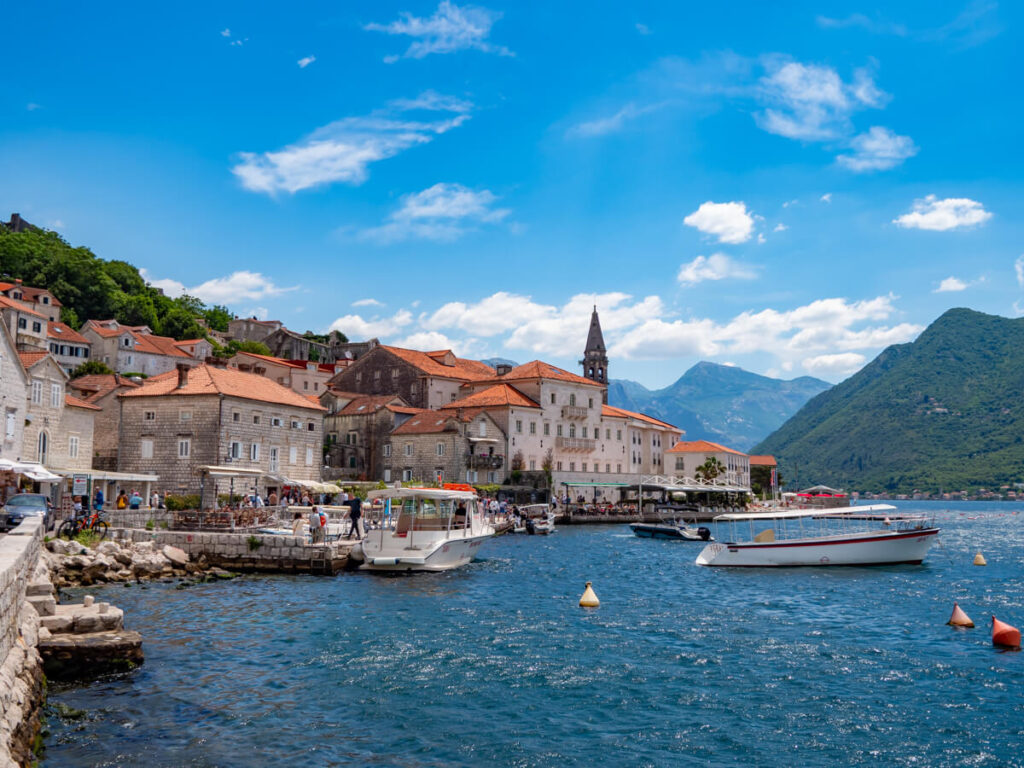
Perast is one of the most picturesque towns on the Bay of Kotor, with a tiny waterfront lined with stone palaces, historic churches, and dramatic mountain views across the bay. It is one of the easiest day trips from Kotor, although its popularity means it can get surprisingly busy during the middle of the day. Perast is also the departure point for boat trips to the iconic manmade island and Our Lady of the Rocks church. But despite being small enough to explore in a couple of hours, there are plenty of fun things to do in Perast.
We visited Perast 3 times over the course of our 5-week Montenegro road trip: once as a couple on the public bus from Kotor, once with my family on a boat trip to the islands, and then finally by car for dinner as a family. Discover everything you need to know about visiting Perast, including activities, accommodation, how to get here, how long to spend, how to take a boat to Our Lady of the Rocks, where to eat, and our practical tips to make the most of your time.
Perast at a glance
More from the Bay of Kotor
About Perast
Perast is a tiny historic town known for its grand Baroque architecture and pretty waterfront setting.
It forms part of the Natural and Culturo-Historical Region of Kotor, which has been on the UNESCO World Heritage List since 1979. For centuries, the town was a wealthy maritime community, and its stone palaces, churches, and defensive buildings, which are remarkably well preserved, still stand today.
Like much of Montenegro’s coastline, Perast came under the rule of the Republic of Venice in 1420 and remained connected with Italy for hundreds of years. Wealthy seafaring families built substantial stone mansions, while churches and defensive towers appeared around the compact settlement.
Perast was also involved in the military conflicts that shaped the history of the bay. Its strategic position near the Verige Strait, the narrowest passage into the inner part of the Bay of Kotor, meant that controlling the area was important to both Venice and the Ottoman Empire. In 1654, Perast successfully defended itself against an Ottoman attack, an event that is still remembered in local traditions.
At its height, Perast was considerably larger and wealthier than it is today. The Perast Museum says that more than 2,000 people lived here towards the end of the 18th century, compared with only a few hundred today.
Where is Perast?
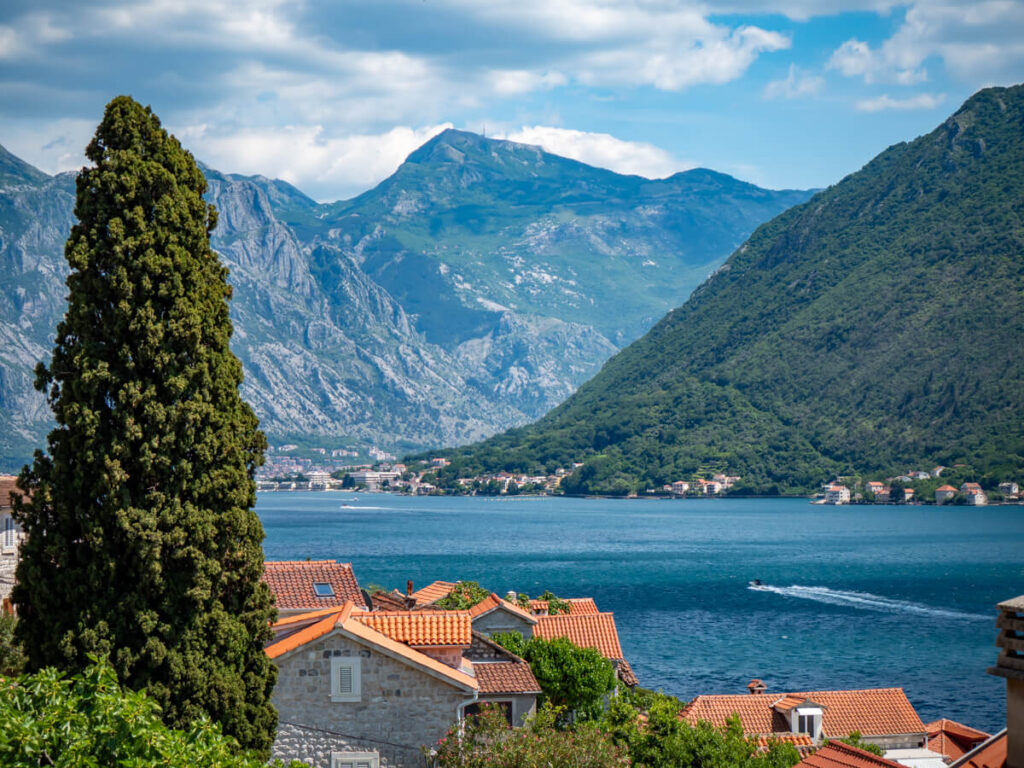
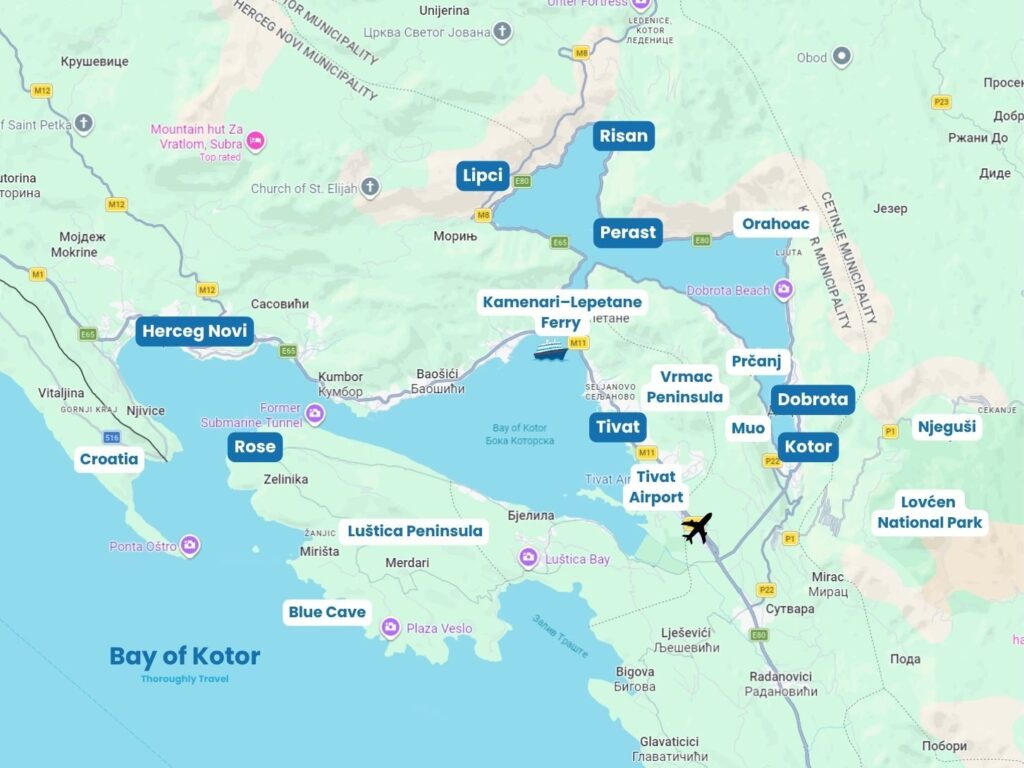
Perast sits on the northern shore of the Bay of Kotor, beneath the slopes of Mount St Ilija and between Kotor’s Old Town and Risan. The town itself is pedestrianised, squeezed between the mountains and the water, with the main road running (M1/E65/E80) behind the historic waterfront.
From Kotor, it’s roughly 8 miles (14 km) by road, making it an easy addition to a day exploring the bay. The town is small enough to explore on foot in a couple of hours, so it’s a great option if you’re looking for nice things to do around Kotor, and it’s also a popular stop on boat trips around the bay.
Perast Map
We’ve highlighted Perast’s location on the Bay of Kotor on the map below.
Planning a trip to Perast?
Montenegro is gaining popularity quickly, so be sure to book in advance as early as possible!
Top Experiences in Perast
Top Hotels in Perast
Rent a Car in Montenegro
Best eSIM for Montenegro
Why visit Perast?
Perast offers something quite different from Kotor, which is much larger, with a greater choice of shops, restaurants, and attractions. The Old Town is especially popular and can feel quite crowded, especially when the cruise ship crowds descend in summer. Whereas Perast feels more like a historic village stretched along the waterfront.
Don’t get us wrong, it’s not a hidden gem. Perast is still popular, especially for day-trippers around the bay. But there’s no denying it is a smaller, quieter, arguably cuter town than many others on the bay.
The town
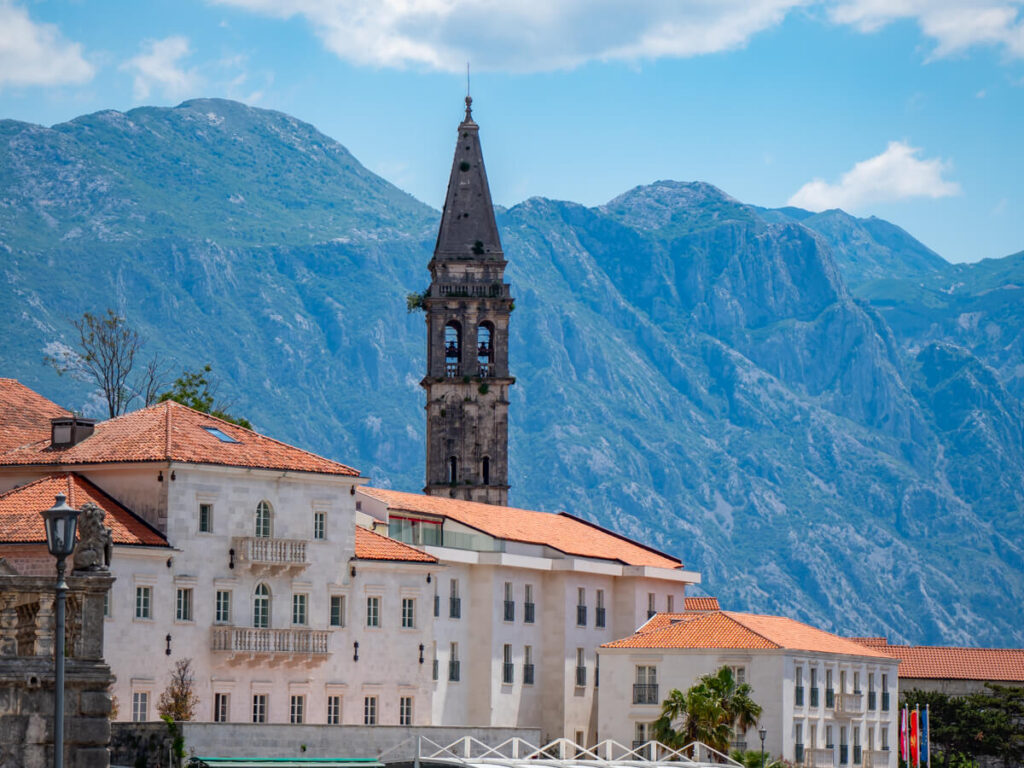
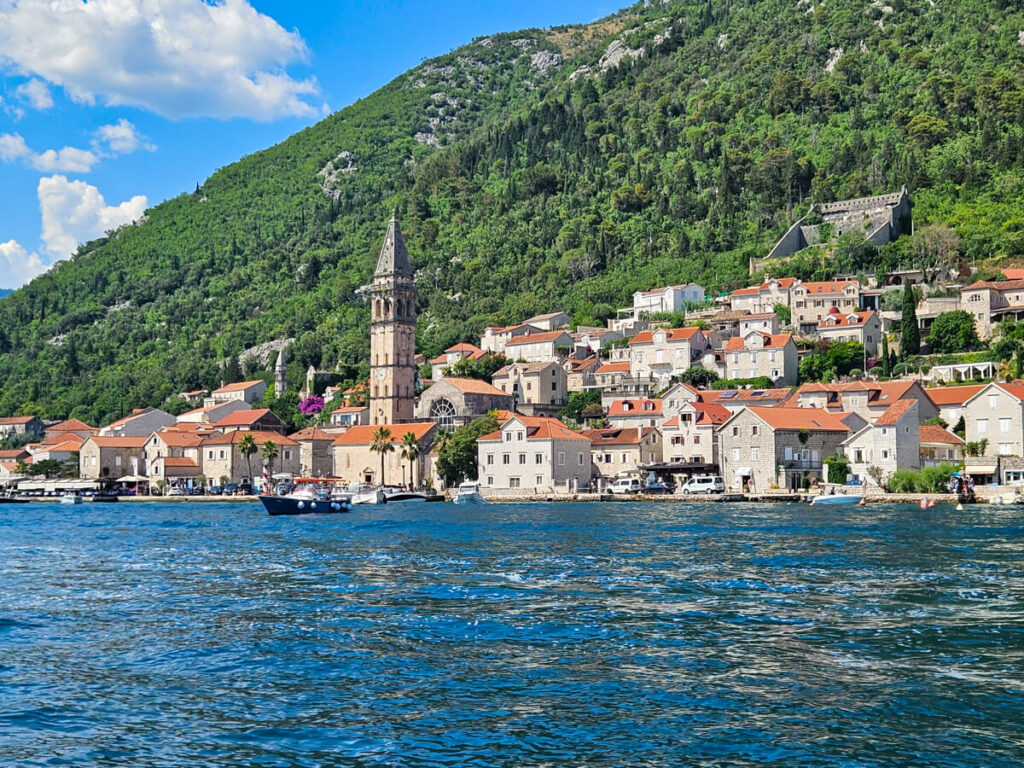
Perast as a destination is the attraction, and the best thing to do once you arrive is just wander around the town. The setting, on the waterfront with mountain and sea views, is pretty unbeatable, while the town’s architecture is unique.
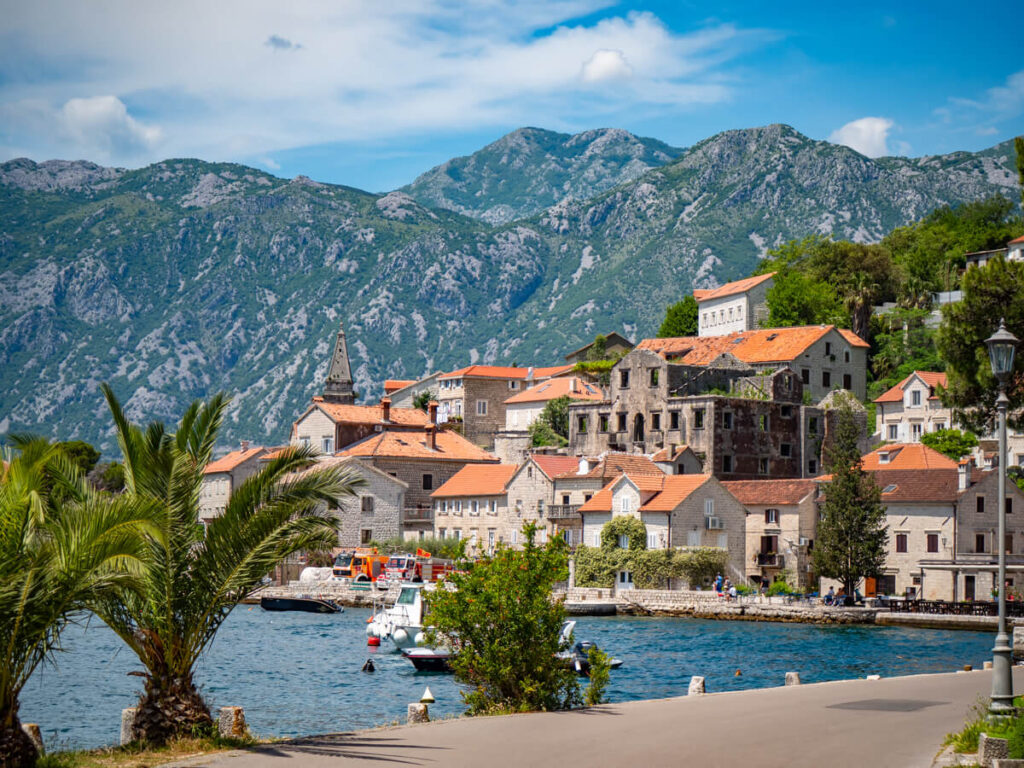
Unlike the enclosed maze of Kotor Old Town or the bustling beach resorts of Budva, you’ll find elaborate palaces, old family houses, stone churches, and remnants of the town’s defensive past, all crammed into a network of quaint streets and set along a stunning seaside promenade.
The islands
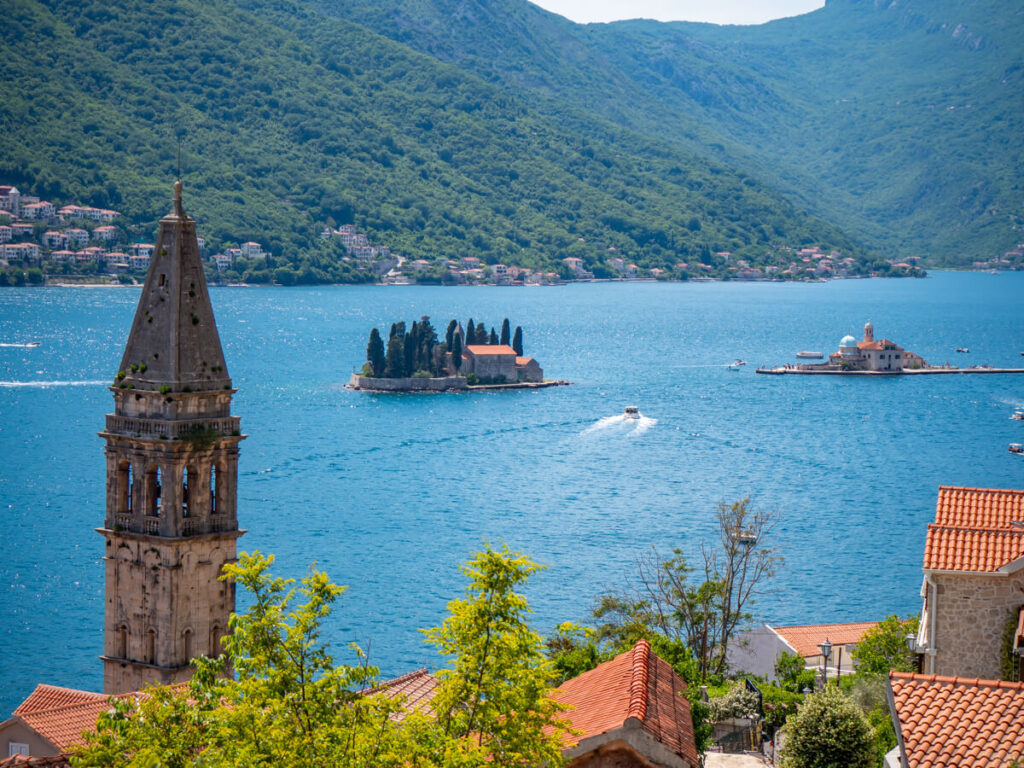
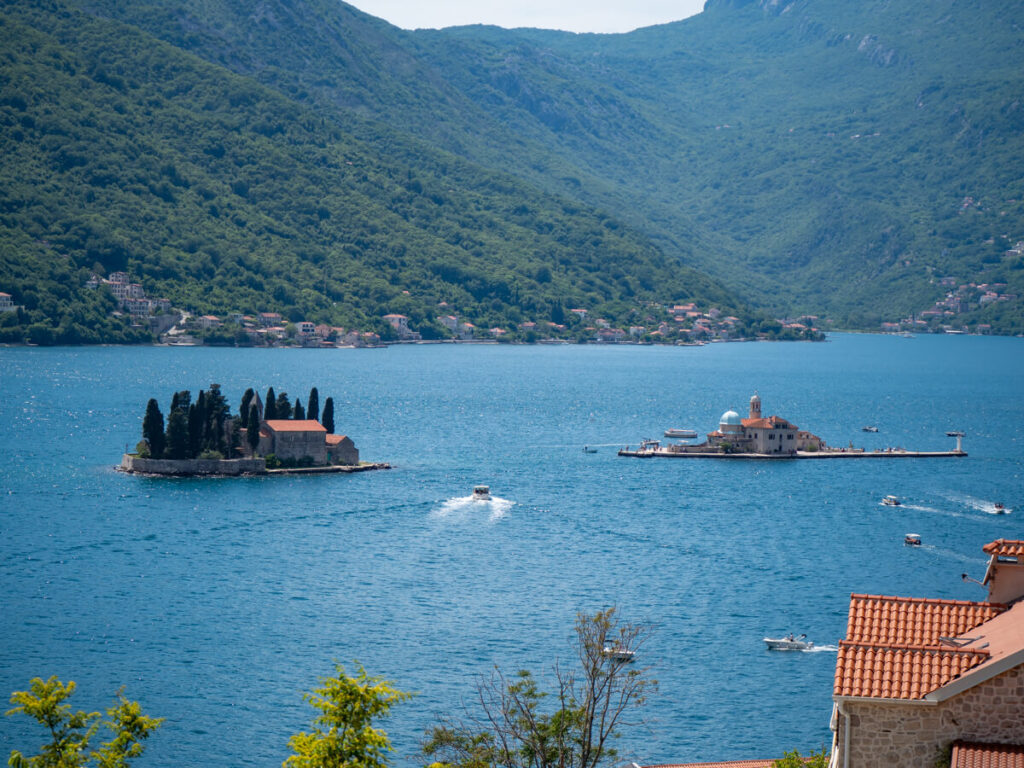
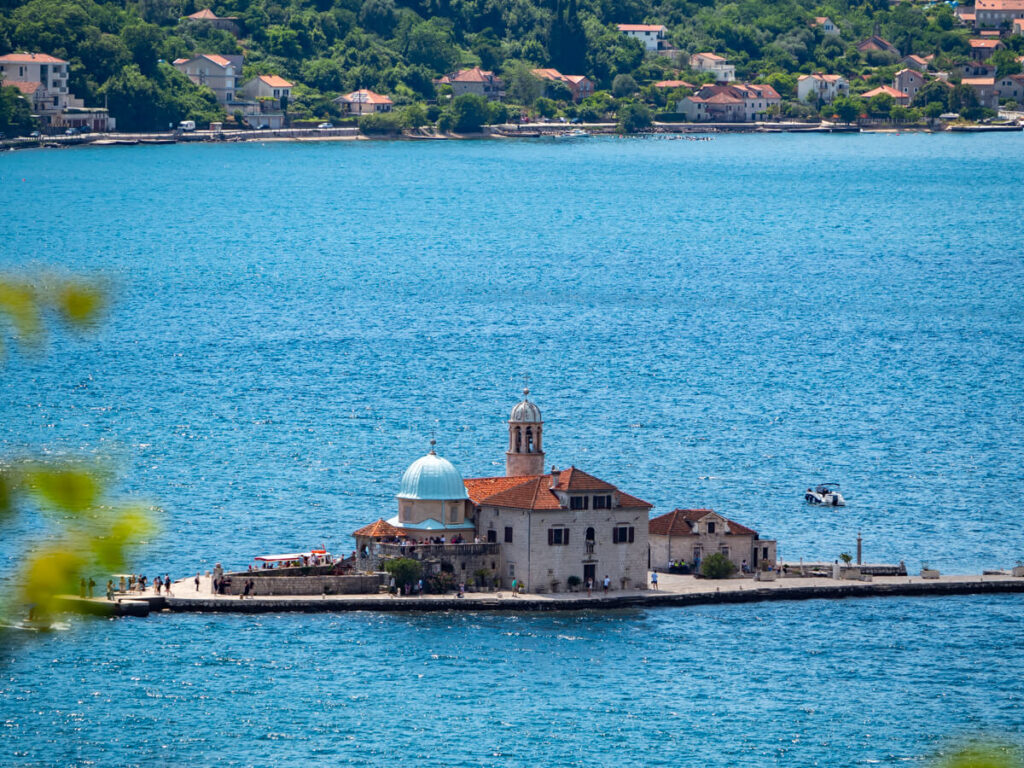
Directly offshore are the two small islands that have become synonymous with Perast:
You can take a boat from Perast over to the islands (although you can’t land on St George), while Our Lady of the Rocks is commonly visited as a stop on boat trips around the bay.
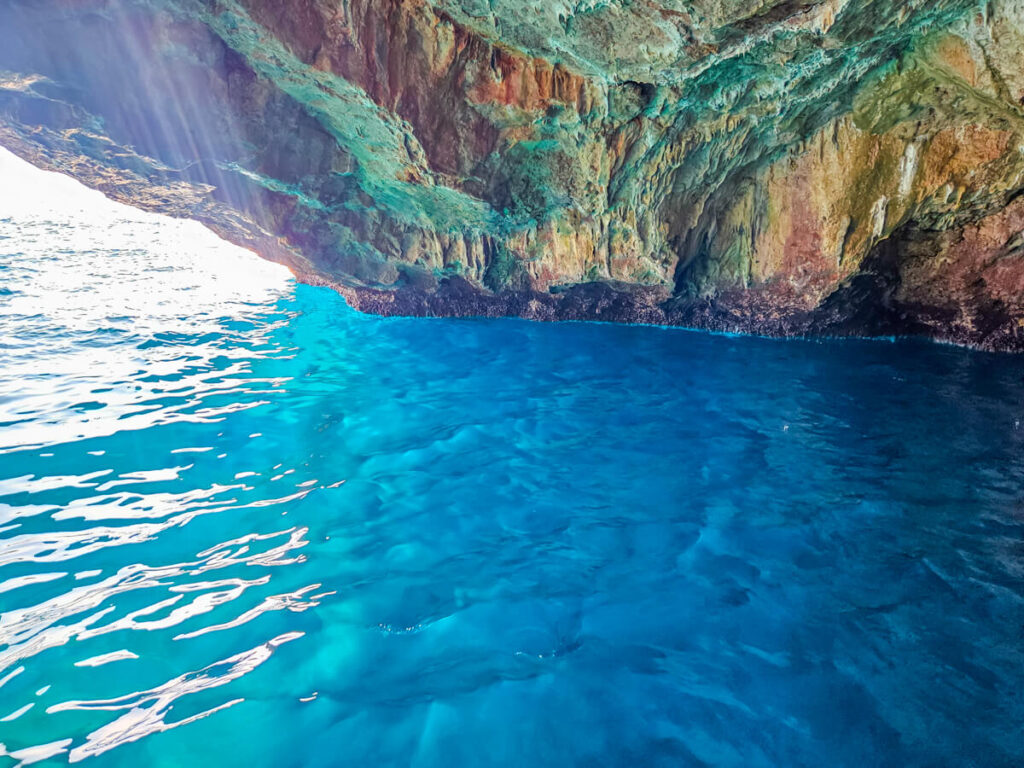
According to the traditional story our captain told us on our Blue Cave boat trip, an icon of the Virgin Mary was found on a rock here in 1452. After bringing it back into town, it kept reappearing on the same rock. The people of Perast subsequently began building up the reef by adding rocks and sinking old ships, creating the artificial island of Our Lady of the Rocks that exists today.
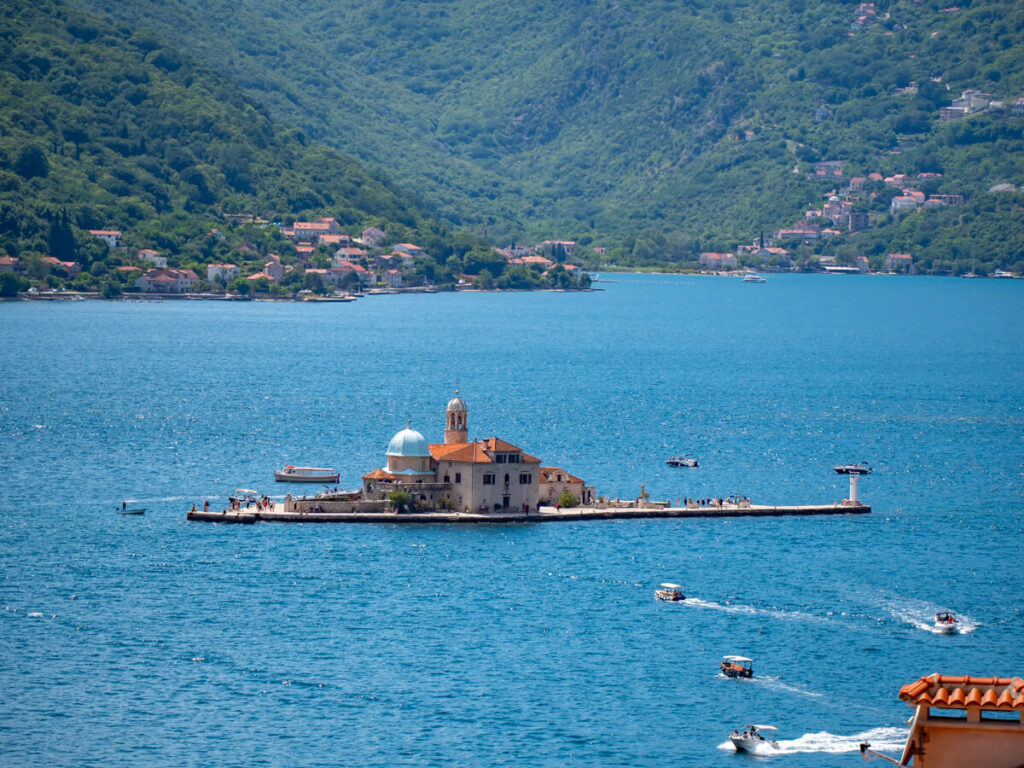
The church on the Our Lady of the Rocks island was completed in the 17th century, and its interior was decorated with Baroque paintings by Tripo Kokolja in the early 18th century.
The other island, St George, is quite different. It is a natural island and is home to a Benedictine monastery and a cemetery surrounded by cypress trees.
The best things to do in Perast
Perast is small, so you can see most of the main sights without spending the whole day going between them. The obvious draw is the waterfront and the two islands offshore, but there’s also a surprising amount of history packed into the narrow streets and hills behind the town. Here are the things we’d put on a Perast itinerary.
1. Take a boat to Our Lady of the Rocks
The small artificial island of Our Lady of the Rocks can be reached by one of the small boats operating from Perast, and the crossing only takes a few minutes. The island is reinforced through the tradition of adding rocks as part of the annual Fašinada Ceremony, a centuries-old sunset boat procession held annually on 22nd July 22.
There’s a church and small museum on the island. If you go inside the church, you need covered shoulders and knees, but they have some free cover-ups in a basket outside. Once inside, you can admire the painted ceiling and altar. One of the most unusual objects inside the church is a tapestry associated with Jacinta Kunić, who is traditionally said to have woven it over many years using her own hair alongside gold and silver thread.
Don’t miss the doorway to the second floor – get to it by walking through the altar, turning left, and going up the stairs. There’s a small exhibition and a few nice views from the windows here.
We’ve seen old guides saying the crossing costs €1, but thanks to Perast’s increasing popularity, it’s now much more. It costs about €10-15 per person for a return trip, depending on who you ask and how good your negotiation skills are. You’ll have about 20-30 minutes on the island (you don’t really need any longer).
Lots of “free car parks” will offer a parking and boat trip combo for around €50, but it’s a rip-off, and we’ve covered why later in the transportation section of this guide.
The entrance fee for landing on the Our Lady of the Rocks island and visiting the church is €5 per person, to be paid on the island in cash. Check if it’s included in your boat trip.
2. Seek out the many churches
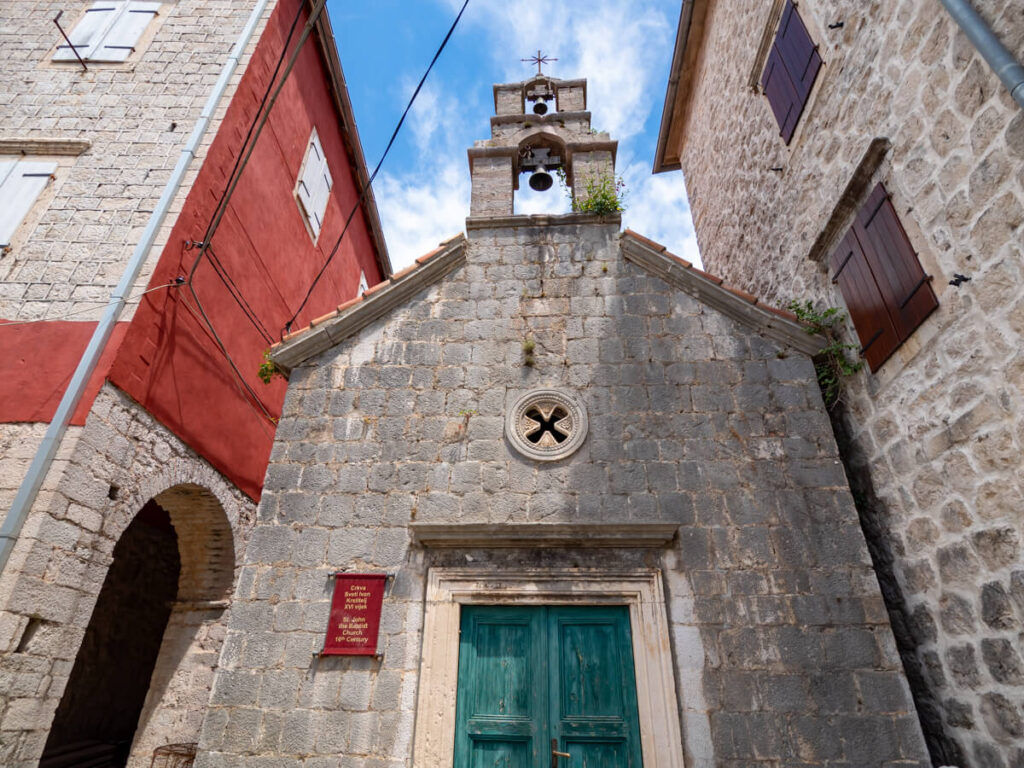
For such a small settlement, Perast has an unusually large collection of churches and chapels, reflecting the wealth and importance of the town when it was a major maritime centre. The main ones besides the church on Our Lady of the Rocks island are:
Some date back several centuries, while others incorporate older structures, bell towers, and artwork.
3. Scale the bell tower
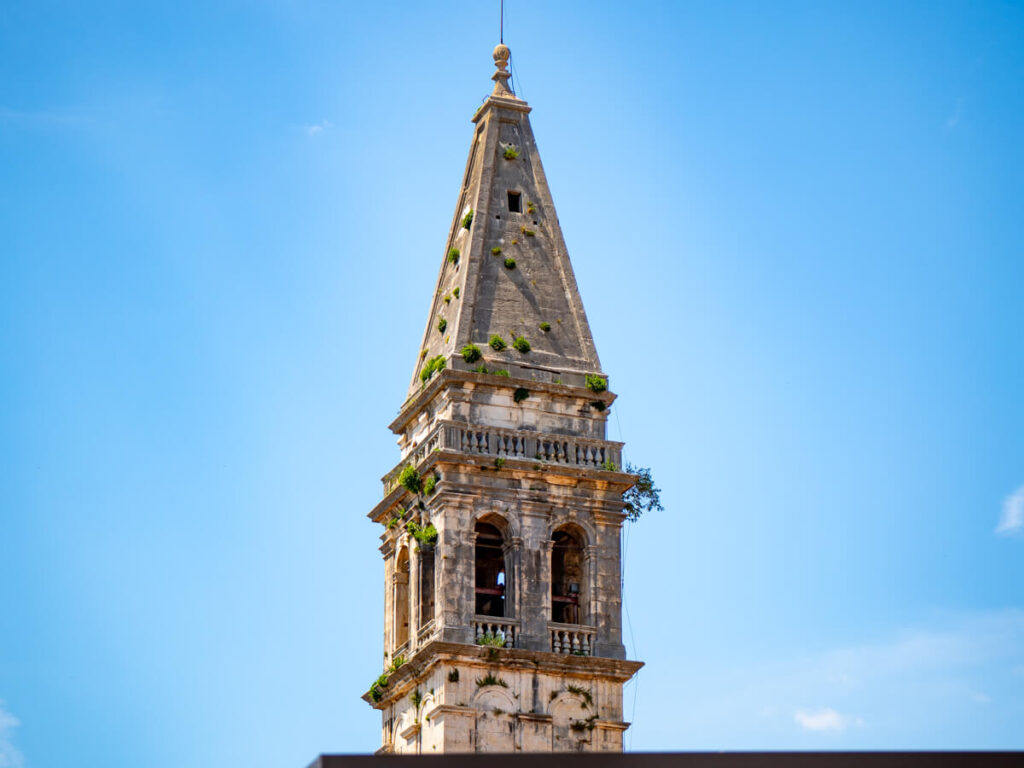
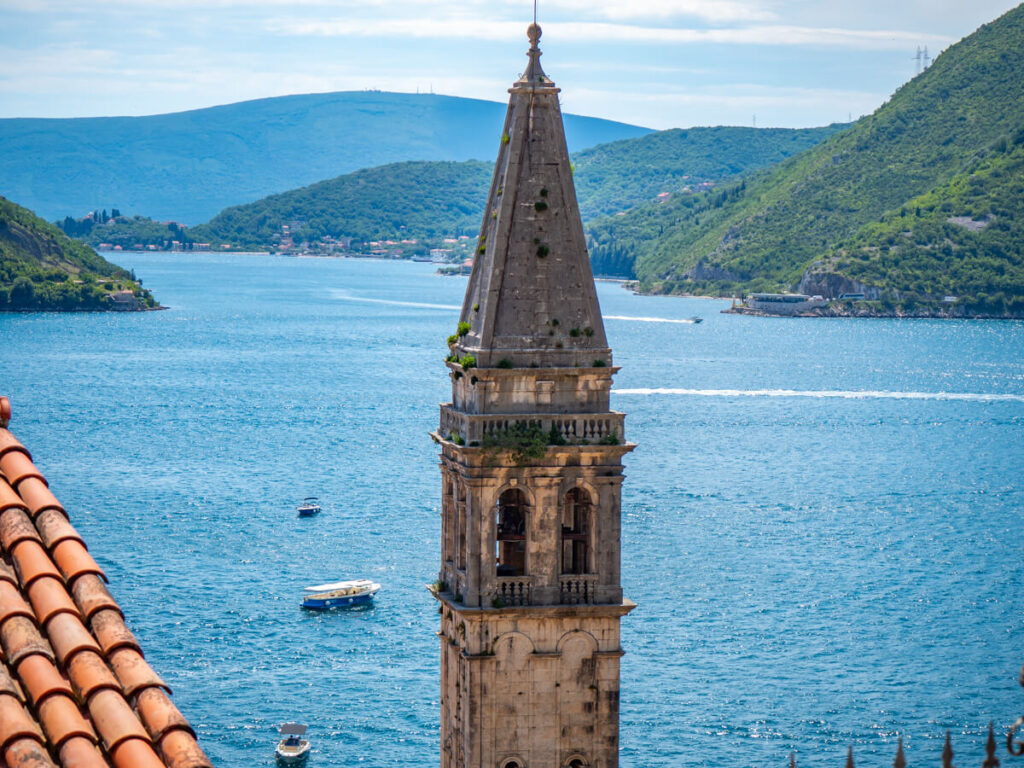
Saint Nicholas’ Church sits on the main square in Perast and boasts a 55-metre (180-ft) bell tower. It’s hard to miss, as it looms over all the town’s buildings and stands out against the mountains.
You can climb up the tower for the best views over Perast and the bay. There are a couple of different levels and around 150 steps, accessed by a narrow spiral staircase, so it’s not for the faint-hearted. It’s only €2 per person.
It’s also worth dipping inside the adjacent church and having a look at its ornate altar, tiled floor, and candelabras.
4. See the statues
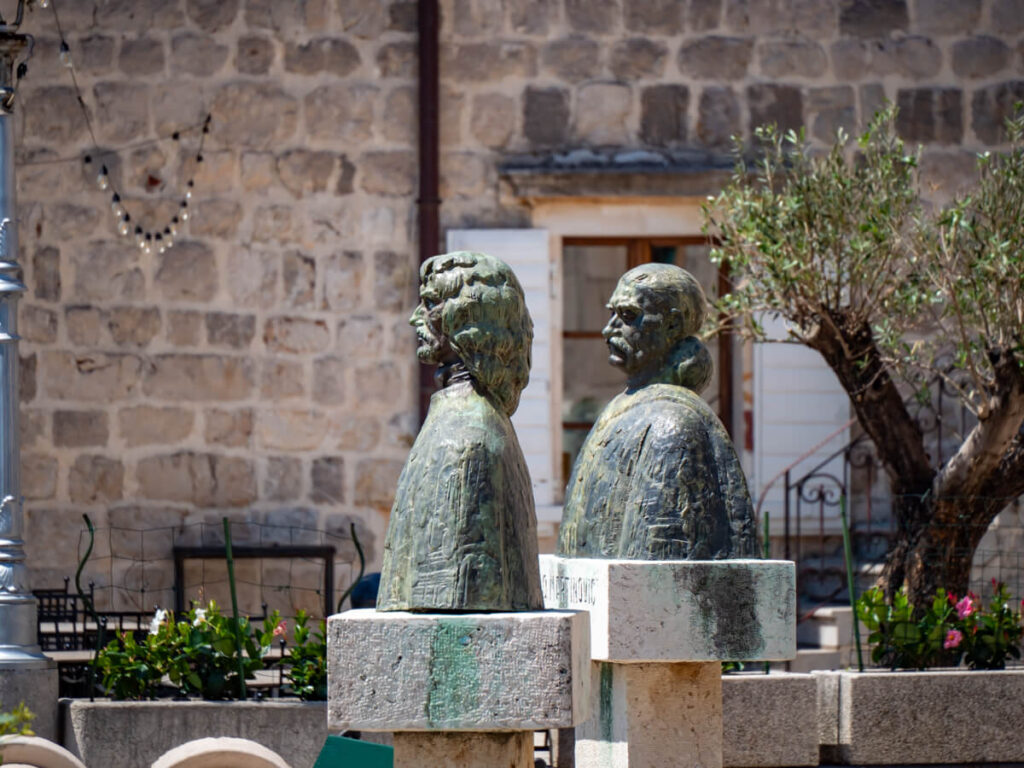
On the square beside Saint Nicholas’ Church, you’ll find three busts commemorating important figures from Perast’s maritime and artistic history:
They’re easy to overlook while you’re concentrating on the bigger buildings, but they tell you something about the people who made Perast important.
5. Snap a pic of the palaces
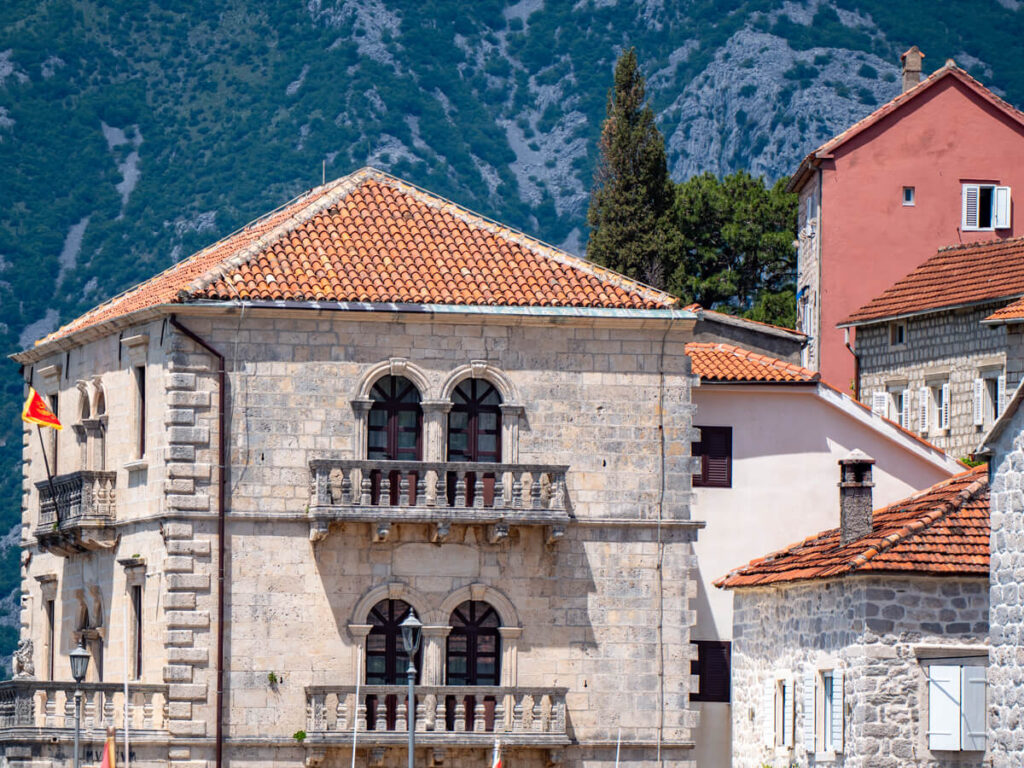
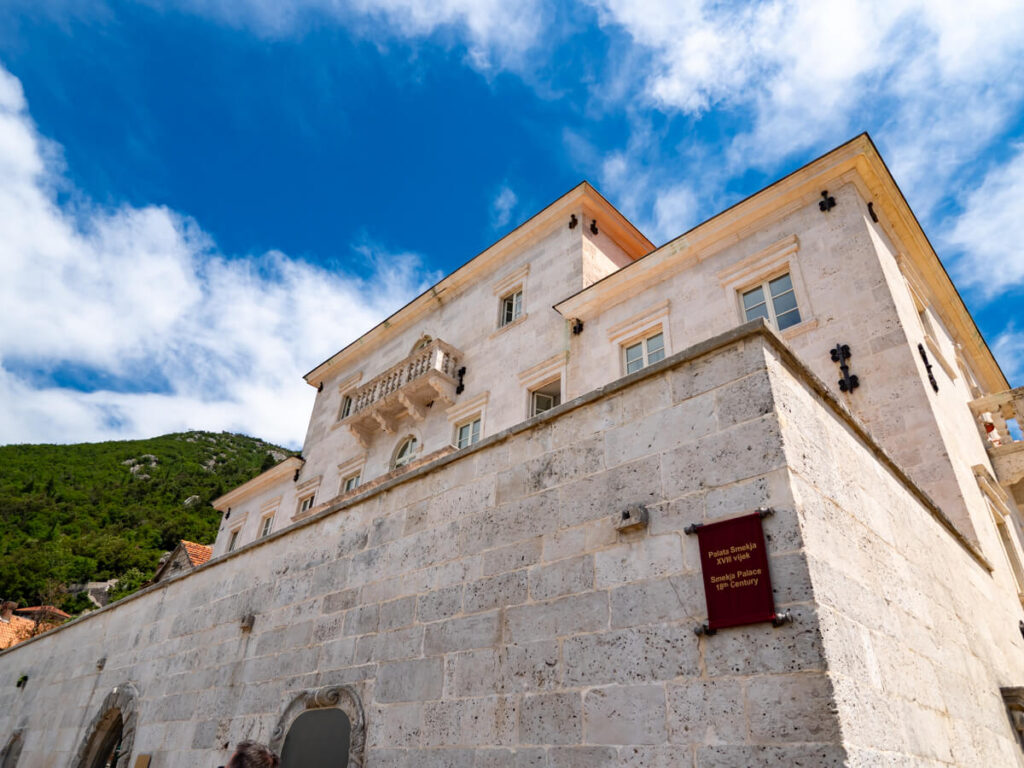
Perast’s waterfront is lined with the former homes of wealthy maritime families, many built or enlarged during the town’s prosperous Venetian period. There are around 16 surviving Baroque palaces, but some of the most iconic are:
Look out for the elaborate stone façades, balconies, and decorative details. They’re not the same scale as grand palaces in larger European cities, but they are part of what makes the town so culturally significant.
6. Visit Perast Town Museum
The Perast Town Museum (Muzej grada Perasta) is housed in Bujović Palace, one of the town’s most recognisable historic buildings, and is the place to go if you want more context about Perast’s maritime past.
It’s open 8:00 AM-8:00 PM in peak season (15th April until 15th October) and 10:00 AM-4:00 PM out of season, and is closed on Mondays. Entry is €8 per person.
Its collections cover the town’s history, seafaring traditions, and the families who helped make Perast wealthy, with over 2000 artefacts covering the 15th-20th centuries.
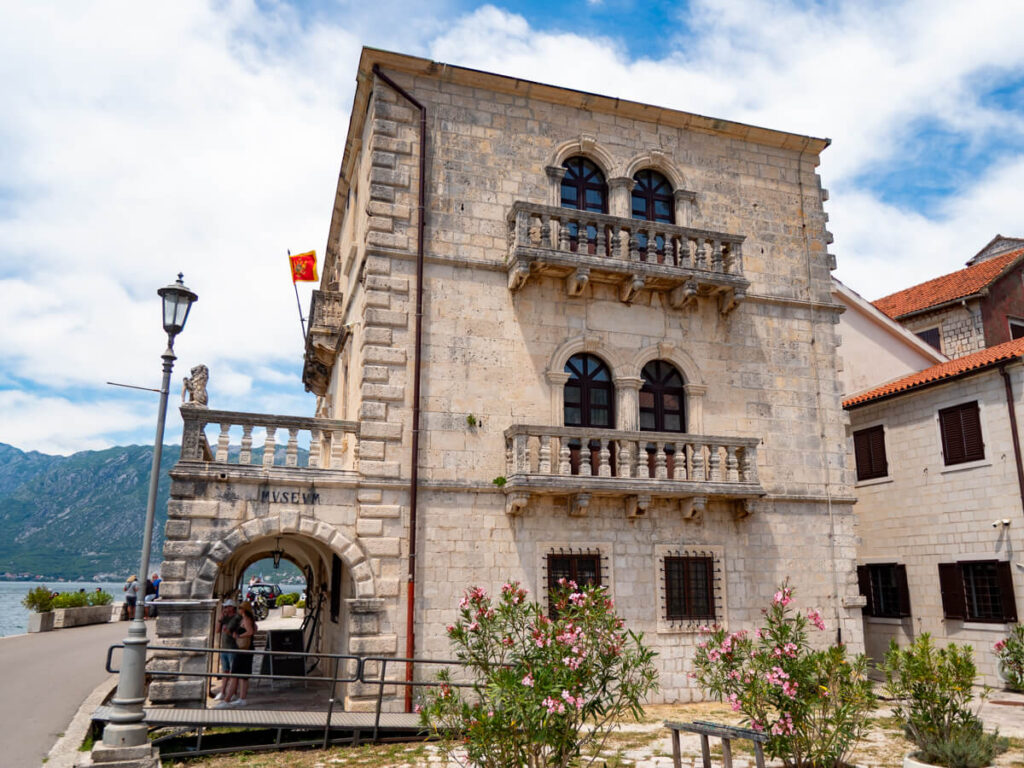
7. Walk the waterfront
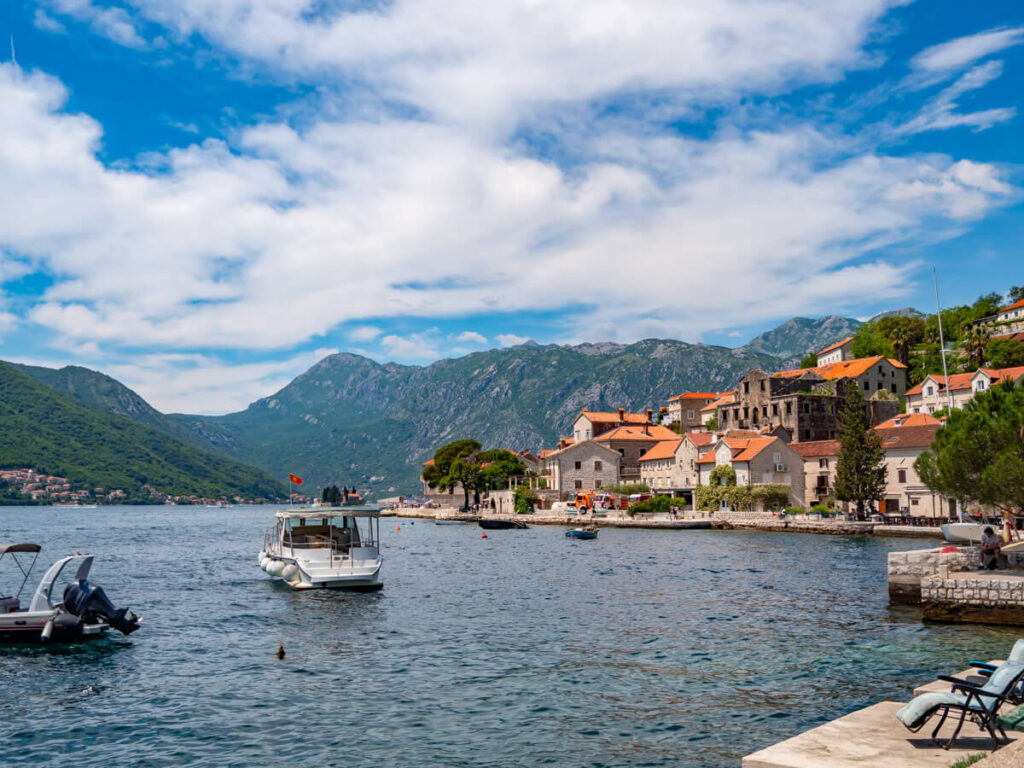
The waterfront is the obvious place to start exploring, with the bay on one side and Perast’s historic buildings on the other. It’s a relatively short walk, taking about 15-20 minutes to meander slowly end-to-end, but scenic the entire way.
This was the first thing we did after entering the town, and it helps orient you upon arrival. It also gives you the opportunity to scout out the many waterfront restaurants and thinka bout where to eat lunch or dinner.
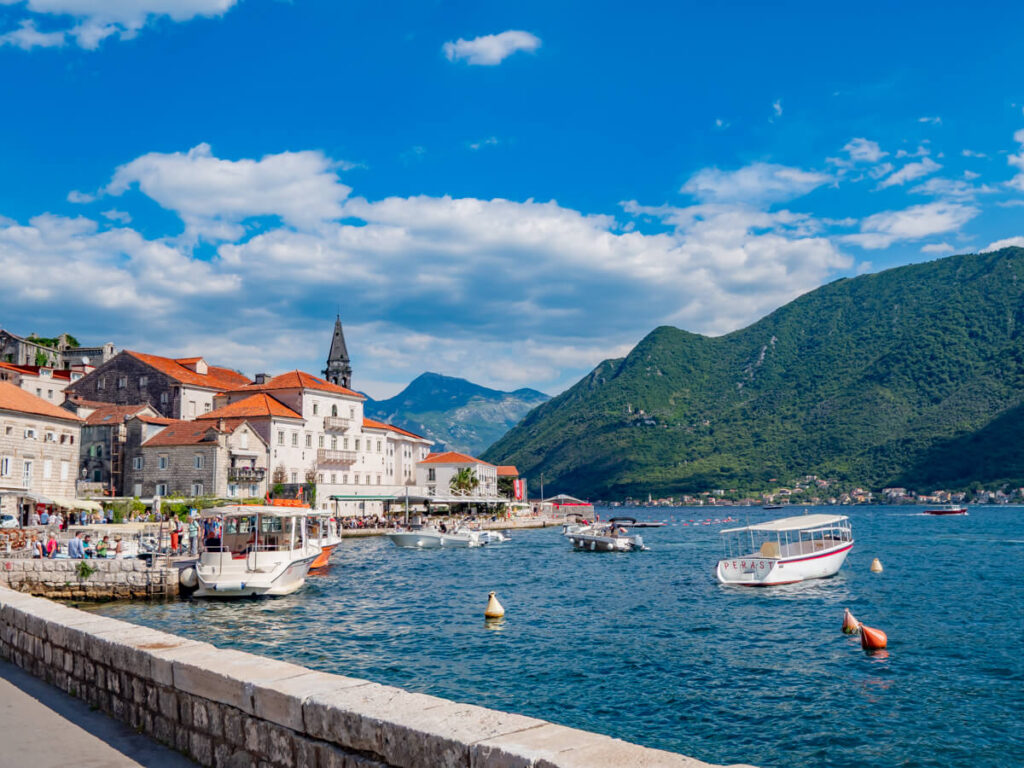
8. Enjoy the views
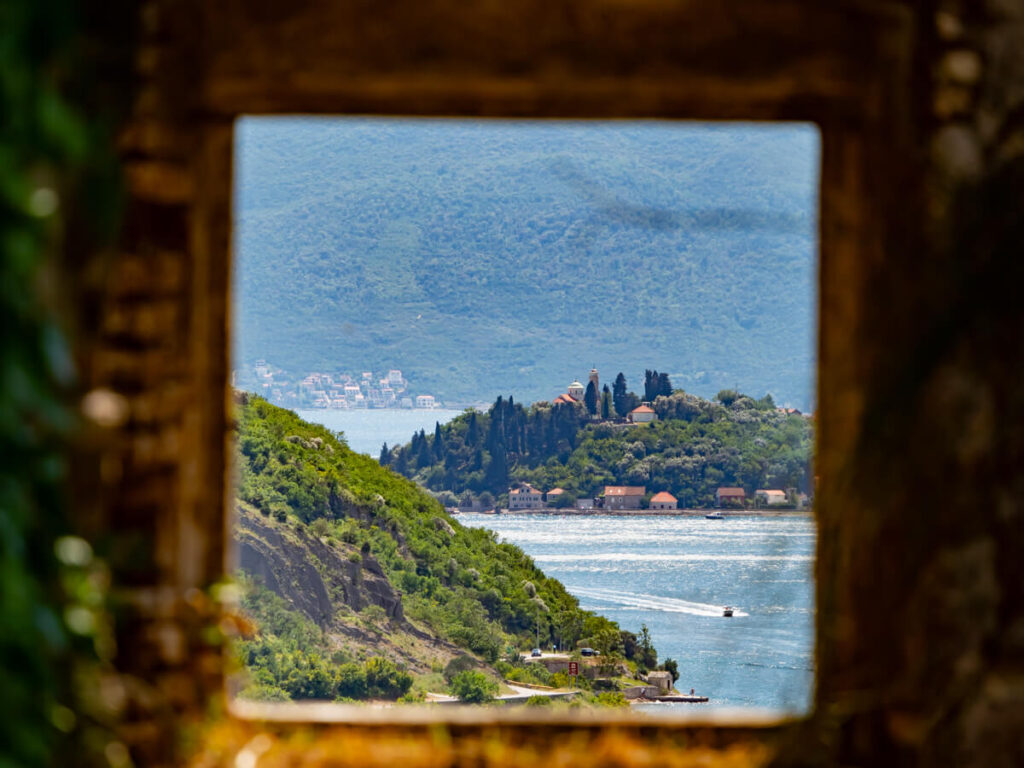
Perast’s position gives you views in several directions – across the bay to the two islands, along the steep mountain slopes towards the entrance to the Bay of Kotor, and back towards the historic waterfront.
You don’t need to find a particular viewpoint to enjoy them, as some of the best views are simply from the waterfront or one of the higher lanes through town. But here are the best viewpoints if you’re specifically looking for somewhere pretty:
If you’re a photographer, we’d recommend going out in the early morning. The afternoon light can be quite harsh, casting sparkling lights straight at you when looking out into the Bay of Kotor.
9. Relax on Perast Beach
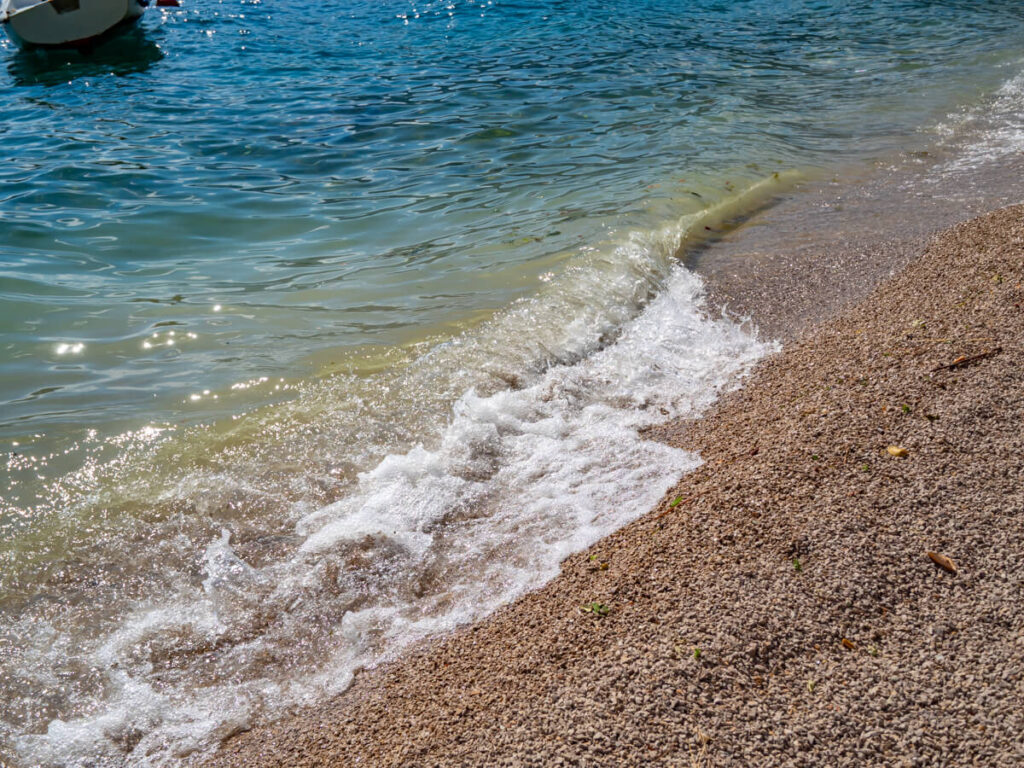
One of the downsides of many of the towns on the Bay of Kotor is that, despite their waterfront settings, they don’t have traditional sandy beaches. Instead, you’ll find cement docks and ladders into bays. But Perast does have a small beach on the west side of town: Peskovita Plaža.
It’s sort of a shingley beach, but more actual beach-like than many others around the bay, so it’s a good option if you don’t want to go as far as the Luštica Peninsula or Budva to spread out on the shore.
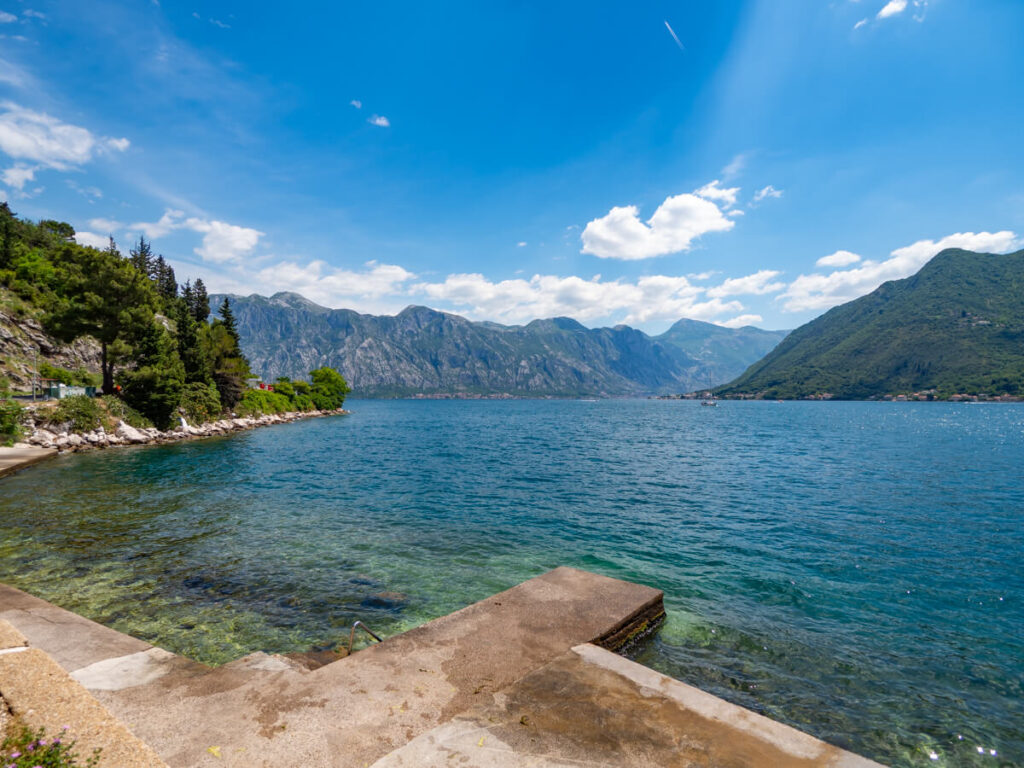
10. Chill out at the secret swimming spot
On the east side of town, you’ll also find a nice little swim spot that’s primarily frequented by locals and tourists-in-the-know. It is a cement dock, with stair access to shallow, clear water, so it’s perfect for a refreshing dip on a hot day.
You can find it on Google Maps called “Perast Beach” (although it’s not a beach). It also has beautiful views towards the mountains that surround Kotor.
11. Find the Monastery of Saint Anthony of Padua
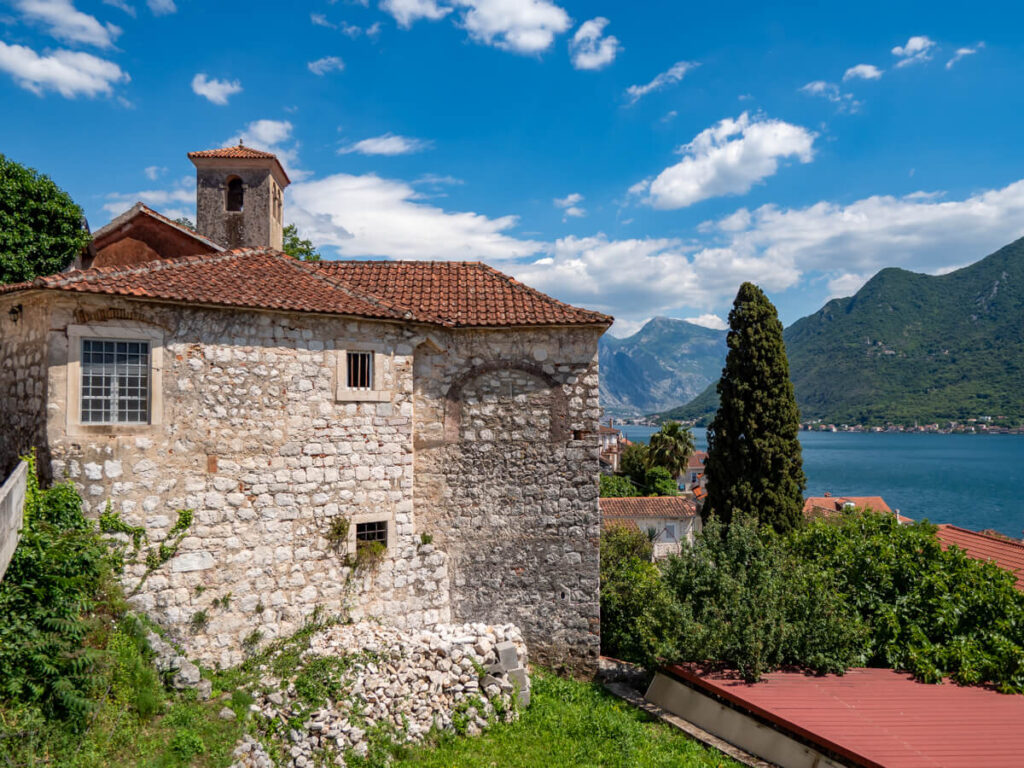
The Monastery of Saint Anthony of Padua sits just above the main historic core of Perast up a beautiful stone staircase. It’s easy to miss if you stick to the waterfront, and even when we walked up to it, we found it tricky to locate.
The church dates from the 17th century, with the wider Franciscan monastery complex forming an important part of Perast’s religious heritage. And – like almost everywhere else in Perast – it gives you nice views over the bay.
12. Climb to a fort (or don’t)
For a much more adventurous addition to your Perast visit, you can hike uphill to Fort St. Andrija. It lies high on a hill halfway between Perast and the nearby tiny town of Orahovac. The route follows an old military road through the hills with increasingly extensive views across the Bay of Kotor as you climb, so it’s a good alternative to the Ladder of Kotor hike. It’s reasonably difficult, at around 6 miles (9.5 km) return, and to be honest, we quite frankly couldn’t be bothered in the intense heat in July.
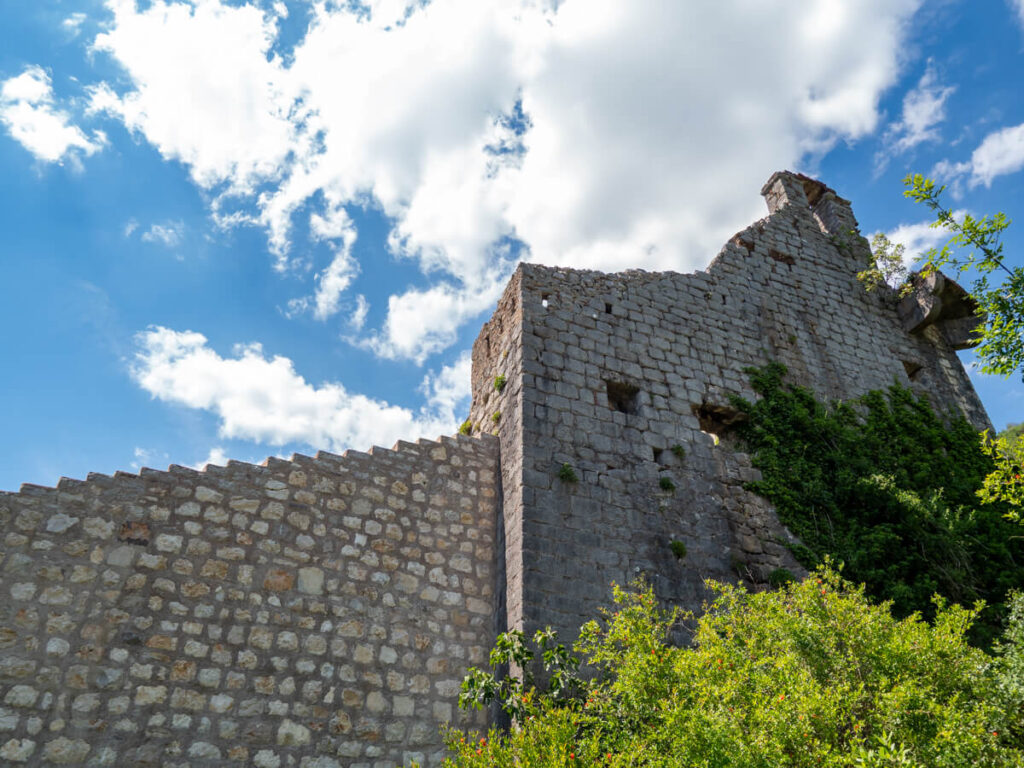
A much closer alternative is the Fort of the Holy Cross, which sits just over the main road from Perast. It seems pretty simple to visit on the map, but we found it completely dilapidated. We couldn’t find an easy way to get to it, the trail we took wasn’t maintained at all, and we got scratched by brambles and stung by nettles. When we reached the top, we didn’t think the views were any better than from the road by the monastery, and we could hear stray dogs, so we got out of there pretty sharpish.
The best day trips from Perast
If you’re staying in Perast, it can make a useful base for exploring the rest of the Bay of Kotor, with several interesting places within a relatively short drive. Here are the day trips from Perast we’d recommend:
Where to stay in Perast?
Perast has a relatively small amount of accommodation, which suits the town – you’re mainly looking at boutique hotels, restored historic buildings, and apartments rather than large resort-style hotels.
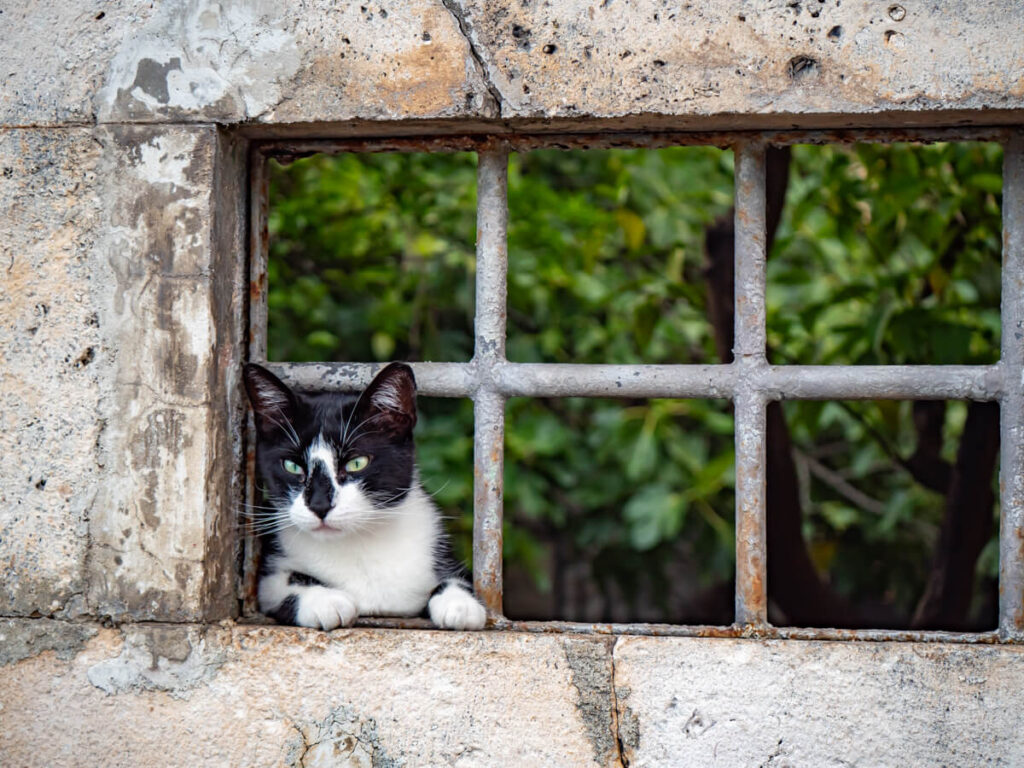
Staying overnight in Perast is a great way to experience the town after the day-trippers leave, when it’s much quieter. We loved the vibe of Perast after dinner, when locals appeared in deck chairs by the water, sharing a bottle of wine or casting fishing lines, and street cats milled about the promenade – we watched one hunting fish in a shallow part of the bay.
Just bear in mind that the choice of restaurants, shops, and evening activities is much smaller than in nearby towns. If you like more amenities, consider staying in Kotor or Herceg Novi.
One thing to check carefully if you’re driving is parking, as Perast’s historic waterfront has very limited vehicle access and some properties use parking areas outside the centre. We’ve covered that in more detail a bit further below.
Top Perast Hotels
Where to eat in Perast?
In places where there aren’t loads to see and do, it’s always nice to have some good places to eat and drink, and luckily, Perast has plenty of them. There’s a small selection of restaurants, most of them clustered along the waterfront where you can eat with views across the bay.
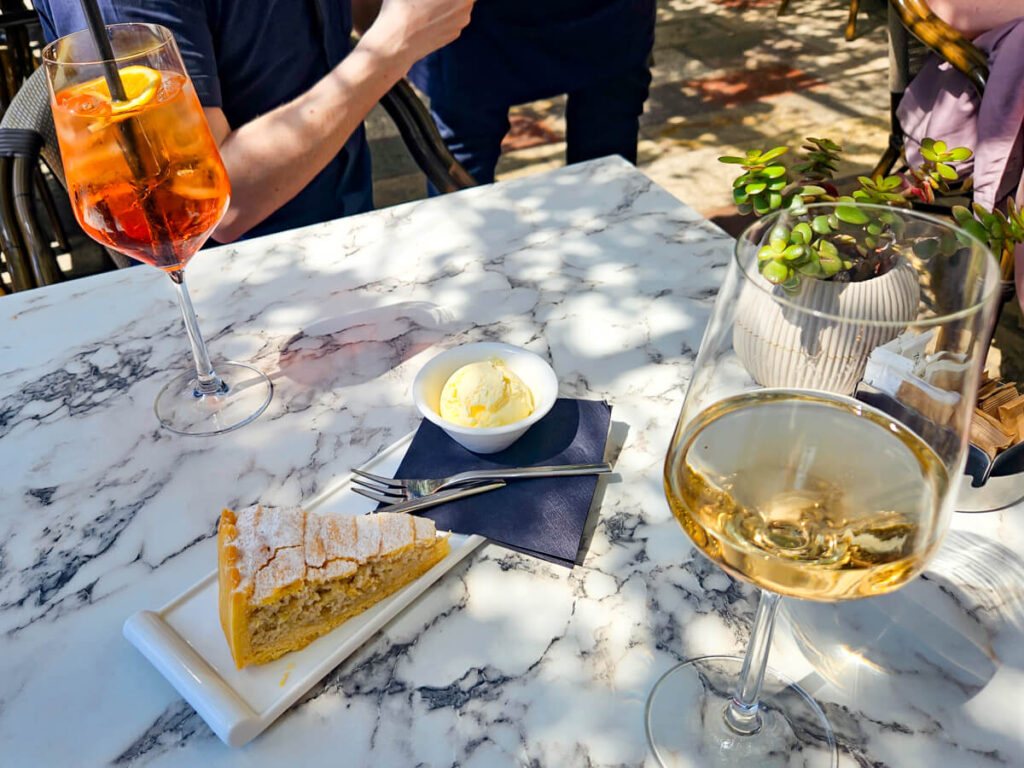
Seafood is a highlight of most menus, with fish, prawns, mussels, and other Adriatic dishes appearing alongside traditional Montenegrin meals and Mediterranean favourites. Thanks to the Venetians, there’s also a large Italian influence, so you’ll find pizza, pasta, and Aperol Spritzes, too.
One unique dish to try is Perast cake (Peraška torta), a local delicacy apparently created in 1664 to celebrate the welcome of an incoming Venetian maritime commander. It’s a traditional cake made with flour, eggs, almonds, marshiano liqueur (cherry), vanilla, and lemon zest, with a more crumbly texture than a traditional Victoria sponge. A few places do it, but we tried it in Armonia.
Top Perast Restaurants
Here are our top picks:

How to get to Perast?
So we’ve persuaded you to visit Perast, but how do you get there? Unfortunately, visiting Perast isn’t as simple as it seems on the map. With a pedestrianised centre, limited free parking, very expensive paid car parks, an unreliable public bus system, and a host of scammy boat trips, it’s annoyingly difficult to figure out how to get to Perast without wasting a lot of effort or money. Luckily for you, we went three times – once on the bus, once by car, and once by boat – so we’ve done the research and experienced each option for you.
By plane
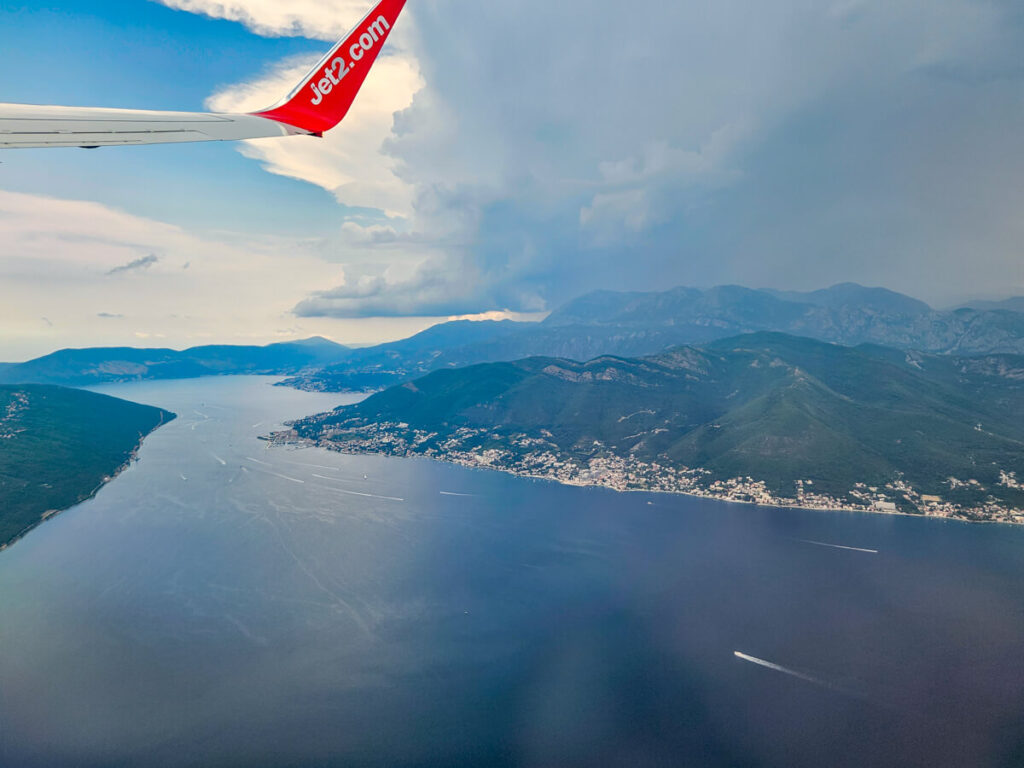
The nearest airport to Perast is Tivat Airport (TIV), about 12 miles (20 km) from Perast and only a 30-minute drive.
Podgorica Airport (TGD) in Montenegro’s capital and Dubrovnik Airport (DBV) in Croatia are alternatives depending on your flights and itinerary.
To get to Perast from the airport, you can rent a car in Montenegro and drive, take a taxi, or arrange an airport transfer. The bus isn’t really an option, as it’s unreliable from the road outside the airport, and you’d need to change at Kotor Bus Station before getting the public bus to Perast from the main road outside the old town.
By car
Once you’re in Montenegro, the best way to reach Perast is by rental car. While you can’t drive into Perast, you can park on the outskirts of town. Driving in Montenegro gives you the most flexibility for exploring the Bay of Kotor.
If you’re coming from the south, it’s fastest to take the Kamenari-Lepetane Ferry across the bay, which can save you an hour of queueing on the congested coastal road from Kotor. If you’re coming from the west, you’ll pass Herceg Novi.
It’s worth checking whether your rental car allows you to take it on ferries or cross-border, especially if you’re coming from Croatia.
Parking in Perast
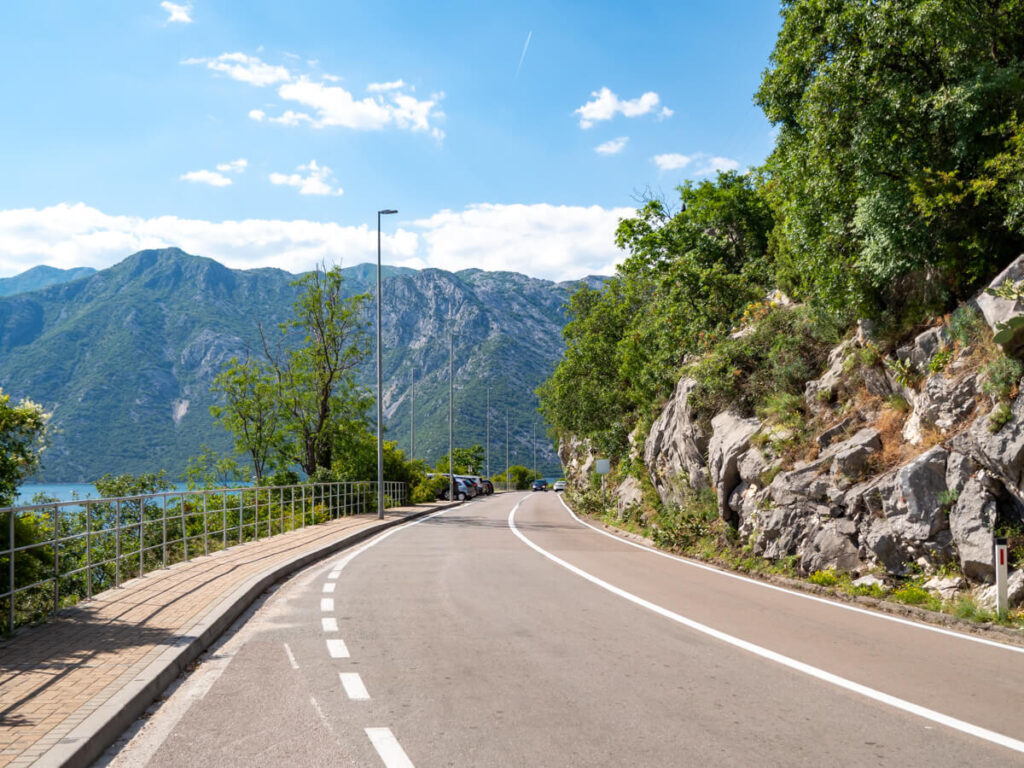
Sadly, Perast’s popularity has resulted in a kind of parking mafia. Don’t be fooled by advertisements for “free parking” (even those on Google Maps) – it’s basically a scam, where a (sometimes pushy or, according to reviews, flat-out aggressive) salesman will approach you once you’ve parked and demand you take their boat tour – usually for an inflated price, similar to the situation in Lake Skadar.
There are only two free car parks with limited spaces (fewer than 10) on either side of the town:
If the free spaces are full, there are two paid car parks, also on either side of the town:
It seems the owners of the car parks know what they’re doing, as they’ve discontinued hourly rates. When we visited, you could only park for a flat daily rate of €15 a day, with no shorter stay options.
By taxi
A taxi from Kotor takes roughly 20-30 minutes, depending on traffic, and is convenient if you’re travelling with luggage or don’t want to deal with parking. From Tivat, it’s about half an hour.
There are no apps like Uber in Montenegro, and there’s no standardised pricing, so drivers can pretty much charge what they like – and they do. We were quoted €40 for the journey from Kotor to Perast outside the cruise terminal and €20 outside Kotor Bus Station. From Herceg Novi, a taxi will cost around €30-40.
So taxis aren’t cheap, but they are convenient. Be sure to agree on the fare before setting off. We preferred to use Red Taxi, as they gave us a reasonable quote to the airport, and you can arrange lifts in advance through WhatsApp.
By bus
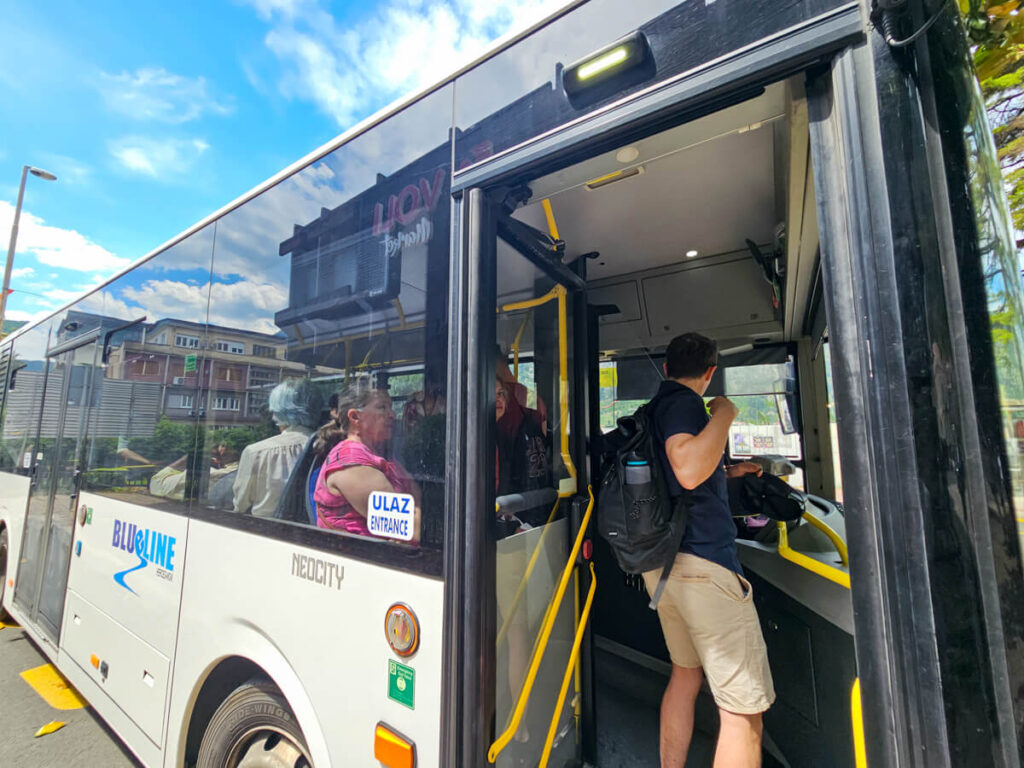
The Blue Line Bus is the public bus that runs between the towns on the bay and connects Perast to towns like Kotor and Tivat. It’s around €2 per person, paid to the driver in cash.
I think the public bus used to stop at the main Kotor Bus Terminal, but when we visited, signs in the ticket office stated that they only go from the stops on the main road outside the Old Town. You can get the bus from these stops:
This is what we did on our first visit to Perast, and it worked pretty well, although the bus was jam-packed full of people. We met a nice American couple and had a nice chat on the way there. The journey takes around 25-30 minutes, depending on stops and traffic.
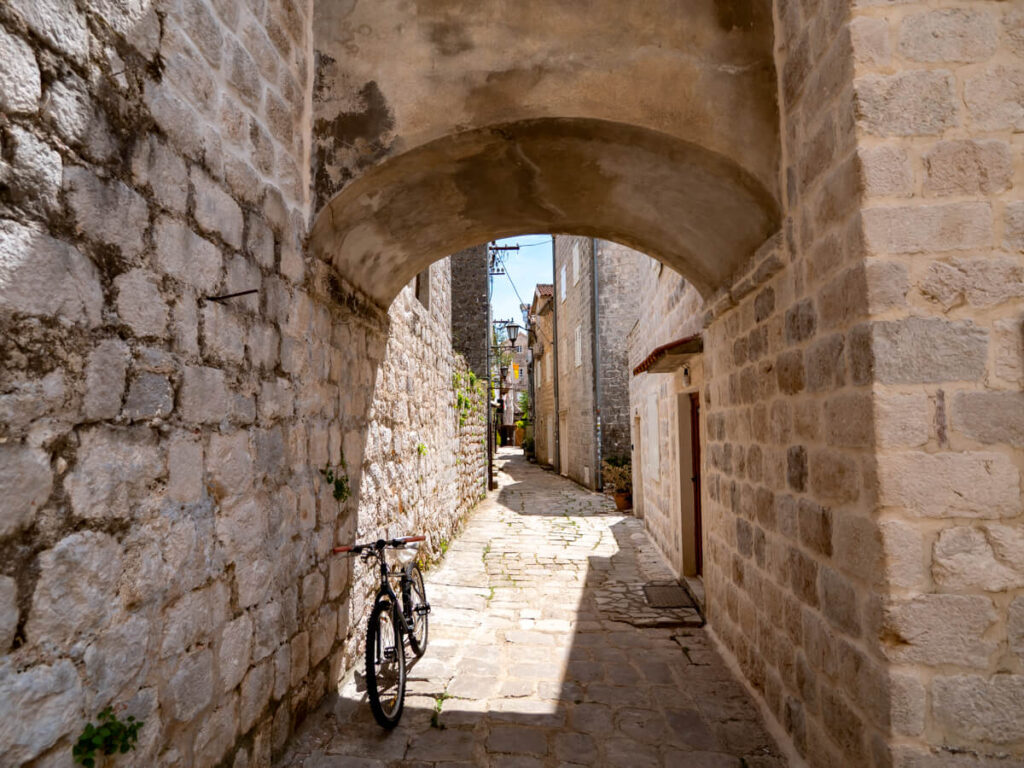
You’ll be dropped off on the road outside Perast here, and then it’s a 5-minute walk down beautiful stone streets and stairs to the waterfront. You can track your location on Google Maps, so you know when to ping the bell and get off, although there will likely be other tourists on the bus going to the same place.
You can check the schedule here, but buses are notorious for running up to 30 minutes late. From Kotor, they run every hour at around 15 to 20 past the hour Monday-Saturday, and every 2 hours on Sundays and public holidays (something we found out the hard way on Independence Day). If in doubt, ask the helpful ladies at the tourist information kiosk outside the Sea Gate for up-to-date bus information.
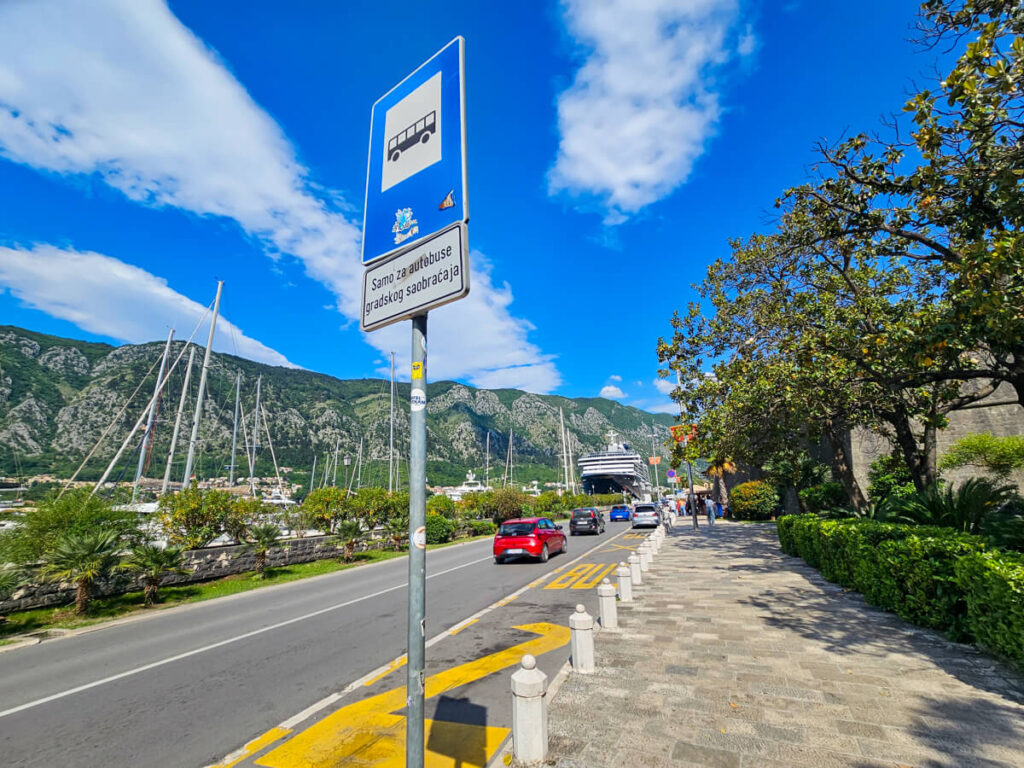
To get the bus back to Kotor from Perast, you need to wait at this bus stop on the west side of town. It also stops here on the main road.
Buses from Perast to Kotor run around 34 minutes past the hour every hour Monday-Saturday, and every 2 hours on Sundays and public holidays.
We were waiting at the bus stop, and 15 minutes before the Blue Line bus was due, a long-distance coach headed to Budva stopped to offer us a lift. It charged us the same price as the public bus (€2 pp) to go back to Kotor, so we took it. It also stopped at the other public bus stops on either side of Perast.
There’s also a hop-on hop-off bus between Kotor and Perast that’s a handy option if you don’t want to fork out for a taxi or faff with the public bus.
By boat
Taking a boat tour to Perast is one of the most popular ways to visit. You will find operators offering boat tours on every street corner in Kotor’s Old Town and along the marina. They cost between €40-60 for 3-4 hours, usually including stops at the Lady of the Rocks, submarine tunnels, Mamula Island, and a swim stop at the Blue Cave.
It’s worth noting that most tours don’t actually include time in Perast itself, unless they specifically say so or you opt for a private tour and can specify where you’d like to go.
We also heard you can take a water taxi between Kotor and Perast, but couldn’t find much information on it and didn’t try it ourselves. Our plan was to take the bus to Perast, and then if we struggled to get on one back, we’d negotiate a boat back to Kotor with a local captain and split it with the couple we met on the bus.
How to get around Perast?
You don’t really need transport once you’re in Perast – the historic waterfront and streets are compact and best explored on foot.
Cars are restricted from the main part of town, which is useful when you’re walking between the churches, palaces, museum, and waterfront, but you do need to watch out for locals on scooters and golf carts, which are used by the hotels to shuttle guests from the car parks to their accommodation.
Or Our Lady of the Rocks, you’ll need to take a boat from the waterfront (there are countless options offering the trip), while the higher trails and viewpoints above Perast require proper hiking.
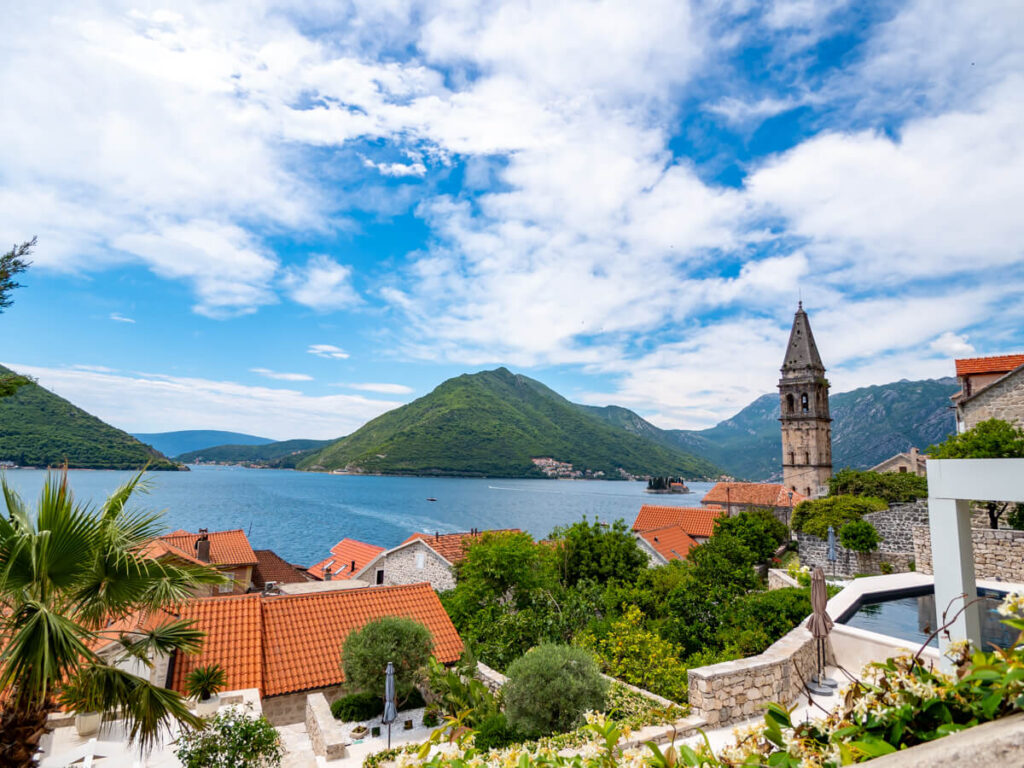
How to spend a day in Perast
Perast is compact enough that you can see the main sights in a few hours, so we’d leave plenty of time for the things that don’t really need an itinerary, like wandering the waterfront, stopping for lunch, and taking a boat out to Our Lady of the Rocks.
If you’re visiting in summer, starting early is worthwhile before the day-trip crowds arrive. Here’s how we’d plan a day in Perast:
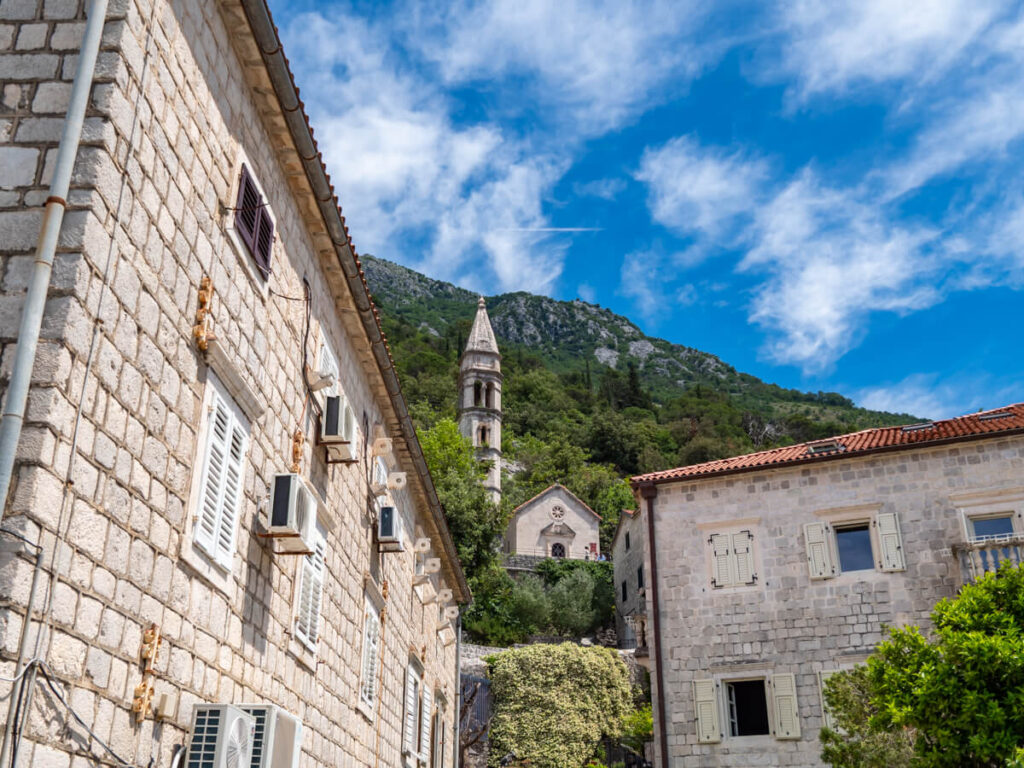
When to visit Perast?
The best time to visit Perast depends on what you want from your visit. May, June, and September offer a good balance of warm weather and fewer summer crowds, while July and August are the busiest months and can be very hot.
We visited in both May and June, and found the latter really quite hot. We didn’t spend too long wandering around and sought out a bar for a refreshing drink and a sit in the shade. The crowds weren’t horrendous, but it was busy along the promenade, and we could see lots of boats going out to the islands.
If you can arrive early or stay late, you’ll avoid most of the heat and crowds.
If you’re interested in local events, the Adornment of Mage takes place on 1st May, marking the beginning of summer with a decorated tree and local celebrations, while the Shooting the Kokot takes place on 15th May to commemorate Perast’s victory over the Ottomans in 1654, although the traditional rooster-shooting element has been thankfully suspended in recent years. The Perast Music Festival is held in the last week of June, with several evenings of traditional folk singing, while the town’s best-known event, Fašinada, takes place on 22nd July, when a procession of decorated boats carries stones out to Our Lady of the Rocks at sunset.
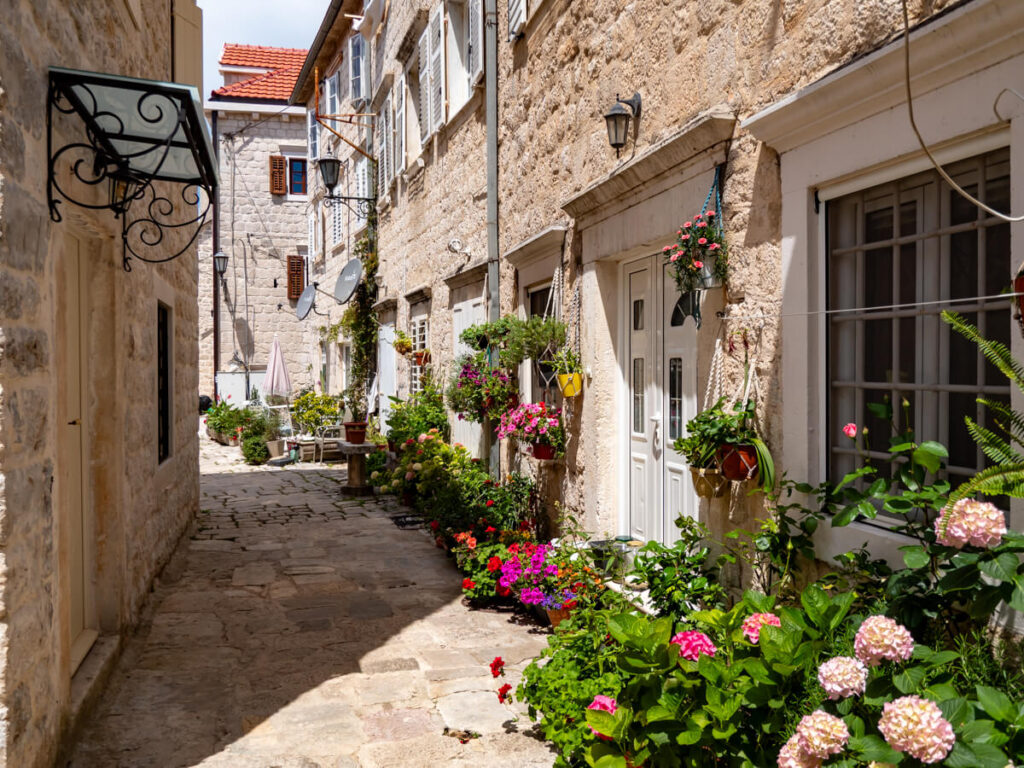
Perast Weather
Perast has a Mediterranean-influenced climate, with hot, relatively dry summers and much wetter conditions from autumn into winter. The Bay of Kotor is particularly prone to heavy rainfall and thunderstorms can roll in after hot days in summer.
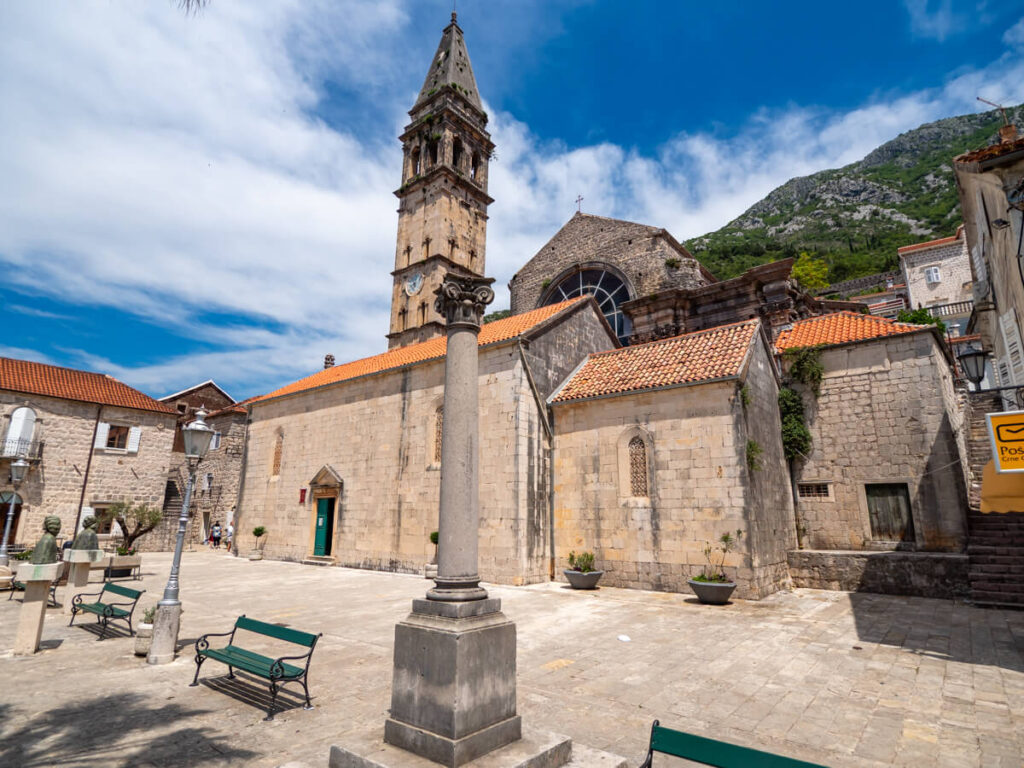
How long to stay in Perast?
1 full day is enough time to see Perast, particularly if you’re mainly interested in the historic centre, churches, palaces, the bell tower, and Our Lady of the Rocks. We’d stay 1 or 2 nights if you prefer a slower pace, want to swim, eat out, and explore some of the less obvious trails and sights around the town. Staying overnight also means you get to see Perast outside the busiest part of the day, when its small size is much more apparent.
If you would rather use Perast as a base to explore the Bay of Kotor than other bigger and busier towns like Kotor and Herceg Novi, 3-4 days is perfect for enjoying the town and taking day trips further afield.
Is Perast worth visiting?
Perast is definitely worth at least a day trip, especially if you like pretty towns, are staying nearby, or have an interest in history. Its waterfront location is super scenic, it’s a lovely change from other towns on the bay, and its architecture and islands are really unique.
If I’m being entirely truthful, the look of the pizza at Boclibre was the main reason I wanted to visit Perast besides it being a tourist hotspot, and it didn’t disappoint. We’d recommend visiting for lunch there alone.
But it really is genuinely tiny, so if you’re looking for lots of attractions, nightlife, shopping, or a big choice of restaurants, you may find it a little limited. It can also become crowded in summer, particularly when organised tours and cruise ship crowds arrive, and the narrow waterfront doesn’t have much room to absorb large numbers of people. Additionally, getting to Perast can be a nightmare, especially if you’re driving and parking on the outskirts of town or trying to navigate the public bus.
But overall, Perast really is the perfect place for a half-day or full-day trip from Kotor, or a relaxing place to stay a night or two in a more authentic part of Montenegro than its commercial beach resorts.
What to pack to visit Perast?
It’s best to be prepared when you visit Perast. Don’t forget to pack your:
Perast FAQs
To help you plan your trip to Perast, we’ve answered these frequently asked questions.
Is Perast touristy?
Perast can be touristy, particularly during the summer and when cruise ships are visiting the Bay of Kotor. It’s a popular stop on tours around the bay, so the waterfront can get busy during the middle of the day. Visit early in the morning or later in the afternoon if you want to see the town when it’s quieter.
What is there to do in Perast, Montenegro?
The main things to do in Perast are wander along the waterfront, visit the Perast Museum, climb the bell tower of St Nicholas Church, and take a boat to Our Lady of the Rocks. You can also swim from the waterfront, stop for lunch overlooking the bay, and simply enjoy the setting.
Are there beaches in Perast?
Perast doesn’t have a long sandy beach, but there are small concrete and stone bathing platforms along the waterfront where you can get into the water. The bay is calm and clear, so swimming is perfectly possible if you’re happy to jump in from the shore.
Can you take a boat from Kotor to Perast?
You can take a boat from Kotor to Perast, but there isn’t a regular passenger ferry or water taxi service between Kotor and Perast. Instead, you can book a shared or private boat tour that includes Perast as one of its stops. For simply getting from Kotor to Perast, the Blue Line bus or a taxi is usually easier and cheaper.
How much does a taxi cost from Kotor to Perast?
A taxi from Kotor to Perast generally costs around €20-30 one way, depending on who you ask and where you pick it up from. The journey takes roughly 20 minutes, depending on traffic. Agree on the price before setting off, especially if you’re taking a taxi from an informal pickup point rather than booking one in advance.
Is there a Blue Line bus from Kotor to Perast?
The Blue Line local bus runs along the Bay of Kotor between Kotor and Perast, and it’s one of the cheapest ways to make the journey. A single ticket is around €2, depending on your start point, and the journey takes roughly 20-35 minutes.
How do I get from Kotor Old Town to Perast by bus?
Walk from Kotor Old Town to the bus stop on the main road near the Gurdić Gate, Sea Gate, or Kamelija shopping centre, then take the Blue Line bus towards Perast. The bus follows the coast around the Bay of Kotor and drops you on the main road above Perast, from where it’s a short walk down into the town.
Is it better to stay in Perast or Kotor?
Kotor is the more practical base than Perast, with a much wider choice of restaurants, accommodation, and things to do, while Perast is much smaller and quieter once the day-trippers have left. We’d choose Kotor if you want plenty happening on your doorstep, but Perast if you’re more interested in a peaceful stay beside the bay and don’t mind having fewer options.
Which is better, Budva or Perast?
Budva and Perast are quite different destinations, so it depends on what you want from your Montenegro trip. Budva is much bigger and livelier, with more beaches, restaurants, nightlife, and accommodation, while Perast is tiny, historic, and centred around its waterfront, churches, and views across the Bay of Kotor.
Read next:
A Traveller’s Guide to the Bay of Kotor: Europe’s Southernmost Fjord
Where to Stay in Kotor Bay: Top Towns + Best Hotels From Budget to Boutique
27 Cool Things to Do in Kotor + What Not to Do
8 Fun Day Trips from Kotor + 2 Tours Not to Book
How to Spend One Day in Kotor & Our Free DIY Old Town Walking Tour Route + Map
11 Best Montenegro Blue Cave Boat Tours + Is It Even Worth It?
How to Visit Lovćen National Park & Mausoleum of Petar II Petrović-Njegoš
A Quick Guide to Taking the Kamenari-Lepetane Ferry in the Bay of Kotor
A Day Trip Guide to Herceg Novi: Old Town, Beaches & Medieval Forts
How to Find the Lipci Rock Art: Prehistoric Petroglyphs in the Bay of Kotor
