Driving the Durmitor Ring Road: 15 Top Stops + Route Guide

Discover all the best stops on the Durmitor Ring Road Scenic Drive in this complete guide, including route, viewpoints, must-see spots, driving times, road conditions, and safety tips.
This post may contain affiliate links, which means we might earn a small commission on anything purchased through these links at no extra cost to you. Learn more on our disclaimer page.
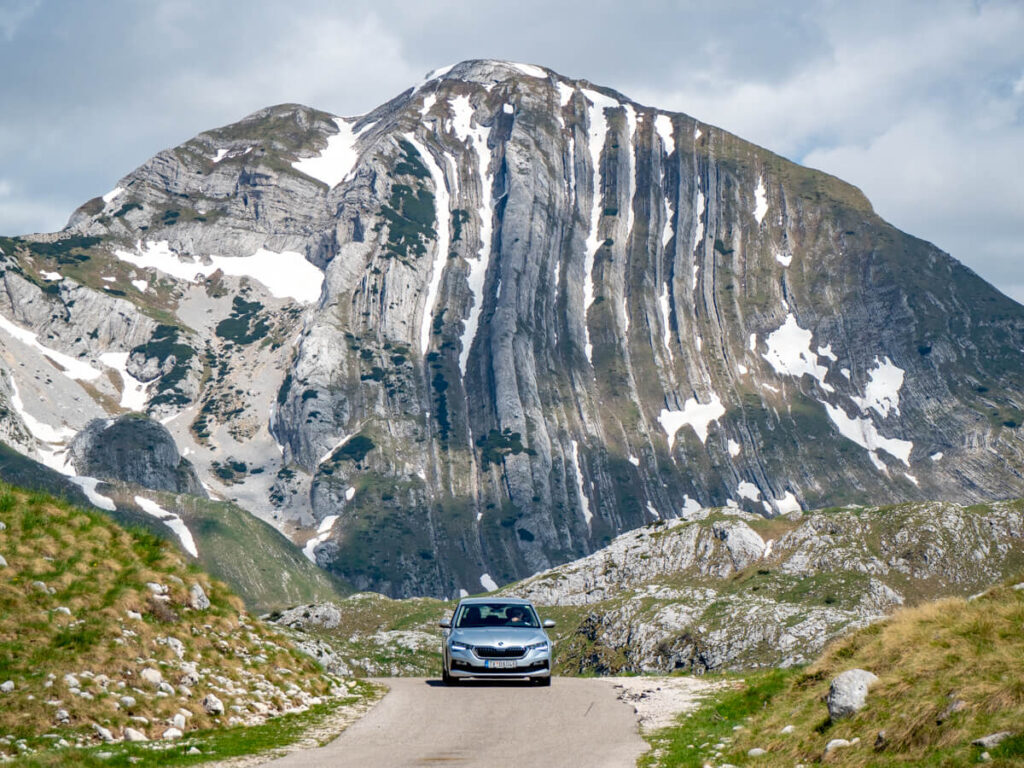
We love a scenic road trip, and if there’s one road you should drive in Montenegro, it’s the Durmitor Ring. Looping through the heart of Durmitor National Park, this spectacular mountain route passes soaring limestone peaks, high alpine plateaus, traditional villages, dramatic viewpoints, and some of the wildest scenery in the country. Yet despite being one of Montenegro’s greatest road trips, it still flies under the radar compared to the busy Bay of Kotor.
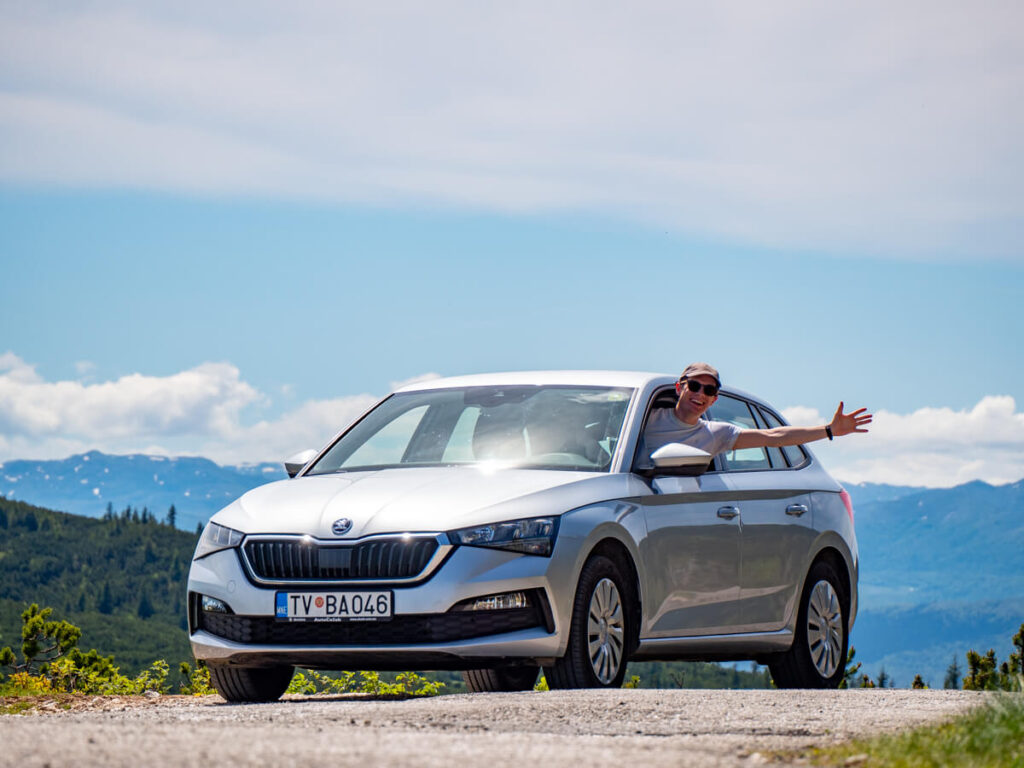
We drove the Ring Road during our time in Durmitor and it ended up being one of the highlights of our Montenegro road trip itinerary. Around almost every corner was an epic viewpoint, serene lake, quiet hiking trail, or tiny katun serving homemade food. Although the road is relatively short, it’s not just a scenic drive – we found ourselves stopping for a look around far more often than we’d planned.
But narrow mountain roads, seasonal closures, and countless worthwhile detours mean it’s worth planning ahead to make the most of your day. The good news is that the route is accessible to most confident drivers and can easily be combined with some of Durmitor’s best hikes and attractions.
In this guide, we’ve rounded up the best stops along the Durmitor Ring Road, along with a suggested self-drive itinerary, top tour options, useful route information, driving tips, road conditions, and everything you need to know before setting off on what we think is one of Montenegro’s most unforgettable routes.
Durmitor Ring at a glance
More from Durmitor National Park
What is the Durmitor Ring?
The Durmitor Ring (Durmitorski Prsten) is a spectacular driving route that loops around the heart of Durmitor National Park, taking in some of northern Montenegro’s most dramatic scenery.
The 47-mile (76 km) circular route wraps around the Durmitor massif, connecting high mountain passes, remote villages, deep canyons, glacial lakes, and some of Montenegro’s best viewpoints.
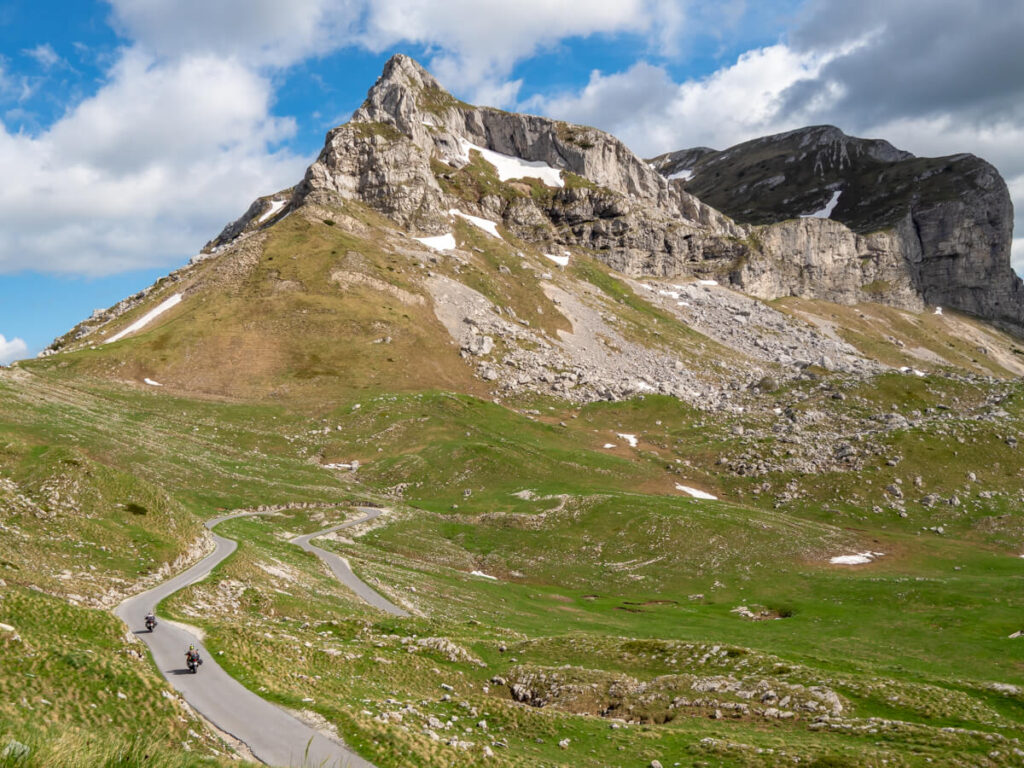
Unlike a typical road trip where the main goal is reaching the next destination, the Durmitor Ring is all about the journey. The landscape changes constantly as you climb from forested valleys to high alpine plateaus, with towering limestone peaks and vast open views appearing around almost every bend.
Although the road only takes around 3 hours of driving, you could easily spend an entire day exploring it because almost every bend reveals another reason to stop.
Durmitor Ring Road Tours
If you’d rather leave the driving to someone else, joining a guided Ring Road Jeep tour is a great alternative. Not only do you get to sit back and enjoy the scenery instead of concentrating on narrow mountain roads, but local drivers also know the best viewpoints, photo stops, and stories behind the landscapes.
Where is the Durmitor Ring Road?
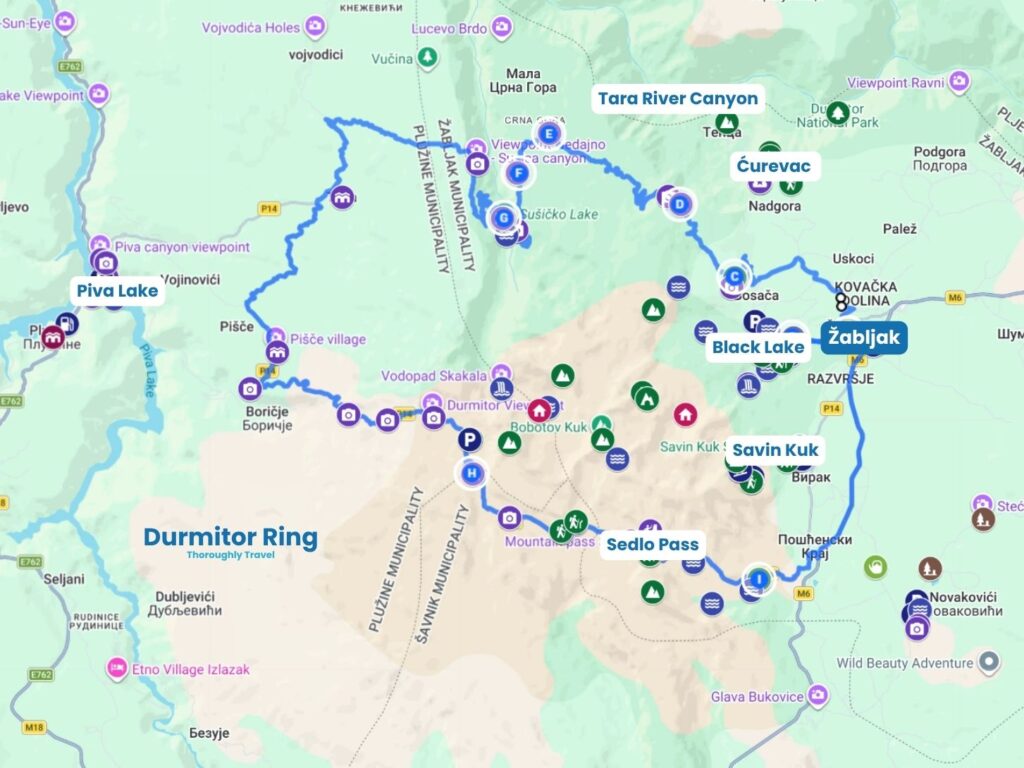
The Durmitor Ring is located in northern Montenegro, starting and finishing in Žabljak, the main gateway town for exploring Durmitor National Park.
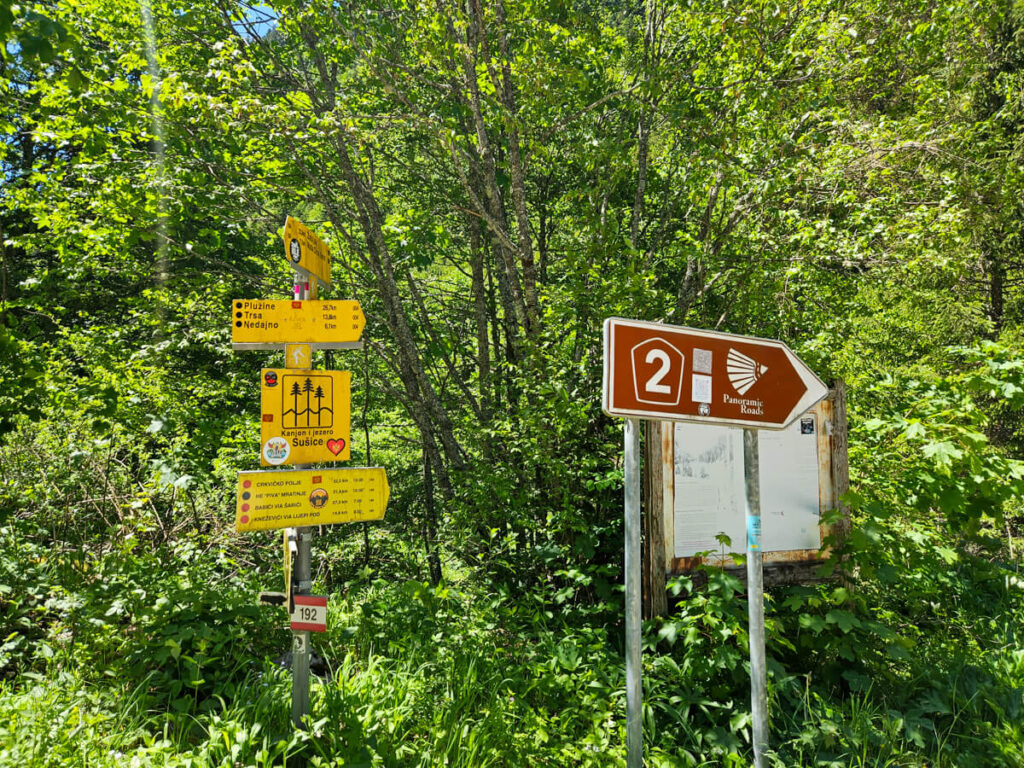
The route mainly follows the P14, one of Montenegro’s Panoramic Roads (Panoramic Route 2).
On the way, you’ll navigate through high mountain landscapes, including the Sedlo Pass (1,907 metres) and Štuoc Pass (1,950 metres).
You can stop off at viewpoints for sweeping views into the vast Sušica Canyon and Tara River Canyon, Europe’s largest canyon.
You’ll also drive through Pošćenska Dolina Valley, Dobri Do Valley, and Todorov Do Valley.
Durmitor Ring Road Map
The Durmitor Ring is a scenic route that circles most of Durmitor National Park.

Should you drive the Durmitor Ring clockwise or anticlockwise?
The Durmitor Ring can be driven in either direction, and there is no official “correct” way to do it. However, there are multiple reasons why we strongly recommend driving anticlockwise, including:
The main exception is if you’re driving a motorhome or large campervan. Then it’s recommended to tackle the loop clockwise because the tightest hairpins are a little easier to negotiate in that direction. That said, we’d seriously think twice before bringing a large vehicle onto the Durmitor Ring. While the road is paved throughout, there are numerous narrow sections with limited passing places, and we’d imagine it would be far more stressful than enjoyable.
We met a very stressed-out couple driving a campervan on a particularly narrow uphill section. Dan spent around five minutes carefully inching our car past while I stood outside guiding both drivers through the gap. There were only centimetres to spare, with a rock face on one side and a steep drop on the other.
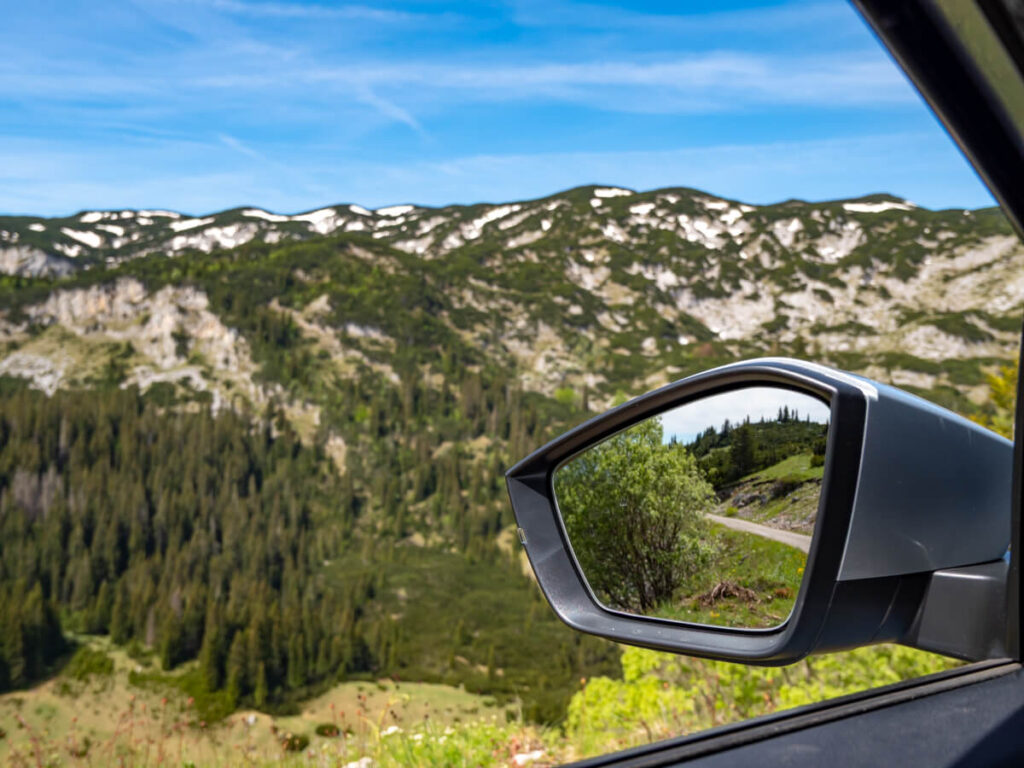
If you’re not comfortable driving steep mountain roads or tight switchbacks, you don’t have to complete the entire circuit. One of our favourite sections runs from the Sedlo Pass to the tiny village of Pišče and back the same way, allowing you to experience many of the Ring’s most spectacular viewpoints without tackling its most hair-raising roads.
Durmitor Ring Road Route
The Durmitor Ring is one of the best things to do in Durmitor National Park and showcases the geological diversity of northern Montenegro, from glacier-carved valleys to enormous limestone formations shaped over millions of years. It’s a complete circuit, but where you stop off is completely optional. Some people will only stop once or twice, while others (like us) don’t want to miss a thing.
We spent ages thoroughly researching all the stops on the Durmitor Ring Road and were constantly pulling off for viewpoints and little detours that a lot of drivers miss. We’ve covered all the places not to miss in order as you drive anticlockwise. If you’re set on going clockwise, you can simply reverse the following list.
Start: Žabljak
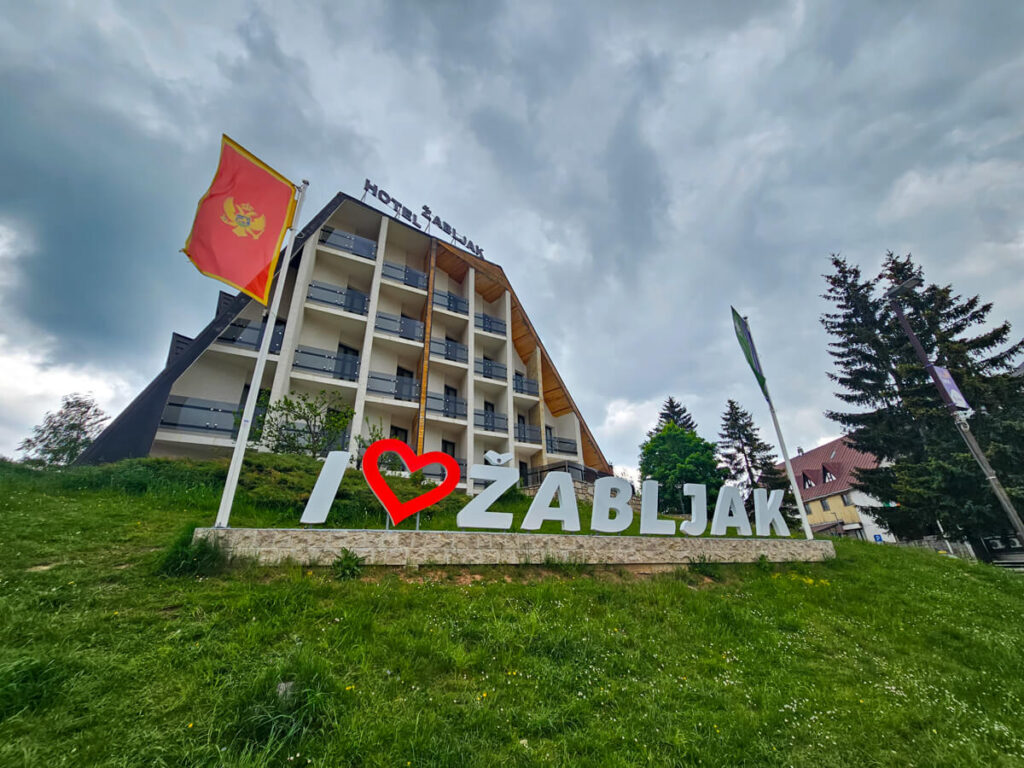
Žabljak is the natural starting point for the Durmitor Ring and the main gateway for exploring Durmitor National Park. Sitting at around 1,456 metres (4,777 ft) above sea level, it is the highest town in the Balkans, surrounded by some of Montenegro’s most dramatic peaks.
The town itself is small and practical rather than picturesque, but its location is very convenient. It’s the last reliable stop for supermarkets and supplies, so make sure to fill up with snacks, water, and petrol before leaving. We started here at Shambhala Bakery for breakfast, picking up some coffees (with soy milk) and veggie burek before hitting the road.


1. The Black Lake
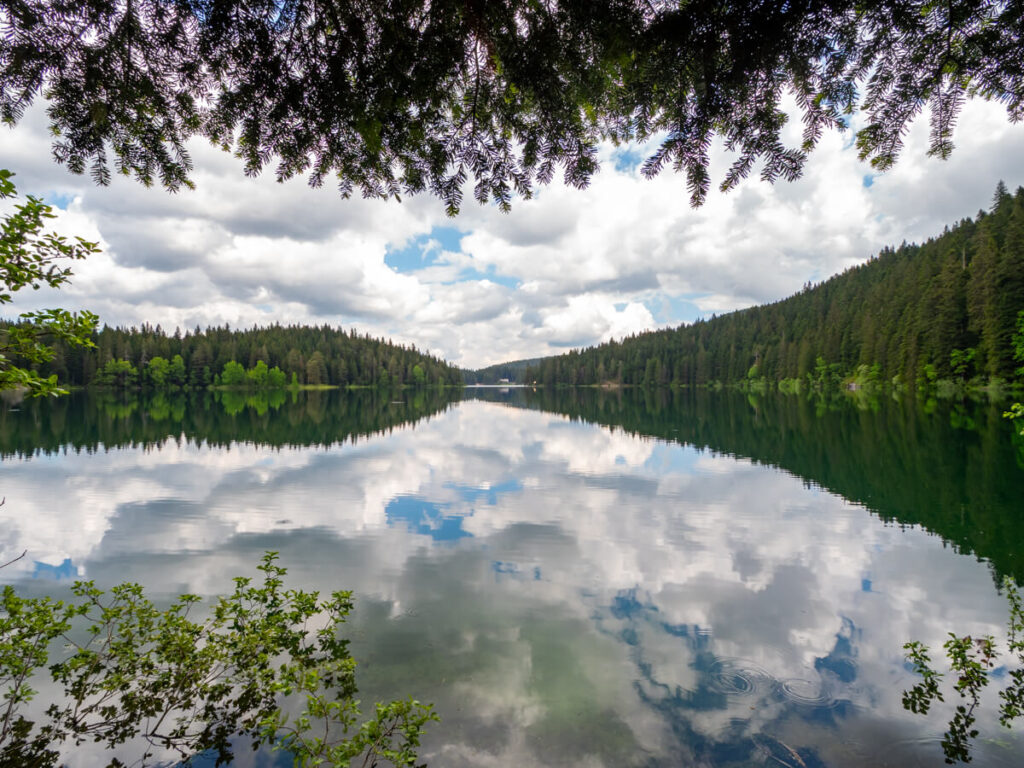
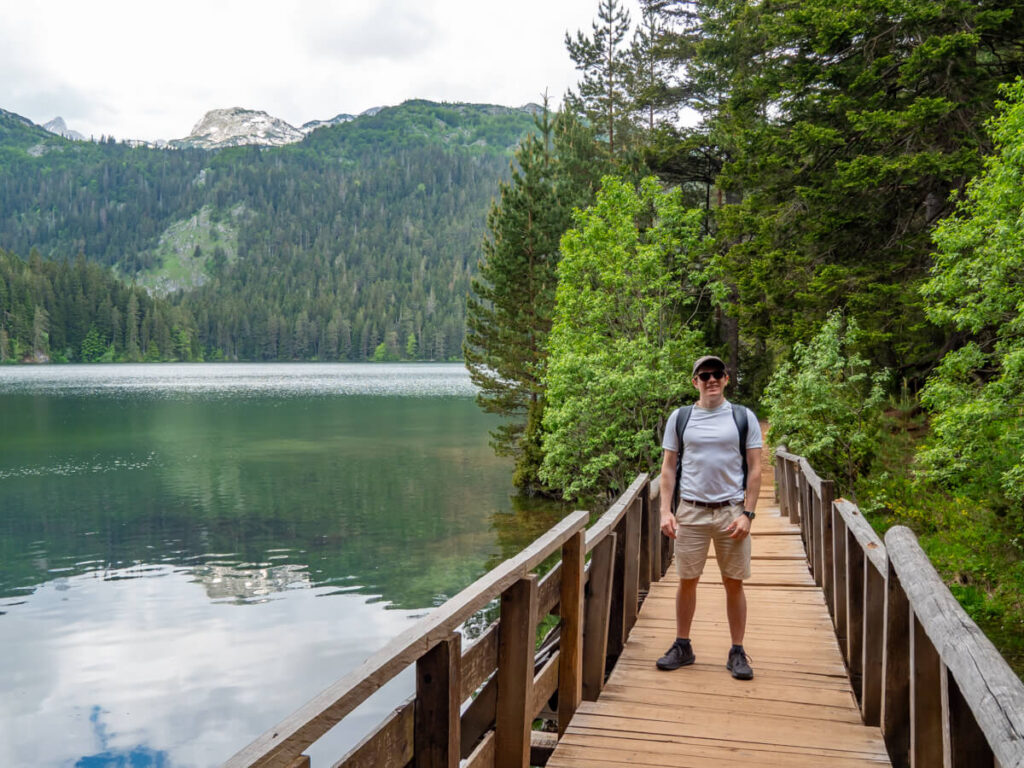
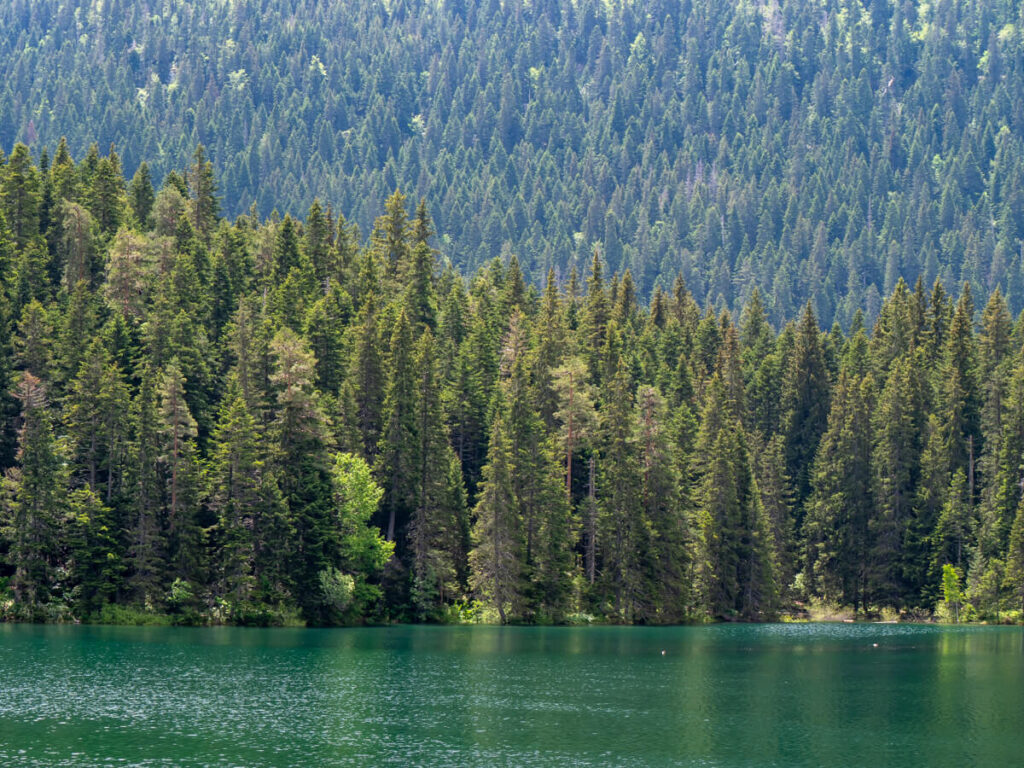
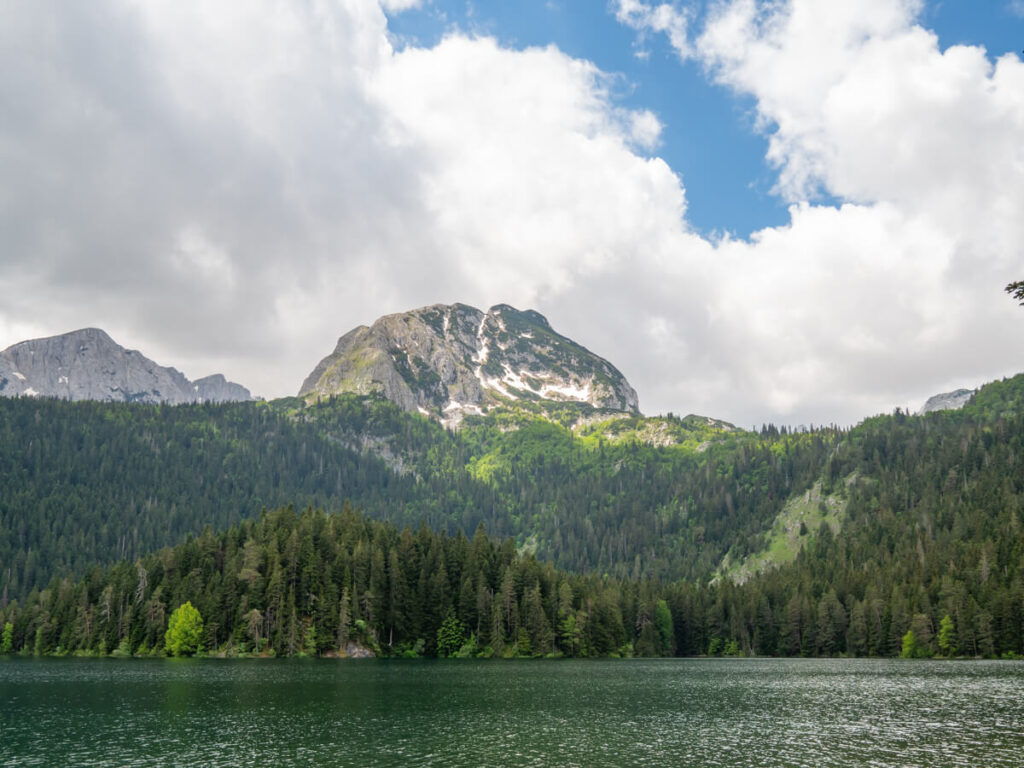
The Black Lake (Crno Jezero) is one of Durmitor National Park’s most famous sights and the most visited natural attraction in the area. Despite its name, the water is not actually black. The name comes from the dark reflections created by the surrounding conifer forests and the towering peaks of Međed mountain rising above the lake.
The Black Lake is actually made up of two connected glacial lakes: Veliko Jezero (Big Lake) and Malo Jezero (Small Lake). A gentle walking trail circles the shoreline, which takes about an hour to complete.
The Black Lake is technically a detour from the Durmitor Ring. It’s a great place to start the day if you have limited time or don’t plan to drive the whole circuit, but otherwise we’d save visiting for another day and explore the lake as an attraction in itself.
2. Crevna Greda & Jablan Lake
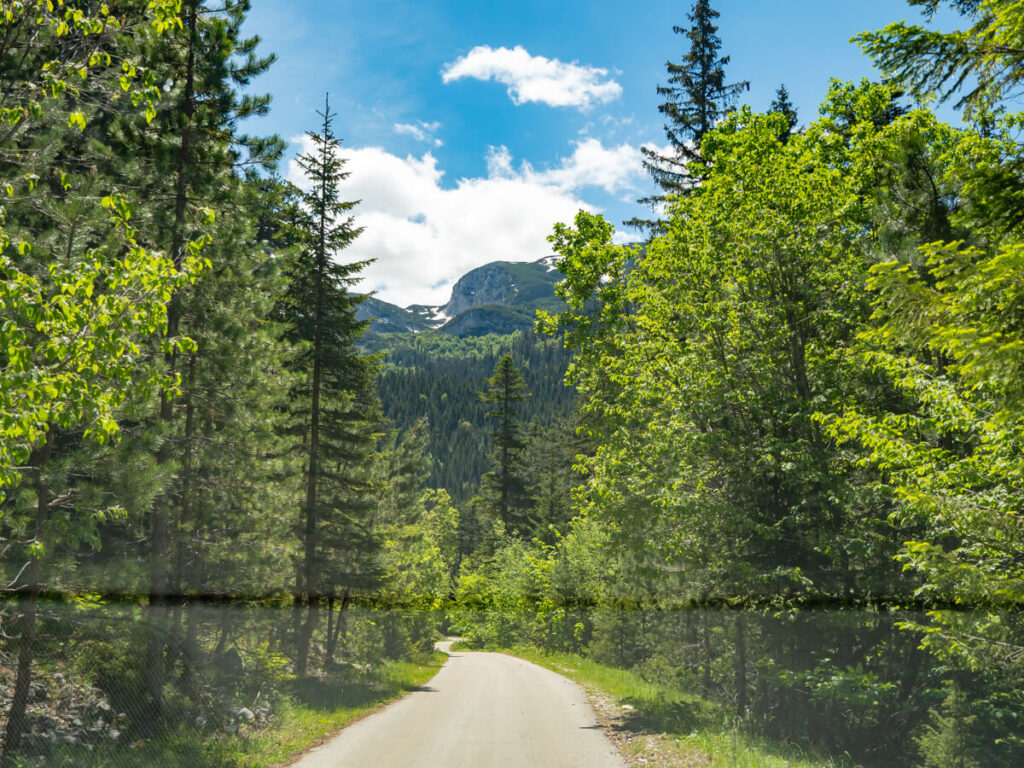
To start the Durmitor Ring route, you can simply follow the road north out of Žabljak. It’s not in the best condition (expect some potholes), but it’s paved. Most of this section isn’t wide enough for two cars, so you may have to pull over to let vehicles pass. Luckily, we set off early and barely saw another car. You’ll pass through beautiful forest along this section.
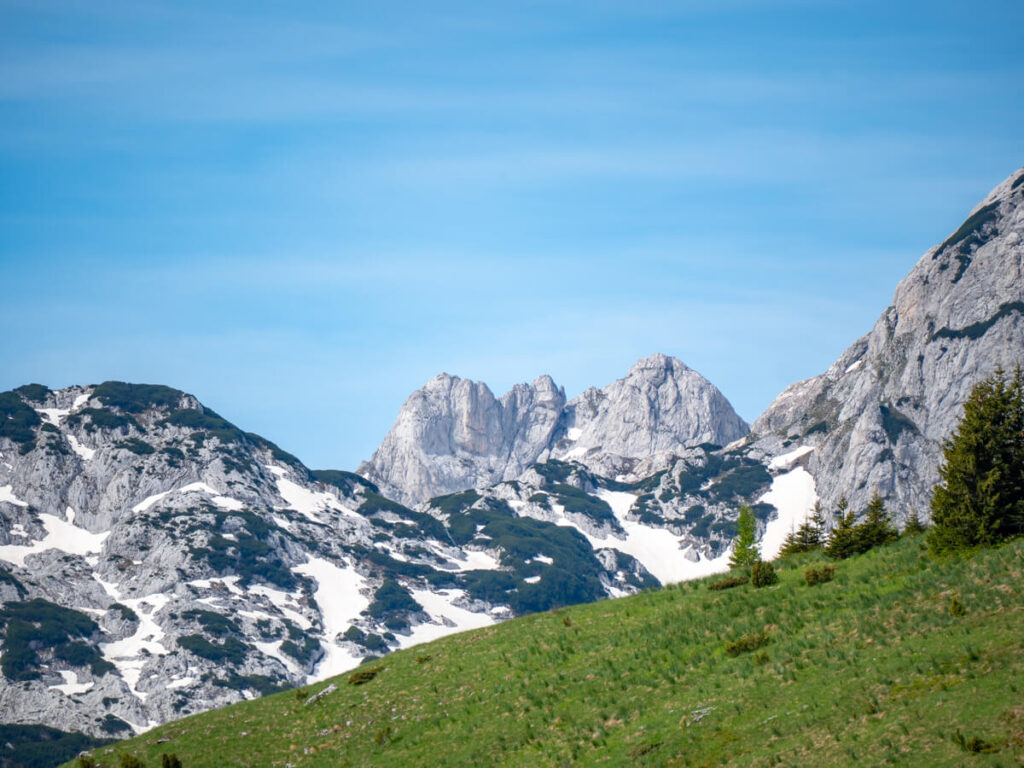
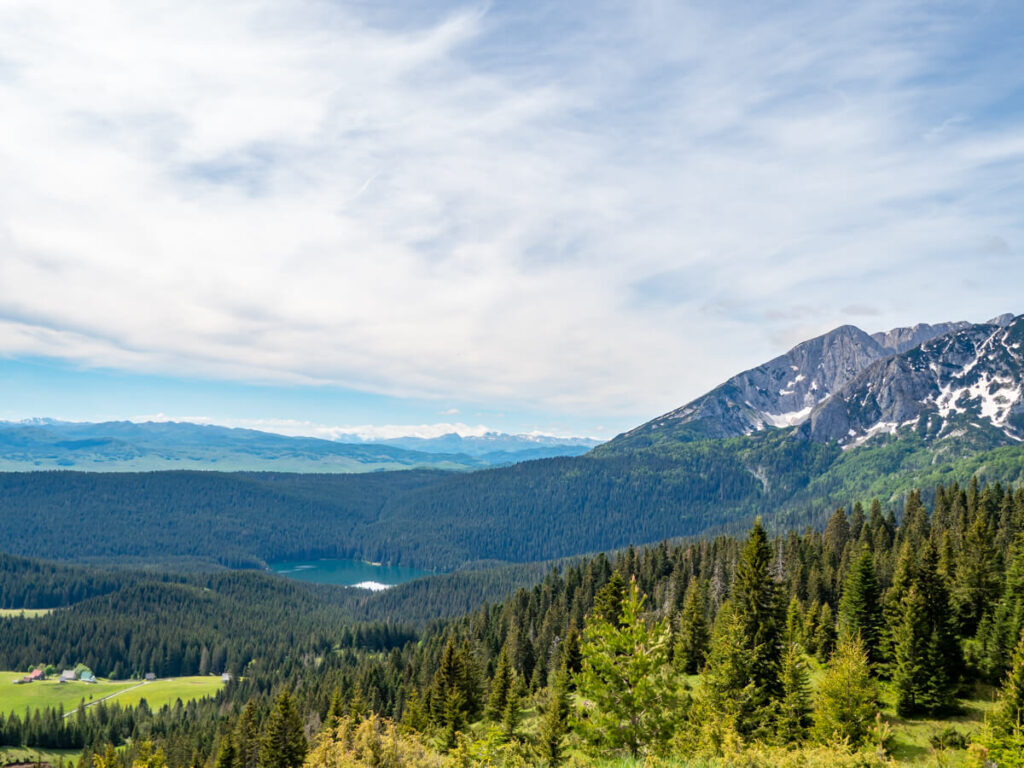
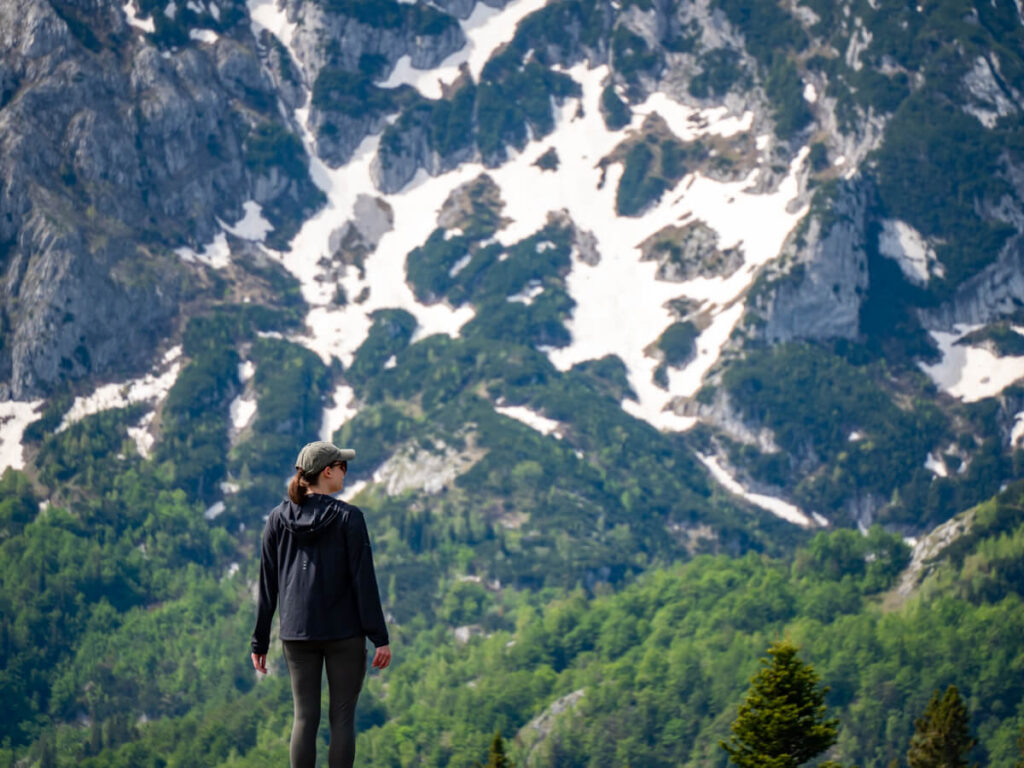
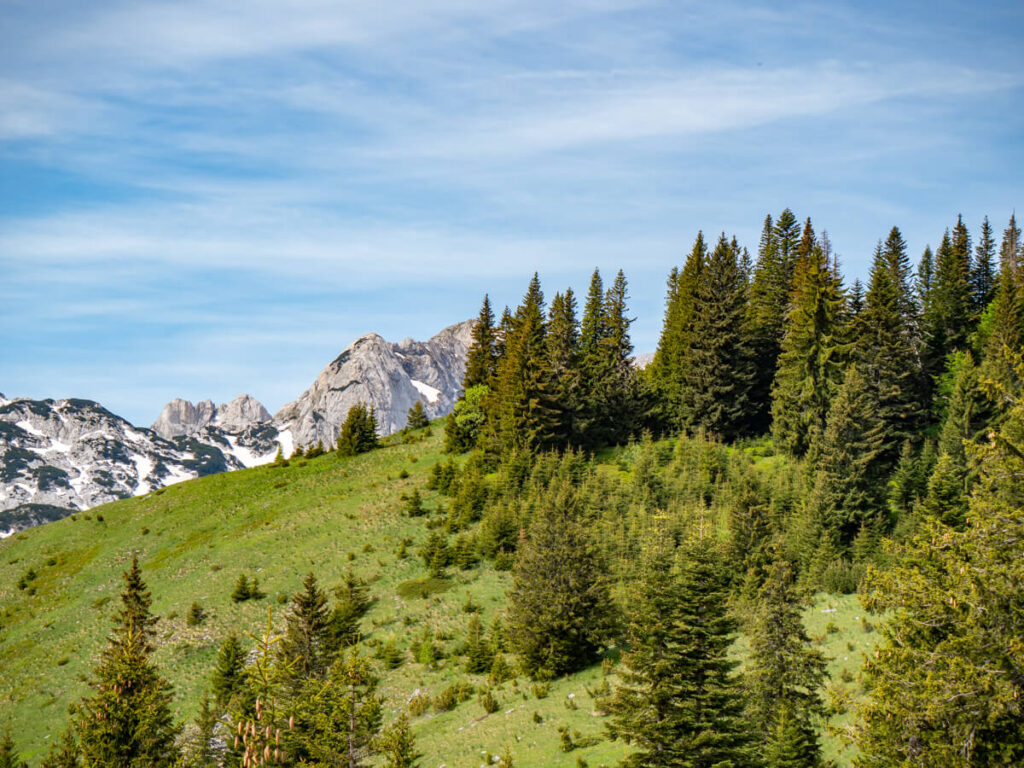
The first stop on the Durmitor Ring we’d recommend is the trailhead for Jablan Lake. While the hike to the lake and its towering Crevna Greda peak is an attraction in its own right, we’d recommend just walking uphill for 5 minutes to an epic viewpoint of the Black Lake. It’s the epitome of a sweeping view, with the limestone mountains – still speckled with snow on our visit in June – contrasting with the dense green forest.
There’s a small area to park on either side of the road. By the time we left, there were about 10 cars at around 10:00 AM. Set off as early as possible, especially in peak summer, to avoid other traffic.
3. Tara River Canyon Viewpoints
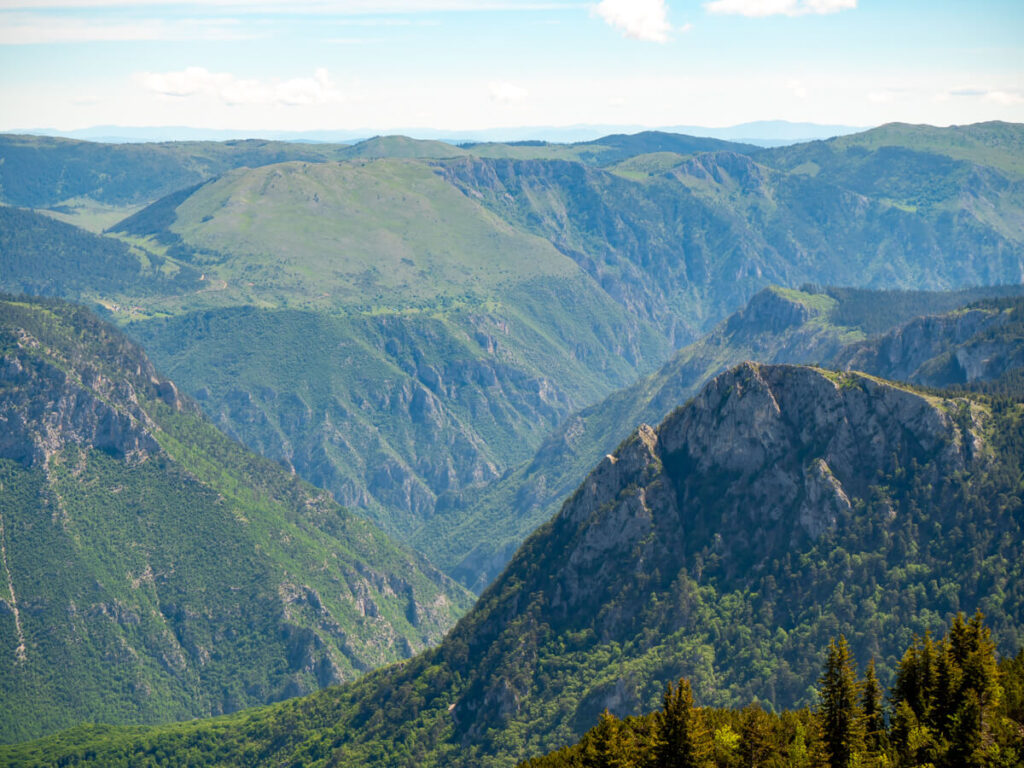
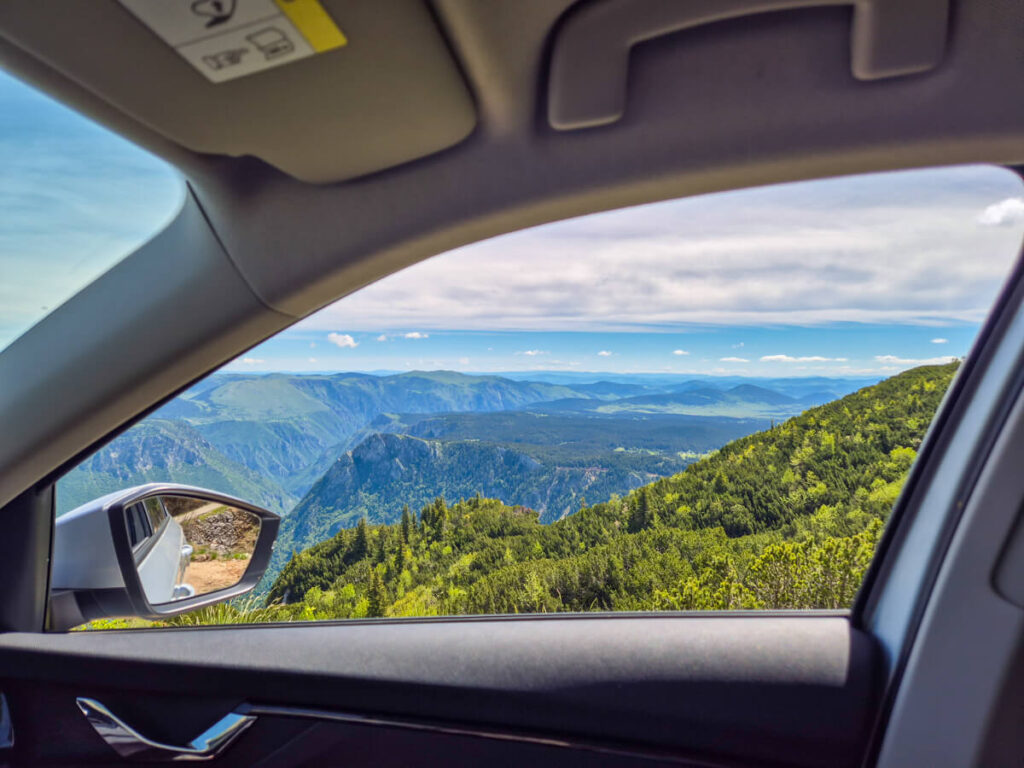
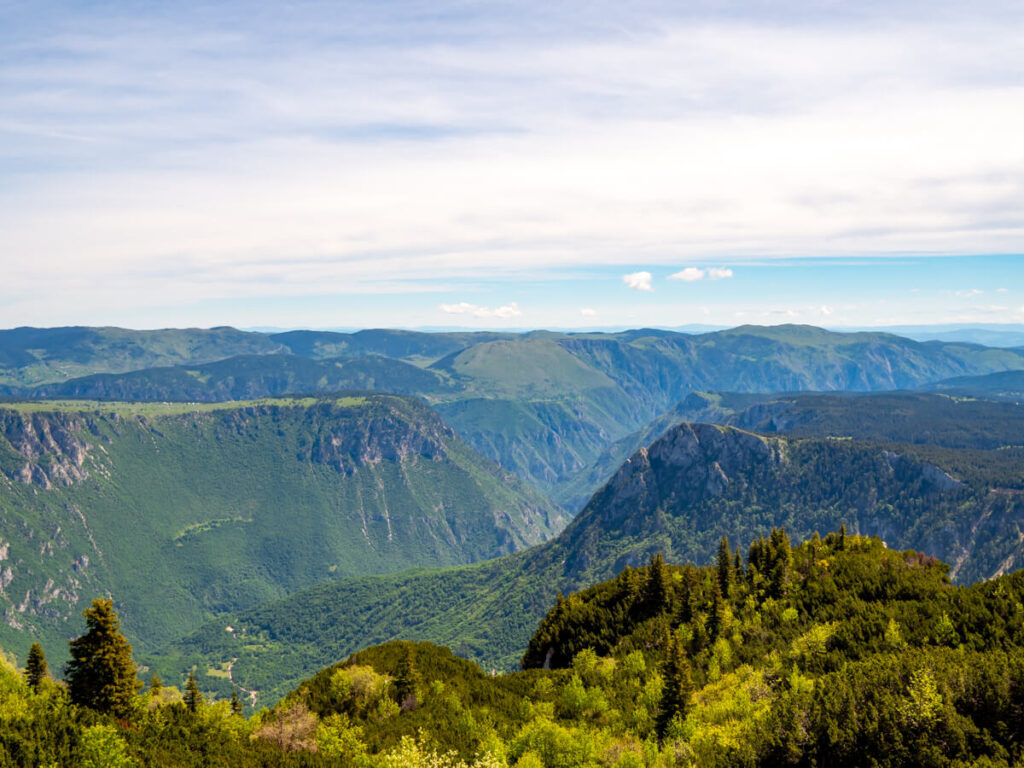
After the most beautiful stretch of road that leads into the mountains, with sweeping valley views on either side, you’ll reach a viewpoint of the Tara River Canyon. Carved over millions of years by the Tara River, the canyon stretches for around 50 miles (80 km) and reaches depths of over 1,300 metres (4,265 ft) in places.
The canyon is often described as one of Europe’s deepest river canyons and forms part of the Durmitor National Park UNESCO World Heritage site. It’s also considered the second deepest canyon in the world after the Grand Canyon.
We actually think there’s a better view of the canyon a couple of minutes after the one marked on Google Maps, so look out for the little gravel area to pull in.

4. Mala Crna Gora
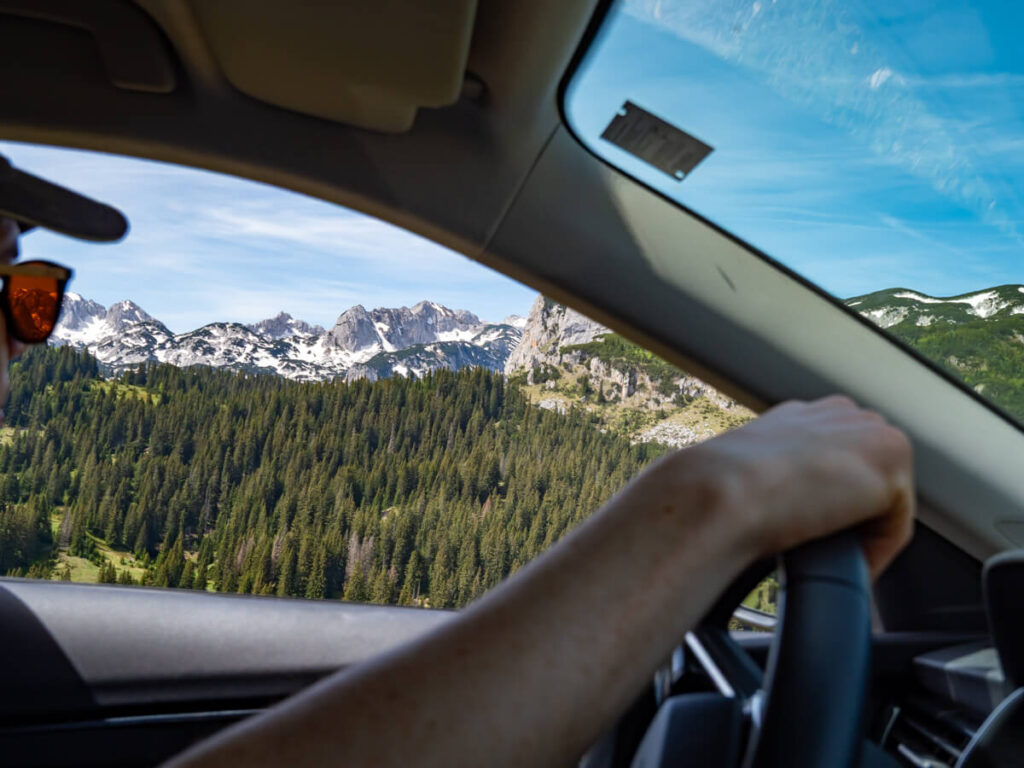
From the Tara River Canyon viewpoints, you’ll drive between dense forest, open meadows, and exposed mountain viewpoints. There are some hairpin bends, and most of the road is only wide enough for one car, so go carefully.
The next viewpoint worth stopping at is Mala Crna Gora. It’s one of the most remote villages you’ll pass on the Durmitor Ring and one of the best places to see traditional mountain life. Historically, communities like Mala Crna Gora survived through pastoral farming, particularly livestock grazing in the surrounding mountains. Today, only a small number of permanent residents remain.
The village sits on a high plateau, surrounded by a beautiful meadow. It’s tiny and easy to miss, so keep an eye out for it.


5. Sušičko Lake
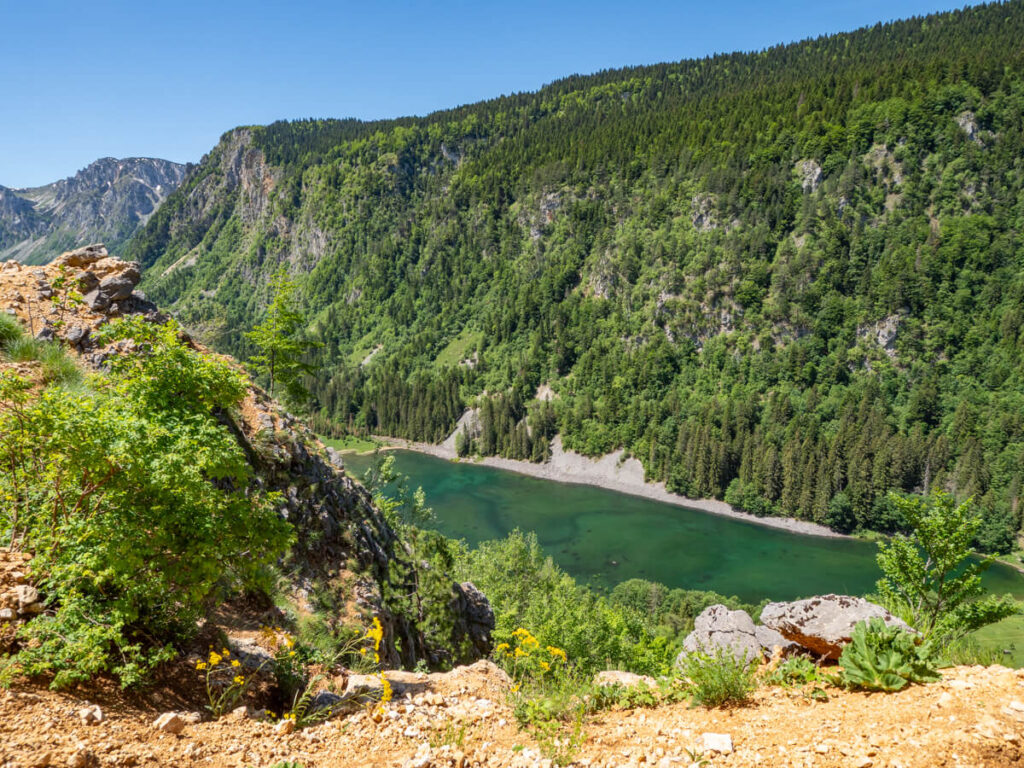
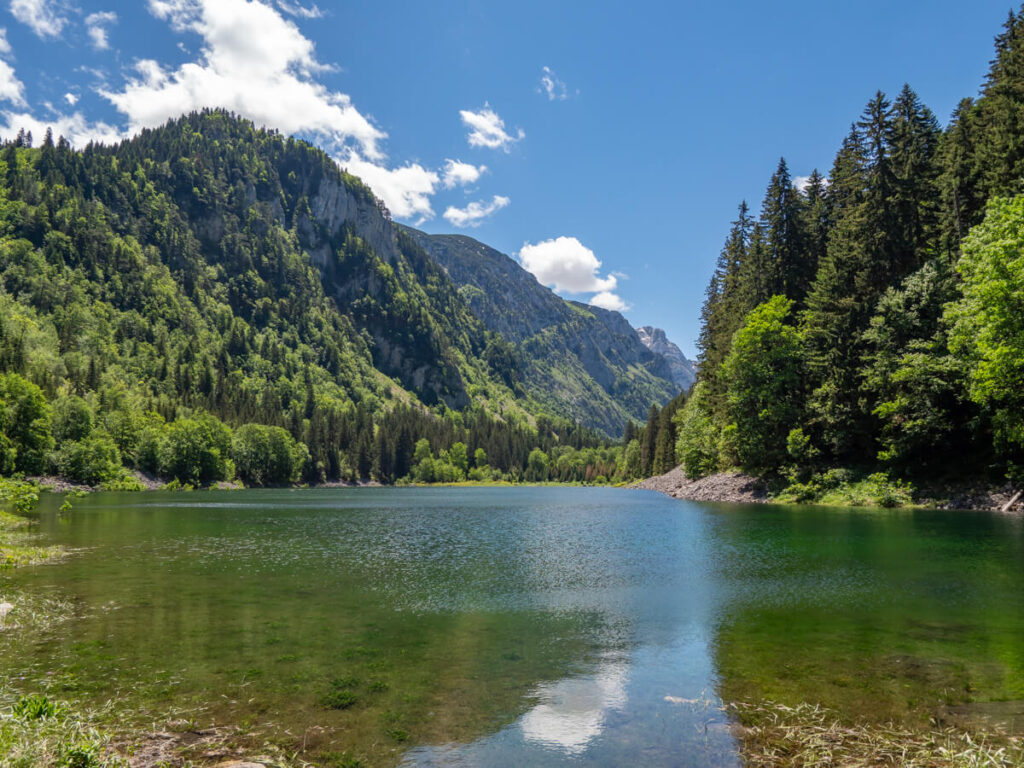
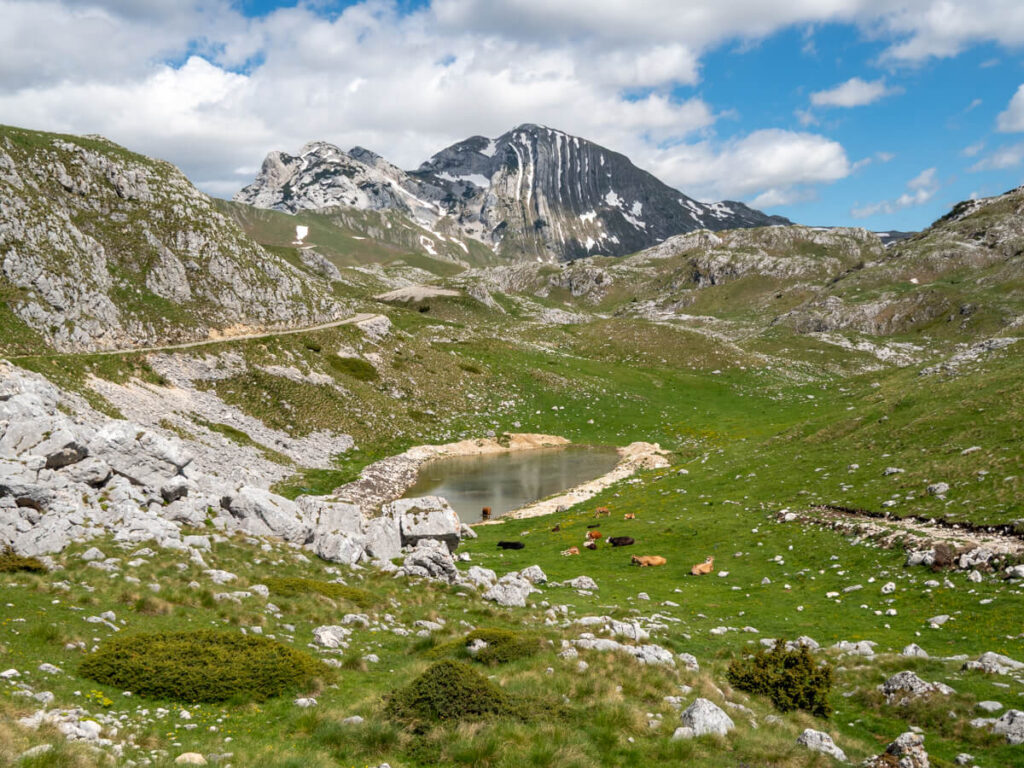
Next up is Sušičko Lake, one of Durmitor’s most unusual natural features because it is not always there. Unlike the permanent glacial lakes found elsewhere in the park, Sušičko Lake is a seasonal lake that fills with snowmelt and rainfall before gradually disappearing during summer.
Don’t miss the view of the Sušica Canyon on the drive from Mala Crna Gora to Sušičko Lake. It requires a 2-minute walk downhill to a view of the canyon through the forest. The little layby where you can pull off on the road is marked by a small yellow sign pointing the way.
The road along the top of Sušičko Lake has several small viewpoints, but limited space to park, so might get a bit packed in summer. It’s also one of the most nail-biting sections of road, with a sheer drop on the left (as you drive the loop anticlockwise) and no barrier. We also encountered quite a bit of rockfall on the road here.
This is where we had our most stressful driving moment of the entire loop. We came across a campervan struggling to navigate the narrow road uphill. We tried to reverse back uphill to a pulling-in place, but it was so steep our rental car really struggled and started to smell like burned rubber. In the end, it took several minutes of careful manoeuvring to squeeze past without either vehicle getting too close to the edge.
At the bottom of the hill, there’s a bit of grassy space by the road, where you can park to see Sušičko Lake up close. From here, it’s only a 5-minute walk along the small road (signposted by yellow signs) to the lake’s shore. If you visit in summer, you’ll be met by a vast meadow instead.


Durmitor National Park Entrance Booth
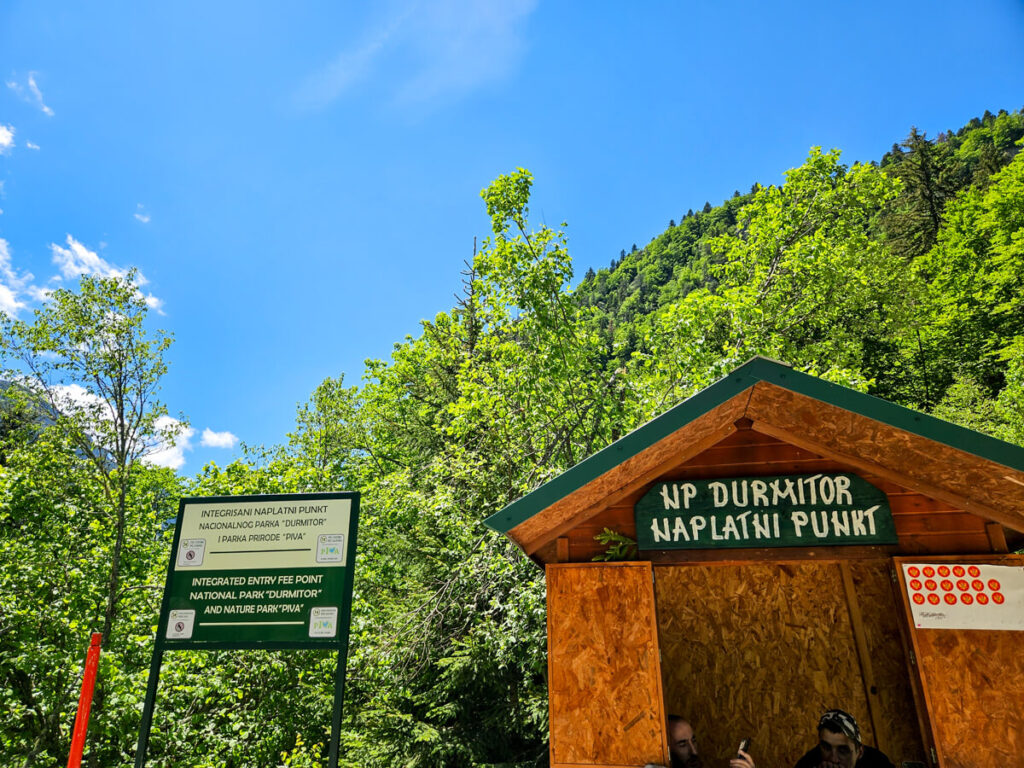
Back on the main road by Sušičko Lake, you’ll find the Durmitor National Park entrance booth. This marks your official entry into one of Montenegro’s most important protected areas.
The park was established in 1952 and later recognised as a UNESCO World Heritage site in 1980 because of its exceptional geological features and natural landscapes.
This is an official entry point, where you’ll be asked to pay for a ticket. It’s €5 per person per day, but we’d highly recommend getting the annual pass for €13.50 if you plan to spend a few days in Durmitor or to visit the other national parks. You can also buy it online in advance.
6. Sušica Canyon
From Sušičko Lake, the road becomes a narrow and winding series of uphill switchbacks. It’s a gradual incline, but it’s still important to go slowly and carefully.
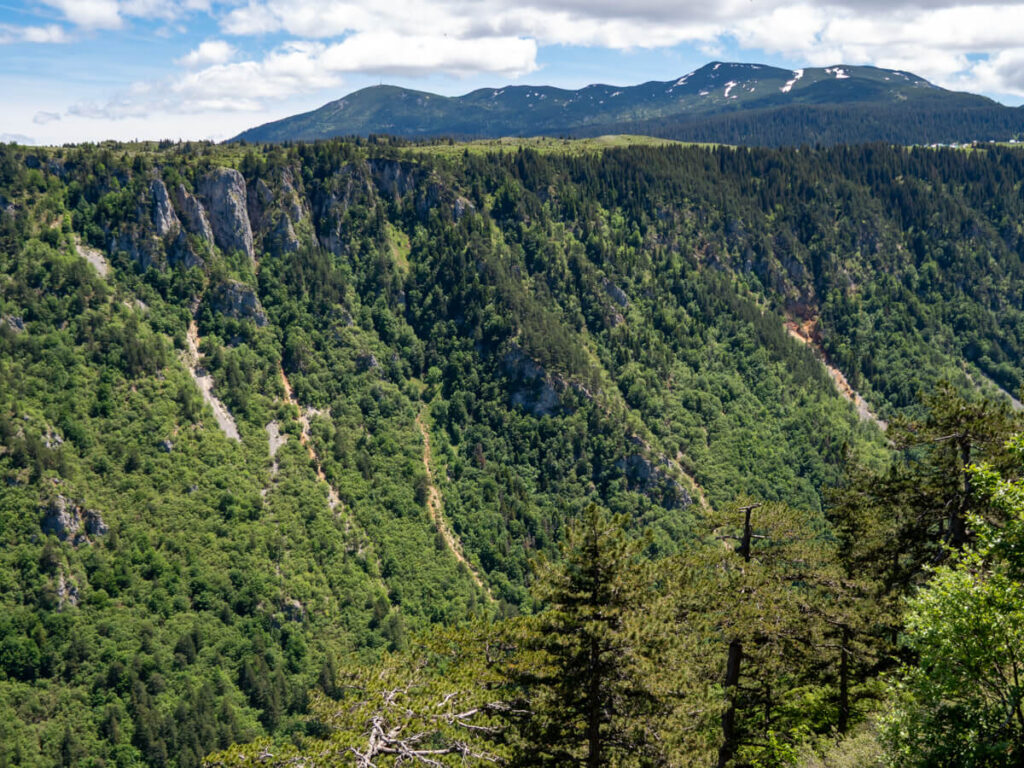
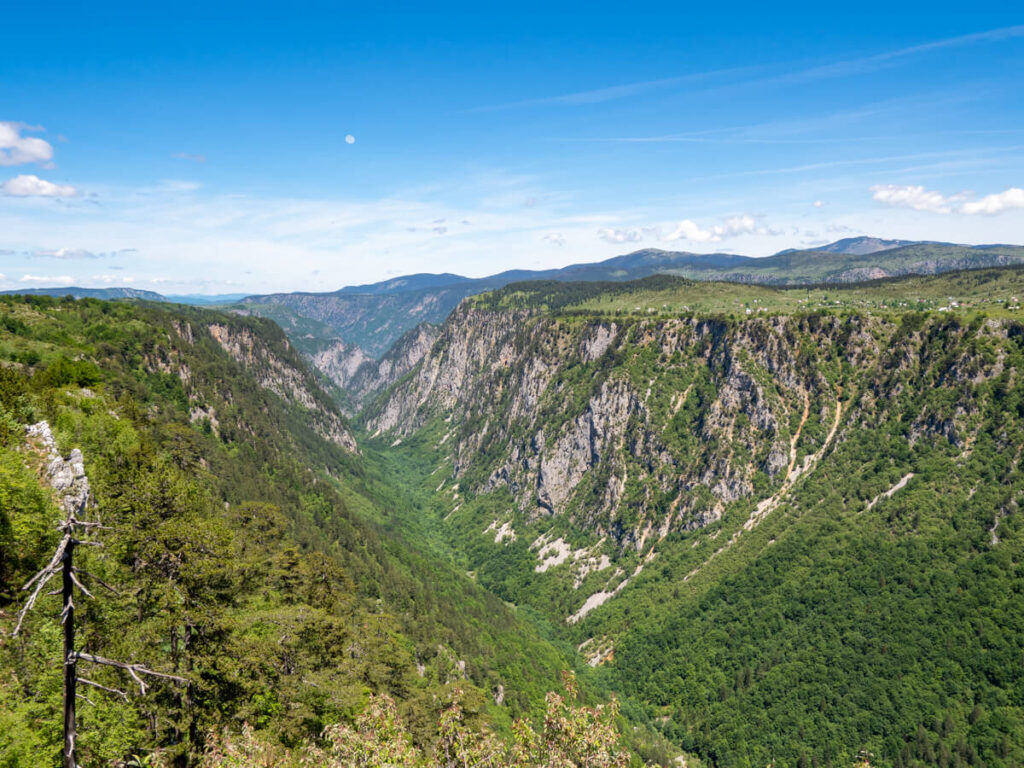
When you reach the top, you’ll pop out at a very obvious view of the Sušica Canyon. There’s a decent-sized gravel parking area, small coffee shop, and open area with sweeping views into the canyon.
Carved by the Sušica River, this narrow gorge cuts through the western side of Durmitor National Park, creating a landscape of steep limestone cliffs, dense forests, and a remote wilderness. The canyon is around 9 miles (15 km) long and reaches depths of several hundred metres in places.


7. Trsa
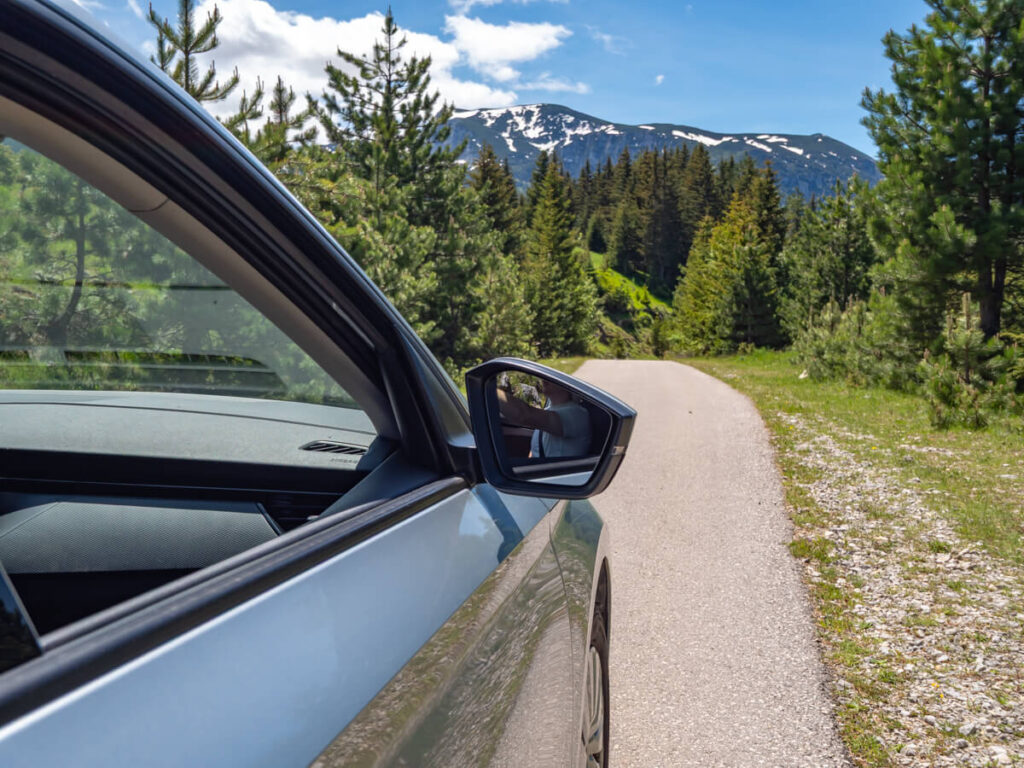
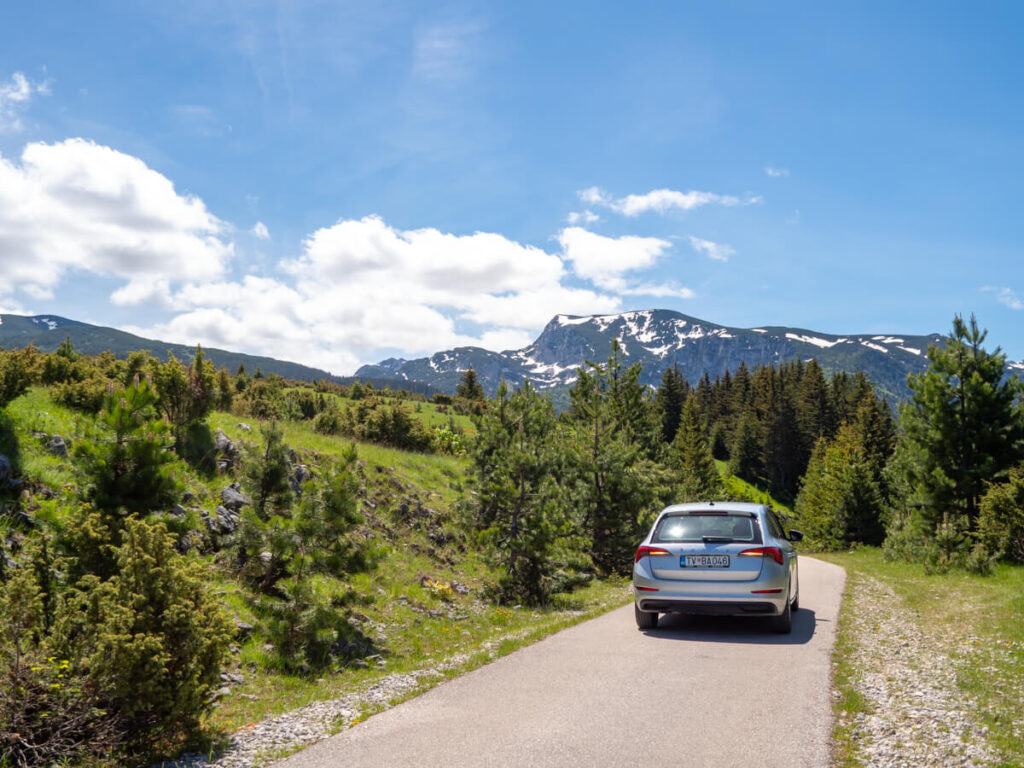
The next stretch of driving takes you past the tiny settlement of Nedajno and around the northwest side of Durmitor National Park. The scenery passes through valleys and forests, with distant mountain views.
You’ll pass the tiny mountain settlement of Trsa, located on a high plateau between the park boundary and the Piva region. Sitting at around 1,450 metres (4,757 ft) above sea level, it is surrounded by open grasslands, dramatic limestone mountains, and some of Montenegro’s most peaceful scenery.
8. Detour to Piva Lake
Eventually, you’ll reach a junction, where you can turn onto the P14. The official Durmitor Ring route heads left (east) towards the southern part of the park, but we’d highly recommend going right (west) and detouring off the route at this point.
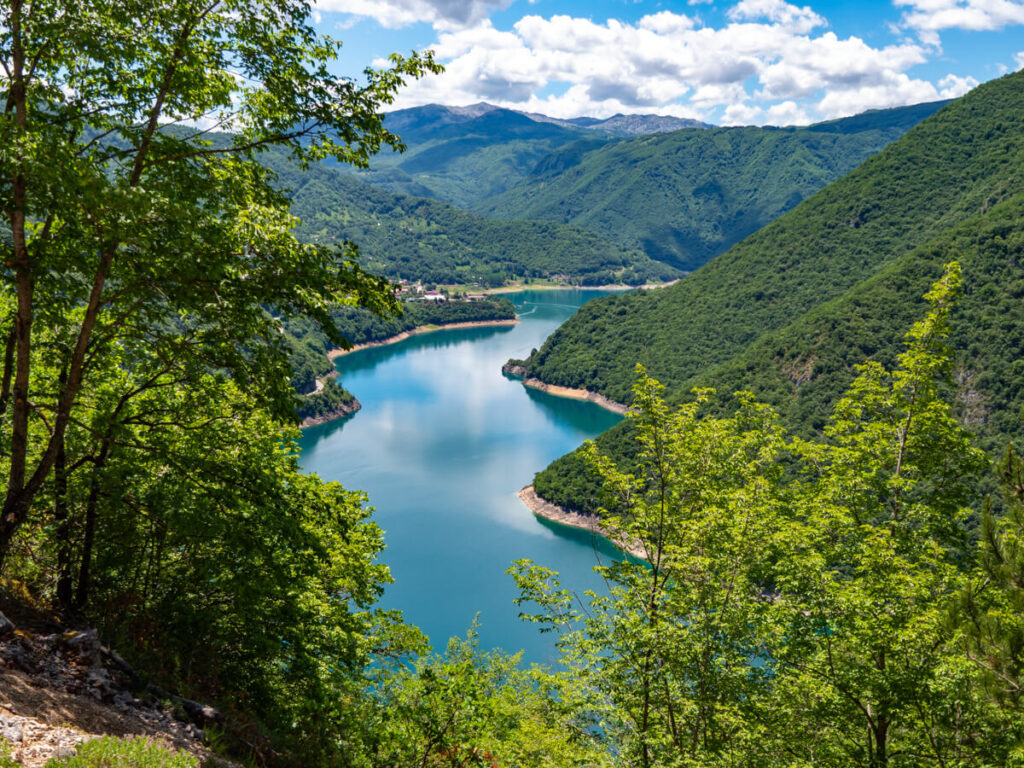
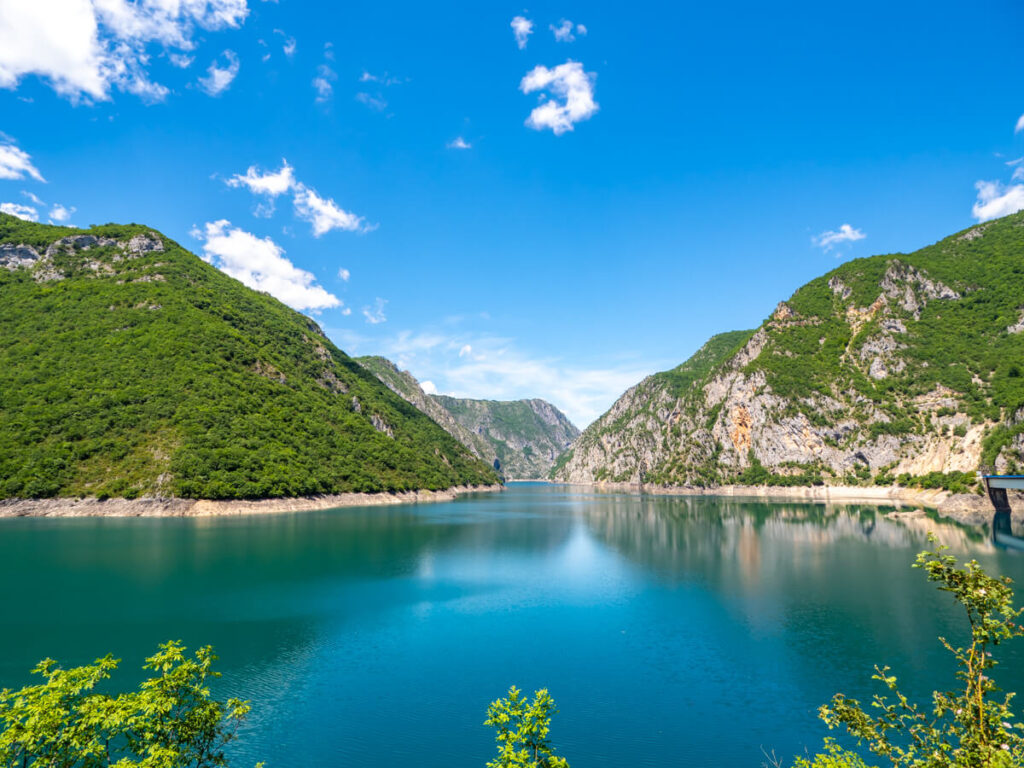
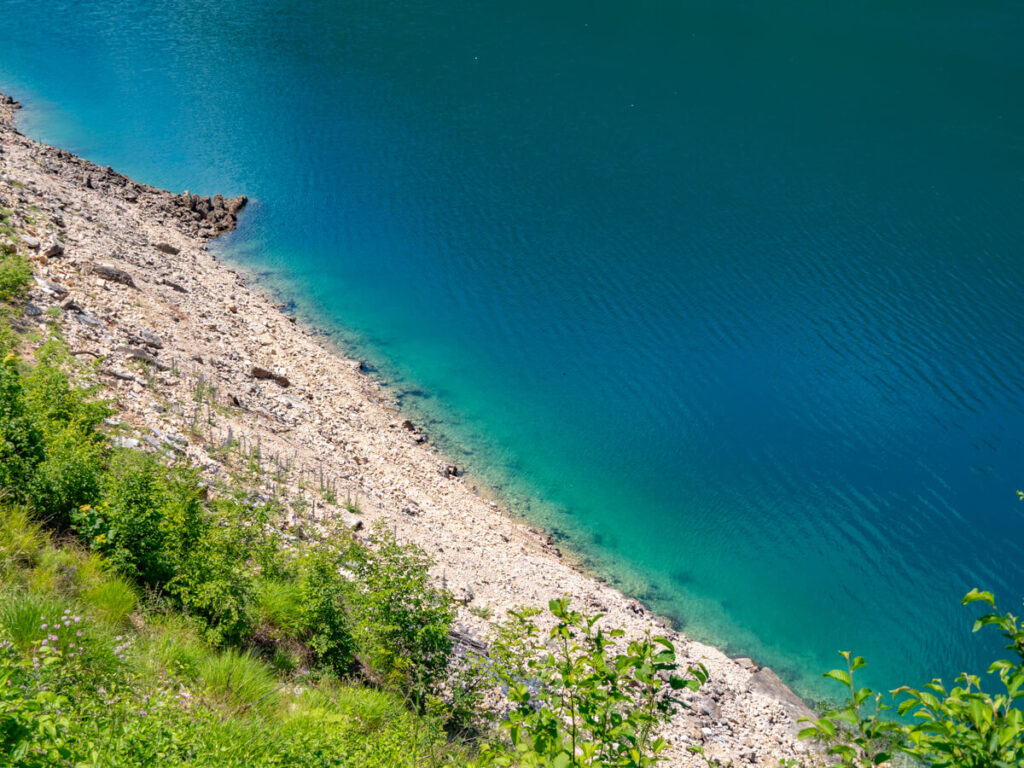
If you head west, you’ll reach the stunning Piva Lake. Created after the construction of the Mratinje Dam in the 1970s, the artificial lake stretches through a dramatic mountain valley and is famous for its vivid turquoise colour.
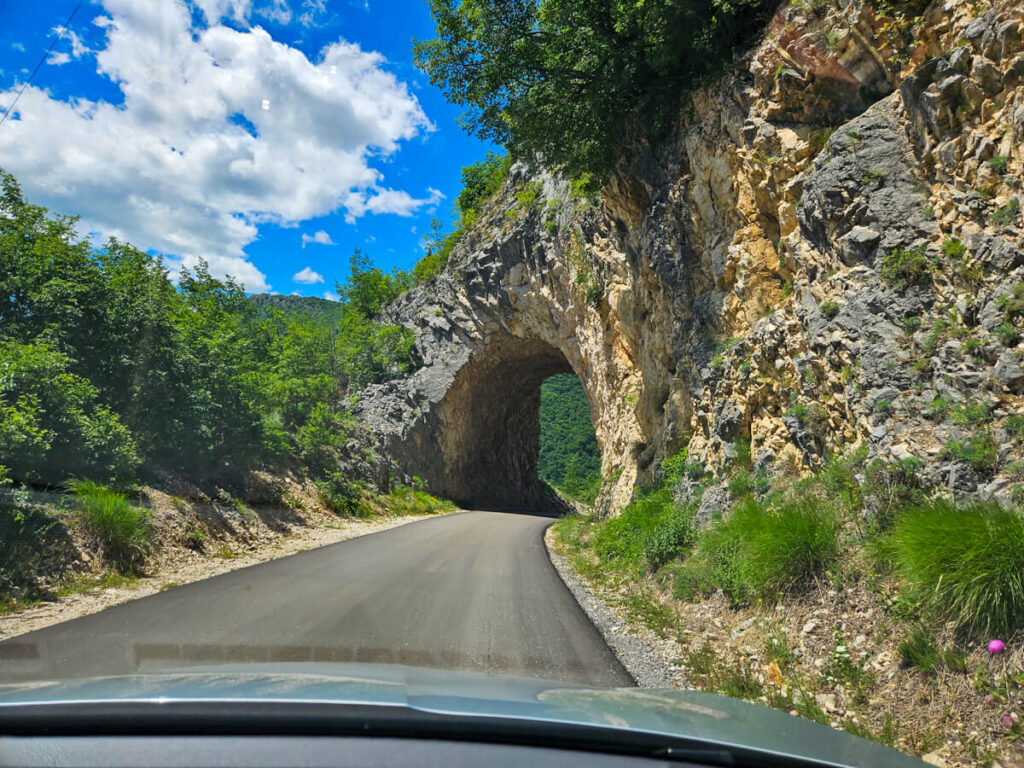
The drive towards Piva Lake takes you through some spectacular mountain scenery, including the famous Piva Canyon and a series of tunnels carved through the rock. We won’t lie, though, this is one of the scariest roads to drive in Montenegro. It’s a consistent series of sharp hairpin bends, steep and narrow. Often, vehicles will come round the corners on your side of the road.
There are plenty of small gravel areas to pull over for spectacular views of the lake on the way down. Once you reach its shore, you can take in the views, go ziplining, or head to the small town of Plužine, where you’ll find a couple of restaurants, supermarkets, and a petrol station.
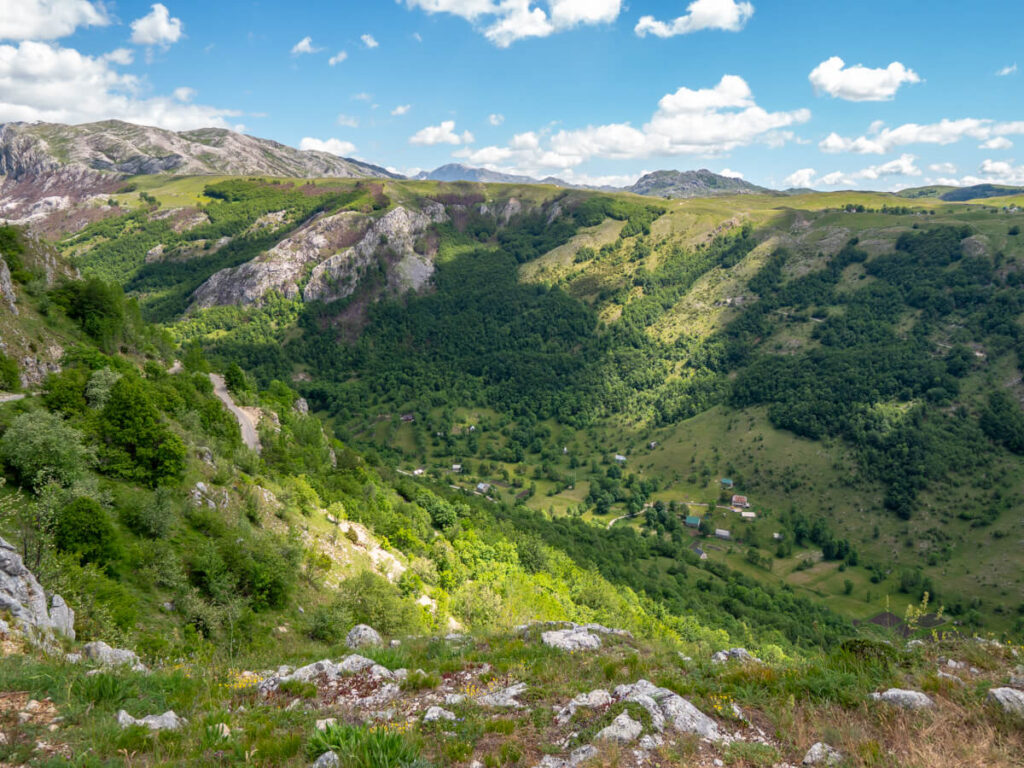
9. Pišče
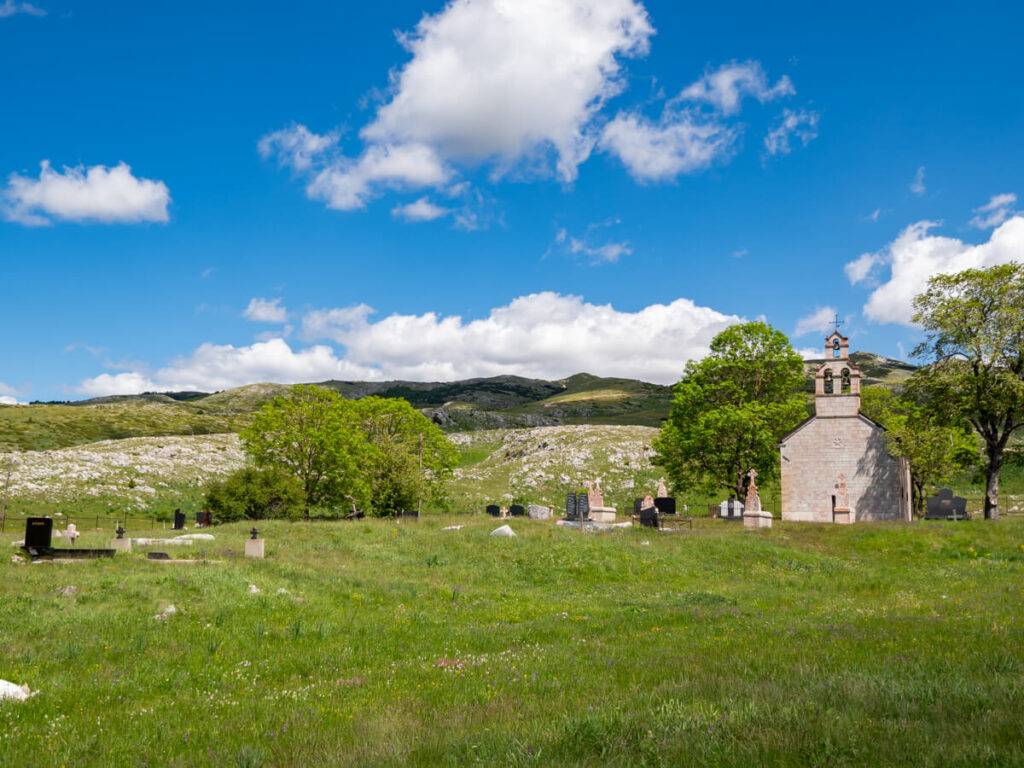
Whether you detour to Piva Lake or just stay on the Durmitor Ring, the P14 will next take you to Pišče, a small mountain village tucked into the southern slopes of Durmitor.
The village sits in a landscape shaped by centuries of pastoral life, where local communities historically relied on livestock farming and seasonal movement between lower villages and mountain pastures. Today, it’s recognisable as a few stone houses, a small church, open fields, and mountain views in every direction.

10. Todorov Do
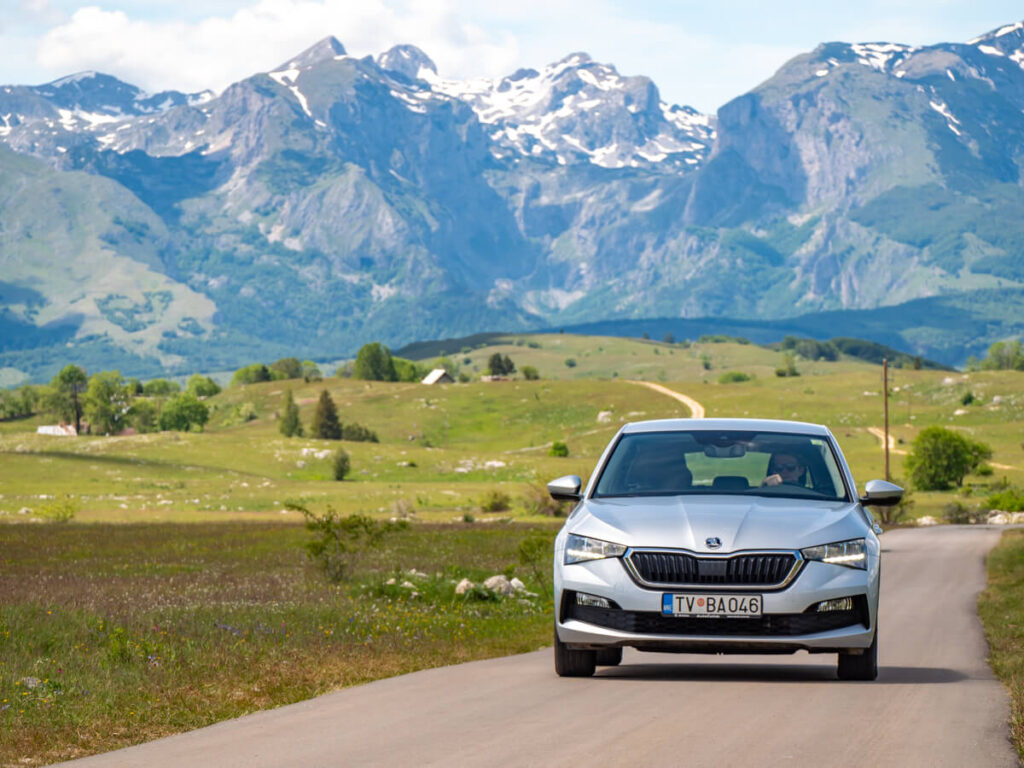
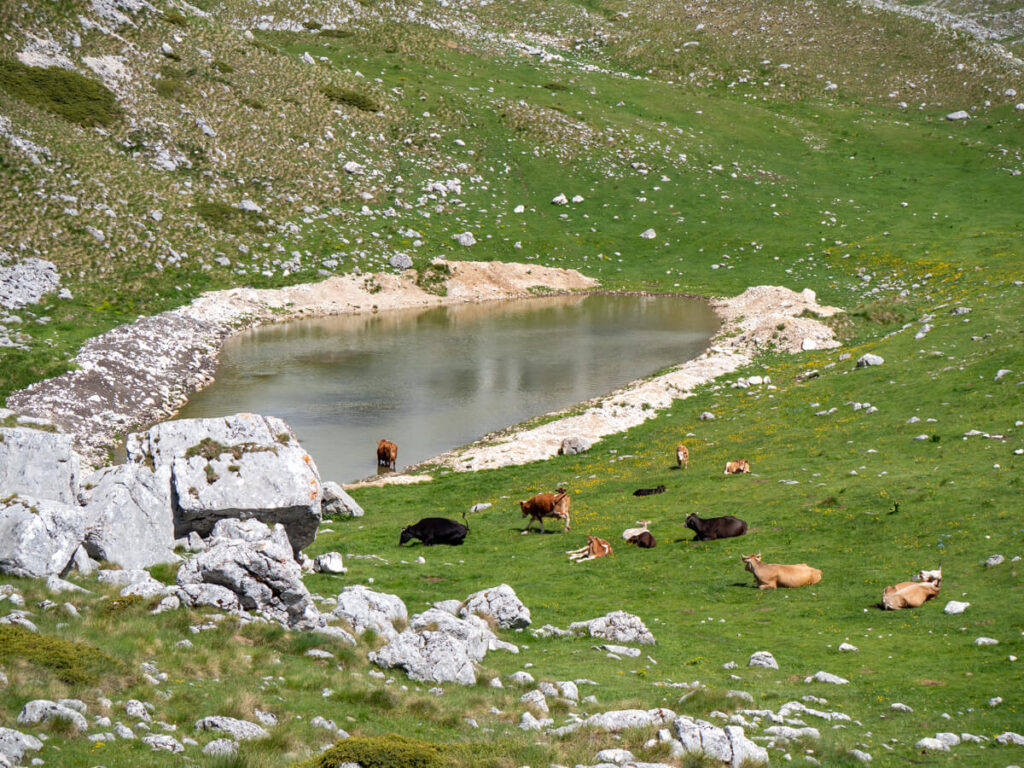
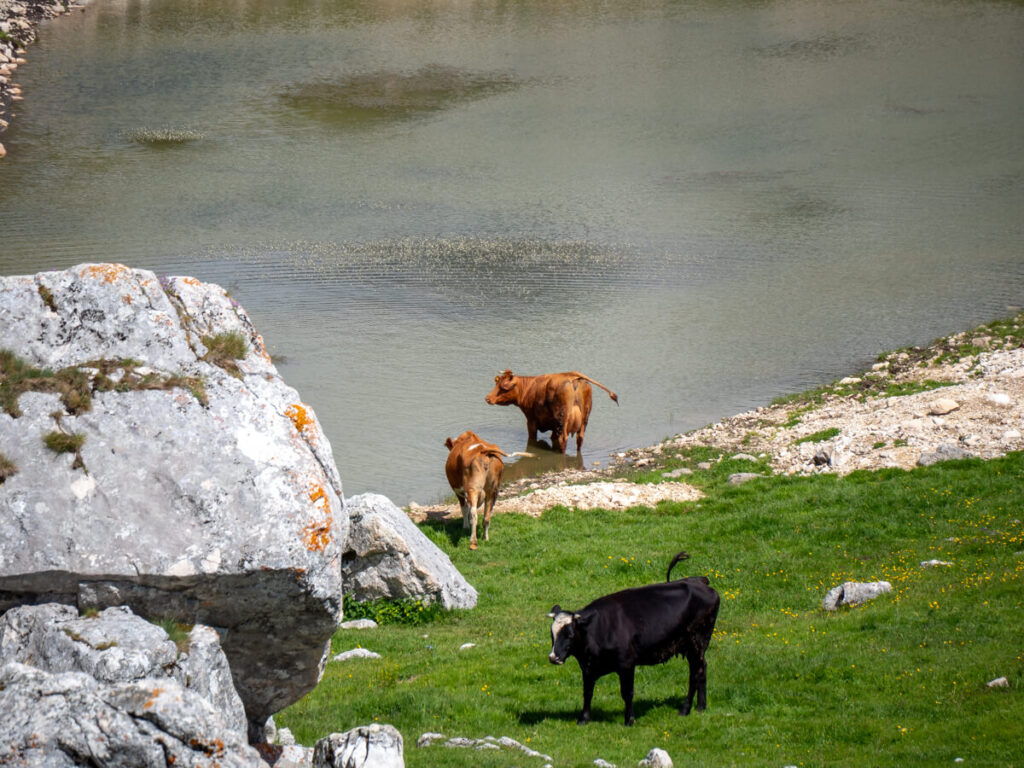
The next part of the Durmitor Ring Road heads east towards the heart of Durmitor National Park. You’ll pass local katuns and farms. In some areas, locals will sit outside with tables selling homemade rakija, cheeses, and jams.
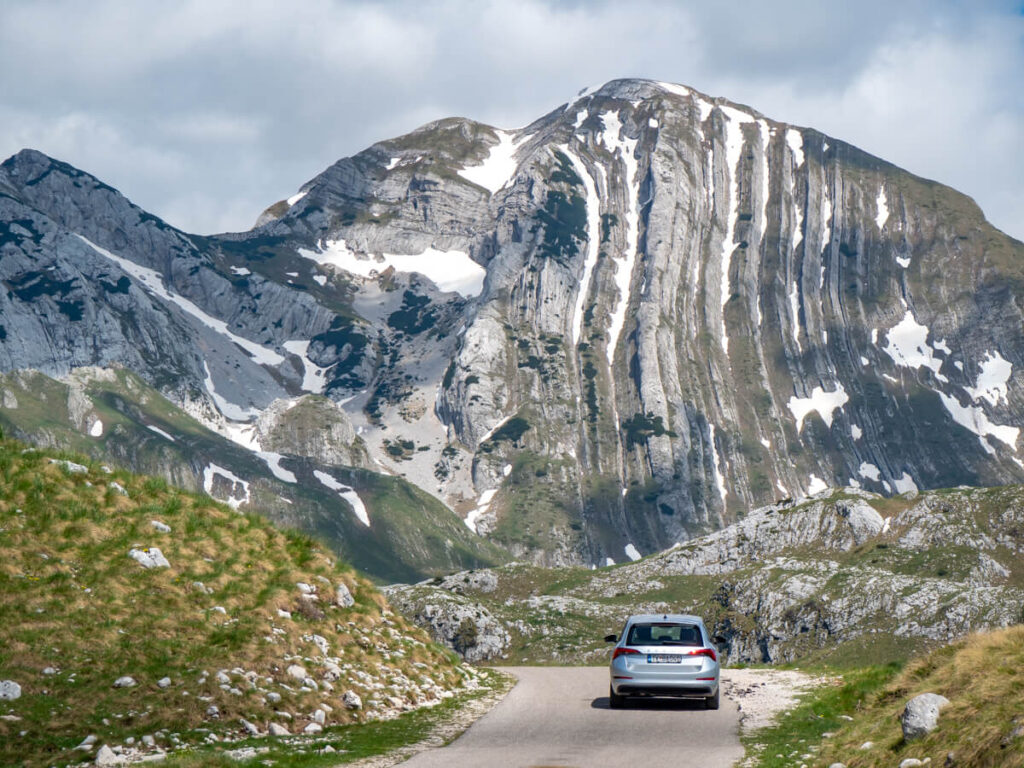
You’ll enter the Todorov Do Valley, a high mountain pass and plateau area, and from here on out the views only get more impressive. At around 1,900 metres (6,234 ft) above sea level, this is one of the highest sections of the drive and offers a classic Durmitor landscape of open grasslands surrounded by dramatic limestone mountains. It’s at this point that you’ll start to see the dark slopes of Prutaš looming in the distance.

12. Prutaš
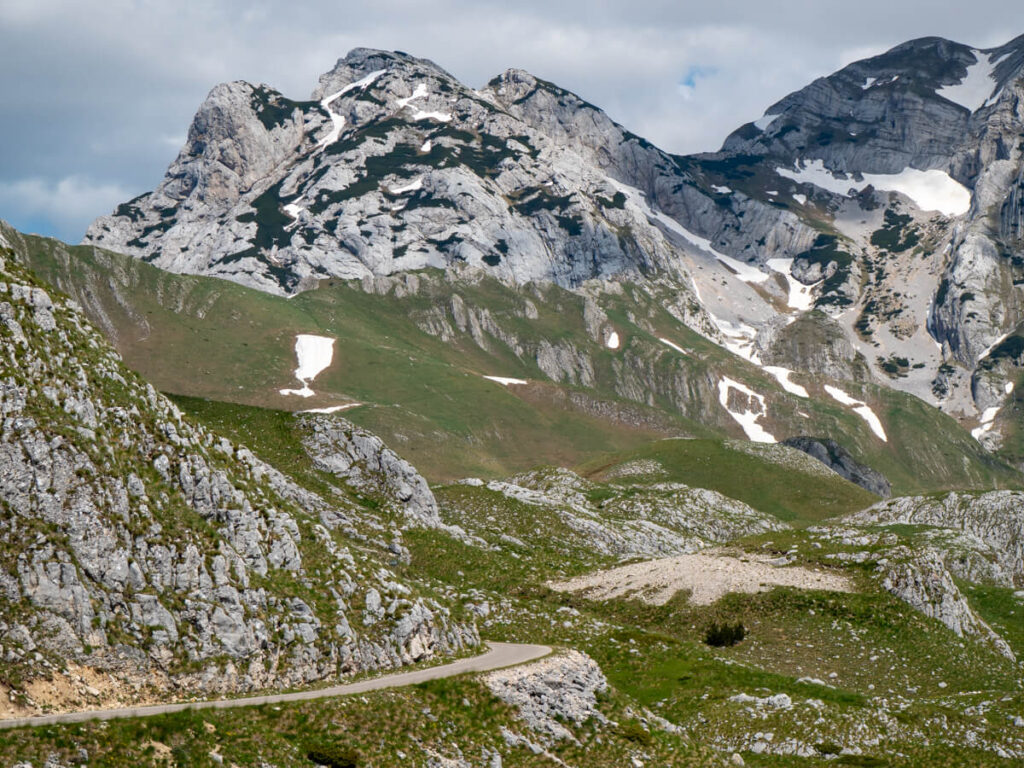
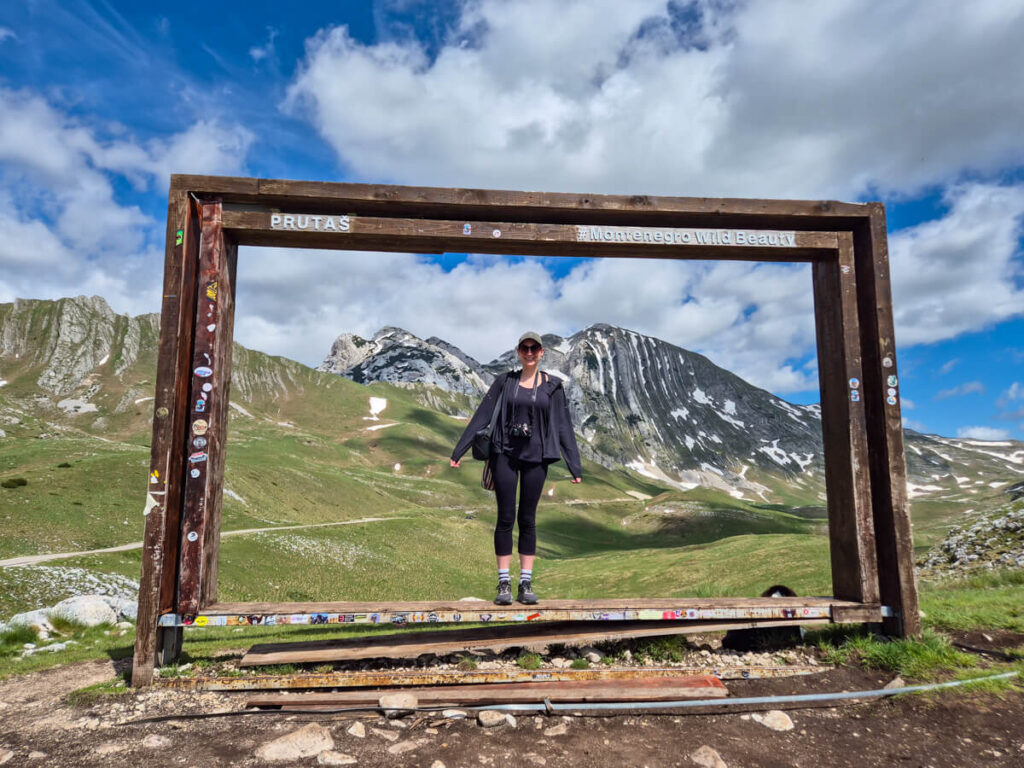
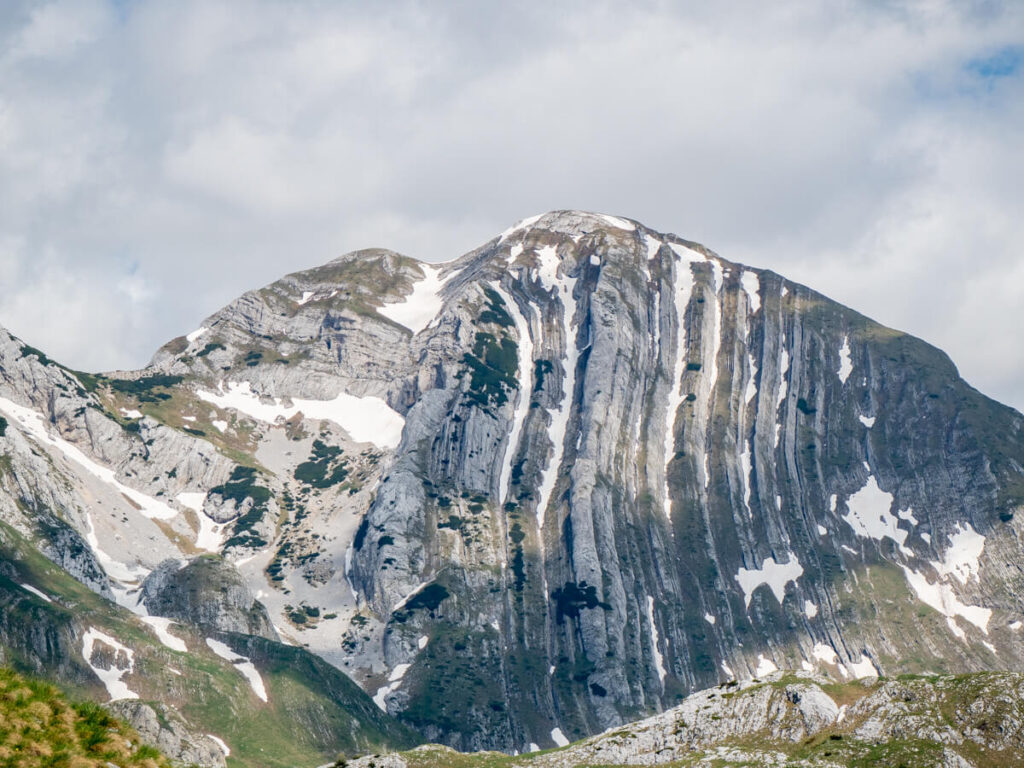
Prutaš is one of Durmitor’s most recognisable mountains due to its distinctive horizontal stripes that run across its southern face, created by layers of limestone that resemble stacked stone terraces. Rising to 2,393 metres (7,851 ft), scaling the peak is one of the most popular hikes in Durmitor National Park.
It was at this point that we really appreciated how driving anticlockwise is the right decision. We were constantly facing the most epic views. There are countless viewpoints worth stopping at on this stretch of road, but one of the most famous is the Prutaš Frame View.

12. Sedlena Greda
As you continue along the P14, you’re met with constant mountain views. It’s up to you how many times you pull over for photos, but it’s hard to resist not stopping every two seconds.
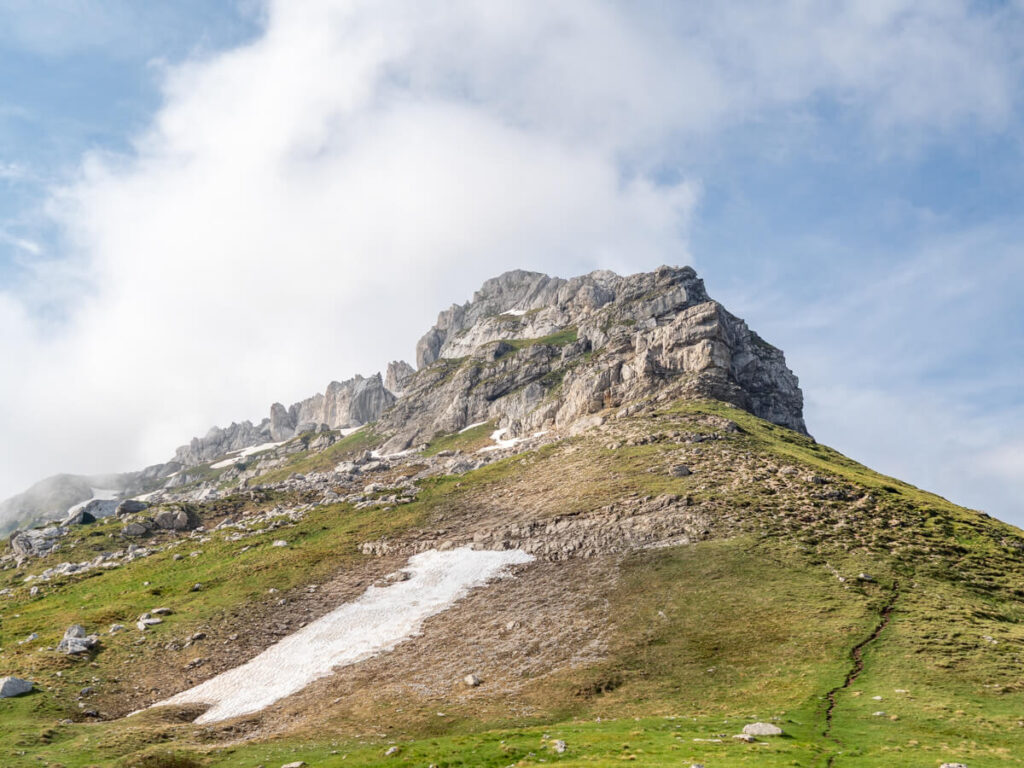
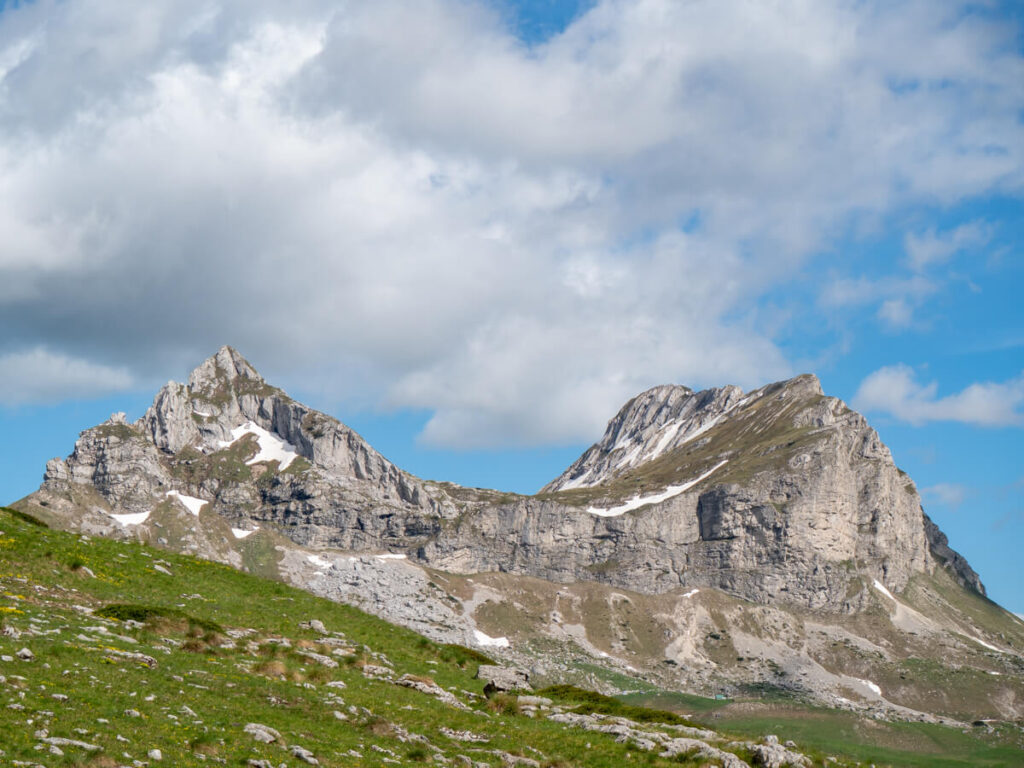
The next major stop we’d recommend is at Sedlena Greda, a striking mountain ridge near the end of the Durmitor Ring and one of the best viewpoints accessible from the road. You’ll see it coming up, as its twin peaks loom over the road as you head east.
Rising to 2,227 metres (7,306 ft), it offers incredible views across the central Durmitor massif without needing to hike anywhere. This is also the location of the trailhead for the epic Bobtov Kuk hike, which traverses to the summit of the highest mountain completely contained in Montenegro (it’s technically the country’s second highest peak, but the tallest peak sits partly in Albania in Prokletije National Park).


13. Sedlo Pass
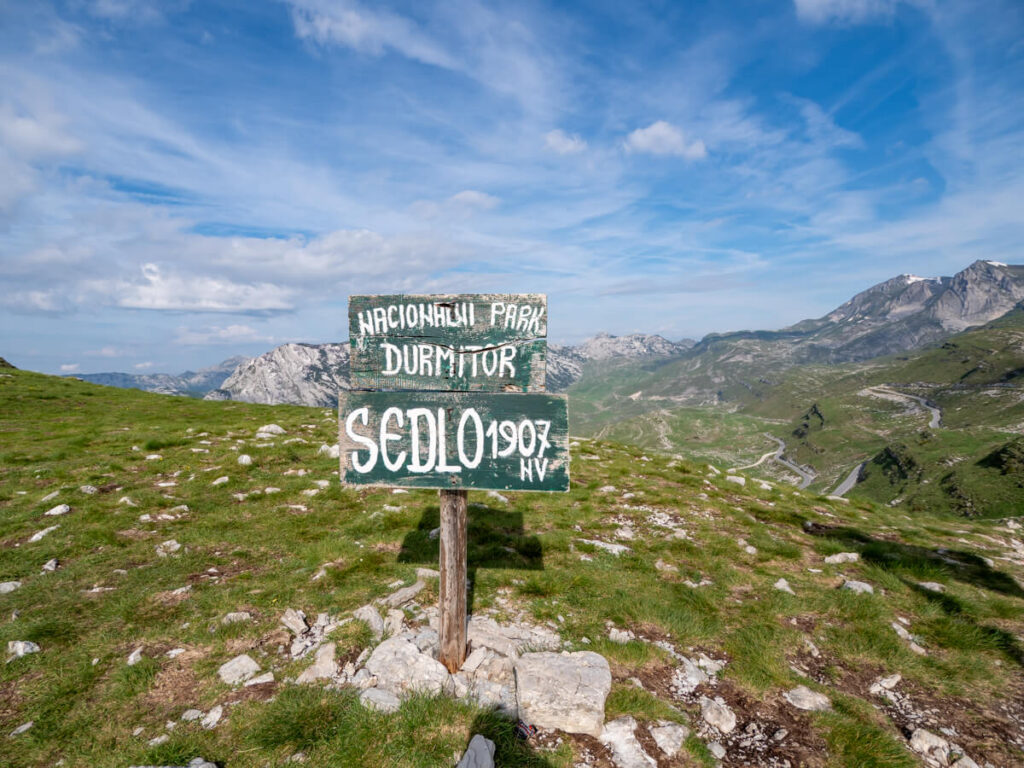
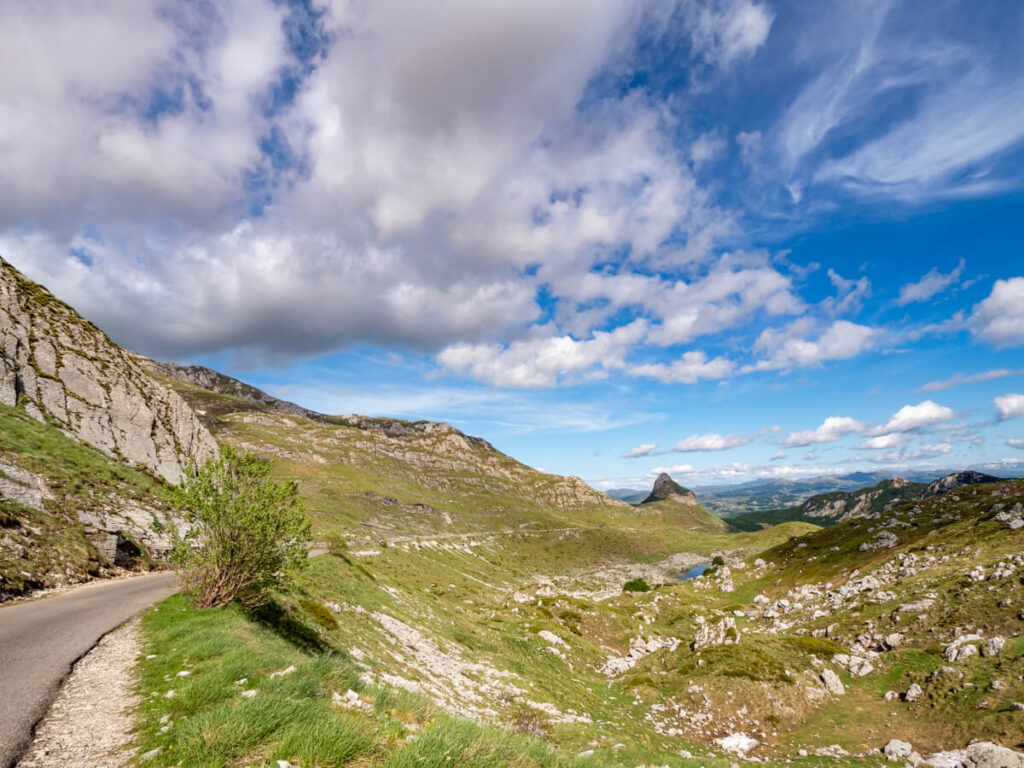
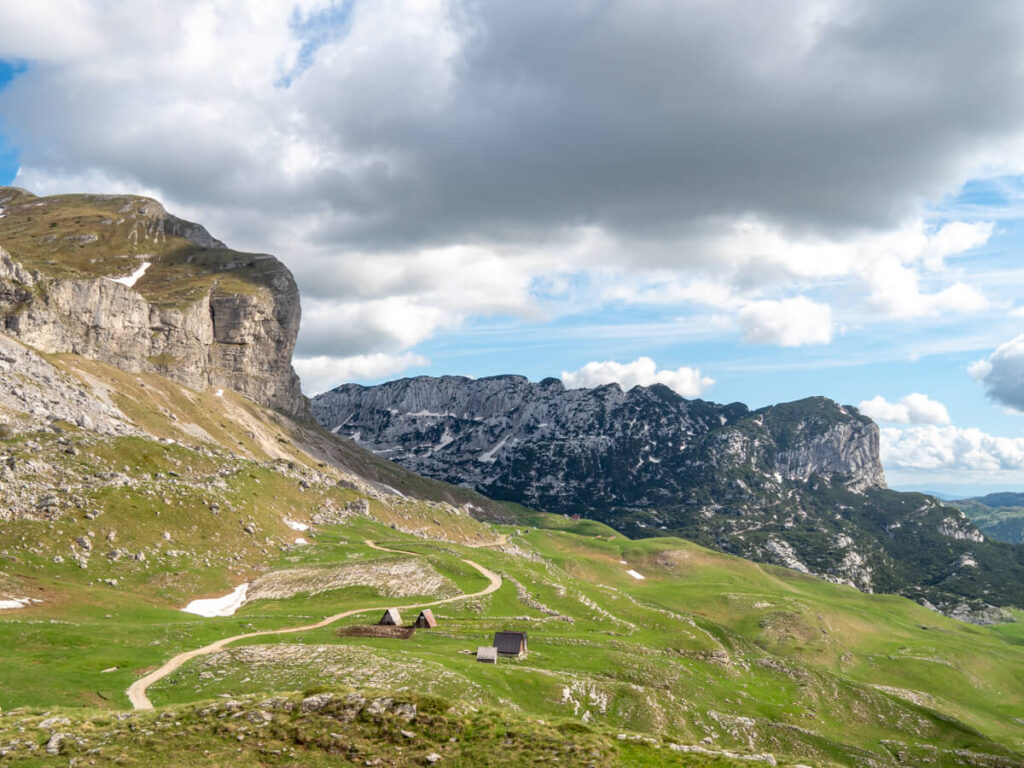
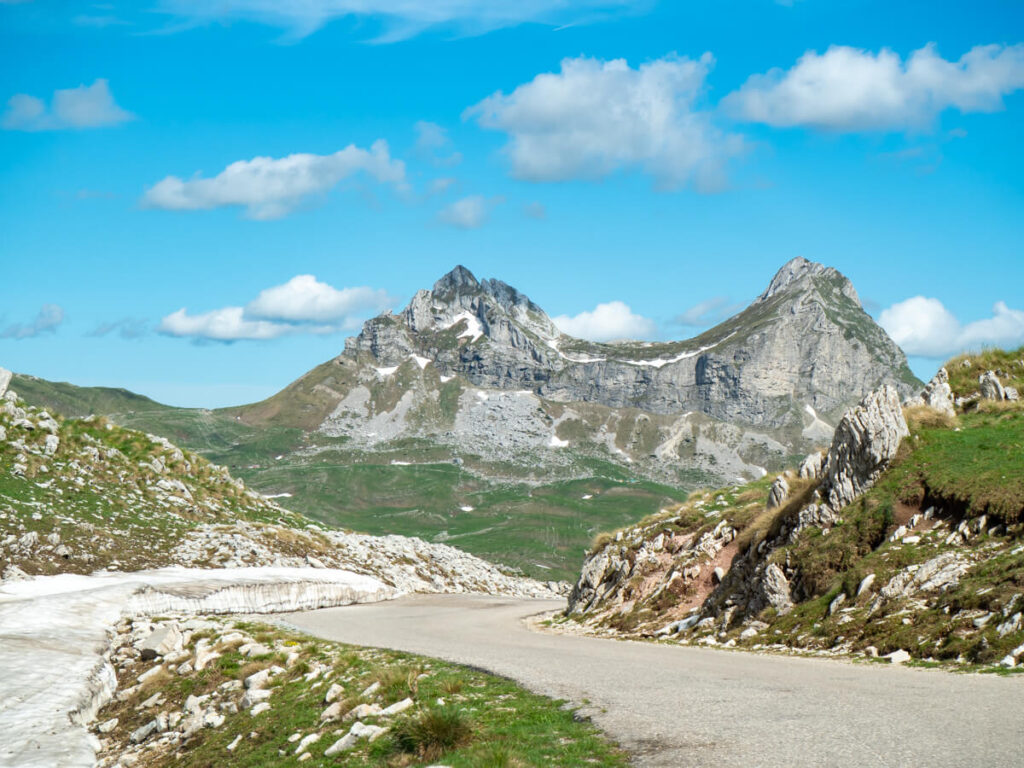
At this part of the drive, you’re well and truly in the Sedlo Pass. This is the highest point of the Durmitor Ring at 1,907 metres (6,257 ft) above sea level.
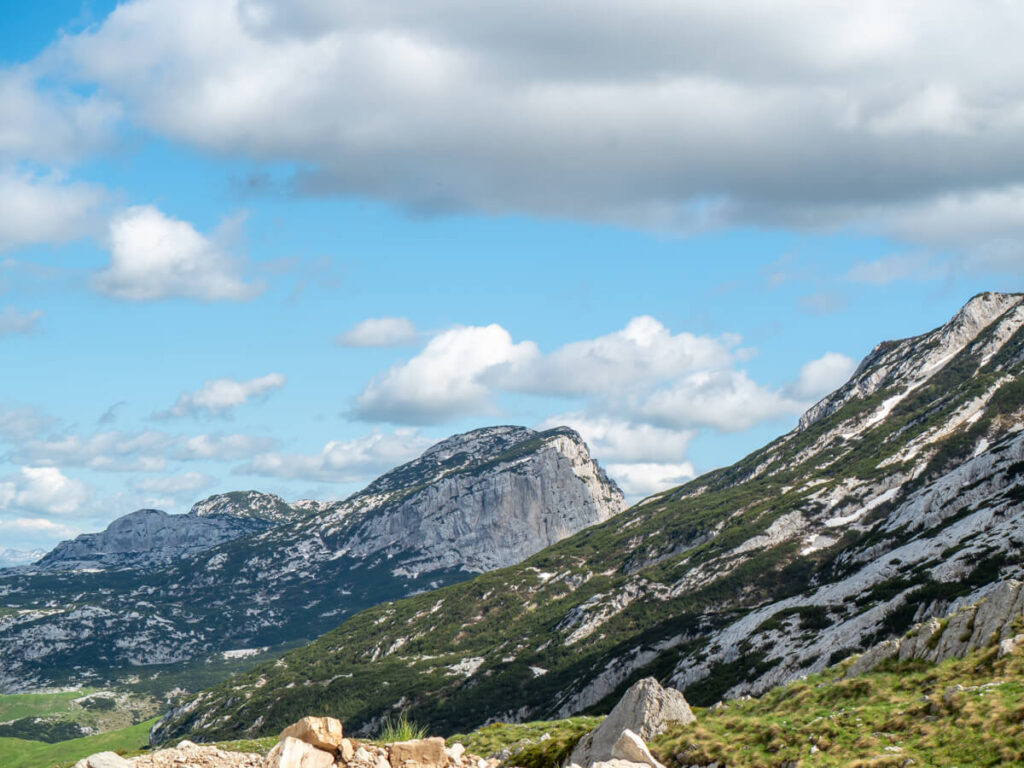
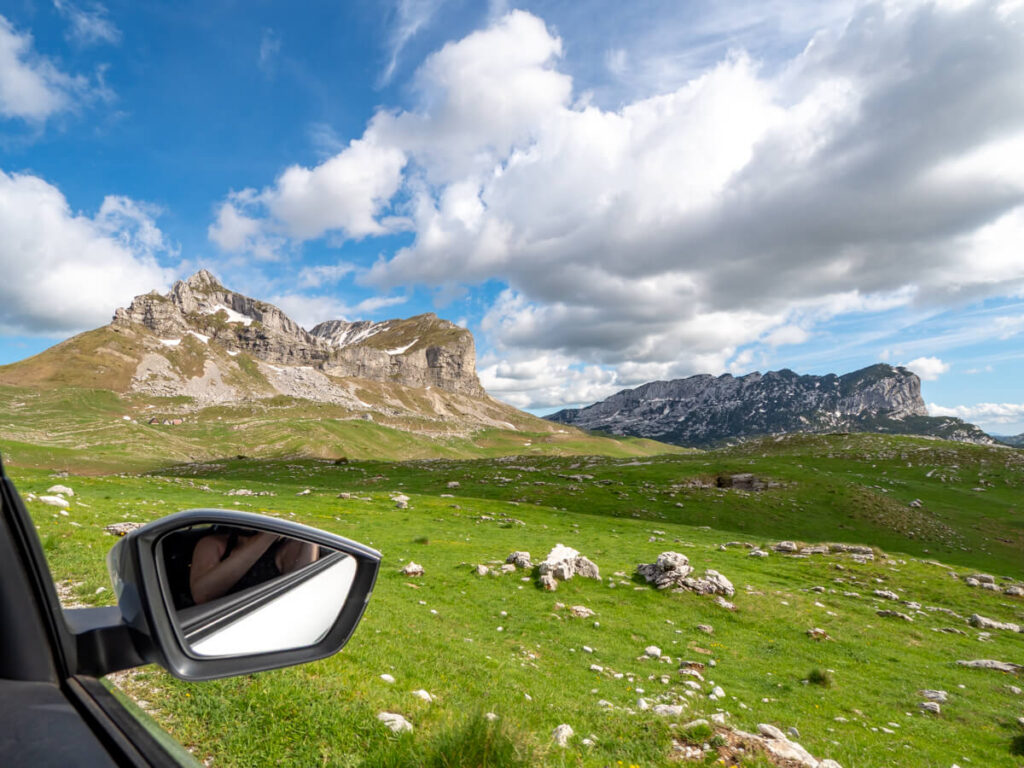
The pass is famous for its enormous mountain views and the feeling of being completely surrounded by wilderness. Unlike many European mountain passes that are simply a place to cross from one valley to another, Sedlo is a destination in itself, with drivers, hikers, bikers, and photographers all stopping to admire the landscape.
14. Pošćenska Dolina
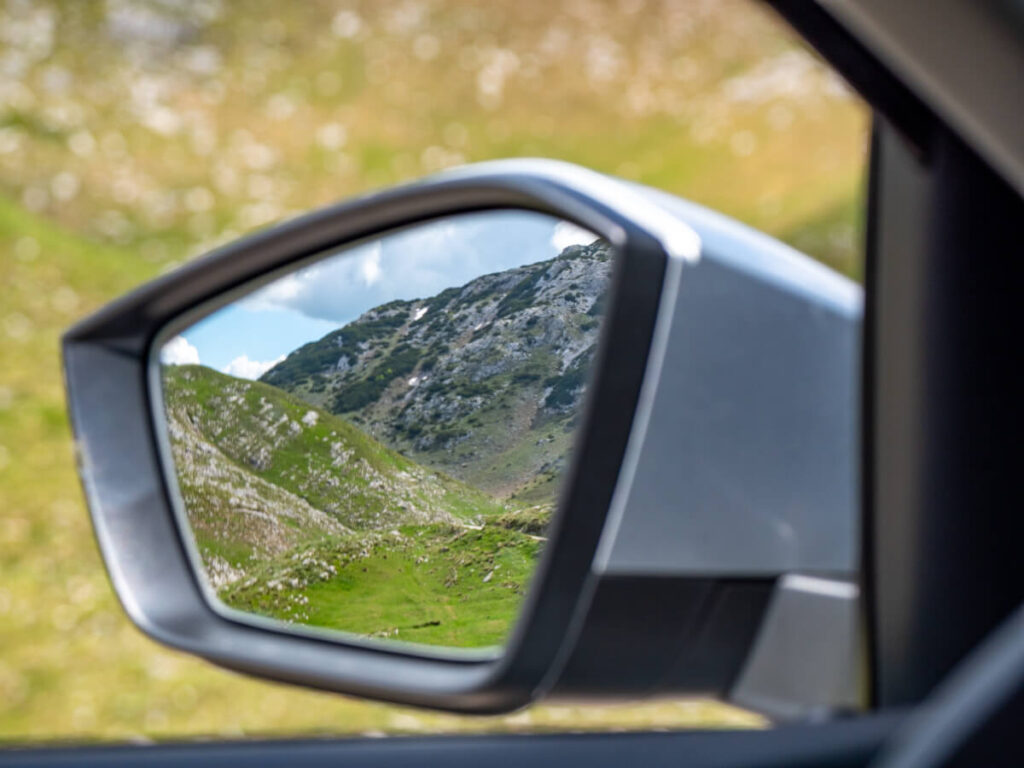
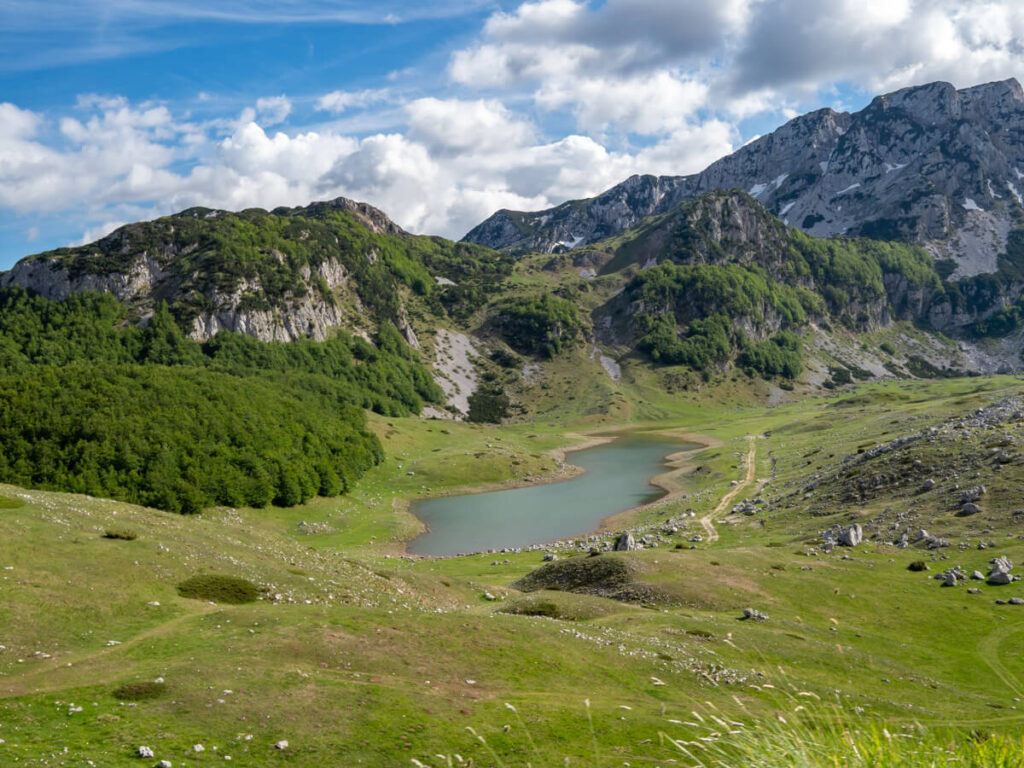
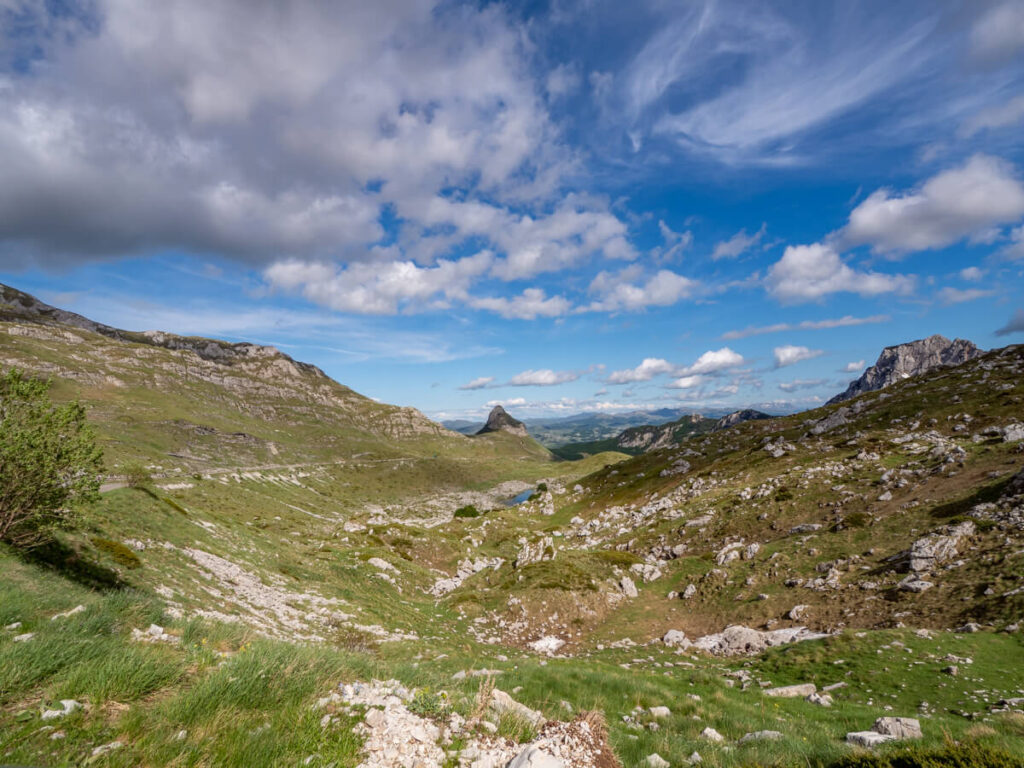
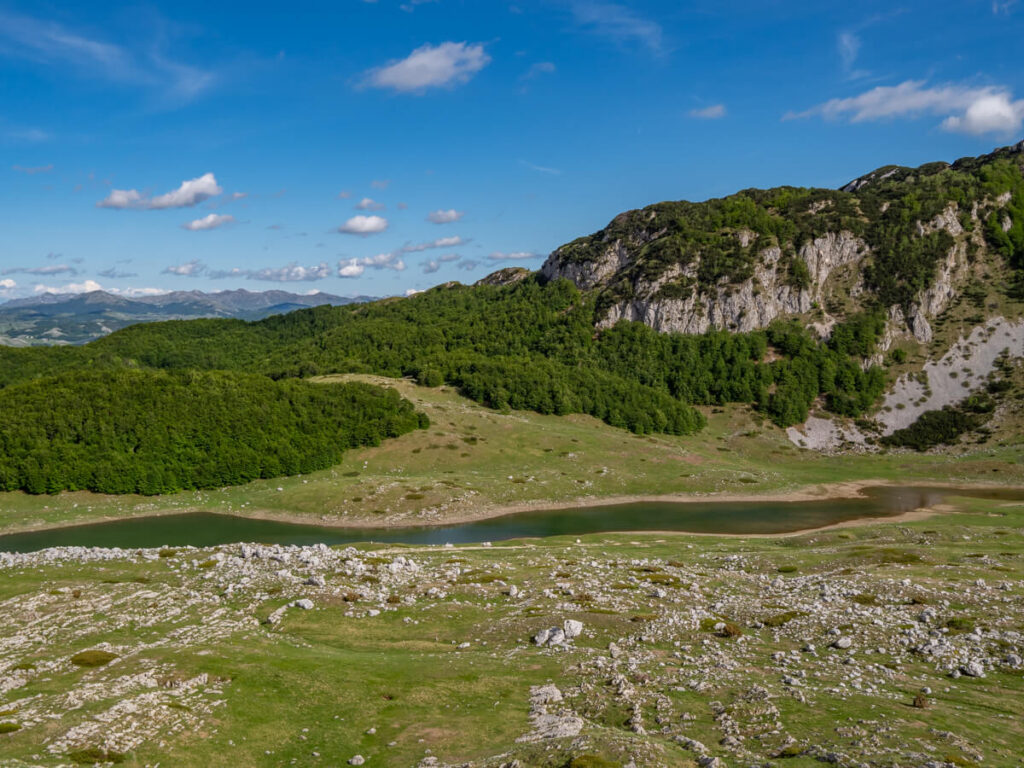
You’re nearly home at this point. Last but not least, you’ll pass Pošćenska Dolina, a peaceful valley at the entrance to Durmitor National Park. It’s known for its green meadows, traditional rural landscape, and views towards small lakes that sit under the surrounding limestone peaks.
You’ll see Valovito Lake from the road, and smaller lakes including Modro Lake and Suva Lokva also sit in the valley. There’s a popular viewpoint that makes for a great final stop before finishing the loop. Due to its proximity to the park boundary, this is also a nice sunset spot.
15. Savin Kuk
When you reach the eastern edge of the P14, you have two choices: continue north on the P14 or turn onto the M6, which will take you back to Žabljak faster.
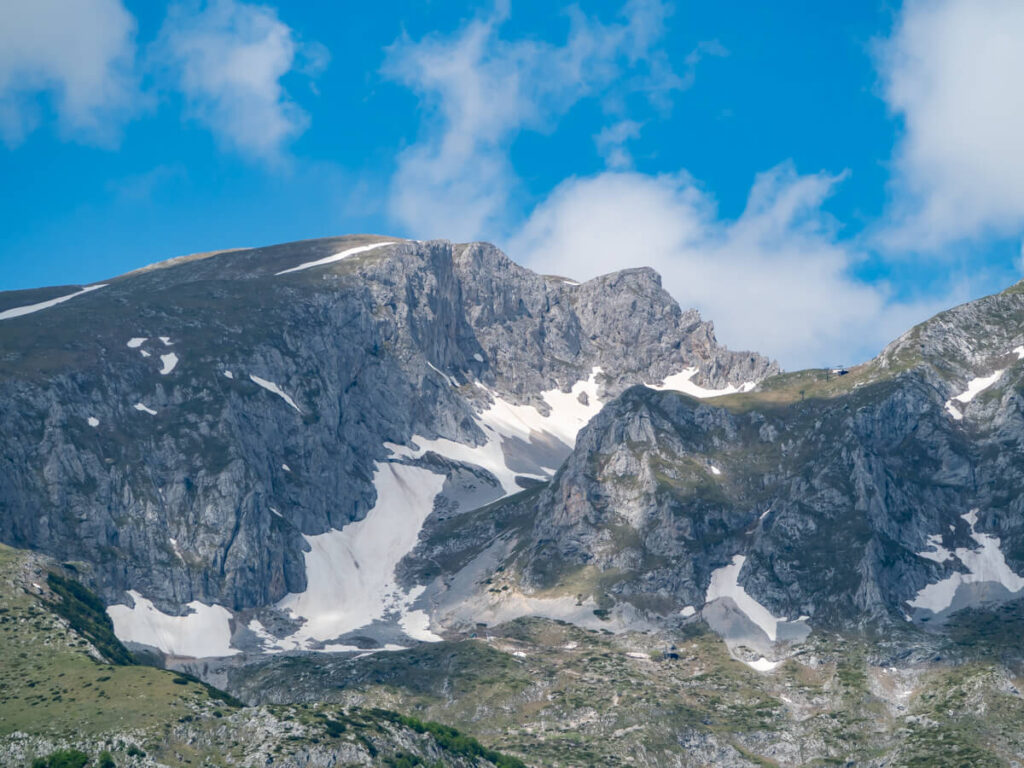
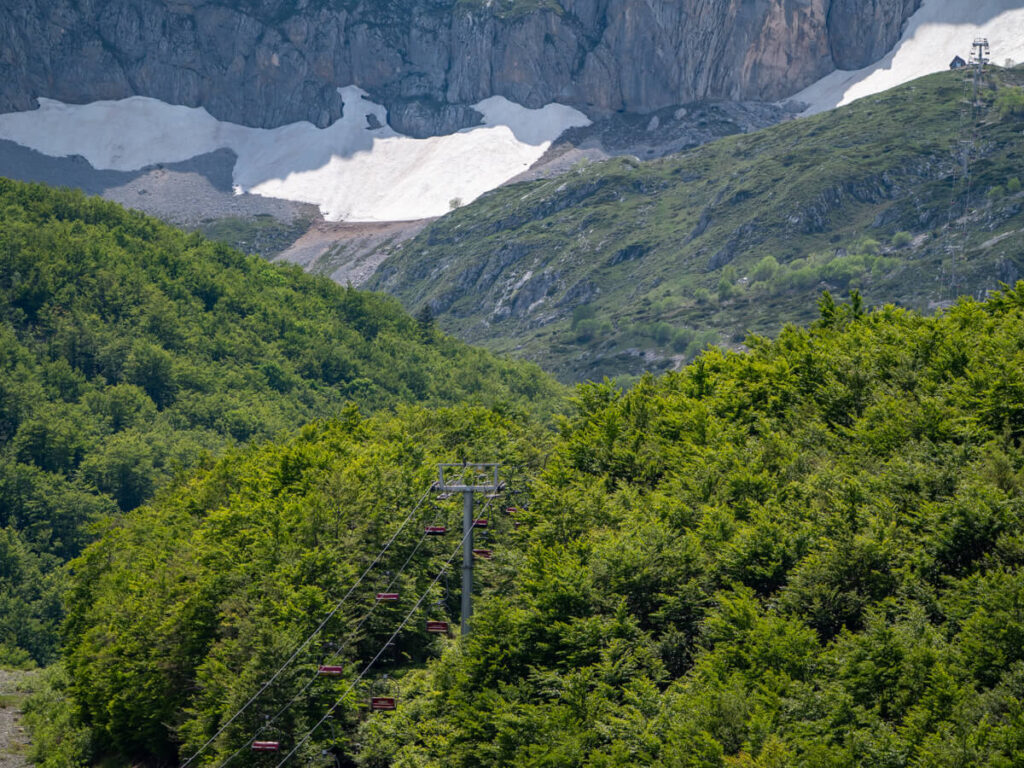
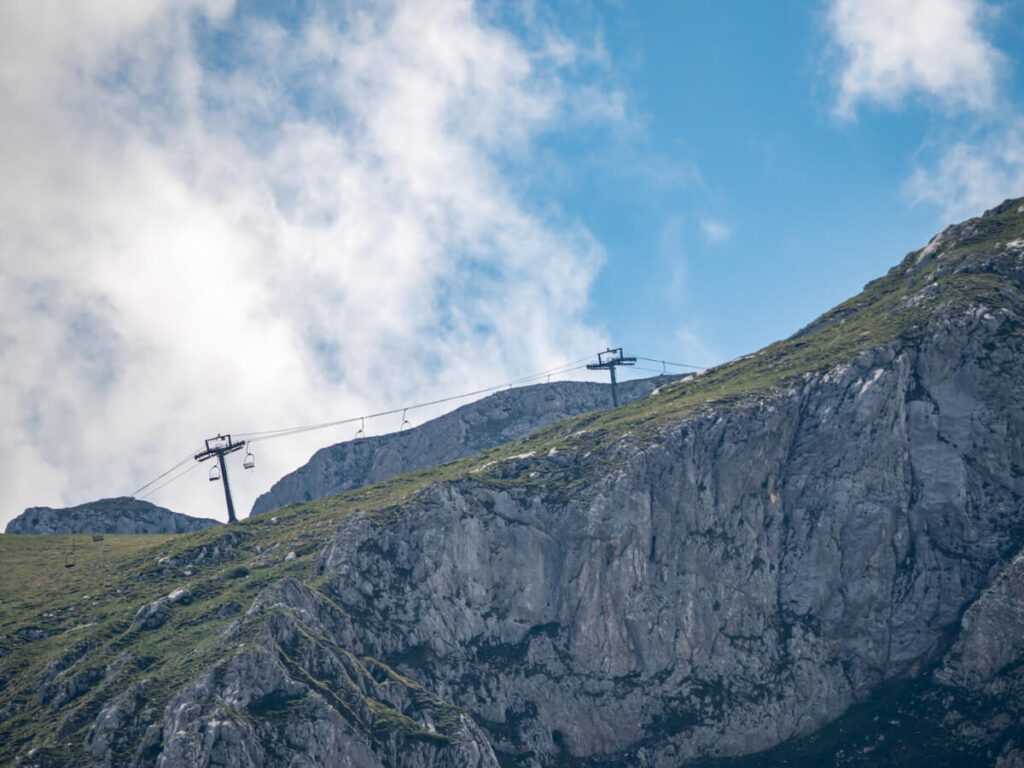
If you stay on the P14, you’ll pass by the Savin Kuk Ski Center, which features ski lifts to the top of the mountain, where a short hike takes you to the summit of Savin Kuk. This is also a popular spot for skiing in winter.

Other possible detours
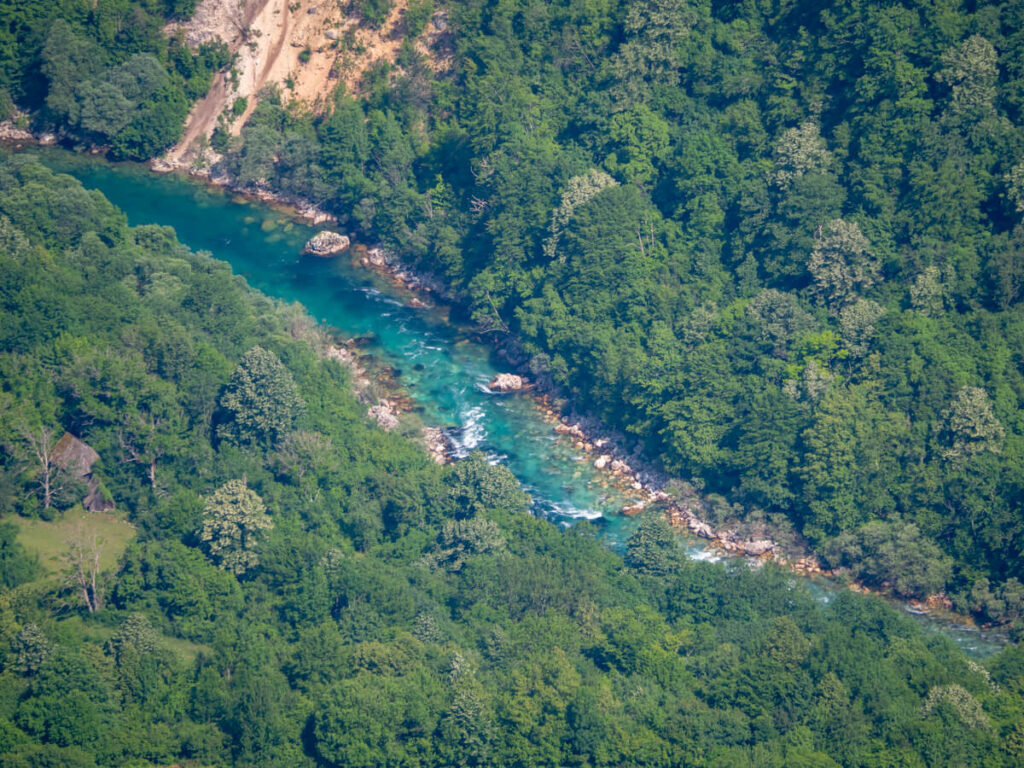
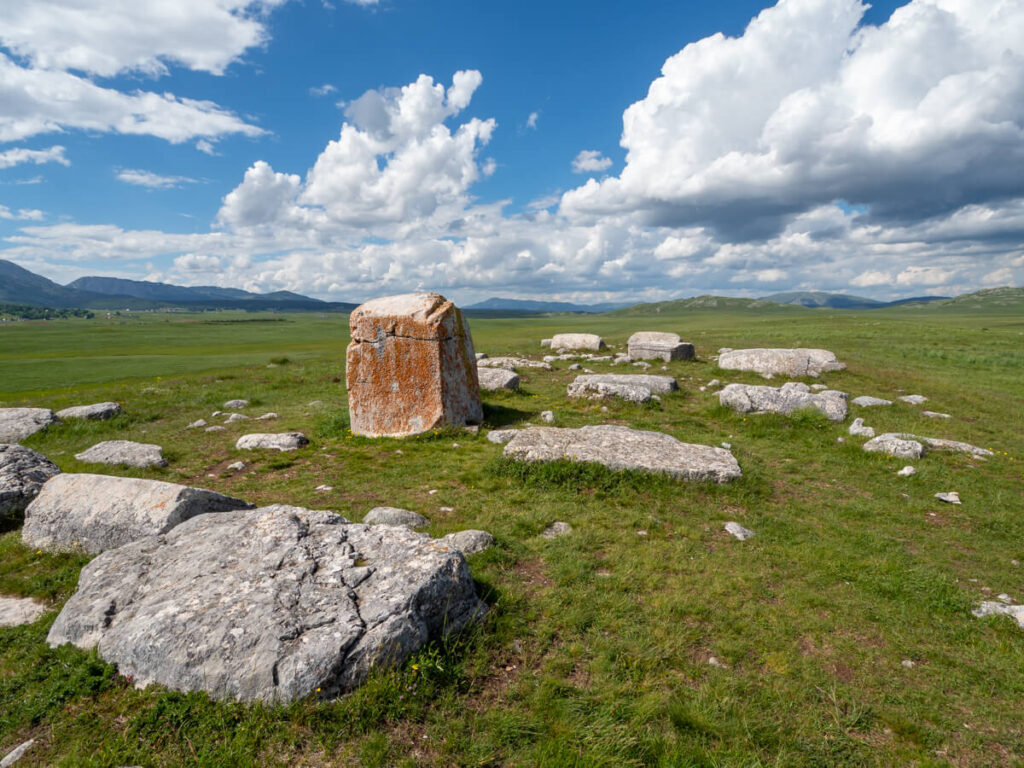
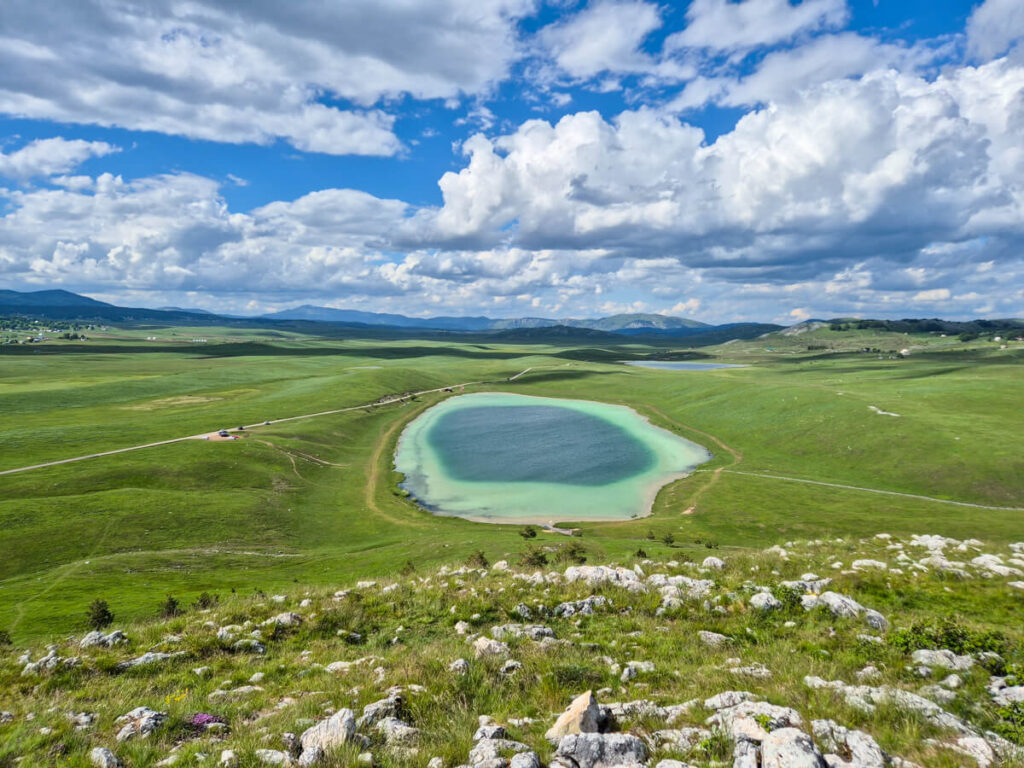
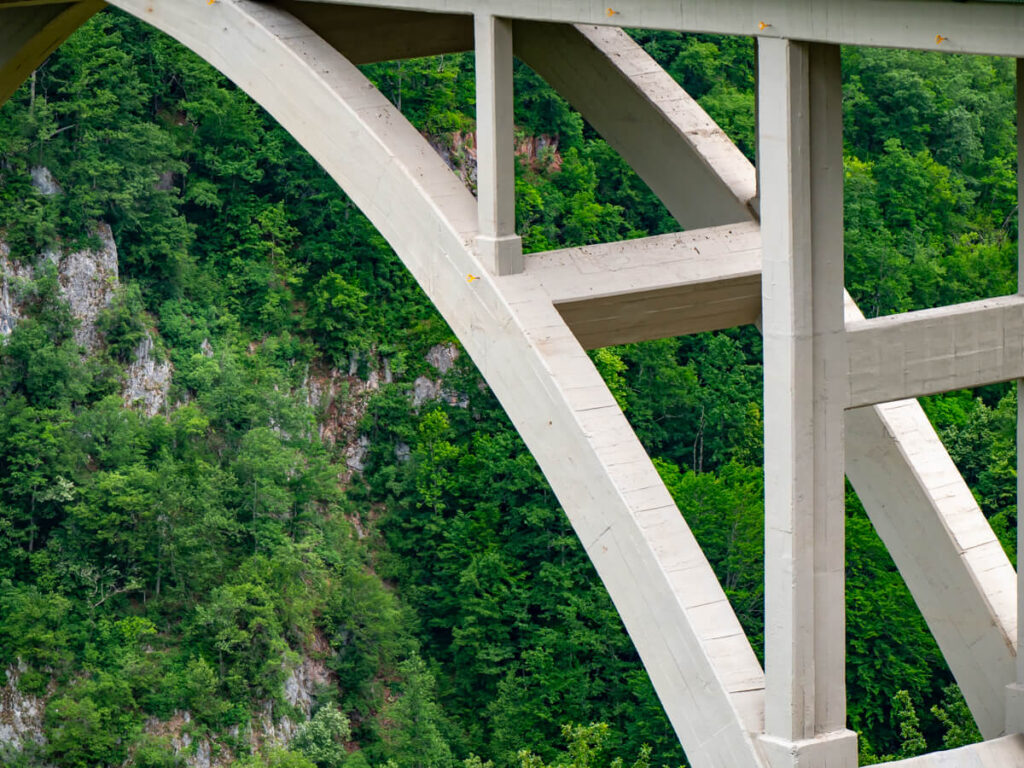
The Durmitor Ring Road is already packed with an incredible amount to see in one drive, but if you have extra time or are only doing a little of the route, there are several worthwhile detours nearby, including:
How long does it take to drive the Durmitor Ring?
The Durmitor Ring is around 47 miles (76 km) long without detours and can technically be driven in around 3 hours without stopping. However, that would miss the whole point of the route.
With viewpoints, short walks, photo stops, and time to enjoy the scenery, we’d recommend allowing at least 5 to 8 hours. We spent a full 8-hour day exploring the route (from around 9:00 AM to 5:00 PM) with lots of stops and a detour to Piva Lake.

What vehicle do you need for the Durmitor Ring Road?
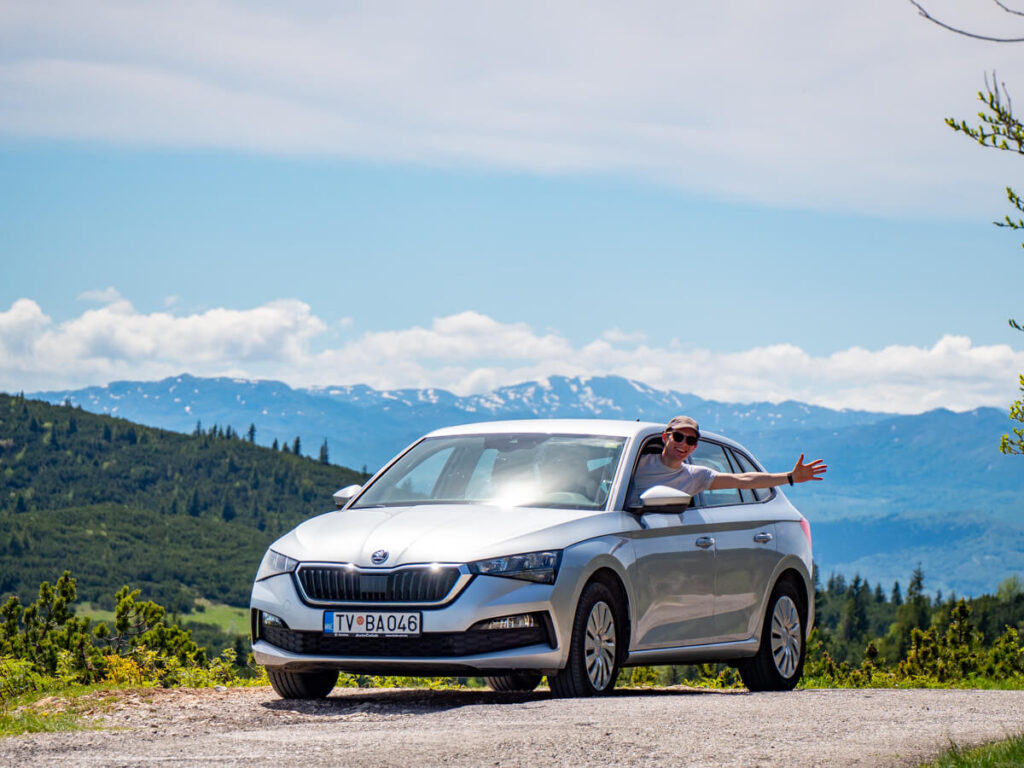
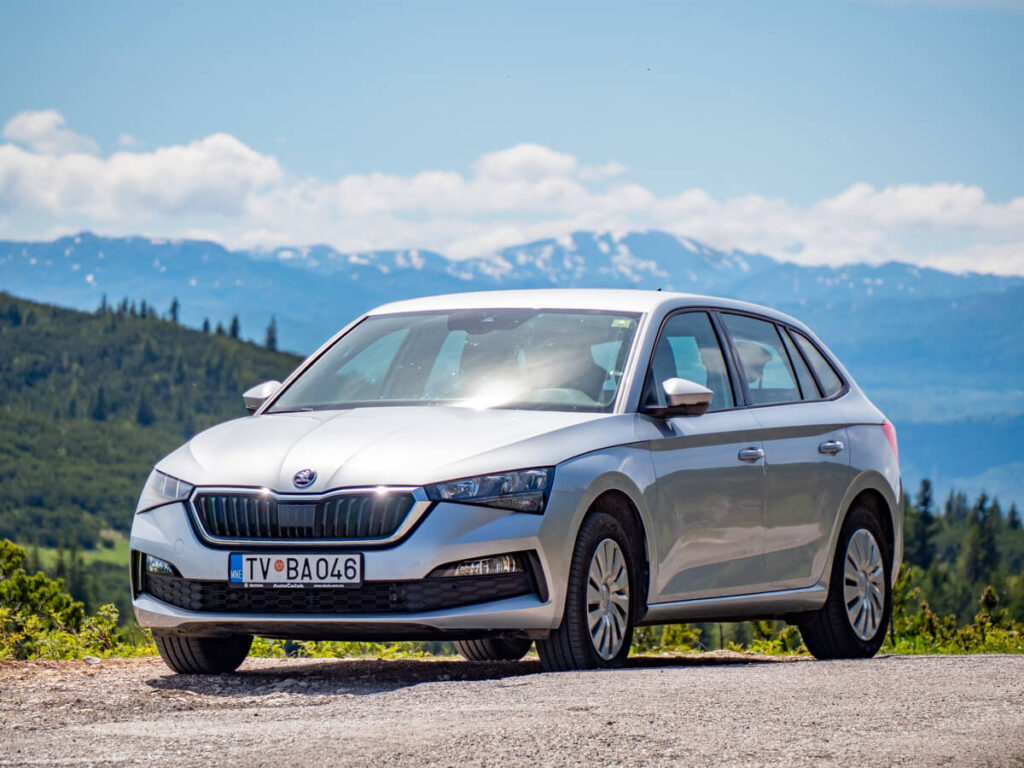
A normal rental car is absolutely fine for driving the Durmitor Ring. While Jeep tours are popular, you do not need a 4×4, as the main loop is paved throughout and suitable for standard vehicles.
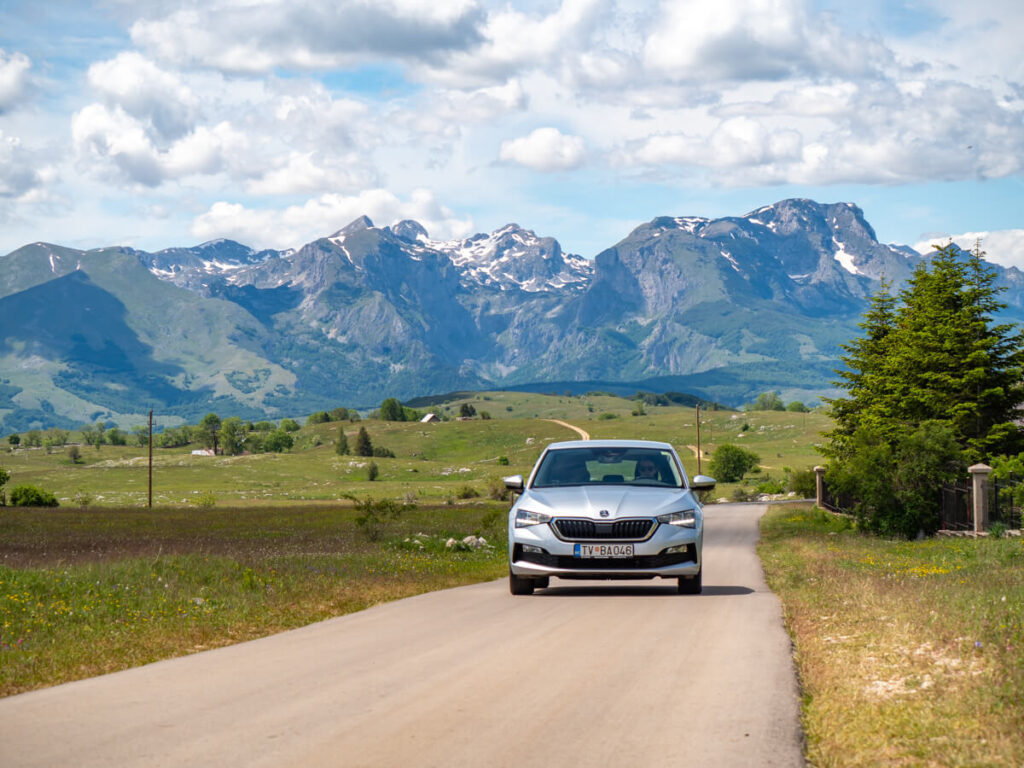
Having said that, this is not a road we’d recommend attempting in a large campervan, motorhome, or oversized vehicle unless you are very confident driving narrow mountain roads. Some sections include tight bends, limited passing places, steep drops, and little room to manoeuvre. We’d also be cautious of driving the loop outside of the warmer Spring and Summer months, as snow can make the roads more difficult to drive.
We’d recommend choosing the smallest vehicle you feel comfortable travelling in when renting a car in Montenegro. A compact car makes passing other vehicles easier and is much less stressful on the narrower sections of the route.
The easiest (and by far our favourite) way to experience the Durmitor Ring is with your own rental car. It gives you the freedom to stop at every viewpoint, detour to hidden lakes and villages, hike whenever something catches your eye, and drive entirely at your own pace.
We almost always use DiscoverCars.com to compare prices across multiple rental companies, and we’ve consistently found them to offer some of the best rates, transparent insurance options, and flexible cancellation policies.
Cycling the Durmitor Ring Road
Cycling the Durmitor Ring is possible and is becoming increasingly popular among experienced cyclists looking for a challenging mountain route.
The biggest challenge is not the distance itself, but the significant elevation changes, exposed sections, and mountain conditions. There are long stretches without services, shade, or reliable water sources, so cyclists need to come prepared.
Bear in mind that much of the Durmitor Ring is a narrow mountain road, and some sections are simply not wide enough for two vehicles to pass comfortably. Cyclists should be prepared for tight overtaking situations, particularly on bends or uphill sections, and be considerate of drivers by safely pulling over when possible to allow traffic to pass.
The same also applies in reverse: drivers should slow down and give cyclists plenty of space.
Durmitor Ring Road Conditions
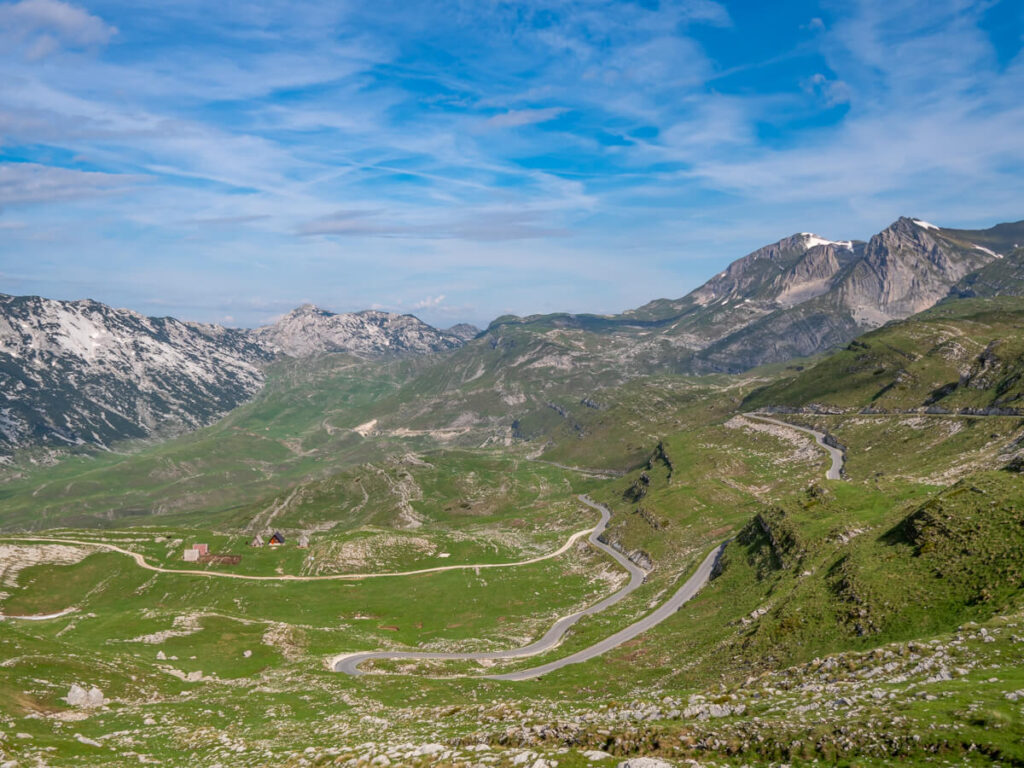
The whole Durmitor Ring loop is a paved mountain road, but it should not be confused with a fast or easy scenic highway.
Most of the road is in good condition, but more remote sections have potholes or uneven edges in places. The route also includes:
Most of the Durmitor Ring is not wide enough for two cars to pass comfortably, so be prepared for a lot of pulling into the side of the road. Passing oncoming traffic requires patience and often reversing to wider spots.
Conditions can vary depending on the season, too. In winter, much of the Durmitor Ring becomes impassable due to heavy snowfall, particularly the higher sections around Sedlo Pass, which can remain closed until the snow clears in late spring. Outside of winter, the road is usually open, but early-season travellers should still check conditions before setting off, as lingering snow, ice, or rockfall can affect some sections.
If you’re nervous about mountain roads or unfamiliar with local driving habits, we’d recommend reading our guide to driving in Montenegro before tackling the Durmitor Ring. Some local drivers can be a little impatient on narrow roads, while visitors unfamiliar with the terrain may hesitate when passing on tight sections, so understanding what to expect before you set off can make the whole experience much less stressful.

Is the Durmitor Ring Road safe?
The Durmitor Ring is generally safe to drive if you take your time and are comfortable with mountain roads. Thousands of visitors complete the loop every year, and the route is one of Montenegro’s most popular scenic drives.
The main risks are not from poor road quality, but from the nature of the landscape. Expect narrow sections, blind corners, steep drop-offs, and changing weather conditions. Drive slowly, stay alert, and don’t let the views distract you while you’re behind the wheel.
We’d particularly recommend avoiding rushing the route. The safest way to enjoy the Durmitor Ring is to treat it as a mountain adventure rather than a normal drive. Pull over at designated viewpoints, let faster vehicles pass, and take extra care around bends where visibility is limited.
If you’re nervous about driving, you can also explore sections of the route rather than completing the entire loop. The southern stretch towards Sedlo Pass from Žabljak gives you some of Durmitor’s most spectacular scenery without committing to the whole circuit. The northern portion of the road is narrower, hillier, and more challenging to drive.
Travel insurance can save you $$$ if things go wrong
Don’t forget to buy travel insurance! From lost luggage to emergency medical care abroad, travel insurance gives you peace of mind so you can solely focus on the adventure. It might not be exciting, but you’ll be very glad you have it if something goes wrong. A few of our favourite companies are:
Get 8 weeks of electronic theft coverage free with SafetyWing Travel Insurance with our code: THOROUGHLY8 (new members only). Simply click the pink camera and laptop icon on the Nomad Essential page to redeem the reward before creating a new account.
Find out more: 6 Best Travel Insurance Companies for Every Kind of Trip
Tips for driving the Durmitor Ring Road
The Durmitor Ring Road is one of Montenegro’s most rewarding drives, but a little preparation makes the difference between a stressful drive and a fun experience. Here are our top tips:

When is the best time to drive the Durmitor Ring Road?
The best time to drive the Durmitor Ring is generally from late May to October, when the higher mountain roads are usually open, and the landscapes are at their most impressive.
Each season offers something different, from snow-capped peaks and fresh green valleys in late spring to golden forests and quieter roads in autumn.
July and August offer the most reliable weather, but they are also the busiest months. Popular viewpoints and narrow sections of road can feel much more crowded during the peak summer season, so we’d recommend starting early if you’re visiting then.
June and September are the sweet spot. The weather is usually still pleasant, the landscapes are beautiful, and there are fewer visitors compared with the height of summer. We visited in June, set off early, and were pleased with how quiet the roads were for most of the drive. The busiest part was the southern stretch, especially at the Sedlo Pass in the afternoon.
Winter (November to March) is a different story. Heavy snowfall makes much of the Durmitor Ring inaccessible, and the higher sections are often completely closed until conditions improve.
What to pack to drive the Durmitor Ring
Although you’re sitting in a car for much of the Durmitor Ring, this is still a mountain adventure, and it’s worth preparing accordingly. Don’t forget to pack:
Leave your drone in your accommodation, as it’s illegal to fly in the national park (be aware that you need to apply for a permit before importing it into Montenegro anyway).
Is the Durmitor Ring Road worth it?
The Durmitor Ring is one of the best ways to experience the diversity of northern Montenegro in a single day, so we’d absolutely say it’s worth it. Few other routes take you from deep river canyons to high alpine passes, traditional villages, glacial landscapes, and some of the country’s most dramatic mountain scenery within such a short distance and a matter of hours.
However, it is worth noting that the Durmitor Ring is not a relaxing coastal-style scenic drive. The roads require concentration, the weather can be unpredictable, and some sections are genuinely narrow.
If you’re new to driving abroad or uncomfortable with narrow mountain roads, you may find parts of the route more stressful than enjoyable. It’s also not ideal for visitors who are short on time or travelling with a large vehicle they are not confident manoeuvring.
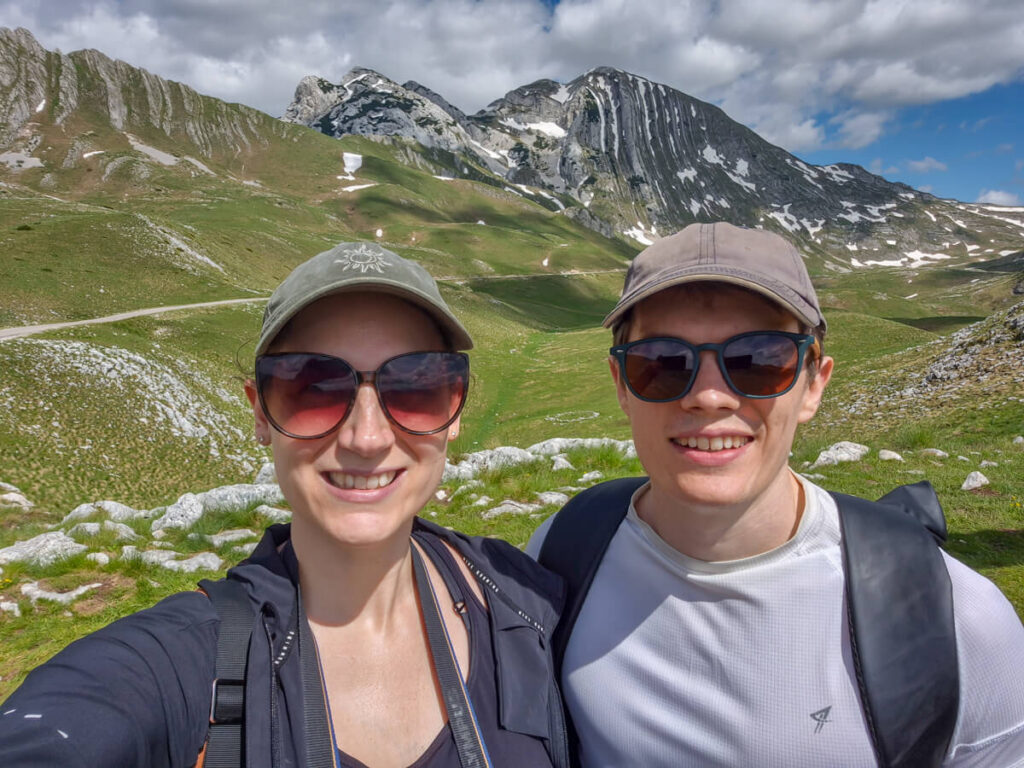
But if you’re comfortable with mountain driving, the effort is rewarded with one of Montenegro’s most unforgettable experiences. For us, the biggest appeal was the stunning scenery – the views really blew us away. One moment you’re driving through dense forest, and a few minutes later you’re surrounded by enormous limestone peaks and endless views across the Durmitor massif. It rivalled the scenery we saw on some of the park’s challenging day hikes, and we got to enjoy it all from the comfort of our car.

Durmitor Ring Road Accommodation
While the Durmitor Ring Road can be completed as a day trip from Žabljak, if you have a rental car, you don’t need to be restricted to the town. Choosing where to stay near Durmitor National Park carefully can enhance your experience.
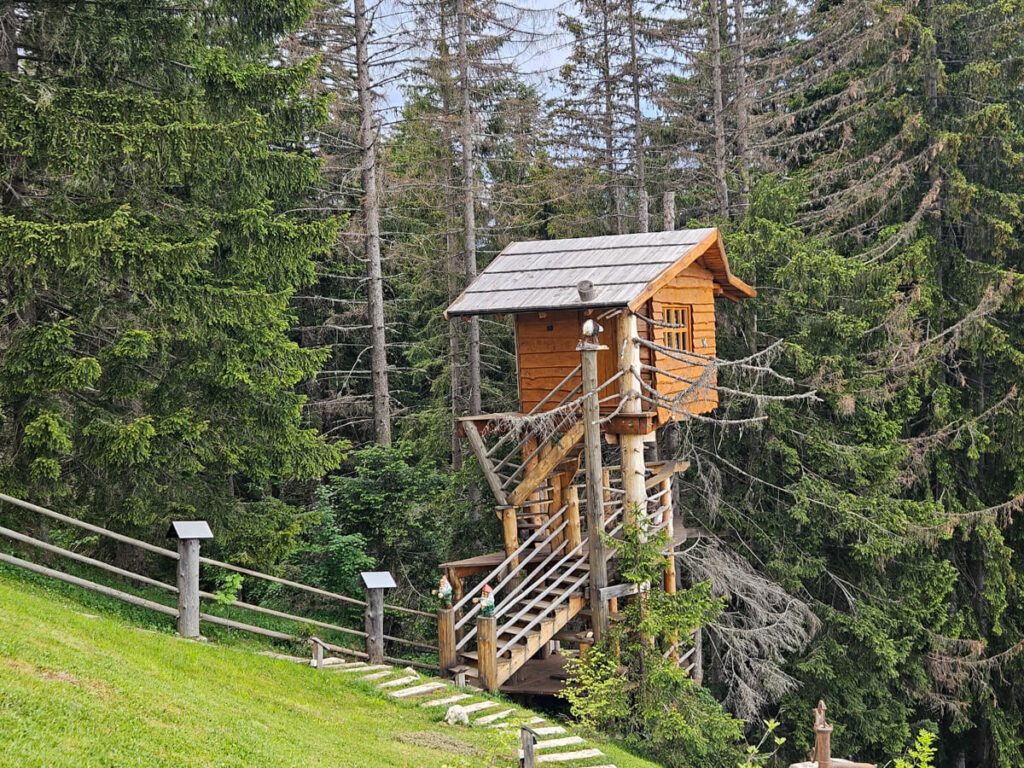
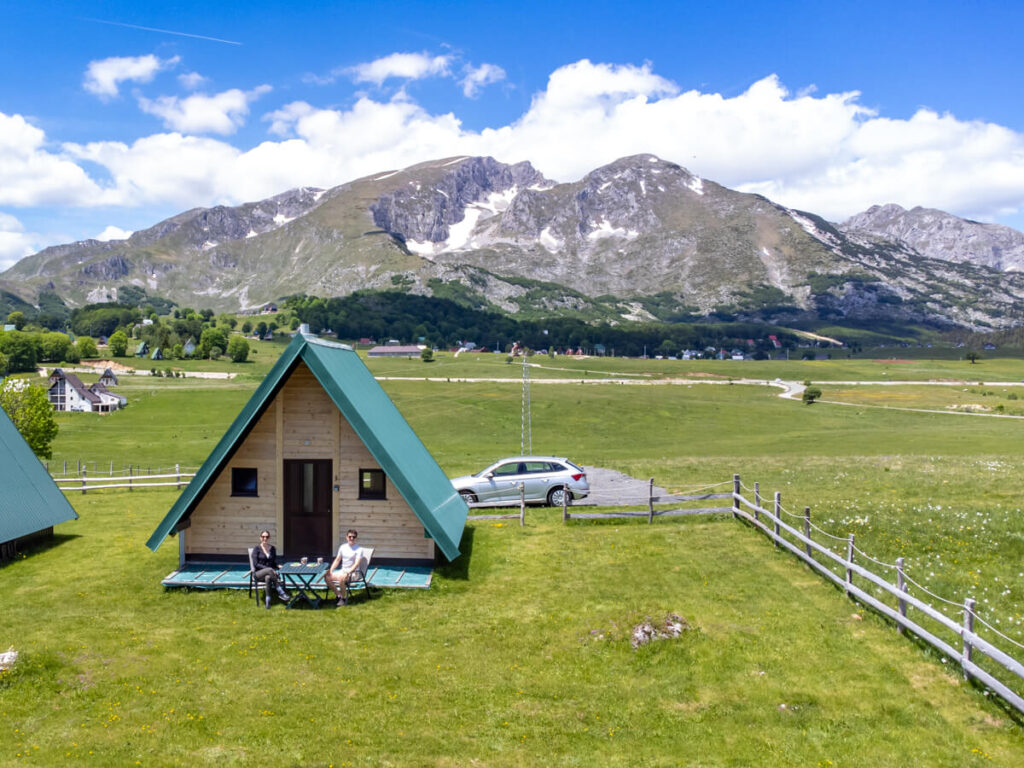
Personally, we think staying in the nearby countryside makes the experience much more enjoyable. We split our time between a remote wooden cabin with views of Savin Kuk (dreamy) and Guesthouse Planinarski dom Neviđen’o, which sits right at the start of the route.
For a unique experience, you should also consider staying in a traditional mountain katun. These family-run stays offer a chance to experience local hospitality, homemade food, and the slower pace of mountain life.
Wherever you stay, we’d recommend choosing somewhere locally owned if possible. Part of what makes the Durmitor Ring special is that it still feels authentic, and staying with local families helps support the communities that keep these mountain traditions alive.
Top Durmitor National Park Hotels
Durmitor Ring Road FAQs
To finish our self-drive itinerary of driving the Durmitor Ring Road, we’ve answered these frequently asked questions.
Can you drive through Durmitor National Park?
Yes, you can drive through Durmitor National Park, and the Durmitor Ring is one of the best ways to experience the park without hiking long distances. The route passes through protected landscapes of forests, alpine meadows, limestone peaks, and remote mountain villages, although you’ll still need to pay the national park entrance fee at designated points.
Where does the Durmitor Ring start?
The Durmitor Ring starts and finishes in Žabljak, the main gateway town for Durmitor National Park. This makes it easy to combine the drive with accommodation, restaurants, hiking trails, and other attractions in the area.
Is the Durmitor Ring counterclockwise?
The Durmitor Ring can be driven in either direction, but we recommend driving anticlockwise. This generally gives you better light conditions, allows you to tackle the narrower sections earlier in the day, and means the most dramatic mountain scenery appears as a gradual reveal rather than all at once.
How long is the Durmitor Ring Drive?
The Durmitor Ring is approximately 47 miles (76 km) long. While the actual driving time is around 3 hours, we’d recommend allowing a full day because the route is designed for stopping at viewpoints, walking around natural attractions, and enjoying the scenery.
Is the Durmitor Ring suitable for beginners?
The Durmitor Ring is manageable for most confident drivers, but it is not the easiest road for anyone who has never driven in mountains before. The route includes narrow sections, steep drops, hairpin bends, and limited passing spaces, so drivers should feel comfortable taking their time on winding roads.
What is the Durmitor Ring road drive like?
The Durmitor Ring road is a scenic but challenging mountain drive, with narrow roads, steep drops, hairpin bends, and plenty of breathtaking viewpoints. Some sections are easier than others to drive, so take your time and don’t underestimate the road conditions. If you’re used to mountain driving, you’ll have no problems, and the views are beyond worth the effort.
Can you do the Durmitor Ring without hiking?
Yes, you can enjoy the Durmitor Ring entirely by car, with many of the best viewpoints and landscapes visible directly from the road. However, adding a few short walks, such as around the Black Lake or to a viewpoint, will make the experience much more rewarding.
Is the Durmitor Ring open all year?
No, the Durmitor Ring is a seasonal mountain road, and parts of the route are often closed during winter due to heavy snowfall and difficult conditions at higher elevations. The road is usually most accessible from late spring until autumn, depending on the weather.
Do you need a 4×4 for the Durmitor Ring?
No, a 4×4 is not required to drive the Durmitor Ring Road. A standard rental car is perfectly suitable as the main route is paved, although smaller vehicles are easier to handle on the narrow mountain sections.
Can you drive the Durmitor Ring with a campervan?
It is possible to drive the Durmitor Ring with a campervan, but we would not recommend it unless you are very confident driving large vehicles on narrow mountain roads. Some sections, especially the northern portion, have tight bends and limited space to pass, which can make the experience stressful, especially during the busy summer months.
Read next:
An Ultimate Guide to Visiting Durmitor National Park
Where to Stay for Durmitor National Park: Cool Cabins + Top Hotels
15 Best Things to Do in Durmitor National Park + Our Itinerary
12 Best Hikes in Durmitor National Park From Easy to Expert
What It’s Really Like Hiking Bobotov Kuk
A Complete Guide to Hiking Ćurevac Peak
A Comprehensive Guide to Visiting the Black Lake
