A Comprehensive Guide to Visiting the Black Lake (Crno Jezero)

Discover everything you need to know about Durmitor’s Black Lake (Crno Jezero), including things to do, hikes, facilities, and parking.
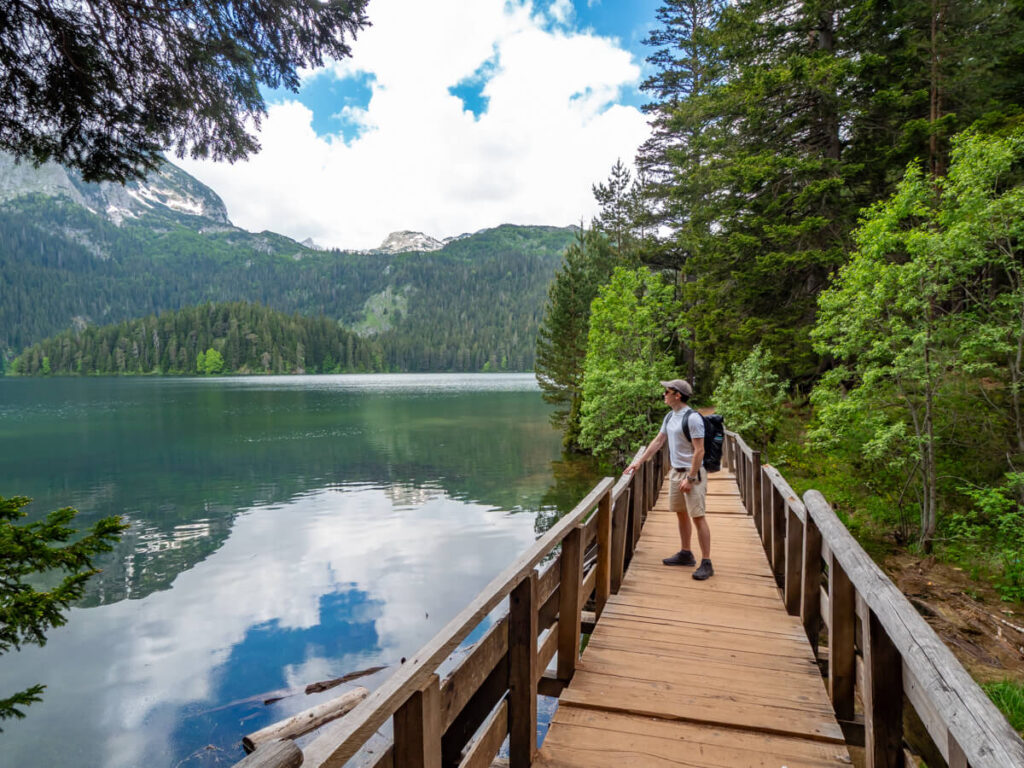
This post may contain affiliate links, which means we might earn a small commission on anything purchased through these links at no extra cost to you. Learn more on our disclaimer page.
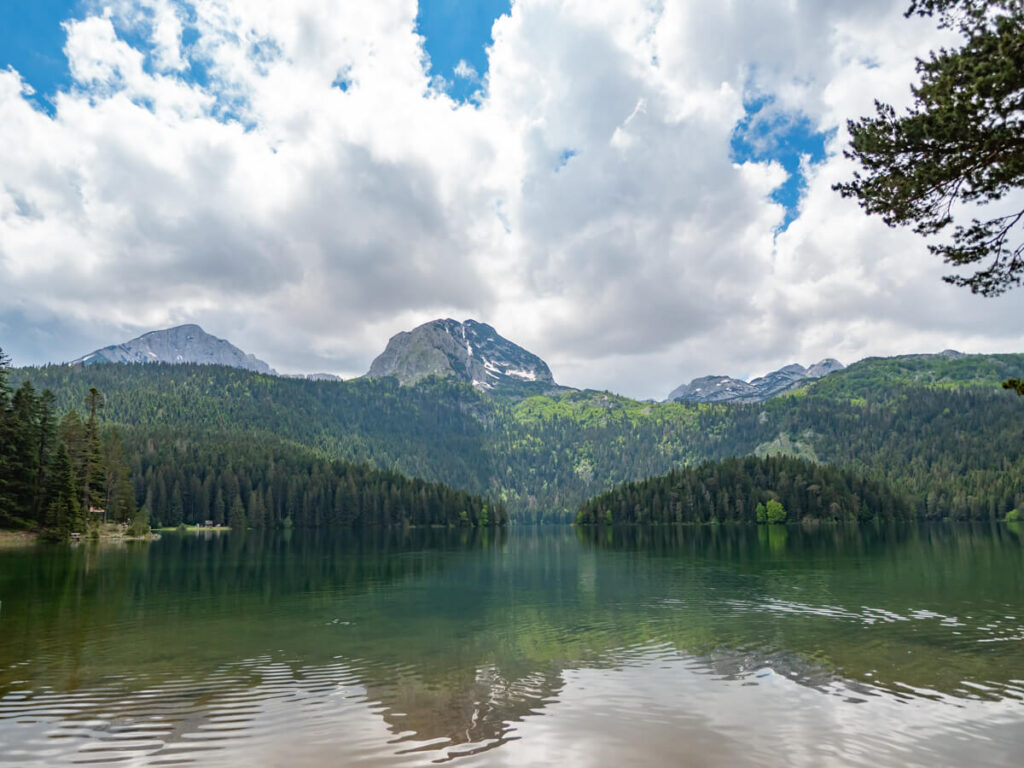
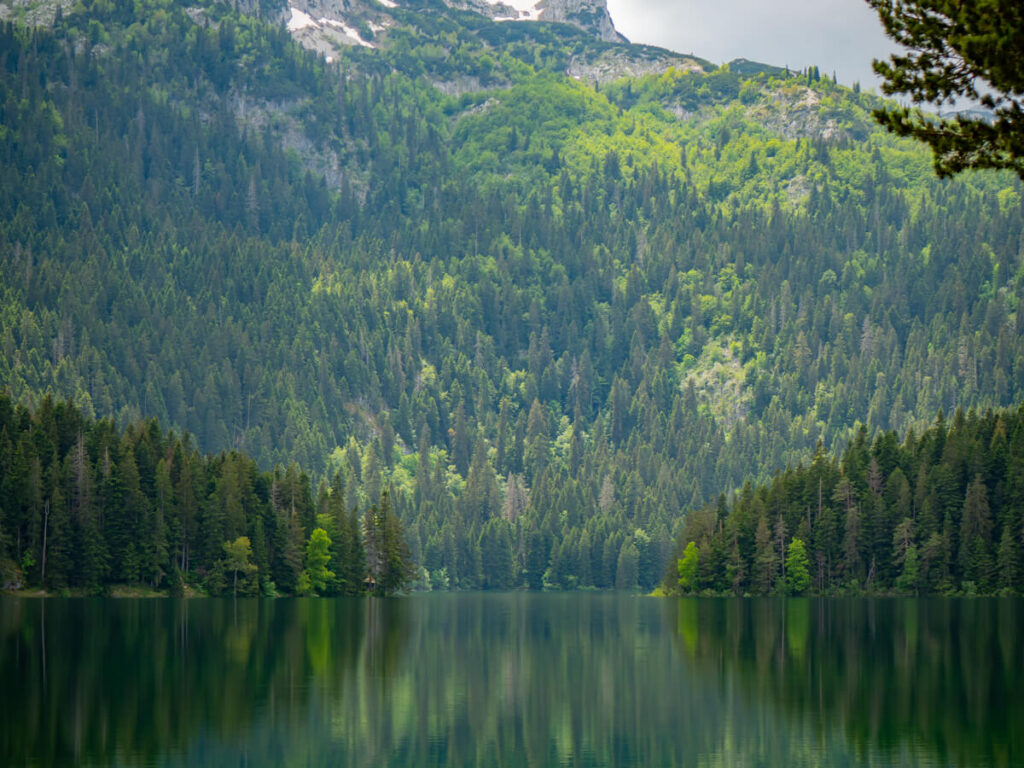
Surrounded by dense pine forest and backed by dramatic limestone peaks, the Black Lake (Crno Jezero) is one of the most famous spots in Durmitor National Park. Known for its atmospheric setting, scenic reflections, and an easy trail around its shore, the Black Lake has surprisingly more to do beyond simply taking the obligatory photo. It’s also the gateway to longer, lesser-travelled hiking routes into the Durmitor massif, making it a great starting point if you want to venture beyond the crowds and explore more of the park on foot.
But the Black Lake is also one of the easiest places in the park to visit, with no hiking required, making it a popular stop for travellers from all over the region. Being prone to crowding, especially on weekends, holidays, and in peak summer, with a complicated and expensive parking situation, and plenty of people arriving purely for a quick photo, it’s not necessarily the peaceful mountain escape you might expect from the pictures. That doesn’t mean you should skip it, but knowing what to expect can make a big difference to your experience.
Discover everything you need to know about visiting the Black Lake, including how to get there, entrance fees, the best things to do, the trail around the lake, other hiking options, when to visit, and practical tips for making the most of your time at Crno Jezero, in this guide.
The Black Lake at a glance
More from Durmitor National Park
About the Black Lake
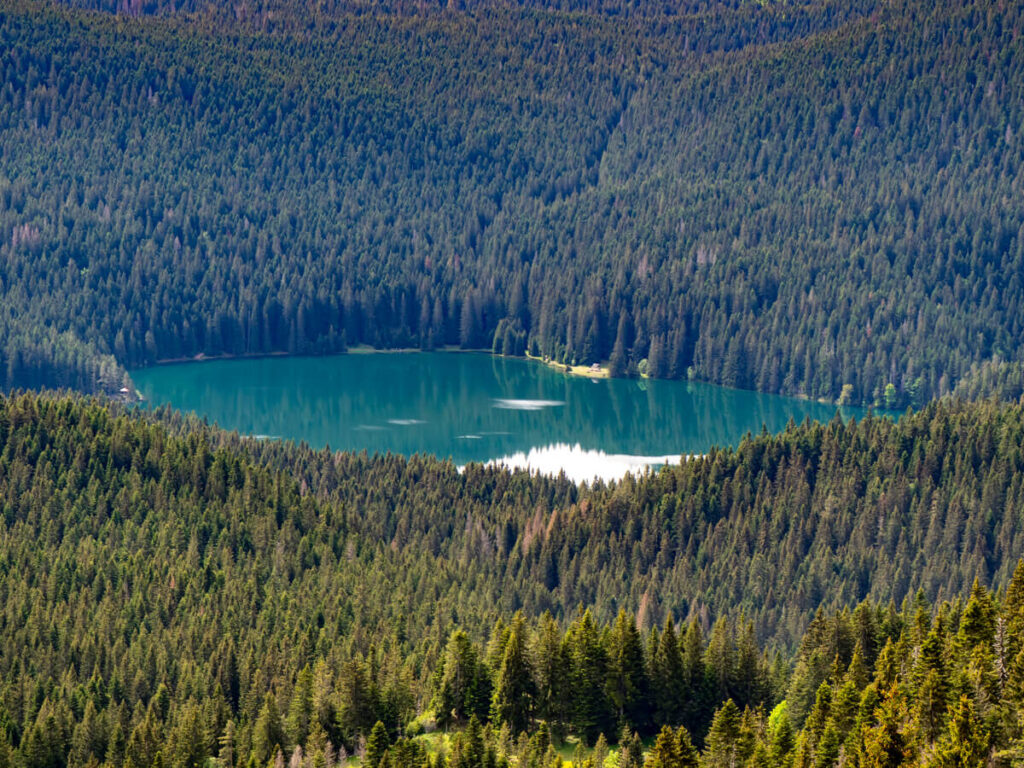
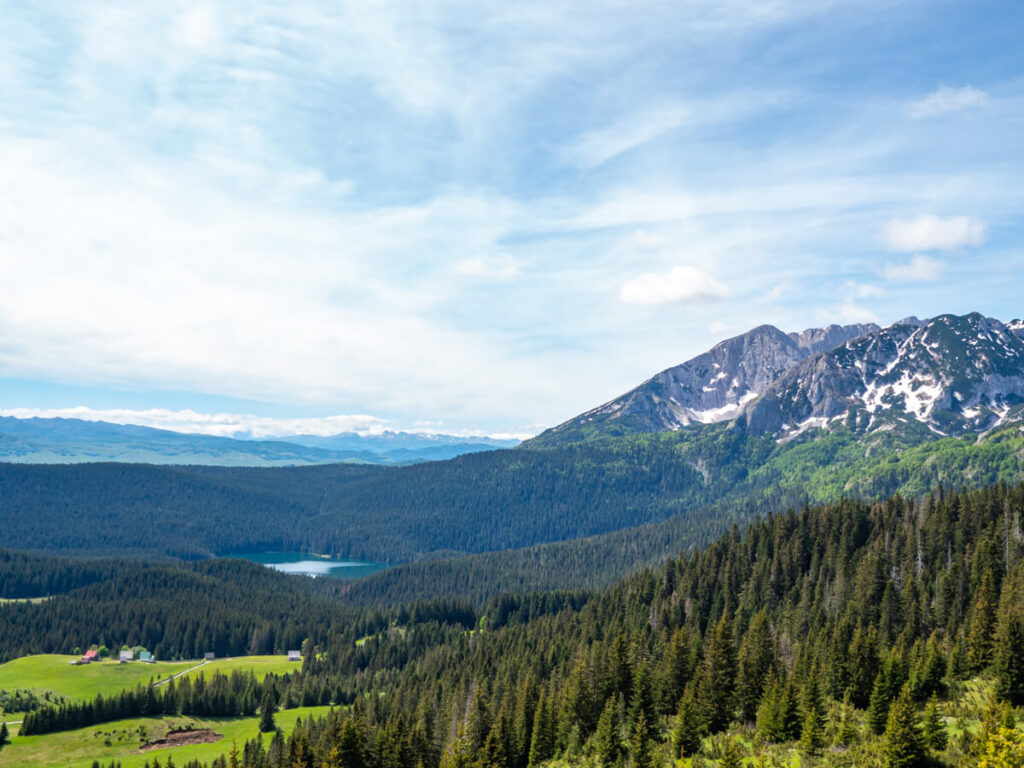
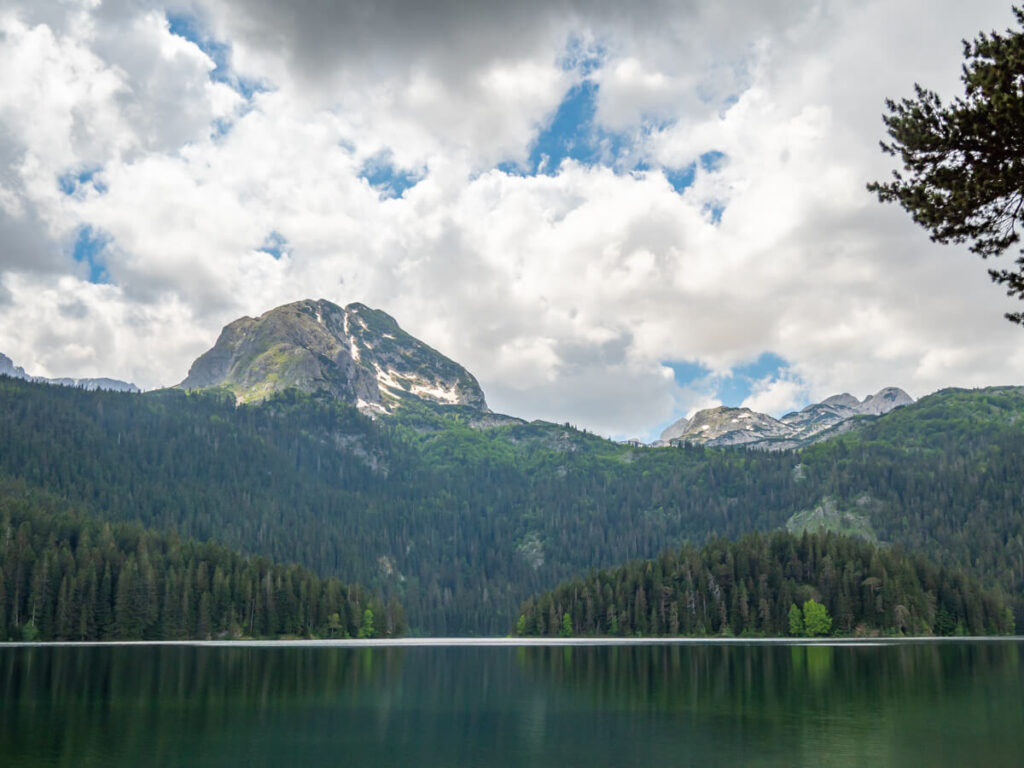
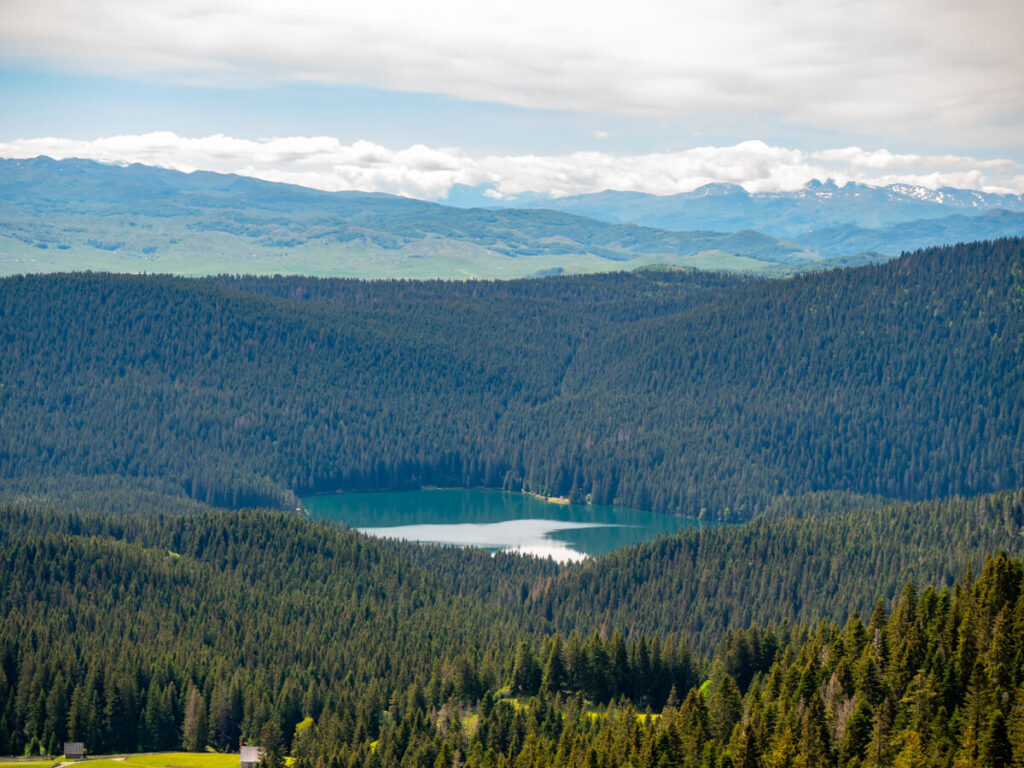
The Black Lake (Crno Jezero) is the largest and best-known of the 18 glacial lakes in Durmitor National Park, sitting in a dramatic basin beneath the towering peaks of the Durmitor massif. It’s one of Durmitor’s ‘Gorske Oči’, or ‘Mountain Eyes‘ – a nickname given to the lakes thanks to their remarkably clear water, which appears as bright blue and emerald eyes dotted across the mountain plateau when viewed from above.
The lake is actually made up of two interconnected bodies of water – Veliko Jezero (Big Lake) and Malo Jezero (Small Lake) – which are joined by a narrow channel called the Struga that can disappear during wetter periods.
It sits at around 1,416 metres (4,646 ft) above sea level and is surrounded by dense conifer forest, steep limestone slopes, and some of the park’s most recognisable mountain scenery. It has a maximum length of around 1,155 metres (3,789 ft) and a maximum depth of 49 metres (160 ft) – in summer it can dry up to be considerably smaller and shallower. In winter, it can completely freeze over.
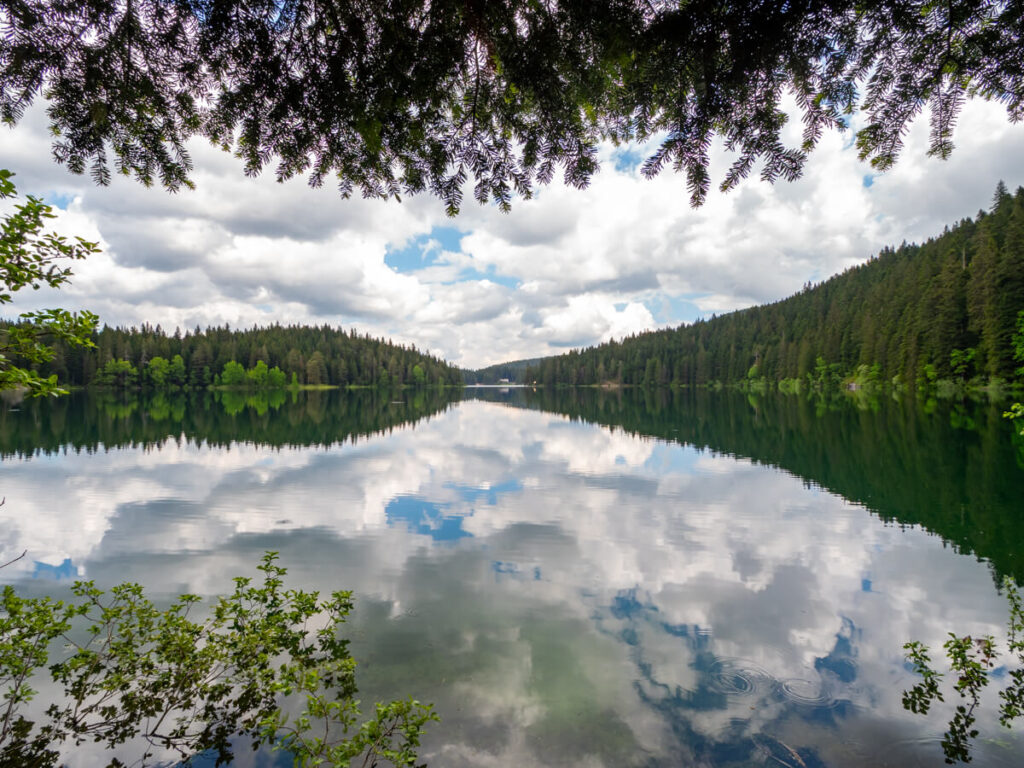
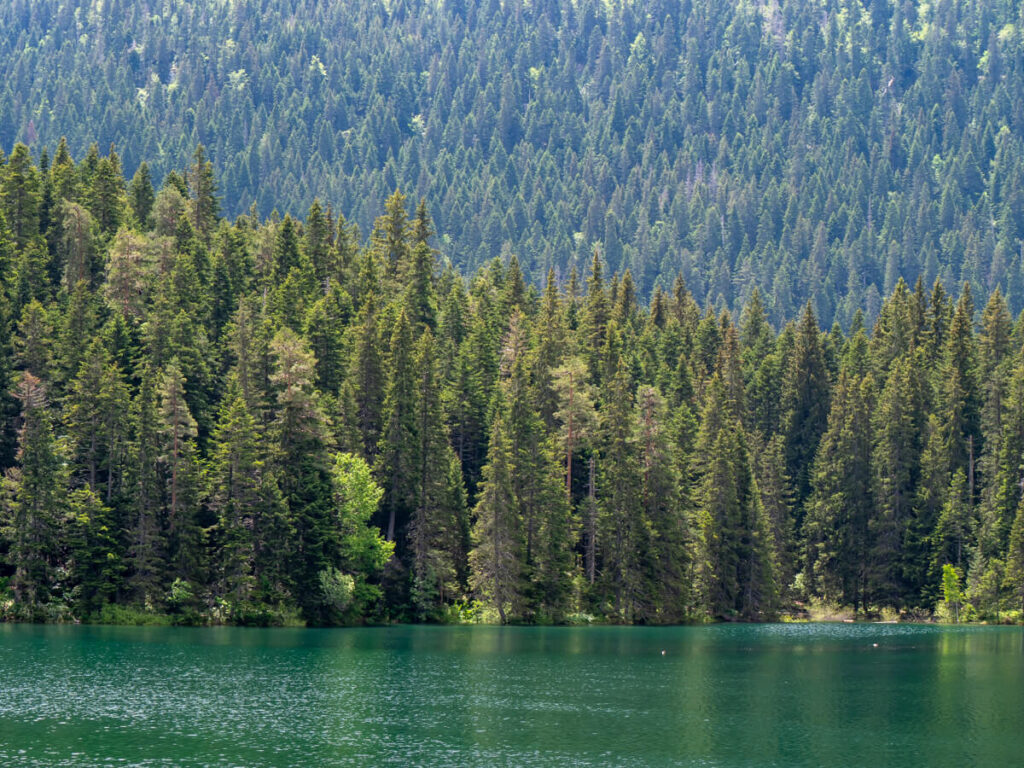
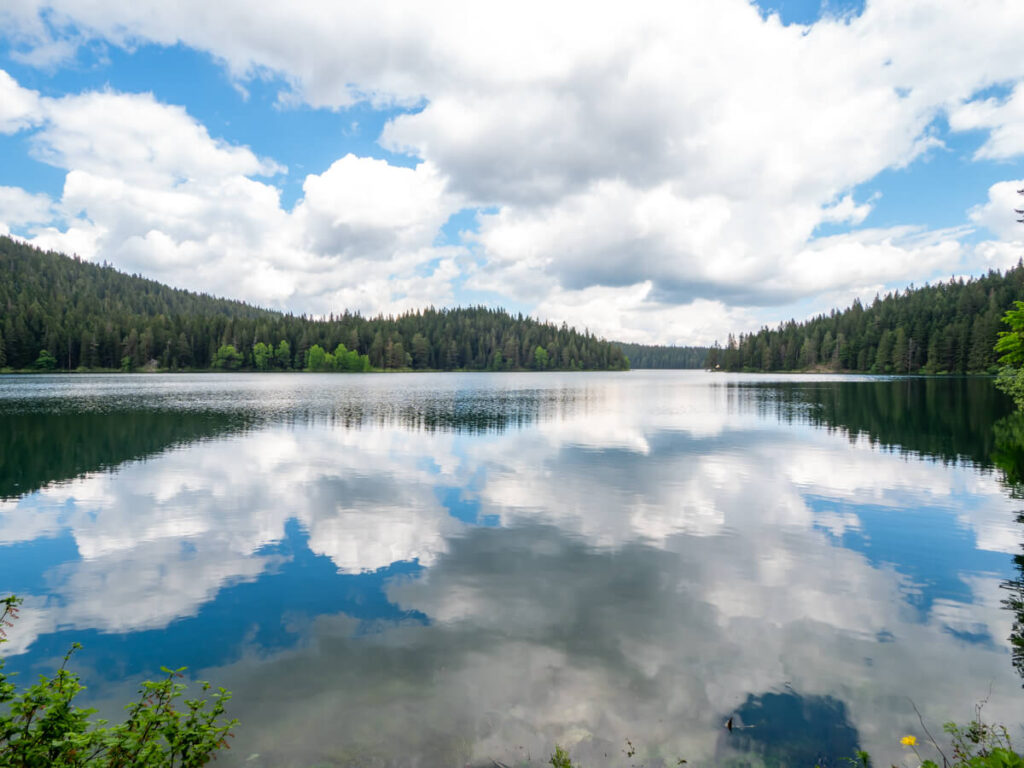
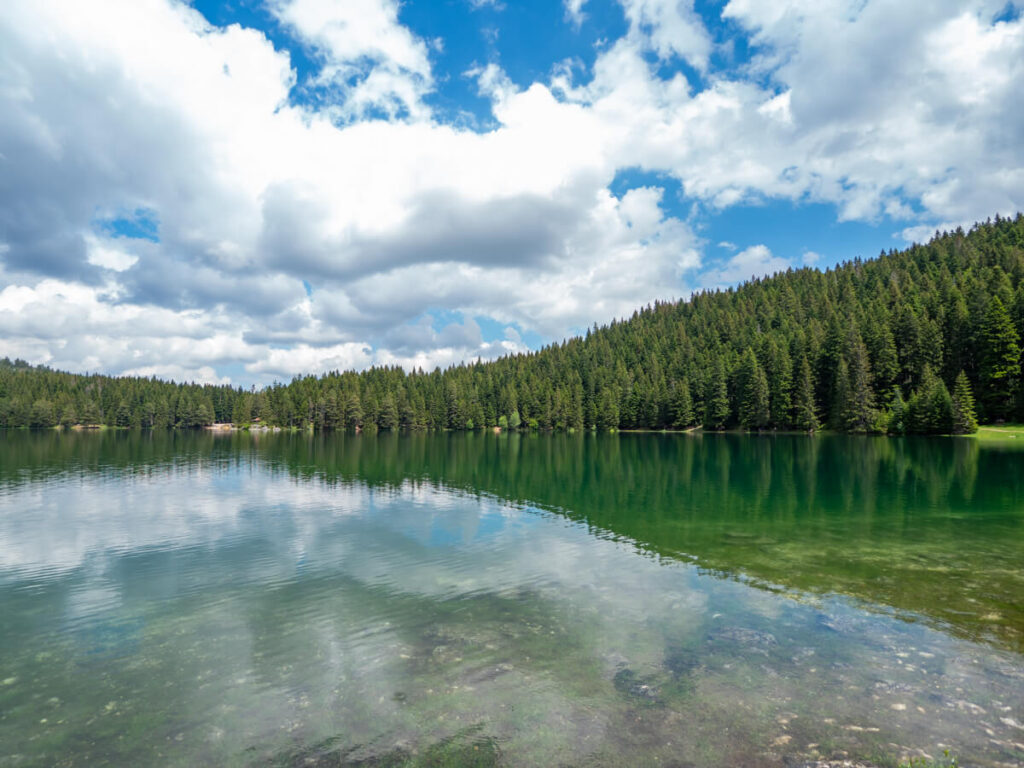
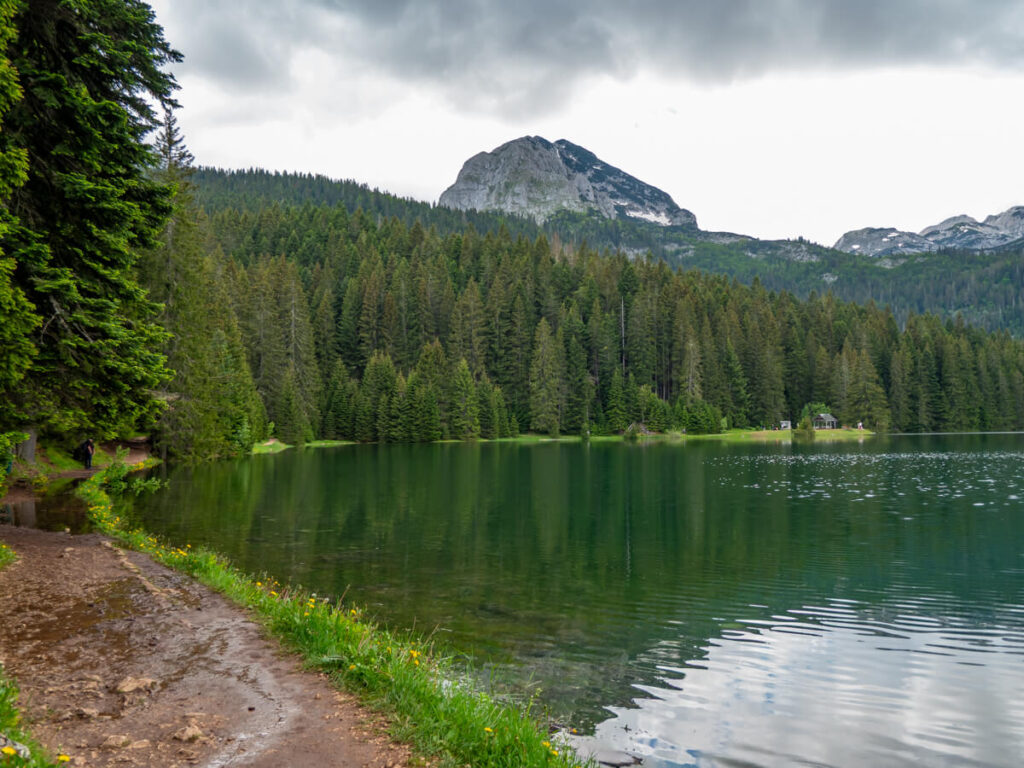
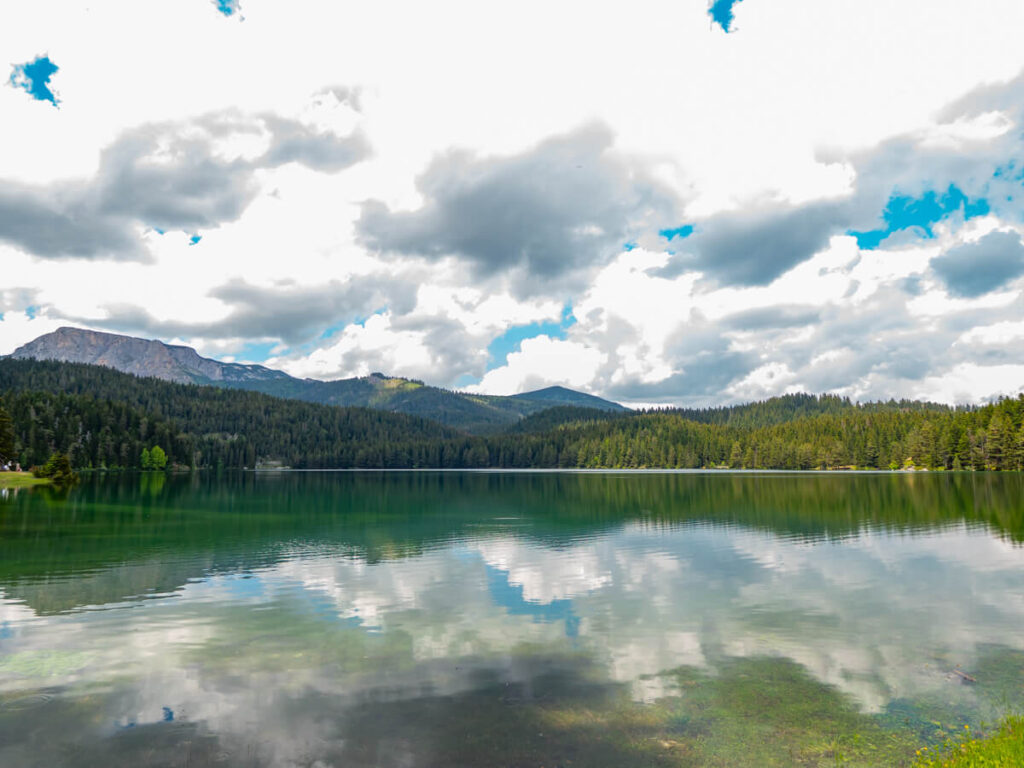
Its name comes from its dark appearance, which is due to the surrounding forest and the depth of the water rather than the lake actually being black. The Black Lake is particularly known for its dancing reflections, where the glassy glacial surface changes colour between emerald, sapphire, and almost inky black depending on the light, especially on calm days.
Where is the Black Lake?
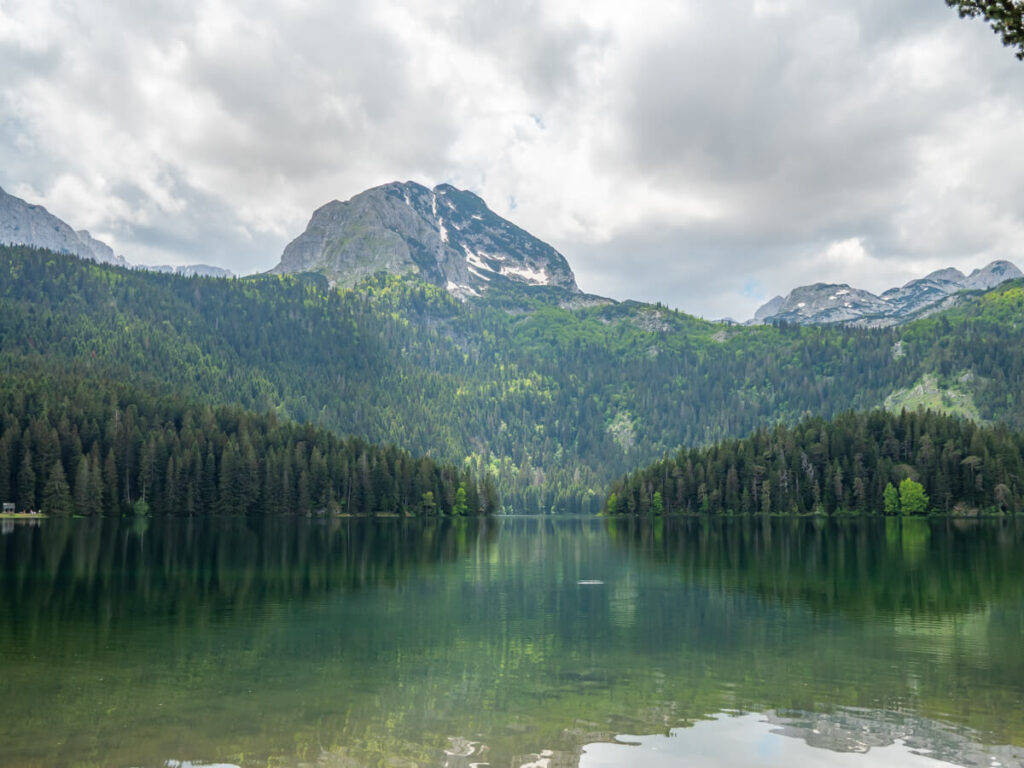
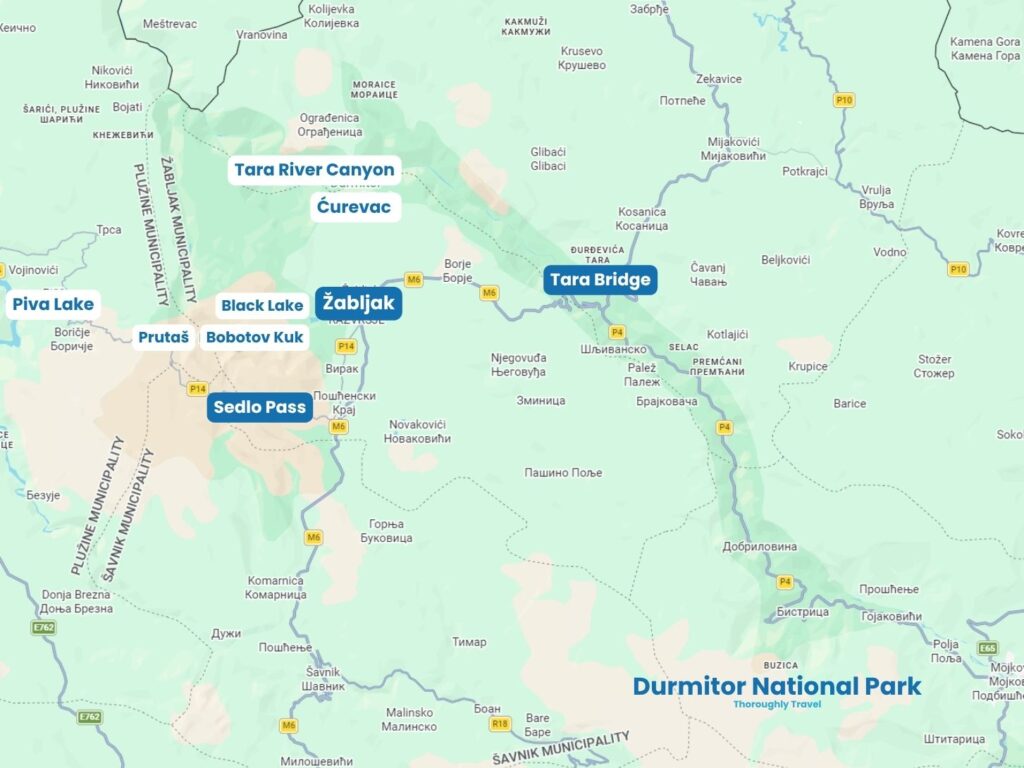
The Black Lake is located just outside Žabljak, in the northern part of Durmitor National Park, a UNESCO World Heritage site. It is approximately 1.9 miles (3 km) from the centre of town, making it one of the easiest major attractions in the park to reach.
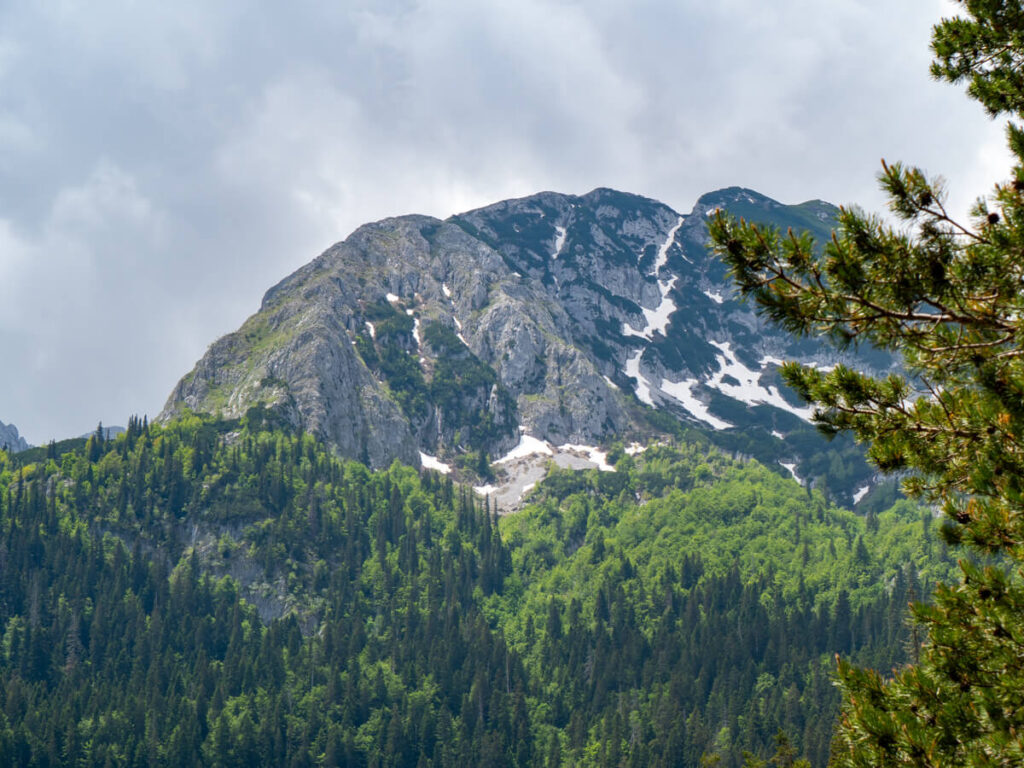
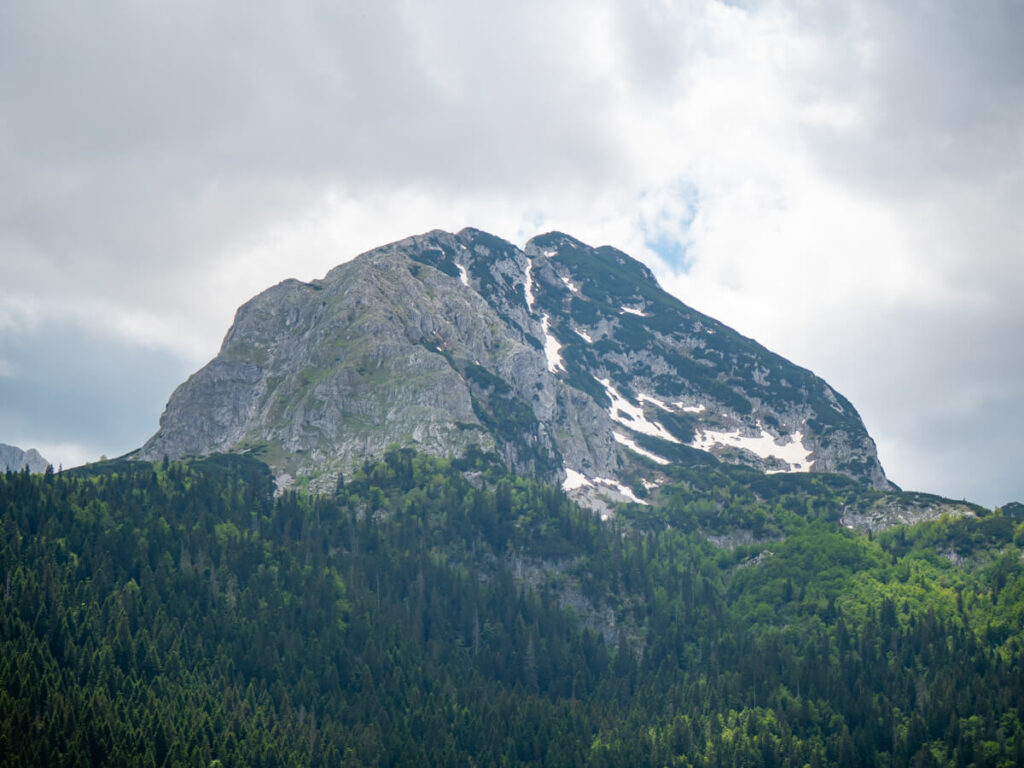
The lake lies within a heavily forested landscape at the foot of the Durmitor mountains, with peaks including Međed rising dramatically behind it. Thanks to its scenic but convenient location, it’s a popular stop on many Montenegro road trip itineraries.
Black Lake Map
The Black Lake sits just outside Žabljak, the gateway town to Durmitor National Park.
Top Black Lake Tours
Although the Black Lake is easy enough to visit independently, a guided tour can be a good option if you don’t have a car, aren’t staying locally, or want to combine the lake with some of the other highlights of Durmitor National Park.
Some tours to the Black Lake depart from Žabljak, while others start further afield in Podgorica, the Bay of Kotor, or on the coast. They often combine the Black Lake with scenic viewpoints, mountain lakes, hiking trails, or other attractions around the park, so you can see considerably more than you would on a quick standalone visit.
Popular combinations include the Tara River Canyon, hiking inside the park, ziplining at Đurđevića Tara Bridge, and river rafting on the Tara River.
How to get to the Black Lake
Normally we’d delve into all the details of a destination before the practical advice like parking, but since the Black Lake isn’t the most straightforward place to visit, we thought we’d go over how to actually get there first.
Many people simply walk to the lake from Žabljak. It takes around 30 minutes, depending on your starting point. It can also be reached by rental car, taxi, tour, bike, and motorbike.
The easiest way to reach the Black Lake is by rental car. From the centre of Žabljak, the road to the Black Lake takes only a few minutes to drive. It’s a paved road in decent condition. We encountered some potholes, but they were relaying the road during our visit, so we anticipate it’s smooth now.
The Black Lake is an easy detour from the scenic Durmitor Ring Road, but we’d recommend dedicating half a day to it rather than making it a quick photo stop.
You can also reach the lake as part of an organised tour, which is a popular option for those staying further afield, keen to see the highlights of the national park in one day.
Parking at the Black Lake
There are two car parks near the entrance to the Black Lake:
They’re privately owned and charge the same: €3 an hour. When we said we wanted 2 hours, we were also offered all day for €24, 5 hours for €15, and 3 hours for €9. We opted for 3 hours of parking, which was actually the perfect amount of time to see the lake, walk the loop, and get back to the car in time.
The first 20 minutes are free, which is only really useful if you’re dropping off or picking up.
Spaces can fill quickly during the busiest summer months. If you’re visiting in July or August, we’d recommend arriving early rather than assuming you’ll be able to drive straight in and find a convenient space.
The car park was super busy when we arrived at Car Park I at 11:00 AM on a Sunday at the beginning of June. Cars were parked all down the side of the road to the ticket booth, and we got one of the last spaces right back at the parking area entrance.
As we drove in, we were stopped by a man with a card reader, but we paid cash. He provided us with a receipt and piece of paper, which we displayed in the window, and guided us into a space. Make sure to ask for one to ensure you’re buying from an official.
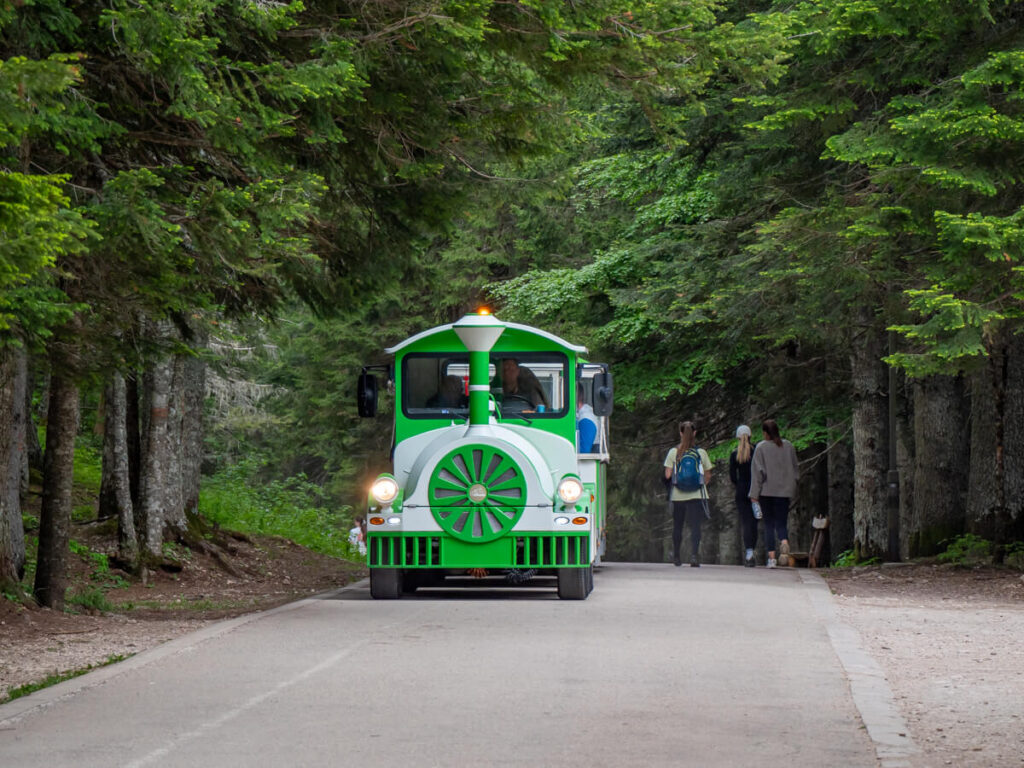
From either car park, it’s a 10 to 15 minute walk to the edge of the lake. Car Park II is slightly closer to the lake than Car Park I. It’s a flat, paved route (suitable for wheelchairs and pushchairs), and local vendors often occupy wooden huts along the route selling souvenirs and homemade goods and crafts. There is a road train that operates in peak season if you don’t want to do the walk.
Black Lake Tickets
As with all of Montenegro’s national parks, there is an entrance fee to enter the Black Lake as it sits within Durmitor National Park.
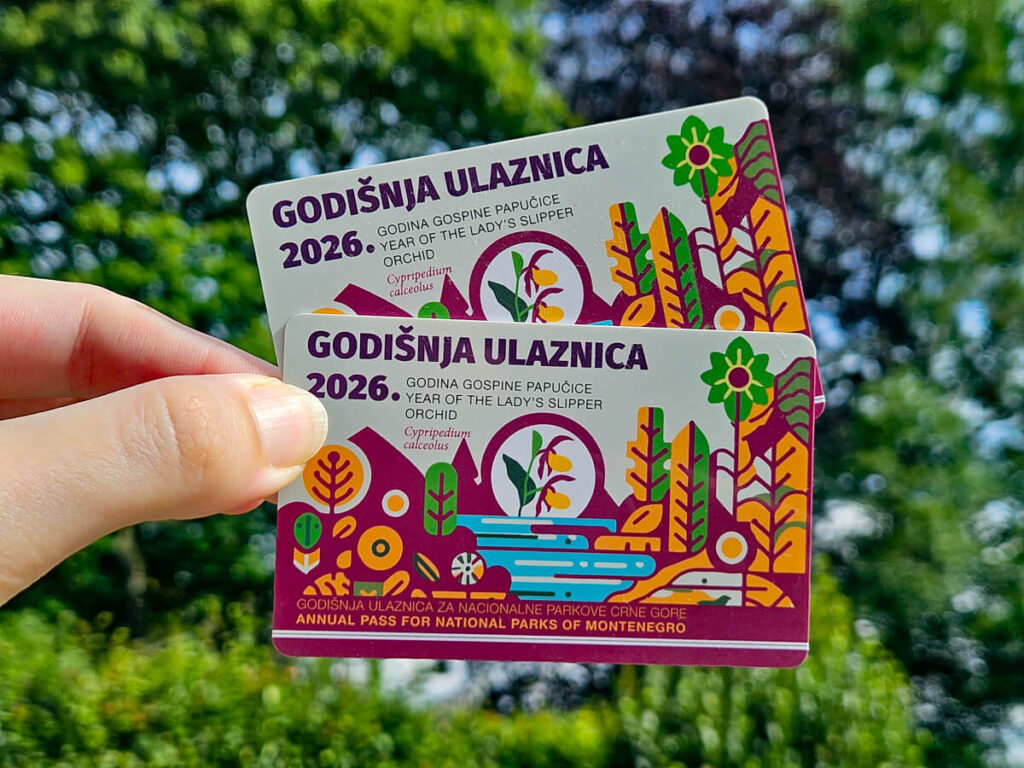
It’s €5 per person per day, but we’d highly recommend getting the annual pass for €13.50 if you plan to visit the other national parks too. You can also buy it online in advance.
Bring cash in case the card terminal isn’t working. Then keep your ticket with you if you’re planning to spend the day exploring, as you may encounter checks elsewhere in the park.
Since we’d paid for annual passes in a previous national park, we got to skip the ticket queue, just showing our passes and going straight through the barrier.
Why visit the Black Lake?
The Black Lake is one of the most beautiful and accessible places in Montenegro, combining dramatic mountain scenery with relatively easy access from Žabljak.
The scenery is stunning, and it’s one of the few places in Durmitor National Park where you can see both the jagged mountains, a dense forest, and a glassy glacial lake in one place. The atmosphere changes dramatically depending on the weather, with the lake taking on different shades as the clouds move across the surrounding peaks.
It’s also a useful starting point for exploring more of the park, with some of Montenegro’s best hiking trails leading away from the shoreline into the surrounding mountains.
Even if you’re not planning a big adventure, the Black Lake is a lovely place to spend a few hours walking, swimming, taking photographs, or simply enjoying the scenery.
Things to do at the Black Lake
While you could show up at the Black Lake, walk to its shore, take the classic photo, and leave, there’s more to do than that.
What it’s like walking the Black Lake Loop
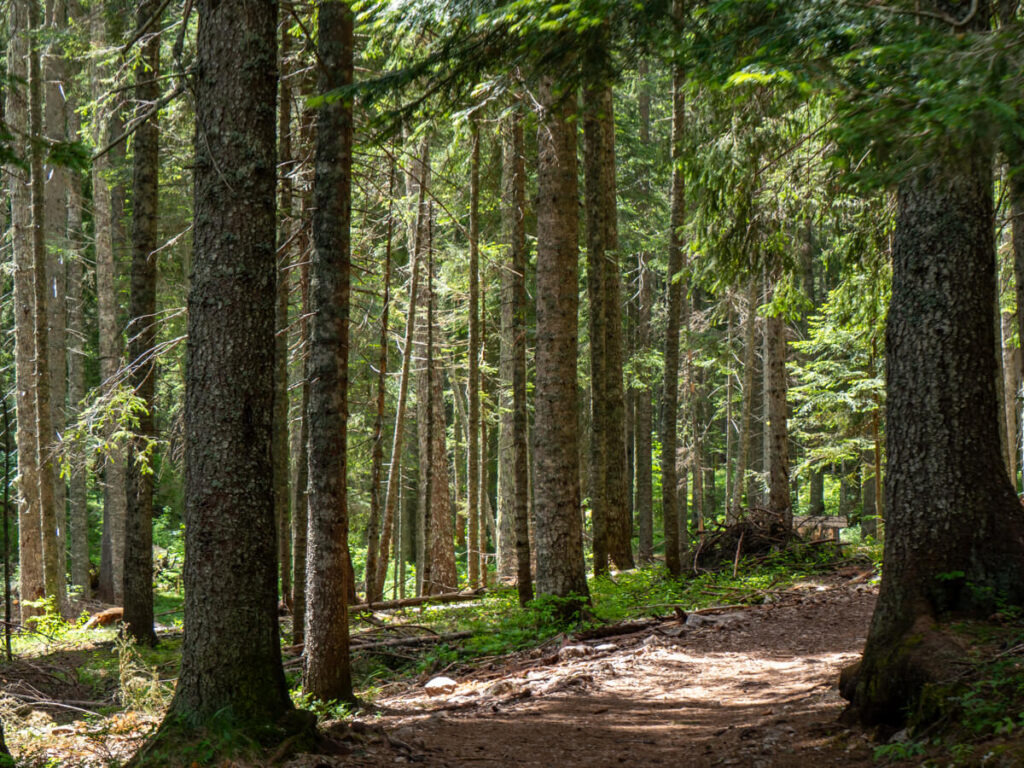
The Black Lake Loop is one of the best things to do in Durmitor National Park. The 2-mile (3.5 km) trail circles the entire lake following a mixture of forest paths, rocky sections, and lakeside tracks around the perimeter. It’s not suitable for wheelchairs or pushchairs, and you should wear proper closed-toe shoes for walking, not flip-flops, sandals, heels, or ballet pumps.
It starts at the lake’s edge by the restaurant, which is a 10 to 15 minute walk from the car parks. You’ll pass the ‘I heart Durmitor’ sign on the way.
There’s really not much difference when it comes to walking the Black Lake loop clockwise or anticlockwise. Generally, most people congregate at the area by the restaurant, where the iconic view of the lake is. Regardless of which way you go, the trail will get quieter the further away you walk.
We chose to walk anticlockwise for a couple of reasons:
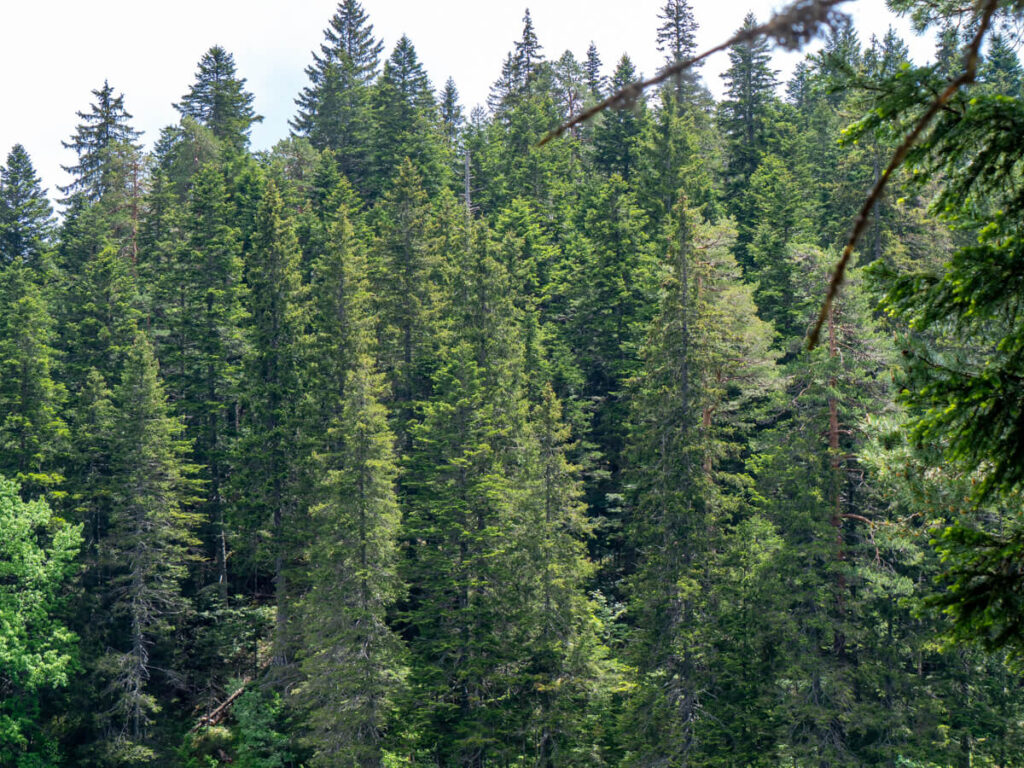
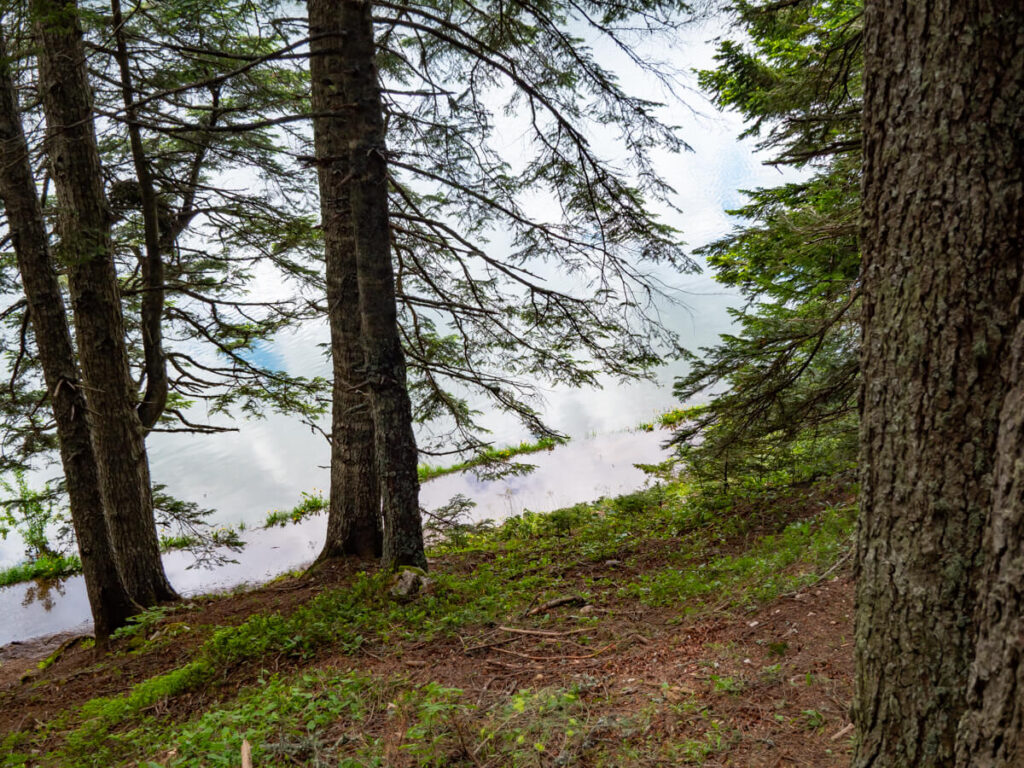
On the way, you’ll pass through dense forest, past various viewpoints, over a couple of wooden bridges and boardwalks. From the first bridge, we saw thousands of tadpoles swimming in the water below.
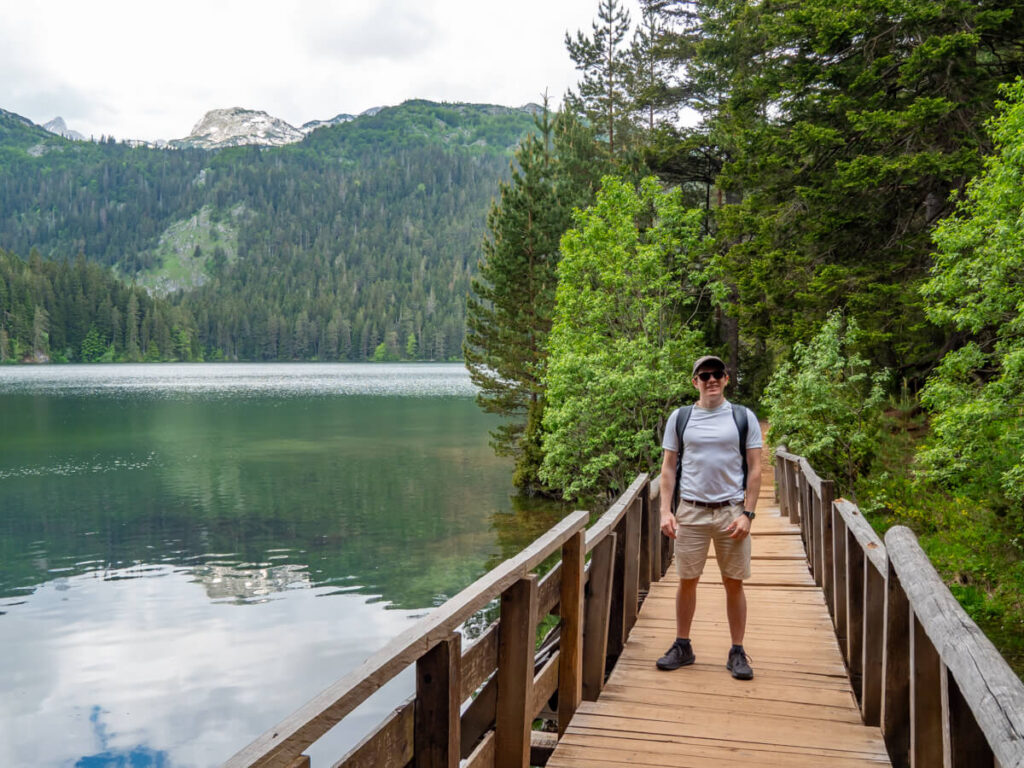
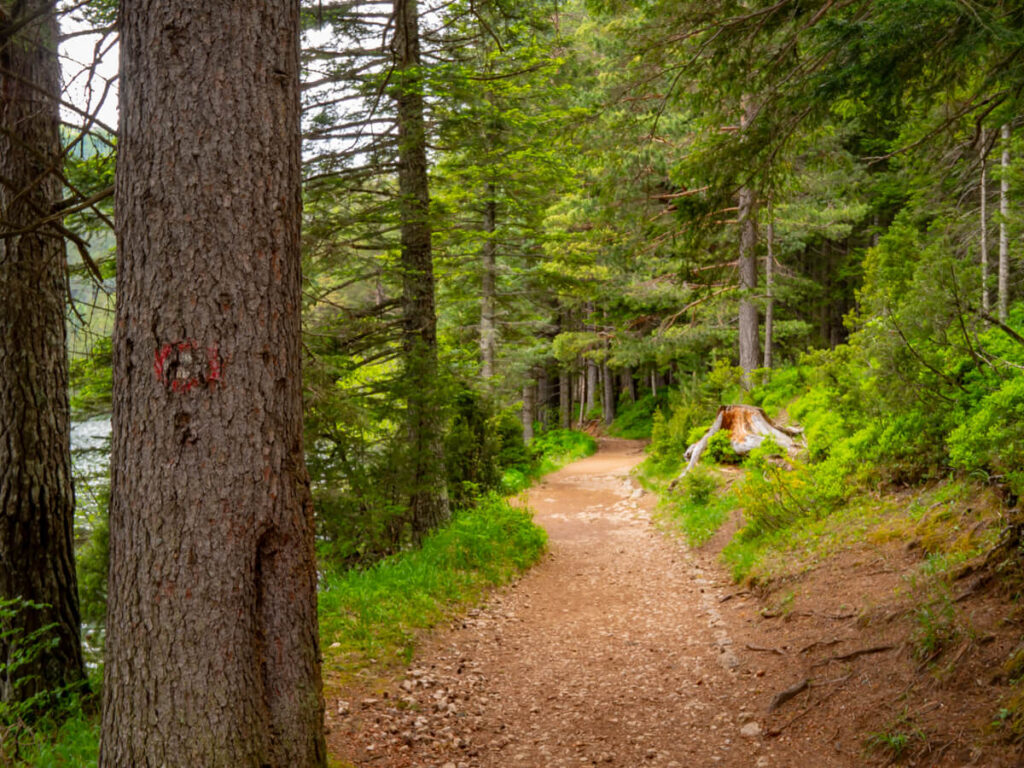
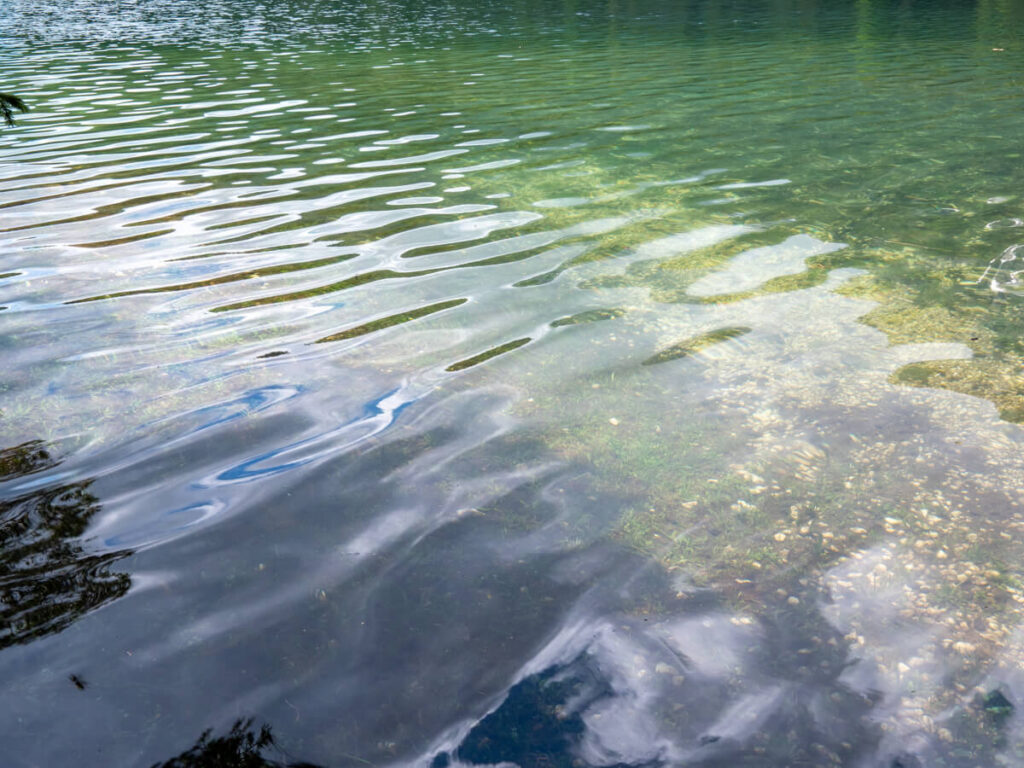
The first part of the trail, around the Large Lake, is a pretty flat forest path that hugs the lake’s shore. It’s more a walk than a hike at this point and pretty family-friendly.
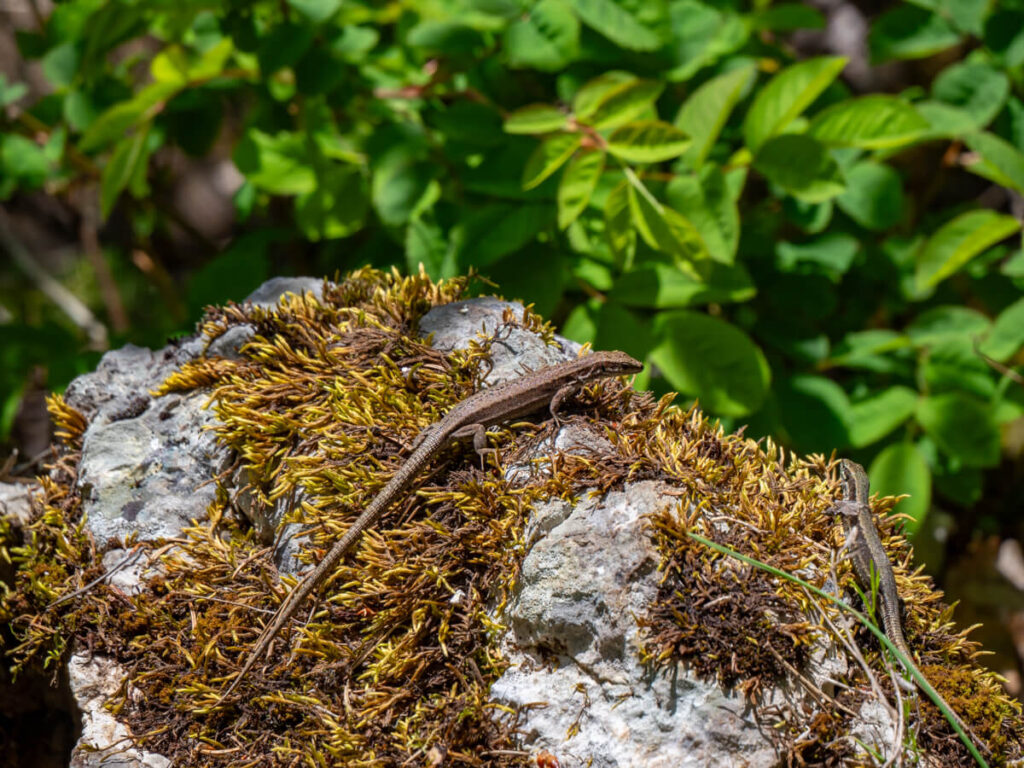
We saw quite a few brown lizards sunning themselves on the rocks around here.
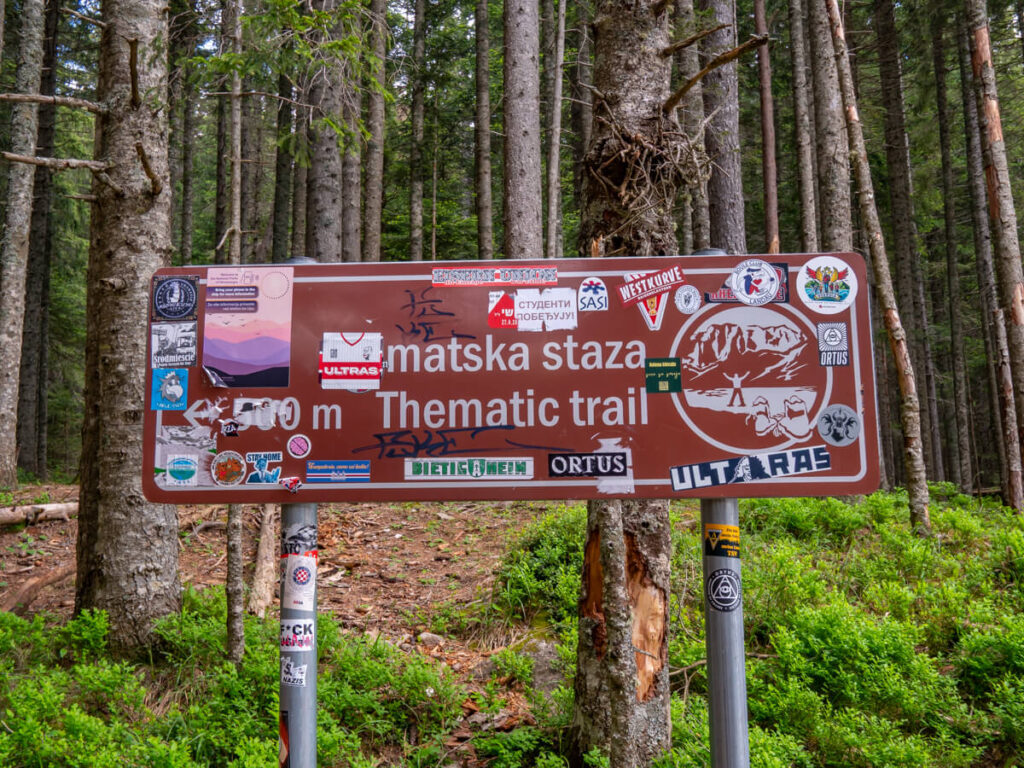
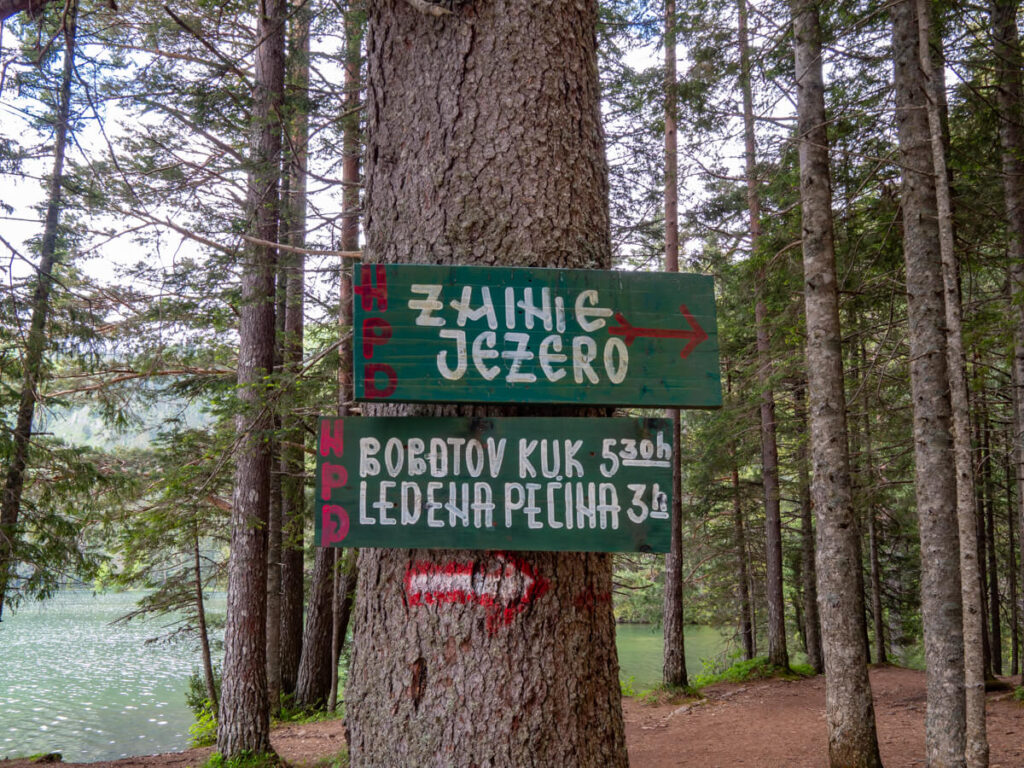
As you continue through the forest, you’ll see signs for other hiking trails. There are a few small detours, like the Thematic Trail, while others indicate longer routes into the national park, including the trail that heads for Bobotov Kuk, Ledena Pećina (the Ice Cave), and Planinica Peak.
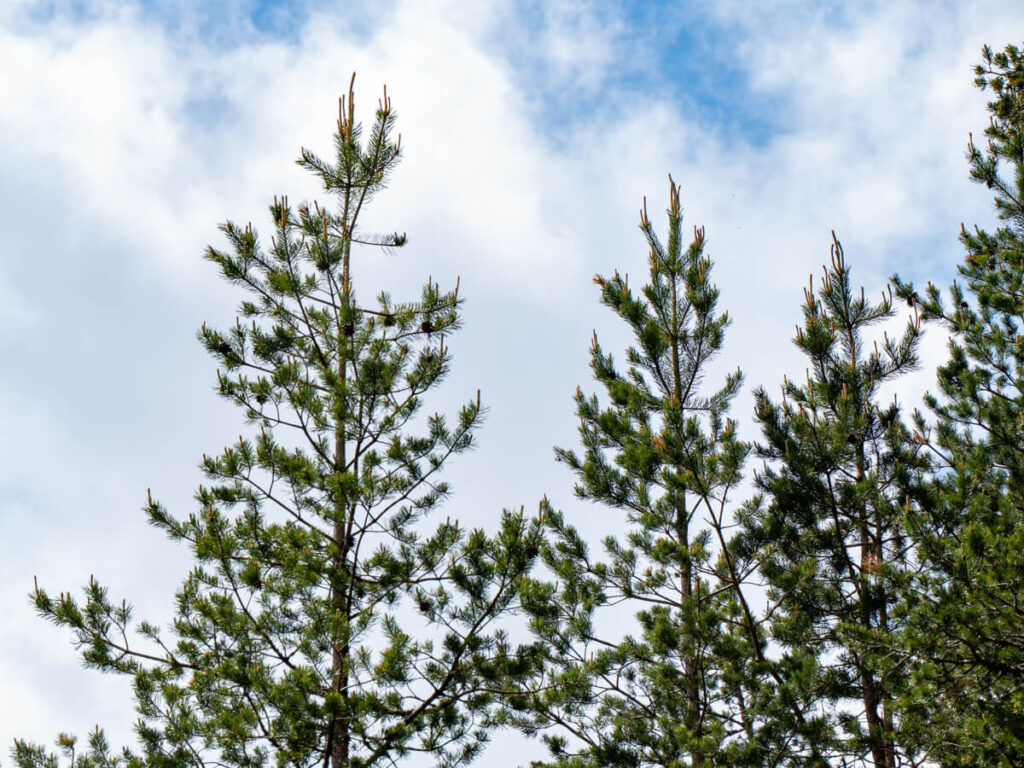
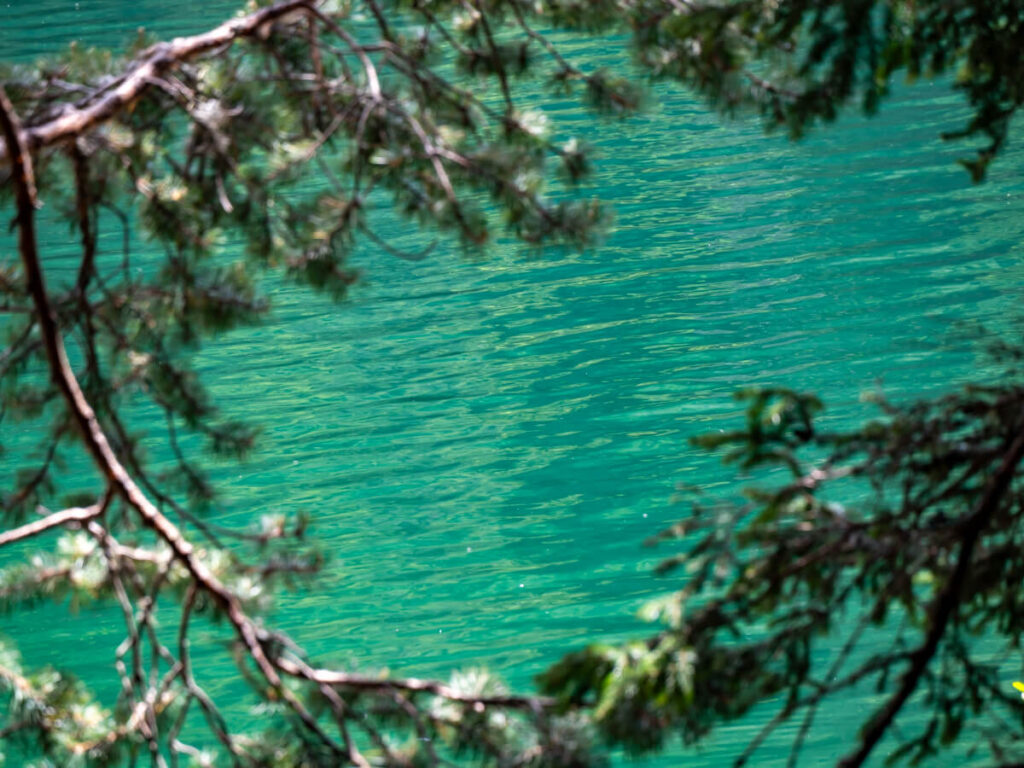
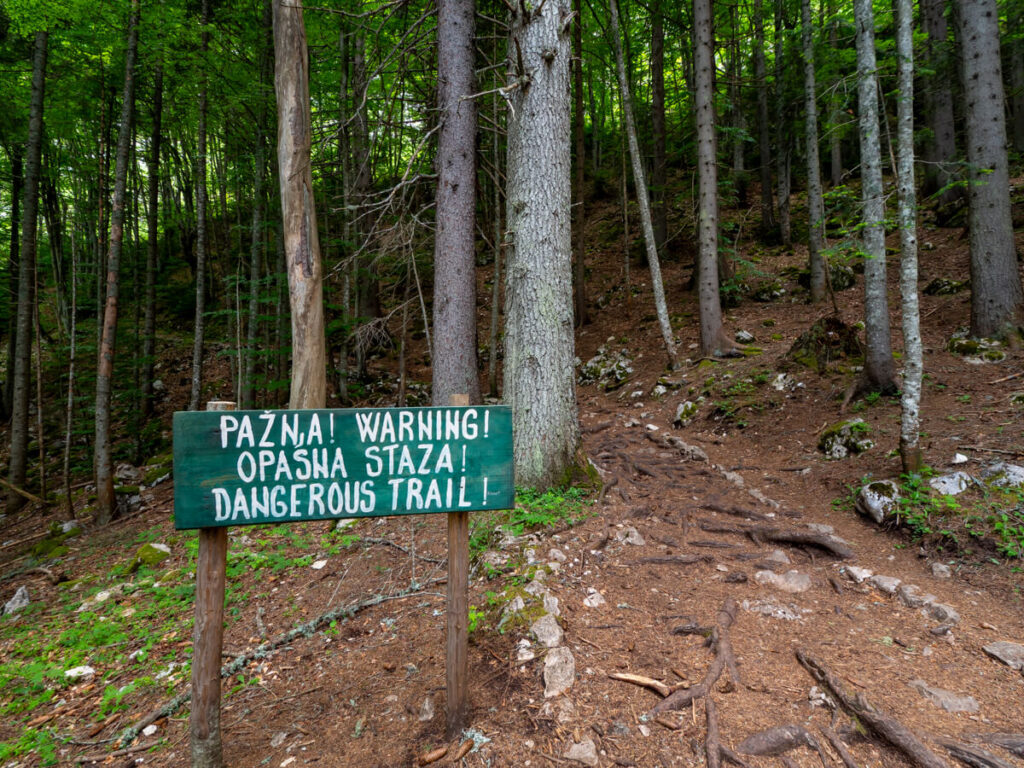
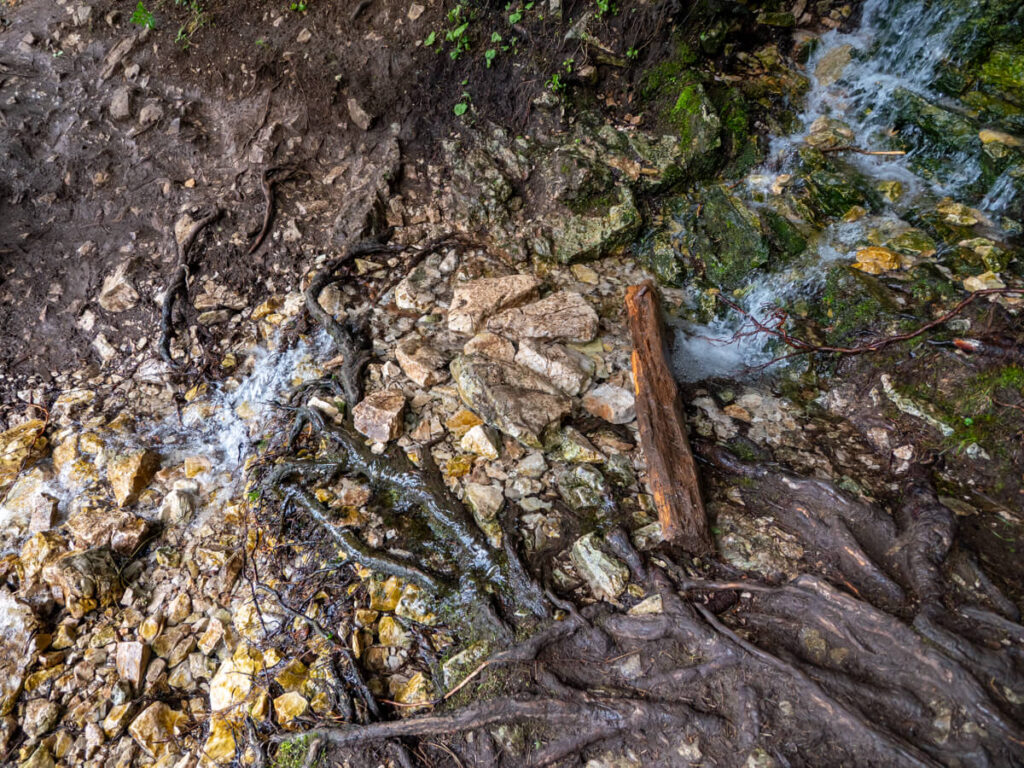
The southern part of the trail, around the Small Lake, is slightly more challenging terrain (although we’d still classify it as easy). It involves some small hilly sections. There are loose roots, which are trip hazards, and a couple of parts with a steep drop on the side, so watch your footing.
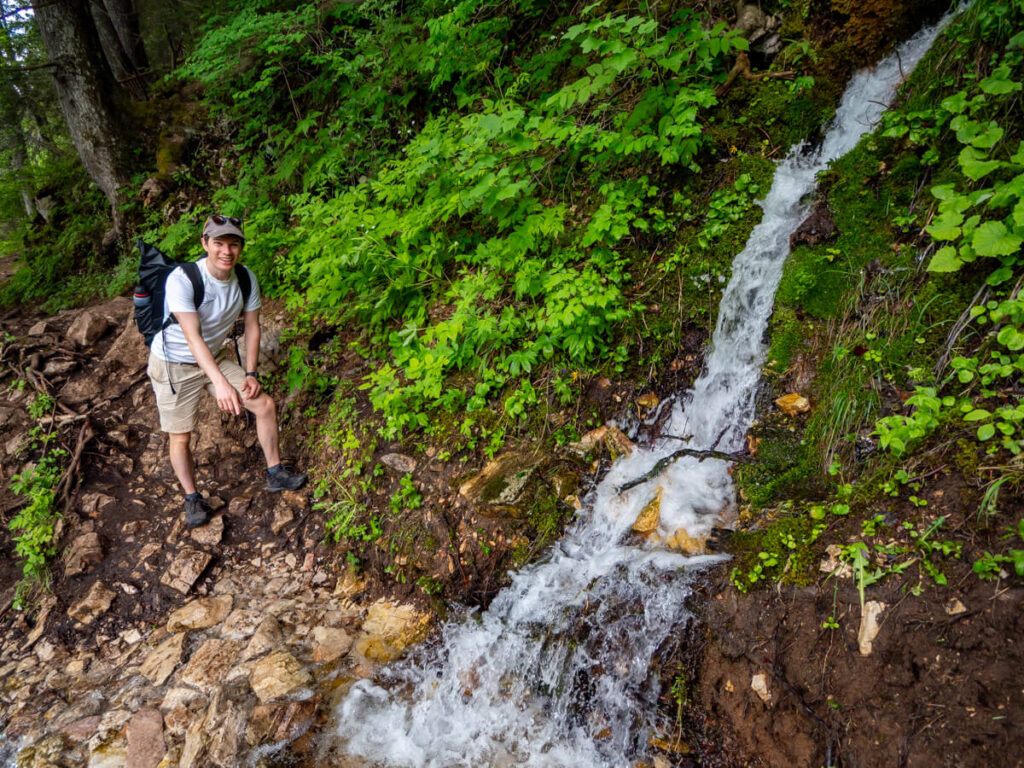
In the wetter months, there are a series of small waterfalls to cross – in early June there was just one small one left.
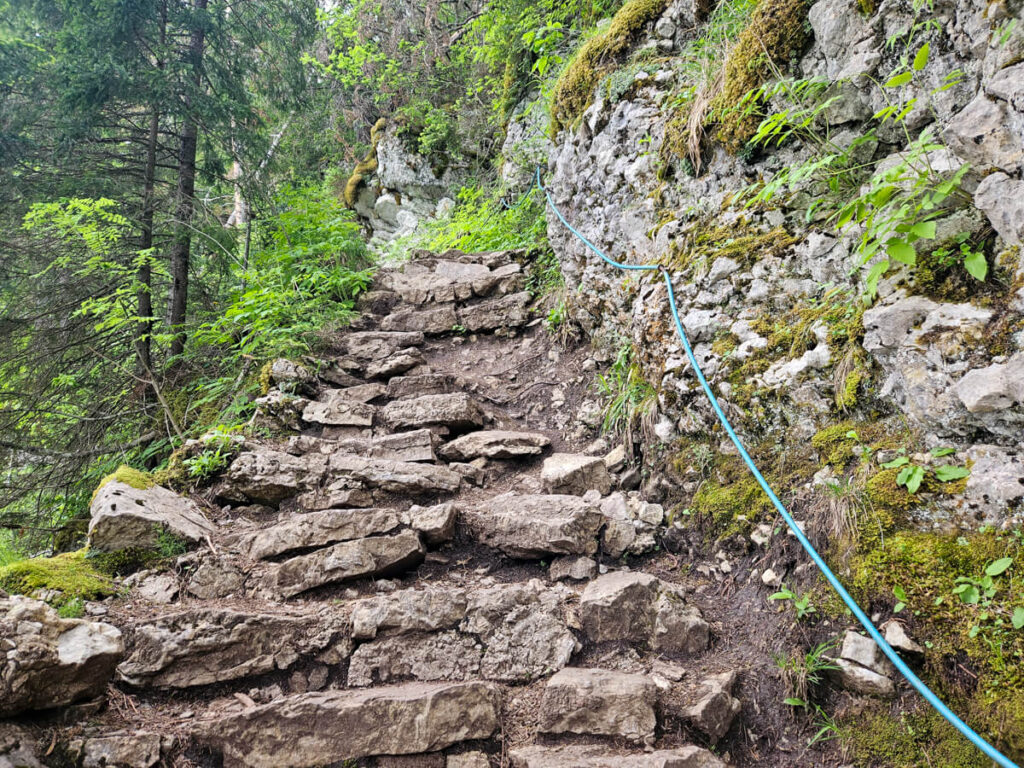
After that, we came to the small rocky staircase. It has a rope attached to the wall on one side, which is useful for guiding yourself up.
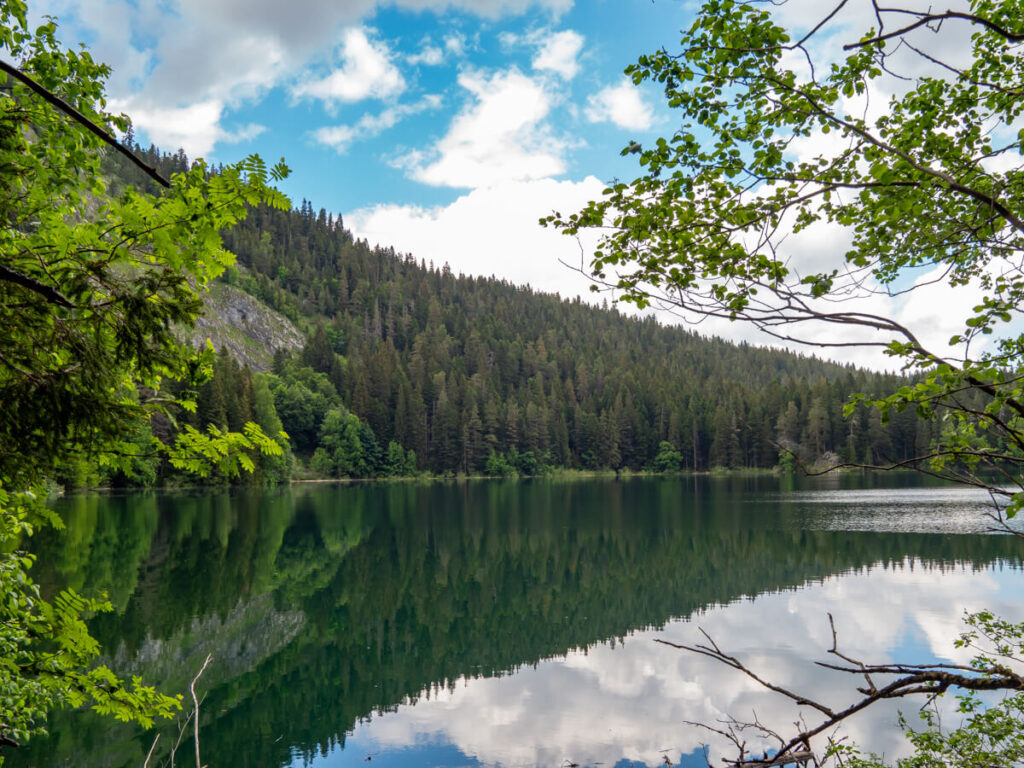
As we came back to the Large Lake and into the home stretch, we passed a large grassy picnic area, with lovely lake views.
There was a little bit of flooding over the path towards the end, making it muddy. It wasn’t a problem though, as a couple of other trails led uphill into the forest, and we were able to rejoin the shore path soon after, and then we were back at the restaurant.
The Black Lake hike takes around an hour to walk – we took slightly longer with stops for photographs. Families with small children or non-hikers may take up to 2.5 hours to complete the loop.
Other Black Lake Hikes
The Black Lake is a springboard for much longer hikes than the simple one-hour loop. Several trails head into the heart of Durmitor National Park, taking you away from the busy lakeshore and into increasingly rugged mountain terrain.
The Three Lakes Loop
The Three Lakes Loop links:
The Black Lake can be combined with Zminje Lake and Barno Lake to create a longer circuit through the surrounding pine forest. It’s a great option if you want to explore more of the glacial lakes of Durmitor National Park without committing to one of the proper mountain hikes.
Planinica
The trail to Planinica Peak from the Black Lake climbs away from the forest and into more exposed mountain terrain, eventually reaching a summit at around 2,330 metres (7,644 ft).
The higher you climb, the more expansive the views become, making this a considerably more demanding alternative to the lakeside loop.
Bobotov Kuk
Bobotov Kuk, at 2,523 metres (8,278 ft), is the highest point of the Durmitor massif and one of Montenegro’s most famous mountain hikes. You can reach the trail to Bobotov Kuk from the Black Lake, but it’s a long and strenuous undertaking from here, with significant elevation gain and exposed sections near the summit, so most hikers tackle Bobotov Kuk from a higher trailhead in Sedlo Pass rather than starting at the lake.
Ledena Pećina (Ice Cave)
The trail to Ledena Pećina (the Ice Cave) takes you deep into the Durmitor mountains to a remarkable limestone cave where ice and snow can remain even during summer.
The cave sits at around 2,160 metres (7,087 ft) on Obla Glava Peak and is reached via a demanding mountain trail, with the final approach requiring care on steep and rocky terrain.
Where to stay near the Black Lake
The best place to stay in Durmitor near the Black Lake is Žabljak, which has the widest choice of accommodation, restaurants, supermarkets, and other facilities.
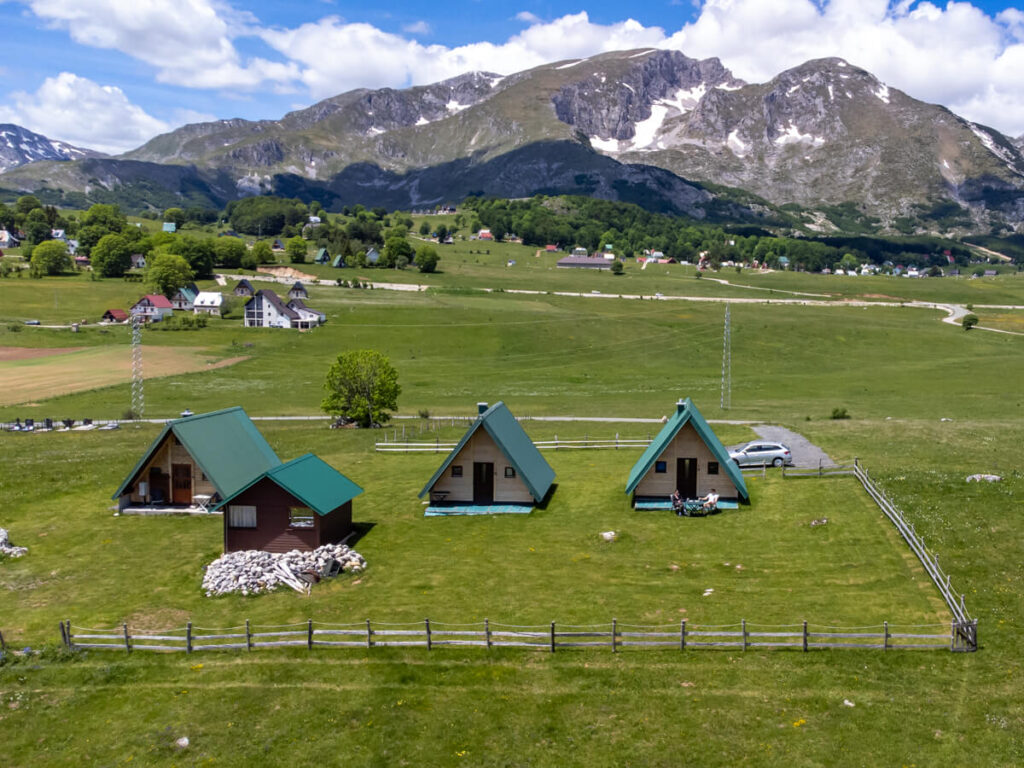
If you have a car, we’d also consider staying in the surrounding countryside, where you’ll find quieter guesthouses, cabins, and mountain stays with much more peaceful surroundings.
While you can’t camp at the Black Lake, the Campground at Ivan Do is a popular site and super close to the entrance.
Top Durmitor National Park Hotels
When to visit the Black Lake
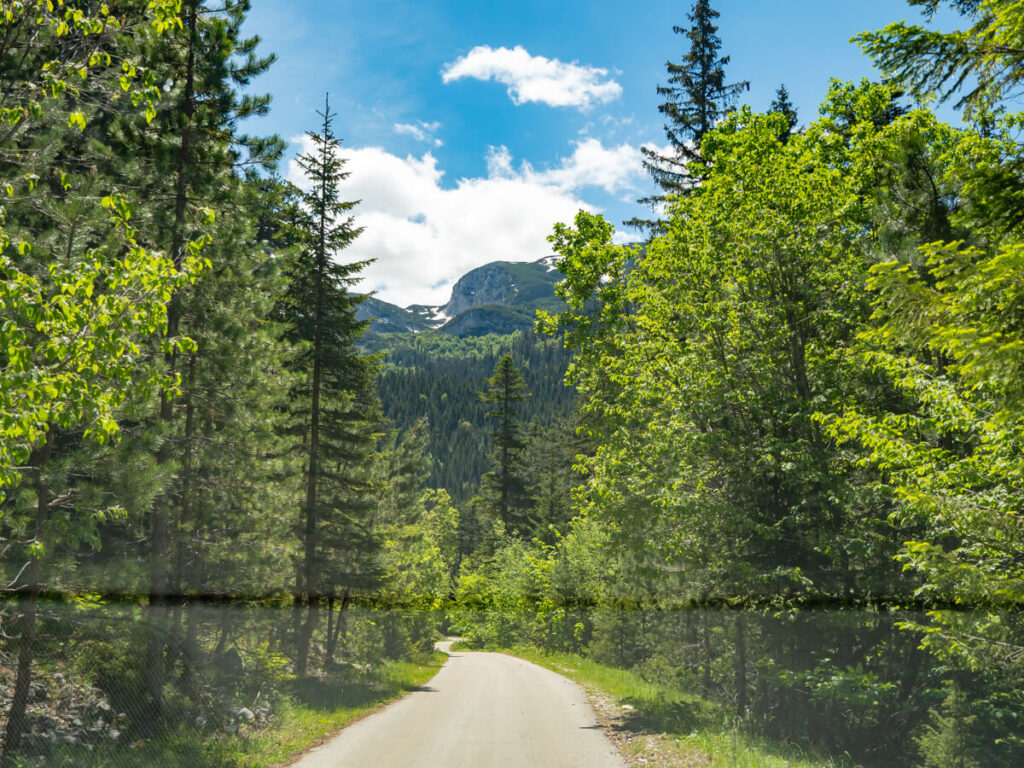
The best time to visit the Black Lake is from late spring to early autumn, when the surrounding trails are generally accessible, and the weather is suitable for hiking. July and August are the busiest months, so we’d recommend arriving early in the morning if you want to enjoy the lake without the crowds.
We visited on a Sunday in June without really thinking about the fact it was a weekend, and oh boy was it busy. We can only imagine how rammed it gets in the peak summer months.
We think a weekday in May to June and September to October are the best times to visit for fewer crowds, but still pleasant weather. Even on a grey day though, the lake’s dark appearance and dramatic reflections are super atmospheric.
The Black Lake in winter is a completely different experience, with snow often covering the forest and surrounding mountains. However, access to Žabljak and hiking conditions can be much more difficult, so check local advice before visiting.
How long to spend at the Black Lake
We’d allow at least 3 hours for the Black Lake if you’re planning to walk the loop, stop for photographs, and spend some time by the water. We thought 2 might be fine, but actually ended up taking over 2.5 hours, so were glad we went for the 3 hours of parking.
If you’re simply visiting for the scenery, you can see the lake in around an hour, but we’d personally recommend slowing down rather than rushing off. Even if you don’t want to do the walk, you could enjoy a coffee in the restaurant or picnic by the lake’s shore.
If you’re using the Black Lake as the starting point for a longer hike, you’ll obviously need considerably longer. Routes towards places such as Ledena Pećina, Planinica, and Bobotov Kuk can turn your visit into a full-day mountain adventure. Allow at least 8-10 hours for these hikes, prepare in advance, and don’t set off unless you know what you’re getting into – they’re proper mountain hikes.
Black Lake Facilities
The Black Lake is one of the better-equipped visitor attractions in Durmitor National Park, largely because of its proximity to Žabljak. There are two car parks and a ticket booth. At Car Park I, there’s also a visitor centre, although it was closed during our visit.
On the path to the lake, various vendors offer snacks and souvenirs from wooden huts – more often in summer. There’s also a tap offering drinking water.
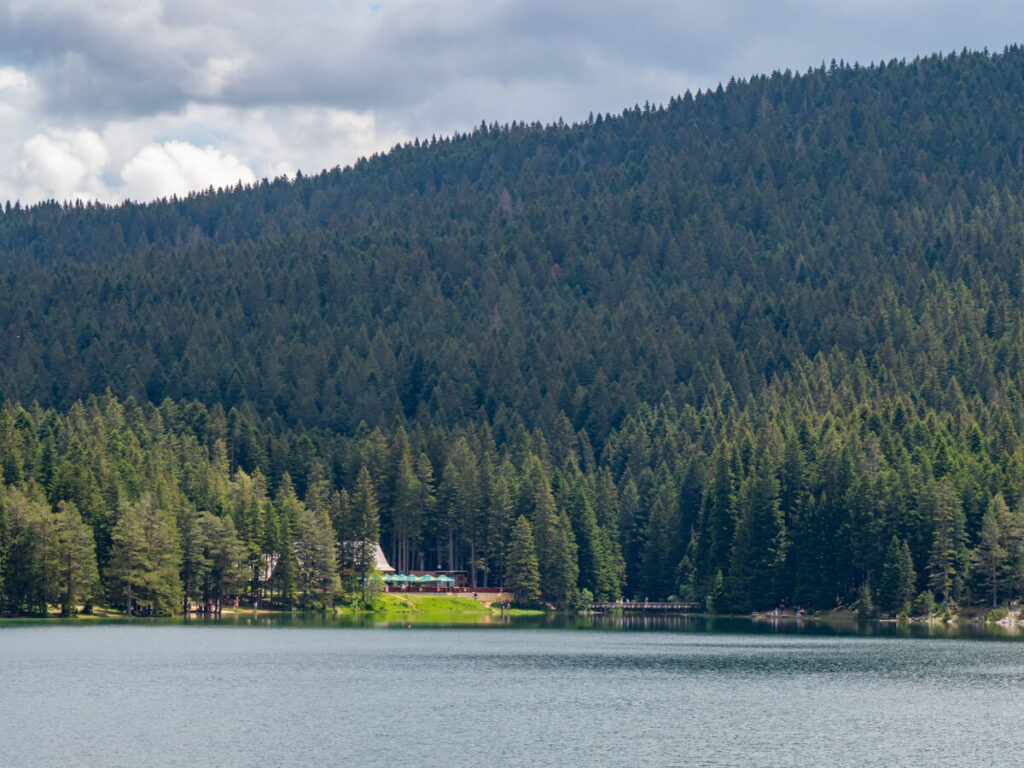
The main facility at the lake is the restaurant, which serves snacks, meals, coffee, and alcoholic drinks like local wine and beer. It has flush toilets for guests inside and a nice outdoor seating area with views of the lake. It’s a bit overpriced, and we chose not to eat there, so we can’t vouch for the quality.
There are free squat toilets in the building behind the restaurant for visitors to the lake.
There’s a small wooden dock where boat trips and kayak rentals are offered in summer, but it was sadly empty on our visit in early June.
Despite being touristy, there’s not a huge amount of amenities at the lake, and once you leave the main area, there’s nothing. For longer hikes, bring your own supplies, water, snacks, navigation equipment, and anything else you’ll need for the day.
Is the Black Lake worth visiting?
We would recommend visiting the Black Lake, particularly if it’s your first time in Durmitor National Park. It’s not only super scenic, but also very accessible, allowing you an insight into the park’s landscapes without hiking.
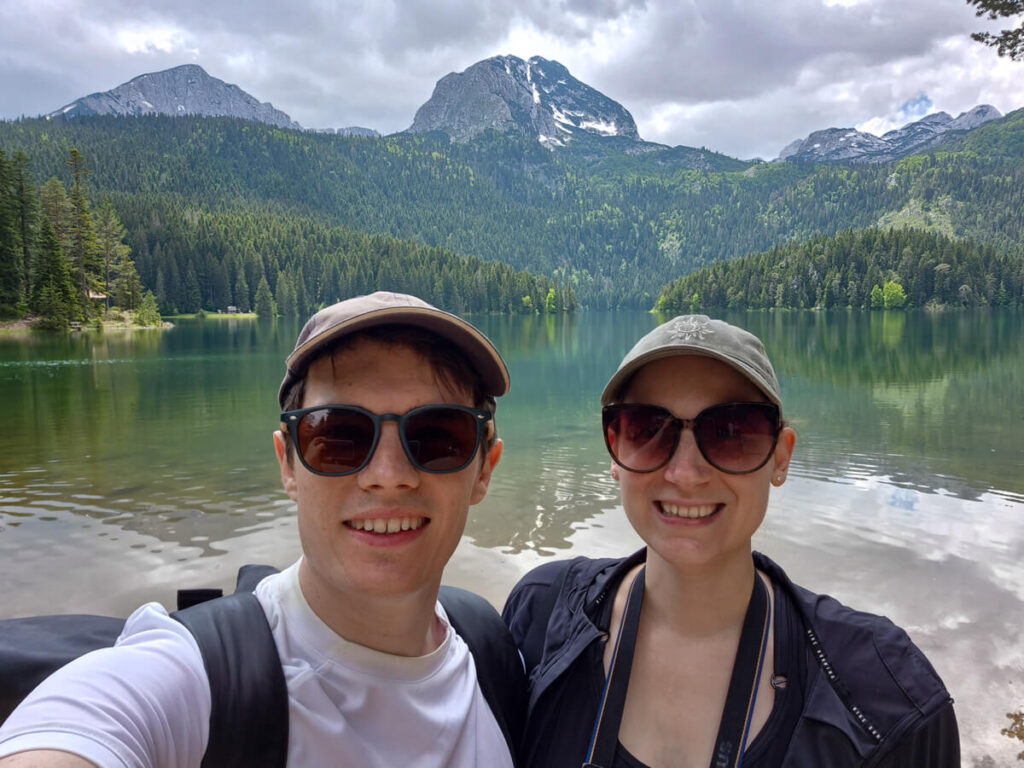
The Black Lake loop hike is also one of the easiest ways to experience the scenery of Durmitor National Park without committing to a demanding mountain hike. You’ll have views of the imposing Međed peak from various angles, as well as perspectives of other peaks in the park. We particularly loved the views in June, when snow still lingered on the tops of the grey pinnacles.
Having said that, the Black Lake is one of the busiest sights in Durmitor National Park. It’s also expensive, since the parking situation is privately owned and charges by the hour – unlike many other attractions in the park which are free to access (not including the park entrance fee). We’d also argue the lake is nowhere near as scenic as some of the other natural attractions in the park, so it can be underwhelming if you’ve seen epic photos of some of the areas in the region.
One caveat is that we made the mistake of visiting around midday on a weekend, so some of the busyness was definitely our own fault. There were lots of families around the lakeshore, and as a child-free couple, we didn’t find it quite as peaceful as we’d hoped. We’d recommend arriving early in the morning or later in the afternoon, and doing the loop walk away from the restaurant, if you’re looking for a quieter experience.
Essentially, if you’re short on time, travelling as a family, or looking for a taste of Durmitor National Park without going too far from Žabljak, the Black Lake is probably the one attraction we’d prioritise. If you have longer, use it as an introduction to the national park, but get out and see more of the region too.
Tips for visiting the Black Lake
The Black Lake is easy to visit compared with many of the attractions in Durmitor National Park, but a little planning can make a big difference, particularly in the busy summer months. Here are our top tips:
What to pack to visit the Black Lake
Despite being touristy, it’s still best to be prepared when you visit the Black Lake. Don’t forget to pack your:
Leave your drone in your accommodation, as it’s illegal to fly in the national park (be aware that you need to apply for a permit before importing it into Montenegro anyway).
Durmitor Black Lake FAQs
To help you plan your trip to the Black Lake, we’ve answered these frequently asked questions.
What does “Crno Jezero” mean?
Crno Jezero literally translates from Montenegrin as “Black Lake”. The name refers to the lake’s dark appearance, created by the deep water, surrounding conifer forest, and shadows cast by the mountains.
Why is it called Black Lake, Montenegro?
The Black Lake gets its name from the deep, dark colour it can appear to have when viewed against the surrounding forest and mountains. It’s actually made up of two connected sections, the Big Lake and Small Lake, which are joined by a narrow channel.
Is the Black Lake in Durmitor National Park?
Yes, the Black Lake is inside Durmitor National Park, just around 1.9 miles (3 km) from the centre of Žabljak. It’s one of the park’s most accessible attractions and a popular starting point for longer mountain hikes.
Can you swim in Durmitor Black Lake?
Swimming is permitted in the Black Lake during the warmer months (May to October). However, the water is fed by mountain and glacial sources and remains very cold, even during summer, so it’s much more refreshing than your average lake swim.
How long does it take to walk around Black Lake, Durmitor?
The full Black Lake Loop is approximately 2 miles (3.5 km) and takes around 1-1.5 hours at a comfortable pace. We’d allow closer to 3 hours at the lake in total if you want to stop for photographs, enjoy the views, or sit beside the water for a while, too.
Read next:
An Ultimate Guide to Visiting Durmitor National Park
Where to Stay for Durmitor National Park: Cool Cabins + Top Hotels
15 Best Things to Do in Durmitor National Park + Our Itinerary
Driving the Durmitor Ring Road Route Guide
12 Best Hikes in Durmitor National Park From Easy to Expert
What It’s Really Like Hiking Bobotov Kuk
A Complete Guide to Hiking Ćurevac Peak
