Complete Guide to Visiting Prokletije National Park: Montenegro’s Accursed Alps

Discover everything you need to know about visiting Prokletije National Park and the Accursed Mountains in Montenegro.

This post may contain affiliate links, which means we might earn a small commission on anything purchased through these links at no extra cost to you. Learn more on our disclaimer page.
There are five national parks in Montenegro, each with its own appeal, but if we had to pick a favourite, Prokletije is right at the top. Nicknamed the “Accursed Mountains”, this remote corner of the country is home to jagged limestone peaks, glacial valleys, wildflower-filled meadows, and some of the best hiking in Montenegro – yet it still sees a fraction of the visitors that head to Durmitor or the Bay of Kotor.
We visited Prokletije National Park as the first stop on our 5-week Montenegro road trip and are honestly shocked it’s not talked about more – we almost want to gatekeep it so it stays the hidden gem it truly is. We’ll never forget climbing above dramatic glacial valleys, eating homemade food at family-run katuns, and watching the sun set behind jagged limestone peaks. It feels like the kind of place that’s becoming increasingly difficult to find in Europe. Sure, the Dolomites are spectacular, but Prokletije offers that same sense of towering mountains, alpine meadows, and dramatic scenery without the crowds and inflated price tag.
In this guide, we’ll cover everything you need to know to plan your visit to Prokletije National Park, including the best hikes, how to get here, where to stay, when to visit, how to do so responsibly, and our favourite experiences in what we think is Montenegro’s most underrated national park.
Prokletije National Park at a glance

More from Prokletije National Park
About Prokletije National Park
Prokletije (Nacionalni park Prokletije) is Montenegro’s fifth and youngest national park, designated a protected area in 2009. It encompasses one of the country’s wildest mountain landscapes and one of the most biodiverse areas in the Balkans.
The name Prokletije is commonly translated as “the Accursed Mountains”, a reference to the range’s rugged terrain and imposing limestone peaks rather than any modern-day reputation. The park is home to more than 20 summits that rise above 2,500 metres (2.5 km) across the wider Prokletije massif, giving the range one of the most dramatic skylines in southeastern Europe. Among them, Zla Kolata is Montenegro’s highest mountain at 2,534 metres (2.53 km) above sea level.
The park protects everything from ancient beech forests and glacial valleys to high limestone peaks, alpine meadows, and crystal-clear springs. But despite its wild reputation, it is surprisingly accessible, with a handful of valleys acting as gateways to some of Montenegro’s most rewarding landscapes.

Where is Prokletije National Park?
If you’re familiar with Albania’s Valbona Valley or have been to the popular hiking town of Theth, you might think that Prokletije National Park’s scenery looks familiar. That’s because it’s located right on the Albanian border.
In fact, the mountains, known as the Accursed Mountains, are shared between Montenegro, Albania, and Kosovo, forming one of the largest alpine regions in the western Balkans.
The wider Prokletije mountain range forms part of the Dinaric Alps, a vast mountain system that stretches from Slovenia, through Croatia, Bosnia and Herzegovina, Montenegro, Serbia, Kosovo, and into Albania.
The national park itself, which sits in eastern Montenegro, covers 16,630 hectares (166.3 km²) across the municipalities of Plav and Gusinje.
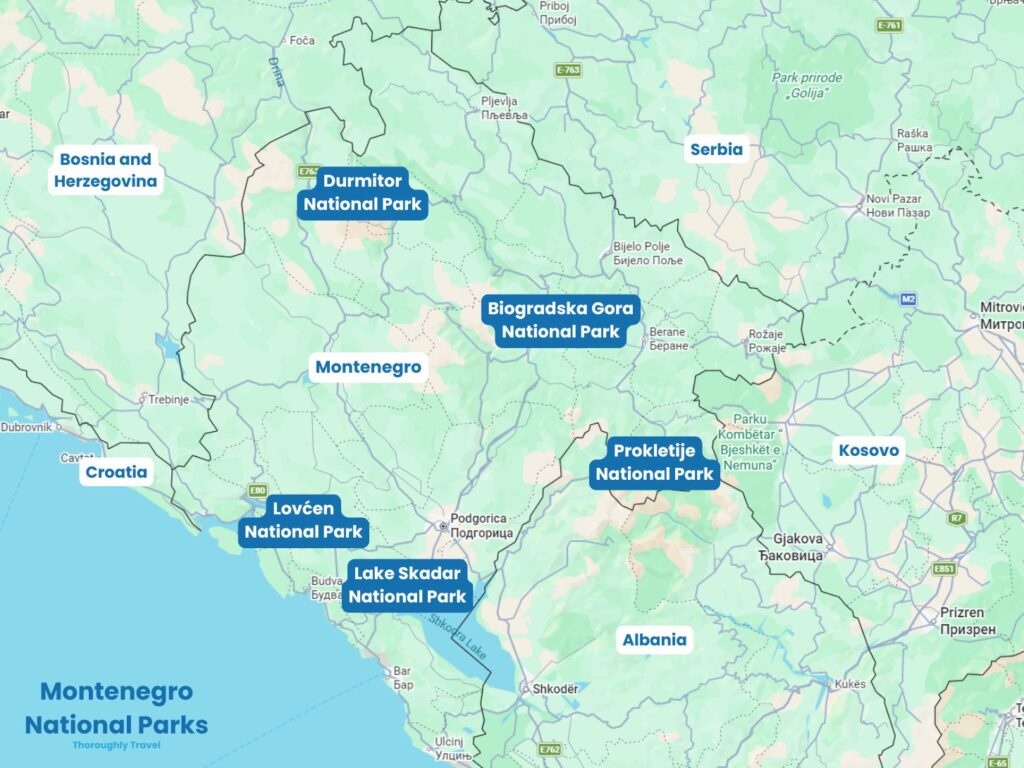
Prokletije National Park Map

Why visit Prokletije National Park?
Before our trip, we almost skipped Prokletije. It’s quite a detour from the Bay of Kotor, and compared to Durmitor National Park or Lake Skadar, there wasn’t much information online to convince us it was worth the drive. But looking back, we can’t believe we even considered skipping it.
Not only did it end up being one of our favourite places in Montenegro, but it also felt like one of the most authentic places we’ve visited anywhere in Europe. Here’s why.

It’s off-the-beaten-path
Unlike more popular and more easily accessible national parks, like Lovćen National Park and Biogradska Gora National Park, Prokletije’s remote nature means it still has a relatively undiscovered feel. In Durmitor, many of the main sights can be seen from the Durmitor Ring Road, while Prokletije rewards visitors who are prepared to explore on foot.
The journey by car takes longer than visiting Montenegro’s coastal attractions, but that’s also why the mountains feel so untouched once you arrive. It’s a pocket of wilderness at the eastern edge of the country that’s really underrated.

It’s visually stunning
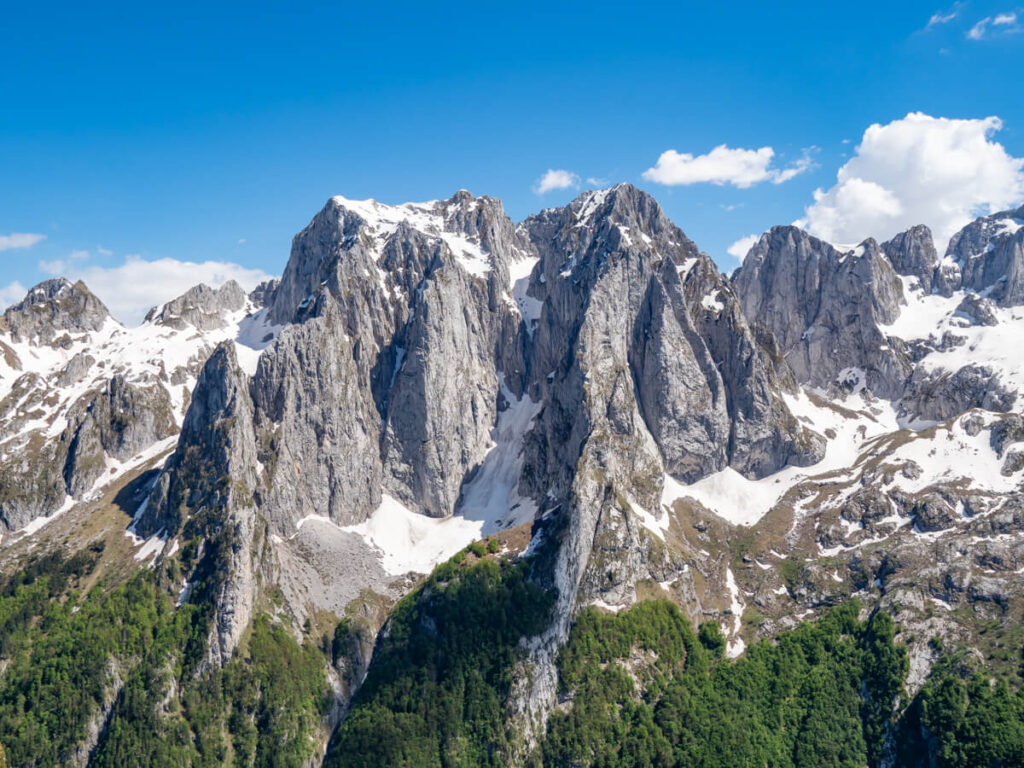
We’ve been lucky enough to see incredible mountainous places from Slovenia’s Julian Alps to New Zealand’s Mount Cook, but Prokletije genuinely blew us away. The landscape consists of sharp limestone ridges, deep glacial valleys, alpine meadows, and crystal-clear springs, creating scenery that feels very different from Montenegro’s better-known coastline.
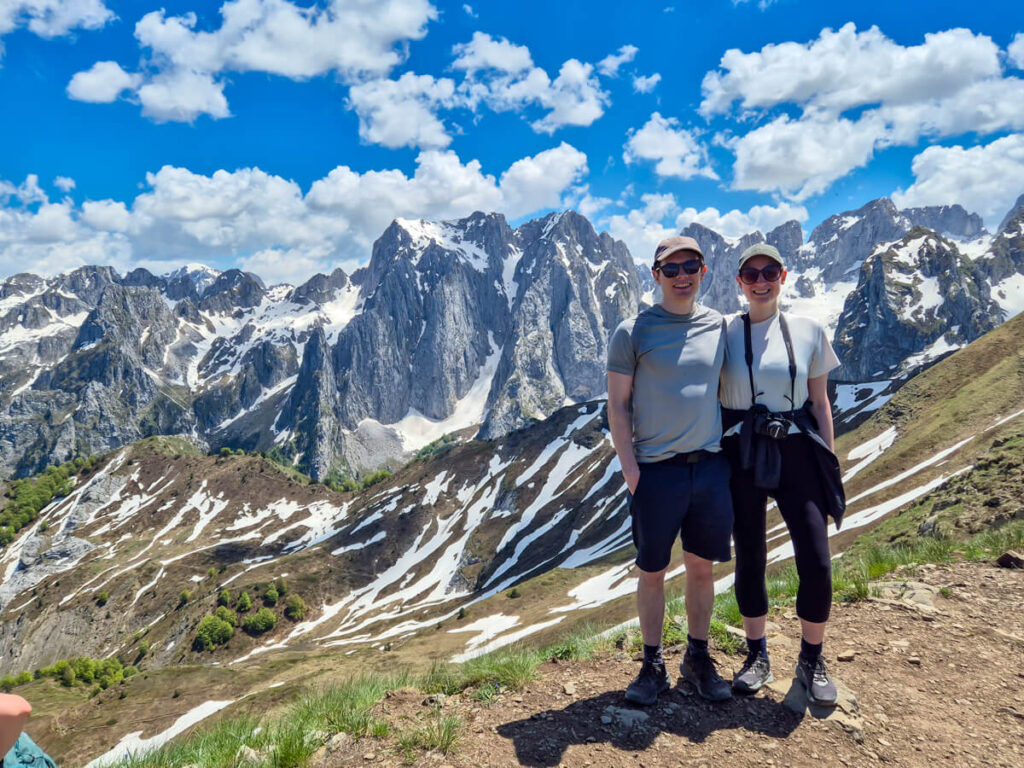
I also think it helped that we visited right at the end of May. The snow peppering the mountaintops really added depth, accentuated the aesthetics, and highlighted the sheer scale of the mountains before us.
It has some epic hikes
Prokletije is considered one of Montenegro’s premier hiking destinations, with routes ranging from gentle valley walks to demanding full-day summit hikes.
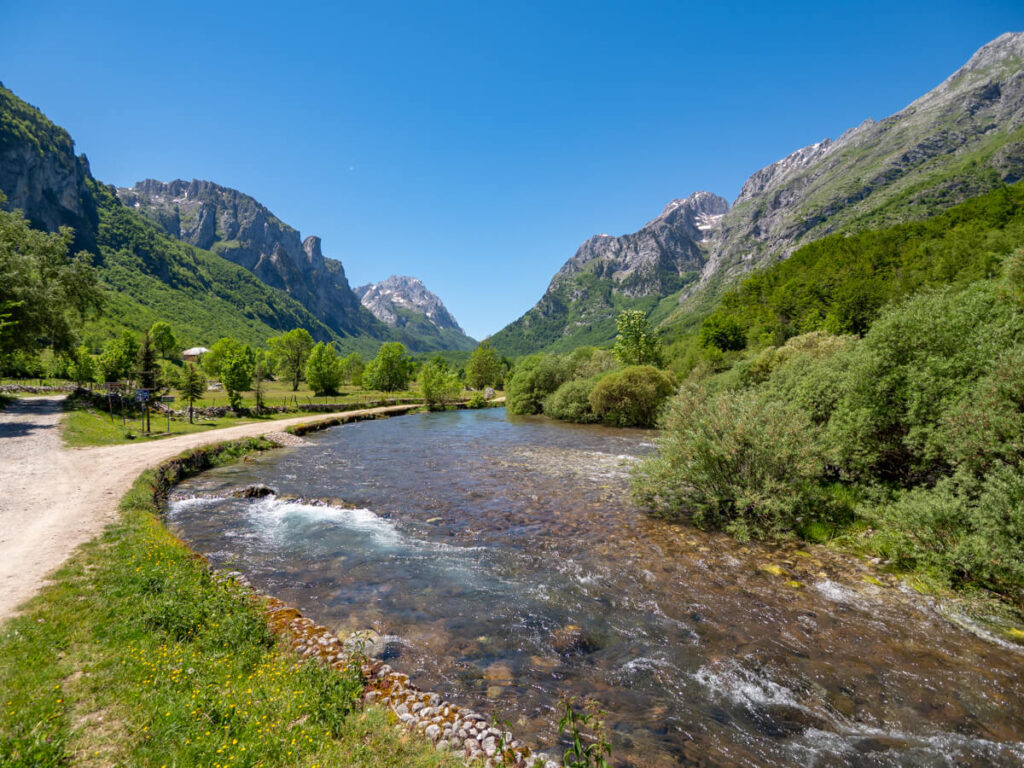
Many of the park’s best-known trails begin in either Grebaje Valley or Ropojana Valley, making these two valleys the main bases for visitors exploring the area.
We enjoyed a day looping the epic Three Peaks hike, which provides panoramic views over Albania as you navigate ridges between the peaks of Volušnica, Popadija, and Talijanka. You can also just go out-and-back to Volušnica for something slightly shorter with a decent portion of the same views.
To recover, we enjoyed some shorter trails, like the flat walk to Oko Skakavice, a turquoise spring known as ‘The Eye’. You can also visit the pretty Ali Pasha Springs or Grlja and Kusije Waterfalls.
For something even more challenging, you could tackle the internationally renowned Peaks of the Balkans Trail, which passes through Prokletije, linking Montenegro with neighbouring Albania and Kosovo on a multi-day hiking route.

It’s home to incredible animals
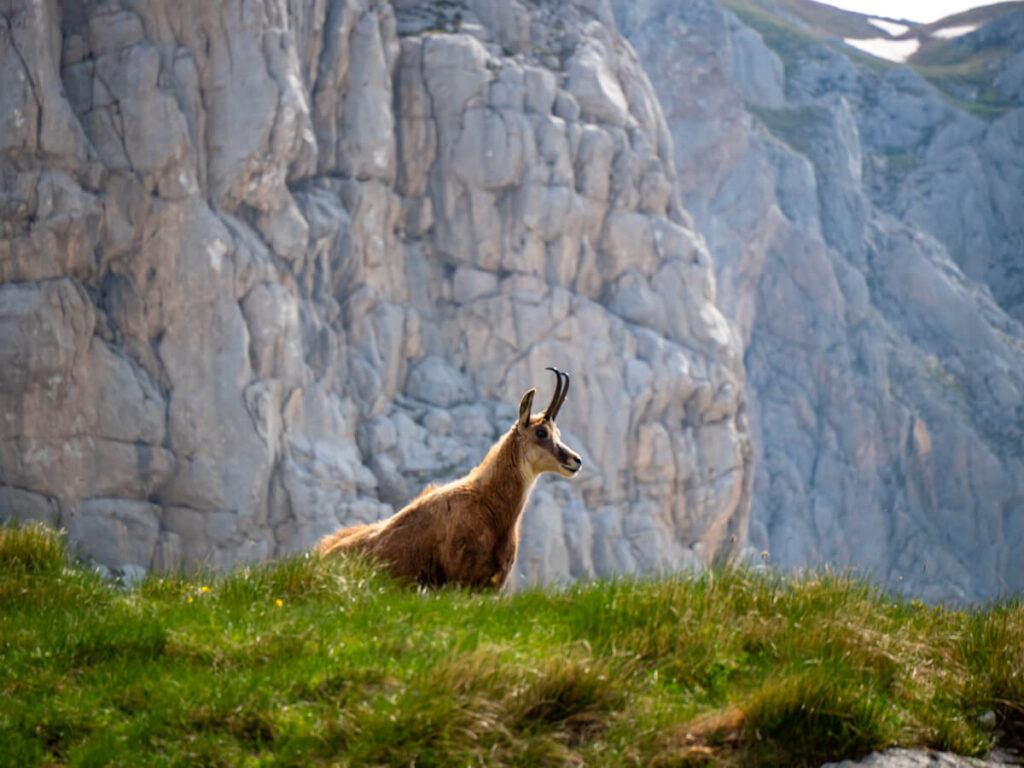
Prokletije supports healthy populations of wildlife including brown bears, wolves, chamois, wild boar, and golden eagles.
Realistically, you’re unlikely to spot a bear or wolf – they’re incredibly shy and tend to avoid people – but knowing they’re out there only adds to the feeling that you’re exploring somewhere genuinely wild.
It still feels authentic
One of our favourite parts about visiting Prokletije was that the fun didn’t stop after hiking. The whole area is gorgeous, and the best way to experience it is to stay in a locally-run katun accessed via quiet roads, chat with local families, and sleep in a wooden cabin. We spent our evenings eating homecooked meals and watching the sunset from our cabin’s patio. It was pure bliss and the getaway in nature we were seeking.
Tourism hasn’t changed local life here in the same way it has elsewhere in Montenegro, and we really hope it stays that way. We’d highly recommend staying locally, supporting those working hard to preserve the region’s culture and traditions.

The best things to do in Prokletije National Park
Whether you want to spend your days walking, driving, swimming, eating, or simply enjoying the scenery, here are the best things to do in Prokletije National Park:
Hiking in Prokletije National Park
Hiking is undoubtedly the main reason most people visit Prokletije National Park. Whether you’re after a gentle walk through wildflower-filled valleys or a demanding summit that will test your legs, you’ll find some of Montenegro’s very best trails here. These are the most popular hikes in Prokletije National Park:
When to visit Prokletije National Park
Prokletije National Park is a strongly seasonal destination, and when you visit will have a huge impact on what you can actually do. Unlike Montenegro’s coast, this is a high alpine mountain range, so snow lingers well into spring and returns early in autumn.
We think the best time to visit Prokletije is from mid-June to mid-September, when the hiking trails are usually snow-free, mountain huts and guesthouses are open, and the weather is generally at its most reliable.
July and August offer the longest daylight hours, making them ideal for longer hikes like Volušnica, Talijanka, Popadija, or the Peaks of the Balkans Trail, although they’re also the busiest months.
Late June and September are slightly quieter, with the appeal of spring at the start of the hiking season and autumn foliage at the end. The trails are less busy, temperatures are more comfortable for hiking, and the valleys are either bursting with wildflowers or beginning to show early autumn colours.
We actually visited at the end of May. We absolutely adored the amount of snow covering the mountains, and it was super quiet around the valleys. But if we’d been a matter of days earlier, we wouldn’t have been able to hike the Three Peaks safely due to snow, and another year it might not be as clear. It’s a bit of a gamble to go that early, so we’d recommend June onwards if you’re keen to hike.
October often brings the first significant snowfall, although weather patterns are becoming more unpredictable with global warming. Many guesthouses reduce their opening hours outside the main hiking season, and most routes become unsuitable without proper winter mountaineering experience.
Prokletije National Park Weather
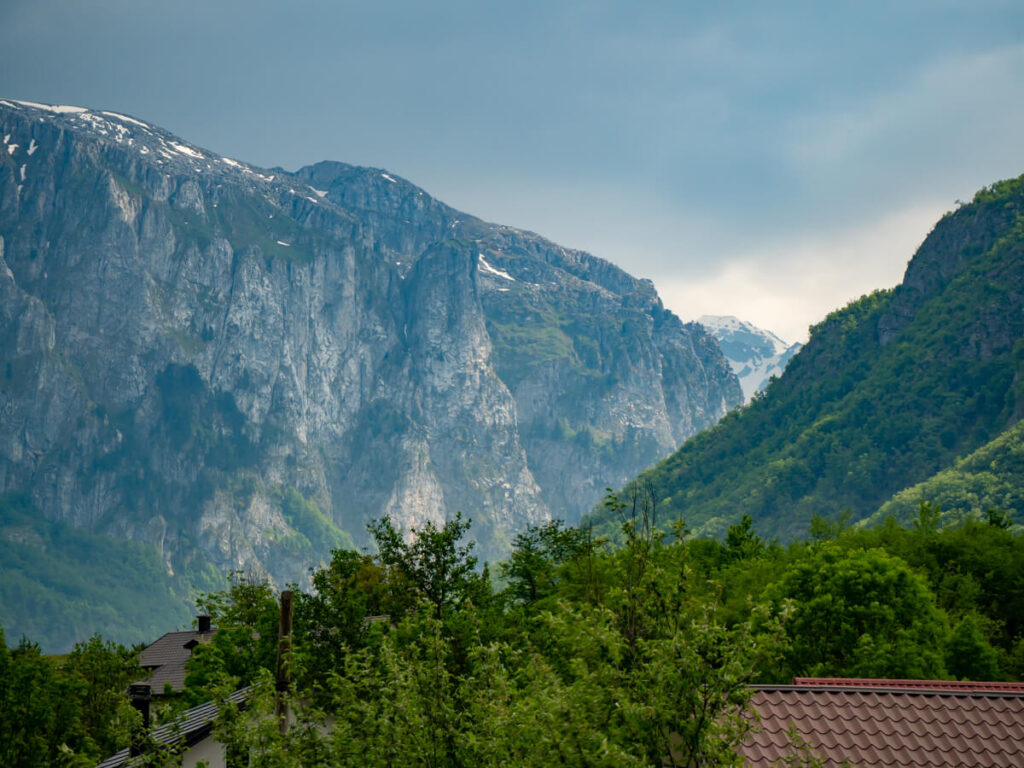
Prokletije has a mountain climate, meaning temperatures are significantly cooler than elsewhere in Montenegro, especially at higher elevations.
Weather can also change very quickly, so it’s always worth carrying an extra layer and waterproof jacket, even on clear mornings.

How to visit Prokletije National Park
Prokletije National Park is not a feasible day trip from any other major tourist areas in Montenegro – Kotor, Budva, and Žabljak (Durmitor National Park) are all too far away. Even the drive from Podgorica to Prokletije National Park takes around 2.5-3 hours one-way, so you’d spend most of the day in the car. It’s best to spend a few nights staying near Prokletije National Park.
Many visitors don’t realise Prokletije National Park has multiple access points. Unlike some of Montenegro’s other national parks, there isn’t a single entrance gate or visitor hub. Instead, you’ll access different parts of the park via valleys or tiny towns, with each offering its own hiking trails, viewpoints, and attractions.
The main access points are:
How to get to Prokletije National Park
The nearest airport to Prokletije National Park is Podgorica Airport (TGD), located around 80 miles (135 km) away, with a driving time of approximately 2.5-3 hours depending on your destination and road conditions.
Tivat Airport (TIV) is also an option if you’re combining Prokletije with Montenegro’s coast, but the journey is significantly longer, usually taking around 4-5 hours.
If you’re coming overland, you might start in the Bay of Kotor, which we did after taking the bus from Mostar in Bosnia and Herzegovina. This is also a popular starting point for those coming from Croatia, like the touristy town of Dubrovnik. From there, you’ll head for Podgorica.
For international visitors, Pristina Airport (Kosovo) and Tirana Airport (Albania) can also be worth considering, particularly if you’re planning to explore the wider Prokletije region or cross borders. From Albania, you can cross the border near Lake Skadar and then head up to Podgorica and onwards.

By car
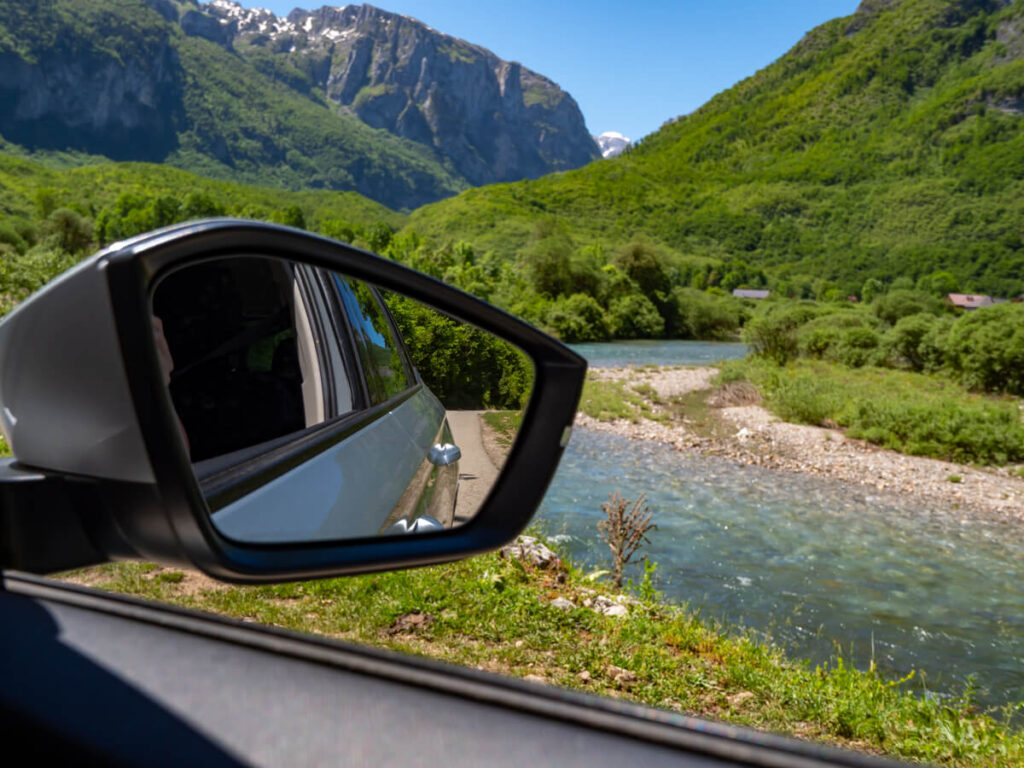
We personally think that the best way to visit Prokletije National Park is under your own steam. We’d recommend hiring a rental car, as having your own wheels gives you the freedom to explore different valleys, reach trailheads early, and stop at the countless viewpoints along the way.
If you’re worried about driving in Montenegro, don’t be. While the mountain roads require more attention than the coast, the journey to Prokletije is mostly straightforward, and the roads are generally in good condition. Plus, except for the occassional local and cows wandering across the road, they’re super quiet.
You can pick up a car in either Podgorica – or Kotor or Tivat (we rented a car with Kombo Rent a Car) and head towards Podgorica – before turning north towards the mountains and national park. We broke the journey up from Kotor’s Old Town with a night in the old capital, Cetinje.
From Podgorica, it’s a pretty easy drive up the A1 motorway. It’s a modern, quiet, and pleasant drive. You take a ticket when entering and pay €3.50 per car, in cash or by card, at the toll booth at the end. From there, you can follow the M9 to Plav, then turn down towards Gusinje and the national park.
The only reason you wouldn’t reach Prokletije National Park via Podgorica is if you’re already in the north of the country – at Durmitor National Park or Biogradska Gora. If so, it’s pretty easy to reach the park via the M6, P4, P2, and M9, passing Mojkovac and Berane. We did this the other way around and had no problems.

By public transport
It’s possible to reach Plav and Gusinje by bus from Podgorica, although services are relatively limited compared to Montenegro’s coastal routes. They take around 4 hours and cost around €14 one-way. Arena Tours and Elan Company both run about 4 departures a day to Gusinje and about 6 a day to Plav. You can check schedules on BusTicket4.me.
From there, you’ll usually need to arrange a taxi or transfer to reach trailheads in Grebaje Valley or Ropojana Valley, as they’re not served by buses. Technically, you could walk from Gusinje to Grebaje (4.5 miles / 7 km), but it took us 20 minutes to drive, so we reckon it’ll take you nearly 2 hours one-way on the unshaded road (no pavement), so it’s not really feasible.
Hitchhiking is fairly common in this part of Montenegro, particularly among hikers. While we wouldn’t rely on it if you’re on a tight schedule, it’s a useful option for flexible travellers and is part of the friendly, community feel that makes the Prokletije region so special. We picked up a couple of Polish hitchhikers in a different national park, but they’d been walking a few hours before we did so.
Public transport works if you’re on a tight budget, but it offers far less flexibility than having your own vehicle.
By tour
Unlike Durmitor or Lake Skadar, organised day tours to Prokletije are relatively uncommon because of the long driving distances – but they’re not non-existent. There was a small bus tour ahead of us as we entered the park via the Grebaje Valley.
If you’re short on time, you may find private guides or hiking companies offering trips from Podgorica or even the Bay of Kotor. They’re great if you don’t want to drive or aren’t an experienced hiker and want the peace of mind a guide brings, but they’re generally more expensive than visiting independently.
We found a few well-rated tours to the Grebaje Valley on GetYourGuide, offering guided Three Peaks hikes, 4×4 off-road adventures, and excursions in the Ropojana Valley.

Prokletije National Park Entrance Fee
As with all of Montenegro’s national parks, there is an entrance fee to enter Prokletije National Park.
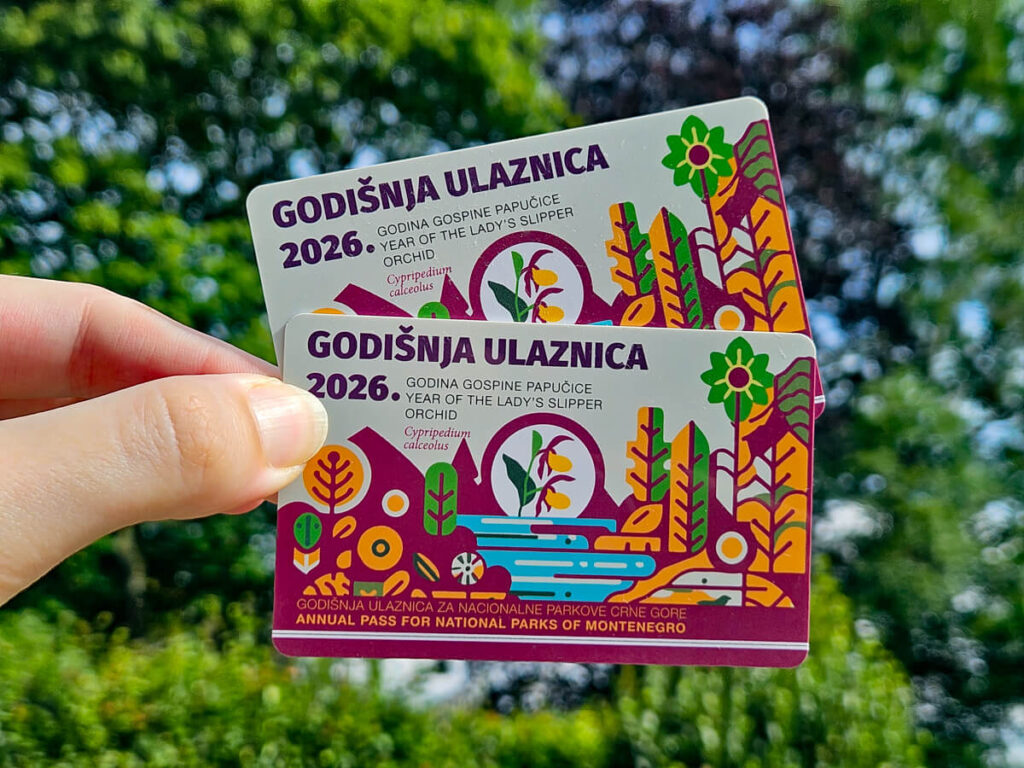
It’s €3 per person per day, but we’d highly recommend getting the annual pass for €13.50 if you plan to visit the other national parks too. You can also buy it online in advance.
It’s payable upon entering the park’s boundaries, with a ticket booth set up at the entrance to the Grebaje Valley, just after passing through Gusinje.
How to get around Prokletije National Park
Once you’re in the park, getting around without a car can be difficult. The main valleys are spread apart, public transport within the park is almost non-existent, and many trailheads are several miles from the nearest accommodation.
We found having a rental car made exploring incredibly easy. It allowed us to move between Grebaje, Ropojana, Plav, and Gusinje whenever we wanted, stop at viewpoints along the way, and never worry about taxi fares or bus timetables.
If you aren’t driving, it’s best to base yourself in a town like Gusinje or Plav rather than a valley, so you have access to shops, taxis, and public transport routes. Alternatively, you could liaise with a katun or guesthouse that’s walkable to the trailhead of your chosen hike, and they can assist with transfers.

Prokletije National Park Accommodation
There’s a range of accommodation in Prokletije National Park, from remote chalets within the park borders to tiny towns with traditional hotel options on the outskirts. Unlike Montenegro’s coastal resorts, accommodation here is all about the experience rather than luxury. Expect family-run guesthouses, traditional katuns, cosy mountain cabins, and small hotels where your hosts often cook breakfast and dinner themselves.
We’d highly recommend staying at least 2-3 nights. Not only does it give you enough time to explore multiple valleys, but it also means you can start hikes early before the midday heat and afternoon thunderstorms roll in. We stayed 4 nights, which was the perfect amount of time for the challenging Three Peaks hike, some recovery time just enjoying our cabin at Eko Katun ROSI, and a few smaller excursions to nearby attractions like waterfalls and springs. Honestly, if we went back, we could easily spend longer.
Check out our full guide on where to stay in Prokletije National Park, including our Grebaje Valley and Ropojana Valley comparison and top katuns and guesthouses in each location.
Prokletije National Park Hotels

Prokletije National Park Food and Drink
One of the biggest surprises for us was just how good the food was in such a remote region. Rather than tourist-focused restaurants, most places serve simple, homemade mountain dishes using locally sourced ingredients, and we genuinely don’t think we had a bad meal the entire time.
Now we will say, being vegan is harder than on the coast, but a lot of traditional dishes are naturally vegetarian, and our katun had veggie-friendly options like pizza and soup, too. Opt for dishes like kačamak (mashed potatoes, cornmeal, and cheese), cicvara (a mix of cheese, flour, and butter), grilled vegetables, and shopska salad.
Otherwise, you’ll find hearty portions of grilled meats, slow-cooked stews, fresh trout, homemade bread, local cheeses, yoghurt, seasonal salads, the best fresh juice Dan has ever had, and plenty of strong coffee.
If you’re staying at a katun or guesthouse, it’s well worth booking dinner, as many hosts prepare traditional meals that you simply won’t find on restaurant menus elsewhere. We also had homemade wine and local beer, which was perfect with the sunset over the surrounding mountains.
Restaurants become much less frequent once you head into the valleys, so it’s worth carrying non-perishable snacks and plenty of water if you’re planning a full day of hiking. Gusinje and Plav have the widest choice of cafés, bakeries, supermarkets, and restaurants if you need to stock up before heading into the mountains.
Bring a reusable water bottle that you can fill up at your accommodation. We were so grateful for our Water-to-Go filter bottles, which meant we could fill up from streams and waterfalls on hikes and not worry about getting ill.

Is Prokletije National Park worth visiting?
Visiting Prokletije National Park is 1000% worth it, especially if you’re looking for the kind of Montenegro that most visitors never see. After spending several days exploring the park, it quickly became one of our favourite places in Montenegro. The combination of dramatic limestone peaks, snow-capped mountains, glacial valleys, natural wonders, homemade food, welcoming hosts, and trails where we sometimes didn’t see another person for hours made it unlike anywhere else we visited – not just in the Balkans but in the world.
Ok, we love it, but there are some people that Prokletije National Park won’t be suitable for. If your ideal holiday revolves around beaches, nightlife, and ticking off the country’s most famous landmarks, you may be happier sticking to the coast. If you’re keen to see the mountains, but in a more accessible and less hiking-focused destination, you may also prefer Durmitor National Park to Prokletije.
But if you love hiking, mountain scenery, quiet roads, traditional villages, and feeling like you’ve stumbled upon somewhere genuinely undiscovered, we think Prokletije National Park is an absolute must-visit stop.

Practical tips for visiting Prokletije National Park
To help you prepare for your visit to Prokletije National Park, here are our top tips:
What to pack to visit Prokletije National Park
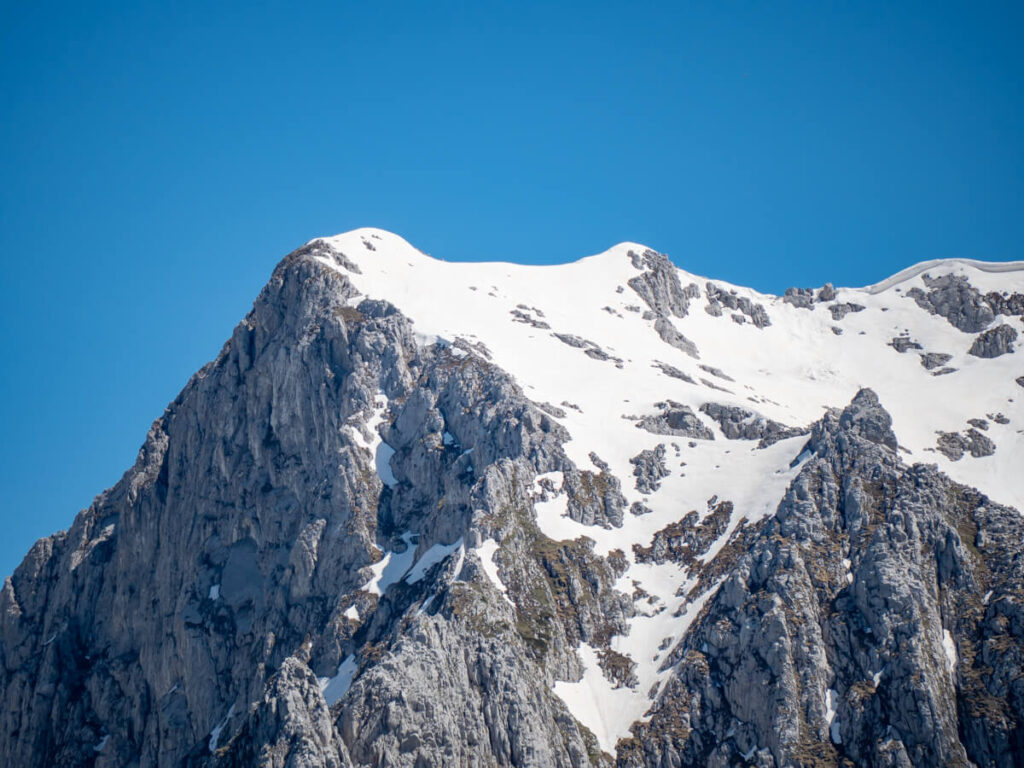
It’s best to be prepared when you visit Prokletije National Park. Don’t forget to pack your:
Leave your drone in your accommodation, as it’s illegal to fly in the national park (be aware that you need to apply for a permit before importing it into Montenegro anyway).
Prokletije National Park vs Durmitor National Park
If you have limited time, you might be trying to choose between Prokletije National Park and Durmitor National Park. They’re Montenegro’s two premier mountain destinations, but they offer very different experiences.
Durmitor is Montenegro’s best-known national park and attracts far more visitors, while Prokletije is much quieter. We visited both on the same trip and Durmitor was definitely busier, especially around the Black Lake.
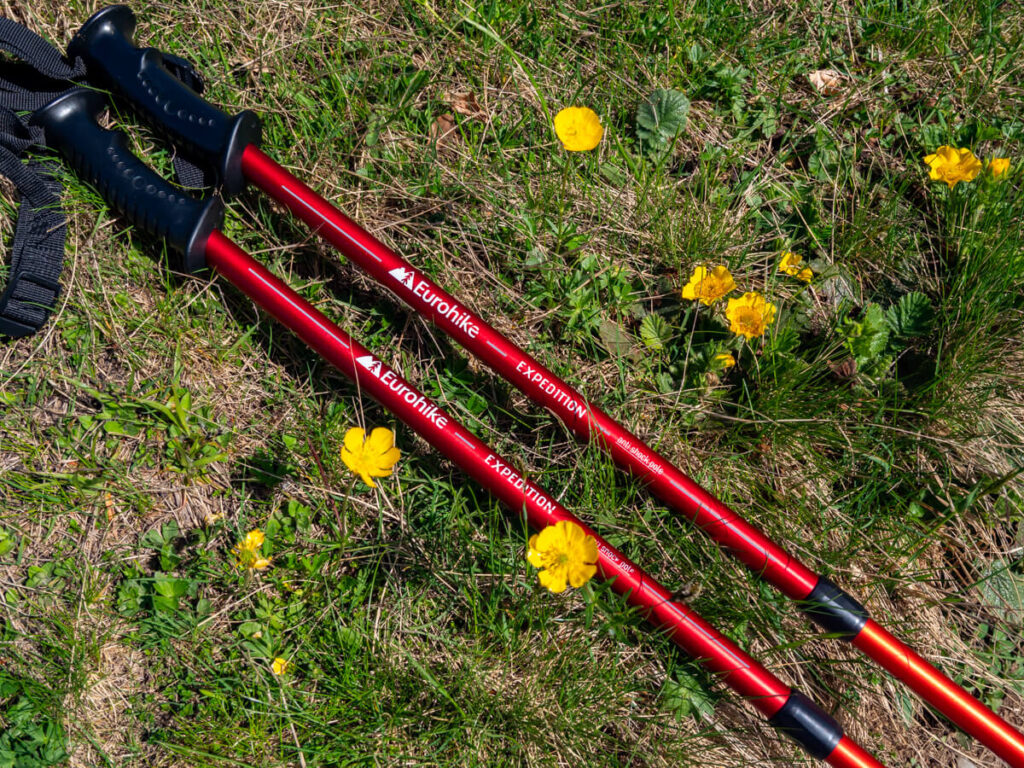
Both parks are visually stunning, but in different ways. Prokletije feels more wild, rugged, and dramatic. Towering limestone walls rise almost vertically above narrow valleys, you have views over to Albania, and the valleys offer stunning lush scenery with rivers and springs.
Durmitor is more varied. Instead of one dominant mountain range, you’ll find glacial lakes, wide alpine plateaus, dense forests, the enormous Tara Canyon, and rounded peaks alongside dramatic limestone summits.
In terms of hiking, both national parks offer a range of trails from easy to challenging. In Durmitor, the easy option is the 1-hour Black Lake loop, while challenging routes include tackling a half-day hike to Prutaš or climbing Montenegro’s second-highest peak, Bobotov Kuk. The Ćurevac Peak hike offers a happy middle ground, being short but hilly.
Prokletije, on the other hand, is better for really serious hikers. It has more challenging routes, including the Three Peaks trail, Zla Kolata (Montenegro’s highest mountain), and the Kissing Cats. It’s also on the Peaks of the Balkans route, so it appeals to hikers wanting to combine it with hikes in Albania. But there are also flat, gentle trails to springs and waterfalls in the Ropojana Valley too.
Durmitor is undeniably more accessible than Prokletije. Žabljak is a better base for those using public transport, with supermarkets, cafés, hotels, restaurants, petrol stations, outdoor shops, and tour operators, and it’s connected to the rest of Montenegro by regular buses.
Reaching Prokletije requires considerably more planning. Public transport is limited, even to Plav and Gusinje, accommodation is spread across several valleys and villages, and having your own car makes a huge difference.
For accommodation, Durmitor offers everything from backpacker hostels to boutique hotels, luxury cabins, and large apartments. Whereas Prokletije is all about traditional mountain stays. Most accommodation consists of family-run guesthouses, katuns, eco-lodges, and small cabins.
Choose Prokletije if you:
Choose Durmitor if you:
Responsible travel in Prokletije National Park
One of the reasons we fell so hard for Prokletije is because it still feels authentic. Unlike some of Europe’s more famous mountain destinations, you won’t find crowded viewpoints, souvenir shops on every corner, or queues forming at sunrise. But that won’t necessarily stay true forever.
Montenegro is becoming more popular every year, and it’s only a matter of time before more people discover Prokletije National Park. In many ways, that’s a brilliant thing. Tourism creates jobs, helps support rural communities, and gives people another reason to preserve traditional ways of life.
The challenge is making sure the region grows in a way that benefits the people who already live here, rather than changing the very things that make it special.
One of the simplest ways to travel more responsibly is to choose locally owned accommodation, restaurants, and guides. Not only does this give you a much more authentic experience, but it also helps keep more money within the local community rather than contributing to tourism leakage.
Although Prokletije hasn’t yet experienced the same level of overtourism as many of Europe’s famous mountain destinations, that’s exactly why it’s worth visiting thoughtfully now. Staying on marked trails, taking your rubbish home, and reducing single-use plastic all help protect the landscapes that make the national park so special.
Ultimately, we think Prokletije is a brilliant example of how ecotourism can be a force for good. By choosing sustainable travel practices, you can help ensure this extraordinary corner of Montenegro remains just as special for future visitors.

Prokletije National Park FAQs
To help you plan your trip to Prokletije National Park, we’ve answered these frequently asked questions.
What is the best national park to visit in Montenegro?
Durmitor National Park is Montenegro’s most famous national park, but if you love hiking, dramatic mountain scenery, and quieter trails, we genuinely think Prokletije National Park is one of the country’s most rewarding places to visit.
What is unique about the Prokletije mountains?
Prokletije National Park is home to some of the most rugged mountains in the Balkans. Sharp limestone peaks, deep glacial valleys, alpine meadows, crystal-clear karst springs, and remote shepherd settlements combine to create landscapes that feel more like the Alps decades ago than a typical European tourist destination.
How do I get to Prokletije National Park?
The easiest way to visit Prokletije National Park is by rental car. From Podgorica, the drive takes around 3 hours, with most people using Gusinje, Vusanje, or Plav as their base before continuing into Grebaje Valley or Ropojana Valley. You can also reach Gusinje or Plav by bus.
Are there any guided tours of Prokletije?
Local guides offer day hikes in Prokletije National Park, multi-day trekking adventures, and guided sections of the Peaks of the Balkans Trail. If you’re planning a challenging summit, crossing into Albania, or simply want to learn more about the area’s wildlife and culture, hiring a guide can be well worth it.
What does “prokletije” mean?
Prokletije translates to “the Accursed Mountains” or “the Cursed Mountains”. The dramatic name is thought to have been inspired by the range’s steep limestone peaks, harsh terrain, and the challenges it once posed to travellers and shepherds.
Is Prokletije National Park safe to visit?
Prokletije National Park is generally safe to visit, with friendly local communities and well-established hiking routes. The main risks come from the mountains themselves, including steep terrain, rapidly changing weather, and the remoteness of some trails, so always hike prepared and within your ability.
Is bear spray needed in Prokletije National Park?
Brown bears, wolves, and lynx all live in Prokletije National Park, but sightings are extremely rare, and bears generally avoid people. Most hikers don’t carry bear spray. Making normal hiking noise, staying on marked trails, and avoiding hiking alone at dawn or dusk are usually sufficient precautions.

Read next:
All 5 Montenegro National Parks Compared + Our Favourites
A Handy Guide to Hiking in Montenegro & Our Top 10 Trails
10 Best Hikes in Prokletije National Park From Easy to Expert
Where to Stay for Prokletije National Park: Best Valleys, Towns & Katuns
Grebaje Valley Travel Guide & Best Things to Do
Ropojana Valley Travel Guide & Best Things to Do
