65 Ways to Be a More Responsible Traveller That Actually Make a Difference

A practical list of sustainable travel tips to reduce your environmental impact, give back, and travel more responsibly.

This post may contain affiliate links, which means we might earn a small commission on anything purchased through these links at no extra cost to you. Learn more on our disclaimer page.
Responsible travel is, quite frankly, incredibly overwhelming. From avoiding plastic and choosing ethical tours to navigating foreign cultures and greenwashing, the list of dos and don’ts can start to feel endless. And the truth is, not all good intentions have the impact you might think.
Being a responsible traveller isn’t about ticking boxes – it’s about making choices that genuinely reduce harm and support the people, wildlife, and environments you visit. In this post, we break down the actions that truly matter, from supporting ethical tours and protecting wildlife to minimising your footprint in everyday travel and respecting local cultures.

Why is being a responsible traveller important?
Responsible tourism is about “creating better places for people to live in and better places for people to visit”.
Centre for Responsible Travel
Responsible tourism differs from sustainable travel in a few key ways. While sustainable tourism requires companies and organisations to take responsibility for their actions and impacts, responsible tourism focuses on the choices you make as a traveller – your responsibility.
Being a responsible traveller is important because your actions directly affect the destinations you visit, the communities you meet, and the environments you explore. Understanding the issues behind tourism, from overtourism and cultural commodification to environmental degradation and economic leakage, helps you make informed choices that minimise harm and maximise benefit.

More Sustainable Travel Guides
How to be a more responsible traveller
This post contains a comprehensive list of all the top tips we’ve picked up over the years of travelling. We’ve split our top tips for travelling more responsibly into bite-sized sections to make it easier to put them into practice:
You’re absolutely not expected to do all of these all the time – even making small, considered choices can make a difference. Doing some of these is far better than doing none, and every step counts toward more mindful, responsible travel.
Top 10 ways to be a more responsible traveller
If you take away anything, we hope it’s these key points. Here are the easiest changes you can make while travelling that will have the greatest impact:
Read on for our full list of tips for becoming a more responsible traveller.

Travel planning tips
Being a responsible traveller doesn’t mean giving up on adventure – it’s about thinking ahead and making choices that support people and the planet. Here are some simple, practical ways to plan more responsible trips.
1. Travel slower
Something we learned the hard way on our first long-term backpacking trip, where we spent 6 months in Mexico and Central America: Spending more time in one place allows you to really connect with a destination rather than just passing through. Cutting your itinerary down from multiple destinations to just a few will help to reduce your impact overall.
Slowing down reduces the environmental impact of constant transportation, which is a major contributor to carbon emissions from travel. Travelling slowly also benefits local economies, as you’re more likely to eat at local restaurants, hire guides, and shop at markets. Plus, it gives you the chance to notice and appreciate the subtleties of local culture and daily life.
But most importantly, slow travel turns your trip into a deeper experience rather than a checklist of sights. You can really savour destinations and immerse yourself in the culture and local feel of a place.
2. Visit fewer destinations
It’s tempting to cram multiple cities or countries into one trip, but hopping between locations increases your carbon footprint and often leads to rushed, superficial experiences. Exploring fewer places more deeply is more rewarding than getting a surface-level impression of somewhere, and goes hand-in-hand with the idea of slowing down and staying somewhere longer.
By focusing on fewer destinations, you can spend your time exploring hidden corners, understanding local traditions, and engaging meaningfully with local communities.
3. Choose less touristy destinations
Popular tourist spots are overcrowded for a reason: they’re beautiful and accessible, but constant foot traffic and overtourism can harm the environment and put pressure on local infrastructure. It’s said that 80% of tourists visit the same 10% of places, with key examples being Bali, Barcelona, and Venice.
Choose the road less travelled, get off the beaten path, and avoid the touristy areas that are already flooded with visitors. Bonus if the place you choose is a ‘green destination‘ – somewhere that prioritises sustainable tourism and conservation.
Lesser-known destinations often receive more tangible benefits from tourism because every dollar spent stays closer to the community. Exploring these places also offers a more authentic and affordable experience, away from the crowds and tourist traps, reducing the strain on popular attractions that may already be overwhelmed by visitors.
4. Visit in the shoulder or off-season
Travelling outside peak months can make a surprisingly big difference to the impact you leave behind. In shoulder months – the transitional time between the busiest and quietest season – attractions are less crowded, prices are lower, and there’s less pressure on local resources and ecosystems.
Wildlife and natural sites often recover more easily when they’re not constantly under visitor stress, so your experience could be better then, too. Off-peak is also almost always cheaper than high season, so you’re saving money and boosting the economy in a period where it would usually see a decrease in revenue.
5. Stay closer to home where possible
You don’t always have to fly across the globe to have a meaningful trip. Some of our favourite travel experiences have happened here in the United Kingdom, our home.
Exploring your own region reduces carbon emissions and often supports local communities that benefit most from tourism. Local travel can introduce you to hidden gems you might never have considered, and allow you to see your home through a new lens, while still giving you the sense of adventure and discovery.
6. Choose destinations that benefit from tourism
Not all destinations benefit equally from tourism, and your spending can make a real difference. Look for places where tourism directly supports local communities, conservation efforts, or social projects.
This could be a small island with community-run lodges, a national park that reinvests fees into habitat protection, or a cultural village where guided tours fund local programs. Choosing post-disaster locations (so long as they’re ready for tourism again) is also a great way to inject some money into a local economy in a time of need in a way that’s positive, not extractive.
7. Budget for responsible choice
While we’re big proponents of the idea that sustainable and budget travel can go hand-in-hand, sometimes the more responsible option costs a little more upfront. Often, that investment goes directly to ethical businesses or local communities, but it’s worth factoring into your budget at the trip planning stage.
Whether it’s staying at a certified eco-lodge, hiring a local guide, or paying for a responsible wildlife tour, the extra cost reflects real-world impact and can improve your travel experience. Budgeting with this in mind can help you make thoughtful decisions without guilt or compromise. It also encourages businesses to continue offering responsible services, as there’s a demand for sustainable options.
8. Visit popular attractions at off-peak times
Even at lesser-known destinations, and especially at well-loved sites, timing matters. Visiting early in the morning, late afternoon, or on weekdays is often quieter and can reduce your contribution to overcrowding.
Fewer visitors means less strain on infrastructure, wildlife, and staff. It can also make your experience far more enjoyable and immersive, giving you room to explore and reflect on what you’re seeing and learning about.
9. Avoid geotagging fragile or overcrowded locations
We all want to share our travels, but sharing your location online can unintentionally drive more visitors to fragile environments. Sensitive ecosystems like coral reefs, remote beaches, or sacred cultural sites can suffer from sudden surges of tourism inspired by social media.
We’ve seen it happen in Baja California Sur, which has boomed on socials in the past few years. The grey whale lagoons in particular were pretty unknown, but now encounters are plastered all over social media, encouraging tourism, but setting unrealistic expectations around whale watching in Baja.
If you can, avoid geotagging sensitive spots or posting exact locations publicly. We’re not here for gatekeeping, so of course, you can share it with people who message you directly if you wish. But publicly, focusing on storytelling, photography, and tips without revealing precise coordinates can help protect delicate places for future travellers, local communities, and the wildlife that lives there.

Transportation tips
Transport accounts for around 24% of global carbon dioxide emissions, so it’s one area where choosing how we travel can make a huge impact. Here are some key ways to reduce your impact and carbon footprint.
10. Fly and cruise less
It’s estimated that tourism is responsible for an estimated 8% of global greenhouse gas emissions, so choosing trains, buses, ferries where possible over cruising and flying makes a big difference.
Air travel is one of the biggest contributors to a traveller’s carbon footprint, so reducing flights is one of the most effective ways to travel responsibly. But it’s pretty unrealistic for most of us to just cut out flying.
But even worse, cruise ships produce more carbon emissions per passenger than a long-haul flight, which highlights the importance of choosing your vacation mode carefully.
Whenever possible, opt for longer stays in fewer destinations, which reduces the need to fly. Consider replacing short-haul flights with trains, buses, or carpooling – not only is it better for the planet, but it can also be a more scenic, immersive experience. And choosing direct flights cuts out the need for unnecessary extra journeys.
11. Use public transport
Using public transportation is often the easiest way to reduce your environmental impact while also experiencing life like a local. Buses, trains, trams, and ferries typically have far lower emissions per passenger than private vehicles ike renting a car or taking a taxi. They also give you a sense of how locals move through their cities or regions, adding authenticity to your travel.
Planning ahead is often necessary to understand local routes and schedules, but by taking public transport, you’re supporting infrastructure that benefits communities beyond tourism.
12. Walk or cycle when you can
Walking or cycling is not only environmentally friendly, but it also allows you to explore at your own pace and notice details that are easy to miss in a car. We’ve found most cities all over the world have a walkable historic area or compact centre, so it’s easy to get around on foot. While islands and waterfront towns are perfect for taking a bike out for a scenic journey.
Walking and cycling also reduce air pollution, noise, and traffic congestion, particularly in urban centres or natural parks. Many cities now have rental bikes (many easy to pick up and drop off via app), pedestrian-friendly streets, and walking tours that not only make this easy, but a fun travel experience, too.
13. Try alternative transport options
There really are so many ways to get around a new country when you do a little research. If you’re adventurous, you could consider creative or low-impact transport methods, like carpooling, ridesharing, and hitchhiking – check out Uber, Lyft, Bla Bla Car, and Grab to find a ride.
Some countries also offer vehicle relocation, where you get a free or cheap car rental and a set amount of time to get it from A to B. Someone from the company would be driving the car on that route anyway, so you might as well utilise the journey to your advantage and explore on the way.
14. Use budget airlines strategically
It might seem ironic (budget airlines don’t get the best reputation), but budget airlines can be a tool for responsible travel if used carefully. They are not inherently sustainable, but if a flight avoids longer, higher-emission alternatives or allows you to stay longer in one region, it can reduce overall impact. Sometimes, a higher occupancy means lower per-person emissions.
But be mindful of extra fees that encourage inefficient practices, such as checked luggage, which increases fuel use. It’s best to still combine flights with ground travel to minimise your carbon footprint overall.
15. Carbon offset your travel
Carbon offsetting is a way to balance the emissions you can’t avoid, like unavoidable flights or long-distance transportation. It’s not a complete solution (although planting trees technically balances out the carbon emissions, it doesn’t compare to not generating them in the first place), but combining offsets with conscious travel choices maximises your positive impact.
Look for verified schemes that fund reforestation, renewable energy, or other emission-reducing projects. Some global airlines. like Qantas, Air Canada, Air New Zealand, Jetstar, and Austrian Airlines, allow you to offset your flights directly through their own initiatives. Otherwise, The Gold Standard is considered reputable.

Accommodation tips
Over the years, we’ve gone from just booking the cheapest room we can find to actively seeking out eco-conscious, locally-owned, unique and beautiful properties that elevate our travel experience. Here are our tips for choosing sustainable accommodation.
16. Stay in locally owned accommodation
Saying no to internationally owned chains is one of the best ways to be a more responsible traveller when it comes to choosing accommodation. Choosing locally owned hotels, guesthouses, or boutique stays keeps your money circulating in the community instead of disappearing back to headquarters in foreign countries, reducing tourism leakage.
Staying local often means more authentic experiences, with staff who can offer insider knowledge about the area. Local accommodation providers are also more likely to invest in the community, whether that’s sourcing food locally, paying staff a fair wage, or supporting cultural initiatives. Plus, your wallet will thank you for not paying large resort fees or marked-up prices to justify a brand name.
17. Stay with a local
Homestays or community-run lodgings offer an immersive experience while directly benefiting residents. Many homestays contribute to education, health, or conservation projects in their communities, so your stay has a ripple effect beyond your visit, as well as insight into daily life, traditions, and culture that you wouldn’t get at a large hotel.
Airbnb is also a controversial issue, with real estate developers buying up housing from under locals and driving up prices. It’s a handy app for finding self-catering properties, though, so we’d recommend opting for a ‘room in a house’ rather than a self-contained unit, where you can stay with a local.
You could also take part in a house swap or try housesitting, which can help you save money and give you a more authentic experience than staying in a hotel or resort.
18. Camp responsibly
Camping can be a low-impact way to connect with nature, but it comes with responsibilities. Stick to designated sites, avoid damaging vegetation, and take all your waste with you. Follow local fire regulations and wildlife guidelines to protect the environment and yourself.
You might be thinking of a soggy tent, but camping doesn’t have to look the same for everyone. We love freedom camping in a converted camper-car, which we’ve done in Australia, New Zealand, and Costa Rica. It’s your transportation and accommodation in one and allows you to really immerse in nature, camping by the beach or in the jungle and waking up to the sounds of local wildlife.
19. Choose places with green initiatives
Many hotels and lodges now have dedicated programs aimed at reducing their environmental footprint, such as solar power, water-saving measures, or organic gardens. Staying at these properties proves demand and encourages the industry to invest in sustainability as a whole.
These stays also often come with thoughtful touches for guests, like reusable water bottles or low-impact toiletries. Just beware of greenwashing – when somewhere pretends to be eco-friendly when it’s not.
20. Use resources sparingly
Hospitality consumes a lot of energy and water, especially in popular destinations, so small adjustments help reduce overall impact. Simple actions like turning off lights, unplugging electronics, and turning off the room air-con when you leave make a real difference over time. Reusing towels, taking shorter showers, and reusing bedding are simple ways to conserve water and energy, too.
21. Avoid mini toiletries
Single-use toiletries create a surprising amount of plastic waste, but they’re commonplace in the travel industry. Bring your own refillable bottles and eco-friendly products to cut down on plastic use.
Many destinations are now providing bulk dispensers in bathrooms, which dramatically reduce packaging waste, but it’s still best to be prepared with your own, more sustainable options, keeping plastic out of oceans, rivers, and landfills. It’s a small, simple habit that directly helps both the environment and local communities.
22. Skip daily cleaning
Daily housekeeping might feel like a convenience, but it significantly increases water and energy usage. Skipping daily cleaning, or requesting it only when needed, reduces the property’s environmental footprint. It also helps staff manage workloads more sustainably, giving them a healthier working pace.
Using the Do Not Disturb sign or asking reception not to make up your room unless you need it can make a big difference.

Tours and activities tips
Choosing who to support with your money – responsible operators and actual ecotourism – is just as important as what you choose to do. Here are our top sustainable tips for booking tours and activities.
23. Choose locally run tours and guides
Supporting local guides and tour operators helps them sustain livelihoods and encourages tourism that is genuinely eco-friendly and community-based, rather than extractive. Booking tours led by local guides ensures that your money goes directly into the community rather than to international operators.
Local guides also often have intimate knowledge of the area, including hidden gems, history, and cultural context that bigger companies can’t offer and provide you with a better experience. It fosters more authentic, meaningful experiences – you’re learning from someone who truly knows the place.
24. Book directly or on arrival
Whenever possible, book tours directly with the operator or once you’ve arrived at the destination. As much as we love the convenience of third-party platforms, booking directly reduces the commissions taken by brokers or international agencies, which often capture a large portion of your spending. It can sometimes be cheaper for you, too, reducing intermediary fees and securing you the best rate.
Booking locally can also give you more flexibility, transparency, and opportunities to ask questions about sustainability practices. You might discover smaller, more ethical experiences once you arrive at a destination that doesn’t appear online, too. Often, local companies won’t have a website (or it’s not very good), and we’ve been to several countries where it’s common to arrange tours via WhatsApp.
25. Tip fairly and according to local norms
Tipping is more than etiquette – it’s a way to support people who rely on tourism for their livelihood. It’s not normal in some places, but in others, it’s a great way to show your appreciation and respect for the service provided.
As Brits, tipping’s always been a foreign concept to us, and we’ve sometimes struggled to understand what a decent amount to tip is. Learn local tipping customs and ensure your contributions are fair and meaningful before you go. Even small amounts can have a big impact in regions where wages are low.
26. Be cautious with very cheap deals
One of the biggest red flags of unsustainable practices is tours or activities that seem too cheap to be true. In reality, they often come with hidden costs, whether that’s environmental damage, underpaid staff, or exploitation.
Extremely low prices can indicate ethical corners are being cut, standards aren’t being met, or local communities aren’t benefiting. Research operators carefully, read reviews critically, and ask about their sustainability practices before booking. As we’ve mentioned, sometimes paying a little more leads to a much better and more responsible experience.
27. Be wary of voluntourism
Voluntourism – paying to volunteer while travelling – can be well-intentioned, but it’s often a double-edged sword. Poorly managed programs may displace local workers, create dependency, or fail to deliver lasting community benefits. Volunteering with children, like at orphanages, can be marketed well, but can have negative impacts on the children’s development due to a lack of consistency and stability, and should be avoided.
Before committing, research whether the organisation works with locals, addresses real needs, and provides meaningful, supervised projects. And ask whether your contribution genuinely supports the community or just your own experience. Responsible voluntourism is about benefitting others first, not just feeling good about yourself.
Check out Workaway and WorldPackers for sustainable travel volunteering positions.

Wildlife and nature tips
Wildlife watching is our favourite travel experience, and we set off on most of our trips with a bucket list of animals we’d like to see in the wild. But, it must be done responsibly to conserve the species and ensure you have a good time.
28. Avoid exploitative or unethical experiences
Some wildlife attractions may seem harmless, but many (around 75%) involve cruelty or unsafe conditions for animals. Activities like elephant rides, swimming with captive dolphins, or handling exotic species often come at the cost of stress, injury, or poor living conditions for the animals involved. But even wild observational experiences might be ethically questionable.
It’s best to always research operators beforehand and choose experiences certified as ethical by reputable organisations, like B Corp, EarthCheck, Green Globe and Green Key. Choosing ethical wildlife tourism and observing animals in their natural habitat or through responsible sanctuaries is far more rewarding and sustainable than supporting cruel establishments.
29. Don’t buy animal-product souvenirs
Souvenirs made from wildlife products, like shells, ivory, fur, feathers, and teeth or bone, may fuel illegal poaching or over-harvesting. Even items that appear legal can contribute to environmental degradation and the decline of vulnerable species.
Instead, seek locally crafted goods made from sustainable or recycled materials, which support artisans without harming ecosystems. Every item you choose not to buy sends a small but meaningful message to markets that exploitation is unacceptable.
30. Leave no trace
One of the simplest yet most powerful ways to protect nature is by following the principle of Leave No Trace. Carry out all your waste, avoid disturbing plants or wildlife, and be mindful of noise and fire use. We love the phrase “take nothing but photographs, leave nothing but footsteps” to exemplify this.
Don’t take from the environment or leave anything behind. It can be tempting to take a rock, shell, or plant as a souvenir, but if everyone did it, it would have a huge extractive impact. Even small actions, like picking up litter or staying on established paths, prevent cumulative damage over time.
31. Stick to marked trails
Off-trail wandering can cause soil erosion, damage vegetation, and disturb wildlife habitats. Sadly, famous sites are being damaged by tourists or just by the impact of so many visitors because of this.
Marked trails are designed to protect sensitive areas while still letting you enjoy the natural beauty safely. Staying on them helps maintain the integrity of parks, forests, and protected areas for future visitors. It also ensures your safety, especially in rugged or remote locations.
32. Support responsible operators and eco-tours
Choosing tours that operate within or alongside conservation projects ensures your spending contributes positively. Many eco-tours partner with local communities or fund habitat protection and species research. This way, your visit becomes part of a sustainable solution rather than a problem.
Look for certifications, like B-Corporation certificates, transparent practices, and clear explanations of how your money benefits conservation efforts. Supporting these initiatives amplifies the positive impact of tourism and helps preserve natural wonders for generations to come.

Cultural respect tips
It sounds basic, but one of the most important rules for travellers is not to be rude. It’s not your home, and there are some easy ways you can be respectful when abroad.
33. Learn basic local language phrases
Learning Spanish in Latin America has been such a fun journey for us, and taking part in an immersive course is on our bucket list. But even a few simple words – hello, thank you, please – can go a long way in showing respect for the people you meet.
Making the effort to communicate in the local language demonstrates humility and appreciation for the culture. It can also open doors to conversations and experiences you might not have had otherwise. We’ve found people often respond more warmly when you just try, even if your pronunciation isn’t perfect.
34. Respect local laws, customs, and dress
Every destination has its own rules and expectations, whether legal, cultural, or religious. Taking the time to understand and follow them (even if you don’t agree with them) shows respect and reduces friction with locals. This can include dress codes for sacred sites, alcohol restrictions, or rules around photography. Plus, ignoring these norms can be offensive or even illegal.
35. Be culturally sensitive
Cultural sensitivity is about more than avoiding offence; it’s about empathy and awareness. Learn about traditions, taboos, and social dynamics before you go. This knowledge helps you interact respectfully and prevents unintentional harm or appropriation. Sensitivity also encourages more meaningful connections and ensures your presence benefits rather than disrupts local life.
36. Don’t be too loud
Noise can be disruptive in residential areas, sacred sites, or natural environments. Being aware of your volume – in conversation, music, or activities – shows respect for those around you. It also helps you appreciate the environment more fully, from quiet beaches to serene temples.
Excessive noise from speakers and drones can also stress wildlife and diminish the local quality of life. Just read the room.
37. Educate yourself before visiting
Researching your destination in advance is one of the most impactful things you can do. Understanding history, culture, and social dynamics helps you behave appropriately and appreciate what you’re seeing.
It also allows you to identify responsible tour operators, accommodations, and experiences before arriving. Knowledge is power and reduces the risk of unintentionally contributing to negative impacts like exploitation or cultural insensitivity.
38. Match your behaviour to the location
Every place has its own rhythm and social expectations. What might be normal behaviour at a beach resort could be inappropriate in a local village or religious site. It’s shocking to see tourists behaving ignorantly at museums or heritage sites that demand respect.
Observing and adapting your behaviour demonstrates respect and awareness. Small actions, like removing shoes, lowering your voice, or dressing modestly, make a big difference in how you and tourism in general are received.
39. Ask permission before photographing people
This one annoys us. Taking someone’s photo without consent can be invasive, disrespectful, or even exploitative. Always ask politely and respect their answer, even if they decline. Children should be off limits always – all children need safeguarding regardless of where they are from.
Engaging with people before photographing them can create a more authentic image and meaningful connection. It shows that you see them as individuals rather than props for your camera. Being a cool street photographer might mean getting candid shots, but it doesn’t have to come at the cost of ethics or respect.

Food and drink tips
Ahh, trying new food and drink is one of our favourite parts of travel, and it can be a great way to support locals and gain an insight into local culture. Here are our top sustainable foodie tips.
40. Eat local cuisine
Too often, travellers are sniffy about foreign foods (don’t get us started on Brits-abroad only ordering chicken nuggets), but tasting local dishes is one of the most rewarding ways to experience a destination.
Choosing traditional meals supports local farmers, chefs, and small businesses rather than large international chains. It also encourages preservation of culinary traditions and cultural heritage, while reducing the impact of importing international foods. Eating like a local gives you a deeper understanding of regional flavours, customs, and ingredients, which, for us, is one of the best parts of travelling.
41. Choose seasonal, locally sourced ingredients
Eating seasonally reduces the need for imported produce, which often comes with a high carbon footprint. Locally sourced ingredients are fresher, tastier, and more sustainable, too.
Supporting farms and producers nearby keeps money in the local economy and encourages environmentally friendly practices. Plus, seasonal meals also allow you to experience the authentic flavours of a destination. It’s a simple choice that has a positive impact on both your plate and the planet.
42. Eat less meat
Sorry meat-eaters, but going vegetarian or vegan, where possible, is generally the more sustainable choice. Meat production is resource-intensive, contributing to greenhouse gas emissions, deforestation, and water use.
Reducing meat consumption while travelling lessens your environmental impact and aligns with sustainable food practices. Explore vegetarian or plant-forward options that showcase local flavours – even the occasional meat-free meal makes a meaningful difference.
43. Check your meat source
When you do eat meat, be mindful of its origin. Consider the source, how the animal has been kept, and if you can source it from a local butcher rather than supporting factory farming.
Sadly, the quality of life of farm animals in certain countries can not be guaranteed, and regulations don’t exist in the same way they might in your home country. We’ve seen trucks barrelling down the highway with very sad-looking livestock in the back, and animals kept in cramped or unpleasant conditions, far too many times to want to eat meat abroad anymore.
Choose ethically raised, local, or certified products to avoid supporting unsustainable or exploitative farming practices. This ensures that your consumption doesn’t contribute to habitat destruction or animal welfare issues. Many restaurants and markets now highlight responsibly sourced meat, so asking questions is simple and effective.
44. Shop at farmers’ markets
Farmers’ markets connect you directly with producers, offering seasonal, local, and often organic options. Buying here supports small-scale farmers, local artisans, and community-based businesses. It also reduces packaging waste and transportation emissions associated with supermarket chains.
Visiting a market can also be a cultural experience in itself, giving insight into local flavours, customs, and daily life. Every purchase strengthens the local economy and promotes sustainable practices.
45. Self-cater when possible
Preparing some of your own meals allows you to make responsible choices about ingredients, portion sizes, and waste. Shopping for fresh, local products and cooking can reduce reliance on packaged, processed foods with high environmental impact. It also gives you flexibility to avoid single-use plastics and experiment with local flavours.
Even a few self-catered meals per trip help reduce your carbon footprint. Dan’s got really good at cooking on the road, has a repertoire of repeatable meals we can make in most countries with only a few ingredients.

Shopping tips
Did you even go on holiday if you didn’t buy a souvenir? Some are better for the planet than others – here’s how to know what you’re supporting when you shop.
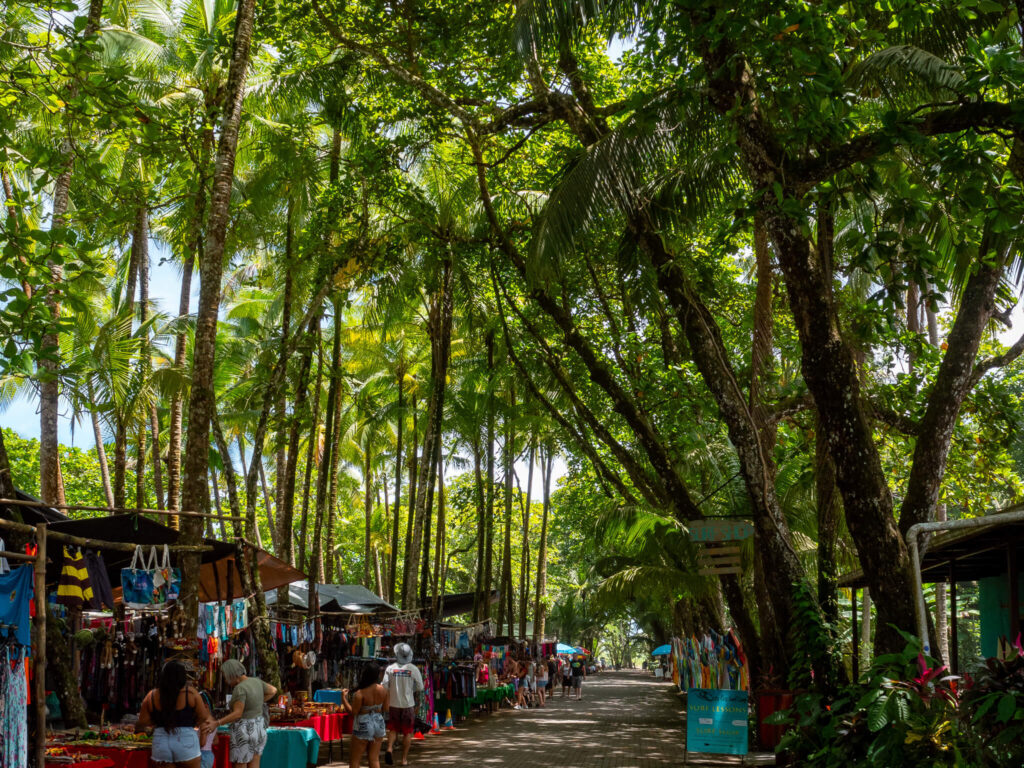
46. Support local artisans and independent shops
Buying from local artisans keeps your money in the community and supports historic traditions. Handcrafted items often reflect cultural heritage and skills passed through generations, unlike mass-produced products.
Visiting independent shops and boutique stores also gives you a more authentic shopping experience, with stories behind each item, so you can take home something made with love rather than mass-made in a factory.
47. Avoid mass-produced souvenirs
Cheap, mass-produced souvenirs may be convenient, but they rarely benefit local communities. They often come from factories far away (often abroad) and contribute to environmental pollution, unfair labour practices, or exploitative conditions.
Instead, look for handmade or locally sourced items, or consider intangible souvenirs like experiences or workshops. Your choices influence the market, so buying consciously encourages ethical and sustainable production. Our favourite souvenirs are those that come from local artisans, usually clothing (that we’re in need of after months on the road) or artwork to take back home.
48. Don’t buy items made from wildlife or natural environments
We’ve already mentioned the importance of avoiding souvenirs that profit from animal exploitation, but those made from natural materials like sand, shells, coral, or endangered plants can contribute to habitat destruction, over-harvesting, and species decline, too. Often, these materials are part of the ecosystem and wider cycle of life, with erosion turning them back into sand, etc. Opt for sustainable alternatives like recycled, upcycled, or artisan-crafted products.
49. Think about where your money goes
Every purchase has an impact, from your accommodation to meals to souvenirs. If in doubt, ask yourself whether your spending benefits the local economy, protects the environment, and supports fair labour. Prioritising ethical and responsible businesses ensures that your tourism dollars create positive outcomes rather than unintended harm.
Packing tips
Packing is one of the most basic parts of travel, and it can have surprising knock-on effects you might not know about. Here are our top sustainable packing tips.
50. Pack light
Packing light reduces the environmental footprint of your transport, whether flying, driving, or taking buses. Lighter luggage uses less fuel and energy, contributing to lower emissions. It also makes travel easier, less stressful, and more flexible.
It might be hard, but packing more intentionally encourages you to bring only what you truly need, reducing waste and excess consumption.
51. Bring reusables
Reusable items – bottles, coffee cups, shopping bags, utensils – are simple ways to cut down on single-use plastic. Bringing your own gear means less waste ends up in oceans, rivers, and landfills, and barely takes up any room in your luggage.
They’re also cost-effective over time and often more convenient once you’re on the road. We’ve saved probably hundreds to thousands of dollars by avoiding plastic water bottles and bringing our own filter bottles on our travels.
52. Use refillables or solid products
Many eco-conscious brands now produce high-quality refillables that perform as well as conventional products. Shampoo bars, refillable toiletries, and solid soap reduce packaging waste and are often more environmentally friendly than traditional products. They’re lightweight and travel-friendly, making them ideal for reducing your environmental impact. We rate Faith in Nature‘s shampoo and conditioner bars and Lifeventure’s toiletry leaves.
53. Handwash clothes to extend use
Handwashing clothes instead of relying solely on laundry services reduces water, energy, and detergent consumption. It allows you to wear items multiple times, cutting down on overpacking and the environmental cost of transport. Handwashing is also gentle on fabrics, helping them last longer and reducing overall waste.

Health and Safety tips
Sustainable travel isn’t just about protecting the planet, but also the people on it, including yourself. Here are a few health and safety tips to consider.
54. Get travel insurance
Travel insurance isn’t just a safety net – it’s a responsible choice that protects you and others. Accidents, illnesses, or unforeseen disruptions can happen anywhere, and being insured prevents unnecessary strain on local healthcare systems.
It also ensures you can enjoy your trip with peace of mind, knowing you’re prepared for emergencies. Choosing coverage that includes medical evacuation, natural disasters, and activity-specific risks shows foresight and consideration. Insurance is a small investment that safeguards both you and the communities you visit.
55. Be prepared for local health standards
Every destination has its own health risks, from food safety to infectious diseases. Research vaccines, local healthcare facilities, and hygiene practices before you go. Carry basic medical supplies, follow local advisories, and respect regulations like mask mandates or water advisories. Being prepared not only protects your health but also prevents you from inadvertently spreading illness or relying on overstretched local services.
56. Use environmentally safe products
Many chemicals in conventional products harm wildlife and fragile ecosystems. Choose sunscreens, insect repellents, and personal care items that are safe for ecosystems, especially coral reefs and freshwater habitats. Look for reef-safe, biodegradable, natural, DEET-free, or organic options, and dispose of waste responsibly.
Travel insurance can save you $$$ if things go wrong
Don’t forget to buy travel insurance! From lost luggage to emergency medical care abroad, travel insurance gives you peace of mind so you can solely focus on the adventure. It might not be exciting, but you’ll be very glad you have it if something goes wrong. A few of our favourite companies are:
Get 8 weeks of electronic theft coverage free with SafetyWing Travel Insurance with our code: THOROUGHLY8 (new members only). Simply click the pink camera and laptop icon on the Nomad Essential page to redeem the reward before creating a new account.
Find out more: 6 Best Travel Insurance Companies for Every Kind of Trip

Advocacy tips
You have more power than you know, and some actions make more impact than others. Here are some great ways to advocate for sustainable tourism, even when you’re not travelling.
57. Vote with your money
Your spending is a vote for the kind of tourism you want to support. Choosing locally owned businesses, eco-certified tours, and sustainable products signals demand for ethical travel practices. It also ensures that your travel dollars directly benefit communities and the environment. Being conscious of where your money goes – even small purchases – is one of the best ways to be a more responsible traveller.
58. Leave reviews
Leaving reviews is one of the most effective ways to reward responsible operators and guide other travellers. Positive feedback encourages businesses to maintain ethical practices and adopt sustainability measures, which are so important to small-scale businesses. Equally, constructive criticism can help businesses improve, too.
59. Ask for sustainable choices
Don’t be afraid to request environmentally friendly options at hotels, restaurants, and tours. Whether it’s opting out of daily cleaning, asking for local ingredients, or requesting reusable items, speaking up matters. Many businesses want to accommodate sustainable practices but assume guests won’t ask. Your requests show demand and can influence wider operational changes.
60. Be mindful of how you portray destinations online
The images and stories you share influence perceptions and behaviours. Avoid glamorising overcrowded sites, unsafe wildlife encounters, or exploitative activities. Instead, highlight responsible experiences, cultural respect, and environmental care. Being thoughtful about your digital footprint encourages others to travel ethically and respectfully, too.
61. Recognise sustainable travel isn’t equally accessible
Sustainable travel often requires time, money, and resources that aren’t available to everyone. Factors like race, gender, disability, budget, health, and passport privilege all matter, and acknowledging this reality prevents judgment of yourself or others and fosters inclusivity. Responsible travel is about making the best choices within your means.
62. Don’t shame yourself or others
Mistakes happen, and progress over perfection is the core behind sustainable travel. Guilt or shaming can discourage travel altogether or create negative dynamics. Focus on learning, improving, and making better choices next time, while encouraging others positively, and celebrating wins, however small.
63. Don’t be afraid to walk away
If a situation feels exploitative, unethical, or unsafe, remove yourself. Walking away from tours, activities, or experiences that don’t align with responsible travel principles is a powerful statement, and sometimes the best choice is skipping an unsustainable activity altogether. Your absence is a signal to businesses that their practices aren’t acceptable.
64. Avoid exploiting poverty or hardship for content
While it’s reality, taking photos or videos that highlight suffering for clicks or likes is disrespectful and harmful. Focus on positive engagement, cultural appreciation, and meaningful stories instead. If you want to raise awareness, partner with reputable organisations and provide context for what you share. Using travel as a platform responsibly respects the dignity of the people and communities you encounter.
65. Share this post
One of the most powerful actions is sharing knowledge. Passing on responsible travel tips encourages others to make better choices and amplifies positive impact. Whether through social media, email, or conversation, spreading awareness multiplies the benefits of sustainable travel.
If you found this post interesting or useful, please share it with others. We hope to foster a global community of conscious travellers who make thoughtful choices, support local economies, and leave the places they visit better than they found them. Every person you and we inspire to travel more responsibly contributes to a positive ripple effect – protecting communities, wildlife, and the environment.

Conclusion
Responsible travel isn’t about perfection – it’s about progress – making thoughtful choices that benefit the places you visit, the people who live there, and the environment.
Start with just one change. Pick one or two of these tips and commit to them on your next trip, as small, consistent actions add up over time.
Every step, no matter how small, helps ensure that the destinations we love remain vibrant, authentic, and worth exploring for years to come.

Read next:
What is Sustainable Travel? A Simplified Guide
The Dark Side of Travel: Negative Impacts of Tourism
Let’s Talk About Overtourism: What is it & Why is it a Problem?
Let’s Talk About Tourism Leakage: What is it & How to Combat it?
Let’s Talk About Ecotourism: Is It Really Sustainable?
