The Dark Side of Travel: Why Responsible Tourism Isn’t Just Your Responsibility

A curated list of the economic, environmental, and social negative effects of tourism and why responsibility goes beyond the individual traveller.

This post may contain affiliate links, which means we might earn a small commission on anything purchased through these links at no extra cost to you. Learn more on our disclaimer page.
We thoroughly believe travel can be a force for good – something that supports local economies, creates jobs, and connects cultures, but the industry has real downsides. Behind the scenes, tourism can drive environmental damage, exploit communities and wildlife, and put pressure on places that aren’t equipped to handle large numbers of visitors.
As travellers, we’re often told we can do better – that we can make a real impact by travelling more responsibly, and we definitely can. But we’re sick of the corporate gaslighting. From overcrowded destinations and rising living costs for locals to wildlife exploitation and plastic pollution, the negative impacts of tourism are often systemic – built into the way the industry operates rather than just the actions of individual travellers. Us saying no to plastic straws isn’t going to fix the issues with tourism that we can’t even control.
In this post, we take a closer look at the darker side of travel – the real negative impacts tourism can have, why travellers alone can’t fix these problems, and what actually needs to change at an industry and policy level. The goal isn’t to overwhelm you or discourage travel, but to help us all understand the issues more honestly and push for a version of tourism that works better for everyone involved: sustainable travel.
More Sustainable Travel Guides
Tourism’s hidden costs – the issues caused by travel
Tourism accounts for around 10% of global GDP and jobs, making it one of the largest industries in the world. It’s huge, but when it isn’t managed carefully, it can have really negative consequences.
Behind the highlights and picture-perfect destinations, tourism can place pressure on environments, communities, and local economies. These impacts don’t always happen overnight, but over time, they can reshape the very places people come to visit.
The negative effects of tourism generally fall into three main areas:
We’ve covered them more extensively in our sustainable travel guide, but it’s important to understand these pillars, as they’re the factors that are most affected when it comes to the negative side of tourism.

Environmental damage caused by unsustainable travel
“If not sustainably managed, tourism can deplete natural resources leading to water shortages, loss of biodiversity, land degradation and contribute to climate change and pollution, among other impacts”.
United Nations Environment Programme
Tourism can leave a surprisingly large footprint on the natural world, even when visitors have the best intentions. Environmental damage is probably the most well-known negative effect of tourism, as it’s the easiest to physically see. Here are some examples of the environmental damage travel can cause.
High resource consumption
The world’s resources are finite, and tourism consumes a vast amount of them. From water and energy in hotels to fuel for transport, the environmental footprint of travel adds up quickly.
In many destinations, particularly islands and arid regions, tourism places additional strain on already limited resources. Hotels, resorts, and cruise ships often require far more water and energy than local households, creating an imbalance that can affect residents.
Damage to natural environments
Natural landscapes are often the very reason people travel, but without proper management, tourism can slowly degrade them. We’ve seen coral reefs be damaged by boat anchors, sunscreen chemicals, and inexperienced snorkellers. Trails erode under constant foot traffic, and wildlife habitats are disrupted by noise and human presence. Even well-intentioned tourism can have unintended consequences when visitor numbers exceed what an ecosystem can handle.
Waste, pollution, and emissions
Tourism generates a significant amount of waste, much of which ends up in landfills, rivers, or oceans. Single-use plastics, packaging, and food waste are particularly problematic in destinations without strong waste management systems.
At the same time, transport, especially cruise ships and aviation, contributes heavily to global emissions, with tourism responsible for an estimated 8% of global greenhouse gas emissions. Air pollution, water contamination, and plastic waste all place additional pressure on ecosystems and local communities.
Overdevelopment and land use
As destinations grow in popularity, development often follows – hotels, resorts, roads, and infrastructure built to meet demand. While development can bring economic benefits, it can also lead to deforestation, habitat loss, and changes to natural landscapes.
In some areas, coastlines are reshaped, wetlands are drained, and ecosystems are permanently altered to accommodate tourism. When development prioritises short-term profit over sustainability, the very landscapes that attract visitors can be lost.
In more extreme cases, this expansion can involve land grabbing, where land is acquired, sometimes unfairly or without proper consent, to make way for tourism projects. Local communities may be displaced or lose access to land they have relied on for generations, often without seeing the benefits of the development itself.

Social and cultural impacts of unsustainable travel
“Tourism bears great potential to improve local quality of life and drive economic advancement, but unchecked growth can have the reverse effect”.
Sustainable Travel
Sustainable tourism isn’t simply about seeing places – it’s about ensuring that people and their identities are respected and preserved. Here are some of the negative effects of tourism on the sociocultural space.
Culture becoming a product
Travel often centres around culture – food, traditions, festivals, and ways of life – but these can become diluted when they’re shaped to meet tourist expectations. Performances, ceremonies, or traditions may be adapted, shortened, or staged purely for visitors, losing their original meaning in the process. What starts as cultural sharing can shift into commodification and appropriation, where experiences are packaged and sold rather than lived authentically.
Over time, this can lead to the erosion of culture, where traditions are preserved only in a performative way rather than as part of everyday life. Communities may feel pressure to present a version of their culture that is more marketable or easier for tourists to consume, which can blur the line between genuine cultural expression and entertainment. Without balance, culture risks becoming something to consume rather than something to respect and understand.
Changing communities and loss of identity
Tourism can gradually change the places people call home. As destinations become more popular, local businesses may be replaced by souvenir shops, international chains, or short-term rentals catering to visitors. This shift is often tied to gentrification, where rising demand from tourism drives up property values and alters the character of neighbourhoods.
Housing prices can rise, pushing residents out of their own neighbourhoods. Long-term rentals may be converted into short-term holiday lets, reducing housing availability and making it difficult for residents to afford to live in their own communities.
Over time, communities can lose their sense of identity as they adapt to meet the needs of tourists rather than residents. This shift isn’t always immediate, but it can reshape the social fabric of a place in ways that are difficult to reverse.
Tourist behaviour and respect
Not all impacts come from systems, some come down to behaviour. Disrespectful actions, whether intentional or not, can strain relationships between visitors and local communities. This might include ignoring dress codes, being disruptive in residential areas, or treating destinations as playgrounds rather than lived-in places.
Even small actions can accumulate, shaping how locals perceive tourism as a whole. Responsible behaviour helps build mutual respect, while careless behaviour can contribute to frustration and resentment.
Pressure on infrastructure and daily life
Tourism can place significant pressure on infrastructure designed for much smaller populations. Public transport, waste systems, water supply, and healthcare services may struggle to cope during peak seasons.
In some destinations, residents experience overcrowding, longer wait times, and reduced access to essential services. Daily routines can become more difficult, from commuting to accessing basic amenities.
There can also be physical strain on built environments, particularly historic sites and cultural landmarks. Increased foot traffic, pollution, and wear and tear can damage heritage sites that weren’t designed to handle large volumes of visitors. Over time, this can lead to deterioration, loss of authenticity, and costly restoration efforts.

Economic consequences of unsustainable travel
“The average import- related leakage for most developing countries today is between 40% and 50% of gross tourism earnings for small economies and between 10% and 20% for most advanced and diversified economies”.
Oceans Atlas
While tourism can generate income, it doesn’t always deliver benefits where they’re most needed. Here are the main economic pitfalls of the tourism industry.
Local businesses being pushed out
As destinations grow in popularity, local businesses can struggle to compete with larger, international brands. Rising rents, increased demand, and changing consumer expectations can make it difficult for independent shops, restaurants, and services to survive.
Over time, this can lead to a loss of diversity, with high streets and town centres becoming dominated by familiar global chains. While these businesses may cater to tourists, they often redirect profits elsewhere. The result is a shift away from locally rooted economies toward more standardised, profit-driven systems.
Tourism doesn’t always benefit local communities
It’s easy to assume that tourism automatically benefits the places we visit, but that’s not always the case. A large portion of tourist spending can go to international hotel chains, airlines, and tour operators rather than staying within the local economy. This is known as tourism leakage, and in some destinations, it can be as high as up to 50% of tourism income. That means only a small share of your money may actually reach local workers, businesses, or communities.
Overdependence on tourism
For many destinations, tourism becomes a primary source of income, but relying too heavily on it can be risky. Economic shocks, natural disasters, or global events can quickly reduce visitor numbers, leaving communities without a stable income.
This vulnerability was highlighted during global travel disruptions (like the COVID-19 Pandemic), where destinations heavily dependent on tourism faced sudden economic hardship. Diversified economies are more resilient, but tourism-driven regions don’t always have that flexibility.
Low-paid and seasonal work
The Travel & Tourism Industry represents 10% of the global economy. That’s a huge amount of jobs being created through tourism, but the quality and stability of those jobs can vary widely.
Tourism roles aren’t always stable or well-paid. Many jobs in hospitality and tourism are seasonal, meaning workers face periods of unemployment outside peak travel times. Jobs can also be low-wage, with limited protections or opportunities for progression.
Exploitation
Exploitation in tourism can take many forms, and it often hides behind the veneer of leisure and adventure. Local workers may be underpaid or overworked, with few protections, while the most profitable activities and accommodations are owned by outsiders.
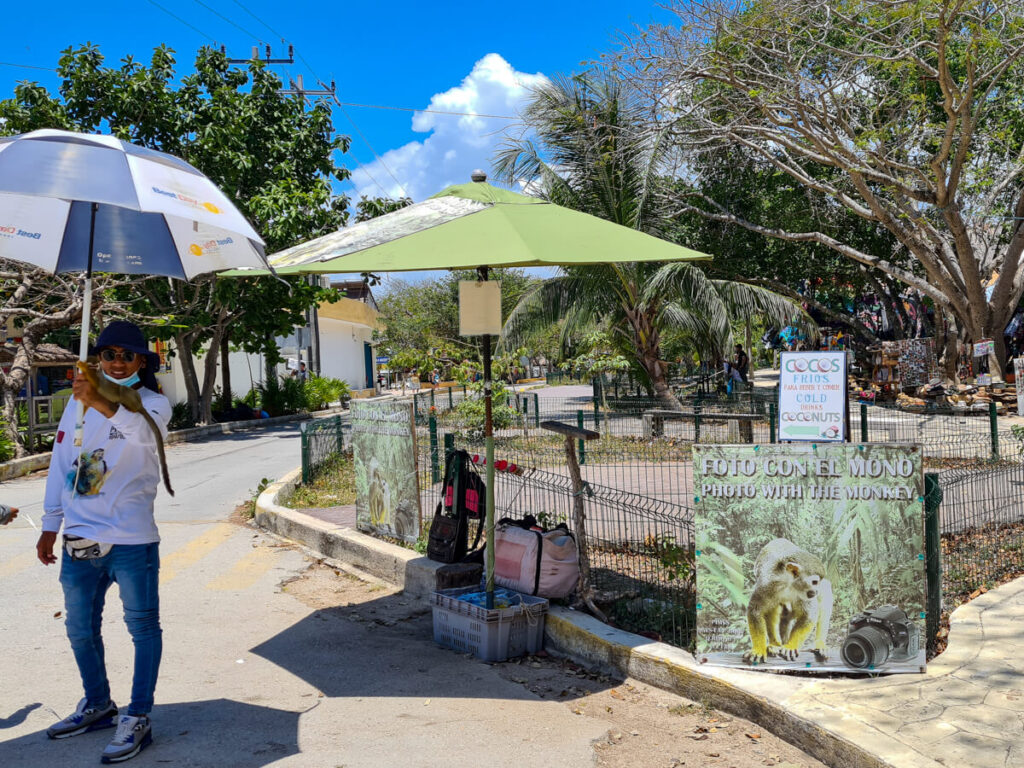
Wildlife can be treated as entertainment or commodities, from captive animals in shows to souvenirs made from endangered species.
Even communities struggling with poverty can be unintentionally harmed by voluntourism or poverty tourism, where their challenges are consumed as experiences for outsiders.

Why travellers alone can’t solve these problems
It’s easy to place the responsibility for sustainable travel on individuals: what we buy, where we stay, and how we behave. And while those choices do matter, they only go so far. Many of the issues within tourism are shaped by larger systems that operate beyond the control of individual travellers.
A system designed for profit
At its core, the tourism industry is built to generate profit. Large hotel chains, airlines, cruise companies, and booking platforms are driven by revenue, often prioritising growth and efficiency over long-term sustainability. This can lead to decisions that maximise short-term gain, even if they come at a cost to local communities or the environment.
Growth over sustainability
Tourism has long been measured by growth: more visitors, more flights, more development. More tourists = more profit after all. Success is often defined by increasing numbers rather than long-term impact.
This constant push for expansion can lead to all the negatives we’ve listed above, like overcrowding, overuse of resources, and strain on destinations. Slower, more sustainable models of tourism exist, but they’re often overlooked in favour of rapid growth. Without redefining what success looks like, these patterns are unlikely to change.
Greenwashing in the travel industry
As sustainability becomes more important to travellers, many companies have responded, but not always in meaningful ways. Greenwashing, where businesses promote themselves as eco-friendly without substantial action, is widespread across the industry. Labels like “eco”, “green”, and “sustainable” are often thrown about without clear standards or accountability. This makes it difficult for travellers to distinguish between genuinely responsible businesses and ecotourism and those using sustainability as a marketing tool.
Lack of regulation and accountability
In many destinations, tourism development and operations are not strictly regulated. Environmental protections, labour standards, and community safeguards may be weak, inconsistently enforced, or overlooked entirely.
Governments, organisations, and industry leaders all play a role in setting and enforcing standards, but progress is often slow and uneven. Without clear accountability, harmful practices can continue unchecked.
Barriers to responsible travel
It’s also important to recognise that responsible travel isn’t always an easy or accessible choice. Sustainable options are often more expensive, harder to find, inaccessible to certain people, and not always clearly labelled, especially in an industry where greenwashing is common.
There’s also a growing problem with how ethical travel is framed. It often places the responsibility almost entirely on individuals, which can feel overwhelming, guilt-heavy, or even unrealistic. This kind of messaging tends to overlook real-world limitations, like budget constraints, accessibility needs, and the privileges or restrictions that come with different passports. While individual choices do matter, they don’t exist in a vacuum, and expecting travellers to carry the full weight of systemic issues isn’t fair or effective.
What needs to change
Addressing the negative impacts of tourism requires more than conscious travellers – it needs systemic change across the industry. Businesses, governments, and the tourism sector as a whole all have far more power than we do.
Businesses
Companies operating in tourism need to move beyond marketing claims and put sustainability at the heart of their decisions. Hotels, tour operators, and travel platforms have the power to minimise environmental impact, support local economies, and protect cultural heritage, but only if these priorities guide development, operations, and investment. Green certifications and transparent reporting can help, but they must be backed by real action rather than just buzzwords.
Governments
Policy and regulation are critical for protecting destinations and ensuring that tourism benefits communities rather than exploiting them. Governments can enforce environmental protections, labour standards, and urban planning measures that prevent overdevelopment, congestion, and resource depletion. Incentives for sustainable business practices, investment in public infrastructure, and oversight of tourism growth are all essential to support responsible tourism at scale.
The Tourism Sector
The industry as a whole, from airlines to booking platforms to industry associations, must redefine success. Growth should no longer be measured solely by visitor numbers or revenue, but by long-term social, economic, and environmental outcomes. Collaboration across the industry to set standards, reduce emissions, and share best practices can create a framework where responsible travel is not an exception, but the default.

What you can do
It can feel really overwhelming to confront the reality that we have very little control over the corporations that are actually ruining the planet. But we can still make a difference by being more responsible travellers. Small, more conscious choices can push the industry toward better practices, and with enough voices, the importance of genuinely sustainable travel must be acknowledged.
Here are some practical ways you can reduce your negative impact, support communities, and help preserve the places you visit when you travel:

Conclusion
Responsible tourism is a shared responsibility, not just yours. The goal isn’t perfection – it’s progress, and even small, conscious choices can make a difference when combined with systemic change.
Sustainability must be prioritised over profit, or profit needs to be aligned with sustainability, if we want travel to remain meaningful.
If these changes aren’t made, we risk a future where the very landscapes, cultures, and communities we travel to enjoy no longer exist – leaving nothing authentic left to experience. By travelling thoughtfully, supporting responsible businesses, and advocating for systemic change, we can help ensure that the joy, wonder, and value of travel endure for generations to come.

Read next:
What is Sustainable Travel? A Simplified Guide
65 Ways to Be a More Responsible Traveller That Actually Make a Difference
Let’s Talk About Overtourism: What is it & Why is it a Problem?
Let’s Talk About Tourism Leakage: What is it & How to Combat it?
Let’s Talk About Ecotourism: Is It Really Sustainable?
