How to Visit Biogradska Gora National Park: Europe’s Last Remaining Rainforest

Discover everything you need to know about visiting Biogradska Gora National Park, Montenegro’s most pristine forest ecosystem.
This post may contain affiliate links, which means we might earn a small commission on anything purchased through these links at no extra cost to you. Learn more on our disclaimer page.
Biogradska Gora National Park is one of the most beautiful and underrated of Montenegro’s five national parks. Home to one of Europe’s three last remaining primeval forests, a glacial lake, and a network of hiking trails, it’s visually stunning but totally different to the rugged peaks and exposed trails that define the rest of northern Montenegro.
Despite being one of the oldest national parks in the world, Biogradska Gora doesn’t seem to get anywhere near the same attention as other places in Montenegro, from the busy Bay of Kotor to popular coastal towns like Budva. That makes it a particularly good stop if you want to experience some of the country’s wilder landscapes without the crowds, but the park’s remote location means you’ll need to plan your visit a little more carefully.
Discover everything you need to know about visiting Biogradska Gora National Park, including the best things to do, hiking trails (including the loop around Lake Biograd), how to get here, where to stay, when to visit, and our practical tips for exploring one of Montenegro’s most ancient forests.
Biogradska Gora National Park at a glance
About Biogradska Gora National Park
Biogradska Gora National Park (Biogradsko Jezero / Биоградска Гора) is Montenegro’s smallest national park, nestled in the Bjelasica mountain range. Despite its relatively small size, it protects an unusually diverse landscape of ancient forest, glacial lakes, mountain meadows, streams, and peaks rising above 2,000 metres (6,562 ft).
The park has been protected since 1878, when Montenegro’s King Nikola declared the forest a protected reserve, making it one of the country’s oldest protected natural areas. This was just six years after Yellowstone in the USA was designated the first National Park in the world in 1872. Biogradska Gora officially became a national park in 1952.
Biogradska Gora National Park is famous for being one of Europe’s remaining large primeval forest ecosystems, which is what gives the park such a different character from Montenegro’s more rugged mountain parks.
Home to lush mountain ridges, expansive glacial lakes, and temperate forest, it’s not hard to see why this is a recognised site within UNESCO’s World Network of Biosphere Reserves.
More from northern Montenegro
Where is Biogradska Gora National Park?
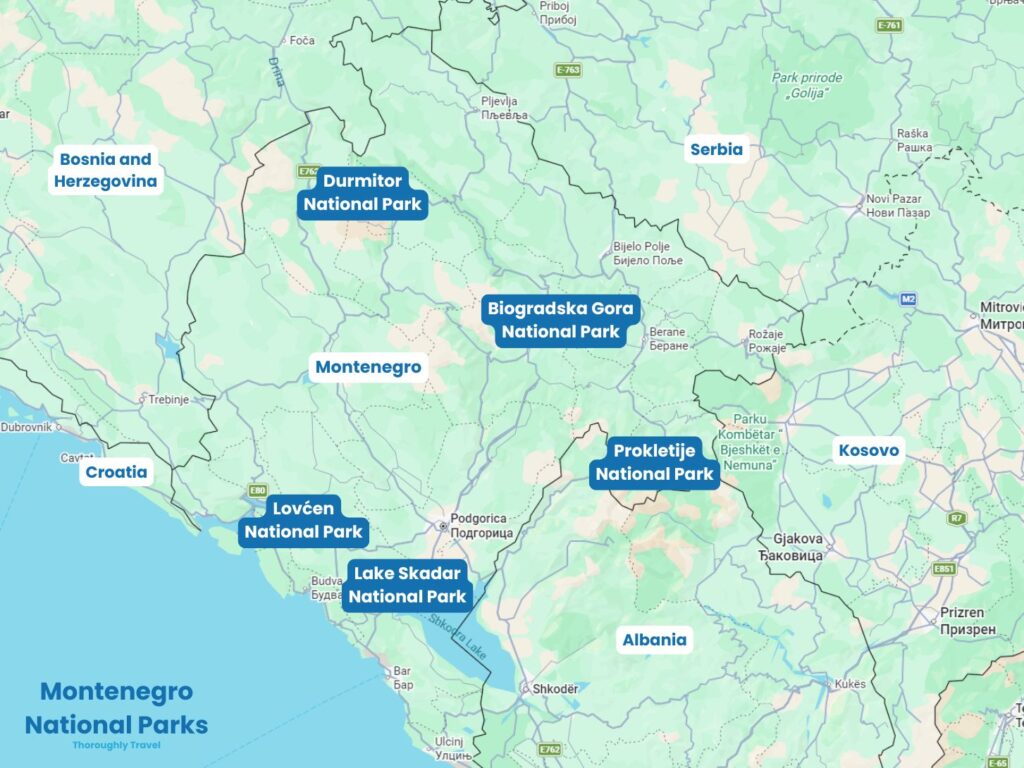
Biogradska Gora National Park is located in northern Montenegro, in the central part of the Bjelasica mountain range, between the Tara and Lim Rivers.
Its location makes it particularly convenient to combine with other destinations on a Montenegro road trip, whether it’s Durmitor National Park and the sprawling Tara River Canyon or the remote Prokletije National Park.
The main visitor area lies around Lake Biograd on the west side of the park, around 10 miles (16 km) northeast of Kolašin. Mojkovac is also a popular base on the west side, while Berane is the largest town in the vicinity on the east side of the park.
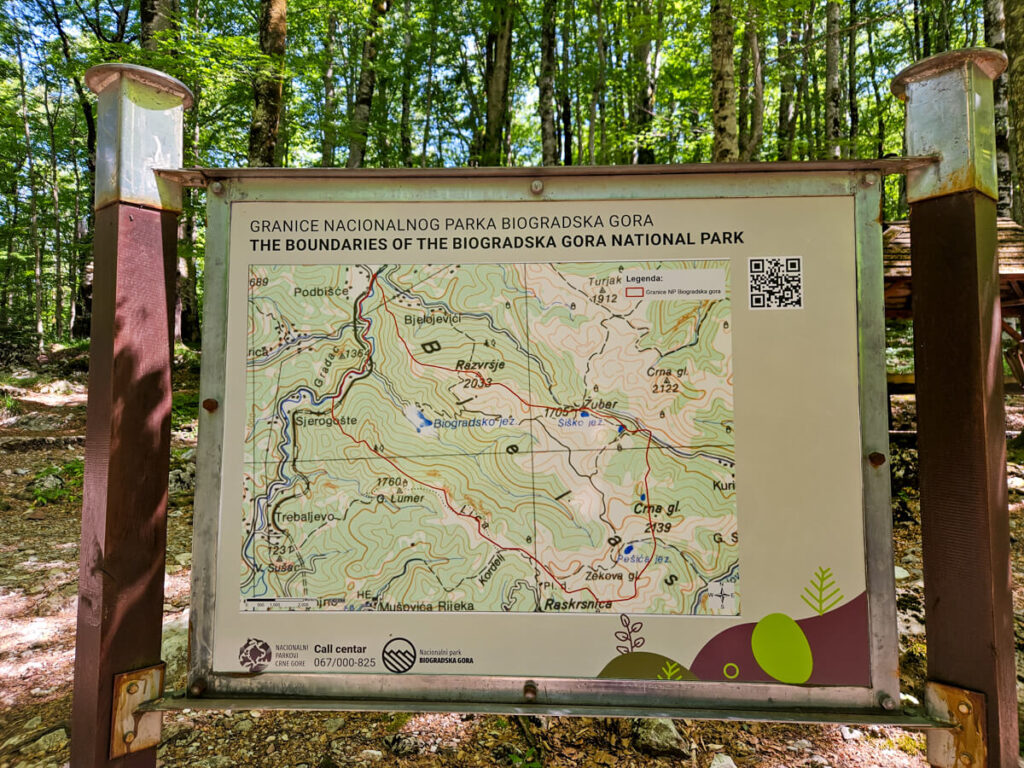
Biogradska Gora National Park Map
The boundary of Biogradska Gora National Park encompasses parts of the municipalities of Kolašin, Mojkovac and Berane, covering approximately 5,650 hectares (13,961 acres) of protected mountain terrain.
Why visit Biogradska Gora National Park?
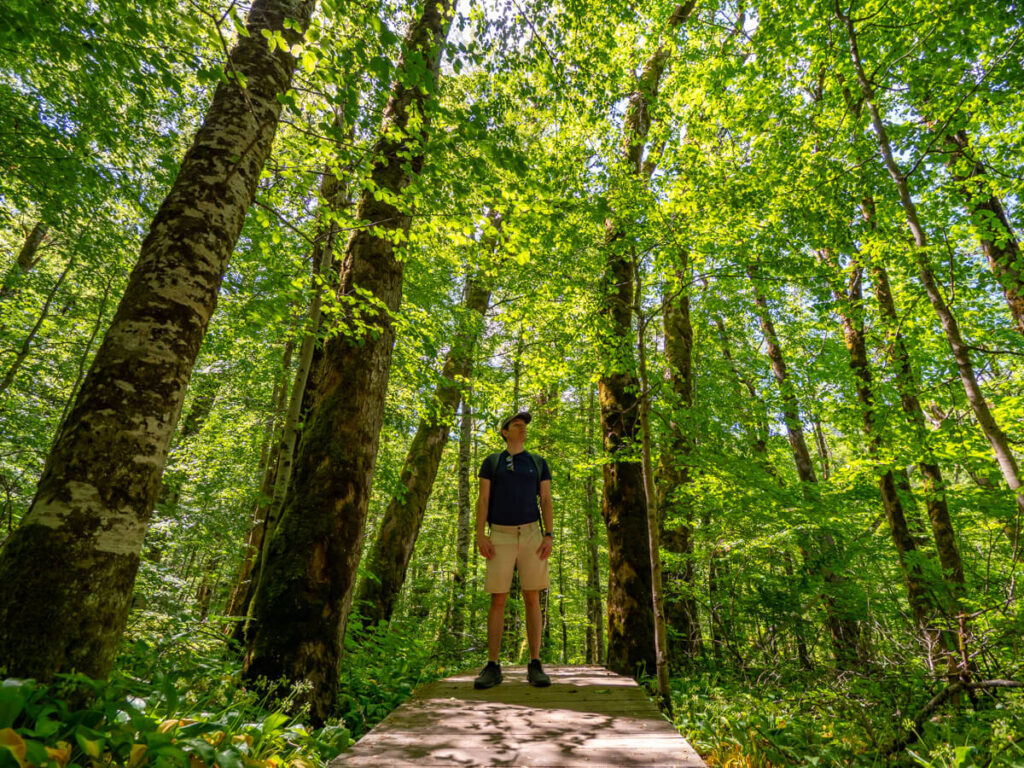
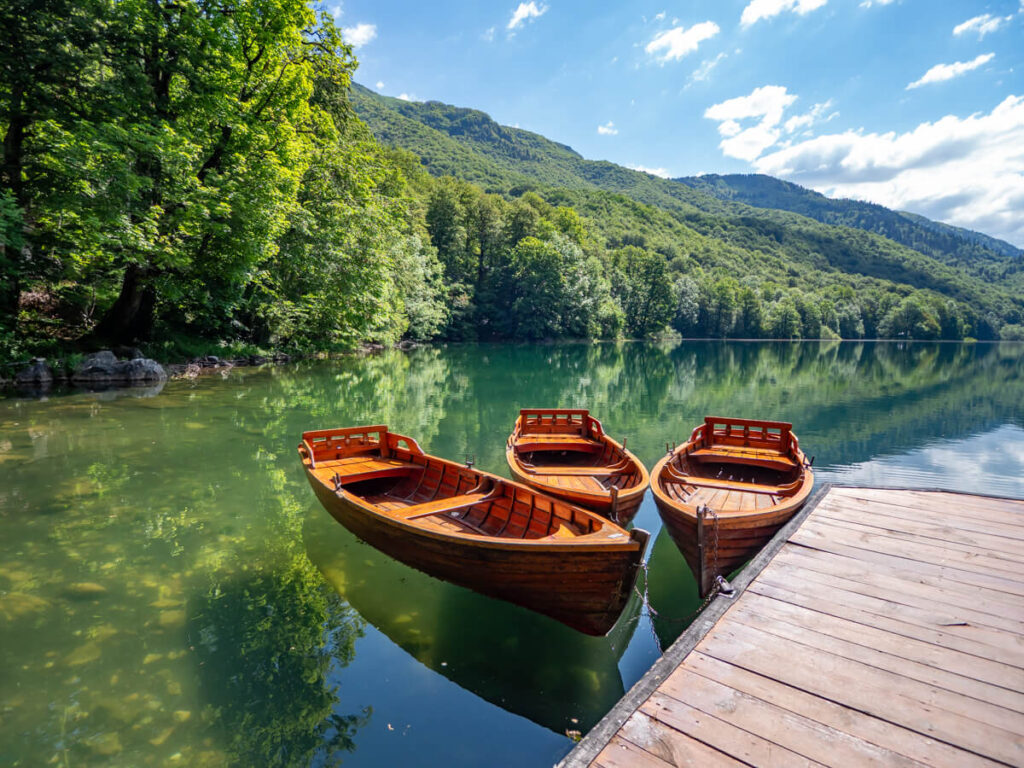
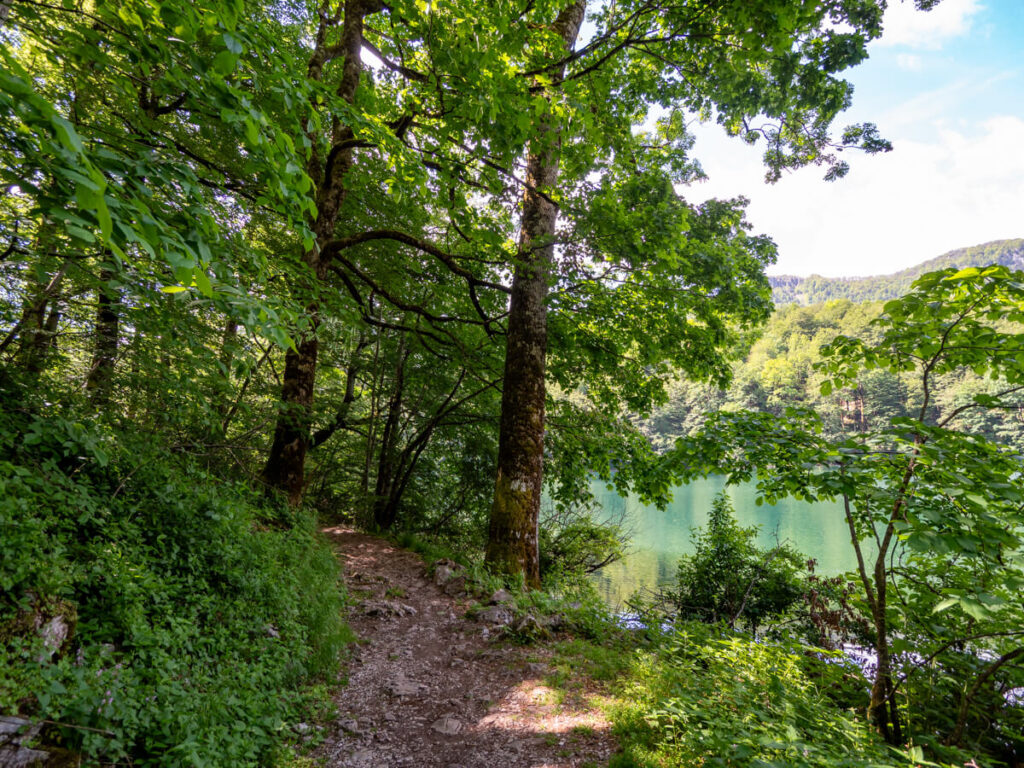
The main reason to visit is its combination of ancient forest and glacial mountain scenery. You can walk beneath enormous old-growth trees, follow forest trails through moss and ferns, and then emerge beside a clear mountain lake or onto an open alpine meadow.
It’s also a great option if you’re keen to experience somewhere in northern Montenegro that still feels wild, without the crowds of Durmitor or the challenging hikes required in Prokletije.
Landscapes in Biogradska Gora National Park
Biogradska Gora National Park’s elevation ranges from around 832 metres (2,730 ft) to 2,139 metres (7,018 ft), creating several distinct environments from lower forested valleys to high mountain ridges and alpine terrain.
Despite sitting pretty much halfway between the mountainous national parks of Durmitor and Prokletije, Biogradska Gora is home to a very different kind of landscape – more rounded and rolling topography than jagged limestone peaks.
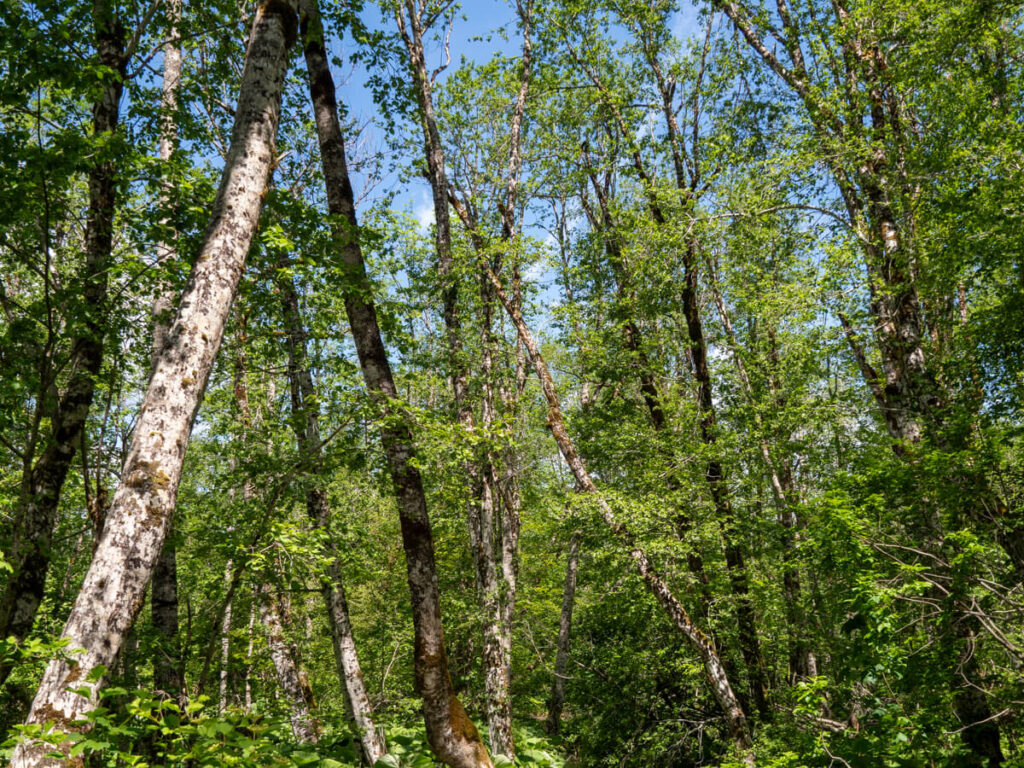
Its most distinctive scenery is its primeval rainforest, one of Europe’s last virgin forests, containing enormous beech, fir and spruce trees, some of which are estimated to be several hundred years old and reach more than 40 metres (131 ft) in height.
There are six glacial lakes within the park, with Lake Biograd being by far the most accessible and popular. Other lakes, including Pešić and Ursulovacko, are found higher in the Bjelasica mountains and require considerably more hiking to reach.
Biogradska Gora National Park is also home to several peaks that rise above 2,000 metres (6,562 ft), including Crna Glava (the park’s tallest) at 2,139 metres (7,018 ft), Zekova Glava at 2,117 metres (6,946 ft) and Troglava at 2,072 metres (6,798 ft).
Lake Biograd
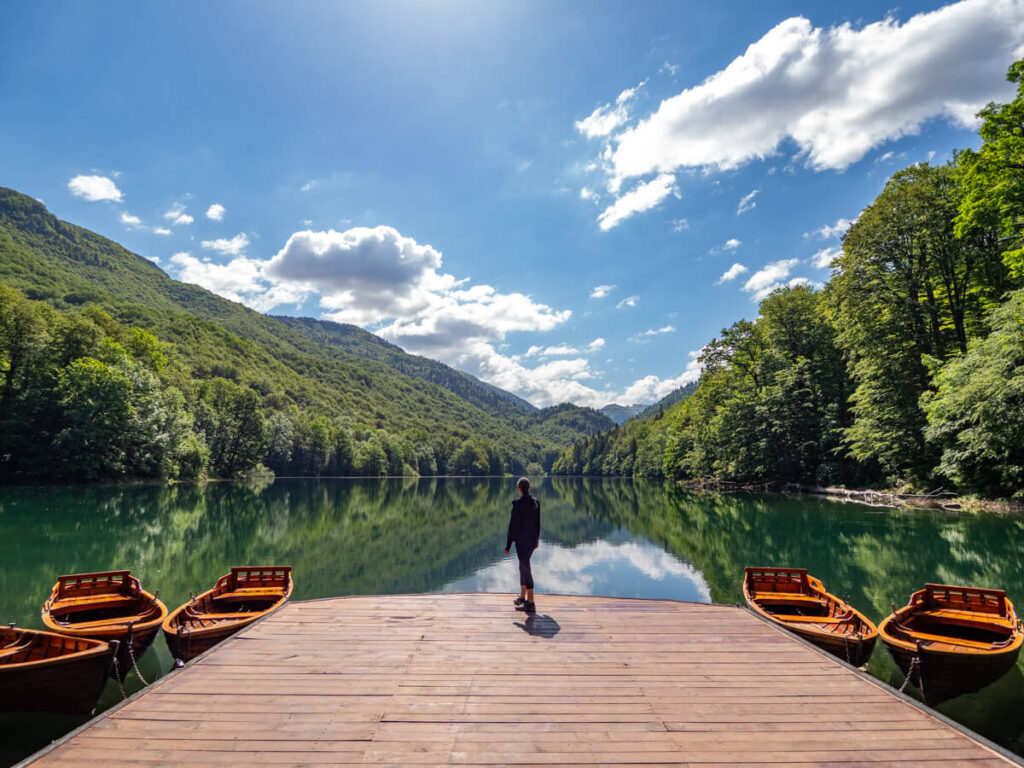
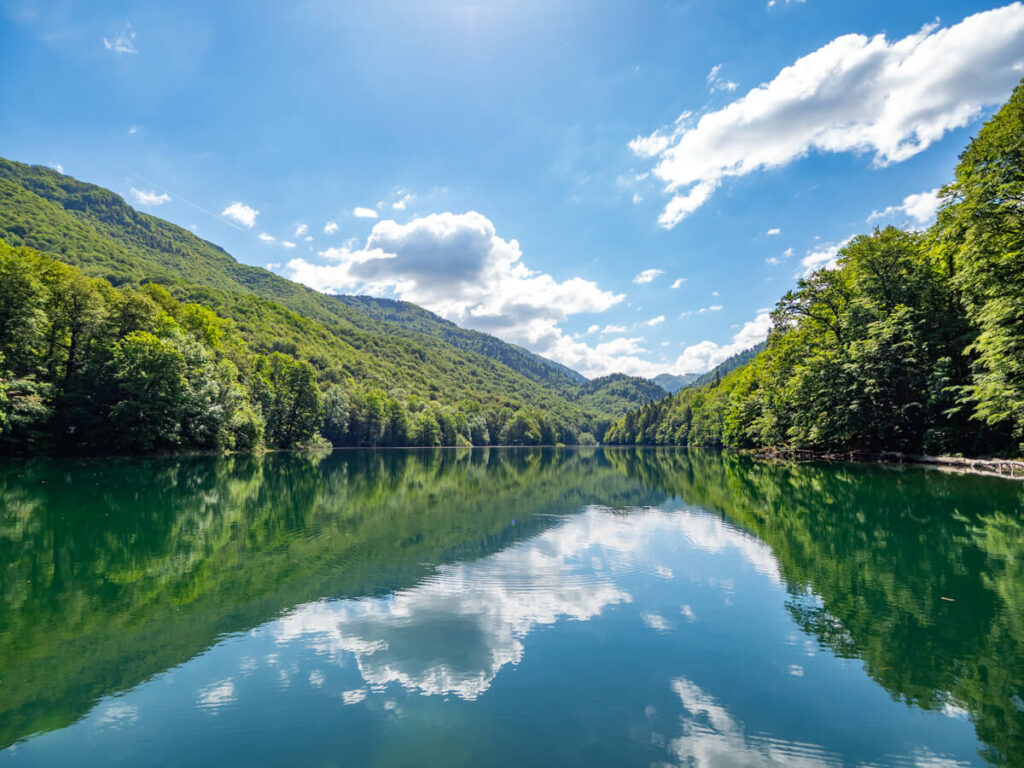
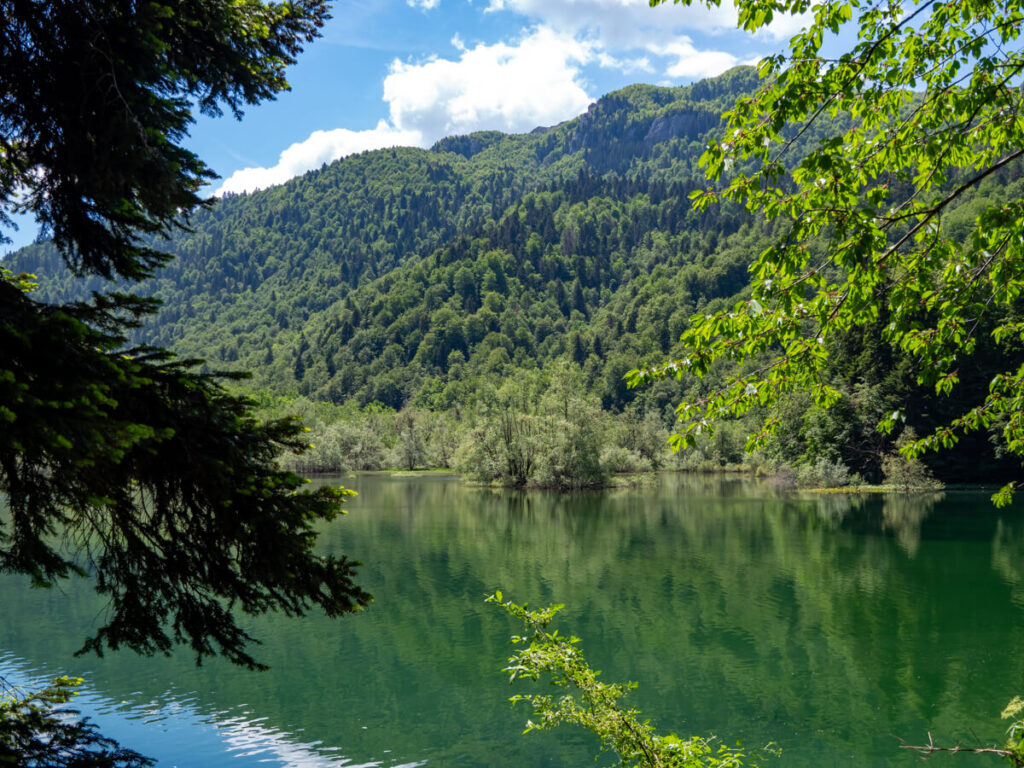
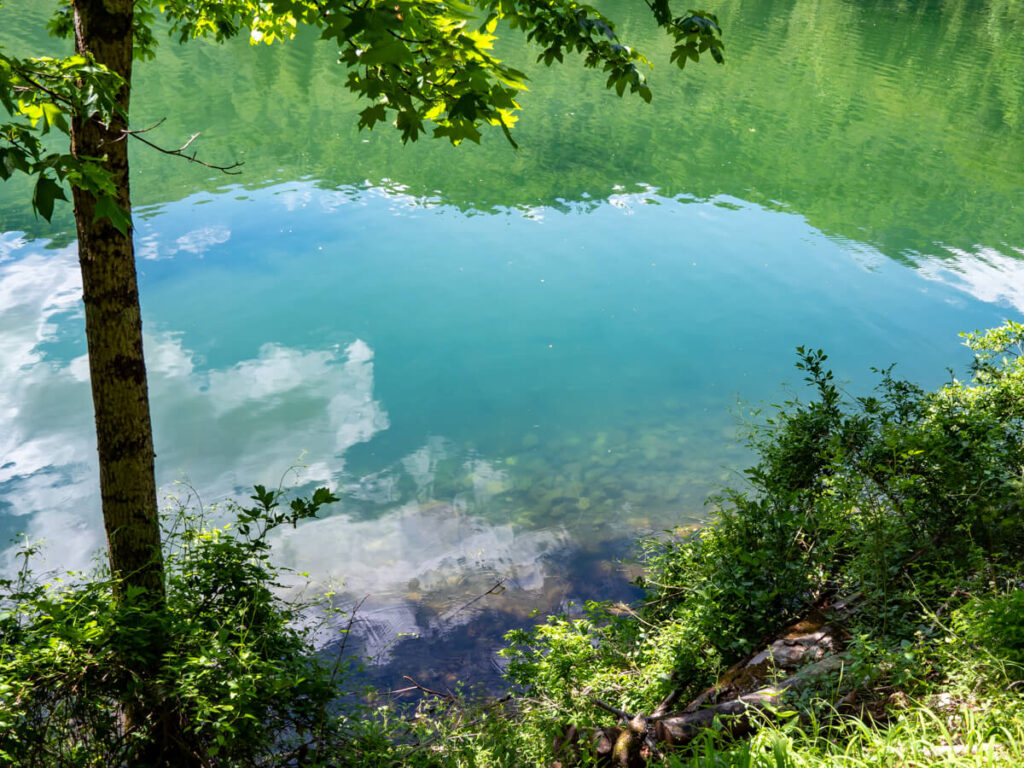
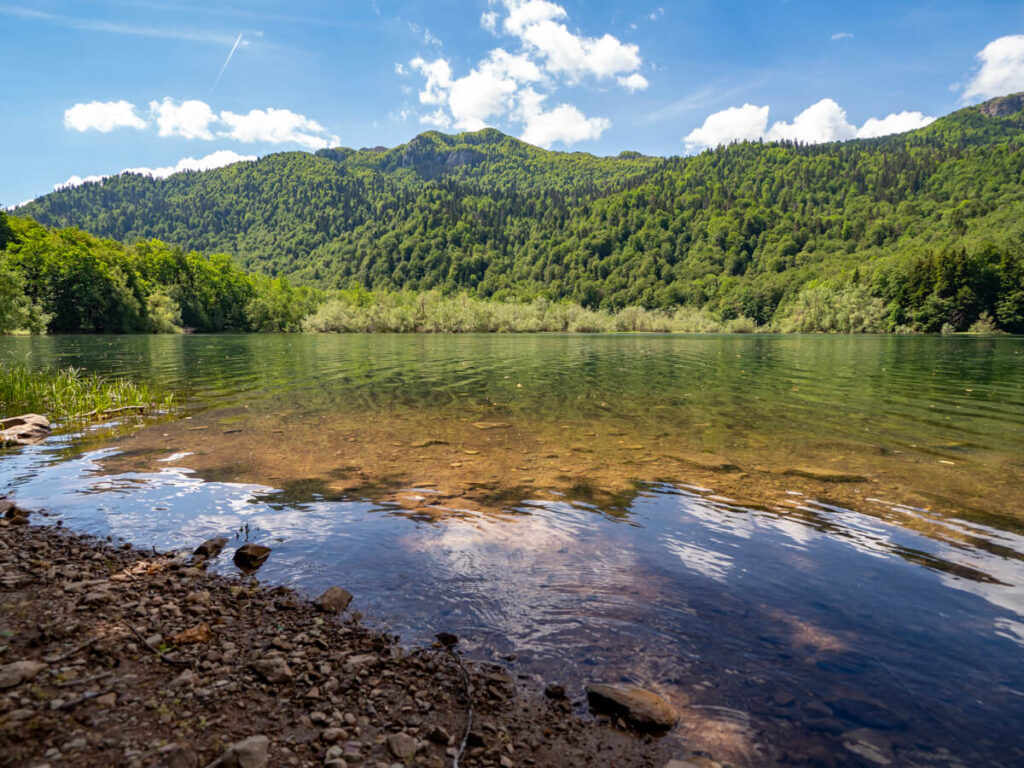
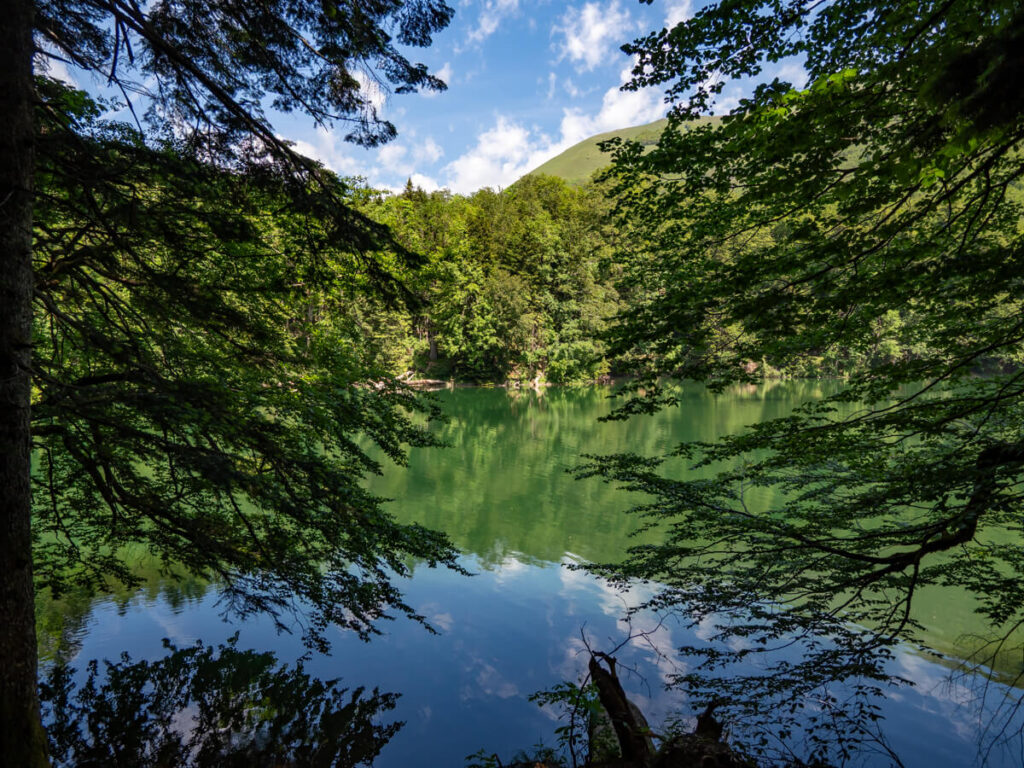
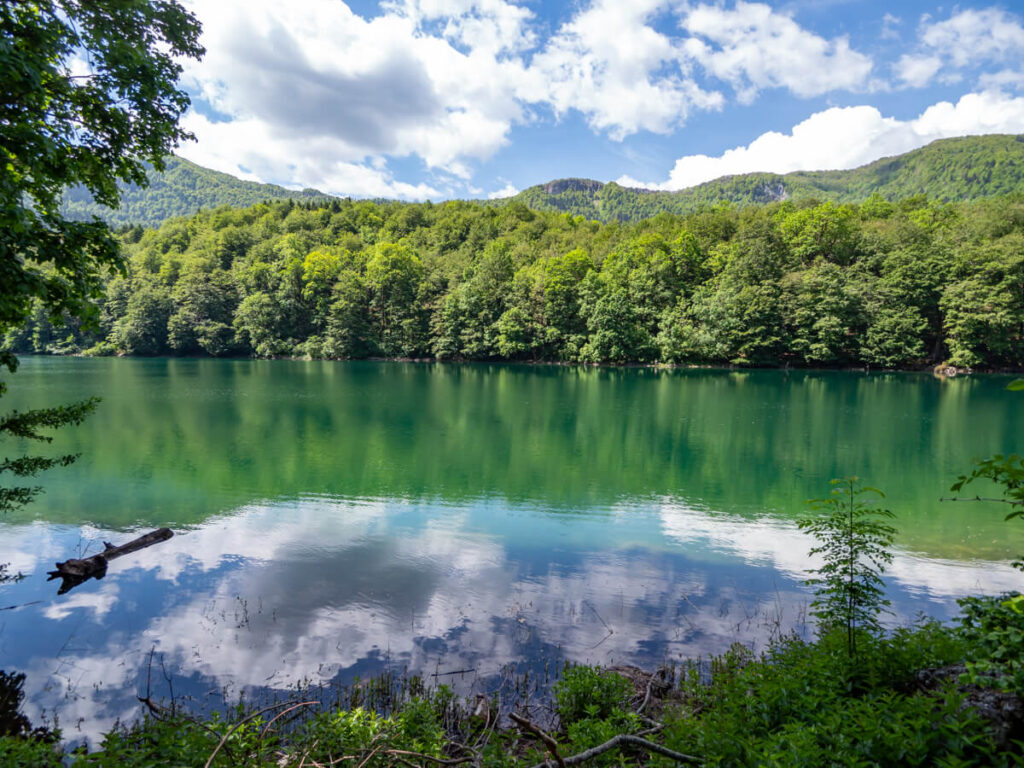
Lake Biograd (Biogradsko Jezero) is the national park’s crown jewel and one of Montenegro’s most accessible glacial mountain lakes. It was formed by glacial deposits left in the Biogradska River Valley and is fed by the Biogradska River and Bendovac Stream.
At its highest recorded water level, the lake is around 875 metres (2,871 ft) long and 410 metres (1,345 ft) wide, with a maximum depth of around 12 metres (39 ft). Its surface area can reach approximately 270,000 m² (2.7 hectares), although the water level varies seasonally – it can often almost completely dry up in summer.
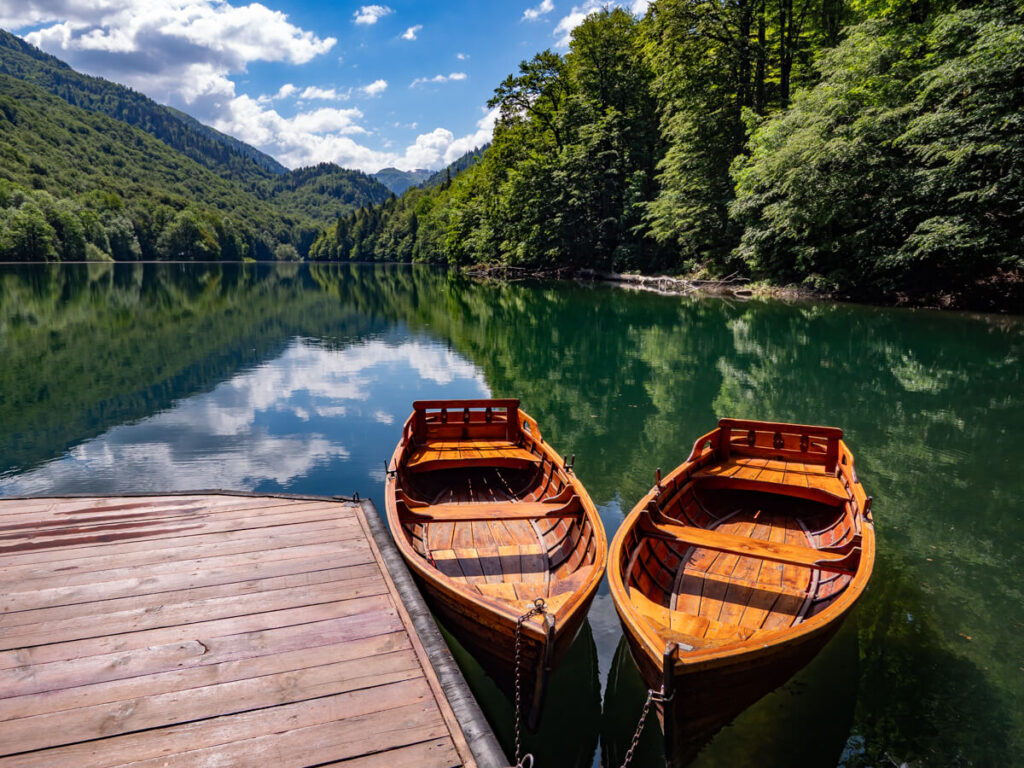
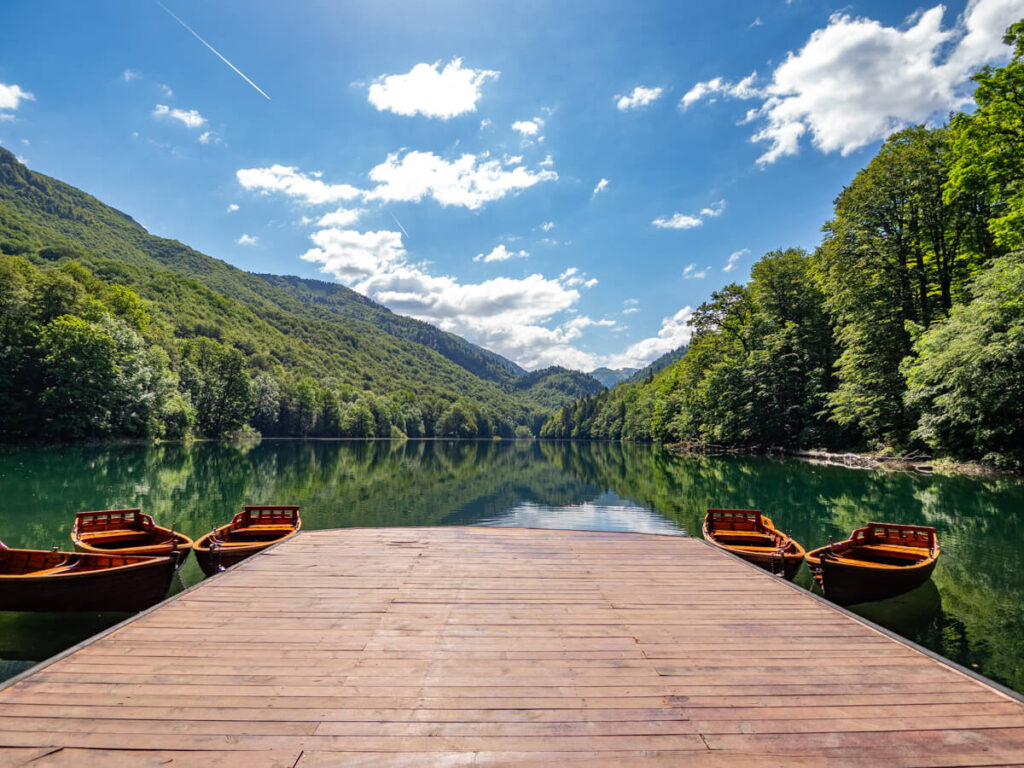
Sitting around 1,094 metres (3,589 ft) above sea level and surrounded by dense ancient forest, the lake is the most commonly used gateway to the national park, with rowboat rentals (€10 per hour), kayaks (€3 per hour for a single, €5 per hour for a double), a large car park, a basic campsite, and a visitor centre with a small gift shop located at its entrance.

Hiking in Biogradska Gora National Park
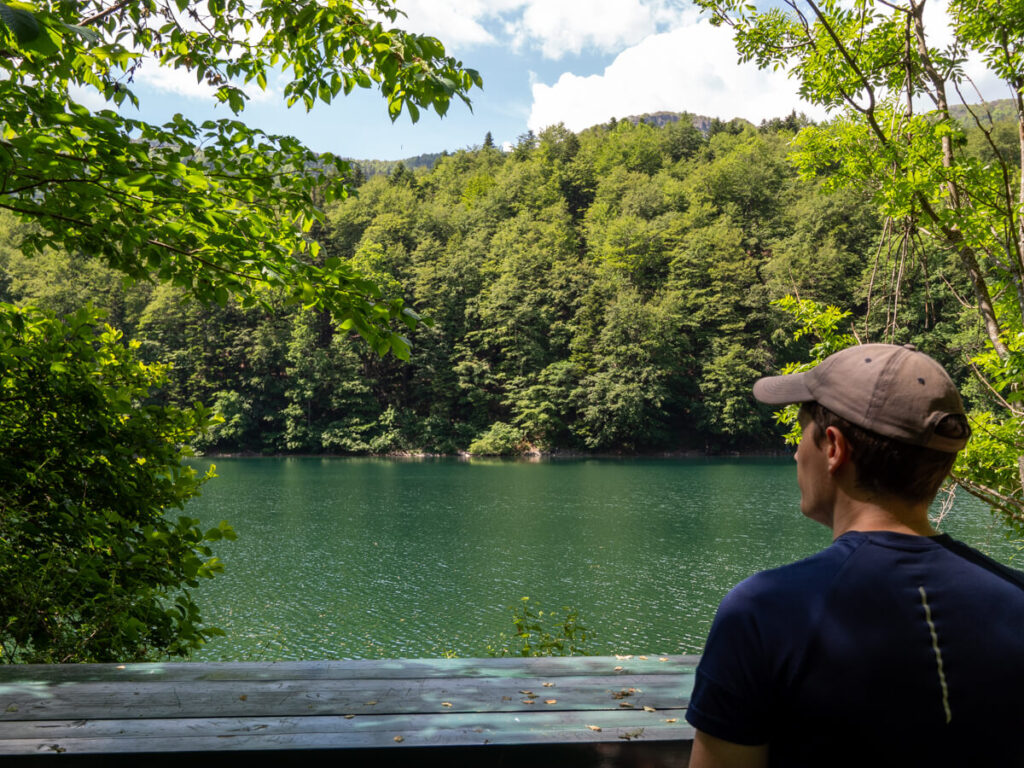
Hiking is one of the best things to do in Biogradska Gora National Park, and the park is home to some of Montenegro’s best trails. The easiest option is the walking trail around Lake Biograd, which takes around an hour to complete, depending on your pace. It’s pretty flat but a dirt path, so not suitable for strollers or wheelchairs – there are lots of tree roots and stones to watch out for underfoot. It’s a lovely ~2 mile (3.4 km) walk that’s much easier than most hikes in Durmitor (although it’s similar to the loop around the Black Lake) or hikes in Prokletije.
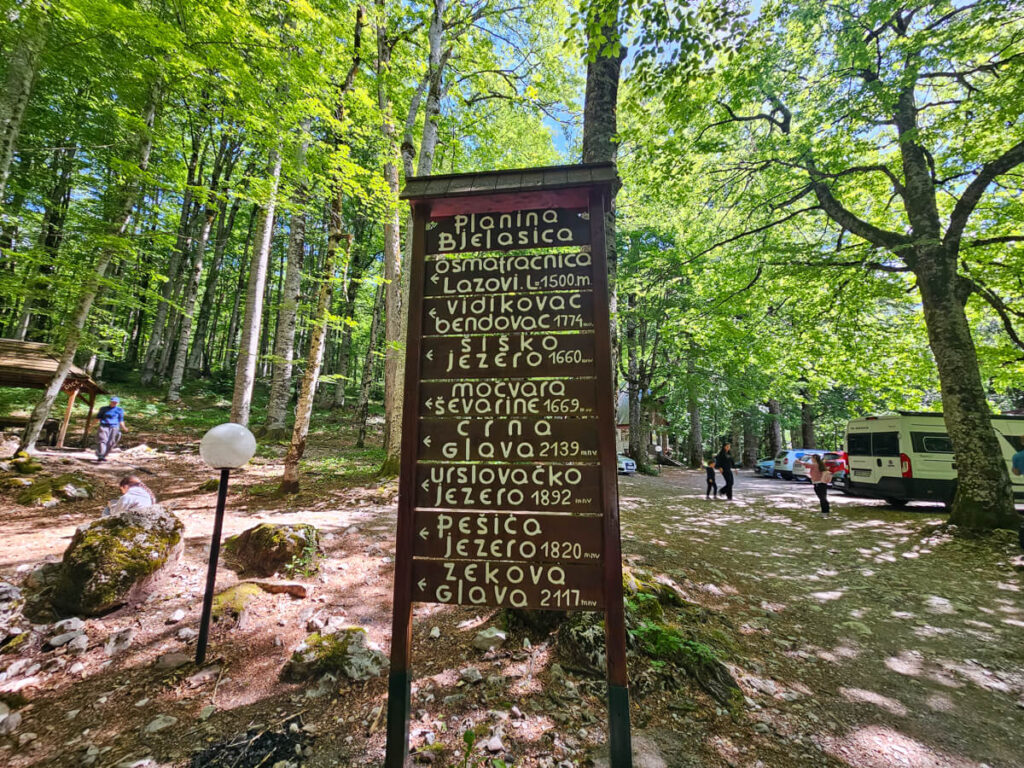
From the lake, you can make your hike longer by picking up a number of different trails. The hike to Bendovac Viewpoint is one of the most popular. Sitting at around 1,774 metres (5,820 ft) on the slopes of Bjelasica, it offers one of the best elevated perspectives over Lake Biograd and the surrounding forested valleys.
More demanding routes lead towards the park’s higher peaks, including Crna Glava, Zekova Glava, and Troglava, with several trails involving substantial elevation gain and long hours in the mountains.
The park has multiple signs and maps of recommended routes, and the visitor centre is a great place to get the latest local advice about trails.
Wildlife in Biogradska Gora National Park
Biogradska Gora National Park’s combination of ancient forest, mountains, meadows, lakes, and streams creates a remarkably diverse habitat for wildlife. The park supports populations of larger Balkan mammals including brown bears, grey wolves, wild boar, roe deer, and chamois, although they’re all elusive and you’re unlikely to see them from the main lake area.
The dense forest also provides habitat for 2,000 plant species, as well as numerous smaller mammals, birds, reptiles, amphibians, and insects.
Accommodation in Biogradska Gora National Park
Part of the appeal of Biogradska Gora National Park is its remote nature, and we really wanted this to be reflected in our accommodation choice too.
For bases, Kolašin is the most practical base for most visitors, with the largest selection of hotels, apartments, guesthouses, and restaurants while remaining close to the park entrance. Mojkovac is another popular option. Kolašin sits about 30 minutes’ drive from the visitor centre at Lake Biograd, while Mojkovac is a 20-minute drive away.
If you have rented a car in Montenegro, we’d strongly recommend staying in the surrounding countryside, giving you the freedom to reach the park early while staying somewhere quieter than a town. For a traditional experience, eco-katuns and wooden cabins are super immersive, allowing you to wake up on a mountainside or in a forest.
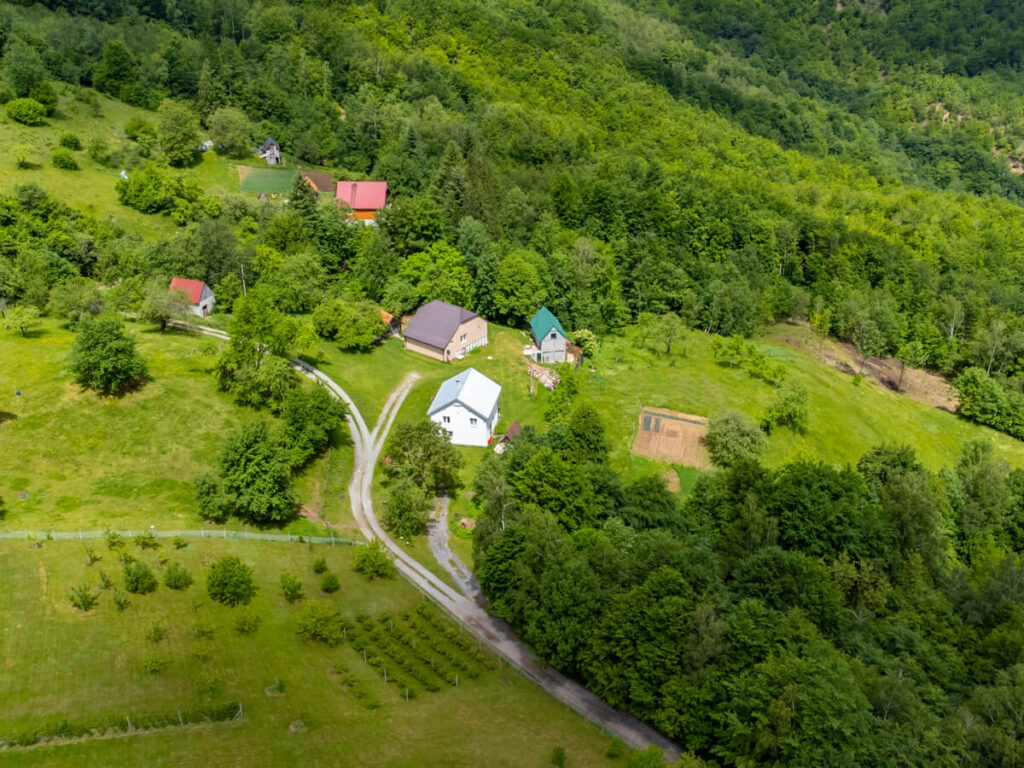
We were super happy with our choice of wooden cabin at Eco Village Ćorić. Not only was it beautiful, peaceful, and comfortable, but we were an easy 15-minute drive to Lake Biograd, which was much closer than both Kolašin and Mojkovac.
You can also stay inside the national park itself, particularly around Lake Biograd, where there are campsites, cabins, and other basic accommodation options.
We’ve written a whole guide on where to stay in Biogradska Gora National Park, but if you have limited time, our top choices are:
Top Biogradska Gora National Park Hotels
The best things to do in Biogradska Gora National Park
There are surprisingly quite a lot of activities in Biogradska Gora National Park. From easy lakeside walks and mountain viewpoints to scenic drives and winter sports, here are the best things to do with your time:
Biogradska Gora National Park Entrance Fee
As with all of Montenegro’s national parks, there is an entrance fee to enter Biogradska Gora National Park.
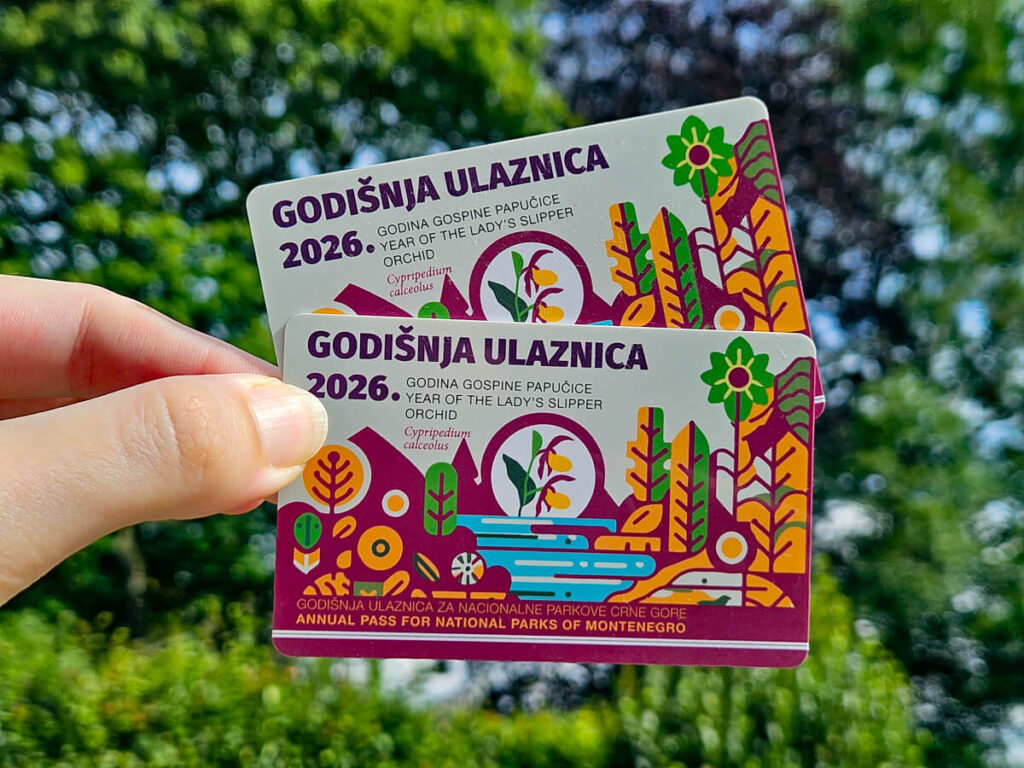
It’s €4 per person per day, but we’d highly recommend getting the annual pass for €13.50 if you plan to visit the other national parks too. You can also buy it online in advance.
Bring cash in case the card terminal isn’t working. Then keep your ticket with you if you’re planning to spend the day exploring, as you may encounter checks elsewhere in the park.
How to get to Biogradska Gora National Park
Getting to Biogradska Gora National Park is pretty easy once you’re in Montenegro, despite being remote. The park is well connected to the rest of the country by road, with Kolašin and Mojkovac serving as the main gateway towns for visitors.
Kolašin sits about 12 miles (20 km) away from the visitor centre at Lake Biograd (a 30-minute drive), while Mojkovac is 6 miles (10 km) away (a 20-minute drive).
The nearest airport to Biogradska Gora National Park is Podgorica Airport (TGD), located roughly 60 miles (100 km) away from the park, with a driving time of around 2 hours depending on your destination and road conditions (1.5 hours to Kolašin).
Tivat Airport (TIV) is also an option if you’re combining Biogradska Gora with Montenegro’s coast, but the journey is significantly longer, usually taking around 3.5-4 hours (~3 hours to Kolašin).
By car
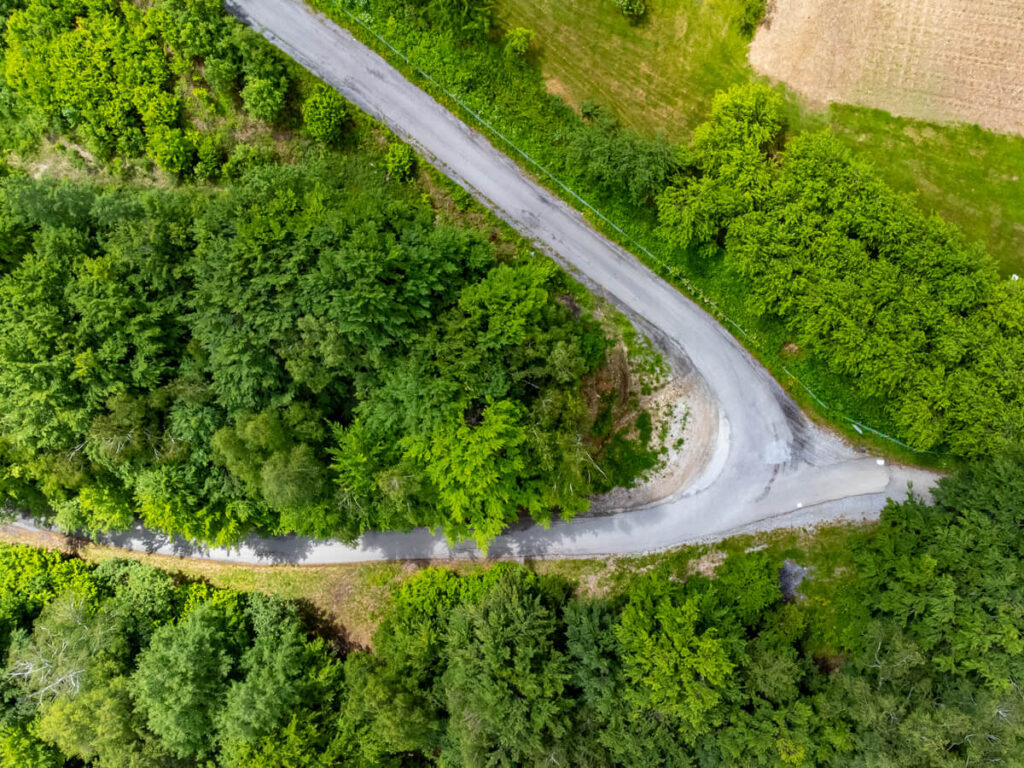
The easiest way to get to Biogradska Gora National Park is by rental car. The park’s main entrance is reached from the E65/E80 road between Kolašin and Mojkovac, with the turn-off being well signposted and immediately crossing the Tara River.
From the main road, it’s another 2 miles (3.5 km ) along a paved but winding forest road to Lake Biograd.
The road is suitable for normal cars, so there’s no need for a 4×4, but it’s important to be careful when driving in Montenegro, especially in winter when conditions can be trickier.
There’s a large parking area at the entrance. It fills quickly in peak season and can become a bit of a free-for-all, so get there early to grab a good space. It’s listed as €1 an hour, but we weren’t asked to pay on our visit in June, and we’ve also read people have paid €1 for a day.
By bus
Unfortunately, there is no public transport directly to Lake Biograd, but regular buses connect Podgorica, Kolašin, Mojkovac, and other northern Montenegrin towns nearby.
The most practical option is to take a bus to Kolašin and then arrange a taxi or tour for the final journey into the national park. Kolašin is the closest major town, so the fare will be cheaper from here than elsewhere. Be sure to arrange a return journey, so you’re not stuck at the end of the day.
Popular bus routes include Kotor to Kolašin and Podgorica to Kolašin, although more route options do exist. You can check schedules on BusTicket4.me. Typically, tickets cost around €7-15, depending on where you’re coming from. Buses leave every half an hour or so throughout the day, and journeys take anything from an hour from Podgorica to 4 hours from Kotor’s Old Town.
FlixBus (our fave long-distance coach company throughout Europe) also runs a direct service to Kolašin from Belgrade, if you’re coming from further afield.

By train
The iconic Belgrade-Bar railway passes through Kolašin, making the train a scenic option for reaching the area from coastal Montenegro or from Serbia. Kolašin is one of the railway’s mountain stops, with the route passing through the spectacular Morača Canyon.
Tickets can only be bought in person. While scenic, it’s not that practical or really any faster than the bus, which has more departures per day. The train only has two departures per day, once in the morning (the day train) and one in the evening (the overnight train). The day train only runs in summer.
There is no railway station inside Biogradska Gora National Park, so you’ll still need to travel from Kolašin to the park by taxi, tour, or another vehicle.
By taxi
Taking a taxi into Biogradska Gora National Park from Kolašin is the simplest option if you don’t have a car, particularly if you only want to visit Lake Biograd rather than undertake a longer point-to-point hike. The journey costs about €25 to €30 one-way.
Local taxi drivers can take you to the park entrance and onwards to Lake Biograd. We’d recommend agreeing the price and arranging a return pickup before setting off, as it’s unlikely any taxis will be waiting at the lake.
By tour
Taking an organised Biogradska Gora tour is a good option for travellers without a car who want transport, park access, and a guide bundled together. Many agencies offer half-day or full-day tours from Kolašin, Podgorica, and even as far as Budva and Kotor.
A guided tour is a particularly good way to learn about the primeval forest, local wildlife, and history of the area rather than simply walking around the lake.
When to visit Biogradska Gora National Park
The best time to visit Biogradska Gora National Park is between May and October. This period sees the nicest, most reliable weather. However, conditions vary considerably with elevation, and snow can remain on the higher Bjelasica peaks well into spring.
June to September is the preferred period if your main aim is hiking, as the higher trails are more likely to be snow-free, although you should still check conditions before setting out. July and August offer the warmest and generally most reliable summer conditions, but they’re also the busiest months, particularly around Lake Biograd, where tour groups commonly congregate.
We visited in June, and thought it was perfect. We arrived at Lake Biograd early in the day to beat the crowds, and walked the whole loop. Once you get away from the car park, you see far fewer people. We felt like we had most of the trail to ourselves.
September and early October can be particularly rewarding if you want cooler hiking temperatures and fewer visitors, with the surrounding forest beginning to take on autumn colours later in the season.
Biogradska Gora National Park Weather
Biogradska Gora National Park has a mountain climate, with conditions varying considerably between the lower forest around Lake Biograd and the higher peaks of the Bjelasica range. The park is generally cooler and wetter than Montenegro’s coast, and weather can change quickly as you gain altitude.
Always check the forecast before hiking. Conditions around Lake Biograd can be very different from those on Bjelasica’s higher peaks, where temperatures are lower, winds are stronger, and snow can persist well into the hiking season.
Travel insurance can save you $$$ if things go wrong
Don’t forget to buy travel insurance! From lost luggage to emergency medical care abroad, travel insurance gives you peace of mind so you can solely focus on the adventure. It might not be exciting, but you’ll be very glad you have it if something goes wrong. A few of our favourite companies are:
Get 8 weeks of electronic theft coverage free with SafetyWing Travel Insurance with our code: THOROUGHLY8 (new members only). Simply click the pink camera and laptop icon on the Nomad Essential page to redeem the reward before creating a new account.
Find out more: 6 Best Travel Insurance Companies for Every Kind of Trip
How long to spend in Biogradska Gora National Park
The great thing about Biogradska Gora National Park is that its highlights are compact and easy to see in a short amount of time. You only really need half a day at Lake Biograd. 2-3 hours is enough for a quick visit, including the lakeside loop, which takes around 1-1.5 hours at a relaxed pace.
You could easily spend a full day in the area, particularly if you’re planning a longer hike into the Bjelasica mountains. There are several trails leading from the lake towards higher peaks and viewpoints worth exploring if you have the time.
Just because you can see the park’s highlights in a day doesn’t mean it’s not worth staying longer through. We’d personally recommend 2-3 nights. That way, you have time to really explore the area, contingency if the weather is bad one day, and time to see beyond Lake Biograd, exploring the east side of the park where Crna Glava and lakes like Pešić and Ursulovacko sit. This is also a good minimum amount we’d recommend if you plan on skiing in winter.
We spent 4 nights in the area and simply enjoyed our accommodation, slowing down, taking in the mountain views, and sipping coffee on the porch of our wooden cabin.

Is Biogradska Gora National Park worth visiting?
We’d absolutely say that visiting Biogradska Gora National Park is worth it. While it doesn’t have the jagged peaks and dramatic alpine scenery of Durmitor or the wild, rugged landscapes of Prokletije, it offers something completely different: ancient forest, glacial lakes, lush mountain scenery and a much more peaceful atmosphere.
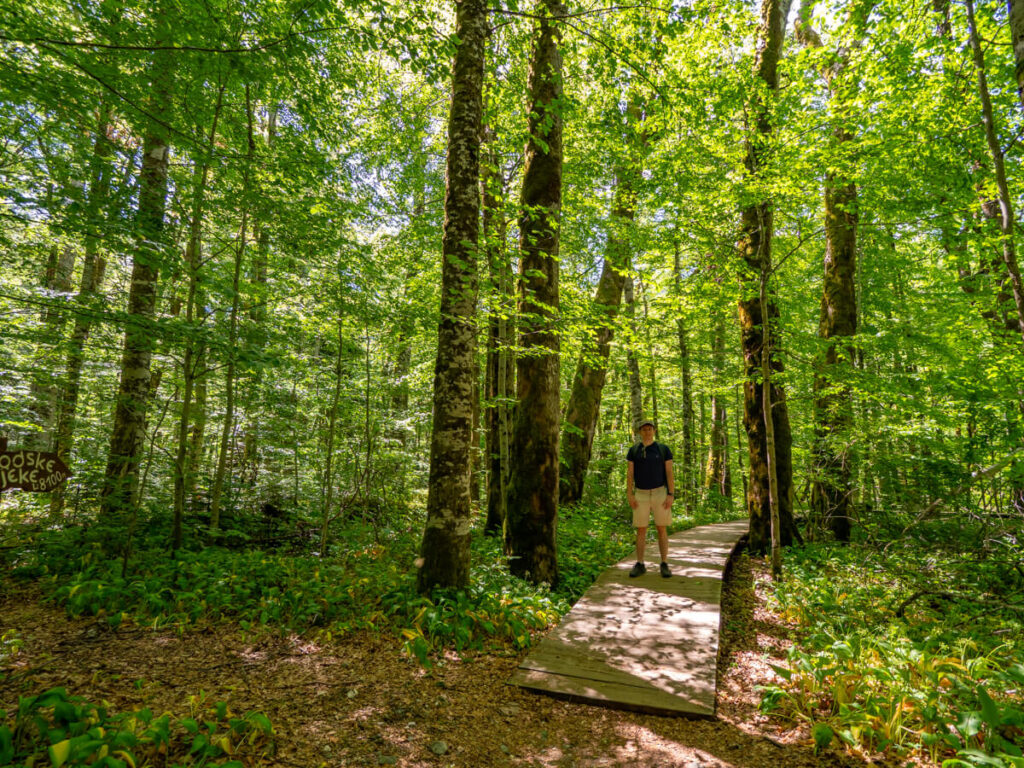
For us, the biggest reason to visit was the primeval forest around Lake Biograd. Walking beneath enormous, centuries-old trees and around the tranquil lake was so peaceful and totally different to other Montenegro hikes in more exposed mountain areas.
Biogradska Gora National Park is also a particularly good addition to your itinerary because you can get a lot out of the park without committing several days to it. It works perfectly for people already road-tripping the north of Montenegro, or those coming from the south with limited time to go deeper into other parts of the country.
However, we wouldn’t rank it above Durmitor or Prokletije in terms of personal preference. If your priority is dramatic mountain hiking, jagged peaks, challenging trails, and huge alpine panoramas, we’d prioritise those parks instead. But if you have the time for Biogradska Gora National Park and know what to expect, it’s a lovely addition to an itinerary that shows a completely different side of Montenegro to both the coast and the mountains.
Practical tips for visiting Biogradska Gora National Park
To help you prepare for your visit to Biogradska Gora National Park, here are our top tips:
What to pack to visit Biogradska Gora National Park
It’s best to be prepared when you visit Biogradska Gora National Park. Don’t forget to pack your:
Leave your drone in your accommodation, as it’s illegal to fly in the national park (be aware that you need to apply for a permit before importing it into Montenegro anyway).

Biogradska Gora National Park FAQs
To help you plan your trip to Biogradska Gora National Park, we’ve answered these frequently asked questions.
What is the nature like in Montenegro?
Montenegro has an unusually varied natural landscape for such a small country, ranging from Lovćen National Park on the Adriatic coastline and Mediterranean wetlands to limestone mountains, deep river canyons, glacial lakes, and ancient forests. Biogradska Gora represents one of the country’s most distinctive natural environments, with forested mountains, glacial lakes, and one of Europe’s remaining primeval forest reserves.
Which lake in Montenegro is considered the best?
There’s no definitive best lake in Montenegro because they offer completely different experiences. Lake Skadar is the largest lake in the Balkans and is best for wildlife, boat trips, kayaking, and birdwatching, while Piva Lake is a long, dramatic reservoir surrounded by steep mountain scenery. Lake Biograd is the better choice if you’re looking for a peaceful mountain lake surrounded by ancient forest, while the Black Lake in Durmitor is arguably the country’s most iconic alpine lake.
Is there a rainforest in Montenegro?
Not technically – Biogradska Gora is a virgin forest that allows the growth of temperate rainforest, not a tropical rainforest. The forest is sometimes described as a ‘rainforest’ because of its dense vegetation, abundant rainfall, and exceptionally old trees.
How many glacial lakes are in Biogradska Gora?
There are six recognised glacial lakes in the Bjelasica massif within the park, including Lake Biograd, Pešića Lake, Veliko and Malo Ursulovačko Lake, and Veliko and Malo Šiško Lake. They formed from glacial activity during the Ice Age, with the lakes occupying basins shaped or dammed by glacial deposits.
What is the highest mountain in Biogradska Gora?
The highest point in Biogradska Gora National Park is Crna Glava at 2,139 metres (7,018 ft), one of several Bjelasica peaks rising above 2,000 metres. Other prominent summits include Zekova Glava at 2,117 metres and Troglava at 2,075 metres.
Is Biogradska Gora good for hiking?
Yes, although the hiking experience is quite different from Durmitor or Prokletije. The lower trails around Lake Biograd are relatively gentle and forested, while longer routes climb towards alpine meadows and glacial lakes. and Bjelasica’s higher summits, where the terrain becomes considerably more demanding.
Can you swim in Lake Biograd?
Swimming is possible in Lake Biograd, but the lake is a cold mountain lake rather than a conventional swimming destination, with water temperatures influenced by its altitude and mountain climate. We’d consider it more of a scenic attraction and place for kayaking or boating than somewhere to plan a day of swimming.
Is Biogradska Gora worth visiting if you don’t hike?
Lake Biograd is easily accessible without undertaking a serious mountain hike, and the relatively gentle lakeside path lets you experience the primeval forest and glacial landscape without climbing into the higher mountains. Even if you just see it from the dock at the visitors’ centre, it’s a stunning view. You can also take a boat or kayak on the lake to see it better without walking.
Read next:
Where to Stay for Biogradska Gora National Park
All 5 Montenegro National Parks Compared + Our Favourites
A Handy Guide to Hiking in Montenegro & Our Top 10 Trails
Our Ultimate Guide to Visiting Durmitor National Park
Visiting Prokletije National Park: Montenegro’s Accursed Alps
Renting a Car in Montenegro: Complete Guide + Kombo Rent a Car Review
