A Day Trip Guide to Cetinje: Montenegro’s Historic Capital

A complete guide to visiting Cetinje, Montenegro’s old royal capital, from what to do and where to eat to accommodation options and practical tips like parking and public transport.
This post may contain affiliate links, which means we might earn a small commission on anything purchased through these links at no extra cost to you. Learn more on our disclaimer page.
Tucked into a mountain valley, Cetinje is a world apart from the busy resorts on the coast, and not just because it’s a historic town that was once the capital of Montenegro. It’s perfectly located between some of the country’s most iconic tourist destinations, but it hasn’t yet received the mass tourism that other towns have. It’s also incredibly easy to access, with day trips to Cetinje combining the authentic town with nearby nature-based adventures.
Dan and I visited Cetinje on the first day of our Montenegro road trip on our way from Kotor to Podgorica, where we headed for Prokletije National Park. We were immediately enamoured with its quaint streets and bold heritage, and I knew my history-obsessed mum would love it, so we later returned after a morning at Lake Skadar to show my family around the main sights. In this guide, we’ll cover the best things to do in Cetinje on a day trip, including its historic sights, museums, monasteries, where to eat, how to get there, and how to combine your visit with other places nearby, as well as accommodation options if you’d like to stay the night like we did, and practical information like the best time to go to avoid other day-trippers, parking, and public transport links.
Cetinje at a glance
About Cetinje
Cetinje is Montenegro’s former royal capital, a small inland town with a surprisingly important place in the country’s history and geography. While Kotor’s Old Town is known for its medieval walls, Budva for its Old Town and Roman remains, Herceg Novi for its fortresses, and Perast for its Venetian palaces, Cetinje is home to royal residences, former foreign embassies, monasteries, and museums that chronicle stories of Montenegro’s struggle to preserve its independence and establish itself as a modern European state.
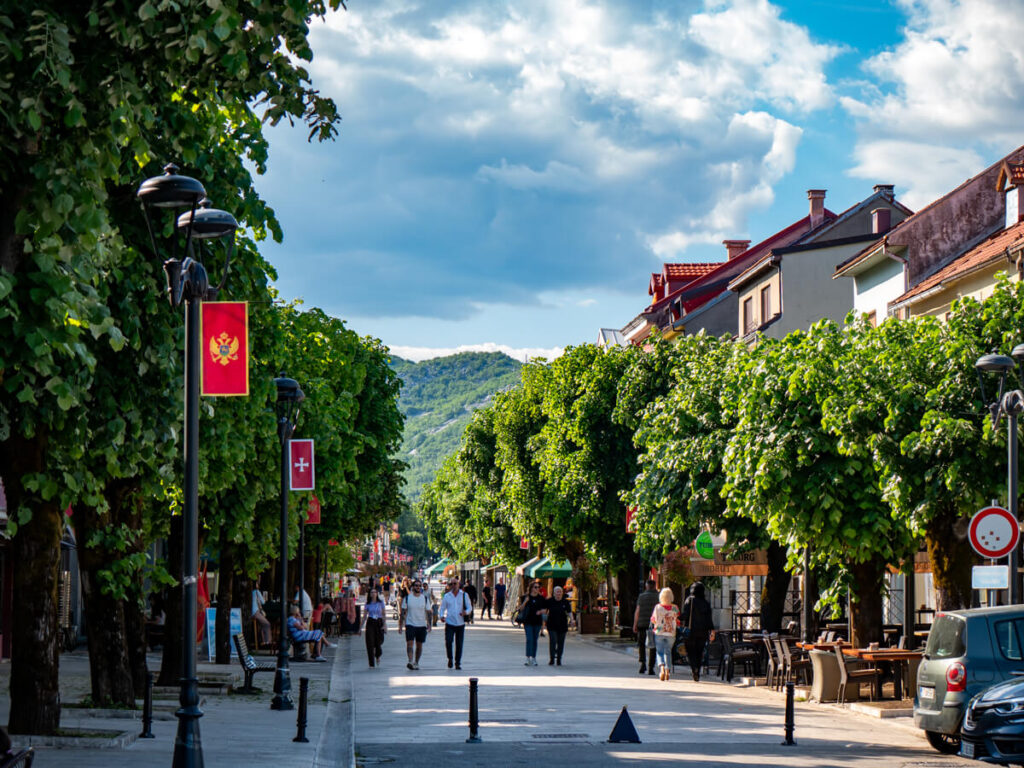
The town sits in a limestone basin beneath Mount Lovćen, around 670 metres (2,200 ft) above sea level. It feels quite different from anywhere else in the country, really. Despite its proximity to several of the most popular places in Montenegro, it’s worlds away from the coastal resort towns and mountainous national parks the country is so well known for. In Cetinje, you’ll be greeted with cooler mountain air, leafy tree-lined streets, low-rise pastel buildings, and a compact historic centre that is easy to explore on foot.

More from Montenegro
Cetinje’s History
The history of Cetinje stretches back much further than its royal buildings suggest. Archaeological discoveries in the surrounding area point to human settlement thousands of years ago, while the first written reference to Cetinje dates to 1440.
The town as we recognise it today began to take shape in the late 15th century, when Ivan Crnojević, ruler of the medieval state of Zeta, moved his seat of power into the mountains to escape the growing Ottoman threat. He established a castle in Cetinje in 1482 and founded a monastery here in 1484. These buildings made the settlement a political and religious centre at a time when much of the surrounding region was under Ottoman control.
The town’s religious importance continued after the Crnojević dynasty disappeared. Cetinje Monastery became the seat of the country’s Orthodox religious leadership, and the bishops who governed from here also held considerable political authority. Montenegro’s mountainous terrain and fragmented tribal organisation made it difficult for the Ottomans to establish lasting control over the area, and Cetinje became closely associated with the country’s determination to maintain its autonomy.
In the late 17th century, the Petrović-Njegoš dynasty came to power, beginning a period in which the same family provided Montenegro’s religious and political leaders for more than two centuries.
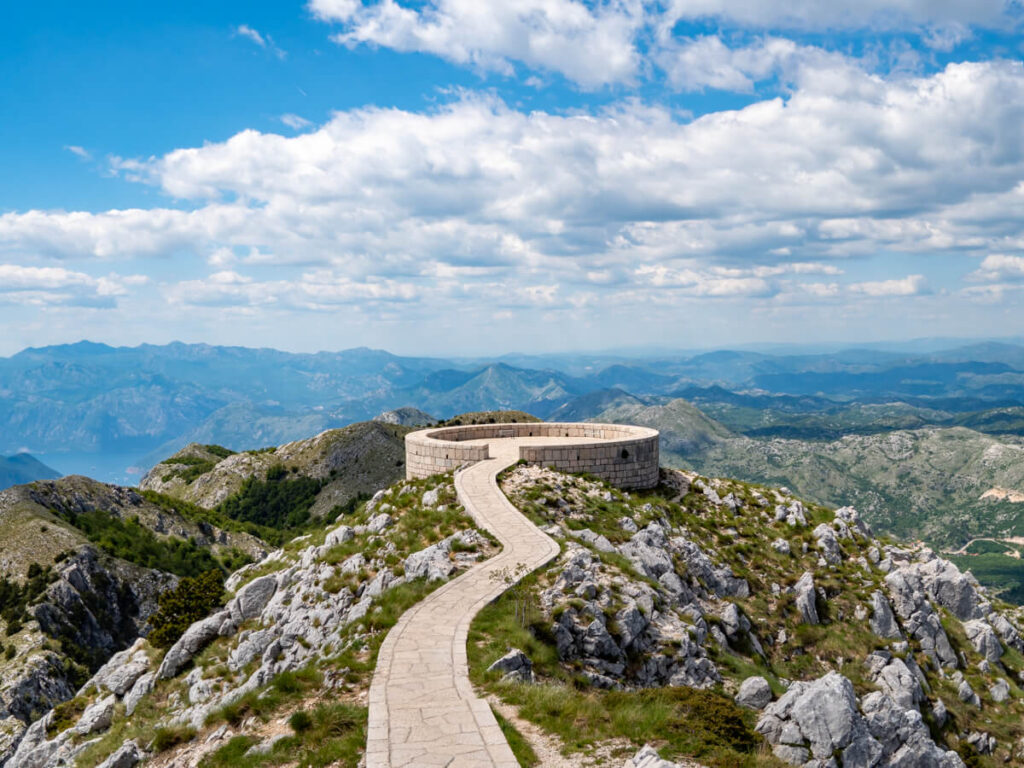
One of the most influential figures from this period was Petar II Petrović-Njegoš, born in the nearby settlement of Njeguši, who ruled from 1830 to 1851. He was both a political leader and a poet, and is remembered as one of the most important figures in Montenegrin literature. He rests in the highest mausoleum in the world on a peak in Lovćen National Park.
Cetinje’s role expanded considerably during the 19th century as Montenegro developed into a more centralised state. Under Prince, and later King, Nikola I Petrović-Njegoš, the town became the centre of royal government and diplomacy. Foreign countries established diplomatic missions here, and their former embassy buildings remain among the most distinctive features of the historic centre.
Montenegro’s independence was formally recognised by the major European powers at the Congress of Berlin in 1878. King Nikola’s reign lasted until 1918, when Montenegro was incorporated into the Kingdom of Serbs, Croats, and Slovenes following the end of the First World War.
After the Second World War, the capital moved to Podgorica, then known as Titograd. Cetinje lost its role as the country’s administrative centre, but retained its cultural and historical importance. Montenegro regained independence after a referendum in 2006.
Today, Cetinje is officially known as the Old Royal Capital of Montenegro. It’s still pretty un-touristy, but it’s becoming an increasingly popular day-trip destination with both independent travellers and coach trips alike, as it’s perfectly located for a short stop between Kotor, Budva, Lovćen National Park, Lake Skadar, and Podgorica.
Planning a trip to Montenegro?
Montenegro is gaining popularity quickly, so be sure to book in advance as early as possible!
Top Experiences in Montenegro
Top Hotels in Kotor
Rent a Car in Montenegro
Best eSIM for Montenegro
Where is Cetinje?
Cetinje sits in southwestern Montenegro, inland from the Adriatic coast and beneath Mount Lovćen. It lies roughly 20 miles (31 km) from Budva by road and around 25 miles (40 km) from Kotor, depending on the route you take.
Podgorica is around 24 miles (38 km) away by road, making Cetinje accessible from both the coast and the country’s main urban centre.

Cetinje Map

The best things to do in Cetinje
There are quite a lot of things to do in Cetinje, but they mainly centre around its historic role, so the town is packed with old palaces, churches, museums, and grand buildings.
1. Wander Cetinje’s charming streets
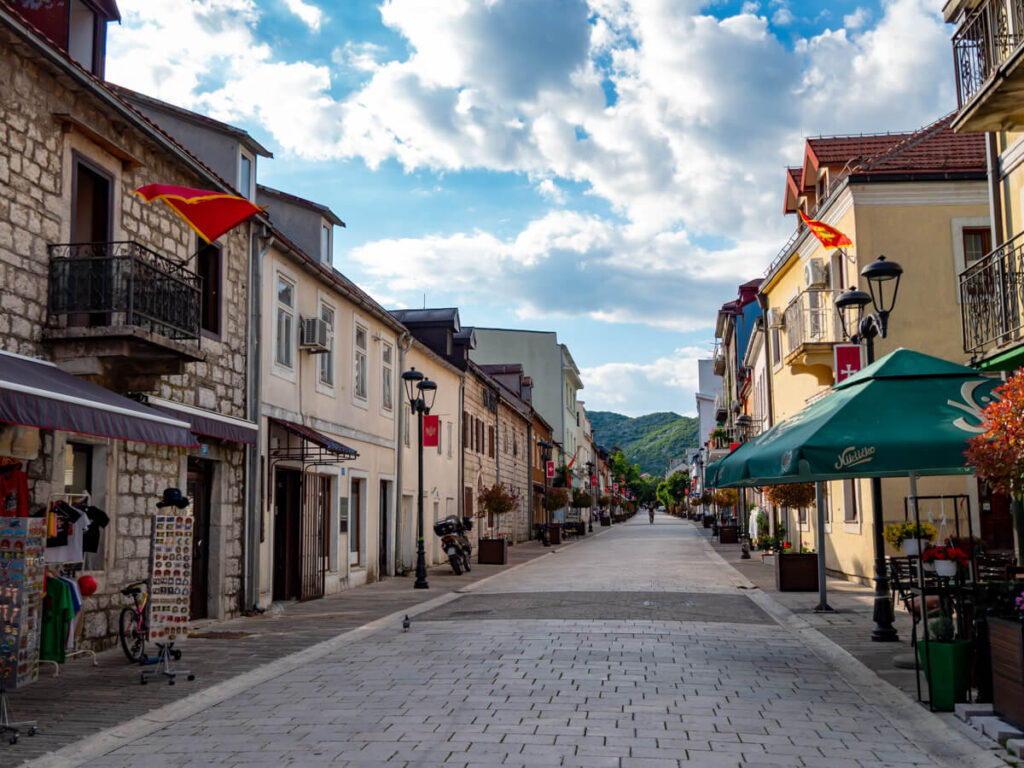
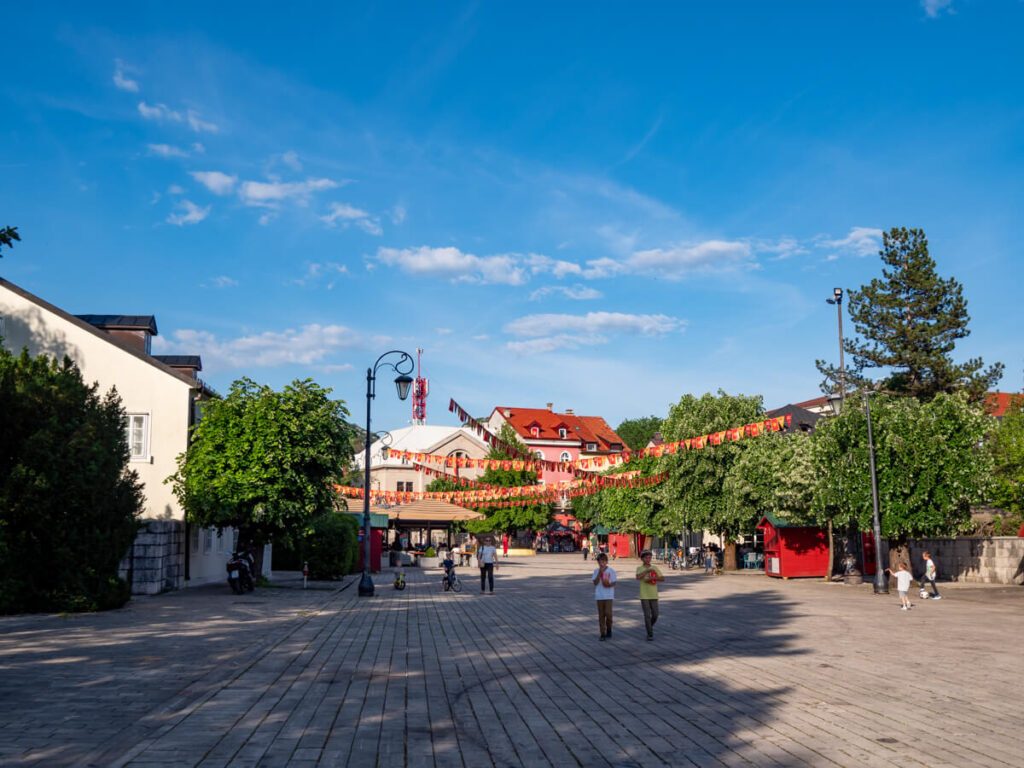
One of the best things to do in Cetinje is simply wander the network of compact streets in its historic centre (stari grad). While the town is pretty spread out, it has a compact historic centre that’s easy to explore on foot.
Start around Njegoševa Street and pass the main squares, then take a detour down a few of the smaller streets to spot old pastel façades, former diplomatic residences, and details you might miss if you stick to the main street.
You’ll come across a variety of small plazas and little parks, as well as shops, cafés, and restaurants, which are great for browsing as you mooch around. To learn more about what you’re seeing, we’d recommend joining a Cetinje walking tour.
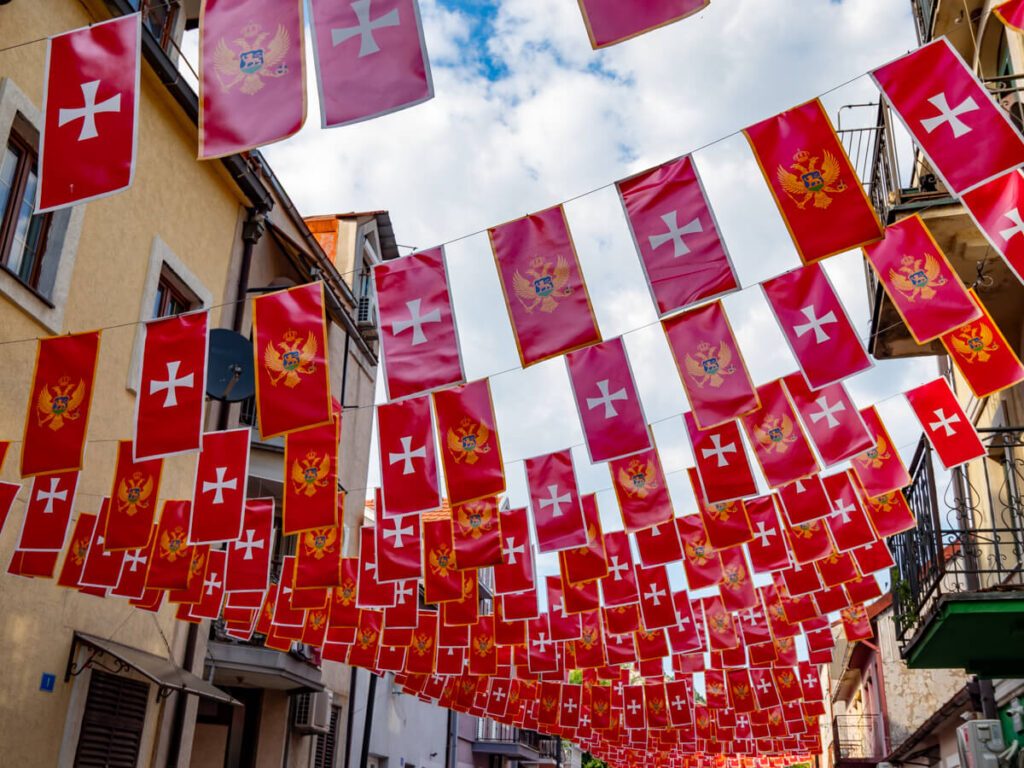
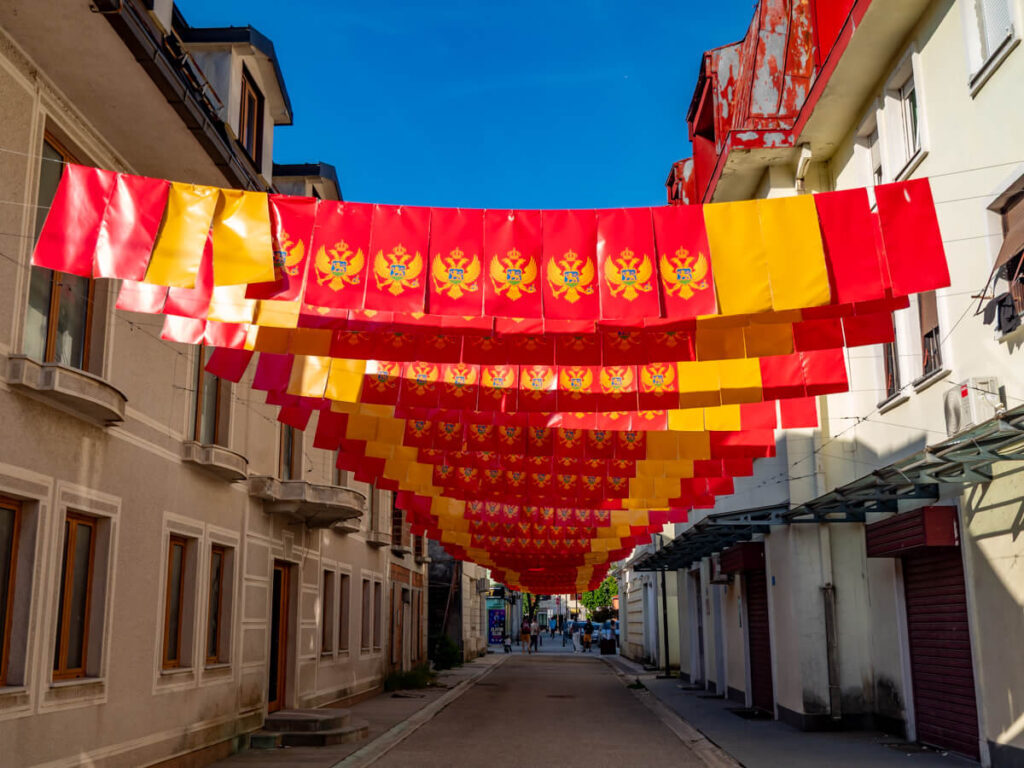
You might also see what looks like the Swiss flag everywhere, but it’s actually a historical Montenegrin flag featuring a cross on a red background.
2. Go inside Cetinje Monastery
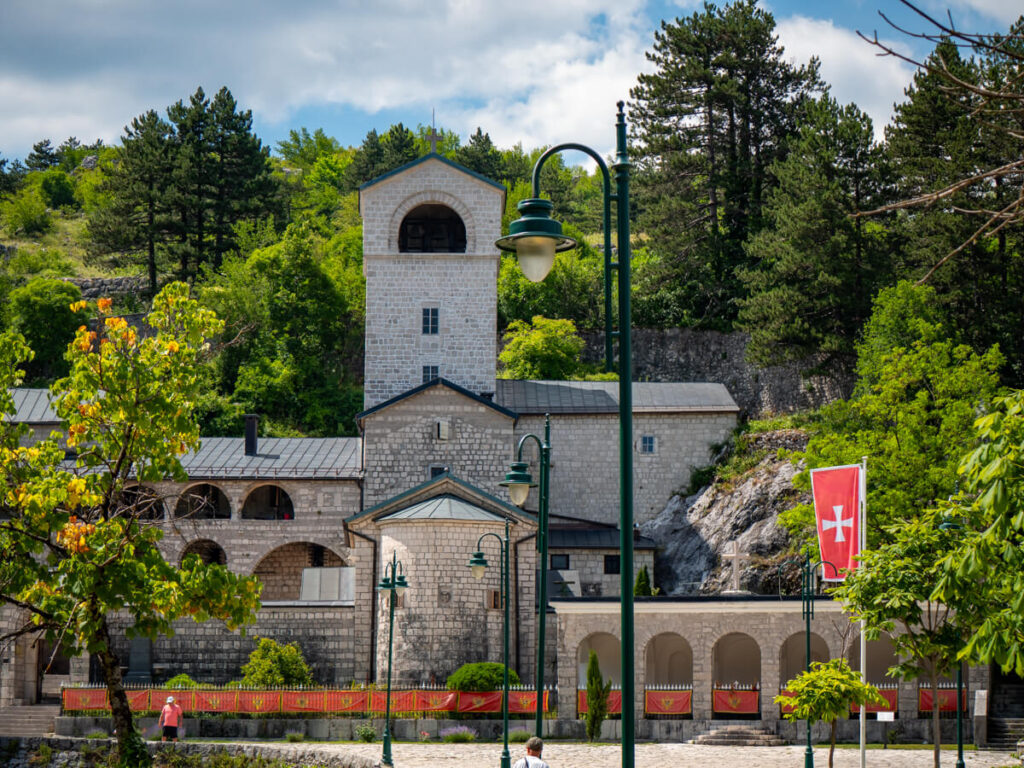
Cetinje Monastery, also known as the Monastery of Saint Peter, is one of Montenegro’s most important religious sites. The monastery dates back to the early history of Cetinje, although the present complex was rebuilt after earlier buildings were destroyed by Ottoman invasions.
Inside, the monastery is associated with several significant Christian relics, including a hand believed to belong to Saint John the Baptist and a fragment of the Holy Cross. It also has a small room painted with colourful frescoes like those you’ll find at the famous Ostrog Monastery.
It’s an active Orthodox monastery rather than simply a tourist attraction, so dress respectfully (cover your shoulders and knees) and be mindful of worshippers. But even if you don’t go inside, seeing the monastery’s exterior and its peaceful setting in the heart of the old town is one of the best free things to do in Cetinje.

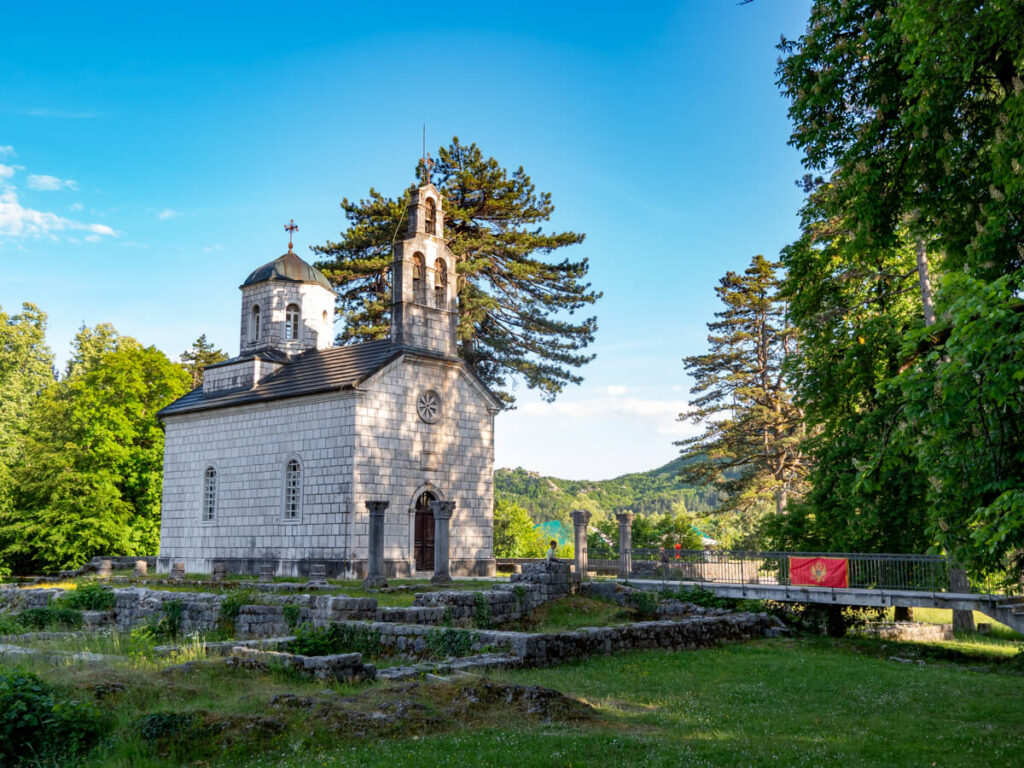
3. See the Court Church at Ćipur
A short walk from Cetinje Monastery, the Court Church at Ćipur stands on a site closely connected with the early history of the town. King Nikola I had the small church built in the late 19th century, on the remains of an earlier monastery associated with Ivan Crnojević, the ruler who founded Cetinje as a political and religious centre.
The remains of the earlier monastery can also be seen in the grounds around the church, and if it’s open, you can pop in and admire the interior, too.
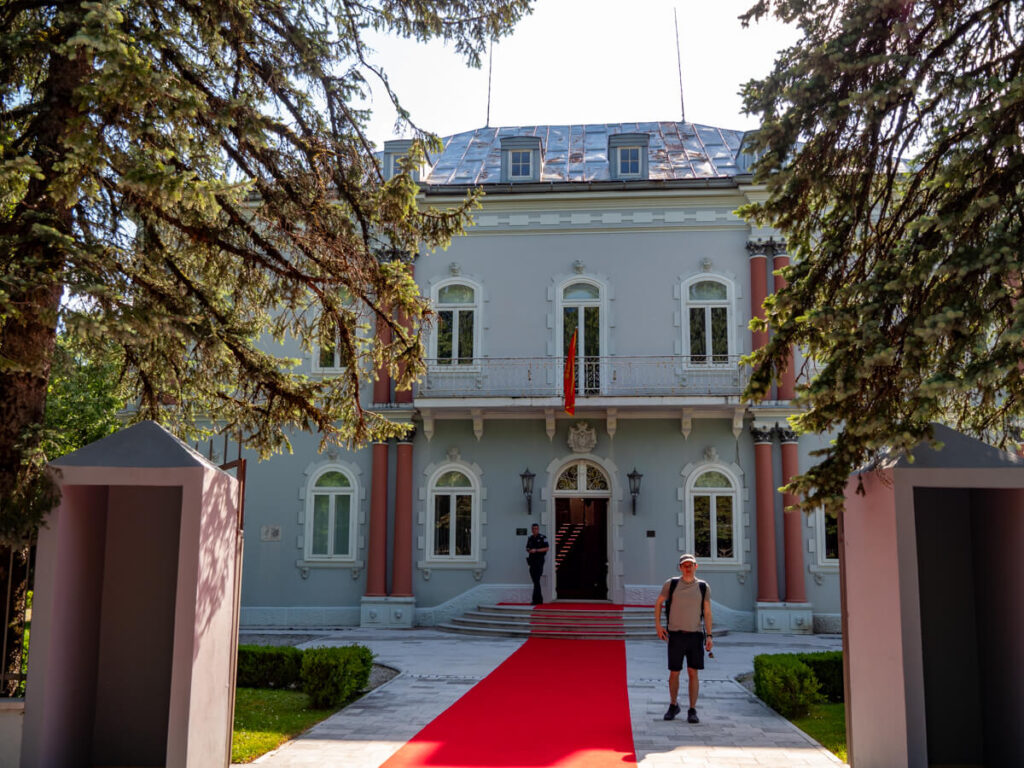
4. Snap a picture of the Blue Palace
The Blue Palace, or Plavi Dvorac, was built as a residence for Crown Prince Danilo, the son of King Nikola I. Its pale blue exterior (very pale – we had to squint at it to make out the blue shade) makes it stand out from the surrounding buildings, and the elegant façade is one of Cetinje’s most recognisable sights.
The palace is now used as an official state residence, so it’s generally closed to visitors, but you can admire it from the outside.

5. Marvel at the monuments
Cetinje has several statues, monuments, busts, and memorial plaques scattered around its streets and public spaces, dedicated to important figures in the town’s history. Keep an eye out as you walk between the main attractions.

6. Spot street art
Cetinje’s historic architecture isn’t the only thing worth looking at. As you walk around town, keep an eye out for murals, painted walls, and smaller pieces of street art tucked between older buildings.
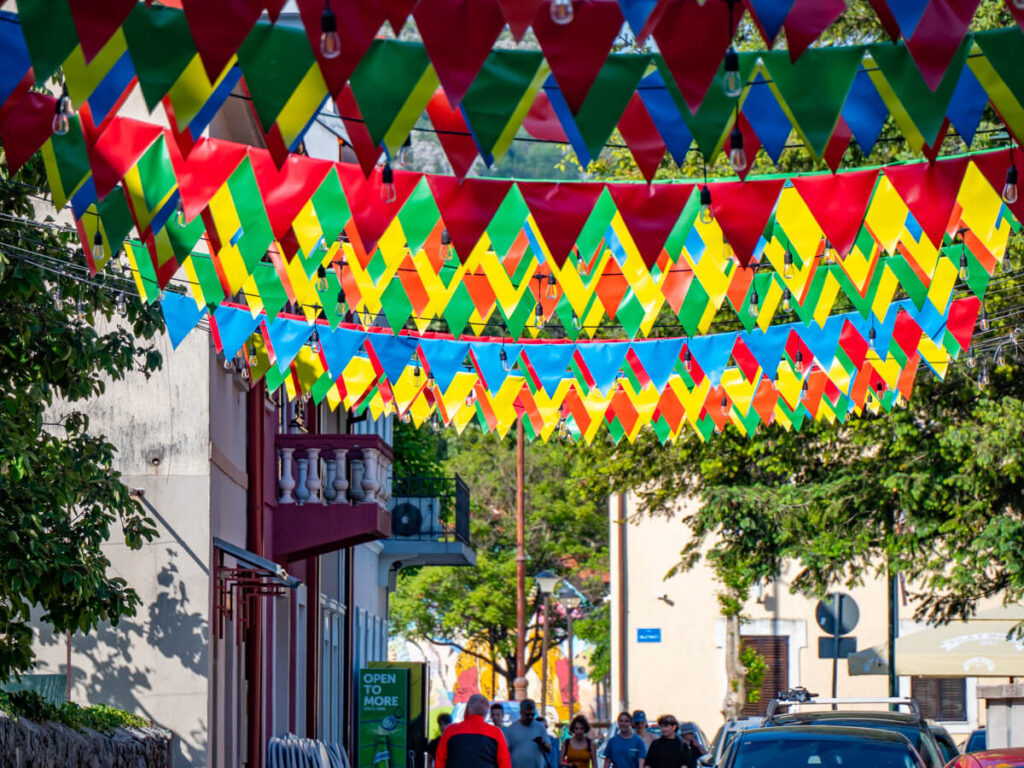
We were surprised that somewhere so historic has a pretty modern street art scene, but it only added to the creative atmosphere of the town. The murals depict famous figures from history and images associated with local life.

7. Learn more in a museum
It’s no surprise Cetinje has one of the strongest concentrations of museums in Montenegro, considering its historic importance. They cover everything from royal life and national history to traditional clothing and contemporary art.
Several museums form part of the National Museum of Montenegro, but they’re housed in different historic buildings around town, while others are independent, including:
8. Admire the architecture of former embassies
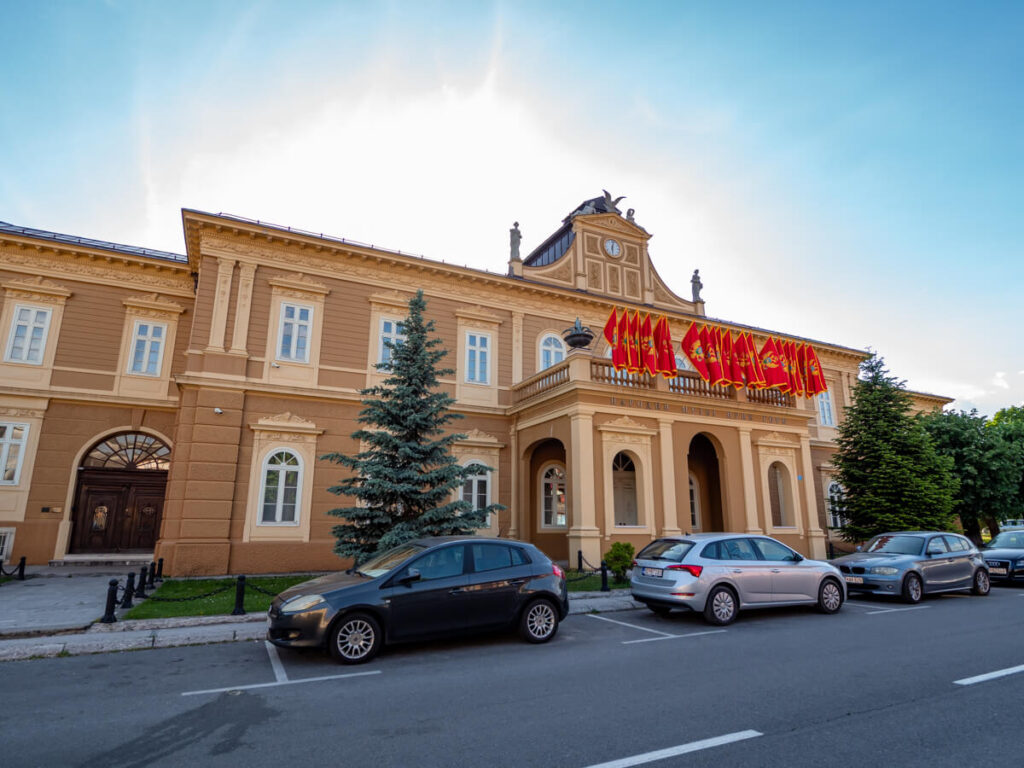
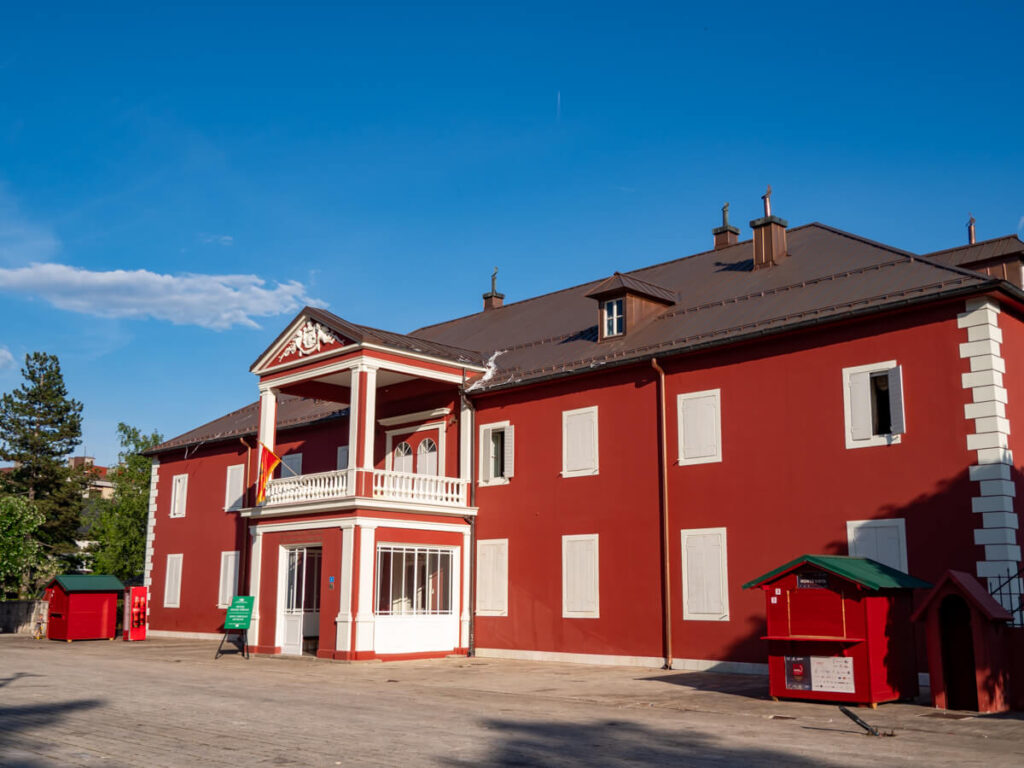
During Montenegro’s royal period, Cetinje was the country’s diplomatic centre, and several foreign governments built impressive residences here. The former embassies are among the most distinctive buildings in town, with architectural styles that stand apart from the traditional Montenegrin houses around them and reflect the countries they represent.
Look out for the former French Embassy, with its elaborate Art Nouveau façade, the bright red former British Embassy, and the Baroque former Russian Embassy. The Russian Embassy, built in the early 20th century, was badly damaged by fire in 2012 and later reconstructed.

9. Relax in a public park
After a few hours of sightseeing, take a break in one of Cetinje’s parks. The town has several green spaces dotted between its historic buildings, offering somewhere to sit, have a drink nearby, people-watch, or take a breather between historic sites.
Njegošev Park and Revolution Square are two options to look for on your walk. Neither needs to be a major detour, and visiting them is an easy way to slow down and enjoy a little nature in a day that might otherwise involve a lot of old buildings.

10. Catch a show at the Montenegrin Royal Theatre
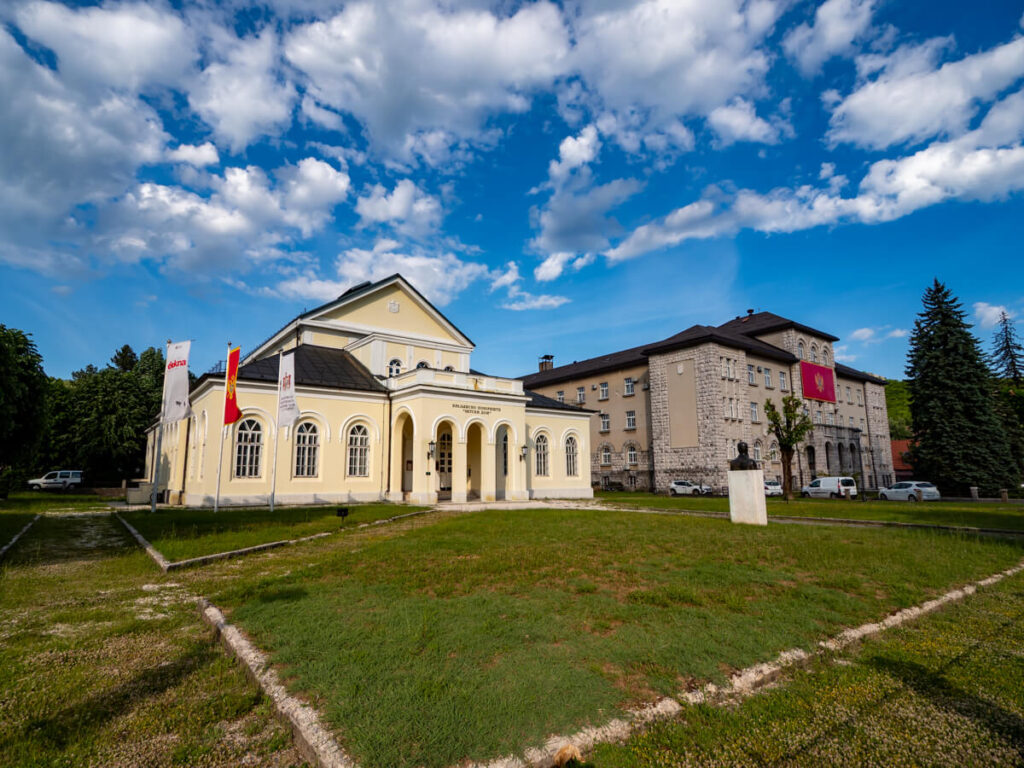
The Royal Theatre Zetski Dom has a long history, with its origins dating to 1884. It’s Montenegro’s oldest theatre institution and remains an important venue for drama, concerts, and other cultural events.
The building itself is worth seeing on your little DIY walking tour, even if there’s no performance during your visit. If you’d like to attend a show, check the theatre’s programme in advance, as performances may be in Montenegrin and the schedule varies throughout the year.
What to do near Cetinje
Cetinje is also a handy starting point for exploring the mountains, viewpoints, and small settlements around the old royal capital. It can be a lovely alternative holiday destination to the faster-paced tourist towns on the coast if you’re looking for an inland base to explore more of central Montenegro from.
You can visit several of these places on a day trip from Cetinje, and many are easily combinable with Cetinje if you’re coming from elsewhere and want to see multiple places in one day:
Where to eat in Cetinje?
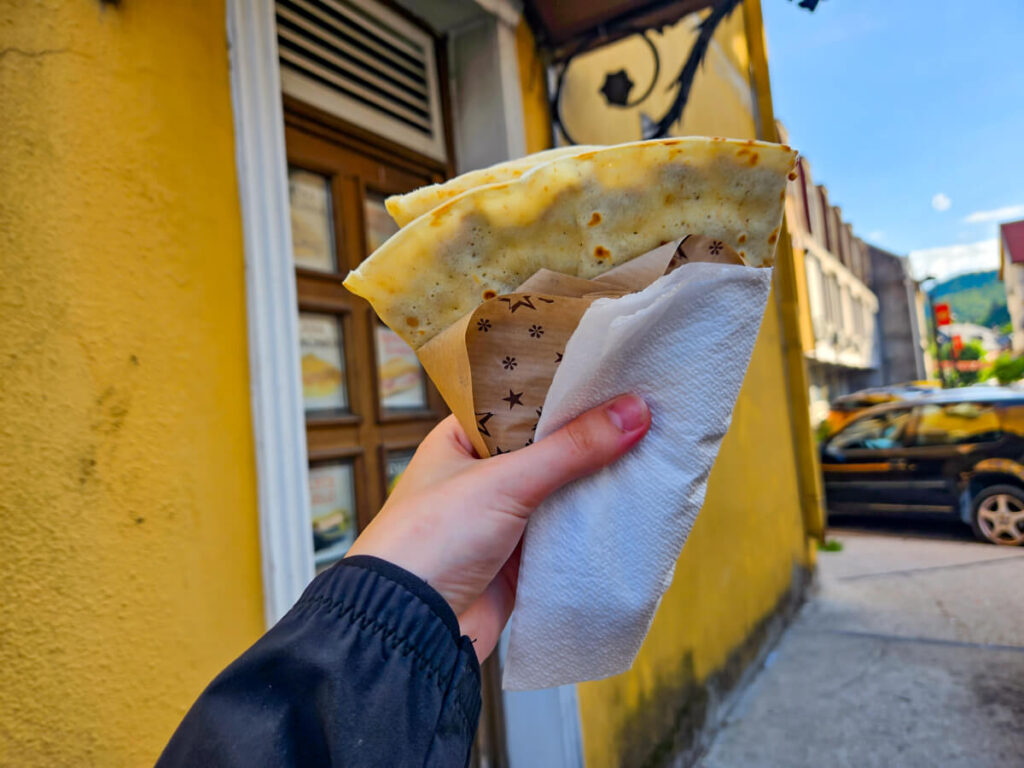
Cetinje has fewer dining options than Montenegro’s coastal towns, and its food scene feels more local than geared towards tourists. There are cafés for coffee and a few casual places to eat, but we wouldn’t plan an entire trip around eating out here.
If you’re staying for more than a night or two, or have an apartment with a kitchen, self-catering is worth considering. Supermarkets like Voli and Idea are handy for picking up groceries, snacks, and breakfast essentials.

Top Cetinje Restaurants
Where to stay in Cetinje?
Cetinje is small and super easy to see in a day, so you don’t need to stay over. However, it’s a good option as a quieter base to explore the inland area, and its position makes it perfect for a night on a road trip between Kotor and Lake Skadar or Podgorica, which is exactly what we did.
You don’t need to be too particular about where you stay, but there are a couple of things worth considering when choosing accommodation in Cetinje.
The historic centre is the most convenient area, particularly if you’re only staying for a night or two. You’ll find hotels and guesthouses close to the main sights, with restaurants and cafés within easy walking distance. It’s also the simplest option if you’re arriving by bus or want to leave your car parked while exploring.
Accommodation further from the centre tends to include more apartments, guesthouses, and budget-friendly options. These can be good value, particularly if you’re travelling by car, but check the distance carefully – some properties may mean a longer walk into town or require you to drive for dinner and sightseeing.
If you’re visiting Cetinje on a day trip, you could also stay in the Bay of Kotor or stay in Budva, which have a much wider selection of accommodation.
Top Cetinje Hotels

How to get to Cetinje
Cetinje lies in Montenegro’s mountainous interior, pretty much in the middle of a triangle between the Bay of Kotor in the west, Budva to the south, and Podgorica and Lake Skadar in the east. You can get here by car, taxi, or bus, or join an organised tour if you’d prefer not to arrange transport yourself.
By plane
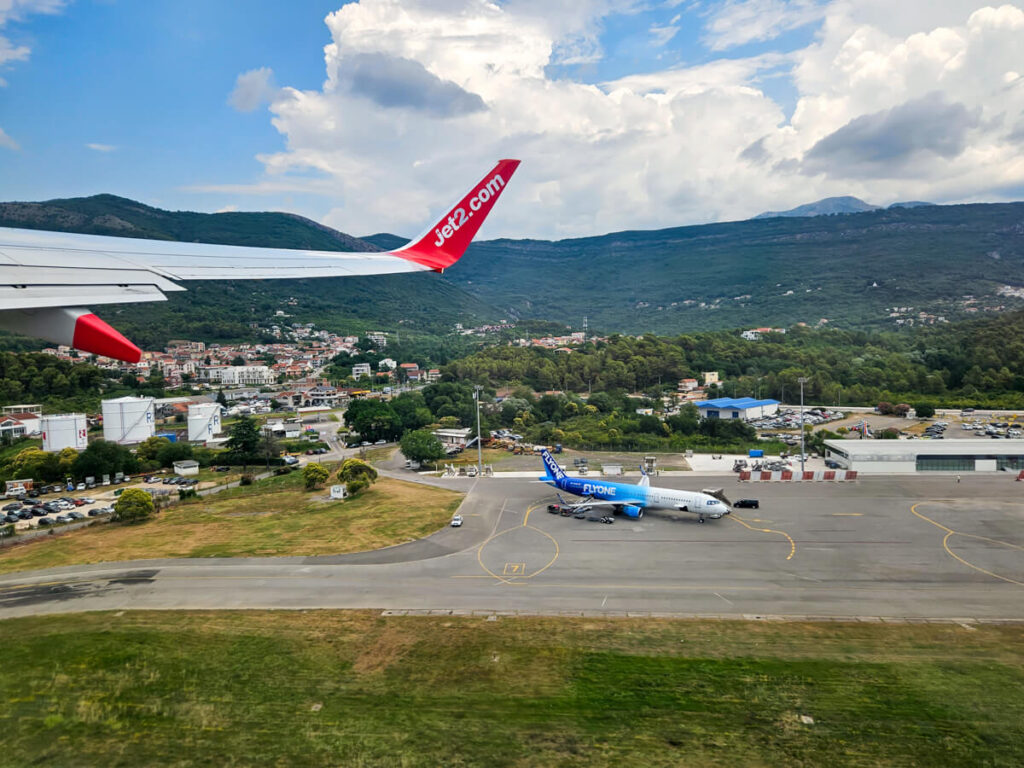
Cetinje doesn’t have its own commercial airport, so you’ll need to fly into another part of Montenegro and continue by road. Podgorica Airport (TGD) is the closest, about 24 miles (40 km) from Cetinje, while Tivat Airport (TIV) is around 31 miles (50 km) away.
Some people – including my family when we met them after our road trip – fly into Dubrovnik Airport (DBV), which works well if you’re staying in the north or road-tripping along the coast.
From the airport, you can rent a car and drive, take a taxi, or pre-book a transfer directly to Cetinje, or travel into Podgorica, Tivat, or Kotor first and catch a bus.
By car
Renting a car in Montenegro is one of the easiest ways to reach Cetinje, especially if you’re planning to combine it with other sights in the same day, or are using it as a base to see more of the country.
The M2.3 main road connects Cetinje with both Podgorica and Budva, and the drive from either is usually around 30-40 minutes in normal traffic. If you’re coming from further south along the coast, you’ll pass Petrovac and Sveti Stefan.
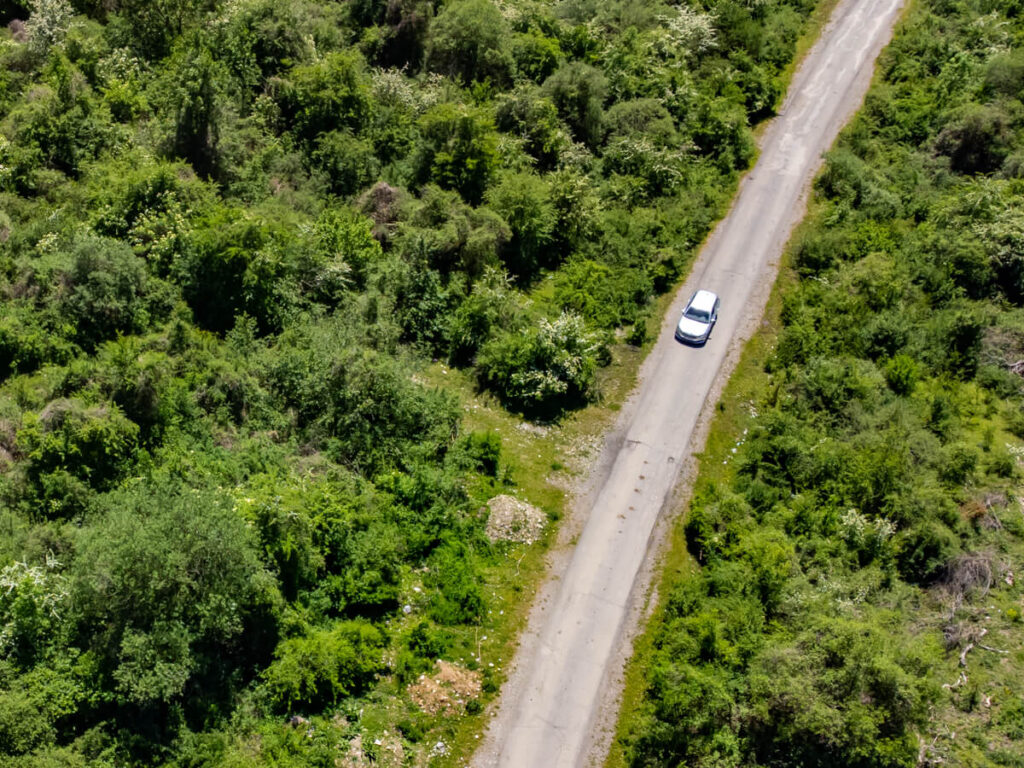
The roads around Cetinje are scenic but winding. If you’re coming from the Bay of Kotor, you’ll have the option to go via Budva or drive the iconic Kotor Serpentine, which consists of 25 snaking switchbacks. It’s not for the fainthearted, but doable for confident drivers who have read up about driving in Montenegro before getting behind the wheel.
Parking in Cetinje is pretty easy. This car park is big, spacious, and close to the centre. It’s priced reasonably at only €0.50 an hour, and we used it when we visited with my family. When we visited as a couple, we snagged a space in one of the free parking spaces outside the entrance to the car park, so check these first on your way in.
By bus
Cetinje Bus Station is handily within walking distance of the historic centre, with connections to towns including Podgorica, Kotor, and Budva. Travelling by bus is a practical option if you’re visiting without a car, especially if you’re staying in one of those towns and want to explore Cetinje on a day trip without renting a car. You can check routes and book tickets through BusTicket4.me and Bookaway.

By taxi
A taxi is a convenient option if you’re coming from Podgorica Airport, Podgorica itself, or Budva and don’t want to hire a car, but be warned, it will be pricey. If you’re taking a taxi from a rank, confirm the fare before setting off so there are no surprises at the end of the journey.

By tour
If you’re short on time or don’t fancy driving in the mountains, an organised tour to Cetinje is an easy way. Some excursions combine the former royal capital with Lovćen National Park, the Njegoš Mausoleum, or nearby viewpoints, while others include stops around the Bay of Kotor or Lake Skadar.
Check the itinerary carefully before booking, as some tours only make a brief stop in Cetinje rather than allowing time to visit its museums and historic buildings.
When to visit Cetinje
The best time to visit Cetinje is in the summer, between June and September. Because it’s slightly cooler than the coast, the hot months of July and August aren’t quite as unbearable. But we’d still recommend May (when we visited the first time), June (when we visited the second time), or September to avoid the worst of the heat and day tour crowds.
April and October can also be pleasant for walking around the town, although temperatures are cooler and rain is more frequent, particularly in autumn.
Winter is cold and wet, with occasional snow, especially in the surrounding mountains, so we’d check the forecast if visiting between November and March.
It’s also worth knowing that Cetinje has become quite a popular stop on day tours, which means you might accidentally time your visit with a coach-load of tourists, which isn’t really the authentic vibe the town is known for. We’d recommend exploring in the early morning or late evening to avoid any crowds – both times we visited at around 4:00 PM as the day tours were leaving, and it was lovely and quiet.

Cetinje Weather
Cetinje sits around 672 metres (2,205 ft) above sea level, beneath the mountains of Lovćen, so it has a cooler, wetter climate than Montenegro’s coastal towns, with cold winters and warm summers.

How long to stay in Cetinje?
We’d allow half a day to explore Cetinje itself, which is enough time to walk around the historic centre, visit Cetinje Monastery, and fit in one or two museums or former royal buildings. If you’re particularly interested in Montenegrin history, you could easily spend a full day visiting more of the museums at a slower pace.
Cetinje also works well as part of a wider trip into the mountains. If you want to combine the town with Lovćen National Park and the Njegoš Mausoleum, allow a full day rather than trying to squeeze everything into a few hours. If you want to use the town as a base to explore the surrounding region, 2-3 days would work well.
Is Cetinje worth visiting?
We think Cetinje is worth visiting if you’re interested in Montenegro’s history and want to see a different side of the country beyond the coast and mountains. It’s unique, really quite charming, has a surprising amount to see and do, and is really easy to include as a day tour or in a multi-day itinerary thanks to its central location.
That said, Cetinje isn’t a town we’d recommend purely for Insta-vibes. It doesn’t have the dramatic waterfront setting of Kotor or the beaches and seaside promenades of Montenegro’s coastal resorts, and some of its historic buildings are more interesting for their history than their appearance. If you’re not into history, it might not be the right town for you.

What to pack to visit Cetinje?
It’s best to be prepared when you visit Cetinje. Don’t forget to pack your:
Cetinje FAQs
To help you plan your trip to Cetinje, we’ve answered these frequently asked questions.
What are the two capitals of Montenegro?
Montenegro has a capital city and an Old Royal Capital. Podgorica is the country’s official capital, serving as its administrative and economic centre, while Cetinje is the Old Royal Capital, reflecting its historic role as the seat of Montenegro’s rulers and government. You’ll sometimes see Cetinje described as the country’s historical or cultural capital, too.
What is the population of Cetinje?
Cetinje has a population of around 12,500 people, while the wider municipality has approximately 14,500 residents. The town’s population has declined, reflecting the changes Cetinje has experienced since losing its role as the country’s main political centre.
Does the cable car go to Cetinje?
No, the Kotor-Lovćen cable car doesn’t go directly to Cetinje. It connects the coast near Kotor with the Kuk area of Lovćen National Park, so you’ll still need to travel by road to reach Cetinje. You can combine the cable car with a visit to the old royal capital, but you’ll need to plan the onward journey separately.
Which is best, Cetinje or Budva?
Choose Cetinje for history, museums, and Montenegro’s royal heritage, or Budva for beaches, nightlife, and a wider choice of restaurants and accommodation. They’re quite different destinations, so if you have time, visiting both gives you a better feel for the contrast between Montenegro’s interior and its coast.
Which is best, Cetinje or Podgorica?
Cetinje is the better choice if you’re interested in Montenegro’s history and traditional architecture, while Podgorica is more useful for modern city life, shopping, transport connections, and a wider choice of amenities. Neither is the country’s strongest destination for tourists, but Cetinje has more historic character, whereas Podgorica is the more practical base for travelling around the country.
Which is best, Cetinje or Kotor?
Kotor is the better choice if you’re looking for dramatic scenery, a historic Old Town, waterfront restaurants, and easy access to the Bay of Kotor. Cetinje is quieter and more focused on Montenegro’s history, with former royal residences, museums, and access to Lovćen National Park. If you’re short on time, we’d prioritise Kotor for its setting, but Cetinje is worth adding if you want to understand more about the country’s past and it’s easy to day-trip to.
Read next:
How to Visit Lovćen National Park & Mausoleum of Petar II Petrović-Njegoš
A Traveller’s Guide to the Bay of Kotor: Europe’s Southernmost Fjord
10 Fun Day Trips from Kotor + 2 Tours Not to Book
Where to Stay in Kotor Bay: Top Towns + Best Hotels From Budget to Boutique
A Traveller’s Guide to Budva: Beautiful Bay or Busy Beach Resort Town?
A Traveller’s Guide to Lake Skadar National Park: Valleys, Viewpoints & Vineyards
Where to Stay in Lake Skadar: Virpazar vs Rijeka Crnojevića & Top Hotels
