How to Visit Ostrog Monastery: Whether It’s Worth It + Our Nikšić Guide

A complete guide to visiting Ostrog Monastery, if it’s worth a day tour, plus the best things to do in Nikšić, where to stay, and useful information for planning your trip.

This post may contain affiliate links, which means we might earn a small commission on anything purchased through these links at no extra cost to you. Learn more on our disclaimer page.
Oggling at Ostrog Monastery is basically a rite of passage for tourists travelling Montenegro, and not without good reason. Built into a sheer limestone cliff, Ostrog Monastery is one of the Balkans’ most important Orthodox Christian sites, drawing pilgrims and travellers alike up the mountain to see its remarkable setting and learn about its religious significance.
But Ostrog Monastery is also surprisingly far from many of the main destinations in Montenegro, making a visit more of a commitment than you might expect. The access roads are nail-bitingly winding, parking can be confusing, day tours are very long, and the crowds of pilgrims and coach-loads of tourists can make the experience quite different from online images. We also think it’s worth considering whether to combine the monastery with other sights in the region. Nikšić, a nearby city, tends to be overlooked by travellers rushing between Ostrog Monastery and Montenegro’s better-known destinations like Durmitor National Park.
We visited Ostrog Monastery during our Montenegro road trip, experiencing the journey independently ourselves and assessing whether it’s the kind of place we’d recommend to our families and friends as a day tour or if it works best as part of a wider itinerary. In this guide, we’ll explain how to visit Ostrog Monastery, what to expect when you arrive, whether we think it’s even worth the trip, the day tours that are best if you don’t want to go independently, and how to combine it with the best things to do in Nikšić.
Ostrog Monastery at a glance
More from Montenegro
About Ostrog Monastery
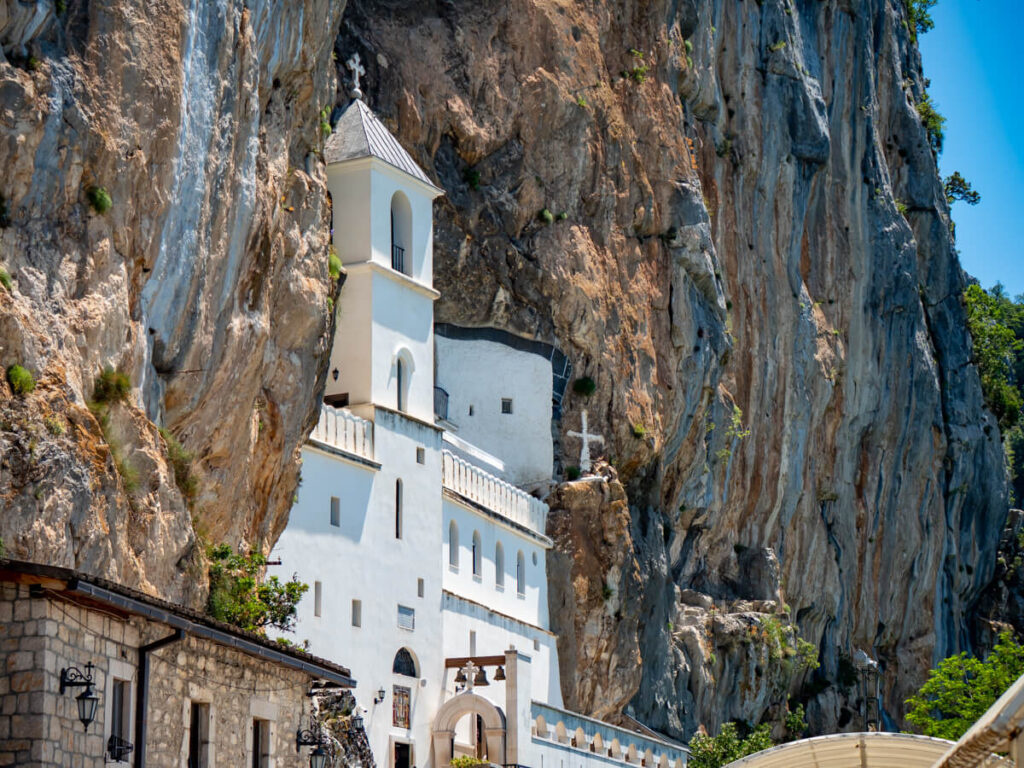
Ostrog Monastery is one of Montenegro’s most important religious sites. Its white buildings seem to cling impossibly to the rock face, but it’s more than just a striking sight. It’s also an active Serbian Orthodox monastery and a major pilgrimage destination.
The monastery was established in the 17th century by Vasilije Jovanović, a bishop from Herzegovina who later became known as Saint Basil of Ostrog (Sveti Vasilije Ostroški) and was revered for his healing powers. Born in 1610, he served as Metropolitan Bishop of Zahumlje and Herzegovina before settling in the caves of Ostrog around 1665. He died here in 1671, and his remains are preserved in a shrine inside the Upper Monastery.
The monastery developed around the natural caves in the cliff, rather than being built as a conventional church complex on level ground. The site is split into two parts: the Upper Monastery and the Lower Monastery.
Over the years, it’s survived considerable upheaval. A fire damaged much of the complex in 1923, but the two cave churches survived, and the monastery was rebuilt between 1923 and 1926.
Today, Ostrog remains a place of worship, with pilgrims travelling here throughout the year. There is a difference, though, between a place being religiously significant and it being a worthwhile visit for every traveller.
Ostrog Monastery attracts hundreds of thousands of devout Orthodox Christian pilgrims, as well as other Christians and Muslims, each year, many of whom travel long distances to pray at the shrine of Saint Basil and pay their respects to his relics.
There are quite a few online guides to visiting Ostrog Monastery. Some of them are quite old and out of date, so we’ve included all the things you actually need to know about visiting in this guide. But, more importantly, we think there’s a question that most guides seem to gloss over: is the trip even worth it?

Planning a trip to Montenegro?
Montenegro is gaining popularity quickly, so be sure to book in advance as early as possible!
Top Experiences in Montenegro
Top Hotels in Kotor
Rent a Car in Montenegro
Best eSIM for Montenegro
Where is Ostrog Monastery?
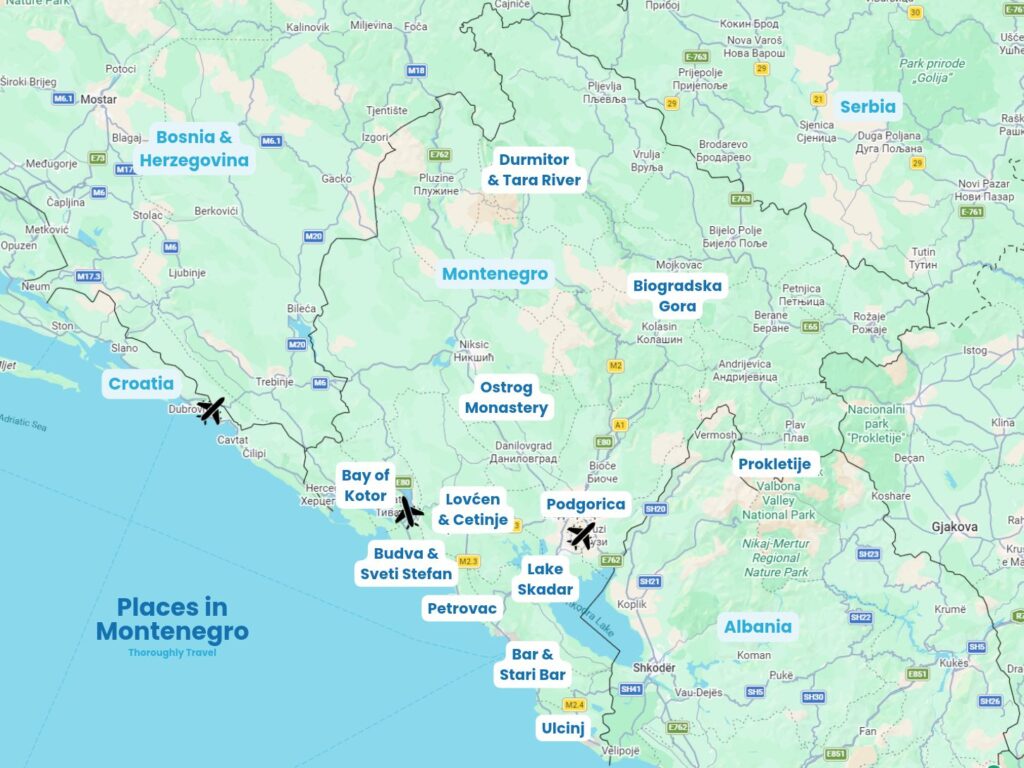
There are actually quite a few different places on Google Maps called Ostrog, including local lodges, various pins around the monastery complex, and other parts of the general surrounding area, but if you’re planning to visit the monastery, you need to aim for the Upper Monastery. There is also a Lower Monastery you can visit, too.
Ostrog Monastery itself sits in central Montenegro, built into the side of Ostroška Greda mountain between the towns of Danilovgrad and Nikšić.
Nikšić is the larger and closer town, around 15 miles’ (25 km) drive to the Upper Monastery. The site is also around 25 miles (41 km) from Podgorica and 72 miles (116 km) from Kotor Old Town.
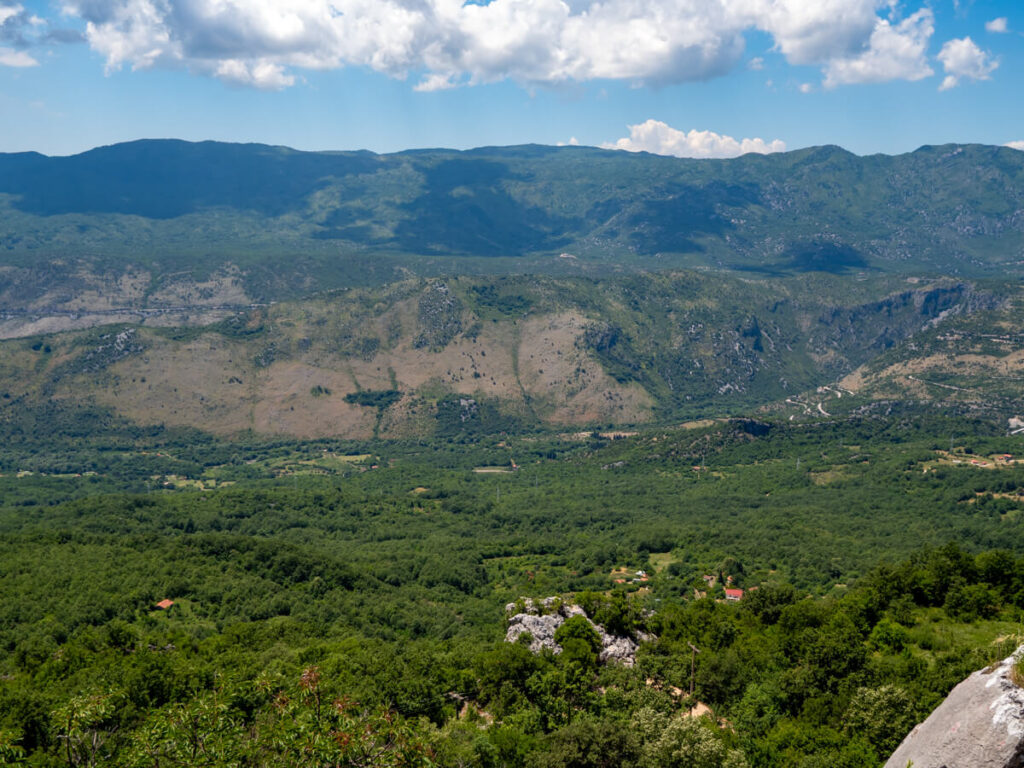
The monastery overlooks the Bjelopavlići Plain and the Zeta River Valley, with the Upper Monastery sitting at around 900 metres (2,950 ft) above sea level.

Ostrog Monastery Map
Ostrog Monastery lies in the middle of the country.
Is Ostrog Monastery worth visiting?
Before we give you all the details about visiting Ostrog Monastery, we want to weigh up whether the trip is right for you in the first place.
Publishers herald the site as one of the most important Serbian Orthodox pilgrimage sites in the world (which it arguably is), describing the façade carved into the sheer cliff face as “awe-inspiring”, “marvel-inducing”, or whatever other AI-like description you want to insert here. But is it really worth spending half a day in the car to visit a religious site if you’re not religious, particularly when you can take in the famous exterior in a matter of minutes? What is there to see beyond the view, and is it enough to justify the journey?
There’s no doubt that it’s an impressive place to see, whether you’re religious or not, more interested in the unusual architecture, or simply want to experience the journey into Montenegro’s mountainous interior. But its location in the middle of the country means it’s really nowhere near any other tourist sites, so you have to make the trip especially for the monastery or spend a lot of time visiting other further away places, too.
We’re not just going to give you a blanket “yes, Ostrog Monastery is worth visiting”, and in fact, we advised my family not to visit it during their holiday in the Bay of Kotor. We initially visited as a couple during our Montenegro road trip, and it worked well as a 1-day stop, as we spent a night in Nikšić between Durmitor National Park and Lake Skadar National Park.
There are definitely pros to visiting: it’s free to visit, relatively easy to get to (the drive really isn’t as scary as people make out online), and only takes an hour or two to see, so it’s easy to see in a day even if you are making the long journey from elsewhere in Montenegro.
But you might spend more time in transit than actually at the site, especially if you’re coming from the coast. Once you arrive, the Upper Monastery itself is relatively small, so unless you’re interested in the religious history, the cave churches, or the pilgrimage traditions surrounding Saint Basil, you might find there’s less to see than the dramatic exterior suggests. It can also get busy, especially during religious holidays, when queues to enter the churches and see the relics form.
It’s also worth considering that you might be asked to take part in religious customs – to enter the Church of the Presentation of the Mother of God, you may be invited to kiss the reliquary containing Saint Basil’s relics – which can feel uncomfortable if you’re not religious.
Pros
Cons
We’d say Ostrog Monastery is definitely worth visiting if you’re interested in religious heritage or are already independently exploring Central Montenegro.
But is it worth a day trip from the coast? We’d say only if you’re super keen on visiting the monastery over other places in Montenegro. There are lots of other interesting day trips from Kotor and Budva that don’t require such a long journey and are easier to combine multiple sights in one day.
There are also some Ostrog Monastery day tours that are combined with the Durmitor region, often stopping at the Black Lake or the Đurđevića Tara Bridge, which is a crazy long day from the coast, but at least you’re not travelling out of your way for the monastery alone if you find it a little underwhelming. It’s a good option if you don’t want to miss out on seeing the monastery, but don’t want to have to figure all the logistics out yourself. There are also plenty of shared and private tours that only visit the monastery if you do deem it worth a dedicated trip and want to spend a day just focusing on Ostrog.
Top Ostrog Monastery Tours
Why visit Ostrog Monastery?
The most obvious reason to visit Ostrog Monastery is its setting. It’s unusual to find a monastery built so high into a near-vertical cliff, and seeing the white buildings fitted into the rock is quite different from visiting a conventional church or monastery. The views across the valley are another reason to make the journey, especially if you’re already exploring central Montenegro by car.
There’s also plenty of history behind the architecture. Even if you’re not religious, seeing how the monastery’s cave churches have developed around the natural rock formations makes the visit more interesting than simply stopping for photographs.
It’s also an opportunity to see a different side of Montenegro from the coast or its mountainous national parks. You can learn about Orthodox Christian traditions and the role religion continues to play in local life and culture.
If you have been convinced to visit Ostrog Monastery, we’re going to expand on everything you need to know before you go below.
How to get to Ostrog Monastery?
Ostrog Monastery is reached by road from central Montenegro, with the final stretch climbing into the mountains. It’s very narrow and very winding, with lots of sharp bends to look out for if you’re driving.
By car
Renting a car in Montenegro and driving is one of the most flexible ways to visit Ostrog Monastery, but you need to be prepared for the road up the mountain.
It’s only a 40-minute drive from Nikšić to the Upper Monastery, which is where we approached from, consisting of a quick 15-minute journey down the M3/E762, a paved highway, to the turn-off at Bogetic and about 25 minutes of driving to the Upper Monastery.
If you’re coming from the Bay of Kotor, you can follow the M8 (starting above Lipci – if you’re coming from the east side of the bay, take the Kamenari-Lepetane Ferry to cut out driving around half the bay) and then the M7 to Nikšić, then follow the directions above. The whole journey time is around 2.5 hours.
From Podgorica, it’s about an hour’s drive and pretty easy to follow the M3/E762 from the south to Bogetic. We’d recommend this approach rather than going through Danilovgrad, as the roads are slightly less narrow and winding.
If you’re coming from Budva or the southern coast, the best route is to go to Podgorica via Cetinje and then follow the route above. From Budva, it’s around a 2-hour drive.
These times don’t factor in summer congestion, that you might be slower on the winding mountain roads than Google says, and that you may meet traffic on the hilly access road that you need to pull over for and manoeuvre around. Summer is especially busy, with more coach tours and minibuses, which can be pretty nerve-wracking if you meet them on a narrow road.
From the Lower Monastery to the Upper Monastery, it’s about 1.5 miles (2.5 km), and you need to navigate around 7 hairpin bends until you reach the main car park, and a further 7 if you’re going to the top accessible car park. There are also a couple of one-car-wide tunnels. This stretch is the scariest, but we found it much easier to drive than online accounts made out.
You’ll alternate between having the cement barrier that stands between you and a pretty steep drop into the valley below and the sheer cliff face on the closest side to the car. You don’t want to get too close and scratch your car, but if you meet someone coming the other way, you’re going to have to judge where it’s widest to squeeze past each other.
We didn’t have much trouble on the way up, as we set off early and arrived before the day’s tours, before 10:00 AM. Coming down, we came nose-to-nose with a car of nervous-looking tourists. Dan’s a pro at driving mountain roads by now, since we spent 5 weeks driving around Montenegro, including the epic 25 hairpins on the Kotor Serpentine and one-car-wide Durmitor Ring Road. He was able to do an excellent piece of reversing and manoeuvred us an inch from the cliff to allow them to pass. We’d recommend driving the tight corners with your window open, so you can hear if anything’s coming the other way and prepare for it to be over the line on your side of the road.
Parking at Ostrog Monastery
The main parking area isn’t actually at the very top of the mountain. It’s located here on Google Maps, but it’s obvious because there’s a barrier that stops you from going any further up the road without the approval of the staff member manning the booth.
The barrier was down when we arrived, and we were ushered into the main parking area. There were plenty of spaces at 10:00 AM on a weekday in June, and we managed to snag a shady spot under a tree. It’s a 10-minute walk up a set of stairs to the Upper Monastery from here.
It appeared that visitors with disabilities, families with prams, and motorcyclists were allowed through the barrier to the top car park on a case-by-case basis, which is around here on Google Maps. From there, it’s a short, flat walk to the entrance to the monastery. We’ve read that in off-season, general visitors are allowed to the top car park, too.
If you’re driving up past the barrier to the top car park, be careful of pedestrians crossing the road, as the stairs from the main car park to the Upper Monastery require crossing the road a couple of times.
There is also a small car park at the Lower Monastery and more spaces in a slightly larger car park above the Lower Monastery near the Church of the Holy Trinity.
On foot
From the main car park, you need to take the stairs to the Upper Monastery. They start at the east end of the main parking area.
There are around 340 steps in total on this stretch (we counted) – 108 steps on the first flight of stairs, walk along the road a little to the next, then 76 steps, cross the road again, and finally 154 steps to the top – it takes around 10 minutes. It cuts through forest, so it’s nice and shaded, and should be manageable for most people who are a decent level of fitness.
Many pilgrims actually walk all the way from the Lower Monastery to the Upper Monastery, which is an option for you too if you’re ambitious. The climb is around 1.5 miles (2.5 km) of many, many steps, generally taking about 30-60 minutes, depending on your pace, the conditions, and how often you stop. This AllTrails map is pretty accurate if you’re going to walk the whole thing.
It’s a steep walk, so wear shoes with a good grip and take water, especially in hot weather. Despite having spent weeks hiking in Montenegro, we still found just the short stretch from the main car park tiring, so major kudos to anyone who does the whole thing.
Be careful not to miss the car park on your way back down. We got into the rhythm of going downstairs and overshot the main parking area by a few flights of stairs and had to backtrack.

By taxi
A taxi can take you to Ostrog Monastery from nearby towns like Nikšić or Danilovgrad, or from Podgorica if you’re happy to pay for a longer journey. This is useful if you’re not hiring a car and don’t want to rely on the bus connections, especially if you’re travelling with someone who would find the uphill walk difficult, but it’s going to be pricey.
Red Taxi, which we found reliable in Kotor, quote around €40 from Podgorica to Ostrog Monastery, while a local taxi operator like As Taxi Nikšić from Nikšić is likely to be around €15-20 one-way. If you want the driver to wait for you at the monastery, a return journey is going to be around €25-35 from Nikšić.
Agree the fare and pick-up arrangements before setting off, especially if you need the driver to wait while you visit.
By train
There’s a railway station called Ostrog, although it’s not that close to the Lower Monastery (about 30-40 minutes’ walk). It can be cheaper than taking a taxi all the way from Podgorica or Nikšić – the line goes to both – but you’ll still need to walk all the stairs to the Upper Monastery if you can’t find a taxi, too.
By bus
Buses run between Podgorica and Nikšić along the main road near the Bogetići turn-off for Ostrog Monastery, but they don’t take you near the Lower or Upper Monastery. The journey is around an hour and costs about €3.50. From there, though, you’ll need to arrange a taxi or tour, or you’ll have a long walk along the road.

By tour
If you don’t have a rental car, an organised tour to Ostrog Monastery really is the best and easiest way to visit. Tours are available from various parts of Montenegro, and you can leave the mountain roads and transport connections to someone else. Plus, you’ll get informative commentary from your guide, and many tours combine other sights like Durmitor National Park in one day, so it’s a good option to see more of Montenegro.
Check how much time the itinerary allows at the monastery and whether transport includes both the Lower and Upper Monasteries. Some trips only visit the Upper portion or only stop for a quick photo opportunity, so it’s worth confirming that you’ll have enough time to visit the cave churches and shrine.
What is there to see at Ostrog Monastery?
As we’ve mentioned, Ostrog Monastery is split between two main complexes, one higher up the mountainside and another further down the slope. Most people head straight for the Upper Monastery, which is built into the cliff face and contains the monastery’s most important religious sites. The Lower Monastery is also worth seeing too.
The Upper Monastery
As the Upper Monastery (Gornji Manastir) is most popular and therefore gets busier, we’d recommend heading here first and visiting the Lower Monastery on your way back down the mountain, which is what we did.
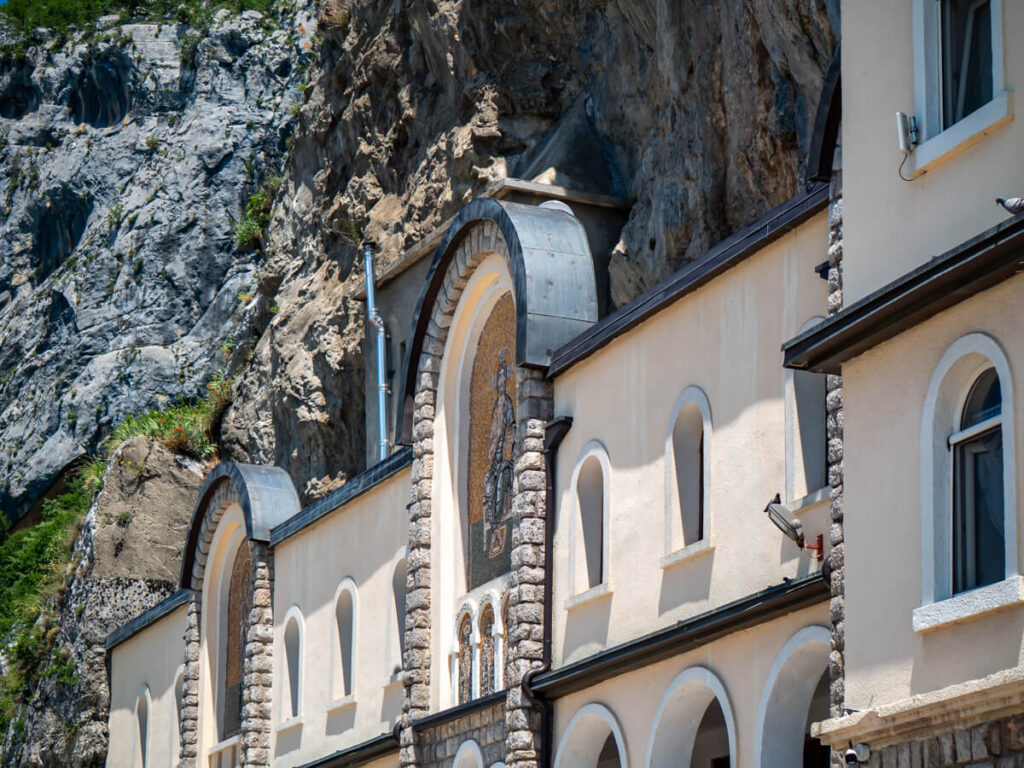
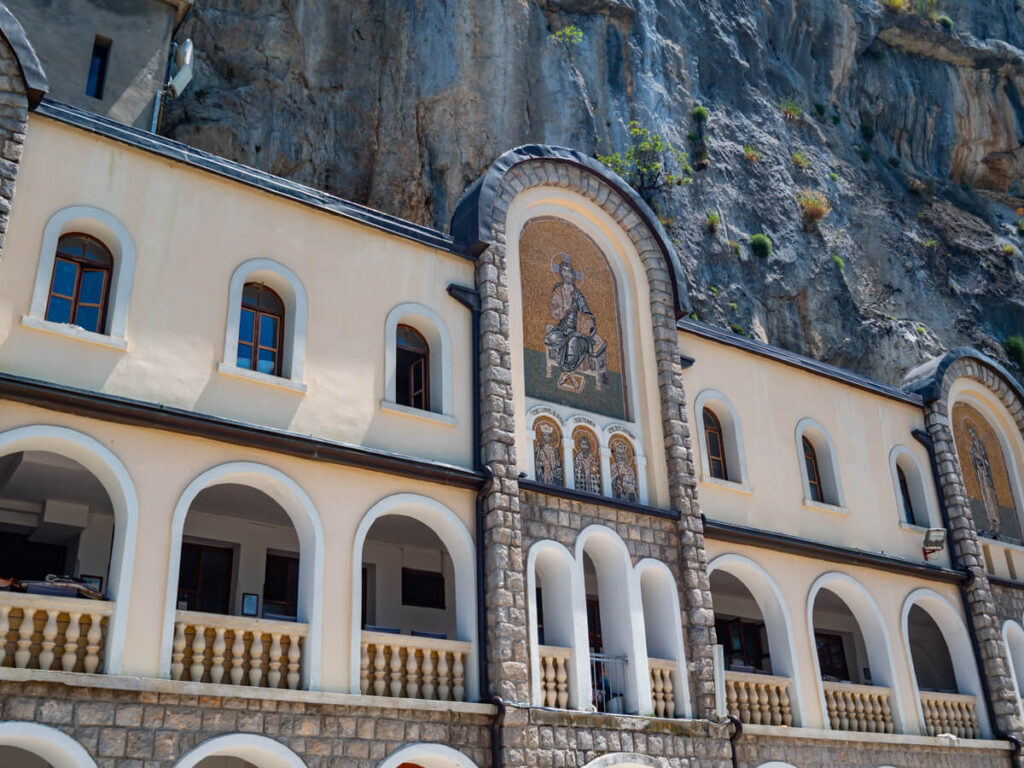
The Upper Monastery is the part you’ll recognise from photos, with the white façade on the cliffside. You’ll enter an outdoor courtyard with souvenir shops and a palionica sveća (candle room) on the ground floor on your left and amazing views over the countryside on your right.
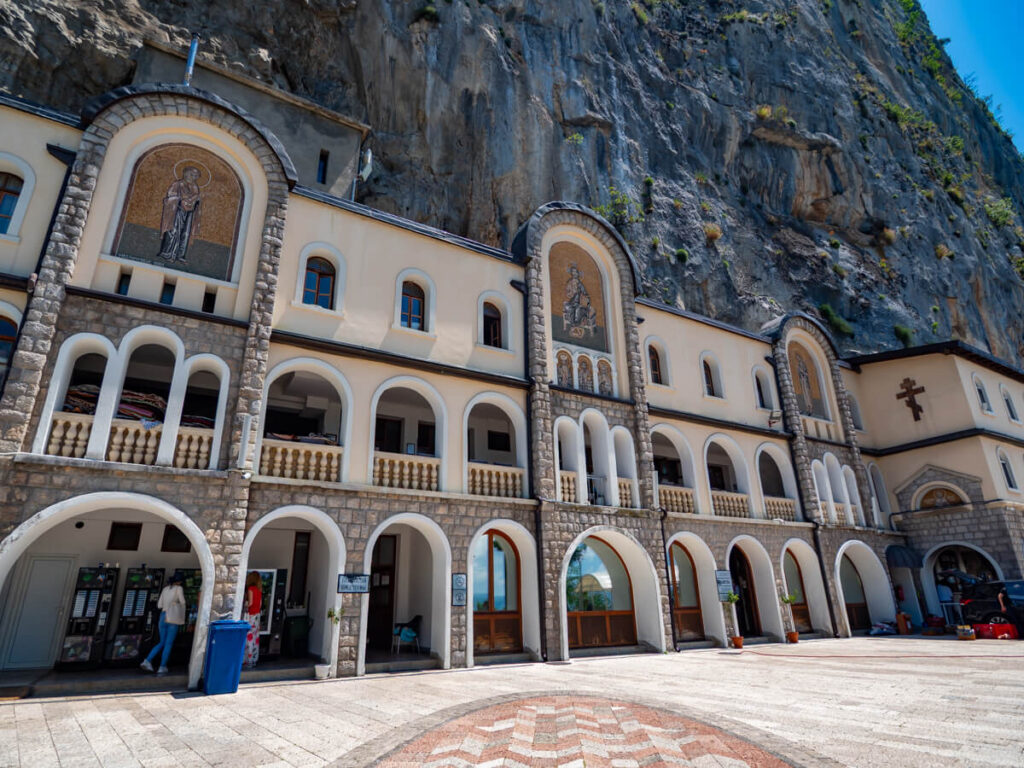
You’ll see the whitewashed monastery ahead of you and can go through the small stone archway to enter it. You need to be covered in long clothes (past your elbows and knees), but someone was handing out free cover-ups on our visit if you haven’t brought your own.
I brought and wore a headscarf, as is customary when visiting Serbian monasteries, but I saw plenty of other women with their heads uncovered and no staff seemed to have any issue with it, so I think it’s a little more relaxed as it’s also a popular tourist stop.
There’s a well-organised one-way system, and if you’re visiting in summer or during busy holidays, it’s pretty much just a case of joining the queue and following the person in front of you. The queue in peak season can take around 30 minutes to reach the front. On our visit one early morning in June, it took about 2 minutes.

You’ll be ushered towards the Church of the Presentation of the Mother of God (Vavedenje Presvete Bogorodice). This is one of the two famous cave churches and the main pilgrimage site, as it houses the relics of Saint Basil of Ostrog. No photography is allowed inside.
The room itself is tiny, dimly lit, and painted with incredible coloured frescoes depicting scenes from the life of Christ and various saints. The vivid blue, green, and red artworks were painted directly onto the uneven rock walls by Master Radul.
The queue shuffles forward to the altar, where a priest gives blessings and you can kiss the cross or the plaque bearing St. Basil’s name. Not being particularly religious, we popped our heads inside to have a little look and then dipped out of the queue.
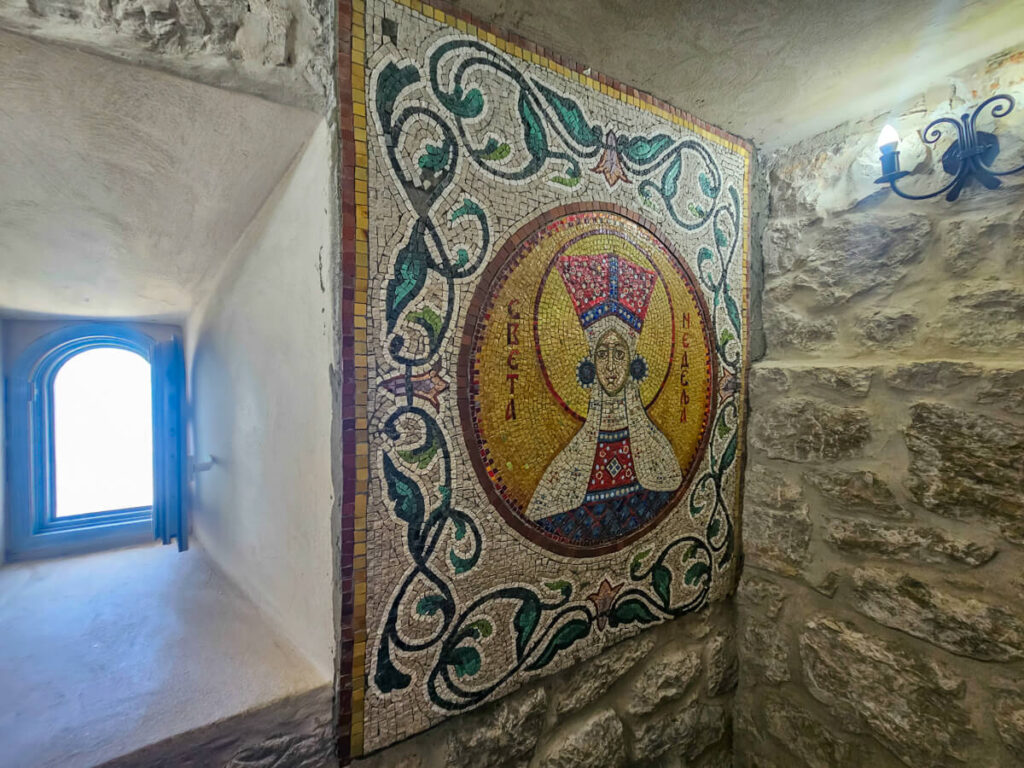
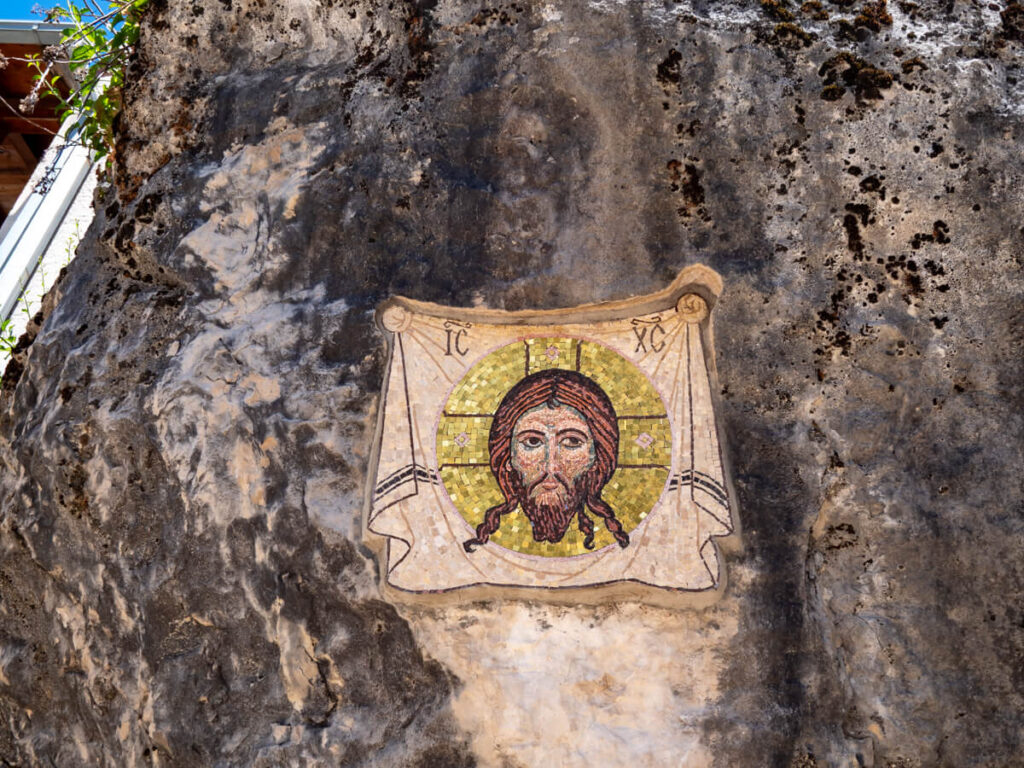
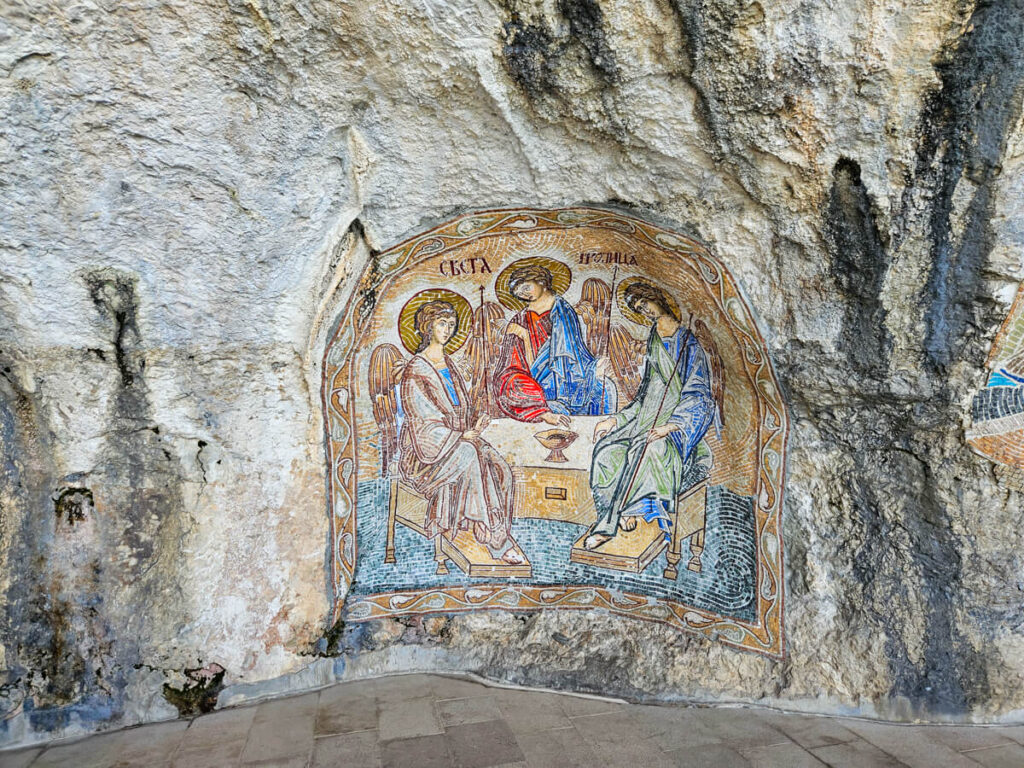
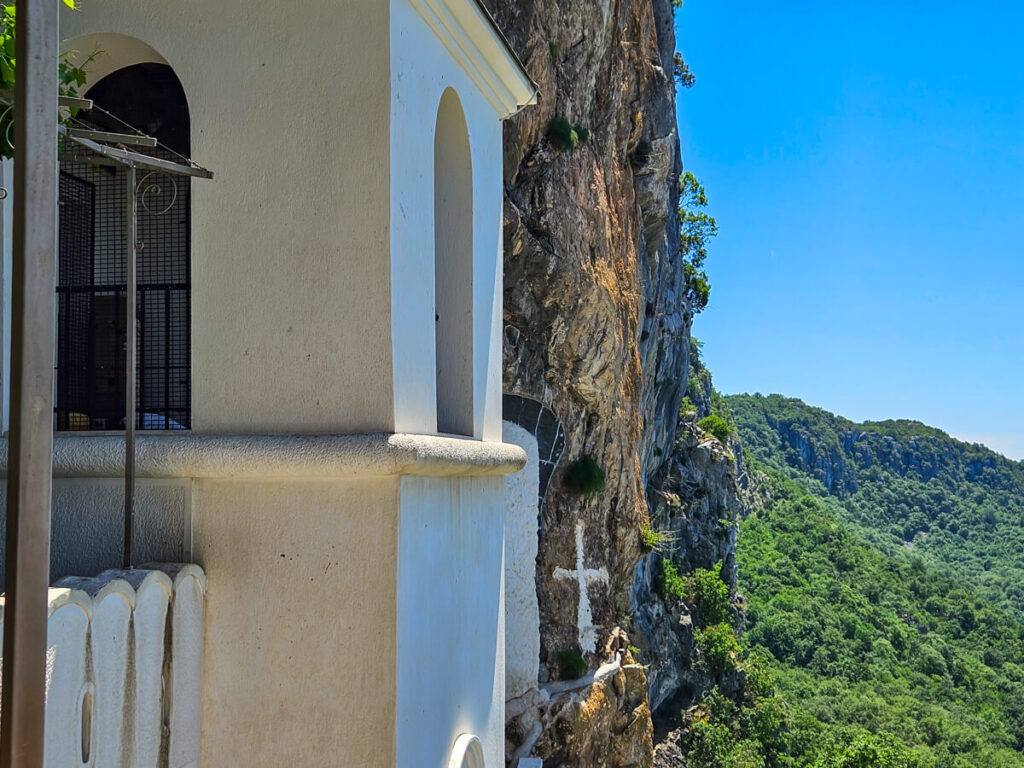
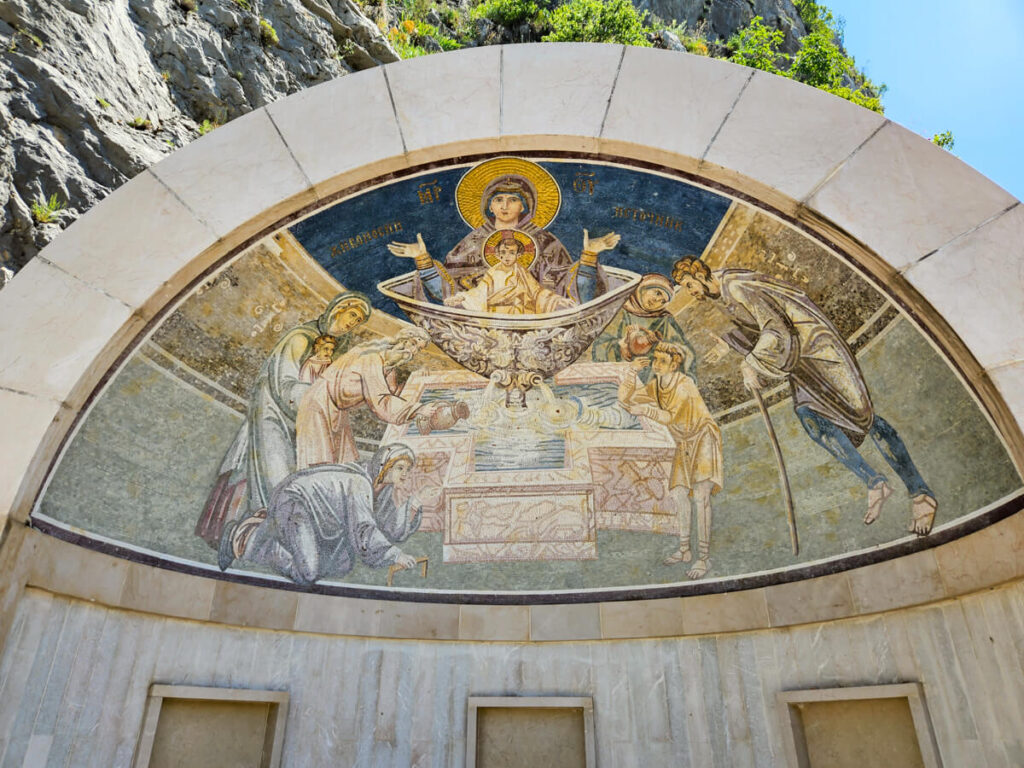
From St Basil’s cave church, you can follow the route along the terrace, into the adjacent building, and up a set of stairs to the balcony, where a set of intricate mosaics have been adhered directly onto the cliff face.

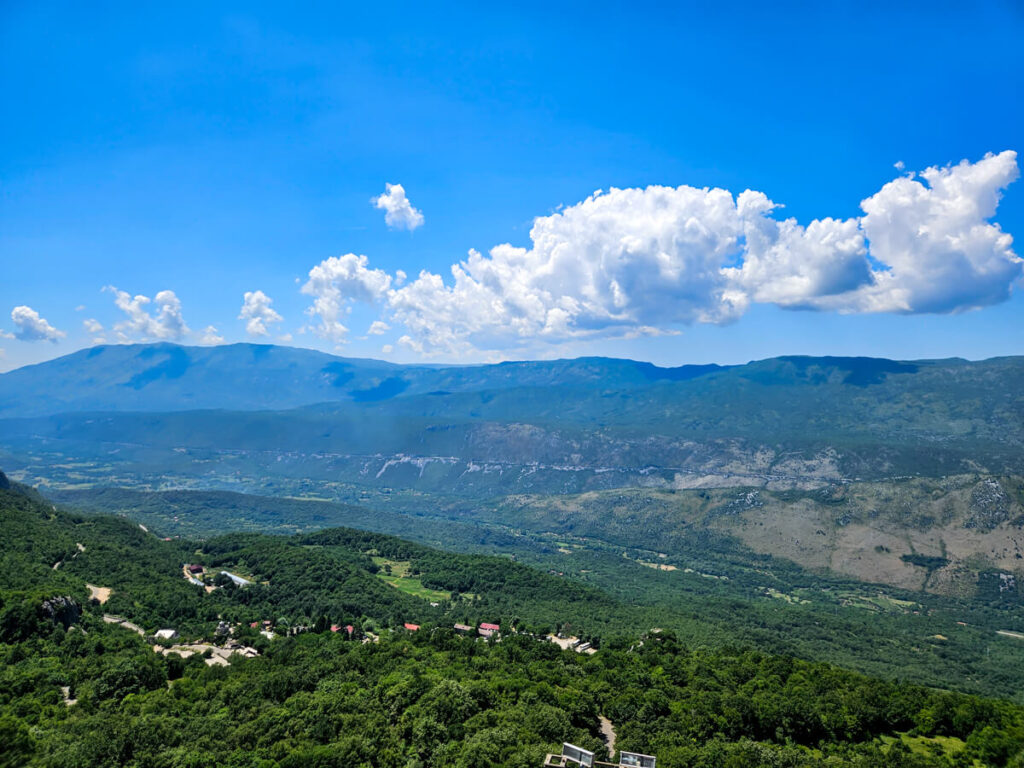
Behind this, you’ll see a wall with panoramic views over the valley below. We could make out a patchwork of fields, villages, and vineyards nestled among forests, all backed by lush mountains.
Then you can enter the second cave church, the Church of the Holy Cross (Crkva Časnog Krsta). It’s similar to the first – candle-lit and adorned with colourful religious murals, although quieter – there was no queue or blessings on our visit, but there were a few worshippers in prayer, so we waited for them to leave before popping inside for a little look. Again, no photography is allowed.
Then, you can head back to the balcony, down to the terrace, along to the courtyard, and to the souvenir shops and entrance.
Before you leave, there’s a water refill station on the right-hand side of the wall at the entrance, which is handy if you’ve brought your reusable water bottle. We also saw recycling bins, which were sadly few and far between in Montenegro.
If you head straight through the upper parking area directly outside the monastery entrance, there are free toilets – squat toilets for females and flush toilets for males (how’s that fair?!). There are also free flush toilets at the entrance to the main car park, once you’ve gon back down the stairs.
The Lower Monastery
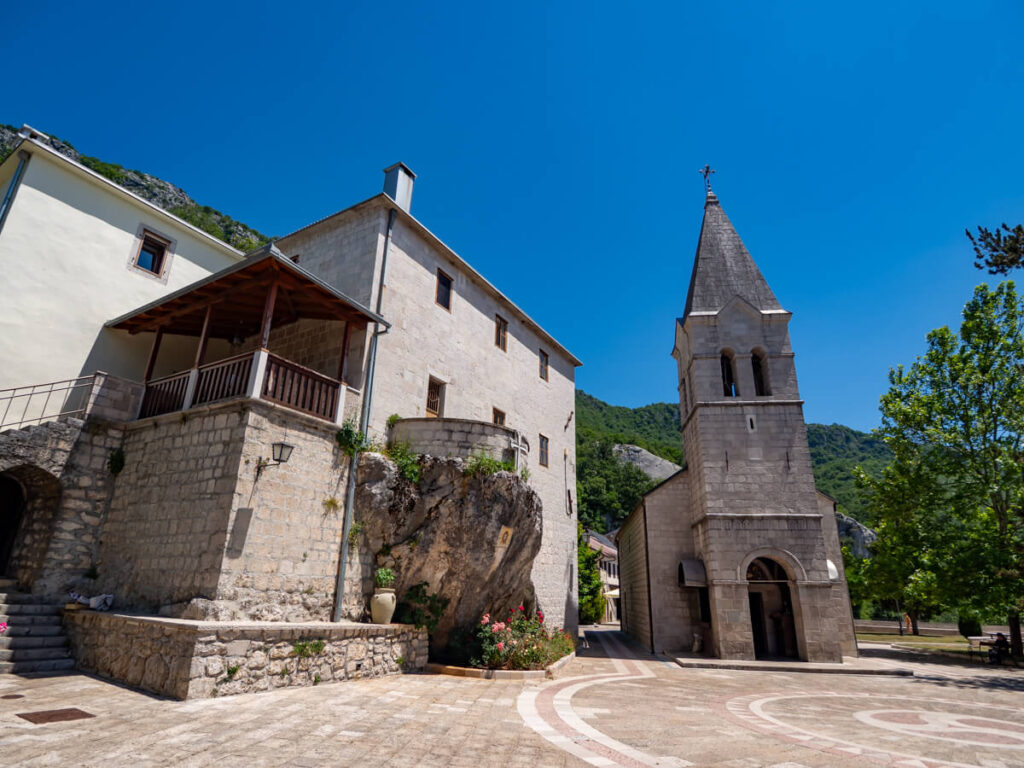
The Lower Monastery sits further down the mountainside, surrounded by trees and with a more conventional layout than the cliffside complex above. It dates largely from the 19th century.
This lower part of the complex is where you’ll find the pilgrim accommodation, with dormitory-style rooms available for those who want to stay overnight. Pilgrims are also allowed to sleep outside in the grounds themselves, and we read accounts of a swathe of blankets and mattresses covering the garden, but no one seemed to be sleeping there when we visited.

Inside this part of the complex, you’ll find the Church of the Holy Trinity, monks’ buildings, and other facilities used by pilgrims. There’s a small but peaceful landscaped garden and more views across the valley from the courtyard.
The Church of the Holy Trinity was founded by the monastery’s archimandrite, Josif Pavićević, and was built in 1824.
Church of the Holy Martyr Stanko
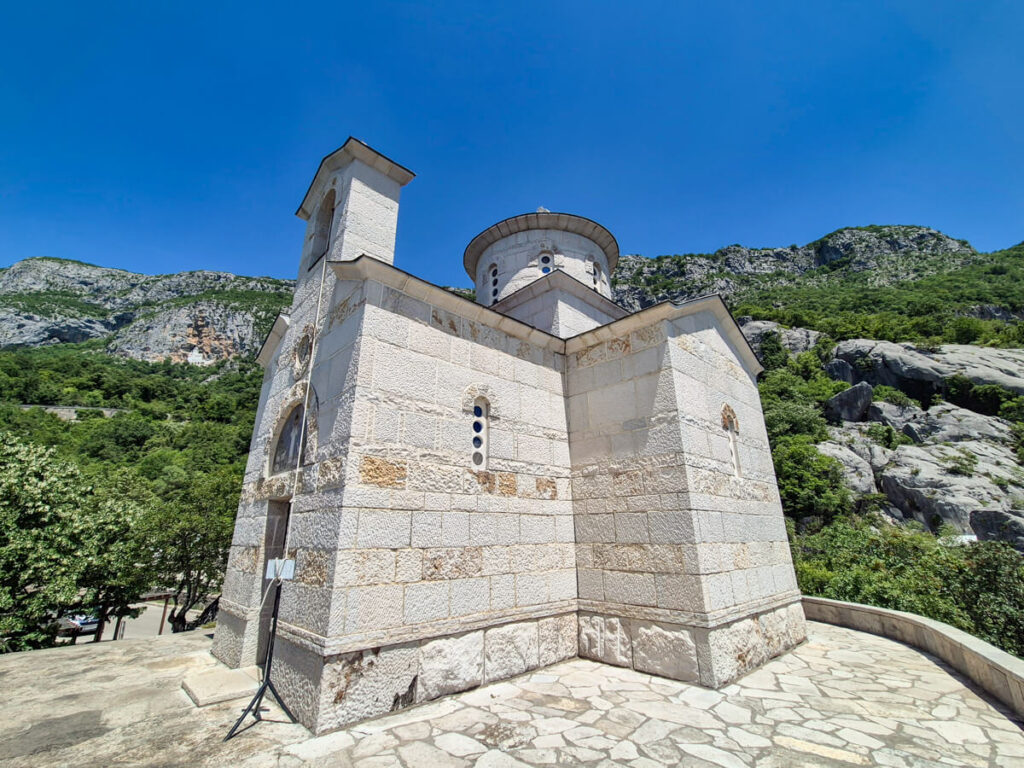
Slightly higher up the slope above the Lower Monastery, there’s also the Church of the Holy Martyr Stanko. It’s quite small, but you can see across to the Upper Monastery on the cliff, which is a pretty impressive view.
It houses the relics of Stanko, a 15-year-old shepherd boy who was martyred during the Ottoman period for refusing to surrender his cross.
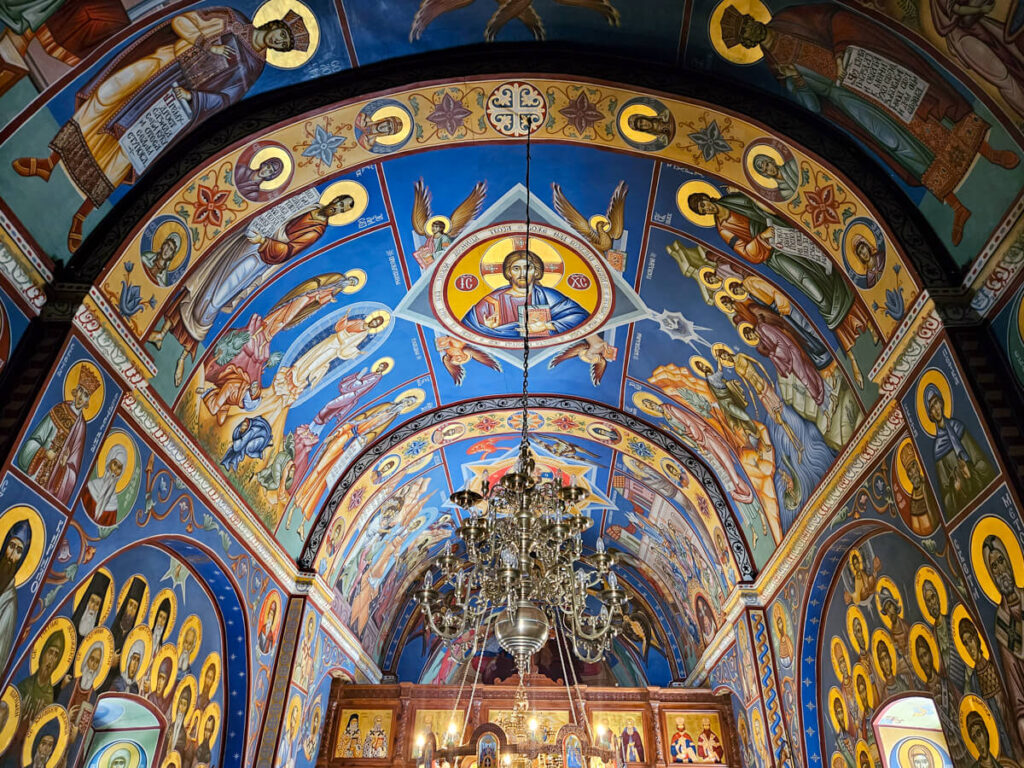
It’s also worth popping your head inside this church, as it features a beautifully painted ceiling with vibrant religious paintings and glittering gold leaf and fixtures.
There’s free parking outside both the church and the Lower Monastery entrance, so we stopped at the Church of the Holy Martyr Stanko first, then went to the Lower Monastery, but they’re close enough to walk between them in a few minutes. There are also free toilets at the car park by this church, too.
The Observation Deck
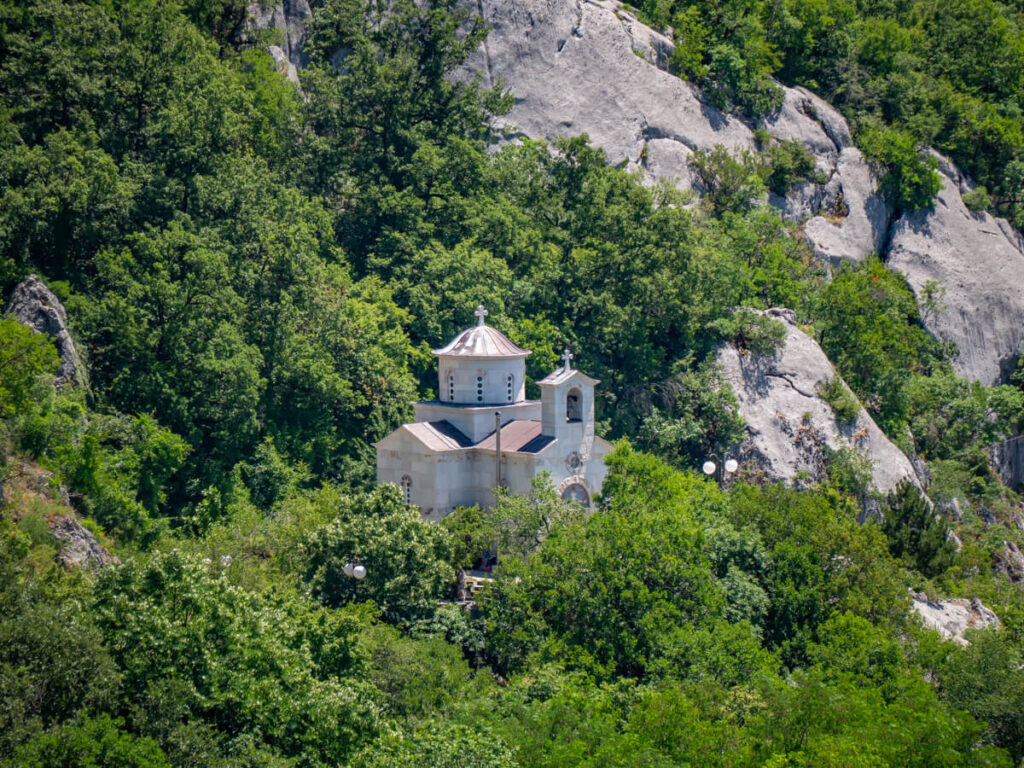
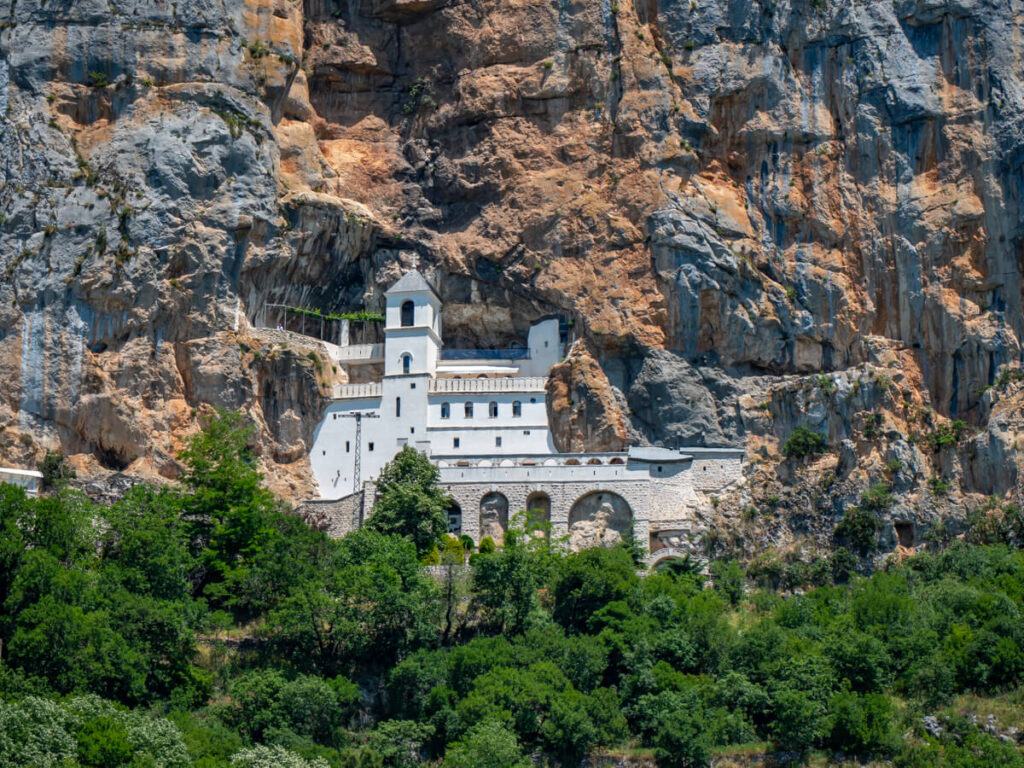
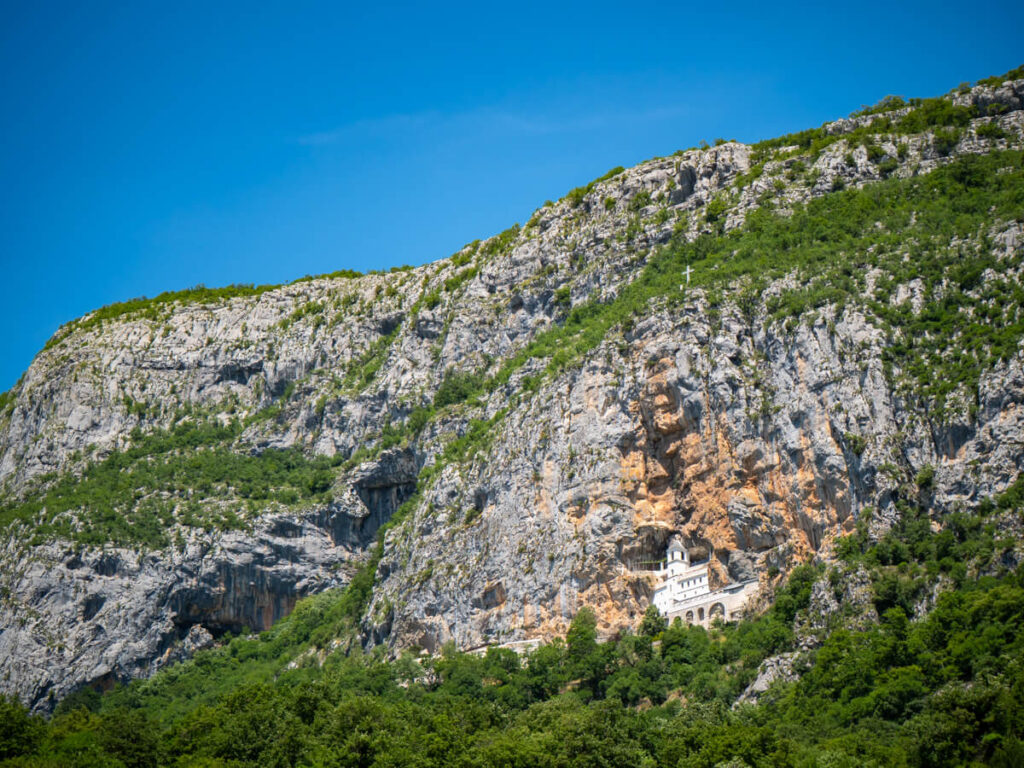
Hidden on a bend in the road just before you reach the Lower Monastery going downhill (so the first corner after you pass the Lower Monastery if you’re going uphill), there’s an unassuming little gravel pull-in area that’s big enough for about three cars. We’d recommend stopping here and taking the flight of stone steps in the trees, which leads to an observation deck with the best view of Ostrog Monastery.
Many tourists don’t know it’s there and miss it – we were the only car to stop here on our visit. It’s only about 30 steps to the top, but it’s a much better view than when you’re actually at the monastery or from the Church of the Holy Martyr Stanko.
You can see the whole white exterior carved into the cliff, surrounded by dense green foliage, with a cross standing high on the hillside above.
Tips for visiting Ostrog Monastery
You don’t need to be an Orthodox Christian to visit Ostrog Monastery, but it’s important to remember that this is an active place of worship, so here are our top tips for visiting respectfully:

Where to stay to visit Ostrog Monastery?
Most people visit Ostrog Monastery as a day trip, either on a drive through inland Montenegro or as part of an organised tour from the coast. But you can actually stay overnight in Ostrog Monastery.
Basic dormitory accommodation is available, including gender-separated dorms and a 100-person shared dorm. Pilgrims can also sleep outside in the grounds. Arrangements and availability can change, so we’d check directly with the monastery if you want to stay there.
Originally we were going to stay in one of the dorms for the experience, but then we thought, actually, you know what, it’s only one night, so we’ll just stay in a little apartment in Nikšić instead.
Nikšić is the most practical base for visiting Ostrog Monastery, with a good variety of hotels, guesthouses, and apartments.
Top Nikšić & Ostrog Accommodation
The best things to do in Nikšić
Nikšić is Montenegro’s second-largest city, set inland on a broad karst plain between the Adriatic coast and the country’s mountainous interior. It’s not a traditional tourist destination, but it’s worth stopping if you’re interested in the country’s history, religious architecture, and everyday city life, especially as it’s so close to Ostrog Monastery.
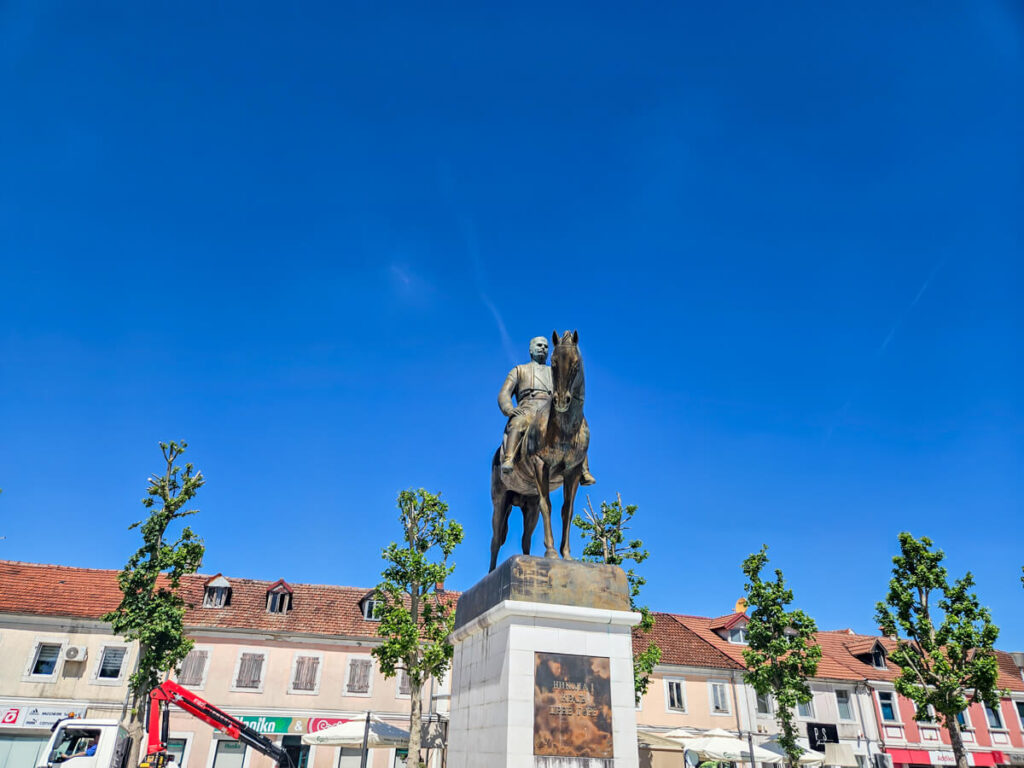
The area has a long history, with Roman settlements developing around Anagastum before the town became known as Onogošt during the Middle Ages. It remained under Ottoman control for more than four centuries until Montenegrin forces captured it in 1877, after which King Nikola commissioned a new urban plan that shaped the wide streets and central square you see today.
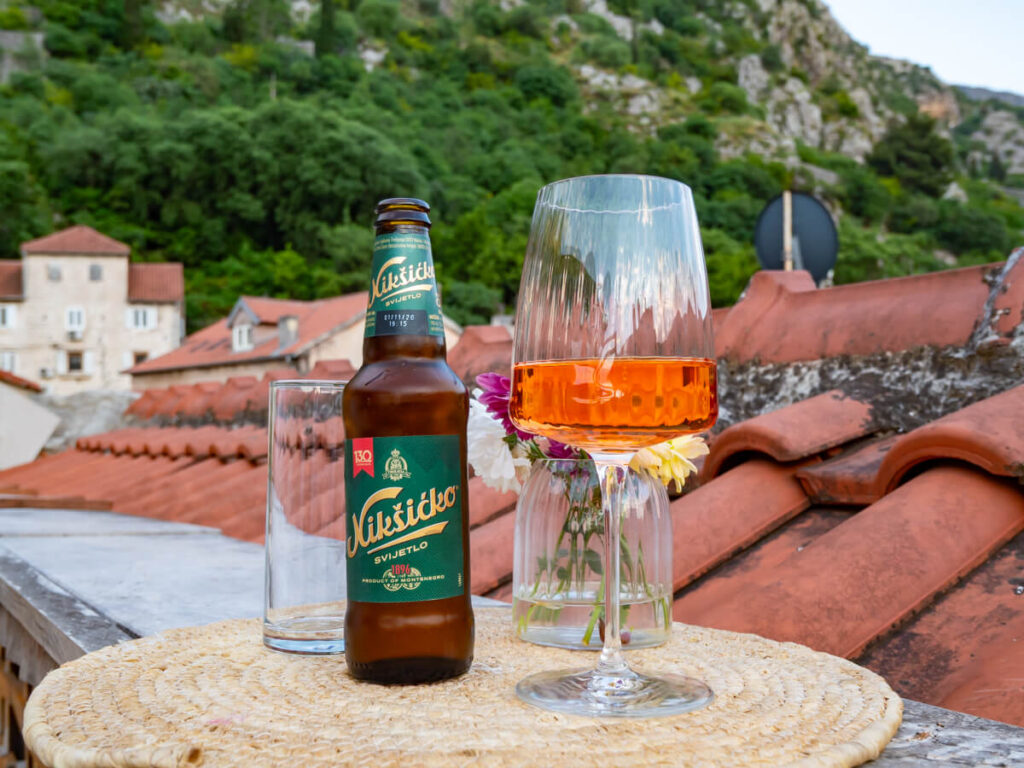
Nikšić later became one of Montenegro’s main industrial centres, known for its steelworks and Nikšićko beer, which has been brewed in the Trebjesa Brewery since 1896. Here’s what to see and do in Nikšić.
1. King Nikola’s Castle
King Nikola’s Castle was built in 1900 as part of the royal family’s plans to develop Nikšić into a more prominent city. The neo-Renaissance building now houses the local County Museum (Zavičajni Muzej), with archaeological finds and collections covering the area’s history.
The Nikšić Royal Palace has been extensively restored, and even its façade has been updated to a paler, more period-accurate shade, reopening in the summer of 2026.

2. Cathedral Church of St. Basil of Ostrog
Not to be confused with Ostrog Monastery, the Cathedral Church of St. Basil of Ostrog is an Orthodox temple in the middle of Nikšić. Built in the late 19th century, the church has a distinctive pale stone exterior and a prominent central dome and is dedicated to Saint Basil of Ostrog.
Today, it honours Montenegrin and Herzegovinian soldiers who died fighting the Ottoman Empire between 1875 and 1880, bearing the names of 3,075 fallen soldiers on copper plaques along its north and south walls.

3. The Nikšić sign
On the main roundabout by the city’s historic centre, you’ll find an unassuming cement landmark of the city’s name in cement bearing the word „Никшић“, meaning Nikšić in Montenegrin Cyrillic, with loveheart silhouettes on either side.
It’s a quick stop if you want a souvenir photo and pretty easy to miss if you don’t know it’s there.

4. Ramparts of Onogošt
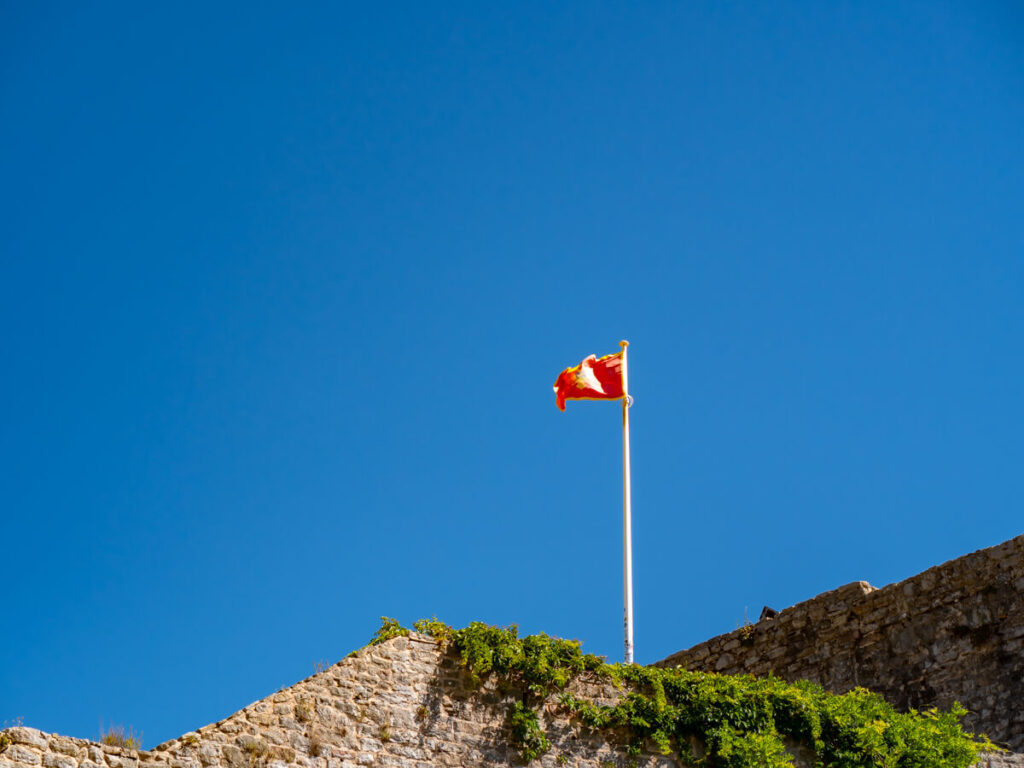
The remains of Onogošt, the historic fortress associated with Nikšić’s earlier settlement, offer a glimpse into the city’s medieval past. Head up to explore the surviving stone ruins and take in views across the city and surrounding landscape.
What is there to do near Ostrog Monastery?
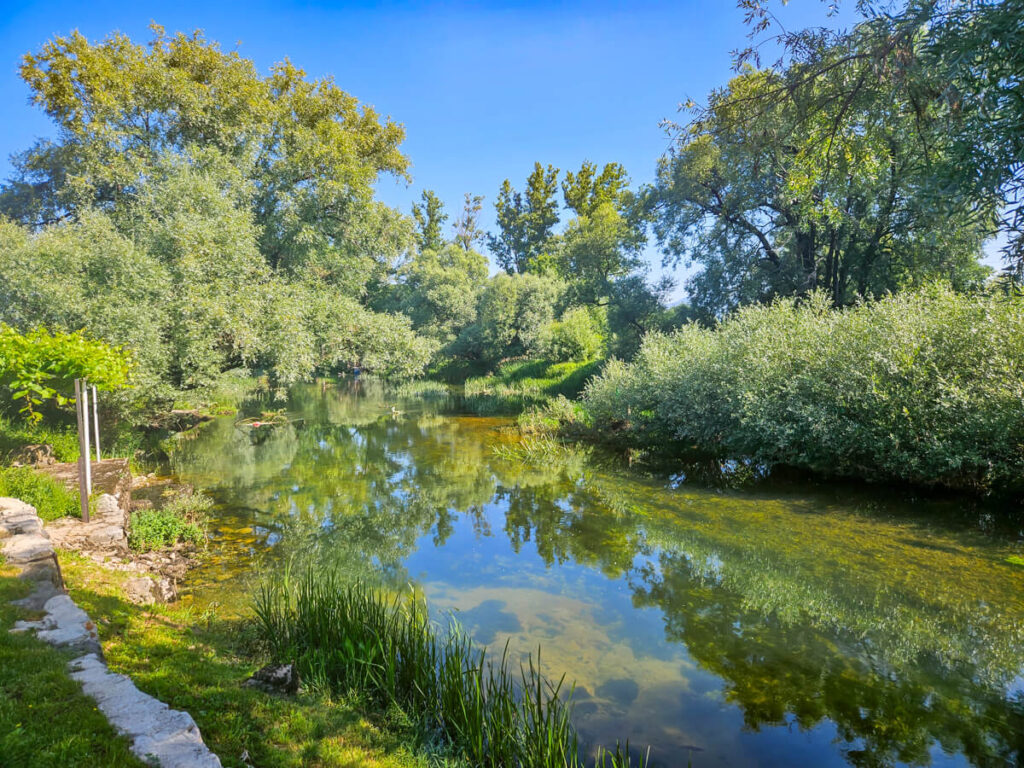
Ostrog Monastery is the main reason many visitors come to this part of Montenegro, but there are other places worth adding to the trip if you have time. You can explore Nikšić, as described above, or stop at nearby viewpoints – we especially loved the views around nearby Slano Lake (Slansko Jezero), which we visited early in the morning before heading to the monastery. It’s only a 10-minute drive from Nikšić, but they’re pretty busy roads with trucks and rush-hour traffic.
Many organised tours combine Ostrog Monastery with other stops further away around central Montenegro, rather than Nikšić. Longer itineraries might also visit the old royal capital of Cetinje or Durmitor National Park. It’s a long day in the car, so we’d only recommend this type of day trip if you’re on a tour – if you have a rental car, spending a few nights in each area is a lot more achievable and allows you more time to explore each area.

Where to eat in Nikšić?
Nikšić isn’t really a tourist-focused food destination, so you’ll find a more everyday mix of cafés, casual eateries, and bars frequented by locals rather than a long list of restaurants. Traditional Montenegrin cooking is prevalent here, leaning towards grilled meat, hearty stews, cheese, and cured ham, while bakeries and cafés are handy for a quick and cheap breakfast or coffee.
Top Nikšić Restaurants
How to get around Nikšić?
Nikšić’s centre is fairly compact, so you can explore the main sights, cafés, and restaurants on foot. For places further out, such as Slano Lake, having a hire car gives you more flexibility, although local taxis are another option for individual journeys.
Parking in Nikšić isn’t the easiest, especially as the main roads can be a little chaotic to drive (although nothing like the chaos in Podgorica). We parked in this car park to explore Nikšić’s historic centre, and it was pretty reasonable, but cash-only. But I think there’s free parking outside the cathedral, which I wish we’d tried first.
Buses connect Nikšić with other towns in Montenegro, and there’s also a railway connection to Podgorica if you’re travelling without a car.
If you’re planning to visit Ostrog Monastery, a rental car or a tour really are the best options.

When to visit Ostrog Monastery?
Spring and early autumn are good times to visit Ostrog Monastery, when temperatures are generally more comfortable for walking and the roads are less busy than during the peak summer season.
If you can, aim for a weekday morning to avoid some of the organised tour groups. We arrived at 10:00 AM on a Wednesday in June and were actually surprised that it was quieter than we expected even at midday.
July and August are the worst months to visit for heat, as it’s really hot, and the monastery doesn’t have much shade.
The monastery is an important Orthodox pilgrimage site, so expect larger crowds around religious celebrations, particularly the feast of Saint Basil of Ostrog on 12th May. We’d just avoid that day altogether.
Nikšić Weather
Nikšić has a continental-influenced climate, with hot summers, cold winters, and rainfall throughout the year. Temperatures vary considerably by season, so the best time to visit depends on whether you’re exploring the city, visiting Ostrog Monastery, or heading into the surrounding mountains.

How long to visit Ostrog and stay in Nikšić?
You’ll need around 1.5-2 hours to visit Ostrog Monastery, allowing time to explore the Upper Monastery, visit the chapels, and take in the views across the surrounding mountains. If you’re visiting during a religious holiday or peak summer season, allow longer for traffic, parking, and queues. We spent around 3 hours here in total, including parking, walking up the stairs, exploring the Upper Monastery, stopping at the Church of the Holy Martyr Stanko, and exploring the Lower Monastery.
You can also see Nikšić’s main sights in half a day, making it a simple stop on a Montenegro road trip. Staying one night gives you more time to explore the historic centre and enjoy a relaxed meal without rushing before or after visiting Ostrog Monastery, which is what we did.
We arrived in Nikšić in the afternoon on day 1, explored the centre, and had dinner before staying overnight, then visited Slano Lake’s viewpoints early next morning and stopped at Ostrog Monastery for a few hours in the mid-morning before heading to our next destination in the afternoon on day 2.

What to pack to visit Ostrog Monastery?
It’s best to be prepared when you visit Ostrog Monastery. Don’t forget to pack your:
Nikšić & Ostrog Monastery FAQs
To help you plan your trip to Ostrog Monastery, we’ve answered these frequently asked questions.
What are the top attractions in Nikšić?
The main sights in Nikšić include King Nikola’s Castle, the Cathedral Church of St. Basil of Ostrog, and the historic ramparts of Onogošt. You can also wander the city centre, take a photo at the “I Love Nikšić” sign, or visit Slano Lake just outside the city. And, of course, the most famous reason people visit Nikšić is to use it as a base for a day trip to Ostrog Monastery.
Why is Ostrog Monastery important?
Ostrog Monastery is one of Montenegro’s most important Orthodox Christian pilgrimage sites, built into a near-vertical cliff face. It’s dedicated to Saint Basil of Ostrog, whose relics are kept in the Upper Monastery and are believed by Orthodox Christians to have healing powers. The dramatic setting is impressive, but it’s the monastery’s religious significance that draws pilgrims from across the Balkans and beyond.
How do I get to Ostrog Orthodox Monastery?
The easiest way to visit Ostrog Monastery independently is by car, as the road climbs into the mountains to the Upper Monastery. You can also join an organised tour from places such as Kotor, Budva, or Podgorica. If you’re travelling by public transport, trains stop at Ostrog station, but it’s a considerable uphill walk from there, so you’ll need to arrange onward transport or be prepared for a challenging hike.
How do I get from Kotor to Ostrog Monastery?
Driving from Kotor to Ostrog Monastery takes roughly 2-2.5 hours each way, depending on traffic and road conditions. You can hire a car and visit independently, or book an organised excursion that includes transport. Some tours combine the monastery with other stops, such as Nikšić or Slano Lake, so check how much time you’ll actually have at Ostrog before booking.
Can I wear shorts to Ostrog Monastery?
Shorts aren’t suitable for entering the monastery, and visitors are expected to dress modestly, covering their shoulders and knees. I brought a long-sleeved shirt and a floaty pair of wide-legged trousers that I simply slipped over my shorts to enter the monastery after climbing the stairs from the car park and took them off again in the toilets before heading back down to the car. I also wore a headscarf, although covering your head didn’t seem mandatory.
Read next:
A Day Trip Guide to Cetinje: Montenegro’s Historic Capital
A Traveller’s Guide to Lake Skadar National Park: Valleys, Viewpoints & Vineyards
Our Ultimate Guide to Visiting Durmitor National Park
A Traveller’s Guide to the Bay of Kotor: Europe’s Southernmost Fjord
A Traveller’s Guide to Budva: Beautiful Bay or Busy Beach Resort Town?
Renting a Car in Montenegro: Complete Guide + Kombo Rent a Car Review
