Driving the Kotor Serpentine vs Taking the Kotor Cable Car: Which is Best for Visiting Lovćen from Kotor?

Read our comparison of the best ways to get to Lovćen from Kotor, including taking the cable car, driving the Serpentine road, and taking a tour.
This post may contain affiliate links, which means we might earn a small commission on anything purchased through these links at no extra cost to you. Learn more on our disclaimer page.
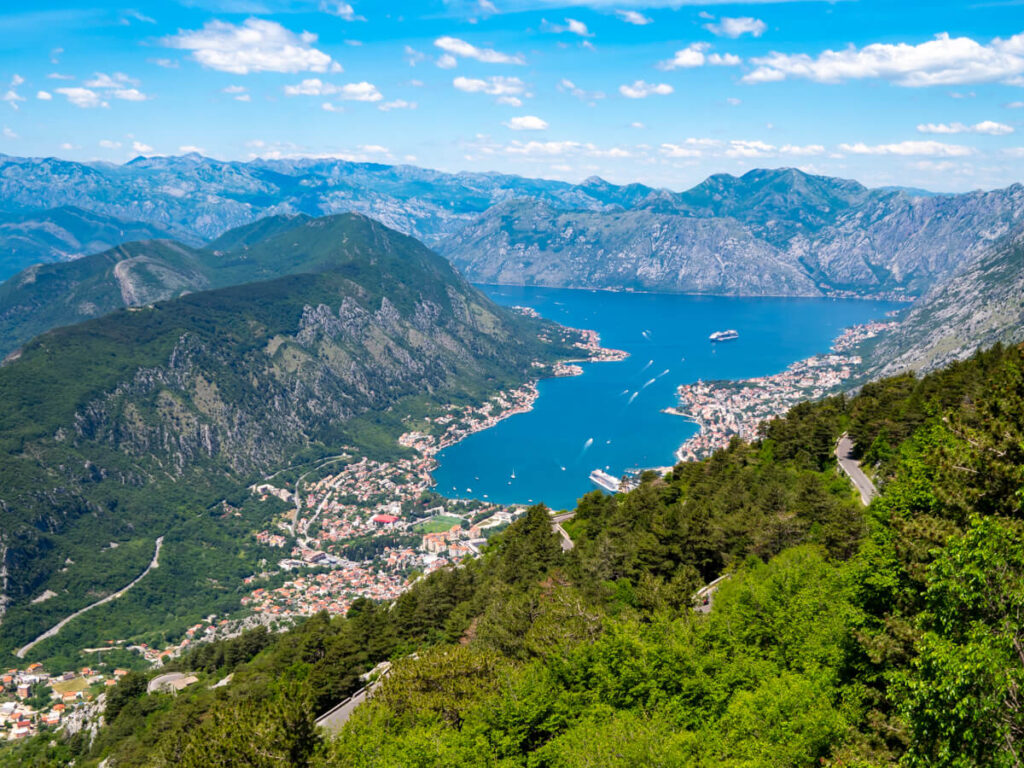
Visiting Lovćen National Park from Kotor is a bucket-list Montenegro experience and super easy. You can take the famous Kotor Serpentine, winding your way up the mountain on one of Montenegro’s most dramatic roads, or skip the hairpin bends altogether and take the Kotor Cable Car, which climbs rapidly from the coast to the mountainside above the Bay of Kotor. Both offer incredible views, but have their own pros and cons, and each experience is completely different.
In this guide, we’ll compare driving the Kotor Serpentine with taking the Kotor Cable Car, including the cost, journey time, views, road conditions, parking, what the experience is really like, and which option we think is best for different types of travellers, so you can choose the best method for you to go from Kotor to Lovćen National Park.

More from Kotor
The Cable Car vs the Serpentine
The Kotor Cable Car and Kotor Serpentine are worth comparing because they offer two very different ways to get from Kotor’s Old Town up towards Lovćen – one is quick and effortless yet expensive, while the other is an independent drive that’s challenging but only costs the price of your fuel. And if neither option sounds particularly appealing, it’s also worth considering whether booking a tour might be the easiest way to take the hassle out of getting up the mountain and seeing the sights.
We drove the Kotor Serpentine ourselves and found that the journey is a big part of the experience. The road climbs through a series of tight hairpin bends, with the Bay of Kotor getting smaller and more spectacular with every turn. It can be slow and nerve-wracking in places, particularly when meeting other vehicles, but there are plenty of viewpoints along the way, and the scenery is a major reason to take this route in the first place.
The Kotor Cable Car, on the other hand, is considerably easier and faster, with huge views across the bay from the cabins as you rise above Kotor. It takes the pressure off, gets you to the top sooner, and is more fun than hair-raising.
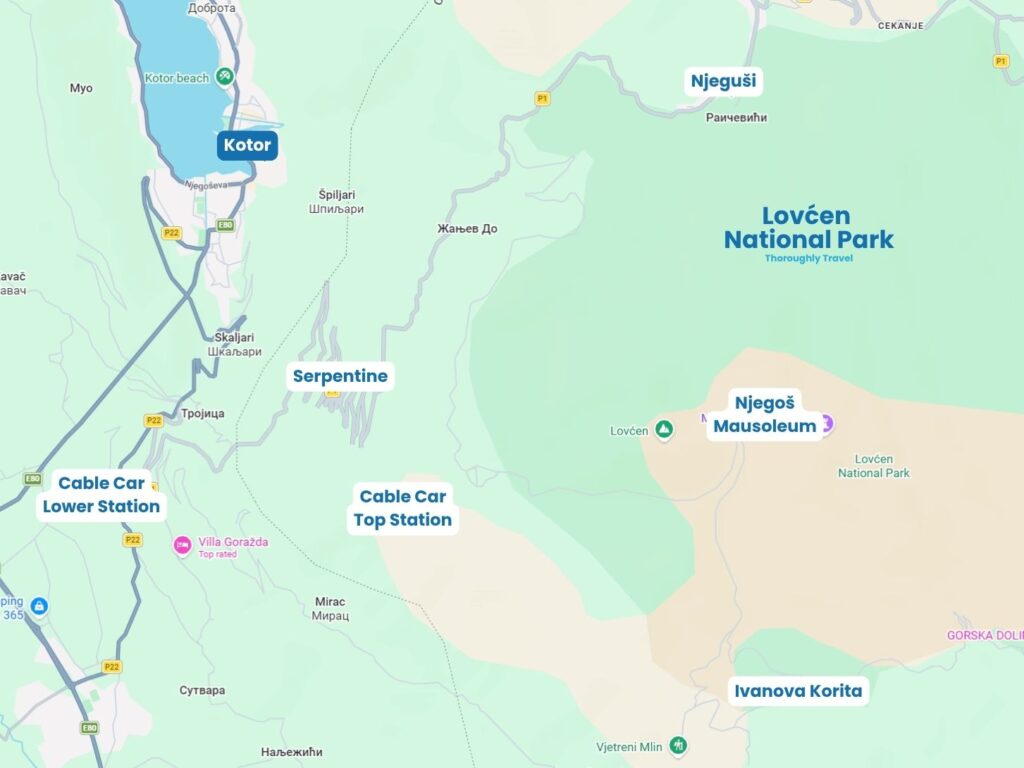
The choice also depends on what you’re actually planning to do in Lovćen National Park. If you want to explore the mountain roads, stop at viewpoints, visit villages, or continue driving towards the national park and Njegoš Mausoleum, having a car gives you much more flexibility. If you’re mainly interested in the views, want to avoid driving the serpentine, or are visiting Kotor without a car, the cable car can be a much simpler option. There are also practical differences around cost, journey time, parking, and where each option actually leaves you.

Planning a trip to Kotor?
Montenegro is gaining popularity quickly, so be sure to book in advance as early as possible!
Top Experiences in Kotor
Top Hotels in Kotor
Rent a Car in Montenegro
Best eSIM for Montenegro
About the Kotor Serpentine
The Kotor-Lovćen Serpentine (P1) is the historic mountain road connecting Kotor with the higher slopes of Mt Lovćen. The route snakes for around 5 miles (8 km), is famous for its 25 hairpin bends, and climbs steeply to nearly 1,000 meters (3,280 ft) above the Bay of Kotor, with increasingly impressive views over the bay as you gain elevation.
It’s narrow and winding for most of the journey, so the drive can be slow and arduous, particularly when traffic is heavy or you meet a vehicle coming the other way.
In reality, traffic flows both ways all day. Apparently, police will impose fines on those breaking the rules, but we didn’t see any officials managing the traffic on our visit at the end of May.

About the Kotor Cable Car
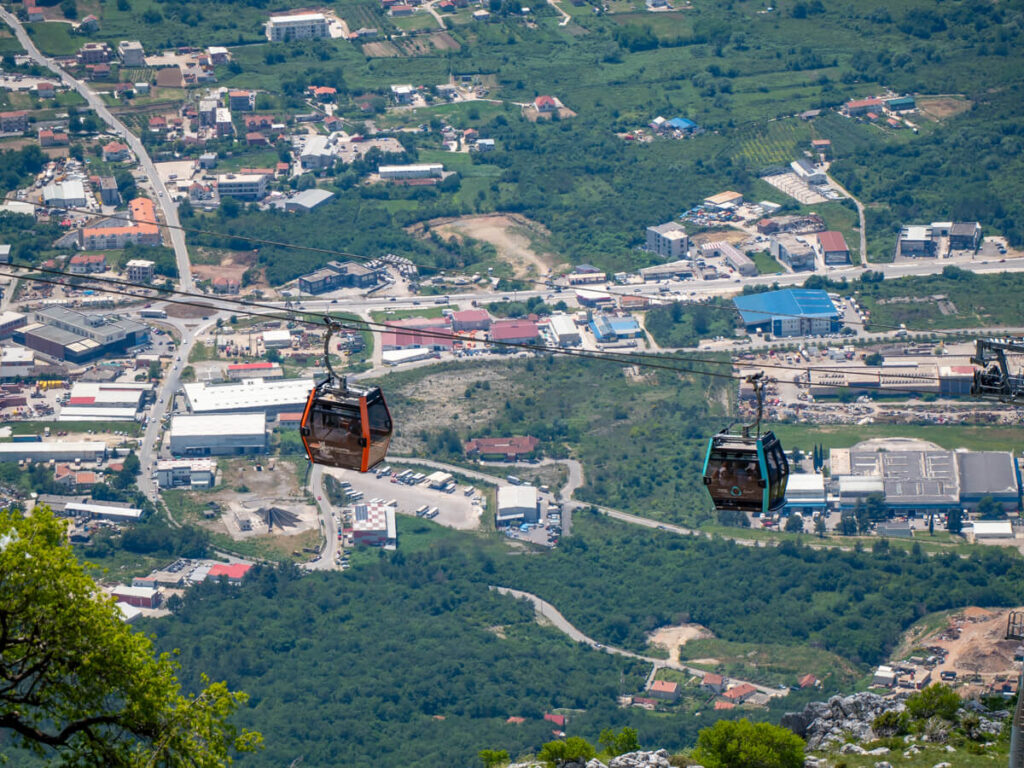
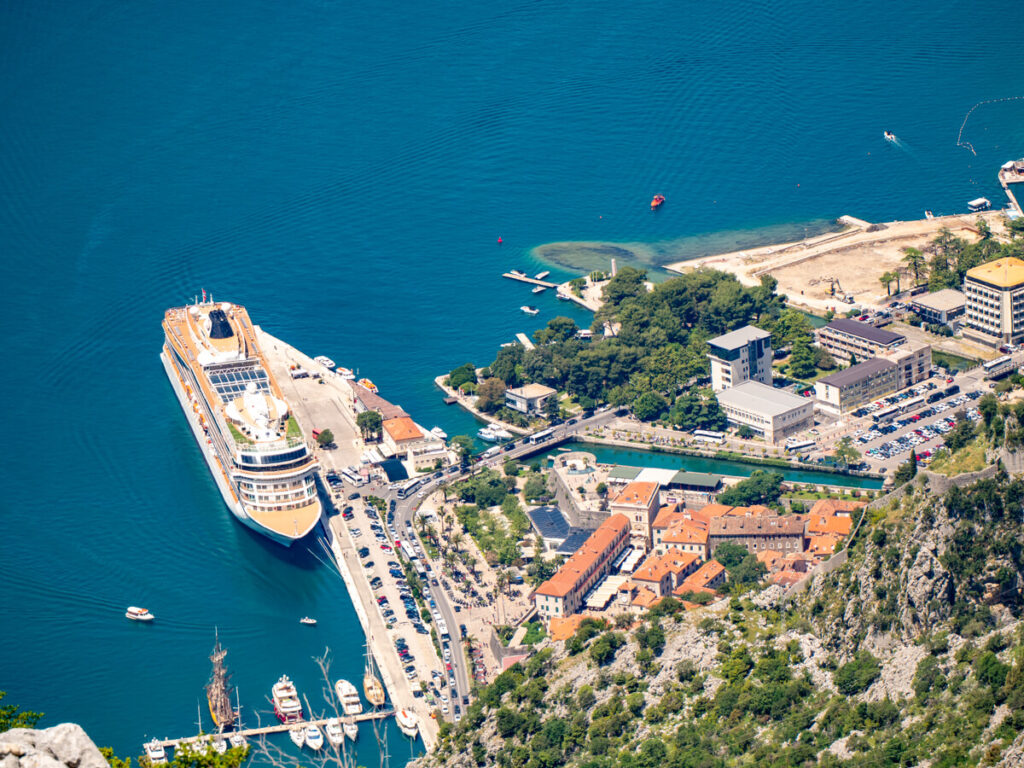
The Kotor Cable Car is the much newer and considerably easier way to gain elevation from Kotor towards Lovćen National Park. The journey takes just a few minutes, with cabins rising from the coast towards the mountainside while giving you a completely different perspective over the Bay of Kotor.
It’s particularly useful if you don’t have a car or simply don’t want to tackle the Serpentine, although it doesn’t replace the flexibility of driving if you want to explore further into Lovćen National Park when you get to the top.
Why go up Lovćen?
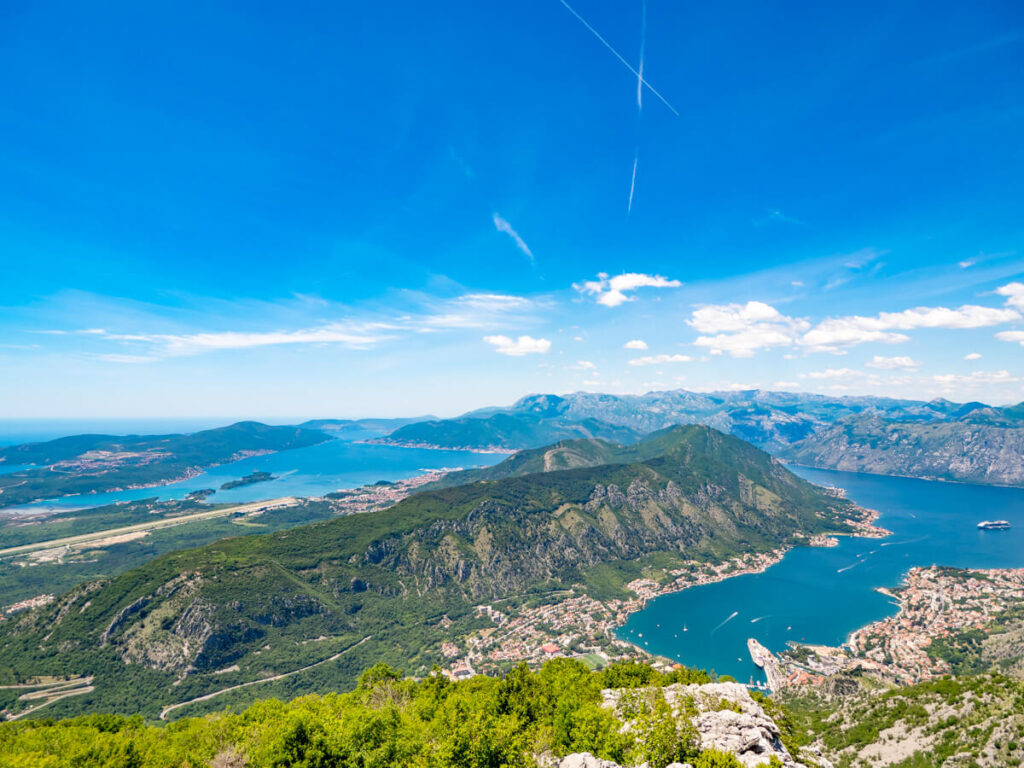
The main reason to go up Mt Lovćen is the epic views. As you climb away from the coast, the landscape changes dramatically, with mountain scenery, viewpoints, some of Montenegro’s best hiking trails, and access to Lovćen National Park waiting above the bay.
The cable car top station is an attraction in its own right, home to fun rides like the Alpine Coaster and Falcon Flyer, which are some of the most fun things to do in Kotor.
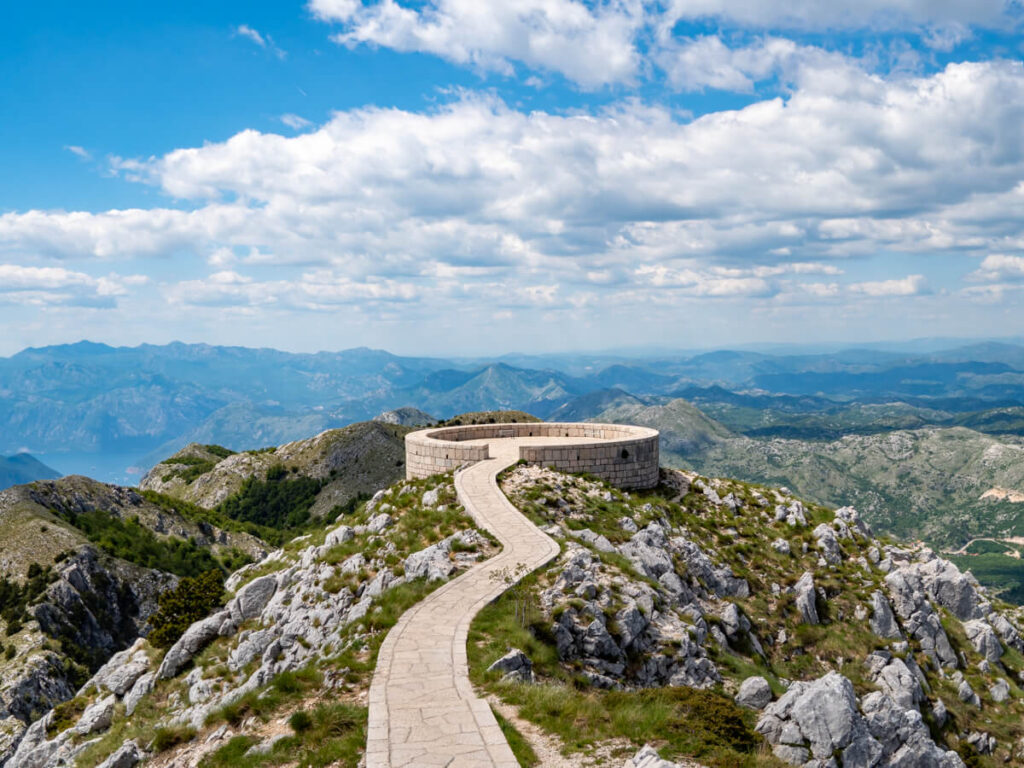
The higher slopes are also home to the Njegoš Mausoleum, one of Montenegro’s most important cultural and historical sites.
What it’s like to drive the Kotor Serpentine
The Kotor Serpentine was the first thing we did after picking up our rental car, and it was quite literally a steep learning curve. We maybe wouldn’t recommend it as the first thing you do, especially if you’ve not had practice driving in Montenegro. But for confident drivers, especially if you have experience with mountain driving, it’s not the horror story social media tries to make out.
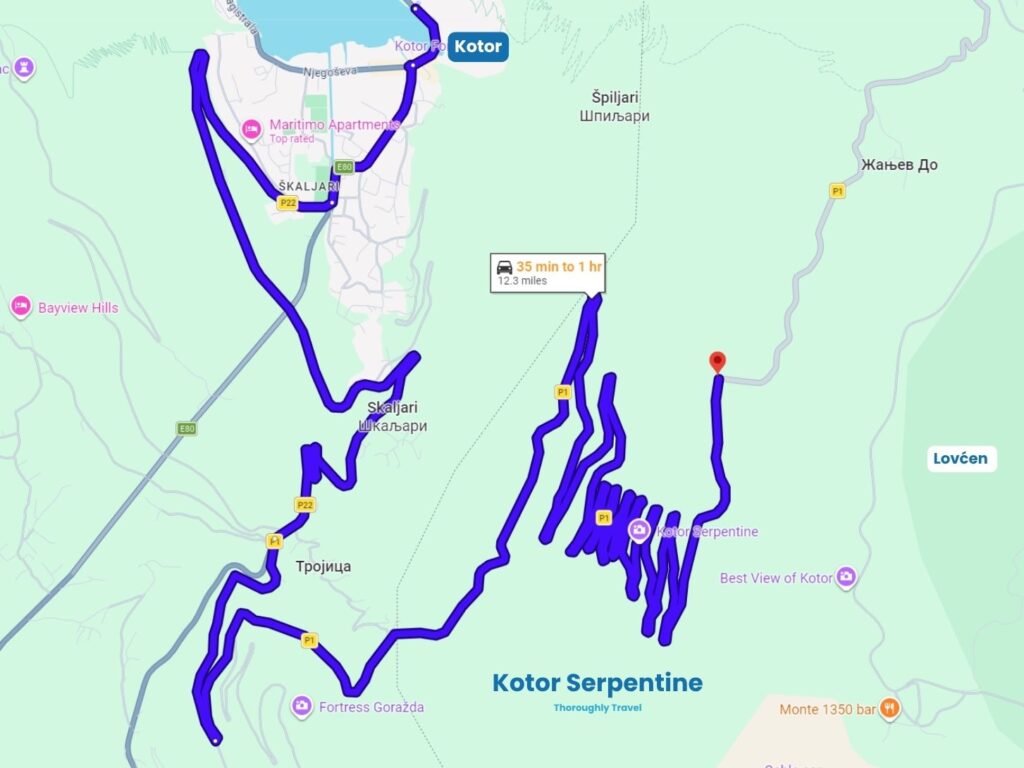
The road gets particularly tight around the hairpins, with limited room to pass in some sections, and you need to stay alert for oncoming traffic. The biggest challenge isn’t the number of bends so much as having to concentrate on positioning the car while dealing with other vehicles.
There are several places where you can pull over along the route, although they’re not always large or clearly marked. It’s definitely handy having a navigator who can see when the viewpoints are coming up on Google Maps.

You’ll likely encounter tour buses, campervans, and motorcyclists travelling in both directions (often on your side of the road on the corners). Locals take it pretty fast and won’t give you much room to squeeze by – several times there was less than an inch between our car, another car, and the rock face.
Coaches are the worst. They travel both ways and often cause blockages, especially when they meet face-to-face. We got stuck in a queue behind a bus that couldn’t turn a corner because cars coming the other way hadn’t stopped early enough and caused a bottleneck. It cleared up quite quickly, but we’ve heard of it grinding to a standstill for over an hour.
A local gave us a great piece of advice before going: check Google Maps before driving up, and don’t even bother if the live traffic is showing as yellow or red.
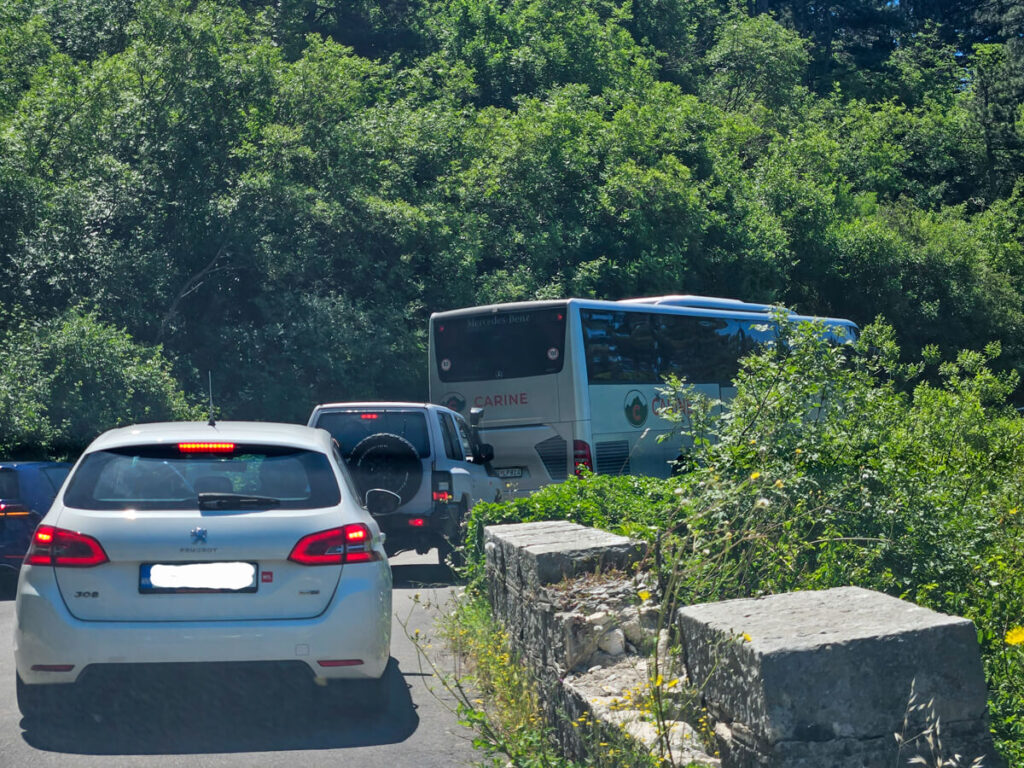
We’d personally recommend driving the Serpentine as early in the morning as possible, before traffic builds up.
Don’t feel pressured to drive faster than you’re comfortable with – there are plenty of little gravel bays and viewpoints where you can pull over and let others pass. You can also use these designated pull-offs to enjoy the views rather than stopping on the road itself.

You don’t need a 4×4 to drive the Serpentine, and in fact we’d encourage against having one for this road in particular. A smaller hatchback is easier to manoeuvre than a large SUV, especially in tight parts where you don’t want to scratch your car against the rocks or cement barriers.
At one point we passed under the cable car, which was pretty cool.
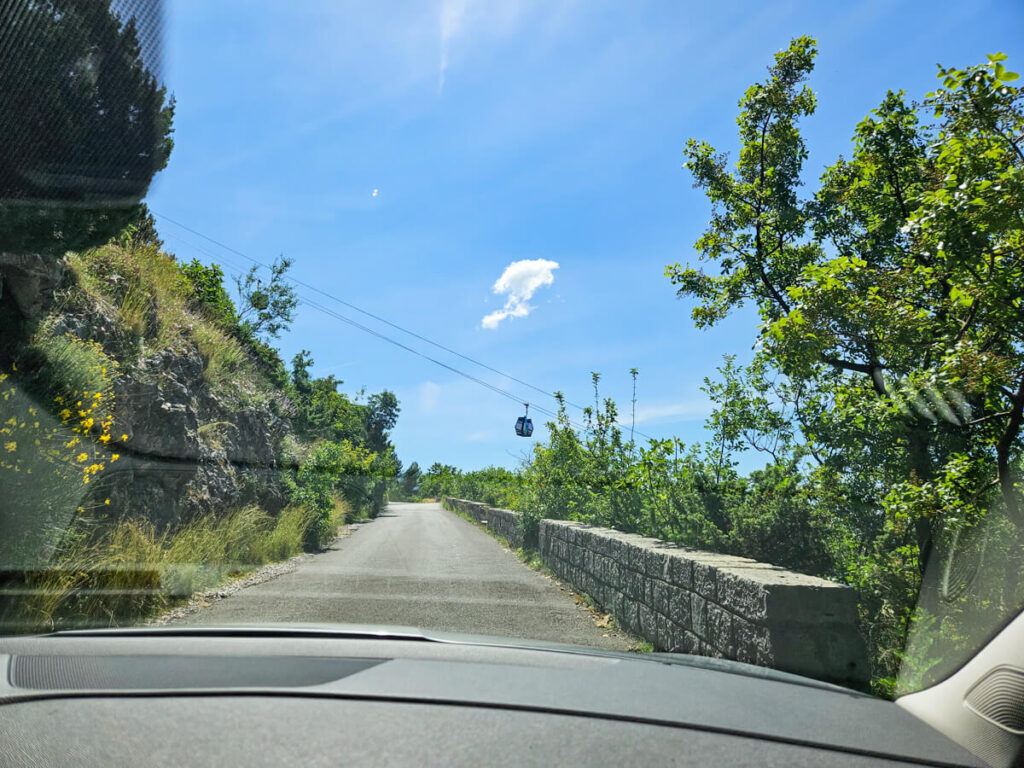
The actual drive isn’t particularly long, but it can take considerably longer than you might expect because of the hairpins, traffic, and stopping for views. If you’re driving during a busy period, allow extra time rather than relying on the shortest journey estimate.
We’d say it takes about 45 minutes of uphill driving, but it can be less if the road is quiet and much, much more if it’s busy or at a standstill.
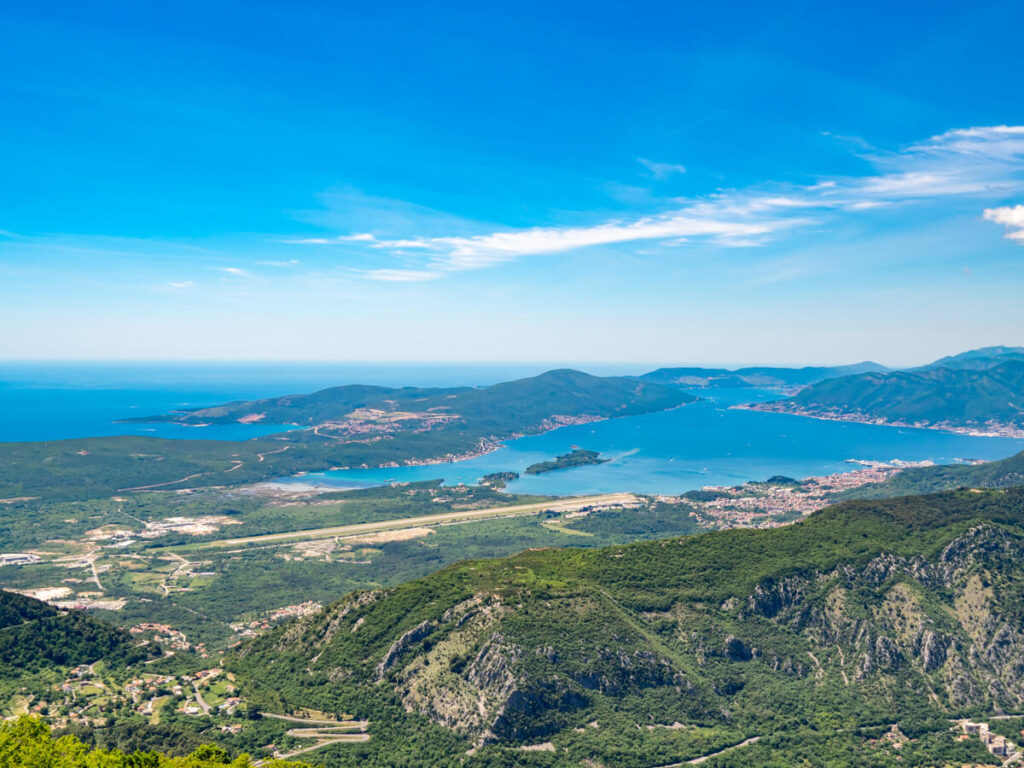
The experience is slightly different driving up versus driving down. Driving up means tackling the hairpins as you climb, so it’s a lot more clutch control (if driving a manual). Driving down is more about controlling speed and braking, with the bonus of views of the Bay of Kotor directly ahead of you for much of the descent (try not to get distracted!).
Both up and down have their advantages. If you’re staying in Kotor, you’ll likely need to do it both ways. We drove up it on the first day of our Montenegro road trip and headed onto Cetinje, so we didn’t get to do it back down.

What is there to do at the top of the Serpentine?
Reaching the top of the Kotor Serpentine isn’t the end of the experience. The road brings you into the wider Lovćen and Njeguši area, where you can stop for food, views, activities, or continue exploring the mountains.
Horizont Bar
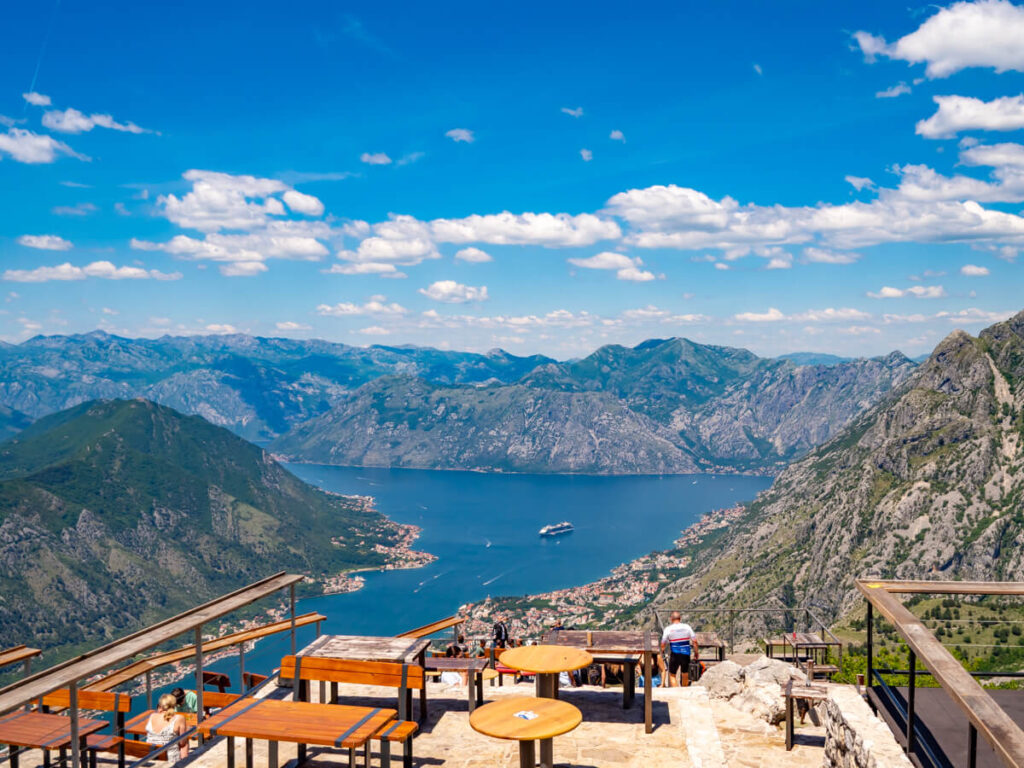
The Horizont Bar is one of the best places to visit for views of Kotor. A popular bar you’ve probably seen on Instagram, it offers sweeping vistas over the whole bay.
We enjoyed a nice juice here, as we arrived late in the morning, but it would be a lovely place for a beer or wine, and they also offer snack platters. Just don’t drink alcohol if you’re the driver, as Montenegro has very strict laws and a low legal blood alcohol limit for driving.
It sits right at the top of the Serpentine and is particularly popular for sunset. You can really see how much elevation you’ve gained in such a short time from here.
Njeguši
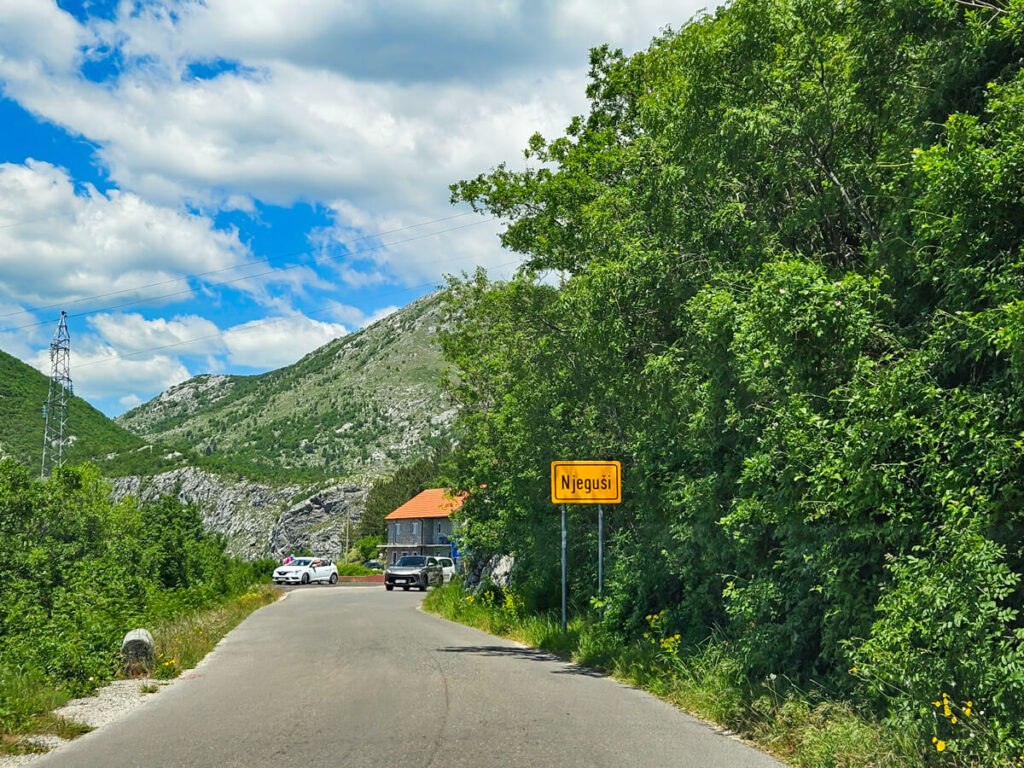
The teeny village of Njeguši is one of the most worthwhile stops in the area, particularly if you’re interested in Montenegro’s traditional food and culture. It’s famous for local specialities including Njeguški pršut, a smoked ham like prosciutto, and cheese, making it a good place to stop for lunch rather than simply driving straight through. We’d recommend stopping at Kod Pera na Bukovicu, which is considered the oldest running eatery in Montenegro.
Ziplining
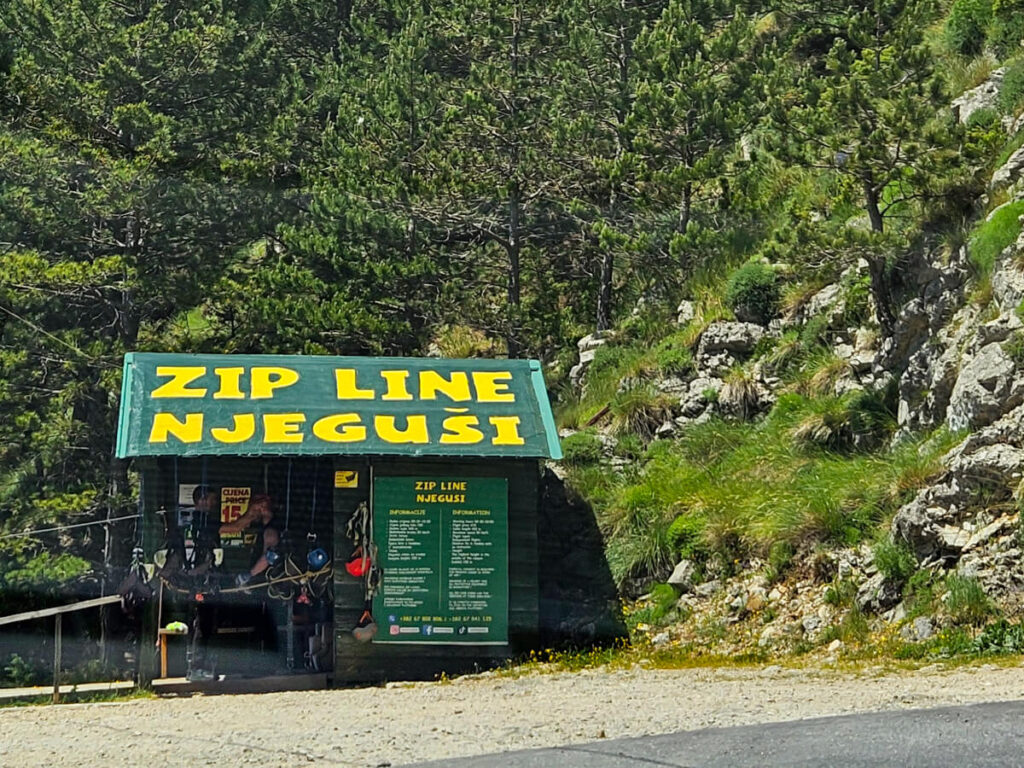
For something more adventurous, there is a zipline just before you reach Njeguši. This gives you a completely different way to experience the mountain scenery and is worth considering if you’re looking for more than viewpoints and food stops.
It’s 420 metres (1,378 ft) long and gives you a 45-second flight time. It’s suitable for kids, so perfect for families, and transfers can be arranged if you don’t want to drive the Serpentine yourself.
What it’s like to take the Kotor Cable Car
The Kotor Cable Car is a completely different experience from driving the Serpentine. Instead of spending time navigating hairpin bends, you simply step into a gondola in Kotor and gradually rise above the bay.
It’s quick, easy, and requires virtually no effort, making it particularly appealing if you’re short on time or don’t fancy driving. It’s definitely the more peaceful option of the two, but it has its own drawbacks too, one being the high price:
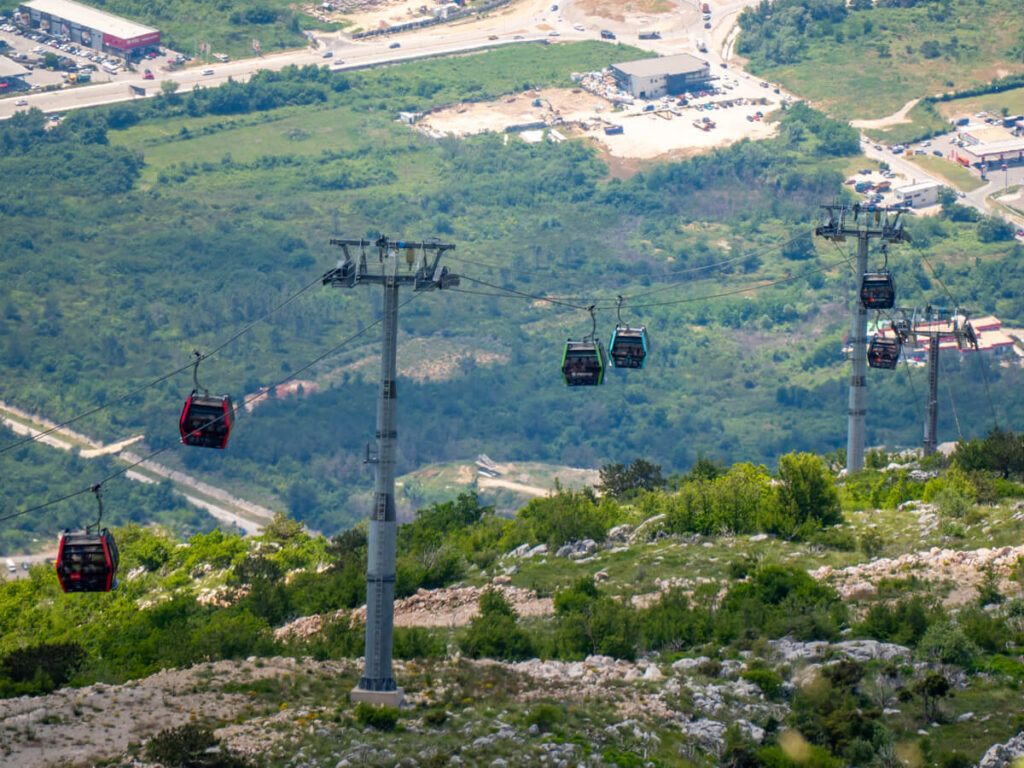
Your journey will start at the Lower Dub Station, which you can either drive to, get a taxi to, or take the shuttle bus from the Kotor Main Bus Station.
The journey only takes 11 minutes, so you can go from the coast to the upper station far more quickly than driving up the mountain.
The cable car is now one of the most popular ways to see Kotor from above, so queues can build up during busy periods, particularly in peak summer and around the middle of the day. If you want to minimise waiting, going earlier is generally a better bet.

The views are the main reason to take the cable car. As you rise above Kotor, the entire Bay of Kotor gradually opens up beneath you, giving you a perspective that you simply don’t get from the road. Whereas the driver doesn’t get to enjoy the views on the Serpentine unless you stop, the whole family can enjoy the views on the cable car.
Beware that bad weather or strong wind can close the cable car at short notice, and clouds can create poor visibility, which dramatically reduces the views, so it’s worth checking the conditions before heading up.
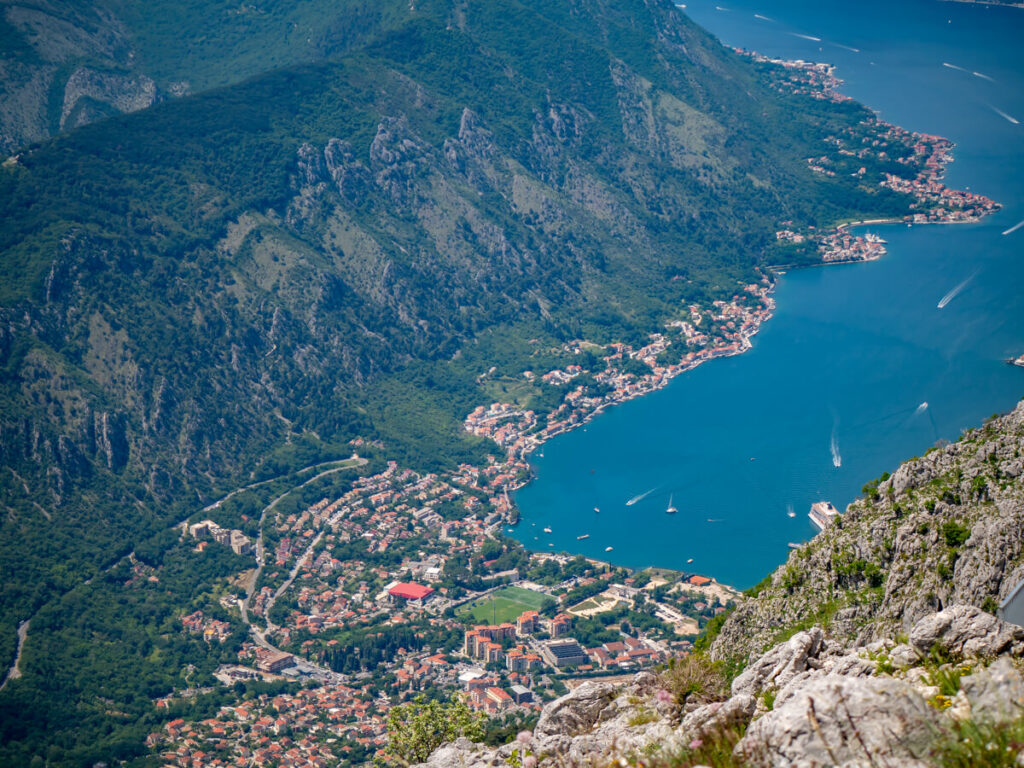
What is there to do at the top of the Kotor Cable Car?
The upper station (Kuk) isn’t just somewhere to get off, take a photo, and immediately head back down the mountain. There are several attractions and places to eat and drink, so you can easily spend a few hours up here rather than treating the cable car as a quick round trip.
On our visit, there was a lot of construction, and they seem to be turning it into a full-on commercial, amusement-style theme park (there’s even a Hard Rock Café shop).
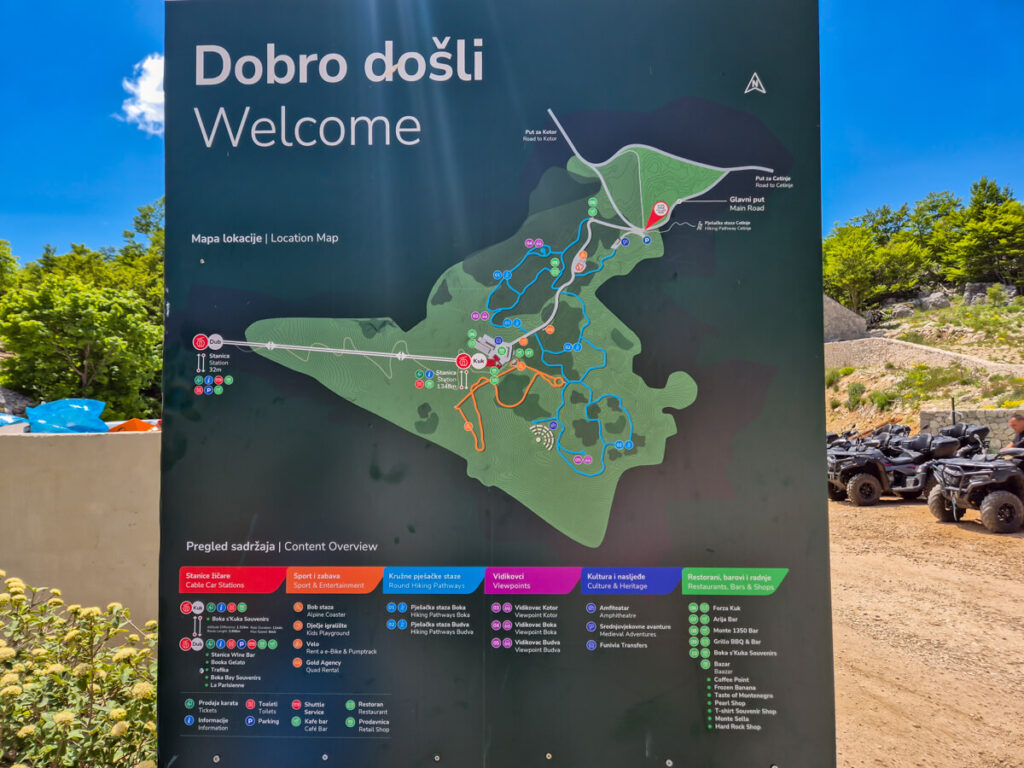
The Top Station
The top station is the main base for exploring the area, with facilities surrounding the cable car. It’s a good place to take in the scenery before deciding whether you want to try one of the activities or simply relax with a drink.
There are biking and hiking trails, Velo- and e-bike rentals, a pump track, and Quad rentals all available on-site. There are also a couple of viewpoints, a kids’ playground, various bars and eateries, and even an amphitheatre which hosts seasonal events.

Alpine Coaster
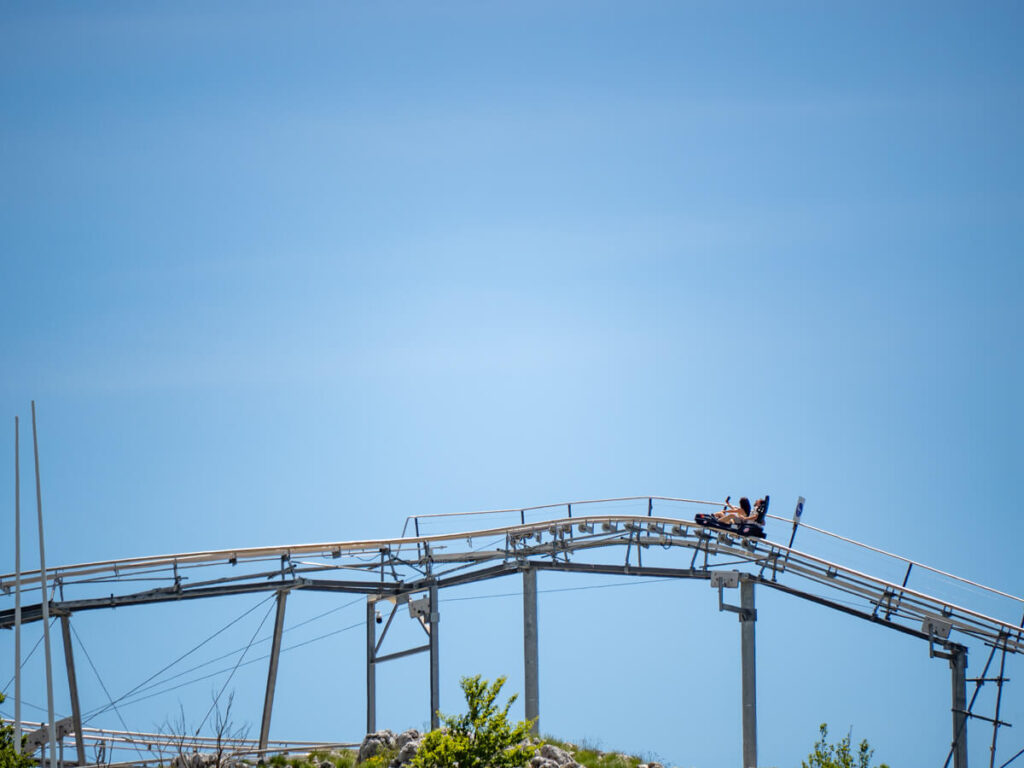
The Alpine Coaster is one of the main attractions at the top of the cable car. It’s another hugely popular attraction on social media, and many people make the trip just for this.
It’s basically a toboggan ride, where you race down a 1,056-metre (3,465 ft) track for 3-5 minutes before returning to the upper station. At €12 (€20 for the fast track), it’s quite expensive for the length of the ride, so we’ll let you decide whether it’s worth it.
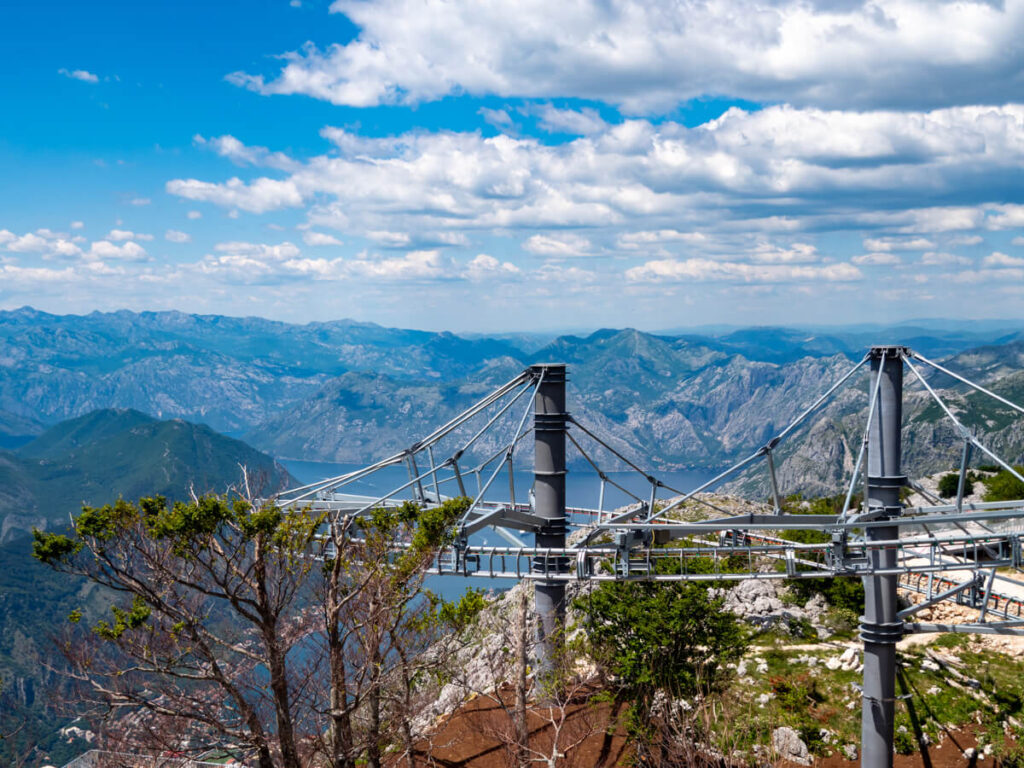
Falcon Fly
Falcon Fly is another attraction aimed at visitors looking for a more adventurous experience. It gives you the chance to experience the mountain scenery at a speed of around 18 mph (30 kmph) rather than from a stationary viewpoint, as you sit in a chair suspended from the track.
Restaurants and bars
There are several places to eat and drink at the top that rival Kotor’s restaurants, making it easy to turn the cable car into a longer outing rather than just a quick ride. This is particularly useful if you want to combine the views with lunch or a drink before heading back down.
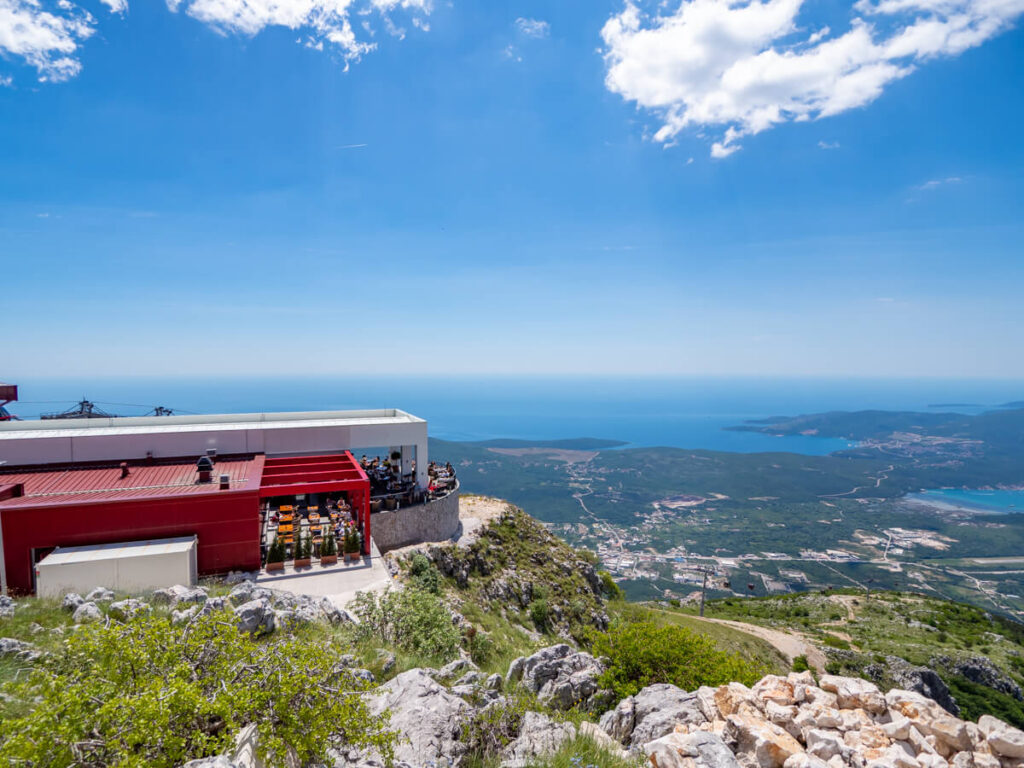
Monte 1350 Bar
We thought the Monte 1350 Bar was worth highlighting as one of the best places to stop for a cocktail while you’re up at the cable car station. With the mountain setting and views back towards the bay, it’s a lovely place to just sit and enjoy the views, especially at sunset.
It does have loud music, and occasionally live DJs, so it’s not uber peaceful, but it’s a pretty cool vibe, especially for sunset. There’s also a grill and coffee cart nearby if you’re peckish.
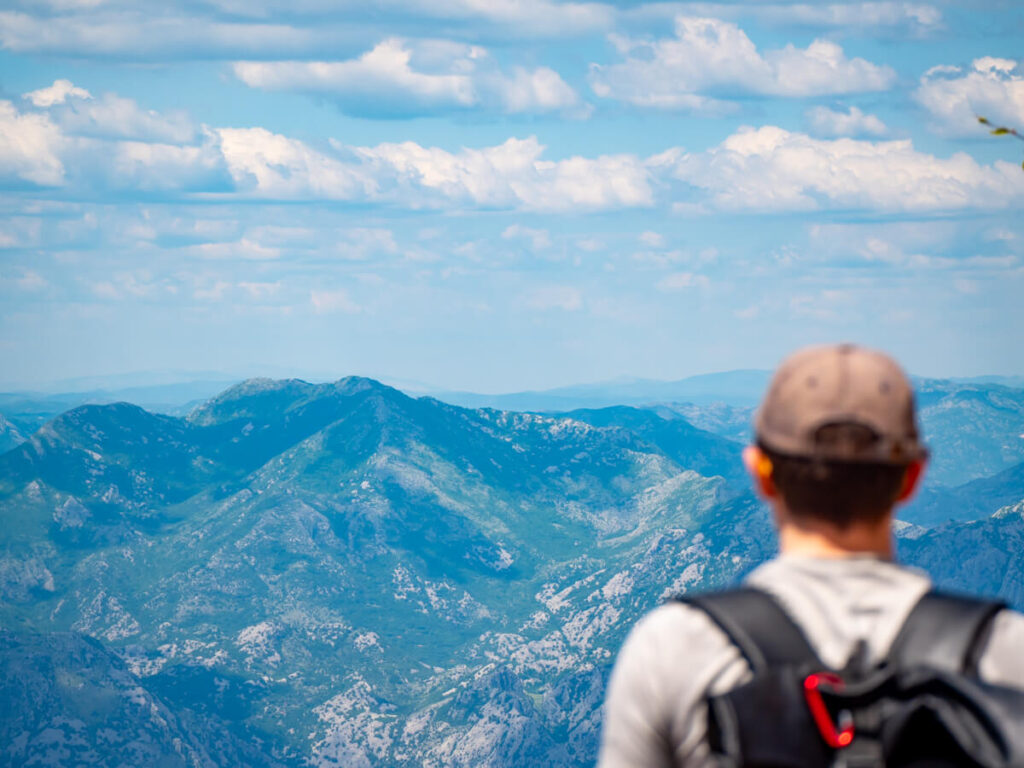
How to get to the Kotor Cable Car
As we mentioned, the cable car starts at the lower station outside Kotor. It’s not possible to walk to it, so you need to drive, take a taxi, or use the dedicated shuttle bus, which runs around every half an hour.
Tickets for the bus from Kotor are €10 one-way for adults ( €5 for children) or €15 for a round trip for adults (€10 for children). You can also opt for the round-trip €36 cable car and shuttle combo ticket (€14 for children), which saves you a little money.
A bus also runs from Budva, costing €20 per adult (€10 per child) for a return. The combo cable car and shuttle from Budva costs €41 for a round trip for adults (€17 for children).
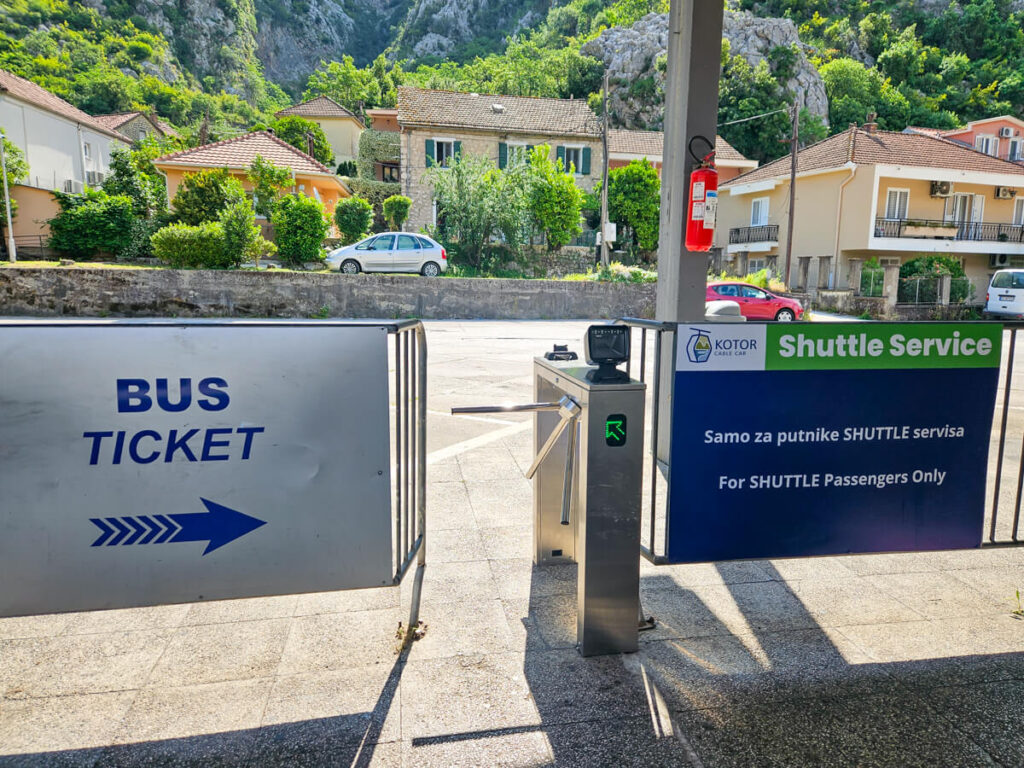
Lovćen Cable Car Parking
If you don’t take the bus, you can drive to the lower cable car station, where there’s a large paved car park with 420 spaces. It’s €1.30 per hour for a car.
There is also dedicated parking at the cable car top station, but it was pretty poorly managed on our visit. We believe they’re doing work to improve the infrastructure of the area in general, as they’re turning the whole thing into a pretty commercial amusement-park-style attraction. There’s a free small gravel parking lot, which fills up before lunchtime. If it’s full, everyone just seems to parallel park along the side of the entrance road, which is what we did.

How to get from the Kotor Cable Car to Lovćen National Park?
The Kotor Cable Car upper station sits inside Lovćen National Park, but it’s a huge area. While it gives you access to all the rides and activities at the top station that we’ve mentioned, it doesn’t mean you have immediate access to other highlights in the national park.
If you’ve seen pictures of the iconic circular viewpoint and mausoleum on top of Lovćen, you might assume that the cable car top station is right there too. The Njegoš Mausoleum is located higher up on Jezerski Vrh, which is a different peak entirely from the cable car’s. So the top station is actually nowhere near the mausoleum. You’ll need onward transport or to walk, depending on your itinerary.
There is a shuttle company, FUNIVIA Transfers, at the cable car top station that runs transfers to Njeguši, Cetinje, and the Njegoš Mausoleum. It’s about €15 per person to get to the mausoleum, not including the park entry fee. Honestly, it’s almost better value to book a guided tour of Lovćen National Park on a different day to your cable car ride. I also don’t think you can book in advance or online.
Without a car, it’s pretty difficult to get out into the national park and explore its various hiking trails, too.

You don’t need to pay the entrance fee for Lovćen National Park if you take the cable car, despite the top station being within the boundaries of the national park. But if you choose to leave the top station, you may be asked to pay.
If you choose to drive to the cable car top station and then onto the mausoleum, you will pass the national park entrance booth just outside Njeguši and have to pay the entrance fee.
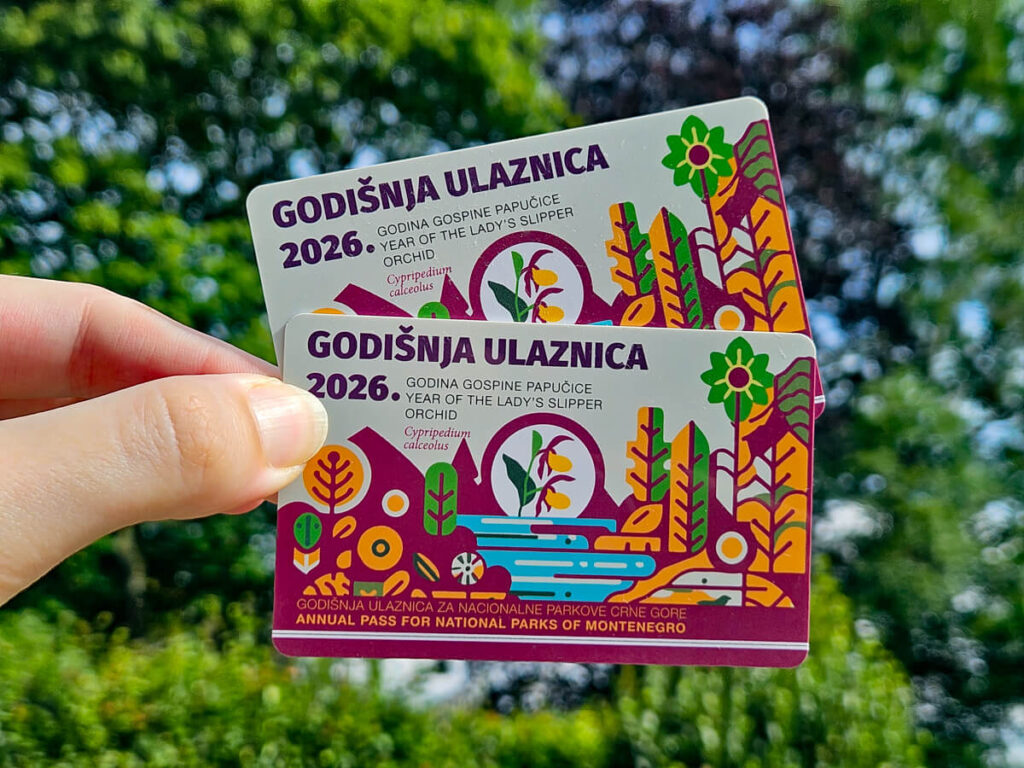
It’s €3 per person per day, but we’d highly recommend getting the annual pass for €13.50 if you plan to visit the other Montenegro national parks too. You can also buy it online in advance.
The mausoleum is a further €8 per person in cash – try to have exact change.
Is the Kotor Serpentine or Kotor Cable Car best for visiting Lovćen National Park?
Both the Kotor Serpentine and Kotor Cable Car are great ways to get up into the mountains above Kotor, but they offer very different experiences. If you’re mainly looking for incredible views over the Bay of Kotor without having to navigate a narrow mountain road, the cable car is the easier option. If you’re actually planning to explore Lovćen National Park, however, we’d choose the Serpentine, as having a car gives you much more freedom to explore the area, including visiting the mausoleum.
| Cable Car | Serpentine | |
|---|---|---|
| Views: | Panoramic views over the Bay of Kotor as you ascend and from the top station. | Scenic viewpoints along the winding road with views over the Bay of Kotor. |
| Food & Drink: | Aerobar, Monte 1350, Forza Kuk. | Horizont Bar. |
| Opening Hours: | Wed-Mon: 8:00 AM-9:00 PM. Tue: 9:30 AM-9:00 PM. | Open 24/7. From 25th May to 15th October, drive up 7:00 AM-2:00 PM and drive down 3:00 PM-7:00 PM. |
| Cost: | Adults: €25 return for the cable car / €36 combo shuttle + cable car. Additional charges for parking at the bottom and activities at the top. | Free (although you need a rental car). |
| Adventure: | Easy and relaxing. | Active and adventurous. |
| Activities: | Ziplining in Njeguši, easy to moderate hiking in the national park. | Alpine Coaster, Falcon Flyer, short and easy hiking trails, viewpoints. |
| Best: | Best if you mainly want the views. | Best if you’re visiting Lovćen National Park. |
Is the Kotor cable car worth it?
Honestly, for us, the cable car is absolutely not worth it. At around €40+ per person, factoring in the shuttle bus or parking, the cable car ride, and a drink or snack, it’s a lot of money. Add on the extra activities, and you can easily pay €60+ per person for a half-day excursion.
We’re also just not super interested in very commercial experiences, and we saw similar views from the Ladder of Kotor hike and from driving the Serpentine.
We also opted for the Serpentine because we wanted to explore Lovćen National Park and actually see the Njegoš Mausoleum, which isn’t possible from the cable car. We like the freedom of exploring by car.
But ultimately, they’re very different experiences, and we can see how families or backpackers might enjoy the cable car’s attractions and easy access more and have less interest in the rest of the national park. It’s also a great option if you’re keen to see the classic aerial views without any hiking or driving involved. Accessibility-wise, it’s definitely worth the money.
Kotor to Lovćen: Cable Car vs Driving the Serpentine FAQs
To help you choose between the Cable Car and the Serpentine, we’ve answered these frequently asked questions.
Is the Kotor Serpentine road closed to traffic?
The Kotor Serpentine is open to traffic, although there are seasonal restrictions on when vehicles can travel in each direction. From 25 May to 15 October, traffic heading uphill is permitted between 7:00 AM and 2:00 PM, while downhill traffic is permitted between 3:00 PM and 7:00 PM. Outside these hours and dates, you should check the latest local restrictions before setting off.
Is the Kotor Serpentine road one way?
No, the Kotor Serpentine isn’t permanently one way. During the summer traffic restrictions, however, vehicles travelling uphill and downhill are separated into different time windows. This means you can’t simply drive up or down whenever you like during those periods.
Is there a viewpoint along the Kotor Serpentine road?
Yes, there are several places where you can stop for views along the Kotor Serpentine. The higher you climb, the more impressive the panorama over the Bay of Kotor becomes, so allow some extra time to stop rather than treating the road purely as a way to reach Lovćen.
How long do you need at Kotor Cable Car?
We’d allow at least 2-3 hours for the Kotor Cable Car if you want to enjoy the views, have something to eat or drink, and try some of the activities at the top. You can ride up and back much more quickly if you’re short on time, but there’s enough to do at the upper station to make it worth staying longer.
Can you walk down from Kotor Cable Car?
Yes, you can walk down from the upper cable car station, although it’s a considerably longer and more strenuous option than simply taking the cable car back to Kotor. If you’re planning to hike down, make sure you have suitable footwear, plenty of water, and enough time, particularly during the hotter months.
Is there a roller coaster on the Kotor Cable Car?
The Alpine Coaster is one of the main attractions at the top of the Kotor Cable Car. It’s a mountain toboggan where you control your own speed as you travel down the track, making it a popular addition to the cable car trip, particularly for families and anyone looking for something more exciting than simply enjoying the views.
Do you need to book a Kotor Cable Car in advance?
You don’t necessarily need to book the Kotor Cable Car in advance, but booking ahead can be worthwhile during the busiest periods. Summer can be particularly busy, and queues can build up when demand is high. If you’re visiting at a quieter time, you may be able to buy your ticket when you arrive.
Where does the Kotor Cable Car start?
The Kotor Cable Car starts at Dub, just outside Kotor. The lower station is easy to reach from the town by car or taxi, and there is parking available at the cable car complex.
What to do at the top of the Kotor Cable Car?
There’s more to do at the top than simply admire the view. You can enjoy the panoramic viewpoints, ride the Alpine Coaster, try Falcon Fly, or stop for food and drinks at one of the restaurants and bars. It’s easy to spend a couple of hours here, particularly if you want to try some of the activities.
How safe is the Kotor Cable Car?
The Kotor Cable Car is a modern cable car system and is generally a very easy and comfortable way to travel up the mountain. The cabins are enclosed and the journey is smooth, although the service can be affected by weather conditions such as strong winds or poor visibility. If you’re nervous about heights, you may still find the journey a little daunting, but the cabins themselves are secure.
What time does Kotor Cable Car close?
The Kotor Cable Car operates seasonally, with opening and closing times varying throughout the year. It’s worth checking the current operating hours before visiting, particularly if you’re planning to arrive late in the day or are travelling outside the main summer season.

Read next:
How to Visit Lovćen National Park & Mausoleum of Petar II Petrović-Njegoš
A Traveller’s Guide to the Bay of Kotor: Europe’s Southernmost Fjord
Where to Stay in Kotor Bay: Top Towns + Best Hotels From Budget to Boutique
27 Cool Things to Do in Kotor + What Not to Do
How to Spend One Day in Kotor & Our Free DIY Old Town Walking Tour Route + Map
10 Fun Day Trips from Kotor + 2 Tours Not to Book
11 Best Montenegro Blue Cave Boat Tours + Is It Even Worth It?
Our 15 Favourite Cafés, Bars & Restaurants in Kotor + Veggie/Vegan Options
What It’s Really Like to Hike the Ladder of Kotor
