How to See & Support Kotor’s Cats

Everything you need to know about the cats of Kotor, including where to see them, how to interact with them, and how to support the people looking after them.
This post may contain affiliate links, which means we might earn a small commission on anything purchased through these links at no extra cost to you. Learn more on our disclaimer page.
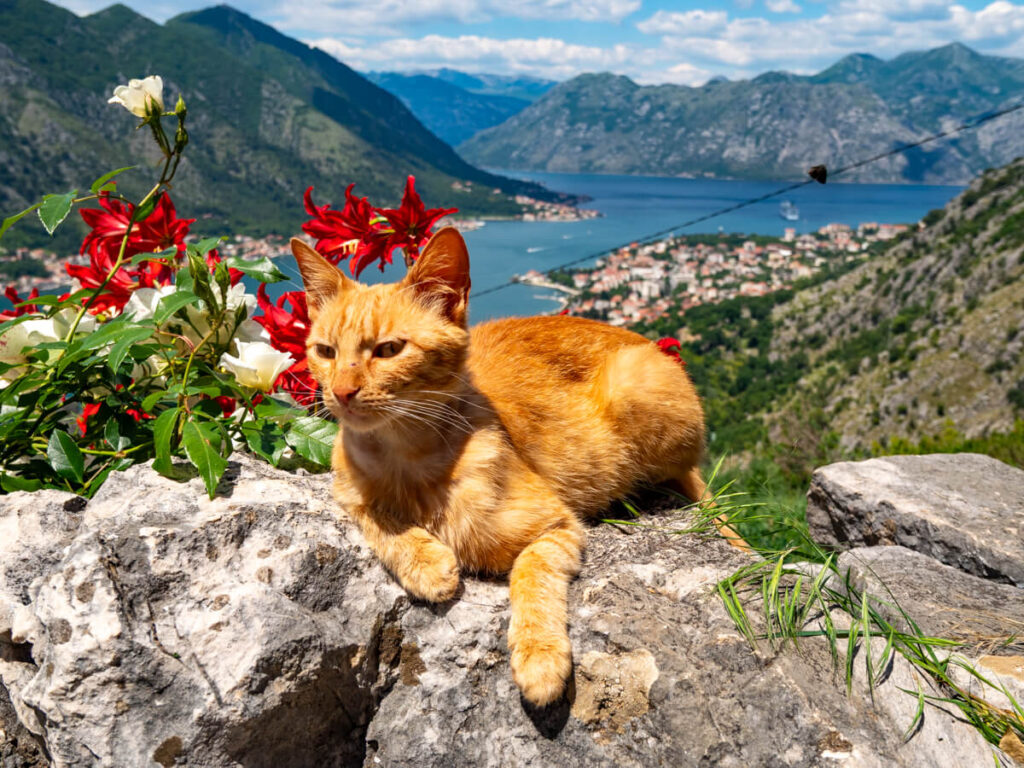
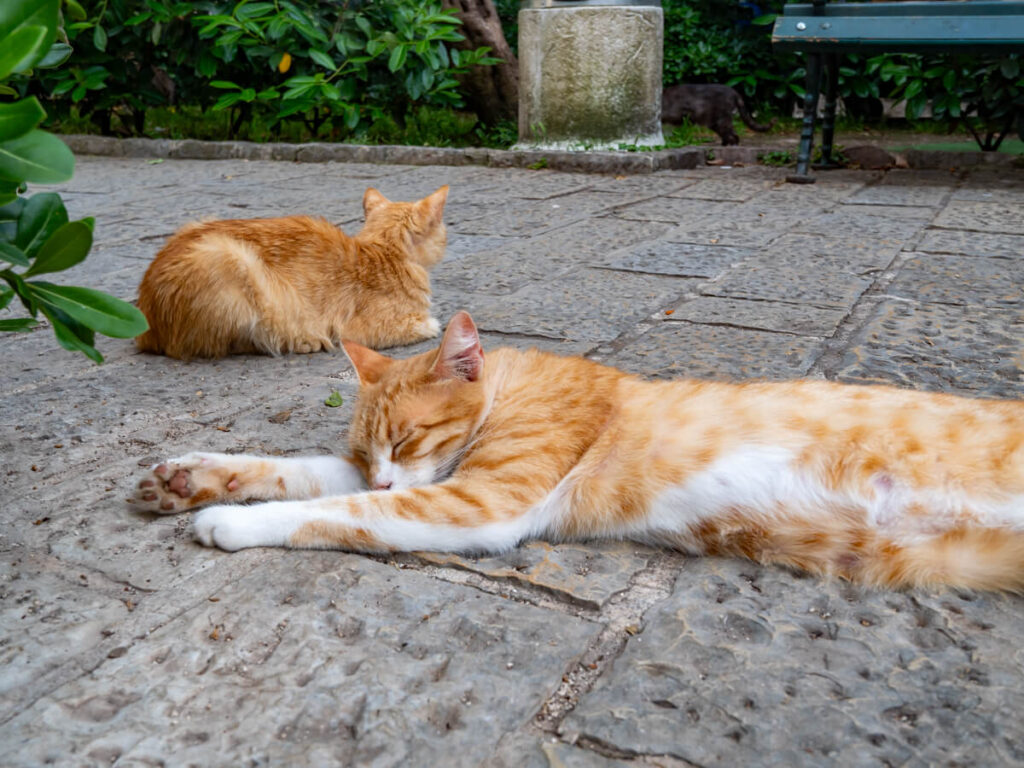
Kotor’s cats are almost as famous as its medieval Old Town. You’ll see them wandering the narrow streets, lounging in sunny squares, and popping up around the city, with locals and visitors alike looking after the many stray and abandoned cats that call Kotor home.
We love all animals, but cats have a special place in our hearts. I grew up with cats at home, so seeing them in Kotor was bittersweet. On the one hand, who doesn’t want to travel to a city of cats and be able to make some furry friends when you’re far from home? On the other hand, it’s so sad to see them living on the street, many abandoned, and denied the safety and security of a home.
This post is pretty much an excuse for us to share some nice cat pictures, but we’ve also included some interesting history about how they came to be here, how to see them responsibly, and how you can help them, including some fantastic initiatives working hard to end the suffering of Kotor’s street cats.
More from Kotor
Why is Kotor obsessed with cats?
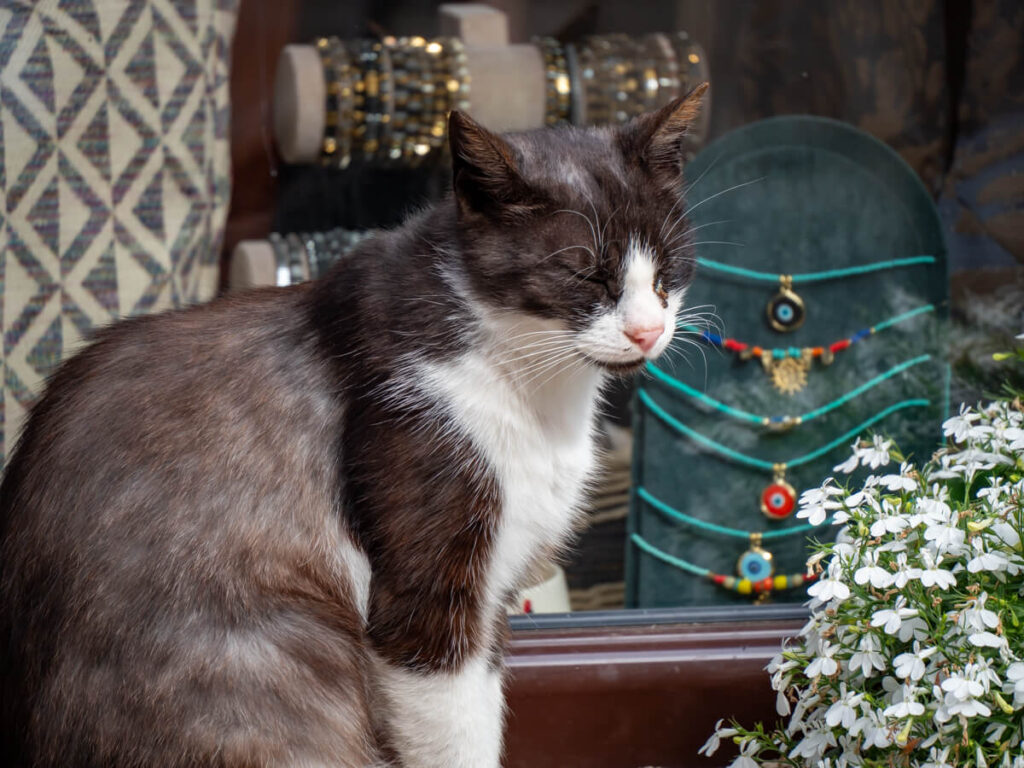
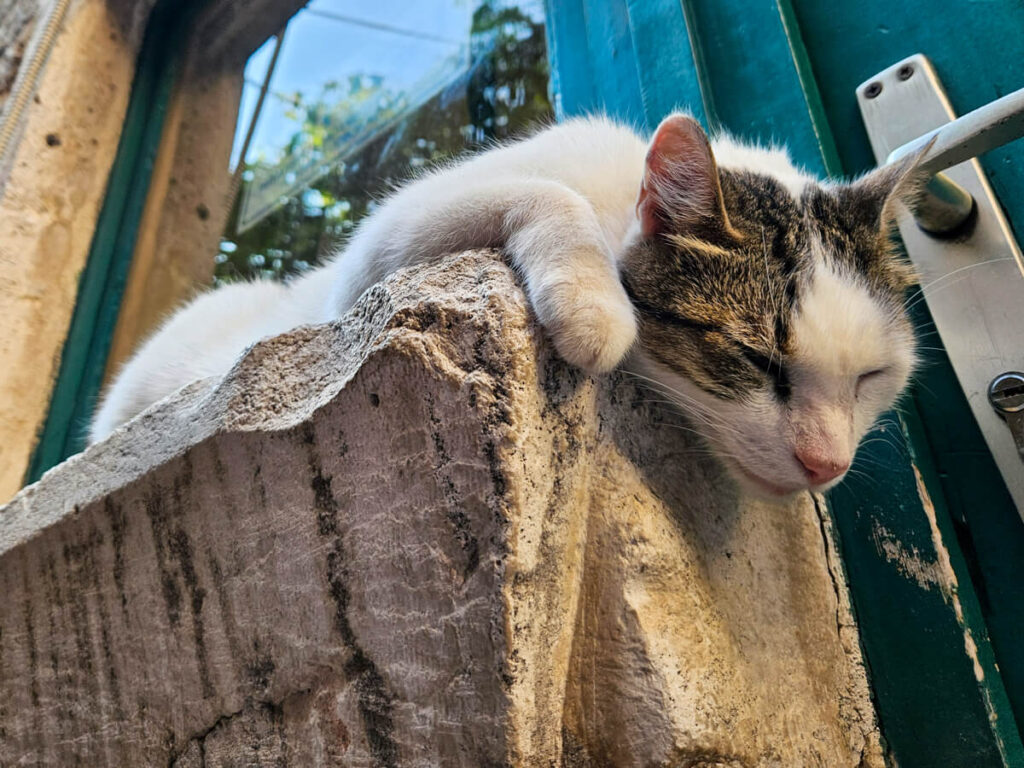
Kotor is famous for its medieval walls and fortress, dramatic mountains, and beautiful bay, but there is another local resident you’ll quickly notice while exploring the Old Town: cats. They’re everywhere, from sunny doorways and quiet courtyards to café terraces and the little squares tucked between the historic stone buildings.
There are feeding stations, shelters, and shops dedicated to them all around the Old Town. But they’re not a tourist attraction.
Kotor has a large population of free-roaming community cats, many of which rely on local feeders and animal welfare initiatives for food, veterinary care, and sterilisation. If you’re visiting Kotor and love cats, there are plenty of ways to enjoy them while also helping the people who look after them.
There are several stories about how cats became such an important part of Kotor’s identity. The most plausible explanation is linked to Kotor’s long history as an Adriatic trading port. Cats were useful on ships and around warehouses because they helped control rats and mice, and the popular story is that sailors brought cats with them and some were eventually left behind in the city.
Kotor’s position between the sea and mountains meant the population of cats could thrive on rats, mice, and even snakes (we saw a couple on the Ladder of Kotor climb).
Over generations, the cats became part of everyday life in Kotor and were tolerated, fed, and cared for by local residents. Today they’ve become an unofficial symbol of the city, with cat-themed souvenirs, shops, and even a museum dedicated to them.
Many locals think of them as good luck, which might come from myths that have circulated about the cats saving the city from plague by killing rats, or that they helped feed people during sieges by providing food.
Planning a trip to Kotor?
Montenegro is gaining popularity quickly, so be sure to book in advance as early as possible!
Top Experiences in Kotor
Top Hotels in Kotor
Rent a Car in Montenegro
Best eSIM for Montenegro
Are the cats in Kotor OK?
The honest answer is that, while many of the cats in Kotor are fairly well looked after, not all of them are OK. Many of the cats you’ll see around the Old Town are healthy, well-fed, and remarkably relaxed around people, particularly those living around regular feeding points.
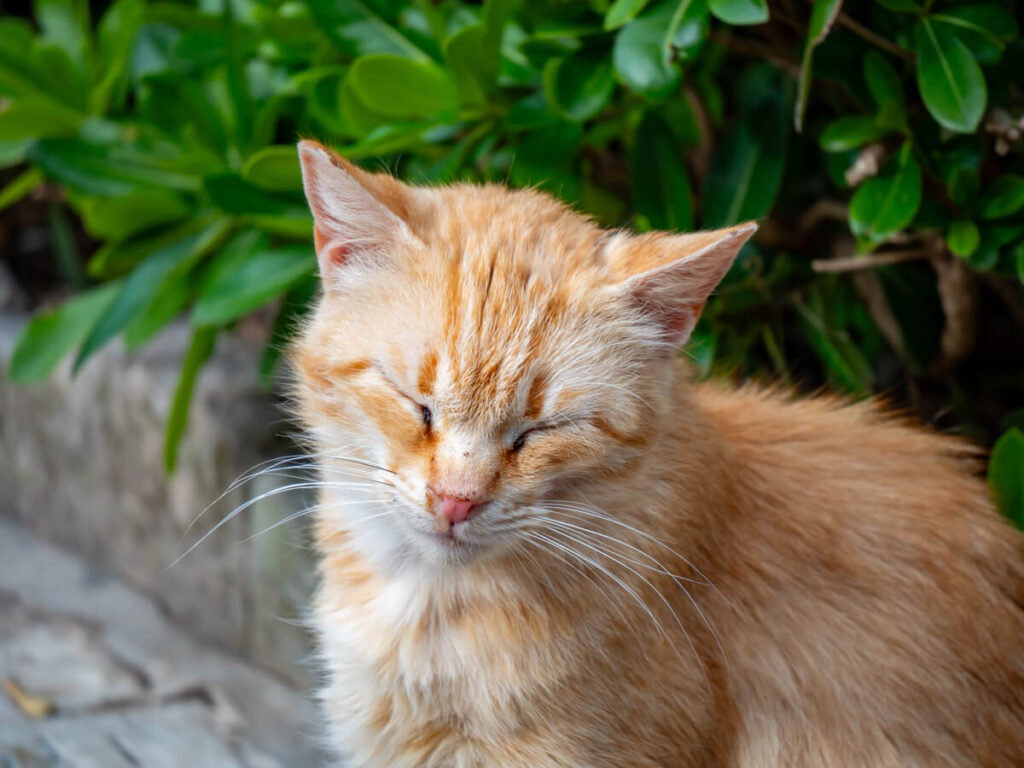
But they are still free-roaming animals, and you’ll occasionally see cats that are thin, injured, sick, or suffering from untreated conditions. Sadly, some cats were abandoned pets, while others are the offspring of stray cats that have been living on the streets for generations.
Local caretakers often spend their own money feeding colonies, but food alone doesn’t solve the underlying problem of uncontrolled breeding.

Where to see cats in Kotor?
The great thing about seeing Kotor’s cats is that you don’t really need a plan – they’re everywhere. They’re scattered throughout Kotor’s Old Town, particularly around the small squares, quieter lanes, café terraces, and areas where local residents regularly feed them.
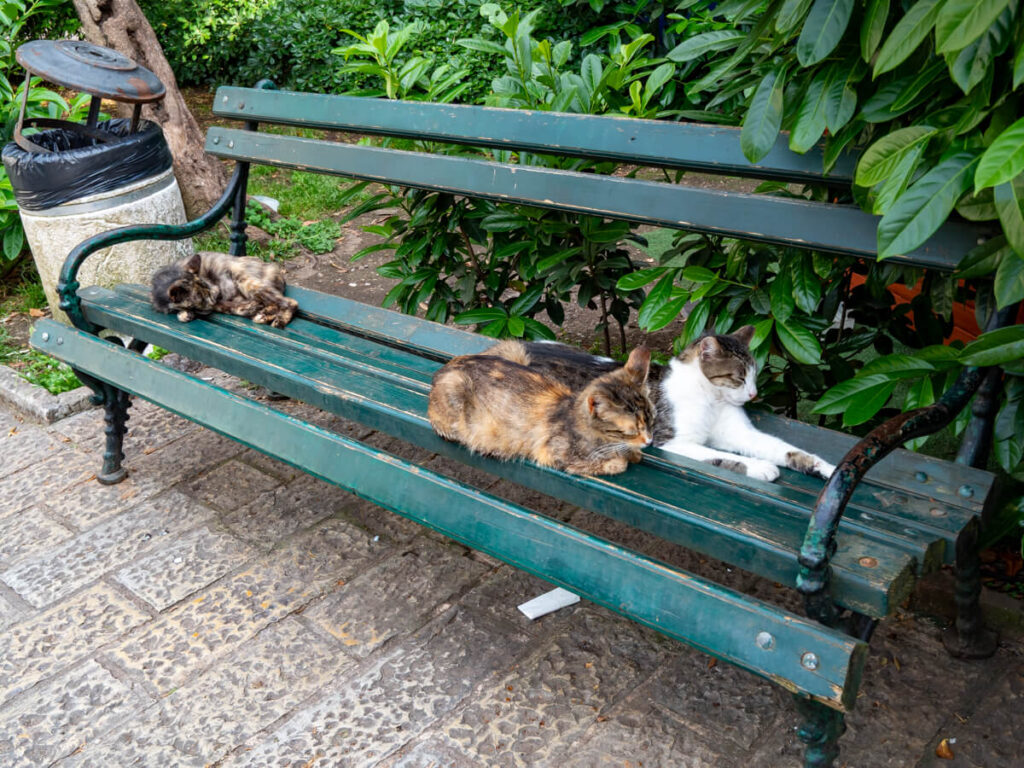
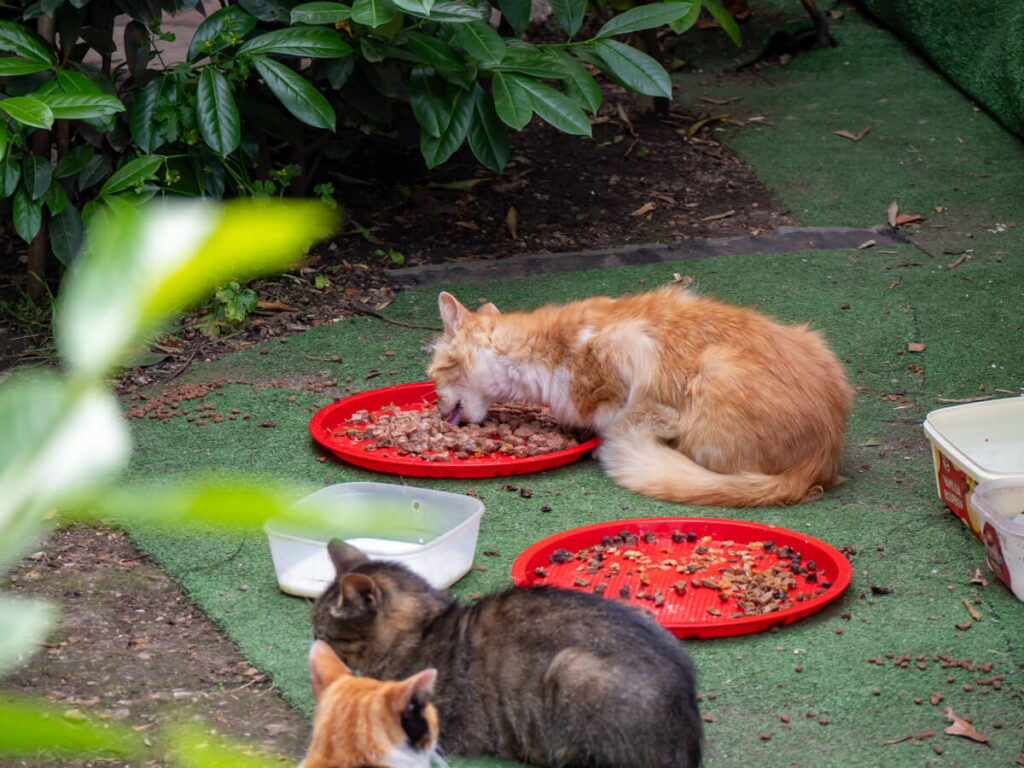
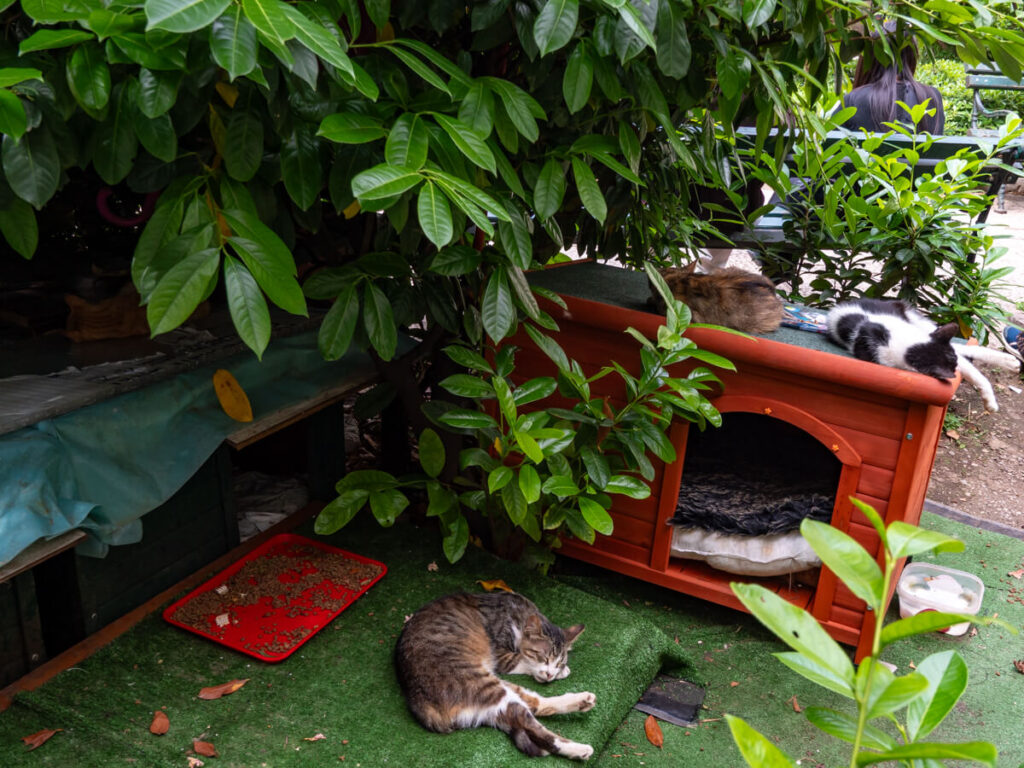
You’ll find plenty around Cat Park, where they’re fed, and a few shelters have been built. Its actual name is Square of Trees or Wood, but it’s become a Square of Cats. You’ll see them lounging on the benches, napping under bushes, and playing with each other in the little grassy borders.
We met a particularly friendly kitty outside the North Gate. It even climbed on my lap and was purring and paddling away. I was worried it was hungry as it was so persistently seeking attention, but we later realised there are feeding stations all over that area – it simply wanted some love.
You’ll also see cats along the narrow streets in town, especially around St. Luke’s Square and the area around St. Tryphon’s Cathedral.
Is there a cat museum in Kotor, Montenegro?
The Kotor Cats Museum is a small museum inside the Old Town dedicated to cats in art, culture, and everyday feline life. It was established in 2013 by Italian collector Piero Pazzi and occupies premises associated with the former Poor Clares monastery.
The collection contains around 1,500 cat-related items, including prints, postcards, and other objects covering several centuries from the 16th century to 1970. It’s a bit uncanny valley, with some very quirky items spread across two rooms. You can see it all in about 10-20 minutes.
The museum is twinned with the Cat Museum in Budapest, and it was created to encourage greater respect and protection for the cats.
Kotor Cats Museum is open seasonally, usually between May 1st and October 31st. Entry is €1 per person, and proceeds go towards feeding and supporting Kotor’s cats.

How many cats are in Kotor?
Nobody has a reliable current count of Kotor’s free-roaming cats, so you’ll see some wildly different numbers online. We reckon there are a couple hundred of them just in the Old Town, and that’s loosely based on what we saw during our visit. In the Kotor area, it could be thousands.
What we do know is that the population is large enough to create a genuine animal-welfare problem.
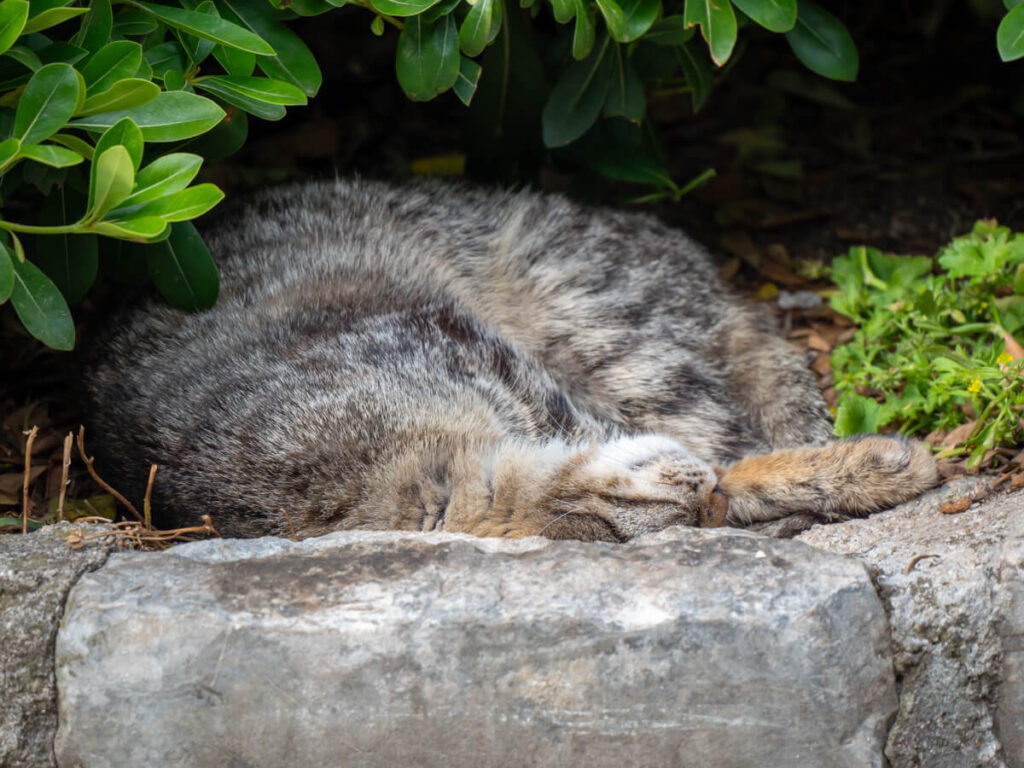
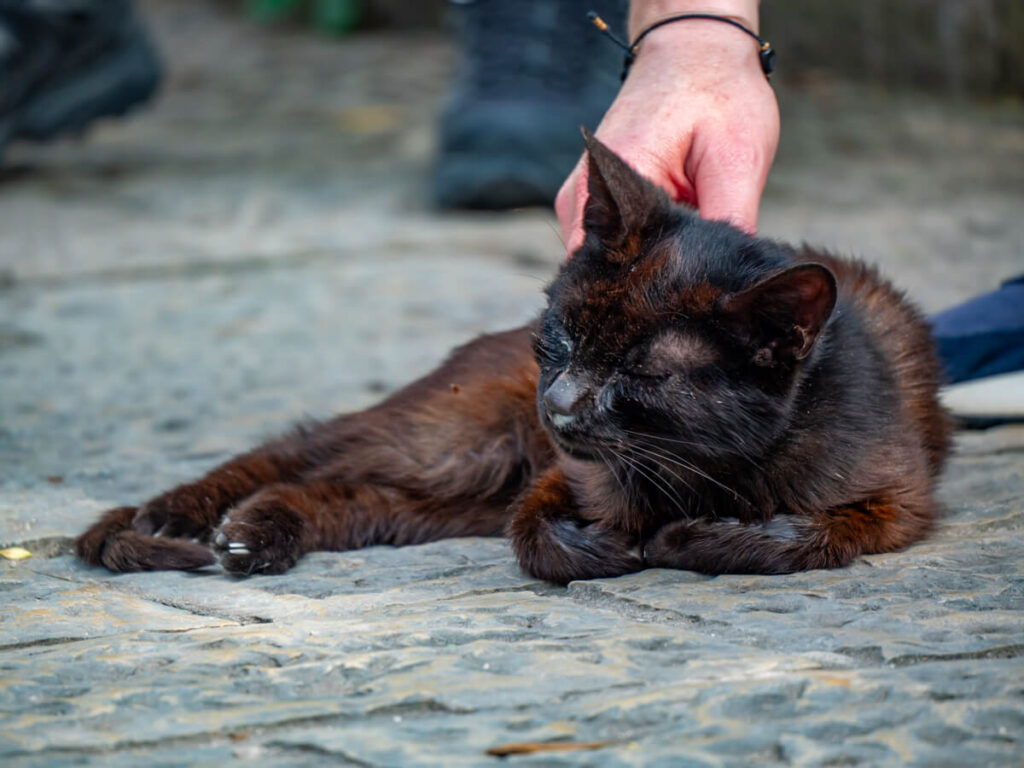
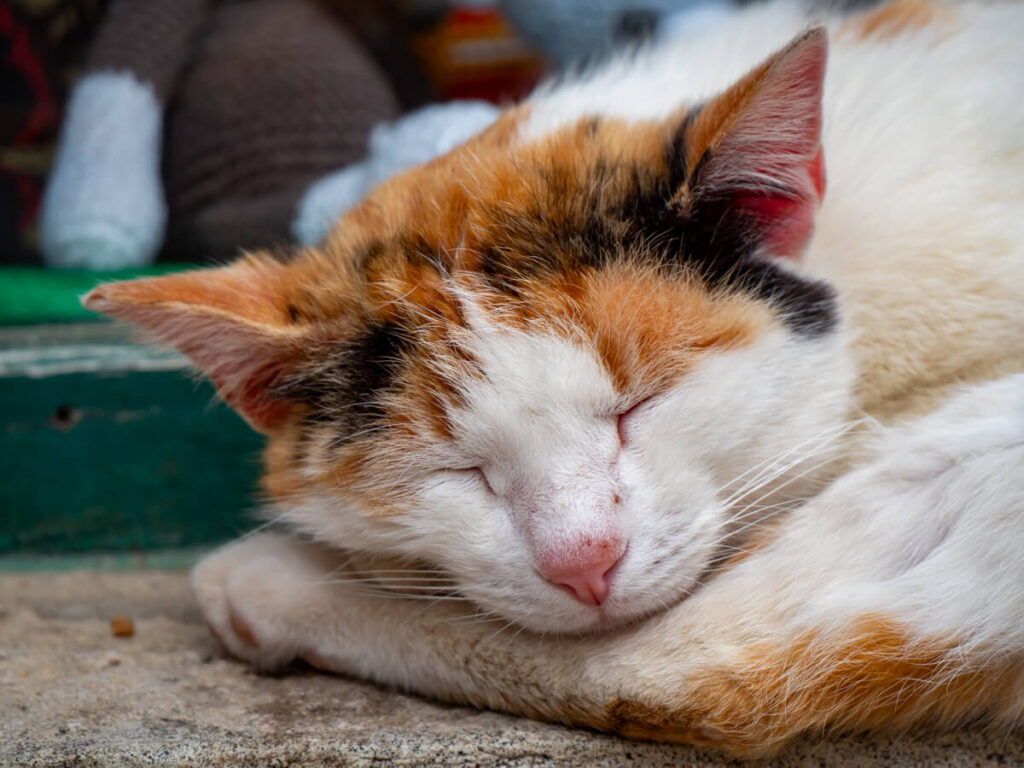

Is anyone looking after the cats in Kotor?
There isn’t one organisation responsible for the cats in Kotor, but local residents, individual cat carers, vets, and non-profit organisations all play different roles in looking after the free-roaming cats.
If you come across a cat that appears seriously ill or injured, it’s better to contact a local animal welfare organisation or caretaker rather than trying to deal with the situation yourself.
Kotor Kitties
Kotor Kitties is a particularly important initiative because it focuses on spaying and neutering, rather than simply feeding cats.
The organisation was started in 2018 after one of its founders visited Kotor and discovered that Montenegro didn’t have an ongoing high-volume spay-neuter programme. It now operates as a partnership of three volunteer organisations and says it has helped sterilise nearly 18,000 cats.
The reason this work matters is that feeding a colony helps the cats that are already there, but it doesn’t stop more kittens from being born.
Kotor Kitties works with partner vets and helps remove practical barriers such as the cost of surgery, transport, traps, and carriers. Its partner vets currently operate in Kotor, Nikšić, Podgorica, and Herceg Novi.
Spay and neuter programmes are the best way to help these cats. It reduces excess breeding, which in turn reduces unnecessary suffering.
If you’d like to support the work they do, you can donate on their official website, where you’ll find links depending on your home currency.
If you’re within Montenegro and can donate in Euros, this is how your donation can help:
If you’re from the UK like us, your donation can help:
US and international travellers can also donate:
They also ask their vets to help cats with injuries or health-related problems while under sedation, as well as things like flea and worm treatments.
Kotor Kitties played a significant role in convincing StrayCoco to start work in Montenegro helping stray dogs.

Danijela’s
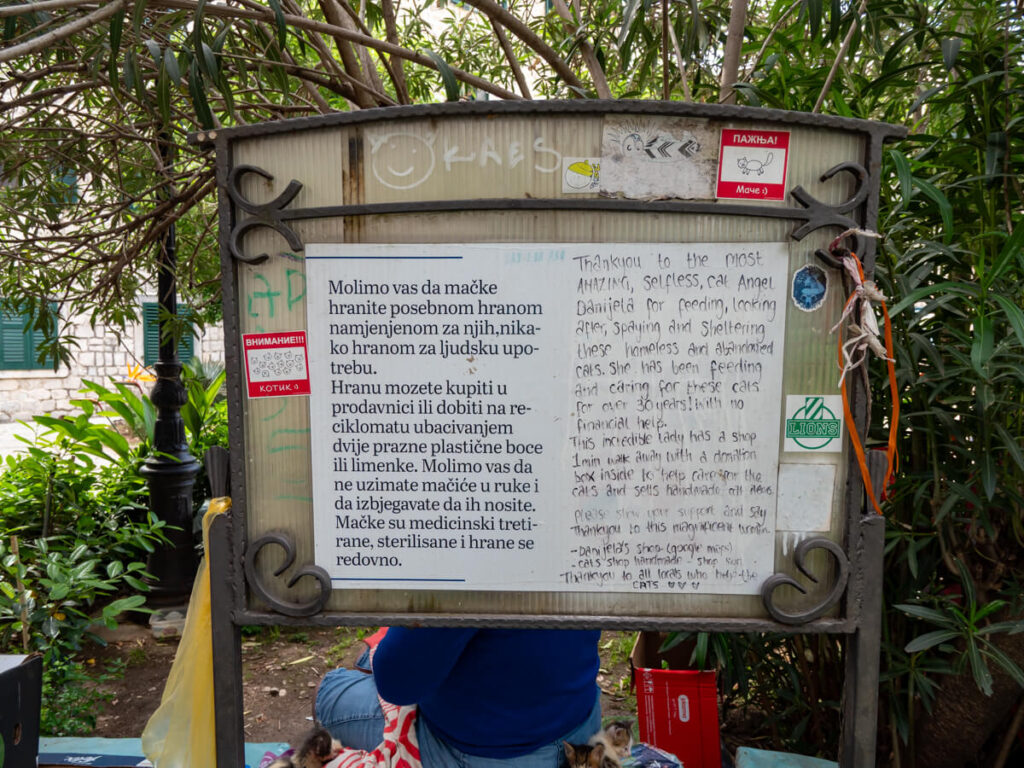
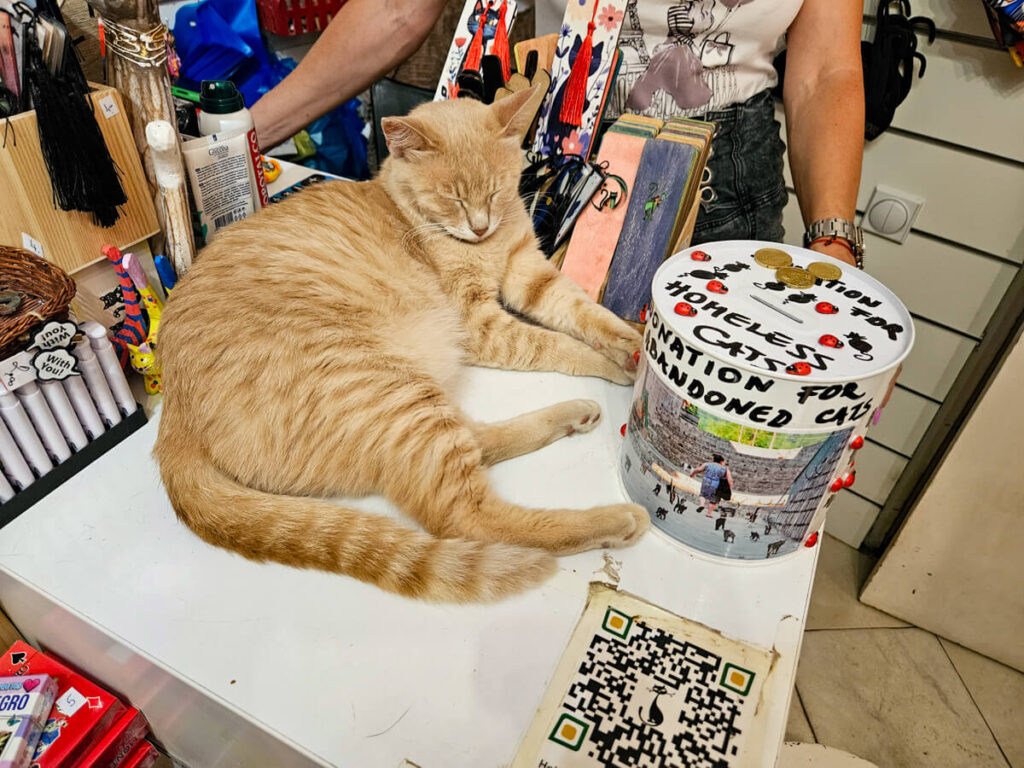
Another way visitors can support Kotor’s cats is through Danijela’s Cat Shop in the Old Town. Danijela has spent decades caring for homeless cats and describes a family tradition of rescuing animals, feeding them, arranging veterinary treatment, and finding homes for kittens where possible.
The shop sells handmade cat-themed souvenirs, with donations and shop income helping to pay for food and care for Kotor’s homeless cats.
Be sceptical of anyone sitting in Cat Park handling cats and kittens claiming to take donations for the cats. It’s best to only donate to known and established carers and organisations.
How to interact with Kotor’s cats?
Seeing and interacting with the cats is one of the best things to do in Kotor, but it should be done responsibly.
The cats are used to people, but that doesn’t mean every cat wants to be picked up or fussed over. The best way to interact with them is to let them come to you and pay attention to their body language.
Get down on their level, hold your hand out, and invite them over with a gentle “pspsps”. They might touch their nose to your hand first, which is a friendly greeting similar to how cats greet each other and indicates the cat is happy to interact.
A few simple signs can help you work out whether a cat is happy to have some attention or would rather be left alone:
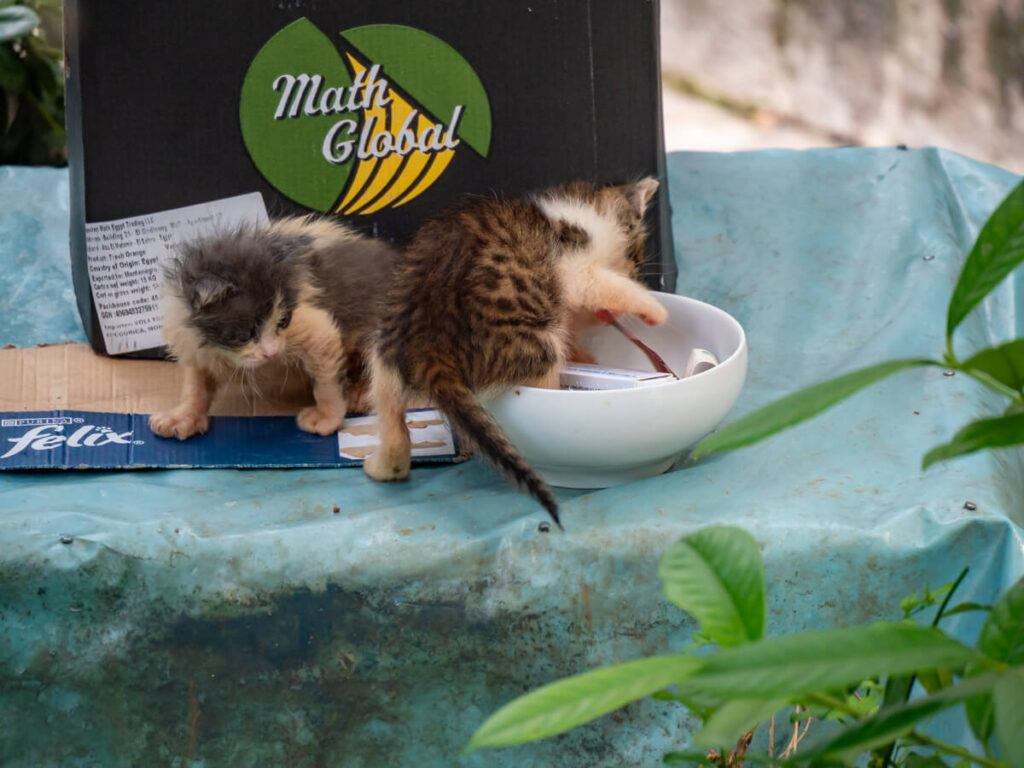
Avoid picking up kittens unless you know they’re genuinely abandoned. Their mother may be nearby, even if you can’t see her. They may be cute, but when they’re young, they’re a lot more interested in playing than being cuddled. Picking them up for a photo opportunity can stress them out.
Kotor’s cats: final thoughts
Seeing strays is always heartbreaking. We’ve come across so many in our travels, from reuniting a lost kitten with its mother in Tulum, to volunteering with some adorable cats at Jasper’s Rescue Centre on Utila in Honduras.
If you want to help, support the people and organisations already doing the work, avoid feeding inappropriate human food, and let the cats decide whether they actually want attention.
Kotor Cats FAQs
To help you meet Kotor’s feline friends responsibly, we’ve answered these frequently asked questions.
Does Montenegro have lots of cats?
Cats are common throughout Montenegro, particularly in coastal towns like Kotor. You’ll see both owned and free-roaming cats, with many living around restaurants, squares, apartment buildings, and residential streets.
Are cats in Montenegro vaccinated against rabies?
You cannot assume that a free-roaming cat in Montenegro has been vaccinated against rabies. Montenegro is officially considered largely rabies-free, but you should still avoid handling unfamiliar cats if they appear unwell or aggressive and seek medical advice promptly if you are bitten or scratched.
Are the cats in Kotor safe?
Many of Kotor’s cats are used to people and are perfectly comfortable around visitors, but they are still animals with individual temperaments. Some are friendly and enjoy attention, while others are nervous or prefer to be left alone. Let the cat approach you and avoid picking up unfamiliar cats.
Why is Kotor full of cats?
Kotor has a long history of cats living alongside its human population. Its sheltered location and abundance of food around homes, restaurants and the waterfront have helped cats thrive here. Local residents and animal welfare groups also care for many of the city’s free-roaming cats.
Why is Kotor known for cats?
Cats have become closely associated with Kotor and are now part of the city’s character. You’ll find them throughout the Old Town, from quiet corners and doorways to the squares and streets around the historic centre. The city’s love of cats is also reflected in local shops, souvenirs and the Kotor Cats Museum, making them a memorable part of visiting Kotor.

Read next:
A Traveller’s Guide to the Bay of Kotor: Europe’s Southernmost Fjord
Where to Stay in Kotor Bay: Top Towns + Best Hotels From Budget to Boutique
27 Cool Things to Do in Kotor + What Not to Do
How to Spend One Day in Kotor & Our Free DIY Old Town Walking Tour Route + Map
8 Fun Day Trips from Kotor + 2 Tours Not to Book
11 Best Montenegro Blue Cave Boat Tours + Is It Even Worth It?
How to Visit Lovćen National Park & Mausoleum of Petar II Petrović-Njegoš
Driving the Kotor Serpentine vs Taking the Kotor Cable Car
Our 15 Favourite Cafés, Bars & Restaurants in Kotor + Veggie/Vegan Options
What It’s Really Like to Hike the Ladder of Kotor
A Quick Guide to Taking the Kamenari-Lepetane Ferry in the Bay of Kotor
A Traveller’s Guide to the Luštica Peninsula
How to Find the Lipci Rock Art: Prehistoric Petroglyphs in the Bay of Kotor
