10 Best Things to Do in the Grebaje Valley + Travel Guide

A complete guide to visiting Montenegro’s Grebaje Valley and the best things to do in and around the region.

This post may contain affiliate links, which means we might earn a small commission on anything purchased through these links at no extra cost to you. Learn more on our disclaimer page.
Tucked beneath the jagged peaks of the Accursed Mountains, Grebaje Valley is the most popular part of Prokletije National Park, and it’s easy to see why. While many people come purely as a base for the famous Three Peaks Trail, that barely scratches the surface of what the valley has to offer. With dramatic mountain scenery, peaceful forests, and several excellent hiking trails, it’s a destination worth spending a few days exploring in its own right.
Despite its growing popularity, the Grebaje Valley still feels refreshingly wild and low-key. There’s very little development here, and that’s exactly what makes it so special. Surrounded by the dramatic Karanfili massif, it’s the gateway to some of Montenegro’s best hikes, as well as traditional katuns, peaceful forest walks, and unforgettable mountain scenery. In this guide, we’ve rounded up the best things to do in Grebaje Valley, including the top hikes, where to stay, where to eat, and everything you need to know to plan a visit to one of Montenegro’s most spectacular mountain destinations.

More from Prokletije National Park
Where is the Grebaje Valley?
The Grebaje Valley (Grbaja) is located in Prokletije National Park, in the far northeast of Montenegro, close to the borders with Albania and Kosovo.
Just 15 minutes’ drive from Gusinje, the valley sits beneath the dramatic Karanfili massif and serves as the main gateway to some of the park’s best hikes, including the Three Peaks Trail and Volušnica.

The best things to do in the Grebaje Valley
You’ll find a smattering of traditional guesthouses called katuns, epic trails through some of Montenegro’s best scenery, and not a lot else. But that doesn’t mean there aren’t any fun activities in the Grebaje Valley.
We originally planned to tick off the Three Peaks Trail before moving on – we actually based ourselves in the neighbouring Ropojana Valley – but we almost wish we’d had longer to hang around. Here’s how to spend your time.
1. Hike the Three Peaks Trail
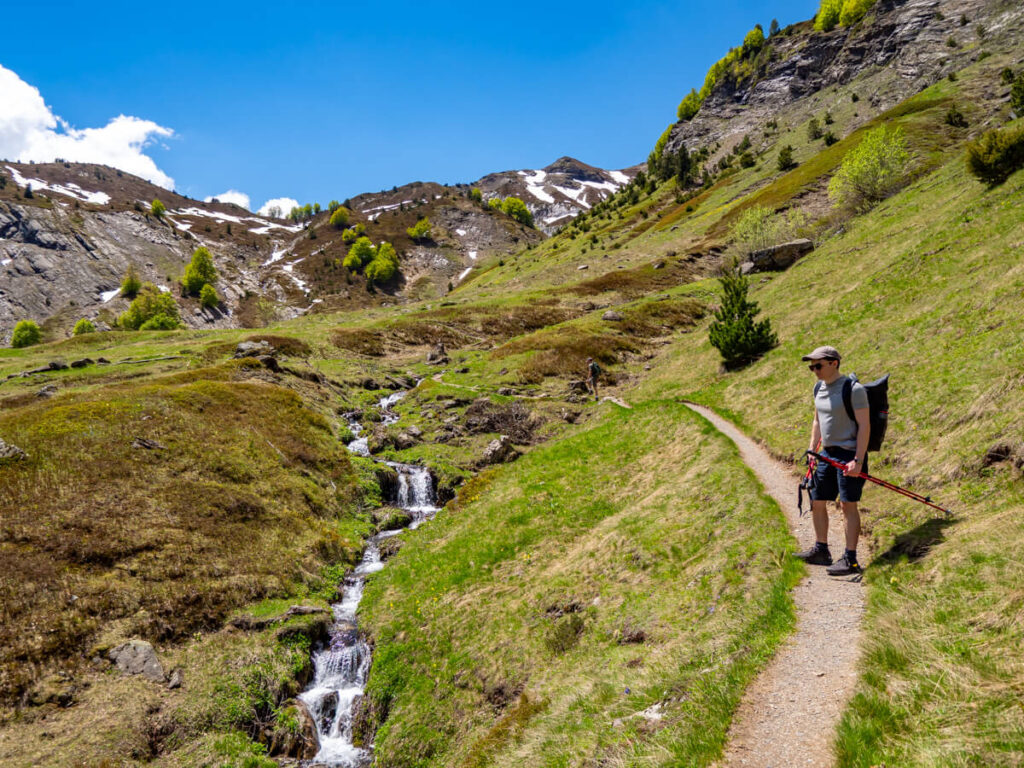
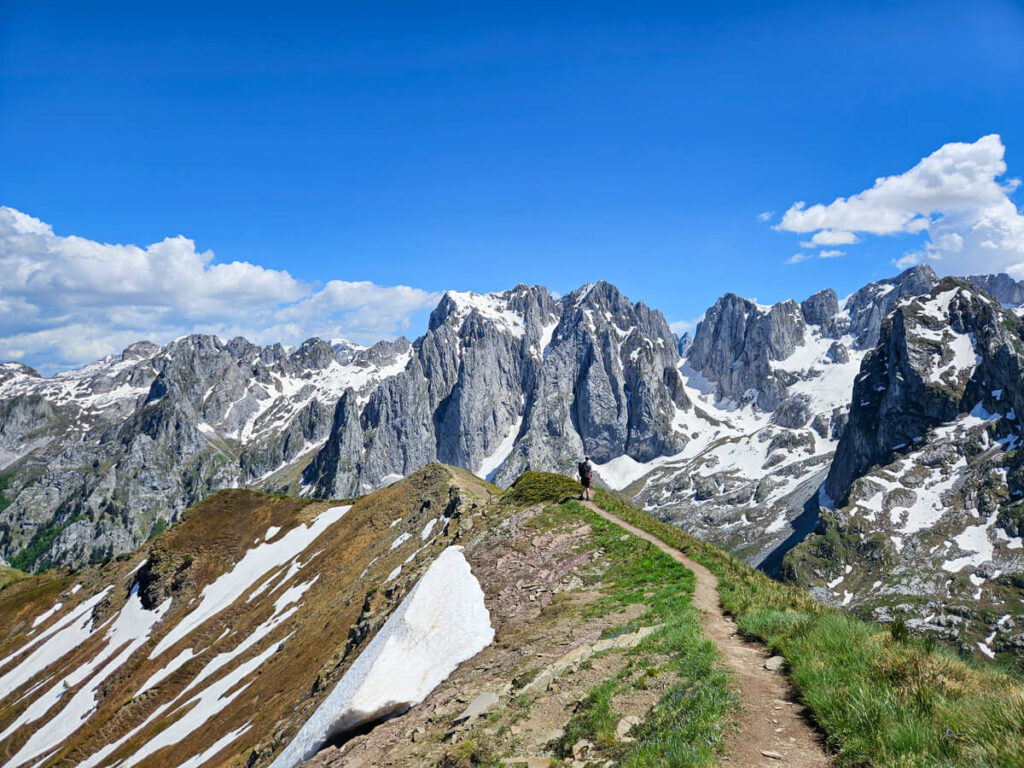
In our opinion, the Three Peaks hike is the best trail in Prokletije National Park. This spectacular full-day loop links the summits of Popadija, Talijanka, and Volušnica, following the Montenegro-Albania border through one of the Balkans’ most dramatic mountain landscapes.
On the way, you’ll pass through forest, an alpine meadow, past waterfalls, and along ridgelines that offer some of the most special mountain views we’ve ever seen. The Karanfili massif is an epic backdrop and well worth the effort. This was one of our favourite hiking trails in Montenegro.

2. Climb Volušnica
If you’re short on time, the out-and-back Volušnica hike is one of the best-value trails in Montenegro. It’s part of the Three Peaks, navigating up to the broad, grassy ridge of Volušnica at 1,879 metres above sea level.
From the top, you’ll get panoramic views into the Grebaje Valley below, as well as across to the other two peaks on the loop. It does require steep inclines and descents, plus a little scramble, but it’s a lot less effort than the full route. It’s considered one of the best hikes in Prokletije National Park.

3. Visit the Kissing Cats
Hidden beneath the towering cliffs of the Karanfili massif, the Kissing Cats (Šuplja Vrata) is one of Prokletije’s most unusual natural landmarks. The challenging return hike leads to a striking limestone rock arch whose silhouette is said to resemble two cats touching noses.
Its challenging nature means it’s best for experienced mountain hikers, but rewards the effort with amazing views.

4. Photograph the Karanfili massif
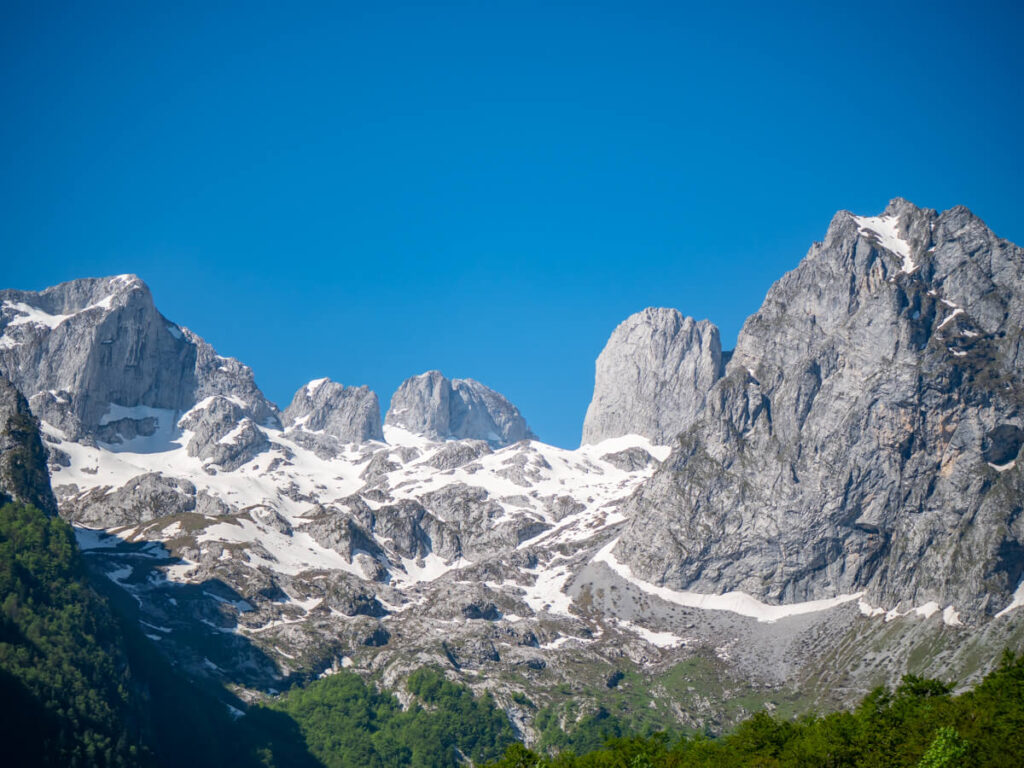
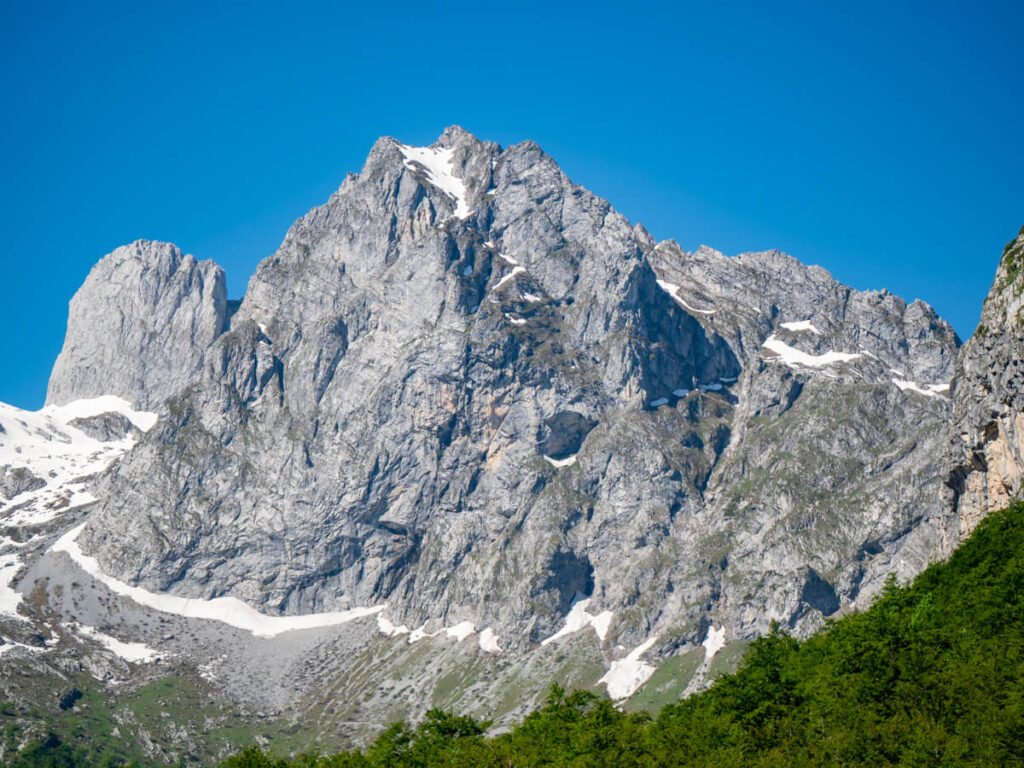
Even if you never leave the valley floor, the Karanfili massif is reason enough to visit Grebaje. Sheer limestone walls, jagged pinnacles, lingering patches of snow, and dramatic light throughout the day make it one of Montenegro’s most photogenic mountain ranges.
While it’s true the best views are from hikes, you can see the mountains from most accommodations in the valley. We even saw the mountains looming over the road as we drove in.

5. Stay in a traditional katun
Spending the night in a katun is one of the best ways to experience Grebaje Valley. These traditional summer shepherd settlements have welcomed generations of families bringing livestock into the mountains.
Today, many have been lovingly converted into simple guesthouses full of local character. We’d highly recommend picking one with wooden cabin accommodation – bonus if you get a deck with mountain views.

6. Enjoy a homemade mountain meal
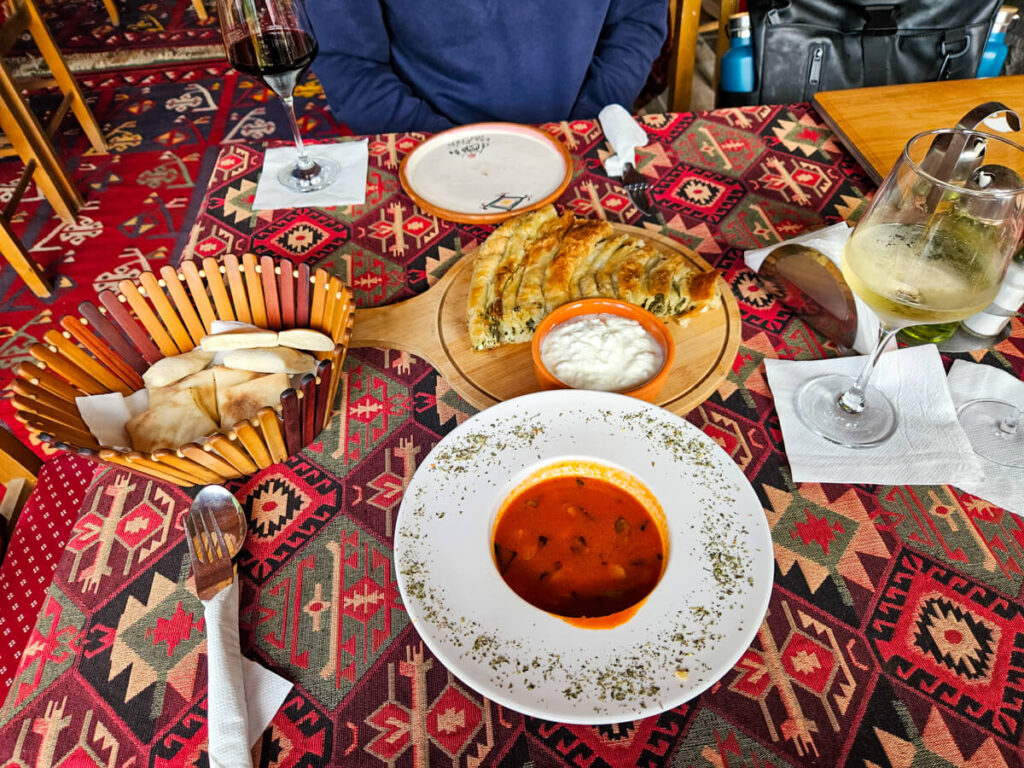
The family-run katuns in the Grebaje Valley serve hearty homemade dishes inspired by traditional mountain cooking. Expect generous portions, including locally produced cheese, fresh bread, seasonal vegetables, homemade yoghurt, and recipes that have been passed down through generations.
We’d recommend asking to try local dishes like kačamak (mashed potatoes, cornmeal, and cheese), cicvara (a mix of cheese, flour, and butter), and shopska salad.
7. Slow down and enjoy the scenery
Not every visit to Grebaje has to involve climbing summits. One of the valley’s greatest strengths is simply being there – watching clouds drift across the limestone peaks, listening to cowbells echo through the meadows, and appreciating just how peaceful this corner of Montenegro still feels.
Slowing down and actually budgeting time into our Montenegro itinerary to stop sightseeing and chill out is only something we’ve started to do recently, but it’s so worth it. The vibes are so chill, and it’s the perfect place to get away in nature.
8. Drive over to the Ropojana Valley
Just a short 30-minute drive from Grebaje, the Ropojana Valley offers a completely different side of Prokletije National Park. Home to natural attractions like Ali Pasha Springs, Grlja Waterfall, Oko Skakavice, and the trailhead for Zla Kolata, it’s well worth setting aside another day to explore.
We actually stayed in Eko Katun Rosi in the Ropojana Valley and loved how scenic this valley was. It’s not got as many challenging hikes as Grebaje – which is part of the appeal for families and amateur hikers – but it’s arguably got more non-hiking-related things to do.
9. Explore nearby towns
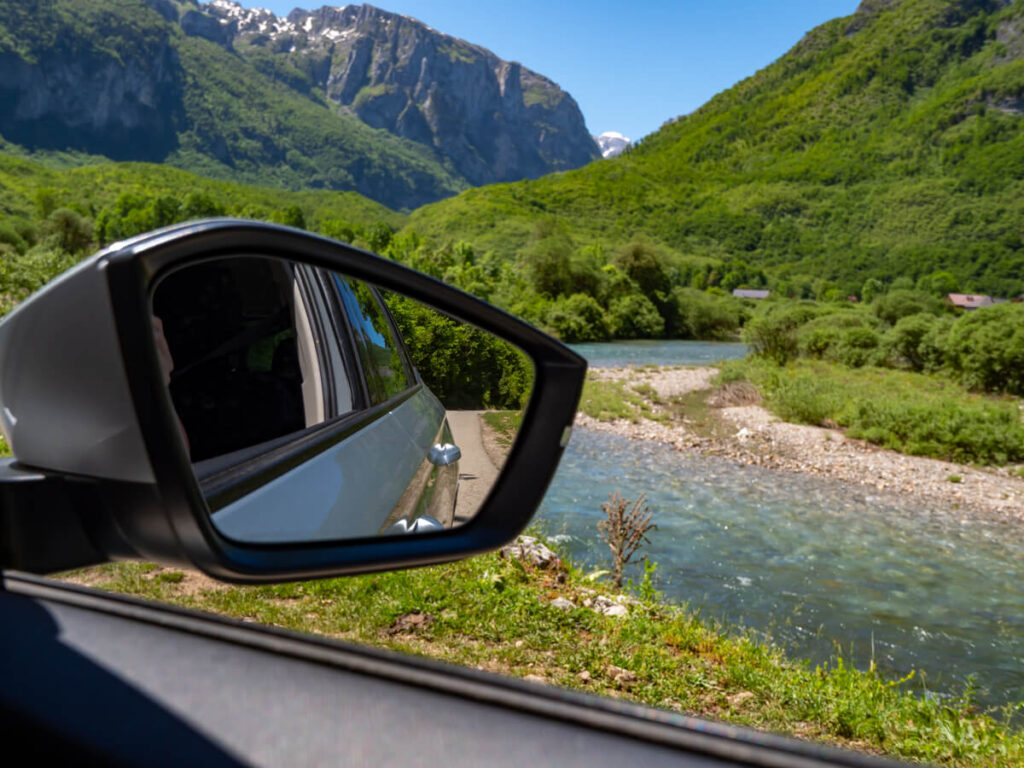
It’s easy to use the Grebaje Valley as a base to discover nearby towns like Vusanje, Gusinje, and Plav. These small mountain towns offer a glimpse into everyday life in northeastern Montenegro, with traditional restaurants, welcoming guesthouses, and easy access to many of the park’s most scenic attractions.
They’re also home to restaurants and shops, which are amenities you won’t find in the valleys. Don’t miss the beautiful Plav Lake.

10. Experience part of the Peaks of the Balkans Trail
The Grebaje Valley sits close to one of the Balkans’ most famous long-distance hiking routes. The Peaks of the Balkans Trail covers approximately 119 miles (192 km) through Montenegro, Albania, and Kosovo, linking remote villages, alpine passes, glacial lakes, and some of Europe’s wildest mountain scenery.
Even if you’re not walking the entire route, hiking a short section offers a taste of this legendary cross-border adventure.

Where to stay in the Grebaje Valley
Accommodation in Grebaje Valley is limited, but that’s part of its appeal. Rather than large hotels or resorts, you’ll find a handful of family-run guesthouses, mountain lodges, and traditional katuns nestled beneath the towering mountains.
Choosing where to stay in Prokletije National Park can make your experience. Staying in the valley also means you can walk straight to the trailheads for the Three Peaks and Volušnica without needing to drive anywhere first.
Wherever you choose, we’d highly recommend staying in a locally owned katun. Most accommodation includes free parking, which is handy if you have a rental car in Montenegro.
If accommodation in the Grebaje Valley is fully booked, Gusinje is the next closest option, which has a wider choice of guesthouses, restaurants, and supermarkets, followed by the Ropojana Valley if you want that off-grid vibe.

Top Grebaje Valley Guesthouses

How to get to the Grebaje Valley
The Grebaje Valley is best reached via the towns of Plav and Gusinje. Although it feels wonderfully remote, the drive is straightforward and well worth the effort for the scenery alone.
By car
Renting a car is by far the easiest way to reach Grebaje Valley. From Podgorica, the journey takes around 3 hours, while Gusinje is around 20 minutes away.
The road is paved almost all the way, with only a short gravel section after the national park entrance that is suitable for normal cars.
If you’re worried about driving in Montenegro, Prokletije is a great place to start your road trip, as the roads are so quiet – but you do need to watch out for cows on the remote roads.
By bus
There are no buses to Grebaje Valley itself. Instead, take a bus to Gusinje or Plav, then arrange a taxi to the valley. While it’s technically possible to walk from Gusinje, the journey is around 4.5 miles (7 km) along an exposed road without pavements, so we wouldn’t recommend it unless you’re travelling light.
By taxi
Taxis are readily available from Gusinje and can also be arranged through most guesthouses if you’re staying nearby. This is the easiest option if you’re visiting without your own car.

When to visit the Grebaje Valley
Like the rest of the mountains in Prokletije National Park, the Grebaje Valley is very seasonal. We think the best time to visit the Grebaje Valley is from mid-June to mid-September, when hiking conditions are generally at their best.
In the shoulder season (mid-May to mid-June and late September to October), the weather is usually a little cooler, accommodation is easier to book, and the valley feels far more peaceful than during the peak summer holiday period.
Outside the main hiking season, conditions become much less predictable. Snow can linger on the higher peaks until June, while October often brings the first snowfall back to the mountains. Although the valley is still beautiful for a short walk or scenic drive, many of the classic hikes become unsuitable without the right equipment and experience.
We visited at the very end of May and couldn’t have asked for better conditions. The valleys and meadows were lush and green, wildflowers were still colourful and blooming, and although clouds occasionally gathered in the afternoon, mornings were consistently clear for hiking.
How long to stay in the Grebaje Valley
The Grebaje Valley is fairly compact, but it’s one of the best hiking bases in Prokletije National Park. How long you stay really depends on how many trails you want to tackle, as some of Montenegro’s best hikes start right from the valley.
We think 2-3 days is ideal for most visitors. This gives you enough time to hike one or two of the classic routes, such as Volušnica or the Three Peaks, enjoy the scenery without rushing, and spend an evening soaking up the peaceful atmosphere once the day hikers have left.
If you’re only planning a single hike, 1 day is enough. Many people visit the Grebaje Valley as a day trip from Plav or Gusinje, completing one trail before returning in the evening. We did this by doing the Three Peaks hike on one day, but staying 5 nights in the neighbouring Ropojana Valley to soak up the atmosphere and see other sights.
What to pack to visit the Grebaje Valley
It’s best to be prepared when you visit the Grebaje Valley. Don’t forget to pack your:
Leave your drone in your accommodation, as it’s illegal to fly in the national park. You will need a permit before importing it into Montenegro anyway.
Read next:
Visiting Prokletije National Park: Montenegro’s Accursed Alps
10 Best Hikes in Prokletije National Park From Easy to Expert
Where to Stay for Prokletije National Park: Best Valleys, Towns & Katuns
Ropojana Valley Travel Guide & Best Things to Do
