5 Local Accommodations in Montenegro Reviewed: Cool Katuns + Eco Hotels

Discover our favourite places to stay in Montenegro, from locally-owned, rural wooden cabins to independently owned boutique hotels.

This post may contain affiliate links, which means we might earn a small commission on anything purchased through these links at no extra cost to you. Learn more on our disclaimer page.
One of our favourite things to do when planning a trip is to research really one-of-a-kind accommodation. We’ve found it doesn’t just elevate a trip, but it becomes part of the experience. From traditional stone houses and mountain katuns to rustic lodges tucked into national parks and historic hotels full of character, there are some really unique places to stay in Montenegro.
We’ve already got a whole post on the best places to visit in Montenegro, from the popular towns on the Bay of Kotor and busy Budva to inland national parks perfect for hiking, to help you choose where to base yourself and the top locations to visit, whether you’re a first-timer or repeat visitor. So this guide is going to focus specifically on unique and unusual accommodation to book.
We stayed in some awesome, locally-owned accommodations in Montenegro during our road trip itinerary, many of which are preserving traditions and heritage that are regionally important, and we wanted to share them. In this guide, we’ll share some of the most authentic places to stay in Montenegro, including traditional katuns, mountain lodges, historic hotels, and characterful rural accommodation, with practical tips to help you choose the right stay for your trip.
Top Montenegro accommodations
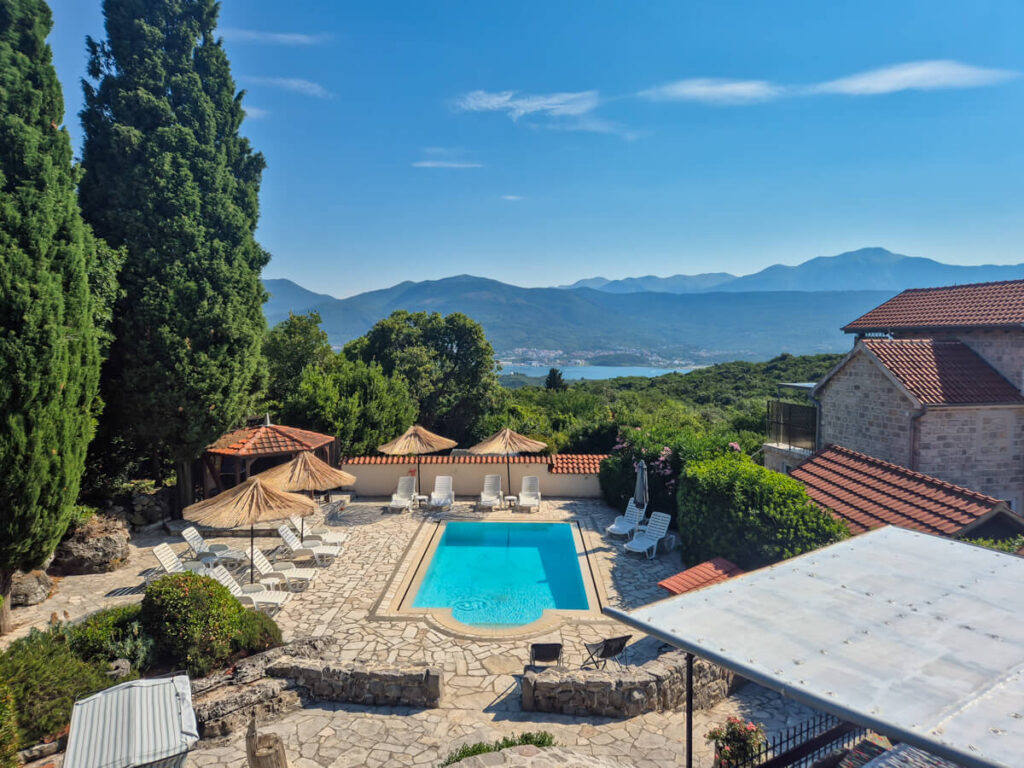
More from Montenegro
Where to stay in Montenegro?
Choosing where to stay depends on what you want from your trip. The Bay of Kotor is ideal for historic towns, coastal scenery and boat trips, while Budva is better suited to beaches, nightlife, and a livelier resort atmosphere. We’ve done a whole breakdown of the various towns and hotels on the Bay of Kotor to help you choose if you’re staying in that area.
Inland, Durmitor National Park is a favourite for mountain scenery and outdoo
r adventures, while the area around Biogradska Gora offers ancient forest, hiking and a quieter rural feel. In the far north, Prokletije National Park is particularly appealing if you want dramatic alpine landscapes and a sense of getting away from it all.
If you want something different to the beaches and mountains, Lake Skadar offers wetlands and traditional fishing villages, while the surrounding wine region showcases some stunning countryside and is great for oenophiles and foodies.
If you’re searching more broadly for the best hotels in Montenegro, you’ll find plenty of options along the coast, from luxury hotels with sea views and resort facilities to boutique hotels set inside historic buildings or tucked away in quieter corners. There are also plenty of well-known international hotel brands, particularly around the larger coastal towns.
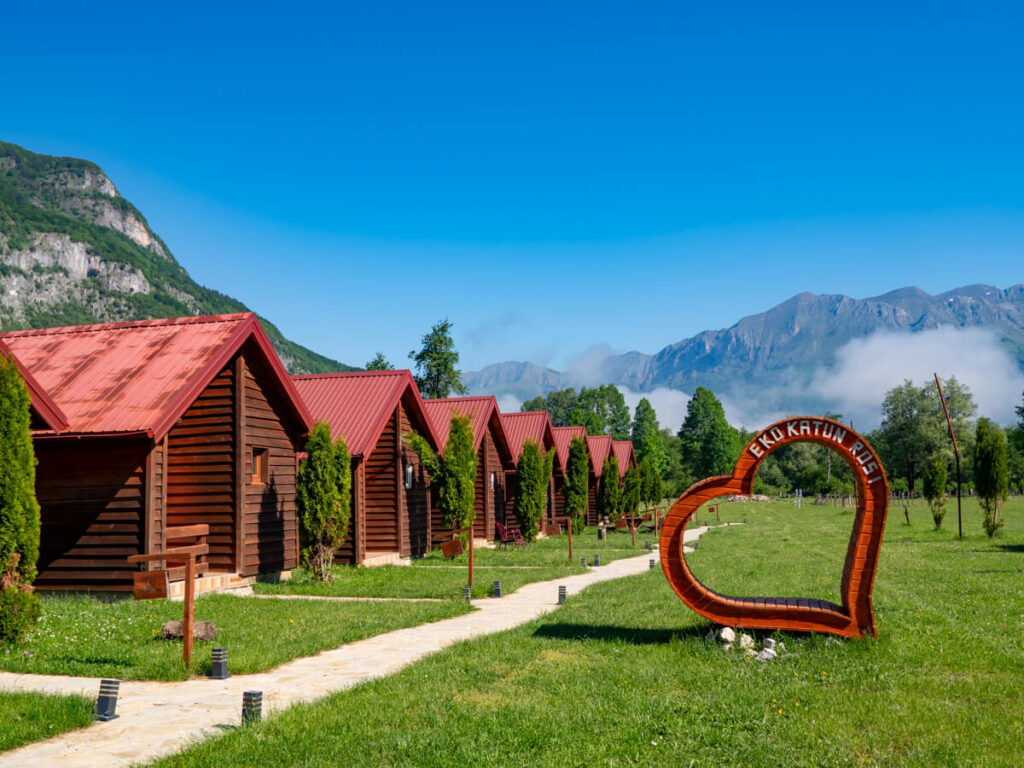
Planning a trip to Montenegro?
Montenegro is gaining popularity quickly, so be sure to book in advance as early as possible!
Top Experiences in Montenegro
Top Hotels in Kotor
Rent a Car in Montenegro
Best eSIM for Montenegro
A quick introduction to accommodation in Montenegro
Montenegro is a small country, but the range of places you can stay is surprisingly varied. Along the Adriatic coast, you’ll find everything from modern holiday apartments and boutique hotels to luxury resorts overlooking the Bay of Kotor.
Head inland, though, and accommodation becomes more traditional stone houses, family-run mountain lodges, wooden cabins surrounded by forest, and rural guesthouses where the owners are the ones cooking your dinner.
If you’re planning a trip to Montenegro that goes beyond the usual coastal towns, choosing somewhere with a bit of local character can be a brilliant way to experience another side of the country.
When we started researching unique places to stay in Montenegro, we came across a few new terms:
It’s worth noting that the names alone don’t guarantee formal environmental certification or particularly sustainable practices, so you should still do your research and read reviews before booking.

Where is the most authentic place to stay in Montenegro?
While the coast has no shortage of modern apartments and boutique stays, heading inland opens up a completely different side of the country, with opportunities to stay in traditional mountain settlements and experience a slower, more authentic pace of life.
The appeal of staying in Montenegro’s mountain and countryside accommodation is that the setting is often as much a part of the experience as the property itself. You can wake up to views of dramatic limestone peaks, spend the afternoon walking through a national park, then return to a family-run guesthouse for a home-cooked meal of local Montenegrin dishes.
But while mountain accommodation can be wonderfully atmospheric, it’s not always the most comfortable or convenient, and some traditional stays are much more basic than their photos suggest. Knowing what to expect makes a big difference, especially if you’re planning to venture away from the coast.
Many of the most rewarding accommodations do require renting a car and driving, but some will be able to arrange transport for you if you don’t fancy driving in Montenegro.
In places where tourism is still developing, a local stay can also be a good way to travel more responsibly and an opportunity to meet the people who live there and learn about traditions that aren’t always visible along the coast.
We wanted to cover some of the really cool places we stayed in Montenegro. The places where we met the owners, heard the stories behind the buildings, and got a better sense of the communities we were visiting. Here’s where we stayed and loved.

1. An eko katun near Prokletije National Park
If you want to experience a more traditional side of Montenegro, staying in an eko katun near Prokletije National Park is a great alternative to the usual hotels and apartments. These rural mountain settlements offer a chance to stay closer to the landscape and the communities that have lived here for generations, often in traditional wooden buildings with mountain views on the doorstep.
Staying in Prokletije National Park was one of our favourite parts of the country, with jagged limestone peaks, amazing hikes, and the most beautiful views. It’s one of the most remote places you can get while still offering comfortable cabins and fun things to see and do.
While many visitors choose to stay in the beautiful Grebaaje Valley, which is home to the trailhead for the incredible Three Peaks hike, we chose the neighbouring Ropojana Valley.

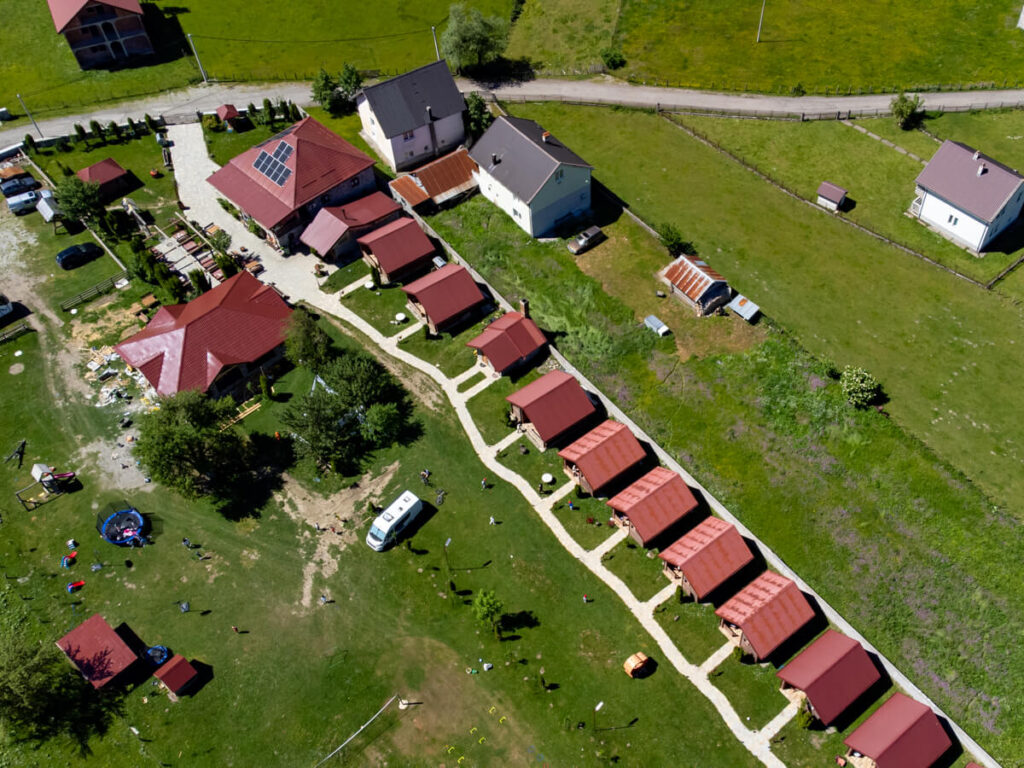
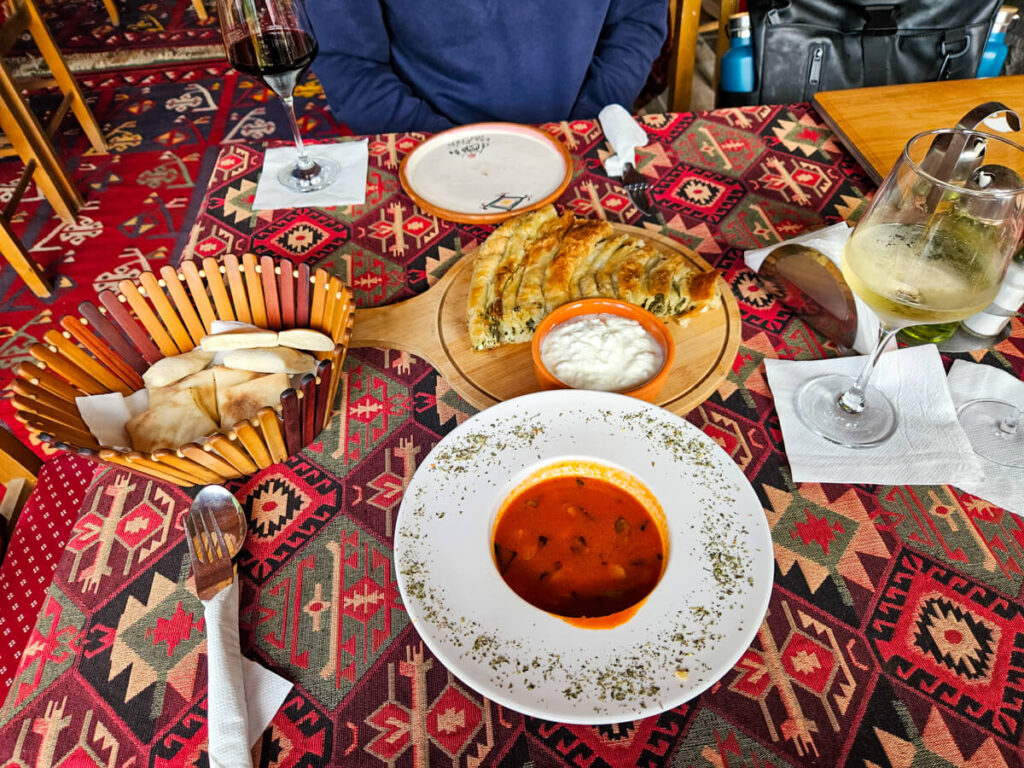

We stayed in Eko Katun Rosi, a family-owned property that has been run by the Rosi family for over a decade. The house has a much longer history, having belonged to the family’s many-greats-grandfather, and the family has worked to preserve its traditional architecture.
Our cabin was super spacious and comfortable; the setting was so peaceful, and we loved the homemade meals, with plenty of veggie options. It was the perfect base to explore the valleys and mountains, being super close to Prokletije’s best hikes, while still feeling secluded. Plus, the staff were all so lovely. You can read our Eko Katun Rosi review for more.
Tourism is beginning to attract more attention to Prokletije, so locally owned places like this are worth supporting if you want to experience the region’s traditions and support places that value the preservation of traditions over profit.

2. An etno village near Biogradska Gora National Park
An etno village is a good option if you’d like to stay in a rural setting without giving up the comfort of a private cabin. These small accommodation complexes often use traditional building styles and materials, with individual cabins giving you more space and privacy than a standard hotel room.
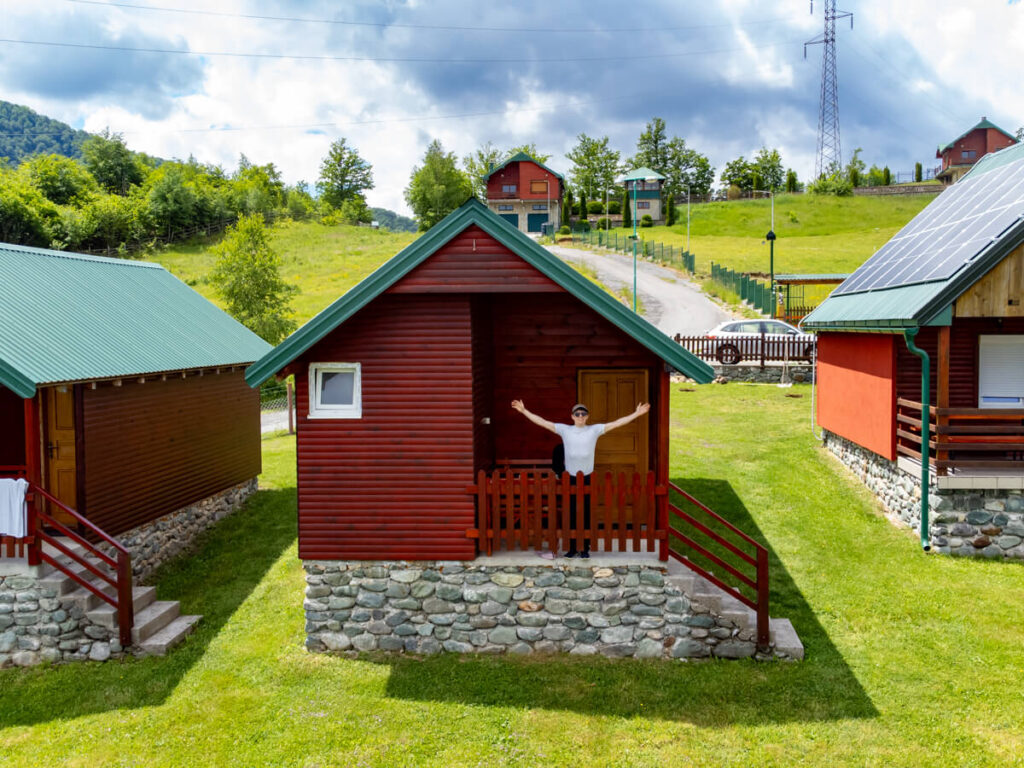
We chose to stay near Biogradska Gora in locally-owned accommodation rather than in one of the local towns. We opted for Eco Village & Resort Ćorić, a collection of cabins at around 1,000 metres (3,280 ft), set apart from the owner’s own home further down the mountain.
Radoje Ćorić built the cabins himself, working over three summers to bring the project together, and has continued developing the tiny village over the past decade. He and his wife were lovely.
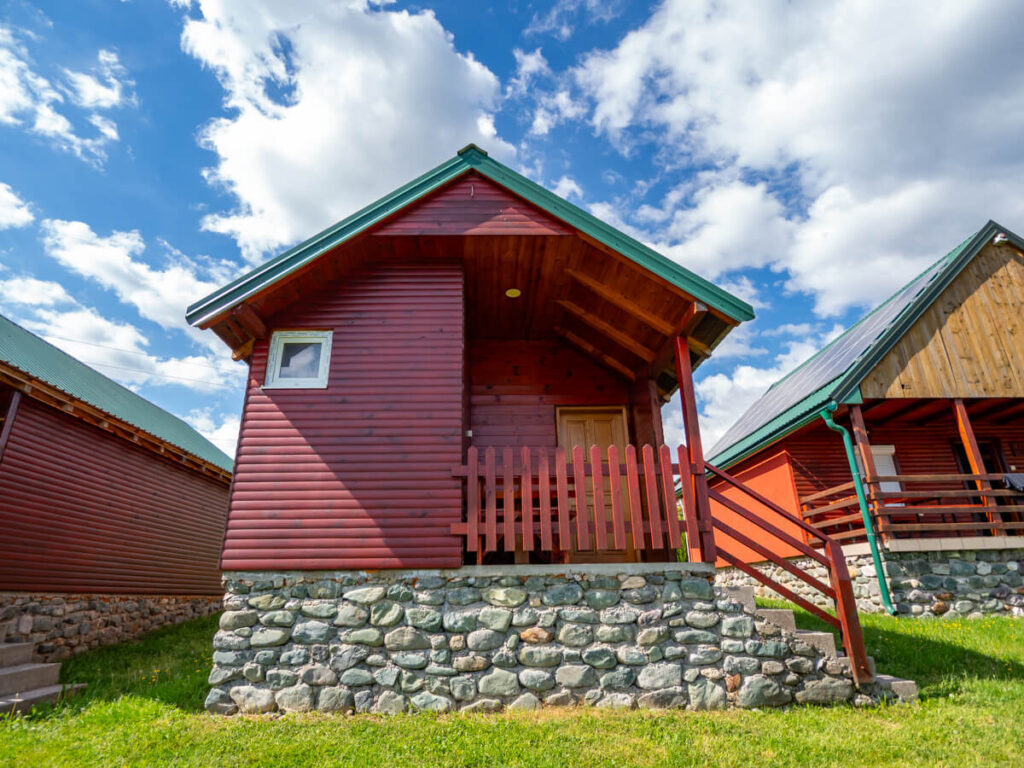
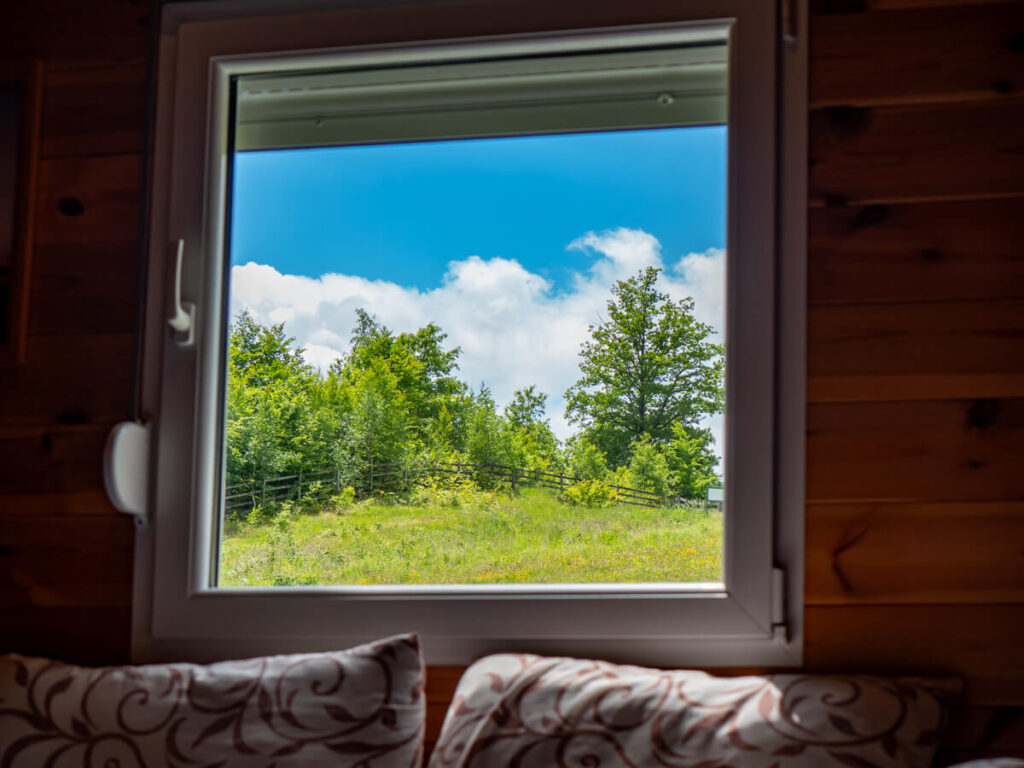
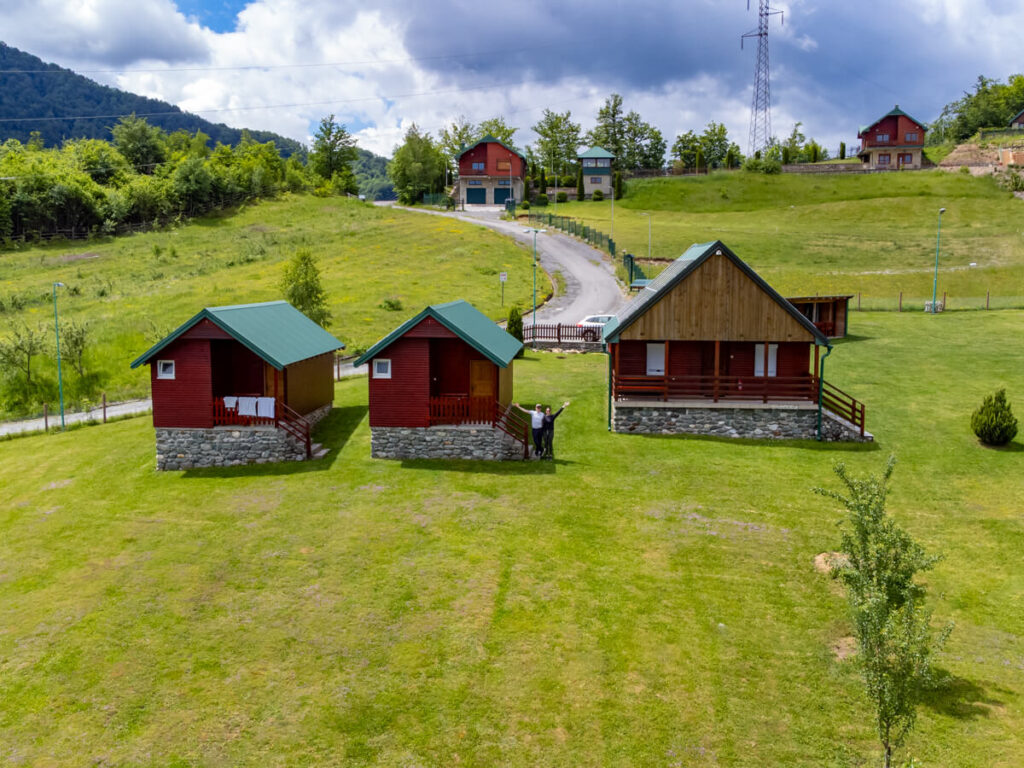

This stay really fulfilled our cabin-in-the-woods dreams, with incredible views over the valley, a secluded setting, and a super spacious and comfortable interior. We used it as a base to slow down for a few days, getting some work done, and just resting after some constant on-the-go travel. It was blissful.
But winter conditions here are serious – Radoje told us that it’s normal to get a metre of snow over winter for around 3 months, and that temperatures drop to -10°C (14°F). So we’d plan your visit for spring to Autumn.
3. A cosy cabin in Durmitor National Park
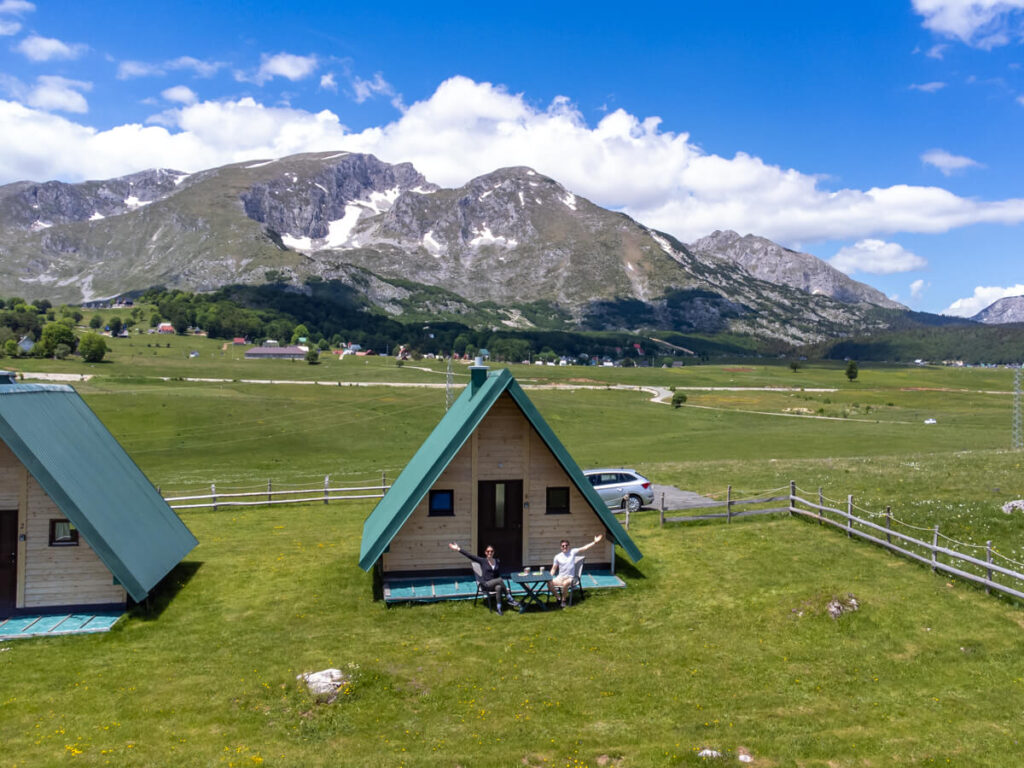
We decided pretty early on that we’d much rather wake up to mountain views when staying in Durmitor than a conventional hotel in Žabljak – and that’s what we did. Instead of staying in the (pretty boring) gateway town, we opted for a cabin in the countryside with views of Savin Kuk.
The area has everything from simple wooden cottages to larger chalets with kitchens, terraces, and fireplaces, so you can choose between a rustic base for some of Montenegro’s best hiking and somewhere more comfortable for a longer stay. We opted for one of three Peaceful Mountain A-frame Cottages.
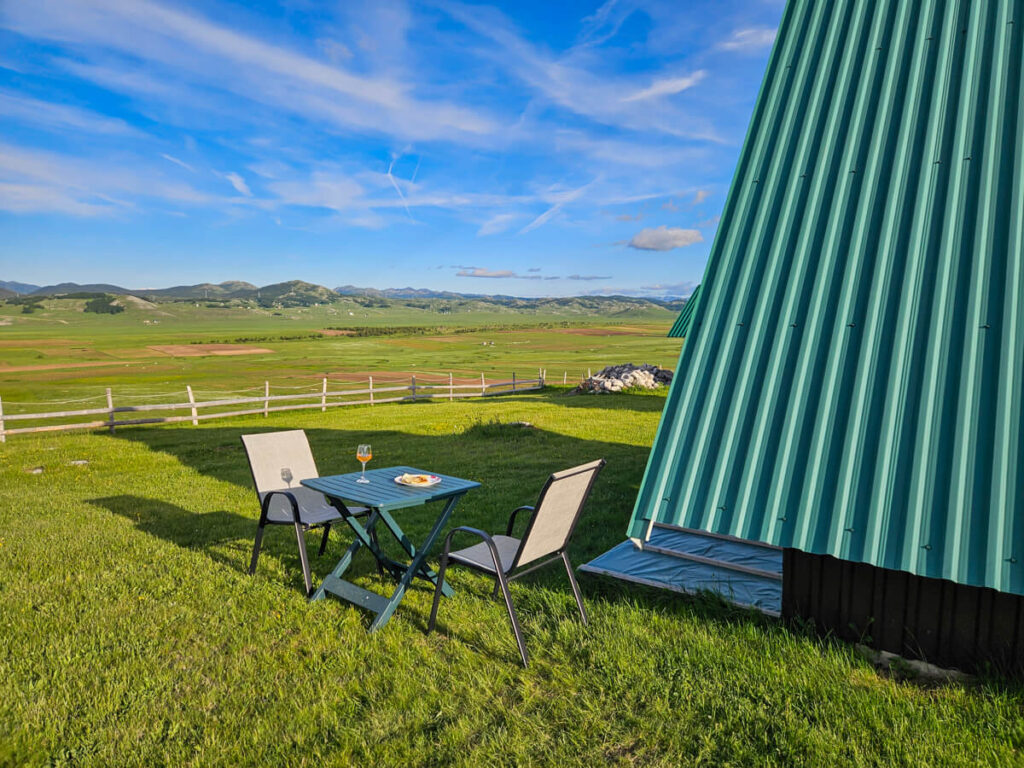

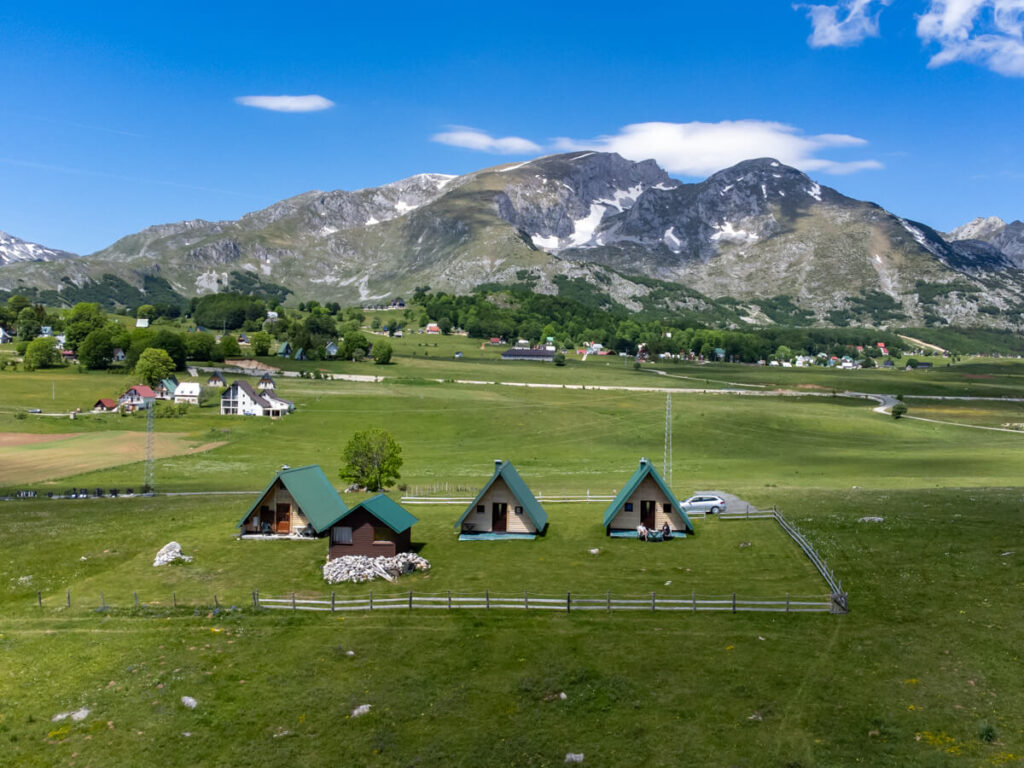

Easy access to Durmitor’s hiking trails and lakes was important to us, as driving times can add up if you’re staying further outside town. We were about equidistant from Žabljak and the entrance to the national park by Sedlo Pass, which was perfect for being close to amenities, but also the most beautiful part of the park.
This meant we had a comfortable base with incredible views, while also having easy access to things to do around Durmitor like the Devil’s Lake and the trailhead for the Bobotov Kuk hike, which was our main reason for visiting.
Halfway through our week in Durmitor, we did change accommodation and also stayed in a local guesthouse, Guesthouse Planinarski dom Neviđen’o, in the small town of Plužine. It actually worked really well, as it put us closer to the Black Lake, the trailhead for Ćurevac Peak, and the start of the Durmitor Ring scenic drive.
4. A local vineyard in the Wine Region
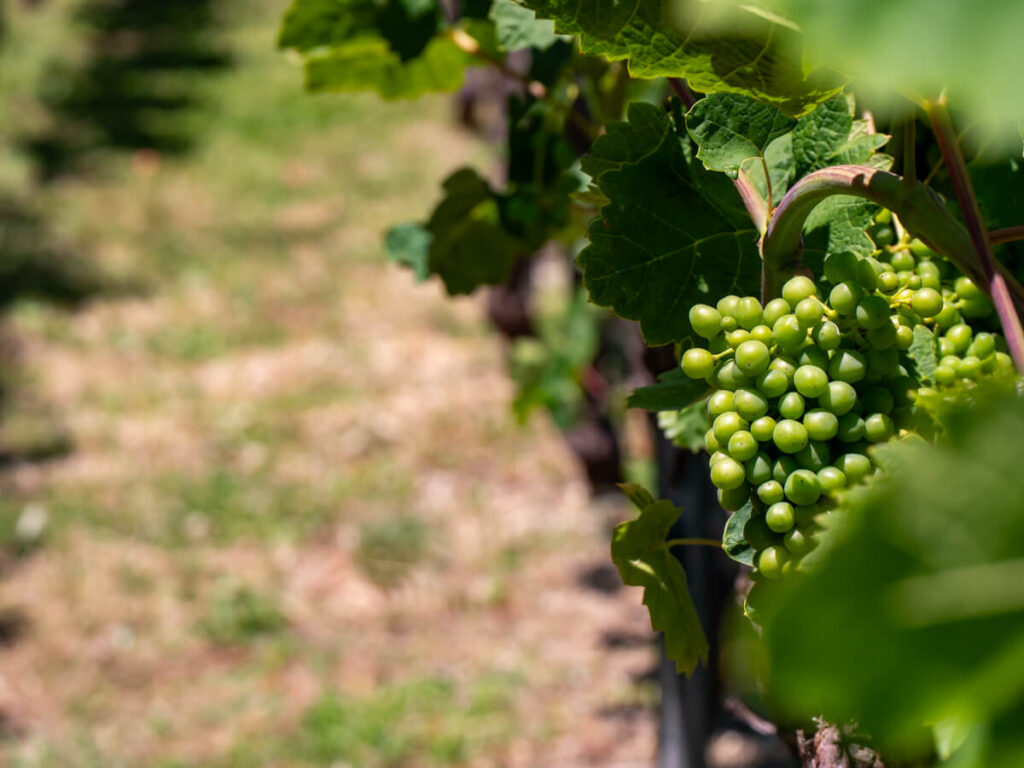
Montenegro’s wine region is a lovely place to stay if you’d like to experience a quieter, more rural side of the country. Staying around Virpazar and Lake Skadar, you’ll find family-run vineyards, stone cottages, and small wine estates where the focus is on local produce and the surrounding countryside rather than resort facilities.
Staying at a vineyard also means you can enjoy wine tastings without having to drive back to your accommodation afterwards, which was a big bonus for us. We tried a few different accommodations in the area over our week or so around Lake Skadar. Eco Winery Lipovac Apartments was one of our favourites, nestled in the stunning countryside. The host was so lovely, the wine was amazing, and we loved learning more about local wines and horticulture.
Closer to the lake, Etno House Mira was a comfortable apartment run by the loveliest local couple and their son, with some interesting homemade wines and rakijas. Staying closer to Virpazar or in the small wine village of Godinje is a good option if you want to be close to Lake Skadar boat trips and other fun things to do like forts, islands, and monasteries.



We also spent a couple of nights in the historic settlement of Rijeka Crnojevića, which is close to the iconic horseshoe bend viewpoint, Pavlova Strana. We stayed in a local hotel, Hotel S Family Jovićević, which was perfectly comfortable and had a lovely on-site restaurant with river views.
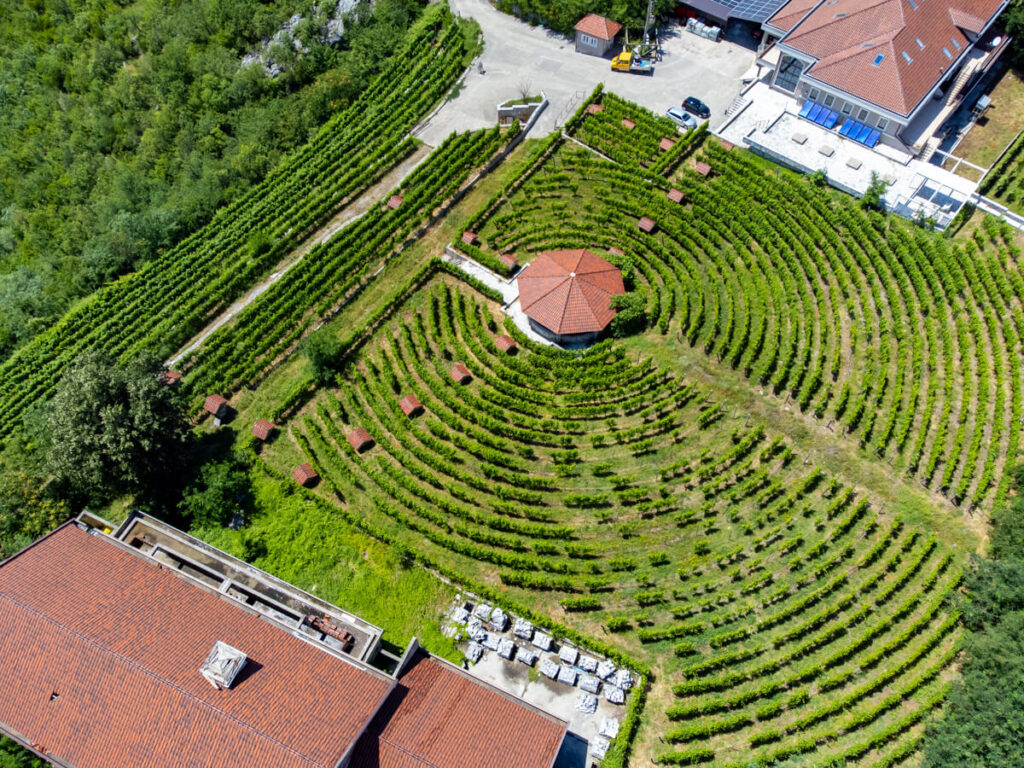
If we returned, we’d probably lean into a proper relaxing couple’s break and stay in a more boujee vineyard like Eco Resort Cermeniza or Eco Villas Merak, which offer pools and tastings.
5. A boujee hotel in Budva
If you want a more traditional hotel experience without going commercial, Budva has no shortage of accommodation, from budget apartments and guesthouses to boutique hotels and luxury stays.
It’s probably the place we saw the most international hotel chains and large resort complexes, which is partly why staying in an independent hotel felt so much more personal, intimate, and non-corporate.
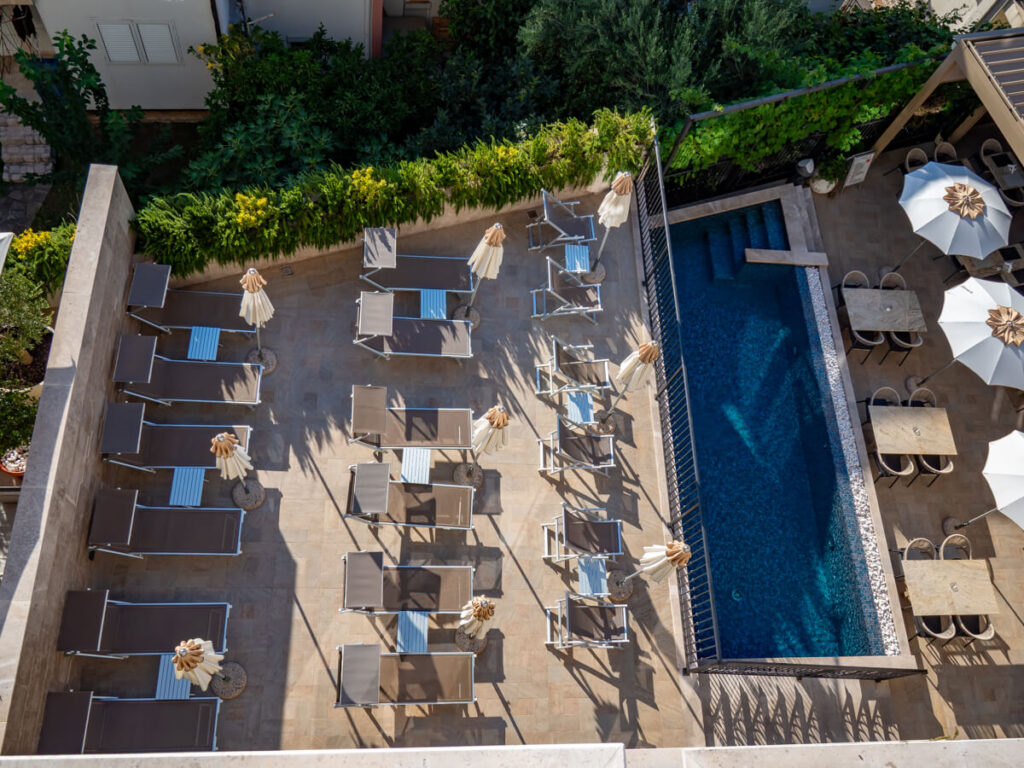
We chose Hotel Pima, an independent, family-owned boutique hotel within walking distance of Budva’s Old Town, with an outdoor swimming pool, a sun terrace, free parking (super handy in such a congested town), and breakfast included.

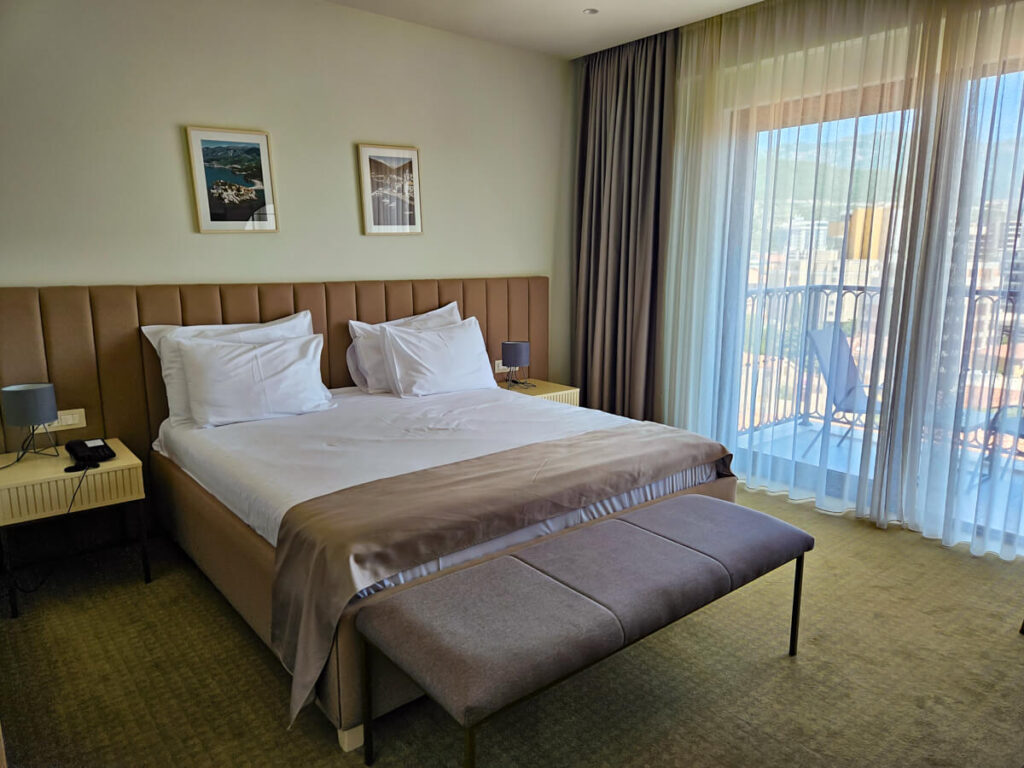
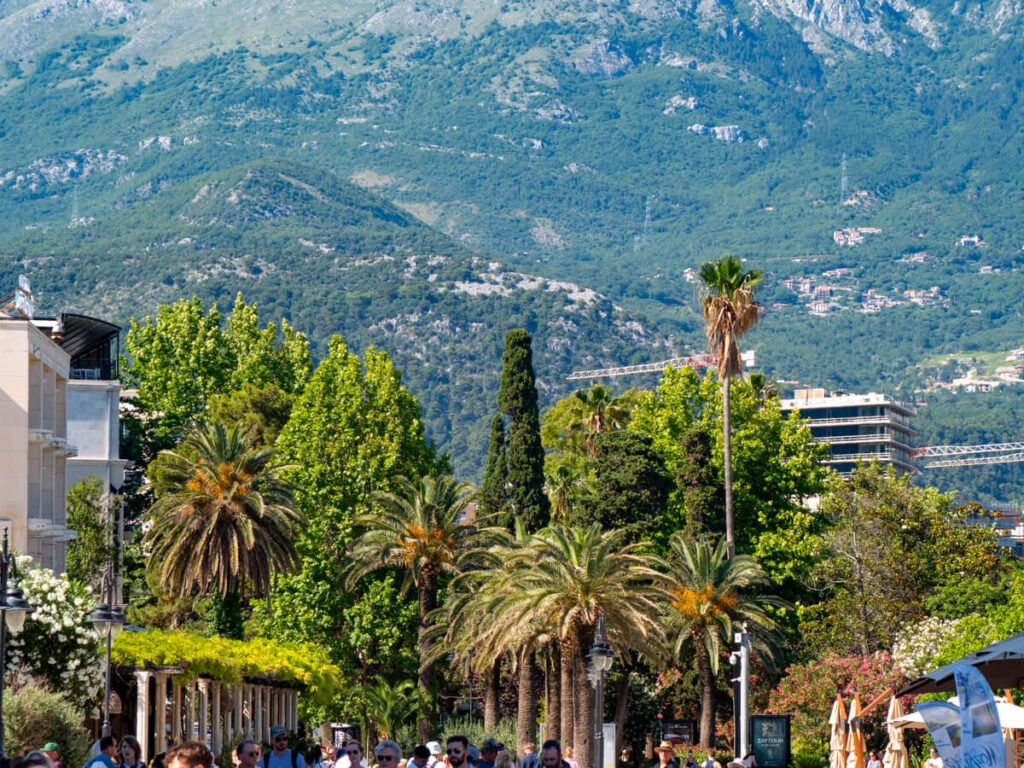

It has a quieter setting away from the busiest streets, while still being close enough to walk into town for the main things to do, restaurants, bars, and sightseeing. For us, it was a perfect base for SCUBA diving in Budva, and we really appreciated the more modern amenities than some of the more rural places we’d stayed.
It’s locally managed and staffed by a Montenegrin team, and everyone we met was so friendly. It’s a good option if you want comfortable, contemporary accommodation with practical facilities, without staying in one of Budva’s much larger hotel complexes.
Tips for booking accommodation in Montenegro
There’s an almost overwhelming amount of accommodation in Montenegro. Here’s what you should consider when booking.

Final thoughts on where to stay in Montenegro
Some of the most interesting places to stay in Montenegro are rooted in the country’s traditional way of life, particularly in the mountainous north, where seasonal settlements and rural communities have existed for generations. Others are newer projects inspired by that heritage, with locally built cabins, restored family homes, and eco-conscious retreats that make the most of their surroundings.
We’d encourage you to look beyond the big coastal hotels and consider locally owned guesthouses, family vineyards, and traditional mountain accommodation. These stays can give you a closer connection to the places you’re visiting, while helping keep more of your spending within local communities. As Montenegro becomes more popular, it’s worth thinking about the wider disadvantages of tourism and how overtourism can affect the places that attract us in the first place.
Our guide to sustainable travel explains some of the things to consider, including the risk of tourism leakage, when money spent by visitors flows out of the destination rather than benefiting local communities.
Ultimately, we’d choose accommodation that suits the trip you want to have, but also gives something back to the place you’re visiting. Montenegro’s traditional villages, family-run vineyards, and mountain communities are part of what makes the country so distinctive, and supporting them is one way to help preserve that character as tourism grows.
Read next:
Ultimate Montenegro Travel Guide: Bays, Beaches & Black Mountains
2-3 Week Montenegro Road Trip Itinerary: From Adriatic Coast to Alpine Altitudes
12+ Authentic Places in Montenegro We Love: Which to Visit + Where Not to Go
22 Magnificent Things to Do in Montenegro Beyond the Tourist Trail
Traditional Foods in Montenegro to Try & Meat-Free Options for Local Dishes
All 5 Montenegro National Parks Compared + Our Favourites
A Handy Guide to Hiking in Montenegro & Our Top 10 Trails
A Detailed Guide to Driving in Montenegro + Our Top Tips
Renting a Car in Montenegro: Complete Guide + Kombo Rent a Car Review
Our Montenegro Destination Guides:
