Top 20 Places to Visit in Guatemala + Where Not to Go

Discover where to go in Guatemala, from first-time destinations and tourist spots to hidden gems and where to avoid, in this guide.

This post may contain affiliate links, which means we might earn a small commission on anything purchased through these links at no extra cost to you. Learn more on our disclaimer page.
Guatemala may not be the most famous country in Central America, but it’s one of the most underrated. There are lots of fun things to do in Guatemala, and the country’s packed with incredibly diverse destinations, from volcano-ringed lakes and colourful colonial cities to dense jungle, ancient Mayan ruins, and a laidback Caribbean coast. For a relatively small country, the variety is impressive, but with long travel times, limited infrastructure, and tricky logistics, you’ll need to be selective about where you go.
We’ve travelled all across Guatemala twice and quickly realised that not every stop lives up to the hype, while others completely exceeded our expectations. Some places are must-visits, while others are better skipped if you’re short on time. In this guide, we break down the best places to visit in Guatemala, including the highlights, hidden gems, and underrated spots. Whether you’re planning a quick trip or a longer adventure, this will help you decide where to go in Guatemala, whether it’s your first time in the country or you’re a return traveller.

More from Guatemala
Where to stay in Guatemala
Guatemala has a huge range of accommodation, from boutique colonial hotels in Antigua to jungle lodges near Semuc Champey. Whether you’re after luxury, mid-range comfort, or budget-friendly hostels, there’s something to suit every style of traveller. Here are our top picks for where to stay in Guatemala:

The best places to visit in Guatemala
From misty highland towns and jungle rivers to Mayan ruins and black-sand beaches, Guatemala is packed with unique places to visit. The country is easy to travel through, meaning you can go from colonial cities to remote natural wonders in just a few hours. Some places are unmissable, while others make a better base for exploring the wider area.
Top 10 places to visit in Guatemala
Don’t have time to read the whole list? Here are the top 10 places to visit in Guatemala that we’d recommend you visit:

1. Tikal National Park
Deep in the northern jungles of Petén, Tikal National Park is one of the most important archaeological sites of the ancient Mayan world. The vast complex dates back as early as 400 BCE and once supported a population of tens of thousands, with towering temples rising above the rainforest canopy.
This is one of the most unique places in Guatemala – and the world – as it’s one of the few cultural and natural UNESCO World Heritage sites. It’s also recognisable as one of the settings of Star Wars: A New Hope. Walking through the site, you’ll pass pyramids, plazas, and causeways, often accompanied by sightings of howler monkeys, coatis, and tropical birds like toucans.
Guided Tikal tours are a great way to visit, providing context on the city’s history, astronomy, and eventual decline, which is still debated today. Sunrise tours are especially popular when mist hangs over the jungle, the temples slowly emerge from the treetops, and you can see the sun rise from the top of Temple IV, one of the tallest pre-Columbian structures in the Americas.

2. Flores
Flores is a small island town set on Lake Petén Itzá in northern Guatemala, connected to the mainland by a short causeway. Its pastel-painted buildings, narrow streets, and waterfront malecón make it one of the most photogenic places in Guatemala.
Flores is the main base for visiting Tikal and has direct connections to San Ignacio in Belize, so you might use it as a base if you’re backpacking through Central America, or you can fly into its airport.
There are plenty of fun things to do in Flores in its own right, from boat trips on the lake to sunset walks along the shoreline. You can rent a kayak from tour operators like Kayaks en Flores and paddle out on the lake, or head to Jorge’s Rope Swing and enjoy a half-day by the water.
There’s a good mix of hotels in Flores, from budget hostels like Los Amigos Hostel to boutique stays with lake views like Hotel Isla de Flores. Food options range from simple local eateries to rooftop spots serving international food, often overlooking the water, so you won’t be short on restaurants and bars in Flores either.

3. Antigua
Antigua is Guatemala’s best-known colonial city, set in a valley surrounded by three volcanoes: Agua, Acatenango, and Fuego. It’s a UNESCO World Heritage site in its own right, and the cobbled streets, baroque churches, and crumbling ruins reflect its past as the capital of the Spanish Captaincy General of Guatemala.
Antigua is the only place in Guatemala we loved enough to revisit on our second trip. It’s a great first-time destination in Guatemala, and there is a wealth of things to do in Antigua, from outdoor adventures to cultural experiences. Admire and photograph landmarks the iconic Santa Catalina Arch, which was originally built to connect a convent without nuns needing to go outside, or hike to Cerro de la Cruz for panoramic views over the city. Then, visit Antigua’s churches for an insight into its history of repeated earthquakes, or check out some of the many museums in Antigua to learn more about its colonial past.
There are countless boutique hostels and hotels in Antigua, many hidden in restored mansions or leafy courtyards like Casa Santo Domingo, but you’ll also find a good range of accommodation for every kind of traveller.
It also has a banging food scene (it’s one of our favourite food cities in the world), with lots of restaurants in Antigua serving every kind of cuisine imaginable, while the cafés and coffee shops in Antigua serve excellent Guatemalan coffee.

4. Acatenango Volcano
Acatenango Volcano is one of the few places in the world where you can safely watch an erupting volcano, which puts it firmly at the top of the list of places worth visiting in Guatemala. The Acatenango Volcano overnight hike near Antigua is one of the most memorable experiences in Guatemala, offering front-row views of the constantly erupting Fuego Volcano.
The tough but rewarding trek takes you through farmland, cloud forest, and volcanic terrain before reaching a high-altitude basecamp at 3,750 metres (12,300 feet) above sea level. From here, you can watch eruptions every 15-30 minutes if you’re lucky, with glowing lava and ash clouds lighting up the night sky, or hike the extra distance to get closer to the crater. In the morning, you’ll also have the opportunity to hike to the summit and see the sunrise over the valley.
Several Acatenango Volcano tour companies run the trek, including well-known operators like Wicho & Charlie’s. Conditions can be cold and windy at the top, so prepping your Acatenango volcano packing list properly is essential, especially for the overnight stay.
We missed Acatenango on our first trip and it was the highlight of our second visit, so it fully deserves the effort if you’re up for the challenge.

5. Pacaya Volcano
Pacaya Volcano is one of Guatemala’s most accessible active volcanoes, located just a short drive from Antigua. The hike is relatively short and much easier than Acatenango’s, making it a popular half-day trip.
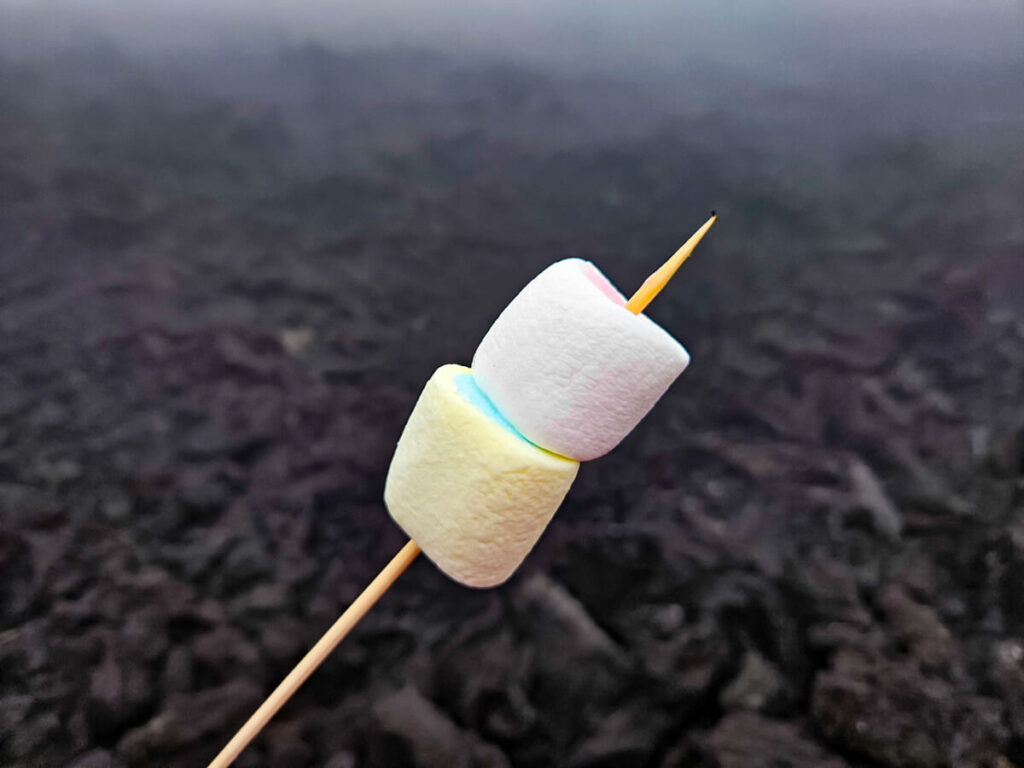
Along the way, you’ll walk across hardened lava fields and volcanic rock, with views stretching across the surrounding valleys. One of the highlights is roasting marshmallows over hot vents, where residual heat escapes from beneath the surface. You can even opt to cook pizza in the hot earth, as an extra.
Activity levels vary, but Pacaya has had frequent eruptions in recent years, with the last eruptions in 2021 reshaping parts of the landscape. It’s an easy way to experience Guatemala’s volcanic terrain without committing to a multi-day trek and deserves a place on any Antigua itinerary.
6. Hobbitenango
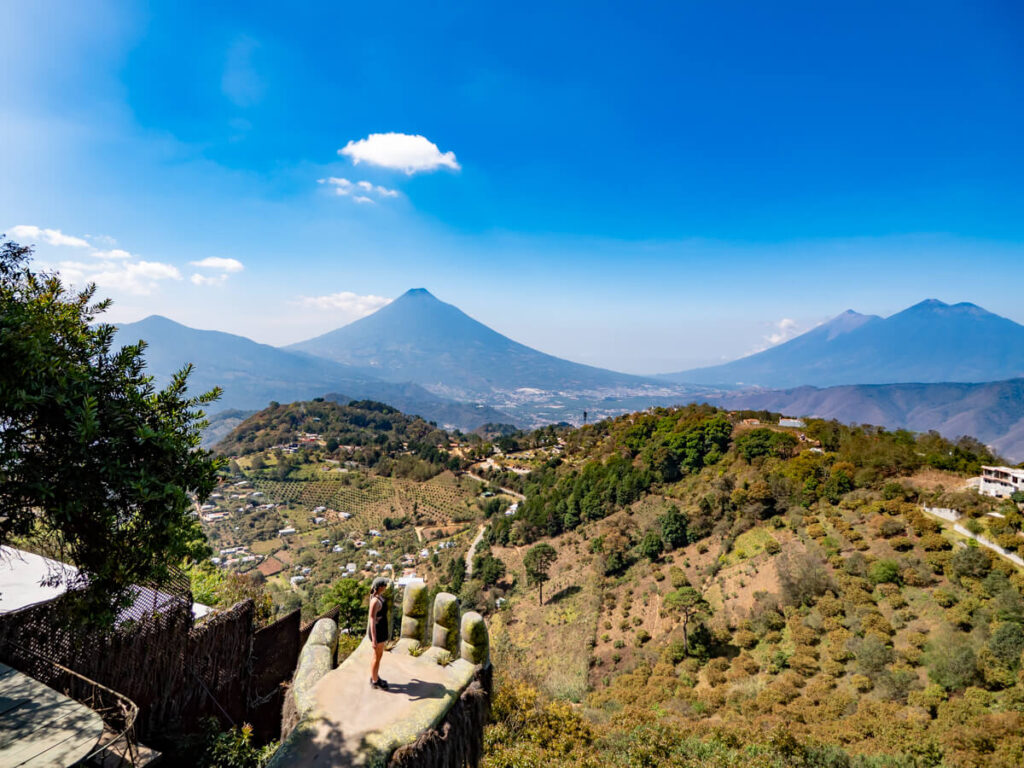
Hobbitenango is a quirky eco-park located in the highlands above Antigua, inspired by Tolkien-style landscapes. The site features themed cabins, viewpoints, and photo spots overlooking the valley and surrounding volcanoes.
It’s easy to visit Hobbitenango as a day trip from Antigua, but you can also stay overnight in unique accommodation like hobbit-style houses. As soon as I saw them, I knew I had to surprise Dan (a big Lord of the Rings fan) with an overnight stay – we woke up in the morning to epic views of the volcanoes, and it surprisingly became one of our favourite places in Guatemala.
Activities on-site include hiking trails, archery and outdoor games like minigolf, all set against a dramatic hilly backdrop. It might not be the most extreme or cultural place, but it’s worth visiting for a day or two for sheer whimsy.
7. Lake Atitlán
Lake Atitlán is often described as one of the most beautiful lakes in the world, and it’s hard to disagree when you see it. It’s surrounded by volcanoes (San Pedro, Atitlán, Tolimán) and traditional Maya villages, some only accessible by boats called lanchas.
Each of Lake Atitlán’s towns has its own character, from the artistic community in San Juan La Laguna to the nightlife in San Pedro La Laguna and the wellness focus of San Marcos La Laguna. You’ll often hear languages like Tz’utujil and Kaqchikel Maya being spoken, and see traditional dress in some villages.
Accommodation ranges from simple guesthouses to eco-hotels like MayAchik’, set in quieter areas around the lake. But there’s a wide range of things to do on Lake Atitlán beyond enjoying your hotel, including kayaking, immersing in Spanish Schools, and visiting local cooperatives. Popular hikes around Lake Atitlán lead to viewpoints like Mirador Kaqasiiwaan & El Rostro Maya (the Indian Nose), which offer sunrise views over the lake and its volcanoes and are some of the best views we saw in Guatemala.

8. El Paredón
El Paredón is a small beach town on Guatemala’s Pacific coast, known for its black sand beaches and surf culture. It has grown in popularity in recent years, but still feels relatively low-key compared to larger coastal destinations in Central America.
Surfing in El Paredón is the main attraction, with consistent waves suitable for both beginners and more experienced surfers. There’s a variety of places to stay in El Paredón, almost all offering surf lessons and board rentals.
Restaurants in El Paredón range from casual beach cafés to more modern spots serving international dishes, perfect for date night. We enjoyed dining out, but there are more things to do in El Paredón beyond surfing and eating, including mangrove kayaking tours and releasing baby turtles. It’s a good place to unwind for a few days, and a refreshing break from high-altitude destinations, but be warned, it’s really hot!

9. Monterrico
Monterrico is another Pacific coast destination, known for its mangrove ecosystems and wildlife. It’s one of the lesser-visited places in Guatemala, and not many tourists visit here, but you might be tempted to add it to your itinerary due to one thing: whale watching.
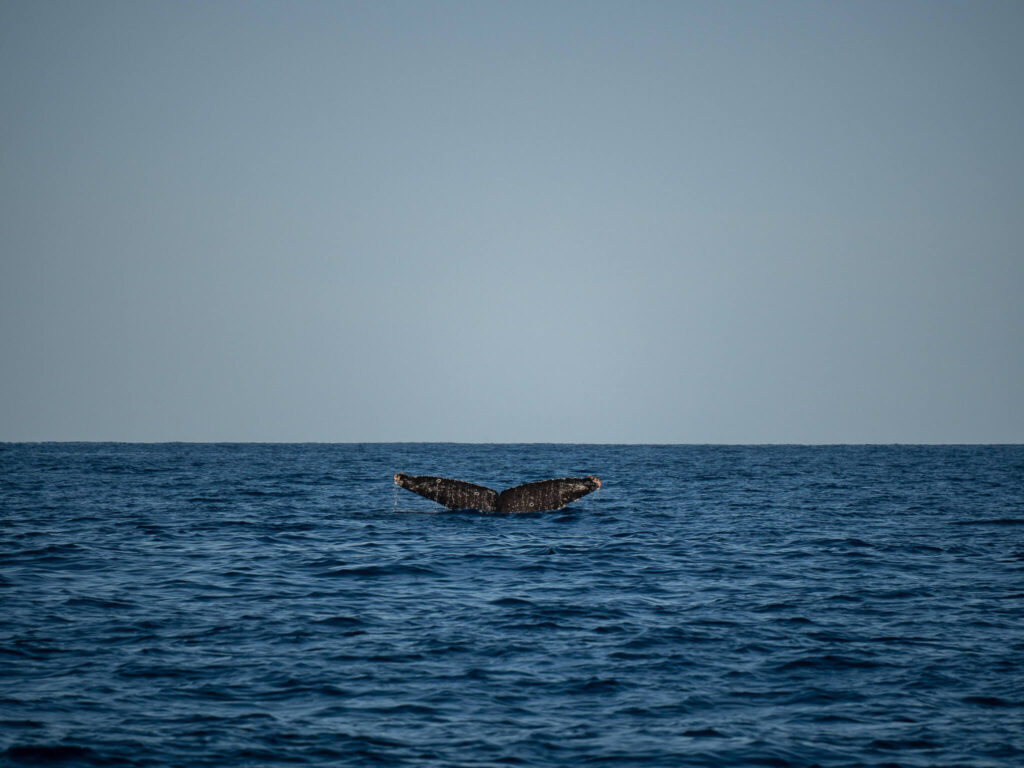
Humpback whales pass along the coast here during their seasonal migration. The best time to visit Guatemala for whales is between December and April, with the peak in January to March, and a few local companies like Ballenas Guate and GuateGo Adventures offer guided trips to spot them.
It’s not as famous or affordable as hotspots like Baja California Sur or Costa Rica’s Pacific Coast, but it’s still a unique chance to see whales in Central America.
The nearby Biotopo Monterrico-Hawaii National Park is also home to other species like herons, crocodiles, and sea turtles. Boat tours through the mangroves offer a chance to explore these waterways and learn about the local ecosystem. During certain times of the year, you can even see turtle conservation projects releasing hatchlings into the ocean.
10. Semuc Champey
Semuc Champey is one of Guatemala’s most unique natural landscapes, located deep in the jungle in the heart of the country. The site is known for its tiered, turquoise limestone pools that sit above an underground river.
You can swim in the pools, hike to the mirador (viewpoint), explore the nearby Ka’an Ba Cave, and go river tubing on the Cahabón River.
The surrounding area is remote, which adds to the sense of adventure in getting there, which requires a full travel day. Hostels and hotels in Semuc Champey are nestled in the jungle or along the river, with a mix of hostels and eco-lodges for every budget.
We first saw Semuc Champey on a nature documentary, and it was one of the harder places in Guatemala to get to, but it’s well worth the journey.

11. Lanquín
San Agustín Lanquín is the small town that serves as the gateway to Semuc Champey. It’s surrounded by jungle-covered hills and has a laidback, rural atmosphere.
While Lanquín itself isn’t really notable when it comes to planning a Guatemala itinerary, many visitors stay here before or after visiting the pools, as it’s a convenient hub and where the shuttles drop off and depart from.
Accommodation ranges from basic hostels to riverside lodges and is more affordable than the more remote lodges closer to Semuc Champey itself. The town is pretty quiet, with a handful of local restaurants, shops, and colourful street art.
The nearby Lanquín caves (Grutas de Lanquín) are another highlight – they’re similar to Belize’s cave experience, like Actun Tunichil Muknal (the ATM Cave), St Herman’s Cave, and Rio Frio Cave in the Mountain Pine Ridge Forest Reserve – especially at sunset when bats stream out in huge numbers.

12. Río Dulce
Río Dulce is a lush river region in eastern Guatemala, connecting Lake Izabal – the largest lake in Guatemala – to the sea.
Boat trips along the river are the main activity here, passing hot springs, small riverside communities, and a canyon of towering limestone cliffs. The area is also home to the Castillo de San Felipe de Lara (similar to Bacalar’s Fort of San Felipe in Mexico, with which it shares its name), a colonial-era fort built to defend against pirate attacks.
One of the best things to do in Río Dulce is to stay in a riverside lodge and relax, with accommodation ranging from waterfront hostels to secluded eco-hotels accessible only by boat. There’s a slower pace of life here, with kayaking, swimming, and wildlife spotting all popular ways to spend the day, making it one of Guatemala’s most relaxing destinations.

13. Livingston
At the end of the Río Dulce, the small town of Livingston sits on the Caribbean coast and feels very different from the rest of Guatemala. The town is shaped by Garífuna culture, with Afro-Indigenous roots, distinct music, and traditional food. It’s more reminiscent of towns in southern Belize like Placencia, Hopkins, or Dangriga than it is of the country’s highland destinations.
You’ll hear drumming rhythms, see colourful wooden houses, and find dishes like tapado (a seafood soup cooked in coconut milk) and pan de coco (coconut bread). Nearby attractions include Playa Blanca or the Seven Altars Waterfalls.
Since it’s pretty remote and only accessible by boat, not many travellers make it to Livingston. It’s a key stop along the Belize-Guatemala border coastal route if you’re crossing to or from Punta Gorda, or you can easily visit on a day trip from Río Dulce.

14. Quetzaltenango (Xela)
Quetzaltenango, often called Xela, is Guatemala’s second-largest city and sits in the western highlands. It has a cooler climate and a more local feel than Antigua, with fewer tourists.
The city is known for its Spanish schools, markets, and surrounding volcanoes. Nearby hikes include Santa María Volcano and Laguna Chicabal, a sacred crater lake that you can swim in. You can also hike the active Santiaguito Volcano for views over its smoking crater. In town, the central park is a hub of activity, surrounded by neoclassical buildings and local eateries, and is a good place for experiencing daily life in Guatemala.

15. Chichicastenango
Chichicastenango is famous for its twice-weekly market, held on Thursdays and Sundays. Chichicastenango Market is one of the largest and most traditional markets in Central America, attracting vendors from across the region.
You’ll find textiles, masks, pottery, and fresh produce spread across the town’s streets, centred around the Church of Santo Tomás, where Maya and Catholic traditions are daily rituals.
It’s easy to visit on a day tour from Xela, Lake Atitlán, and Antigua and one of the best places in Guatemala to experience local life.

16. El Mirador
El Mirador is one of the most remote and impressive Mayan sites in Guatemala, located deep in the Petén jungle near the Mexican border. Reaching it requires a multi-day trek or a helicopter flight, which limits visitor numbers.
The site is home to La Danta, one of the largest pyramids in the world by volume. Unlike Tikal, El Mirador is less restored, giving it a more raw and untouched feel. The surrounding jungle is dense and rich in wildlife, and you can spot some of Guatemala’s animals, including monkeys and coati.
El Mirador is a challenging but rewarding destination for those looking to explore beyond the usual gringo (tourist) trail.

17. Laguna Lachuá National Park
Laguna Lachuá National Park is a hidden gem in Alta Verapaz, famous for its perfectly circular turquoise lagoon, formed in a limestone sinkhole. The lagoon is surrounded by dense rainforest that feels completely untouched, with trails leading to viewpoints where you can see the water glimmering through the canopy.
Wildlife lovers can spot howler monkeys, toucans, and over 120 bird species in the park, making it a paradise for birdwatching. A 2.5-mile (4 km) trail loops around the lagoon, offering plenty of chances to take photos, spot wildlife, or just enjoy the peaceful jungle sounds. Swimming is technically allowed, though the water is cool like the cenotes in Mexico’s Bacalar Lagoon.

Where not to travel in Guatemala?
While Guatemala is full of incredible destinations, there are some areas that you should avoid for safety reasons or because there’s just nothing to do there.
18. Guatemala City
Guatemala City is the country’s capital and largest city, but not all areas are safe for visitors. Due to higher crime rates, including theft and gang activity, you should avoid:
Unless using the international airport or transiting, most travellers try to avoid Guatemala City completely. The city centre (Zona 1) has some colonial buildings, museums, and restaurants, but it’s not geared up for tourism like other areas and has a dangerous reputation. You should stay aware of your surroundings and avoid going out at night. Even during the day, keep your wits about you and use Uber instead of walking.
19. Cobán
Cobán is a mid-sized city in Alta Verapaz. There’s nothing really wrong with it, and the town itself isn’t dangerous, but it’s just not very interesting either. You’ll likely pass through it on a tourist shuttle to Semuc Champey or between Flores and the south, but there’s no point hanging around.
The only reason you might wish to stay here is to either break up the journey to Semuc Champey or because it’s a one-hour drive from Biotopo del Quetzal, a nature reserve where you can see the elusive resplendent quetzal.
20. The Mexico-Guatemala border
The Guatemala-Mexico border region in the Huehuetenango department, particularly towns like Santa Ana Huista, San Antonio Huista, and La Democracia, is considered high-risk. These areas have issues with gang activity, drug trafficking, and armed criminal groups, making them unsafe for casual travel.
Parts of the San Marcos Department near the border are also risky for similar reasons. Travellers should avoid venturing into towns within 3 miles (5 km) of the border unless absolutely necessary.
Most tourists crossing from Mexico or heading north do so via official border checkpoints and stay on main roads, which are generally safe. Stick to established routes and transport services to minimise risk, and avoid stopping in isolated or unofficial border towns.
Travel insurance can save you $$$ if things go wrong
Don’t forget to buy travel insurance! From lost luggage to emergency medical care abroad, travel insurance gives you peace of mind so you can solely focus on the adventure. It might not be exciting, but you’ll be very glad you have it if something goes wrong. A few of our favourite companies are:
Find out more: 6 Best Travel Insurance Companies for Every Kind of Trip

Where to go in Guatemala FAQs
Guatemala has suffered from a pretty bad reputation of dangerous cities and crime, but while it’s been blown out of proportion, there are a few places you won’t want to stay in. We’ve answered some of the most frequently asked questions on safety and Guatemala in general below.
What is the best part of Guatemala?
The best part of Guatemala really depends on what you’re looking for, but most travellers would consider Lake Atitlán and Antigua as standout areas. Lake Atitlán combines dramatic volcanic scenery with traditional Maya villages, while Antigua offers colonial architecture, great food, and easy access to volcano hikes. If you’re interested in history, Tikal in the northern jungle is one of the most impressive Maya sites in the world, with Flores making a good base.
Where do tourists go in Guatemala?
Most tourists follow a well-established route that includes Antigua, Lake Atitlán, and Flores for access to Tikal. You can also add Semuc Champey for its turquoise pools and Río Dulce for a more tropical, river-based landscape. El Paredón has become increasingly popular for surfing on the Pacific coast. These destinations are connected by regular tourist shuttles, making them relatively easy to visit in one trip.
Where to go in Guatemala for the first time?
For a first trip to Guatemala, a classic itinerary would include Antigua, Lake Atitlán, and Flores/Tikal. This gives you a mix of colonial history, natural scenery, and ancient ruins without too much travel time between stops. If you have longer, you can add Semuc Champey or El Paredón for something more off-grid, or Río Dulce if you’re heading to coastal Honduras or Belize.
What is the nicest city in Guatemala?
Antigua is widely considered the most beautiful city, thanks to its well-preserved colonial architecture, walkable streets, and surrounding volcano views. It also has the best range of restaurants, cafés, and boutique hotels in the country. Quetzaltenango (Xela) is another option if you’re looking for somewhere less touristy with a more local feel.
What is the most beautiful part of Guatemala?
Lake Atitlán is often described as the most beautiful part of Guatemala, with its deep blue water framed by three volcanoes and traditional villages along the shore. Tikal is equally striking in a completely different way, with temples rising above dense jungle canopy and wildlife spotting opportunities. Semuc Champey is another contender, thanks to its bright turquoise pools set in the rainforest.
What is the prettiest beach in Guatemala?
Guatemala isn’t known for classic white-sand beaches, but El Paredón’s black sand beach on the Pacific Coast is probably the nicest. For a more traditional beach feel, Playa Blanca near Livingston on the Caribbean coast is a good option.
What are red zones in Guatemala?
Red zones refer to areas with higher crime rates, particularly certain neighbourhoods in Guatemala City (like Zones 3, 7, 18, and 21) and some border regions. These areas can have issues with gang activity, theft, and organised crime. Travellers are generally advised to avoid them unless there’s a specific reason to visit.
What is the safest part of Guatemala?
We felt safe in every place we visited in Guatemala, but Antigua, Lake Atitlán’s main towns, and Flores are generally considered some of the safest areas for travellers. These places have established tourism infrastructure and a visible presence of other visitors. That said, petty theft can still happen, so basic precautions are always needed. Using registered transport, avoiding quiet areas at night, and keeping valuables secure go a long way.

Read next:
Ultimate Guatemala Travel Guide: Volcanoes, Lakes & Ancient Mayan Sites
3 Week Guatemala Itinerary with 2 + 4 Week Adaptations
Top 20 Unique Things to Do in Guatemala
21 Animals in Guatemala and Where to See Them
The Best Time to Visit Guatemala: Land of the Eternal Spring
Our Guatemala Destination Guides:
