Dangriga Travel Guide + 12 Best Things to Do

Everything you need to know about visiting Dangriga, Belize, including where to eat, sleep, and what to do.

This post may contain affiliate links, which means we might earn a small commission on anything purchased through these links at no extra cost to you. Learn more on our disclaimer page.
Nestled on Belize’s central coast, Dangriga is a raw and rugged coastal town that’s more a transit hub than a polished tourist town. It’s mostly overlooked and completely skipped by many visitors to Belize. While it’s not really geared up for tourism, it still has some interesting cultural attractions and serves as the main gateway to the southern cayes, coastal towns, and inland destinations along the Hummingbird Highway. We’ve amalgamated everything you need to know about visiting Dangriga, from how to get here, how to get around, and when to visit to the best hotels, restaurants, and things to do, in this comprehensive travel guide.
Dangriga at a glance

More from the coast
About Dangriga
Dangriga is the largest town in southern Belize. Unlike other more popular tourist destinations, the town feels raw, offering a truly authentic insight into local life.
Dangriga is often called the ‘cultural capital’ of Belize because it’s the heart of Belize’s Garífuna culture, although this title is also often awarded to Hopkins nearby, too. The town has a strong Garífuna presence, a culture known for its drumming, music, and storytelling traditions. It’s especially known for its music scene, especially punta and paranda, both of which originated here.
Its name means ‘standing waters‘ in the Garífuna language, referring to the area’s clean and cool streams and rivers that flow through the area.

Dangriga History
Dangriga’s history is closely tied to the Garífuna people, who arrived on Belize’s shores in the early 19th century after being exiled from St. Vincent by the British. The town became a gathering place for Garífuna communities and was renamed Dangriga in 1975 in recognition of its heritage. Its previous name was Stann Creek Town under colonial rule, a name derived from the British term ‘stann’ for a safe harbour or outpost.
The town also played a role in the citrus industry, which shaped much of southern Belize’s economy, being well-positioned at the end of the Hummingbird Highway, which is lined by citrus groves.

Where is Dangriga?
Dangriga sits on Belize’s Caribbean coast in the Stann Creek District, about 60 miles (96 km) south of Belize City. It lies at the mouth of the North Stann Creek River and is strategically located between the inland Maya mountains and the Belize Barrier Reef offshore. It’s a practical base for exploring nearby islands, nature reserves, and the scenic Hummingbird Highway.

Dangriga Map
Dangriga sits on the east coast of Belize at the start of the Hummingbird Highway.

Why visit Dangriga?
Dangriga offers a more authentic and less commercialised experience than many other coastal towns in Belize. Many travellers visit here as their multi-day sailing tour from Caye Caulker ports in Dangriga. Others choose to visit as it’s a handy hub to connect between Belize City, Belmopan and the inland destinations like San Ignacio, and the southern coastal towns of Hopkins and Placencia. It’s also the gateway to islands, including the gorgeous Tobacco Caye in the protected South Water Caye Marine Reserve.

Garífuna culture in Dangriga
Dangriga is one of the best places in Belize to learn about Garífuna culture.
The Garífuna people are descendants of West and Central Africans who mixed with the Indigenous Carib and Arawak peoples on St. Vincent. There are two main theories about the origins of the Garífuna :
- In the 1600s, enslaved Africans were being transported across the Atlantic when their ship wrecked near St. Vincent in the Lesser Antilles. The survivors swam to shore and were given refuge by the local Island Carib (Kalinago) people. Africans and Island Caribs intermarried, and, though colonial records often referred to them as ‘Black Caribs’, their descendants came to be known as the Garífuna .
- Another account suggests that Africans escaped from slave plantations in nearby islands (like Barbados or St. Lucia) and found their way to St. Vincent by canoe or with help from Indigenous peoples. They integrated with the local Caribs, blending traditions and forming a distinct community separate from both enslaved Africans and the Island Caribs.
This blend of customs and traditions gave rise to a distinct culture, language, and set of traditions that the Garífuna carried with them.
After years of resisting British colonisation in the Carib Wars, the Garífuna were forcibly exiled (then about 1,500 – 5,000 people) from St. Vincent to Roatán in Honduras in 1797. Many moved to the mainland before resettling along the Caribbean coast of Central America, including in Belize, Guatemala, and Nicaragua.
Today, the global Garífuna population is estimated to be around 300,000 people, mostly based in Central America, with a diaspora in the United States, particularly in cities like New York, Los Angeles, and New Orleans.
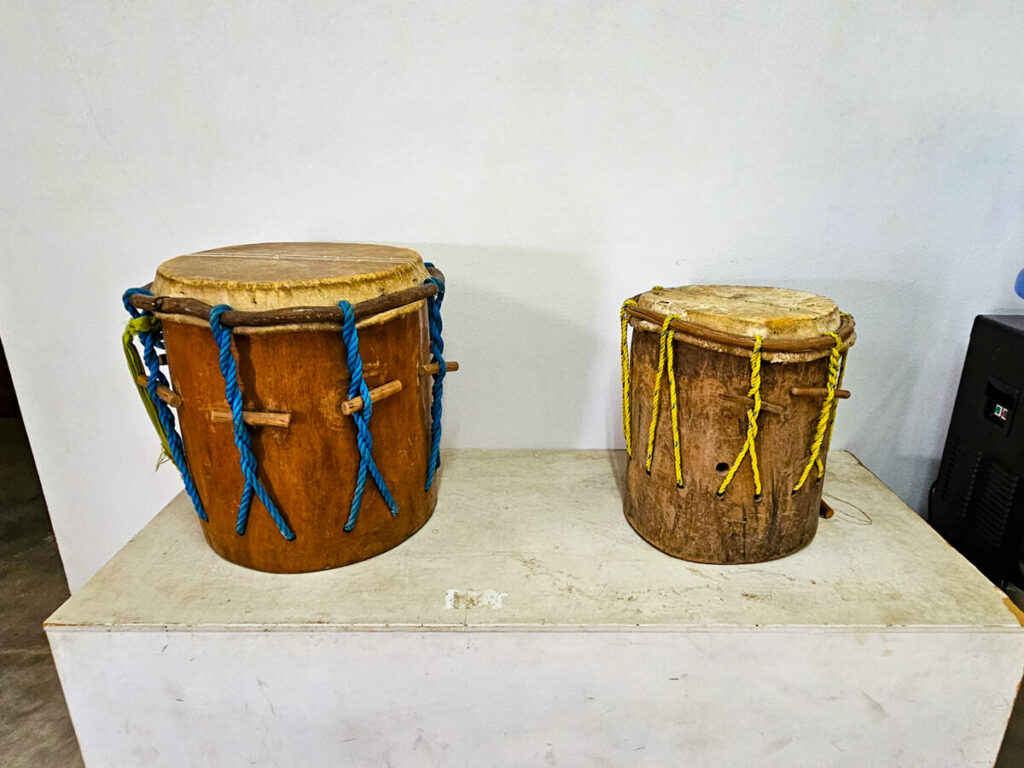
Language is a key part of Garífuna identity – it’s an Arawakan language with influences from Carib, French, English, and Spanish, and today it is still spoken in some Belizean coastal towns like Dangriga and Hopkins. Music and dance are perhaps the most visible expressions of Garífuna culture. Drumming on instruments like the primero and segunda drums is central to celebrations, ceremonies, and storytelling. Punta, a lively, call-and-response style of song and dance, is one of the most famous Garífuna traditions and has influenced popular music across Central America.
In 2001, UNESCO proclaimed the Garífuna language, dance and music in Belize as a “Masterpiece of the Oral and Intangible Heritage of Humanity“. Garífuna Settlement Day on 19th November each year commemorates the Garífuna’s arrival and has grown into one of Belize’s most important cultural celebrations.

The best things to do in Dangriga
There’s not a long list of things to do in Dangriga, but what there is highlights the rich cultural heritage of the people who live here. There are also a lot of beautiful areas surrounding the town, perfect for exploring nature. Here are the best activities in Dangriga and the surrounding area.
1. Visit the Gulisi Garífuna Museum
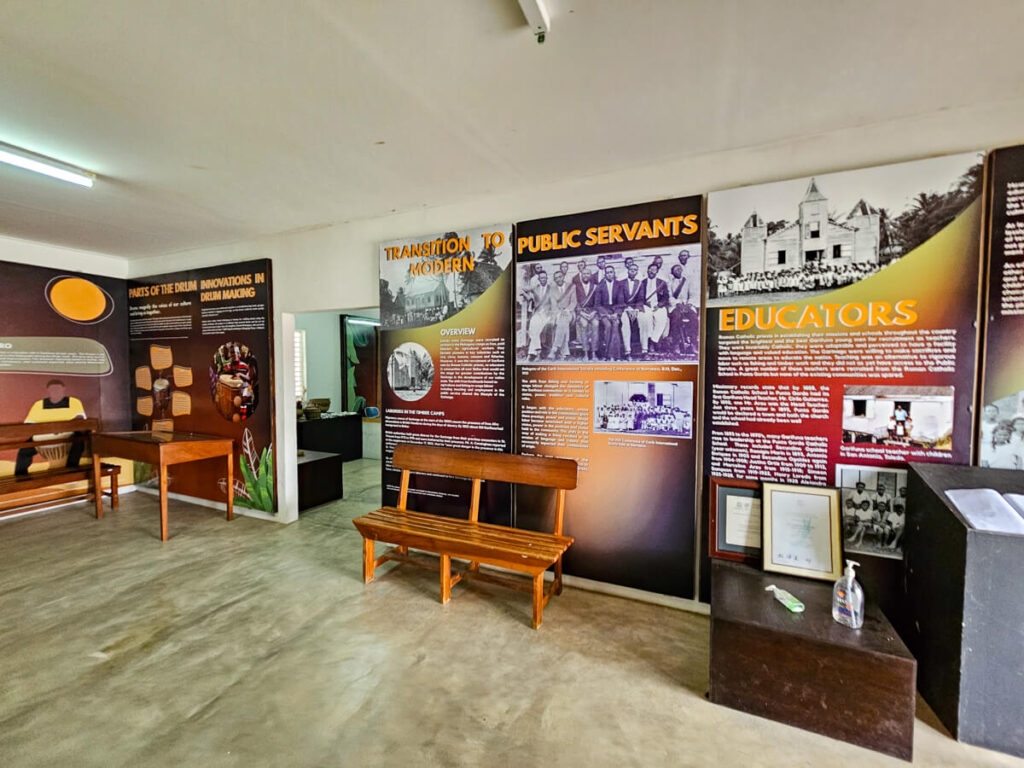
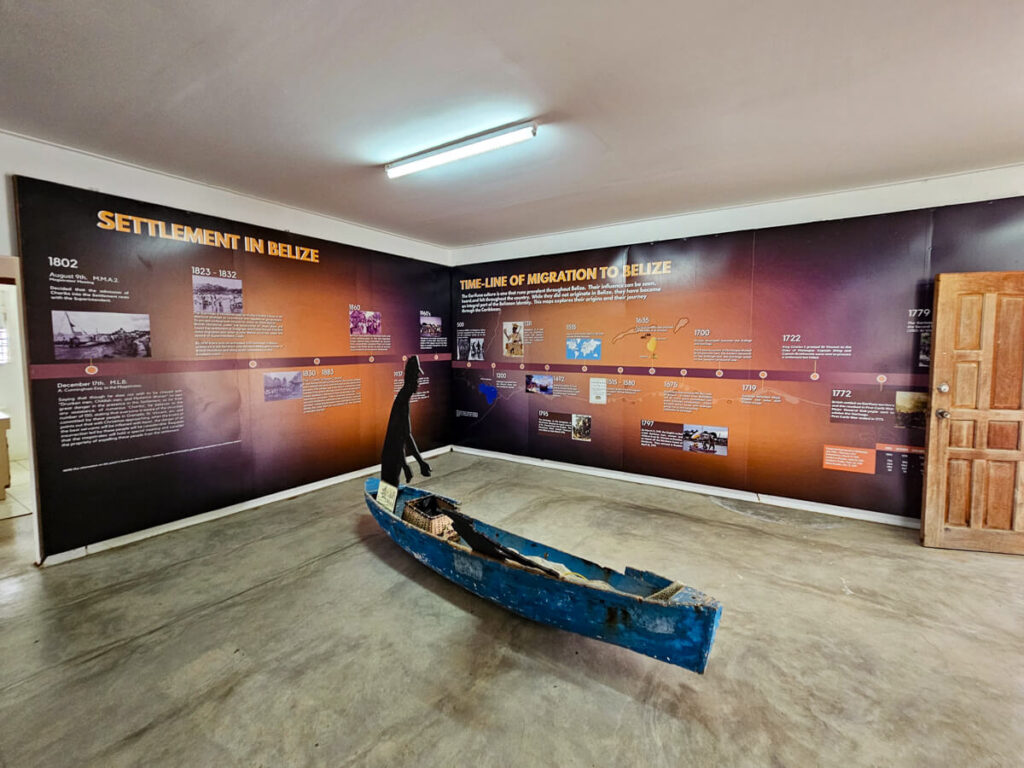
The Gulisi Garífuna Museum offers an in-depth look at Garífuna history, language, and traditions. It’s a small space, with exhibits showcasing traditional music, clothing, food, and the struggles of the Garifuna people after arriving in Belize. It is named after Gulisi, a Garifuna mother who helped establish communities along the coast.
Inside, you can see traditional drums, clothing, and household artefacts while learning about UNESCO’s recognition of Garífuna culture. It doesn’t take very long to explore the three or four rooms, but it’s packed with interesting information and is a must-see in Dangriga for anyone who wants to learn more about Garífuna culture.
2. Sample Marie Sharp’s Hot Sauce
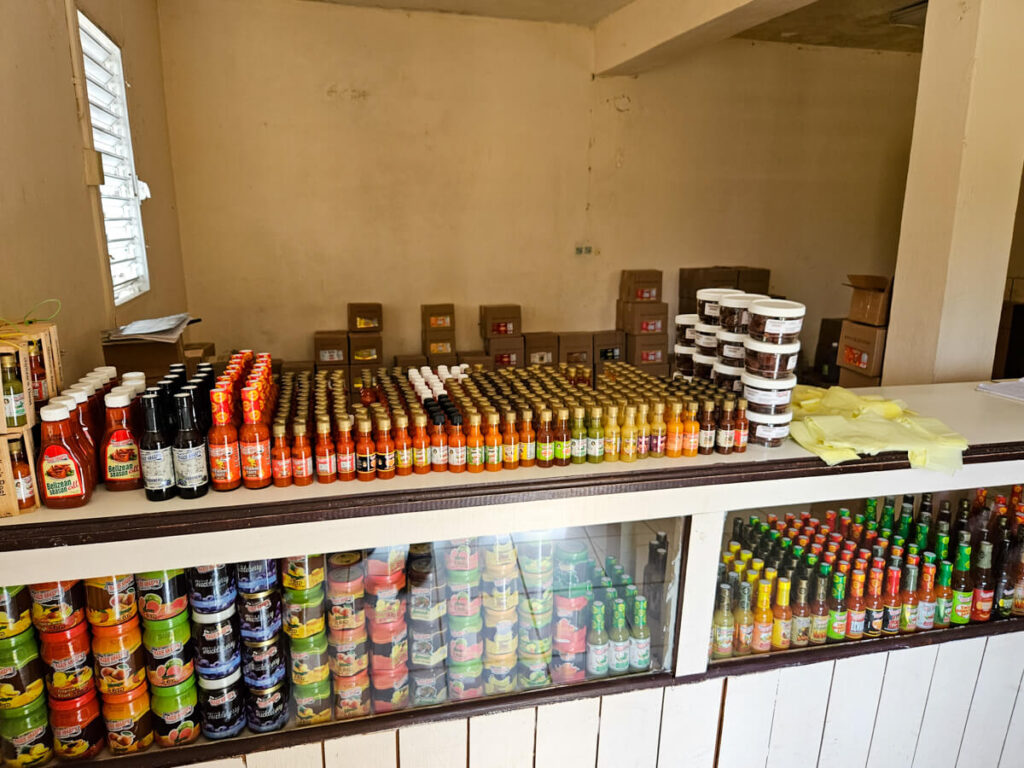
If you’ve already been to Belize, you’ll likely have come across Marie Sharp’s Hot Sauce, with bottles decorating every restaurant table. Dangriga is home to Marie Sharp’s Factory, where visitors can tour the production line, learn how local peppers and fruits are transformed into sauces, and sample everything from mild fruit sauces to extra hot flavours. If you’re short on time, you can simply pop into the small store in the town and pick up a few of Belize’s most famous hot sauces.
3. Browse the Pen Cayetano Studio Gallery
Pen Cayetano, a renowned Belizean artist and musician, runs a colourful gallery in the centre of Dangriga. The space features paintings, sculptures, and mixed media inspired by Garífuna life and Belize’s landscapes. You may also hear live drumming or music, as Pen was instrumental in developing the punta rock genre. If you’re interested in art and culture, Pen Cayetano Studio Gallery is one of the top things to do in Dangriga.

4. Austin Rodriguez Drum Shop
For decades, Austin Rodriguez and his daughter have hand-carved traditional Garífuna drums in Dangriga. Each drum is made from local hardwoods and animal skins, following time-honoured techniques, and they’re often used in festivals and performances across Belize. His workshop is open to visitors, where you can see the process of shaping, stretching, and tuning these iconic instruments, but it’s best to arrange an appointment with the family.
5. See the drums of Our Fathers Monument
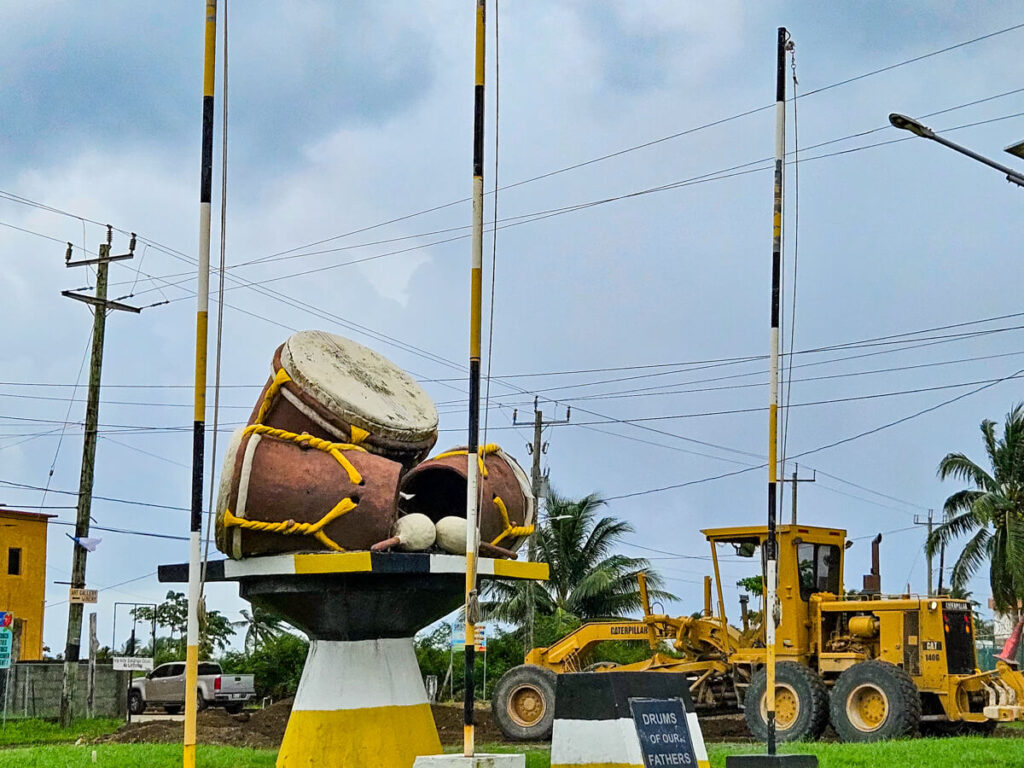
Located along Dangriga’s waterfront, the Drums of Our Fathers Monument is a tall tribute to Garífuna heritage. The monument features three large bronze drums, with each drum representing the past, present and future. It’s located in the middle of a roundabout, so you can simply drive by or stop off and safely cross the road to see it up close.
6. Explore Dangriga Central Market
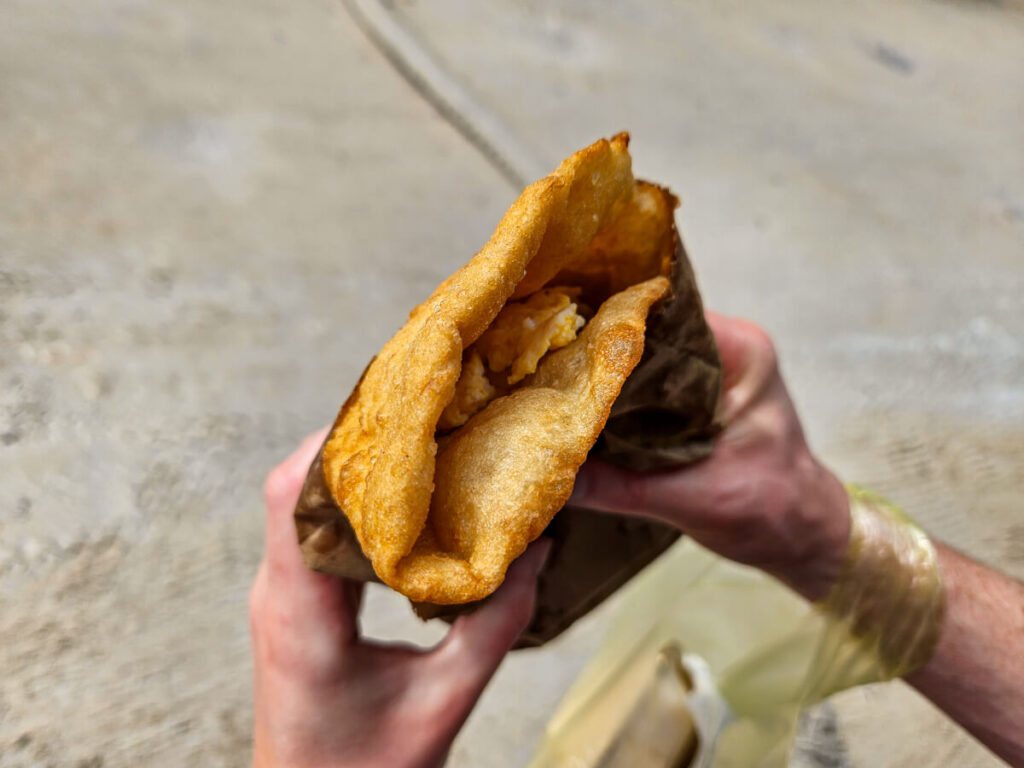
Tucked away by the river, Dangriga Central Market is filled with vendors selling fresh produce, seafood, and handmade goods. Visitors can browse stalls offering tropical fruits, spices, and snacks unique to Belize. The market is busiest in the mornings, when locals come to shop for daily meals, and on Saturdays. It’s worth stopping by to pick up a cheap meal or just have a browse – try fryjacks from One Love and rice and beans from Zelene’s Kitchen!

Day trips from Dangriga
While there’s not much to do in Dangriga, there are loads to see and do in the surrounding area, making it a great place to stay to explore the outdoors. Here are the best day trips from Dangriga, from island adventures to inland excursions.
7. Snorkel off Tobacco Caye
Just a short boat ride from Dangriga, Tobacco Caye is one of the most beautiful islands in Belize. The island is tiny – about the size of two football pitches – but surrounded by excellent snorkelling spots with direct access to the Belize Barrier Reef. The island is home to a handful of guesthouses, ranging from rustic cabanas to colourful overwater bungalows. We’d recommend spending at least a couple of nights on the island to immerse in that classic Belize tropical island experience, but a day trip would be possible for those with limited time.

8. Stay on Thatch Caye
Thatch Caye is a private island resort that offers an upscale, all-inclusive island experience just off the coast of Dangriga. The resort sits within the South Water Caye Marine Reserve and features overwater bungalows and beachfront cabanas built with sustainability in mind. Guests can snorkel, kayak, go out on day trips, or simply relax on hammocks suspended over turquoise waters. The resort is solar-powered and off-grid, giving you that remote but comfortable castaway vibe.

9. Drive the scenic Hummingbird Highway
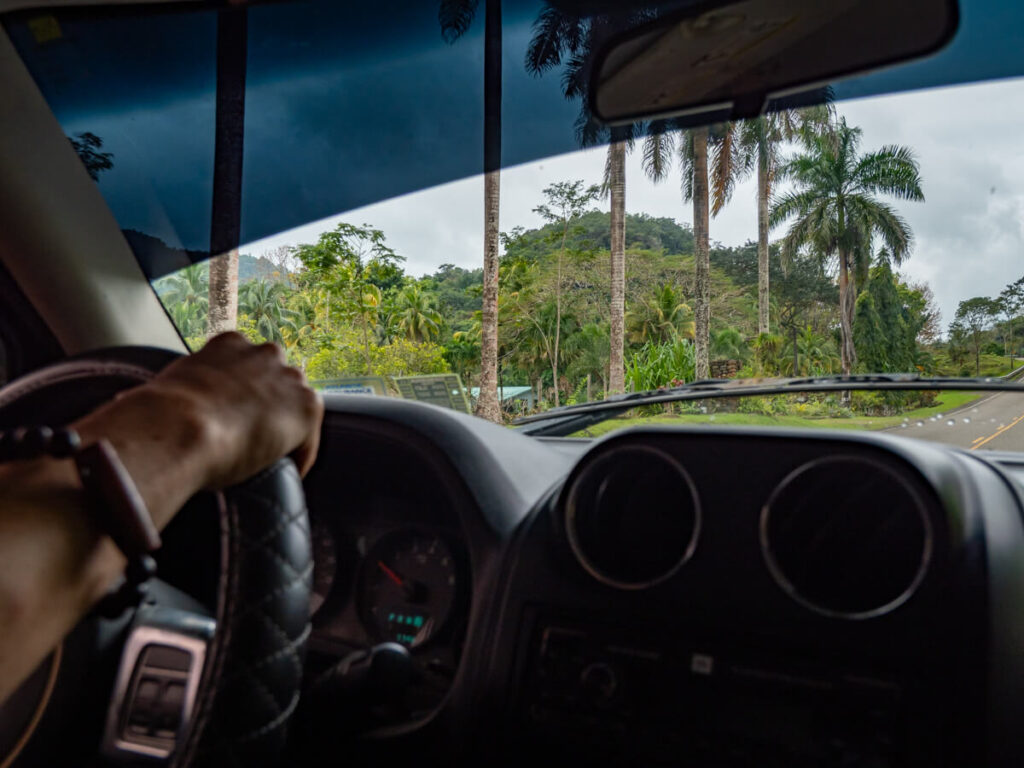
The Hummingbird Highway is considered Belize’s most beautiful drive. It connects Dangriga to Belmopan (the capital), passing citrus groves, rolling hills, and lush rainforest. Along the way, you can stop at roadside fruit stands, scenic lookouts, and nature reserves with waterfalls and caves. We’d recommend taking a few days to drive the route slowly, heading on to San Ignacio afterwards to explore the Mountain Pine Ridge Forest Reserve and Caracol. But if you have limited time or ned to return to Belize City, driving the highway in a day is totally feasible as it only takes 2 hours one-way.
10. Hike in national parks
Dangriga is a stone’s throw from some of the best national parks and nature reserves in Belize.

11. Hike in Cockscomb Basin Wildlife Sanctuary
Cockscomb Basin Wildlife Sanctuary is one of Belize’s most unique nature reserves, being the world’s first jaguar preserve. It offers over a dozen trails through dense rainforest, ranging from short and easy to long and challenging. Hikers can spot Belizean wildlife like toucans, tapirs, and even jaguar tracks, although sightings of jaguars are almost never (we actually got incredibly lucky and spotted a jaguar on our visit!). The park also has stunning waterfalls and natural pools perfect for cooling off, as well as river tubing tours.

12. Experience Garífuna culture in Hopkins
While Dangriga is the home of the Garífuna people, its lack of tourist infrastructure makes it difficult to really immerse and learn about the culture. The nearby village of Hopkins is renowned as one of the best places to immerse yourself in Garífuna culture and is home to some of Belize’s best activities. Visitors can take drumming lessons, join cooking classes, and learn traditional dances on tours with local operators. The community is welcoming (it’s been voted one of the friendliest in Belize), and the town also boasts long, sandy beaches, local restaurants, and a range of accommodation if you want to stay a little longer. The historic Serpon Sugar Mill sits just outside the town and makes for an interesting stop, too.

Where to stay in Dangriga
Most accommodation in Dangriga is small-scale, with budget guesthouses, modest hotels, and family-run lodges rather than big-name resorts or chains. Staying in town puts you close to the market, shops, and the waterfront, while lodges along the coast offer quieter surroundings for a more immersive experience.
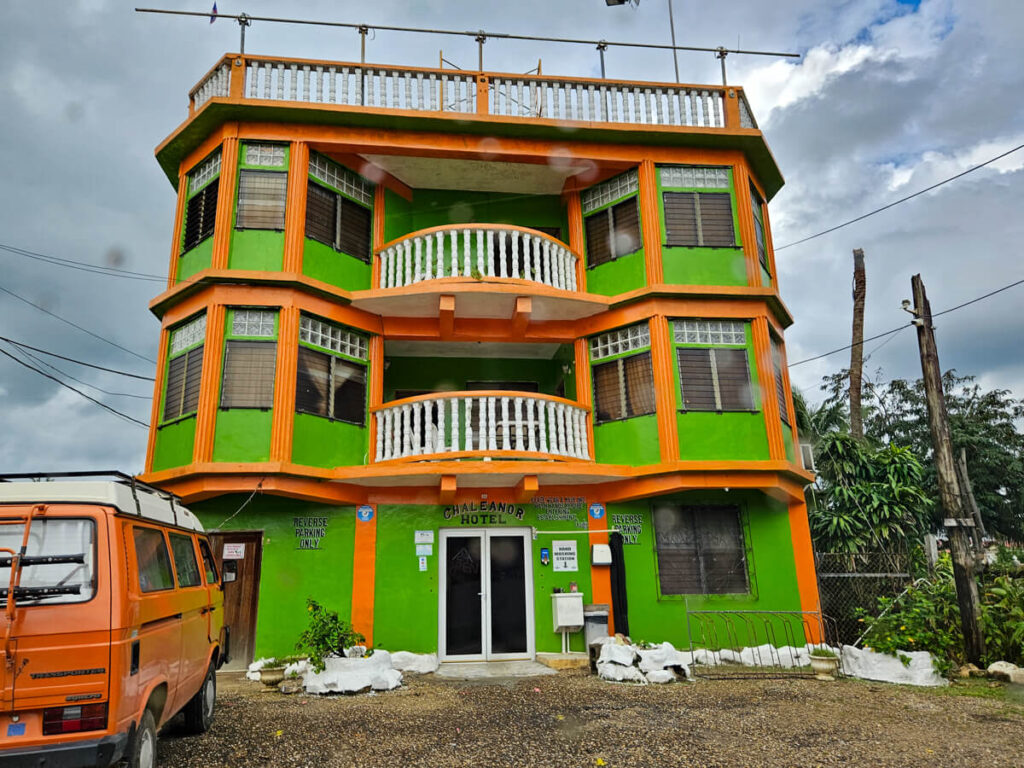
Many travellers only stay a night or two, simply choosing the cheapest room rate to transit the town, but others using Dangriga as a base can choose from a handful of more comfortable hotels. We opted for Chaleanor Hotel, a family-owned and run option in the centre of town, offering one of the cheapest rates in the town, but there are a couple more Dangriga hotels to choose from, too.
Dangriga Hotels
Where to eat in Dangriga
Dangriga’s dining scene is casual and local, with plenty of street food and family-style eateries rather than upscale restaurants. Seafood is the star of the show, with freshly caught fish, conch, and lobster often on menus. You’ll also find classic Garífuna dishes like hudut (fish in coconut stew with mashed plantain).
While there aren’t loads of options, here are some recommended restaurants in Dangriga:
How to get to Dangriga
There are a variety of ways to reach Dangriga, depending on where you’re coming from, your preferences, and your budget, including:
By plane
Dangriga has a small domestic airport (DGA) with daily flights from Belize City‘s Philip S. W. Goldson International Airport (BZE) on Tropic Air and Maya Island Air. The flight takes around 20 minutes and offers scenic views of the coast and inland mountains. From the airstrip, it’s just a short taxi ride into town.
By car
Renting a car in Belize and driving to Dangriga gives you the most freedom to explore at your own pace. From Belize City, the drive takes about 2.5-3 hours, while from Belmopan it’s about 1.5-2 hours via the scenic Hummingbird Highway. The roads are generally well-paved, so there’s no need for a 4×4, unless you plan to visit more remote natural attractions while driving in Belize. Parking is usually easy within Dangriga, though the streets can be narrow.
By boat
Some travellers (including us) visit Dangriga as their multi-day sailing tour ports in the town. While some people immediately head off, others spend a night or two exploring the area around Dangriga.
Dangriga is an important gateway to the islands, and water taxis and private boats run regularly to Dangriga’s docks, usually taking 30-60 minutes depending on the destination. They’re most commonly arranged through your accommodation on the island.
By taxi
Taxis can be arranged from Belize City or the airport, but they are significantly more expensive than buses or shuttles. A direct taxi ride to Dangriga may cost over $100 one-way USD, depending on negotiation. Shuttles are a more affordable option.
By shuttle
Shuttles to Dangriga run from Belize City, often arranged through hotels or tour operators. A shared shuttle is more affordable than a private one and is more comfortable than public buses. The journey usually takes around 3 hours, with stops along the way possible if pre-arranged.
By bus
Local buses are the cheapest but slowest way to get to Dangriga, with fares from Belize City usually under $10 USD. The ride takes about 3-3.5 hours, depending on stops and transfers. They run regularly from Belize City’s main bus terminal, connecting to Dangriga’s central bus station.
How to get around Dangriga
Getting around Dangriga is easy with a variety of transportation methods on offer.
On foot
Dangriga is a pretty compact town, and most of the central attractions can be explored on foot. The waterfront, central market, and restaurants are all close together, accessible on foot depending on your hotel. The streets are generally safe to walk around during the day, though it’s best to be cautious at night (we didn’t go out after dark).
By car
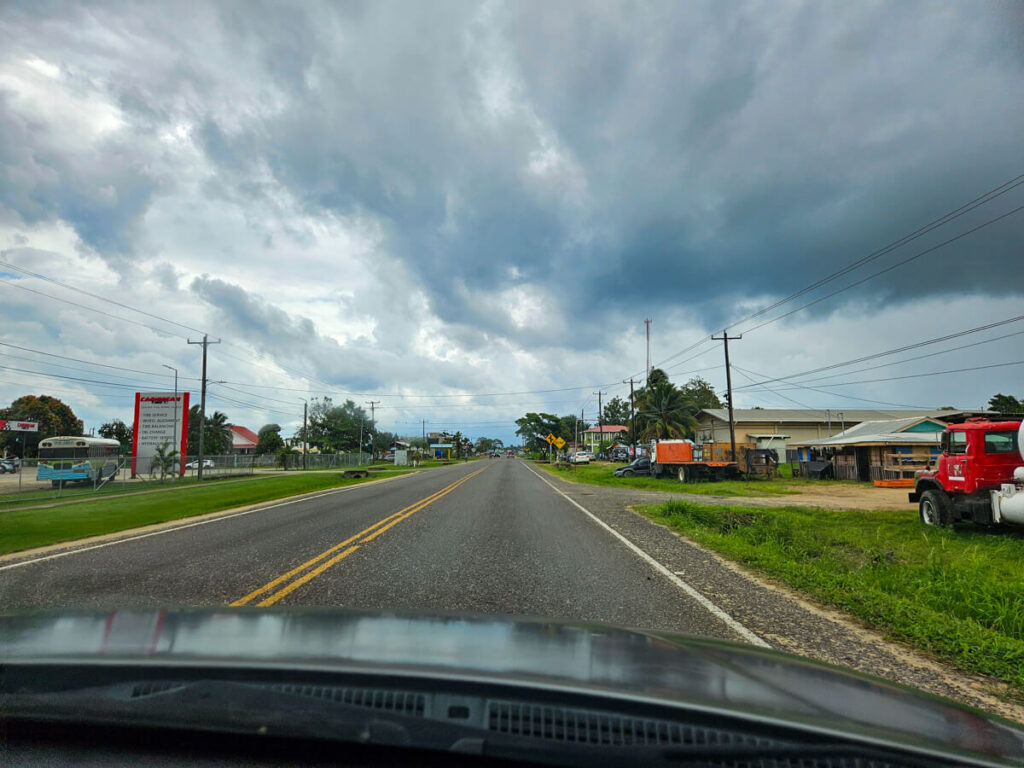
If you’ve rented a car, it’s easy to drive in and around Dangriga. The town is small, so you can get around its network of streets most easily in a car. The main roads are paved but not in the best condition, with many unpaved side roads, so watch out for potholes and unmarked speed bumps. Be aware that there are quite a few one-way systems.
We picked up a 4×4 from Dangriga Auto Rentals, a locally owned company. The process is quite informal, but the service was great, insurance was included, and the car was fab. We rented a 4×4, as we also visited remote sites like Cockscomb Basin, Caracol, and the Mountain Pine Ridge Forest Reserve. Dangriga Auto Rentals is one of the few agencies in Belize that will let you take the car one-way, picking up in Dangriga and dropping off in locations like San Ignacio or Belmopan for a small fee.
By taxi
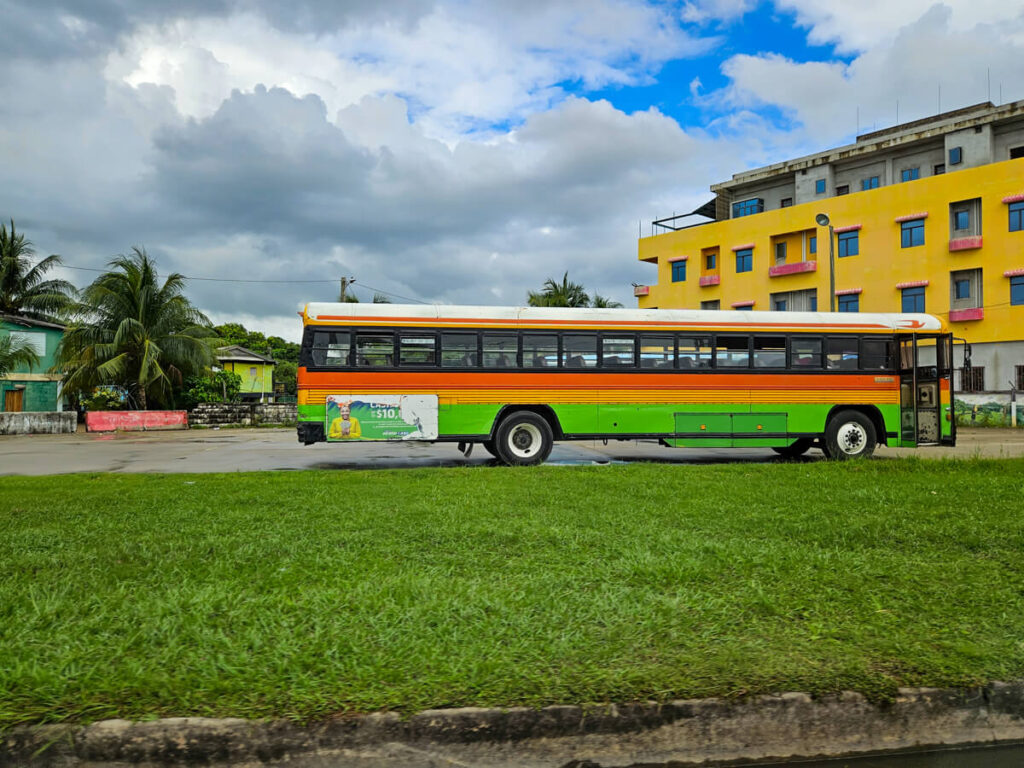
Taxis are widely available in Dangriga and can be hailed from the street or arranged through hotels. They are pretty cheap for short trips around town and can take you to nearby attractions like Hopkins or Bocawina National Park for a negotiated fare. Always agree on the price before getting in, as they don’t use meters. We got a taxi from the Cheleanor Hotel to Dangriga Auto Rentals for around $10 BZD / $5 USD.
When to visit Dangriga
Dangriga has a tropical climate with warm temperatures throughout the year, typically ranging from 24°C (75°F ) at night to 31°C (88°F) during the day.
The best time to visit Dangriga is during the dry season from late December to April, when the weather is sunny and conditions are ideal for outdoor activities.
November is especially lively, as Dangriga celebrates Garífuna Settlement Day with drumming, parades, and ceremonies.
The wet season lasts from May to November, with September usually the rainiest month and hurricane risk from August to October. Humidity is consistently high, but sea breezes along the coast help make it more comfortable.
How long to spend in Dangriga
Most travellers spend 1 to 2 days in Dangriga, which is enough time to explore its cultural highlights. A short stay allows you to visit the Gulisi Garífuna Museum, sample local cuisine, and shop at Marie Sharp’s. If you’re heading to Tobacco Caye or South Water Caye, Dangriga often serves as a convenient stopover before catching a boat.
Those particularly interested in Garífuna traditions may want to linger for 3 to 4 days, especially if you’re visiting during the November celebrations. Longer stays are less common, as many visitors base themselves in Hopkins or Placencia for more resort-style amenities, but you could use Dangriga as a base if you prefer no-frills accommodation.
How safe is Dangriga?
Dangriga is generally safe for travellers, but it’s important to exercise common-sense precautions, as you would anywhere else. It’s not a common tourist town, so there’s not a tourist police presence or anything like that. Petty theft can occur, so avoid carrying valuables openly and secure your belongings safely out of sight. Walking at night, especially in poorly lit or quiet areas, is not recommended, but should be fine during the day. For added peace of mind, use taxis at night and ask locals or hotel staff for advice on safe areas. Compared to Belize City, Dangriga feels more relaxed and welcoming, but like anywhere, awareness is key.

Is Dangriga worth visiting?
In all honesty, Dangriga doesn’t need to be on your Belize itinerary, especially if you’re already visiting a southern town like Hopkins or Placencia. But if you’re passing through, it’s totally worth visiting if you’re interested in authentic Garífuna culture, local history, and Belizean life beyond the tourist trail. It’s not a beach resort town like Placencia or Ambergris Caye, but it offers cultural richness and proximity to offshore cayes that are unique to the area. It’s also a fabulous jumping-off point for trips to islands, nature reserves, and the Hummingbird Highway.

Read next:
A Complete Guide to the Scenic Hummingbird Highway
Hopkins vs Placencia: Battle of the Beach Towns
A Complete Hopkins Travel Guide
22 Best Things to Do in Hopkins
A Traveller’s Guide to Placencia
24 Best Things to Do in Placencia
How to Visit Serpon Sugar Mill
Our Belize Destination Guides:
Our Belize Travel Guides:
