Spotting Jaguars in Belize’s Cockscomb Basin Wildlife Sanctuary

How to visit Cockscomb Basin Wildlife Sanctuary in Belize, the world’s first jaguar preserve, and where we saw a jaguar!
This post may contain affiliate links, which means we might earn a small commission on anything purchased through these links at no extra cost to you. Learn more on our disclaimer page.
Cockscomb Basin Wildlife Sanctuary is the world’s first jaguar preserve, created to protect this endangered big cat. One of the best natural protected areas in Belize, Cockscomb Basin offers an extensive network of hiking trails nestled at the base of the Maya Mountains. While jaguars may be elusive, the reserve is home to abundant wildlife, as well as exciting outdoor adventures, from swimming in waterfalls to river tubing. We’ve combined everything you need to know about visiting this untouched piece of tropical jungle paradise, from how to get here and what to do, to the best tours, hiking trails, and how to maximise your chances of seeing a jaguar.
Cockscomb Basin Wildlife Sanctuary at a glance

More from the coast
Can you see jaguars in Belize?
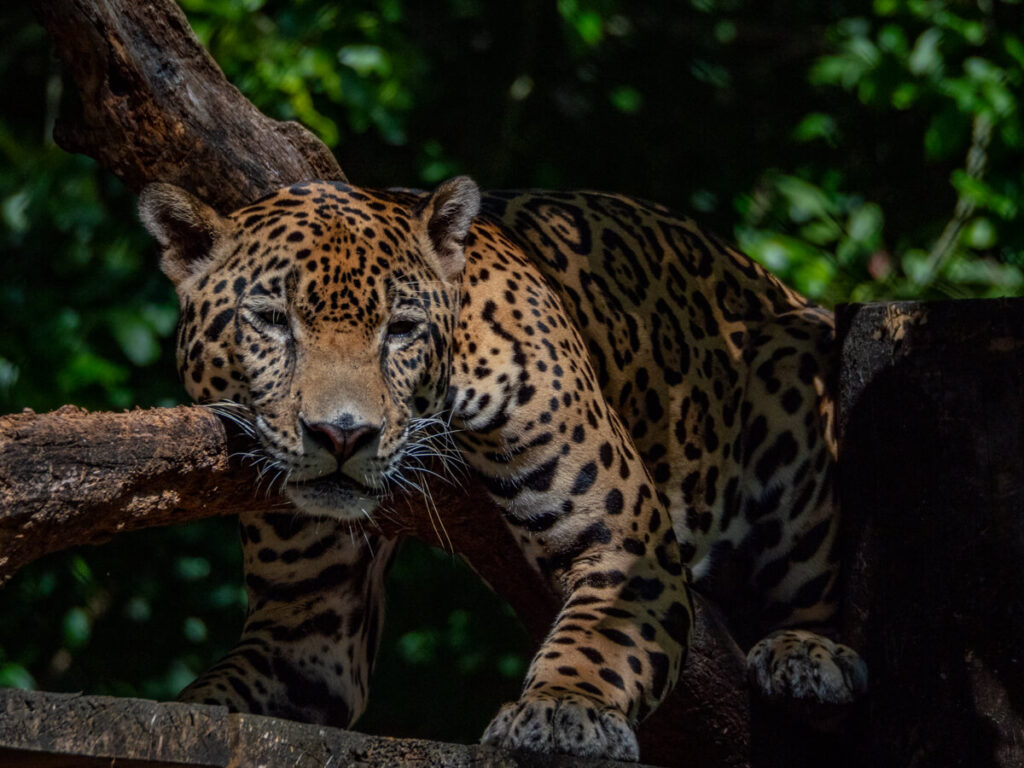
You don’t have to go to Costa Rica or South America’s Pantanal to see jaguars in Latin America. They roam freely in Belize, and the country not only has one of the healthiest populations in Central America but one of the most jaguar-populated areas in the entire world. It’s possible you’ll see a jaguar in Belize, and while it is highly unlikely, it’s not impossible – as we proved when we got incredibly lucky and saw one ourselves! A strong network of protected reserves ensures that jaguars have space to thrive.
While Jaguars are elusive and mostly active at night, their tracks, scratch marks, and scat are often spotted along forest paths. For wildlife enthusiasts, even finding signs of jaguars can be thrilling, as it confirms their presence in the area. Guided night walks increase your chance of hearing or glimpsing a jaguar in Belize.

Where to see jaguars in Belize
The best places in Belize to look for jaguars are within large forest reserves where human activity is minimal. Cockscomb Basin Wildlife Sanctuary is the most famous location, but jaguars also roam in Chiquibul Forest Reserve near Caracol, Bladen Nature Reserve, and across the Maya Mountains.
Remote areas with fewer visitors offer the greatest chance of encountering them, though even then, it requires patience and, most importantly, luck.
Experienced local guides know the signs of jaguar activity and can point them out during hikes, so taking a guided tour is your best way to try to see a jaguar in Belize. For most travellers, the adventure is about being in their habitat and maybe seeing signs of their presence rather than expecting a close encounter.

About Cockscomb Basin Wildlife Sanctuary
Cockscomb Basin Wildlife Sanctuary is, without a doubt, the best place to try and see a jaguar in Belize. It was first established in 1984 on a small scale before being expanded to protect a much larger area of rainforest. Covering over 128,000 acres of pristine rainforest, it’s one of Belize’s largest protected areas and is famous for being the first jaguar preserve in the world.
The reserve was named after a mountain ridge in the Maya Mountains that resembles a rooster’s comb (the red crest on its head) when seen from the lowlands. Within its boundaries are miles of jungle hiking trails, waterfalls, and opportunities for camping. Cockscomb Basin Wildlife Sanctuary also safeguards the watersheds that feed into the Monkey River and Stann Creek, which are vital for both wildlife and nearby communities.

Where is Cockscomb Basin Wildlife Sanctuary?
Cockscomb Basin Wildlife Sanctuary is located in southern Belize’s Stann Creek District, about 20 miles (32 km) south of Dangriga. The sanctuary sits within the foothills of the Maya Mountains, surrounded by steep ridges on three sides. This location makes it both remote and naturally well-protected, perfect for wildlife like jaguars.
With Bladen Nature Reserve to the south and the Chiquibul National Park to the west, Cockscomb Basin Wildlife Sanctuary provides a huge habitat for jaguars and other animals to roam.
The reserve is easily accessible on a day trip from Placencia and Hopkins, with the scenic Hummingbird Highway a short drive away, making it the next natural progression on a Belize road trip.

Cockscomb Basin Wildlife Sanctuary Map
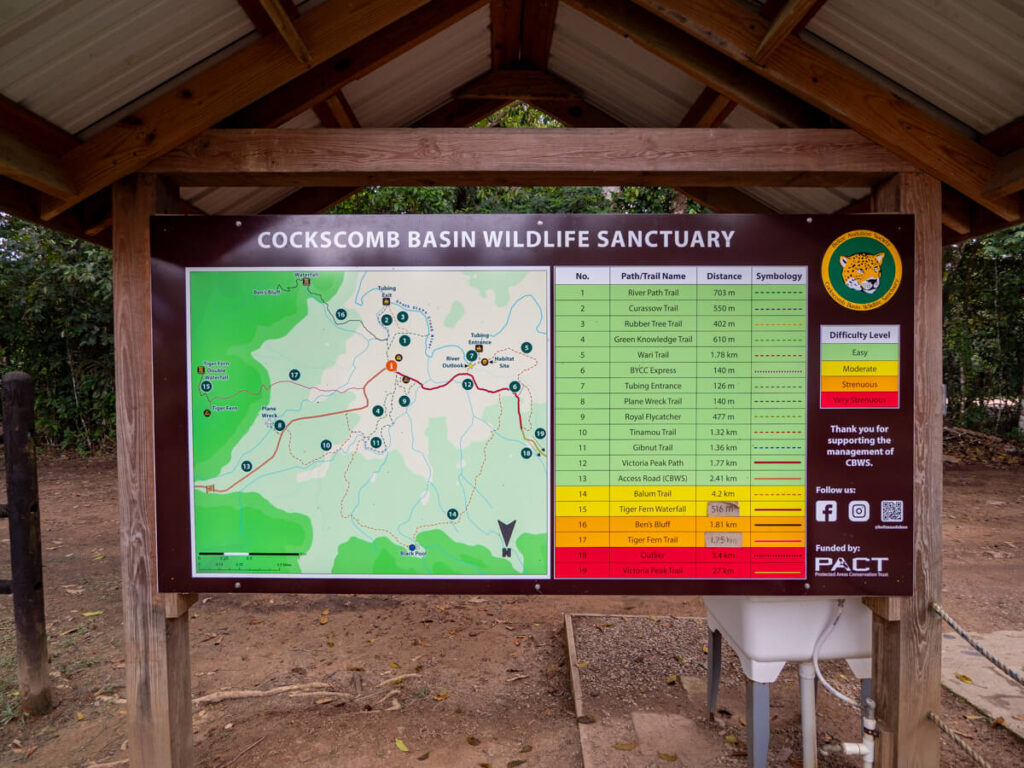
You can see all the hiking trails and key attractions on the Cockscomb Basin Map below.
The best Cockscomb Basin Wildlife Sanctuary Tours
You’re free to explore many parts of Cockscomb Basin Wildlife Sanctuary Tours without a guide, making it perfect for you if you’re wondering where to see jaguars in Belize on your own. However, to maximise your chances of a sighting, it’s best to join a guided Cockscomb Basin tour.
Many tour operators in southern Belize offer day trips to Cockscomb, often starting from Hopkins, Placencia, or Dangriga, while the reserve itself offers a range of day and overnight experiences. Guided tours usually include transport, entrance fees, and knowledgeable local guides who can interpret the rainforest’s hidden details.
Options range from short hikes to full-day adventures that include river tubing or waterfall swims.
Night tours are also available, giving travellers a chance to experience the forest when nocturnal animals – like jaguars- are active.
Why visit Cockscomb Basin Wildlife Sanctuary?
Cockscomb offers one of the most immersive rainforest experiences in Belize. It’s not just about seeing a jaguar, it’s also home to hiking trails through the jungle, waterfalls, panoramic mountain views, and diverse wildlife.
It also supports community-based conservation, with the Maya Center village benefiting directly from tourism. For nature lovers, adventurers, and anyone curious about conservation, Cockscomb is a must-visit destination.
Spotting jaguars in Cockscomb Basin Wildlife Sanctuary
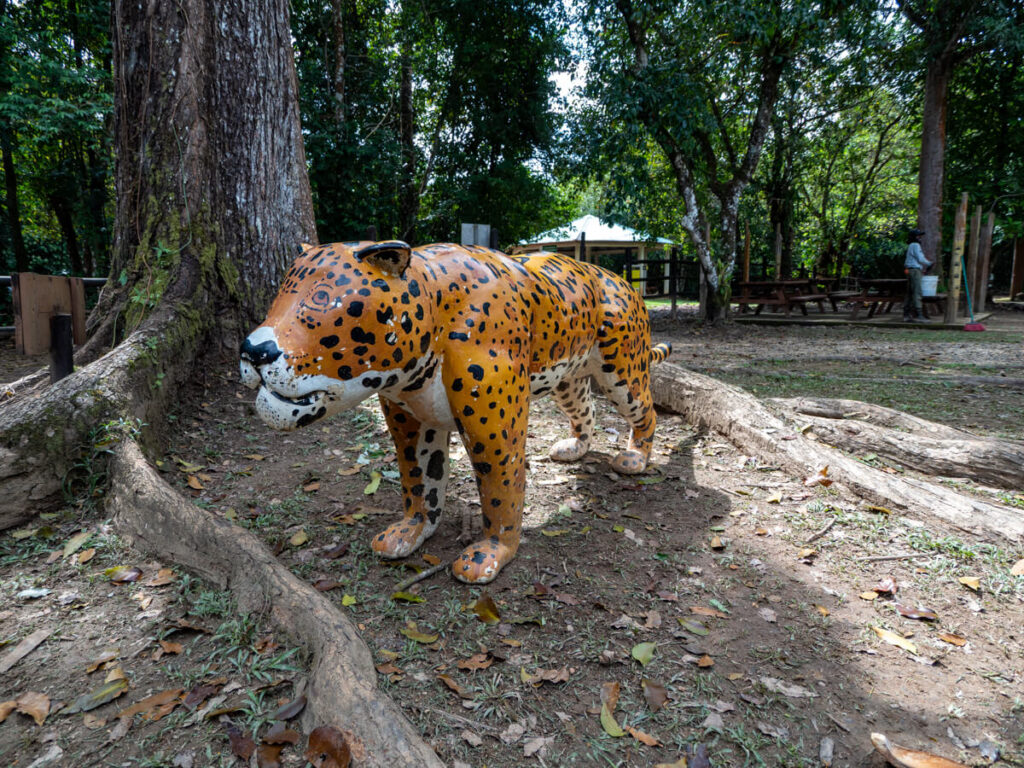
Although jaguar sightings are uncommon, being in the sanctuary puts you in the heart of their territory. We scoured the internet for reviews of the sanctuary from people who had visited the reserve and couldn’t find a single account of a sighting. So, we managed our expectations and were fully convinced we wouldn’t see a jaguar, knowing how rare it was. Imagine our complete SHOCK when one was standing on the road as we left the reserve!
We can’t guarantee you’ll see a jaguar in Cockscomb Basin Wildlife Sanctuary (in fact, it’s highly likely you won’t), but there’s always a slim chance you’ll get just as lucky.
Visitors most often see footprints along muddy trails, which can be surprisingly large and fresh. Sometimes, claw marks can be spotted on trees where jaguars sharpen their nails. Your best chance is to take an evening guided tour with a local guide, who will be an expert at spotting these signs.
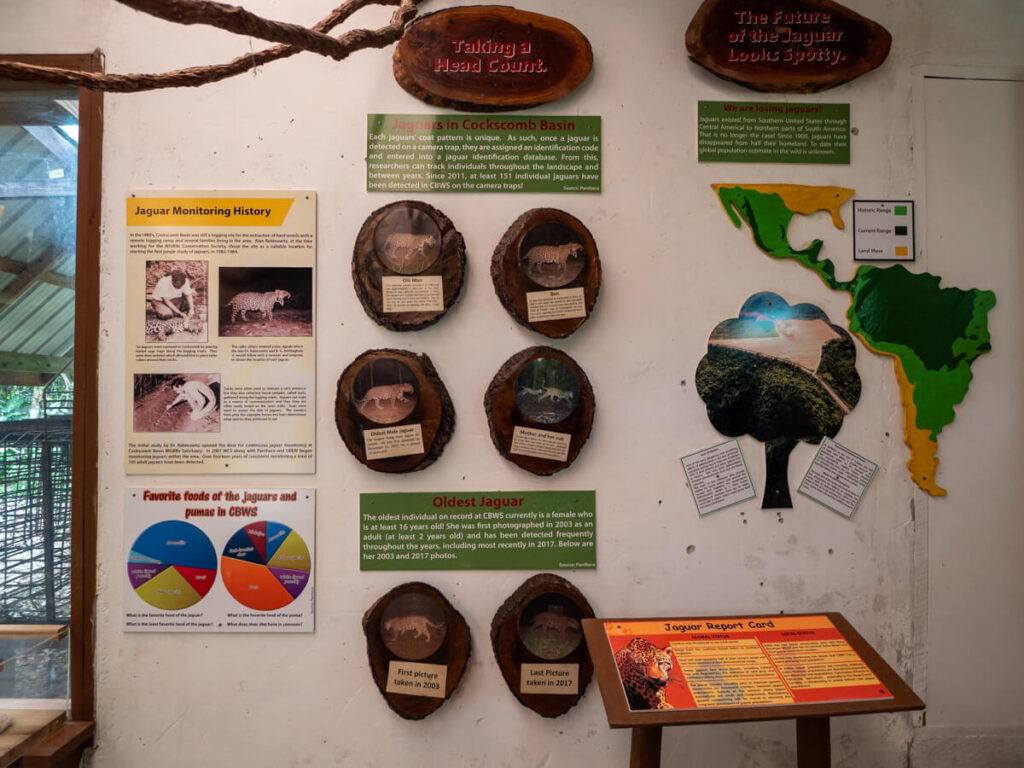
Camera traps regularly record the presence of jaguars in the reserve, confirming that the forest is an important stronghold for the species. You can see photos of the jaguars spotted by these cameras in the small exhibition hall at the entrance to the reserve.
Each jaguar’s coat pattern is unique, which is how they can be identified. The oldest jaguar spotted in the reserve was 16 years old!
Wildlife watching in Cockscomb Basin Wildlife Sanctuary
Besides jaguars, Cockscomb Basin is home to 4 other species of endangered wild cats, including pumas, ocelots, margays, and jaguarundi.
Baird’s tapirs, the national animal of Belize, are also found here, though they are very rare. Reintroduced howler monkeys can also be heard calling throughout the canopy or seen in the treetops.
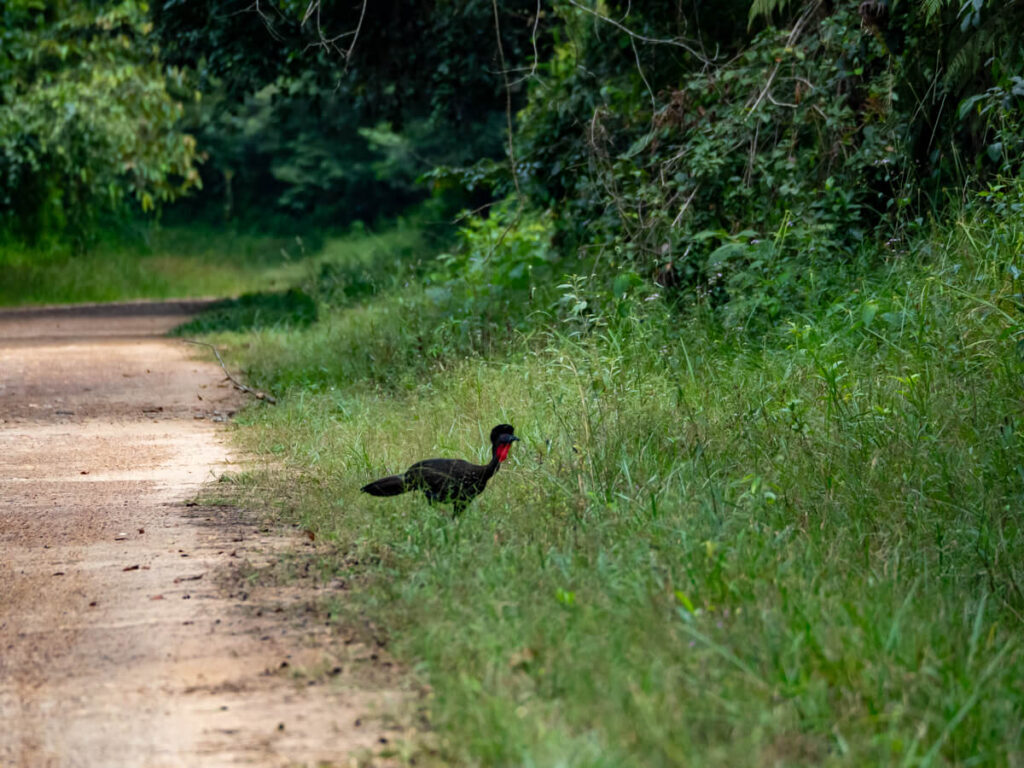
Over 300 species of birds have been recorded in the surrounding forest, including toucans, parrots, and hummingbirds.
Cockscomb Basin Wildlife Sanctuary Nature Centre
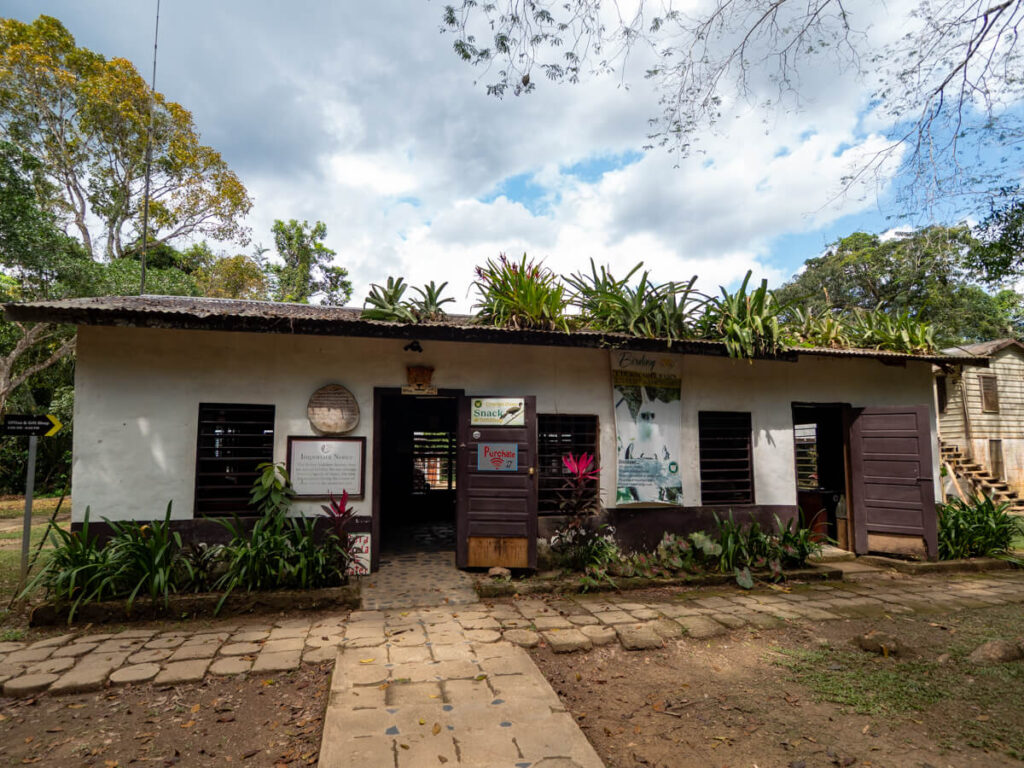
At the entrance of the sanctuary, the small nature centre provides orientation and background for visitors. Exhibits inside explain the history of the jaguar preserve and the importance of conservation efforts to protect them. The displays highlight the cultural connections between local Maya communities and the forest, with photographs of jaguar tracking throughout history.
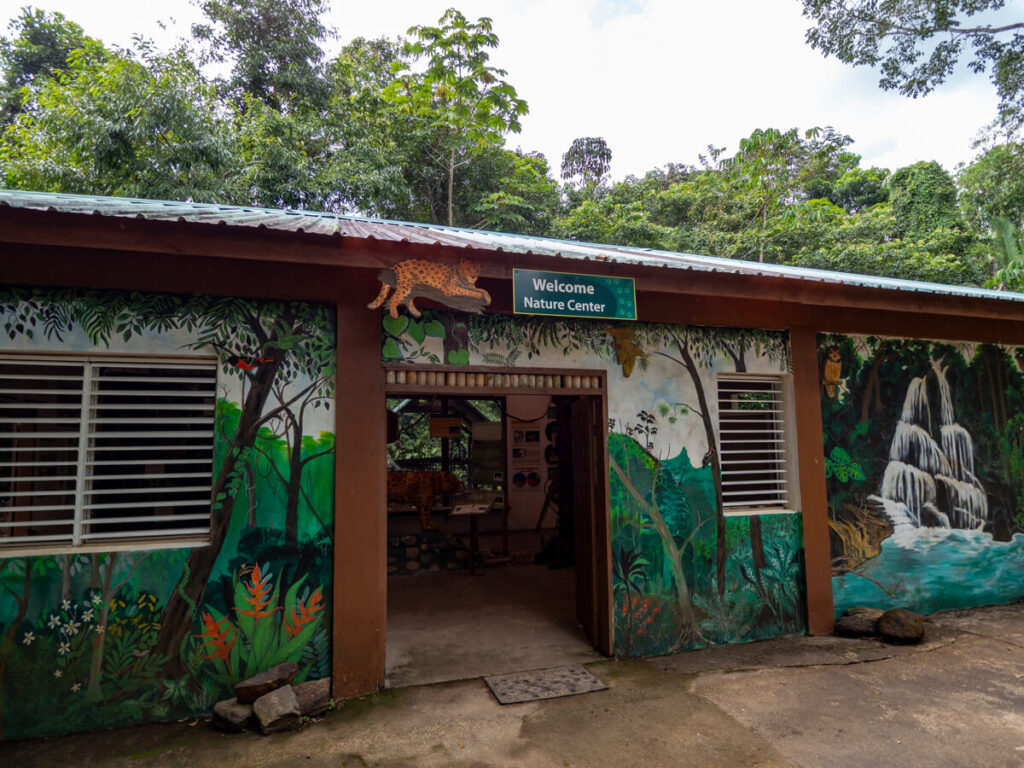
The visitor centre next door is where you’ll buy your tickets, and also offers trail maps, binocular rentals, and information on current wildlife sightings. For first-time visitors, it’s the best place to start before heading out into the jungle.

Hiking in Cockscomb Basin Wildlife Sanctuary
Hiking is the best way to explore Cockscomb Basin Wildlife Sanctuary, with trails suited to every level of fitness and interest. The vast network of around 31 miles (50 km) of trails includes everything from short loops that can be completed in under an hour to full-day treks deep into the forest.
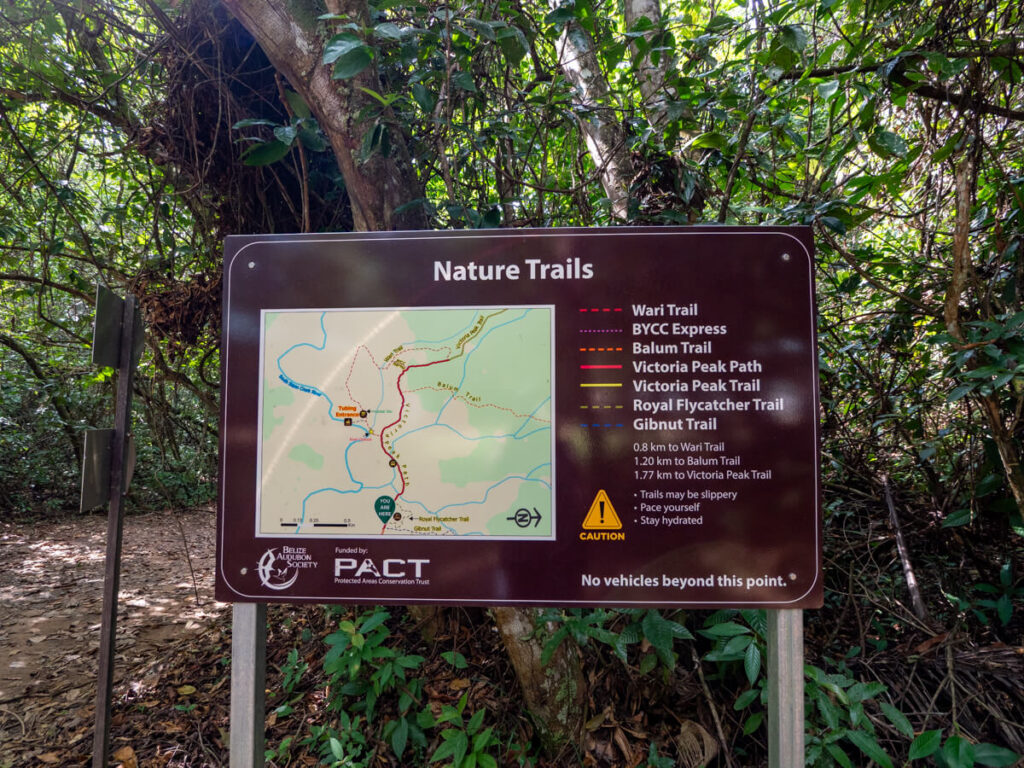
Along the way, you may encounter waterfalls, rivers, and panoramic viewpoints of the Maya Mountains. Some, like the plane wreck trail, lead to a specific attraction, while others focus more on the rainforest experience itself. A few trails can only be experienced as part of a guided hike, but handy signs at each trailhead and on the map show which ones.
Trails are well-marked and maintained, but conditions can be muddy, especially in the rainy season, so bring comfortable hiking footwear. Most hikes begin near the visitor centre, making it easy to plan a self-guided adventure.
Here’s a full list of hiking trails in Cockscomb Basin Wildlife Sanctuary:
Bear in mind that these distances are just one-way and do not include other trails that connect together to form a full hike.

Cockscomb Basin Nature Trails
The sanctuary has a wide variety of nature trails designed to highlight different aspects of the rainforest. Some lead to waterfalls or river swimming spots, while others are dedicated to birdwatching and wildlife observation.
Many are looped, with several trails connecting to each other, allowing hikers to plan their own route length and difficulty, returning to the visitor centre without retracing their steps. Along the way, interpretive signs help explain the ecology and history of the area.
The Plane Wreck Trail
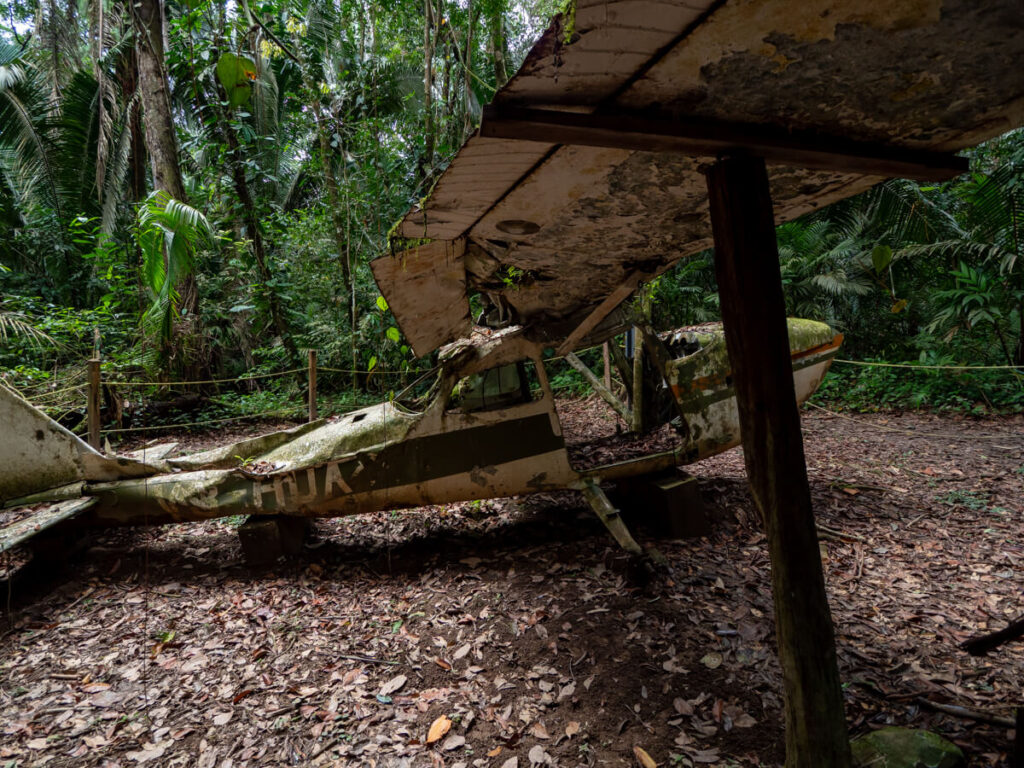
One of the easiest and most unique hikes in Cockscomb Basin Wildlife Sanctuary leads to the site of a small plane that crashed in the 1980s. The wreckage is still visible in the forest, slowly being reclaimed by vines and moss.
It’s a popular hike because it combines jungle scenery with an intriguing piece of local history.
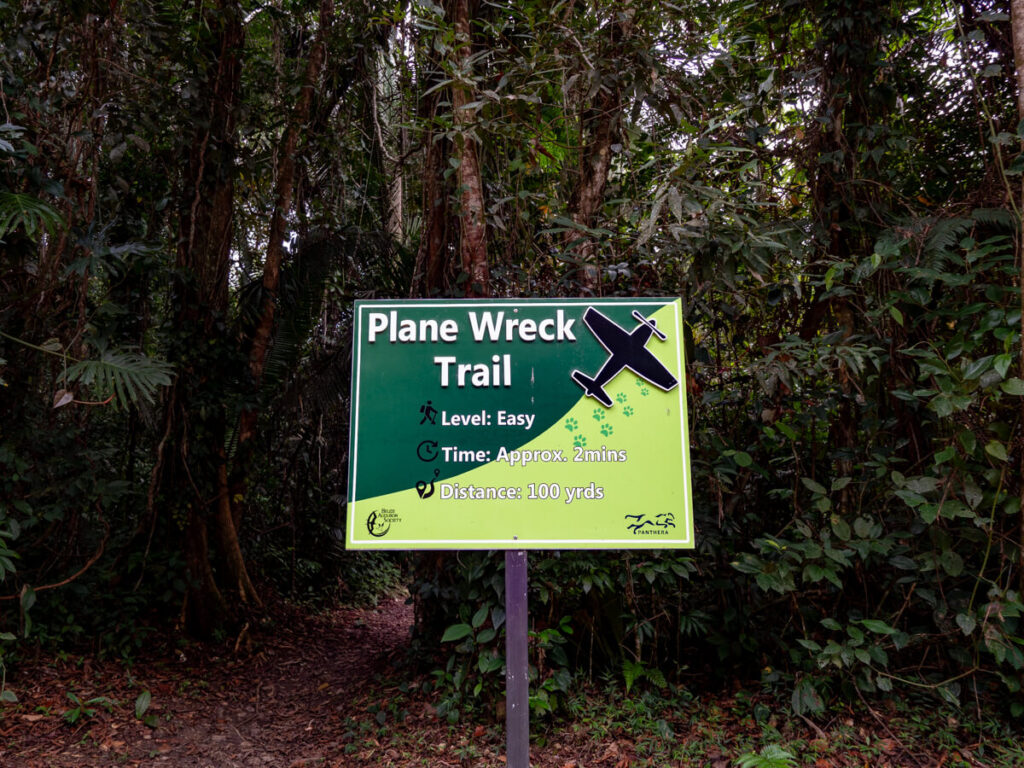
The single-engine plane crashed into a Quamwood tree during a thunderstorm while attempting to land on the access road. Dr Rabinowitz, who was flying, then used the plane for aerial monitoring of jaguars during his two-year study of the reserve.
The trail itself is very easy, taking about 5 minutes each way. It winds through dense rainforest before crossing a small river via a concrete path.

The Tiger Fern Trail
The Tiger Fern Trail is a more challenging out-and-back route of around 3.2 miles (5 km) round-trip. Hikers typically complete it in about 3-4 hours, including time at the Falls, but you need a guide in order to do it, which is around $150 BZD ($75 USD) for 2 people.
The trail passes a panoramic vista of the reserve, snaking through the jungle to a steep descent that ends at two waterfalls with natural swimming pools.

Mount Victoria Natural Monument
The Victoria Peak Trail is one of Belize’s toughest and most rewarding treks, reserved for serious hikers. Stretching for miles and miles, it must be done with a guide and usually requires 3 to 4 days with camping along the way. The route climbs through multiple ecosystems, from dense lowland rainforest to misty cloud forest at higher elevations.
At 1120 metres (3,675 ft), Victoria Peak is the second-highest mountain in Belize and offers unbeatable views on clear days. Access to the trail is only during the dry season (February to May), and a permit is required to do this hike.
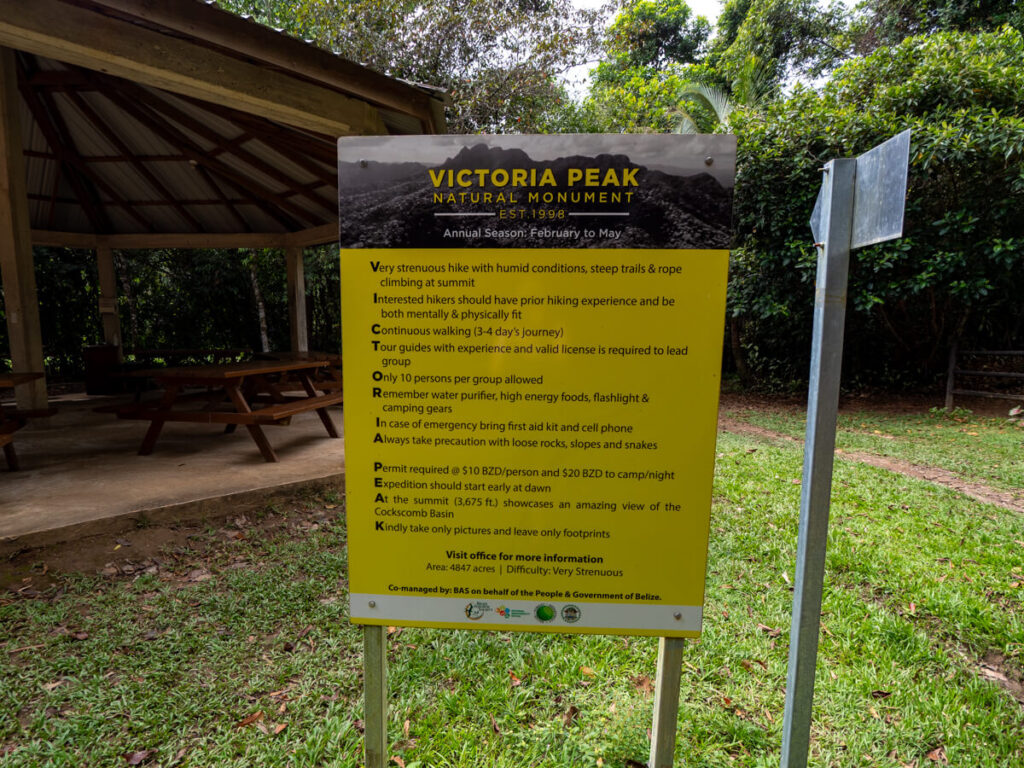
The Victoria Peak Path
The hike spans roughly 17 miles (27 km), making it a long hike over multiple days. It’s incredibly strenuous, and you must be physically fit to complete it. Some sections feature steep grades (20-60 degrees), scrambling, and in some cases, Class 4 terrain that may require rope assistance.

River tubing in Cockscomb Basin Wildlife Sanctuary
River tubing is one of the most popular activities in Belize. Tours typically start with a short jungle hike, where you’ll learn about local flora and fauna, before hopping onto an inflatable ring, where you float along a calm river through the jungle. You might even spot animals like tropical birds, iguanas, and butterflies.

How to get to Cockscomb Basin Wildlife Sanctuary
Visitors typically reach Cockscomb Basin Wildlife Sanctuary via Maya Center, a small roadside village where the access road leads into the reserve.
There are two main ways to reach the sanctuary:
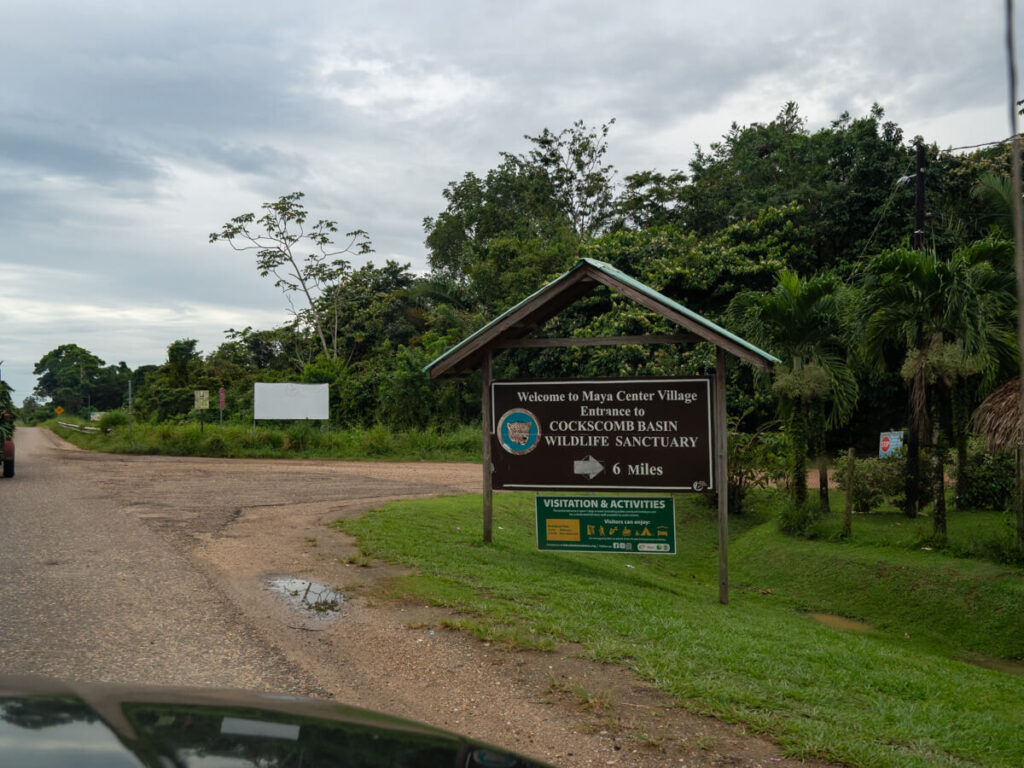
By car
Driving to Cockscomb takes about 2.5 to 3 hours from Belize City, with most of the journey on paved roads. It’s about an hour from Placencia and 45 minutes from Hopkins. Driving in Belize is pretty easy, but you’ll need to go slow on the access road and watch out for potholes.
The drive from the highway is about 6 miles (10 km) on an unpaved road, which is in pretty bad condition. During the rainy season, a 4×4 car is helpful, as some sections can be rough and muddy.
By tour
If you’d rather not drive, you can take a guided Cockscomb Basin tour. Operators based in Belize City, Hopkins, and Placencia typically include transportation, guides, and activities like hiking and river tubing. A day trip usually comes with hotel pick-up and drop-off, so all you need to do is show up with your sense of adventure.

Cockscomb Basin Wildlife Sanctuary Tickets
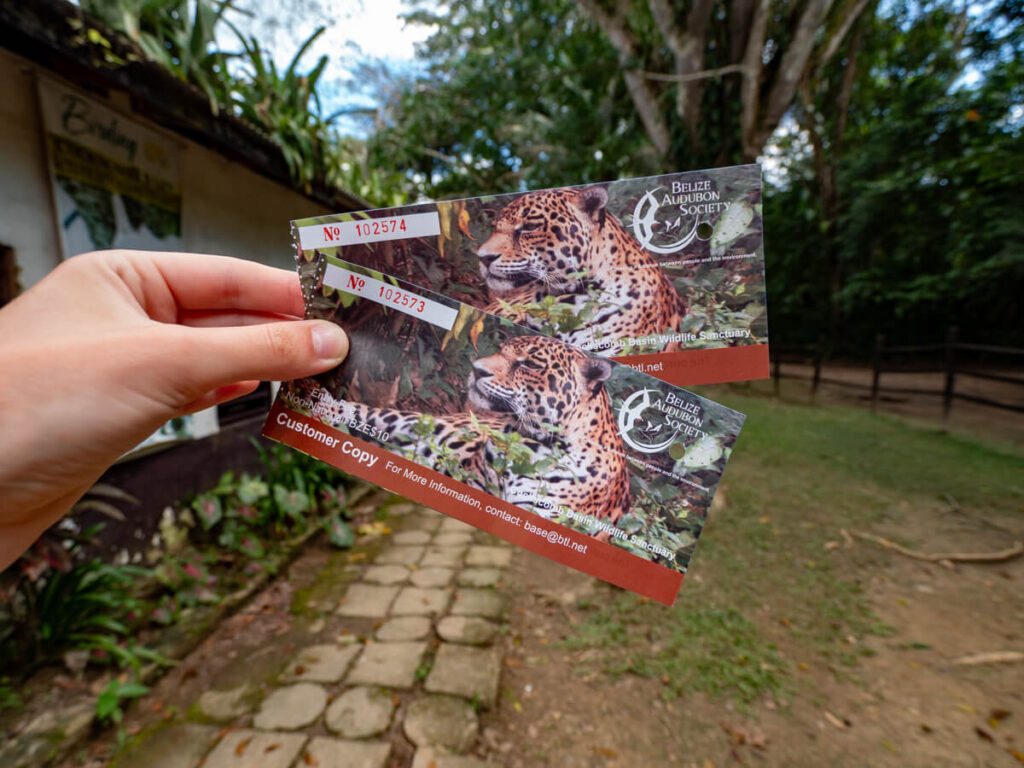
There’s no need to buy tickets for Cockscomb Basin Wildlife Sanctuary in advance, you can simply purchase them in person at the entrance.
It’s best to carry cash, as the sanctuary is remote and card payments aren’t always available, although they are accepted most of the time.
Tickets are managed by the Belize Audubon Society, which reinvests funds into conservation and park maintenance.
How much does it cost to visit Cockscomb Basin Wildlife Sanctuary?
The entrance fee for Cockscomb Basin Wildlife Sanctuary costs $10 BZD ($5 USD) for tourists and $2.50 BZD for locals.
Some guided tours include the entrance fee in their package, saving you the extra step, but be sure to check what’s included. Be aware that certain activities, like tubing, may cost a bit more.
Cockscomb Basin Wildlife Sanctuary Opening Hours
Cockscomb is open daily from 8:00 AM to 4:30 PM, including weekends and public holidays.
Wildlife is most active early in the morning and at dusk. While trails technically remain open until sunset, it’s safer to plan your hikes so you’re back before dark.
The reserve is pretty quiet, so there’s no need to worry about avoiding crowds.

Accommodation in Cockscomb Basin Wildlife Sanctuary
Most travellers visit Cockscomb Basin Wildlife Sanctuary as a day trip from nearby towns like Hopkins, Dangriga, and Placencia. They offer accommodation for every preference, from budget-friendly guesthouses to mid-range resorts with pools.
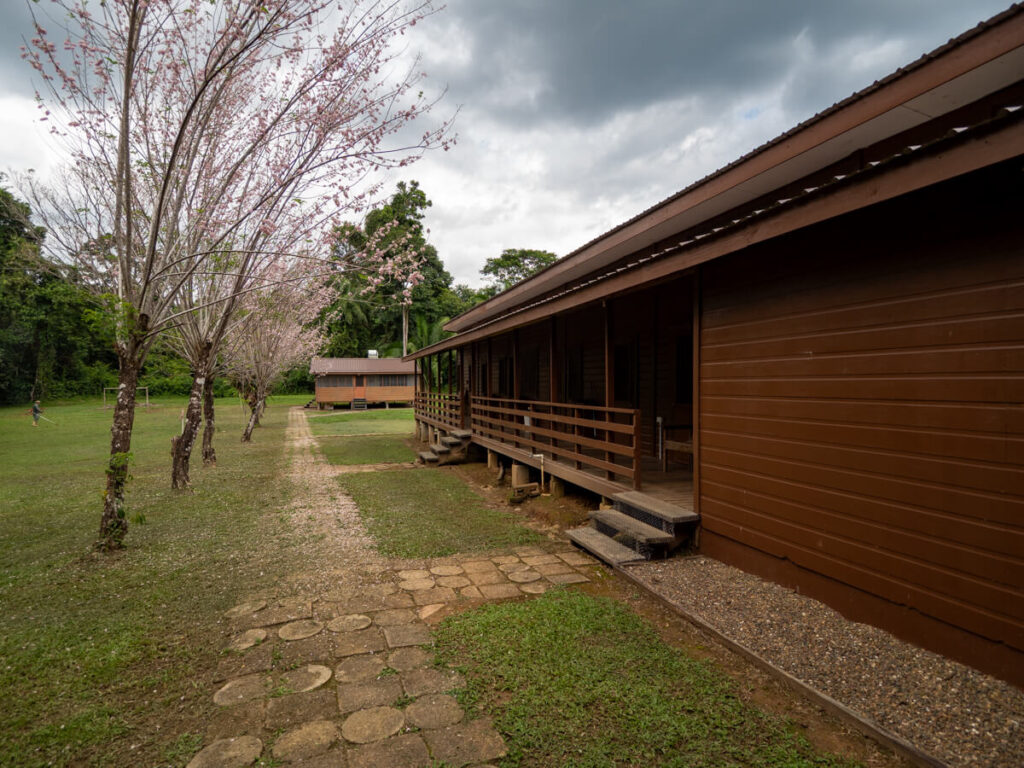
For those who want to fully immerse themselves in the jungle, there are simple eco-lodges within the sanctuary itself. These rustic cabins offer the unique chance to fall asleep to the sounds of monkeys and tree frogs, putting you in the heart of the reserve. Prices range from $45-75 USD a night for dorm and cabin rooms, while a private cabin is $300+ USD a night. Facilities are basic, so you’ll want to book ahead and set expectations for comfort, but it’s the perfect place to stay if you’re a serious hiker. To make reservations, contact the Belize Audubon Society or book on their website.
Hotels near Cockscomb Basin Wildlife Sanctuary
Camping in Cockscomb Basin Wildlife Sanctuary
Camping in Cockscomb Basin Wildlife Sanctuary is an option for adventurous visitors. There are two main campgrounds in the reserve, with picnic shelters and tables. The main campground is located near the Visitors’ Centre, and has access to toilets and showers. The other campsite is located on the Tiger Fern Trail and only has a pit latrine. There are also a couple of campgrounds along the Victoria Peak Trail, located at 7.5 miles (12 km) and 12 miles (19 km). Both have pit latrines and cooking areas. Camping costs about $25 USD a night.
Falling asleep under the jungle canopy is a truly unforgettable experience, accompanied by the nighttime chorus of frogs and insects. Because the sanctuary prioritises conservation, campers must reserve ahead, request a permit, and follow strict guidelines to protect the environment.

When to visit Cockscomb Basin Wildlife Sanctuary
The best time to visit the Cockscomb Basin Wildlife Sanctuary is in the dry season, from February to May. During this period, the trails are easier to manage, and wildlife tends to gather at water sources, meaning your chances of a sighting are higher.
In the wetter months of June to November, the forest transforms into a lush canopy of green, but heavy rains can make some paths muddy and some trails close.
No matter when you go, early mornings and late afternoons are the most rewarding times to see animals. Year-round, temperatures hover between 25°C-32°C (77°F-90°F), with river levels shifting depending on the season.

How long to spend in Cockscomb Basin Wildlife Sanctuary
A day trip is enough for a taste of Cockscomb Basin Wildlife Sanctuary. This allows time for a short hike and a river tubing experience.
If you have two to three days, you can explore more trails, swim beneath waterfalls, and dedicate time to birdwatching. Staying in the cabins on-site is an experience in itself. Multi-day stays also give you the chance to head deeper into the sanctuary’s less-visited areas, where the jungle feels even more untouched.

Tips to spot a jaguar in Cockscomb Basin Wildlife Sanctuary
Although Cockscomb Basin Wildlife Sanctuary is the world’s first jaguar reserve, sightings are incredibly rare since these cats are nocturnal and elusive. What you’re more likely to find are paw prints pressed into the mud near riverbanks or scratch marks on trees left behind as signs of territory.
However, we did get really lucky and spotted a jaguar padding across the access road on our slow drive out of the reserve. It paused for a moment, looking straight at us before heading into the undergrowth.
Here are some top tips to help you maximise your chances of seeing a jaguar:
Is Cockscomb Basin Wildlife Sanctuary worth visiting?
Cockscomb Basin Wildlife Sanctuary is absolutely worth visiting. It may feel like a long shot, trekking all the way out into the jungle to see a jaguar, but if you get lucky, the memory will stick with you forever. Even without jaguar sightings, the reserve is home to pristine rainforest, and its network of trails and rivers is gorgeous, making it a great place to add to your Belize itinerary.
That said, it may not be for everyone. It’s a remote and rustic destination, so you won’t find luxury or high-end amenities here. The trails can be challenging in the heat, humidity, or mud, so visitors with mobility issues may find it tough going. And wildlife is never guaranteed – you could hike for hours and only see tracks or hear birds in the distance.

Is Cockscomb Basin Wildlife Sanctuary safe?
Cockscomb Basin Wildlife Sanctuary is considered a safe place to explore, provided you respect the rules of the reserve. Trails are well marked, but they can be slippery during rain, so sturdy shoes are essential. Wildlife generally keeps its distance, though following your guide’s advice is the best way to avoid unwanted encounters. While jaguar sightings have been recorded, they’ve never attacked a human in the reserve. They’re probably more scared of you than you are of them.
Because the sanctuary is remote, emergency help can take time to reach you, so preparation and caution go a long way. Bring sun protection, enough water and snacks for your visit, and let someone know where you’re going.
Our experience in Cockscomb Basin Wildlife Sanctuary
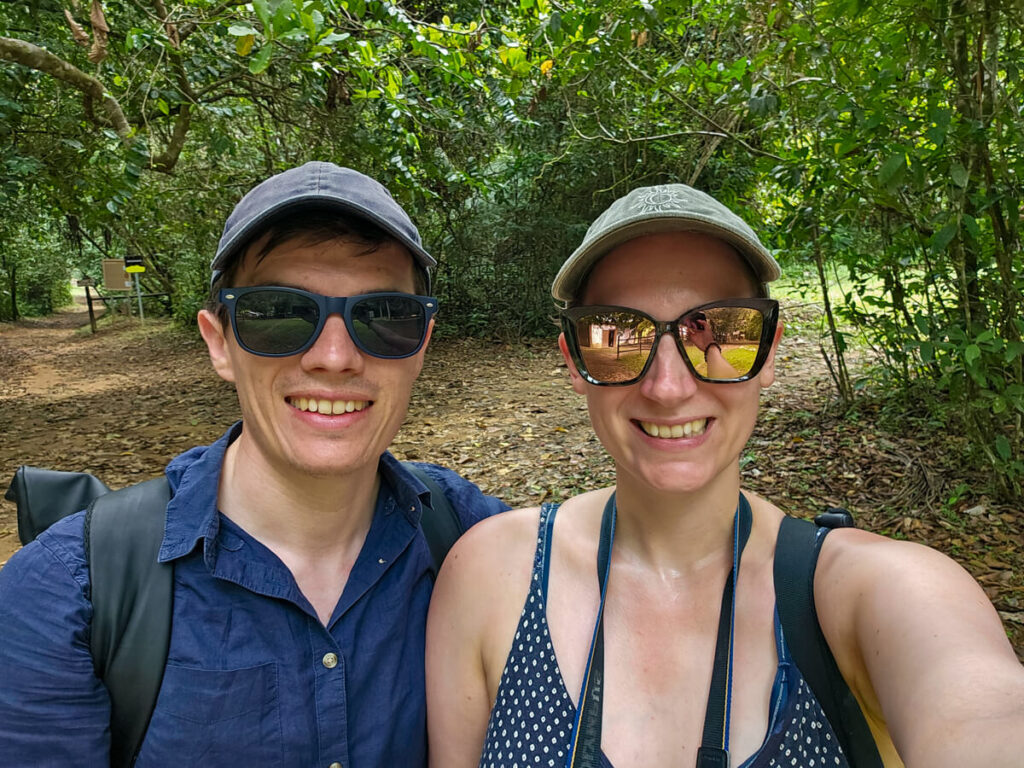
We absolutely loved Cockscomb Basin Wildlife Sanctuary and wished we could have stayed longer. We did a short hike, enjoyed exploring the rainforest, and were totally shocked to see a jaguar on our return to the main road. It was one of the best things we did in Placencia, and we’d highly recommend it.
If we ever return, we’ll be booking into the accommodation and spending lazy days hiking in the jungle, swimming in waterfalls, and hoping for another jaguar sighting (with our camera ready this time!).
What to pack for Cockscomb Basin Wildlife Sanctuary
To ensure an enjoyable and safe experience in Cockscomb Basin Wildlife Sanctuary, it’s important to pack the right things. Don’t forget to pack your:

Cockscomb Basin Wildlife Sanctuary FAQs
To help you plan your trip to Cockscomb Basin Wildlife Sanctuary, we’ve answered these frequently asked questions.
Where is the only jaguar reserve in the world?
The only designated jaguar reserve on Earth is the Cockscomb Basin Wildlife Sanctuary, located in southern Belize. Established in 1986, it was created specifically to protect jaguars and their habitat.
Which wildlife sanctuary in Belize is famous for protecting jaguars?
Cockscomb Basin Wildlife Sanctuary, often referred to simply as the ‘Jaguar Reserve’, is known for protecting Belize’s jaguar population. It’s the best-known place in Belize – and globally – for jaguar conservation.
What is the name given to the jaguar preserve in Belize?
The Jaguar Preserve in Belize is officially called the Cockscomb Basin Wildlife Sanctuary.
How many jaguars live in Belize?
Belize is estimated to have around 800 to 1,000 wild jaguars, one of the healthiest populations in Central America. The sanctuary itself supports a significant portion of that number, though the cats range widely across the country.
How many jaguar attacks in Belize?
Jaguar attacks on humans in Belize are extremely rare. Jaguars are shy, elusive animals that avoid people, and there are very few documented cases of aggression toward humans in the country.
Can you hunt jaguars in Belize?
Hunting jaguars is strictly illegal in Belize. They are a protected species under national law and international agreements such as CITES (the Convention on International Trade in Endangered Species).
Can you swim with jaguars in Belize?
You cannot swim with jaguars in Belize, and even if you could, you shouldn’t because it’s highly unethical. Jaguars are powerful predators and dangerous to approach in the wild. In captivity, they’re often taken from the wild illegally and drugged to be docile.
What did the Mayans call the jaguar?
The ancient Maya revered the jaguar as a sacred creature. In the Mayan language, it is often referred to as “B’alam”, a word that appears in place names, myths, and royal titles. Jaguars symbolised strength, power, and the underworld in Mayan cosmology.
Can you see black jaguars in Belize?
Black jaguars, also called melanistic jaguars, do exist in Central and South America, but sightings in Belize are extremely rare. Most jaguars in the country have the more common golden coat with rosette markings.

Read next:
15 Animals in Belize and Where to See Them
A Traveller’s Guide to Placencia
A Complete Hopkins Travel Guide
Hopkins vs Placencia: Battle of the Beach Towns
Dangriga Travel Guide + 12 Best Things to Do
Our Belize Destination Guides:
Our Belize Travel Guides:
