A Complete Guide to Driving the Scenic Hummingbird Highway

Discover everything you need to know about driving the Hummingbird Highway, Belize’s most scenic road, from the top things to do to where to stay and more.

This post may contain affiliate links, which means we might earn a small commission on anything purchased through these links at no extra cost to you. Learn more on our disclaimer page.
Considered to be the most beautiful drive in Belize by many, the Hummingbird Highway is as much a destination as it is a road. Connecting the coast to western Belize, you’ll find pristine national parks, cascading waterfalls, natural swimming holes, sacred caves, roadside stalls, local towns, and charming villages, all scattered along the way.
While you could drive the Hummingbird Highway in mere hours, it’s best to spend at least a day (preferably a couple) slowly meandering along the route. Discover everything you need to know about driving the Hummingbird Highway, from the best sights and stops to the top lodges to stay in, in this complete guide.
Hummingbird Highway at a glance

More from the Hummingbird Highway
About the Hummingbird Highway
Stretching for about 55 miles (89 km) between Belmopan and Dangriga, the Hummingbird Highway is the most scenic drive in Belize. A two-lane, paved highway, the route winds through lush jungle, citrus groves, and small local villages.
Originally built to transport citrus from inland orchards to the coast, the Hummingbird Highway has become one of the best things to do in Belize and an attraction in itself. The name comes from the many hummingbirds that thrive on the region’s flowering plants, particularly the citrus blossoms and wild heliconias that line the valleys and hills.
While the Hummingbird Highway takes less than two hours to drive, you could easily spend days slowly exploring all the activities and attractions it has to offer, so it’s worth considering when planning your Belize trip.

Where is the Hummingbird Highway?
The Hummingbird Highway runs through central Belize, linking the capital city of Belmopan with the coastal town of Dangriga in Stann Creek District. The road passes through the Maya Mountains and Cayo District‘s valleys, with many travellers choosing to continue on to (or starting from) San Ignacio.
It connects to the George Price Highway (also called the Western Highway) that runs west from the Guatemalan border to Belize City, with the Southern Highway connecting at Dangriga to Punta Gorda, passing popular towns like Hopkins and Placencia on the coast.

Hummingbird Highway Map
The Hummingbird Highway stretches across Central Belize, as you can see on the map below.

Why visit the Hummingbird Highway?
The Hummingbird Highway provides access to some of Belize’s most beautiful natural attractions, including waterfalls, swimming holes, caves, and rainforest reserves. It is less developed and less crowded than coastal destinations like Ambergris Caye and Caye Caulker, and offers a more authentic experience of Belizean life. The road passes rolling hills, limestone karst formations, and winding rivers, where a variety of outdoor activities provide fun views of Belize’s varied inland landscapes.
With eco-lodges nestled in the jungle, scenic viewpoints, bridges, and small towns, the Hummingbird Highway is a complete contrast to the tropical islands and sprawling beaches of coastal Belize, which is so well-known, without being as busy and some of the country’s more popular towns and cities.

How to explore the Hummingbird Highway
There are a couple of ways to explore the Hummingbird Highway, with each option suiting different interests and budgets. Improvements in recent years have made the road smoother and more accessible, yet the route is still pretty unknown.
Driving the Hummingbird Highway
The Hummingbird Highway is best visited by renting a car and driving yourself. This gives you complete flexibility over your own schedule, allowing you to explore at your own pace.
The road is paved and in generally good condition, though it has sharp curves and occasional potholes that you need to look out for, especially if you’re not used to driving abroad. Driving in Belize is pretty easy, as the slow-paced way of life is reflected in the relaxed driving speeds.
Renting a car in Dangriga
Dangriga is the start (or end, depending on which way you drive) of the Hummingbird Highway. A coastal town with strong Garífuna culture, it’s a hub, perfect for connecting with towns like Hopkins and Placencia or islands like Tobacco Caye, which we visited on a multi-day sailing tour of the Belize Barrier Reef.
We’d highly recommend Dangriga Auto Rentals, a locally owned company. The process is quite informal, but the service was great, insurance was included, and the car was fab. We rented a 4×4, as we also visited remote sites like Cockscomb Basin and the Mountain Pine Ridge Forest Reserve, and it was perfect for driving on some of Belize’s worst roads, so we had no problem with the smooth Hummingbird Highway. Dangriga Auto Rentals is one of the few agencies in Belize that will let you take the car one-way, picking up in Dangriga (the start of the Hummingbird Highway) and dropping off in San Ignacio or Belmopan (the end of the Hummingbird Highway) for a small fee.

Renting a car in Belmopan
The capital of Belize, Belmopan marks the end (or start, depending on your route) of the Hummingbird Highway. There are quite limited options when it comes to renting a car in Belmopan, with most visitors picking one up in Belize City before heading to Belmopan. Garden City Rentals and Car Wash has good reviews and is pretty much your only option.
Renting a car in Belize City
If you’re flying into Belize’s international airport, or boating in from the islands like Ambergris Caye or Caye Caulker, Belize City is the best place to pick up a car. The city has a wide variety of rental agencies. Crystal Auto Rental (the only agency that allows you to take the car to Guatemala), Belize Car Rental, and Car One Rental are well-rated agencies near Belize International Airport, while popular chains like Hertz, Avis, Budget, and Alamo are located in the city.
After renting a car in Belize City, it makes sense to head down the George Price Highway to Belmopan, and then drive the Hummingbird Highway east to the coast.
Renting a car in San Ignacio
If you’ve come from Flores in Guatemala or want to drive the Hummingbird Highway from San Ignacio, there are a couple of agencies to choose from. Matus Car Rental and Flames Auto Rental are two local, well-rated agencies with offices in town.
From San Ignacio, you can take the George Price Highway to Belmopan, before joining the Hummingbird Highway towards the coast.
Do you need a 4×4 to drive the Hummingbird Highway?
You don’t need a 4×4 car to drive the Hummingbird Highway. The route is paved and well-maintained (the road was in better condition than a lot we’re used to at home in the UK!). Some of the attractions have unpaved access roads, but they’re not in any condition that a normal car can’t handle.
However, while you don’t need a 4×4 to drive the Hummingbird Highway, having one might improve your experience, especially if you’re planning on leaving the main road and visiting more remote attractions. If you’re planning on visiting attractions like Caracol after your drive on the Hummingbird Highway, you will absolutely need a 4×4.
Travel insurance can save you $$$ if things go wrong
Don’t forget to buy travel insurance! From lost luggage to emergency medical care abroad, travel insurance gives you peace of mind so you can solely focus on the adventure. It might not be exciting, but you’ll be very glad you have it if something goes wrong. A few of our favourite companies are:
Get 8 weeks of electronic theft coverage free with SafetyWing Travel Insurance with our code: THOROUGHLY8 (new members only). Simply click the pink camera and laptop icon on the Nomad Essential page to redeem the reward before creating a new account.
Find out more: 6 Best Travel Insurance Companies for Every Kind of Trip

Taking the bus along the Hummingbird Highway
Local buses run along the Hummingbird Highway between Dangriga and Belmopan, so it’s technically possible to explore the area using public transportation. This is the cheapest way to visit the Hummingbird Highway, but you’ll probably run into some logistical challenges.
The buses in this region are infrequent and don’t run on a set timetable. You can flag them down at designated bus stops, usually in towns and larger villages, asking the driver to drop you off along the highway. While the bus is a convenient option for budget travellers arriving or departing from one end og the highway, it’s difficult to get to attractions along the Hummingbird Highway without your own rental car.

Hummingbird Highway Tours
Many tour operators from San Ignacio, Belmopan, or Hopkins offer day trips to stops along the Hummingbird Highway, but there aren’t really any dedicated Hummingbird Highway tours.
Most tours combine visits to popular attractions like the Inland Blue Hole and cave tubing at Nohoch Che’en. Private tours allow you to curate your own itinerary, with more time at each site and include knowledgeable guides, but are more expensive than shared tours. While a tour isn’t the ideal way to see the Humminbird Highway, as you’ll miss a lot, it’s a good option for those with limited time who want a taste of the area and to explore one or two highlights on the route.

What to do on Hummingbird Highway
Most of the best things to do along the Hummingbird Highway take place outdoors. A range of natural attractions line the route, from national parks to nature reserves, providing excellent hiking and wildlife watching opportunities. There are also several lovely little towns, scenic lookouts, and impressive bridges worth stopping at along the way.
Top 10 things to do on the Hummingbird Highway
Don’t have time to read the whole list? Here are the top 10 things to do on the Hummingbird Highway.
- Explore Dangriga
- Hike in Billy Barquedier National Park
- Zipline over Angel Falls
- Detour to Five Blues Lake National Park
- Rapell down Dreaming Giant Waterfalls
- Explore St. Herman’s Blue Hole National Park
- Go cave tubing at Ian Anderson’s Cave Branch
- Swim in Ayala’s Natural Pool
- Sample Lámanai Chocolate
- Hike in Guanacaste National Park
1. Explore Dangriga
Dangriga is the cultural capital of the Garífuna people, known for its music, drumming, and vibrant art scene. The town itself is laidback, sitting on the coast partway between Belize City and Placencia. While it’s not got a lot to see and do, it’s worth spending a few hours mooching around the town, soaking up the vibe, sampling Marie Sharp’s Hot Sauce, and visiting the small Gulisi Garífuna Museum, which showcases traditions like drumming and music, dance, and spiritual practices.
Dangriga is also the gateway to some of Belize’s most beautiful islands, with water taxis departing for offshore cayes in the South Water Caye Marine Reserve. The town is less touristy than Placencia or Hopkins, offering a more authentic atmosphere, but with less tourist infrastructure.
Dangriga is a great place to start the Hummingbird Highway drive, as it sits at the southeast end of the road. If you plan to drive the Hummingbird Highway from Belmopan to the coast, you can simply reverse this list, ending in Dangriga.

2. Detour to Mayflower Bocawina National Park
Mayflower Bocawina National Park protects over 7,000 acres of rainforest, offering hikes to waterfalls and one of the longest zipline courses in Belize. Visitors can hike trails leading to Antelope Falls or Bocawina Falls or explore the unexcavated Mayan ruins of Tau Witz. Mayflower Bocawina National Park isn’t technically on the Hummingbird Highway, but at only a 30-minute detour, it’s a great place to stop off at for those who like immersing in nature.

3. Hike in Billy Barquedier National Park
Nestled directly off the highway, just a half-hour drive from Dangriga, Billy Barquedier is one of the best national parks in Belize. There are two main trails within the 1,600-hectare rainforest reserve. The main trail (a 15-minute walk one-way) leads to a scenic waterfall and natural swimming pool, making it a refreshing stop on a hot day, while the steeper Jaguar Trail (45 minutes one-way) leads to an observation tower, providing panoramic views over the Maya Mountains. The park is home to wildlife, and you might spot howler monkeys, ocelots, and some of over 100 bird species.

4. Zipline over Angel Falls
Angel Falls, located near Mile 25 on the Hummingbird Highway, is one of the tallest waterfalls in Belize at over 120 metres (400 ft) tall. It’s a popular spot with adventure seekers, who can zipline across the falls, taking in sweeping views of the surrounding jungle. The zipline experience includes multiple lines of varying lengths, some crossing over gorges and rivers. The company also offers rappelling and tubing experiences. The area is surrounded by pristine forest, making it a scenic and adrenaline-filled detour. Safety harnesses and trained guides ensure a secure adventure for all participants.

5. Detour to Five Blues Lake National Park
Five Blues Lake National Park is a lesser-known stop about 12 miles (19 km) north of the highway from the small town of Santa Marta. This protected area is named after its striking freshwater lake, which appears in multiple shades of blue due to its rich mineral content. Visitors can hike trails through the Maya Mountains, go swimming or paddle on the lake, and explore an extensive cave system. The park is also home to diverse birdlife, including herons, kingfishers, and toucans.
It’s said the lakes disappear in the dry season, but rain in the wet season can make the access road rough and muddy. The trails haven’t been maintained very well, and the visitor centre is often unmanned, so it’s best to visit on a tour. Belizean-owned tour operator Wildland Belize Adventure runs tours to the park, offering cave tubing, kayaking, and birding excursions.

6. Rapell down Dreaming Giant Waterfalls
The Dreaming Giant is one of the most dramatic waterfalls in the region, with a sheer 30-metre (100ft) drop through dense jungle. While you can enjoy a guided hike to the base of the falls, where you’ll be rewarded with a refreshing pool to swim in, more adventurous types can rappel down the face of the waterfall. Classic Expeditions Belize manages the site, offering a variety of tours, including combined options with other nearby attractions.

7. Explore St. Herman’s Blue Hole National Park
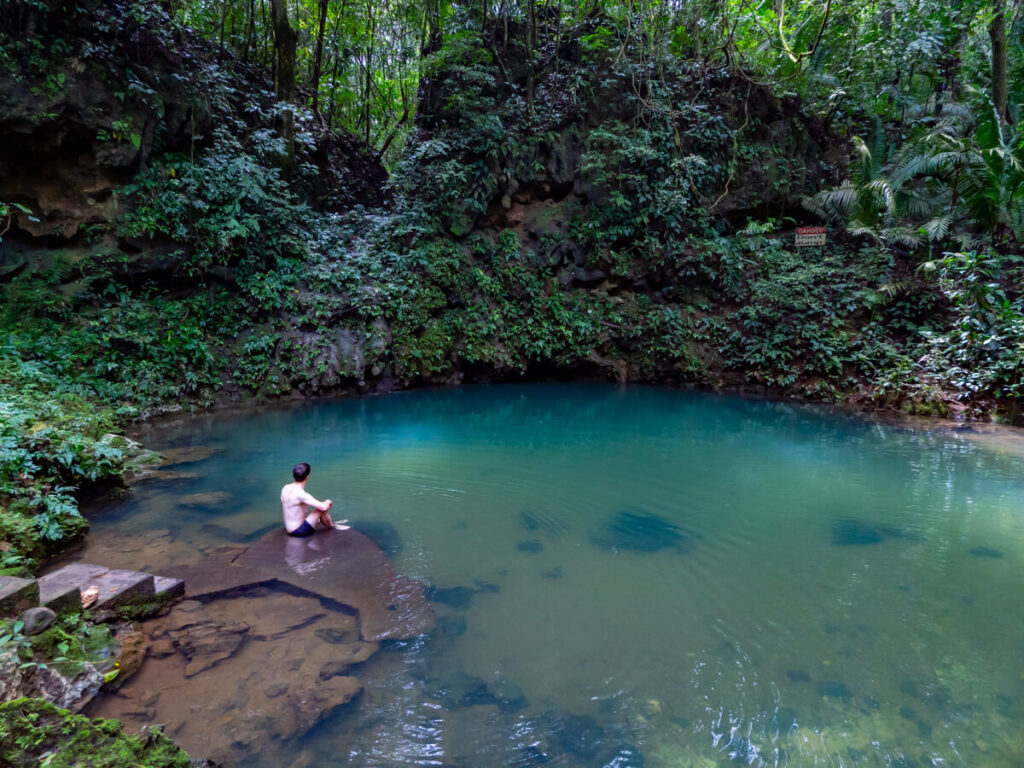
St. Herman’s Blue Hole National Park is one of the top highlights along the Hummingbird Highway, with cave systems, rainforest trails, and a refreshing cenote-like swimming hole. Also called the ‘Inland Blue Hole‘ (not to be confused with the Great Blue Hole), this collapsed karst sinkhole is filled with turquoise water, perfect for a refreshing dip. St. Herman’s Cave, known for its gaping 37 metre (120 ft) wide mouth, is also located within the park, offering the rare chance to explore one of Belize’s caves without a guide.
The park has a network of well-marked trails that lead through lush jungle, making it easy to explore on your own. It’s only a 5-minute walk to the pool from the parking lot, while an alternative 45-minute Dusky Antbird Trail leads to the pool from the cave and back. The cave has a separate parking lot a few minutes’ drive down the highway, where you can either take the 15-minute Lowland Trail or the 10-minute Highland Trail (or take one there and the other back). Cave tubing is also available at the site, which is managed by the Belize Audubon Society.

8. Go cave tubing
Cave tubing is one of Belize’s most iconic activities, and the Hummingbird Highway is the gateway to several cave systems that are ideal for it. You float on an inflatable tube along underground rivers, drifting through chambers filled with stalactites, stalagmites, and waterfalls. Some caves even contained ancient Mayan artefacts and were once used for sacred rituals, like those you can see in the iconic ATM Cave. Professional guides explain both the geology and cultural history while ensuring safety throughout the tour. Ian Anderson’s Caves Branch near St. Herman’s Blue Hole is one of the most popular places to go cave tubing in Belize, while Nohoch Che’en Caves Branch Archaeological Reserve (often called just Caves Branch) is another popular tubing site, located half an hour’s drive from Belmopan.

9. Swim in Ayala’s Natural Pool
Ayala’s Natural Pool is a hidden gem along the Hummingbird Highway, offering a peaceful place to relax in clear, cool water. The natural pool is spring-fed, surrounded by forest, and known for its serene atmosphere. It’s a popular picnic spot for locals who enjoy swimming, especially families, as the water is shallow. It also features a zipline and an air bicycle, although they don’t always run.

10. Sample Lámanai Chocolate
Lámanai Chocolate is a local chocolate-making business where visitors can learn about Belize’s cacao heritage on a working cacao farm. The experience includes complimentary samples of the gift shop’s produce, while you can opt for a tour and demonstration of how cacao beans are roasted, ground, and turned into chocolate using traditional methods if you’d like to learn more. There’s also a small café-shop, offering hot and cold chocolate drinks and chocolate-based sweet treats. Buying chocolate here directly supports small-scale farmers and the sustainable practices used by the company.

11. Hike in Guanacaste National Park
Guanacaste National Park is located at the western end of the Hummingbird Highway near Belmopan. Protecting 50 acres of lush secondary forest, this nature reserve is named after a giant Guanacaste tree that once stood at its entrance. Short but scenic trails lead visitors through diverse habitats along the Belize River and Roaring Creek. The park is one of the best places in Belize for birdwatching, with species like toucans, motmots, and tanagers frequently seen.

12. Stay in a jungle lodge
The Hummingbird Highway is lined with eco-friendly jungle lodges that offer the perfect place to stay and immerse in Belize’s rainforest. These lodges offer everything from rustic cabins and comfortable cabanas to luxury villas with farm-to-table dining. Activities often include river kayaking, caving, birdwatching, hiking, and even night safaris. Many lodges also operate sustainably, using solar power, organic gardens, and conservation initiatives to protect the surrounding forest. Staying overnight allows you to experience the jungle’s atmosphere after dark, when wildlife becomes most active.

Continuing on to San Ignacio
While the Hummingbird Highway ends in Belmopan, many travellers choose to continue on to San Ignacio (unless driving east). A laidback town on the Guatemalan border, this is the gateway to outdoor reserves like the Mountain Pine Ridge Forest and Tapir Mountain Nature Reserve, as well as famous Mayan sites like the ATM Cave, Cahal Pech, Xunantunich, and Caracol.

Where to stay on the Hummingbird Highway
The Hummingbird Highway is best explored over at least a couple of days, and staying at one of Belize’s jungle lodges allows you to fully enjoy the region’s landscapes, waterfalls, and caves along the way. Most accommodations are small eco-lodges or boutique resorts tucked into the forest, offering close access to nearby attractions. From rustic cabins designed for nature lovers to upscale jungle retreats with plunge pools and fine dining, the highway offers a surprisingly wide range of accommodation. Here are some of the best places to stay on the Hummingbird Highway.
Hummingbird Highway Hotels

1. Toucan Ridge Ecology and Education Society (T.R.E.E.S.)
Toucan Ridge Ecology and Education Society (T.R.E.E.S.) is both an eco-lodge and a conservation research centre, located near Middlesex along the Hummingbird Highway. Accommodation consists of several colourful, rustic cabins, making it the ideal place to stay for budget travellers and those interested in conservation. The lodge supports biodiversity research, wildlife monitoring, and environmental education projects with frequent workshops and night walks, which guests can take part in. T.R.E.E.S. emphasises sustainability by using composting toilets, solar power, and locally sourced foods in their onsite café, which has good veggie/vegan options.

2. The Rainforest Lodge at Sleeping Giant
The Rainforest Lodge at Sleeping Giant is one of the Hummingbird Highway’s most luxurious lodges, set within 600 acres of private jungle reserve. It contains a mix of river-view suites, mountain-view villas, and river houses, all designed with upscale amenities like plunge pools, private decks, and outdoor showers. Activities include river kayaking, birdwatching, and guided hikes to waterfalls and caves. The lodge’s Grove House Restaurant is highly rated, featuring farm-to-table cuisine using produce grown onsite, and the lodge has won awards for hospitality and eco-tourism.

3. Sattva Land
Sattva Land is a boutique eco-retreat with a focus on wellness, mindfulness, and immersion in nature. The property features a mix of hand-built eco-cabins, jungle lofts, and glamping tents constructed from natural and recycled materials with off-grid infrastructure like solar panels, water catchment systems, and permaculture gardens. A central ‘lodge’ area is used for shared meals, while activities include yoga, meditation, forest bathing, and workshops on sustainable living.

4. Jaguar Creek
Jaguar Creek is an eco-lodge located near St Blue Hole National Park, offering simple but comfortable cabanas built with natural materials. The lodge is operated as a nonprofit, with all proceeds reinvested into community projects, local education, and conservation programs. Rooms are solar-powered, with open-air showers and verandas overlooking the rainforest, a stone’s throw from activities like cave tubing and trekking. Jaguar Creek minimises single-use plastics, sources food locally, and engages in habitat protection.

5. Ian Anderson’s Caves Branch Jungle Lodge
Caves Branch Jungle Lodge is famous for its adventure activities, offering guided caving, cave tubing, rappelling, and jungle expeditions. It also features accommodation ranging from budget jungle cabanas to luxury treehouses with sweeping views of the rainforest. The lodge pioneered many of Belize’s adventure tourism activities and is especially popular with adventure-seekers. It also features a botanical garden with the largest orchid collection in the country, alongside butterfly houses and medicinal plant gardens.

Where to eat on the Hummingbird Highway
Dining options along the Hummingbird Highway are limited, but what you will come across are authentic eateries and local restaurants. Roadside stalls are particularly popular for cheap street food, while several cafés serve traditional Belizean cuisine. Fruit stands are common, selling coconuts, pineapples, bananas, and seasonal produce straight from local farms. Many accommodations have their own restaurant, which you can eat at on an evening.

Hummingbird Highway Restaurants
We’ve listed our favourite restaurants on the Hummingbird Highway below:

When is best to drive the Hummingbird Highway?
The best time to drive the Hummingbird Highway is during Belize’s dry season between December and April, when road conditions are at their smoothest and visibility is clear. This time is perfect for outdoor activities, especially in the start and end shoulder months when it’s not too hot.
The rainforest scenery is especially beautiful just after the wet season, which runs from May to November. Waterfalls and rivers are full during this time, but rain can cause cancellations to activities or make it tricky to get to certain stops with longer, unpaved access roads.
Early mornings are ideal for a more relaxed drive with lighter traffic, but the highway’s never really that busy. It’s not recommended to drive after dark, as most roads are not lit, and wildlife can make it more dangerous to drive.

How long to spend on the Hummingbird Highway
Driving the full length of the Hummingbird Highway takes about 2 hours without stops, but it’s worth setting aside at least one full day. This gives you time to explore national parks, waterfalls, caves, and small towns along the route.
Many travellers also use the highway as a scenic transfer between Belize City, Belmopan, Dangriga, and San Ignacio, spending 1 night in a lodge. While this would be sufficient time to see a few highlights, we’d recommend spending 2 to 3 nights on the highway to really see all it has to offer.

Is the Hummingbird Highway worth it?
The Hummingbird Highway is considered by many to be one of the most scenic drives in Central America. With a blend of natural attractions and adventure activities, the route has plenty to see and do and offers views of some of Belize’s best landscapes. We’d highly recommend adding it to your Belize itinerary.
Having said that, you really do need a rental car in order to experience the highway properly, which isn’t going to be accessible to everyone. It also offers a lot of activities, like swimming holes and caves, that you can experience elsewhere in Belize, so you could skip it in favour of somewhere like San Ignacio if you’re short on time and already visiting that area.
Is the Hummingbird Highway safe to drive?
While nowhere is 100% safe, the Hummingbird Highway is pretty safe to drive, especially during daylight hours. The road is paved and in good condition, though it does have sharp curves, blind spots, and occasional wildlife crossings.
Driving at night is not recommended due to limited lighting and the possibility of animals on the road, and drivers should watch out for speed bumps, which are often unmarked and brutal, and potholes. During the rainy season, flash floods or fallen debris may temporarily affect certain stretches, so it’s wise to check conditions before setting out.

What to pack to drive the Hummingbird Highway
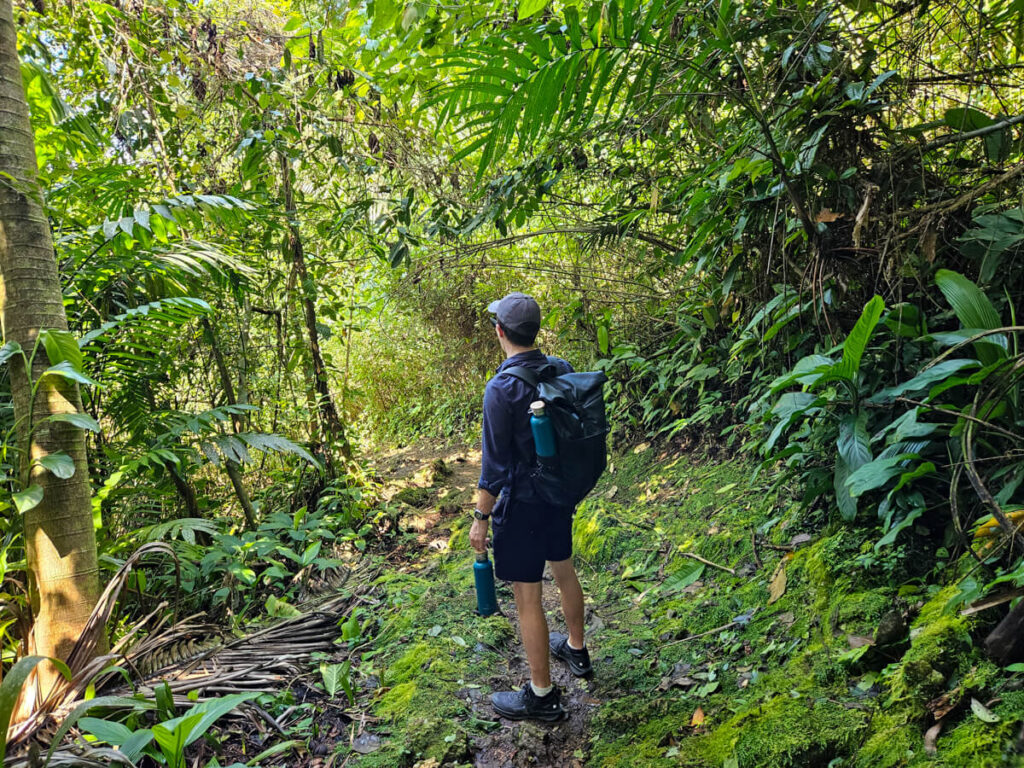
To ensure an enjoyable and safe drive along the Hummingbird Highway, it’s important to pack the right things. Don’t forget to pack your:
Tips for driving the Hummingbird Highway
Like any mountain road, driving the Hummingbird Highway requires a bit of caution and preparation to ensure a safe and enjoyable journey. Here are some top tips:

Our experience driving the Hummingbird Highway
We love a road trip, and the Hummingbird Highway is definitely one of the most beautiful places we’ve been. Driving the Hummingbird Highway is as much about the journey as the destination, and we still feel that it’s totally underrated.
We started in Dangriga before spending a couple of days making our way up to Belmopan, stopping at nature reserves and national parks like St. Herman’s Blue Hole, hiking in the rainforest, and enjoying the raw natural beauty of T.R.E.E.S., before continuing on to San Ignacio and crossing the border into Guatemala.
The road was in good condition, and as long as we drove carefully, it felt very safe – the road was in a better condition than anywhere else we drove in the country. We’d highly recommend picking the Hummingbird Highway if you’re looking for a jungle experience in Belize.

Read next:
How to Visit St. Herman’s Blue Hole National Park
Our Toucan Ridge Ecology and Education Society Review
Dangriga Travel Guide + 12 Best Things to Do
11 Best Jungle Lodges in Belize
Our Belize Destination Guides:
Our Belize Travel Guides:
