15 Animals in Belize and Where to See Them

Discover fascinating animals in Belize that you can see, and the best places to find them, in this wildlife guide.

This post may contain affiliate links, which means we might earn a small commission on anything purchased through these links at no extra cost to you. Learn more on our disclaimer page.
Belize might be small, but it’s one of the most biodiverse countries in the world. Its ecosystems are teeming with life, from tiny insects and small but colourful birds to big cats, large land mammals, and huge marine creatures, making wildlife watching one of the best things to do in Belize.
From snorkelling with manatees and diving with sharks off the coast to spotting monkeys around Mayan ruins and seeing an actual jaguar(!!), we encountered so many animals in Belize during the weeks we spent travelling there. Discover the most exciting and commonly spotted species, where to find them, and how to see them yourself, in this Belize wildlife watching guide.

More from Belize
What wildlife lives in Belize?
Home to more than 150 species of mammals, 600 birds, and 500 species of fish, Belize is a wildlife lover’s paradise that rivals Costa Rica. With a mix of rainforests, mangroves, savannahs, and coral reefs, you can spot rare species both on land and at sea.
Around 60% of Belize’s land area is covered in forest, and much of it is protected, offering incredible opportunities to see land animals in their natural habitat. While the beautiful Belize Barrier Reef is part of the second-largest barrier reef in the world (the Mesoamerican Reef), which stretches from Mexico to Honduras, and offers incredible marine animal encounters.
We love wildlife watching wherever we go in the world, so we were thrilled at all the possible animal encounters in Belize. Here are all the animals you’re most likely to spot, the best places in Belize to find them, how to see them, and the tours and excursions you need to add to your Belize itinerary.

Marine animals you can see in Belize
Our favourite kind of wildlife, marine animals in Belize are found off the country’s Caribbean Coast. Snorkelling in Belize is a popular way to get up close to underwater life. Here you can swim in crystal-clear waters where coral gardens, seagrass beds, and mangrove lagoons host an incredible range of species.
1. Manatees
Belize is one of the last strongholds for the West Indian manatee, a gentle, slow-moving marine mammal that grazes on seagrass in shallow coastal waters. Around 1,000 manatees live in Belize’s rivers, lagoons, and coastal zones, particularly around Swallow Caye Wildlife Sanctuary, the Placencia Lagoon, and the Sittee River in Hopkins.
You can even swim with manatees in Belize. Manatees are listed as Vulnerable by the IUCN, and are incredibly vulnerable to boat collisions and habitat loss, so strict conservation laws protect them. The best way to see them ethically is to take a snorkelling tour with a local, licensed operator, like Salt Life Eco Tours’ 7-Stop Snorkelling Tour. It’s one of the best things to do in Caye Caulker and gives you the best chance to see them underwater.
You can spot them year-round, but sightings are best during the dry season (November to May) when the waters are calmer and clearer.

2. Rays
Belize’s barrier reef is teeming with stingrays. The most common types you might see include:
Stingrays are easiest to see in shallow waters like Shark Ray Alley in Hol Chan Marine Reserve or at Ambergris Caye and Caye Caulker, where you can snorkel right beside them.
Southern stingrays can reach over 1.5 meters (5 ft) across and are the most commonly seen species, while manta rays are incredibly rare to see. Spotted eagle rays are known for their elegant spotted patterns – we saw a few off Tobacco Caye – while yellow stingrays are much smaller (we saw one at Rendezvous Caye).
Stingrays have a bad reputation thanks to their barbed tails, but they’re completely harmless if left undisturbed. Many local guides emphasise not touching them, as their skin is sensitive, and maintaining a respectful distance helps keep the ecosystem healthy. However, some operators will feed them to encourage them to get close to tourists, like in Hol Chan and at Caye Caulker’s Stingray Beach, which is unethical. It’s best to simply observe their natural behaviours from a distance.
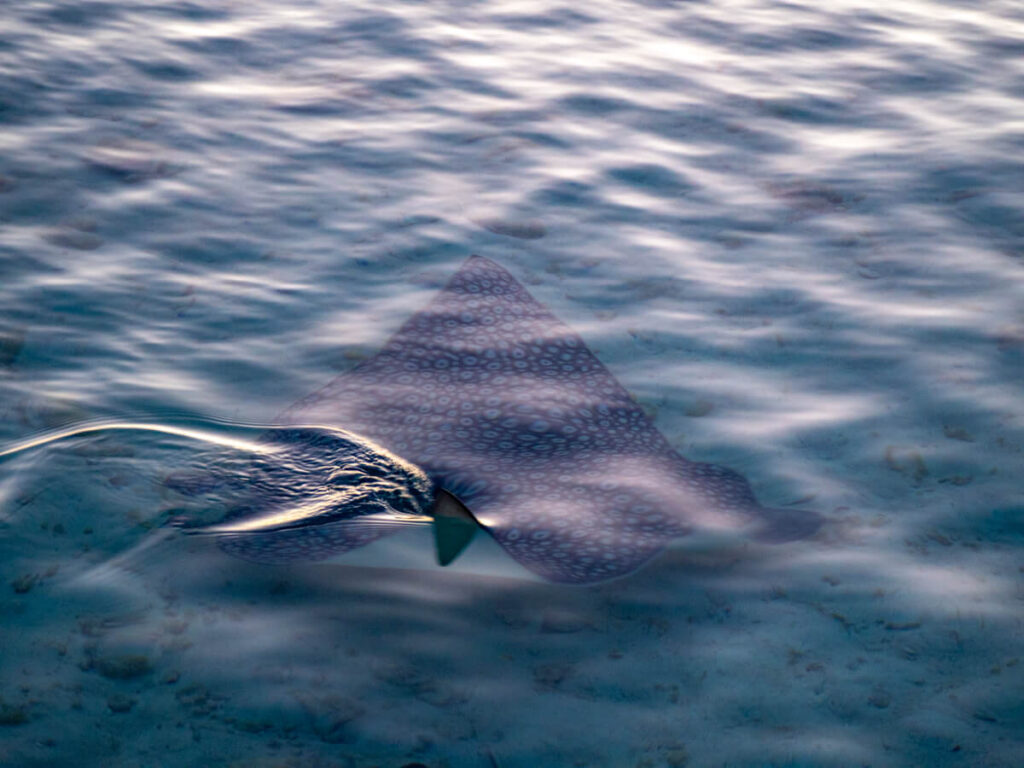
3. Sharks
Belize is one of the best places in the Caribbean to encounter shark species, including:
The most famous spot is Shark Ray Alley, where groups of friendly nurse sharks gather near the boats due to historic feeding by local fishermen. Unfortunately, feeding the sharks and rays can cause stress and behavioural changes, so it’s best to choose an operator that’s hands-off.
For advanced divers, the Great Blue Hole and Turneffe Atoll offer opportunities to see Caribbean reef sharks in deeper waters. For easier diving, the South Water Caye Marine Reserve is perfect. We had a group of nurse sharks accompany us on our whole dive.
Belize’s sharks are mostly non-aggressive, feeding on crustaceans and small fish. The best months for diving in Belize with sharks are April to June, when visibility peaks and the waters are calm.

4. Whale sharks
Few experiences compare to swimming alongside a whale shark, the largest fish in the world. In Belize, they used to migrate to the Gladden Spit and the Silk Cayes Marine Reserve to feed on snapper spawn near Placencia. The season is said to run from March to June, with peak sightings around the full moons of April and May. Unfortunately, sightings have all but ceased, with no whale sharks sighted in the area in years, so tours rarely run anymore.
These gentle giants can grow up to 12 meters (40 ft) long yet feed only on plankton, making the encounter both thrilling and completely safe. Licensed dive operators in Placencia or Hopkins may offer tours if sightings pick back up again, ensuring encounters are respectful and sustainable.
If you’re really keen to experience these gentle giants, we’d highly recommend swimming with whale sharks in La Paz, Mexico, which has a more stable population, strict regulations, and ethical operators.

5. Sea turtles
Belize’s waters are home to three species of sea turtles, including:
All of them nest along the shores of Belize’s cayes and coastal beaches. Hawksbills, known for their strikingly patterned shells, are often seen around the reef, while green turtles frequent the seagrass beds. We saw all three kinds of turtle while snorkelling in Caye Caulker.
The nesting season runs from May to November, with hatchlings emerging about two months later. You can snorkel with turtles year-round – we saw both green and loggerhead on our 3-day, 2-night sailing tour with Ragga Sailing Adventures.
Belize plays a crucial role in sea turtle conservation, with local NGOs like Ecomar monitoring nests and educating visitors about responsible tourism.

6. Dolphins
Dolphins aren’t super commonly seen in Belize, but they are around. If you’re lucky, you might see:
Bottlenose dolphins are the most common species in Belize, often spotted leaping alongside boats in the open sea or playing in lagoons. We saw a couple coming back into Caye Caulker, but others have seen them while sailing the Barrier Reef. Some pods are resident, especially around Turneffe Atoll, South Water Caye, and Placencia Lagoon.
Dolphins are highly social and intelligent, living in groups called pods, and it’s not uncommon to see them teaching their young to fish. The best time for dolphin watching is during the dry season (November to May) when the seas are calm and spotting conditions are ideal. While tour operators may advertise dolphin sightings, these are always in the wild – there are no captive dolphins in Belize, in line with the country’s strong conservation ethos.

7. Fish
The Belize Barrier Reef hosts more than 500 species of fish, ranging from schools of snapper to slow-moving giants like the goliath grouper. The coral gardens near Ambergris Caye and Laughing Bird Caye are perfect for snorkelers, offering easy access to a kaleidoscope of parrotfish, angelfish, and butterflyfish.
Divers will find larger pelagic species at Turneffe and Lighthouse Reef Atolls. Nassau groupers are especially famous here – divers can even witness their rare winter spawning aggregations, one of the most spectacular marine events in the Caribbean. The water temperature averages 27-29°C (80-84°F) year-round, and visibility can exceed 30 meters (100 ft) on clear days.
Tarpon patrol mangroves and coastal flats, where they can leap dramatically from the water during feeding (although we don’t condone it).
Sustainable fishing is a big focus in Belize, with several marine reserves enforcing catch-and-release or no-take zones to protect these vital ecosystems.

8. Crocodiles
Belize is home to two species of crocodile:
The American crocodile is found in coastal lagoons and mangroves, and the smaller Morelet’s crocodile lives in freshwater rivers and lakes. The Crocodile Research Coalition in Placencia monitors and protects these reptiles, while ACES is a rescue centre near San Pedro that gives tours by appointment.
You might see them sunning themselves near Placencia Lagoon, in the mangroves of Ambergris Caye, and in the Crooked Tree Wildlife Sanctuary.
Crocodiles are often misunderstood but vital for maintaining healthy wetland ecosystems. As apex predators, they help control fish populations, keeping Belize’s waterways balanced.

Other marine animals you can see in Belize

Land animals you can see in Belize
Inland, Belize’s jungles are filled with wildlife. You can explore rainforests, pine savannas, and limestone caves where big cats, monkeys, and tapirs roam freely. Early morning or dusk hikes with a guide in one of Belize’s protected areas give you the best chance to see animals in their natural habitat.
9. Jaguars & other big cats
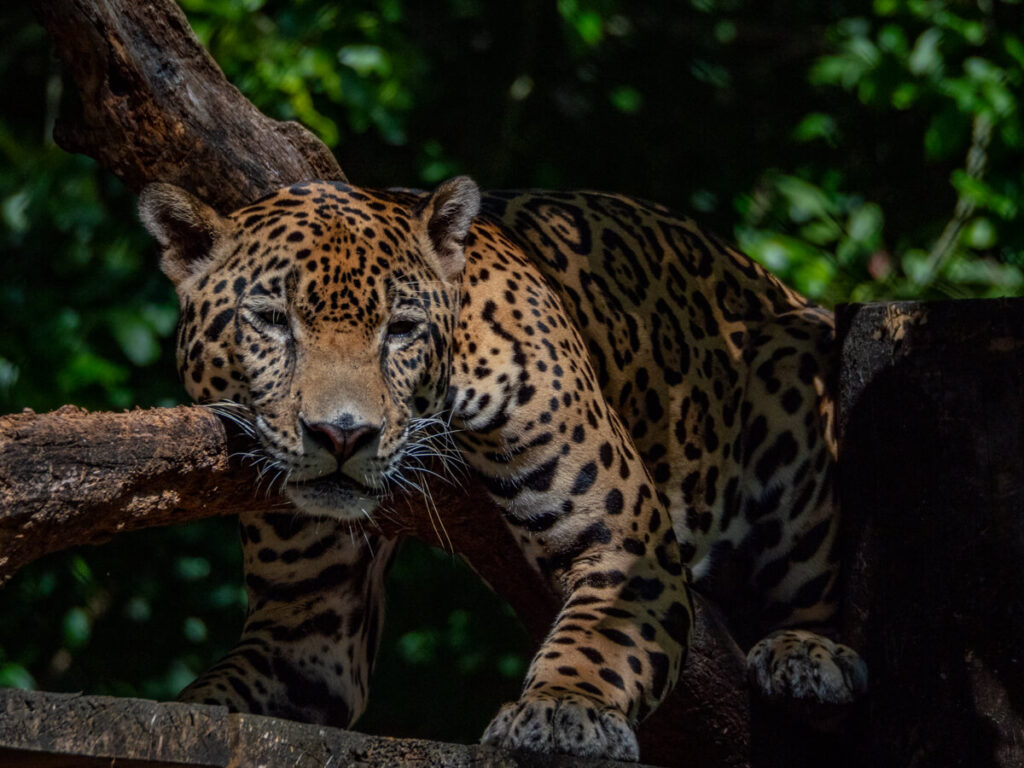
Belize is one of the best places in the world to glimpse the elusive jaguar, which was sacred to the ancient Maya. It’s estimated that 400-600 jaguars live in Belize, protected across over 150,000 acres of dense rainforest.
These majestic cats are nocturnal and shy, so sightings are rare, but you can often spot their paw prints or scratchings in tree trunks along jungle trails. We got incredibly lucky with a sighting of one in Cockscomb Basin Wildlife Sanctuary, the world’s first jaguar reserve. It’s a rough and long journey (you’ll need a 4×4), but the reserve is home to a wide variety of hiking trails in the pristine rainforest.
There are other wild cats in Belize, but you’re highly unlikely to see them unless you get ridiculously lucky. They include:
10. Monkeys
Belize has two native monkey species:
Howler monkeys are famous for their deep, guttural calls that can carry for over 2 miles (3 km) through the jungle. They’re easiest to see on a Monkey River boat tour, but you can also see them in the Community Baboon Sanctuary and around Lamanai, one of Belize’s best Mayan ruins.
Yucatán spider monkeys are a subspecies of Geoffroy’s spider monkey and are more arboreal and agile. You might see them swinging through the treetops in northern and eastern Belize. We spotted a troop of them at Xunantunich‘s Mayan ruins, near the Belize-Guatemala border.
Both species are active during the day, and sightings are best in the early morning when they’re most active. Sadly, spider monkeys are now listed as Endangered due to habitat loss, so encountering them in the wild is becoming increasingly rare, but not impossible.

11. Tapirs
The Baird’s tapir, affectionately known as the ‘mountain cow’, is Belize’s national animal and a symbol of conservation. These gentle, pig-like herbivores can weigh up to 300 kg (660 lbs) and are often seen at dusk near rivers and forest edges.
You might spot them in Cockscomb Basin, the Mountain Pine Ridge Forest Reserve, or the Tapir Mountain Nature Reserve near San Ignacio, though sightings are infrequent due to their shy, solitary nature.
Tapirs are excellent swimmers and use their flexible snouts to grab vegetation. The best time to see them is around sunset, when they emerge to feed. Belize has made strong efforts to protect them, as they’re considered Endangered throughout Central America.

12. Coatis
The white-nosed coatimundi is a curious, raccoon-like mammal found throughout Belize’s forests and mountains. They’re social animals, often moving in groups called bands, which can include up to 20 individuals.
You can spot them along forest trails in Mountain Pine Ridge or Cockscomb Basin, where they forage for fruit, insects, and eggs. We were desperate to see one, but didn’t get a sighting until we reached Tikal.
Coatis are surprisingly bold, sometimes approaching tourists if they smell food (although it’s not good for them to be fed). They’re skilled climbers and are often seen scaling trees or snuffling through the undergrowth.

13. Agoutis & pacas
The Central American agouti and lowland paca (gibnut) are two of Belize’s most common small mammals, resembling oversized guinea pigs. Agoutis are often seen during the day, darting through forests and lodge gardens, while the nocturnal paca, once dubbed ‘The Royal Rat’ (like The Royal Rat Hostel in Placecia) after being served to Queen Elizabeth II, is harder to spot.
Both play important ecological roles as seed dispersers. You’ll most likely encounter agoutis in Mountain Pine Ridge Forest, Cockscomb Basin, or even around eco-lodges like TREES. Pacas, meanwhile, are best seen on night walks or with guides trained to spot their reflective eyes.

14. Armadillos
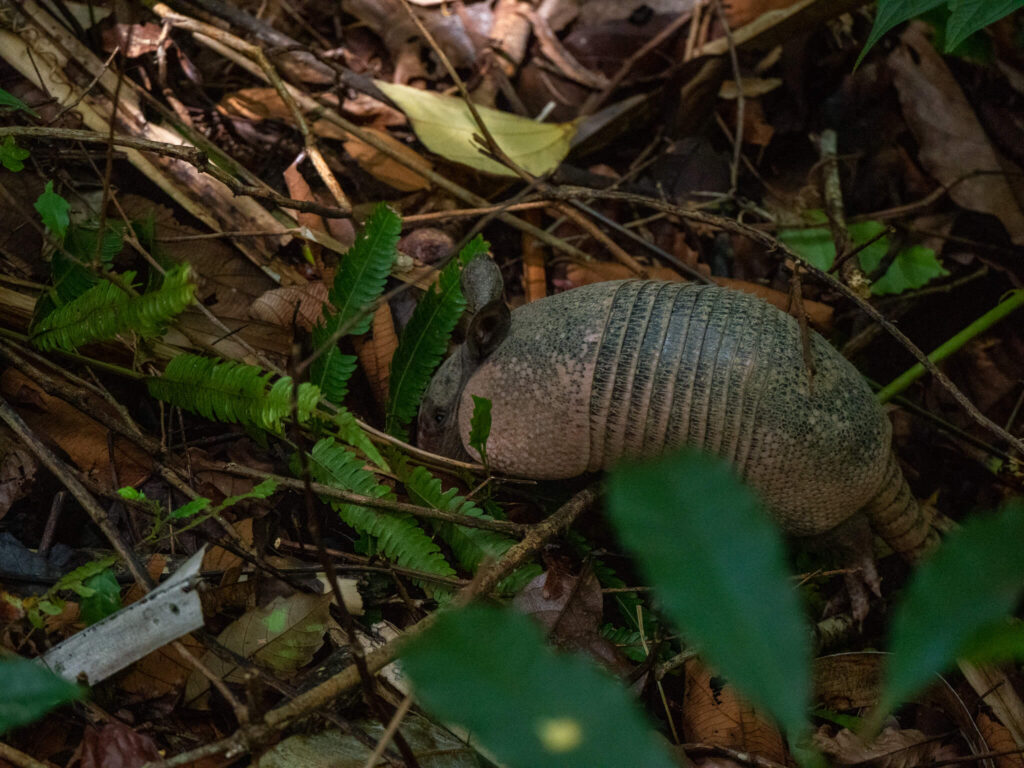
Belize is home to the nine-banded armadillo, a nocturnal creature known for its armoured shell and impressive digging abilities. They use their claws to dig for insects and burrow into soft earth, which makes spotting them tricky.
However, you may notice their burrows near trails in Cockscomb Basin or Chiquibul Forest Reserve near Caracol. Armadillos are solitary and usually seen at night or early morning, snuffling through the undergrowth. Their unique defence mechanism of curling up or dashing into a burrow makes them interesting to encounter. We saw a few in Manuel Antonio National Park in Costa Rica.
15. Birds
Belize is a birdwatcher’s paradise, with over 600 species recorded, including:
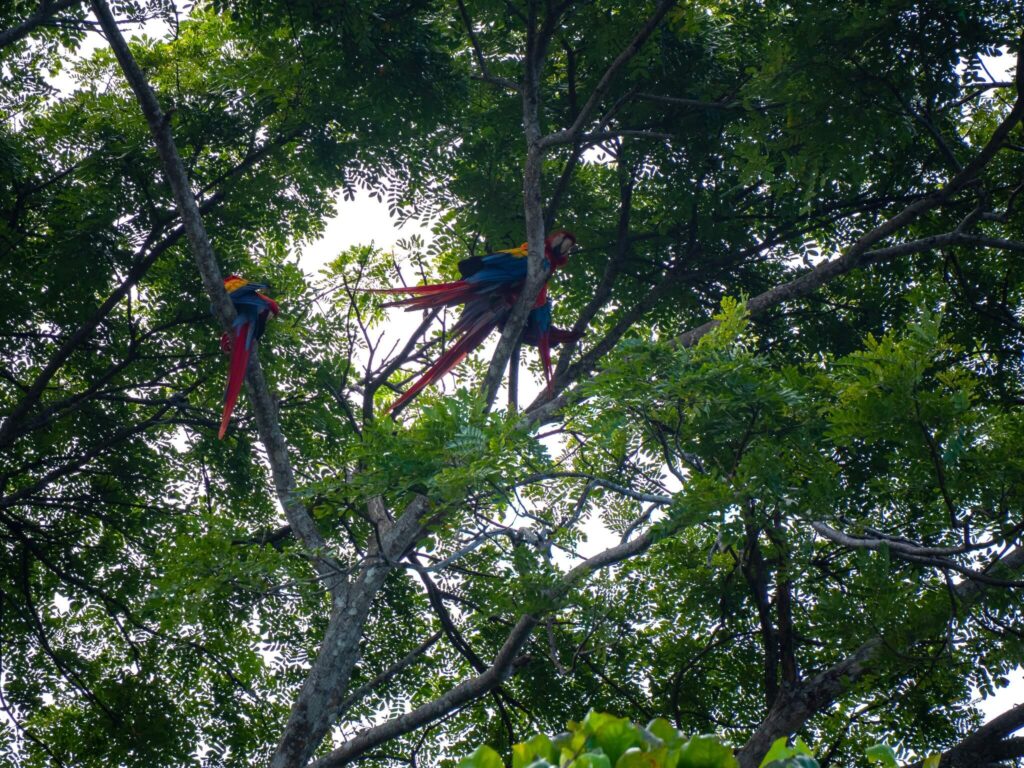
The country’s diverse habitats, from mangroves and lagoons to cloud forests, mean you can spot tropical and migratory species year-round. The Crooked Tree Wildlife Sanctuary is a must-visit, particularly between November and April, when wetlands attract thousands of herons, egrets, and jabirus (the largest stork in the Americas). Scarlet Macaw Paradise Red Bank Village is also home to scarlet macaws, especially from December to March.
Meanwhile, in the rainforest, you might spot keel-billed toucans, the national bird of Belize, or bright parrots flitting between the canopy. And hummingbirds can be seen along the aptly named Hummingbird Highway. While we didn’t see a lot of birdlife in Belize, we did see scarlet macaws in Honduras and resplendent quetzals in Costa Rica.
Bring binoculars (we use Nikon Prostaff 3S 10×42 Waterproof Binoculars with a 7° field of view: Browse UK / Browse US) and go hiking at dawn or dusk, when birds are most active, for the best chance to see them.
Other land animals you can see in Belize
Belize Wildlife Watching Tips
To ensure an enjoyable experience of wildlife watching in Belize, here are our top tips:

Belize Wildlife FAQs
We wish you good luck wildlife watching in Belize, and we will leave you with these frequently asked questions, answered.
What are the 5 big cats in Belize?
Belize is home to five wild cats. The largest, the jaguar, roams the forests of the Maya Mountains and is endangered, making sightings rare but thrilling. Pumas, also called mountain lions, are similarly solitary and mostly nocturnal. Ocelots are medium-sized and often seen at night along forest trails. Margays are the smallest and most arboreal of the five, rarely coming to the ground. Finally, the jaguarundi is a weasel-like cat, secretive and hard to spot, making Belize a unique country for wild cat enthusiasts (like Lucy).
Are there jaguars in Belize?
Jaguars are present in Belize, especially in the southern and western forests of Belize. They are elusive and mostly nocturnal, so sightings are extremely rare, but Belize has one of the largest populations of wild jaguars in Central America. Jaguars prefer dense jungle areas with rivers and abundant prey, such as deer, peccaries, and tapirs. The Cockscomb Basin Wildlife Sanctuary is the most famous reserve for jaguar conservation, and is where we actually saw one!
Does Belize have wild monkeys?
Belize has two main species of wild monkeys: howler monkeys and spider monkeys. Howlers are easier to spot because of their loud calls that echo through the forest, especially in the early morning or late afternoon. Spider monkeys are more elusive, spending most of their time in the high canopy. Both species can be found in national parks and reserves like Cockscomb Basin and community forests around the country.
Are there venomous animals in Belize?
Belize is home to several venomous species, mostly snakes and insects. The fer-de-lance is the most dangerous snake in the country and is responsible for most snakebite incidents. Coral snakes are brightly colored and venomous, but generally shy and non-aggressive. Spiders, scorpions, and some marine species like stonefish also carry venom. While encounters are possible, bites and stings are rare if you stay on trails and take precautions, like wearing long clothing.
Do crocodiles or alligators live in Belize?
Belize is home to the American crocodile, which can be found in rivers, lagoons, and coastal areas. Alligators do not live in Belize, only crocodiles inhabit the country. Crocodiles are generally shy and avoid humans, but caution is advised near rivers, estuaries, and mangrove areas. Popular wildlife tours in areas like the Crooked Tree Wildlife Sanctuary or the Rio Bravo Conservation area give safe opportunities to see them.
Are there great white sharks in Belize?
Great white sharks are not native to Belize. The waters off Belize are more known for species like reef sharks, nurse sharks, bull sharks, and the occasional hammerhead. Whale sharks, the largest fish in the ocean, are a major attraction off the coast, especially near Gladden Spit from March to June, but are rarely seen nowadays.
Where can you see animals in Belize?
Belize offers wildlife viewing across a range of ecosystems, from coastal reefs to inland rainforests. National parks like Cockscomb Basin, Chiquibul, and Rio Bravo are excellent for spotting jaguars, tapirs, and wild cats. Coastal areas and marine reserves like Hol Chan, Shark Ray Alley, and Gladden Spit offer encounters with manatees, rays, and whale sharks. Community forests, private reserves, and bird sanctuaries are great for monkeys, tropical birds, and reptiles. The Belize Zoo and Tropical Education Centre (more of a conservation centre than a zoo) offers guaranteed wildlife sightings and is popular with families. While local sanctuaries like the Caye Caulker Animal Shelter do great work caring for strays.

Read next:
Ultimate Belize Travel Guide: Best of the Reef and Rainforest
Ultimate 1 to 4 Week Belize Itinerary: Ruins, Reefs, Rainforests, & Road Trips
28 Bucket List Things to Do in Belize
15 Best Places in Belize: Where to Stay
The Best Time to Visit Belize for Weather, Wildlife, and Water Activities
18 Most Beautiful Atolls and Islands in Belize: Best of the Barrier Reef
16 Best Nature Reserves, Natural Protected Areas, and National Parks in Belize
10 Most Majestic Mayan Ruins in Belize and Which to Visit
Our Belize Destination Guides:
