The Ultimate Guide to SCUBA Diving in Belize

Discover the best SCUBA diving in Belize, from top spots and best tours to animals you might see underwater.
This post may contain affiliate links, which means we might earn a small commission on anything purchased through these links at no extra cost to you. Learn more on our disclaimer page.
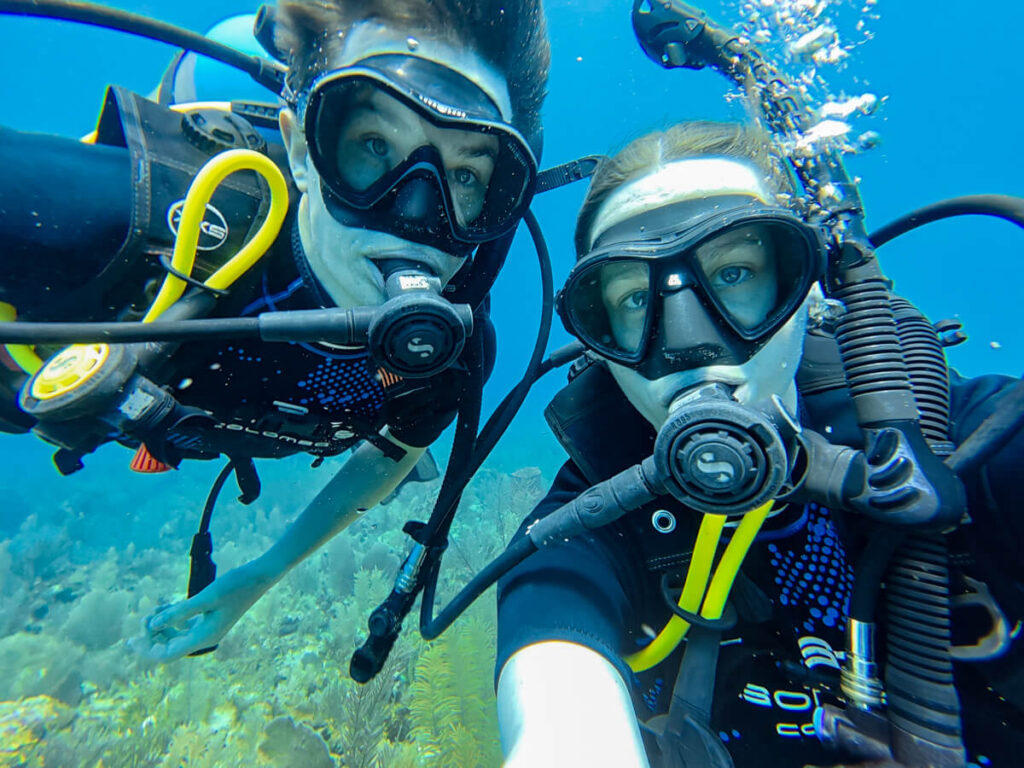
SCUBA diving is a bucket list experience and categorically one of the best things to do in Belize. The waters here are teeming with marine life, from turtles, sharks and stingrays to manatees, whale sharks, and fish, all thanks to its position along the expansive Mesoamerican Reef (the second-largest on the planet). Additionally, you’ll find unique topography, including colourful coral reefs, seagrass beds, and conch graveyards.
Whether you’re a newbie taking a Discover SCUBA course or an experienced diver, Belize has underwater sites to match every experience level, from shallow reefs and turquoise lagoons to famous dive sites like the Great Blue Hole. But not all dive operators are equal – some prioritise speed and profit over safety and reef conservation, so choosing a reputable, eco-conscious company is essential.
We had a pretty traumatic experience with a SCUBA diving company in Belize. We also had an incredible experience with another later in our trip. So in this guide, we’ve collated everything you need to know about SCUBA diving in Belize, from the best spots and ethical tour operators to animals you might see underwater.
Belize SCUBA diving at a glance

More from the Belize Barrier Reef
Does Belize have good SCUBA diving?
Due to its location along the Belize Barrier Reef, Belize offers some of the best SCUBA diving in the world. The Belize Barrier Reef is part of the Mesoamerican Reef, which spans 625 miles (1000 km), all the way from Mexico to Honduras. The second-largest barrier reef system in the world, after Australia’s Great Barrier Reef, it is a UNESCO World Heritage site and a global hotspot for marine biodiversity, making it the perfect destination.
Belize is considered one of the top SCUBA diving destinations in the world. Diving ranges from shallow, beginner-friendly sites to advanced, deep dives. The Barrier Reef is home to a variety of sites, including shallow reef dives, wall dives, drift dives, and even underwater caves, so there’s something for every interest and skill level.
With warm waters averaging 26-29°C (78-84°F) year-round, visibility can often reach 30 metres (100 ft) and over, and you barely need more than a shorty. Most dive sites range from 12-30 metres (40-100 ft), but some sites, like the famous Great Blue Hole, offer deep dives for experienced divers, dropping to over 120 metres (394 ft).
Dive shops are plentiful in popular hubs like Ambergris Caye, Caye Caulker, and Placencia, which offer immediate access to the reef. While more remote Belize atolls and islands are known for their untouched natural beauty and large pelagic encounters, and host specialist dive resorts. Night diving reveals another side to the reef that’s not visible during the day, too.

The best SCUBA diving sites in Belize
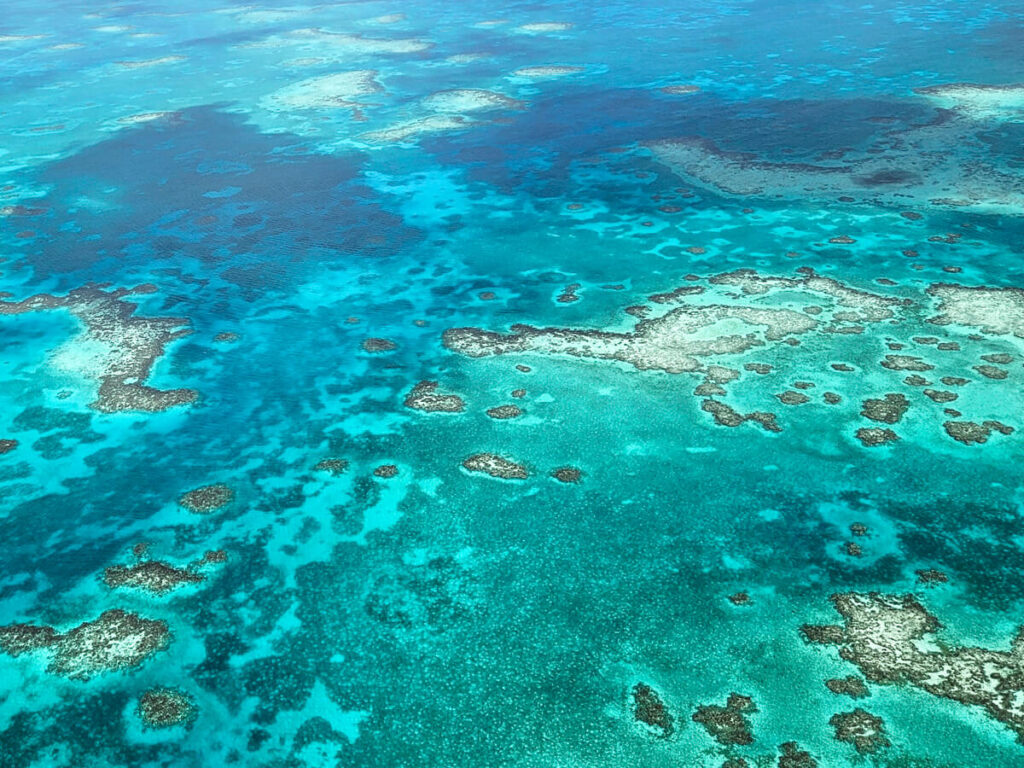
Belize’s marine parks and reserves are home to vast networks of coral reefs and atolls that are protected, so their ecosystems remain healthy and teeming with life. The country is geologically and ecologically unique because it is home to three of only four true coral atolls in the Western Hemisphere. Ring-shaped reef formations that surround a central lagoon, atolls are typically formed on submerged volcanic or limestone foundations. They’re more remote, so require a long boat journey or a stay on a nearby island, but are worth visiting if you’re a keen diver. Belize’s three atolls are:
But you don’t have to go far out to experience the best of Belize’s Barrier Reef. Some of the best dive sites are located a short boat ride away from the country’s most popular cities and coastal towns. We’ve listed the best places for diving on the Belize Barrier Reef below.
Belize SCUBA diving sites map
We’ve pinned the top dive sites in Belize on the interactive map below.
1. The Great Blue Hole
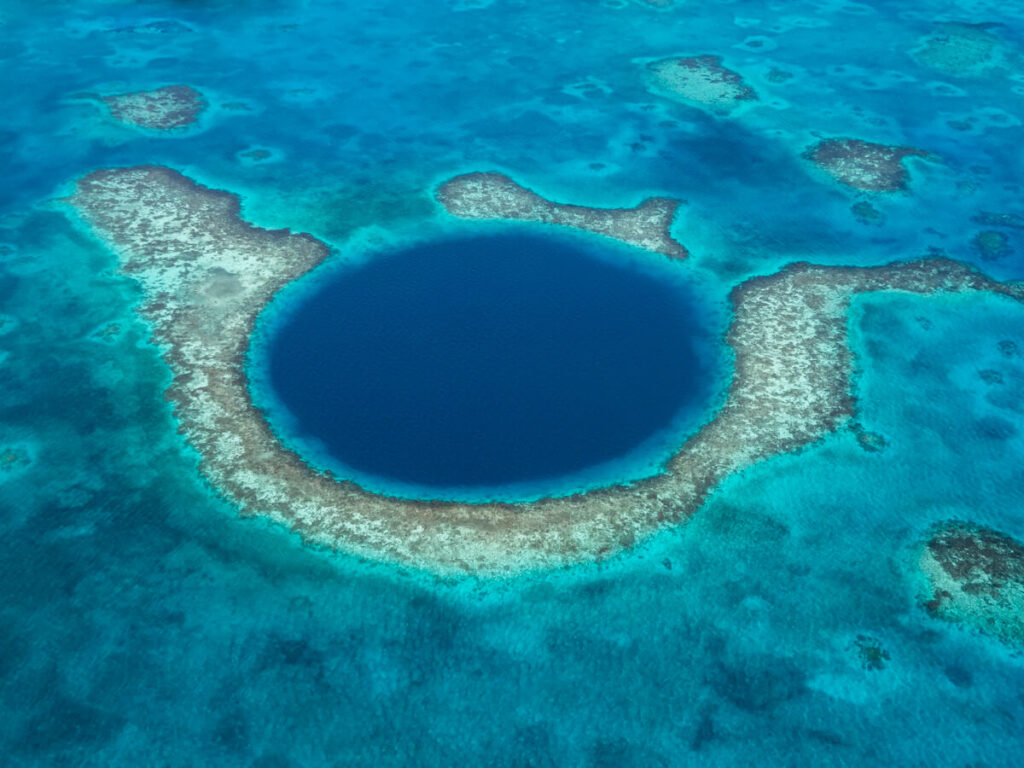
A bucket-list deep dive in the Lighthouse Reef Atoll, the Great Blue Hole is one of the most famous dive sites in the world. It was named “one of the top 10 dive sites in the world” by the explorer Jacques Cousteau and is known for its sheer walls, stalactites, and occasional large sharks.
Blue Hole SCUBA diving tours leave from San Pedro and Caye Caulker. It’s possible to make the trip from the mainland, too, but it’s a much longer journey with far fewer options. The journey from San Pedro takes around 2.5-3 hours by boat, while it’s 2-2.5 hours one-way from Caye Caulker. The journey can be rough, so it’s best to prepare if you’re prone to seasickness.
Many operators offer a 2 or 3-tank dive day with one dive in the Great Blue Hole and another at the nearby Half Moon Caye (a wall dive that is often heralded as a more interesting dive than the hole with more reef life to see).
2. Hol Chan Marine Reserve
Many of Belize’s top snorkelling sites double as excellent diving locations, offering diverse experiences depending on your skill level. Shallow coral gardens and protected lagoons are perfect for admiring marine life just below the surface, while these same areas often feature deeper walls or nearby channels that provide exciting dive spots for certified divers.
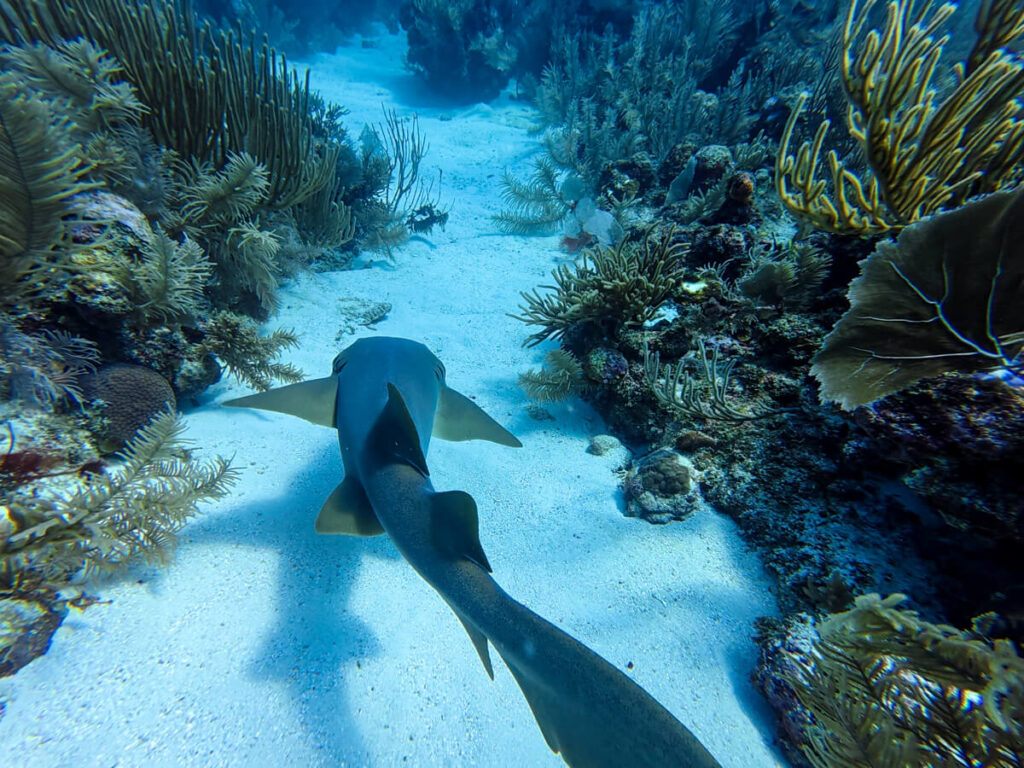
For example, Hol Chan Marine Reserve is famous for its shallow, snorkel-friendly reefs but also hosts deeper dive sites in an area known as the Hol Chan Cut, with impressive swim-throughs and diverse topography for SCUBA divers to enjoy. It’s also home to the famous Shark Ray Alley, a hotspot for stingrays and nurse sharks. We saw so much wildlife in just one day here.
3. Ambergris Caye
Ambergris Caye is a base for many SCUBA diving trips, as the Barrier Reef is just a short boat ride away. The island is also home to its own local reef, with popular dive sites, including:
While it is touristy, Ambergris Caye is a handy base for SCUBA diving with loads of options for operators. It’s one of the best places in Belize if you’re looking for a diving holiday without needing to go to the outer atolls.

4. Caye Caulker Marine Reserve
Caye Caulker is home to a marine reserve just offshore. A protected area, it offers excellent diving opportunities in relatively shallow and calm waters, making it accessible to beginners and casual divers alike. If you’re more experienced, many dive shops will take you out beyond the reef, which is what we did.
We honestly preferred snorkelling in Caye Caulker, it is less crowded than San Pedro on Ambergris Caye, so it’s a quieter alternative. Caye Caulker also has access to Hol Chan Marine Reserve and Shark Ray Alley, only an extra 15 minutes or so by boat from Ambergris Caye, as well as seagrass beds that are favoured by manatees.

5. South Water Caye Marine Reserve
South Water Caye Marine Reserve is the largest marine reserve in Belize, covering over 130,000 acres of coral reefs, seagrass beds, and mangroves. It is known for its healthy reefs, which are ideal for SCUBA diving. South Water Caye is more remote and has a protected status, so it’s more untouched and less crowded than some more popular dive sites.
South Water Caye Marine Reserve is most easily accessible from the beautiful Tobacco Caye, a tiny island inside the reserve, known for its budget-friendly, colourful overwater cabañas and great shore snorkelling. You could also stay in South Water Caye itself at Pelican Beach Resort or Blue Marlin Beach Resort.

6. Gladden Spit and the Silk Cayes Marine Reserve
Gladden Spit and the Silk Cayes Marine Reserve is a protected area off the coast of Placencia. Once famous for its seasonal gatherings of whale sharks, it offers great SCUBA diving experiences, with coral reefs, seagrass beds, and a variety of marine life, including rays, turtles, and numerous tropical fish species.
The reserve is strictly managed to ensure sustainable tourism and conservation, and visitors often join guided day tours that focus on responsible wildlife viewing or hunting of invasive lionfish.
Tours to the Silk Cayes typically include your gear and a landing on one of the tiny, sandy islets, as well as a meal of local Belizean cuisine. We really enjoyed SCUBA Diving Gladden Spit with Splash Dive Center, and saw so many sharks – a group of them even accompanied us for a whole dive.

7. Beyond the reef
Beyond Belize’s Barrier Reef lies an expansive underwater world that features deeper waters, larger marine life, and unique habitats such as seamounts, underwater caves, and steep drop-offs.
Because these sites are farther from shore, access usually requires boat trips or liveaboard charters, and they’re generally more suited to experienced divers due to deeper waters, stronger currents, and more challenging conditions.
Divers can encounter pelagic species like eagle rays, large groupers, and sharks at sites including the Great Blue Hole, Half Moon Caye, and the atolls.

The best Belize SCUBA diving tours
Diving tours in Belize range from easy half-day trips on local reefs to challenging full-day excursions to outer atolls. Beginners can start with a SCUBA introduction in shallow reef dives, while experienced divers may opt for drift dives, deep walls, and the Great Blue Hole.
Most tours include tanks, weights, and an experienced dive master guide. Rental gear is normally always available if needed, but might be priced as extras per item, depending on the operator.
Trips to remote sites like the atolls often require early starts but reward divers with untouched geology and pristine conditions. Some dive shops also offer private charters for customised itineraries, which is great for groups of divers travelling together.

The best Belize diving resorts
Diving resorts in Belize cater to enthusiasts who want easy access to the water and full-service dive facilities. These resorts often feature gear storage, rinse stations, and guides familiar with local conditions. Some offer unlimited diving within nearby reefs as part of the stay, while multi-dive packages are popular to get the most out of your vacation.
Many dive resorts are located on Ambergris Caye, Belize’s largest and most accessible island. Ambergris Caye has plenty of local dive sites, is close in proximity to the famous Hol Chan Marine Reserve, and is a short boat trip out to the barrier reef.
The country’s atolls also host dive resorts on remote and private islands, with on-site dive shops and daily trips to local sites included in packages. Staying on-site means you can maximise your time underwater without long travel times each day.

Belize liveaboards
Liveaboard diving trips in Belize let you explore remote reefs, walls, and atolls that day boats rarely reach. These multi-day trips provide accommodation, meals, and several dives per day, including night dives. Popular itineraries cover Turneffe Atoll, Lighthouse Reef, and the Blue Hole, offering a mix of big fish encounters and vibrant coral gardens. Liveaboards are best suited to intermediate and advanced divers comfortable with multiple dives daily. Booking early is essential, especially during peak dive season from March to June.

Marine conservation volunteering programmes
Belize provides the unique opportunity to get hands-on with marine conservation through programmes like coral restoration projects, reef monitoring, and invasive species removal. Programs vary in length from a week to several months and often include training in reef ecology and conservation techniques. Many are organised by non-profits, while others are integrated into eco-resorts or research stations.
For something truly unique, consider volunteering with Reef Conservation International (ReefCI). A marine conservation organisation located on a private island in the Belize Barrier Reef near Placencia, this programme offers you the opportunity to get hands-on with marine preservation efforts. Volunteers and divers of all levels can engage in activities such as invasive lionfish removal, coral reef monitoring, and marine species identification, contributing directly to the health of the reef ecosystem.

Night SCUBA diving in Belize
Night excursions reveal an entirely different underwater world, as many nocturnal creatures emerge to hunt or feed. Common sightings include octopuses, lobsters, moray eels, and bioluminescent plankton. Divers can experience coral polyps feeding, giving reefs a fluffy, living appearance. Guides provide underwater flashlights and safety briefings to ensure a comfortable and memorable experience.

Choosing a responsible dive operator
A responsible dive shop should follow sustainable tourism practices and comply with local marine park regulations. Look for guides who brief guests on reef etiquette, such as not touching coral or chasing wildlife.
Small group sizes reduce environmental impact and provide a more personal experience, while operators certified by the Belize Tourism Board or partnered with conservation groups often contribute directly to reef protection. Reading recent reviews and asking about their sustainability policies is a good way to ensure your choice supports marine health.
Here are our top picks for eco-conscious dive operators in Belize:

What can you see SCUBA diving in Belize?
Belize’s reefs are home to over 500 species of fish and over 100 types of coral. Shallow areas are filled with colourful corals like brain corals, sea fans, and schools of tropical reef fish like angelfish and parrotfish.
Many sites are known for their animal encounters, including stingrays, nurse sharks, and sea turtles.
Deeper sites offer sightings of groupers, barracuda, eagle rays, and reef sharks. Certain areas are also known for seasonal appearances of whale sharks, especially near Gladden Spit, although these sightings are now incredibly rare. Seagrass beds host manatees, too.
Beyond the barrier reef’s incredible biodiversity, you might also see the curved pink whorls of queen conch shells resting in the sand or piled up in ‘graveyards’ where they’ve been discarded by local fishermen over the years.
The occasional shipwreck adds a historical dimension to diving – some are the remnants of old cargo vessels and fishing boats, while others were intentionally sunk to create artificial reefs.

Snorkelling vs SCUBA diving in Belize
SCUBA diving often beats snorkelling, as you can go deeper, stay underwater for longer, and get closer to the reef and marine life, as it’s less disruptive than the kicking of fins at the surface.
While SCUBA diving does require certification, especially in deeper spots like the Great Blue Hole, it opens the door to more unique sites like underwater caves and walls teeming with marine life. Getting your Open Water Certification in Belize can be a great way to experience the country’s underwater world. With plenty of well-established dive schools, Belize offers calm waters and protected reefs that are perfect training environments.
Snorkelling, on the other hand, is accessible to nearly everyone. You can explore shallow reefs, seagrass beds, and lagoons from the surface. You’ll still have the opportunity to spot colourful fish, turtles, and rays without specialised training.
One key component that sets snorkelling and diving apart is the price of tours. Often, dive and snorkel locations are the same, but diving is considerably more expensive than snorkelling. We saw quite a few divers in the same spots we snorkelled around Caye Caulker, including at the Hol Chan Cut, and, while they could stay underwater a lot longer than we could, they had paid a lot more money to see the same animals that we did.
Overall, we’d absolutely recommend SCUBA diving if you’re going to the outer atolls or keen to go beyond the Barrier Reef for deeper sites, but if you’re just sticking close to the shore, snorkelling in Belize is quite sufficient to explore shallower sites and see lots of marine animals.

How much does it cost to dive in Belize?
A single dive in a location like Hol Chan and Shark Ray Alley can start from $75 USD / $150 BZD. A standard two-tank dive trip in Belize costs around $150-200 USD / $300-400 BZD.
Gear rental is typically $20 -30 USD / $40-60 BZD extra, with discounts sometimes available for multi-day packages.
Speciality dives like the Great Blue Hole and out in the atolls usually cost more, around $250-300 USD / $500-600 BZD, due to longer travel times.
Marine park entry fees are generally included, but might be required to be paid separately.
Liveaboard trips start around $2,500 USD for a week, covering accommodation, meals, gear, and multiple dives per day.

The best time to visit Belize for SCUBA diving
The best time to go SCUBA diving in Belize is from late November to May, during the dry season, although conditions are decent year-round. This period has calmer seas, excellent visibility, and warm water temperatures. This is also peak season in Belize, so booking with your preferred operator well in advance is recommended. Water clarity is usually highest between February and April.
The wet season, from June to October, sees more rainfall and the possibility of tropical storms, but also fewer crowds and lower prices. It’s best to leave some flexibility in your Belize itinerary during this time in case your tour is postponed or cancelled.
Whale shark season runs from March to June, although they’re very rarely sighted any more.

SCUBA diving in Belize sustainably
Exploring Belize’s barrier reef is an incredible experience, and practising sustainable SCUBA diving helps protect its fragile marine ecosystems. Follow these top tips on your underwater adventures:

What to pack to SCUBA dive in Belize
To ensure a smooth and comfortable experience while diving in Belize, don’t forget to pack your:
You’ll want any gear you like to dive with, like a dive computer. Most operators provide tanks and weights, and packing your own BCD and regulator is optional, but some frequent divers like to use their own equipment.
A wetsuit of 3mm is usually sufficient for Belize’s warm waters, though some prefer a shorty, and most operators will include this in your tour price.
Don’t forget to bring your certification cards, a logbook, and a small mesh gear bag or dry bag for convenience on boats.

Our experience SCUBA diving in Belize
When it comes to SCUBA diving in Belize, we were left with mixed emotions. Most serious diving trips in Belize take place beyond the break of the Belize Barrier Reef, where the open ocean brings larger waves and stronger currents. These conditions can be quite challenging, even for experienced divers, due to the rougher waters and increased depth. Because of this, dive operators often require certification and prior experience before taking divers to these offshore sites.
We are fairly experienced divers, but we had a truly traumatic experience with a local tour operator in Caye Caulker that took us out to Tackle Box Canyon in a storm with leaky BCDs. The tour the day before had been cancelled due to the weather, and they were desperate to get us in the water so they wouldn’t need to refund us. There were no other boats out, the waves were huge, the currents were strong, people nearly got hit by the boat, we got so bruised getting back in, and – although we did see quite a few Caribbean Reef sharks – a member of our group and the dive master touched them.
It was so horrendous that we (and the rest of the boat) refused to take part in the second dive, and, after waiting for the storm to pass at a restaurant on San Pedro owned by a friend of the dive shop, we returned to the island.
We’d researched the company, and the reviews were decent with no mentions of feeding or touching, so we weren’t expecting it, but it goes to show the importance of choosing the right operator. Our two preferred companies were fully booked, which is how we ended up going with this company, so we’d recommend booking well in advance and, if you can’t get booked with your preferred tour company, skip the tour this time, as it’s better to be safe than sorry.
Diving in Gladden Spit Marine Reserve made up for our experience in Caye Caulker. We went out with Splash Dive Center for Dan’s birthday, and it was one of our favourite activities in Placencia. We enjoyed some gentle dives, saw plenty of marine life, including a school of friendly nurse sharks that followed us for an entire dive, and had lunch on one of the stunning Silk Cayes.
Is Belize our favourite ever destination for SCUBA diving? No. We’d actually recommend snorkelling over diving for a day tour, unless you’re visiting specifically for diving in the outer atolls or on a package or liveaboard.
However, it does rank at the top of our list for amazing animal encounters and beautiful landscapes. We’d recommend you book at least one SCUBA excursion with a responsible operator, choose an experience that’s best for your skill level, interests, and budget, and make up your mind for yourself.

SCUBA diving in Belize FAQS
Now you know all about diving in Belize, we’ve answered these frequently asked questions to finish off.
Which Belize island has the best diving?
Ambergris Caye and Caye Caulker are the most popular bases for divers, offering easy access to Hol Chan and the Belize Barrier Reef. Quieter islands like Tobacco Caye and South Water Caye are also good options, where diving tours can be arranged with your accommodation. More remote atolls like Turneffe Atoll, Lighthouse Reef and Glover’s Reef provide exceptional diving with less crowded sites.
Is diving in Belize good?
Belize offers world-class diving, with clear waters, visibility often exceeding 30 metres (100 ft), and diverse ecosystems including reefs, walls, caves and atolls. Both beginners and advanced divers will find suitable sites, ranging from shallow coral gardens to deep drop-offs.
Where’s the best diving in Belize?
Top dive locations in Belize include the Great Blue Hole at Lighthouse Reef, the atolls of Turneffe and Glover’s Reef, the local reef off Ambergris Caye, Hol Chan Marine Reserve, and Gladden Spit and Silk Cayes Marine Reserve off Placencia. Each offers distinct experiences, from deep-wall diving to encounters with large pelagic species.
Can you dive the Great Blue Hole in Belize?
The Great Blue Hole is a world-famous dive site. Divers can explore stalactites and cave formations starting around 30 metres (100 ft) deep. Due to its depth and challenging conditions, it’s recommended for experienced divers with an advanced certification.
What is the best time of year to dive in Belize?
Diving is possible in Belize year-round. The dry season, from December to May, provides calm seas and the best visibility. The wet season, from June to November, sees more rain and occasional storms, but marine life remains active.
Do I need a wetsuit to dive in Belize?
Water temperatures average 26-29°C (79°F-85°F). Many divers are comfortable in a short wetsuit or just a rash vest, but a 3mm wetsuit is useful for protection against cooler thermoclines and for extended dives. Lucy always gets a bit cold and preferred a wetsuit on our dives.
Are there sharks in the Belize Barrier Reef?
There are plenty of sharks in Belize. Common species include nurse sharks, Caribbean reef sharks, and occasionally hammerheads. These sharks are generally not aggressive towards humans, and encounters are considered safe under normal conditions.
When to see sharks in Belize?
Reef and nurse sharks can be seen year-round in Belize. Whale sharks migrate to Gladden Spit near Placencia between March and June, timed with the spawning of snapper, but sightings have been few and far between in recent years.

Read next:
How to Visit the Great Blue Hole by Air and Sea
Ethically Visiting Hol Chan Marine Reserve & Shark Ray Alley
The Ultimate Guide to Snorkelling in Belize
A Complete Guide to Snorkelling in Caye Caulker
How to See and Swim with Manatees in Belize
3-Day Belize Barrier Reef Sailing Trip Review
Our Belize Destination Guides:
Our Belize Travel Guides:
