How to Ethically Visit Hol Chan Marine Reserve & Shark Ray Alley

Discover everything you need to know about snorkelling in Hol Chan Marine Reserve, from swimming with sharks and stingrays in Shark Ray Alley to the best sustainable tour operators.

This post may contain affiliate links, which means we might earn a small commission on anything purchased through these links at no extra cost to you. Learn more on our disclaimer page.
Swimming with sharks and stingrays in Shark Ray Alley is one of the hottest attractions in Belize. It’s a small part of Hol Chan Marine Reserve, which is situated in the wider and incredibly diverse Belize Barrier Reef. You’ve probably seen snorkellers surrounded by gentle nurse sharks and giant southern stingrays on social media, and getting up close with these magnificent creatures is one of the best things to do in Caye Caulker and San Pedro (Ambergris Caye).
But many people are doing it wrong. Unfortunately, a lot of tour companies feed the marine life, encouraging visitors to touch the animals, which can have a whole host of negative consequences for you, the animal, and the entire species. We had a very long and interesting conversation with an official from Hol Chan Marine Reserve and learned a lot from her about the history of the area, the animals within it, and the threats they face.
So, in this post, we’ve amalgamated everything you need to know about snorkelling in Hol Chan Marine Reserve, how to swim with sharks and stingrays at Shark Ray Alley, and which operators you should choose for a responsible and sustainable experience during your Belize trip.
Hol Chan Marine Reserve & Shark Ray Alley at a glance
More from the Belize Barrier Reef
About Hol Chan Marine Reserve
Hol Chan Marine Reserve (HCMR) was established in 1987 and was the first of Belize’s marine protected areas. It is an area of around 18 km² (4,448 acres) renowned for its biodiversity, snorkel sites, and coral reef systems.
The name is Mayan for “little channel”, in reference to the Hol Chan Cut, a break in the reef. The reserve is also home to several other zones which protect various ecosystems and marine life.
One of its most popular zones is Shark Ray Alley.

About Shark Ray Alley
Shark Ray Alley is possibly the most popular snorkelling site in Belize.
Historically, this area became a feeding spot due to fishermen cleaning their catch, inadvertently attracting species like nurse sharks and stingrays. This practice evolved into a tourist attraction.
When boats arrive, sharks and stingrays often congregate in the zone, accustomed to the presence of humans. Unfortunately, some tours still feed the animals (called chumming the water) to attract them and encourage close encounters. This is ethically questionable, and we cover why in more depth later on.
The Best Hol Chan Marine Reserve & Shark Ray Alley Tours
We’ve shortlisted the most sustainable tour operators in San Pedro and Caye Caulker that run responsible tours to Hol Chan Marine Reserve and Shark Ray Alley.

Where is Hol Chan Marine Reserve?
Hol Chan Marine Reserve is located just off the southern tip of Ambergris Caye. It’s about 4 miles (6.4 km) south of San Pedro Town. It is accessible from both Ambergris Caye and its neighbour, Caye Caulker, as well as from the mainland in Belize City.
Where is Shark Ray Alley?
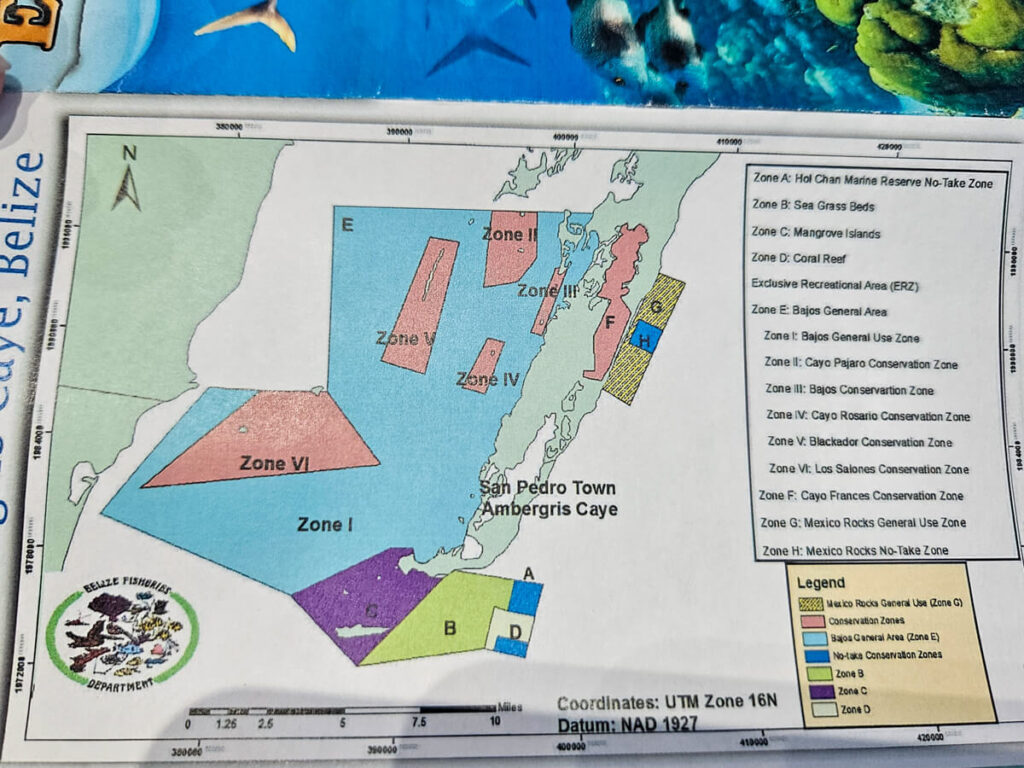
Shark Ray Alley is actually part of the Hol Chan Marine Reserve, situated in what is designated as Zone D of the reserve. It’s located about 1 mile south of the main Hol Chan Cut, making it a very short boat ride from the primary snorkelling areas of the reserve.

Hol Chan Marine Reserve Layout
There are 8 zones in Hol Chan Marine Reserve, named A to H, split up by ecosystem, like coral reefs, seagrass beds, and mangrove forests.
Hol Chan Marine Reserve Map
Browse snorkel sites in Hol Chan Marine Reserve on our interactive map.
Why visit Hol Chan Marine Reserve?
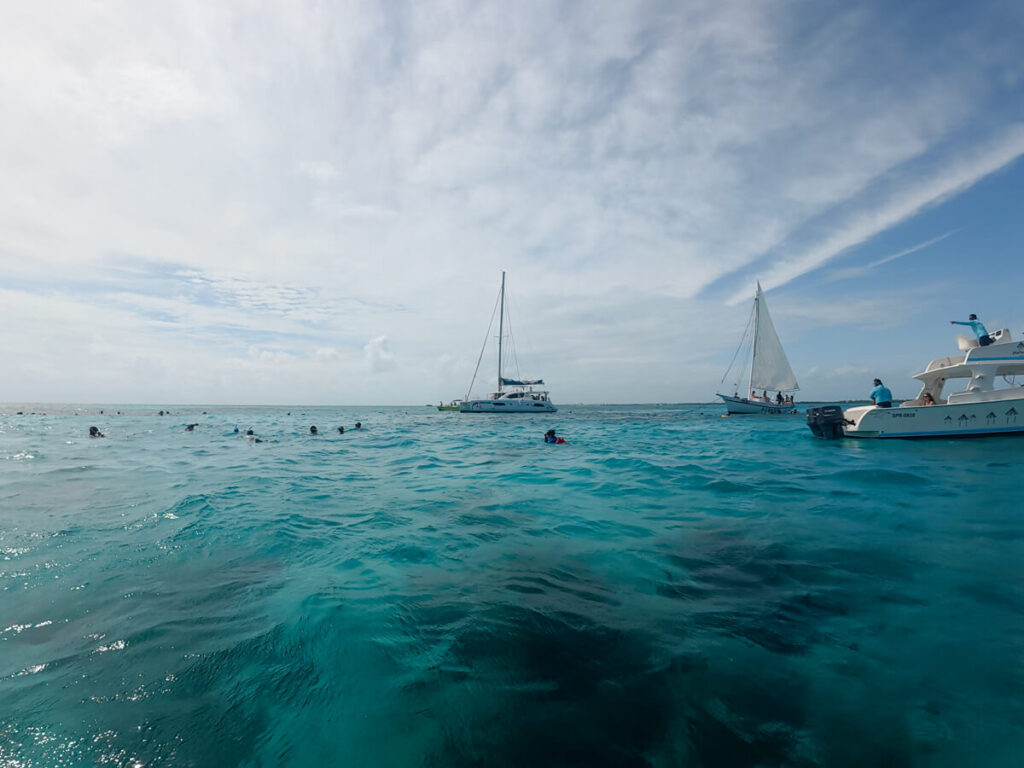
The Hol Chan Marine Reserve encapsulates the best of the underwater world and offers some of the top snorkelling and SCUBA diving in Belize.
What to see and do in Hol Chan Marine Reserve
Visiting Hol Chan Marine Reserve offers an opportunity to explore a vibrant, protected marine ecosystem and its marine life up close. Here’s what you might see snorkelling or diving in the reserve:

Wildlife in Hol Chan Marine Reserve
There are so many marine creatures you can see in the Hol Chan Marine Reserve, depending on which part you visit. Not all areas are home to the same creatures, as different species favour different habitats.
Over 160 species of fish have been recorded in Hol Chan Marine Reserve, along with 40 types of coral, 5 species of sponge, 2 seagrasses, 3 species of sea turtle, and 3 marine mammals. Here are some of the animals you might see.
Manatees
The elusive West Indian manatee is occasionally sighted grazing in the seagrass beds. They are also found in other areas outside the reserve, including at Swallow Caye. We were lucky enough to swim with Belize’s manatees at a snorkel spot near Caye Caulker called the North Channel/Coral Gardens.
Sharks
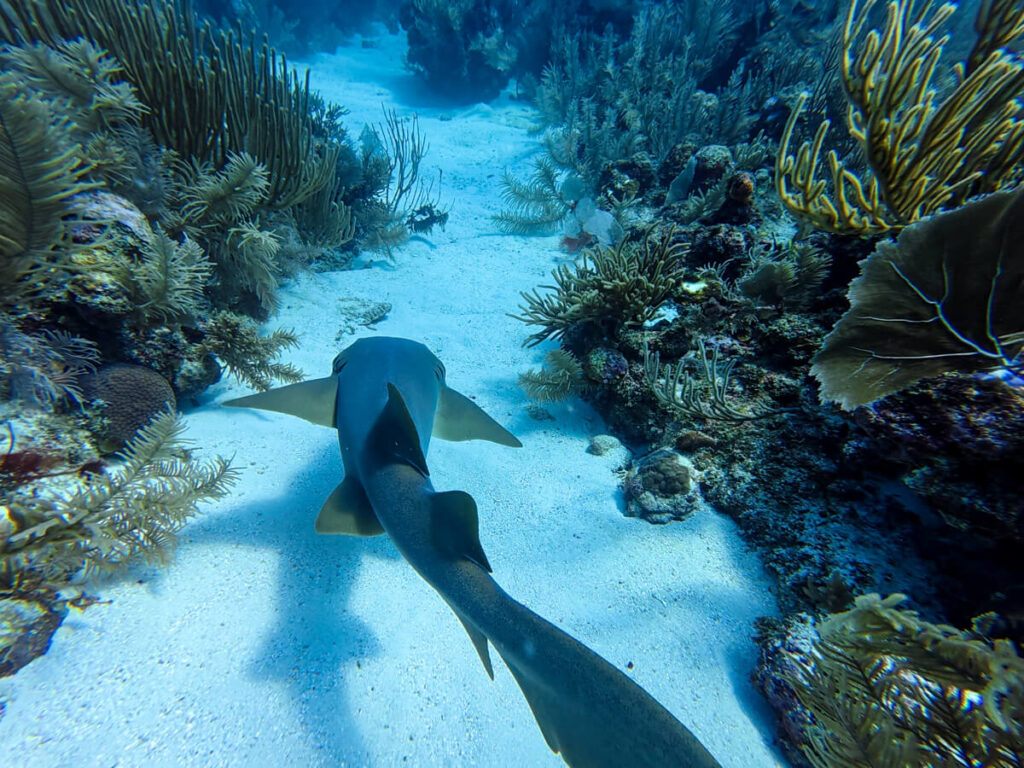
Nurse sharks are a common sight, particularly in Shark Ray Alley. Occasionally, you might also see a Caribbean reef shark, but they are usually seen outside the reef, where we saw countless on a dive from Caye Caulker.
Stingrays
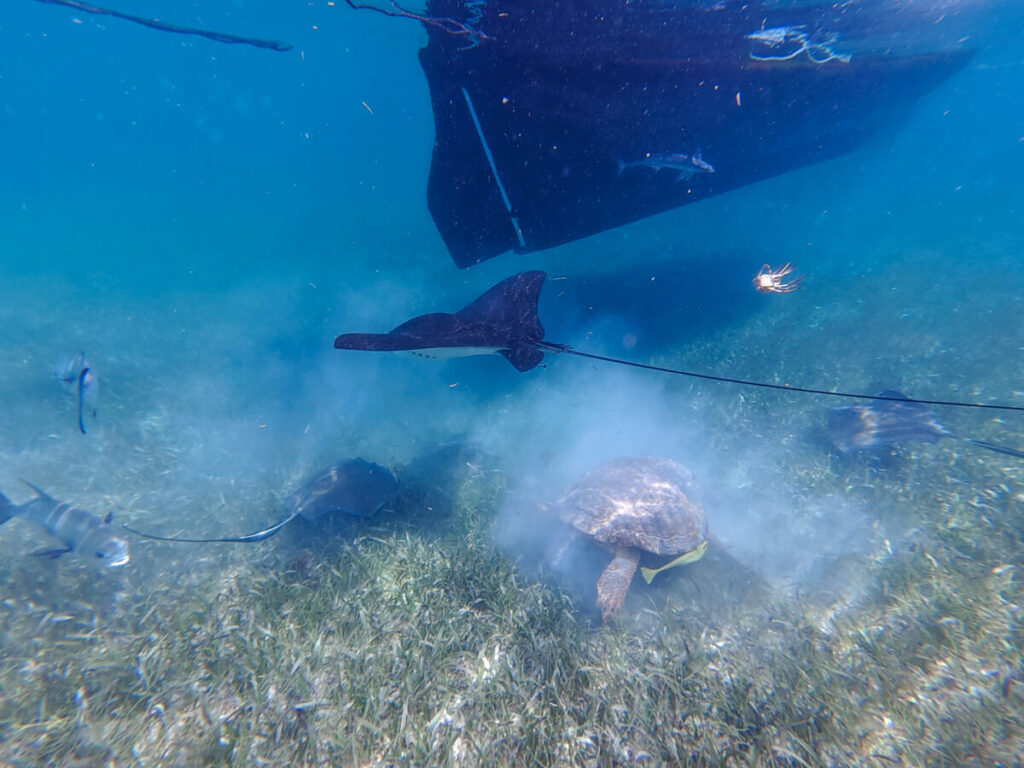
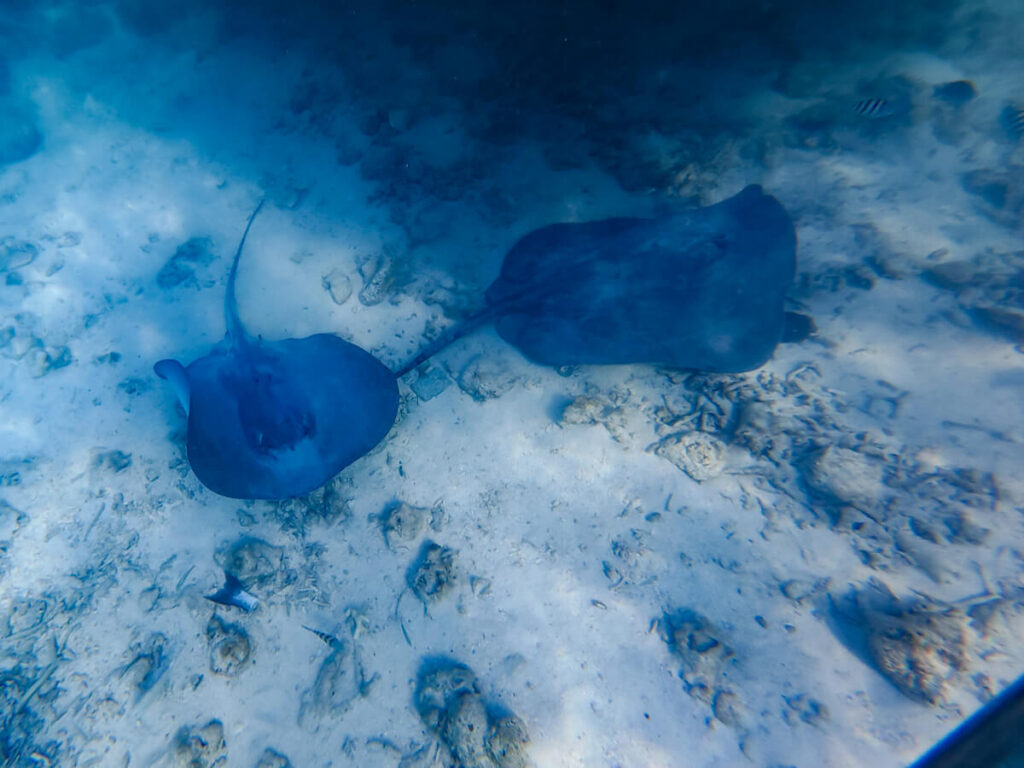
Southern stingrays are commonly seen, especially in Shark Ray Alley, while spotted eagle rays can sometimes be seen at the bottom of the Cut channel, which is where we saw them.
Sea turtles
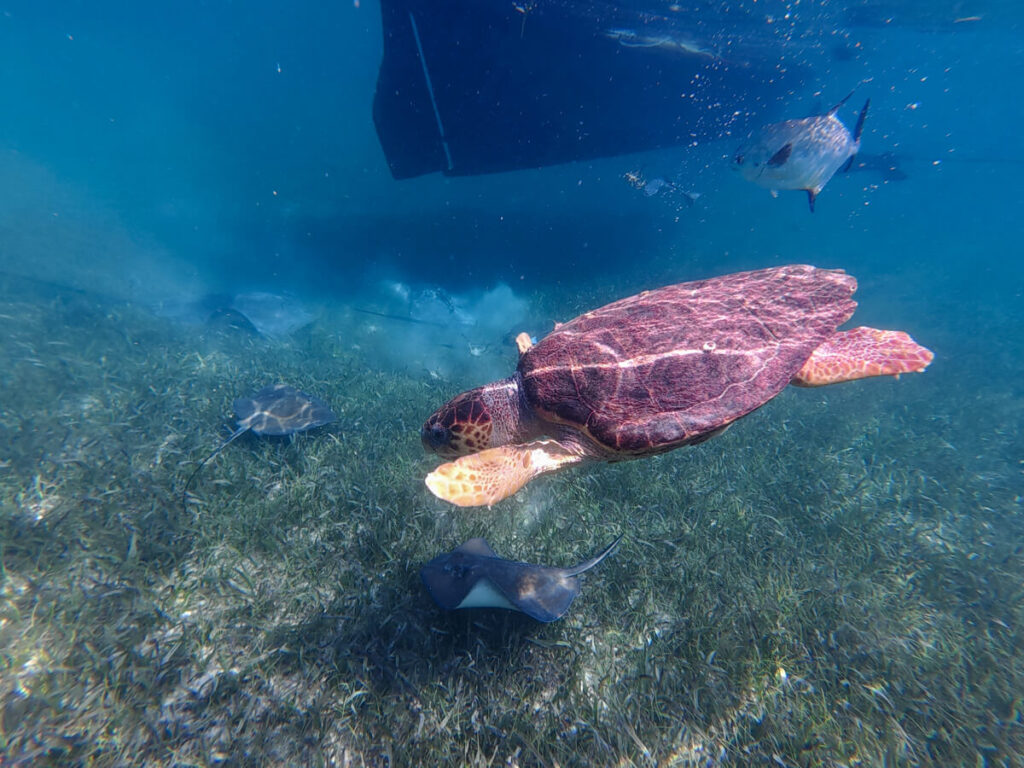
Sea turtles, including green, loggerhead, and hawksbill species, are all residents of the reserve. They might be seen around the seagrass beds or in Shark Ray Alley.
Dolphins
Keep an eye out for dolphins, including the short-beaked common dolphin and the pantropical spotted dolphin, as they might be seen in and around the reserve (although we saw bottlenose just off the shore of Caye Caulker).
Eels
Moray eels can often be seen peeking out from crevices in the reef.
Crustaceans
You might spot lobsters and crabs hiding among the corals or in sandy areas.
Fish
You can often spot jacks, groupers, snappers, and barracuda, as they are all common inhabitants. Colourful parrotfish, including rainbow, blue, and stoplight varieties, swim through the reef. Angelfish, such as queen and grey species, add to the vibrant scenery. Look for butterflyfish, sergeant majors, damselfish, and different types of grunt, like porkfish.
Corals
The reef boasts a variety of hard corals, including brain coral, elkhorn coral, staghorn coral, pillar coral, finger coral, and star coral. Soft corals like sea fans and sea whips gently sway with the currents. You may also observe anemones and other fascinating invertebrates.

Snorkel Spots in Hol Chan Marine Reserve
There are two main snorkel sites in Hol Chan Marine Reserve: the Hol Chan Cut and Shark Ray Alley. The proximity of Shark Ray Alley to the Hol Chan Cut means that tours often combine visits to both locations. A third site, Mexico Rocks, is also a popular snorkel site but usually visited as a separate tour due to its more northerly location.

1. Hol Chan Cut
The Hol Chan Cut is a distinctive natural break in the Belize Barrier Reef. This opening allows marine creatures to travel freely from the vast expanse of the open sea to the calmer, protected waters within the reef system.
It’s roughly 23 metres (75 ft) wide and plunges to a depth of about 9 metres (30 ft). In some areas on top of the channel, it’s as shallow as 1.5 metres (5 ft).
We saw a green turtle, 4 eagle rays, 3 stingrays, a lobster, and a moray eel at this site. It was home to a crazy abundance of life.

2. Shark Ray Alley
Shark Ray Alley is a unique, shallow, sandy-bottomed area situated inside the reef and is one of the best places to visit in Belize. It’s famous as a consistent gathering place for nurse sharks and southern stingrays, historically because fishermen used to clean their catch here, and now because some operators still chum the water.
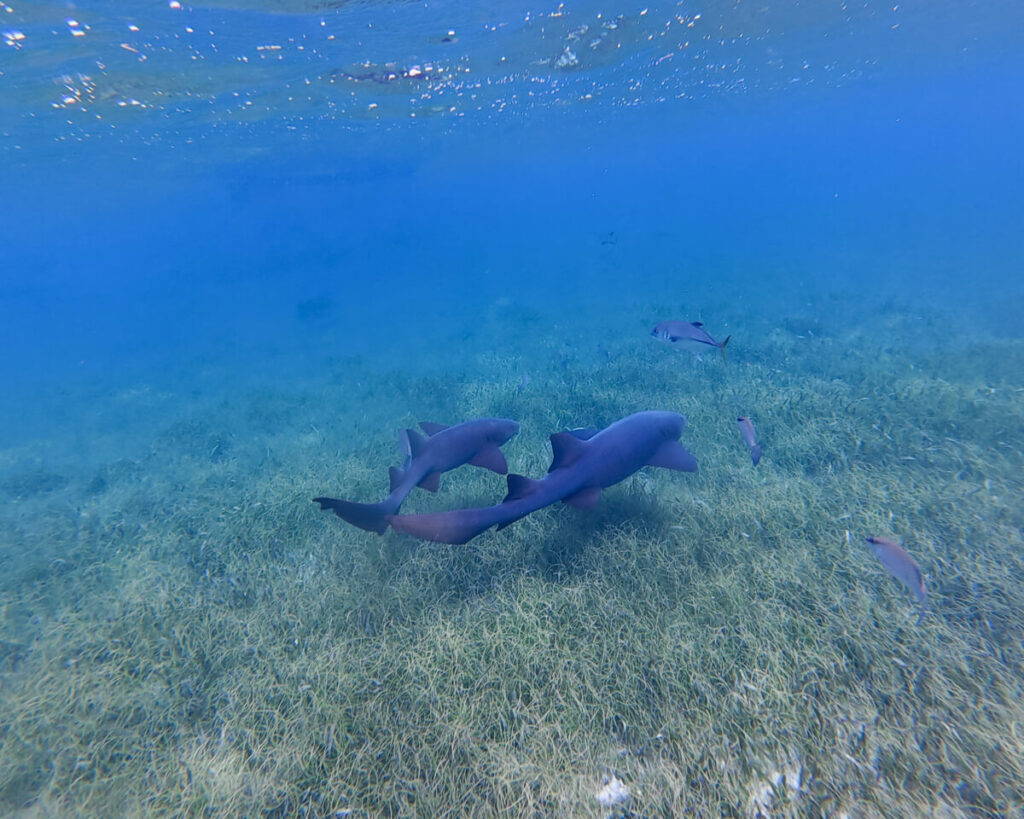
We saw a loggerhead sea turtle here, as well as numerous nurse sharks. Because we went with a responsible operator who didn’t feed the animals, we were able to observe safely from a little distance. The sharks would still come near the boat and swim near you as they’ve lost their fear of humans, but we weren’t worried about them as they’re a gentle species.
3. Mexico Rocks
Unlike the deeper channel of Hol Chan Cut, Mexico Rocks is characterised by a series of shallow patch reefs. These “boulder-like” coral formations rise dramatically from the sandy seabed, often almost reaching the surface, with depths typically ranging from 2.5 to 4.5 metres (8 to 15 ft).
Due to its location about 6 miles north of San Pedro (Ambergris Caye), this snorkel site is more commonly visited from San Pedro separately from the other two Hol Chan snorkel sites.

Other snorkel sites near Hol Chan Marine Reserve
The Belize Barrier Reef is an underwater paradise, and while Hol Chan Marine Reserve offers incredible snorkel and dive sites, there are many other world-class spots nearby that also deserve a visit. Most tours to these sites operate from Ambergris Caye or Caye Caulker, and may operators offer them as part of the same tour that goes to Hol Chan.
Other snorkel sites from Caye Caulker include:
As well as Mexico Rocks, there are countless sites off Ambergris Caye, including:
If you don’t mind going out much further, you could also arrange a trip to Turneffe Atoll or Lighthouse Reef, where the famous Great Blue Hole lies.

Hol Chan Marine Reserve & Shark Ray Alley Snorkel Tours
Snorkel tours to Hol Chan and Shark Ray Alley typically depart from San Pedro on Ambergris Caye or from Caye Caulker. Tours often include a guided snorkelling session through the Hol Chan Cut and a stop at Shark Ray Alley.
Most of the sustainably-focused operators we could find are based on Caye Caulker, including:
If you’d like to visit Hol Chan and Shark Ray Alley from San Pedro on Ambergris Caye, we’d recommend Ecologic Divers, who offer snorkel and dive excursions and are known for their hands-off policies where they don’t feed the animals.

Choosing a responsible tour operator
When visiting marine reserves like Hol Chan and Shark Ray Alley, it’s important to choose a tour company that prioritises marine conservation and ethical wildlife interactions. Supporting responsible operators helps protect fragile ecosystems and ensures a safe, respectful experience for both visitors and marine life.
Here are some red flags to look out for:
By choosing a responsible tour company, you help protect Belize’s marine ecosystems and ensure these beautiful sites can be enjoyed for generations to come.

Diving in Hol Chan Marine Reserve
Diving in Hol Chan Marine Reserve offers an opportunity to go deeper and have more intimate encounters with incredible marine life than snorkelling alone. Hol Chan Marine Reserve is an excellent place for all dive certification levels, with various sites for all levels of skill.
The Hol Chan Cut is perfectly suited for both snorkelling and diving. For snorkelers, the clear, relatively shallow water (especially along the edges) offers excellent visibility, allowing you to appreciate the intricate reef formations and countless fish. Divers can descend deeper into the channel, exploring its full depth and encountering larger species that might prefer the deeper currents. While it is possible to dive at Shark Ray Alley, it’s much shallower with more boat traffic.
There are pros and cons to diving in Hol Chan Marine Reserve, including:
If you’re interested in diving in Hol Chan Marine Reserve, we’d recommend checking out Blue Wave Divers and Frenchies Diving in Caye Caulker or Ecologic Divers in San Pedro, as we’ve heard good things about them. We chose a different operator for diving on the Belize Barrier Reef from Caye Caulker and had a really traumatic experience with leaky equipment, dangerous conditions, as well as guests and the divemaster touching and disturbing sharks, so it’s really important to choose a responsible operator that prioritises safety and conservation.

How much does a tour to Hol Chan Marine Reserve and Shark Ray Alley cost?
A half-day snorkel tour to Hol Chan Marine Reserve and Shark Ray Alley costs around $50-100 USD / $100-200 BZD per person.
Some full-day tours combine snorkelling at Hol Chan and Shark Ray Alley with other spots, like around Caye Caulker, and these can cost between $100-150 USD / $200-300 BZD per person.
A single dive in Hol Chan and Shark Ray Alley can start from $75 USD / $150 BZD, but this might not include gear rental or park fees. A 2-tank dive on the Belize Barrier Reef and a 1-tank dive or snorkel stop at Hol Chan and Shark Ray Alley can cost around $150-200 USD / $300-400 BZD.
Some tours do not include the $15 USD / $30 BZD per person marine park entrance fee, which is payable in cash on the day of the tour. If your tour does include the fee, you’ll be provided with a paper wristband, which acts as your ticket to enter the protected zones.
Also, some tours may not include the 12.5% Belizean sales tax, so be sure to check this.

Hol Chan Marine Reserve History
As tourism began to increase in Belize in the 1980s, fish stocks began to dwindle. Arguments broke out about access to the Hol Chan cut, a natural break in the reef, between fishermen and snorkelling and diving operators. Proposed fishing bans were rejected, so public consultation over establishing a marine protected area began. Thanks to the work of Janet Gibson, a local conservationist who campaigned with citizens, businesses, fishermen, and the government of Belize, the marine reserve was established in 1987. It was funded by WWF and USAID until 1995.
Active enforcement of the Hol Chan Marine Reserve Draft Management Plan began in 1989, including charging for entry.
The reserve was originally only 4 zones, with more being added later. Shark Ray Alley was added as Zone D in 1999. Some commercial and sport fishing is permitted in parts of this zone with a license, and entry is also charged for this zone.
The main goals of the reserve are:
Restrictions in Hol Chan Marine Reserve
The area is managed by the Hol Chan Marine Reserve Trust Fund Committee. The majority of the funds for the park’s upkeep is generated from the yearly licensing scheme, which must be paid for by tour operators.
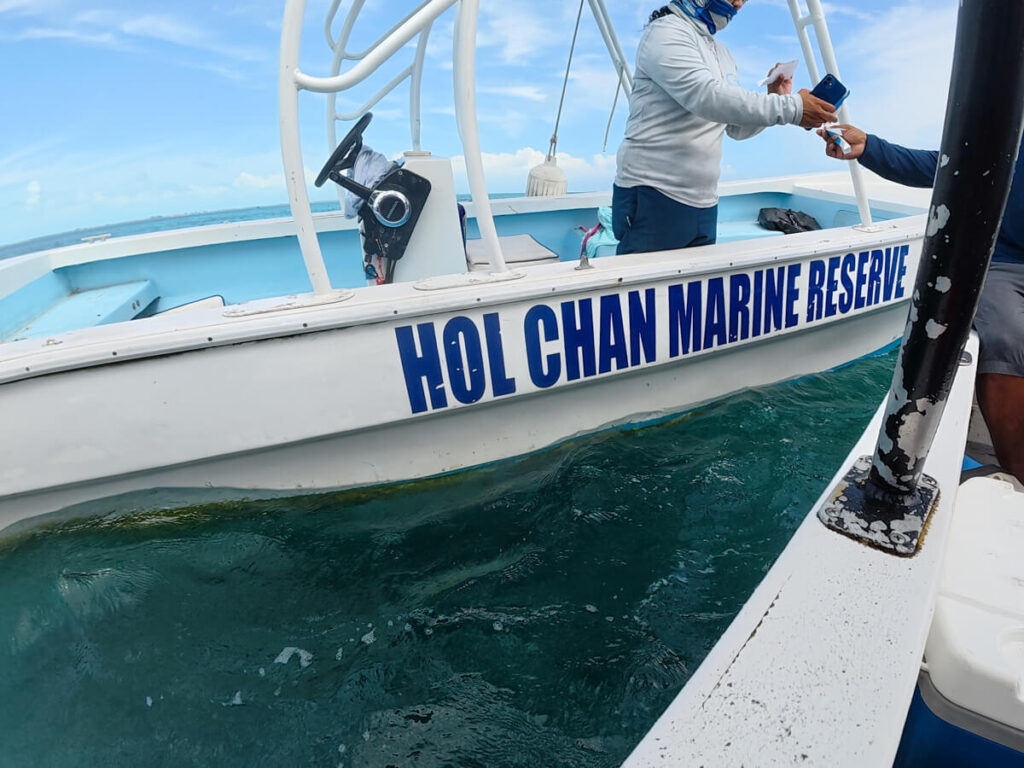
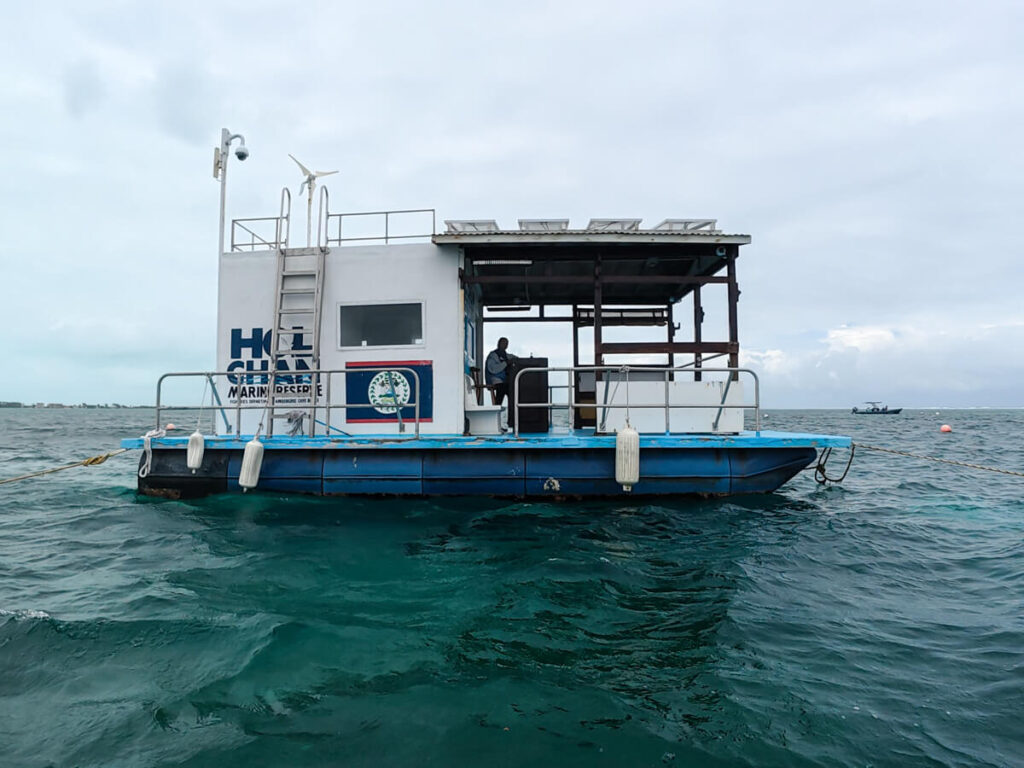
The reserve is a protected area that is monitored 24/7 by rangers from the floating station and by boat. A permit is required to enter the area and must be carried by the tour operator.
There are certain rules that every visitor must follow. For example, snorkellers and divers must remain as a group with their guide. SCUBA diving and snorkel tours are capped at a maximum of 8 divers or snorkelers per tour guide.
No one in the reserve is allowed to:
There are further rules for boats and operators, including:
According to WWF, the marine reserve’s regulations have proven to be successful. But we still have our reservations. Having witnessed feeding and touching of marine life in Shark Ray Alley (more on this later in this post), there is still room for improvement.
Threats to Hol Chan Marine Reserve
Sadly, tourism has its downsides. Despite its protected status, Hol Chan Marine Reserve faces several ongoing threats that challenge its long-term health and the delicate balance of its ecosystems.
Coastal development and habitat loss
A significant threat comes from the clearance of mangroves and other critical coastal habitats in areas immediately adjacent to the reserve. These areas, while outside the direct jurisdiction of the reserve committee, are ecologically vital.
Mangroves, in particular, serve as crucial nurseries for juvenile fish and invertebrates that eventually populate the reef. They also act as natural filters for runoff and provide vital coastal protection against erosion and storm surges. Their destruction leads to increased sedimentation, pollution, and a loss of biodiversity that directly impacts the reserve’s health.
Pressure from increasing tourism
Hol Chan’s success as a marine protected area has led to a steady increase in tourist visitation. While this influx significantly increases revenue to the reserve through fees, which supports its management and conservation efforts, it also presents a considerable challenge.
The growing number of visitors puts immense pressure on the facilities both within the reserve (like mooring buoys and ranger stations) and in the nearby towns of San Pedro and Caye Caulker (like waste management, infrastructure, and freshwater supply).
More importantly, the increased human presence directly affects the marine environment, including corals being accidentally kicked, touched, or stood on, sunscreen pollution, and animals being stressed out (usually as a result of too many people, too much boat traffic, feeding them, and touching them).
Overfishing
At the time of writing, there are over 1000 fishermen in San Pedro alone. As tourism increases, so does the demand for fish and other edible marine species, which are served in hotels and restaurants. We heard from locals who have experienced firsthand depleting fish stocks. Fishermen are having to travel further out to sea, are catching less, and what they do catch is smaller than it used to be.
Parts of Hol Chan Marine Reserve are no-fishing zones in an effort to allow marine life to replenish. There are certain seasons and festivals, like the lobster season, which dictate when these creatures can and can’t be caught. But, despite these limited regulations, we heard from locals twice in two different parts of Belize how the lobsters that are being caught now are smaller than they used to be, suggesting that overfishing pressures persist.
The economic struggles of fishermen, who need to make money to survive, can lead them to seek alternative avenues. This sometimes results in them turning to tourism, where they might resort to practices like baiting marine life for tourists who want to pay for a guaranteed close-up encounter. While this provides an income, it can further habituate animals and potentially disrupt natural feeding behaviours.

The ethical impacts of feeding animals in Hol Chan Marine Reserve
Feeding of sharks within Shark Ray Alley is allowed by tour guides from within the boat.
The ethics and ecological implications of feeding marine life in Belize, particularly within Hol Chan Marine Reserve at Shark Ray Alley, have been subjects of discussion among conservationists, researchers, and policymakers. It highlights the challenges of balancing conservation goals with the economic realities of local communities and the growing demands of tourism.
Historically, local fishermen have cleaned their catches in the ocean, a practice that naturally attracted sea creatures to feed on the discarded parts. This was largely sustainable and minimised waste. The food source was unpredictable, formed a natural part of the animals’ diet, and was not so abundant that it disrupted their ability to hunt for themselves. Over time, however, as this natural attraction became a reliable way to make money through tourism, the feeding practices intensified.
Feeding marine wildlife, especially on a regular and large scale, raises several severe ethical and ecological concerns:

Despite these significant consequences, eradicating the practice of feeding wildlife from Hol Chan Marine Reserve and other parts of Belize has proven extremely difficult.
Many local business owners and fishermen, some of whom are very influential in their communities, have pushed back against potential legislation to ban feeding. Their argument is that if feeding the animals in Hol Chan Marine Reserve is stopped, there won’t be guaranteed sightings. This could lead to customer dissatisfaction, a drop in tour bookings, and the potential collapse of businesses built on these encounters.
The organisation managing the reserve often finds itself in a challenging position. Without sufficient power or backing to fight against deeply entrenched economic interests, they have decided it is easier to work with local tour operators and fishermen. As a compromise, they allow chumming (throwing bait into the water) as it is considered safer than hand-feeding, a practice which has indeed greatly reduced accidents related to animals biting people.
However, even regulated chumming is still unsustainable in the long run. Ultimately, the power to drive change in these practices lies significantly in the hands of tourists.
It’s up to visitors to choose to put their money behind hands-off, ethical organisations that prioritise genuine animal welfare and long-term conservation over guaranteed interactions fuelled by artificial feeding.
By supporting sustainable tourism operators, visitors send a clear message to the industry and the government that there is a demand for ethical, hands-off wildlife encounters. The less demand there is for fed-animal tours, the less financially viable those businesses become, forcing them to pivot towards more sustainable ways to make their money and protect the very resources that draw tourists in the first place.
How to get to Hol Chan Marine Reserve
Hol Chan Marine Reserve is only accessible by boat. Most tours to Shark Ray Alley depart from Ambergris Caye (San Pedro) or Caye Caulker, two of the best islands in Belize. You can also find day trips from Belize City, particularly from the Belize Tourism Village.
Hol Chan Marine Reserve from San Pedro, Ambergris Caye
San Pedro, the main town on Ambergris Caye, is the most common departure point for tours to Hol Chan Marine Reserve. The reserve is located just a short 15-minute boat ride south of San Pedro.
Hol Chan Marine Reserve from Caye Caulker
Caye Caulker, a smaller island south of Ambergris Caye, is another frequent departure point. The boat ride from Caye Caulker to Hol Chan is a bit longer than from San Pedro, but these tours often include more stops on the way there.
Hol Chan Marine Reserve from Belize City
While less common, you can also find day trips to Hol Chan Marine Reserve from Belize City. These tours typically depart from the Belize Tourism Village, where cruise ships dock. Be aware that the boat journey from Belize City is considerably longer than from San Pedro or Caye Caulker, so expect a full-day excursion and a price that reflects this.

When to visit Hol Chan Marine Reserve
The dry season, from December to May, is generally considered the best time to visit Hol Chan Marine Reserve for clear waters and good visibility. The sea tends to be calmer during this time, too. The low season, from June to November, sees fewer tourists and often discounted hotel rates and tour prices. But it also sees more rainfall, and tours can be postponed or cancelled, so leave a little extra room in your Belize itinerary if you’re planning to visit then.
Morning tours are often recommended for calmer waters and clearer skies.

Is it safe to snorkel with sharks and stingrays in Shark Ray Alley?
Generally, snorkelling with nurse sharks and stingrays in Shark Ray Alley is considered very safe. Millions of visitors have done so without incident.
Nurse sharks are known for being docile, bottom-dwelling sharks that are not aggressive towards humans unless provoked. Southern stingrays are also typically non-aggressive and only use their barb defensively if directly threatened or stepped on.
The sharks and rays at Shark Ray Alley are highly habituated to human presence due to decades of interaction. They are used to boats and snorkellers, which reduces their natural skittishness.
However, it’s important to understand the nuances and follow best practices to ensure your safety.
While the practice of forbidding hand-feeding has greatly reduced accidents (such as people being bitten), the continued practice of baiting the sharks by feeding them (chumming) still carries its own risks. Introducing food into the water can lead to a heightened state of excitement or a “feeding frenzy” among the animals. While not typically aggressive towards humans in these situations, this can increase their erratic or territorial behaviour, making the environment more unpredictable.
In a heightened state of excitement, animals might accidentally bump into snorkellers. Although rare, there have been instances of people being bitten by nurse sharks, which use a powerful sucking motion rather than traditional biting teeth, but this can still strip skin from a hand if it gets in the way.
While habituation makes encounters possible, it also means the animals associate humans with food, which isn’t their natural behaviour.
For the safest experience, choose a company that is hands-off and doesn’t feed marine life. It’s crucial to follow your guide’s instructions, maintain a respectful distance, and never attempt to touch or hand-feed the animals.
Where to stay to visit Hol Chan Marine Reserve & Shark Ray Alley
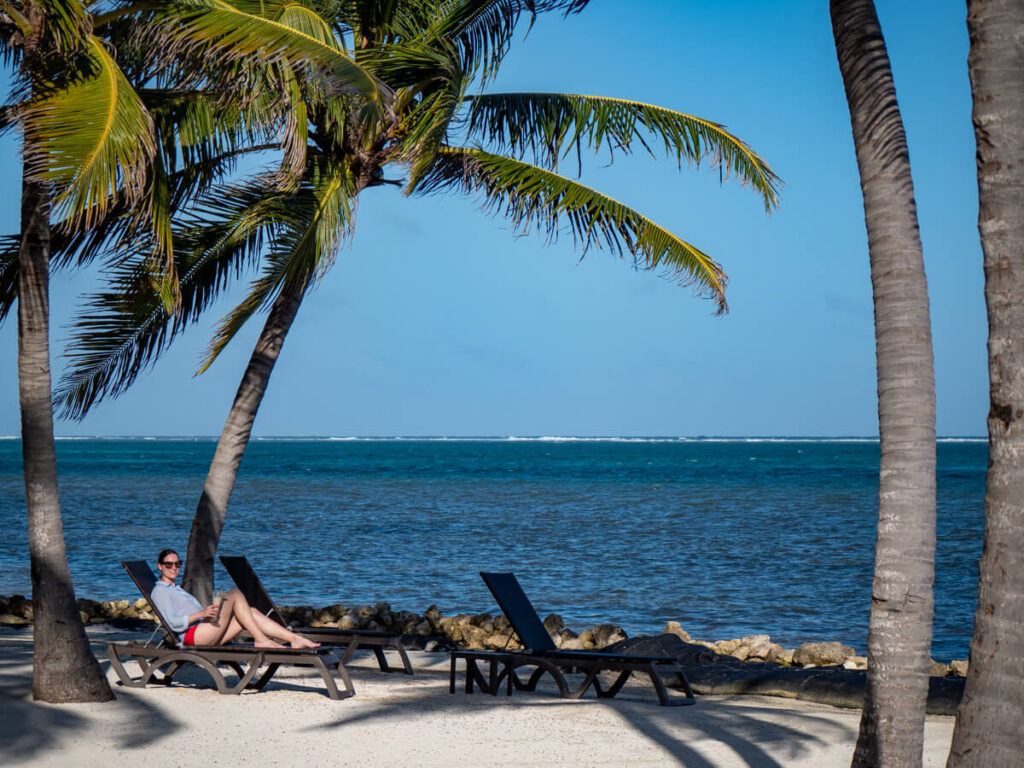
To visit Hol Chan Marine Reserve and Shark Ray Alley, it’s best to stay on either Ambergris Caye (San Pedro) or Caye Caulker, as both islands are close to the sites and offer numerous tour and accommodation options. San Pedro is slightly closer to the reserve, but neither is a long boat journey away. Here are our top picks for hotels in Ambergris Caye and hotels in Caye Caulker.
Ambergris Caye Top Hotels
Caye Caulker Top Hotels
Our experience in Hol Chan Marine Reserve & Shark Ray Alley
We visited Hol Chan Marine Reserve and Shark Ray Alley as part of a 7-stop snorkelling tour from Caye Caulker with Salt Life Eco, a hands-off operator. It was the most incredible day and a highlight of our entire backpacking trip through Central America.
We saw more marine life than we’ve ever seen in a day, including sharks, stingrays, eagle rays, 2 kinds of sea turtles, dolphins, lobster, and a moray eel, as well as countless fish and coral species.
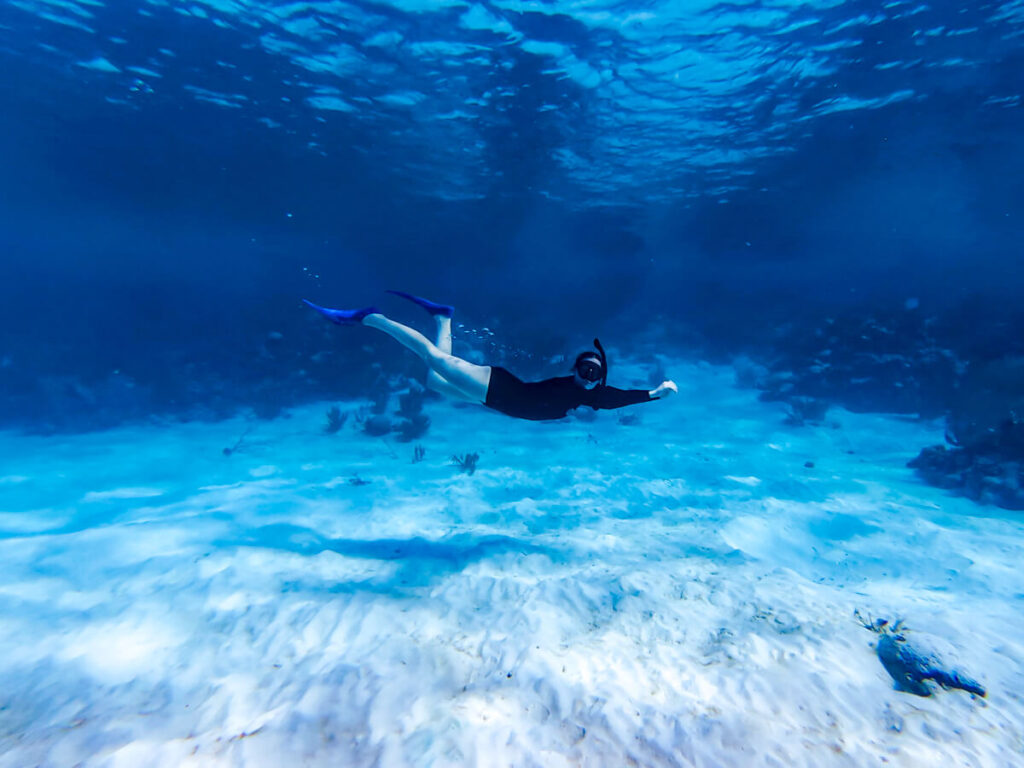
The Cut was one of our favourite snorkelling sites – we loved freediving in the deep channel and saw so many animals in that one spot. Shark Ray Alley was amazing for the number of sharks and stingrays that were in one place, but we don’t agree with the other companies feeding them and actually saw the same animals in other snorkel spots where they weren’t being baited.

What to pack for Hol Chan Marine Reserve & Shark Ray Alley
For a comfortable day trip, here are some things not to forget to pack:

Hol Chan Marine Reserve & Shark Ray Alley FAQs
We hope this post has been helpful, and to end, here are some frequently asked questions about Hol Chan Marine Reserve and Shark Ray Alley.
Where is Shark Ray Alley located?
Shark Ray Alley is located within the Hol Chan Marine Reserve, about 1 mile south of the main Hol Chan Cut, off the coast of Ambergris Caye in Belize. It is designated as Zone D of the reserve.
How do I go to Hol Chan Marine Reserve?
Hol Chan Marine Reserve is only accessed by boat. Most tours depart from San Pedro (Ambergris Caye) or Caye Caulker, which are both just a short boat ride away. You can also find day trips departing from Belize City, particularly from the Belize Tourism Village.
What can you see at the Hol Chan Marine Reserve?
In the Hol Chan Marine Reserve, you can see an incredible variety of marine life. This includes abundant fish species like jacks, groupers, snappers, barracuda, parrotfish, angelfish, and damselfish. You’ll also likely encounter sea turtles (green, loggerhead, hawksbill), moray eels, lobsters, and crabs. The reserve is home to diverse corals such as brain coral, elkhorn coral, staghorn coral, pillar coral, finger coral, star coral, sea fans, and anemones. In specific zones, you might spot manatees (especially in seagrass beds). And, of course, nurse sharks and southern stingrays are common in Shark Ray Alley.
What kind of sharks are in Shark Ray Alley?
The primary type of shark you will see and swim with in Shark Ray Alley is the nurse shark. These are bottom-dwelling sharks known for their docile nature.
How deep is the Hol Chan Marine Reserve?
The Hol Chan Cut, the main channel, is approximately 23 metres (75 ft) wide and 9 metres (30 ft) deep. Around the cut, the sea can be as shallow as 1.5 metres (5 ft).
How deep is the Shark Ray Alley in Belize?
Shark Ray Alley is a very shallow area, with depths typically ranging from 2.5 to 4.5 metres (8 to 15 feet).
Is Hol Chan part of the Barrier Reef?
Yes, Hol Chan Marine Reserve is an integral and protected part of the Belize Barrier Reef, which is the second-largest barrier reef system in the world and a UNESCO World Heritage Site.
What sharks do you swim with in Belize?
In specific, well-known areas like Shark Ray Alley, you primarily swim with nurse sharks. In deeper dive sites along the Belize Barrier Reef and its atolls, divers may also encounter Caribbean reef sharks, and sometimes hammerhead or bull sharks in certain areas like the Blue Hole.
Is it safe to swim with stingrays in Belize?
Yes, it is generally very safe to swim with stingrays in Belize, particularly the Southern Stingrays found in Shark Ray Alley. They are accustomed to human presence and are typically non-aggressive. They will only use their barb defensively if directly threatened or stepped on. Following your guide’s instructions and maintaining a respectful distance is key to a safe encounter.
Are nurse sharks aggressive?
No, nurse sharks are generally considered not aggressive towards humans. They are docile, slow-moving, bottom-dwelling sharks that feed primarily on small invertebrates and fish. They are very accustomed to humans in Shark Ray Alley and will only bite if provoked or threatened, such as by being stepped on or having a hand placed in their mouth (which should always be avoided).
How to snorkel in Hol Chan Marine Reserve?
To snorkel in Hol Chan Marine Reserve, you will typically join a guided boat tour from San Pedro, Ambergris Caye, or Caye Caulker. The tour operator will provide snorkelling gear (mask, snorkel, fins), and a guide will lead you through the various zones, pointing out marine life and ensuring your safety. You’ll usually enter the water directly from the boat into the clear, shallow waters.
Read next:
Swimming with Manatees in Belize
The Ultimate Guide to Snorkelling in Belize
The Ultimate Guide to SCUBA Diving in Belize
A Guide to Snorkelling in Caye Caulker
3-Day Belize Sailing Trip with Ragga Sailing Adventures
How to Visit Belize’s Great Blue Hole
Our Belize Destination Guides:
Our Belize Travel Guides:
