The Truth About Stingray Beach in Caye Caulker

Read about the dangers of feeding stingrays in Caye Caulker and whether you should visit Belize’s Stingray Beach.

This post may contain affiliate links, which means we might earn a small commission on anything purchased through these links at no extra cost to you. Learn more on our disclaimer page.
Heralded as one of the most famous things to do in Caye Caulker, a visit to Stingray Beach is on a lot of people’s bucket lists. White sandy shores, turquoise waters, and the chance to see stingrays glide over your feet, and even touch them, draw visitors. Stingray Beach is heavily publicised on travel websites and social media. Being able to see marine life without having to spend money or go out on a boat trip to dive and snorkel is a huge advantage to many. But what most people don’t know is that the activity is highly unethical animal tourism, not great for the stingrays, and is already leaving lasting impacts on the local species.

More from Caye Caulker
About Stingray Beach
Stingray Beach is a popular spot located on the western shore of Caye Caulker, adjacent to and owned by the Iguana Reef Inn. This area is known for its sandy beach, clear waters, and the unique opportunity to interact with southern stingrays.
Visiting is heralded as one of the best things to do in Belize, but it’s problematic, and we’re going to share why.

Each day, around sunset, staff from the nearby hotel feed the stingrays. They have learned to expect this source of food and congregate in the shallow waters around 4:00 PM each day.
Around 10 to 20 giant stingrays can be found here at this time, swimming right up to the water’s edge. People stand and sit in the water, allowing them to glide over the feet and legs, or wade out and reach down to pet and stroke them.

Where is Stingray Beach
Stingray Beach is located on the west side of Caye Caulker in Belize. It is situated in front of the Iguana Reef Inn. Its position, facing west, means it has calm, shallow waters.

Stingray Beach Map
We’ve pinned Stingray Beach on our interactive Caye Caulker map.
Can you swim with stingrays in Belize?
While it’s quite probable you’ll encounter stingrays when snorkelling in Caye Caulker, especially in protected areas like Hol Chan Marine Reserve, Stingray Beach almost guarantees an encounter. While it’s not really swimming – the stingrays are too shallow to actually swim with – visitors sit in the shallow waters and bathe with the stingrays.
Other things that are commonly seen in Stingray Beach include:

Is Stingray Beach ethical?
The ethics surrounding Stingray Beach are a little murky, but ultimately, there’s a clear answer.
Incentivisation
It’s argued that the stingrays are free to come and go as they please. Which is true (they’re not captive), but a consistent source of food incentivises them to keep coming back, so it’s not natural at all.

Behavioural changes
A study at Stingray City in the Cayman Islands, a similar location to Stingray Beach, found that the stingrays’ behaviours changed profoundly.
Wild stingrays are solitary creatures and rarely cross paths with other stingrays. Encouraging many animals to congregate in the same area, competing for food, can lead to aggression and territorial behaviours. It can also cause stress.
Wild stingrays are active at night, and they forage over large distances to find food. Being fed in the daytime can disrupt natural patterns, leading to the stingrays that visit here to rest during the night instead.

Risk of injury and death increases
The Cayman Islands study also found that the fed stingrays had weaker immune systems and were in poorer health than those left undisturbed – something that is likely true for Caye Caulker’s stingrays.
Unlike in other locations, where stingrays are fed from boats, the stingrays at Stingray Beach aren’t in direct harm from boat propellers or boat strikes. But by learning not to fear humans, they are at risk of this in other areas where they may encounter and approach boats, since they now associate humans with food.
Feeding animals can be really harmful. Most animals have specialised diets. It’s said that the stingrays are fed scraps, which is better than outright purchasing food for them and minimises waste. The food is also part of their natural diet, so less likely to harm their digestion or lead to them becoming malnourished. But we actually heard that a large number of these stingrays died during COVID when they were suddenly being fed less regularly. This emphasises the need to avoid unsustainable practices and to create an environment that encourages natural behaviours that have been lost.
Touching animals can also be harmful to both the animal and the person. Human skin carries bacteria, oils, and chemicals (from lotions, sunscreens, or even soap residue) that can disrupt the animal’s natural protective barriers. For marine creatures like stingrays, skin-to-skin contact can lead to infections, stress, or changes in behaviour.
We also observed that the stingrays were hanging around in the shallows for long periods of time. Prolonged sun exposure can cause sunburn and skin damage.

Wider impact on the species
Feeding animals can have huge knock-on effects for the whole species. When we sailed to the remote Rendezvous Caye, we were met by a lone stingray circling the shallows. Our guides said they believe it had come from Stingray Beach, around 45 miles (57 km) away, and had learned to associate humans with food. This really shows the scale of the problem and how far it can spread.
If stingrays feed daily at Stingray Beach, they may lose vital hunting skills they no longer need. This can pass down through generations until the entire species loses its ability to feed itself.
Changed behavioural patterns, like sleeping during the night instead of hunting at night, can lead to disrupted migratory patterns. Frequent feeding by humans may cause them to remain in the same location year-round, rather than moving along natural routes. This could cause them to mate outside of their natural breeding season or stop migrating entirely. This can lead to overpopulation, increased disease transmission, and disruption of predator-prey relationships in the wider ecosystem.

The takeaway
Ultimately, any activity that involves incentivisation (which Stingray Beach uses through food) and allows visitors to touch the animal (which is advertised as the highlight of the experience) is not ethical. Furthermore, Iguana Reef Inn profits from the many tourists who visit the beach to see the stingrays and then stick around, spending money in the on-site beach bar or staying in the hotel. There’s no reason to feed the stingrays; it’s not necessary for conservation, and it’s not particularly good for them.

Is Stingray Beach safe?
Stingrays are notoriously gentle creatures. But they’re also notorious as the killer of famous conservationist Steve Irwin.
There is signage around the area alerting people to take care of stingrays in the water, but it actually just highlights how risky the activity is.
Stingrays have a venomous, sharp spine located on their tails, called a barb. They primarily only ever use it as a defence mechanism, for example, if they feel threatened, like by being accidentally stepped on or startled.
Given the lack of monitoring or regulations (there are none) at Stingray Beach, unlimited numbers of tourists are allowed in the water to touch the stingrays. It is highly likely that a stingray may be stepped on, stressed out, or startled, which in turn will trigger its defence mechanism to sting. With so many people wading around in the water and the interaction with so many incentivised stingrays, it’s actually surprising there have been no injuries or deaths yet.

The Seahorse Reserve
Next to Stingray Beach is a small seahorse reserve. It’s the perfect place to try and spot these tiny, elusive creatures. You can walk onto the wooden deck and look down into the shallows.
A mesh of rope and seaweed forms a protective habitat, and the seahorses are camouflaged, so it may take a little time to see one. They’re quite tricky to spot (they are very small!), but it’s a great little spot and a fab activity if you’ve not seen a seahorse before.

Thankfully, there are signs asking people not to try and disturb or touch the seahorses. These signs are also a great way to easily identify where the reserve is, just to the south of the beach.

Our experience at Stingray Beach
We visited Stingray Beach around 4:00 PM to see the stingrays from a distance and see for ourselves how bad the situation was. There were hundreds of people milling about in the beach bar area, enjoying drinks, or down by the water. There were so many people standing by the shore or paddling in the shallows, it was like sardines. Many people sat in the water, too.
People didn’t just peacefully let the stingrays glide over their feet and legs. We saw countless people bending down to touch, stroke, and poke the stingrays as they passed.

As for Iguana Reef Inn, we saw a staff member also feeding the pelicans. We’ve already covered the risk of feeding animals, but we saw firsthand the aggression this caused as they lashed out at anyone who got too close. You don’t want to get bitten by a pelican (Dan actually did when we were in El Salvador), as they have a sharp beak.
Needless to say, we were not impressed with Stingray Beach and would not recommend visiting. If you visit for the guaranteed stingray sighting, we’d actively encourage you not to actually interact with them or to support the business feeding them. There are plenty of fun things to do in Caye Caulker, including animal activities that don’t involve ethically questionable practices.

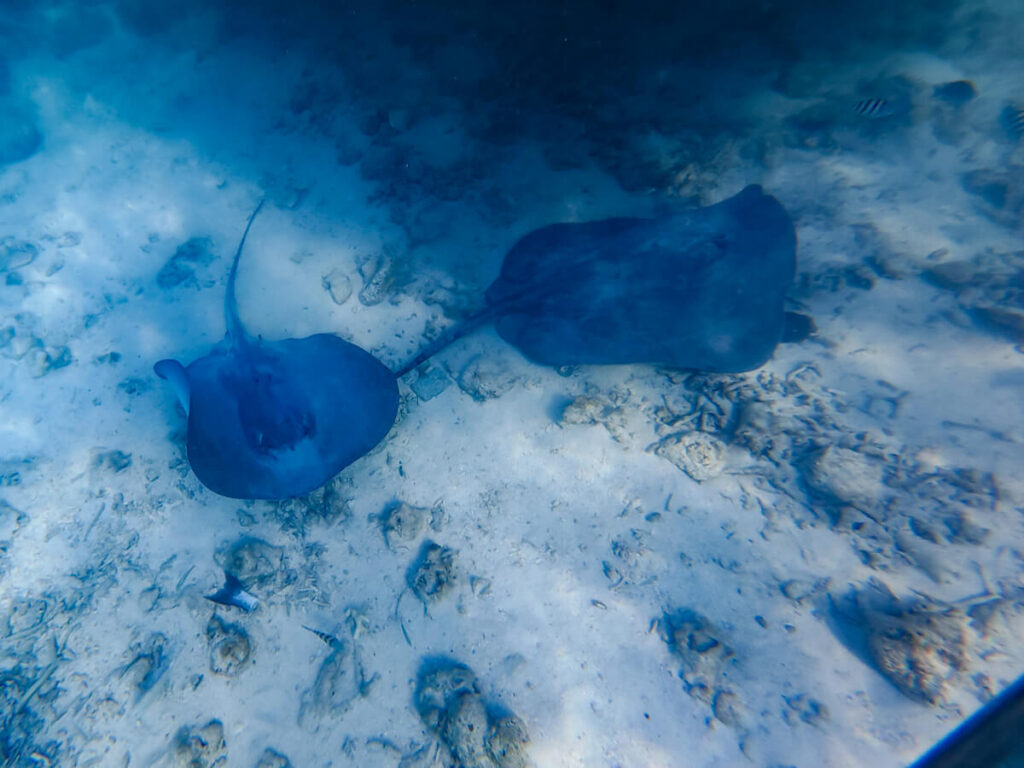
While feeding animals in Belize is a wider issue than just at Stingray Beach, it’s totally possible to encounter stingrays without harming them. We swam with countless stingrays in their natural habitats when snorkelling along the Belize Barrier Reef. We saw them all along the Belize Barrier Reef on our 3-day sailing trip with Ragga Sailing Adventures and were able to observe them and their natural behaviours in their natural habitat.
How to get to Stingray Beach
If you’d like to visit Stingray Beach, whether it’s to spot seahorses in the reserve or see the stingrays without interacting with them, you can reach it easily on foot or by bike.
Stingray Beach is located on the west side of Caye Caulker, just off Chapoose Street. Depending on where you’re coming from on the island, the walk can take around 5 to 20 minutes. It’s a 5-minute walk from Playa Asuncion, the main road down the east side of the island.

Our advice for Stingray Beach
If you do decide to visit Stingray Beach, here are some tips we’d recommend following to stay safe and minimise your impact.
But if you really care about sustainable travel, we’d recommend skipping it.

Read next:
27 Best Things to Do in Caye Caulker
A Comprehensive Caye Caulker Travel Guide
21 Best Hotels in Caye Caulker
19 Best Restaurants in Caye Caulker
A Guide to Snorkelling in Caye Caulker
Visiting the Caye Caulker Animal Shelter
Our Belize Destination Guides:
Our Belize Travel Guides:
