How to Visit St. Herman’s Blue Hole National Park

Everything you need to know about visiting Belize’s Inland Blue Hole, St. Herman’s Cave, and the Crystal Cave.
This post may contain affiliate links, which means we might earn a small commission on anything purchased through these links at no extra cost to you. Learn more on our disclaimer page.
A lush jungle reserve in Central Belize, St. Herman’s Blue Hole National Park is one of the best stops on the scenic Hummingbird Highway. The park is best known for its Inland Blue Hole, a sapphire-coloured cenote fed by an underground river, as well as the expansive St. Herman’s Cave system. You can swim in cool waters, hike shaded rainforest trails, and explore ancient Mayan ceremonial caves, making it a popular day out. We’ve combined everything you need to know about visiting St. Herman’s Blue Hole National Park, from how to get here and what to do to entrance fees, facilities, and travel tips, in this comprehensive guide.
St. Herman’s Blue Hole National Park at a glance

More from the Hummingbird Highway
About St. Herman’s Blue Hole National Park
St. Herman’s Blue Hole National Park is one of Belize‘s best national parks. Located just off the Hummingbird Highway in Central Belize, it’s one of the most accessible protected reserves in the country, making it a perfect day out for nature lovers.
The park covers about 575 acres of tropical forest, caves, and natural swimming pools, managed by the Belize Audubon Society, which oversees conservation and visitor services. Its main attractions include St. Herman‘s Cave and the Inland Blue Hole (not to be confused with the Great Blue Hole).
St. Herman’s Blue Hole National Park was officially established in 1986 to protect both its unique geological features and its wildlife. Today, it’s the perfect destination for those seeking a jungle experience in Belize that’s in stark contrast to the country’s tropical islands and sprawling coastline.

Where is St. Herman’s Blue Hole National Park?
St. Herman’s Blue Hole National Park is located along the Hummingbird Highway, about 12 miles (19 km) southeast of Belmopan, the capital of Belize. It sits in the foothills of the Maya Mountains in the Cayo District, where rainforest and limestone formations dominate the landscape.
There are actually two entrances for St. Herman’s Blue Hole National Park, one for the Blue Hole and one for the St. Herman’s Cave, both with compact dirt/gravel parking lots just off the highway. They’re only a couple of minutes’ drive apart.
St. Herman’s Blue Hole National Park’s central location makes it easy to include in itineraries that cover both western Belize and the coastal regions. It’s only an hour’s drive to both Dangriga on the coast and San Ignacio, the gateway to more outdoor activities near the Guatemalan border.

St. Herman’s Blue Hole National Park Map
You can see the main attractions and hiking trails in St. Herman’s Blue Hole National Park on the map below.

How to explore St. Herman’s Blue Hole National Park
It’s easy to explore the park independently, making it a popular option with budget travellers and those who have rented a car and are driving the Hummingbird Highway. Many St. Herman’s Blue Hole National Park day tours also visit St. Herman’s Blue Hole National Park, often combining the trip with other nearby attractions.
Top St. Herman’s Blue Hole National Park Tours

Things to Do in St. Herman’s Blue Hole National Park
St. Herman’s Blue Hole National Park is one of the few places in the country that is not only a beautiful natural area, but also contains wildlife, stunning natural landmarks, and sites of historical significance and cultural heritage. While most visitors take the opportunity to swim in the Blue Hole and explore St. Herman‘s Cave, you can also explore underground karst systems in the Crystal Cave, go cave tubing, spot animals and birds, and hike in the pristine rainforest. Here are some of the activities you can enjoy in the park:

The Inland Blue Hole
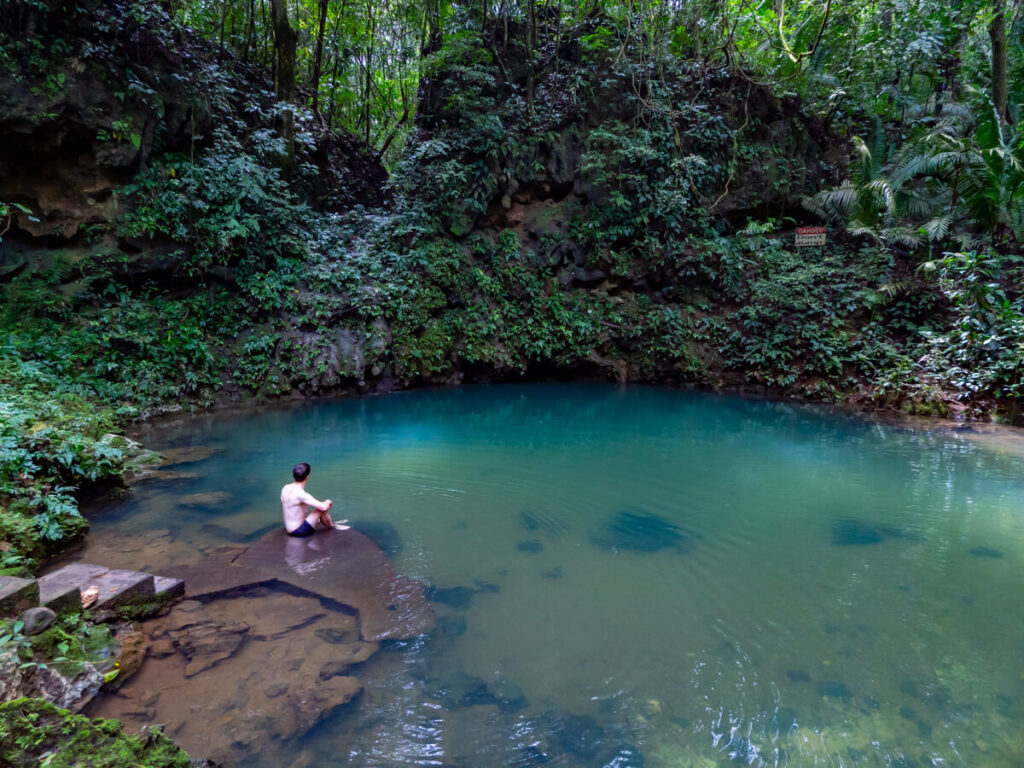
The inland Blue Hole is the most famous feature in St. Herman’s Blue Hole National Park, giving the park its name. A natural limestone sinkhole filled with cool turquoise water, it resembles the cenotes found in Mexico’s Yucatán Peninsula.
It measures about 61 metres (200 ft) wide and 7.5 metres (25 ft) deep and was formed by collapsed caves. Fed by an underground stream, the water remains cool year-round, making it perfect for a refreshing swim after hiking in the steamy jungle.

St. Herman’s Cave
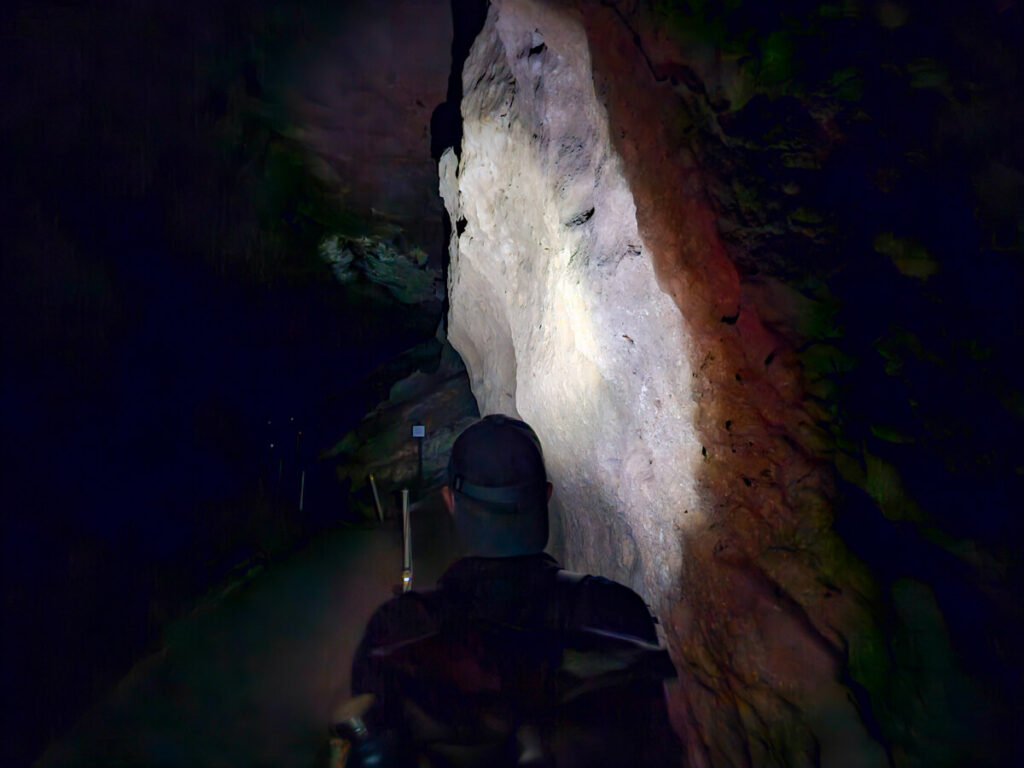
St. Herman‘s Cave is a cavernous underground system known for its gaping 37 metre (120 ft) wide mouth. The cave is unique as it’s one of the few caves in Belize that you’re allowed to explore without a guide.
You can descend stone steps and venture 183 metres (200 yd) along a path into the darkness, where you’ll see stalactite and stalagmite formations and the underground river that runs through the cave.
The cave was once used by the ancient Maya, who believed that caves were entrances to the underground known as Xibalba, for ceremonial rituals and burials. Archaeological evidence, including pottery shards and charcoal, has been found inside, but you can only see it if you hire a guide, as it lies beyond the part you can explore independently.
A flashlight is mandatory and can be rented from the Visitor Centre, or you can bring your own headtorch (your phone torch isn’t sufficient).

The Crystal Cave
Also known as ‘Mountain Cow Cave‘, the Crystal Cave is one of Belize’s most impressive and challenging underground adventures. Located within the park, unlike St Herman’s Cave, it requires a guided tour due to its depth, complexity, and archaeological significance.
Inside, you’ll encounter shimmering calcite crystal formations as well as artefacts and skeletal remains from ritualistic Mayan ceremonies. The trek involves hiking, climbing, and rappelling, making it best suited for adventurous travellers who are physically fit. The experience rivals the iconic ATM Cave, but isn’t as well-known.
St. Herman’s Blue Hole National Park Wildlife
St. Herman’s Blue Hole National Park’s forest habitat supports a wide variety of wildlife and birdlife. Over 200 bird species have been recorded, including the keel-billed toucan, collared aracari, motmot, and hummingbirds. Mammals like armadillos, agoutis, and monkeys are occasionally seen along the trails, while 5 wild cat species and 1 of the 2 peccary species in Belize can also be found here. Here are some of the endangered species that call the reserve home:

St. Herman’s Blue Hole National Park Trails
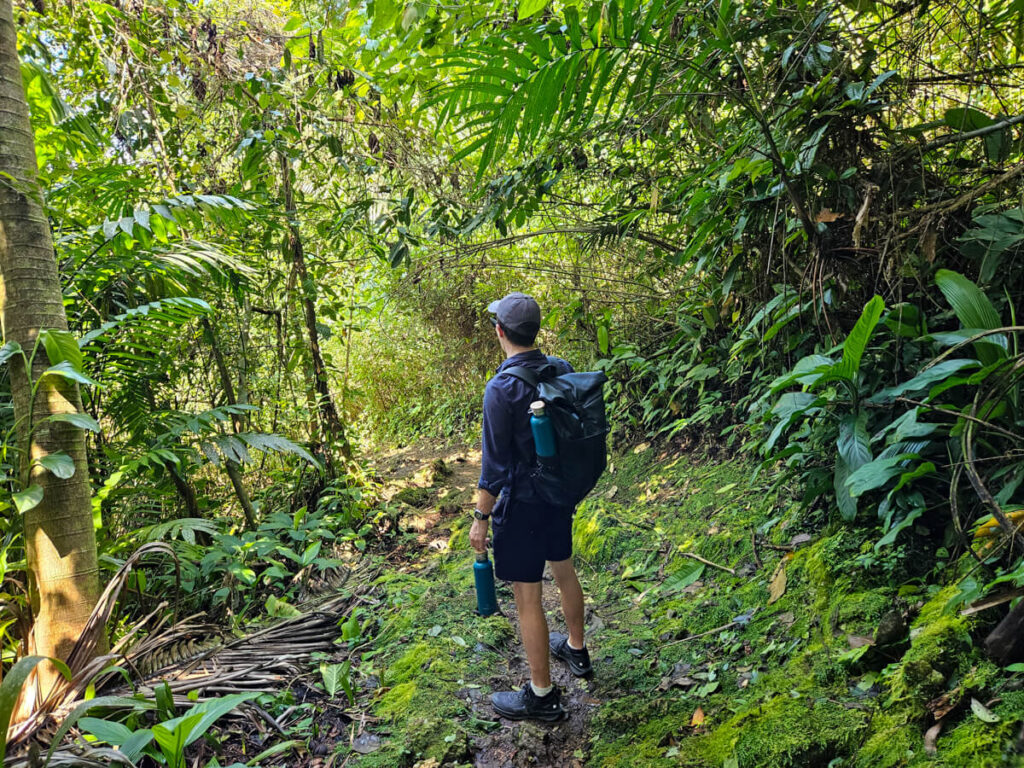
St. Herman’s Blue Hole National Park has a network of hiking trails that connect its main attractions. Unlike in other national parks, these trails are well-maintained and in good condition, ranging from short, flat hikes to more steep and strenuous sections.
Sturdy, comfortable footwear is important (sandals aren’t recommended), as conditions can be slippery, especially after rain, and bring plenty of water. We’ve expanded on the best hiking trails in St. Herman’s Blue Hole National Park below.

Hiking in St. Herman’s Blue Hole National Park
St. Herman’s Blue Hole National Park offers over 4 miles (6.4 km) of hiking trails ranging from easy nature walks to more challenging treks. The trails lead to the park’s key attractions, with several smaller paths simply exploring the rainforest landscape. Some routes require a guide, but most can be explored independently. Here are the St. Herman’s Blue Hole National Park hiking trails:
Inland Blue Hole Trails
The Inland Blue Hole Trail takes you through dense forest and leads directly to the park’s famous attraction, the sapphire-blue cenote-like pool. The walk is relatively short, about 5 minutes one-way, consisting of a flat path through the forest and a set of concrete steps with a handrail.

It begins at the parking lot, first passing the restrooms and changing facilities, before heading to the sinkhole.
There are a couple of other trails that lead from the top of the trailhead, too, which we’ve covered below.

Dusky Antbird Trail
Named after the elusive bird species that inhabits the area, the Dusky Antbird Trail winds through thick secondary forest. This 0.9-mile (1.5 km) trail is popular with birdwatchers, as it provides opportunities to spot not only antbirds but also woodcreepers, tanagers, and hummingbirds.
The path is moderately easy, taking around 40 minutes to complete one-way. It stretches from the Blue Hole trailhead to St Herman’s Cave Visitor Centre, so it’s a good option for those wishing to walk from one attraction to the other. If you’re travelling as a group, you could leave one car in each parking lot, walking between the hole and the cave.

Hummingbird Loop
The Hummingbird Loop is a circular trail that showcases the park’s diverse flora. It’s excellent for spotting the many hummingbird species that inspired the nearby highway’s name.
The 0.8-mile (1.3 km) trail takes about 45 minutes to an hour and passes through mixed broadleaf forest. Along the route, interpretive signs explain the ecology of the plants and animals you might see.

St. Herman’s Cave Trails
The St. Herman’s Cave Trails lead from the visitor centre to the entrance of the cave system, where you can explore part of the underground chambers.
The hike to the cave takes about 10-15 minutes, depending on the route you choose, as there are 2 trails. We’d recommend taking the Lowland Trail on the way down to the cave (15 minutes) and the Highland Trail (10 minutes) on the way back up.

Lowland Trail
The 0.4-mile (0.6 km) Lowland Trail is a gentle hike through moist broadleaf forest at a lower elevation. It’s flat, mainly compact first and forest floor, offering the chance to see wildlife along the way. It takes about 10-15 minutes one-way and is suitable for most fitness levels.

Highland Trail
The 0.3-mile (0.5 km) Highland Trail climbs more steeply to slightly higher elevation forest, offering different views of the rainforest and Maya Mountains. It is more challenging than the Lowland Trail, with uneven terrain and rocky sections that can be slippery, especially when wet.
Despite being slightly shorter, this trail takes about 15-20 minutes one-way, due to its elevation changes and uneven terrain.

Jungle Trail
The Jungle Trail is one of the more adventurous routes in the park, taking hikers deep into dense rainforest. The path can be challenging due to roots, rocks, and occasional stream crossings, but it’s one of the best paths to encounter animals like monkeys and tapirs.
The trail is a 1.4-mile (2.3 km) path that circles from St. Herman’s Cave entrance to the trail to the Crystal Cave. It takes about 1 hour to complete the loop.

Crystal Cave Trail
The Crystal Cave Trail leads to one of the park’s most dramatic attractions: a cave of deep caverns home to Mayan artefacts and glittering calcium carbonate formations. Inside, the journey is challenging, as you embark on an Indiana-Jones-style adventure, navigating narrow passageways, climbing up steep rocks, and crawling and sliding over formations to reach the chambers within.
The uphill hike to reach the cave is moderately strenuous, taking about 45 minutes one-way. You can only go inside the cave with a licensed guide, who will help you clamber along the route inside. It’s considered a more challenging experience than the ATM Cave, but so rewarding for those who dare to brave it.

Cave tubing at St. Herman’s Blue Hole National Park
While hiking is popular in St. Herman’s Blue Hole National Park, it’s also one of the best places in Belize to go cave tubing. A tour takes visitors along the Sibun River through St. Herman’s Cave, floating through underground chambers filled with stalactites and stalagmites
The tubing experience lasts about 2 hours, and your cave tubing ticket also doubles as a pass to the Blue Hole, which you can dip in afterwards. While less extensive than the cave tubing offered at Nohoch Che’en, it’s a great experience for those looking for an adventure activity a little closer to the Hummingbird Highway.

How to get to St. Herman’s Blue Hole National Park
St. Herman’s Blue Hole National Park is located along the Hummingbird Highway, about 12 miles (20 km) southeast of Belmopan.
The easiest way to reach the park is to rent a car and drive yourself. It’s a popular stop for day trips from San Ignacio and those coming from Belize City via the George Price Highway.
If you’re coming from the coast – Dangriga, Hopkins, or Placencia – the Southern Highway connects to the Hummingbird Highway, leading to the park. Driving in Belize is pretty easy, with a handful of highways connecting major towns.
Public buses stop along the highway near the park entrance, though from there, it’s a short walk to the visitor centre, and you’ll need to walk between the hole and the cave. Buses don’t run very frequently in this area and don’t stick to a set timetable, so it can be tricky to coordinate your transportation.
Many organised tours to St. Herman’s Blue Hole National Park run from San Ignacio, Belize City, and Placencia, including transportation, the park entrance fee, and often other stops on the route.

St. Herman’s Blue Hole National Park Tickets
There are actually two places to buy tickets for St. Herman’s Blue Hole National Park: the ticket booth at the Inland Blue Hole and the visitor centre at St. Herman’s Cave.
The entrance fee is valid for the entire day and covers access to all major attractions within the park at both sites, including the Inland Blue Hole, St. Herman’s Cave, and hiking trails. Activities like cave tubing and the Crystal Cave are an extra charge.
Tickets are managed by the Belize Audubon Society, which reinvests funds into conservation and park maintenance.
How much does it cost to visit St. Herman’s Blue Hole National Park?
The entrance fee for St. Herman’s Blue Hole National Park costs $10 BZD ($5 USD) for tourists and $2 BZD for locals, with $5 BZD ($2.50 USD) for flashlight rental (which is mandatory for the cave unless you bring your own).
Cave tubing tours typically cost $45-65 USD per person, depending on whether you book directly at the park or through a tour company, while the Crystal Cave tour costs around $100-125 USD per person with a licensed guide.

St. Herman’s Blue Hole National Park Hours
The park is open daily from 8:00 AM to 4:30 PM, including weekends and public holidays. Swimming and cave access are permitted only during operating hours.
The last entry is usually allowed around 3:30 PM to ensure visitors have enough time to explore before closing.
Early morning visits are ideal for birdwatchers and those wishing to see wildlife, while temperatures are cooler, making hiking more pleasant.

St. Herman’s Blue Hole National Park Facilities
The park is equipped with basic but useful facilities. Both entrances have restrooms, changing rooms, and a parking lot.
The St. Herman’s Cave entrance is bigger than the one at the Inland Blue Hole, featuring a picnic area, gift shop, and visitor centre. The Inland Blue Hole has several interpretative signs about local bird and plant life.
Trails are well marked, and maps are signposted at the entrances to help orient yourself.

St. Herman’s Blue Hole National Park Visitors’ Centre
The main visitor centre for St. Herman’s Blue Hole National Park is located at the St. Herman’s Cave entrance. It contains a small exhibition on native flora and fauna found within the reserve. You’ll find interpretive displays about Belize’s karst geology, the formation of caves, the Mayan history connected to the site, and endangered species that call the park home.
Staff are usually available to answer questions, help with maps, and arrange licensed guides for cave tours. You can also rent a flashlight here if you plan to visit St. Herman’s Cave on your own.

St. Herman’s Blue Hole National Park Rules
To protect the sensitive ecology of St. Herman’s Blue Hole National Park certain rules are in place to must be followed, including:

Inland Blue Hole Rules
The Inland Blue Hole has certain rules to help protect the natural beauty of the sinkhole:

St. Herman’s Cave Rules
Caving can be dangerous, so it’s important to follow the rules for St. Herman’s Cave to stay safe and protect the natural environment:

Where to stay near St. Herman’s Blue Hole National Park
While you can’t stay in St. Herman’s Blue Hole National Park, there are several great accommodation options within easy reach of the reserve. Budget-friendly choices include small guesthouses in Belmopan and rustic lodges along the Hummingbird Highway. For a more immersive experience, Belize’s jungle lodges offer rainforest views and guided nature activities, making them the perfect base to explore the park. We had a glorious stay at Toucan Ridge Ecology and Education Society (T.R.E.E.S.), a sustainable co-lodge near the national park. Staying close to the Blue Hole means you can explore in the early morning before the crowds arrive, as well as giving you access to other beautiful attractions along the highway. Here are some of our top hotels near St. Herman’s Blue Hole National Park.
St. Herman’s Blue Hole National Park Hotels

When to visit St. Herman’s Blue Hole National Park
The best time to visit St. Herman’s Blue Hole National Park is during Belize’s dry season, from December to April, when trails are more accessible and swimming in the Inland Blue Hole is especially refreshing.
During the rainy season, from June to October, the park is still open, but trails can be muddy and caves may flood, making guided tours essential.
Wildlife sightings, especially birds, are excellent year-round, but visiting early in the day provides cooler temperatures and a quieter experience. Weekdays are generally less busy than weekends, and seasonal holidays like Easter can be particularly busy.

How long to spend in St. Herman’s Blue Hole National Park
Most visitors spend between 3 and 5 hours exploring the park. This allows time for a refreshing swim in the Inland Blue Hole, exploring St. Herman’s Cave, and a short jungle hike. Half a day is sufficient to see the main sights, while still having time to continue along the Hummingbird Highway to other sites.
If you plan to do a guided excursion, like cave tubing or the Crystal Cave, you will need an entire day.

Things to do near St. Herman’s Blue Hole National Park
St. Herman’s Blue Hole National Park’s location on the Hummingbird Highway makes it easy to combine with other attractions. Just down the road, you can visit the cacao orchards at Lámanai Chocolate or enjoy a swim at Ayala’s Natural Pool. The Mayan ruins of Xunantunich and Cahal Pech are a day trip away, offering fascinating insights into archaeological history, while nearby national parks like Guanacaste and Billy Barquedier provide more hiking and birdwatching opportunities. San Ignacio is a popular base in the Cayo District, offering a range of similar outdoor activities, from the remote ruins of Caracol to the sprawling Mountain Pine Ridge Forest Reserve.

Is St. Herman’s Blue Hole National Park worth it?
St. Herman’s Blue Hole National Park is one of Belize’s most accessible national parks, containing some beautiful natural attractions. Its combination of swimming, caving, hiking, and wildlife watching in a compact, easy-to-visit location makes it one of the best natural areas in Belize.
Having said that, the park isn’t for everyone. The Inland Blue Hole is a stunning natural pool, but not everyone enjoys outdoor swimming holes. It’s also prone to a lot of mosquitoes, so it’s important to wear eco-friendly insect repellent. St. Herman’s Cave is fun to explore on your own, but you can’t go very deep without a guide, which costs more. It’s also not dissimilar from Rio Frio Cave, so you could skip it if you’re already visiting the Mountain Pine Ridge Forest. Likewise, the guided tour is more challenging than the ATM Cave, which is considered one of the top things to do in Belize.
Overall, the park is affordable, conveniently located along the Hummingbird Highway, and makes an easy addition to most inland Belize itineraries. We loved its beautiful landscapes and fun natural attractions and would highly recommend you stop off here, even if just for a couple of hours.

What to pack to visit St. Herman’s Blue Hole National Park
To ensure an enjoyable and safe experience in St. Herman’s Blue Hole National Park, it’s important to pack the right things. Don’t forget to pack your:

St. Herman’s Blue Hole National Park FAQs
To ensure you have a smooth and enjoyable trip, we’ve answered these frequently asked questions about St. Herman’s Blue Hole National Park.
Can you swim in the Blue Hole in Belize?
You can swim in the Inland Blue Hole at St. Herman’s Blue Hole National Park. This natural cenote is fed by underground streams, creating cool, refreshing water that is perfect for a dip after hiking the jungle trails.
How deep is St. Herman’s blue hole?
The Inland Blue Hole is roughly 7.5 metres (25 ft) deep at its centre, although its depth varies due to its uneven, rocky bottom. It formed when a portion of a limestone cave system collapsed, creating a steep-sided sinkhole filled with fresh water. The width of the pool is about 61 metres (200 ft).
Is St. Herman’s Blue Hole National Park safe?
St. Herman’s Blue Hole National Park is one of Belize’s safest areas, but there are still some risks. The swimming hole has steep sides and slippery rocks, so care should be taken when entering and exiting the water. Trails are well marked, though they can be slippery after rain, so sturdy footwear is recommended. Wildlife encounters are possible but rarely dangerous, especially if visitors stick to designated paths. For immersive cave tours, hiring a licensed guide is essential for both safety and preservation of the natural environment.
Why is it important to protect St. Herman’s Blue Hole National Park?
Protecting St. Herman’s Blue Hole National Park is vital because it safeguards a unique karst landscape and a rare freshwater cenote. The park preserves critical habitats for Belize’s wildlife, including monkeys, tapirs, wild cats, and over 200 species of birds. It also protects ancient Mayan sites like caves, where ceremonial artefacts and skeletal remains have been found. As a key ecotourism site, the park supports local communities and Belize’s sustainable tourism economy.

Read next:
A Guide to Driving the Scenic Hummingbird Highway
Our Toucan Ridge Ecology and Education Society Review
11 Best Jungle Lodges in Belize
Dangriga Travel Guide + 12 Best Things to Do
Our Belize Destination Guides:
Our Belize Travel Guides:
