How to Visit the Historic Serpon Sugar Mill

Discover everything you need to know about Belize’s first historic reserve, the Serpon Sugar Mill near Hopkins.

This post may contain affiliate links, which means we might earn a small commission on anything purchased through these links at no extra cost to you. Learn more on our disclaimer page.
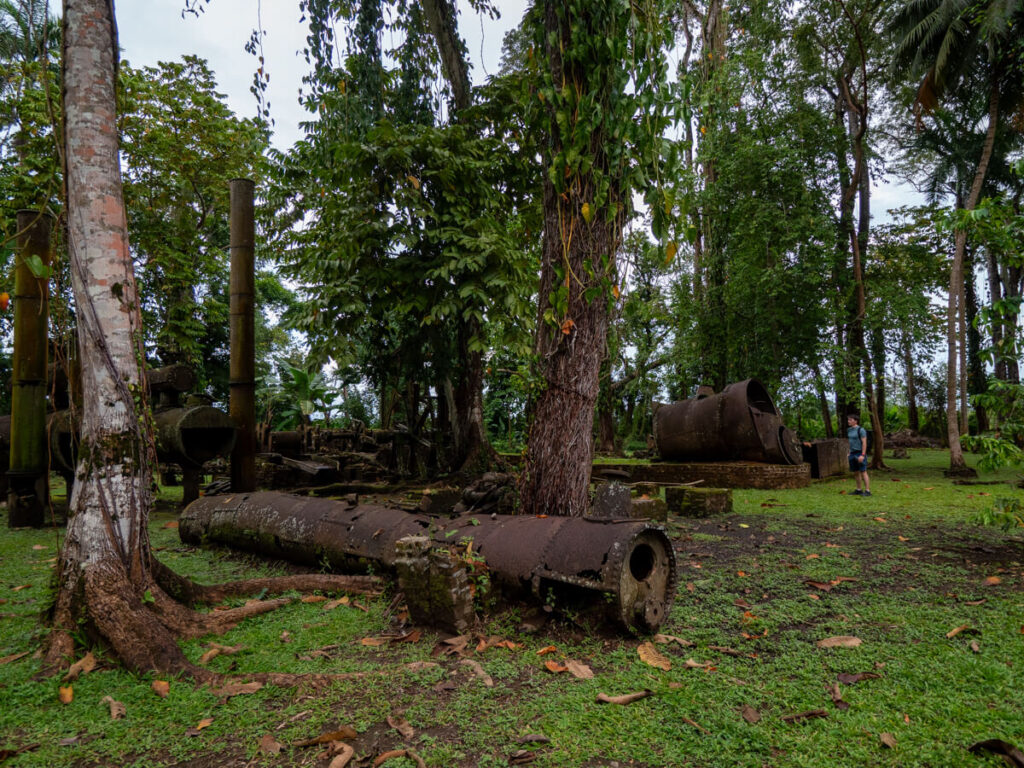
The Serpon Sugar Mill is a historical site on the banks of the Sittee River near Hopkins. It is known as the country’s first steam-powered sugar mill, offering an insight into Belize’s industrial era, and was the first historic site to be established in Belize. At its peak, the mill covered a large estate with sugarcane fields, workers’ quarters, and processing facilities. Today, the site preserves remnants of large iron machinery, brickwork, and rusting boilers surrounded by forest, and is one of the best things to do in Hopkins. We’ve compiled everything you need to know about visiting the Serpon Sugar Mill, from how to get here and what to see to tickets, times, and opening hours, in this comprehensive guide.
Serpon Sugar Mill at a glance
More from the coast
Serpon Sugar Mill History
The Serpon Sugar Mill was established in 1865 by William Bowman and his partner, using advanced steam-powered machinery imported from Britain. This marked a turning point from manual or animal-powered grinding to industrial-scale processing, capable of producing far more product. It operated for several decades, producing sugar, molasses, and rum for export.
The rise of Serpon and other mills helped transform Belize’s economy from small-scale agriculture to industrial production. Sugar from Serpon and other mills was shipped down the Sittee River to the Caribbean Sea and then exported mainly to Britain and other markets in the empire.
However, by the early 1900s, competition from larger, more efficient mills in northern Belize and abroad led to its decline. The mill was eventually abandoned, and the rainforest slowly reclaimed much of the site.
Serpon Sugar Mill was declared a national historic landmark in 2009, recognising its importance to Belize’s colonial and industrial past. Though the mill stopped operating decades ago, its skeletal remains still stand on the site, and visitors can wander through the site, learning how sugar shaped local economies and communities.
Why visit the Serpon Sugar Mill?
Visiting the Serpon Sugar Mill offers a chance to explore one of Belize’s least-known but most unique heritage sites. Unlike Belize’s Mayan ruins, this site showcases the country’s industrial past and the shift from subsistence farming to global trade.
The site allows travellers to walk among massive boilers, crushers, and gearwheels left in place for over a century. It’s one of the best places to visit in Belize if you’re a history enthusiast, as you can learn about the country beyond its pre-Columbian past.

Serpon Sugar Mill Machinery
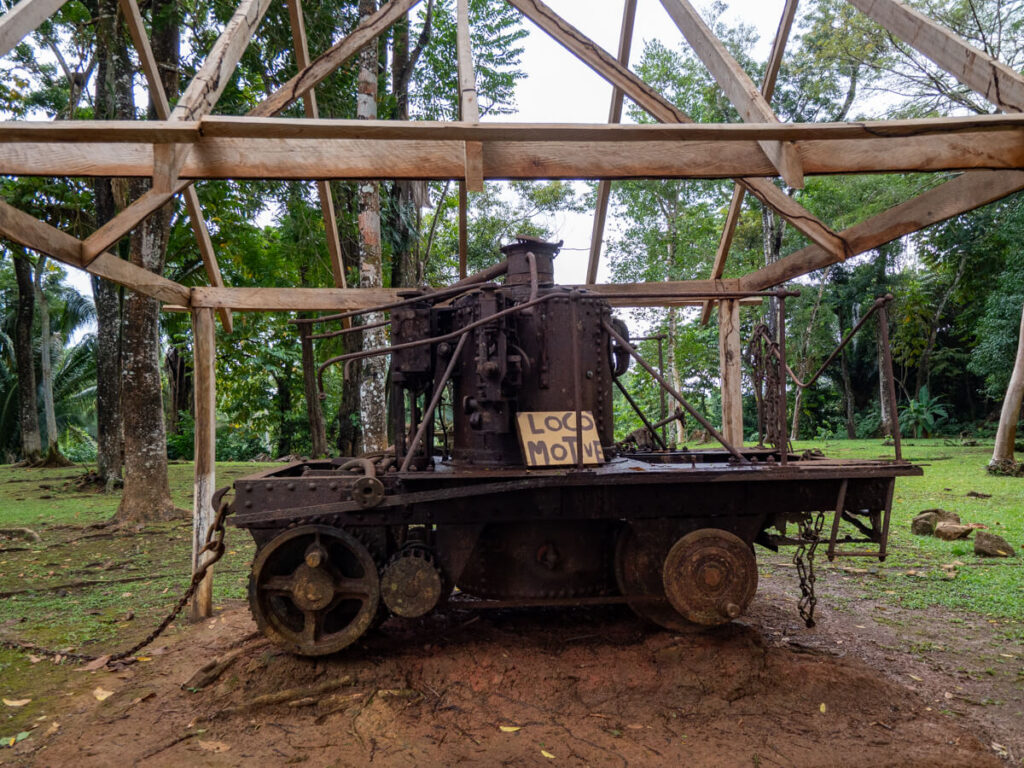
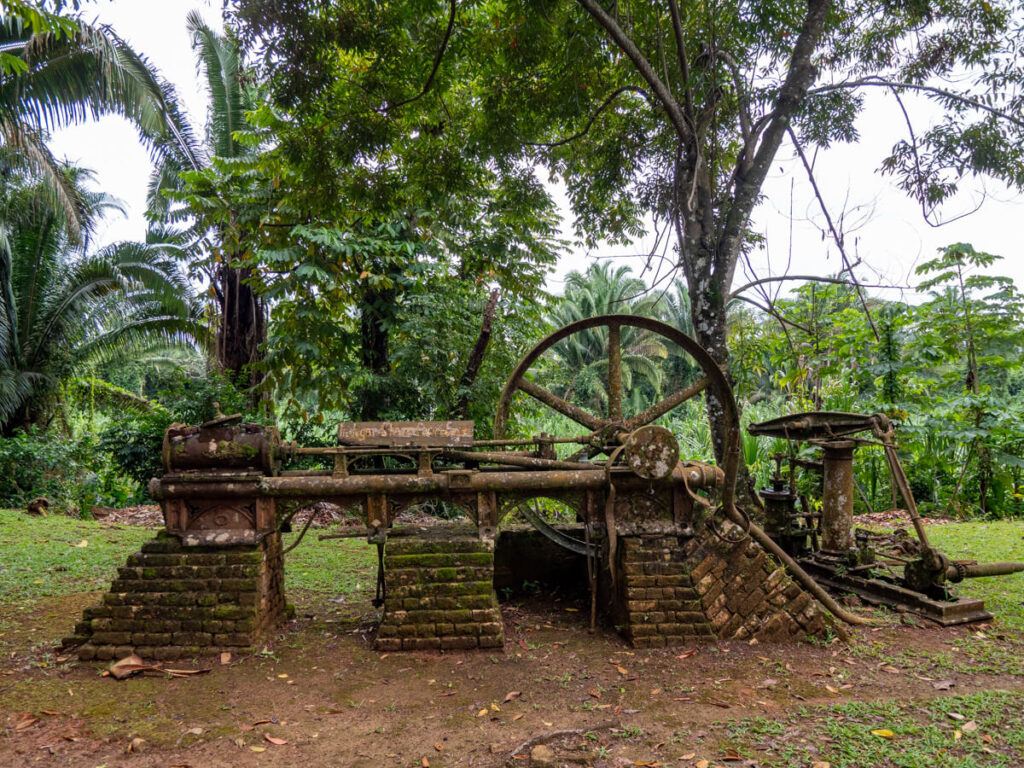
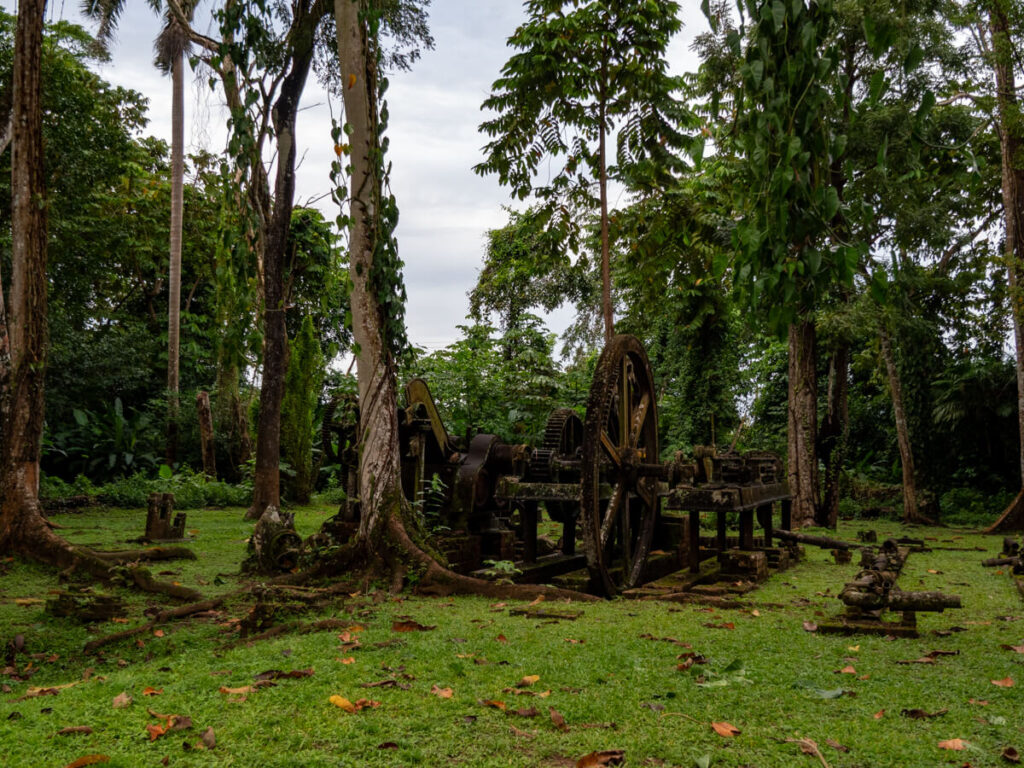
The remains of the mill include a giant steam-powered engine, large iron gears, rollers for crushing cane, and huge metal boilers. These were imported from the United Kingdom in the mid-1800s, making them some of the earliest industrial machines brought to Belize.
The machinery was designed to process sugarcane onsite, converting it into raw sugar and molasses. After being harvested in the fields, the cane was transported to the mill and fed into large iron rollers, which crushed the stalks to extract the juice. The leftover fibrous material, known as bagasse, was dried and reused as fuel for the steam boilers that powered the mill. The extracted juice was then heated in huge iron vats, where lime was added to clarify it before being boiled down into a thick syrup. This syrup was cooled and stirred in trays to encourage the formation of sugar crystals, which were then separated from the molasses in steam-powered centrifugal machines. The resulting raw sugar was packed into barrels for export, while the leftover molasses was sold locally or distilled into rum.
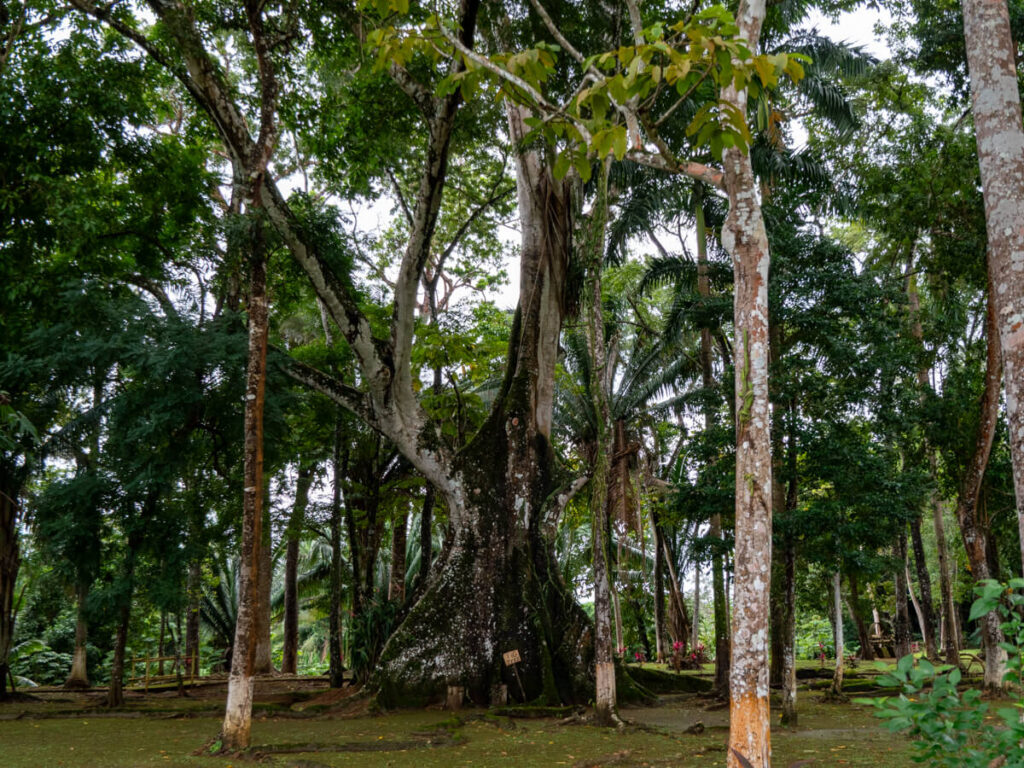
Over more than a century, massive strangler fig trees have wound their roots and trunks around the abandoned boilers and metal gears.

Serpon Sugar Mill Museum
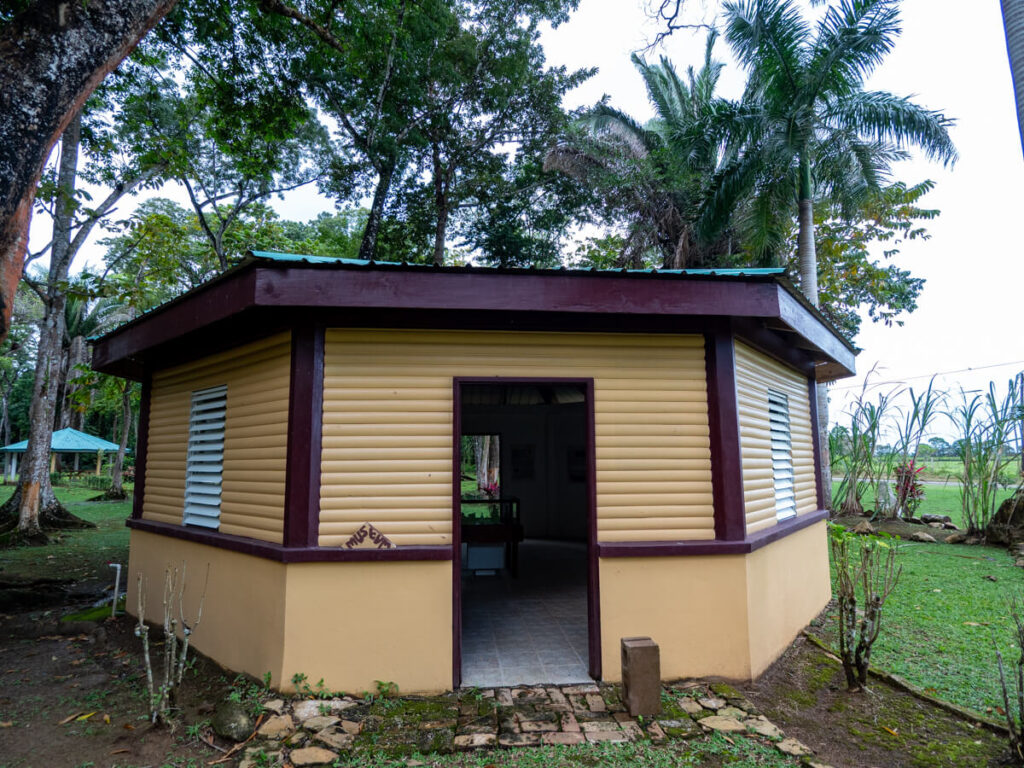
While the Serpon site itself is open-air, it is home to a tiny museum with interpretive exhibits managed by the National Institute of Culture and History (NICH). These displays provide background on sugar production, the role of the Sittee River in transporting goods, and the lives of workers tied to the mill. Archival photos, diagrams, and written panels indicate how the machinery once functioned, which is useful context for what you see on the site.
Where is the Serpon Sugar Mill?
The Serpon Sugar Mill is located near Sittee River Village in the Stann Creek District, about 8.5 miles (14 km), a 15-minute drive, from Hopkins and 20 miles (30 km), a 30-minute drive, from Dangriga. It sits along the banks of the Sittee River, which historically served as the main transportation route for moving sugar to the coast.

Serpon Sugar Mill Map
We’ve pinned the Serpon Sugar Mill on our interactive Hopkins Map below.
How to get to the Serpon Sugar Mill
The easiest way to reach the Serpon Sugar Mill is to rent a car and drive yourself. The site is accessible via a short dirt road off the Southern Highway, and driving in Belize is pretty easy.
Its location in southern Belize makes it easy to combine a visit with trips to Hopkins or Cockscomb Basin Wildlife Sanctuary. For those travelling the Hummingbird Highway, it makes for a convenient cultural stop on your way down south. If you’re visiting from Placencia, it’s only an hour’s drive north.
Taxis from Hopkins can also make the trip, though arranging a round trip is recommended as drivers may not wait. Buses run along the Southern Highway but do not stop directly at the mill, so public transport requires a short walk or hitchhike from the main road.
There aren’t really any tours from Hopkins that go to the Serpon Sugar Mill, but arranging a private tour in the nearby area would be a great way to visit with a local guide.

Serpon Sugar Mill Tickets
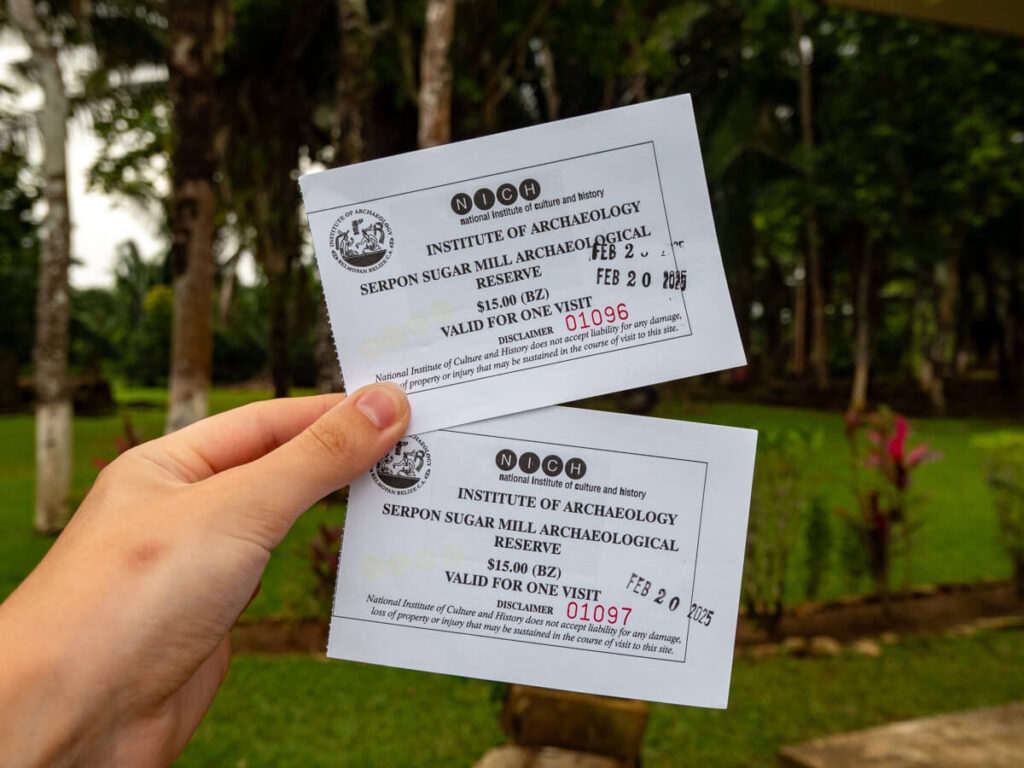
Entry to the Serpon Sugar Mill Archaeological Reserve requires a ticket, which can be purchased in person at the small ranger station on site. Tickets are issued by the Institute of Archaeology, which manages Belize’s archaeological reserves.
Like most historic sites in Belize, you’ll be provided with a paper wristband, which proves you paid. This allows access to all public areas of the site.

How much does it cost to visit the Serpon Sugar Mill?
Entry to the Serpon Sugar Mill costs $15 BZD ($7.50 USD) for tourists and $5 BZD ($2.50 USD) for locals. Children under 5 are free.
The booth accepts cash only, but you can use both BZD and USD.
The price includes entry to both the archaeological site and the museum.
Serpon Sugar Mill Opening Hours
Serpon Sugar Mill is open daily from 8:00 AM to 5:00 PM.
It’s best to arrive in the morning or early afternoon to allow enough time to explore without rushing.
How long to spend at the Serpon Sugar Mill
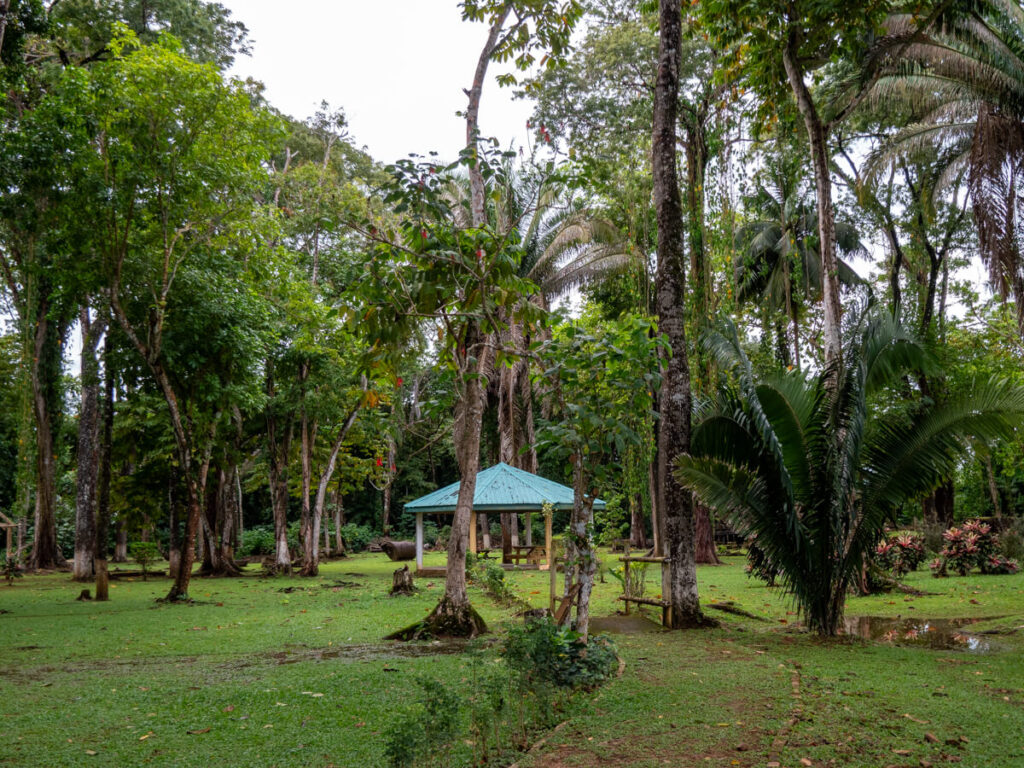
Most visitors will find that 30 minutes to 1 hour is enough time at the Serpon Sugar Mill. The site itself is compact and focused on the remains of the machinery, and the museum is small. A short interpretive trail with signs provides context about the mill’s role in Belize’s history.
It’s easy to combine a visit to the mill with other nearby attractions, like Hopkins, Mayflower Bocawina National Park, or Cockscomb Basin Wildlife Sanctuary.
When to visit the Serpon Sugar Mill
The best time to visit the Serpon Sugar Mill is during Belize’s dry season, from December to April, when trails are less muddy and easier to walk. The whole site is outside, so it’s more pleasant to visit when it’s dry.
Visiting earlier in the day provides cooler temperatures and better light for photography. The site’s pretty quiet all the time, so there’s no need to try and avoid any crowds.
Mosquitoes can be an issue at the Serpon Sugar Mill, especially during the wetter months of June to November and in the late afternoon. The site is surrounded by dense jungle and sits close to creeks and low-lying areas where water collects, making it an ideal breeding ground for them. Bring eco-friendly insect repellent, wear long sleeves, and avoid peak mosquito hours if you can.

Serpon Sugar Mill Facilities
There are basic facilities at the Serpon Sugar Mill, as the focus is on its historic ruins. There is a small ranger station with a ticket counter, a tiny museum, and some interpretive signage explaining the mill’s history. There’s a small grassy parking lot in front of the site.
There are restrooms, but they may not always be available, so it’s best to use facilities in Hopkins before arriving. There are no restaurants or shops, so bring water and snacks with you.
Serpon Sugar Mill Rules
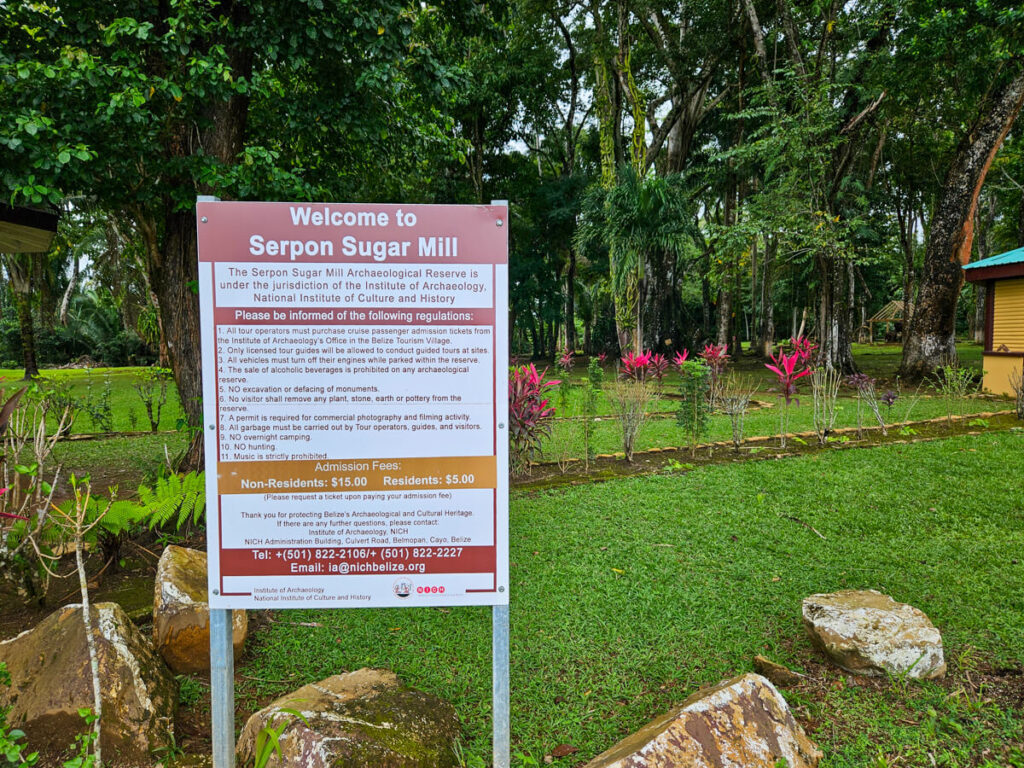
To protect the Srpon Sugar Mill, visitors are asked to respect the historical remains by not climbing on the machinery or damaging the ruins. Littering is strictly prohibited, and visitors should carry out any trash they bring. Pets are generally not allowed, and drones may require special permits from the Institute of Archaeology. As with all Belizean reserves, smoking and open fires are also prohibited to reduce the risk of damage.
Where to stay near the Serpon Sugar Mill
If you’re planning a visit to the Serpon Sugar Mill, the best places to stay are in nearby Sittee River Village, Hopkins, or Dangriga. Sittee River offers quiet river lodges and vacation rentals surrounded by nature, perfect if you want to stay close to the site. Dangriga, about 30 minutes north, is another convenient base with small hotels and guesthouses, particularly if you’re visiting the Southern Cayes. Hopkins, just 15 minutes’ drive away, is the most popular base and has a wider range of accommodations, from budget hostels to luxury beachfront resorts, as well as cultural experiences and dining options.
Hopkins Hotels
What to pack to visit the Serpon Sugar Mill
To ensure an enjoyable and safe experience at the Serpon Sugar Mill, it’s important to pack the right things. Don’t forget to pack your:
Is visiting the Serpon Sugar Mill worth it?
The Serpon Sugar Mill is skipped by a lot of tourists, and if you’re not big into history, you might not find it as interesting as some of the larger Mayan sites. But, as it’s the country’s first historical reserve, it doesn’t take very long to see, it’s a cool stop if you’re in the area, and it’s one of the most interesting things to do in Belize.
Walking among the giant iron gears, boilers, and crushers is very cool, and it’s interesting to learn about the early days of industrial agriculture in Central America. Because it’s located near Hopkins and Dangriga, it makes for a quick side trip if you’re already exploring the local area, and it’s easy to add to your Belize itinerary.
Read next:
A Complete Hopkins Travel Guide
22 Best Things to Do in Hopkins
A Traveller’s Guide to Placencia
24 Best Things to Do in Placencia
Hopkins vs Placencia: Battle of the Beach Towns
Dangriga Travel Guide + 12 Best Things to Do
Our Belize Destination Guides:
Our Belize Travel Guides:
