How to Visit ARCAS from Flores: Guatemala’s First Wildlife Rescue & Rehabilitation Centre

Discover everything you need to know about visiting Flores’ Wildlife Rescue and Conservation Association (ARCAS).

This post may contain affiliate links, which means we might earn a small commission on anything purchased through these links at no extra cost to you. Learn more on our disclaimer page.
When we were researching the best things to do in Flores, we came across a wildlife rescue and rehabilitation centre tucked on the shore of the lake opposite Isla de Flores. We’re naturally very sceptical of sanctuaries, as many that brand themselves as ethical are actually rife with greenwashing, keeping animals in captivity for tourists’ entertainment.
What we found wasn’t just a genuine conservation project, but a leading success story of Guatemala’s battle with the illegal wildlife trade. ARCAS has grown into one of the country’s most important conservation organisations and is one of the best places in Guatemala to support a genuine NGO – and you can easily visit it from Flores. In this guide, we cover everything you need to know about visiting ARCAS, from how to get here, opening times, and entry prices to the animals you can see and how to support the important work the organisation does.
ARCAS at a glance

More from Flores
About ARCAS
ARCAS – the Wildlife Rescue and Conservation Association (Asociación Rescate y Conservación de Vida Silvestre in Spanish) – is a non-profit organisation and Guatemala’s first wildlife rescue and rehabilitation centre.
Founded in 1989, ARCAS rescues between 300-600 wild animals and over 40 species each year, many of which are confiscated from traffickers, surrendered by owners, or found injured in the wild. It has grown into a global entity, operating across Guatemala, but its largest and most active centre is located in Flores, Petén.
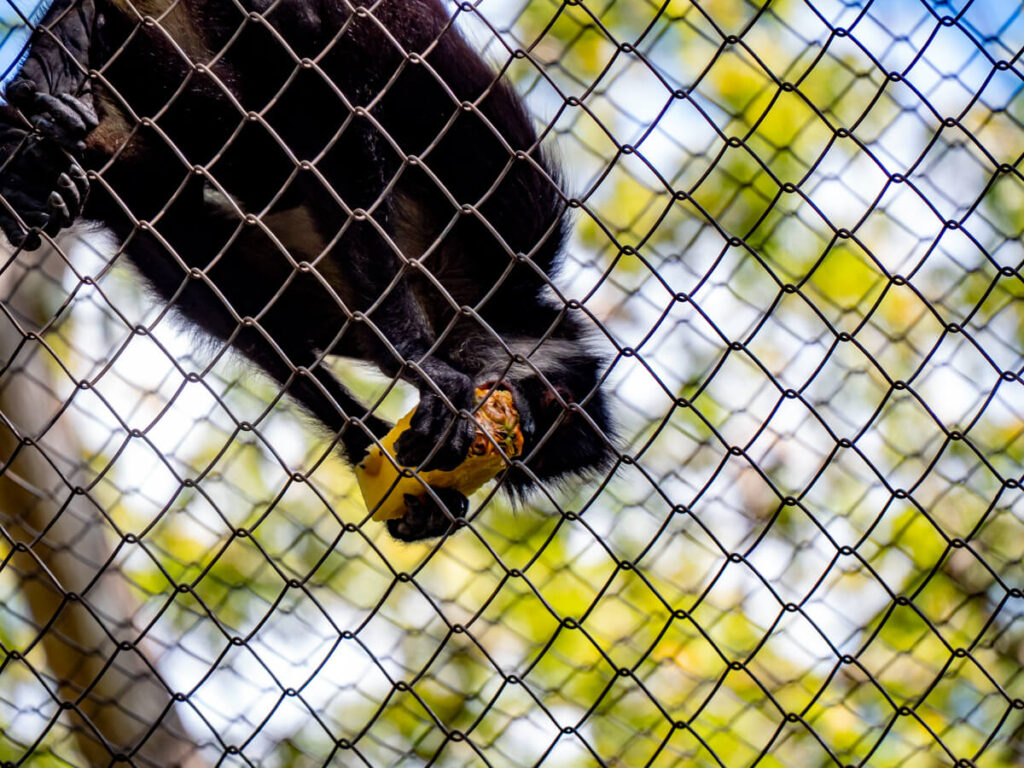
Animals rescued from trafficking, habitat loss, or injury are brought here for rehabilitation. The organisation gives visitors the opportunity to see Guatemalan animals that can’t be released back into the wild, like wild cats, monkeys, and tropical birds, and that are elusive and hard to find in the wild.
Where is ARCAS?
ARCAS’ rescue centre sits on the shores of Lake Petén Itzá, directly opposite Isla de Flores. It’s about a 10 to 15-minute boat ride from the island, making it an easy half-day trip if you’re staying in Flores and easy to add to your Guatemala itinerary. The setting is stunning, surrounded by jungle and looking across the lake at the colourful houses of Flores Island.

Conservation in Flores
Being located on the shores of Lake Petén Itzá is no coincidence – Petén is a biodiversity hotspot and also a common trafficking route for wildlife. This makes ARCAS perfectly placed to respond to rescues.
The centre also sits on the edge of the sprawling 8,341-square-mile (21,602-square-km) Maya Biosphere Reserve, a protected area home to sites like Tikal National Park – one of the best things to do in Guatemala – and hundreds of species, many of them endangered. With increasing deforestation and wildlife trafficking, centres like ARCAS are vital for conservation.
The Illegal Wildlife Trade in Guatemala
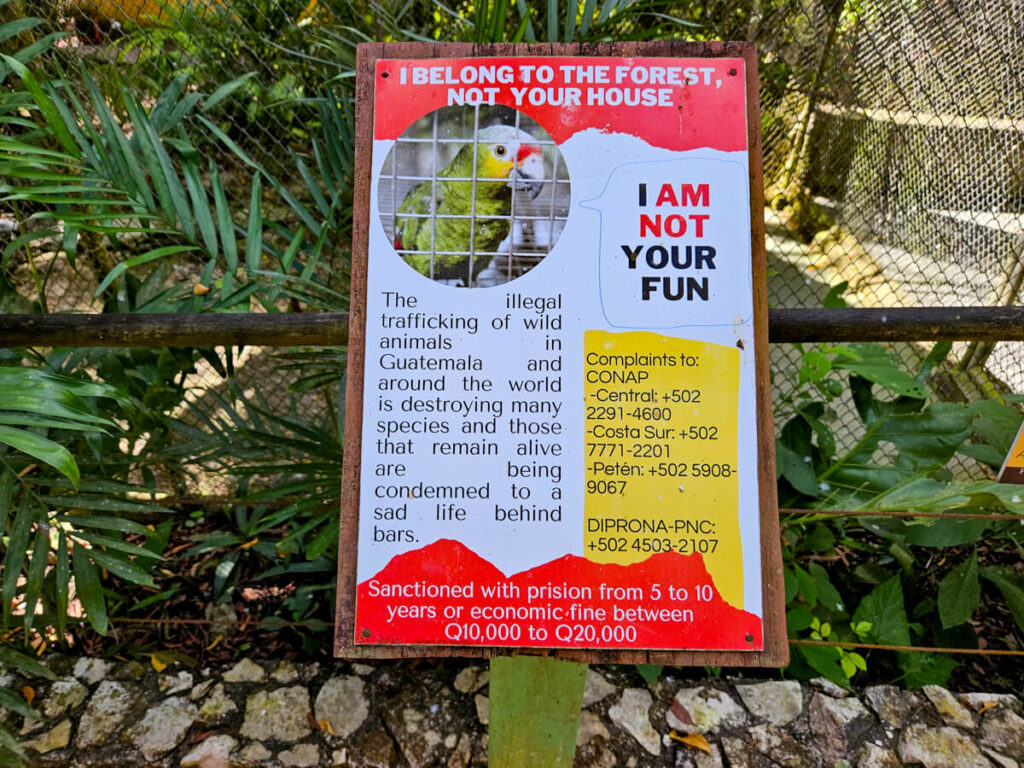
The $20 billion per year illegal trade is one of the biggest threats to animals in Guatemala. It consists of the capture, sale, transport and export of wild animals and their parts in violation of national and international law.
Trafficking networks operate on several scales. Much of the trade is domestic (with Guatemala City often cited as the principal market), but there’s also cross-border and international trade in high-value species.
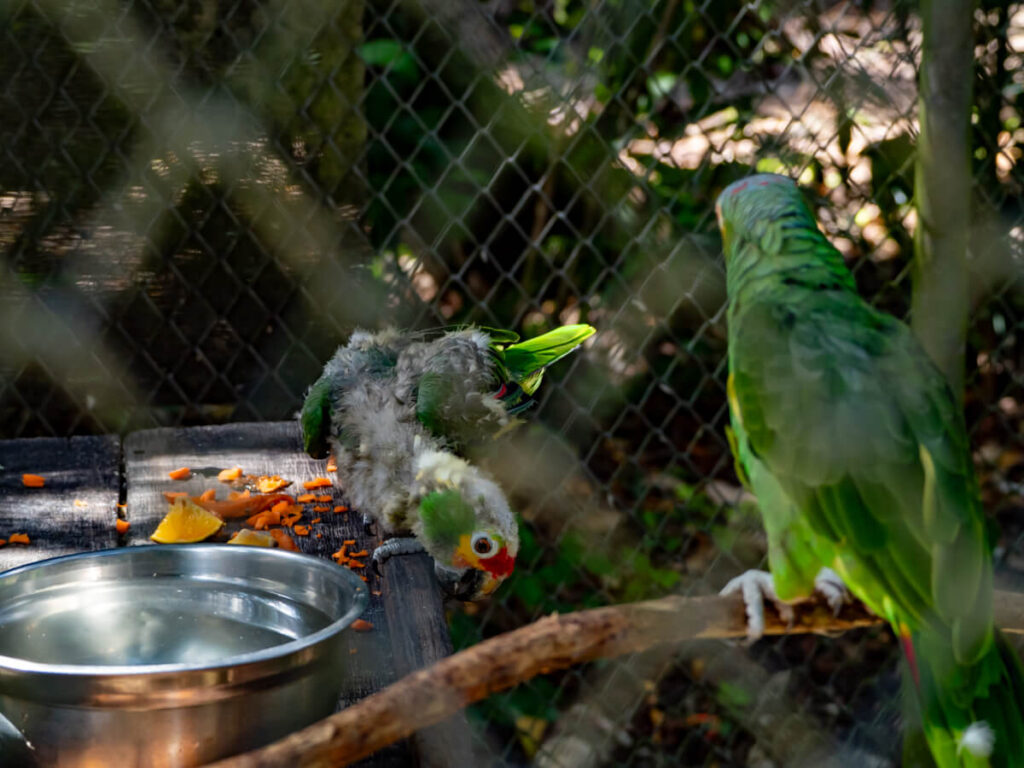
Birds like parrots and scarlet macaws are often targeted, while primates like spider monkeys and even wild cats like jaguars are captured and sold as pets or trafficked abroad. Sadly, many don’t survive the journey, and those that do often live in terrible conditions, as they’re not cared for sufficiently.
Removing babies and adults from the wild reduces population viability (especially for slow-breeding species like macaws), degrades ecosystem functions, and robs communities of potential long-term eco-tourism value. Because traffickers often target easily visible nests, the most conspicuous and culturally important species can be driven to local extinction if the practice continues.
Why it happens is complex but painfully simple: strong local and international demand for exotic pets combined with poverty and limited economic alternatives, expanding access to jungle areas, and weak enforcement. Traffickers recruit people in rural communities to raid nests or capture young animals (often paying a small amount in exchange), and many animals die before they ever reach a buyer.
ARCAS works closely with authorities to take in confiscated animals and give them a second chance. This work is slow and resource-intensive but vital for protecting native species.

The work ARCAS does
Some of the work ARCAS does in Flores includes:
New arrivals are first quarantined and checked for disease or injury. Then, depending on their condition, they move through different stages of rehabilitation. The lucky ones eventually return to protected areas like the Maya Biosphere Reserve. For those who cannot be released, ARCAS provides lifelong care.
ARCAS also run education programs for local communities and works on broader conservation policy in Guatemala. Every visit helps support these projects directly.
How to visit ARCAS
ARCAS is only accessible by boat. It’s an easy 10 to 15-minute journey across Lake Petén Itzá from Isla de Flores. You’ll need to arrange a return boat ride with a local lancha captain, who will wait for you while you’re in the centre.
A visit only takes 30 minutes to an hour, depending on how quickly you go around. Prices vary by boat, and you can get a cheaper rate if you negotiate, so knowing some Spanish can help. Expect to pay around 250Q (~$32 USD) for the boat, but you can arrange to stop at other places on the lake, like Jorge’s Rope Swing, to make a day of it.
You could also kayak to ARCAS, although it’s quite far from Flores Island. Hotels in Flores, like Los Amigos Hostel, or tour operators like Kayaks en Flores offer rentals by the hour or day. Expect to pay around 50Q ($6.50 USD) an hour or 70-100Q ($9-13 USD) a day.
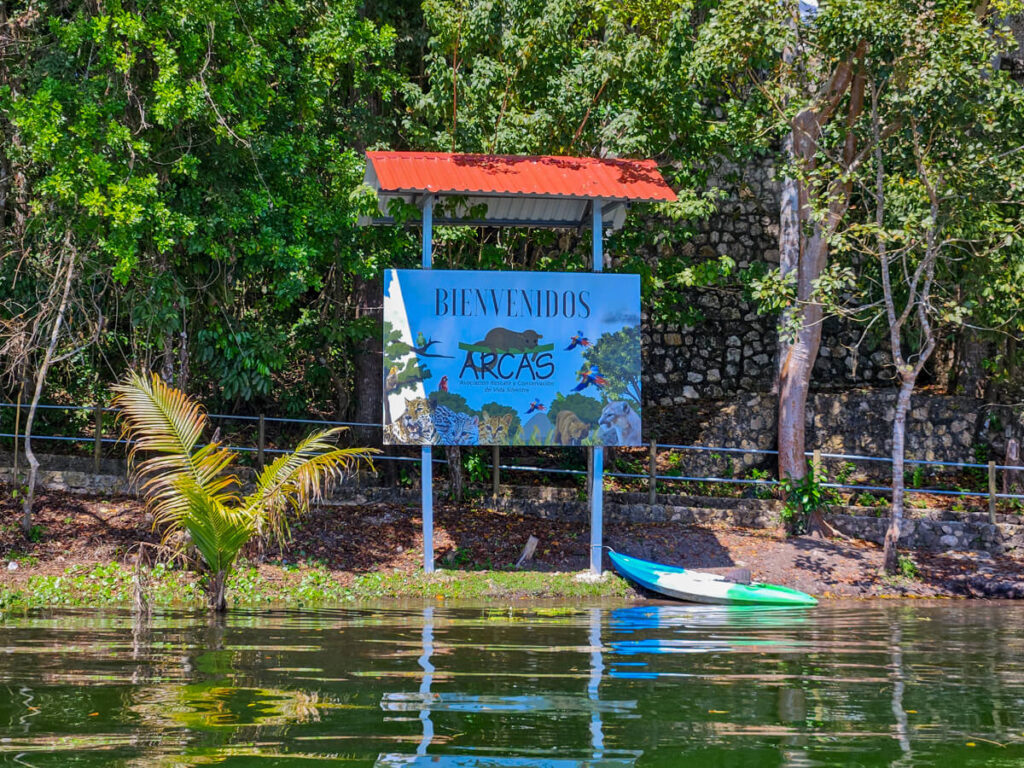
How much does entry to ARCAS cost?
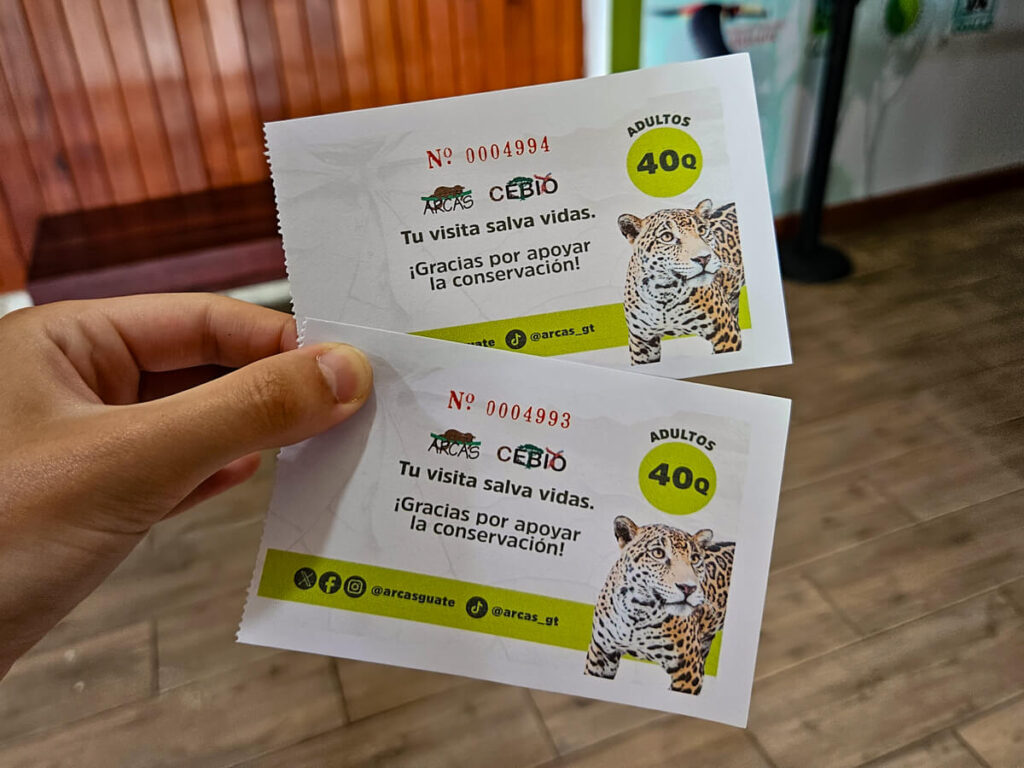
Tickets to ARCAS cost 40Q (~$5 USD) per adult and 25Q (~$3 USD) per child. Ticket sales directly support the conservation work of the sanctuary.
You can pay with cash or card (but bring cash in case the card terminal goes down).
ARCAS Opening Hours
ARCAS is open from 8:00 AM to 4:30 PM every day.
The best time to visit Guatemala is the dry season, between November and April, so we’d recommend timing your visit during this period for the best weather.

ARCAS Map
The map of ARCAS below shows the route you can take around the site. You’ll find it at the entrance, and you can take a picture before going around.
You can download an app at the entrance and follow a treasure trail on a map around the site, which is fun for families, too.

What to expect on a visit to ARCAS
After a short boat ride across Lake Petén Itzá, you’ll arrive at the rescue centre surrounded by jungle.
You can start in the small museum, which has loads of displays explaining the illegal wildlife trade in Guatemala, ARCAS’ history, and some of the species that pass through the centre.
The signs are all in Spanish, so download Google Translate if you’re not fluent. There’s free WiFi in the reception area, which is handy.

From there, you can walk the loop of the property, passing the animals that cannot be released. It’s self-guided, but you can arrange a guided tour in advance.
The centre is divided into different sections: quarantine areas for new arrivals, rehabilitation enclosures where animals build strength and learn natural behaviours, and permanent habitats. There’s also a large wetland area, which is very scenic.
The layout is practical and low-impact, with compact dirt paths and a few sets of stairs. There are toilets at the entrance and a recycling station halfway round.

Not all animals will be visible – some may be in indoor sections or simply hiding.
In the enclosures, you’ll see signs of enrichment, like toys, feeding puzzles, and climbing structures, that help reduce stress and prepare animals for life back in the wild.

Animals at ARCAS are split by environment, with those that can safely share spaces for company grouped together. Social species, like parrots or certain monkeys, often live in small communal enclosures where they can interact and stimulate each other naturally.
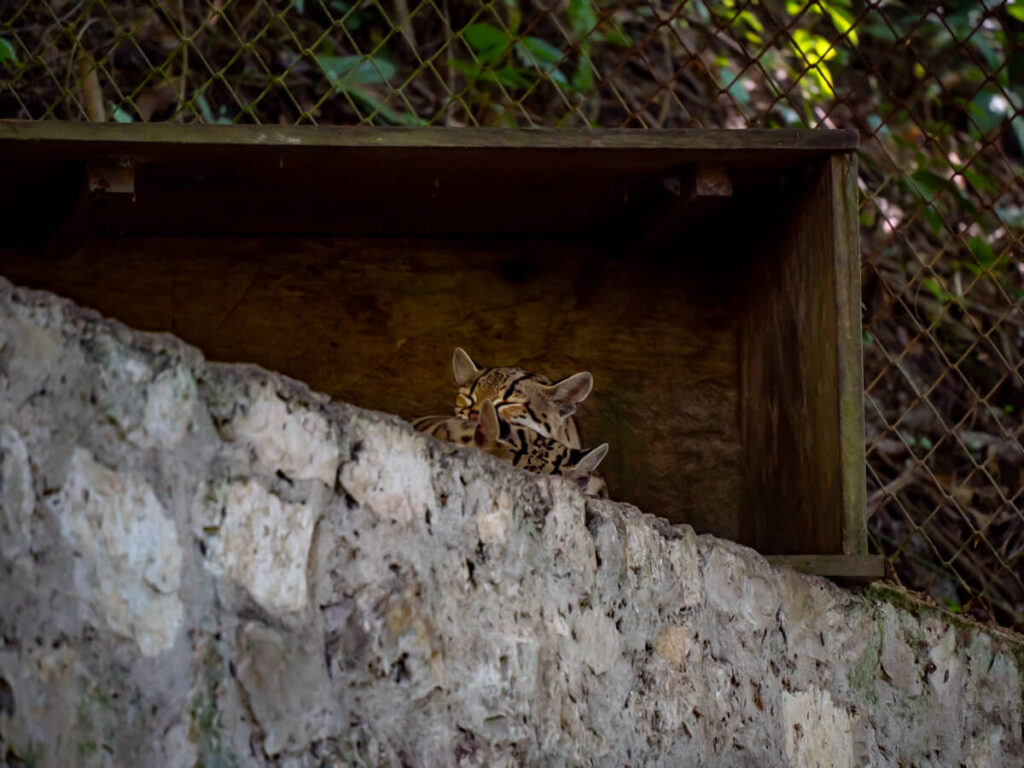
Solitary or territorial animals, such as some cats, are kept in individual habitats to reduce stress and prevent conflicts. Each enclosure is designed to mimic aspects of the animals’ natural environment as best as can be.

Animals you can see in ARCAS
ARCAS is home to a wide array of wildlife, most of which have been rescued from trafficking, injury, or habitat loss.
Here’s a complete list of the animals we saw on our visit:
It’s super sad to see such gorgeous creatures in captivity, but it’s an insightful place to visit and supports the amazing conservation work the organisation is doing, as well as being popular with families and wildlife lovers.
Here are some of the animals you might see in ARCAS.
Puma
Also known as mountain lions, pumas are top predators that help maintain ecological balance by controlling prey populations. In Guatemala, they sometimes come into conflict with people when they prey on livestock, and they are occasionally captured or killed as a result.
Jaguarandi
Jaguarundis are small, sleek wild cats with long tails and short legs, known for their ability to live in a wide range of habitats. Because of their unusual appearance, they are sometimes targeted for the exotic pet trade, although they are naturally elusive and solitary.

Margay
Margays are small spotted cats that are expert climbers, spending much of their time in trees. Sadly, they are highly sought after in the illegal pet trade for their exotic look, which threatens their wild populations.
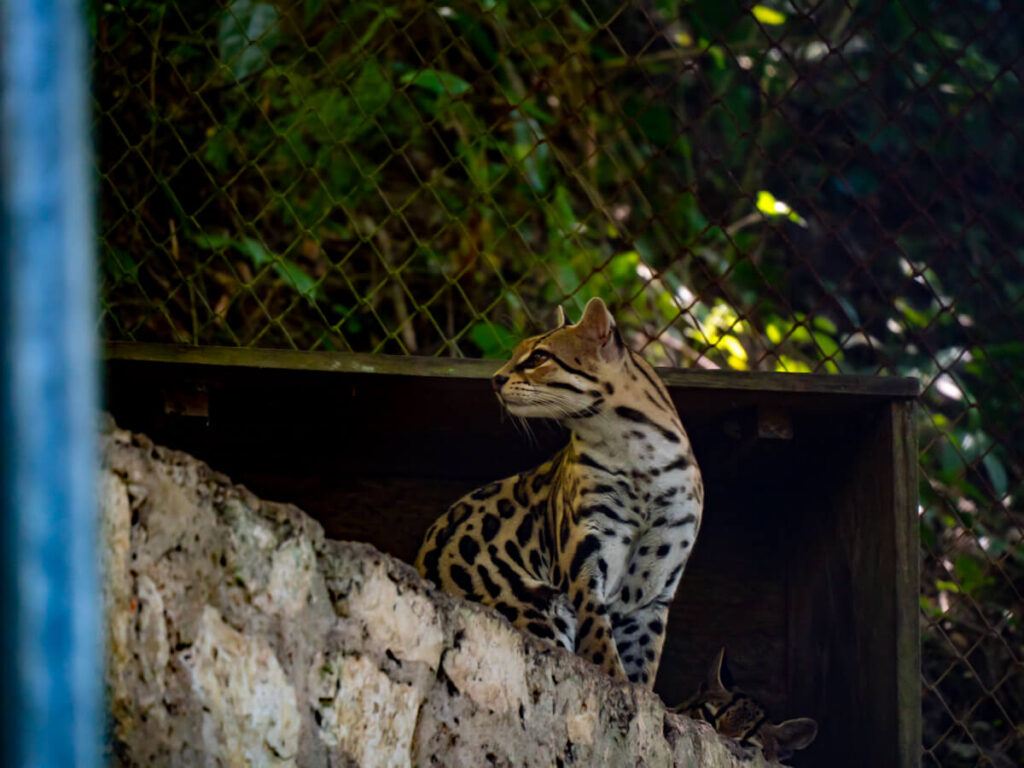
Ocelot
Recognisable by their striking spotted coats, ocelots are medium-sized wild cats that are one of the most visually distinctive cats in the Americas. Their beauty has also made them targets for the fur trade and the pet market, despite their vital role in controlling small mammal populations in the forest.
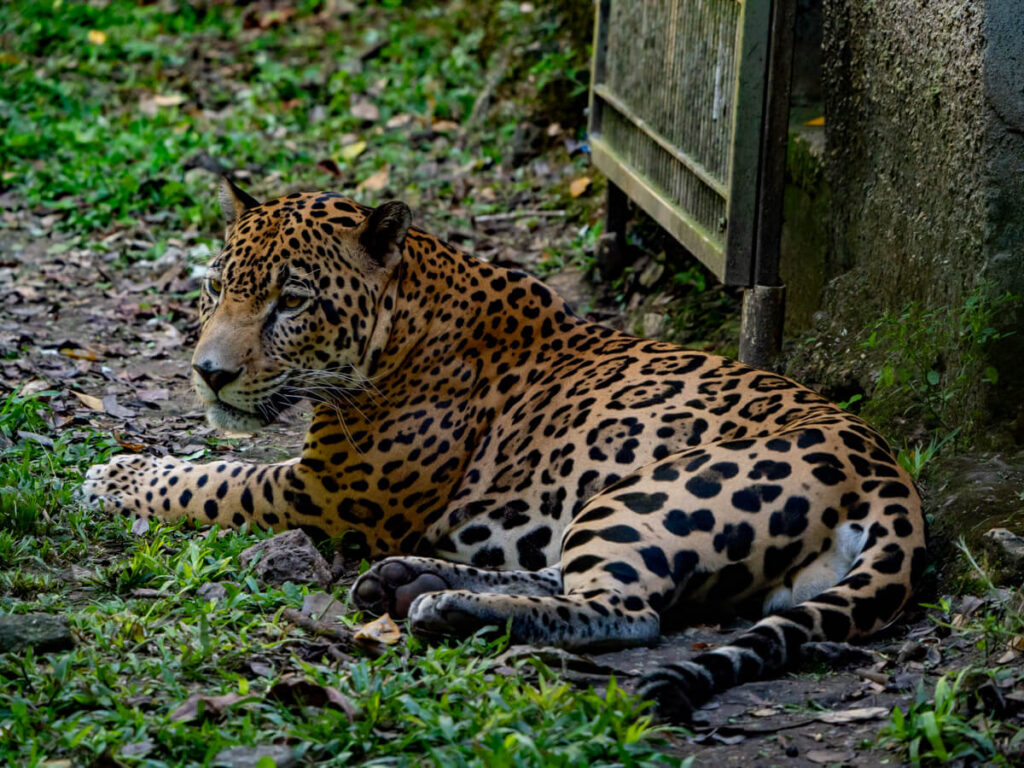
Jaguar
Jaguars are the largest cats in the Americas and an iconic species of Guatemala’s rainforests, being sacred to the indigenous Maya community. As apex predators, they are crucial for ecosystem health, but they face serious threats from habitat loss and poaching for their skins, teeth, and other body parts.

Howler monkey
Howler monkeys are famous for their deep, echoing calls, which can carry for miles through the jungle. They are important seed dispersers in forest ecosystems, yet young monkeys are often stolen from their families to be sold in the illegal pet trade.
Spider monkey
Spider monkeys are agile, long-limbed primates that swing effortlessly through the treetops. Their social nature and playful appearance make them highly attractive to traffickers, but removing them from the wild severely impacts both the species and the forests they help regenerate.

Military macaw
Military macaws are large, green parrots with red and blue markings that are now considered vulnerable due to habitat destruction and trapping. They are frequently confiscated from traffickers, and ARCAS plays an important role in their rehabilitation and, where possible, release.
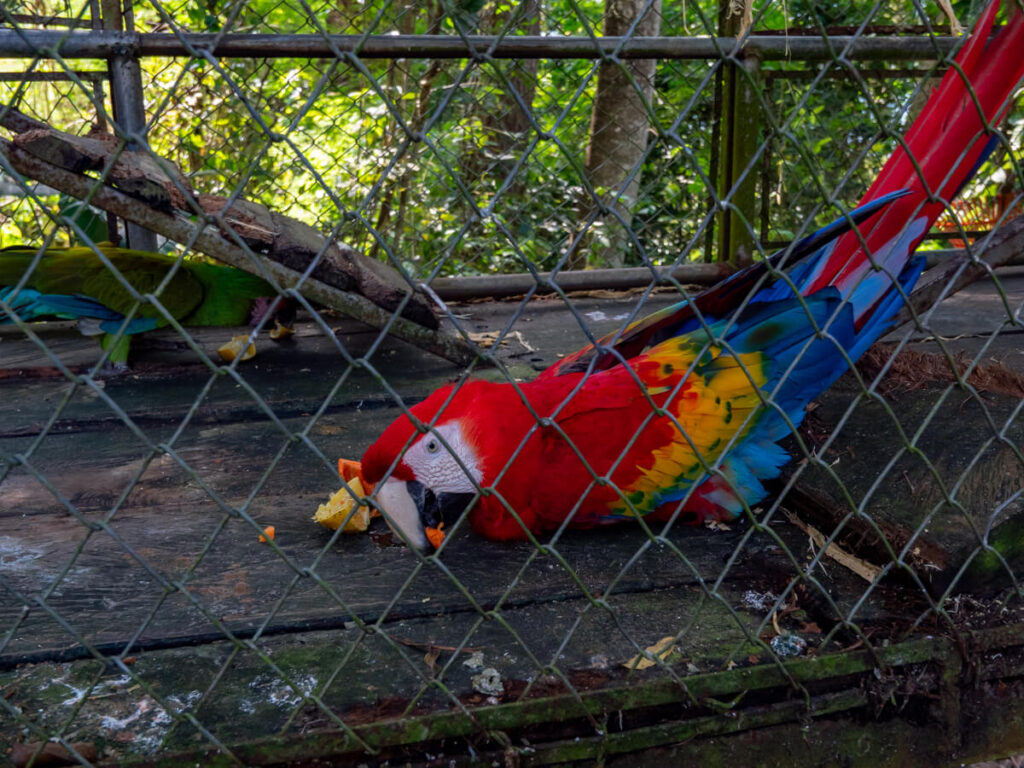
Scarlett macaw
Scarlet macaws are among the most recognisable birds in Central America, with brilliant red, blue, and yellow feathers. Their beauty has made them a symbol of Guatemala’s natural heritage, but it has also placed them at the centre of the illegal pet trade.
Parrots
Many smaller parrot species are also rescued by ARCAS, as they are often sold locally in markets or trafficked abroad. These include the white-fronted amazon, the red-lored amazon, and the white-crowned pionus, all of which are highly sought after in the pet trade. These birds are especially vulnerable because chicks are commonly stolen from nests and handled in ways that cause serious injury or stress. By the time they arrive at ARCAS, many are weak, malnourished, or traumatised, and only some will ever be strong enough to return to the wild.
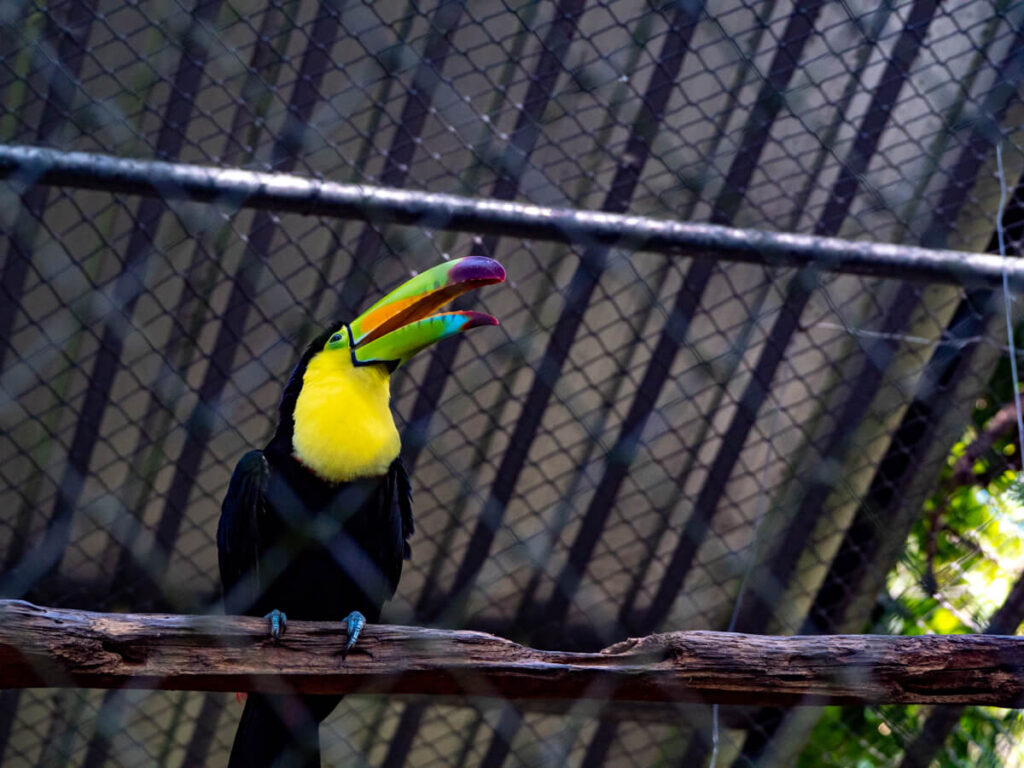
Toucans
Toucans are famous for their oversized, colourful beaks, which make them one of the most charismatic species in the forest. Unfortunately, their popularity also makes them targets for the exotic pet trade, even though they are vital seed dispersers in their ecosystems.
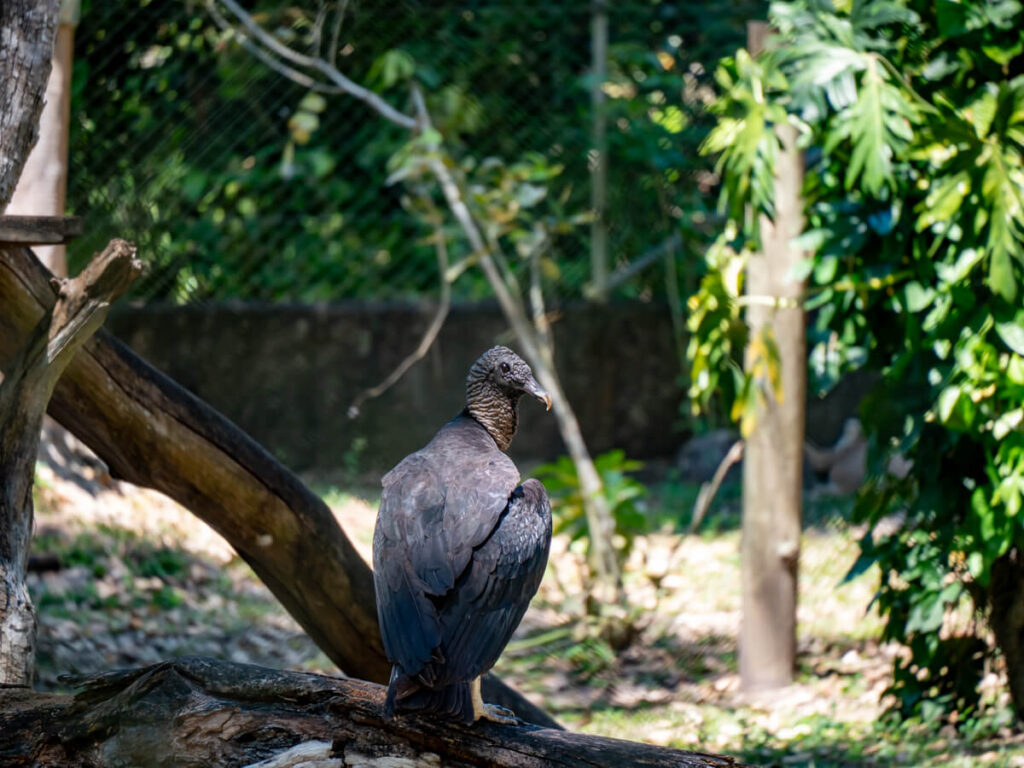
Other birds
Beyond macaws and parrots, ARCAS receives many other bird species, from pigeons and doves to less common forest birds. Each has its own role in the ecosystem, and rehabilitating them helps preserve the diversity of Guatemala’s birdlife.
Turtles
Freshwater turtles are frequently confiscated from markets where they are sold for food or as pets. These reptiles are crucial for keeping aquatic ecosystems healthy, yet they are often kept in poor conditions before being rescued.
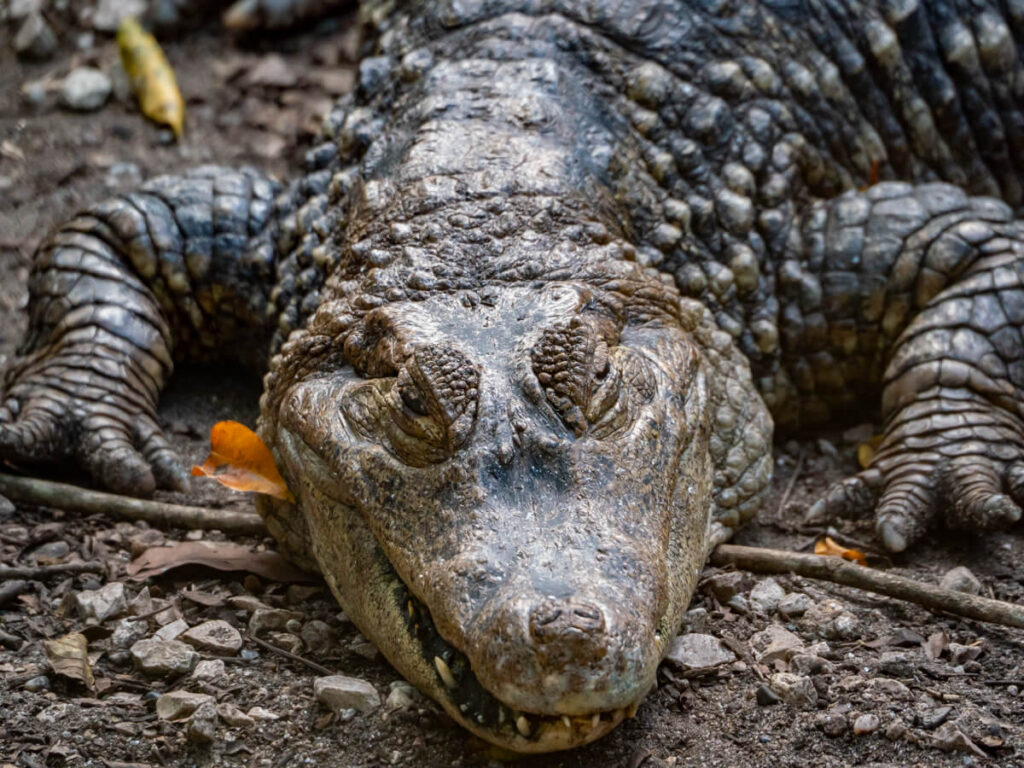
Caiman
Caimans, small relatives of crocodiles, are sometimes captured for sale or killed when they come into conflict with people. They are top predators in wetlands and rivers, and their presence helps regulate populations of fish and other aquatic animals.
Is ARCAS ethical?
ARCAS is accredited by the Global Federation of Animal Sanctuaries as having met the highest standard in humane animal care.
Unlike tourist-focused animal parks, ARCAS does not allow handling, selfies, or interactions that would stress the animals. Instead of photo ops with animals or gimmicks, ARCAS focuses on real rehabilitation: quarantining new arrivals, providing medical treatment, and preparing animals for eventual release back into the Maya Biosphere Reserve. Volunteers and staff work mostly behind the scenes, ensuring that the centre remains a safe, low-stress environment for wildlife.
ARCAS’ ultimate goal is to release as many animals as possible back into the wild. But, for many reasons, some animals would not survive upon release, so they’re kept comfortably at the sanctuary. These are the animals you can see when visiting ARCAS – animals receiving rehabilitative care are kept in a separate part of the property.
We did notice that the animals seemed to be well cared for, with enrichment activities like toys, climbing structures, and food devices for stimulation. It was clear that the staff and volunteers were doing their best to provide a safe and engaging environment.
At the same time, some of the cages are on the smaller side, and we saw a couple of the cats pacing, which is a common sign of stress in captive animals. While ARCAS’ goal is always to release, not every animal can make it back into the wild. With limited funding and a steady flow of rescues, the centre faces tough choices about space and resources. It’s just a heartbreaking reminder of the reality of the lives these beautiful animals are subjected to because of the choices of people who buy or trade in wildlife.
Another note we have is that Las Lagunas Boutique Hotel‘s Monkey Island also works with ARCAS to provide a safe environment for rescued monkeys. It’s mentioned that they sometimes allow visitors to feed the monkeys, which can be somewhat ethically questionable when done for tourism purposes, but can be ethical when carried out under careful expert supervision.
Don’t confuse ARCAS with the nearby Petencito Zoo, which unfortunately has some pretty bad reviews of poor animal welfare conditions.

How to support ARCAS
Entrance fees at ARCAS go directly toward caring for the animals and funding rescue operations, so even a short visit helps sustain their work, so it’s worth factoring in when planning your trip to Guatemala.
But seeing these incredible animals in captivity brings home the true cost of the illegal wildlife trade in a way that statistics can’t. It can be a very upsetting visit – even writing this post has brought me back to tears – but it’s also an important reminder of why centres like ARCAS are needed.
You can support ARCAS’ work without visiting the centre in person. You can donate directly to ARCAS or simply share their story to spread awareness about the challenges they face. You can also sponsor a nest as part of their sea turtle monitoring programme. They also have an online ARCAS store, where you can buy merchandise that supports the conservation work of the organisation.
Volunteering is another option if you have more time, giving you the chance to contribute directly to animal care and conservation projects on the ground.
Finally, one of the most powerful forms of support is making ethical choices in your everyday life. Avoiding supporting the exotic pet trade and spreading awareness about it will help to reduce the need for centres like ARCAS in the first place.
Read next:
Travel Guide to Flores: Guatemala’s Rainbow Island with Rainforests & Ruins
20 Fantastic Things to Do in Flores
Where to Stay in Flores: 18 Best Hotels For Every Budget & Traveller Type
12 Best Cafés, Bars, and Restaurants in Flores
A Detailed Guide to Visiting Tikal National Park & Majestic Mayan Ruins
The Top Tikal Tours: Sunrise vs Sunset vs Daytime
Our Guatemala Destination Guides:
Our Guatemala Travel Guides:
