A Traveller’s Guide to Lake Atitlán: Itinerary & Essential Travel Information

Everything you need to know about visiting Lake Atitlán, from activities, accommodation, and eateries to practical travel information and essential tips.

Consistently ranked as one of the best places to visit in Central America, Lake Atitlán is truly established on the Gringo Trail (tourist trail), but surprisingly difficult to plan a trip to. Between figuring out which village to stay in, navigating infrequent boats as the main form of transport, and dealing with varying levels of development around the lake, it’s easy to feel unsure about how to plan your time.
Lake Atitlán was our first destination in Guatemala, and we were quite ambitious, visiting different villages and moving between them by lancha. In this Lake Atitlán travel guide, we cover everything you need to know before you go, including how to get here, where to stay, what to do, how to get around, and practical tips to avoid common mistakes. Whether you’re visiting for a few days or weeks as part of a longer Lake Atitlán itinerary, this guide will help you plan your trip with ease.
Lake Atitlán at a glance

More from Lake Atitlán
About Lake Atitlán
An ancient, volcanic crater, Lake Atitlán (Lago de Atitlán in Spanish) is the deepest lake in Central America, and visiting it is one of the best things to do in Guatemala.
Surrounded by small indigenous villages and three dramatic volcanoes that are nearly constantly looming over the lake, no matter where you look, Lake Atitlán is about 340 metres (1,120 ft) deep, 5 miles (8 km) wide, and 11 miles (18 km) long.
It is consistently ranked as one of the most beautiful lakes in the world, so it’s worth adding to your Guatemala itinerary, but there are a whole host of things to consider before your trip to ensure your visit is as magical as everyone says it is.

Where is Lake Atitlán?
Lake Atitlán sits in the Guatemalan highlands, in the Sierra Madre mountain range. It is part of the Sololá Department in southwestern Guatemala, about 3-4 hours northwest of Guatemala City and Antigua.
The lake lies at an elevation of roughly 1,560 metres (5120 ft) above sea level, which gives it cooler evenings and crisp mornings compared to the lowlands.

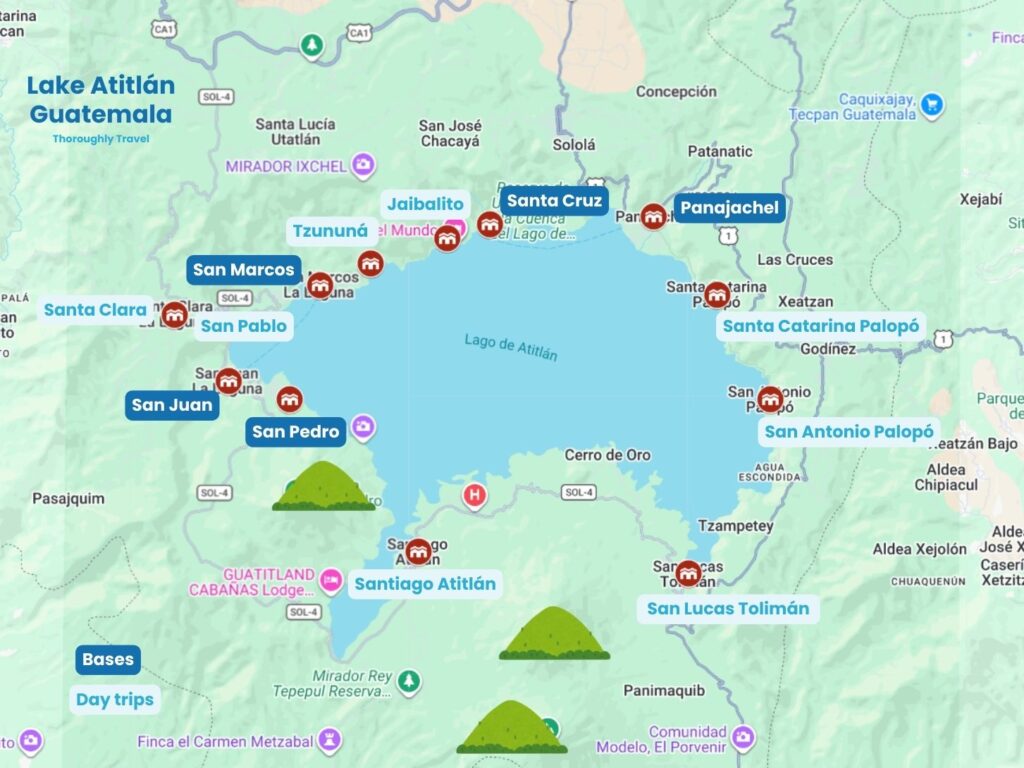
Lake Atitlán Map
Lake Atitlán is often referred to as one destination, but in reality, it’s a collection of around a dozen small towns and villages dotted around the lake’s shore, each with its own appeal, including:
Why visit Lake Atitlán?
People come to Lake Atitlán for very different reasons, which is reflected in the different villages around the lake. Some of the best things to do on Lake Atitlán include Maya gastronomy, yoga and spiritual retreats, hiking, photography, and learning Spanish, while many travellers visit simply to slow down and do nothing.
Each town has its own personality, from lively backpacker hubs to quiet, traditional communities. The scenery is genuinely jaw-dropping, no matter where you are around the lake, with volcanoes rising across the water and light that changes dramatically throughout the day. As one of the most popular places in Central America, we were apprehensive about visiting, but as soon as we arrived, we knew Lake Atitlán was going to live up to the hype.

Lake Atitlán Culture
Part of Lake Atitlán’s appeal is that it’s one of the last strongholds of traditional indigenous life in Central America. The lake is home to several Maya communities, primarily Tz’utujil, Kaqchikel, and K’iche’ peoples, each with its own language, dress, and centuries-old traditions.
Traditional clothing is still worn daily, with intricate patterns that can indicate a person’s village and even marital status. Markets are full of handwoven textiles, painted masks, and locally made crafts that aren’t just the general tourist tat you find everywhere else, but genuinely handmade souvenirs. Ceremonies blending Catholicism and Maya spirituality still take place, and you might witness one if you time your visit right.

Lake Atitlán History
While the region has experienced volcanic activity for 11-12 million years, the current caldera is around 84,000 years old. It was formed by a supervolcanic eruption, the Los Chocoyos eruption, which spread ash as far and wide as Panama and Florida (US). The earth collapsed, filling the crater with water, which created the lake we see today.
For centuries, Lake Atitlán was inhabited by the indigenous Maya people, long before the Spanish arrived in the 16th century. The Maya considered the lake sacred, believing it was guarded by powerful spirits tied to the surrounding volcanoes.
During the colonial period, forced resettlement pushed communities closer to the lake’s edge, shaping the multi-village layout you see today.
In the mid-20th century, Lake Atitlán began attracting artists, writers, anthropologists, and counterculture travellers, particularly during the 1960s and 70s, when it was still extremely remote and largely cut off from mass tourism. Drawn by the dramatic landscape, low cost of living, and strong indigenous culture, many visitors arrived as part of the wider hippie trail through Central America, often staying for months or even years. Figures like Aldous Huxley, who famously described Atitlán as “the most beautiful lake in the world“, helped cement its mystique among creatives and intellectuals.
Today, ancient Maya traditions remain deeply embedded in daily life, colonial-era town layouts continue to shape settlement patterns, and the countercultural wave of the 20th century paved the way for the yoga centres, Spanish schools, and long-stay travellers that now define parts of the lake.

Lake Atitlán Landscapes
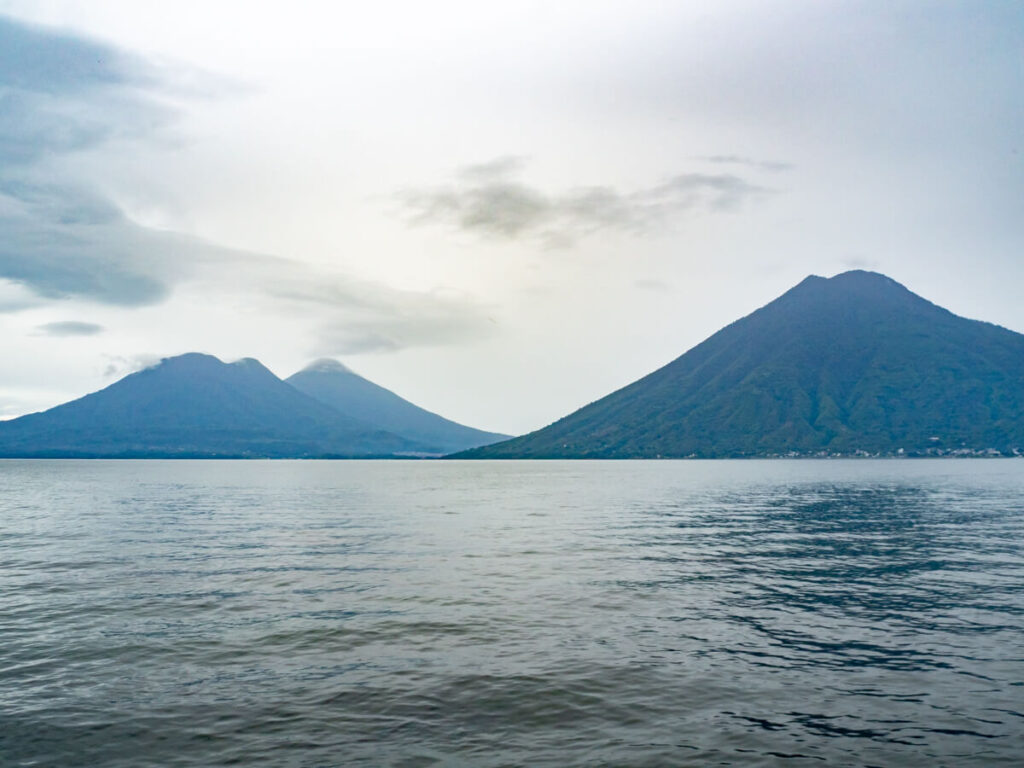
Lake Atitlán is famously framed by three volcanoes: San Pedro, Atitlán, and Tolimán, each rising steeply from the water’s edge along the southern shore.
Early mornings are often calm with a glassy surface, perfect for kayaking or paddleboarding. By late morning or early afternoon, the Xocomil wind typically rolls in, creating choppy water and dramatic skies.
During the dry season, the air is clearer, and the volcanoes feel sharply defined against deep blue skies, while the rainy season brings lush green hillsides, dramatic cloud formations, and mist that drifts low over the water, giving the lake a softer, more atmospheric feel.
The surrounding hills are terraced with cornfields, coffee plants, and avocado trees, giving the landscape a lived-in, agricultural feel rather than pristine wilderness. But you’ll still find a fair few nature reserves and protected areas, home ot Guatemalan animals, perfect for retreating into nature and wildlife watching.
Activities in Lake Atitlán
There are loads of popular activities on Lake Atitlán, ranging from volcano hikes and sunrise viewpoints to weaving workshops and coffee tours. You can kayak across calm morning water, take lanchas between villages, visit Maya markets, or join yoga and meditation classes in lakeside studios.
Beyond the obvious outdoor adventures, there are chocolate-making workshops, Spanish lessons, permaculture farm visits, and cultural experiences in abundance, so there really is something for everyone to enjoy. Here are a few of our top picks:
Accommodation in Lake Atitlán
Choosing where to stay in Lake Atitlán can be tricky, because you not only have to choose a hotel but also need to consider all the various villages and their differences, too.
Accommodation in Lake Atitlán ranges from budget hostels and family-run guesthouses to boutique eco-lodges and upscale retreat centres. Prices vary significantly by town, with bases like San Juan and San Pedro offering some of the cheapest stays and San Marcos or quieter villages leaning more toward eco-conscious retreats, while places like Santa Cruz offer a more classic lakeside experience with more upscale accommodations. Here are some of our top picks:
Top Lake Atitlán Hotels
If you’re planning a trip to Guatemala, prepare for your stay with our dedicated Lake Atitlán village guides:


Food and drink in Lake Atitlán
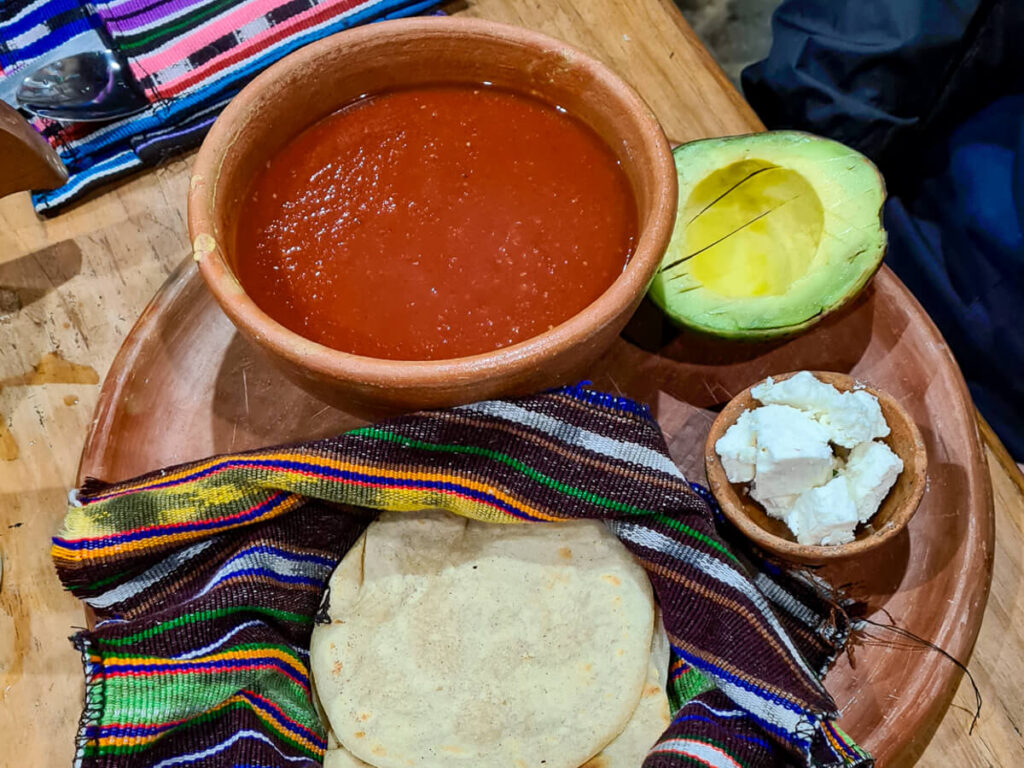
Lake Atitlán’s one of the best places in Guatemala to try traditional dishes, often served in local comedores, cafés, and restaurants across the lakeside villages. You’ll also find a fair amount of international restaurants, serving familiar dishes, with many places being vegetarian and vegan-friendly and catering to dietary requirements.
From hearty breakfasts to street snacks, there’s a lot to try, and much of it reflects the region’s indigenous Tz’utujil and Maya heritage. Here are our must-eat dishes:
How to visit Lake Atitlán
Getting to Lake Atitlán is straightforward, with the town of Panajachel serving as the main gateway. From Guatemala City, it’s about a 3-hour drive by tourist shuttle or private transfer, while Antigua is slightly closer at around 2.5 hours. Other routes are possible, like from El Paredón, Semuc Champey, Flores, and Río Dulce, but take longer, run less frequently, and likely require a change in Antigua or Guatemala City.
Shuttles are comfortable, air-conditioned, and drop you directly at your town of choice, whereas chicken buses are much cheaper but slower, crowded, and usually require transfers along the way.
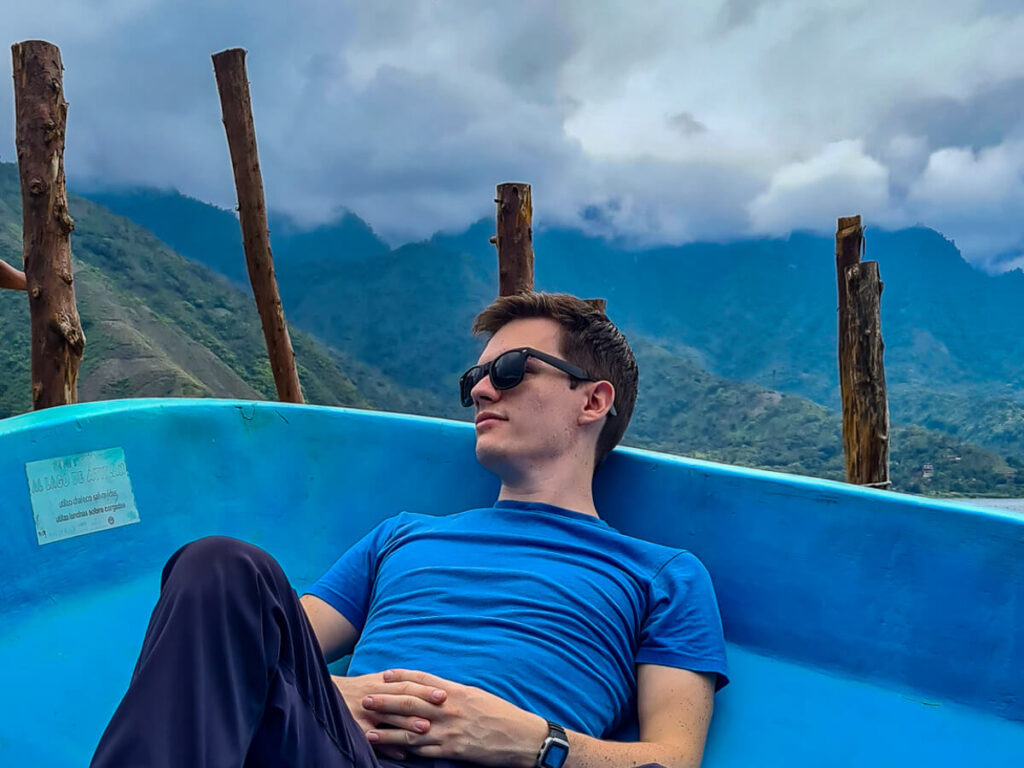
Once you’re at the lake, lanchas (small motorboats) are the most efficient way to get between towns. They run frequently, with shorter trips costing around 10-20Q (~$1.50-2.50 USD) and longer crossings around 25-30Q (~$3-4 USD).
Most villages are compact, so once you dock, you can walk almost anywhere, though tuk-tuks are available in steeper towns like San Juan La Laguna for quick rides uphill. For lakeside activities or accessing remote trails, kayaks and paddleboards are an option in some towns, especially San Pedro La Laguna, San Marcos La Laguna, and Santa Cruz La Laguna.
When is the best time to visit Lake Atitlán?
The dry season (locally called Verano) runs roughly from November to April and is the most popular time to visit. Generally, you’ll be met with sunny days, calm waters, and clear volcano views. This is the best time for outdoor activities like swimming in the lake and hiking around Lake Atitlán.
This is also festival season, when towns like Santiago Atitlán, San Juan, and San Pedro host lively celebrations, including traditional Mayan ceremonies, All Saints’ Day (Día de Todos los Santos) in November, and Semana Santa processions around Easter.
The rainy season (Invierno), from May to October, brings lush green landscapes and dramatic skies. Rainfall averages around 15-20 mm (0.6-0.8 in) per day during the peak months. This is a great time for fewer crowds and lower prices, but you’ll need to be more flexible with your plans.
Lake Atitlán Weather
Lake Atitlán’s climate is mild and spring-like year-round, with warm days and cooler evenings. Mornings are often clear and calm, while afternoons can bring wind and clouds.
Daytime temperatures in the dry season typically sit around 22-26°C (72-79°F), with cooler nights dropping to about 12-15°C (54-59°F), so a light jacket is useful for early mornings or evenings. Surprisingly, the wet season is slightly warmer, ranging from 24-28°C (75-82°F), while nights sit around 15-18°C (59-64°F).
We visited in June, which was truly the wet season, but rain usually only falls in the afternoons or evenings rather than all day, giving us plenty of time in the morning to explore. Be aware that heavy rains can stir the infamous Xocomil winds, strong gusts that sweep across the lake in the late afternoon or evening, making boat crossings choppier.

How long to spend in Lake Atitlán?
Staying 3-5 days on Lake Atitlán is the sweet spot for most people, and is how long we spent on our first Guatemala trip.
If you’ve got 2-3 days, you’ll get a good taste of the lake – we’d recommend picking one base (like Panajachel, San Pedro, San Juan, or San Marcos), exploring a neighbouring village or two by boat, catching a sunrise or sunset, and relaxing a bit.
With 4-5 days, you’ll have time to slow down in the best way. You can village-hop without feeling pressured, do a hike or kayak, visit markets or coffee farms, and actually enjoy lake time rather than ticking things off.
For 5 days or more, we’d recommend picking two bases – one on the southern shore (San Juan, San Pedro, or San Marcos) and one on the northern shore (Santa Cruz, Jaibalito, or Panajachel). This way, you get to experience both a local town and a more classic lakeside stay.

Lake Atitlán itinerary
Planning your time on Lake Atitlán is all about making the most of the towns, hikes, and cultural experiences without feeling rushed. Here’s a balanced one-week Lake Atitlán itinerary:

Useful Lake Atitlán Travel Information
To help you plan your trip to Lake Atitlán, here’s some quick, helpful travel info to know before you go.
Language
Spanish is the official language of Guatemala and is widely spoken around Lake Atitlán. However, each lakeside village has its own indigenous Maya language (most commonly Kaqchikel or Tz’utujil), which many locals speak as their first language.
In more touristy villages like Panajachel, San Pedro, and San Marcos, you’ll find plenty of people working in hotels, cafés, and tour companies who speak some English. In smaller villages, English is much less common, so basic Spanish is extremely useful for transport, shopping, and day-to-day interactions.
Lake Atitlán is also a popular place to take Spanish classes, with several language schools, especially in San Pedro and San Marcos, offering short- and long-term courses.
Currency
The local currency is the Guatemalan quetzal (GTQ). While a handful of hotels, restaurants, and tour operators accept U.S. dollars, exchange rates are usually poor, and change will almost always be given in quetzales.
Carry quetzales for boat rides, tuk-tuks, markets, small shops, and local restaurants. Some villages have limited options for exchanging money, so it’s best to arrive with cash already sorted.
Money and ATMs
Cash is king around the lake, but ATMs are limited around Lake Atitlán. Panajachel has the most reliable access, with several ATMs from banks like BAC, Banrural, and Banco Industrial. Outside of Panajachel, ATMs are rare and can be unreliable or empty.
You’ll still find ATMs in San Pedro, San Marcos, and San Juan, but they can go down with local power cuts. We had a few days of intermittent power cuts and ended up taking a lancha to Panajachel to get cash out. Withdrawals are usually in quetzales only, and fees can be high, so it’s smart to take out enough cash in Panajachel or a city like Antigua before you reach the lake, to cover your time here (while keeping it split up for safety).
Credit card acceptance is inconsistent. Some mid-range and higher-end hotels and restaurants accept Visa or Mastercard, but many places are cash-only. American Express is rarely accepted.
SIMS
Local SIM cards from Tigo and Claro work well around most of Lake Atitlán, though coverage can be patchy in more remote villages and during boat crossings.
You can buy SIM cards in Guatemala City or Panajachel, where there are official shops and kiosks (tiendas). Top-ups are available at convenience stores and small tiendas around the lake, though availability varies by village.
If your phone supports eSIMs, buying one in advance is often the easiest option. We use an Airalo eSIM, which can be activated before arrival, and is great for Google Maps, checking restaurant reviews, and staying connected without having to hunt down a SIM shop.
Internet connectivity
Wi-Fi is available in most hotels, guesthouses, and cafés around Lake Atitlán, but speeds and reliability vary widely by village and even by day. In places like Panajachel, San Pedro, and San Marcos, Wi-Fi is generally good enough for browsing, emails, and light remote work.
Power outages are more common in Lake Atitlán than in Antigua, especially during the rainy season, so having mobile data as a backup is very useful. If you’re working remotely or handling sensitive information, using a VPN on public Wi-Fi is recommended – Surfshark VPN and Surfshark Antivirus are what we use.
Is Lake Atitlán safe to visit?
Lake Atitlán is generally safe to visit, and thousands of travellers have smooth, trouble-free trips every year. It’s one of the most popular tourist destinations in Central America, so you’ll likely have no problems.
That said, there are a few things to know. Public boats (lanchas) are the main way to get around, and they’re safe when used smartly – stick to daytime crossings, ideally in the early morning when the lake is calm, and avoid night crossings, especially if it’s windy or stormy.
Petty theft can happen, particularly in Panajachel and San Pedro La Laguna, where there’s more foot traffic. Keep phones and wallets secure in busy areas and markets, don’t leave your valuables unattended on tables or beaches, and use hotel safes where available and avoid flashing expensive gear.
It’s good to be aware that there are many stray dogs in the villages around Lake Atitlan. Most are friendly and are looked after by the community, but some may be territorial, so be sure to exercise a bit of caution and don’t actively seek out interactions with them.
Lake Atitlán sits at around 1,500m (4,900 ft), and the altitude can catch people off guard. We felt it in both Mexico City and Antigua when we hiked Acatenango Volcano, but were ok in Lake Atitlán. Skip heavy drinking on night one (your body will thank you), take it easy when you arrive, hydrate well, eat light, and don’t overdo hikes immediately.
It’s also worth noting that not all trails are safe to hike solo. Some routes, especially between villages, should only be done with a guide. El Rostro Maya (the Indian Nose) hike and popular viewpoints are safest on organised or guided hikes, too. If in doubt, ask locally before heading out.
The tap water is not safe to drink in Lake Atitlán. Use bottled or filtered water for drinking and brushing teeth, or bring your reusable filter water bottle to stay safe. Most hotels provide filtered water, but double-check before using it. Ice is generally safe in reputable cafés and restaurants, but use discretion in smaller spots.
Like other jungle destinations in Guatemala (Semuc Champey and Río Dulce), bugs are part of life at Lake Atitlán, especially if you’re staying close to the water or surrounded by vegetation. Mosquitoes are most noticeable at dawn and dusk, and while malaria isn’t a concern here, dengue does exist. Screens on windows aren’t universal, and some lakeside properties are more exposed than others. Bringing decent, natural insect repellent is essential, and if you’re particularly sensitive, you may want to avoid ground-floor rooms or places right at the water’s edge.
Is Lake Atitlán expensive?
Lake Atitlán’s not as expensive as Antigua, but not always budget-friendly, especially if you lean into the nicer lakeside villages and more upscale resorts. Here’s a rough idea of costs:
Food, transport, and activities are generally affordable compared to other Central American hotspots. The one thing to be aware of is how quickly lancha rides add up. Boat rides between villages cost about 15-40Q ($2-5 USD) per ride, so if you choose a more remote town, you might pay more for transport.
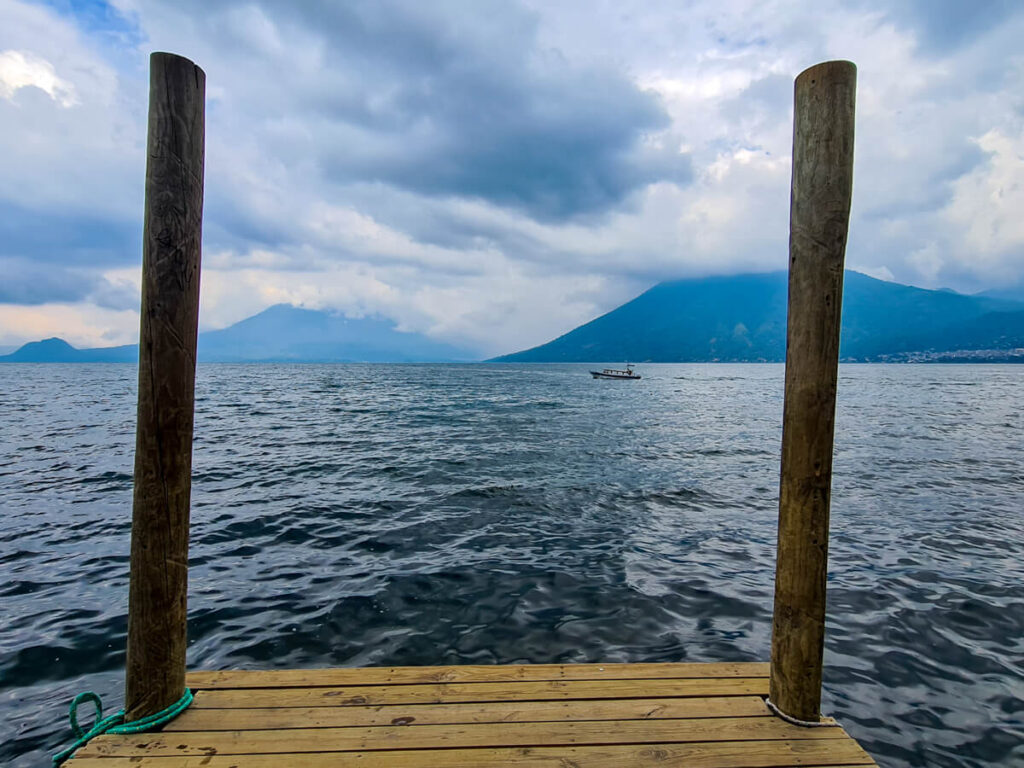
Is Lake Atitlán worth visiting?
Lake Atitlán is consistently ranked as one of the most beautiful lakes in the world, and it really lives up to the hype. The combination of volcanic vistas, traditional Maya villages, and a mosaic of cultures makes it an unforgettable destination. For most travellers, Lake Atitlán is absolutely worth visiting.
But it’s not a hidden paradise, and the village you choose to stay in will heavily shape your experience.
Lake Atitlán has been firmly on the backpacker and digital nomad trail for years. Some towns are very touristy, English is widely spoken in places, and certain waterfronts are lined with hostels, yoga studios, and smoothie cafés that feel more like Europe than Guatemala. If you’re expecting a completely untouched, tourism-free lake, you won’t find it in the major towns or during the peak season.
That said, Lake Atitlán really does have something for everyone. The scale of the landscape is dramatic, the Indigenous culture is proudly displayed in a way that’s not gimmicky, and it’s easy to shape your trip around your own travel style, whether that’s volcano hikes, weaving cooperatives, coffee farms, sunrise viewpoints, or simply floating on the water on a standup paddleboard.
Lake Atitlán is ideal for travellers who like mixing nature with culture. It’s also a good choice for first-time visitors to Guatemala, as the lake has enough tourism infrastructure to make things easy – shuttles, tours, bilingual guides – without feeling overly resort-driven.
For us, we couldn’t have chosen a better destination to introduce us to Guatemala, with San Juan La Laguna really standing out as our favourite town on the lake. Visiting in the rainy season worked in our favour, as it was so quiet that we often felt like the only gringos in town. And we had such a gorgeous stay in Eco-Hotel MayAchik’ that we’re still thinking about it to this day. Lake Atitlán was absolutely worth including in our itinerary.

What to pack to visit Lake Atitlán
To ensure an enjoyable experience in Lake Atitlán, it’s important to pack the right things. Don’t forget to pack your:

Tips for visiting Lake Atitlán
A trip to Lake Atitlán is rarely complicated, but a few practical tips will make your time here smoother, safer, and far more enjoyable.

Our experience in Lake Atitlán
We had the best time at Lake Atitlán. It was our first time visiting Guatemala, and actually our first destination ever in Central America, so we were a bit nervous about what to expect upon arrival. The lake itself is so beautiful, and it was the perfect introduction to local Maya culture and the vast beauty of the country.
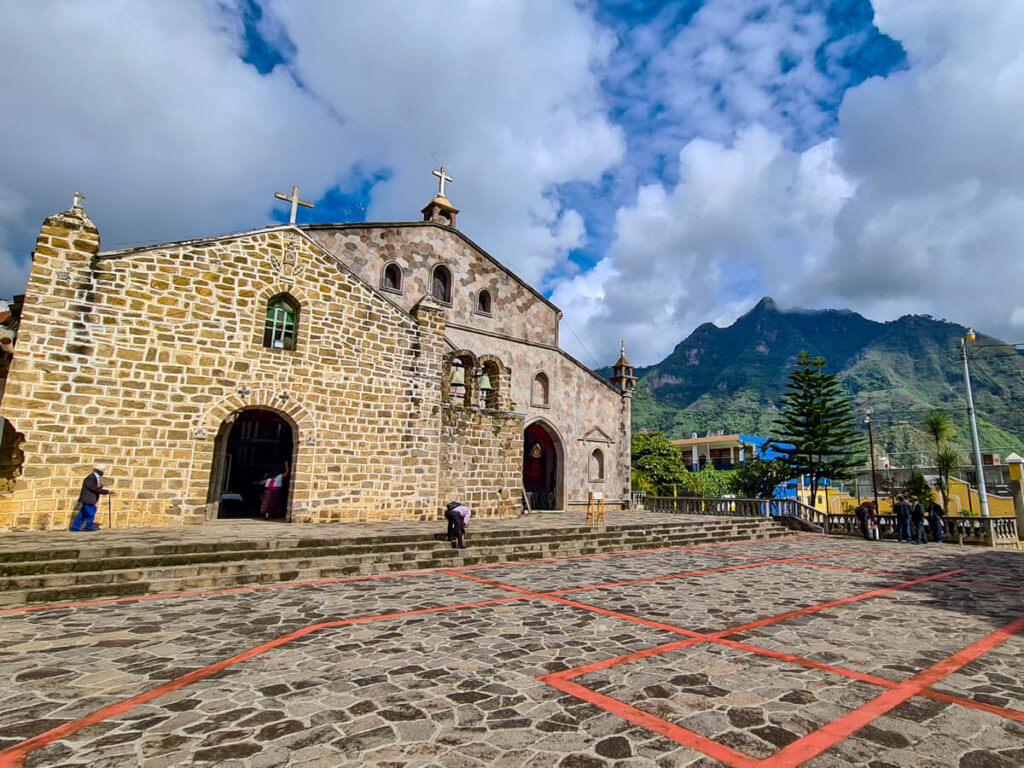
We first visited in the wet season, but think this actually worked in our favour. Most of the villages were really quiet, and we often felt like the only gringos in town. We particularly loved San Juan La Laguna and were so glad we picked it as our base, as it suited us perfectly – aesthetic, artsy, and authentic. We enjoyed hopping around the villages by lancha, hiking around the lake, and simply relaxing in the eco-hotel we’d booked. We’d highly recommend adding Lake Atitlán to your itinerary.

Lake Atitlán, Guatemala, FAQs
To help you plan your trip to Lake Atitlán, we have answered some frequently asked questions below.
Why is Lake Atitlán famous?
Lake Atitlán is famous for its dramatic volcanic setting and deep blue water, often described as one of the most beautiful lakes in the world. It’s surrounded by indigenous Maya towns, each with distinct traditions and languages, volcano hikes, coffee farms, and lakeside resorts that make it one of Guatemala’s standout destinations.
How many days in Lake Atitlán is enough?
In our opinion, three nights is a solid minimum to see more than one town and fit in a hike or boat trip. Four to five days feels more relaxed and lets you slow down a little. Many travellers plan for a short stay and end up extending, so keeping your Lake Atitlán itinerary flexible is a good idea.
How to dress for Lake Atitlan?
Dress casually and practically for Lake Atitlan. Days are warm and sunny, but mornings and evenings can be cool due to the altitude, so layers are useful. In smaller villages, modest clothing is appreciated, especially away from swimming areas.
Can you swim in Lake Atitlán, Guatemala?
Yes, you can swim in certain areas of Lake Atitlán, and some towns (like San Marcos and Santa Cruz) are known for clear, deep water. That said, water quality can vary depending on season and rainfall, so it’s worth asking locally before jumping in. Stick to recognised swimming spots rather than random shoreline access.
Do they speak English in Lake Atitlán?
In tourist-facing businesses, many people speak English in Lake Atitlán, especially in San Pedro, San Marcos, and Panajachel. In smaller villages and local markets, Spanish is far more common, and many residents speak Tz’utujil or Kaqchikel as their first language. Learning a few basic Spanish phrases goes a long way.
Can you drink the tap water in Lake Atitlán?
Tap water isn’t considered safe to drink in Lake Atitlán. Stick to filtered water provided by hotels and restaurants, or buy large purified bottles to refill from. We used our filter water bottles, which were perfect for keeping us safe and reducing plastic pollution.
Is Lake Atitlán safe for Americans?
Generally, Lake Atitlán is safe for Americans. The lake is one of Guatemala’s main tourist areas and sees visitors from all over the world. As with anywhere, take normal precautions: avoid walking alone late at night in unfamiliar areas, keep valuables discreet, and use registered guides for hikes.
What was discovered in Lake Atitlán in 1997?
In 1997, divers discovered the submerged Maya site of Samabaj beneath the lake’s surface. The ruins are believed to have been flooded by rising water levels centuries ago, offering rare archaeological insight into pre-Columbian life in the region.
Read next:
Where to Stay in Lake Atitlán: 12 Towns & Top Hotels
25 Amazing Things to Do on Lake Atitlán
How to Get to Lake Atitlán & Getting Around by Boat + More
A Complete Guide to San Juan La Laguna: Lake Atitlán’s Artistic Town
A Succinct Guide to San Pedro La Laguna: Lake Atitlán’s Backpacker Town
A Short Guide to San Marcos La Laguna: Lake Atitlán’s Hippie Town
10+ Best Lake Atitlán Hikes & Trails From Easy to Expert
How to Hike to Mirador Kaqasiiwaan & El Rostro Maya (Indian Nose)
Our Eco-Hotel MayAchik’ Review: Sustainable Hotel in Lake Atitlán
Our Guatemala Destination Guides:
Our Guatemala Travel Guides:
