How to Get to Lake Atitlán & Getting Around by Boat + More Transportation Options

Discover how to get to Lake Atitlán, from within Guatemala and abroad, as well as the best ways to get around the lake and our tips for boat (lancha) travel, in this transportation guide.

This post may contain affiliate links, which means we might earn a small commission on anything purchased through these links at no extra cost to you. Learn more on our disclaimer page.
It may be one of Central America’s most popular destinations, but getting to Lake Atitlán and figuring out how to get around once you arrive is one of the most confusing parts of visiting. Between winding mountain roads from Antigua or Guatemala City, wildly different transport options to hop between towns, and boats being the main way to move between villages, it’s easy to get overwhelmed.
We loved our time in Lake Atitlán, having visited both by tourist shuttle and private transfer, then moving around the lake using a mixture of lanchas (boats), tuk-tuks, buses, and tours. Discover exactly how to get to Lake Atitlán from Antigua, Guatemala City, and elsewhere while travelling in Guatemala, or beyond its borders, plus how transport on the lake actually works once you’re there in this guide. We cover what’s worth paying extra for, where you can save money, and common mistakes (scams) to avoid, so you can focus on enjoying the lake instead of navigating logistics.
Lake Atitlán transportation at a glance

More from Lake Atitlán
Where is Lake Atitlán?
Lake Atitlán is one of the best places to visit in Guatemala, sitting in the highlands, in the southwest of the country, surrounded by three volcanoes and a ring of small Maya towns and villages. It sits at around 1,560 metres (5120 ft) above sea level in the Sololá Department.
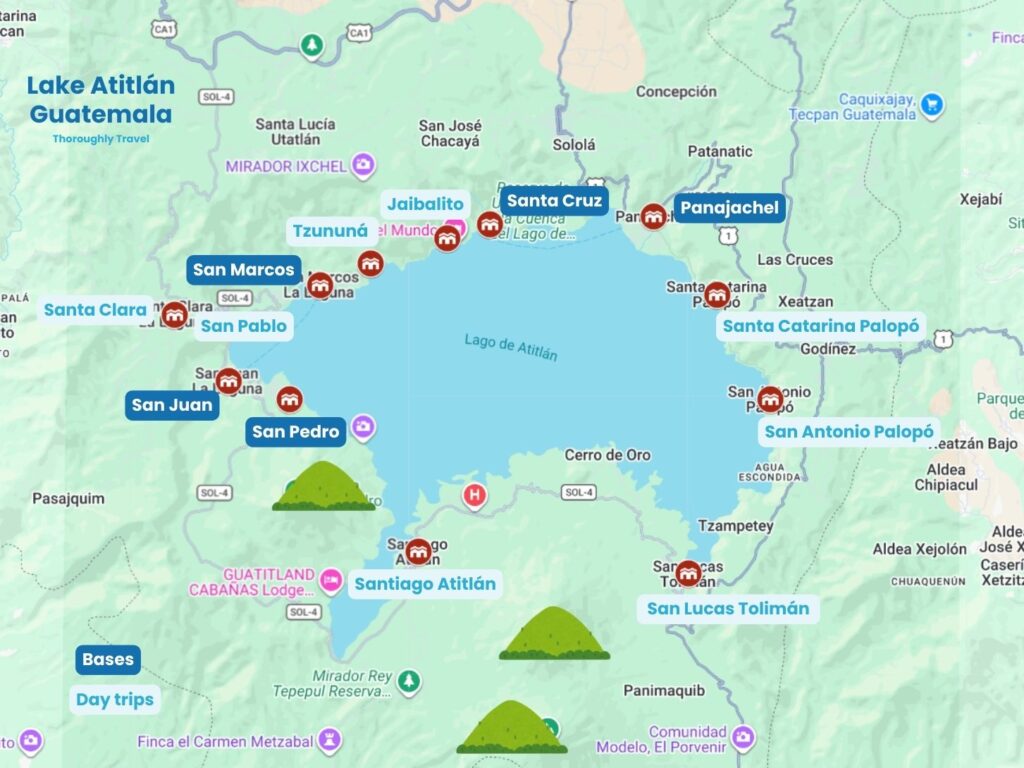
The lake itself is massive, and instead of one central town, it’s made up of multiple lakeside communities, each with a very different vibe. Panajachel is the main transport hub and easiest access point, while villages like San Pedro La Laguna, San Juan La Laguna, and San Marcos La Laguna are other popular bases that are reached by boats (called lanchas) across the lake.
Because of its location in the Sierra Madre mountain range, getting to Lake Atitlán always involves a winding drive, and journey times can vary quite a bit depending on traffic, weather, and where exactly you’re staying. The lake is roughly 80 miles (130 km) west of Guatemala City and 47 miles(76 km) from Antigua.

How to get to Lake Atitlán
Your route to get to Lake Atitlán will depend on where you are travelling from. There are a variety of transportation methods – and the best option will depend on your budget and Guatemala itinerary – including:

Which airport do you fly into for Lake Atitlán?
Lake Atitlán doesn’t have its own airport, so if you’re flying into Guatemala, you’ll still need to arrange an overland transfer after landing.
To get to Lake Atitlán from abroad, you’ll need to fly into La Aurora International Airport (GUA) in Guatemala City. This is the country’s main international airport and the arrival point for almost all international travellers. The airport has daily direct flights from major hubs across North and Central America, including Miami, Houston, Dallas, Los Angeles, Mexico City, and San José, as well as limited direct routes from Europe. Flights to Guatemala City from the US typically take between 2-5 hours, depending on your departure city.
The only other international airport in Guatemala is Mundo Maya International Airport (FRS) in Santa Elena, near Flores, the gateway to the famous Mayan city of Tikal. As it’s further north, it’s not as practical for reaching the lake unless you’re already travelling through the country or are coming from Belize.

How to get to Lake Atitlán from Guatemala City Airport
Lake Atitlán is around 75 miles (120 km) from Guatemala City Airport. On paper, the journey looks straightforward, but in reality, it usually takes 3-5 hours, depending heavily on traffic leaving the capital and conditions in the highlands.
There are two main access points for Lake Atitlán:
Most transport options, like airport transfers, take you directly from the airport to Panajachel, the main lakeside town on the northern shore. From there, you can continue by boat to other villages around Lake Atitlán. Tourist shuttles also serve San Pedro La Laguna, with a few also stopping in San Juan La Laguna and San Marcos La Laguna, on the southern shore.

By shared shuttle
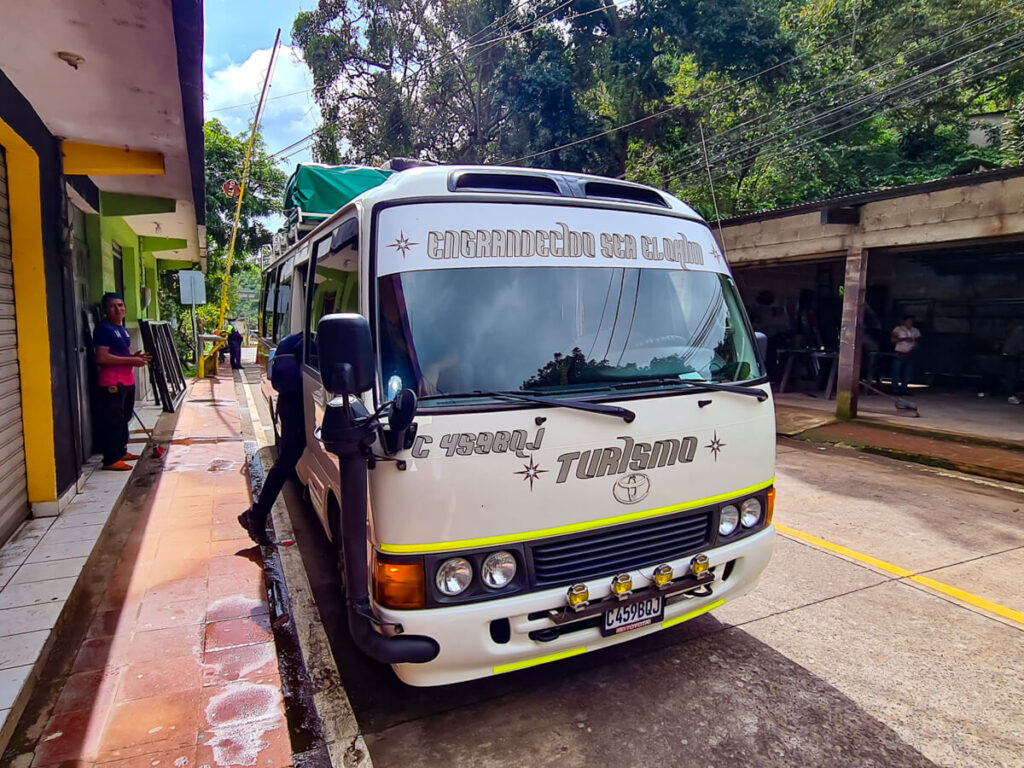
Shared tourist shuttles to Lake Atitlán are one of the most popular ways to get from Guatemala City Airport to the lake. They’re relatively affordable, easy to book online, and remove the stress of navigating Guatemala City on your own.
Shuttles usually cost around $35-45 USD per person and take 3.5-5 hours. Most services run between 6:00 AM and 4:00 PM, as driving into the mountains after dark isn’t ideal.
Some shuttles go directly to Panajachel, while others may stop in Antigua first to pick up additional passengers, which can add time to the journey. Drop-off is typically in central Panajachel, within walking distance of the dock.
We took a tourist shuttle from San Juan La Laguna to Antigua, and it was a simple process. You can book shuttles via your accommodation or on platforms like Viator, GetYourGuide, and Bookaway (get 5% off with our code THOROUGHLY5), which have plenty of route options.
The main downside to taking a shuttle is flexibility – they often run on fixed schedules, and if your flight arrives late or is delayed, you may miss your departure with no refund. But they’re undoubtedly one of the most convenient and cost-effective ways to get to Lake Atitlán.
By private transfer
A private transfer to Lake Atitlán is the most comfortable and straightforward way to get to the lake, especially if you’re arriving late, travelling with lots of luggage, or heading straight to the lake without stopping elsewhere in Guatemala.
Expect to pay around $120-160 USD per vehicle for 1-4 people (which is actually quite good value if you can split it between a group of you). Your driver will meet you at the airport, help with luggage, and drive you directly to Panajachel or, in some cases, to your accommodation if it’s accessible by road.
This is what we did on our first trip to Guatemala, taking a private transfer straight from the airport to our accommodation, Eco-Hotel MayAchik’ in San Juan La Laguna. It was super smooth and helped settle our nerves, having just touched down in Central America for the first time.
This option takes roughly 3-4 hours, traffic permitting, and removes the need to coordinate multiple legs or wait for other passengers. If your flight is delayed, your driver will track it and adjust accordingly, too.
We’d strongly recommend this option if it’s your first time in Guatemala or if you’re landing in the evening.
Bookaway is amazing for booking shuttles and transport throughout Central America. You can get 5% off with our code THOROUGHLY5.

By camioneta (chicken bus)
It is possible to reach Lake Atitlán using Guatemala’s traditional public transport, known as chicken buses (or camionetas), but it’s not the easiest or safest option for most travellers.
From the airport, you’ll first need to get into Guatemala City, usually by Uber, then make your way to a major bus terminal like the Bus Terminal Huehue Xela Guatemala City. From there, you can catch buses toward Quetzaltenango (Xela) or directly to Panajachel.
The total cost is cheap – usually under 30Q (~$4 USD) – but the journey can take 6+ hours, involves multiple changes, usually in towns like Chimaltenango, Los Encuentros, and Sololá. The buses, which are colourfully-painted repurposed American school buses, are often overcrowded and are not ideal if you have luggage.
Guatemala City’s bus terminals also have a sketchy reputation, and routes aren’t always well signposted. Unless you’re travelling on a very tight budget, speak decent Spanish, and are comfortable navigating chaotic transport hubs, we wouldn’t recommend this route.

By rental car
It’s unusual for tourists to rent a car in Guatemala and drive. Road conditions, aggressive driving (it’s honestly some of the worst driving we’ve seen anywhere in the world), and heavy traffic around Guatemala City make it stressful, even for experienced drivers. We’ve rented cars and driven all over the world, including in Belize and Costa Rica in Central America, but wouldn’t attempt it here.
The route to Lake Atitlán often involves heavy traffic leaving the capital, winding mountain roads, and unpredictable conditions. While the main highways are paved, accidents and delays are common, and local driving habits can be intimidating.
If you do choose to drive, rental cars are available at the airport, with prices starting around $30-50 USD per day, depending on season and insurance. Parking in Panajachel is available but limited, and most lakeside villages are not car-friendly (or even accessible by car) anyway, so the stress isn’t really worth it.

By taxi/Uber
Uber does operate in Guatemala City and Antigua and can be used to travel toward Lake Atitlán, but it’s not a great option for the full journey.
Prices fluctuate heavily depending on demand and traffic, and it’s not unusual to see quotes anywhere between $80-150 USD one-way. Not all drivers are willing to make the long drive into the highlands, and availability drops later in the day, too.
Airport taxis can be arranged at official booths, but they’re typically more expensive than a private transfer and don’t offer the same reliability or comfort. If you’re considering this option, a pre-booked private transfer is usually the better, cheaper, and safer choice.

How to get to Lake Atitlán from within Guatemala
Lake Atitlán is one of Guatemala’s most visited destinations, so it’s well connected to the rest of the country. Whether you’re travelling from colonial cities, the coast, the highlands, or deeper inland, there’s usually a direct or semi-direct way to reach the lake without too much hassle.
How to get to Lake Atitlán from Antigua
Antigua is the most common jumping-off point for Lake Atitlán, and the route between the two is well established. The easiest option is a shared shuttle, which runs daily, usually in the morning around 8:00-9:00 AM and in the afternoon around 2:00 PM, and takes around 3-4 hours, depending on traffic and weather. Prices usually sit around $25-35 USD per person, and most services drop you directly in Panajachel or San Pedro. Some will also coordinate with boat departures if you’re heading straight across the lake.
You can also arrange a private transfer, which is faster and more comfortable, especially if you’re travelling with luggage or as a group. Expect to pay around $100-140 USD per vehicle. This is a good option if you’re staying in a village that requires a boat transfer and want everything handled in one go.
Public transport is possible but awkward. You’ll need to take a chicken bus toward Sololá and then change for Panajachel, which can take 5-6 hours.
How to get to Lake Atitlán from El Paredón
El Paredón is a popular coastal stop only 3 hours from Antigua, but many travellers head straight from the beach to Lake Atitlán.
The most common option is a shared shuttle, which takes around 4 hours and costs roughly $30-40 USD per person. Most shuttles leave in the morning – 8:00 AM for Panajachel and 9:00 AM for San Pedro.
If you’re travelling independently, you can also take a local bus to Escuintla and then connect onward toward Sololá or Panajachel, but this route involves several changes and can be slow and uncomfortable.
How to get to Lake Atitlán from Guatemala City
We’ve already detailed how to get to Lake Atitlán from Guatemala City Airport, but you might also need to change in the capital if you’re coming from a more remote part of Guatemala. If you’re coming from Flores in the north or Río Dulce and Livingston in the east (which is the gateway to Honduras), you’ll likely need to change in Guatemala City to reach Lake Atitlán.
You can choose from tourist shuttles, private transfers, and chicken buses, with services leaving from the airport and from zones within the city. They take around 4-5 hours to Panajachel and 5 hours to San Pedro.
How to get to Lake Atitlán from Semuc Champey
This is one of the longest and most tiring routes in Guatemala, but it is worth it if you’re keen to visit Lake Atitlán from Semuc Champey. Most shuttles leave from the gateway town of Lanquín.
GuateGo runs the route from Semuc Champey/Lanquín to Panajachel once a day at 8:00 AM, and it takes around 10 hours.
The roads out of Semuc Champey are rough, but the shuttle option is still far easier than attempting public transport, which would require multiple buses, a night stop, and a lot of patience.
Some people choose to break the journey by stopping overnight in Antigua, which can make the trip feel much more manageable, but since you’re there, you might as well spend a few more days exploring the city and forming an Antigua itinerary.
How to get to Lake Atitlán from Quetzaltenango (Xela)
Quetzaltenango (Xela) is relatively close to Lake Atitlán and is well connected, sitting just north of the lake. Shared shuttles run regularly between Xela and Panajachel, taking around 2.5-3 hours and costing roughly $20-30 USD per person. This is the easiest and most popular option.
Chicken buses are also doable. You can take a chicken bus toward Sololá and then change for Panajachel. The journey takes around 4-5 hours and costs very little.
Alternatively, there’s a really unique option to trek from Xela to Lake Atitlán. This 3-day hike traverses the highlands and passes through remote Maya villages, where you stay with locals each night. It’s run by Quetzaltrekkers, an NGO that ensures the benefits of tourism positively impact the local community.

How to get around Lake Atitlán
Getting around Lake Atitlán is fairly straightforward once you understand that boats are the main form of transport. The lake might look like it should have a ring road, but there isn’t one road that runs around the lake. Instead, specific sections connect certain towns, but some aren’t even accessible via road.
Your exact transport options will depend on which village you’re staying in, but moving around the lake is generally easy, affordable, and part of the experience.
On foot
Many of the villages around Lake Atitlán are compact and walkable, especially places like San Marcos, San Juan, and parts of San Pedro. Walking is often the best way to get around locally, with lakeside paths and steep streets connecting neighbourhoods. Many towns have scenic viewpoints, usually along their malecón (waterside promenade) or above the town in the mountains.
You can even walk the Lower Mayan Trail between Santa Cruz and San Marcos, via Jaibalito and Tzununá.
That said, the terrain can be hilly, pavements are inconsistent, and distances between villages are usually too far to walk comfortably. Santa Cruz La Laguna, San Marcos La Laguna, and San Pedro La Laguna are particularly steep, so expect lots of hills and stairs. There have also been historic reports of robberies on the trails between villages. It can often be easier and safer to pay for a tuk-tuk to ferry you around.

By boat (lancha)
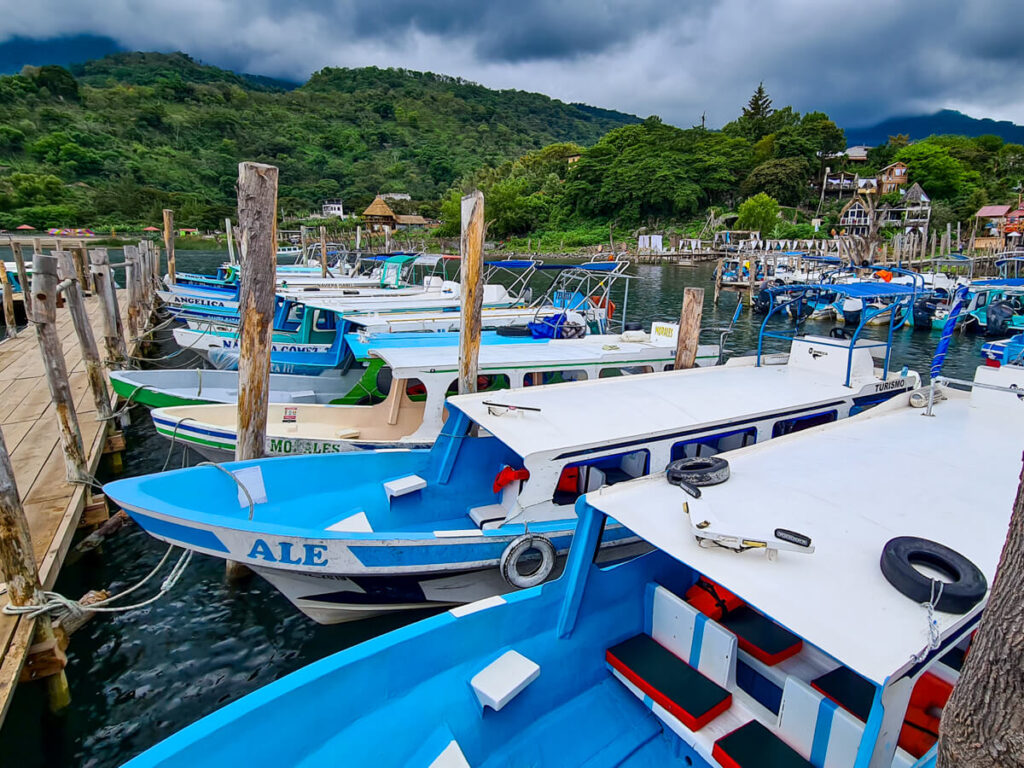
Public motorboats called lanchas are the primary way to travel between towns around Lake Atitlán. These water taxis run regularly between the villages throughout the day, usually from around 6:00 AM-7:30 PM, but stopping earlier in smaller towns.
It’s also keeping in mind that services can slow down or stop entirely in the late afternoon, especially if the lake gets choppy, so it’s best not to leave crossings too late in the day. Some routes have multiple stops at other villages on the way, too, which can add to the journey time.
Prices depend on distance, but typically range from 10-30Q (~$1.50-4 USD) per trip. You can arrange private services for around 100Q + (~$13+ USD), but costs can add up quickly. Private lanchas, however, are convenient if you’re staying in a more remote village, want to get somewhere directly, or are travelling very early in the morning or late at night when the public services stop. They’re also pretty much the only option to Santa Catarina Palopó and San Antonio Palopó from Panajachel.
The downside of lanchas is that they’re not great if you’re prone to seasickness, they can be wet, especially when the wind picks up, and they stop at night, so you might end up stranded after dark if you don’t plan ahead. Always confirm the last return boat if you’re visiting another village.
We’ve covered everything you need to know about taking lanchas around Lake Atitlán later in this post.
By tuk-tuk
Tuk-tuks are small, motorised, three-wheeled vehicles that are super handy for getting from A to B. You won’t find any traditional taxis in Lake Atitlán, but you can use these instead.
Tuk-tuks are common in most villages on Lake Atitlán and are useful for short trips, especially uphill. They’re quick and convenient, often only 5-20Q (~$0.60-2.50) per journey, which can be negotiated. Always agree on a price before getting in.
Tuk-tuks are particularly handy for getting between nearby villages like San Pedro and San Juan, which offer access to the Mirador Kaqasiiwaan & El Rostro Maya hikes, or San Marcos and Tzununá, known for their yoga retreats. You can flag them down in the street, and they’re often found near each town’s main plaza.

By colectivo (pickup truck)
Colectivos – often shared, 4×4 pickup trucks with bench seating – operate between some villages and nearby roads. You might also hear them being referred to as carros or camionetas.
While they’re not as common as tuk-tuks, they can be convenient for specific routes like Panajachel and Santa Catarina Palopó (leaving from in front of San Francisco Church and outside the Despensa Familiar supermarket). They’re cheap (about 10-15Q (~$1.30-2 USD) per person for a short ride) and widely used by locals, but not always obvious to visitors.
They can be popular and get crowded, so you might end up standing in the bed of the truck, hanging on for dear life as the truck whizzes along the mountain roads. It’s pretty terrifying, but something we started to get used to, as it’s pretty common throughout Central America, from Semuc Champey to El Tunco in El Salvador.

By chicken bus (camioneta)
Chicken buses (camionetas) serve the main roads above the lake, connecting towns like Sololá and Chichicastenango with Panajachel and other highland destinations. There are a few routes between towns, but they’re much less common and convenient than just taking a boat or tuk-tuk. The most common route would be between Santiago Atitlán and San Lucas Tolimán.

By tour
For attractions away from the lakeshore, like viewpoints, coffee farms, markets (such as Chichestenago Market), or nearby villages, booking a Lake Atitlán tour is often the easiest option.
Tours include transportation and local guides, saving you the effort of figuring out public transport or negotiating multiple connections. They’re especially useful if you’re short on time or want to visit places that aren’t easily accessible by boat. We’ve covered all the top tours in our guide to the top things to do in Lake Atitlán.

What you need to know about taking lanchas in Lake Atitlán
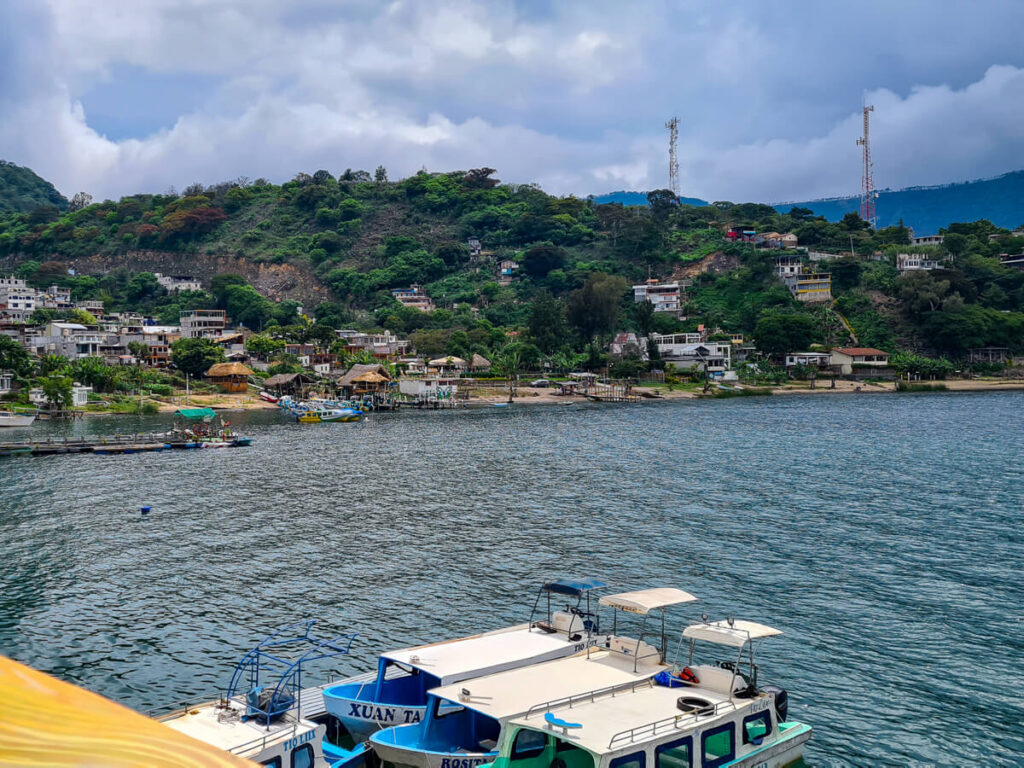
Boats called lanchas are the main way to get around Lake Atitlán and taking them between small Maya towns is one of the best things to do in Guatemala. The boats themselves are low-slung fibreglass motorboats, with roofs and cut-out windows. Some have plastic coverings for when it’s wet, while others don’t.
Inside, you’ll see several rows of plastic bench seats, generally having a capacity for around 20 people per boat. Sometimes there’s a row down the middle of the boat, other times you need to climb over each bench to get to the front. They’re designed for practicality, not comfort, and aren’t wheelchair-friendly, so they’re not very accessible if you have mobility issues.
If you’re travelling with luggage, your bags will either be kept inside, stored at the front of the boat (often uncovered), or tied to the roof (definitely uncovered), so it’s a good idea to travel with a waterproof backpack cover and keep your valuables in your hand luggage or daypack.

Lake Atitlán lancha routes
The boats don’t take direct routes across Lake Atitlán, but skirt the east and west edges, where it’s less choppy.
Most towns only have one dock, but a few of the larger ones (Panajachel and San Pedro) have multiple. The main dock in Panajachel is the dock at the end of Calle del Embarcadero, which goes to most towns on the lake, while the smaller dock on the east side serves Santiago Atitlán and direct routes to San Juan and San Pedro. In San Pedro, the main dock goes to San Juan and Panajachel, while another dock on the east side serves Santiago Atitlán.
The captain or their assistant (ayudante) will shout the name of each stop when you arrive. Journey times can vary, depending on the weather, lake conditions, and how many other villages you stop at. A rough guide is:
You may need to request stops at certain smaller villages, like:
Lake Atitlán lancha prices
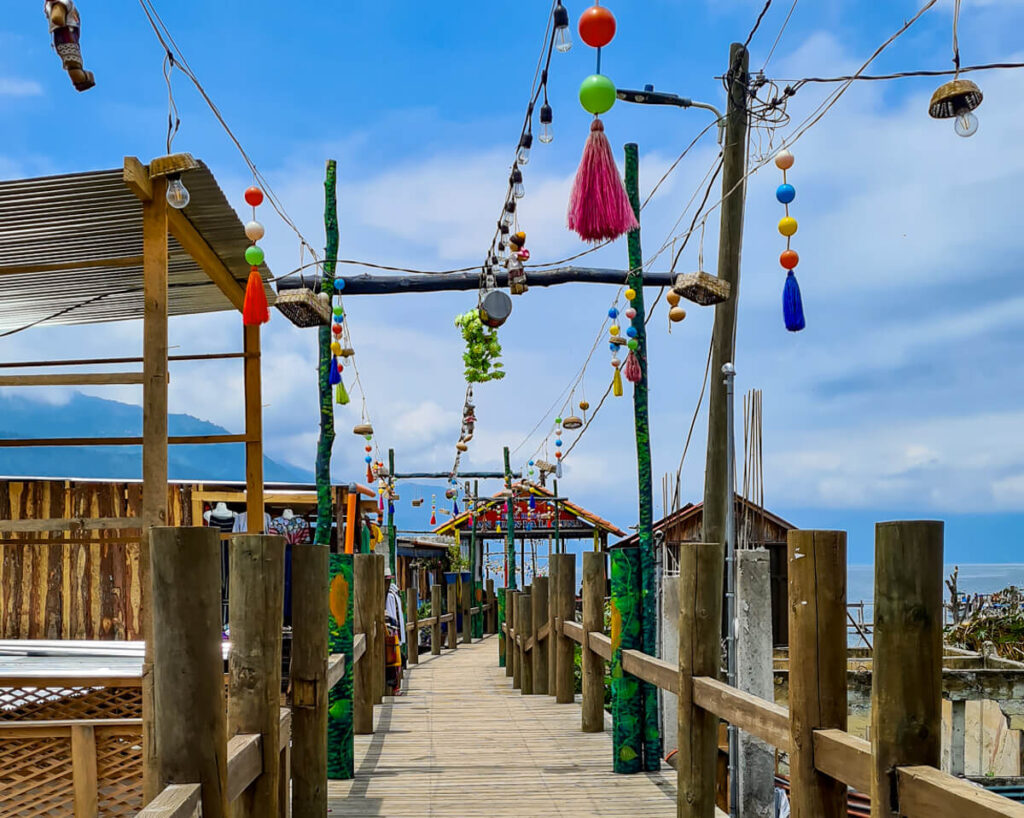
Taking lanchas on Lake Atitlán is a cash-only system, so it’s important to carry Guatemalan quetzales in small denominations. The captain will collect the money either as you get on or as you get off.
There’s no way to get advanced tickets or reservations, even if you’ve arranged your lancha transfer through a shuttle company.
Prices are determined based on where you board and dock, with longer journeys costing slightly more than shorter ones. Locals pay less than foreigners, which can lead some people to feel like they’re getting scammed. But it’s a tiered pricing system that reflects the fact that locals need to get around the lake, and as a visitor, you’re paying a slightly higher rate for convenience, not because you’re being singled out – plus, prices are still very reasonable by international standards.
An actual scam is that some captains will inflate tourist prices and try to squeeze a little more out of you than the journey actually costs. Some docks have boards with the official prices for each journey, but most don’t, so it can be hard to know how much a journey should cost. It’s usually only the equivalent difference of a dollar or so, but it still doesn’t feel very nice. It’s best to verify the price with the captain before you get on.
The price to Panajachel is generally 25Q (~$3.50 USD), although being quoted 30Q (~$4 USD)seems to be happening more often. Villages that are closer together, like San Pedro, San Juan, and San Marcos, are 10-20Q (~$1.50-2.50 USD) per person. Your accommodation should be able to let you know the most up-to-date pricing for each route.
Services can be unreliable, so it’s best to only pay for one-way tickets at a time, even if you plan to return. Sometimes multiple companies will run the same routes, but won’t honour return payments made to a different captain.
Lake Atitlán lancha schedules
The lanchas generally don’t run on specific schedules. Some towns, especially more popular routes like Panajachel and San Pedro, might have timetables, but most boats operate independently.
The boats generally run every 15-30 minutes, but most won’t set off until they’re full, so you might have to wait around a while. Quite often, captains will try to fit as many people as possible into the boat, with people squeezing into the front of the boat.
They’re most frequent in larger towns like Panajachel and San Pedro, while they’re less frequent in smaller towns. For some journeys, we were on a boat and away immediately. From San Juan (where we stayed) to nearby towns like San Pedro and San Marcos, we never waited more than 15 minutes, but we waited an hour for the boat to fill to get to Panajachel, which is further away. We did visit in the wet season, though, so it was less busy than normal. From San Pedro and Panajachel, boats were more frequent.

Tips for taking a lancha in Lake Atitlán
To help you plan your trip to Lake Atitlán, we’ve collated our top tips for getting there and around:

Lake Atitlán Transportation FAQs
Now you know how to get to and around Lake Atitlán, we’ve answered some frequently asked questions.
How to reach Lake Atitlán?
You can reach Lake Atitlán by shuttle, private transfer, or public bus from nearby cities like Guatemala City, Antigua, or Quetzaltenango. Most travellers arrive via shuttle services that combine comfort and speed, while adventurous visitors sometimes take chicken buses for a more local experience.
How much is a shuttle from Antigua to Lake Atitlán?
Shuttles from Antigua to Lake Atitlán typically cost between $35-45 USD per person, depending on the company and pickup location. Private transfers are more expensive but offer direct service and more flexibility with luggage and stops along the way.
How long does it take to go from Antigua to Lake Atitlán?
The journey from Antigua to Lake Atitlán usually takes around 2.5-3 hours by shuttle, depending on traffic and weather conditions. The route winds through mountainous terrain, so travel times can vary slightly.
Can you Uber from Antigua to Lake Atitlán?
While Uber does operate in Antigua, it’s not practical for intercity trips to Lake Atitlán. If you want a private car, you’ll need to arrange a private transfer through a hotel, shuttle company, or local taxi service.
Is it easy to get around Lake Atitlán?
Getting around Lake Atitlán is generally straightforward, but it requires planning. Boats, tuk-tuks, and colectivos are common ways to move between villages, while some towns are walkable. Roads between lakeside towns can be steep and narrow, so driving yourself isn’t always recommended.
How to get around Lake Atitlán without a car?
Without a car, you can use lancha boats to travel between villages, hire tuk-tuks within towns, or take colectivos (shared minivans) for longer land routes. Walking between attractions within a town is also easy in most villages.
Does Uber work in Lake Atitlán?
Uber does not operate on Lake Atitlán, so you’ll need to rely on local taxis, tuk-tuks, or hotel-arranged transport to get around by land.
Can you walk around Lake Atitlán?
You can walk within individual villages on Lake Atitlán, where the streets are generally pedestrian-friendly and scenic. However, unless you’re following a designated hiking trail like the Lower Mayan Trail, walking between towns is not practical due to steep hills and long distances along narrow roads.
What are the boats in Lake Atitlán called?
The boats that connect towns around the lake are called lanchas. These motorised wooden boats follow fixed routes between villages and are the main way locals and visitors travel across the water.
How much are boats around Lake Atitlán?
Boat fares around Lake Atitlán are usually between 10-30Q per ride (roughly $1-4 USD), depending on distance and whether you are a local or tourist. Longer routes or private hires cost more.
How late do boats run on Lake Atitlán?
Most public lanchas stop running around 5:30-6:00 PM, though private or arranged rides can go later. It’s best to plan your last boat of the day in advance, especially if travelling between villages after sunset.

Read next:
A Traveller’s Guide to Lake Atitlán: Itinerary & Essential Travel Information
Where to Stay in Lake Atitlán: 12 Towns & Top Hotels
25 Amazing Things to Do on Lake Atitlán
A Complete Guide to San Juan La Laguna: Lake Atitlán’s Artistic Town
A Succinct Guide to San Pedro La Laguna: Lake Atitlán’s Backpacker Town
A Short Guide to San Marcos La Laguna: Lake Atitlán’s Hippie Town
10+ Best Lake Atitlán Hikes & Trails From Easy to Expert
How to Hike to Mirador Kaqasiiwaan & El Rostro Maya (Indian Nose)
Our Eco-Hotel MayAchik’ Review: Sustainable Hotel in Lake Atitlán
Our Guatemala Destination Guides:
Our Guatemala Travel Guides:
