A Traveller’s Guide to Antigua: Guatemala’s Colourful Colonial Town

Discover everything you need to know about visiting Antigua, Guatemala, from why you should come here and how to get around to activities, accommodation, restaurants, and useful travel tips, in this complete guide.

This post may contain affiliate links, which means we might earn a small commission on anything purchased through these links at no extra cost to you. Learn more on our disclaimer page.
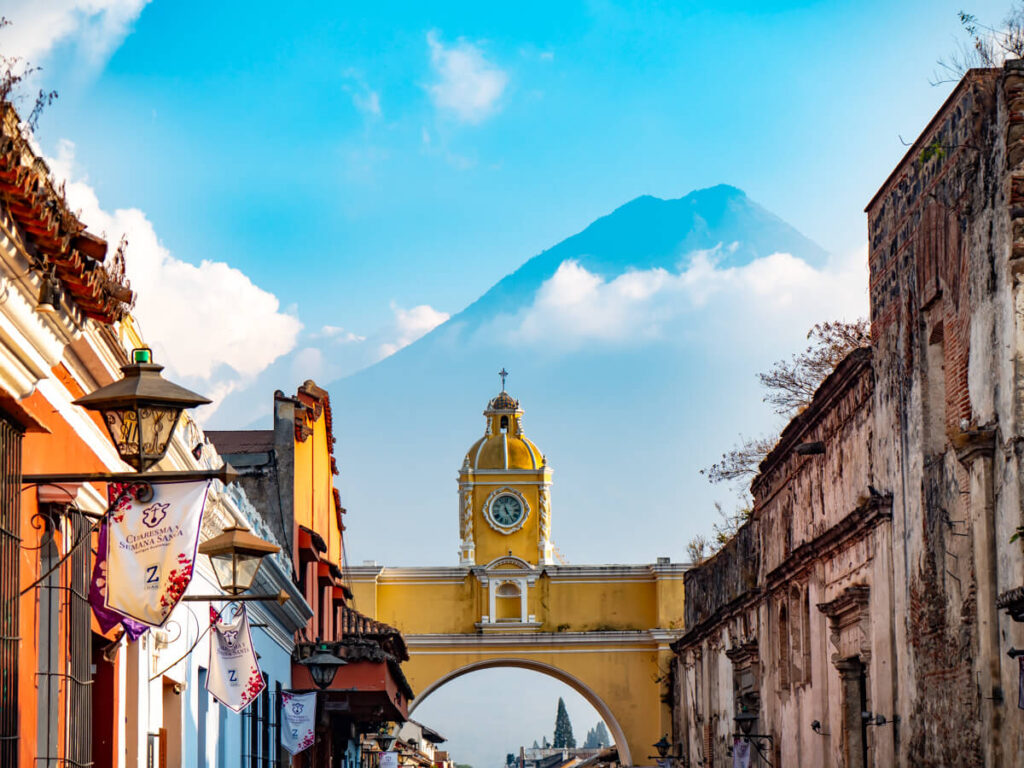
Antigua is one of our favourite places in the whole world and a must-visit destination in Guatemala. Famous for its colourful, colonial architecture, with buildings dating back almost 500 years, the city was once the capital city of Guatemala, founded by Spanish Conquistadors who arrived in the 16th century. This vibrant city is full of history, culture, and cuisine that is unique to Antigua and the whole town is surrounded by impressive volcanoes that are often visible from the street.
We normally prefer remote nature escapes to cities, but Antigua stole our hearts. In fact, we loved it so much that it was one of the few places we returned to on our second trip to Guatemala and Central America backpacking trip. Discover everything you need to know about this beautiful UNESCO-listed city, from how to get here and what to do to where to stay and eat, in this complete Antigua travel guide.
Antigua, Guatemala, at a glance
About Antigua, Guatemala
Antigua is probably the most popular tourist city in Guatemala, being much prettier and safer than gritty Guatemala City, and more accessible than more remote towns like Flores, Semuc Champey, Río Dulce (with connections to Livingston), and El Paredón.
A town of many names, you might hear Antigua referred to as ‘Antigua Guatemala’, ‘La Antigua’, or ‘La Antigua Guatemala’, but all you need to know is it’s not the Caribbean island, but a town in southwest Guatemala. Its official name means ‘The Old Guatemala’, referencing its stint as the old capital of Guatemala under Spanish colonial rule.
The word charming is definitely overused, but it perfectly describes Antigua’s compact network of colourful colonial buildings, crumbling churches and convents, cobblestone streets, and volcano views. It’s home to boutique hotels, local restaurants, museums and art galleries, and courtyards filled with bougainvillaea that make it a really unique destination.
More from Antigua
Antigua History
Founded in the early 16th century as Santiago de los Caballeros de Guatemala, Antigua was once the capital of the Spanish Kingdom of Guatemala.
Though the city has suffered from multiple earthquakes throughout the years, the massive earthquake in 1773 devastated much of the city, destroying most of the buildings. The capital was relocated to present-day Guatemala City, leaving Antigua preserved as a city of ruins.
Today, its historic centre is filled with Baroque churches, sprawling monasteries, and crumbling convents. Antigua’s ruined churches have earned the city the designation as a UNESCO World Heritage site.

Where is Antigua, Guatemala?
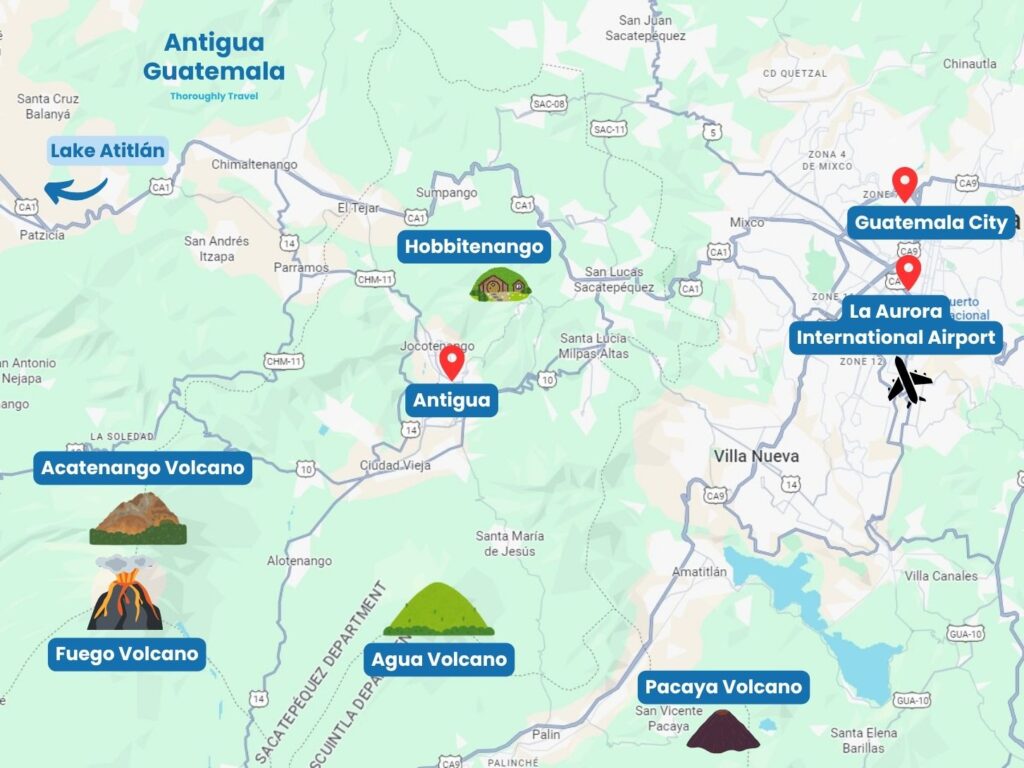
Antigua lies in the central highlands of Guatemala, in the Sacatepéquez Department. It’s about 25 miles (40 km) from Guatemala City, the country’s capital, and is one of the most popular places in Guatemala.
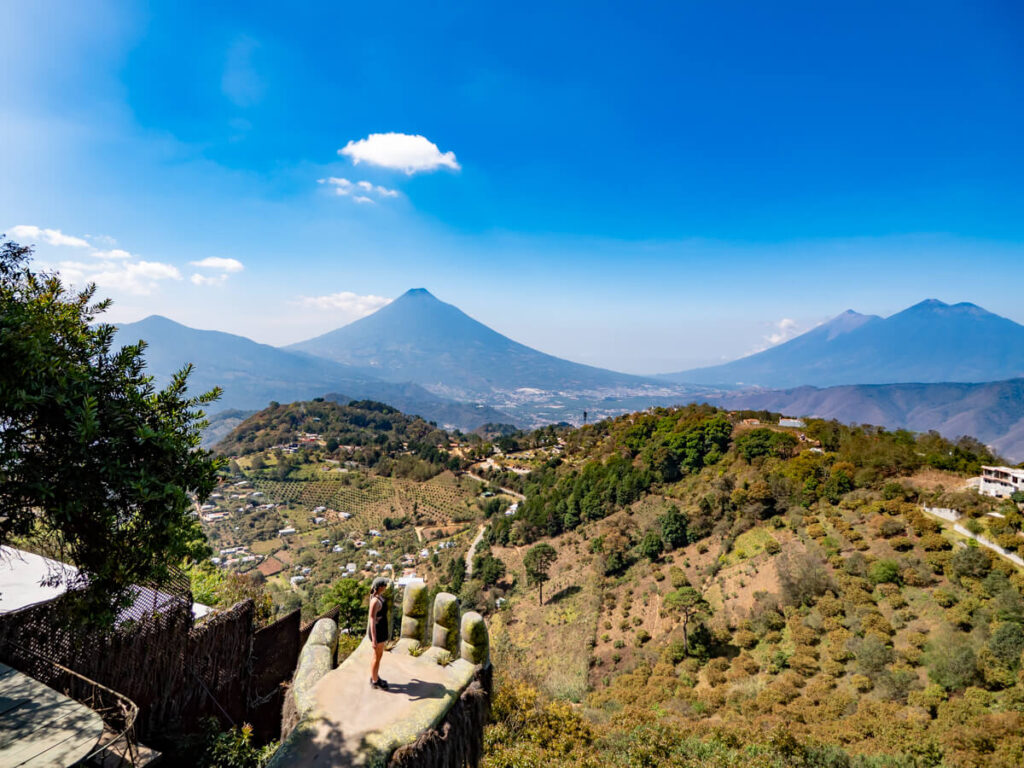
Antigua sits in a valley surrounded by three dramatic volcanoes: Agua, Fuego, and Acatenango, which give Antigua a backdrop that’s super unique – we’ve never seen anywhere like it.

Antigua Map
We’ve highlighted Antigua’s key attractions on the map below.
Why visit Antigua?
Antigua isn’t popular for no reason – it’s absolutely packed with activities for every interest. There are lots of fun things to do in Antigua – you can spend your days wandering through colonial ruins and sipping Guatemalan coffee in leafy courtyards.
If you’re adventurous, you can explore a variety of themed eco-parks, hike volcanoes, and visit nearby Mayan villages. There are plenty of fun day trips from Antigua, from the whimsical Hobbitenango to the overnight Acatenango Volcano hike.
But those who don’t want to go too far will still find plenty of attractions in the historic centre, from Antigua’s museums to local artisan markets.



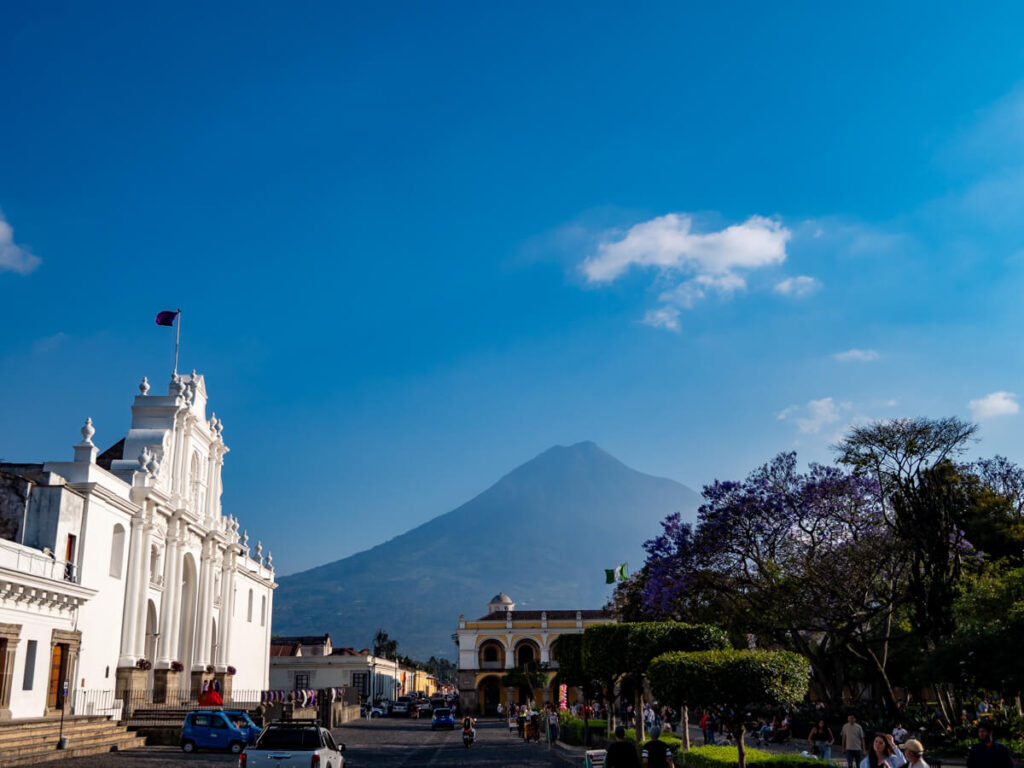


Antigua’s Volcanoes
Perhaps the biggest draw to Antigua is its towering volcanoes, which are widely regarded as some of the best things to do in Guatemala. The city is surrounded by three looming volcanoes: Agua, Acatenango, and Fuego.
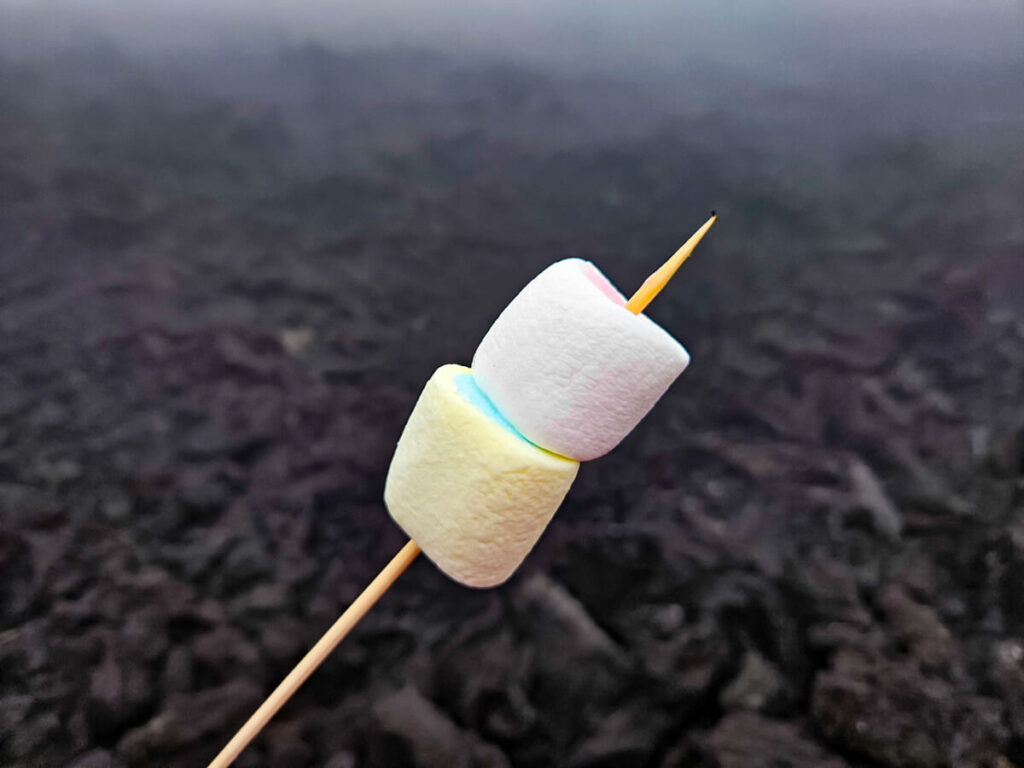
There’s nowhere else like Antigua, where you can watch a volcano erupt while sipping a cocktail from a rooftop hotel. You can also visit Pacaya Volcano from the city, which is a much easier hike than Acatenango and is known for the unique opportunity to toast marshmallows in the hot earth.

Accommodation in Antigua
Despite being a relatively small city, there’s an overwhelming amount of amazing places to stay in Antigua. From boutique hostels in historic mansions to luxury hotels in the ruins of convents, there’s something to suit every taste and budget. Many properties feature lush gardens, traditional décor, and cosy courtyards where you can unwind after a day of exploring. Our top tip would be to choose a hotel with a rooftop for epic volcano views.
Staying in the city centre, within a few blocks of Parque Central, means you will have a tremendous amount of sights and attractions at your doorstep. You’ll be within walking distance of top attractions, cafés, and restaurants. For a quieter experience, you can opt for a guesthouse on the outskirts surrounded by coffee fields or scenic hills, but you’ll have a bit more of a walk to reach amenities.
Top Antigua Hotels

Food and Drink
Antigua is literally one of our favourite food cities in the world, with some of the best coffee houses in Guatemala. It has such a range of amazing cafés, rooftop bars, and local and international restaurants, with incredible vegetarian and vegan options – we were in heaven.
You can start your day with freshly brewed Guatemalan coffee and a slice of banana bread at a local café, then explore everything from traditional Mayan dishes to international fusion cuisine. Street vendors were Dan’s favourite, with tamales and tostadas on offer at night, while fine dining spots serve up creative takes on local ingredients. The city also has a thriving bar and cocktail scene, where you can sip local rum or craft beer under twinkling courtyard lights or on a rooftop with city views.
We often opt for self-catering to save some money, but we barely cooked at all, eating out in Antigua for almost every meal on both our trips. We’ve done a full guide to our favourite restaurants in Antigua, but here are some of the highlights:
Top Antigua Restaurants

Transportation
It’s pretty easy to get to Antigua via a variety of different transportation methods, including:
Antigua has no airport, so international visitors usually fly into La Aurora International Airport (GUA). Most tourists don’t hang around in Guatemala City as it’s known to be a bit sketchy, but if you find yourself in the city, you can get to Antigua by bus, car, or shuttle. It’s a 25-mile (40 km) journey from Guatemala City Airport to Antigua, taking between 1 to 3 hours, depending on whether you opt for a transfer or public transportation and how standstill the bad city traffic is.
From here, you can take a shared Guatemala City shuttle, hop in an Uber, use an airport taxi, or arrange a private driver in advance. You can also use local chicken buses, although this requires going into Guatemala City. Most tourists don’t rent a car in Guatemala, due to a combination of dangerous road conditions and unpredictable driving habits (honestly, it’s some of the worst driving we’ve seen anywhere in the world).

You can also get to Antigua via shuttle from various destinations across Guatemala, like Lake Atitlán. Longer shuttles from the neighbouring countries of Honduras, El Salvador, Belize, and Mexico are also popular options, while there’s even a super-long and uncomfortable route from Nicaragua.
Once you’re in Antigua, it’s pretty easy to walk to most attractions, with tuk-tuks, taxis, Uber, chicken buses, and tours being useful ways to get around.
We’ve detailed everything you need to know about getting to and around Antigua in our transportation guide.

Useful information for visiting Antigua
To help you plan your trip to Antigua, here’s some quick-fire, helpful travel information.
Language
Spanish is the official language of Guatemala and is spoken in Antigua. In the tourism sector, many hotel staff, guides, and restaurant workers speak some English, though not always fluently. Learning some basic Spanish phrases goes a long way in making your trip smoother and more enjoyable, especially when it comes to things like arranging transport and tours. Antigua is a popular place to take Spanish classes, with many language schools offering short or long-term courses.
Currency
The local currency is the Guatemalan quetzal (GTQ). U.S. dollars are accepted in some hotels and tourist-focused businesses, but exchange rates can be unfavourable, and change is often given in quetzales. It’s best to carry quetzales in cash, especially for street food, small shops, and local transportation.
Money and ATMS
Antigua has plenty of ATMs located around the main square and in major banks. The most reliable machines are those operated by BAC, Banrural, or Banco Industrial. It’s best to withdraw from ATMs inside banks or shopping areas for security.
Withdrawals are usually in quetzales only, and fees can be high, so it’s wise to take out larger amounts at once (but split it up, so it’s not all in one place).
Credit cards are accepted at many mid-range and higher-end hotels and restaurants, but cash is still handy for smaller purchases, excursions, and tips. Visa and Mastercard are widely accepted, but American Express may be less so.
SIMS
Local SIM cards from providers like Tigo and Claro are easy to buy in Antigua and offer reliable coverage around town. There’s a Claro kiosk in Guatemala City Airport, and both operators have stores in Antigua, but you’ll get better service in a local tienda or minimart like Tienda Claro, Tigo y Sim Card. Plans aren’t super expensive (but they’re not cheap) and can be topped up at convenience stores or kiosks.
If your phone supports eSIMs, you can purchase data packages online before arriving, which is a more convenient option. We used an Airalo eSIM, and it was perfect for looking at reviews of restaurants, using Google Maps, and researching things to do, without needing to take time out of our trip to set up a local SIM.
Internet connectivity
Most hotels, guesthouses, and cafés in Antigua offer free Wi-Fi, which is generally good for browsing, emails, and social media. We had some work to complete and had no problems in both cafés and our hotels. If you need to work remotely, there are several co-working spaces and laptop-friendly cafés in town. Power outages are rare but can happen during heavy rain or maintenance work, so having mobile data as backup is handy. If you’re working remotely or accessing sensitive information, a VPN is sensible when using public networks – we use Surfshark VPN.

When to visit Antigua
The Western Highlands of Guatemala are referred to as ‘the land of eternal spring’, with a pleasant year-round temperate climate.
Antigua still has a dry and wet season, like much of Central America. The dry season from November to April is the best time to visit Antigua. During these months, there’s plenty of sunshine, clear visibility for volcano views, and perfect weather for outdoor activities like hiking.
The rainy season runs from May to October, with showers mainly in the afternoon and evenings – mornings are usually still bright and pleasant.
Semana Santa (Holy Week), usually in March or April, is one of the most spectacular times to visit, with colourful processions filling the streets, but it is VERY busy, so book your accommodation and tours ahead of time if your Antigua itinerary coincides with a holiday.
Antigua weather
Antigua enjoys a mild, spring-like climate all year round, thanks to its highland location at around 1,500 metres (5,000 feet).
Average daytime temperatures hover between 22°C-26°C (72°F-79°F), with cooler nights (bring a jacket).
Humidity is generally low, making the weather comfortable for walking, and volcano views are clearest in the early morning before the clouds build up and settle on the city.
Our first visit to Antigua was in the wet season, and our second in the dry, and the experiences were vastly different. We experienced everything from flooded streets to glorious sunshine. We’d recommend going for a shoulder season, like March-April, to avoid crowds but still ensure nice weather.

How long to spend in Antigua
You can see the main highlights of Antigua’s historic centre in about three days, but you’ll miss out on loads if you don’t allow a little longer.
With so much to explore, including volcano hikes, coffee farms, and day trips to nearby villages, 4 to 5 days is better for experiencing the city at a more relaxed pace. If you plan to do the overnight Acatenango hike, we’d recommend at least 5 days.
If you’re taking Spanish lessons, volunteering, or working remotely, you could easily spend way longer than a week here without getting bored.

Is Antigua safe for travel?
Simply put, Antigua is very safe. Guatemalan people are some of the most welcoming and friendly people in the world, and while Guatemala City has a reputation for being riddled with crime, Antigua is one of the safest cities in Guatemala for tourists.
The city has a strong police presence, especially in the main tourist areas, and locals are very welcoming to visitors. Petty crime like pickpocketing can occur, particularly in crowded places, but violent crime against tourists is rare.
You should still be careful and practice basic safety precautions, like not flashing valuables or walking alone in dark areas, as you would anywhere else in the world.
Is it safe to walk around Antigua, Guatemala?
Many travellers (including us) walk around Antigua day and night without any problems. The city’s compact size and constant activity mean the main streets are almost always lively with locals, travellers, and street food vendors. Many areas are well-lit, but avoid walking alone on quiet side streets just to be cautious. Taxis, Ubers, and tuk-tuks are available if you don’t want to walk.

Is it worth visiting Antigua, Guatemala?
Antigua is one of Central America’s must-visit destinations. We might be biased because we love it, but its blend of colonial architecture, volcano views, boutique stays, and local restaurants is honestly like nowhere else in the world. You can explore ancient ruins, climb volcanoes, take a coffee tour, or simply relax in a courtyard café – all in one day!
Antigua is also a great hub for digital nomads, slow travellers, and anyone who wants to learn Spanish or salsa dancing. You might not vibe with it if you like really off-the-beaten-path places – we were surprised how touristy it was when we first arrived – and some parts are quite polished and expat-oriented, which might not be your thing. The cobblestone streets are pretty, but they aren’t very accessibility-friendly either, so you might struggle with steep sidewalks or deep drainage holes. Still, for most visitors, Antigua is the perfect balance between authentic culture and outdoor activities, making it an unmissable place to visit in Central America.

What to pack to visit Antigua
To ensure an enjoyable experience in Antigua, it’s important to pack the right things. Don’t forget to pack your:

Our experience in Antigua
We LOVE Antigua – so much so, it was one of the very few spots in the whole of Central America that we returned to. On our first visit, we arrived from Lake Atitlán, and it was a total contrast to the laidback retreat we’d just experienced. We loved exploring the colourful streets and ruins on every corner and discovered so many restaurants we dreamt about for the next 3 years until our most recent visit.
We knew we had to return on our second trip and really explore the attractions beyond the city – sleeping on Acatenango Volcano, toasting marshmallows on Pacaya Volcano, and sleeping in a Hobbit Hole in Hobbitenango. We even took a salsa class – a bucket list item for Dan – and spent longer just immersing in the city’s way of life. We could easily move to Antigua for a few years, so we’d highly recommend you include it in your Guatemala itinerary and see its magic yourself.

Antigua, Guatemala, FAQs
We have included the most frequently asked questions and answers about Antigua below.
Why is Antigua Guatemala so famous?
Antigua is famous for its beautifully preserved Spanish colonial architecture, UNESCO World Heritage status, and dramatic volcano views. It was once the capital of the Spanish colony of Guatemala and still holds many impressive churches, monasteries, and convents from that era. The city’s cobblestone streets, pastel facades, and authentic culture attract visitors from all over the world. It’s also one of the best places in Guatemala to experience Easter Holy Week (Semana Santa), with celebrations that are among the most spectacular in Latin America.
Is Antigua, Guatemala, a party town?
We wouldn’t call Antigua a party town (and pray it never becomes one). The city does have a lively social scene, but it’s more cosy lounges, rooftop cocktail bars, and beer houses with live music than all-night clubs. You’ll find a handful of late-night spots around Calle del Arco or 5a Avenida Norte, but the vibe is generally relaxed and friendly rather than wild.
Is Antigua Guatemala safer than Guatemala City?
Antigua is considered much safer than Guatemala City. It’s a small, tourist-friendly town with a strong community presence and a noticeable security patrol in popular areas. While petty theft can happen anywhere, violent crime in Antigua is rare, and most visitors feel comfortable walking around both day and night. Guatemala City, on the other hand, has higher crime rates and neighbourhoods that aren’t safe for tourists, especially after dark.
Is Antigua, Guatemala, expensive?
Compared to the rest of Guatemala, Antigua is relatively expensive, but still very affordable by international standards. You’ll find prices for accommodation and dining slightly higher than in smaller towns because of its popularity and expat presence. Unless you’re at a fine dining establishment, you can expect to pay under $2 USD for a pint of beer and under $30 USD for a 3-course meal for 2 people. Accommodation and transport are also very affordable, with lots of options under $100 USD per night.
Can I drink the water in Antigua Guatemala?
It’s not recommended to drink tap water in Antigua or anywhere in Guatemala. Locals and visitors alike drink purified or bottled water, which is cheap and widely available. Most hotels, restaurants, and cafés provide water refills, so bring your reusable bottle to help reduce plastic waste.

Read next:
28 Amazing & Unique Things to Do in Antigua
10 Top Day Trips from Antigua + 4 Tours to Avoid
2-10 Day Antigua Itinerary + DIY Free Self-Guided Walking Tour
Where to Stay in Antigua: 18 Best Hotels From Budget to Boujee
28 Best Restaurants in Antigua
How to Get to Antigua + How to Get Around
A Practical Guide to the Acatenango Overnight Hike to See Fuego Volcano
How to Visit Pacaya Volcano + Is it Even Worth it?
A Complete Guide to Visiting Hobbitenango
How to Hike to Cerro de la Cruz in Antigua
Our Guatemala Destination Guides:
Our Guatemala Travel Guides:
