A Guide to Sustainable Shopping in Antigua: Artisan Markets & Meaningful Souvenirs

Discover the best shops and markets in Antigua, Guatemala, in this guide to buying sustainable souvenirs.

This post may contain affiliate links, which means we might earn a small commission on anything purchased through these links at no extra cost to you. Learn more on our disclaimer page.
A city of colour and colonial architecture, Antigua is a popular tourist town in Guatemala known for its bustling markets and artisan workshops. More than just souvenir stores, these shops range from curated galleries and eco-conscious concept stores to fashion boutiques and artisanal markets.
Mindful spending can directly support artisans, preserve Mayan traditions, and reduce waste like plastic pollution. Ditch the mass-produced tourist trinkets and discover the most authentic souvenirs to buy in Antigua, from Guatemalan coffee and chocolate to pristine jade. We’ve also covered shops and markets, where purchases truly support local makers, in this guide to shopping in Antigua.
Top Shopping Experiences in Antigua
Don’t have time to read the whole list? Here are the top shops and markets in Antigua.

More from Antigua
Why shop sustainably in Antigua?
Tourism plays a huge role in sustaining local livelihoods in Antigua, but it can also put pressure on traditional crafts and small communities if not approached mindfully. Many of Antigua’s textiles, ceramics, and handmade goods are still produced using ancestral methods passed down through generations, often by women’s collectives in nearby villages. In the city’s courtyards, collectives, and co-ops, you’ll even find authentic shopping experiences in Antigua, where you can make your own jade in a workshop, roast your own coffee at a plantation (finca), and weave your own textiles in a studio, actually seeing and taking part in how these items are made.
By choosing to travel sustainably – buying directly from artisans, paying fair prices, and supporting cooperatives – you help preserve centuries-old techniques and provide stable income for families who rely on their craft. Plus, browsing markets is one of the best things to do in Guatemala, so it’s fun, too.
We’ve travelled a lot and quickly ran out of ideas for souvenirs, both to take home a piece of our memories for ourselves and to surprise our loved ones. We knew we wanted to find unique items that really reflect the authentic experience of travelling Guatemala, as well as support the people who actually make them. We didn’t just want tacky tourist tat, so we scoured Antigua on two visits to find the best shops and markets where you can pick up something really meaningful.
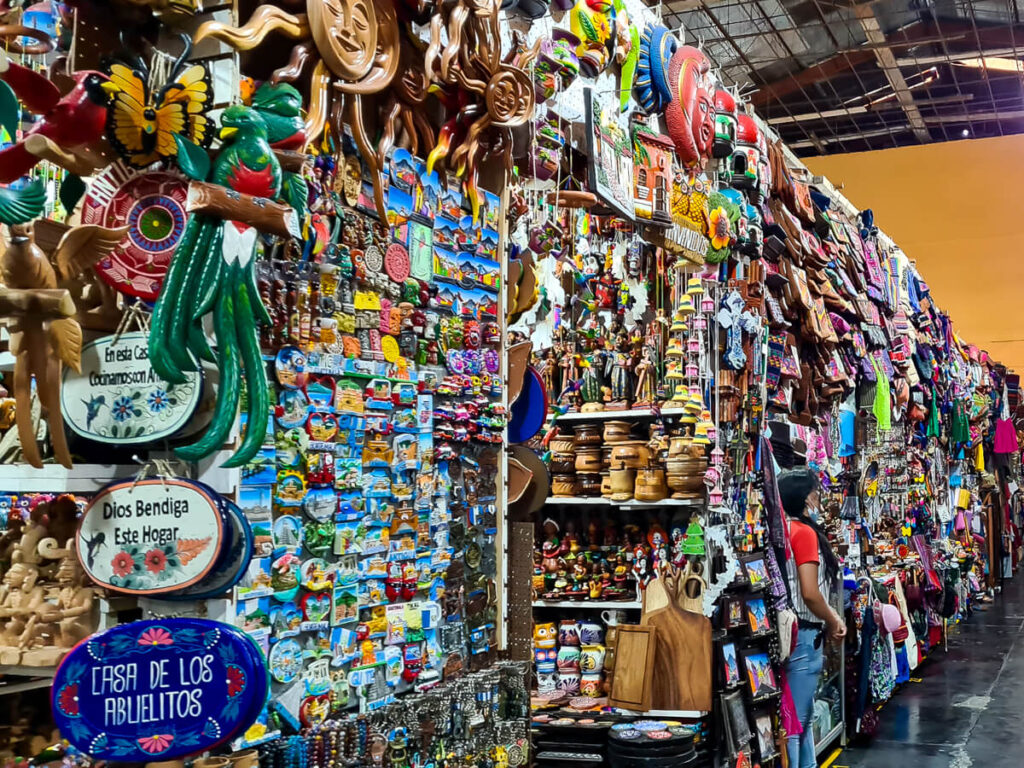
What to Buy in Antigua – Ethical Souvenirs
Antigua has a lot of same-same souvenir stalls, where you’ll find all the typical tourist trinkets, from fridge magnets to beer bottle openers. Plus, there are plenty of stores offering brightly coloured textiles like saturated scarves and woven bags. But if you know where to go, you’ll also find a strong community of local cooperatives and small workshops, offering items defined by exquisite craftsmanship and a reflection of local life.
There is an incredible range of authentic, locally made products in Antigua, many crafted using age-old Mayan techniques. Popular items include handwoven textiles, Guatemalan coffee, artisanal chocolate, jade jewellery, and spices like cardamom and vanilla.
Each has cultural and regional significance, often produced through sustainable cooperatives that empower indigenous communities. Many shops are proud to explain where their goods come from, so don’t hesitate to ask about the story behind what you’re buying.
Thinking about your purchases is a great way to travel more responsibly. Here are the top souvenirs that are unique to the region and shopping experiences you need to add to your Antigua itinerary.

Textiles
Guatemala’s textiles are among the most beautiful in Central America, woven with colourful patterns that reflect each village’s unique identity. You can buy everything from traditional huipiles (embroidered blouses) and table runners to modern bags and cushion covers made by local cooperatives.
Most textiles are handwoven on backstrap looms, a technique that’s been used by Mayan women for centuries. The colours and symbols often represent natural elements like mountains, rivers, and maize.
You can see live demonstrations of backstrap loom weaving and learn about the symbolism behind colours and patterns that are chosen for each piece at Museo Casa del Tejido Antiguo, one of Antigua’s best museums. The museum also supports indigenous women artisans by selling handmade textiles in its shop.
Kakaw Designs is a social enterprise that works directly with artisans across Guatemala to create beautifully handwoven textiles and leather goods that combine traditional techniques with modern design. You can visit their small studio and shop in Antigua to see how natural dyes and backstrap looms are used to produce one-of-a-kind pieces – everything from shawls and scarves to bags and home décor. You can even take a weaving workshop, where you can learn the techniques of the backstrap loom alongside local artists.
Parque Central is another great spot for souvenir shopping. Local Maya women from nearby villages congregate here to sell their artisanal textiles.

Coffee
Guatemala’s volcanic soil produces some of the world’s finest coffee, and Antigua’s beans are especially prized for their smooth, rich flavour. You can buy freshly roasted beans directly from coffee fincas (farms) or at boutique shops around town.
One of our favourite coffee shops in Antigua, the Fat Cat Coffee House is a cosy spot with knowledgeable baristas and perfectly brewed espresso (this was actually the place Dan tried his first ever espresso when I was trying to convince him to like coffee – which we’re both fiends for now). They take their coffee seriously here, sourcing high-quality beans from nearby farms and roasting them on-site for that rich, fresh taste. Other great options include Fernandos Kaffee, known for its organic, bean-to-cup approach – the owner personally roasts the beans on-site and even makes his own chocolate – and Artista de Café, where you can pair your cup with a slice of homemade cake while people-watching in the courtyard.
Many coffee farms offer coffee tasting tours from Antigua, giving you a behind-the-scenes look at how Guatemala’s famous beans are grown, harvested, and roasted. One of the most rewarding experiences is with De La Gente (As Green As It Gets), a community-focused cooperative that connects travellers directly with local farmers. You can walk through the plantations, learn about sustainable growing practices, and even roast your own beans over an open fire before enjoying a freshly brewed cup.
Other popular options include Finca Filadelfia, a well-established estate offering guided plantation tours and tastings in a beautiful hillside setting, and Finca La Azotea in nearby Jocotenango, which combines a coffee museum, tasting sessions, and a cultural centre with live music and exhibits. Visiting a coffee farm is a fun day trip from Antigua and allows you to sample a variety of roasts before purchasing.

Chocolate
Antigua has a deep connection to cacao, a crop cultivated since ancient Mayan times. Today, small-scale producers are reviving traditional chocolate-making methods, using locally grown cacao and minimal processing.
You can visit the ChocoMuseo, one of the most popular things to do in Antigua, to learn the full bean-to-bar process. You can learn how chocolate is made, browse tasty souvenirs, and even join a chocolate-making workshop where you roast and grind your own cacao beans, taking home your own creation.
Shops like Ek Chuah sell artisanal bars infused with chilli, cardamom, or coffee for a true Guatemalan flavour. We managed to find the exact brand of Mayan hot chocolate we had on our overnight Acatenango tour, which we took home for our families to try.
Buying directly from these local makers ensures farmers are paid fairly for their cacao. Plus, it’s a guilt-free indulgence that tastes as good as it looks.

Cardamom
Few travellers know that Guatemala is one of the world’s largest exporters of cardamom, an aromatic spice often used in local sweets and hot drinks. You can find it dried and beautifully packaged in small sachets at markets or spice stalls across Antigua, but the majority of it is exported, so it’s easiest to buy it online.
The majority is grown in the country’s Alta Verapaz region, where cooperatives are increasingly focusing on sustainable and organic cultivation.
You can sample cardamom-infused dishes or drinks at Caoba Farms Restaurant, an organic farm-to-table spot just outside the city centre, and one of Antigua’s best restaurants. They often sell small batches of locally sourced spices, herbs, and teas in their farm shop, perfect for taking a little taste of Guatemala home with you.
For a more dedicated experience, visit Casa del Cardamomo, a boutique store and project that celebrates the spice’s cultural and economic importance in Guatemala. Here, you can learn how cardamom is cultivated in the country’s highlands and discover its many culinary and wellness uses.
You’ll also likely see cardamom for sale in Antigua’s markets, like the central Mercado.

Jade
Jade has deep spiritual and cultural roots in Guatemala, once treasured by the ancient Maya as a sacred stone.
In Antigua, you’ll find authentic jade jewellery and carvings in several dedicated museums and workshops, including Jade Maya, the Jade Museum. You can join a jade workshop, where you can design, cut and carve your own piece of jade to take home with you.
At Xibalba Studio, you can watch skilled artisans hand-carve intricate jade pieces inspired by ancient Mayan designs, while just around the corner, Casa del Jade combines a museum and boutique, where you can learn about the history and symbolism of jade before choosing your own ethically sourced gemstone as a meaningful souvenir.
Skilled artisans still handcraft each piece using techniques passed down through generations. Genuine Guatemalan jade is typically lighter in tone than Asian varieties, so it’s worth asking for a certificate of authenticity when buying, but staff can explain how to distinguish genuine jade from imitations.

Markets in Antigua
Antigua’s busy markets are packed with bright textiles, hand-carved masks, woven baskets, and the scent of fresh spices. The bustling atmosphere can be overwhelming, so many first-time visitors take a guided market tour to help navigate the maze and learn more about the traditions behind the crafts.
Markets are some of the best places in Guatemala to souvenir shop, supporting small-scale artisans and farmers directly and ensuring your quetzales go back into the local community. Here are the top markets in Antigua:

Our artisan favourite market was Nim Po’t with textiles and handmade goods coming directly from cooperatives and family workshops across the country.
The Mercado Central is unbeatable for its wide range of items and is great for fruit and veg, while the neighbouring Artisans’ Market is one of the best spots in the city for souvenirs.
Mercado de Artesanias El Carmen is another good choice with its colourful stalls set against the backdrop of one of Antigua’s most beautiful church ruins, while Caoba Farms is the place to go for organic produce, artisanal goods, and handmade skincare products.
There’s also a pretty overlooked market outside in Parque La Merced. Set against the backdrop of La Merced Church‘s striking yellow façade, a collection of stalls sells street food and some souvenirs in the craft market. It’s very informal but friendly and is especially lively at night, when you’ll find cheap street food here. Another good street food option is outside Tanque La Unión, where vendors line the street at night.

Visiting Chichicastenango Market from Antigua
For something really unique, take a day trip to Chichicastenango, one of Latin America’s most famous markets. Held every Thursday and Sunday, it draws traders from all over the highlands. You can browse thousands of stalls selling everything from textiles and masks to flowers and traditional incense.
Vendors cover the entire town, and the market spills out around the Santo Tomás Church, where local Maya still perform ancient rituals in a fascinating mix of cultures and beliefs.
At about 2.5 hours from Antigua, it’s a fairly long day, but worth it for an unforgettable shopping experience. If you have the time, stay in Lake Atitlán, which is closer, and explore the lake’s towns, which are also packed with artisan shops and markets.

Shops in Antigua
Beyond the markets, Antigua has a growing number of boutique shops and cooperatives promoting fair trade and sustainability.
You’ll find plenty of eco-conscious shops in Antigua, from concept stores focused on recycled materials and sustainable fashion to boutiques selling organic skincare and handmade jewellery. Many shop owners are passionate about their craft and happy to share the stories behind their products, too. Here are some stores in Antigua to check out:

Tips for Visiting Markets in Antigua Guatemala
To help you navigate Antigua’s markets smoothly, get the most out of your visit, and enjoy the sights, smells, and sounds without stress, here are some of our top tips:

Tips for Sustainable Shopping in Antigua
Shopping experiences in Antigua are more than just picking up souvenirs – they’re an opportunity to connect with local artisans, support indigenous communities, and preserve traditional crafts. By being mindful about where and how you spend your money, you can make your purchases more meaningful and ensure they benefit the families behind each handmade piece. Here are our top tips for sustainable shopping in Antigua:
Most importantly, enjoy the process. Take your time wandering through stalls, chatting with artisans, sampling street food, and discovering treasures you didn’t even know you were looking for. Shopping in Antigua is as much about the experience as the items you bring home, so soak up the colours, scents, and lively atmosphere, and let yourself be inspired by the creativity and skill on display.

Planning a trip to Antigua?
Is Antigua on your Guatemala itinerary? Prepare for your trip to Antigua with our comprehensive travel guides! They include lots of handy tips like how to get to the city and get around, as well as the best things to do, tours, accommodation, restaurants, and more.

Read next:
18 Charming Churches, Convents, Colonial Landmarks & Ruins in Antigua
10 Fascinating Museums in Antigua to Visit
7 Gorgeous Cafés and Coffee Shops in Antigua
How to Hike to Cerro de la Cruz in Antigua
A Practical Guide to the Acatenango Overnight Hike
Our Guatemala Destination Guides:
Our Guatemala Travel Guides:
