A Traveller’s Guide to El Paredón: Guatemala’s Surf Town

Discover everything you need to know about visiting El Paredón, Guatemala, from how to get here and around to when to visit and useful travel tips.

This post may contain affiliate links, which means we might earn a small commission on anything purchased through these links at no extra cost to you. Learn more on our disclaimer page.
El Paredón is Guatemala’s laidback surf town, but it’s not for everyone. With rough Pacific waves, black sand beaches, limited infrastructure, and intense heat for much of the year, it’s a very different experience from places like Antigua or Lake Atitlán. It’s small and heavily centred around surfing and beachfront hostels, which is great if that’s what you’re after, but less so if you’re expecting calm swimming beaches or luxury retreats.
We just visited El Paredón on our second trip to Guatemala and fell in love with it. In this guide, we break down what El Paredón is really like, what there is to do beyond surfing, where to stay, and how to plan your visit. Whether you’re considering it as a quick stop or a few days’ escape, this will help you decide if El Paredón fits into your Guatemala itinerary.
El Paredón at a glance

More from El Paredón
About El Paredón
El Paredón (El Paredón Buena Vista) is a small Pacific coast village in Guatemala that has transformed over the past decade from a quiet fishing community into one of the country’s most talked-about beach destinations.
For years, El Paredón was little more than a stretch of black-sand shoreline backed by mangroves and coconut palms, visited mainly by local fishermen and a handful of adventurous surfers. Today, it still feels remote, with dusty roads, simple buildings, and dramatic sunsets, but it’s growing fast. Among the palapa roofs, you’ll find boutique hostels, surf camps, yoga decks, and beach bars.
Despite its growing popularity, El Paredón retains a laidback, end-of-the-road feel that sets it apart from more developed coastal towns elsewhere in Central America. While it’s at risk of becoming another Tulum, for now, we’d say it’s more like El Tunco and El Zonte in El Salvador, but with a totally different vibe.

Where is El Paredón?
El Paredón sits on Guatemala’s Pacific coast in the department of Escuintla, roughly a 2.5-hour drive from Antigua and around 2 hours from Guatemala City (traffic depending). The town is positioned between the ocean and protected mangrove canals.
El Paredón is the perfect place for a sea-level break from high-altitude adventures like Lake Atitlán and Antigua’s volcanoes (the infamous Acatenango Volcano hike), without the need to detour too far away.

El Paredón Map
We’ve pinned the top highlights in El Paredón on the interactive map below.
Why visit El Paredón?
El Paredón is one of the best places in Guatemala to relax. So many of the country’s most popular destinations revolve around colonial cities, Mayan ruins, or adventure activities. After the volcanoes and highland lakes of Guatemala, the coast offers a much less busy, raw and wild contrast.
El Paredón appeals to surfers, backpackers, digital nomads, and travellers looking to slow down for a few days. There’s not a long list of sightseeing attractions here, but that’s part of the appeal. The draw is the beach itself, the surf culture, and the simplicity of oceanfront living.
El Paredón Beach
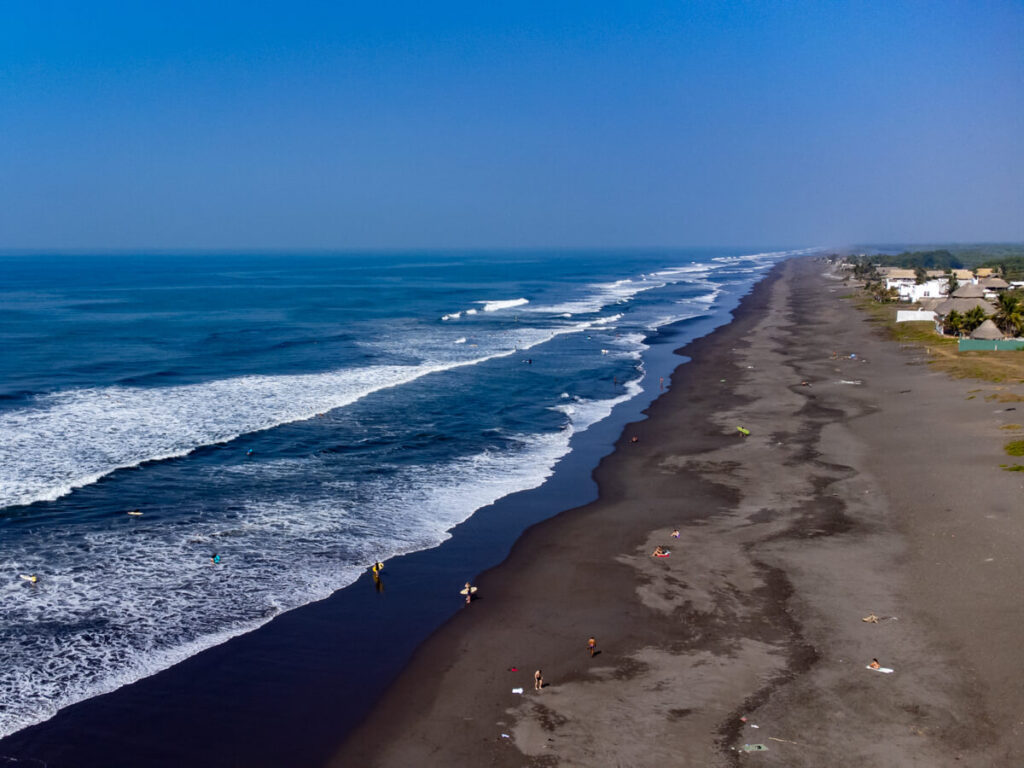
El Paredón Beach (Playa El Paredón) is a long stretch of black volcanic sand lined with driftwood, palms, and low-rise buildings with thatched palapa roofs. It was shaped by centuries of eruptions in Guatemala’s Pacific volcanic chain. The dark shoreline is formed from eroded lava and ash carried down from inland volcanoes, ground fine by the ocean and deposited along the coast.
The Pacific Ocean here is powerful and not ideal for casual swimming, but it’s visually dramatic, with an expansive open horizon. Thanks to its orientation, Playa El Paredón is one of the few places where you can see both the sunrise and sunset.
Beach life revolves around surf lessons, volleyball games, hammocks, and sunset gatherings. There are no real beach clubs, but the most popular area is in front of popular hotels like Driftwood Hostel and Cocori Lodge, which have their own sea view bars.
Stretching for miles along the shoreline, it’s remarkably easy to find an isolated patch of sand, especially outside peak weekends. Walk just a few minutes in either direction from the main access points and the beach quickly feels wild and empty, perfect for sunbathing, reading, journaling, picnicking, or watching the surfers.
El Paredón’s beach is a bit of a heat trap, with intense temperatures rising from mid-morning, so it’s best to go early in the morning or later in the afternoon for sunset. You’ll also need shoes like flip-flops, as the sand gets too hot to walk on.
While it’s not known for marine life, we’re convinced we saw a whale splashing off the coast, although it was so far away it was hard to tell. They do migrate along this route, so it wouldn’t be surprising. The beach is also an important turtle nesting site, and several species come ashore to lay eggs in the sand. Local conservation projects work to protect nests and release hatchlings during the season (June to November for nesting and September to early December for hatchlings).

El Paredón Surfing
El Paredón has become Guatemala’s main surf hub and has actually been heralded as one of the top 10 surf spots in the world by The Guardian. Its consistent Pacific swells make it suitable for beginners and intermediate surfers, with several surf schools offering board rentals and lessons. Learning to surf here is one of the most fun things to do in Guatemala.
The main surf breaks in El Paredón run directly in front of the central stretch of beach, particularly around Driftwood Hostel and Paredon Surf House, where you’ll usually find the biggest concentration of surfers and occasional lifeguard presence.
Conditions can shift quickly, with strong riptides and powerful shore breaks that make the ocean here better suited to surfing than casual swimming. Taking a lesson with a local instructor is recommended if you’re new to surfing.
Conditions vary by season, but year-round surf is one of the town’s biggest draws. Having said that, we can’t honestly say El Paredón is the easiest place to learn. Swimming out to the break can be tough, especially when the tide is going out, and beginners often struggle against the current before they even catch a wave. The surf can be messy, with shifting sandbanks, punchy beach breaks, and cooler Pacific water temperatures compared to the Caribbean side of Central America, too.
Sticking to the main surf area is wise unless you’re very experienced and confident in reading conditions. The riptides and constantly changing breaks mean it’s not somewhere to wander too far down the beach in search of empty waves without understanding the ocean first.

What is the vibe like in El Paredon?
The vibe in El Paredón is relaxed, social, and slightly bohemian. Days revolve around early-morning surf sessions, lazy afternoons in hammocks, and sunset drinks by the beach. It’s often far too hot to do much, so life feels really slowed down.
El Paredón is constantly evolving. What was once a sleepy fishing village with a handful of surf shacks has seen steady infrastructure growth in recent years, particularly after the major fire in March 2025 that reshaped part of the beachfront and accelerated rebuilding.
There’s also now a noticeably growing party scene, centred largely around hostels like Driftwood Hostel and Mellow Hostel. Evenings mean DJ sets, beer pong, themed parties, and social backpacker get-togethers, especially in peak dry season. But that atmosphere is concentrated in these bubbles, and if you step away from the main strip, the rest of the town can feel surprisingly quiet.

El Paredón Accommodation
Accommodation in El Paredón has expanded quickly over the past few years, especially along the main beachfront strip. You’ll find a mix of social hostels, boutique stays, surf camps, and mid-range eco-style hotels scattered throughout the dusty streets. Though there are some upscale options, luxury hotels here are still fairly low-key.
Air conditioning isn’t always guaranteed, so be sure to check the amenities before booking (we’d say it’s absolutely necessary!). Power cuts can still happen, too, so expectations should stay flexible.
Prices rise noticeably during the dry season and on weekends, when visitors arrive from Antigua and Guatemala City. Booking ahead in peak months (December to April) is a good idea, especially if you want a private room rather than a dorm.
Top El Paredón Hotels

El Paredón Activities
Activities in El Paredón revolve around the ocean. Surfing in El Paredón is obviously the main draw, with lessons, board rentals, and daily sessions shaping the town. Even if you’re not surfing, mornings tend to revolve around watching the waves and grabbing coffee before the heat sets in.
El Paredón is where Dan had his first-ever surf lessons, and we enjoyed a morning routine of grabbing iced coffees from El Paredón Coffee before heading to the beach, where I’d sit on the sand with a book and drink while Dan took to the swell with his instructor.
Beyond the beach, mangrove tours through the nearby canals offer a quieter side of the coast, where you can spot birds and other Guatemalan wildlife away from the surf scene. Turtle hatchling releases also take place during nesting season through local conservation projects, giving visitors the chance to witness one of the coast’s most meaningful natural events.
There’s plenty more to fill in the rest of the day, including yoga classes, beach volleyball, sunset gatherings, and hostel-led events.

How to get to El Paredón
Considering El Paredón is so small, it’s still quite easy to get to. There’s no airport nearby, so all travel to El Paredón is done overland. The roads are paved most of the way, although the final stretch into town is sandy and bumpy.
The easiest way to get to El Paredón is by shared shuttle. These can be booked directly from Antigua and Guatemala City. They run daily and take around 2.5-3 hours, depending on traffic leaving Antigua. Prices are usually $25-35 USD per person.
You can also arrange a private transfer, which typically costs $90-130 USD per vehicle. This makes sense if you’re travelling as a group, want flexibility with departure time, or just want a smooth door-to-door experience.
While you can technically take a taxi to El Paredón, it’ll set you back at least $100 USD. Uber could be cheaper, but you’ll probably struggle to get one that’ll agree to take you.
The cheapest way to get to El Paredón is to take a chicken bus. These repurposed school buses are bright, crowded, and open to the elements, weaving their way along coastal roads while locals and travellers alike hop on and off at villages along the way.
Antigua to El Paredón
The easiest way to get from Antigua to El Paredón is by tourist shuttle. There are at least two Antigua to El Paredón shuttles a day, with the standard departures being at 9:00 AM and 2:00 PM. It only takes 2-3 hours, depending on traffic and pick-up stops, so it’s pretty quick and convenient. They cost around $25-35 USD per person.
Chicken buses leave from the Chicken Bus Station in Antigua. There are a couple of departures every hour, and you need to change in Escuintla and Sipacate. While it’s only the equivalent of a few dollars, it’ll take you 5-6 hours in hot and crowded conditions and isn’t practical if you have luggage.
Guatemala City to El Paredón
If you fly internationally into Guatemala, you’ll land at Guatemala City La Aurora International Airport (GUA). From Guatemala City, the journey to El Paredón takes around 2-3 hours, depending on traffic.
A private transfer is the most straightforward option and usually costs $100-150 USD per vehicle. If you’re arriving on an international flight and heading straight to the beach, this is by far the least stressful option.
Guatemala City to El Paredon shuttles do operate from Guatemala City, but they’re less frequent than from Antigua and may require you to reach a central pickup point first. They typically depart at 6:00 and 7:00 AM, taking around 4-5 hours, as they stop in Antigua, too. Expect to pay around $30-40 USD per person.
If you’re coming from further afield in Guatemala, like Río Dulce, Semuc Champey, or Flores, it’s easiest to catch a shuttle to Guatemala City and change for El Paredón here.
Lake Atitlán to El Paredón
Travelling between Lake Atitlán and El Paredón is common, especially for backpackers moving between the mountains and the coast.
The simplest option is a Lake Atitlán to El Paredon shuttle, which usually takes 4.5-5.5 hours, depending on your departure village and traffic conditions. Expect to pay around $30-40 USD per person. The shuttles typically leave from Panajachel at 1:00 PM and San Pedro La Laguna at 2:00 PM.
If you’re staying in a lakeside village other than Panajachel or San Pedro, you’ll likely first need to take a lancha (boat) to Panajachel to meet the shuttle. You can find out more about getting to, from, and around the lake in our Lake Atitlán transportation guide.
Bookaway is amazing for booking shuttles and transport throughout Guatemala. You can get 5% off with our code THOROUGHLY5.

How to get around El Paredón
El Paredón is tiny, so it’s pretty easy to navigate. Once you arrive, you won’t need much transport at all.
On foot
Most people get around El Paredón entirely on foot. The village is essentially a grid of sandy roads running parallel and perpendicular to the beach. Walking from one end of town to the other takes about 10-15 minutes, so it’s easy to get to the beach or El Paredón’s restaurants.
It’s a short distance, but not to be underestimated, especially in the midday heat. There’s very little shade on the roads, and we were sweating after a few minutes’ walk. Flip-flops are fine most of the time, but after heavy rain, the sand roads can get muddy, too.
By tuk-tuk
There are a handful of tuk-tuks operating in El Paredón, mainly for short rides to accommodation on the edges of town or for trips toward neighbouring villages. Fares are low, but still agree on a price before setting off.
By boat
Boat trips along the mangroves or toward nearby beaches can be arranged locally, but these are tours rather than regular transport routes.
Where to go after El Paredón
Most travellers continue from El Paredón inland after a few days on the coast.
The most common next stops are:
Shuttles connect El Paredón to all of these destinations, although some longer routes may require an early start. There are some agencies in town, but we found using Viator, GetYourGuide, Bookaway (get 5% off with our code THOROUGHLY5), and GuateGo useful for booking in advance.
El Paredón to Guatemala City
The journey back from El Paredón to Guatemala City takes around 2-3 hours, traffic depending. El Paredon to Guatemala City shuttles cost roughly $30-40 USD per person, while private transfers range from $100-150 USD per vehicle.
If you’re heading to the airport for an international flight, leave plenty of buffer time. Traffic entering Guatemala City can be unpredictable, especially during weekday rush hours (roughly 6:30-9:00 AM and 4:00-7:00 PM).
El Paredón to Lake Atitlán
El Paredón to Lake Atitlán shuttles run daily and take around 5 hours, depending on conditions. Prices are typically $30-40 USD per person, and most services drop off in Panajachel. If you’re staying in another lakeside village, you’ll need to factor in the boat transfer across the lake.
When to visit El Paredón
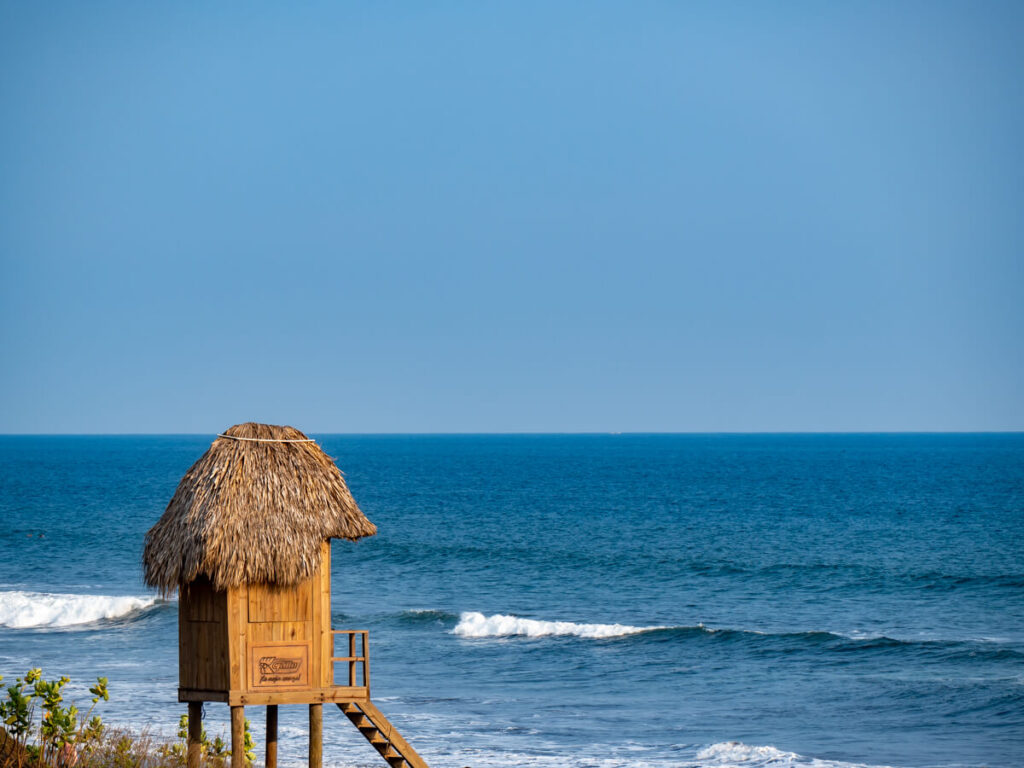
The best time to visit El Paredón is during the dry season, roughly from December to April, when the sun is consistent, the roads are easier to navigate, and the surf is at its most reliable. This is the peak season and most popular time to visit, so book accommodation ahead of time. We visited in peak season, but the town often just felt empty at times, as people tend to congregate in specific areas like hostels and the beach.
The rainy season from May to October brings afternoon showers, rougher roads, and stronger riptides, which can make swimming or beginner surfing trickier. That said, the wet season is quieter, the landscape is greener, and some surf breaks can actually be more consistent for experienced surfers.
El Paredón Weather
Temperatures in El Paredón stay fairly warm year-round, averaging 27-32°C (80-90°F) during the day and cooling to around 22-24°C (72-75°F) at night.
The dry season has low humidity, plenty of sun, and calmer winds, while the rainy season sees higher humidity, occasional heavy showers, and the Xocomil winds that can whip up stronger swells along the coast.
Ocean temperatures are relatively consistent, though slightly cooler during the rainy season due to increased rainfall and cloud cover.

How long to spend in El Paredón
Most travellers spend 2-4 nights in El Paredón. We spent 3 nights here and found it was perfect.
A couple of days is enough to surf, relax on the volcanic black-sand beach, and catch a few sunsets, but three to four nights allow time for turtle releases, mangrove tours, and exploring the quieter parts of town.
If you’re combining a surf-focused trip with stops in Antigua, Lake Atitlán, or other coastal towns, even a long weekend can be enough to get a feel for the place.
If you’re visiting for a surf retreat, we’d recommend 5-7 days or longer.
Is it safe to go to El Paredón?
El Paredón is generally considered safe for tourists. The town is small, locals are used to visitors, and petty crime is relatively low compared with Guatemala City or some other coastal towns. That said, standard precautions apply: keep an eye on your belongings and avoid wandering far from main areas at night.
It’s really important to be careful in the water due to strong riptides. Surf zones near Driftwood Hostel and Cocori Lodge have lifeguards, but more isolated stretches of beach can be dangerous if you’re inexperienced.

Is El Paredón worth going to?
The standard Central America gringo trail pretty much avoids the coasts from Belize to Nicaragua and Costa Rica, but if you don’t stop at the beaches in the countries in between (Guatemala and El Salvador), you’re missing out.
El Paredón is absolutely worth visiting if you’re looking for a laidback coastal escape in Guatemala that combines surfing, nature, and a slower pace of life. The beach itself is long, beautiful, and relatively quiet, the surf is world-class if you’re an intermediate to advanced surfer. There are also some conservation-focused activities like turtle releases that can add a meaningful dimension to your visit.
That said, the town has limited infrastructure, so it’s not ideal if you’re expecting luxury resorts, nightlife, or a fully developed tourist scene. It’s also a detour from more popular destinations, so if you have limited time in Guatemala, you might want to skip it in favour of other places.

What to pack to visit El Paredón
To ensure an enjoyable experience in El Paredón, it’s important to pack the right things. Don’t forget to pack your:

Tips for visiting El Paredón
Here are a few practical tips that will make your time in El Paredón smoother, safer, and far more enjoyable:

El Paredón FAQs
To help you plan your trip to El Paredón, we have answered some frequently asked questions below.
What is El Paredón known for?
El Paredón is known for its long black-sand beach, strong surf, and laidback coastal vibe. The area is also an important nesting site for sea turtles and attracts surfers from across Guatemala and beyond.
Is El Paredón a party town?
El Paredón has a growing party scene, mostly concentrated around hostels like Driftwood and Mellow. The rest of town remains quiet and low-key, with the vibe shifting depending on the season and time of day.
How do you get to El Paredón, Guatemala?
The easiest way to get to El Paredón is by shuttle or private transport from nearby cities like Guatemala City or Antigua. Roads are mostly paved but can be rough in the rainy season, so a 4×4 vehicle is recommended if you attempt to drive here.
What is the closest airport to El Paredón, Guatemala?
The closest major airport is La Aurora International Airport in Guatemala City, about 70 miles (115 km) away.
How do you get from Guatemala City to El Paredón?
You can take a shared or private shuttle or a chicken bus with multiple changes to El Paredón. Most travellers prefer pre-arranged shuttles for convenience and reliability.
How do I get from Antigua to El Paredón?
From Antigua, shuttles are the most common option to El Paredón, taking roughly 3-4 hours. Public buses are available but require transfers and can be slower.
Are there crocodiles in El Paredón, Guatemala?
Yes, crocodiles inhabit the estuaries and mangrove areas near the beach. They are rarely seen on the open beach, but caution is advised if exploring rivers or mangroves.
Can you drink the tap water in El Paredón?
No, tap water in El Paredón is not safe to drink. Always use bottled or filtered water for drinking and brushing teeth. Bring your reusable filter water bottle to stay safe.

Read next:
15 Exciting Things to Do in El Paredón
Where to Stay in El Paredón: 17 Hotels For Every Budget from Boutique to Boujee
17 Cool Cafés, Bars, and Restaurants in El Paredón
A Complete Guide to Surfing in El Paredón
Our Guatemala Destination Guides:
Our Guatemala Travel Guides:
