21 Animals in Guatemala and Where to See Them

Discover fascinating animals in Guatemala that you can see, and the best places to find them, in this wildlife guide.

This post may contain affiliate links, which means we might earn a small commission on anything purchased through these links at no extra cost to you. Learn more on our disclaimer page.
We weren’t sure if Guatemala was going to be able to live up to the incredibly biodiverse Costa Rica or the Belize Barrier Reef‘s vast array of life. Sandwiched between the jungles of Mexico, beautiful Belize, diverse Honduras, and tiny El Salvador, it might not be the first place you think of in Central America for wildlife. But we managed to see animals during our trip to Guatemala that were on our wildlife bucket list that we had seen nowhere else in the region.
With 14 distinct ecoregions, including cloud forests, tropical lowlands, mangroves, and Caribbean coastline, there are lots of animals in Guatemala – you just need to know where to find them. Whether you’re hiking, snorkelling, or floating down jungle rivers, here are the most common animals you can see in Guatemala and where to see them yourself.

More from Guatemala
What types of animals live in Guatemala?
About a third of Guatemala is still forested, and many of those forests are primary, which supports a range of animals, from tiny rainforest mammals to huge marine creatures.
With over 240 species of mammals, 700+ bird species, and hundreds more reptiles, amphibians, and butterflies, Guatemala is a wildlife-watching paradise. Which was great news for us, as wildlife watching is our favourite activity to do while travelling.
So naturally, wildlife watching is one of the best things to do in Guatemala. Many species here are shy and nocturnal, but with patience (or a good local guide), you can spot them in national parks and protected reserves.
Sadly, these animals are under threat from deforestation, illegal logging, and habitat degradation across its terrestrial and coastal landscapes. But Guatemala protects a large portion of its land via national parks and reserves, helping preserve some of its most iconic wildlife for you to see today.

1. Monkeys
Guatemala is home to two monkey species:
You’ll usually hear them before you see them, especially the black howlers – their deep, roaring calls can carry for over 3 miles (5 km) because they use a large, hollow hyoid bone in their throat that works like a built-in resonator.
These primates spend nearly all their time high in the forest canopy, where they feed, rest, and travel, which makes ground-level sightings trickier but not impossible. Your best chance of spotting them is on early-morning hikes in the Maya Biosphere Reserve or along rivers in the Petén near Flores, where vast stretches of mature rainforest give them the tall trees, fruiting plants, and undisturbed habitat they need.
We heard and saw troops of monkeys swinging through the trees in Tikal National Park. Being able to climb the temple tops was a real advantage as it gave us views over the whole canopy.
Both species live in social groups, and if you’re lucky, you’ll see them grooming each other, feeding on figs or cohune palm fruit, or launching themselves gracefully from tree to tree. They’re under pressure from deforestation, especially in northern Guatemala, where forests are cleared for agriculture and cattle ranching. But if you stay still and quiet on the trail, you can often watch them for several minutes without disturbance.

2. White-nosed coatis
White-nosed coatimundis are curious, long-snouted members of the raccoon family that roam forests, ruins, and even roadsides in search of insects, fruit, and the occasional snack dropped by travellers. You’ll often spot them before they notice you because they travel in noisy, social groups called ‘bands’ of up to 20 females and juveniles, rustling through leaf litter as they forage.
Coatis are famously known to hang around Tikal, Yaxhá, and the surrounding Maya Biosphere Reserve, where they’re especially active in the early morning when temperatures are cooler and food is easier to find. We saw several groups of them on a morning Tikal tour, and I especially became absolutely obsessed with their playful nature and adorable looks.
Coatis are surprisingly agile climbers, often scrambling up trees with their long tails held upright like little antennae for balance. Although they can become bold around tourist areas, it’s important not to feed them, as human food can make them sick and encourage aggressive behaviour.

3. Agoutis and pacas
Guatemala is home to three closely related species you can spot in the forest undergrowth:
Agoutis and pacas fill a similar ecological niche, but they behave quite differently once you know what to look for. Agoutis are slim, deer-like rodents with long legs and a quick, nervous gait. You’ll often see them darting across clearings or hear the sharp crack of a seed as they split it open with powerful jaws. We saw several darting away into the shadows at Mayan Ruins in Belize before getting a really good look at one in Guatemala.
Pacas, on the other hand, are heavier, barrel-shaped animals with white spots along their sides, and they move more slowly and cautiously, especially during the day. Both animals are essential ‘seed managers’ of the rainforest: agoutis bury seeds and forget many of them, helping new trees grow, while pacas disperse seeds through their diet of fallen fruit.
Your best chance of seeing either species is in Tikal National Park, Yaxhá, and forest areas around Flores, where open plazas meet dense jungle, creating perfect foraging edges. These locations work well because agoutis like to feed in sunlit clearings, while pacas prefer the shady forest floor but occasionally venture out when it’s quiet.

4. Tapirs
Baird’s tapirs are shy, nocturnal mammals that look a little like a mix between a small rhino and a pig, complete with a flexible snout they use to grab leaves. They’re surprisingly quiet for such large animals, and you’ll often only notice them by the soft splash they make while wading through muddy ponds or rivers at night.
Tapirs are solitary for most of the year, roaming long distances to feed on leaves, fruits, and aquatic plants. Sadly, they’re endangered due to deforestation, road development, and hunting, which fragment the large territories they need to survive. It’s very rare that you’ll see one, so count yourself really lucky if you do.
The best places in Guatemala to spot tapirs in Guatemala are Las Guacamayas Biological Station, Laguna del Tigre National Park, and Tikal’s deeper forest trails, where remote wetlands and thick jungle give them the cover and water sources they need. These locations work well because tapirs rely on dense vegetation for shelter and prefer areas with minimal human disturbance.

5. Armadillos
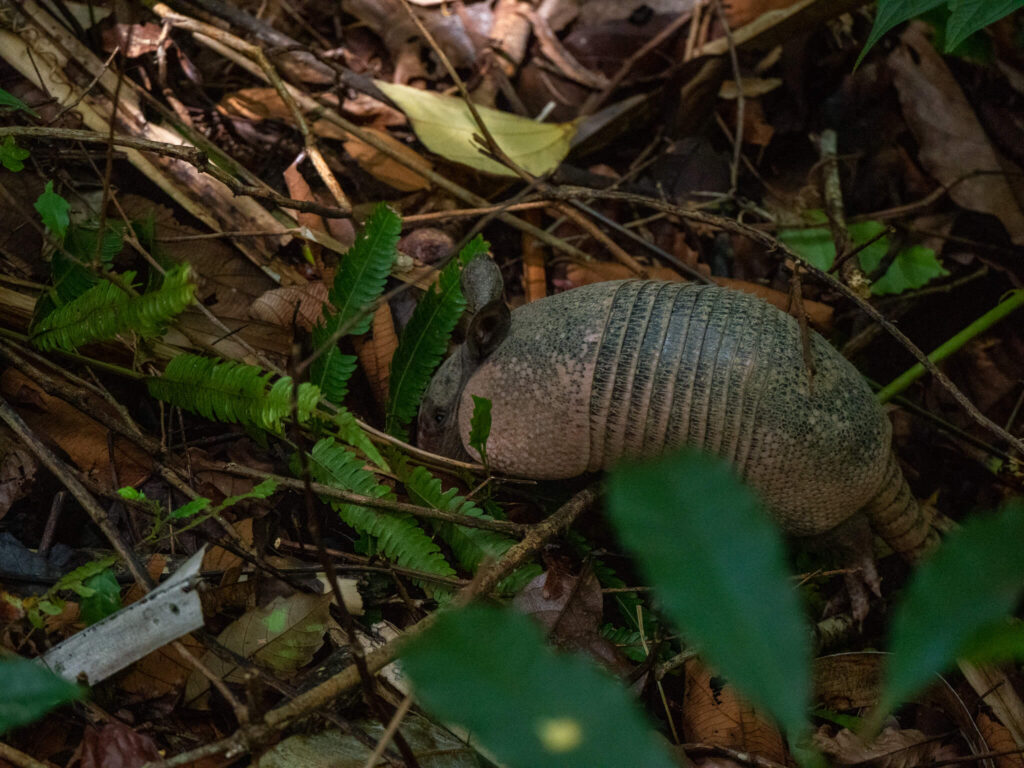
Guatemala is home to several armadillo species, including:
Armadillos are elusive, armour-plated insect hunters that spend much of their time snuffling through leaf litter in search of ants, beetles, and worms. You’ll usually hear them before you see them – their digging and rustling can sound surprisingly loud in the quiet forest understory. This is why we needed to look to the side of the trail in Manuel Antonio National Park, where we saw a little group of them making noise in the undergrowth.
Your best chance of spotting one is on night walks in Tikal, Yaxhá, or the Maya Biosphere Reserve, where dense forest floors hold plenty of insect life. These areas are ideal because armadillos prefer soft, humid soil for burrowing and forests with minimal foot traffic.
6. Jaguars
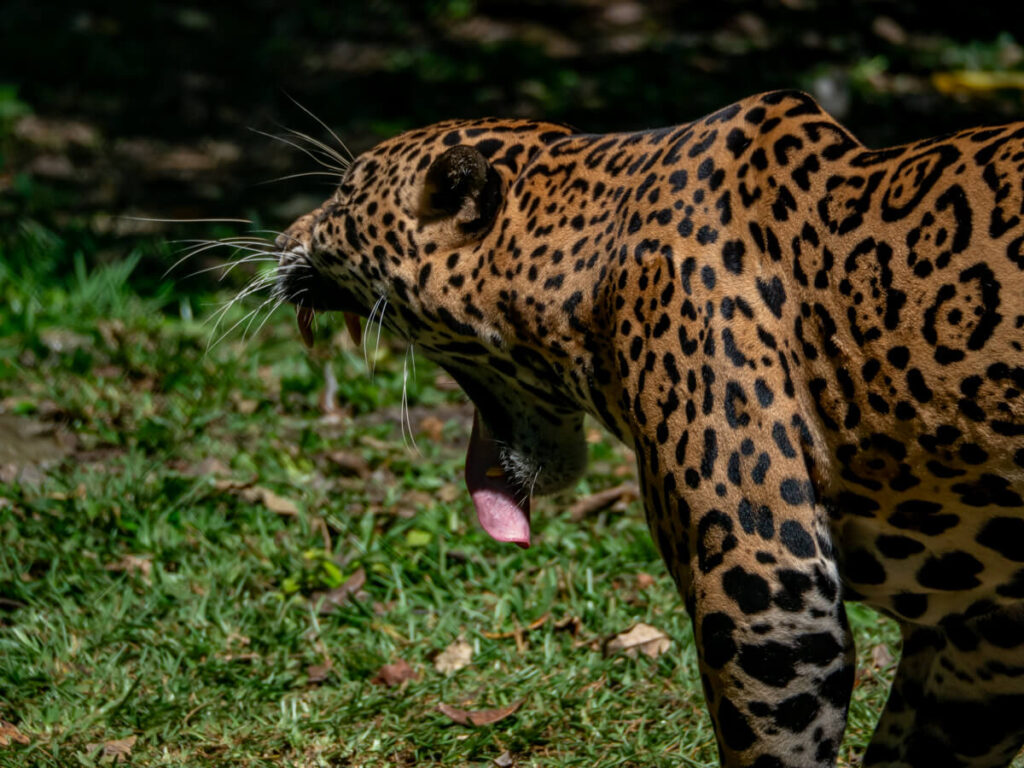
Jaguars are the most powerful predators in the Maya Forest, yet spotting one is extremely rare, as they’re elusive, mostly nocturnal, and roam enormous territories. Most travellers experience jaguars indirectly by seeing their tracks along remote trails or hearing the deep, coughing roar males use to mark their presence.
Your best chance of encountering jaguar signs is in the Maya Biosphere Reserve, Mirador Basin, and Laguna del Tigre, where large, uninterrupted rainforest tracts allow these big cats the space they need. Jaguars are solitary animals that prey on deer, peccaries, and even crocodiles, using their incredibly strong bite to pierce skulls or shells.
Unfortunately, jaguars are highly threatened by deforestation, poaching of their prey, and illegal wildlife trafficking. We got super lucky with a wild sighting in Cockscomb Basin National Park in Belize, but most travellers won’t see one.
If you’re staying near Flores, you can head to ARCAS, Guatemala’s first wildlife rescue and rehabilitation centre, which is home to some wild cats, including a jaguar, that have been rescued from the illegal exotic pet trade and provided a home.
7. Other big cats
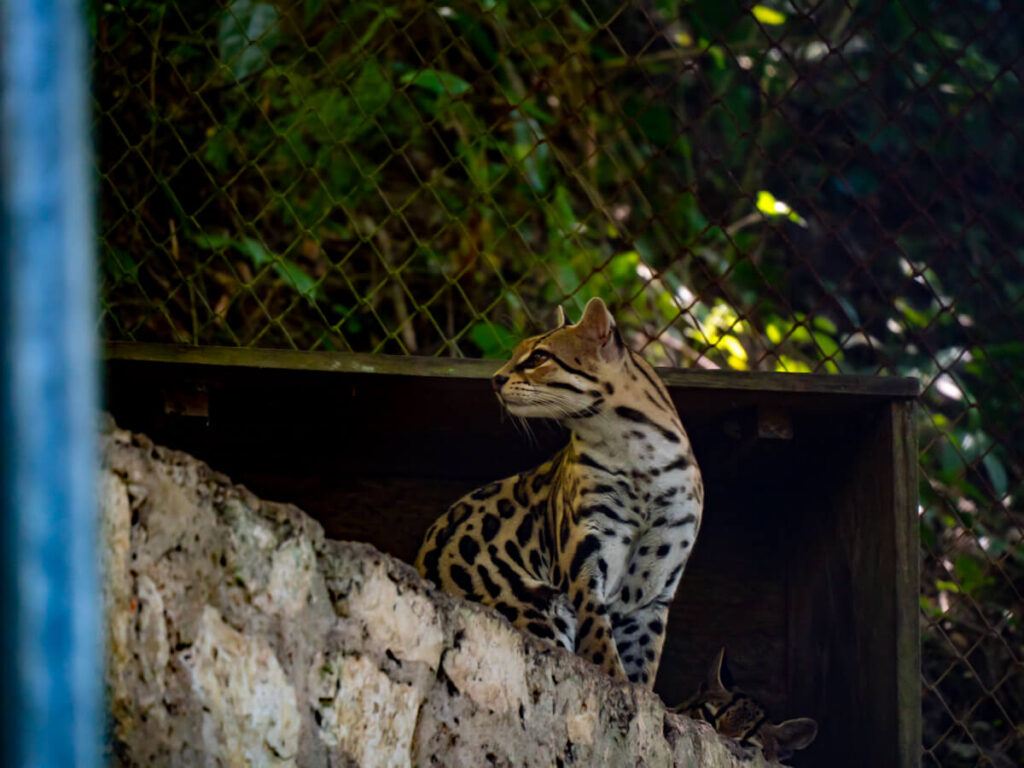
Ocelots are smaller, beautifully patterned wild cats that are mostly active at night. You’re far more likely to catch them on a camera trap than in person, but travellers sometimes glimpse them crossing roads or forest clearings at dawn or dusk. The best places for potential sightings are Tikal, Yaxhá, and the deeper paths of the Maya Biosphere Reserve, where dense vegetation gives them the cover they need to hunt rodents, birds, and reptiles.
Ocelots are excellent climbers and often stash their prey in trees, returning later to feed. Like jaguars, ocelots face pressure from habitat loss and the illegal pet trade, which remains a threat in parts of Central America. We saw a couple in ARCAS.
Beyond the famous jaguar and the sometimes-seen ocelot, Guatemala is home to three more wildcat species that roam its forests and highlands:
Birds you can see in Guatemala
Guatemala is a birder’s dream thanks to its dramatic altitude changes, which create everything from humid lowland rainforest to cool, moss-covered cloud forest. Migratory routes also pass through the country, so many species appear seasonally, especially along coastal wetlands. Birdwatchers love Guatemala because you can see tropical species, high-altitude forest birds, and wetland wildlife without travelling far. With patience, binoculars, and early mornings, you can discover dozens of species in a single outing.
8. Resplendent quetzals
The resplendent quetzal is Guatemala’s most iconic bird, famous for its iridescent green plumage and the males’ long, streaming tail feathers. These birds live in high-elevation cloud forests, especially in places like Biotopo del Quetzal, the Sierra de las Minas, and the highlands around Antigua and Lake Atitlán, where the cool, misty climate and abundance of avocado trees provide their preferred habitat.
The easiest way to see them is to take a guided birdwatching tour in Tepepul Nature Reserve from Santiago Atitlán – one of the best places to hike in Lake Atitlán. They also live in the forests on the slopes of Acatenango Volcano.
Quetzals feed on wild fruit like avocado and small insects during their breeding season. The best time to visit Guatemala to see them is between March and May, when they nest in natural tree cavities. Sadly, they face population pressure from deforestation and habitat fragmentation, particularly as cloud forests are converted for agriculture.
For the best chance of seeing one, join a guided early-morning birding tour, as local guides know exactly where the quetzals hang out. We spotted a quetzal in Costa Rica, and they really are as beautiful as everyone says.

9. Scarlet macaws
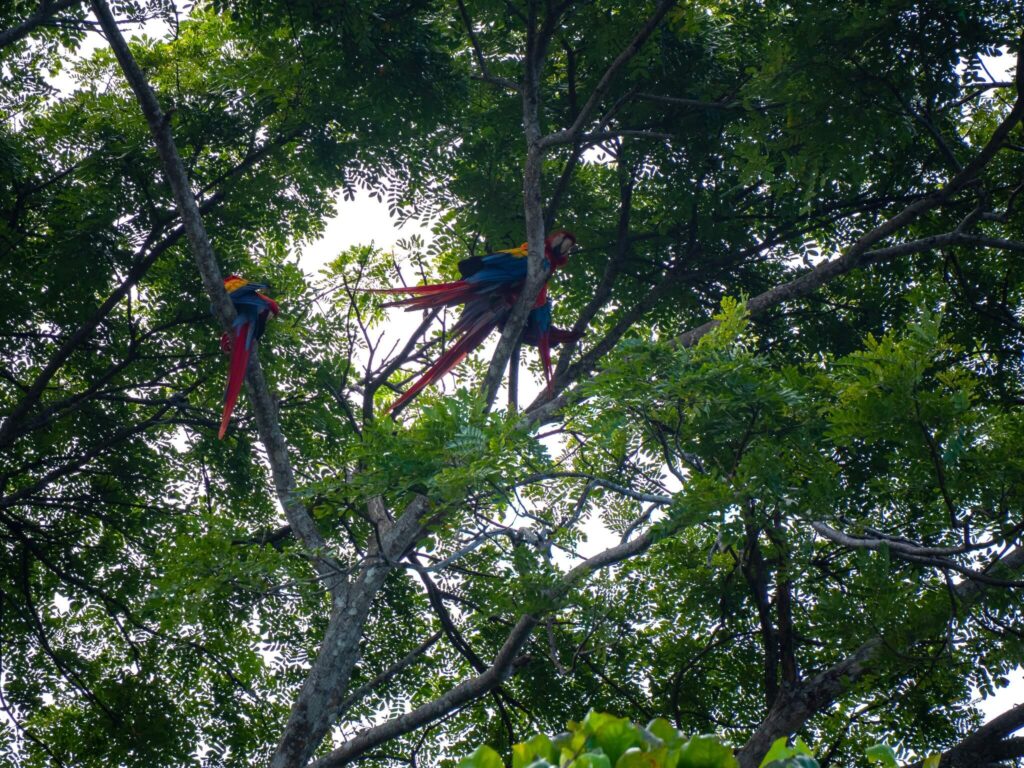
With bright red bodies, bright yellow underwings, and cobalt-blue flight feathers, scarlet macaws are one of the most colourful birds in the rainforest. You’ll often spot them flying in pairs or small flocks above the rainforest canopy. Their loud, squawky screeches carry a long way, so you’ll likely hear them before they come into view.
The best places to see scarlet macaws are in Petén, particularly around Tikal National Park, El Perú-Waka’, or the Maya Biosphere Reserve, where protected forest patches preserve their nesting trees.
Unfortunately, scarlet macaws were once nearly extinct and are threatened by habitat loss, nest-robbing, and illegal trade, making protected areas and conservation projects vital to their survival. We saw quite a few scarlet macaws in Honduras, especially around Copán Ruinas, where a local bird park (Macaw Mountain) helps to rehabilitate, reproduce, and release them.
10. Toucans
Guatemala is home to several toucan species, including:
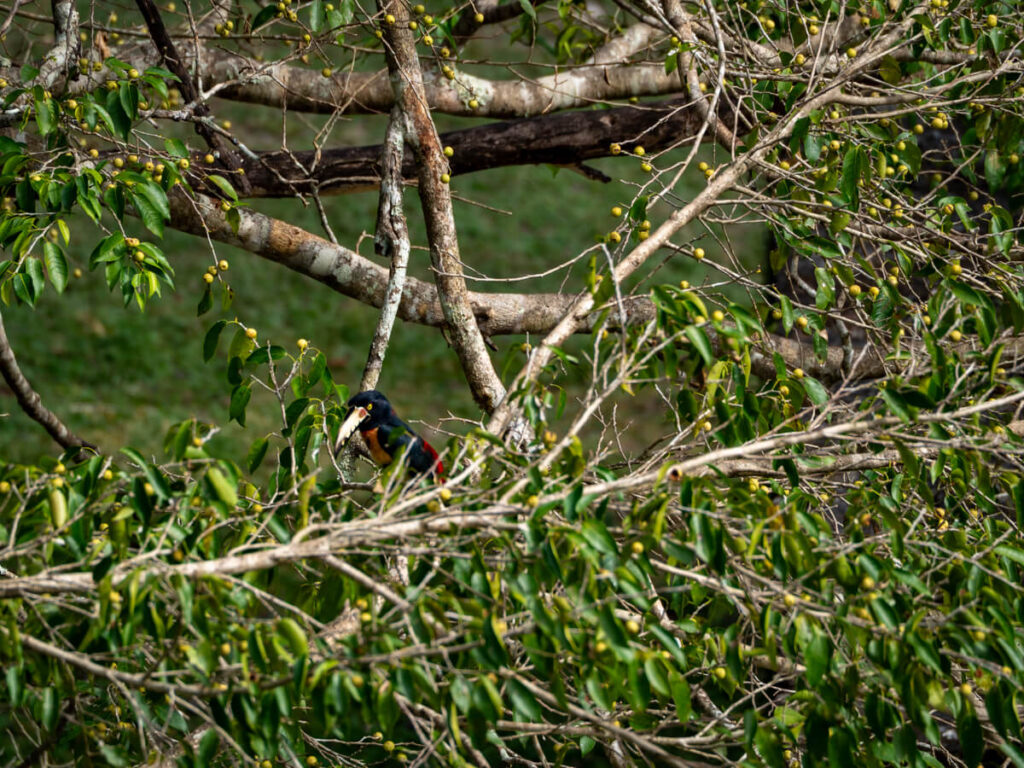
Toucans are hard to miss thanks to their enormous, brightly colored bills and sociable nature. They often perch in pairs or small groups high in the forest canopy. You’re most likely to spot them in lowland rainforests and foothill forests, such as in the Maya Biosphere Reserve or along river valleys near Izabal, where fruiting trees abound. We saw the acari pictured below at Tikal, which was a highlight of our Guatemala itinerary.
Their croaking, frog-like calls ring through the forest in the morning, helping you pinpoint where they are before they reveal themselves. Toucans feed mainly on fruit, but they’ll also grab insects and eggs, making them important seed dispersers in their habitat. Because they are relatively tolerant of forest edges, guided walks in reserves or even lodge trails often deliver great views, especially early or late in the day.
11. Parrots and parakeets
Several parrot and parakeet species can be found in Guatemala, including:
These colourful parrots and parakeets often flit noisily through the canopy and forest edges. They inhabit a variety of habitats, from lowland rainforests in Petén to second-growth forest around archaeological sites, because they need both tall trees for nesting and open areas for feeding.
In the early morning or late afternoon, flocks often gather to forage on fruiting trees or to rest together. Unfortunately, many of these species face pressure because of habitat loss and capture for the pet trade, which makes sightings in the wild especially meaningful.

12. Motmots
Motmots are whimsical birds with long, racket-shaped tails that swing gently when they perch. Several species call Guatemala home, including:
You’ll often find them on shaded branches along forest trails, especially in cloud-forest reserves (like near Lake Atitlán) and foothill forests in Alta Verapaz, where dappled light and dense understory suit them. Because motmots are territorial, guided birding tours often know specific perches where they consistently return, giving you a good chance to spot them.

13. Guatemalan pygmy owl
A tiny owl with a big personality, the Guatemalan pygmy owl is only around 17 cm (6.5 in) long, yet bold enough to call in daylight and hold its ground against much larger birds.
You might see one perched on a thin branch in montane pine-oak or cloud forests, especially around the highlands of Cobán and Sierra de las Minas. Because it’s partially diurnal (unlike many other owls), it’s surprising but possible to see it during a mid-morning forest walk, perfect for wildlife photography.

Reptiles you can see in Guatemala
Guatemala’s warm climate and mix of forests, swamps, rivers, and coastlines create an ideal habitat for a huge variety of reptiles and amphibians. You might encounter these animals while hiking jungle trails, paddling rivers, or exploring mangroves.
14. Crocodiles and caimans
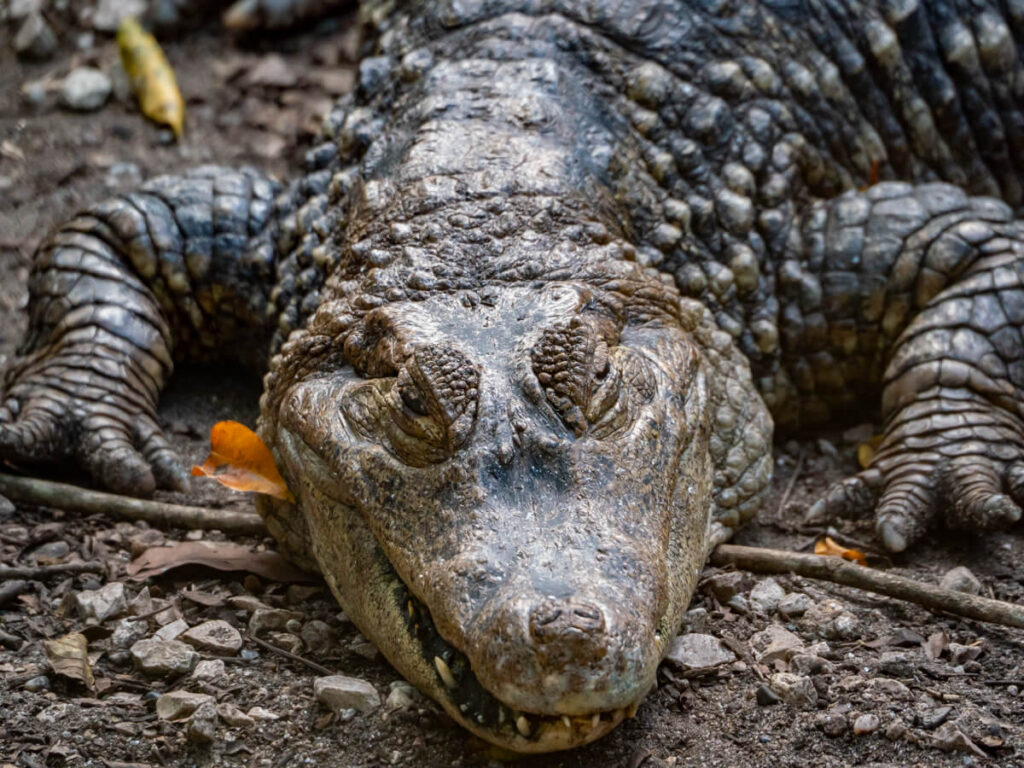
Guatemala is home to three native crocodilian species:
These reptiles thrive in Guatemala’s warm wetlands, lagoons, and mangrove-lined rivers, where the slow-moving water and dense vegetation give them plenty of places to hide. The Pacific Coast mangroves, Lake Izabal (Río Dulce and Livingston), and remote wetlands in Petén are some of the best places to see them, especially at dusk when they become more active.
American crocodiles prefer brackish coastal water, while Morelet’s crocodiles and caimans live mostly in freshwater, so the habitat you’re exploring often determines which species you’ll spot. Keep your distance and stay inside the boat when viewing them.
15. Iguanas and lizards
Guatemala has two common iguana species you’re likely to see:
Green iguanas spend most of their time in trees near rivers and lagoons, basking on branches where sunlight filters through the canopy. The black spiny-tailed iguana is more terrestrial and active, often seen sprinting across archaeological sites, where they love the warm stones and open clearings.
Guatemala is also full of smaller, fast-moving, and brilliantly adapted lizards that occupy nearly every habitat, from lowland rainforest to pine-oak highlands and even urban gardens. Some common groups and species include:

16. Snakes
Over 140 species of snakes have been recorded in Guatemala, including both non-venomous and venomous varieties. Some of the species you may encounter include:
Snakes are most common in lowland rainforests like Petén, Río Dulce, Sierra de las Minas, and along the humid trails near Semuc Champey and Lanquín. They play a key role in controlling rodent populations and keeping ecosystems balanced. Seeing a snake in the wild is relatively rare because most species are shy and avoid humans, especially during the heat of the day. A friend we made in Semuc Champey (who we then kept bumping into all around Guatemala later on in our trip) actually had a snake in their bedroom, which the staff in our hotel had to remove.
While venomous snakes do live in Guatemala, encounters are uncommon if you stay on marked trails and wear proper footwear.

17. Frogs
Guatemala’s forests and cloud-forests are home to dozens of frog and toad species, including colourful rainforest species and high-elevation endemics. Some species found here include:
Frogs are most active during the rainy season from May to October, when temporary pools and swollen streams create perfect breeding conditions. Cloud forests like Biotopo del Quetzal, Sierra de las Minas, Atitlán Nature Reserve, and parts of Alta Verapaz are excellent places to hear loud nighttime choruses.
Night walks (like those offered in Costa Rica’s La Fortuna) are the best way to see them, especially in humid areas where leaves glisten and small eyes reflect in torchlight.

18. Butterflies
Guatemala boasts hundreds of butterfly species, thanks to its range of ecosystems, from tropical lowlands to cool cloud forests. Some of the species you can see include:
Butterflies thrive in sunny, flower-rich areas, making places like Sierra de las Minas, Tikal, Laguna Lachúa, and Atitlán excellent spots for sightings. Early morning is the best time to watch them warm their wings in sun patches, while mid-morning brings a burst of activity as they feed on nectar and fallen fruit. Their presence is especially noticeable during the rainy season, when humidity boosts plant growth and nectar availability.

Marine animals you can see in Guatemala
Guatemala’s coastline may be small, but its Pacific and Caribbean waters host an impressive variety of marine life. Mangroves, seagrass beds, and open ocean zones support species that migrate, breed, or feed along the coast. Snorkelling, boat tours, and seasonal whale-watching trips aren’t as popular here as they are in neighbouring countries, but you can still enjoy them if you know where to go.
19. Manatees
Guatemala is home to the West Indian manatee, which lives primarily in the Bahía de Amatique, Río Dulce, and near the mouth of Lake Izabal. These gentle giants prefer calm, shallow waters rich in seagrass, which makes Guatemala’s warm estuaries ideal habitat. Manatees are extremely shy and slow-moving, so, unlike swimming with manatees in Belize (which takes place in crystal-clear waters), sightings often happen from boats when they surface for air.

20. Whales
Whales may not be the first animal you associate with Guatemala, but the Pacific Coast sees several migratory species passing through, especially offshore from Monterrico and Sipacate-Naranjo National Park. Species that migrate past Guatemala include:
Humpbacks are the stars of the season, visiting Central American waters roughly from December to April to breed and give birth. The deep waters just off the continental shelf create ideal feeding routes during migration.
We’re absolutely convinced we saw whales splashing off the coast of El Paredón, but they were too far out to be sure, even with binoculars and our long camera lens. Local fishermen and marine guides sometimes offer responsible whale-watching trips from Monterrico when conditions are calm, though sightings are never guaranteed.
If you’re interested in whale watching in Latin America, Costa Rica’s Dominical, Uvita, and Drake Bay, El Salvador’s Los Cabanos, and Panama’s Gulf of Chiriqui have a more established tourism scene for boat trips.

21. Sea turtles
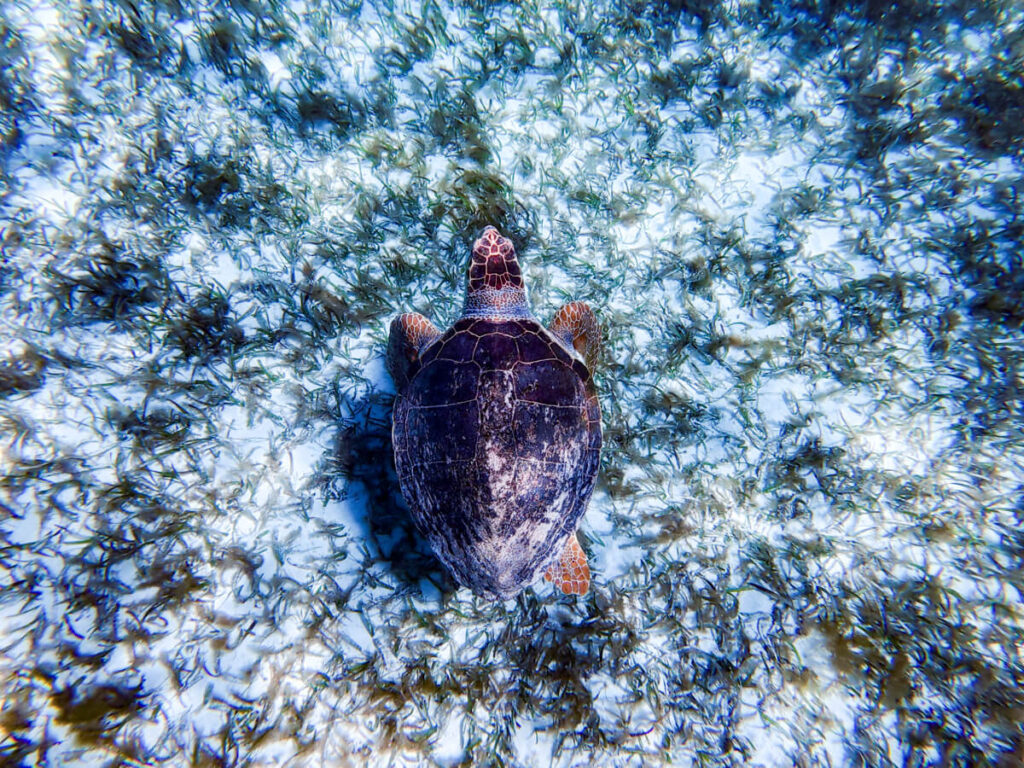
Guatemala’s Pacific beaches are important nesting grounds for four sea turtle species:
The Pacific Coast, especially around Monterrico, Hawaii (Las Salinas), and El Paredón, sees nesting activity from July to December, with hatchling releases continuing into early January. Conservation groups, like ARCAS, which also works out of Hawaii, collect eggs from vulnerable nests and relocate them to protected hatcheries to improve survival rates. All turtle species in Guatemala are threatened by illegal egg collection, coastal development, and bycatch, so supporting local conservation programs directly helps protect them.
On the Caribbean side, turtles live on the Mesoamerican Reef, which stretches from Mexico to Honduras and passes Guatemala. Snorkelling opportunities are limited in Guatemala, but sea turtles are often spotted near the mouth of Río Dulce and in the Caribbean waters close to Livingston, where seagrass beds offer food.
Other animals you can see in Guatemala
We would be here all day if we listed every single animal you can see in Guatemala, but in case any popular ones are missing, here are some other animals you might spot:

Guatemala Wildlife FAQs
To finish off this Guatemala wildlife watching guide, we’ve answered some frequently asked questions below.
What animal is Guatemala known for?
Guatemala is especially known for the resplendent quetzal, its national bird, and for iconic jungle species like howler monkeys, spider monkeys, ocellated turkeys, and jaguars in the Petén rainforest.
What is the largest animal in Guatemala?
The Baird’s tapir, Central America’s largest land mammal, holds the title of largest animal, weighing up to 300 kg (660 lbs) and roaming the country’s dense lowland jungles.
What is the biggest predator in Guatemala?
The jaguar is Guatemala’s largest and most powerful predator, playing a crucial ecological role in the Maya Biosphere Reserve and other protected forest regions.
Are there big cats in Guatemala?
Guatemala has five wild cat species: jaguar, puma, ocelot, margay, and jaguarundi, though most are shy and rarely seen by travellers.
Are snakes common in Guatemala?
Snakes are relatively common, especially in warm lowland forests, but most species are harmless. Venomous snakes do exist, yet encounters on tourist trails are uncommon because they avoid people.
Are there still jaguars in Guatemala?
Guatemala has a significant jaguar population, particularly in the Maya Biosphere Reserve around Tikal, Yaxhá, and Mirador, though sightings are extremely rare due to their nocturnal, secretive nature.
Are there monkeys in Guatemala?
Guatemala is home to two native monkey species, the Yucatán black howler monkey and Geoffroy’s spider monkey, both commonly heard or spotted in the rainforests of the Petén.
Read next:
Ultimate Guatemala Travel Guide: Volcanoes, Lakes & Ancient Mayan Sites
3 Week Guatemala Itinerary with 2 + 4 Week Adaptations
Top 20 Places to Visit in Guatemala + Where Not to Go
Top 20 Unique Things to Do in Guatemala
The Best Time to Visit Guatemala: Land of the Eternal Spring
Our Guatemala Destination Guides:
