The Best Time to Visit Mexico’s Yucatán Peninsula for Weather & Wildlife

Discover when to visit Mexico’s Yucatán Peninsula for good weather, outdoor activities, and wildlife seasons.

This post may contain affiliate links, which means we might earn a small commission on anything purchased through these links at no extra cost to you. Learn more on our disclaimer page.
While Mexico’s Yucatán Peninsula is a year-round destination, the weather, crowds, prices, and sea conditions can vary significantly depending on the time of year, and when you go can make a big difference to your overall experience.
We’ve travelled around the Yucatán Peninsula quite a bit in the past few years, during different seasons, and have realised there’s no single perfect time to visit – it depends on what matters to you. Some months bring dry, sunny weather and ideal beach conditions, while others offer fewer crowds, lower prices, or better opportunities for wildlife encounters in the Yucatán, like whale sharks.
Discover the best time to visit the Yucatán Peninsula in Mexico by season, including what to expect month by month, and when to go for specific activities like snorkelling, diving, cenote swimming, and exploring ruins. Whether you’re prioritising good weather, fewer crowds, or value for money, this guide will help you choose the right time for your trip.
When to visit Mexico’s Yucatán Peninsula at a glance
More from Mexico’s Yucatán Peninsula
When to visit Mexico’s Yucatán Peninsula – the quick answer
The Yucatán Peninsula enjoys warm tropical weather year-round, but timing your visit can make a big difference for outdoor activities, beach days, and exploring Mayan ruins.
Generally, the dry season, roughly from December to April, offers the most reliable weather, with sunny skies, lower humidity, and calmer seas. The wet season, from May to October, brings higher humidity, regular afternoon showers, and occasional storms, but it also transforms the region’s landscapes into lush green scenery and reduces tourist crowds and prices.
We visited Mexico’s Yucatán Peninsula several times in the last couple of years – it’s somewhere that just keeps drawing us back. We’ve experienced everything from torrential downpours and gale-force winds to glorious sunshine and intense heat. We’ve also explored all over the peninsula from the highlights to the hidden gems, and have a few thoughts on when to visit each area according to interest to make the most of your trip.
The first time we landed in Mexico’s Yucatán Peninsula was in February (Winter), the peak of the high season. We had a few very windy days in Cancún, but otherwise it was lovely and sunny (although sometimes a little cool in the early mornings and late evenings).
We later returned in April and stayed throughout May (Spring), at the end of the high season. We had much more consistently sunny weather, but had to contend with hotter conditions (Mérida is one of the hottest and most humid places we’ve ever been), tour groups in Valladolid, and lots of sargassum on the beaches, particularly around Tulum and Akumal. We also took ferries over the islands like Isla Cozumel (we had glorious weather) and Isla Holbox (where we had a few passing showers that didn’t ruin the trip).
Most recently, we returned in January and March. We started in Cancún again (where we had a few sunny days), day-tripping to Isla Contoy and Isla Mujeres, where we experienced a glorious morning and downpours in the afternoon. Then we headed down the peninsula via Tren Maya to Bacalar and Chetumal, before starting our second Central America backpacking trip.
You might be thinking, “Well, you’ve only visited in 4 out of 12 months of the year” – and you’d be right because, after lots of research, this was totally deliberate. In our opinion, late January to early April is the best time to visit Mexico’s Yucatán Peninsula.
We’d highly recommend you avoid the wetter months of June to September (unless you’re keen to take advantage of low prices) and the holiday periods over Christmas, New Year, and Easter (unless you’re happy to spend more for a holiday getaway). Spring break – usually in March/April – is also highly unpleasant unless that’s what you’re visiting for.

The best time to visit Mexico’s Yucatán Peninsula for weather
Mexico’s Yucatán Peninsula is tropical, hot, and humid, with temperatures ranging from around 24-32°C (75-90°F) depending on the season.
Mexico experiences 4 seasons:
We’ve broken down the pros and cons of visiting in each season below.

Winter (December-February)
Winter in the Yucatán is warm and sunny, with lower humidity and minimal rainfall.
Coastal areas like Cancún, Playa del Carmen, and Tulum are especially pleasant, with calm seas for swimming and snorkelling.
Inland, archaeological sites like Chichén Itzá and Uxmal are also more comfortable to explore.
But even though this is the dry season, some days can still be hit and miss. Winter is the sunniest, but also the windiest time.
Spring (March-May)
Spring remains dry and warm, with rising temperatures and increasing humidity toward May.
It’s a great time to enjoy the beach and outdoor excursions before the rainy season begins.
Coastal waters are generally calm, and cenotes and lagoons are refreshing escapes from the heat.
Summer (June-August)
Summer marks the start of the rainy season. Expect brief but often intense afternoon showers and higher humidity.
Morning hours are usually sunny and ideal for excursions, cenotes, and archaeological visits, while afternoons may be disrupted by rain.
The warm weather is perfect for swimming and water activities, though storms can occasionally affect boat trips and coastal conditions.
Autumn (September-November)
Autumn is the peak of the wet season in Mexico’s Yucatán Peninsula, with September and October bringing the heaviest rains and the highest risk of hurricanes.
November usually sees rainfall taper off, marking the beginning of the dry season.
Visiting in the fall offers green scenery and fewer tourists but requires flexibility due to unpredictable weather and occasional travel disruptions.

Mexico’s Yucatán Peninsula by season
Mexico’s meteorological seasons correspond with its commercial seasons – i.e. the nicer weather in the dry season attracts more people and is therefore also the peak season. Here’s a breakdown of the seasons by visitor traffic.
High season (December-April)
High season in the Yucatán Peninsula runs from December through April, when travellers flock to the region for its reliable sunshine, warm temperatures, and ideal beach conditions. This is when destinations like Cancún, Tulum, and Playa del Carmen are at their busiest, with hotels, tours, and restaurants operating at full capacity.
It’s also the most popular time for visiting major archaeological sites such as Chichén Itzá and Uxmal, as well as heading out on snorkelling and diving trips along the reef.
The main trade-off is cost and crowds. Accommodation prices are at their highest, particularly around Christmas, New Year, and Easter, and popular spots can feel busy, especially by mid-morning.
Booking ahead is essential during this period, and visiting attractions early in the day helps avoid both the crowds and the heat.
Low season (June-October)
Low season runs from June to October and coincides with the wetter, more humid months. During this time, visitor numbers drop significantly, and prices for accommodation and tours are often much lower. The region takes on a greener, more tropical feel, with jungles lush, cenotes full, and landscapes at their most vibrant.
The trade-off is unreliable weather. Experiencing afternoon showers is common, and September and October in particular can bring heavier rainfall and an increased risk of tropical storms.
Travel plans may require more flexibility, especially for coastal activities and remote excursions.
That said, mornings are often still clear, and quieter conditions can make it a rewarding time to visit if you don’t mind adjusting your schedule around the weather.
Shoulder seasons (May and November)
May and November are transitional months, sitting between the two main seasons and can offer some of the best overall conditions. These months tend to have fewer tourists than peak season, with more availability and better prices, while still maintaining relatively good weather.
May is typically hotter and more humid, as it marks the transition into the rainy season, while November sees conditions improving as the rains ease off. Both months can offer a balance between accessibility, affordability, and a more relaxed atmosphere, making them a good choice for travellers looking to avoid peak crowds without fully committing to the wetter months.

Extreme weather in Mexico’s Yucatán Peninsula
The Yucatán lies within the Atlantic hurricane belt, so hurricanes and tropical storms are possible from June to November, peaking in August to October. Hurricanes are uncommon but can bring heavy rain, strong winds, flooding, and rough seas, particularly along the coast.
Even outside of hurricanes, afternoon showers are more frequent during the wet season, and coastal waters can be choppy.
Planning a flexible Yucatán itinerary, checking the weather forecast, and considering travel insurance that covers weather-related disruptions is sensible if you’re visiting during this period.
Travel insurance can save you $$$ if things go wrong
Don’t forget to buy travel insurance! From lost luggage to emergency medical care abroad, travel insurance gives you peace of mind so you can solely focus on the adventure. It might not be exciting, but you’ll be very glad you have it if something goes wrong. A few of our favourite companies are:
Find out more: 6 Best Travel Insurance Companies for Every Kind of Trip

The best time to visit Mexico’s Yucatán Peninsula for wildlife
The Yucatán Peninsula is home to diverse wildlife, including tropical birds, howler monkeys, jaguars in protected reserves, sea turtles, and whale sharks. Timing your visit can make a big difference in what you see.
Sea turtles nest along the coast from May to October, with hatchlings emerging mainly between July and October. You can experience them while diving or snorkelling, although we’d recommend taking an eco-tour in Cancún over swimming with turtles in Akumal.
Whale sharks appear in coastal waters near Isla Holbox and Isla Mujeres between June and September, drawn to plankton blooms. Swimming with them is one of the best things to do in Cancún and the surrounding area, although a little controversial. We’d recommend swimming with whale sharks in Baja over Yucatán, where tours are less crowded and better regulated.
Birdwatchers will find peak activity during the dry season, particularly February to May, when migratory birds and resident species like scarlet macaws are more visible in jungle reserves and forested areas. We saw lots of magnificent frigatebirds in Isla Contoy, which is one of the best day trips from Cancún.
Other animals you can see year-round, including manatees, crocodiles, and dolphins – all of which we saw in Sian Ka’an Biosphere Reserve in one day – but the dry season has better weather for taking the long day trip from Tulum.
Visiting during the dry season generally offers easier access to inland reserves and cenotes – both traditional sinkholes and Bacalar’s lagoon cenotes – calmer rivers, and better visibility for wildlife spotting. The wet season, while greener and more humid, brings higher activity among certain species but can make trails and roads more challenging.

The best time to visit Mexico’s Yucatán Peninsula for snorkelling
Mexico’s Yucatán Peninsula offers some of the best snorkelling in the country, but visibility, calm conditions, and reliable tours aren’t common year-round.
Snorkelling conditions are generally best during the dry season from December to April, when seas are calm, waters are clear, and visibility is at its highest.
Popular locations like snorkelling in Cancún or snorkelling in Isla Mujeres, and the Belize-adjacent reef sections along the Yucatán’s Costa Maya, are easiest to enjoy in these months.
During the wet season, particularly from June to October, short tropical showers and occasional storms can stir up the water, reducing visibility and sometimes making boat trips less predictable.
Morning excursions tend to be calmer, while afternoons are more prone to rain and wind, even in dry season. Snorkelling near reefs or along the coast is safer and more pleasant in the dry season, too.

The best time to visit Mexico’s Yucatán Peninsula for SCUBA diving
SCUBA diving is a key draw to Mexico’s Yucatán Peninsula and shares similar seasonal patterns with snorkelling. The dry season brings calmer seas, excellent visibility, and the most reliable conditions for diving along the Mesoamerican Barrier Reef.
Popular dive sites like diving in Cozumel and Puerto Morelos are more accessible, and currents are typically mild at this time. SCUBA diving in Cancún and SCUBA diving in Isla Mujeres – both of which have access to the unique MUSA Underwater Museum – is also more pleasant.
During the wet season, dives are still possible, but afternoon storms, stronger currents, and occasional choppy conditions can affect trip schedules.

The best time to visit Mexico’s Yucatán Peninsula for beaches
Mexico’s Yucatán Peninsula has some of the best beaches we’ve ever seen – and it’s also where we first experienced how incredibly stinky sargassum can be.
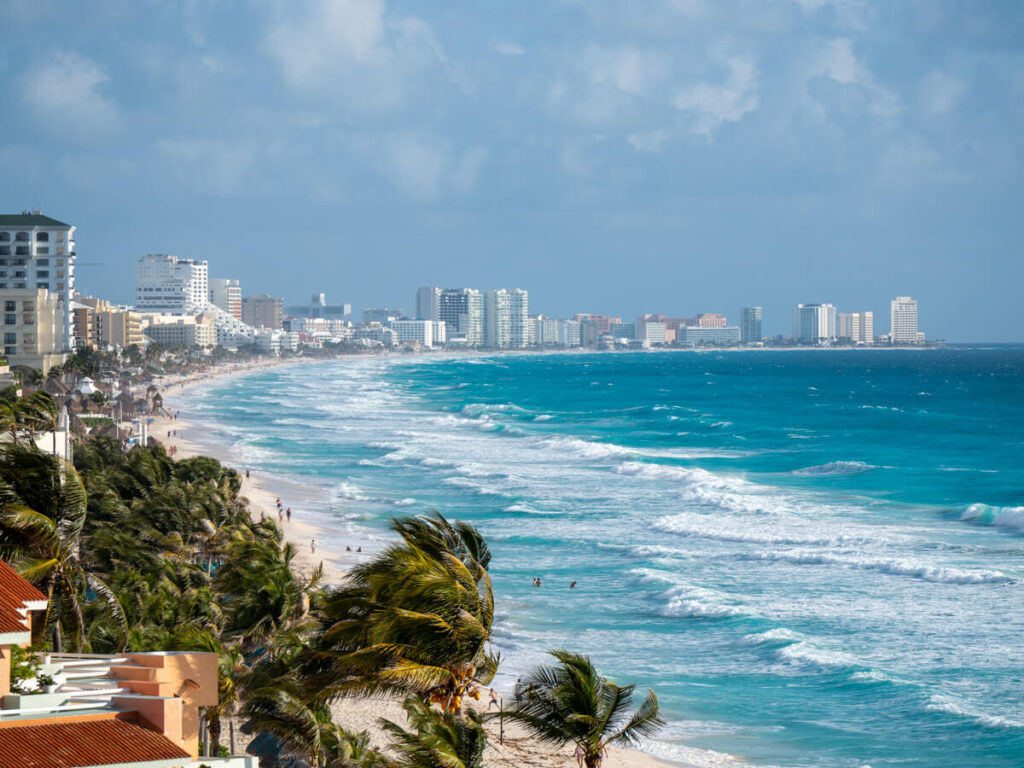
For classic beach weather, the dry season is ideal. Sunshine, low rainfall, and calm seas create perfect conditions for swimming, sunbathing, and water sports along Playa del Carmen, Tulum, and Holbox. In Cancún, the sand was pristine and the sea sparkled in a shade of turquoise we’ve never seen anywhere else.
During the wet season, beaches are quieter and prices are lower, but afternoon rains are more frequent, and coastal waters can become rougher, especially in September and October.

Sargassum
One thing to be aware of is that sargassum can affect beach conditions in the Yucatán Peninsula, particularly along the Caribbean coast and Riviera Maya. It’s a type of seaweed that washes ashore in varying amounts throughout the year. While it’s a natural phenomenon, it can have a noticeable impact on the look and feel of beaches, as well as swimming conditions.
Sargassum is most common between April and October, with peak months typically falling between May and August. During this time, beaches in Quintana Roo, like Tulum, Playa del Carmen, and parts of Cancún, can experience significant seaweed buildup, sometimes covering large stretches of sand and creating a strong smell as it decomposes.
Daily clean-up efforts are common in many areas, especially at resorts, but conditions can vary widely from one beach to another and even from day to day. We saw them using diggers to take it out by the bucket-load in Akumal in April.
During the dry season, sargassum levels are usually much lower, making this the best time for clear, postcard-style beaches. However, it’s worth noting that sargassum is unpredictable and can appear at any time of year, depending on ocean currents and weather patterns.
If avoiding seaweed is a priority, consider staying on islands like the beaches on Isla Mujeres, the shores of Bacalar Lagoon, which isn’t on the sea, or beaches on the Gulf side of the peninsula, where sargassum is far less common.

The best time to visit Mexico’s Yucatán Peninsula for outdoor activities
Hiking through jungle trails, exploring cenotes, or visiting archaeological sites like Tulum Ruins and Cancún’s Mayan Museum is easiest during the dry season.
The wet season can make trails muddy and some excursions more challenging, but it also brings lush landscapes and fewer tourists, offering a different experience.
Early mornings are often the best time for outdoor activities, even during the wet season, as afternoons are more prone to tropical showers. You’ll also beat most crowds to the sites, as tours tend to arrive from mid-morning onwards.

The best time to visit Mexico’s Yucatán Peninsula to escape the crowds
High season from December to April brings the most tourists, especially around holidays like Christmas, New Year, and Easter.
Spring break, typically from March to early April, can bring a noticeable surge of visitors, particularly in hotspots like Cancún and Playa del Carmen. If you’re looking to avoid crowds and higher prices, it’s worth planning around these weeks or choosing quieter areas like Holbox, Bacalar, or inland destinations.
To avoid crowds, visit during shoulder months like May or November, when the weather is generally still pleasant, and attractions are quieter.
Low season during the wet months, particularly September and October, offers the fewest tourists and the lowest prices. But you’ll likely have unpredictable weather and tours can be cancelled.
The best time to visit Mexico’s Yucatán Peninsula for local events
The Yucatán Peninsula hosts a variety of cultural festivals and food-focused events throughout the year.
Carnival in February or early March brings lively parades, music, and dancing, particularly in Mérida, Cozumel, and Campeche.
Easter and Christmas are widely celebrated with religious ceremonies, processions, and community festivities across the region, while Mexican Independence Day is a fun experience in September.
For food and cultural experiences, the Hanal Pixán – part of Day of the Dead (Día de los Muertos) – celebrations in late October–early November in the Yucatán towns of Mérida and surrounding villages are notable.
Coastal and fishing communities host lobster festivals in summer, typically in June and July, celebrating local seafood with music, food, and events.

What is the best month to visit Mexico’s Yucatán Peninsula?
Honestly, you could visit Mexico’s Yucatán Peninsula at any time of year and have a nice time. The weather is consistently warm and sunny, which is why the region is such a popular vacation destination.
If you want to guarantee nice weather, visit in the dry season – we particularly like February and early March – to maximise beach time, swim in cenotes, and explore archaeological sites.
The shoulder months like May and November can offer a balance between good weather, smaller crowds, and lower prices, which is especially great if you’re travelling on a budget.
We’d recommend you avoid the peak wet months of June to September, only because of the increased chance of storms and hurricanes. But if you’re going all out on accommodation and are not going to be leaving the resort much, this would be a good time to cinch low prices.

Planning a trip to Mexico’s Yucatán Peninsula?
Discover the nicest areas to stay and the best hotels for you in our accommodation guides:

When to Visit Mexico’s Yucatán Peninsula FAQs
We’ve answered some frequently asked questions about the weather in Mexico’s Yucatán Peninsula and the best time to visit the hotspots below.
What is the worst time to visit Mexico’s Yucatán Peninsula?
The worst time to visit is generally September and October, when rainfall is at its heaviest and the risk of hurricanes is highest. During these months, you’re more likely to experience prolonged rain, rough seas, and disrupted travel plans, particularly along the coast. Sargassum levels can also be at their peak, affecting beach conditions.
What is the hottest month in Mexico’s Yucatán Peninsula?
The hottest months are typically April and May, just before the rainy season begins. Temperatures are high, often reaching 30-35°C (86-95°F), and humidity builds, especially inland. Exploring ruins or towns during midday can feel intense, so early starts are essential.
What is the coldest month in Mexico’s Yucatán Peninsula?
The coolest months in Mexico’s Yucatán Peninsula are December and January, though temperatures remain warm overall. Mornings and evenings can feel slightly fresher, particularly inland, but daytime conditions are still ideal for beaches and outdoor activities.
What is the windiest month in Mexico’s Yucatán Peninsula?
The windiest period is usually between January and March, when trade winds are strongest. This can lead to choppier seas, particularly in the afternoons, which may affect boat trips, snorkelling, and beach conditions. Mornings are typically calmer.
What month does it rain the most in Mexico’s Yucatán Peninsula?
September is generally the rainiest month, closely followed by October. These months see the most consistent rainfall, often with heavier and longer-lasting downpours compared to the rest of the year.
Is it worth going to Mexico’s Yucatán Peninsula in rainy season?
Yes, but it depends on your priorities. The rainy season brings fewer tourists, lower prices, and lush green landscapes. Mornings are often still clear, making it possible to explore ruins, cenotes, and beaches before afternoon showers arrive. However, you’ll need flexibility, as rain and occasional storms can disrupt plans, particularly for coastal activities.
What is the cheapest month to go to Mexico’s Yucatán Peninsula?
The cheapest months are usually September and October, when tourism is at its lowest due to the wetter weather and hurricane risk. Accommodation and tour prices are significantly reduced, and even popular destinations feel quieter. Shoulder months like May and November can also offer good value with more favourable conditions.

Read next:
30 Animals in the Yucatán Peninsula + Where to See Them
A Traveller’s Guide to Cancún For First Timers
Is Isla Mujeres Worth Visiting? Our Travel Guide
A Responsible Travel Guide to Tulum: Worth Visiting?
A Complete Guide to Visiting Sian Ka’an Biosphere Reserve
