A Traveller’s Guide to Isla Holbox: Where to Stay, Eat & Play

Discover everything you need to know about visiting Isla Holbox, from where to stay and eat to useful travel information on how to spend your money and time.

This post may contain affiliate links, which means we might earn a small commission on anything purchased through these links at no extra cost to you. Learn more on our disclaimer page.
With its powdery white beaches, shallow turquoise water, colourful streets, and golf carts rattling along sandy roads, it’s no wonder Isla Holbox is considered one of the most beautiful islands in Mexico. You couldn’t really get further from the Americanized resorts and commercial cities that litter the Caribbean coast, but you don’t need to travel too far out of your way to get there.
We visited Holbox at the end of 3 and a half months of constant travel around Mexico, and it was exactly what we needed. We nearly didn’t include it in our plan as we travelled around the Yucatán Peninsula, but we’re so glad we did because we really loved the relaxed atmosphere – we immediately entered vacation mode.
But there are some big downsides that are easy to overlook when planning your trip. Holbox can get extremely busy, prices are surprisingly high for what you get, the sandy roads become lakes after rain, and getting around without a golf cart or taxi isn’t always as easy as you’d expect.
In this guide, we’ll cover everything you need to know about visiting Isla Holbox, including where to stay, how long to spend here, when to visit, how to get around, what to expect, and our practical tips for planning your trip.
Isla Holbox at a glance
More from Holbox
About Isla Holbox
Isla Holbox (pronounced hol-bosh) is a small island off the northern coast of the Yucatán Peninsula in the Mexican state of Quintana Roo. It is known for its sandy streets, laidback atmosphere, and long beaches, with golf carts and bicycles replacing cars. The main settlement is compact, so you can walk or cycle between the centre, the beach, restaurants, and shops without needing a car.
The island itself is around 25 miles (40 km) long, although the area where most people stay is concentrated around the western end, close to the village and main beaches. Much of the rest of Holbox is made up of protected natural areas, mangroves, lagoons, and undeveloped coastline rather than hotels and tourist facilities, which is partly why we like it so much.
Once, the wider Yalahau region was inhabited and managed by the Maya, with archaeological evidence showing ancient activity around the wetlands and settlements in the area. Then, the area was used for logging and chicle extraction in the late 19th and early 20th centuries, while fishing later became an important source of employment, particularly the fishing and (sadly) salting of shark.
Today, Holbox is considerably more developed, and there are hotels, restaurants, beach clubs, and tour operators throughout the main town. Tourism has brought more attention to the island’s natural environment and the protection of wildlife, including areas used by whale sharks, flamingos, and sea turtles. At the same time, the growth in tourism has brought its own problems, including pressure from construction, waste, water use, and the sheer number of visitors arriving on a relatively small island, which is why it’s important to be aware of our own actions and travel responsibly. It’s not a perfect model, but it’s considerably better than in other parts of Mexico.

Where is Isla Holbox?
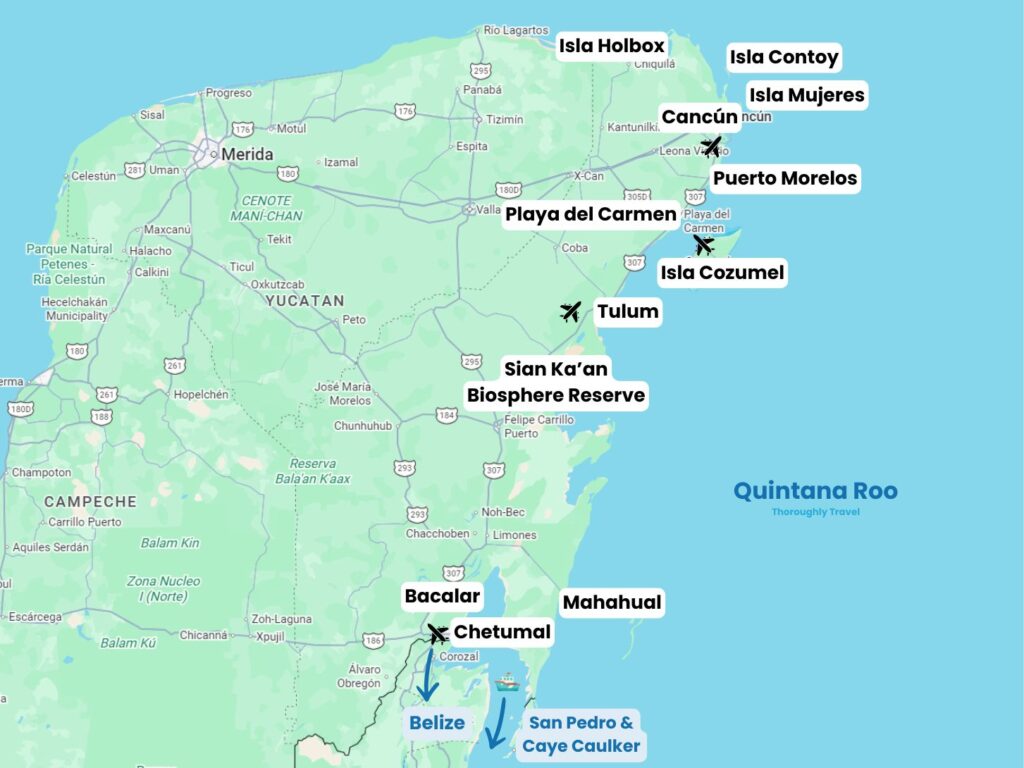
Isla Holbox lies at the northern end of Quintana Roo, on Mexico’s Yucatán Peninsula, where the Caribbean Sea and Gulf of Mexico meet. It’s separated from the mainland by the shallow Yalahau Lagoon, with the small port of Chiquilá providing the main ferry connection between the island and mainland Mexico.
Cancún is home to the nearest major international airport and is where most international visitors arrive before making their way across the peninsula. We actually flew into Mérida from Mexico City before heading overland, which is another good option, while Tulum also has a smaller international airport.
Holbox is roughly 85 miles (137 km) north of Cancún by road. Your actual journey will depend on where you’re travelling from and the route you take to Chiquilá. There are no bridges connecting Holbox to the mainland, so to get to Isla Holbox you’ll need to travel to Chiquilá and take a ferry across. The ferry terminal is right in Holbox village, making it relatively easy to get around once you arrive.

Isla Holbox Map
We’ve highlighted Isla Holbox on the map below.
Why visit Isla Holbox?
The main reason to visit Isla Holbox is to experience a side of Mexico’s Caribbean that’s totally different. Unlike larger cities and towns, there are no high-rise chain resorts, American Spring Break bars, or fast-food restaurants – there aren’t even cars!
It would be easy to compare Isla Holbox to Mujeres or Cozumel, but it’s much more relaxed and arguably more authentic – we thought it was very much Caye Caulker in Belize vibes – the embodiment of Go Slow, with sandy streets, rustic infrastructure, and a general lack of commercialisation.
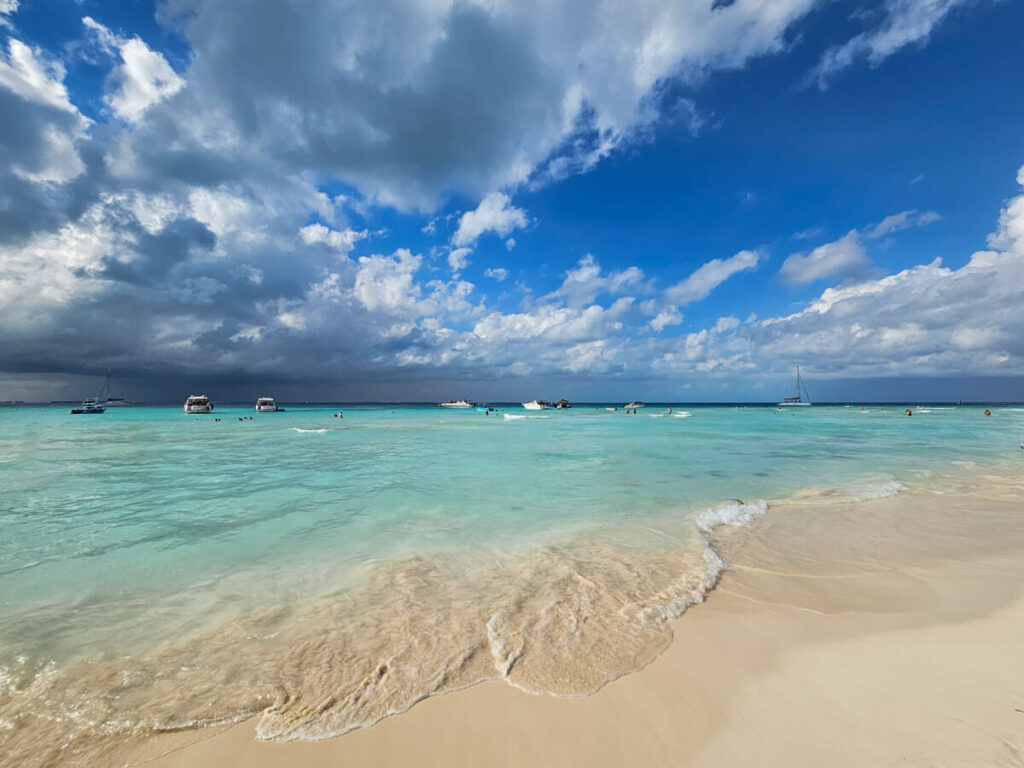
Isla Holbox’s beaches are also a good reason to visit, with shallow water and long stretches of sand around the northern side of the island that are less prone to sargassum than the mainland. There are also lots of other fun things to do in Holbox, from swimming with whale sharks in season to seeing bioluminescence.
Isla Holbox is also part of the Yum Balam Flora and Fauna Protection Area (Área de protección de flora y fauna Yum Balam), which covers around 154,052 hectares (380,650 acres), most of the island, and a large area of the surrounding wetlands, mangroves, and coastal ecosystems. This protected setting means it’s perfect for nature lovers like us, and you might see some of Yucatán’s wildlife.
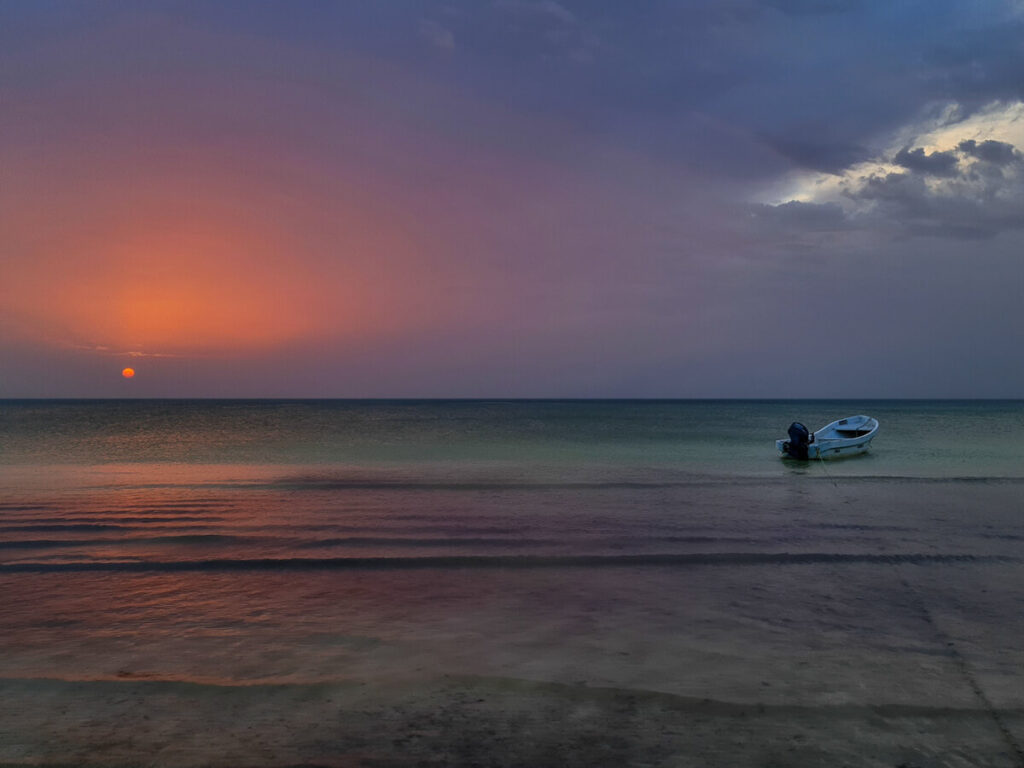
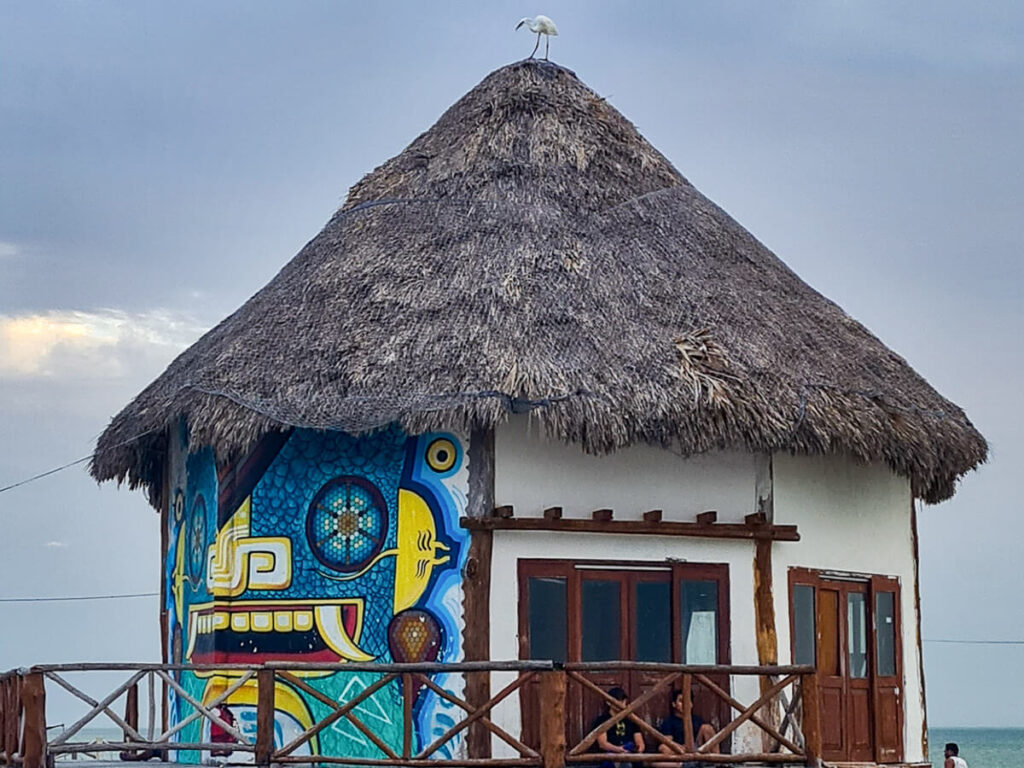
Before we visited Isla Holbox, we’d heard mixed stories about the island, from flooded streets and constant rain even during the dry season to its laidback atmosphere and unspoilt beaches. Once we arrived, though, it was the sandy shores, stunning sunsets, and colourful street art that stayed with us.
Where to stay on Isla Holbox?
The island is fairly small, but the accommodation is spread between the town, the main beach, and quieter areas further along the coast, so where you stay on Isla Holbox will make quite a difference to your trip. You’ll find everything from cheap hostels and simple guesthouses to boutique hotels and beachfront properties or eco-luxury hotels.
The best areas to stay on Isla Holbox
There are several different areas to stay around Isla Holbox, and they each give you a slightly different experience.
Centro
Centro is the downtown area of Isla Holbox and is where you’ll find the biggest concentration of restaurants, bars, shops, and everyday facilities. It’s also got the widest range of accommodation and good budget options.
This is where we stayed, and it was perfect – walkable to the ferry and beaches, with a great range of restaurants. We’d recommend staying in Centro if it’s your first time on Isla Holbox.
Playa Holbox
Playa Holbox is the main beach area, so this is where to stay if you want to be right beside the sand. There are plenty of beachfront hotels along this stretch, so it’s great for couples or anyone who likes being by the sea, but it’s still close enough to Centro to be able to enjoy all the major amenities, too.
Northern Beach Area
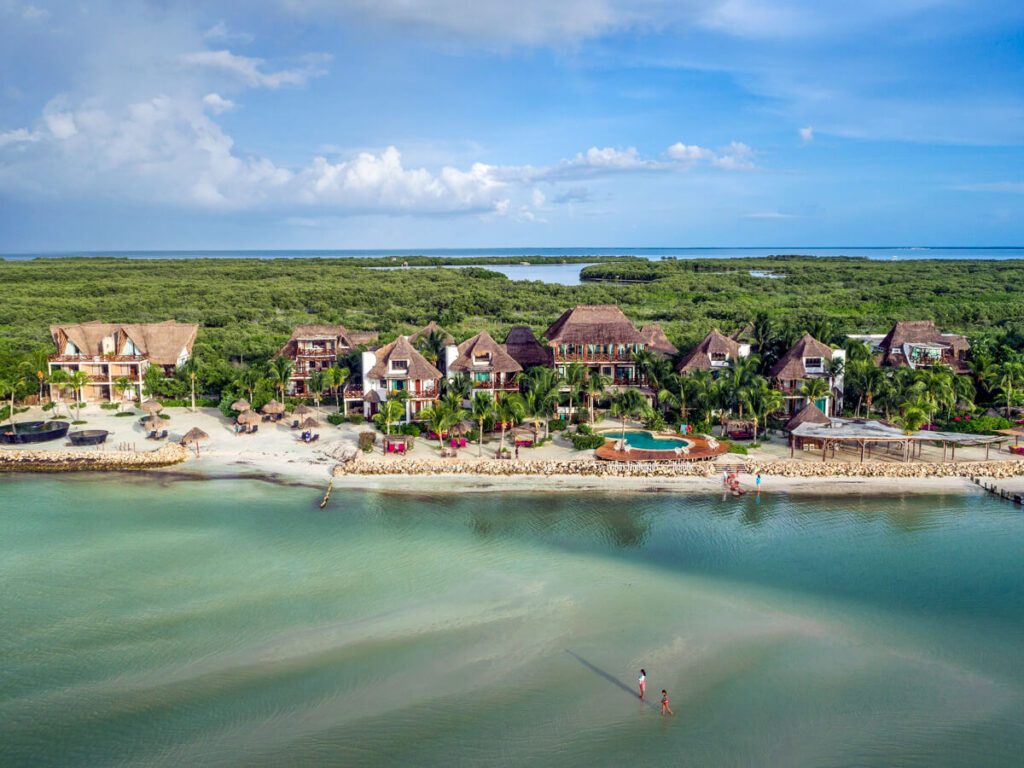
Hotels north of Playa Holbox lie on the island’s western coast and stretch towards Punta Mosquito. This is where you’ll find some of Holbox’s more luxurious beachfront hotels, with larger properties, private beach areas, and more facilities than you’ll generally find around Centro.
It’s quieter than staying in town, and the further north you go, the more removed you’ll feel from the town. It’s great if you’re looking for more of a peaceful retreat, but you might need to rely on transport to get into town and see the rest of the island.
Southern Beach Area
The southern beach area is south of Playa Holbox on the island’s western coast, between the main beach and the quieter western end of the island. It’s a useful middle ground if you want to be away from the busiest part of Centro without going too far from the restaurants and other facilities. There is a mixture of boutique hotels, beachfront properties and smaller accommodation options here, so it doesn’t have quite the same concentration of high-end resorts as the northern stretch, but it’s a good compromise between getaway vibes and amenities.
Punta Cocos
Punta Cocos is a beach that lies at the southwestern end of Isla Holbox and is one of the quietest places to stay on the island. It’s known for its sunsets, shallow water, and bioluminescence, with far fewer restaurants and facilities than you’ll find around Centro.
This is where we’d stay for peace if you don’t mind being further from the action. You’ll probably want a bicycle or golf cart for getting into town, especially in the evening, but in return you get a much quieter setting and easy access to one of Holbox’s best spots for watching the sunset.

The best hotels on Isla Holbox
Hotels on Isla Holbox are quite different from what you’ll find in some of Mexico’s better-known beach destinations. You won’t find rows of huge international chains or the kind of enormous all-inclusive resorts that dominate parts of Cancún and Cozumel.
Equally, it’s said Holbox is what Tulum used to be, although on a much smaller scale, with stylish hotels and eco-luxury properties appearing alongside the simpler accommodation the island has always been known for. Thankfully, you can still find places with plenty of personality without paying for the kind of upscale luxury of Tulum’s Hotel Zone, where you’re essentially paying $20 for an açaí bowl at a gentrified wellness retreat.
It’s also worth noting that hotel prices more than double in the peak season (December to March), so visiting off-peak can help you snag a better deal.
Holbox Hotel Prices
Hotel prices fluctuate due to seasonal demand, occupancy levels, current events, and other external factors. To provide a general idea of costs, we’ve categorised the average room price per night using the following price ranges in USD:
$ – less than $50
$$ – between $50 and $100
$$$ – between $100 and $250
$$$$ – between $250 and $400
$$$$$ – over $400

1. Hostel Tribu
Hostel Tribu is one of the most popular hostels in Holbox and is in a convenient location close to both the beach and Centro. It’s a colourful, sociable hostel with a garden, hammocks, rooftop terrace, communal kitchen, and bar, so it has much more of a social atmosphere than a traditional hotel, great for backpackers and solo travellers.
There are shared dormitories, with female-only options, as well as private double rooms. There’s always something going on, from kite surfing lessons and movie nights to DJ sets in the on-site bar, so it’s great if you like a boogie, but maybe not for you if you like a quiet night’s sleep. There was always loud music playing when we passed, which is a vibe, but not for everyone.

2. Beachfront Hotel La Palapa
Beachfront Hotel La Palapa lies right on the beach in the downtown area, giving you the perfect combination of a beachfront location and easy access to the restaurants and bars in town. It’s an adults-only property with a rustic style, private beach area, restaurant, bar, and spa, while many rooms have dreamy sea views.
Accommodation ranges from standard and superior rooms to larger options including a panoramic oceanfront suite, all with air conditioning, so there’s more choice than you’d expect from the relatively small property.

3. Nômade Holbox
Nômade Holbox is one of the island’s most design-led luxury hotels, on the quieter western side of the island towards Punta Cocos. Rather than a conventional hotel building, it has been designed around the natural surroundings, with just 30 rooms spread across different levels and accommodation including canvas-walled Moon Temple rooms, jungle treehouses, beachfront treehouses, and oceanfront suites. All come with air-conditioning and private bathrooms.
The property has a strong focus on nature, with restaurants, wellness programmes and activities built into the experience. It’s a very different experience from staying in Centro, but it’s a great option if you want more than just a place to lay your head at night.

4. Las Nubes de Holbox
Las Nubes de Holbox is one of Holbox’s more secluded luxury hotels, sitting on the quieter eastern end of the developed beach area beside the Yum Balam Reserve. The hotel has an eco-chic design, with bungalow-style rooms inspired by traditional Maya construction, along with larger junior suites and ocean-facing options. Rooms feature air-conditioning, balconies, private bathrooms, and sea views.
Facilities include a restaurant, spa, kayaks, and canoes, and the hotel also arranges boat trips and snorkelling excursions. Because it’s more remote, we’d choose it if you want to spend most of your time at the hotel and on the beach in peace and quiet, rather than exploring the downtown area and eating in town in the evening.

5. Casa Las Tortugas
Casa Las Tortugas is a beachfront, family-owned, eco-boutique hotel with a distinctive bohemian style. It’s aimed at adults and older teenagers, with guests required to be 12 or older, so it’s great if you like somewhere a little more sophisticated than a resort.
It shares the same name as one of the best hotels in Cancún, but we don’t believe they’re affiliated. This hotel has rooms that range from garden-facing options to beachfront rooms and suites, with some offering private terraces or pools, while the property also has a beachfront restaurant, Japanese restaurant, tapas bar, pool, and yoga sessions.
Casa Las Tortugas is right in the more central beachfront area, so you’re close to the restaurants and nightlife rather than being completely removed from town, but it still has that secluded and upmarket feel.
6. Hotel Villas Flamingos
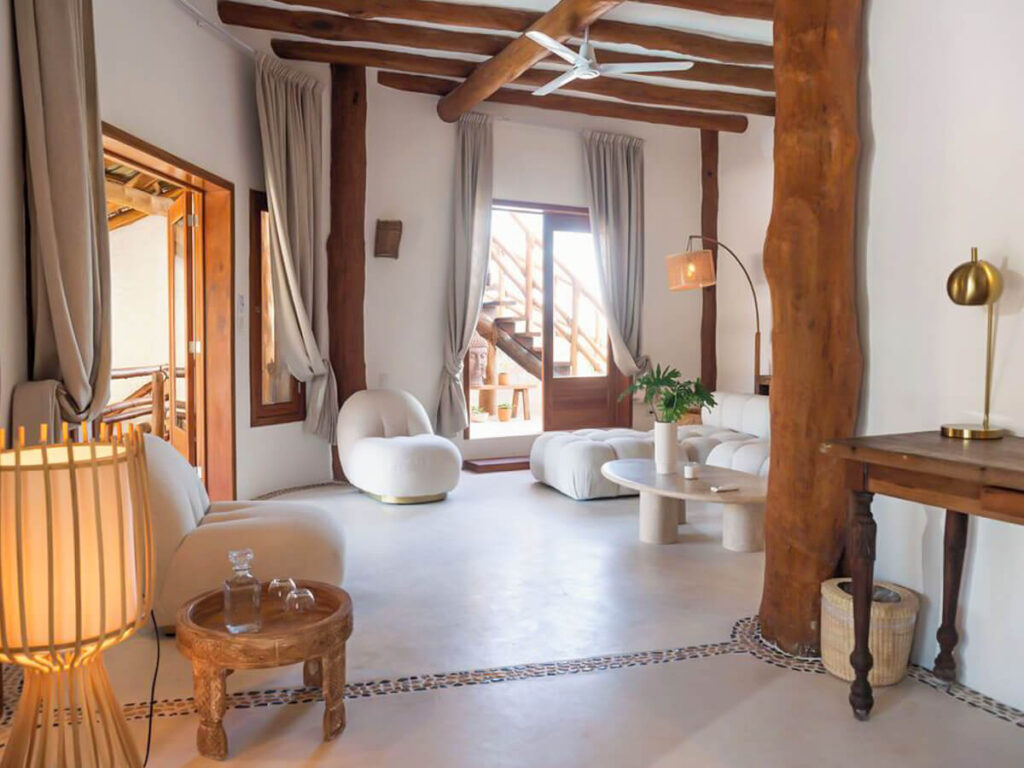
Hotel Villas Flamingos is one of the most popular hotels on Isla Holbox, further north on the northern beach, giving it a truly quiet beachfront setting. It’s a more traditional boutique resort, with direct beach access, gardens, swimming pools, a restaurant, and a bar, plus a spa and free bicycles for getting around the island. It’s also close to Punta Mosquito, which is perfect for nature lovers.
Accommodation includes a mixture of bungalows and suites, with options ranging from simpler garden-facing rooms to larger rooms with sea views, private terraces, and plunge pools. It’s popular for a reason, being closer to a proper beachfront resort feel that is much smaller and more personal than the big resorts elsewhere in Mexico.
Where to eat in Isla Holbox?
Isla Holbox has a surprisingly good food scene for such a small island, with everything from Mexican street food and seafood to vegan cafés, pizza, brunch spots, and more upmarket restaurants. You’ll find plenty of independent restaurants around Centro, as well as beach bars and smaller food stands dotted around the island.
You don’t need to spend a fortune eating here, either. For a cheap breakfast or lunch, look out for bakeries, empanadas, tacos, and other street food, while supermarkets and small shops are useful if you’re staying somewhere with a kitchen and want to do some self-catering. There’s a Súper Chedraui in the centre for groceries.
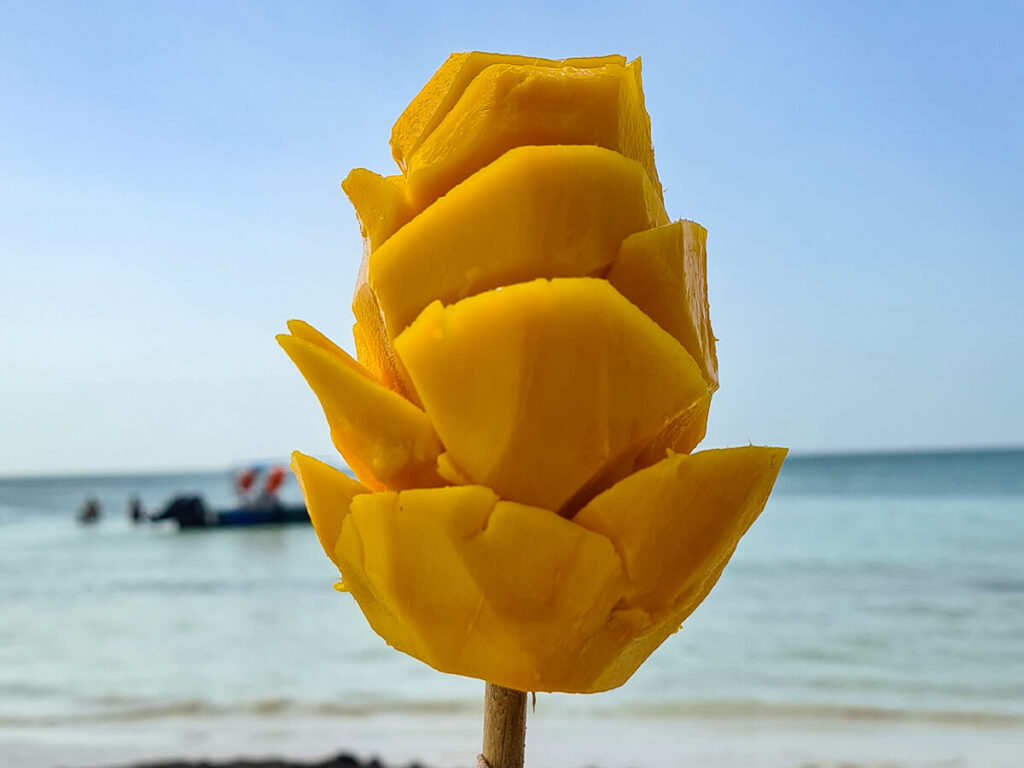
Mango on a stick is one of the snacks you’ll see around Holbox, with vendors on the beach carving the mango into a flower before serving it on a stick. We were told about it by some friends before visiting, and it’s genuinely one of our abiding memories of the island, almost a rite of passage.
You can also find marquesitas (get Nutella and cheese! We thought it was a prank when a local told us it’s the classic combo, but it actually is, and it works) and crepes at food stands at the main entrance to Playa Holbox.
Top Holbox Restaurants
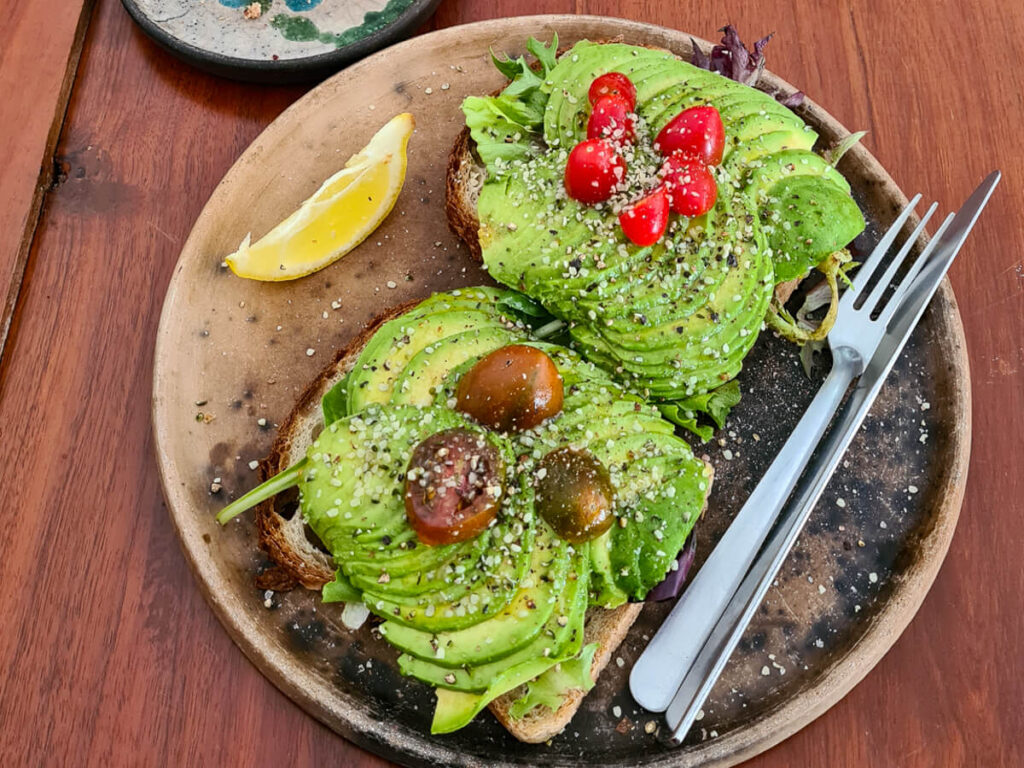
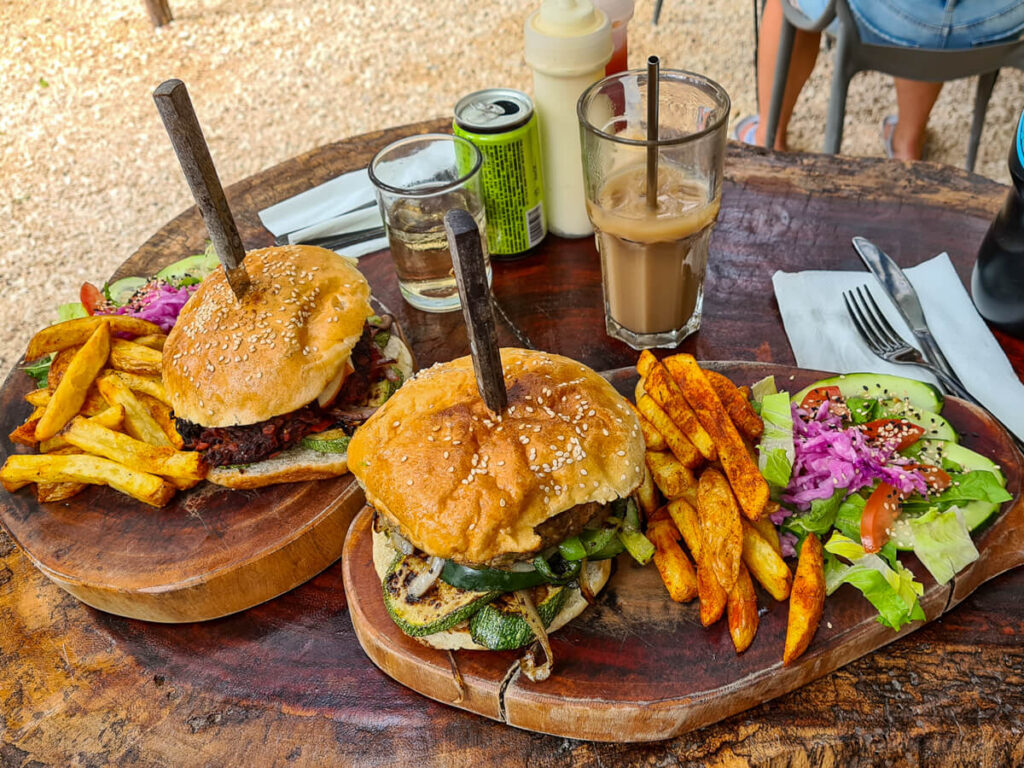
We basically just ate our way around the island – after months of backpacking and self-catering, we were so happy to find some amazing restaurants. Here are our top picks:


When to visit Isla Holbox?
Isla Holbox has year-round warm weather, which is why it’s such a great holiday destination, but there are some noticeable differences between the seasons. Choosing the right month makes the difference between the pictures of the milky blue sea and golden sand you see in promotional pics and flooded streets and grey days you get on Instagram vs Reality videos on social media.
December to March is the dry season and generally the best time to visit Holbox, with lower rainfall, less humidity, and slightly cooler (but still warm) temperatures. But you’ll also find more visitors and higher prices during this period, particularly around Christmas, New Year, and school holidays.
If you want the best balance between weather and crowds, we’d look at late November, April, or early May, although April can still be busy around Easter and spring break.
The Atlantic hurricane season runs from June to November. It doesn’t mean you’ll spend your entire holiday in the rain (usually it showers in the afternoons), but we’d take the risk into account if you’re planning a short trip where boat trips and beach days are the main event. It’s also a lot hotter, wetter, and more humid in this season.
May to September is whale shark season, so this is the time to visit if swimming with whale sharks is one of your main reasons for coming to Holbox. The trade-off is higher temperatures, more humidity, more rainfall, and a greater risk of tropical storms. We’d personally avoid this time and recommend swimming with whale sharks in La Paz, which is better regulated, a smoother journey to the swim site, and can go a year with almost no rain.
We visited in April, avoiding the holidays, and it was perfect for what we needed at the time – a relaxing little holiday at the end of 3.5 months backpacking Mexico. There was a storm forecast, so we were in a rush to arrive, thinking at least we could enjoy some downtime once we got there. But despite the forecast, we only had a downpour on our first afternoon, and the rest of our days were luckily clear. We did have some clouds, but we didn’t find it too crowded and accommodation and tours were pretty affordable. Next time though, we’ll probably try November or March.

Isla Holbox Weather
Isla Holbox has a hot, humid tropical climate, with warm temperatures throughout the year. The main difference between the seasons is rainfall, with the winter and early spring generally drier and the summer and autumn wetter.

How long to stay on Isla Holbox?
We’d recommend spending at least 3 nights on Isla Holbox, which gives you enough time to settle into the island rather than arriving on a day trip and immediately having to leave again. The ferry journey’s not long, but with the additional overland travel and possibly a flight, it’s a day either side of your stay, so you might as well make it worth it.
3-4 days gives you time for a proper beach day, a boat trip around the surrounding islands and lagoons, an evening looking for bioluminescence, and some time simply wandering around Holbox town. This is exactly what we did, and it was perfect.
If you’re particularly interested in whale sharks, wildlife, or spending time at the beach, we’d stay for 4-5 nights. This also gives you a bit of flexibility if a boat trip is cancelled because of poor weather. I think we’ll go for at least 5 nights next time, because it’s just such a lovely place to slow down for a bit, and I’d like some time to do nothing or enjoy a nice hotel, too.
A day trip from Cancún or the Riviera Maya is possible, but we’d only do it if you don’t have time to stay overnight and are really keen to see the island. You’ll spend a fair chunk of the day travelling to Chiquilá, crossing to the island, and getting around once you arrive, leaving much less time to actually enjoy Holbox. We wouldn’t really recommend it, as Isla Mujeres (beautiful beaches, bars, and a bit of a party scene) and Isla Contoy (a stunning protected area with pristine beaches and wildlife) are much closer and quicker to get to if you’re seeking an island day trip. You can even visit them both in one day on a combined tour.

Is Isla Holbox worth visiting?
Isla Holbox is SO worth visiting, but it’s not going to suit everyone. We liked the fact that it feels very different from the bigger Mexican Caribbean destinations, with sandy streets, golf carts instead of normal traffic, low-rise buildings and a much more relaxed atmosphere. It was exactly what we needed at the end of our trip, and we can’t believe we considered skipping it.
The beaches and shallow water are just visually stunning and a big part of the appeal, but there’s more to do than sit on the sand (although that’s easy to do all day too). You can take boat trips around the protected areas, look for flamingos and other wildlife, swim with whale sharks when they’re in the area, and see bioluminescence after dark when conditions are right.
Now don’t get us wrong, it’s not totally undiscovered. But it’s much less commercial than destinations like Tulum and Cancún. Even Isla Mujeres, which it shares similarities with, is much more spring-break-focused, while Isla Cozumel is inundated with cruise ships – you won’t find that kind of mass tourism here.
But it isn’t as cheap or as undeveloped as its rustic appearance can make it seem. Tourism has grown considerably, prices can be surprisingly high, and the island’s basic infrastructure doesn’t always keep up with the number of visitors. Heavy rain can also leave the sandy streets messy, while mosquitoes, humidity, and occasional sargassum aren’t exactly everyone’s idea of a Caribbean holiday. It’s still a little rough around the edges, with more of a backpacker vibe than a luxury island holiday feel.
Reasons to visit Isla Holbox
Reasons to skip Isla Holbox
What to pack to visit Isla Holbox?
It’s best to be prepared when you visit Isla Holbox. Don’t forget to pack your:

Tips for visiting Isla Holbox
Here are our top tips for visiting Holbox:

How does Holbox compare to other Mexican destinations?
It’s easy to generalise that Holbox is similar to other popular destinations around the Mexican Caribbean, but it actually feels quite different from places we visited in the region. Here’s how we think it compares.
Isla Holbox or Isla Mujeres?
The biggest difference between Isla Holbox and Isla Mujeres is how developed and accessible they feel. Isla Mujeres is much easier to reach from Cancún, has more restaurants, shops, beach clubs, and paved roads, and is better set up for day-trippers. Isla Holbox takes longer to reach, but once you’re there it feels much more like a small island community. That makes Isla Mujeres much busier and more touristy than Holbox – being further away filters out a lot of tourists who can’t be bothered to make the trip.
There are some beautiful beaches on Isla Mujeres, and we actually think they’re pretty similar to the beaches on Isla Holbox in quality.
Isla Holbox also has more of a wildlife focus, with whale shark trips, flamingos, and bioluminescence adding to the experience – but whale shark trips are also possible from Isla Mujeres.
If you like being underwater, Isla Mujeres is better, with easy access to the local Manchones Reef and unique MUSA underwater museum. There isn’t really proper SCUBA diving or snorkelling in Isla Holbox, as you’re too far west to be on the Mesoamerican Barrier Reef – both Isla Mujeres and Isla Cozumel are, though.
Golf carts are used on both islands for transportation, but Mujeres also has cars and a public bus, while Holbox’s sandy streets – which are prone to flooding – are only navigable by bicycle and golf cart.
We’d choose Isla Holbox if you want to slow down and stay for a few nights, whereas Isla Mujeres makes more sense if you want an easy island escape from Cancún, better tourist infrastructure and nightlife, or a simple day trip.
Isla Holbox or Isla Cozumel?
Isla Holbox and Isla Cozumel are again actually quite different. Cozumel is famous for its SCUBA diving and coral reefs, whereas Holbox is much more about beaches, wildlife, and getting out on the water rather than under it.
Isla Cozumel is much more developed, with a proper town, large international hotels, chains like Margaritaville, Señor Frog’s, and Burger King, cruise ships the size of a skyscraper, and a well-established tourism industry. It’s also best if you like familiarity, international chains, and large all-inclusive resorts. That doesn’t mean you can’t stay locally or on a budget, it just requires a bit more planning.
We’d say Isla Holbox feels more independent and less dominated by large-scale tourism. It’s smaller and much more rustic, with more independent options and better veggie/vegan eateries.
Isla Cozumel is the obvious choice if diving is a major part of your trip, particularly if you want to spend several days exploring different reef sites. Isla Holbox is better suited to a slower beach holiday, where the main things to do are slow beach days, nice hotels, chill boat trips, eating out, and not doing a lot. Cozumel is better if you want a variety of tours and activities on your doorstep and better tourist infrastructure.
Because they’re so different, we’d recommend both if you have time to experience them yourself.

Holbox or Tulum?
Tulum is much more developed than Isla Holbox, far more expensive, and geared towards a broad international tourist market, with luxury hotels, beach clubs, restaurants, nightlife, wellness businesses, and plenty of day trips to cenotes and Mayan sites.
Isla Holbox is considerably smaller and more rustic, with a much slower pace and fewer big-name developments. We’ve heard people say Holbox is what Tulum was 20 years ago before it got overdeveloped and became more of an Instagram backdrop than actual community. If you’ve been to Tulum in the past and remember it as a more relaxed, bohemian beach destination, Holbox has some of that feel without the same scale of development. That said, Holbox is changing too, so we’d go sooner rather than later if the rustic side of the island is part of its appeal to you.
Tulum has far more choice if you want to fill your days with different activities, eat at lots of different restaurants or go out at night. Its position is also great for exploring more of the mainland, has cultural sites like the Tulum Mayan Ruins on its doorstep, and it’s easier to get to, not requiring a ferry.
Isla Holbox is much better if your idea of a good holiday is relaxing beach days, boat trips, sunsets, dinner, and doing very little in between. It has better wildlife opportunities, but if you’re around Tulum, we’d also highly recommend a day wildlife watching in Sian Ka’an Biosphere Reserve.

Holbox or Bacalar?
Holbox and Bacalar are both good alternatives to the busier parts of the Riviera Maya, but the experience is completely different because Holbox is a Caribbean island and Bacalar is centred around a freshwater lagoon in the Costa Maya.
Holbox is all about sandy beaches, shallow sea, sunsets and wildlife, while Bacalar is about swimming, kayaking, and sailing on the famously colourful lagoon.
But we can see the similarity – the clear blue waters are comparable. Bacalar’s cenotes have that bright turquoise, pale blue, and deeper shades of blue, although in Holbox you’re getting it along the sandy Caribbean coastline, too.
Bacalar also works well as part of a wider road trip through southern Quintana Roo or backpacking south to Belize, whereas you need to make the trip to Holbox as a detour from a Yucatán itinerary.

Sustainability in Isla Holbox
Isla Holbox is a place where travelling sustainably really matters, because much of what makes the island appealing is its natural environment. It sits within the Yum Balam Flora and Fauna Protection Area, which protects a huge area of mangroves, wetlands, dunes, beaches, lagoons, and marine habitats around the island. The protected area is home to species including whale sharks, sea turtles, flamingos, and crocodiles, as well as a huge range of other wildlife – all of which are threatened by mass tourist development, as other regions of east Mexico have seen.
The problem is that tourism can have negative effects and can put increasing pressure on exactly the environment and local community that people come to experience. More hotels, restaurants, and visitors mean more construction, rubbish, water use, and wastewater, while the island has limited infrastructure and a relatively small local population.
Waste is a particularly obvious issue on a small island. Plastic pollution from bottles, bags, takeaway packaging, and other rubbish can end up on beaches and in the surrounding wetlands, where it can affect wildlife. There are restrictions on several types of single-use plastic within the protected area, while efforts are also being made to improve recycling and waste management on the island, but you can still do your bit by being more mindful about your consumption and making changes like using reusable water bottles.
Some of the easiest things you can do to travel more responsibly include not leaving anything on the beach, sticking to designated paths, and not touching wildlife or coral. When booking accommodation or tours, we’d also look for locally owned businesses where possible and operators that take their environmental responsibilities seriously. Staying longer, spending money with local restaurants and businesses, and choosing responsible wildlife tours can all help keep more of your tourism spending within the island’s community (combating tourism leakage) rather than concentrating it in large developments.
Isla Holbox is already under pressure from its own success, so we’d try to enjoy the island without adding unnecessary pressure to it.

Isla Holbox FAQs
To help you plan your trip to Isla Holbox, we’ve answered these frequently asked questions.
What is Holbox known for?
Holbox is known for its white-sand beaches, shallow turquoise water, whale shark trips, and bioluminescence. It’s also a good place to spot flamingos and other birdlife in the surrounding wetlands. The island has a much more relaxed feel than Cancún or Playa del Carmen, although its growing popularity means it isn’t as much of a hidden gem as it once was.
Is Holbox too touristy?
Holbox has become considerably more touristy over the years, with boutique hotels, beach clubs, restaurants, and golf carts filling the main settlement. It can get particularly busy during holidays and whale shark season, and there’s plenty of construction in places. That said, it still feels smaller and more relaxed than many other parts of east Mexico, especially if you get away from the busiest part of town.
Is Isla Holbox safe right now?
Holbox is a popular destination for independent travellers, but it’s sensible to take normal precautions with your belongings, use reputable tour operators, and be careful when walking around poorly lit areas at night. Weather can also affect ferry services, particularly during tropical storms.
Is Holbox expensive to visit?
Holbox can be surprisingly expensive for an island with such basic infrastructure. Accommodation and restaurant prices have risen with its popularity, particularly during Christmas, Easter, and the main whale shark season. You can keep costs down by staying in a hostel or guesthouse, eating at local food stalls and bakeries, and travelling outside the busiest periods. Just factor in the cost of getting to Chiquilá and taking the ferry, too.
Why is Holbox called a black hole?
The name Holbox comes from Yucatec Maya and is generally translated as “black hole”. It’s thought to refer to the dark-looking water in the nearby Yalahau Lagoon, which separates the island from the mainland.
Where is it best to stay in Holbox?
The downtown area, Centro, is the most convenient area if you want restaurants, shops and tour meeting points within walking distance, although it can be noisy in the evenings. Staying near Playa Holbox puts you closer to the beach, while the areas further west towards Punta Cocos are quieter and better suited to a slower stay. We’d choose Centro for convenience or the beachfront if we’d rather spend most of our time by the sea.
What airport should I fly into to get to Holbox, Mexico?
For most international visitors, Cancún International Airport (CUN) is the easiest option. From there, you’ll need to travel overland to Chiquilá and take the ferry to Holbox. Mérida Airport can also work if you’re exploring the Yucatán Peninsula, but the onward journey is longer.
Are there crocodiles in Holbox?
Yes, crocodiles live in the wider wetlands and lagoon areas around Holbox, although you’re unlikely to encounter one while walking around the main town. They are wild animals, so don’t approach or feed them, and follow local advice around mangroves and lagoons. If you’re heading out on a wildlife tour, use a reputable guide who knows the area.
When to see bioluminescence in Holbox?
The warmer months, generally May to September, are a good time to look for bioluminescence, with June to August most recommended. The glow comes from tiny organisms in the water, and how clearly you see it depends on conditions, so there’s no guarantee on any given night. Try to go around a new moon, when the darker sky makes the glow easier to see, and check conditions with a local tour operator before booking.
Read next:
12+ Unique Things to Do on Isla Holbox Beyond the Beach
6 Best Beaches on Isla Holbox + Top Beach Clubs & Bars
How to Get to Isla Holbox (Easiest & Cheapest Ways) + Getting Around
