A Comprehensive Guide to Travelling Mexico’s Costa Maya

Everything you need to know about visiting Mexico’s Costa Maya, from highlights and hidden gems to trip planning logistics and budget tips.

This post may contain affiliate links, which means we might earn a small commission on anything purchased through these links at no extra cost to you. Learn more on our disclaimer page.
Mexico’s Costa Maya is often talked about as a laidback alternative to the Riviera Maya, but what you experience depends heavily on how you arrive and where you go. For many, Costa Maya is synonymous with cruise ships and a purpose-built port area, but those in the know are aware of its quieter beaches, small colonial towns, and easy access to ancient Mayan ruins.
We dedicated our second trip to Mexico purely to the Costa Maya region and explored way beyond the cruise port to see what it’s actually like. In this post, we break down what the Costa Maya really is, what there is to see and do, and whether it’s worth adding to your Yucatán itinerary. Whether you’re visiting on a cruise stop or planning to explore independently, this guide will help you understand the area and which parts are right for you.
Costa Maya at a glance

More from the Costa Maya
Why is the Costa Maya so famous?
Mexico’s Costa Maya is famous less for what it is, and more for what it isn’t. Unlike the highly-developed Cancún and much of the Riviera Maya, this stretch of Mexico’s Caribbean coast has largely avoided high-rise resorts and mass tourism, retaining a more local feel.
The name Costa Maya literally means Maya Coast in Spanish, referring to the depth of Mayan history, culture, and archaeological sites in the region.
Historically, the area formed part of the southern Maya Lowlands, with human settlement dating back to at least 1000 BCE. Inland cities such as Kohunlich, Dzibanché, and Chacchoben flourished during the Classic Period (250-900 CE), while coastal communities like Xcalak were smaller but strategically placed.
Unlike northern Quintana Roo, the Costa Maya experienced limited Spanish colonisation after the 16th century. However, southern Yucatán was a tempting target for English, Dutch, and French pirates. Bacalar was a particularly prominent stronghold, with the Fort of San Felipe being built to defend the town.
In modern times, the Costa Maya rose to prominence after the Mahahual cruise port opened in the early 2000s, putting the region on the international tourism map almost overnight. That said, venture beyond the port and you’ll still find quiet fishing villages, protected reefs, and long stretches of undeveloped coastline.

Where is the Costa Maya?
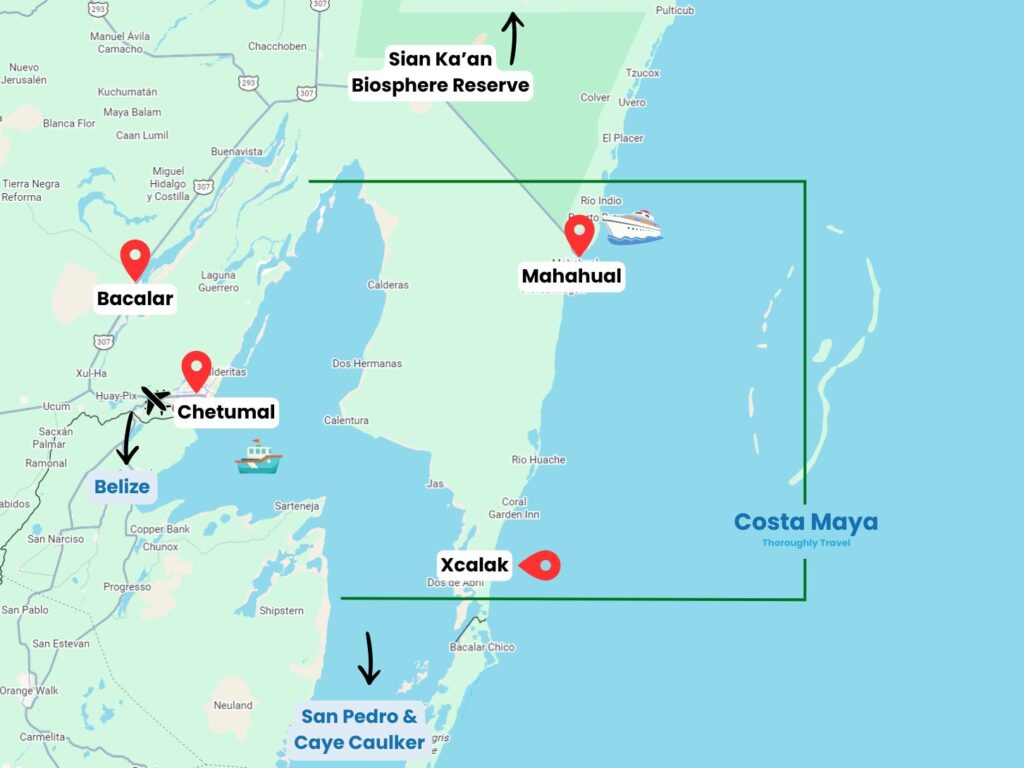
The Costa Maya is located in southern Quintana Roo, stretching from just south of Tulum down to the Mexico-Belize border. It sits in the south of Mexico’s portion of the Yucatán Peninsula on the country’s Caribbean coast.
The region centres around the coastal town of Mahahual, with inland access via Chetumal, the state capital. To the east lies the Caribbean Sea and the Mesoamerican Barrier Reef, the second-largest coral reef system in the world (after Australia’s Great Barrier Reef). To the west, you’ll find jungle, lagoons, and freshwater systems called cenotes.
The Costa Maya is closer to Belize than to Cancún, and that proximity subtly influences the food, culture, and pace of life. If you’re not visiting on a cruise ship, you likely won’t make it this far south unless you’re planning to travel through Central America or really off-the-beaten-path destinations.

Costa Maya Map
The Costa Maya starts in Mahahual and stretches south to Xcalak, encompassing Bacalar and Chetumal.
Where to stay in the Costa Maya
The Costa Maya is much quieter and more spread out than up north, so where you stay really shapes your experience. Most places are small, laidback, and focused around either the lagoon, the coast, or a simple stopover point on the way to Belize.
Costa Maya Hotels
Accommodation in the Costa Maya is generally smaller-scale than the rest of the region. You’ll find a good mix of hostels, especially in downtown areas of Bacalar and Chetumal, while budget hotels and guesthouses are also on offer.
There are also some great boutique stays, especially inland towards the jungle, while lagoon-side eco-lodges cover Bacalar Lagoon’s shores. There’s not the same level of all-inclusive resorts as the larger cities, so this might impact your decision.
Top Hotels in the Costa Maya
The best places to visit in the Costa Maya
The Costa Maya region offers a mix of relaxed beach towns, near-empty reefs, and inland freshwater lagoons. Infrastructure is minimal compared with the north, which keeps crowds down, but also means planning ahead is important. Here are the key places to visit in the Costa Maya.
1. Bacalar
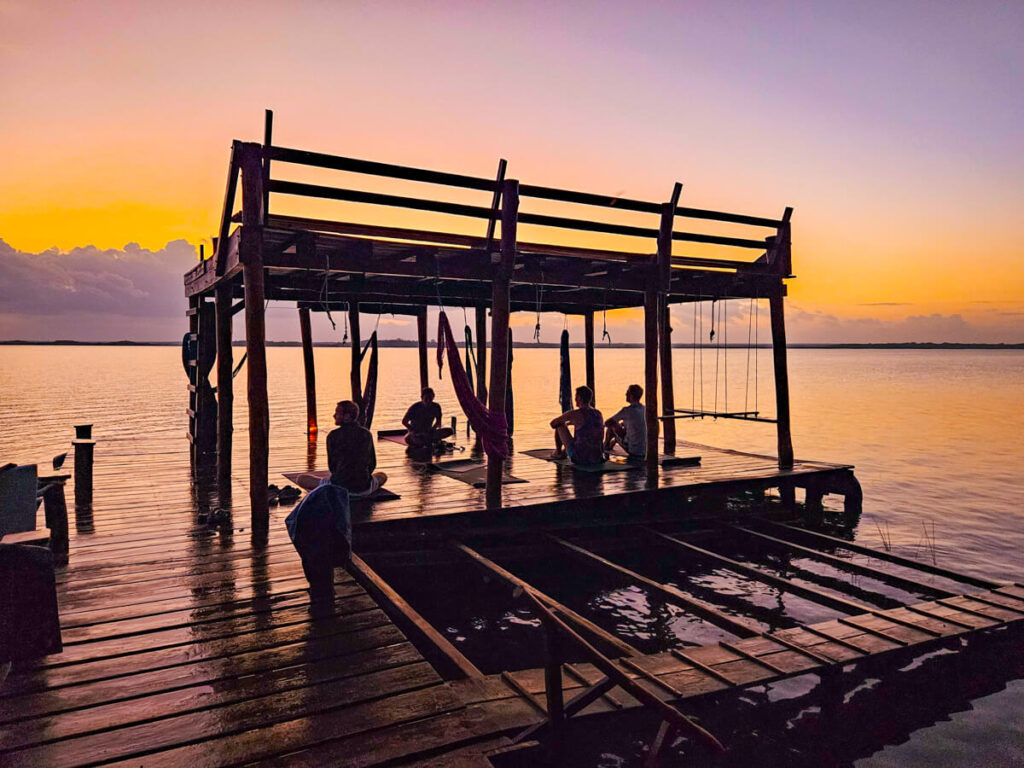
While it’s not technically coastal, Bacalar is one of the Costa Maya’s biggest attractions. The town sits on the Lagoon of Seven Colours, a vast freshwater lake known for its shifting blues and shallow, sandy bottom. It’s known for its genuinely eco-conscious vibe (we always say Bacalar is what Tulum wishes it was), with beautiful eco-lodges lining the lagoon and plenty of yoga classes on offer.
Like much of the region, Bacalar is home to sinkholes called cenotes, but these ones are unique, as they sit in the lagoon itself. Spending a day sailing around the lagoon and swimming in Bacalar’s cenotes is a must-do.
Bacalar is also home to some of the largest living freshwater stromatolites in the world, which you can see at Ecoparque Bacalar. These ancient, layered limestone formations were created by microorganisms that have existed for over 3.5 billion years, making them among the oldest life forms on Earth and one of the main reasons the lagoon is so carefully protected today. Nearby, Los Rápidos is another highlight where you can see stromatolites, but is better known for its natural lazy river effect, where you can float along in the current.

2. Chetumal
Chetumal is the capital of Quintana Roo and the region’s main transport and administrative hub. It’s a working city rather than a tourist resort, and is mainly only visited by travellers crossing to and from Belize.
Located on the large Chetumal Bay, it has a relaxed waterfront promenade and a strong Caribbean influence. There aren’t loads of activities, but there are some interesting things to do in Chetumal, from museums to eating in local restaurants. Despite its relatively small centre, it’s worth stopping for a night if you’re heading that way to experience its local food and museums.
Chetumal also played an important role in regional history, particularly during the Caste War of Yucatán (1847-1901) and in cross-border trade.

3. Mahahual
Mahahual is the most tourist-led town in Costa Maya, though it can’t be compared to the scale of the cities and towns up north. Once a small fishing village, it grew rapidly after the cruise port opened nearby, and today it balances two very different identities.
Along the malecón (seaside promenade), you’ll find beach clubs, restaurants, and snorkelling spots with easy access to the reef just offshore. The beach is especially popular, as it’s known for its pristine white sand.
Move slightly away from the port area, and Mahahual quickly becomes calmer and more local. It’s one of the easiest places in Costa Maya to base yourself without a car, with accommodation ranging from simple guesthouses to small beachfront hotels.

4. Xcalak
A tiny fishing village near the Belize border, Xcalak is properly off-grid. It’s the southernmost part of the Costa Maya and is known for its remoteness, limited infrastructure, and strong conservation focus.
It sits within the Banco Chinchorro Biosphere Reserve, one of Mexico’s most important marine protected areas, and is home to its own Xcalak National Marine Park. Divers and snorkellers can explore over 20 official dive sites, all of which are quieter than Isla Cozumel (although arguably not as diverse and with worse visibility). If you prefer being on the water, you can explore the park’s coastal habitats, including mangroves and lagoons, by kayak or stand-up paddleboard.
Electricity, Wi-Fi, and phone signal can be patchy, which is very much part of the appeal. Few travellers make it this far south, but those that make it go for fly-fishing, diving, birdwatching, and absolute peace and quiet.

The best things to do in the Costa Maya
From exploring ancient Mayan ruins to snorkelling on colourful coral reefs, there are so many fun things to do in the Costa Maya.
1. Spread out on sandy shores
Soft sand, calm turquoise waters, and fewer crowds make Costa Maya’s beaches perfect for relaxing. Mahahual Beach is a hub for sunbathing and swimming, with palm-lined streets just behind the sand and a small-town vibe that feels completely different from Cancún or Playa del Carmen. Maya Chan Beach, slightly further south, is also popular, especially with families.
If you go south toward Xcalak, the beaches are almost untouched, giving a true private island feeling. While Bacalar doesn’t have coastal beaches, you can still chill out on the lagoon’s edge at beach resorts, called balnearios, like Cenote Cocalitos Beach Resort.
Early mornings are ideal for quiet strolls, while sunset casts a golden glow over the calm Caribbean waters. There’s a mix of public beaches, hotel stretches, and hidden coves, so it’s easy to find your own slice of paradise.

2. Go snorkelling
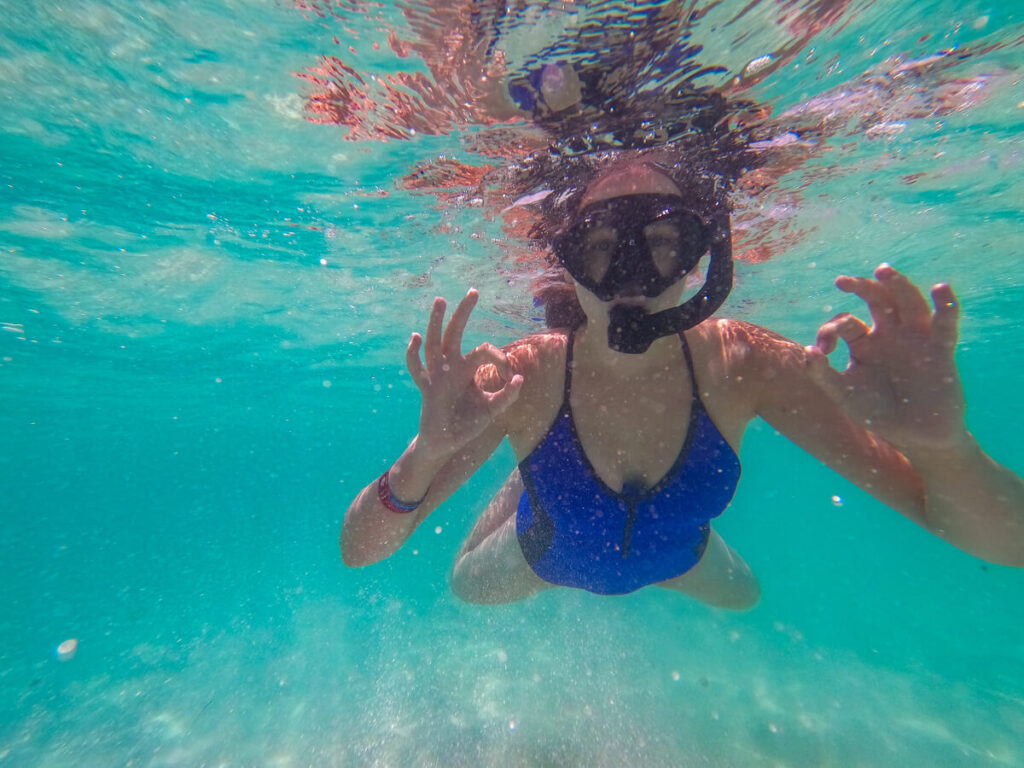
The Costa Maya has some surprisingly underrated snorkelling, thanks to the crystal-clear waters and the Mesoamerican Reef stretching offshore. Mahahual has easy-access reef sections, where colourful parrotfish, sergeant majors, and rays swim right up to the shallows. La Leyenda Eco-Tours operates out of Mahahual, offering snorkelling tours on the local reef.
Xcalak is more remote but offers pristine conditions and fewer crowds, perfect for spotting larger reef fish or even passing nurse sharks. Most accommodations will be able to organise snorkelling tours for you, either offering their own services or through a local operator.
3. Try SCUBA diving
The Costa Maya is excellent for certified divers, with calm waters and some of the best visibility in the Caribbean (besides diving in Isla Cozumel, which we think wins). The Banco Chinchorro Atoll, a protected site, offers wall dives, shallow coral gardens, and wrecks that attract large fish, rays, and occasional turtles.
Mahahual‘s dive shops offer day trips for all levels, with small groups and expert local guides. Xcalak is quieter and more advanced, with off-the-beaten-path reefs that feel almost untouched.

4. Explore Banco Chinchorro Atoll
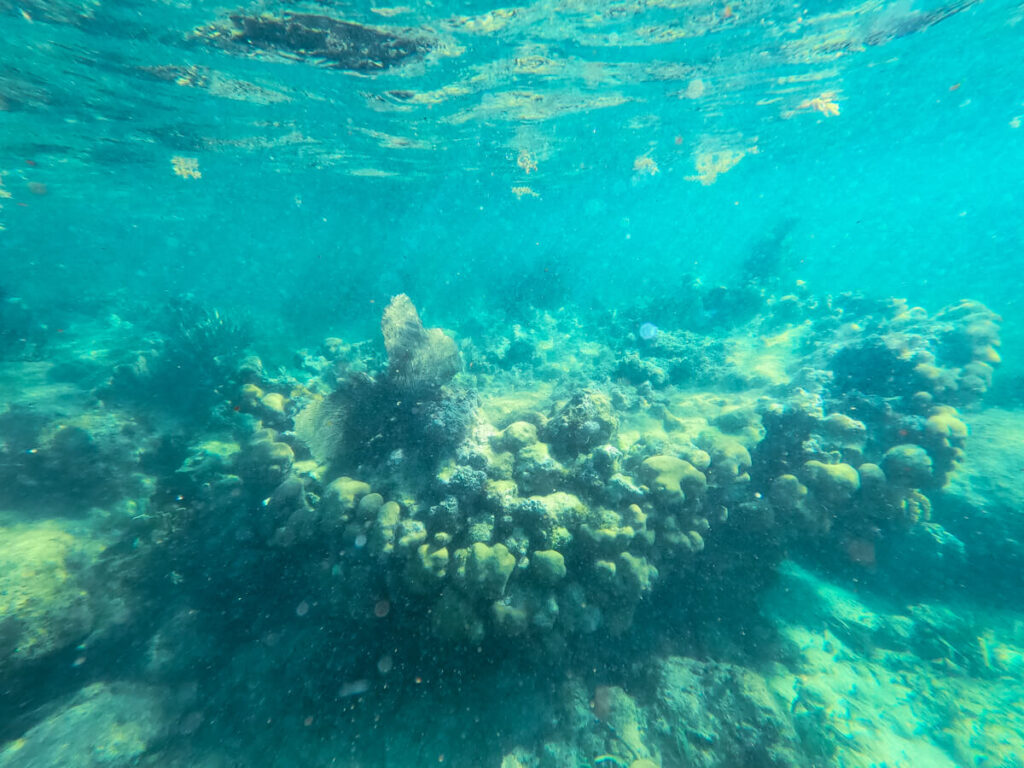
A vast offshore coral atoll and UNESCO Biosphere Reserve, Banco Chinchorro is one of the Caribbean’s best-kept secrets. It’s home to reef sharks, giant groupers, sea turtles, and countless tropical fish species. Snorkellers have even had encounters with crocodiles here (safely, with local guides).
The atoll also features shipwrecks and historic sites. It’s an advanced, weather-dependent trip best for experienced divers and snorkellers, but worth it if you’re keen to experience the underwater world here. Most tours include snorkelling, with some excursions including a stop on Cayo Centro, a small island with a community of local fishermen, and lunch.
5. Visit the tiny towns
Mahahual is laidback, with painted storefronts, hammocks in the streets, and friendly locals running shops and restaurants, while Xcalak is quiet and remote, where wooden houses line the shore and fishing boats dot the calm harbour.
Slightly inland, Bacalar is bigger but still intimate, famous for its stunning lagoon, street art, and colonial architecture. Even Chetumal has its own appeal with seaside sculptures and statues dotting the malecón.
Calderitas is also worth a look around. A laidback waterfront village near Chetumal, Calderitas is best known for its row of palapa-style seafood restaurants where locals come for leisurely lunches, lagoon views, and Yucatecan cooking.

6. Sail along the coastline
Whether you’re drifting across Bacalar Lagoon or out on the Caribbean Sea, taking a boat trip is one of the best things to do in Costa Maya. On the lagoon, calm turquoise waters and dramatic shades of blue make every minute feel like a postcard, while small cenotes along the shore are perfect for quick swims. Coastal sails from Mahahual let you glide past palm-lined beaches, spot dolphins and rays, and discover quiet stretches that aren’t accessible from land.
Sunset sails are especially magical, with golden light reflecting on the water and seabirds skimming the waves. Small catamarans, sailboats, or even private charters offer flexible options, from relaxing day trips to romantic evening cruises.

7. Go wildlife watching
The Costa Maya is a haven for wildlife, from coastal birds to reef dwellers and mangrove inhabitants. Herons, ospreys, and pelicans are everywhere, while manatees and crocodiles lurk in quiet lagoons. Punta Allen in Sian Ka’an or quieter areas around Xcalak (which sits just north of the biodiverse Bacalar Chico, one of Belize’s best protected areas) are prime spots for spotting tropical species without the crowds.
Laguna Guerrero is also worth visiting if you have spare time. A calm, local lagoon just outside Chetumal, Laguna Guerrero is a low-key spot for kayaking, birdwatching, and occasionally spotting manatees in their natural habitat, although it seems the population is sadly declining.
Early mornings are best for spotting wildlife, and local guides know how to point out animals you might otherwise miss, like iguanas basking in the sun or dolphins offshore.

8. Sample local cuisine
Food in Costa Maya is fresh, simple, and delicious. Mahahual has seafood restaurants along the beachfront serving grilled fish, ceviche, and tacos. Xcalak is quieter, but small family-run kitchens offer traditional dishes with locally caught fish. Bacalar mixes Mayan, Mexican, and Caribbean flavours, from street tacos to tropical fruit desserts.
Costa Maya Foods
You don’t have to take a tour to experience great food in the Riviera Maya. Here are our top foods to try:

9. Sip margaritas in a beach bar
One of the simplest joys in Costa Maya is settling into a hammock or palapa with a cold drink in hand. Mahahual has lively beachfront bars where you can sip a margarita, watch kite surfers, or just enjoy the view. Beach clubs like Malecon 21, Pitaya Beach Club, and La Pancha offer comfortable loungers, refreshing drinks, and delicious meals, but often have a minimum spend requirement.
Xcalak is more low-key, with rustic bars serving cocktails made from fresh local fruits. Even Bacalar and Chetumal have charming lakeside and seaside spots where you can relax as the sun sets over the water.

10. Explore Mayan ruins
The Costa Maya is a popular stop for cruise ships, and excursions can range from snorkelling trips to cultural tours. While these excursions are often short, they’re a good way to see a mix of beaches, reefs, and towns in a single day.
Exploring Mayan ruins is one of the best ways to spend a day in the Costa Maya. The top sites in the region include:
Unlike some of the more tourist-heavy sites in the Riviera Maya, these ruins are quieter and feel more remote, sometimes even allowing you to climb the temples.

How to get to and around the Costa Maya
The Costa Maya’s infrastructure is simple: roads are mostly two-lane highways, towns are small and walkable, and public transport is functional but not as frequent as in larger destinations. While there are hotels and restaurants near the coast, many of the highlights, like remote beaches, reefs, and ruins, require a bit of planning to reach.
By plane
The main airport for the Costa Maya is Chetumal International Airport (CTM), about a 30-60 minute drive from Bacalar and roughly 2 hours from Mahahual. Flights connect from Mexico City, Cancún, and a few regional hubs, so while it’s not as busy as Cancún, it’s still easy to reach domestically. There are a limited number of direct international flights, mainly from Central America and a few seasonal routes from the US.
If you’re coming from abroad, you might prefer to fly into the larger Cancún International Airport (CUN) or the smaller but newer Tulum Felipe Carrillo Puerto International Airport (TQO), and make your way down by road.
Small local airlines sometimes offer flights directly to Mahahual, but these are seasonal and should be booked well in advance.
From the airport, you can rent a car, book a private transfer, or catch a colectivo or taxi to your accommodation.

By car
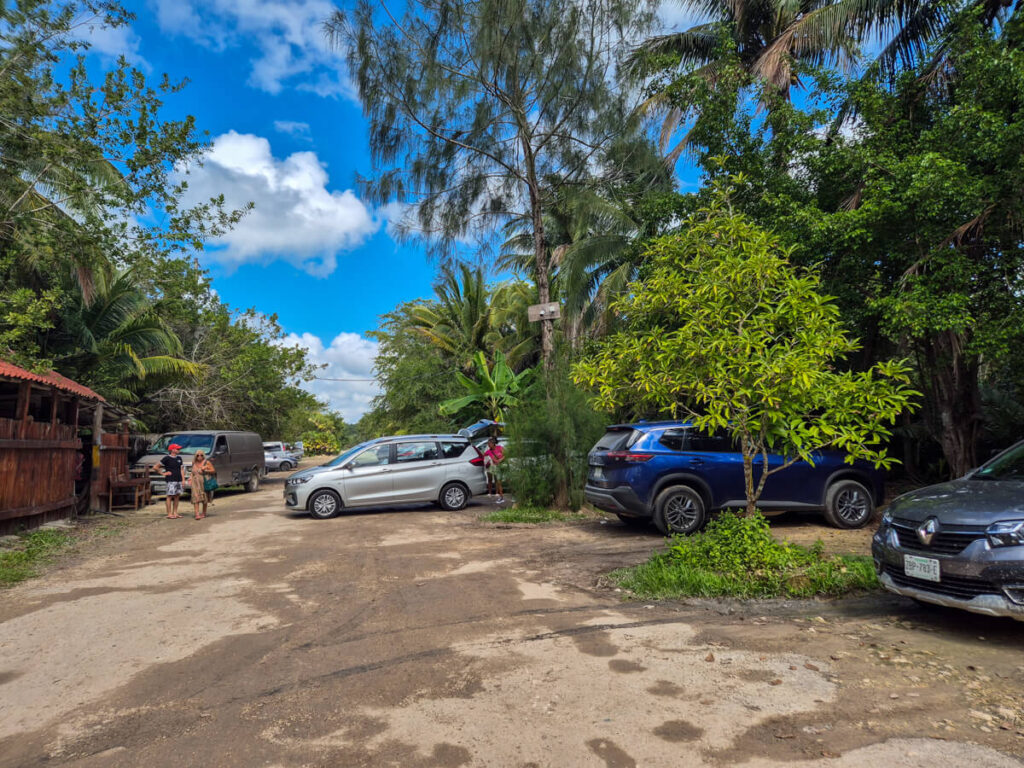
Driving gives you the most freedom to explore Costa Maya’s spread-out highlights. From Cancún or Playa del Carmen, it’s roughly a 4-5 hour drive along Highway 307, passing through small towns, tropical scenery, and sections of jungle.
A car lets you hop between beaches, lagoons, and ruins at your own pace, and it’s essential if you want to reach remote spots like Xcalak or Banco Chinchorro. The main roads are generally in good condition, though some rural detours toward Xcalak or inland cenotes can be rougher. Keep in mind that gas stations are less frequent than in the Riviera Maya, so plan ahead.
By bus
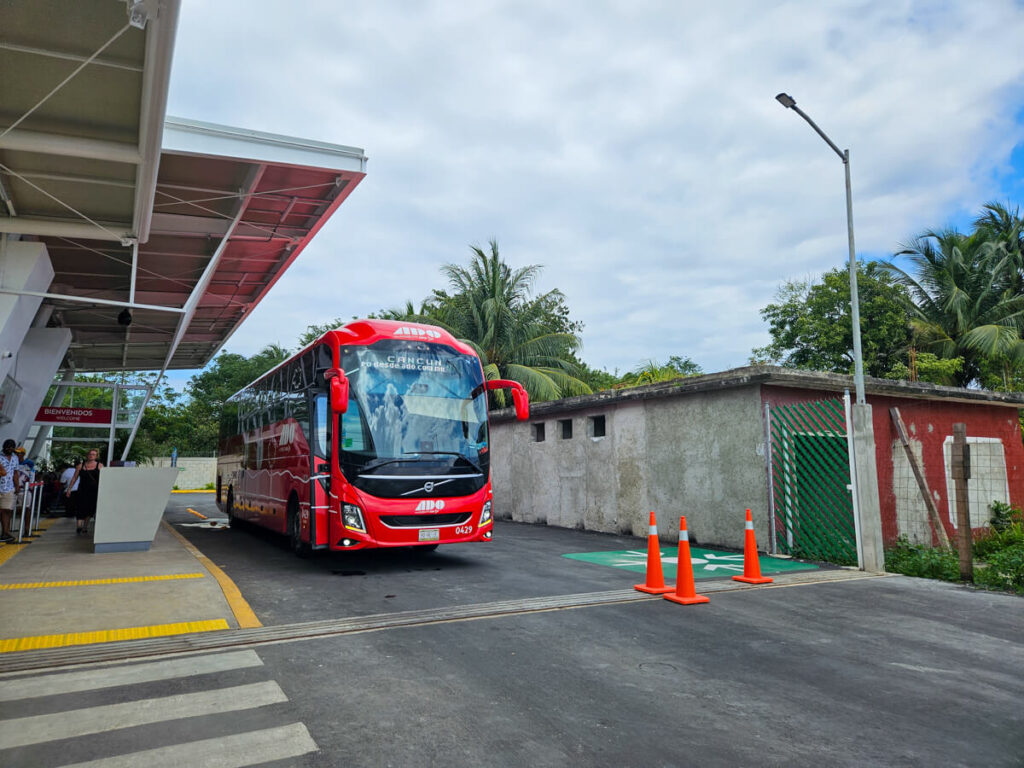
ADO buses and other regional operators run routes from cities all over Yucatán, including from Cancún, Playa del Carmen, and Chetumal, to Mahahual, Bacalar, and Chetumal. These coach-style buses are comfortable, air-conditioned, and reliable, making them a budget-friendly option for travellers who don’t want to drive. We used them to get all over the region.
While schedules are generally regular, they’re less frequent than in the north, so checking departure times in advance is important. Buses drop you in town centres, but you may need a taxi or colectivo to reach beaches, lodges, or remote attractions.
By colectivo
Colectivos in Costa Maya are less available than in the Riviera Maya, but they still provide an affordable way to hop between towns like Mahahual, Bacalar, and Chetumal. They’re shared vans or minibuses that run along the main coastal and inland roads, perfect for short trips to beaches, local markets, or cenotes.
Schedules aren’t strict, but during the day, you can generally catch one within 20-30 minutes at main stops or by flagging one down on the roadside. Fares are extremely cheap, often under $2-3 USD, and are paid in cash directly to the driver in pesos. The trade-off is that they can be cramped, often lack air conditioning, and aren’t suited for long trips with luggage.

By train
The Costa Maya is now even more accessible via the Tren Maya, which stops at Limones-Chacchoben, Bacalar, and Chetumal. The service connects the region to major hubs like Cancún, Playa del Carmen, and Tulum, offering a comfortable alternative to long drives and bus journeys, although it’s slightly more expensive than the bus.
The modern train carriages are air-conditioned and equipped with basic amenities, allowing you to relax while watching the jungle, lagoons, and coastline roll by. From the train stations, local taxis or colectivos can take you to beaches, resorts, or inland attractions, as most stations are located slightly outside town centres.

By taxi
Taxis are available throughout the Costa Maya, but are less regulated than in Cancún or Playa del Carmen, so it’s important to agree on the fare before you set off. They’re ideal for short, door-to-door trips around Mahahual, Bacalar, or Chetumal, or for reaching beaches, lodges, and cenotes that colectivos don’t reach.
While they can be more expensive than colectivos and buses, taxis are faster, more comfortable, and often essential late at night when other options disappear. Many taxis can also take you on half-day trips to nearby attractions, such as lagoon tours in Bacalar or fishing excursions off the coast.

By rideshare app
Rideshare apps like Uber and DiDi are almost non-existent in Costa Maya, with only limited availability in Chetumal (and we found it easier to get a local taxi there anyway). In towns like Mahahual or Bacalar, you’ll almost always rely on taxis, private drivers, or shuttles.

By shuttle
Shuttle services are one of the easiest ways to get around Costa Maya, especially for airport transfers or connecting resorts with towns. Many hotels and tour operators in Mahahual and Bacalar offer scheduled shuttles, often shared with other guests, which keeps costs lower than a private taxi.
Shuttles are generally air-conditioned, safe, and reliable, with pick-ups coordinated by your accommodation. They’re ideal for travellers who want a stress-free ride to beaches, cenotes, or eco-parks without worrying about navigating local roads, and they can be cheaper than taxis, too, especially if you arrange them in advance.
Bookaway is amazing for booking buses and shuttles throughout Mexico. You can get 5% off with our code THOROUGHLY5.

By boat
The Costa Maya is a popular stop for cruise ships, with Mahahual Cruise Port featuring a large pier for passengers.
The Chetumal water taxi to and from Belize connects Mexico with Belize, providing easy access to San Pedro and Caye Caulker, two of Belize’s best islands.
Local boats (pangas) are also available for short trips to lagoons, cenotes, and offshore reefs like Banco Chinchorro, often with guides who know the best spots for wildlife and snorkelling.

What is the best time to travel to the Costa Maya?
The best time to visit the Costa Maya is generally during the dry season, from December to April, when you’ll get the most reliable sunshine, warm temperatures, and calm Caribbean waters. This is the most comfortable time for beach days, snorkelling, and exploring nearby Mayan ruins, with lower humidity and fewer disruptions from rain. It’s also when sea conditions are at their clearest, making it ideal for reef activities along this stretch of the Yucatán coast.
The trade-off is that this is also peak tourist season, so you can expect higher prices and busier beaches, especially around holidays like Christmas, New Year, Easter and Spring Break periods.
The wet season, from May to October, sees higher humidity, more frequent afternoon showers, and the possibility of tropical storms or hurricanes, particularly late in the season (September).
But even in the wetter months, rain often comes in short bursts rather than all-day downpours, meaning mornings can still be usable for excursions and beach time. Sea conditions can vary more during this period, especially on windier days.
Costa Maya Weather
The Costa Maya has a tropical climate with hot, humid conditions year-round and a clear split between dry and wet seasons.

How long to spend in the Costa Maya
The Costa Maya is small and fairly relaxed, but how long you spend here really depends on whether you’re just passing through or using it as a base to slow down. Most visitors only use one or two locations as a base, and cruise passengers who are in and out in a day are only able to get a taste of it.
We think 5-7 days is ideal if you want a relaxing stay with time for a bit more exploring. You can split your time between Bacalar Lagoon and the coast, day-tripping to cenotes inland, or enjoying quiet downtime in Mahahual.
3-4 days is still a good amount of time for most travellers doing a road trip or backpacking route. We’d recommend visiting Bacalar and then Chetumal if you’re also visiting Belize or Mahahual for the beach.
If you only have 1-2 days, you can see some highlights as you pass through, but it’s not really worth going out of your way from the north of the state.
Is it safe to travel to the Costa Maya?
The Costa Maya is generally considered a safe part of Mexico to visit, especially compared to some other regions. It’s far less developed than the Riviera Maya, with smaller towns and fewer crowds, but that means there are fewer chances of tourist-focused scams.
Most travellers pass through without any issues, and crime targeting tourists is relatively low. Like anywhere, though, petty theft can happen, so it’s worth keeping an eye on your belongings, especially on beaches or in quieter areas.
It’s also worth noting that this region doesn’t have the same level of infrastructure as more built-up destinations, so there are fewer transport options, quieter streets at night, and less of a visible police or tourist presence.
We felt safe travelling around the Costa Maya, but stuck to the usual safety precautions: avoiding walking around late at night, using trusted transport, and not flashing valuables.
Natural factors are also something to think about here. The heat can be intense, and if you’re swimming or snorkelling, conditions can change quickly, so always check local advice and go with reputable operators.
Is the Costa Maya expensive?
The Costa Maya is generally cheaper to visit than the Riviera Maya, but prices can still creep up in places like Mahahual, especially around the cruise port and beachfront. Food and accommodation are affordable overall, but tours and activities like diving or visiting ruins can add up. You can save money by staying in Bacalar and Chetumal, which are more established with a range of budget-friendly hostels, as well as boutique and boujee hotels.
Here are some typical daily costs (per person):
And here are some average costs (in USD):

Is the Costa Maya worth visiting?
The Costa Maya is a beautiful destination in its own right, with access to the sea, Bacalar Lagoon, and the inland jungle. It’s a very different experience to the Riviera Maya, being quieter, less developed, and more local, but that also means fewer things to do and less infrastructure.
When asking whether it’s worth it, we’d consider the type of trip you’re looking for (fly-and-flop vacation or backpacking trip). The downside of the Costa Maya is that it’s much further away from other main tourist destinations and transport hubs (like the key international airports) in the region.
For us, the Costa Maya is so worth visiting if you’re looking to slow down. Places like Mahahual and Bacalar offer a more laidback, low-key version of the Caribbean, without the crowds and commercialisation you’ll find further north. It’s a great stop on a backpacking trip, especially if you’re heading south to Belize.
But if you’re looking for one or two bases, and are deciding on the Costa Maya vs the Riviera Maya, it might not have enough to do for you. It’s not as suave as the coastal towns up north and doesn’t offer the same kind of classic beach holiday.
If you have limited time, choose either the Costa Maya or the Riviera Maya. If you have longer or are heading to Central America, absolutely stop at least in Bacalar.

What to pack to visit the Costa Maya
Here’s a practical list of what to pack for the Costa Maya, so you don’t forget the essentials:

Sustainability in the Costa Maya
The Costa Maya is less developed than other areas, but that doesn’t mean it’s free from sustainability challenges.
One of the most visible issues is coastal development, particularly around Mahahual and nearby stretches of coastline. While it’s far less intense than places like Tulum, there is still pressure to expand hotels, cruise infrastructure, and beachfront properties. This can gradually impact coastal ecosystems, including mangroves and nesting habitats that play an important role in protecting the shoreline.
Cruise tourism is another factor. Mahahual is a regular stop on Caribbean cruise routes, and on busy days, the small town can suddenly swell with visitors, exacerbating issues related to overtourism. While this brings income to the area, it also creates pressure on local infrastructure and can shift the town’s character toward short-stay tourism rather than long-term, community-based travel.
The nearby reef system is part of the wider Mesoamerican Barrier Reef, and activities like snorkelling and diving need to be carefully managed. Responsible operators tend to focus on reef protection and limit interaction with marine life, but not all experiences are equal.
We also have mixed feelings about some wildlife encounters in the wider region. As tourism grows, there’s always the risk of experiences slipping into unethical wildlife encounters, like feeding or close-contact wildlife interactions, which can stress animals and alter natural behaviour. It’s important to be selective about the tours you choose and avoid anything that prioritises interaction and profit over observation.
That said, the Costa Maya still feels more low-impact than many parts of the Yucatán. There are eco-lodges, community-run tours, and smaller operators who are trying to keep tourism more balanced and locally beneficial, especially in Bacalar.
For travellers, the biggest impact often comes down to simple choices, like supporting local businesses, avoiding single-use plastics, choosing reef-safe sunscreen, and picking operators that respect marine and wildlife environments.

Costa Maya FAQs
To make your trip to the Costa Maya as smooth as can be, we’ve answered these frequently asked questions.
Is Costa Maya in Mexico or Belize?
The Costa Maya is in Mexico, on the southern Caribbean coast of the Yucatán Peninsula in the state of Quintana Roo, close to the Belize border.
What is Costa Maya, Mexico, known for?
The Costa Maya is known for its quiet coastal towns, lagoon access in Bacalar, laidback beach life in Mahahual, and snorkelling along the Mesoamerican Reef. It’s also a frequent stop for Caribbean cruise ships or backpackers heading to or from Central America.
When is the best month to visit Costa Maya?
We think the best months to visit Costa Maya are typically March and April, when the weather is at its most stable and sea conditions are usually excellent for swimming and snorkelling. These months sit at the tail end of the dry season, meaning you still get plenty of sunshine, but with slightly fewer crowds than the peak Christmas and New Year period.
Is Costa Maya a good cruise port?
Yes, Costa Maya is a popular cruise port, especially for short stops. It’s convenient and easy to access, but cruise days can make Mahahual feel much busier and more commercialised than usual.
Can I walk to the beach from Costa Maya cruise port?
Yes, in Mahahual, the cruise port is located just outside town, and you can take a short taxi or shuttle ride (or in some cases walk, depending on docking point and heat) to reach the main beach area and malecón.
What is the best thing to buy in Costa Maya, Mexico?
The best things to buy in the Costa Maya are locally made crafts, textiles, handmade jewellery, and small artisan souvenirs. Mahahual also has beachside stalls selling typical Mexican souvenirs.
What to do in Mahahual, Mexico?
Mahahual is all about relaxing by the beach. Popular things to do include swimming and relaxing on the soft sand, snorkelling or diving the reef, renting bikes along the malecón, and taking boat trips out to the Mesoamerican Barrier Reef.
Is Cancún close to Costa Maya?
Cancún is about 4.5-6 hours away from the Costa Maya by road, depending on traffic and stops. Most travellers visit Costa Maya as part of a longer Yucatán or Belize border route rather than a day trip from Cancún.

Read next:
What You Need to Know Before Taking Tren Maya
A Traveller’s Guide to Bacalar
Bacalar Lagoon of 7 Colours Guide
How to Visit Los Rápidos: Mexico’s Natural Lazy River
