A Comprehensive Guide to Travelling Mexico’s Riviera Maya

Everything you need to know about visiting Mexico’s Riviera Maya, from highlights and hidden gems to trip planning logistics and budget tips.

This post may contain affiliate links, which means we might earn a small commission on anything purchased through these links at no extra cost to you. Learn more on our disclaimer page.
The Riviera Maya is one of Mexico’s most visited regions, stretching along the Caribbean coast’s most popular towns from just south of Cancún to south of Tulum. Between resort-heavy areas, quieter beach towns, ancient Mayan ruins, and pockets of lush jungle, it’s easy to see why this area is so popular, but your experience can vary hugely depending on where you go and how you travel.
We spent months travelling through different parts of eastern Mexico, exploring everything from the Riviera Maya’s busy tourist hubs to smaller towns and nature-focused areas you’ve probably not heard of. In this post, we break down exactly what the Riviera Maya is, where it’s worth spending your time, and how to experience the region beyond the all-inclusive resorts. Whether you’re planning a short vacation or a long backpacking trip, this guide will help you understand the area and decide which parts actually make sense for your Yucatán itinerary.
Riviera Maya at a glance

More from the Riviera Maya
What is special about the Riviera Maya?
Mexico’s Riviera Maya is known for its abundance of history, biodiversity, and wildly different destinations, all packed into a relatively short stretch of Caribbean coastline.
The name Riviera Maya (Mayan Coast) refers to the region’s scenic coast and deep connection to the Maya. Long before the Riviera Maya became a tourism brand, the region was once a major heartland of the ancient Mayan civilisation, with trade routes, port towns, and inland cities connected by forests, cenotes, and engineered waterways.
From as early as 2000 BCE, Maya communities settled across the Yucatán Peninsula, drawn by fertile land, freshwater, and strategic coastal access. Inland cities like Cobá grew into the major political and trade centres by the Classic Period (250-900 CE), while coastal settlements like Tulum Ruins (then known as Zamá) later emerged as key trading ports during the Postclassic Period (1200-1500 CE).
The arrival of the Spanish in the early 16th century dramatically altered life along the coast, bringing disease, forced conversion, and the collapse of many Mayan population centres. Today, the same jungles and reefs sit alongside modern resorts, backpacker towns, and protected biospheres.
What sets the Riviera Maya apart from many beach destinations is how easy it is to move between ruins, cenotes, reefs, islands, and towns in a single trip. You can snorkel coral reefs in the morning, explore Mayan ruins at lunchtime, and swim in a freshwater cenote before sunset. It’s far from untouched, but it’s a destination that offers incredible diversity.
Thanks to its location, the Riviera Maya has warm temperatures year-round, with seasonal shifts in rainfall, humidity, and sargassum. It’s easily accessible (with getting to Cancún being most popular thanks to its international airport), especially from the US, which is a big reason it’s become one of Mexico’s busiest tourist hot spots.

Where is the Riviera Maya?
The Riviera Maya is located along Mexico’s Caribbean coast in the state of Quintana Roo, on the eastern edge of the Yucatán Peninsula.
Originally called the “Cancún-Tulum Corridor”, it begins at Puerto Morelos, south of Cancún, stretching down past Playa del Carmen and Tulum, ending near the Sian Kaʼan Biosphere Reserve. If you were to continue south, you’d enter the Costa Maya region.
The region runs parallel to the Mesoamerican Barrier Reef, the second-largest coral reef system in the world (after Australia’s Great Barrier Reef). Inland, the landscape is mainly flat limestone jungle, riddled with underground rivers and cenotes formed over thousands of years.

Riviera Maya Map
The Riviera Maya starts in Puerto Morelos, south of Cancún and stretches south to Tulum and the Sian Ka’an Biosphere Reserve.

Where to stay in the Riviera Maya
The Riviera Maya stretches along a long coastline, and where you stay makes a big difference to your trip. It also depends on your taste – are you a fly-and-flop vacationer or budget backpacker?
Some cities are designed purely for relaxation, while others make better bases for day trips and sightseeing.
Riviera Maya Hotels
Accommodation in the Riviera Maya ranges from budget stays to ultra-luxury beachfront resorts. You’ll find a good mix of hostels, especially in downtown areas and bigger cities, while budget hotels and guesthouses are also abundant. There are also some great boutique stays, especially near Tulum, as well as eco-hotels (but be sure they’re actually sustainable and not greenwashing before booking). Of course, there’s also the all-inclusive resorts the region is known for, if you’re seeking something convenient and familiar.
Top Hotels in Riviera Maya

The best places to visit in the Riviera Maya
Just like the European destinations it’s named after (the Italian Riviera and French Riviera in South East France), the Riviera Maya isn’t a single destination, but a collection of very different places, each with its own personality and purpose. You’ll find everything from resort-heavy beach zones to small fishing villages, SCUBA diving islands, and remote protected areas. Here are the key places to visit in the Riviera Maya.
1. Cancún
While not actually part of the Riviera Maya, Cancún is the most popular city on the Yucatán Peninsula, has the largest international airport, and acts as the gateway to the region. It is known for its long white-sand beaches, turquoise water, and high-rise Hotel Zone, which was built specifically for tourism in the 1970s.
It’s easy to get around Cancún, as it has excellent infrastructure, direct flights from all over the world, and some of the best transport connections in the region. It’s also a gateway to day trips like beaches on Isla Mujeres, the protected Isla Contoy, and inland Mayan ruins like Chichén Itzá.
Despite its party marketing not being our vibe, we were pleasantly surprised by Cancún and have visited several times. It’s got a local Downtown, some great coastal views, and we were most surprised to discover that SCUBA Diving in Cancún is actually really good.
But Cancún’s not for everyone. While it draws crowds of holiday-makers seeking all-inclusive resorts and partiers looking for a Spring Break vibe, it can feel crowded, commercial, and detached from local culture, especially in the Hotel Zone. Downtown is a good option if you’re on a budget or want something a little more authentic – there are cheaper places to stay in Cancún than the Hotel Zone and also local eateries and plazas like Parque de las Palapas.
Cancún is a destination in its own right, but to reach the true Riviera Maya, you need to journey south.

2. Puerto Morelos
Puerto Morelos is a small coastal town that sits quietly between Cancún and Playa del Carmen. It retains more of a local, lived-in feel, with low-rise buildings, independent restaurants, and a slower pace of life. It’s the true start of the Mayan Riviera.
The town is particularly popular with divers and snorkellers, being both calmer and closer to the reef than other coastal towns and cities. Underwater, conditions are arguably better than diving and snorkelling in Cancún.
Unlike its larger neighbours, development here has been more controlled, and there’s a strong community presence. It can easily be done as a day trip from Cancún, but many travellers prefer to base themselves here instead. Puerto Morelos is ideal if you want Caribbean beaches without big crowds or party scenes.

3. Playa del Carmen
Playa del Carmen sits somewhere between Cancún’s scale and level of development and Tulum’s size and aesthetic – it’s also geographically halfway between the two. It’s a busy, compact town with a strong food scene, beach clubs, shopping, and nightlife, all centred around Fifth Avenue, the main street.
Nicknamed Playa, the town is well-connected, both to nearby destinations on the mainland and to Isla Cozumel, which is only a short ferry ride away. While it’s undeniably touristy, it’s a slightly quieter alternative to Cancún, and its location further south puts you closer to popular cenotes like Cenote Chaak Tun and Cenote Azul as well as inland adventures. Accommodation options range from budget hostels to luxury hotels, often at better value than in Tulum, so it’s good if you’re on a budget, too.

4. Isla Cozumel
Cozumel is an island just off the coast of Playa del Carmen and is world-famous for SCUBA diving. The waters here are part of a protected marine park, offering excellent visibility (well over 30 metres (100ft)) and healthy coral reefs (which are sadly getting harder to find with global bleaching).
Much of the island remains undeveloped, especially on the eastern coast, where wild beaches face the open Caribbean, but it has a central town on the protected west coast with local restaurants, bars, and shops.
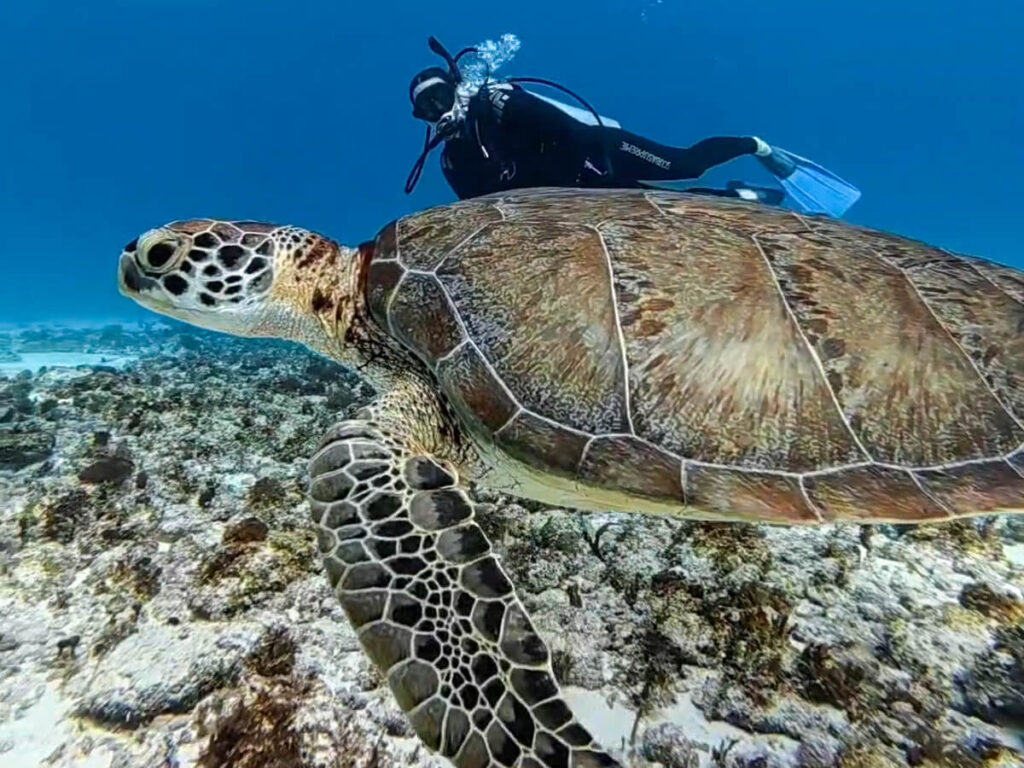
We loved Cozumel so much, we kept extending our stay on the island week by week. Cozudive were our go-to dive shop, and they were fantastic. We saw so much marine life, including sea turtles, nurse sharks, and stingrays. It’s a famous diving destination for a reason, and it really lives up to the hype.

5. Akumal
Akumal is best known for its shallow bay and resident sea turtles, which feed on seagrass close to shore. It sits between Playa del Carmen and Tulum and has a mix of resorts, villas, and quieter residential areas. It’s a great place to snorkel – we spent hours swimming around the bay.
Sadly, the bay is suffering from overtourism, so we don’t recommend swimming with turtles in Akumal (which made the bay famous), due to ethical concerns about how the tours are run and the poorly upheld regulations.
Outside the beach, Akumal is calm and low-key, with easy access to cenotes and jungle areas inland. It’s a good option for families or travellers looking for a peaceful beach base, but it is an easy day trip once you get to Tulum, being only 30 minutes’ drive apart.

6. Tulum
Tulum is one of the Riviera Maya’s most polarising destinations. It’s home to ancient Mayan ruins (Tulum Archaeological Site) perched above the sea with jungle cenotes, boutique hotels, and a strong wellness-focused identity surrounding the area.
The town itself is split between the local Downtown and the upscale Hotel Zone, which operate almost like separate places, so figuring out transportation in Tulum is important.
Tulum attracts travellers drawn to yoga, design-led accommodation, and plant-based food (there are some amazing vegan restaurants in Tulum). There are lots of lovely places to stay in Tulum, from budget-friendly hostels in town to luxury eco-resorts and retreats on the beach.
Similar to sustainability issues in Cancún, it also struggles with environmental issues, rising costs, and overtourism. Despite this, its access to nature – cenotes, ruins, and protected reserves in particular – remains a huge appeal.

7. Sian Ka’an Biosphere Reserve
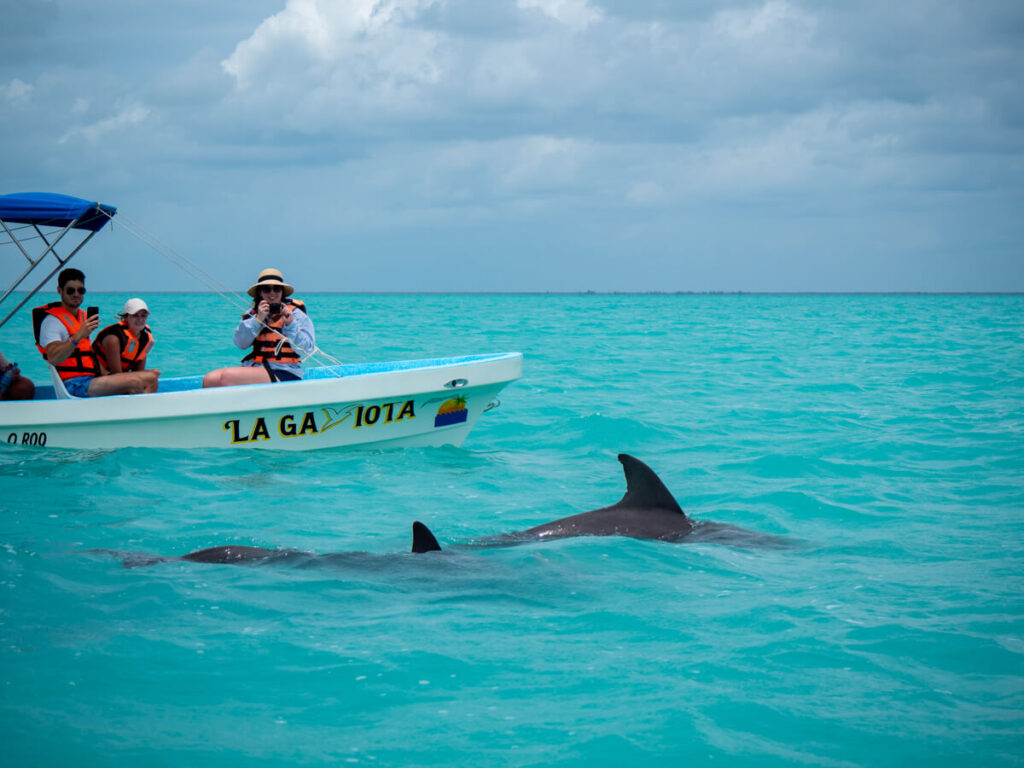
Sian Kaʼan Biosphere Reserve is the Riviera Maya at its most wild, in the best way. A UNESCO-listed protected area, it covers vast regions of mangroves, lagoons, reefs, and tropical forest, home to hundreds of bird species, marine life, and endangered animals. We saw so many animals in one day, including manatees, a crocodile, dolphins, turtles, and an eagle ray, with Mexico Kan Tours.
Access is intentionally restricted, with limited access points, regulated tours, and set routes designed to protect fragile ecosystems. The reserve also holds deep Mayan history, including the Muyil Ruins and ancient canals, which you can float down like a natural lazy river.
Sian Kaʼan sits at the end of the Riviera Maya, and feels totally different to the rest of the region – quiet, less curated, and a true immersion in raw nature.

Riviera Maya Day Trips
There are lots of fun things to do in the Riviera Maya, and most towns on the coast are appealing bases for day trips. Here are some of the best destinations in the region:

How to get to and around the Riviera Maya
The Riviera Maya is one of the most developed parts of the Yucatán Peninsula, so infrastructure is generally excellent, with paved roads, regular public transport, modern airports, and plenty of car rental options. The coastline is lined with resorts, boutique hotels, and eco-lodges, while inland towns act as convenient hubs.
By plane
The main gateway to the Riviera Maya is Cancún International Airport (CUN), one of the busiest airports in Latin America, with direct flights from the US, Canada, Europe, and other parts of Mexico. It’s roughly a 45-60 minute drive to Playa del Carmen and 1.5-2 hours to Tulum, making it convenient for most travellers.
The newer Felipe Carrillo Puerto International Airport (TQO) also handles both domestic and limited international flights, mainly from the US and within Mexico, allowing you to arrive in the heart of the Riviera.
Smaller regional airports on the island of Cozumel (off Playa del Carmen) and in Chetumal (south of the Riviera Maya in the Costa Maya) also provide access to the northern and southern ends of the Riviera Maya.
From any airport, you can rent a car, take private transfers, taxis, or shuttle services to your destination.

By car
While it’s possible to explore without a car, having some form of transport makes it easier to reach cenotes, nature reserves, and smaller beaches. Driving along Highway 307 is straightforward and well-maintained, connecting Cancún to Puerto Morelos, Playa del Carmen, Tulum, and beyond.
Gas stations are frequent along the main route, and signage is generally clear, though some rural detours may be unpaved or less well-marked. Traffic can be busy near cities like Playa del Carmen and Tulum, especially during peak holiday periods. Renting a car is especially useful if you want to combine Riviera Maya stops with excursions inland, like Cobá or Valladolid.

By bus
ADO buses run frequent, comfortable routes from Cancún to Puerto Morelos, Playa del Carmen, and Tulum, connecting the airports with the cities and towns along the way. They’re air-conditioned coaches with reserved seating and luggage storage, perfect for overland journeys.
Buses are reliable, cheap, and often drop you directly into town centres or near major hotels, which is handy. While slower than driving yourself, buses are very affordable and convenient – we have taken them all over the Riviera Maya.

By colectivo
Colectivos are shared vans or minibuses that run along Highway 307 and other main routes, making them one of the cheapest ways to get around the Riviera Maya. They’re perfect for short hops between towns, like Cancún to Playa del Carmen or Akumal to Tulum, and even for reaching beaches just outside town.
While schedules aren’t strict, they run frequently during the day (every 5-10 minutes on main roads), and you can usually flag one down on the side of the road. Fares are extremely reasonable (often less than $2 USD) and paid in cash directly to the driver (in Mexican pesos). The downside is that colectivos can be crowded during peak hours, normally don’t have air-con (so be prepared to get a little sweaty), and have no luggage space, so aren’t good for long distances.

By train
The Tren Maya now connects the Riviera Maya with key destinations like Cancún Airport, Playa del Carmen, Tulum, Tulum Airport, and further south toward Bacalar and Chetumal. From the train stations, local taxis or colectivos can take you to beaches, resorts, or inland attractions, as most stations are located slightly outside town centres.
These modern trains are air-conditioned, comfortable, and provide a scenic route through the jungle and past lagoons that line the coast. It offers a comfortable alternative to long drives and bus journeys, although it’s slightly more expensive than the bus.

By taxi
Taxis are everywhere in the Riviera Maya and offer a convenient, door-to-door option, especially for short trips or reaching spots not serviced by colectivos. Fares are almost always paid in cash, and it’s a good idea to agree on the price before you set off, as meters are rarely used.
Taxis are especially useful late at night, when buses and colectivos are less frequent. In tourist hubs like Playa del Carmen or Tulum, they are notoriously expensive, but they’re safe, fast, and reliable. For families or groups with luggage, a taxi can be more practical than trying to navigate public transport.

By rideshare app
Rideshare apps like Uber and DiDi operate in Cancún, but are harder to use in Playa del Carmen and Tulum. The local taxis have a monopoly and don’t like Uber drivers operating, so you might have long wait times or not be able to get a journey at all. If you can get a ride, they’re a convenient and more affordable alternative to taxis with upfront pricing.

By shuttle
Shuttle services in the Riviera Maya are a popular option for travellers looking for reliable, semi-private transport between airports, hotels, and major attractions. Most Riviera Maya resorts and tour operators offer scheduled shuttles, which are often shared with other travellers, making them more cost-effective than taxis. You can also arrange private transfers, so you don’t need to wait around, which is perfect if you’re travelling in a group.
Bookaway is amazing for booking buses and shuttles throughout Mexico. You can get 5% off with our code THOROUGHLY5.

By boat
The Riviera Maya gets its fair share of cruise ships, with Playa del Carmen serving as the main port for day-trippers from Cozumel or larger Caribbean itineraries, and smaller docks in Puerto Morelos and Cozumel accommodating regional cruises.
Like the Isla Mujeres ferry from Cancún, Cozumel ferries run regularly from Playa del Carmen, making the island easily reachable for day trips or longer stays.

What is the best time to travel to the Riviera Maya?
The best time to travel to the Riviera Maya is during the dry season, from December to April, when conditions are at their most reliable for beach time, cenotes, snorkelling, and exploring Mayan ruins. Expect long sunny days, lower humidity, and generally calmer seas along the Caribbean coast. This is also when visibility for water activities is usually at its best, and when the region is at its most postcard-perfect.
The main downside is that this is also peak tourist season, so popular areas like Tulum, Playa del Carmen, and Cancún can feel busy, especially around Christmas, New Year, Easter, and Spring Break. Prices for accommodation and tours are also at their highest during this period, too.
The rainy season, from May to October, is hotter and more humid, with regular afternoon showers and a higher chance of tropical storms later in the season.
Even in the wet season, rain often falls in short bursts rather than all-day downpours, meaning mornings are frequently still suitable for excursions and beach time. Coastal conditions can vary more during this period, with occasional wind and reduced visibility in the water depending on weather patterns.
Riviera Maya Weather
The Riviera Maya has a tropical climate with warm temperatures year-round and a clear divide between dry and wet seasons.

How long to spend in the Riviera Maya
The Riviera Maya stretches along a long coastline, so how long you spend here really depends on your travel style, budget, time, and how much you want to move around versus settle into one or two bases.
To see the main attractions (Cancún, Playa del Carmen, Isla Cozumel, and Tulum), we really think you need a minimum of 2-3 weeks. Slow travel is the best way to fully experience the region – we spent 3 weeks in Cozumel and 2 weeks in Cancún alone.
If you’re backpacking on a slightly tighter timeframe, 1-2 weeks would be ideal. Around 10 days would allow you to use each town as a base in turn, so you can see each place’s main highlights, as well as explore inland, go out on the ocean, and take a few tours.
5-7 days is ideal if you want a balanced trip with time for both beach and jungle exploring. You can split your time between places like Tulum and Playa del Carmen, adding in cenotes, beach days, and a bit of downtime without feeling rushed.
If you only have 3-4 days, it’s best to focus on one or two bases. Pick Tulum for ruins and cenotes, Playa del Carmen for easy access and day trips, or Isla Cozumel for snorkelling and diving.
Any less time, and it’s only really worth it if you’re already passing through the region and want a taster of what it has to offer, rather than travelling specifically for it.

Is it safe to travel to the Riviera Maya?
One of the most asked questions by first-time visitors to Mexico is whether or not it’s safe to travel there. And we were in this camp too. We saw so many news stories in the media about serious crime in Mexico that by the time our plane landed in Cancún, we were convinced we were about to be shot or scammed.
But the reality is that the Riviera Maya is generally considered one of the safer regions in Mexico. Most crime doesn’t touch tourists, and that which does is normally petty, like pickpocketing and overcharging scams. In fact, most towns in the Riviera Maya are probably safer than most US towns.
It’s true that there has been some drug-related crime in parts of Mexico, which is often what shapes the country’s reputation. However, this is rarely targeted at tourists and is usually confined to specific areas or situations. You’ll likely avoid it all by sticking to tourist zones, avoiding drugs, and not wandering into unfamiliar neighbourhoods.
Millions of visitors travel here every year without issues, and the tourism infrastructure is well developed, especially in well-established areas like Cancún, Playa del Carmen, and Tulum. Like anywhere, it’s worth practising basic safety precautions, not flashing valuables, being aware of your surroundings, and not walking alone or in dimly lit areas at night.
Natural factors are also worth considering. Strong ocean currents, heat, and sun exposure can catch people out, so always follow local advice, stay hydrated, and be mindful when swimming, especially when partaking in adventure activities on and in the water.

Is the Riviera Maya expensive?
The Riviera Maya is a notoriously luxurious destination, with countless high-rise resorts and boujee restaurants overlooking the sea. But it doesn’t have to be an expensive trip. It’s one of the more developed parts of Mexico, so prices are generally higher than elsewhere in the country, but that also means there’s a better selection of budget-friendly hostels and cheap street food, too.
Here are some typical daily costs (per person):
Costs can also add up quickly with entrance fees to cenotes, ruins, and national parks. You can save money by staying inland, using colectivos instead of taxis, and eating at local taquerías rather than tourist-focused restaurants. Tipping also needs to be factored into your budget.
Here are some average costs (in USD):
Tipping is expected in the Riviera Maya, especially in tourist areas. Here’s a rough guide:
The local currency is the Mexican Peso (MXN), but US dollars are widely accepted in tourist areas. You’ll usually get a better rate paying in pesos, and change is often given in pesos even if you pay in dollars.
Cash is still king for smaller purchases, colectivos, and local eateries, while cards are accepted in most hotels, restaurants, and tour companies (sometimes with a small fee). ATMs are easy to find, but it’s best to use ones inside banks or supermarkets and withdraw larger amounts to avoid repeated fees. We like using Santander when possible. Always decline the ATM’s offered exchange rate (DCC) to avoid high fees.
Is the Riviera Maya worth visiting?
The Riviera Maya is one of the most popular destinations in Mexico, and for good reason. It’s a unique destination where you can combine Caribbean beaches, cenotes, Mayan ruins, and quaint towns all in one trip, with a level of tourist infrastructure that makes travel easy.
But let’s be real: it’s REALLY touristy! Places like Cancún and Tulum can feel overcrowded, overpriced, and a long way from the authentic Mexico many people imagine.
We’ve really enjoyed exploring the Riviera Maya on several trips, but it’s nowhere near our favourite part of Mexico (that’s Baja California Sur). Would we recommend you visit? Absolutely, especially if you’re already passing through the area or are looking for a safe entry-level destination in Mexico. But would we personally choose it for vacation? No. While it’s got the culture, adventure, and ocean, it has become very commercial and largely Americanised.
Cancún, Playa del Carmen, and Tulum in particular are overdeveloped and overbuilt, and we don’t like the negative side of tourism that’s developed there – overcrowding, inflated prices, and unethical animal tourism. Isla Holbox is a nice retreat, but not totally undiscovered, and Cozumel is absolutely unmissable for SCUBA diving, but we could do without the Western party scene and unethical snorkel tours.
If you do visit, it’s worth spending a little time researching where your money’s going, supporting local businesses, and following some simple principles to ensure you’re a more responsible traveller, leaving a positive impact on the region and the people and animals that live there.
Riviera Maya vs Costa Maya
If you’re looking for a quieter alternative to the Riviera Maya, you might consider heading south down the coast to the Costa Maya, the southern stretch of the Yucatán Peninsula that encompasses Bacalar Lagoon, Mahahual beach town, and the state capital and Mexico-Belize border town, Chetumal. These two regions are often confused, but they offer very different experiences.
The Riviera Maya is more developed, touristy, and packed with things to do, while the Costa Maya is quieter, more local, and geared towards slowing down. Which is better really depends on your travel style, budget, and timeframe.

Sustainability in the Riviera Maya
The Riviera Maya is one of Mexico’s most visited coastal regions, and while tourism has brought major economic benefits, it has also put real pressure on the environment. Sustainable travel here isn’t perfect – there are some positive initiatives, but also clear challenges linked to rapid development and overtourism.
One of the biggest issues is coastal overdevelopment. Along stretches of coastline, especially around Tulum, mangroves have been cleared to make way for hotels, beach clubs, and private developments. This is a concern because mangroves act as natural protection against storms and are vital breeding grounds for marine life.
Another issue is the impact of tourism on cenotes and marine environments. Cenotes are incredibly fragile freshwater systems, and heavy visitor numbers can affect water quality and ecosystems. Similarly, reef ecosystems along the coast are under pressure from boat traffic, sunscreen pollution, and high visitor volumes.
Wildlife tourism is another area where we feel mixed. We did some of the best wildlife watching of our lives in places like Sian Ka’an Biosphere Reserve, and there are so many beautiful protected areas like Isla Contoy National Park.
But many experiences and tours involve feeding or handling wildlife, which can disrupt natural behaviour and encourage dependency. Even when it’s presented as a harmless interaction, it often prioritises visitor experience and profit over animal welfare, meaning it’s a form of unethical wildlife tourism. Don’t even get us started on outright cruel and abusive facilities like tiger and lion petting in Playa del Carmen, where the poor animals are drugged and kept in horrendous conditions. Even supposedly regulated wild experiences like swimming with turtles in Akumal have issues.
Greenwashing is also huge, where many businesses market themselves as “eco-friendly” or “sustainable”, but the reality doesn’t always match the branding. It’s worth looking beyond labels and choosing operators that are transparent about their practices, especially around waste, wildlife interaction, and land use.
That said, there are positive steps happening. A growing number of eco-hotels, dive operators, and cenote sites now promote low-impact tourism, conservation education, and regulated visitor numbers. There are also protected areas and marine reserves working to preserve sections of reef and coastline, although enforcement and funding can vary. We’ve highlighted some amazing responsible operators in each of our travel guides, like our Conscious Guide to Visiting Cancún Sustainably.
As a traveller, small choices make a difference – avoiding single-use plastics, not touching or feeding wildlife, supporting locally owned businesses, and choosing reef-safe sunscreen all help reduce impact in a region that is already under pressure. Vote with your money to show demand for ethical experiences and support local businesses to combat tourism leakage, ensuring the communities you interact with benefit from your visit.
What to pack to visit the Riviera Maya
Here’s a practical list of what to pack for the Riviera Maya, so you don’t forget the essentials:

Riviera Maya FAQs
To make your trip to the Riviera Maya as smooth as can be, we’ve answered these frequently asked questions.
Why is Riviera Maya so popular?
The Riviera Maya is popular because it provides access to Caribbean beaches, cenotes, Mayan ruins, and easy travel infrastructure in one stretch of coastline, with well-developed tourist accommodations, making it one of the most accessible regions in Mexico for tourists.
What is the difference between the Riviera Maya and the Mayan Riviera?
There is no difference between the Riviera Maya and the Mayan Riviera – they are the same region, just different translations of the name.
Where does the Riviera Maya start and end?
The Riviera Maya runs along the Caribbean coast of the Yucatán Peninsula, generally from Puerto Morelos in the north down to Tulum.
Is Riviera Maya closer to Cancún or Playa del Carmen?
Most of the Riviera Maya sits south of Cancún and includes Playa del Carmen as its central hub, with Tulum further south.
What island is across from Riviera Maya?
The main island is Cozumel, located just off the coast opposite Playa del Carmen. There’s also Isla Mujeres off Cancún.
Is the Riviera Maya the same as Tulum?
No, Tulum is one town within the Riviera Maya, not the whole region, although it’s often used interchangeably in travel marketing. It’s a good base to explore the Riviera.
Is Riviera Maya close to Cabo?
No, Cabo (the area of Los Cabos, which encompasses Cabo San Lucas and San José del Cabo) is on the opposite side of Mexico in Baja California Sur. It’s a long domestic flight away (around 3-4 hours).
What state of Mexico is Riviera Maya in?
The Riviera Maya is in the state of Quintana Roo, on the Yucatán Peninsula in eastern Mexico.
Is Riviera Maya a party town?
Some areas of the Riviera Maya are definitely what you’d call a party town. Cancún, Playa del Carmen, and parts of Tulum have vibrant nightlife and banging beach clubs, while other areas like Puerto Morelos and Akumal are much quieter.
Is Riviera Maya swimmable?
Yes, but conditions vary, depending on location. The sea along the whole coast is generally swimmable, though sargassum seaweed can affect beaches seasonally, especially in Tulum and Playa del Carmen.
Do you need a passport to go to Riviera Maya?
Yes, international visitors need a valid passport to enter Mexico, typically with at least six months’ validity remaining.
When is the best month to visit Riviera Maya?
We think the best months to visit the Riviera Maya are typically February to April, when the weather is at its most stable and sea conditions are ideal for swimming, snorkelling, and diving. These months sit at the end of the dry season, meaning you still get excellent weather, but without the full intensity of the early holiday crowds.
How far is Riviera Maya from the airport?
Cancún International Airport is the main gateway to the Riviera Maya. Travel times are approximately 1 hour to Playa del Carmen and 2 hours to Tulum. Tulum and Cozumel also have their own airports, but they’re smaller.
How much is a taxi from Cancún to Riviera Maya?
Taxis can vary widely, but expect to pay roughly $50-120 USD from Cancún to the Riviera Maya, depending on distance and destination, with private transfers often offering better value and reliability.
Is it safe to travel to Riviera Maya in Mexico right now?
Yes, the Riviera Maya is generally considered safe for tourists, especially in established areas. Like anywhere, it’s important to use common sense, avoid isolated areas at night, and use reputable transport.
Is it safe to drink the water in Riverie Maya?
No, tap water is not safe to drink. Stick to bottled or filtered water, which is widely available in hotels and shops. We used our filter water bottles to stay safe and cut down on plastic pollution.
Do you need vaccinations for Riviera Maya?
No mandatory vaccinations are required for most travellers, but it’s recommended to be up to date on routine vaccines (like tetanus, hepatitis A, and typhoid, depending on travel style). Always check current medical advice before travelling.

Read next:
10 Magnificent Things to Do in Mexico’s Riviera Maya
What You Need to Know Before Taking Tren Maya
A Traveller’s Guide to Cancún For First Timers
Is Isla Mujeres Worth Visiting? Our Travel Guide
A Responsible Travel Guide to Tulum: Worth Visiting?
A Traveller’s Guide to Akumal Beach Town & Bay
