A Traveller’s Guide to Akumal Beach Town & Bay: 10 Things to Do + 5 to Avoid

Everything you need to know about visiting Akumal, Mexico, from things to do and avoid to where to stay and eat.

This post may contain affiliate links, which means we might earn a small commission on anything purchased through these links at no extra cost to you. Learn more on our disclaimer page.
Akumal is best known for swimming with sea turtles, but visiting isn’t quite as simple – or as magical – as it’s portrayed. Between regulated beach access, guided snorkelling rules, and mixed information online, many travellers arrive unsure of what’s allowed, what’s worth paying for, and how to avoid a disappointing experience.
We visited Akumal to see what was going on in this quickly developing beach town, and spent time figuring out how it actually works on the ground, from accessing the beach (Playa Akumal) and snorkelling responsibly to deciding whether it’s better as a day trip, an overnight stay, or a vacation base. In this guide, we break down everything you need to know about visiting Akumal, including how to get there from Tulum, Playa del Carmen, or further afield, what the rules really are, and what to expect once you arrive. Whether you’re debating adding Akumal to your itinerary or just want to do it properly, this guide will help you plan a smoother visit.
Akumal at a glance

More from Akumal
About Akumal
Akumal is a small coastal town on Mexico’s Riviera Maya, roughly halfway between Playa del Carmen and Tulum. It’s best known for its calm, shallow bay and the green sea turtles that feed in the seagrass here – a reputation that has brought both popularity and pressure.
What many travellers don’t realise before arriving is that Akumal is not a single, cohesive beach town. Instead, it’s a collection of distinct areas with very different feels: a local inland town (Pueblo), a tightly regulated bay front, quieter residential beaches, and large all-inclusive resorts set back from the centre. Understanding this split is key to deciding whether Akumal is actually the right destination for you.

Where is Akumal?
Akumal is located on Mexico’s Caribbean coast in the state of Quintana Roo, along the main road that connects Cancún, Playa del Carmen, Tulum, and Bacalar. By car, it’s around 35 minutes south of Playa del Carmen and about 20 minutes north of Tulum on Highway 307, which makes it a convenient base for exploring the central Riviera Maya.
Because it sits directly on this transport corridor, Akumal is easy to reach by public bus or colectivo as well as by car or transfer, even if you’re not staying locally.

Akumal Map
We’ve highlighted Akumal’s main areas and attractions on the map below.

Why visit Akumal?
Most people are drawn to Akumal for the same reason: the bay. The water here is calmer than at many nearby beaches, with gentle waves and good visibility on clear days. This makes it appealing for casual swimming and snorkelling, particularly for travellers who want something low-effort and accessible.
The bay itself is famous for being an important feeding ground for sea turtles – its name even comes from the Mayan word Akumal, meaning “Place of the Turtles”. Swimming with turtles in Akumal is one of the most popular activities in the Yucatán Peninsula, drawing visitors from all over the region for the chance to glide alongside these gentle creatures.
Akumal also appeals to travellers looking for a slower pace than Playa del Carmen or Tulum, as the town is much smaller and more relaxed. Even at its busiest, evenings are quiet, nightlife is minimal, and days tend to revolve around the beach.
That said, Akumal can be frustrating if you arrive with the wrong expectations. Beach access is regulated, wildlife interaction is restricted, and prices near the bay are often higher than you might expect for a small town.

Akumal Pueblo
Akumal Pueblo (Town) is the inland settlement where most local residents live. It’s not particularly scenic, and few travellers would visit purely for sightseeing, but it plays an important role in the town’s ecosystem.
This is where you’ll find affordable taquerias, small grocery stores, laundromats, and everyday services that are largely absent from the beachfront. It’s also where colectivos stop and where many workers in the resorts and beach clubs live.
If you’re staying outside an all-inclusive resort, you’ll likely pass through the pueblo regularly. While it doesn’t have the charm of older Mexican towns, it offers a more grounded view of daily life in Akumal.

Akumal Bay
Akumal Bay is the image most people associate with the town: pale sand, shallow turquoise water, and boats swaying gently in the crescent-shaped shoreline, which is backed by resorts and beach clubs. Akumal Beach (Playa Akumal) also where most confusion – and controversy – arises.
The bay is a protected marine area known as Tsúuk Akumal National Park, due to the presence of sea turtles and coral. As a result, swimming and snorkelling are tightly regulated, certain zones require guides to enter, and rules change depending on environmental conditions and enforcement levels.
These protections are necessary, but inconsistent communication and aggressive tour selling have left many visitors feeling misled. Knowing how access works, what is actually required, and what is optional makes a significant difference to your experience.

The best things to do in Akumal
Akumal may be small, but there are still plenty of fun activities on offer. Many activities are centred around the water, whether that’s floating in calm bays, exploring nearby lagoons and cenotes, or using Akumal as a quiet base for wider adventures along the Riviera Maya. Here are the top things to do in Akumal.
1. Explore Downtown
Spending time in Akumal Pueblo won’t top most itineraries, but it helps contextualise the town beyond its beach reputation. For centuries, the area remained largely undeveloped, used occasionally by fishermen rather than as a permanent settlement.
Modern Akumal began to take shape in the 1950s, when American SCUBA diver and explorer Pablo Bush Romero established one of Mexico’s first dive centres here, laying the foundations for Akumal’s reputation as a marine-focused destination well before mass tourism reached the Riviera Maya.

2. Spot stunning street art
Murals and small pieces of street art are scattered through the pueblo and nearby neighbourhoods, often featuring marine life or Mayan symbolism. They’re easy to miss, but they add colour and personality to an otherwise functional townscape.
The pedestrian bridge across the highway is also full of beautiful paintings, created by nearly 100 globally-renowned artists during the Akumal Arts Festival, in a strip known as the Akumal Art Walk.

3. Relax on the beach
Akumal Beach appeals to those who want to swap the high-rise fringed beaches of the major cities for a shoreline framed by palms and low-rise development. We can see why it appeals to so many people; it is a gorgeous beach with none of the commercialism you find in Cancún and Tulum’s Hotel Zone.
But while Akumal Bay is the most famous stretch of sand, it’s far from the only option. Nearby beaches like Half Moon Bay and Playa Chemuyil tend to be quieter and easier to access, making them better choices if your priority is simply relaxing by the sea rather than snorkelling.

4. Snorkel in the bay
The reef-protected waters of Akumal Bay make it one of the gentlest swimming beaches on the Riviera Maya, which is why it became so popular for snorkelling in the first place. Free snorkelling zones are limited, but it’s possible to go out on your own. We spent hours snorkelling in the bay, just bringing our own snorkel gear and putting our valuables in a locker at Lol-Ha.
Snorkelling conditions are best early in the morning, before winds pick up and tour groups arrive. Visibility can be excellent on calm days, with coral formations and tropical fish close to shore, but it can become murky if there are lots of people together kicking up the silt.
Around the bay, you might also see a few historic cannons – artefacts from the El Matancero shipwreck in 1741. They’re mainly congregated in the north end of the bay.

5. Visit Mayan ruins
Akumal is well-positioned for visiting several major archaeological sites in the region, but you don’t need to leave town to see Mayan ruins. On the outskirts of the town, you’ll actually find a Mayan temple that’s completely free to visit.
For larger sites, Tulum Ruins is the closest established Mayan sites, but it’s also one of the busiest after Chichén Itzá (which can also be visited on a day trip from Akumal). Cobá offers a more immersive jungle setting with the possibility of climbing a pyramid, and Muyil, further south, can be paired with a lagoon boat trip and an iconic float along the Mayan canal.

6. Swim at Yal-Kú Lagoon
Yal-Kú Lagoon sits just north of Akumal Bay and offers calm, clear water sheltered from waves. This partially enclosed inlet is where freshwater from underground cenotes mixes with the Caribbean Sea, creating striking gradients of turquoise and deep blue, along with excellent visibility for snorkelling. The mix of salt and fresh water attracts a wide variety of tropical fish that tend to linger close to the mangroves and rocky edges.
Unlike Akumal Bay, Yal-Kú is easy to visit. It has two separate entrances with different operators: the right side is managed by the major tourism group Xcaret, which profits from captive animal experiences at its other attractions. The left side, next to Casa del Sol, is the original entrance operated by local residents, and is the side we’d recommend visiting. It has basic facilities, including life jacket rental, changing rooms, lockers, and rest areas. There are no turtles here, but the left side is closer to the mangroves and has more marine life, like fish, making it a relaxing place to snorkel.

7. SCUBA dive in cenotes
Cenotes might be one of the top things to do in Tulum, but thanks to its proximity, Akumal is also surrounded by some of the Riviera Maya’s most impressive freshwater systems, all within a short drive inland. Cenote Aktun Chen is one of the closest and easiest to visit, combining a cavern-style cenote with walking trails and a small animal rescue centre, although some negative reviews have made us question the ethics of it.
Cenote Dos Ojos, one of the most famous cenotes in the region, lies about 15 minutes south of Akumal and is known for its crystal-clear water, dramatic light shafts, and vast underwater cave system. Nearby Cenote Sac Actun and The Pit form part of the same interconnected network, making this area a global hotspot for cave diving and advanced snorkelling and freediving.
Offshore, Akumal sits along the Mesoamerican Barrier Reef system, with shallow coral gardens, sandy patches, and small reef walls that make for relaxed, beginner-friendly dives. Conditions are usually calm, with gentle currents and good visibility, especially outside of peak sargassum season. While it’s not comparable to SCUBA diving in Cancún (where you can access the MUSA Underwater Museum and the Manchone Reef near Isla Mujeres) or Isla Cozumel, diving is still one of the best things to do in Akumal.

8. Take a boat trip
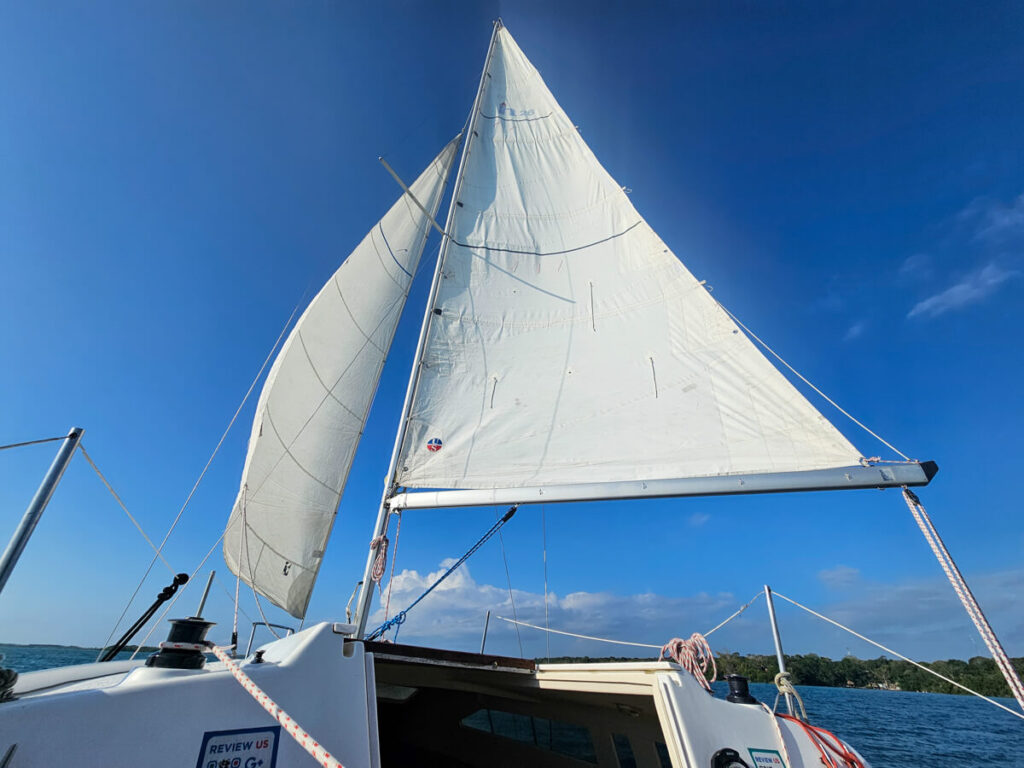
One of the best ways to experience the natural beauty around the area is by taking a boat tour in Akumal. These trips vary from small-group eco-tours to private charters, and they can take you along the coast, through mangroves, or out into the open Caribbean waters. Some tours focus on snorkelling at hidden reef spots, spotting turtles in their natural habitats, or exploring quiet bays far from the crowds.
If you want a truly unique perspective, consider a sunrise or sunset tour, when the light casts a golden glow over the bay and the water is at its calmest. Just make sure to choose a responsible operator that follows local wildlife guidelines.
9. Visit Sian Ka’an Biosphere Reserve
Sian Ka’an Biosphere Reserve is a UNESCO World Heritage site and one of Mexico’s most important protected areas, stretching over 1.3 million acres of mangroves, tropical forests, and coral reefs. A day trip from Akumal can include a guided boat tour through the reserve’s lagoons and channels, giving you the chance to spot manatees, crocodiles, flamingos, and countless other species. The tours often include a snorkelling stop on the reef, where you can see colourful fish, corals, and sometimes sea turtles in the wild.
The reserve is mostly undeveloped, so guided tours of Sian Ka’an are essential for safe navigation and to minimise environmental impact. We saw manatees, a crocodile, dolphins, turtles, and an eagle ray in one visit with Mexico Kan Tours. For the Muyil side, which includes the Mayan ruins and famous canal float, Community Tours Sian Ka’an is also a good, local option.

10. Day trip to Tulum and beyond
Akumal’s central location along the Riviera Maya makes it an ideal base for day trips to towns and Mayan ruins like Tulum, Cobá, or even Playa del Carmen. Beyond history, there are also plenty of cenotes, small villages, and quiet beaches to explore along the way.
Renting a car or booking a guided tour makes taking a day trip straightforward, but be prepared for uneven roads and fluctuating traffic, especially if you’re going to more remote sites or travelling during peak season.

What not to do in Akumal
Akumal may be a beach town, but it’s also a place where rapid development of tourism is creating pressure on the local community and environment. Some of the most heavily promoted experiences here are actually the ones that do the most harm. Here’s what not to do in Akumal.
1. Swim with turtles
This one’s at the top of most people’s things to do in Akumal lists, but we don’t agree. Sadly, swimming directly with the sea turtles here has become a highly commercialised activity, with countless tourists crowding the same shallow bay at once. The constant human presence can stress the turtles, interrupt their natural feeding and nesting behaviours, and can even damage the fragile seagrass beds they rely on.
It’s difficult for the guides to control so many people squished into a small area, resulting in lots of shouting, splashing, and swimmers even touching and chasing the animals, often without realising the harm they’re causing. Stick to snorkelling in the free zones (there’s always a chance you might see a turtle out there, too).
2. Visit Akumal Monkey Sanctuary
Though it might seem like a fun attraction, the Akumal Monkey Sanctuary has been criticised for unethical practices. Many of the animals are kept in unnatural conditions, and interactions often encourage monkeys and parrots to climb on visitors for tourist photos, which is an indication of money being prioritised over the well-being of the primates. They even have animals like zebras and ostriches, which cannot be there for rehabilitation purposes. Avoid this and support true sanctuaries that focus on rehabilitation or educational conservation efforts.
3. Swim with captive dolphins
Several facilities in the Riviera Maya offer dolphin encounters, but these captive programs are highly stressful for the animals, involving confined spaces, constant human interaction, and unnatural routines that compromise their health and wellbeing. Dolphin Discovery Akumal, located within the Grand Sirenis Riviera Maya Resort, and Dolphinaris at Bahia Principe Tulum should be avoided.
Thankfully, captive dolphin experiences have been banned by the Mexican goverment due to animal welfare concerns, but unfortunately, some operators still try to offer them illegally. Instead of paying for these unethical encounters, you can observe dolphins in the wild in places like the Sian Ka’an Biosphere Reserve, where they live freely in their natural habitat.
4. Fall for scams
Akumal, like many popular tourist spots, has its share of small-time scams aimed at unsuspecting visitors. Common examples include unofficial turtle tours that charge high fees but provide no guide or conservation insight, overpriced taxi or colectivo rides, and vendors selling souvenirs or activities that don’t exist.
You might also encounter people offering ‘free’ experiences, like photos with wildlife or access to private areas, that later come with hidden costs (and are unethical anyway). To avoid getting duped, always book tours through licensed operators, confirm prices in advance, and double-check recommendations from trusted sources or your hotel.
5. Expect unrestricted beach access
All beaches in Mexico are public, but not all stretches of Akumal Beach are freely accessible. Certain stretches of the coastline have been privatised by hotels and tour operators, and access requires a fee or permission to enter. While signage and rules are sometimes framed as protecting turtles or the environment, in practice, it’s mostly a cash grab, especially during peak season. Wandering onto private stretches without paying can lead to confrontations or being asked to leave, so it’s better to plan ahead.
To make the most of your visit without falling for these fees or getting scammed, you need to know how to visit Akumal Beach properly, including which access points to use, where to park, and how to snorkel responsibly while respecting local rules – which we cover in the next section.

How to visit Akumal Beach (without getting scammed)
Akumal beach is split between public areas and privatised areas managed by hotels or private clubs, which often charge for access, parking, or even using chairs and snorkel gear. In addition, the area has been designated a national park, requiring an entrance fee to enter the area, which includes the beach. So while all Mexican beaches are public, Playa Akumal is hard to get to for free because a lot of the coastline is privatised and it sits inside a national park.

Akumal Beach Access Points
Actually accessing the beach is tricky because you have limited options, including entering via:
It’s very difficult to access Akumal Beach for free, but not impossible. A long coastal path called the Akumal Trail runs along the shoreline. You can walk around the northern headland and into the bay from here without passing through private property. There are some useful instructions on how to do this in the reviews of this location pin in Google Maps. Accessing the beach through hotels and restaurants is also free, minus what you spend in the establishment itself. Beware, though, that you may be challenged when on the beach to show that you paid the national park entrance fee.
If you’re keen to go to Akumal Beach, our recommendation would be to enter through the Centro Ecológico Akumal. They seem to do genuine work to conserve the bay, with turtle nesting patrols, studies, and advocacy that promote environmental issues in the bay.

Akumal Beach Entrance Fee
While the beach and entering the sea are free, there is an entrance fee to access the park that’s been established around the beach. Your ticket includes the use of restrooms, showers, changing rooms, lockers, as well as the umbrellas and chairs if available.
The entrance fee to enter Tsúuk Akumal National Park is 140 pesos or $8 USD. Like many attractions in Mexico, you will be provided with a paper wristband to prove you paid.
While the claim is that fees are for turtle protection or environmental reasons, it really seems that the entrance fee is profit-driven. The reason we’re sceptical is that, unlike other national parks in Mexico that are managed by CONANP, the Mexican agency for the commission of natural areas, this “national park” has been established by a private organisation. While they themselves don’t offer turtle tours, it’s hard to find transparent information about how the fee is used. And since the turtle tours are so shockingly regulated, it’s hard to believe it’s conservation.

Akumal Beach Hours
Akumal Beach is officially open from 9:00 AM to 5:00 PM, as this is when the private establishments that take the entrance fee operate.
However, it’s a public beach, so you’re technically allowed on it 24/7. Many of the hotels also have access to it, and guests are allowed on it later.
We’d recommend arriving as early as possible, before it gets too crowded, so if you get there for 7:00-8:00 AM, it’ll be quiet.
The beach is also supposed to be closed on Mondays, with no tours operating onthis day to give the turtle population a break, but this isn’t enforced – yet another conservation rule that’s not adhered to.

Akumal Beach Zones
Once on the beach, you need to understand its various areas. The northern end (left on the map below) is a small cove. You can see three zones, which are restricted snorkelling areas for turtle tours only. The green section, along the shallower ends by the beach, is the free swimming area. To the south (right and off the map), the beach extends to Playa Tortugas and Akumal Sur beaches.

Akumal Beach Parking
Parking at Akumal Beach is another area where tourists can get caught off guard. Street parking near the town is limited but free, and there are official lots near the beach that often charge $5-10 USD per car. This parking lot has the best reviews.
Vendors may try to stop you as you arrive, collecting unofficial fees from drivers. A safe strategy is to arrive early and secure a spot in a recognised lot. You can also ask your accommodation or tour provider for guidance on legal parking.
Walking, biking, or taking a colectivo or taxi from nearby areas can also help you avoid overpaying for parking. We’re going to expand on how to get to Akumal in the next section.

How to get to Akumal
Akumal is easy to reach thanks to its position along the Riviera Maya, roughly halfway between Playa del Carmen and Tulum. Most travellers arrive via the region’s international airports and then continue overland, as Akumal itself is a small beach town without its own airport.

By plane
The closest major airport is Cancún International Airport (CUN), which handles frequent international and domestic flights. From there, Akumal is around 90 minutes by road.
Tulum’s newer airport, Tulum Felipe Carrillo Puerto International Airport, is also an option for some routes and sits closer, though flight availability is still more limited. To Akumal, it’s only an hour’s drive.

By car
Driving to Akumal is straightforward and one of the most flexible options. The town sits just off the main coastal highway, 307, with well-signposted exits and generally good road conditions.
Having a rental car makes it easier to visit cenotes, nearby beaches, and do day trips at your own pace, though parking near Akumal Bay can be limited.

By taxi
Taxis are widely available throughout the Riviera Maya and can drop you directly in Akumal. However, fares are not metered and can be notoriously expensive for longer distances, particularly from airports and if you’re coming from Tulum. Always agree on a price before setting off to avoid surprises.

By transfer
Private and shared transfers to Akumal are a popular option for travellers who want a hassle-free arrival. These can be booked in advance from the airport and typically offer door-to-door service. While more expensive than public transport, they’re reliable and convenient, especially if you’re travelling with luggage or arriving late at night.

By bus
Long-distance ADO buses run along the main highway and stop near Akumal, but not directly in the centre of town. From the highway, you’ll need to walk, take a short taxi ride, or hop in a colectivo to reach your accommodation.
The coaches are modern, comfortable, and great for getting between towns in the Yucatán Peninsula. This is the best option if you’re on a budget and travelling with luggage.

By colectivo
Colectivos (shared vans) are one of the cheapest ways to get to Akumal. They run frequently along the highway between major towns and are used by both locals and travellers. They’re not so convenient if you have lots of luggage, as they can be cramped and without air conditioning. You might also need to pay extra for your bags.
From Tulum, you can catch a colectivo to Akumal from Avenida Tulum, the main street in Downtown. There are no official timetables, but they tend to come along every 5-10 minutes, so you’ll rarely wait long.
Like buses, they drop passengers on the main road, so you’ll need onward transport into Akumal itself. If you travel light and are on a tight budget, this is a good option. It’s the way we got to Akumal from Tulum.

By train
The Tren Maya network now connects parts of the Yucatán Peninsula. Akumal doesn’t have a station, but you can get off at Tulum or Playa del Carmen and transfer from there.
While it’s a comfortable and scenic option, stations are typically located outside town, meaning you’ll still need to arrange local transport for the final stretch.

How to get around Akumal
Akumal is small, laidback, and far less chaotic than larger Riviera Maya towns. Getting around is generally simple, but it’s still worth thinking ahead, as distances between Akumal Pueblo, Akumal Bay, and nearby beaches or cenotes can add up, especially in the heat.
On foot
Walking is perfectly manageable within Akumal Pueblo and around Akumal Bay. Most restaurants, shops, and beach access points are close together, making this the easiest and cheapest way to get around for short distances. There’s a pedestrian bridge over the highway, and everything’s pretty compact.
By car
Having a car gives you the most freedom, particularly if you want to explore cenotes, nearby lagoons, or make day trips to Tulum or beyond. This is the best option if you’re using Akumal as a base to see the wider region.
By taxi
Taxis are readily available in Akumal, but not always cheap, even for short distances. They’re useful for quick trips between the highway and town or when walking isn’t practical, but costs can add up quickly. There’s no Uber in Akumal.
By colectivo
Local buses are limited and not especially practical for getting around Akumal itself. Colectivos are the main form of public transport, being a budget-friendly way to move along the highway to nearby towns and attractions. Like buses, they don’t operate within Akumal’s residential streets, so you’ll still need to walk or take a taxi.

Where to stay in Akumal
Where you choose to stay in Akumal can shape your entire experience, because the town has a few very different vibes packed into a small area. Some parts are quiet and residential, others are perched near the bay with easy water access, and a handful of properties feel more like self-contained resorts than town stays. Here are our top picks.
Top Akumal Hotels

Where to eat in Akumal
Akumal has a mix of dining options, from casual cafés and bakeries to beachfront restaurants and jungle hideaways, catering to a variety of tastes and budgets.
Akumal Restaurants
Here are our top picks:

When to visit Akumal
The best time to visit Akumal is during the dry season, from December to April, when sunny skies, calm seas, and low humidity make snorkelling, swimming, and exploring the bay far more enjoyable. This is also peak season, so expect more crowds and higher prices for accommodation and tours.
Shoulder months like May and early June can offer slightly fewer tourists and decent weather, but humidity rises, and there’s a higher chance of rain.
The wet season from July to October brings hotter temperatures, short afternoon showers, more sargassum, and occasional storms, but it’s quieter, more affordable, and the surrounding jungle feels especially lush.
If you plan your trip around wildlife spotting, especially sea turtles, visiting in the dry season is ideal, as the calmer waters make it easier to observe marine life responsibly. May to November is best for the turtle nesting season in Akumal.
Akumal weather
Akumal has a tropical climate with warm, humid weather year-round.

Sargassum in Akumal
Sargassum, a type of brown seaweed, can affect beaches along the Riviera Maya, including Akumal, particularly between May and October.
When blooms are heavy, sargassum can pile up along the shoreline, making swimming less pleasant and giving the water a murky appearance. It also washes ashore and really (really!) stinks. While hotels and beach operators often clear it daily, some stretches of the bay can still be impacted – we saw it being cleared from the beach by diggers!

How long to spend in Akumal
Most travellers find that 2 to 4 days is ideal for exploring Akumal. This gives you enough time to relax on the beaches, snorkel in the bay, and visit nearby natural attractions without feeling rushed. A couple of days can cover the highlights, while three or four allow for a slower pace with opportunities to take day trips, enjoy cenotes, and sample the local dining scene.
If you’re staying longer, you can use Akumal as a base to explore surrounding towns, wildlife reserves, or take part in eco-tourism activities, but the town itself is small enough that extended stays may feel repetitive unless paired with excursions. You could split your stay over a few locations, so you don’t get bored.
Akumal can also easily be done as a day trip from nearby towns like Tulum and Playa del Carmen. It’s small enough that you can explore the highlights, from the town to the beach, in a single day without feeling rushed.

Is Akumal worth visiting?
Akumal is worth visiting if you’re drawn to relaxed sandy shores (so long as you leave the main part of the beach), snorkelling, and wildlife experiences in a relatively calm, low-rise setting. It can be a quieter alternative to many of the larger towns and cities, and is a fun day trip if you want to see somewhere smaller than Tulum or Playa del Carmen.
However, it’s not ideal if you’re looking for nightlife, luxury shopping, or crowded, all-inclusive beach resorts. We’d also recommend skipping the turtle tours entirely, which is the main reason many travellers choose to visit. Honestly, there are more ethical animal encounters on offer in the Riviera Maya, and it’s easy to see turtles in the wild in other places while snorkelling and SCUBA diving, without the entrance fee and crowded tour zone.

Is Akumal safe to visit?
Akumal is generally safe for travellers, with most visits trouble-free. Petty theft can occur, especially at beaches or busy tourist areas, so standard precautions like keeping valuables secure are wise. You can rent lockers from Lol-Ha if you want to snorkel off the beach.
Road conditions, particularly for bicycles and scooters, can be unpredictable, so always take care when getting around. Water-based activities like snorkelling and swimming are safe when following local guidelines, and tours often provide instructions to ensure both your safety and the protection of wildlife.

What to pack to visit Akumal
To ensure a smooth and comfortable experience in Akumal, don’t forget to pack your:

Akumal FAQs
To help you plan a smooth trip to Akumal, we’ve answered these frequently asked questions.
What is Akumal, Mexico, known for?
Akumal is a small coastal town famous for its crystal-clear bay, soft sandy beaches, and marine life. It’s particularly known for being a prime spot to see sea turtles in the wild, though tours are poorly managed and controversial, as well as for its cenotes, relaxed vibe, and eco-conscious tourism options.
Does Akumal have a town?
Akumal has a modest town centre, often called Akumal Pueblo, where locals live and work. It’s a quiet, walkable area with small restaurants, shops, and basic services. Unlike the beachfront, which caters heavily to tourists, the town has a more authentic, everyday feel and is a hub for local culture and commerce.
Does Akumal have a public beach?
Akumal does have public beach areas, but access is privatised, controlled, and often requires a small fee. While you can enjoy the sand and water without staying at a resort, free access is hard to find.
Is Akumal a good beach?
Akumal Bay offers calm, shallow waters perfect for swimming and snorkelling. The sand is soft, the scenery is beautiful, and the bay is surrounded by greenery and coral reefs. It’s quieter than many beaches further north, offering a more relaxed alternative to busier Riviera Maya spots.
What to do in Akumal Bay?
Akumal Bay is ideal for snorkelling, swimming, and spotting sea turtles. While we’d recommend skipping the turtle tours for ethical reasons, you can also relax on the beach, take a guided eco-tour, or explore nearby cenotes. Kayaking, paddleboarding, and small boat excursions are other popular ways to enjoy the bay.
Can you swim in Akumal Bay?
Swimming is one of the main activities in Akumal Bay, and we spent hours in the water. The calm, warm waters make it safe for most visitors, and snorkelling from the shore is common. However, it’s important to follow local rules and conservation guidelines, especially when sea turtles are present.
Do you have to pay to snorkel in Akumal?
You don’t necessarily have to pay if you bring your own snorkel gear and stick to public-access areas, but you can’t go in certain zones without a guided tour.
Is it safe to walk around Akumal?
Akumal is generally safe for visitors, with low crime rates compared to larger cities. Standard travel precautions, like watching your belongings, avoiding poorly lit areas at night, and respecting traffic rules, are still recommended. Roads can be narrow and busy, so caution is advised when walking or cycling.
Which is better, Tulum or Akumal?
Tulum is larger, trendier, and more developed for tourism, with wellness retreats, boutique hotels, and nightlife. Akumal is smaller, quieter, and more nature-focused, ideal for snorkelling, beaches, and resorts. If you want a peaceful, family-friendly environment, Akumal is the better choice; if you’re looking for luxury, dining, and Instagrammable spots, Tulum is preferable.
Which is better, Akumal or Playa del Carmen?
Playa del Carmen is bigger, busier, and more commercial, with more restaurants, nightlife, and shopping. It also offers access to Isla Cozumel, which has better SCUBA diving and chances of seeing turtles ethically than Akumal. However, Akumal Bay offers a slower pace, natural beauty, and opportunities for day trips to places like cenotes.

Read next:
The Truth About Swimming with Turtles in Akumal
A Complete Guide to Visiting Sian Ka’an Biosphere Reserve
How to Visit Tulum Mayan Ruins: Worth it?
A Responsible Travel Guide to Tulum: Worth Visiting or a Tourist Trap?
25 Unique & Non-Touristy Things to Do in Tulum + 4 Activities to Avoid
How to Get to Tulum: The Easiest & Cheapest Ways
How to Get Around Tulum: 12 Transportation Methods
Where to Stay in Tulum: Neighbourhoods & Top Hotels For Every Budget
