A Traveller’s Guide to Bacalar

Everything you need to know about visiting Bacalar, an underrated Pueblo Mágico and quieter alternative to Quintana Roo’s party towns.

This post may contain affiliate links, which means we might earn a small commission on anything purchased through these links at no extra cost to you. Learn more on our disclaimer page.
Often referred to as the ‘Maldives of Mexico‘, Bacalar, Mexico, is a laidback town in Quintana Roo best known for its stunning Lagoon of Seven Colours, a freshwater lake so brightly turquoise and clear it’s often mistaken for the Caribbean Sea. Despite growing in popularity, Bacalar has retained its slow-paced vibe, offering a tranquil alternative to the busier beach towns of the Riviera Maya. The town’s unique setting on the edge of a vast, shallow lagoon makes it a haven for paddleboarding at sunrise, sailing across still surfaces, and swimming in cenotes that dot the shoreline. We’ve amalgamated everything you need to know about visiting Bacalar, from how to get here, how to get around, and when to visit to the best hotels, restaurants, and activities, in this comprehensive travel guide.
Bacalar at a glance

More from Bacalar
About Bacalar
Bacalar is a small town in the south of east Mexico. It is one of Mexico’s ‘Pueblos Mágicos‘ – magic towns, known for their authentic culture, history, natural attractions, and magical charm.
Bacalar is located on a huge lagoon, known as Lake Bacalar or Laguna de Bacalar, often called the ‘Lagoon of Seven Colours’, due to its incredible blue and green hues. It stretches 26 miles (42 km) long and 1.2 miles (2 km) wide and is home to wildlife and points of ecological significance.

Bacalar History
Bacalar is one of the oldest towns in the Yucatán Peninsula, with deep roots in Mayan civilisation, Spanish colonisation, and Caribbean piracy.
The area was originally inhabited by the Mayan people, who called it ‘Sian Ka’an Bakhalal’, meaning ‘where the reeds grow’. The lagoon became an important inland trading post, connecting communities from the coast to inland cities like Coba and Calakmul via rivers and lagoons.
Bacalar sits near the Hondo River, the river that marks the border with Belize, with rich biodiversity and historical significance. It was an important trade route for the Mayans, later becoming a stopover for merchants and traders travelling between the Yucatán Peninsula and the Caribbean coast.
In 1543, the Spanish officially founded the town of Bacalar, making it the first settlement in what is now the state of Quintana Roo. It became a key colonial stronghold due to its strategic location and access to the lagoon and trade routes. However, Bacalar was constantly under threat from pirates, especially English, Dutch, and French raiders, who looted and burned the town multiple times during the 17th and 18th centuries. To defend against these attacks, the Spanish built the Fort of San Felipe in 1729, a star-shaped stone fortress that still overlooks the lagoon today.
In the 19th century, Bacalar was heavily affected by the Caste War of Yucatán, a long conflict between the indigenous Mayans and the Mexican government. The town was taken by Mayan rebels in 1848 and remained under their control for over a decade before it was recaptured by the Mexican army.
Bacalar officially became a ‘Pueblo Mágico‘ in 2006. Since then, its natural landscapes, historical richness, and ecological importance have attracted travellers seeking authenticity and connection to nature and history.

Where is Bacalar?
Bacalar is located in the southern part of Quintana Roo, a state on the Caribbean coast of Mexico’s Yucatán Peninsula. It sits in the middle of the Costa Maya.
Chetumal is the closest city to Bacalar, around 40 minutes’ drive away, which also has the nearest airport (Chetumal International Airport – CTM). The town sits about 215 miles (345 km) from Cancún and about 134 miles (215 km) from Tulum.

Bacalar Map
We’ve pinned the key parts of Bacalar and local highlights on the map below.

Why visit Bacalar?
With a blend of natural landscapes, local culture, and relaxed coastal vibes, it’s quite surprising that Bacalar has flown under the radar for so long. There are plenty of fun things to do in Bacalar, from sailing on the lagoon to lounging at beach clubs.
Location
Bacalar sits on the edge of a long lagoon known for its brilliant shades of blue. It is fed by underground cenotes and is bordered by rare stromatolites, ancient living rock-like structures that exist in very few places on Earth.
Unlike most of Yucatán’s most popular tourist spots, Bacalar isn’t on the Caribbean coast – it’s just inland. This means it has calm, crystal-clear waters without waves, crowds, seaweed, or salt.
Bacalar is also uniquely positioned near the Belize border, making it a popular stop for backpackers heading south into Central America.

Layout
Bacalar town is small, walkable, and centred around the Zócalo (main plaza) and San Felipe Fort. It has a lagoonfront on the eastern side, with beach clubs, lakeside accommodation, restaurants, cafes, and markets. Highway 307 runs just west of town, connecting Bacalar to other popular destinations. The town is in a prime position for exploring further inland, where Mayan ruins sit in lush jungle, as well as along the coastline.

Vibe
Bacalar’s primary mojo is peaceful, with many local establishments being independently owned and eco-conscious. The town itself has a bohemian vibe and is filled with local art, colourful murals, and shops selling handcrafted textiles.
The atmosphere is far from the party scenes of Cancún or Tulum. Life revolves around the lagoon with slow mornings and sunrise yoga, days are spent swimming in the lagoon, lounging on a dock, or paddleboarding on its surface, and evenings are perfect for venturing into town and eating at one of the many local restaurants.
To us, Bacalar is everything Tulum claims to be. They share similarities – stunning settings, rich history, and a developing culture of yoga and vegan restaurants. But Bacalar hasn’t been overdeveloped with a huge commercial Hotel Zone. It’s not a party destination, and you won’t be disturbed by loud music pumping throughout the night air.

Landscapes
Bacalar is one of the most ecologically diverse parts of Mexico. The landscape by the lagoon – its white limestone bottom and varying depths result in colourful waters that give the lake its nickname, the Lagoon of Seven Colours.
Surrounding the lagoon is a dense tropical jungle, part of the Yucatán’s lowland region. The terrain is mostly flat, covered with vegetation and crisscrossed by narrow dirt roads and walking trails.
A unique feature of the landscape is Bacalar’s cenotes, natural sinkholes formed by the collapse of limestone. These cenotes connect to the lagoon and add to its depth and ecological richness. Notable ones like Cenote Esmeralda and Cenote Negro are often visited on lagoon tours, while Cenote Cocalitos and Cenote Azul are popular swimming spots.
Along the shallow shores of the lagoon, you’ll also find stromatolites, rare ancient microbial structures that are among the oldest forms of life on Earth, found in only a handful of places worldwide.

Wildlife
Bacalar is home to a rich and diverse ecosystem that is shaped by the region’s mix of freshwater, jungle, and wetlands. Thanks to a strong local focus on eco-tourism and conservation, much of Bacalar’s wildlife remains protected and thriving.
Bacalar is popular for birdwatching. Colourful species like toucans, motmots, and parrots can be spotted in the surrounding jungle, while herons, kingfishers, and ospreys are often seen gliding over the lagoon or perched near its shores. The lagoon itself is home to Bird Island (Isla de los Pájaros), which is an important nesting site for migratory seabirds like magnificent frigatebirds.
The jungle supports a variety of animals, such as monkeys, coatis, armadillos, agoutis, and even jaguars, ocelots, and tapirs.
A variety of fish can be found in the lagoon and shallows of the cenotes, while turtles, freshwater crabs, and snails live among the mangroves and shallow edge areas.
Technically, the stromatolites are alive. These ancient microbial colonies play a crucial role in the lagoon’s ecological balance and are among the oldest living organisms on Earth.

Activities
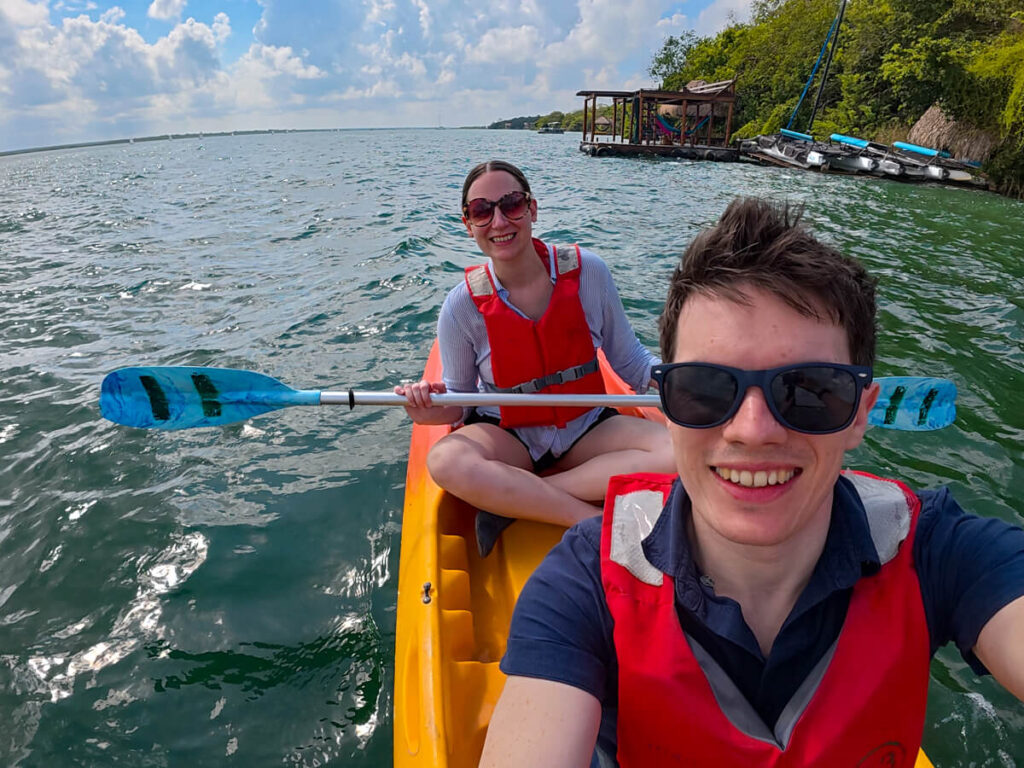
There’s a wide mix of activities in Bacalar that let you fully enjoy its natural beauty and laid-back atmosphere. The most famous attraction is, of course, the stunning lagoon, where you can spend your days kayaking or paddleboarding, swimming, and relaxing on private piers. Bacalar Lagoon boat tours are also very popular, taking visitors to spots like the Pirates’ Channel, Cenote Negro, and Bird Island.
For those who love swimming and snorkelling, the lagoon’s shallow areas and docks offer safe, refreshing access to the water. The cenotes connected to the lagoon, such as Cenote Azul and Cenote Esmeralda, provide deeper pools ideal for diving and discovering the unique underwater formations.
Beyond the water, Bacalar has plenty to offer inland. You can explore the nearby jungle hiking trails or visit ancient Mayan ruins hidden in the forest.
In the town itself, San Felipe Fort provides insight into Bacalar’s colonial past and offers stunning views of the lagoon. There are plenty of restaurants, bars, cafés, artisan shops, and yoga studios to explore, too.
Sailing
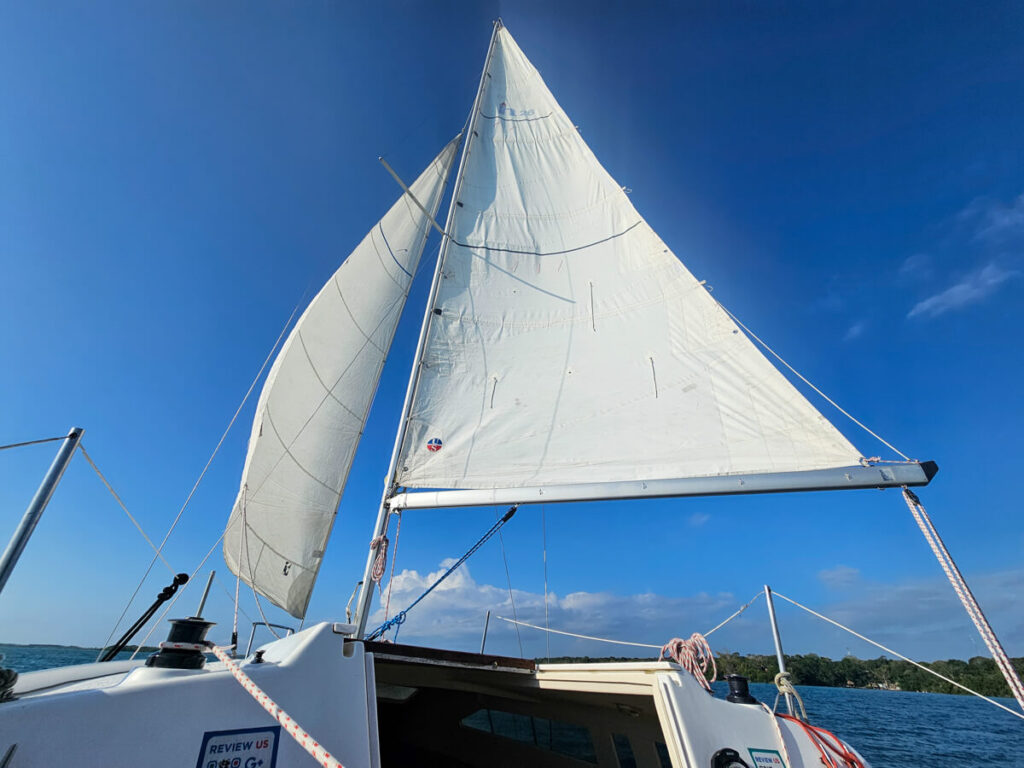
Sailing on Bacalar Lagoon is one of the most peaceful ways to experience the lake. Unlike motorboats, sailing on Bacalar Lagoon is quiet and eco-friendly, allowing you to explore without disturbing the water or wildlife. The gentle breezes across the lagoon make it ideal for sailing, whether you’re out for a couple of hours or a full-day excursion.
Many local tour operators offer small-group or private sailing trips, often led by experienced captains who know the lagoon well. Most tours include stops at iconic sites, where you can swim or soak in the soft mineral-rich sands. You may also visit hidden cenotes like Cenote Negro and glide through the mangroves while learning about the lagoon’s fragile ecosystem, including its rare stromatolites. We really enjoyed our experience with DayTour Bacalar.
Sailing trips often include drinks, snacks, and snorkelling gear, and sunset sails are especially popular for their golden light and romantic atmosphere.
Sunrises
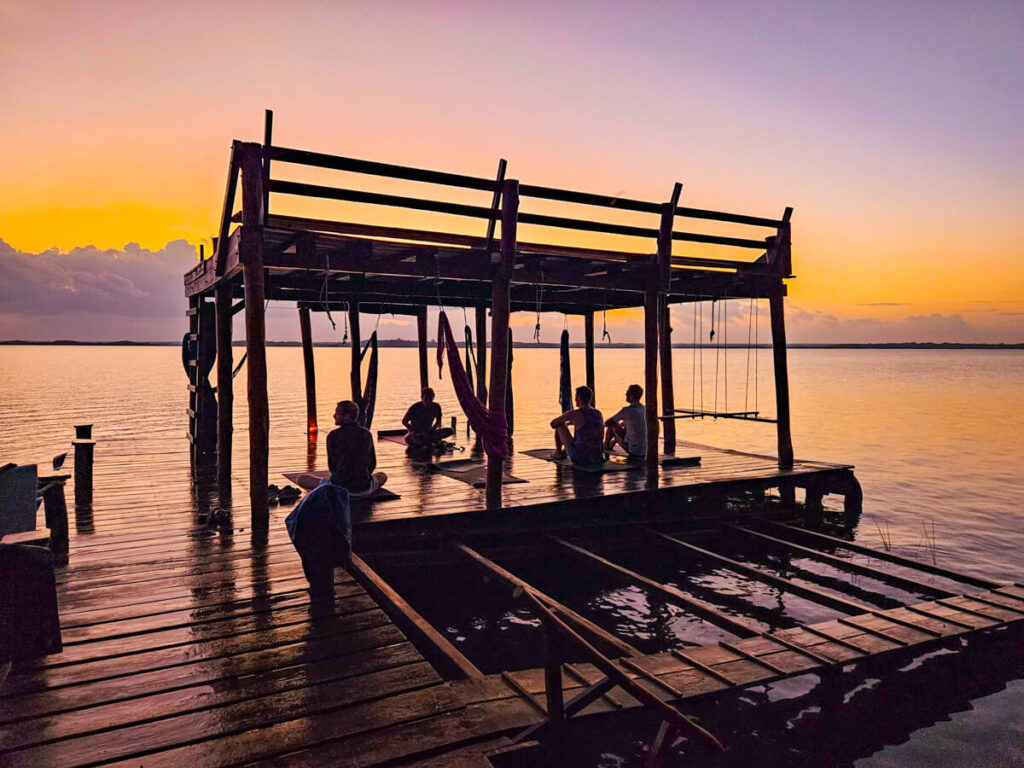
Facing east, the town and most of the lagoonfront accommodations like Casa Lamat are perfectly positioned to catch the first light of day as it rises over the calm surface of the lagoon.
It’s so worth waking up early to watch the sunrise from a dock or pier. Some accommodations even offer sunrise yoga or early morning paddleboard and kayak rentals, so you can really make the most of it.
Accommodation in Bacalar
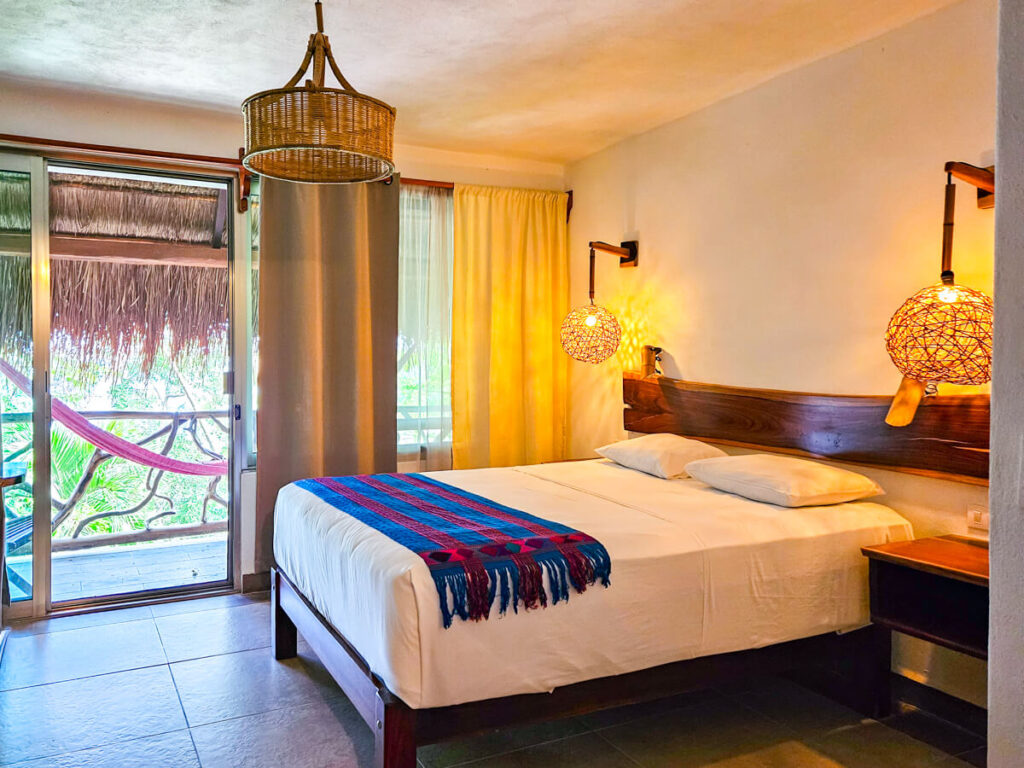
There’s a wide range of amazing places to stay in Bacalar. Rather than large resorts or all-inclusive chains, you’ll find a range of eco-lodges, boutique hotels, and waterfront cabins designed to blend in with nature. Many places offer direct access to the lagoon, with private docks, hammocks over the water, and stunning sunrise views. From rustic cabanas to luxury eco-retreats with spa services and yoga decks, there’s something for every budget.
Bacalar Hotels
Where to eat in Bacalar
One thing Bacalar does best is local restaurants serving delicious and authentic Mexican cuisine. With fresh, local ingredients, lakeside views, and a relaxed atmosphere, restaurants in Bacalar range from upscale seafood and international bistros to casual taco stands, vegan cafés, and brunch hotspots.
The best restaurants in Bacalar
Here are our top places to eat in Bacalar:

How to get to Bacalar
There are a variety of methods to get to Bacalar, and which is best for you will depend on your starting destination, budget, and timeframe.
By plane
The nearest major airport to Bacalar is Chetumal International Airport (CTM), about 30 miles (50 km) from Bacalar. From there, you can take a taxi, shuttle, or rent a car to reach Bacalar (about a 40-minute drive).
Alternatively, you can fly into Cancún International Airport (CUN), roughly 150 miles (240 km) away, then drive or take a bus or shuttle south to Bacalar.
The newer but smaller Felipe Carrillo Puerto International Airport (TQO) is also a good option if you’re flying domestically or want to see a little more of the coast.
By car
The easiest way to get to Bacalar is to rent a car in Cancún and drive. Driving to Bacalar is straightforward from Cancún or other major destinations like Playa del Carmen via Highway 307 south towards Chetumal. The trip from Cancún takes about 3.5 to 4 hours. Having your own rental car gives you flexibility to explore at your own pace and allows you to go further afield and explore the region more deeply.
By taxi
It’s possible to hire a taxi from nearby cities or airports, but it’s an expensive option due to the long distance. Expect to pay around $200-300+ USD for a taxi to Bacalar from Cancún, Playa del Carmen, or Tulum. Taxis are good for shorter trips or transfers from Chetumal Airport (about $25-40 USD) or the Bacalar Train Station.
By shuttle
Bacalar shuttles are a cheaper alternative to taxis. Several companies offer shared or private shuttle services from towns like Cancún, Playa del Carmen, and Chetumal, as well as from several airports, directly to Bacalar. They cost around $30-50 USD per person for a shared van and $100-180 USD for a private transfer, depending on vehicle size and pick-up location. This is a comfortable, convenient method to get to Bacalar without the hassle of driving.
By bus
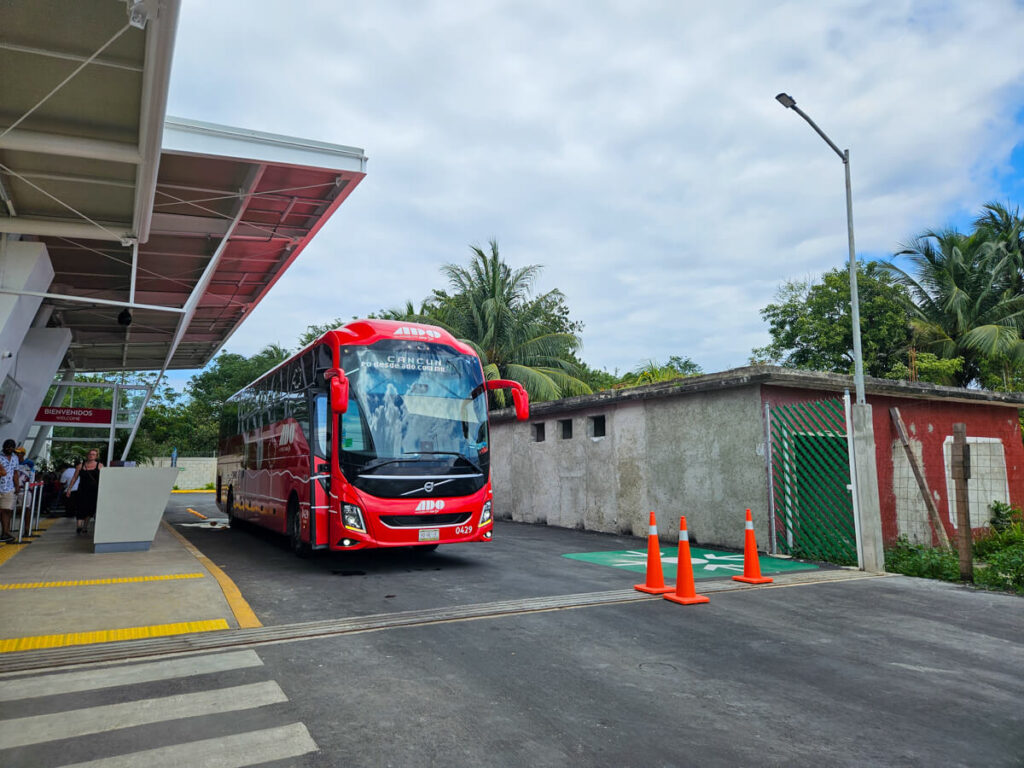
ADO buses run regularly from locations like Cancún, Playa del Carmen, Tulum, and Chetumal to Bacalar. Buses are affordable and reliable, with several departures daily. The trip from Cancún takes about 4-5 hours and costs about $15-25 USD one-way.
By train
The new Tren Maya route runs to Bacalar, stopping at the station, which is located just outside the town. From here, it’s easy to hop in a taxi, which costs about 50 pesos, to get to your final destination, or you can arrange to be picked up by your accommodation. It’s more expensive than the bus, at around 1110 pesos ($60 USD) per person, but it is much faster.
How to get around Bacalar
While Bacalar’s downtown is easily navigable, the lagoon is long, meaning there are a variety of methods of transportation on offer. The best option for you will depend on your interests and budget.
On foot
Bacalar’s downtown is compact and easy to get around on foot. Many hotels, restaurants, shops, and the main lagoonfront are within easy walking distance.
Even hotels along the lakeside that are located out of town are connected by a walkway. It’s an unpaved path, which can get muddy if wet, but it makes it easy to walk to downtown, taking 5 to 30 minutes, depending on how far away your hotel is. From Casa Lamat, it took us around 15 minutes to walk to the town.
By bike
Bacalar is small, flat, and scenic, making it perfect for getting around by bike. Many streets are paved, and traffic is light outside the main highway, so it’s generally safe and easy to ride. Biking lets you explore local spots like Cenote Cocalitos, the rapids, or the less-developed southern stretch of the lagoon at your own pace, without relying on taxis or cars. Some hotels and hostels offer free or discounted bikes for guests, and they generally cost about $10 to $20 USD per day.
By car
Having a car gives you the freedom to explore nearby cenotes, Mayan ruins, and villages outside Bacalar. Roads are generally in good condition, but some rural areas may be rough. Side roads can be unpaved and incredibly bumpy, including the road into the Bacalar Rapids and some lakeside hotels north of Downtown. These might improve with developments in the future.
There are limited car rental options in Bacalar, and most travellers will pick one up from a larger town like Cancún and Tulum. Renting from a branch in town can be cheaper than at the airport. In Bacalar specifically, we liked the look of Continental Rent A Car, which is highly rated.
Do you need a car in Bacalar?
It’s not necessary to rent a car in Bacalar, but it can improve your experience. Walking, bikes, taxis, and colectivos can cover most needs, but a car is best if you want to explore beyond Bacalar’s centre. We got around the local area fine with taxis, but if we’d had more time, we’d have rented a car for more freedom.
By taxi
There’s no Uber in Bacalar, so you need to use traditional taxis.
Taxis are widely available in town for short trips to places like the rapids and beach clubs like Cenote Cocalitos. They’re convenient for reaching places a bit farther from the centre, but can rack up if you’re making multiple journeys. Expect to negotiate fares as metres are uncommon. Each journey between our hotel, downtown, the rapids, and beach clubs costs us about 200 pesos (~10 USD) a journey.
You can get the WhatsApp number of your driver, and then you can message them directly for future journeys, and they may give you a slight discount for using them repeatedly. Simply message them and agree on a price, and you’ll get a taxi number to look out for so you know which ride is yours when it arrives.
By colectivo
Shared vans or minibuses (colectivos) run between Bacalar and nearby towns like Chetumal and Tulum. They’re cheap (10-20 pesos or a few dollars), frequent, and popular with locals and budget travellers. They can be small, crammed, and uncomfortable, but they offer a super cheap way to get around.
By bus
Local buses like ADO connect Bacalar with larger towns and cities in Quintana Roo. Buses are affordable and run on main routes, but may not serve all rural spots. There aren’t really any local bus options – instead, you’ll need to use colectivos or taxis.
Bookaway is amazing for booking shuttles and transport throughout Mexico. You can get 5% off with our code THOROUGHLY5.

When to visit Bacalar
Bacalar experiences two main seasons, dry and wet, with transition months known as shoulder seasons.
The dry season runs from November to April. This is the most popular time to visit Bacalar, with warm, sunny weather, perfect for swimming, sailing, and exploring the lagoon.
The rainy season runs from June to September. This period brings more frequent showers, sometimes heavy rain, and higher humidity. But don’t worry, the rain usually comes in short bursts, leaving plenty of dry time. This is the low season, so accommodation and tour prices are normally lower, and there are fewer crowds.
The shoulder seasons in May and October can be a good compromise, with fewer crowds and decent weather. May starts to get hotter and more humid, while October is toward the end of the rainy season.
Bacalar is subject to a hurricane season, which runs from June to November, with the highest risk between August and October. While very rare, it’s worth keeping an eye on weather forecasts if travelling then.
Despite the pictures you see of the lagoon in glorious sunshine, cloudy days can make the lagoon look more muted or greenish due to the light conditions. Overcast days are more common from August to October, though there are still regular breaks of sun.
Winds are generally light to moderate year-round, with a cooling breeze coming off the lagoon and surrounding jungle. There’s usually no wind on a morning, and it picks up later in the day, which is better for sailing. During the wet season, wind can pick up during storms or tropical fronts, especially from June to October.
Bacalar is also home to several events and festivals, like the Day of the Dead (in November) and local fiestas, and timing your trip with one of these can enhance your visit.
Bacalar weather

How long to spend in Bacalar
The ideal amount of time to spend in Bacalar depends on your interests and trip itinerary, but generally, 2 to 5 days works well for most people. If you’re short on time, 2 to 3 days is enough to explore the town and its lagoon. You can take a boat or sailing tour, visit popular spots like the rapids, and relax by the water.
With more time, 4 to 5 days is ideal. This allows you to slow down and really enjoy the natural beauty of the area. You can add early-morning paddleboarding or kayaking, lounging by the lagoon, visiting nearby Mayan ruins or cenotes, and even taking a short day trip to places like Mahahual or Sian Ka’an Biosphere Reserve. You’ll also have time to try different local restaurants and maybe indulge in a massage or yoga class at one of the eco-hotels.
If your schedule allows, staying a week or more offers the chance to truly embrace Bacalar’s peaceful pace. This is especially great for digital nomads, remote workers, or vacationers. You can get to know the community, explore lesser-known areas by car or bike, and enjoy quiet mornings watching the sunrise over the lagoon.

Is Bacalar worth visiting?
Bacalar is absolutely worth visiting, especially if you’re looking for a peaceful, nature-focused escape that feels off the typical tourist path. Unlike beach destinations like Tulum or Cancún, Bacalar is not about nightlife or big resorts — it’s about peace and quiet, natural beauty, and slow travel. It’s especially worth it if you value eco-conscious travel, cultural authenticity, or scenic stays in boutique hotels and glamping spots. Whether you’re kayaking at sunrise, sailing through turquoise waters, swimming in cenotes, or just lounging in a hammock, Bacalar is the perfect place to rest and recharge.
That said, if you’re looking for bustling nightlife, flashy all-inclusives, or ocean views, Bacalar might feel too quiet and be too inland. There are no real beaches in Bacalar, as it’s not on the sea, and the lagoon water isn’t always guaranteed to be that stunning blue colour you see in the photos. There are only a few public access points to the lake, and you have to be careful near the stromatolites, too.
But for many, that’s exactly the point. Bacalar is a serene, still semi-undiscovered gem that feels like a real retreat.

Is Bacalar safe?
Bacalar is generally considered safe for travellers, especially compared to many other destinations in Mexico. It’s popular with groups and solo travellers alike and lacks some of the more nefarious dealings you find in back alleys in the larger towns and cities. The local community is friendly, and tourism is a key part of the economy, so locals are welcoming and helpful. As with any travel destination, petty theft can occur, especially if you leave valuables unattended on the beach, in cars, or at accommodations.
While the roads to Bacalar are generally safe and in good condition, especially the main highway (307) from Cancún or Tulum, it’s best to try and avoid driving at night due to low lighting, occasional road construction, and animals crossing rural roads.
Is it safe to walk at night in Bacalar?
Walking at night in Bacalar is generally safe, especially in the main town area and along the lagoonfront where many hotels and restaurants are located. Try to avoid walking alone on isolated paths or the lagoon docks late at night, and take a taxi if you’re unsure.
What bacteria are in the Bacalar?
The lagoon is clean and generally safe for swimming, especially in designated areas. However, like any natural body of water, it may contain common freshwater bacteria or microbes. Avoid swimming with open wounds, ingesting water, being mindful of where motorboats operate, and wearing water shoes in rocky areas.
Can you drink the tap water in Bacalar?
Do not drink the tap water in Bacalar (or in most of Mexico). The local water is not treated to a level considered safe for consumption by visitors. Most hotels provide bottled or filtered water, and we’d recommend you pack your reusable filter water bottle to cut down on plastic.

Is Bacalar expensive?
Bacalar is generally a more affordable option than other popular destinations in the Yucatán Peninsula, like Tulum or Cancún, but prices can vary depending on your travel style.
Bacalar costs
If you’re planning a trip to Bacalar on a budget, we’ve listed some average costs below.
Accommodation
Food & Drink
Activities
Transport

What to pack for Bacalar
To ensure an enjoyable experience in Bacalar, it’s important to pack the right things. Don’t forget to pack your:

Our experience in Bacalar
We had a really enjoyable time in Bacalar, using it as a stopover destination between Cancún, where we entered Mexico, and Belize, where we continued backpacking in Central America. We had a blissful few days staying in Eco-hotel Casa Lamat, exploring the lagoon on a sailboat tour (a present for his birthday), floating down the rapids, and hanging out at spots like Cenote Cocalitos and Ecoparque Bacalar. We also enjoyed exploring the town, seeing the fort, and eating in local restaurants (man, we’ve missed Mexican food!).
We missed Bacalar on our first trip to Mexico after quitting our jobs to pursue full-time travel, and were so glad we returned on our second trip. We much preferred it to some of the busier towns in Quintana Roo and would highly recommend you add it to your itinerary.

Bacalar Video
Check out our video of Bacalar and be sure to follow us on Instagram for similar destinations!
Sustainability in Bacalar
Sustainability is a growing priority in Bacalar and forms part of the foundation of the region’s tourism model. The town is balancing rising tourism with the need to protect its fragile ecosystem, especially the lagoon, in a way that has been lacking in other destinations nearby that have suffered from overtourism.
With its crystal-clear freshwater, stromatolites (ancient living fossils), and delicate shoreline, Bacalar faces environmental pressures from development, pollution, and overcrowding. Thankfully, both local communities and eco-conscious travellers are helping to lead positive change. There’s a strong push to ban motorised boats in certain zones, signs everywhere advertise the importance of staying away from stromatolites, and non-invasive activities like sailing, kayaking, and paddleboarding are already encouraged.
Many Bacalar accommodations emphasise sustainable practices. Eco-hotels are striving to minimise carbon footprints through methods like using solar energy, installing composting toilets, and utilising local materials. Local organisations and residents are also actively working on reforestation, water conservation, and education campaigns to spread awareness about preserving Bacalar’s unique natural heritage. Events like lagoon clean-ups and eco-workshops are becoming more common, often supported by eco-tour operators and conscious travellers.
To do your bit, you can choose eco-certified accommodations, avoid harmful sunscreen and single-use plastics, respect lagoon rules (no loud music, don’t walk on rocks or stromatolites), and support local artisans and businesses rather than buying imported goods.

FAQs: Bacalar, Mexico
To make your trip to Bacalar as smooth as can be, we’ve answered these frequently asked questions.
Why is Bacalar famous?
Bacalar is best known for its Lagoon of Seven Colours, a stunning freshwater lake with vivid blue and turquoise hues. It’s also home to stromatolites, some of the oldest living organisms on Earth. The laidback town, lakefront eco-lodges, and proximity to cenotes and nature reserves make it a standout destination in southern Mexico.
What’s the best way to get to Bacalar?
The best way depends on where you’re coming from. If you’re flying internationally, most travellers arrive through Cancún International Airport for its wide range of flights, then travel overland to Bacalar via rental car, ADO bus, or private shuttle. If you’re already in Mexico or flying from nearby countries, consider landing at Chetumal International Airport, just 30-40 minutes from Bacalar by car. This is a faster and more direct route if available. Buses from towns and cities like Playa del Carmen and Tulum also run frequently and are a cost-effective option.
How do I get to Bacalar from the USA?
From the U.S., you can fly into Cancún (CUN), which has direct flights from cities like Los Angeles, Miami, Houston, and New York, or into Chetumal (CTM), though fewer airlines serve that airport. Once in Mexico, take a bus, private shuttle, or rent a car to get to Bacalar.
What airport do you fly into for Bacalar, Mexico?
You can fly into Chetumal International Airport (CTM), the closest airport to Bacalar, just a 30 to 40-minute drive away. However, many visitors use Cancún International Airport (CUN) due to its greater number of flights and connections. If flying into Cancún, you’ll need to drive, take a bus, or arrange a shuttle to reach Bacalar. There’s also a small regional airport in Tulum (Felipe Carrillo Puerto International Airport), though it’s newer and not as widely served as Cancún.
What are the best months to visit Bacalar?
The best time to visit Bacalar is between January and April, when the weather is warm, mostly dry, and perfect for outdoor adventures. These months see the least rainfall, making it ideal for lagoon activities. November and early December are also great for fewer crowds and moderate prices. If you’re looking for a quieter and more affordable trip, consider May or October, when tourism dips but the weather is still manageable. Avoid late summer if you’re worried about hurricanes or heavier rains.
Are mosquitoes bad in Bacalar?
Yes, mosquitoes can be an issue in Bacalar, especially during the rainy season or around sunset and sunrise when they’re most active. The lagoon and surrounding vegetation provide a natural habitat for them. Pack eco-friendly insect repellent, wear lightweight long sleeves in the evening, and consider choosing accommodations with mosquito nets or air conditioning to sleep comfortably.
Are there snakes in Bacalar, Mexico?
Yes, like many natural areas in Mexico, snakes do exist in the region, but sightings are rare, especially in tourist zones or lagoon areas. Most snakes in the Bacalar area are non-venomous and help control pests. If you’re exploring off-the-beaten-path or jungle areas, wear proper footwear and watch your step. It’s uncommon to encounter them, and they typically avoid human interaction.
What is the hidden gem in Bacalar?
While the lagoon is the main attraction, many consider visiting the Rapids, a true hidden gem. It’s a narrow section of the lagoon with fast-moving, clear water where you can float like on a natural lazy river and see stromatolites up close. Another lesser-known spot is Pirate’s Canal, a beautiful place where you can enjoy white sand and shallow swimming, best visited on a boat tour.
How much does it cost to live in Bacalar, Mexico?
Living in Bacalar is more affordable than places like Tulum or Cancún, though costs are rising. You can expect to spend $1,200 to $2,000 USD a month for a single person or couple, depending on lifestyle. Rent for a simple apartment can be $400-700 USD a month.
Do you need cash in Bacalar?
While some restaurants and hotels accept cards, cash is still king in Bacalar. ATMs are available, but they may charge high fees or occasionally run out of money. Many local businesses, like taxis, boat tours, street vendors, and small eateries, only accept Mexican pesos in cash. Bring some with you, or withdraw from major ATMs early in your trip to avoid inconvenience.
Can you flush toilet paper in Bacalar?
Like much of Mexico, Bacalar’s plumbing systems are not built for flushed paper. Toilet paper should be placed in the bins provided in the bathrooms. Most hotels, restaurants, and eco-lodges have signs as reminders. This practice helps prevent pipe blockages and protects the fragile sewage infrastructure.
What happened to Bacalar?
Bacalar used to be a sleepy, under-the-radar town, but in recent years, tourism has grown significantly. This surge has led to more hotels, development pressures, and environmental concerns, particularly regarding pollution of the lagoon, overuse of motorboats, and damage to stromatolites. As a result, both the local community and sustainability advocates have launched eco-protection campaigns, including lagoon cleanups, boating restrictions, and education for responsible tourism. Bacalar is now at a crossroads, and how visitors behave can directly influence its future.
Which is better, Holbox or Bacalar?
Whether to choose Bacalar or Holbox will depend on your interests, budget, and itinerary.
Isla Holbox offers sandy beaches, an island vibe, wildlife, and sunsets. It’s ideal if you love saltwater swimming and don’t mind occasional seaweed or mosquitoes.
Bacalar offers a freshwater lagoon, stromatolites, quiet mornings, and more eco-conscious stays. There are no beaches, but the water is crystal-clear and calm.
Is Bacalar better than Tulum?
Bacalar and Tulum offer very different experiences. Tulum is known for trendy restaurants, beach clubs, and nightlife, has higher prices, larger crowds, and more overdevelopment. Bacalar, by contrast, is quieter, less commercial, and more in touch with nature.
Where to go after Bacalar?
After visiting Bacalar, you could head south, Chetumal (a small city with Mayan history) or cross the border into Belize. Corozal, San Pedro on Ambergris Caye, and Caye Caulker are popular next stops.
Alternatively, you could head north and travel back up toward the Riviera Maya. You can explore Mahahual (for beaches and diving), Tulum (for ruins and nightlife), Playa del Carmen (and cross to Isla Cozumel), or return to Cancún.

Read next:
28 Best Things to Do in Bacalar
Where to Stay in Bacalar: 14 Top Hotels
Bacalar Lagoon of 7 Colours Guide
How to Visit Los Rápidos Bacalar
A Comparison of Bacalar’s 4 Cenotes
How to Visit Cenote Cocalitos Beach Resort
How to Visit Ecoparque Bacalar
