How to Visit the MUSA Underwater Museum from Cancún & Isla Mujeres: Snorkelling & Diving Guide

Everything you need to know about visiting the MUSA Underwater Museum’s submerged sculptures near Cancún and Isla Mujeres.

This post may contain affiliate links, which means we might earn a small commission on anything purchased through these links at no extra cost to you. Learn more on our disclaimer page.
The MUSA Underwater Museum is one of the most unique snorkelling and diving experiences in the Mexican Caribbean, combining art, ecology, and marine life in one surreal setting. Whether you’re snorkelling, SCUBA diving, or in a boat, MUSA is often called one of the best things to do in Cancún.
But not all tours offer the same experience. Some operators overcrowd the sites, take you to the wrong place for your skill set, or skip key conservation rules, so choosing the right trip matters. Discover everything you need to know about visiting MUSA, including what to expect, the best ways to see the sculptures from Cancún and Isla Mujeres, responsible operators, and the marine life you might also encounter, in this complete guide.
MUSA at a glance

More from Cancún
What is the underwater museum in Cancún?
The Cancún Underwater Museum, called MUSA (Museo Subacuático de Arte), is a collection of over 500 submerged sculptures. The site was designed to create an artificial reef, drawing visitors away from natural coral areas, which were suffering from overtourism.
It is the largest underwater museum in the world. Located over three sites between Cancún and Isla Mujeres, the gallery contains hundreds of sunken sculptures, including life-sized statues and two real cars.
Over time, the sculptures have been colonised by coral, algae, and sponges, turning the museum into a living, evolving reef, stimulating new coral growth and providing a home to a wealth of marine life.
MUSA is accessible to both snorkellers and divers, with shallow sections ideal for beginners at around 2-4 metres (6-13 ft) and deeper installations better suited for SCUBA diving at roughly 8-10 metres (26-33 ft).
Top MUSA Underwater Museum Tours
We’ve shortlisted the top MUSA tours:

MUSA Underwater Museum History
MUSA was created in 2009 as a conservation project led by Jaime González Cano and marine park authorities, artists, and marine biologists who wanted to relieve pressure on the natural reefs in East Mexico. The idea was that if divers and snorkellers had an alternative site to explore, heavily visited coral gardens would have a chance to recover.
International and Mexican sculptors were employed for the project. British artist Jason deCaires Taylor created many of the original statues, using pH-neutral marine cement designed to promote coral growth. Early sculptures such as The Silent Evolution (La Evolución Silenciosa) became famous for attracting marine life and acting as a foundation for new coral colonies.
The site opened in 2010. Over the years, more artists contributed pieces, turning the museum into what it is today: one of Cancún’s most famous attractions.

Where is the MUSA Museum?
MUSA is located on the seabed in the protected waters of the Cancún-Isla Mujeres Marine Park (Parque Nacional Costa Occidental de Isla Mujeres, Punta Cancún y Punta Nizuc).
The sculptures are actually spread across three sites:
All the sites are pretty close to both Cancún and Isla Mujeres, so you can visit any of them, no matter which you choose to base yourself in.

Planning a trip to Cancún?
Mexico is a very popular destination, so be sure to book in advance as early as possible!
Top Experiences in Cancún
Top Hotels in Cancún
Transport in Cancún
Best eSIM for Cancún
MUSA Underwater Museum Map
We’ve pinned MUSA’s three locations on the interactive map below.
How to visit the MUSA Underwater Museum
As the sculptures are protected, you can only visit MUSA on a tour. Access to sites is only possible by boat, but there are a few different tour options to choose from.
It’s quite popular to go snorkelling or SCUBA diving from Cancún (which is what we did). Most tours depart from Cancún’s Hotel Zone, but some do go from Isla Mujeres, which is easily one of Mexico’s most beautiful islands.
Many visitors do an introductory SCUBA tour that teaches the basics of diving and then takes you around the sculptures. There are also operators that offer the site for certified divers only, as well, which is what we did and means you don’t need to explore in the same group as beginners.
Don’t worry if you’re not into diving – there are plenty of tours that just visit the snorkel sites, where you can enjoy a gentle swim.
And if you don’t want to get wet, you could even see the sculptures from a boat, either on a glass-bottom boat tour or on a jungle tour.
Here are the main MUSA tour types:
On land, there’s a small MUSA sculpture garden that showcases original sculptures, background exhibits, and artist information. It’s called Galeria Villa Roda, and reservations must be made in advance.

Can you snorkel MUSA?
MUSA has a couple of shallow sites that are perfect for snorkelling, especially at Punta Nizuc and El Meco Reef. If you’re snorkelling in Isla Mujeres, it’s best to head to these two sites nearer Cancún. Some tours do snorkel at the Manchones Reef site, but it’s really too deep to be worth it.
The sculptures at Punta Nizuc and El Meco Reef sit in 2-4 metres (6-13 ft) of water, perfect for viewing from above or gentle freediving below the surface.
These areas are ideal for beginners and families, with calm conditions and clear visibility that make it easy to see the artwork. Snorkellers follow a guide and stay in designated routes to protect the marine life growing on the sculptures.

Can you SCUBA dive MUSA?
SCUBA diving is one of the best ways to experience the underwater museum. The Manchones Reef galleries near Isla Mujeres lie at around 8-10 metres (26-33 ft), giving divers plenty of bottom time to explore the sculptures up close.
Certified divers normally book a two-tank tour, often combining MUSA with the nearby reef, while you could book a one-tank tour just to the underwater museum if you really wanted. Beginners can join a Discover SCUBA session to learn the basics with an instructor before exploring the sculptures.

MUSA Underwater Museum Tickets
You can’t visit MUSA independently, so all access is through licensed tour operators authorised by the national park. Unlike a traditional museum, you don’t buy entrance tickets, but rather book onto a MUSA tour that includes entrance to the marine park. Prices vary depending on the type of tour.

Which underwater museum is the best in Cancún?
Each MUSA site offers a different experience, so the best one really depends on how you want to explore.
MUSA Isla Mujeres: Manchones Reef
The MUSA sculptures at Manchones Reef are the most famous of the three sites. While some snorkel tours do visit here, it’s primarily aimed at those SCUBA diving in Isla Mujeres. It sits at depths of roughly 8-10 metres (26-33 ft), which is shallow enough for new divers but deep enough for experienced ones to enjoy longer bottom times and clearer views.
Because the journey time is pretty short, MUSA makes for a great day trip from Cancún. This is arguably the most impressive section of the underwater museum, with large installations like the Volkswagen Beetle and The Silent Evolution attracting schools of colourful fish. It’s also popular as it can be paired well with a second dive on the nearby reef.
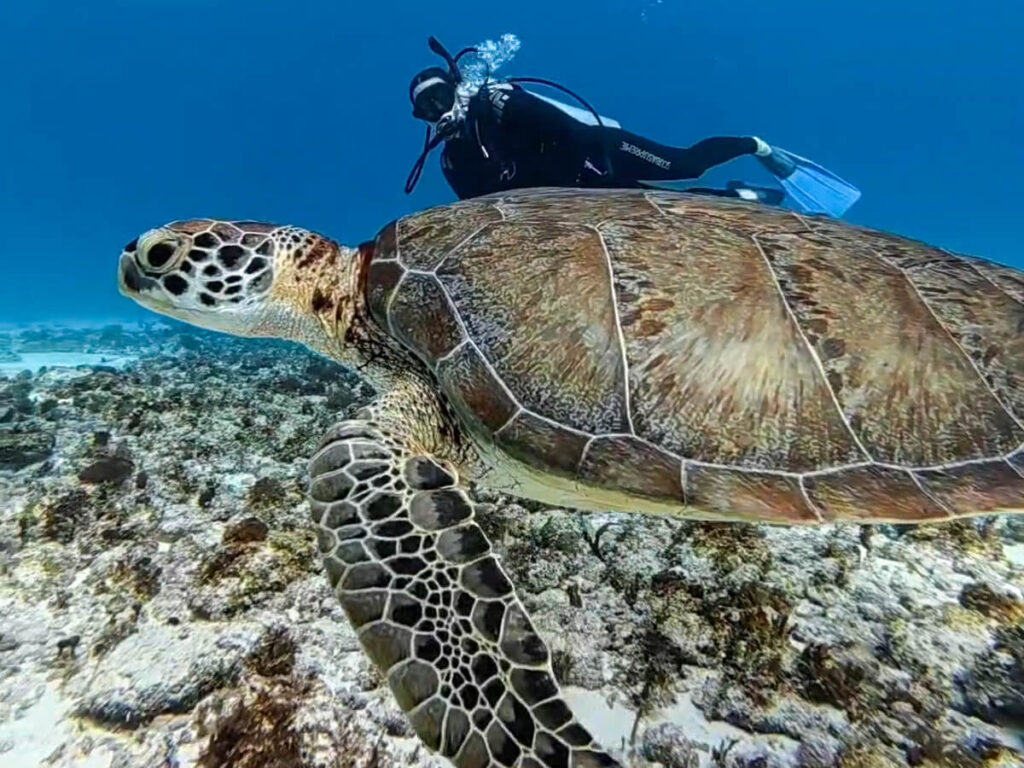
Visibility here is usually excellent, often 15-30 metres (50-100 ft) in the dry season, making it one of the easiest places to see how marine life has begun to colonise the artwork. Numerous sea fans and soft corals have taken hold of the sculptures, their delicate branches swaying gently in the mild current. Because it’s a sandy bottom dive, you might also see animals like stingrays and sea turtles – we saw both towards the end of our dive at this spot.
MUSA Cancún Hotel Zone: Punta Nizuc
The Punta Nizuc section of MUSA sits just off the southern end of Cancún’s Hotel Zone and is one of the most accessible sites, no matter where you stay in Cancún. If you’re staying on the island, you can simply take the 20-minute Isla Mujeres Ferry to the mainland first.
Punta Nizuc is known for its very shallow depths of around 2-4 metres (6-13 ft), making it one of the easiest spots for casual snorkellers and beginners. The sculptures here are smaller and more spread out than at Manchones Reef, so it’s perfect for snorkelling in Cancún. The shallow water means you can float right above them without needing to dive down (although you can get closer with a bit of duck diving if you wish).
Visibility depends heavily on wind and boat traffic, but on calm, sunny days, the artwork sits in bright, turquoise water that’s ideal for first-timers. This area is popular for short snorkelling tours from the Hotel Zone, so expect more crowds and boat activity compared to other sites.
Marine life is present but rare. You might see tropical reef fish like sergeant majors, damselfish, and occasional stingrays gliding across the sandy bottom.

MUSA Cancún: Punta Sam
MUSA’s Punta Sam site is sometimes referred to as the nearby El Meco Reef, named for its proximity to the nearby El Meco Archaeological Site. It sits north of Cancún and is a popular snorkel site. It sits at a moderate depth of around 7-10 metres (23-33 ft), making it accessible to both beginner and confident snorkellers, with typically good visibility thanks to its open-water setting.
This zone features one of MUSA’s most recognisable installations: the finger statues titled Blessings, a striking set of giant sculpted hands reaching upward from the seabed.
Tours here are generally quieter than the Punta Nizuc site, making it a great option if you want a less crowded, more atmospheric experience close to Cancún without needing to dive.

MUSA Underwater Museum Sculptures
The MUSA museum features over 500 sculptures. Most have been designed with holes, nooks, and crannies to provide a home for marine life like crustaceans and to promote coral growth and marine biodiversity. Figures range from full human forms to abstract pieces and iconic statements. Here are some of the most well-known sculptures:

How much does it cost to visit the MUSA Underwater Museum?
MUSA tour prices vary depending on the type, length, inclusions, and level of access. Snorkelling tours generally start around $50-75 USD per person for a guided visit. SCUBA diving trips, which include equipment and a dive guide, often range from $100-160 USD per person for a two-tank dive. Glass-bottom boat and jungle speed boat tours cost around $50-75 USD.
Prices often include park fees, transportation, equipment, briefings, and a guide, but it’s always worth confirming inclusions in advance.

Is the MUSA Underwater Museum worth it?
Visiting the MUSA Underwater Museum is definitely worth it if you pick the right site for your skillset, the right tour operator, and have the right expectations.
The sculptures create a surreal underwater landscape that’s both visually striking and thought-provoking, while the surrounding coral and fish show how nature gradually reclaims human creations. It’s super unique – we’ve never seen anything like it – and is a fun way to spend a snorkel session or SCUBA dive.
Having said that, some people are underwhelmed with MUSA. Some operators simply care more about your money than the experience. Snorkel tours to Manchones Reef can be disappointing, as the site is too deep to be able to appreciate the art from the surface. Even at the shallower snorkel sites, don’t expect to be on the same level as the sculptures – they are still sunken on the sea floor.
It’s also worth noting that, as with protected areas like Isla Contoy, some operators require you to wear a life vest, which can be restrictive and limit duck diving.
On the other hand, some divers find the sites really tame, as they’re quite shallow. While we love a shallow, sandy bottom dive (the light is always beautiful), it’s not going to provide the dramatic drop-offs or reef you’d find while diving in Isla Cozumel. You won’t see much large marine life like sharks, although it’s possible to see passing species like stingrays and turtles, as well as tropical fish and corals.
Another complaint is about overcrowding. While we didn’t experience this diving at the Manchones Reef – we were the only boat there in peak season (February) – many tours shuttle visitors to the same sites at the same time, especially the two snorkel sites. Larger group tours can also feel crowded, as there are loads of people on your boat getting in the water at the same time. Try to opt for a small group tour if you can.
As the experience takes place underwater, it’s not possible for your guide to actually tell you anything about the art, and lots of tours don’t give you any information on the boat either. Some people get bored, not really knowing what they’re looking at. It’s interesting to read up on some of the key sculptures you might see beforehand, but again, there is limited information online about all the pieces.
The sculptures themselves are super spread out, even within the same site. You definitely won’t see them all on one trip, but you likely won’t see more than five or six on one tour. If you have a preference, be sure to communicate it with your tour provider beforehand.
Overall, we think MUSA is totally worth visiting if you’d enjoy a unique art experience combined with underwater exploration. It’s an amazing conservation initiative helping increase responsible tourism in Cancún, and a totally unique way to spend half a day. It’s perfect for snorkellers, beginner divers, and families, while it has enough appeal to entertain certified divers and pro snorkellers, too.

What to pack to visit MUSA
To ensure a smooth and comfortable experience while visiting MUSA, don’t forget to pack your:

MUSA Underwater Museum Review
We were a bit worried MUSA was going to be a tourist trap. Being so close to one of Latin America’s most popular resort cities, we didn’t have super high expectations going in. But we were so surprised by how good our visit was.
We SCUBA dived the Manchones Reef site with A’ HA’ Scuba Diving, who were super professional, and we only had one other guy in our group. We must have got lucky, because the site was super quiet when we got there, too – there were no other boats, and we only met one other SCUBA group on our dive.
Seeing the sculptures was really eerie but super cool. The way they loom out of the darkness, and then you can get up close to them, is so unique. We had fun exploring the gallery for a while, ending the dive by drifting over a sandy bottom patch, where we saw a stingray and a sea turtle. The second dive on the Manchones Reef also blew us away. The corals were so colourful – something we weren’t expecting, considering how widespread coral bleaching is nowadays, and there were schools of striped grunts so thick you couldn’t see the reef. It felt like stepping into a PADI advertorial catalogue!
We’d love to return to see more sculptures, and to try out the snorkel sites (although we do anticipate these might be busier as they’re more accessible). SCUBA diving at MUSA ended up being one of our favourite things we did on our second trip to Mexico.

MUSA Underwater Museum Video
Check out our video of MUSA and be sure to follow us on Instagram for similar destinations!
MUSA Underwater Museum FAQs
Now you know all about the MUSA Underwater Museum, we’ve answered these frequently asked questions to help you plan your trip.
Why are there statues underwater in Cancún?
The statues at the MUSA Underwater Museum were deliberately submerged to create an artificial reef, helping to divert visitors away from natural reefs and giving marine life new structures to colonise. Each sculpture also carries an artistic and environmental message, blending creativity with conservation. Visiting MUSA is one of the best things to do in Isla Mujeres and Cancún.
What do the sculptures of MUSA provide a home for?
The underwater statues quickly became a hub for corals, sponges, sea fans, and schools of reef fish. Some structures also have specifically designed spaces for animals like lobsters and crabs.
Where are the underwater statues in Cancún?
The MUSA sculptures are spread across protected areas between Cancún and Isla Mujeres, mainly within the National Marine Park. The main sites include Manchones Reef, Punta Nizuc, and Punta Sam, each offering different depths and marine life experiences.
How deep is the MUSA Museum?
MUSA is spread across several zones with varying depths to suit snorkellers and divers of different skill levels. The shallowest sections, like Punta Nizuc, sit around 2-4 metres (6-13 ft), perfect for snorkelling. Intermediate areas generally range from 5-10 metres (16-33 ft), offering easy dives for beginners. Some of the deeper zones, including parts of Manchones Reef, reach 12-18 metres (39-59 ft), more suitable for certified SCUBA divers. Depth often affects visibility and marine life density, with shallower areas showing more sunlight-dependent coral growth.
How to see the underwater museum in Cancún?
Access to MUSA is only via licensed operators who run snorkelling, SCUBA diving, glass-bottom boat, or land-based tours. Most tours depart from Cancún’s Hotel Zone or nearby marinas, and all follow marine park rules to protect the sculptures and reef.

Read next:
28 Unique Things to Do in Cancún + What NOT to Do
18 Best Day Trips from Cancún + 3 That Aren’t Worth It
Ultimate Guide to Snorkelling in Cancún
Ultimate Guide to SCUBA Diving in Cancún
Is Isla Mujeres Worth Visiting? Travel Guide
