The Ultimate Guide to SCUBA Diving in Cozumel

Discover the best SCUBA diving in Cozumel, from the top sites to the best tours, in this complete guide with our first-hand experience.

This post may contain affiliate links, which means we might earn a small commission on anything purchased through these links at no extra cost to you. Learn more on our disclaimer page.
Isla Cozumel, love of my life, is one of Mexico’s most beautiful islands and one of the best places we’ve ever been SCUBA diving. It’s one of the world’s best-known diving destinations, famous for its crystal-clear Caribbean water, colourful coral reefs, and strong currents that bring you past some of the island’s most impressive underwater scenery while drift diving.
It’s quite different from many other popular destinations, but that doesn’t mean you have to be a pro. We visited for SCUBA diving in Cozumel and kept extending our time, booking tour after tour, because we just couldn’t get enough of the crystal-clear underwater world here.
But with strong currents, dive sites that vary considerably in depth and difficulty, and plenty of operators to choose from, there are a few things you need to know before jumping in. In this guide, we’ll cover everything you need to know about SCUBA diving in Cozumel, including what the diving is like, the best dive sites, marine life you might see, currents, visibility, diving conditions, and our practical tips for planning your dives with a reputable and professional operator.
Cozumel SCUBA Diving at a glance

More from Cozumel
Is Cozumel a good place for SCUBA diving?
Isla Cozumel is one of the best places in the Caribbean for SCUBA diving, and unlike some globally famous diving destinations, you don’t have to travel far offshore to get to impressive reefs.
The island sits alongside the Mesoamerican Reef Barrier Reef System, with warm, exceptionally clear water, dramatic coral walls, swim-throughs, and a strong current that makes drift diving, where you let natural water currents carry you along, the norm.
The Mesoamerican Reef itself stretches 625 miles (1000 km) all the way from Mexico to Honduras, past Belize and Guatemala, and is part of the second-largest barrier reef in the world, after Australia’s Great Barrier Reef. It starts at the northern tip of the Yucatán Peninsula near Isla Contoy and ends at Honduras’ Bay Islands, including Roatán and Utila (two other famous diving destinations).
Isla Cozumel’s big appeal is its combination of excellent visibility and effortless drift diving. Visibility commonly reaches 30 metres (100 ft) or more, with around 20-40 metres (65-130 ft) possible depending on the site and conditions. We’ve seriously never seen such clear waters since, and every diver we meet who’s also been to Cozumel agrees it’s got elite levels of visibility.
Water temperatures are usually around 26-29°C (79-84°F), although they can vary slightly throughout the year. It’s lovely and warm, and we were perfectly comfortable in 3 mm wetsuits. As a warm water diver, this is my preference.
Rather than having one continuous reef with lots of different names, the island is home to a collection of individual reefs, walls, and dive sites that sit within the larger protected marine park and form part of the wider Mesoamerican Reef system.
Here’s how it all fits together:
Choosing the right dive sites, finding a reputable operator, and knowing what to expect from drift diving can make a big difference to your experience, so we’re going to go into depth (pun intended) about what to expect in this post.
Cozumel SCUBA Diving Map
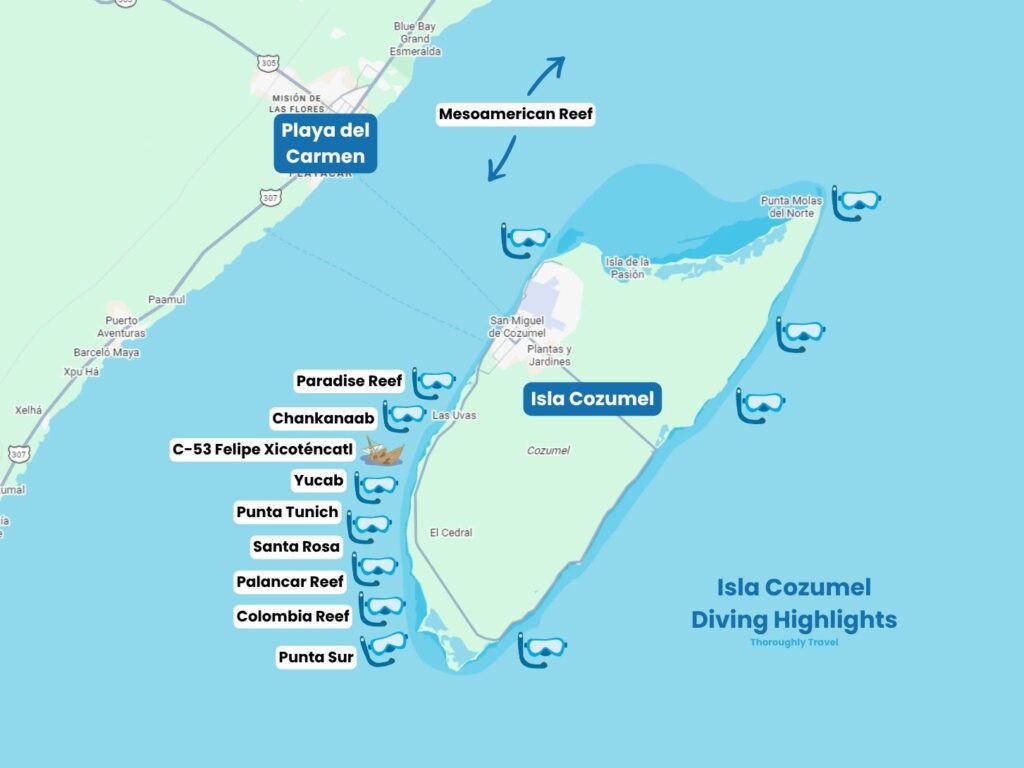
We’ve highlighted the top dive sites in Isla Cozumel on the map below.
Where is the best SCUBA diving in Cozumel?
Many of Cozumel’s dive sites are spread across the island’s western and southwestern reefs, walls, and coral gardens just offshore. Most are only a short boat ride away, making it one of the easily one of the best things to do on Isla Cozumel.
While there are a handful of dive sites off the northwest of the island, a couple off the northeast, and one or two on the southeast coast, the majority of Cozumel’s dive sites are congregated off the southwest coast. This is where the main reefs that make up part of the Mesoamerican Reef lie, stretching from the Cozumel Cruise Terminal just south of San Miguel, the main town, to Punta Sur, the southern tip of the island.
The main marina used for dive trip departures is the Marina Cozumel ASIPONA, which is perfectly positioned by this stretch of reef, which is home to over 20 popular dive sites.
The best Isla Cozumel dive sites
There are more than 40 named dive sites around Cozumel, with the majority clustered along the island’s protected western and southwestern coastline. Some of the highlights include:
We did 6 dives over 3 days – the first five sites on the list above and the iconic C-53 Felipe Xicoténcatl shipwreck.
1. Palancar Caves & Gardens
Palancar is actually a collection of different dive sites, with Gardens being the shallower option, Caves offering more dramatic formations and swim-throughs, Horseshoe featuring a deeper, curved section of reef, and Bricks known for its large coral formations and sandy areas.
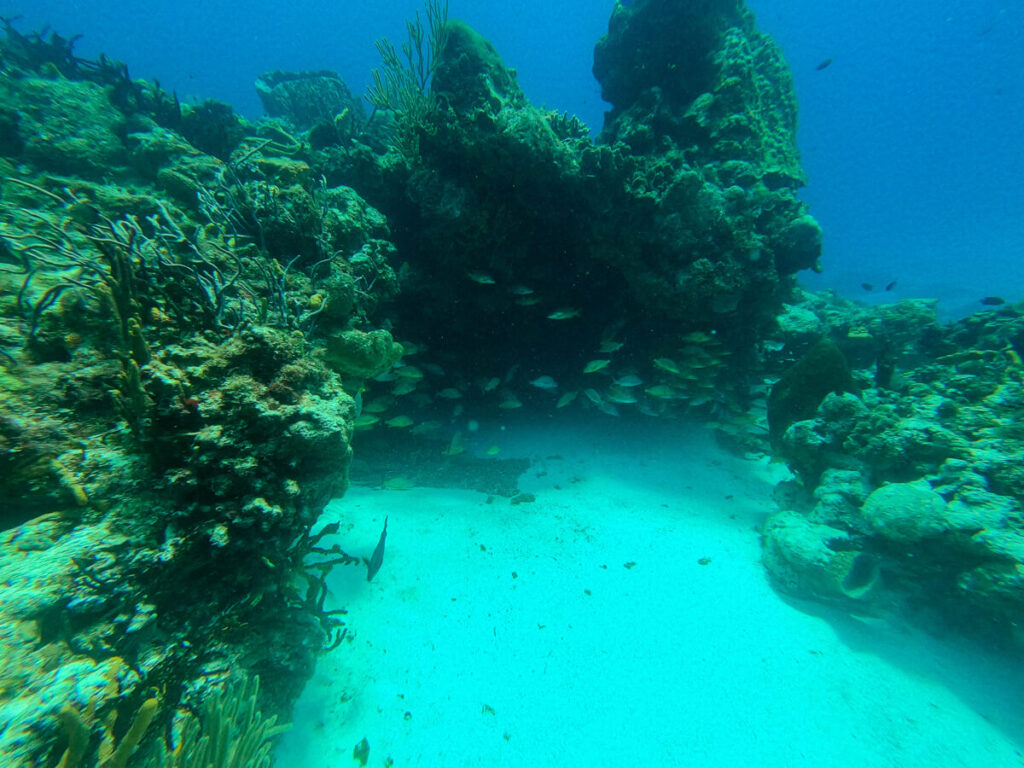
Gardens and Caves are the two most popular sites on the Palancar Reef, and Palancar Caves was actually our first dive in Cozumel – it totally blew us away. It was a unique wall dive with a little cavern we swam through, and lots of bright purple and orange corals. The water was so clear and blue, and we saw lots of small tropical fish and our first-ever stingray!
Palancar Gardens generally sits around 9-21 metres (30-70 ft), while Palancar Caves reaches deeper and includes a series of cavern-like passages through the reef.


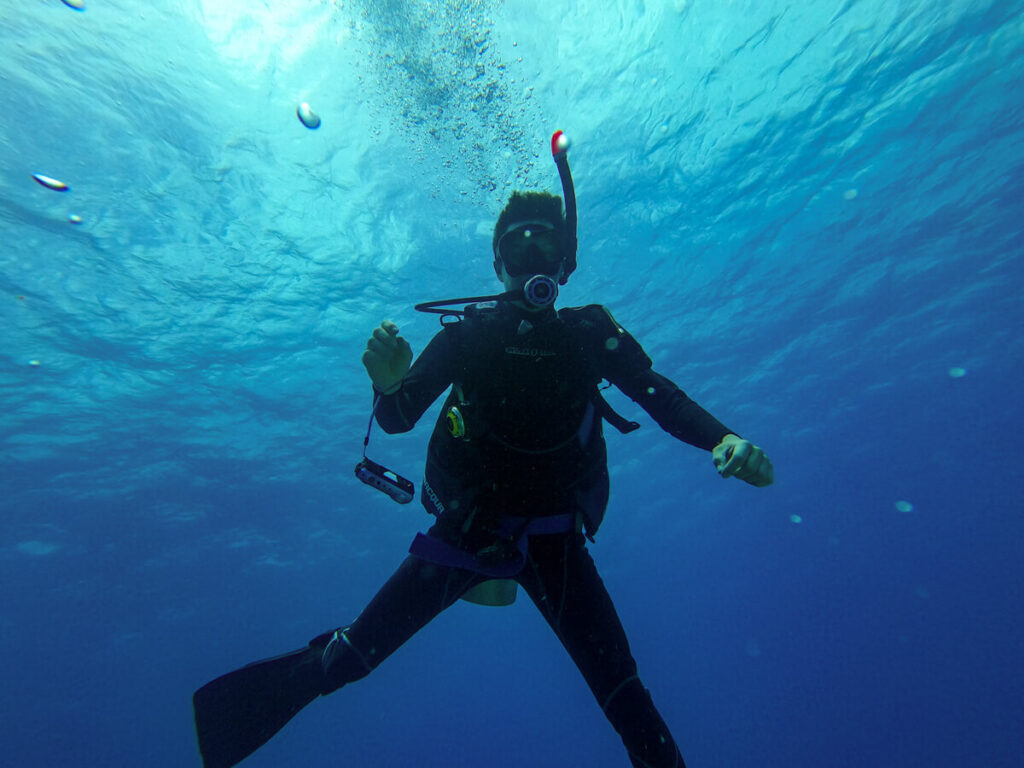
2. Yucab
Yucab is a lower-profile reef with coral formations, sandy channels, ledges, and small swim-throughs. It generally sits around 11-18 metres (35-60 ft), making it a good option for less experienced divers who want to experience Cozumel’s drift diving.
It was a slightly shallower dive than Palancar, but it was a great site to practice skills like buoyancy. We both had fewer than 10 dives at this point, so it was great to practice in a medium current in an environment that still felt very controlled and safe.
We saw lots more fish, including a pufferfish, stonefish, grouper, and barracuda, as well as lobster.
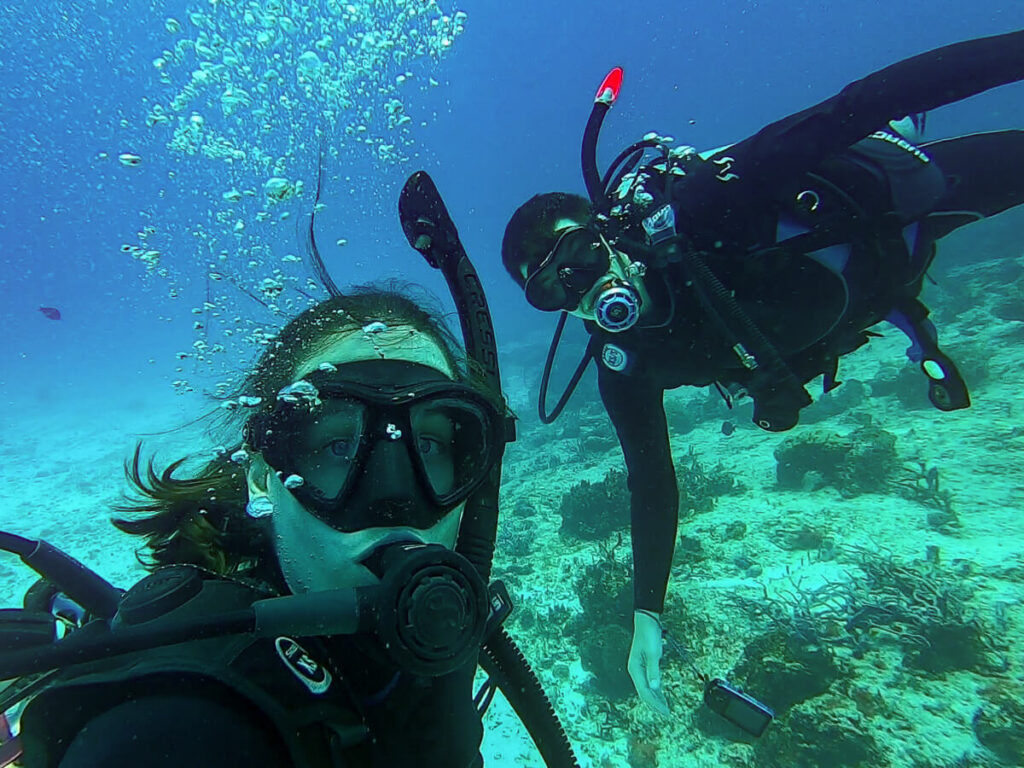

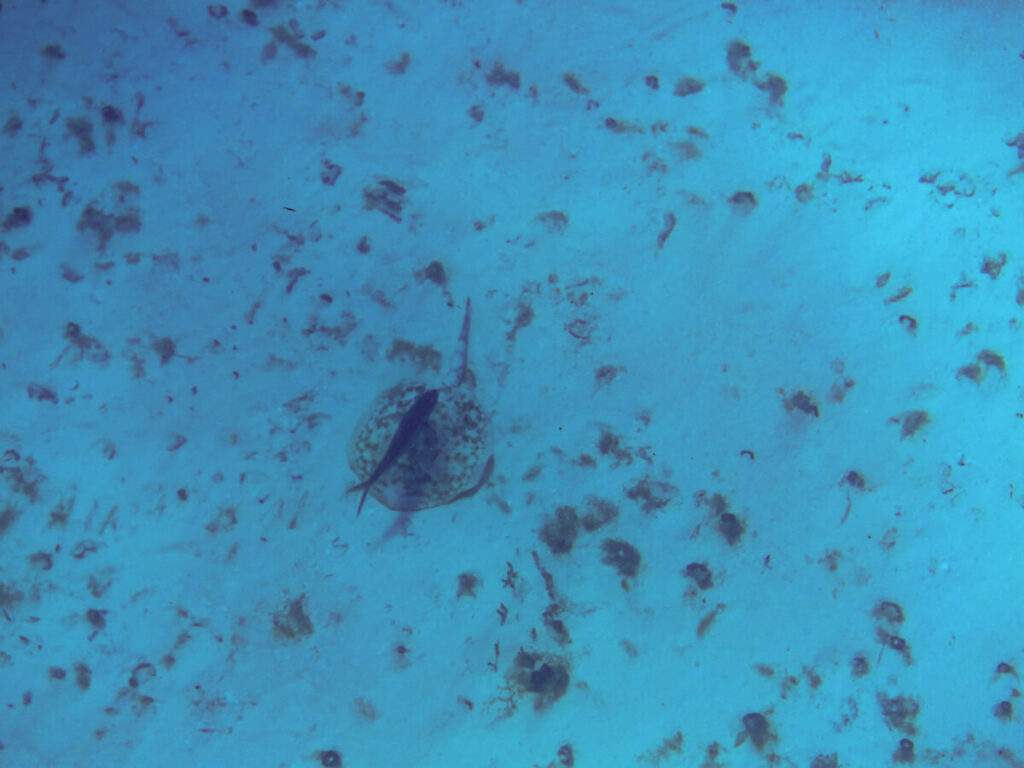

3. Punta Tunich
Punta Tunich is a deeper drift dive where the reef drops away towards the wall. The site starts around 15 metres (50 ft) and can continue well beyond recreational depths, with large sponges and plenty of reef structure along the way.
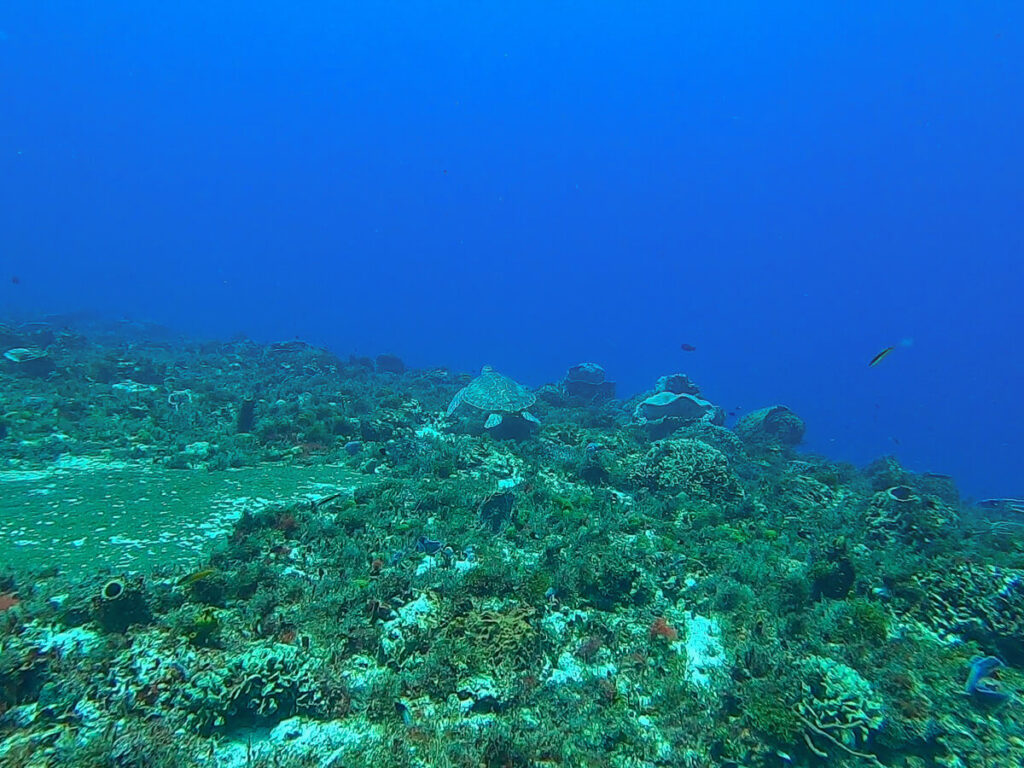
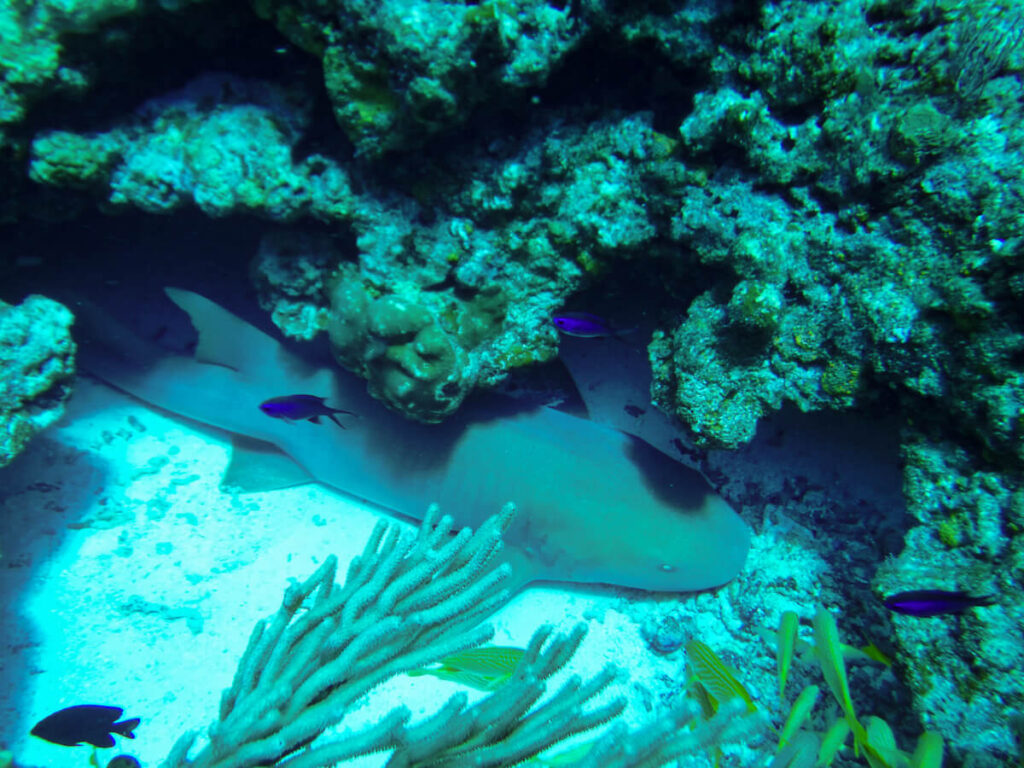
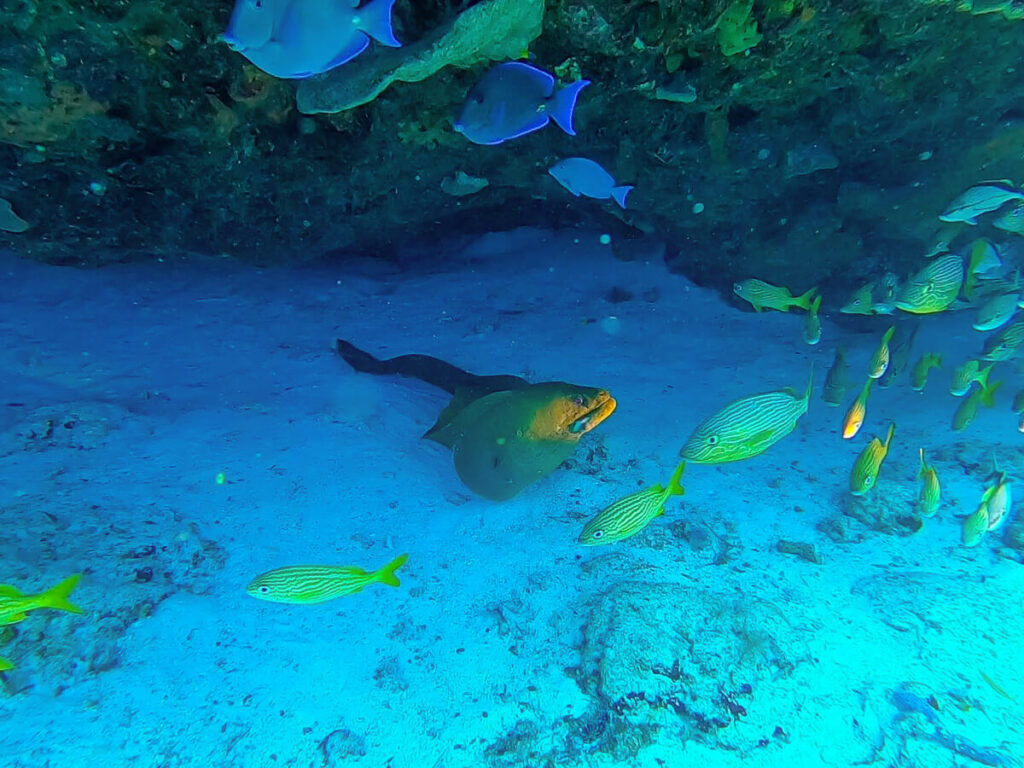
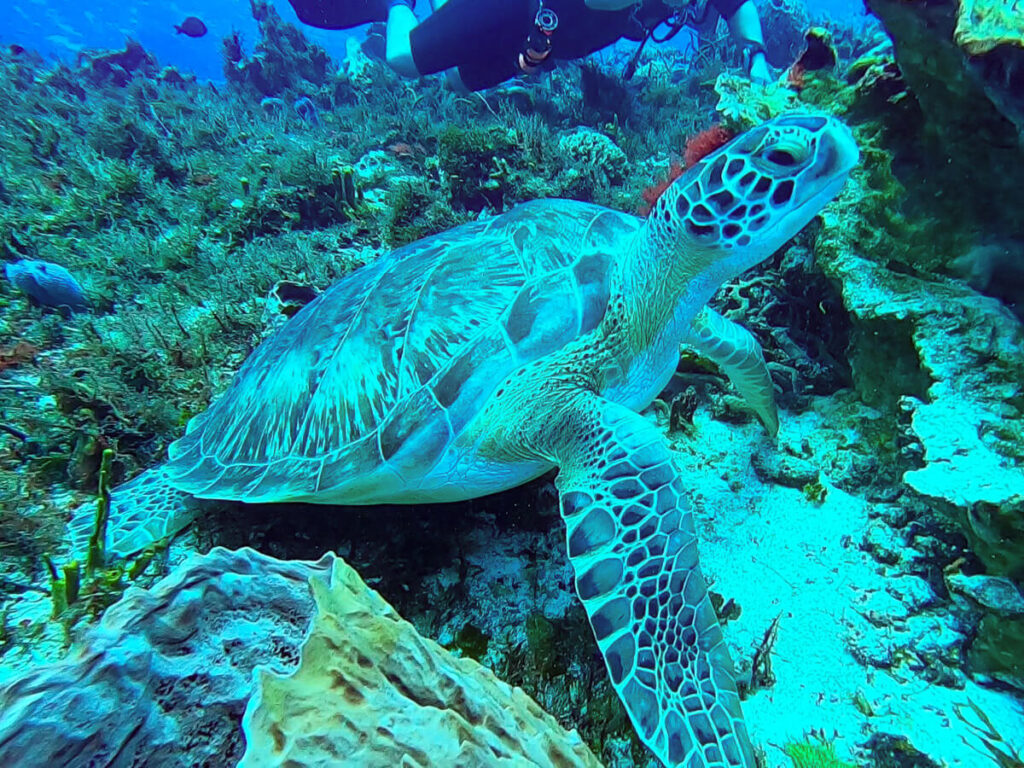
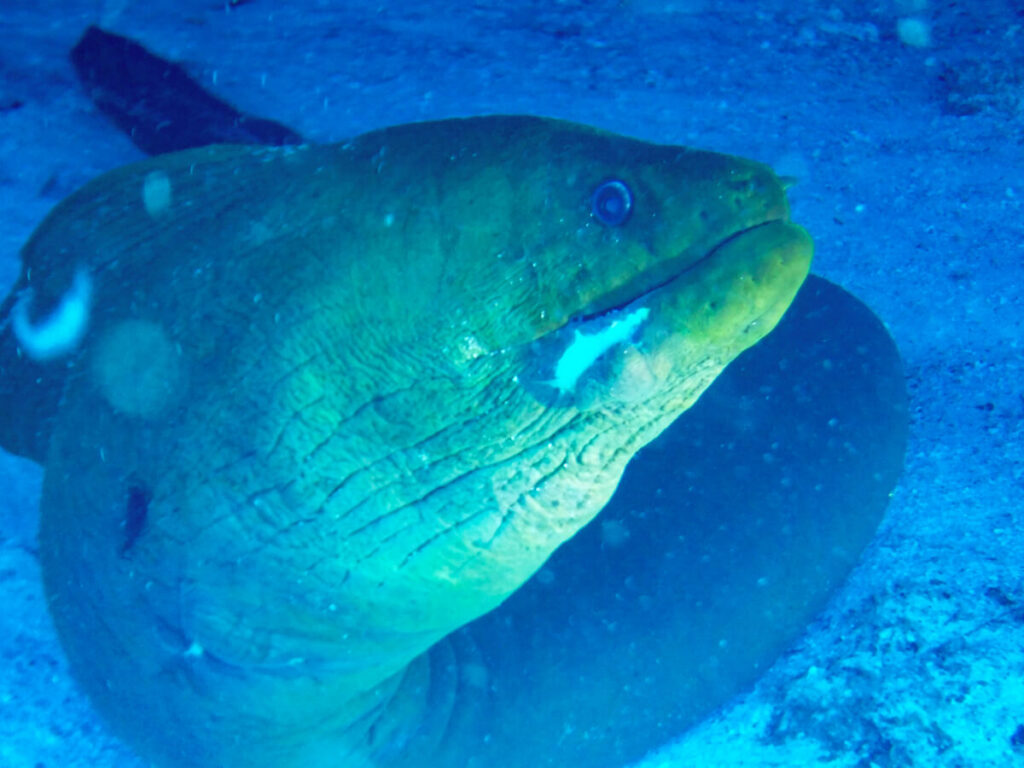
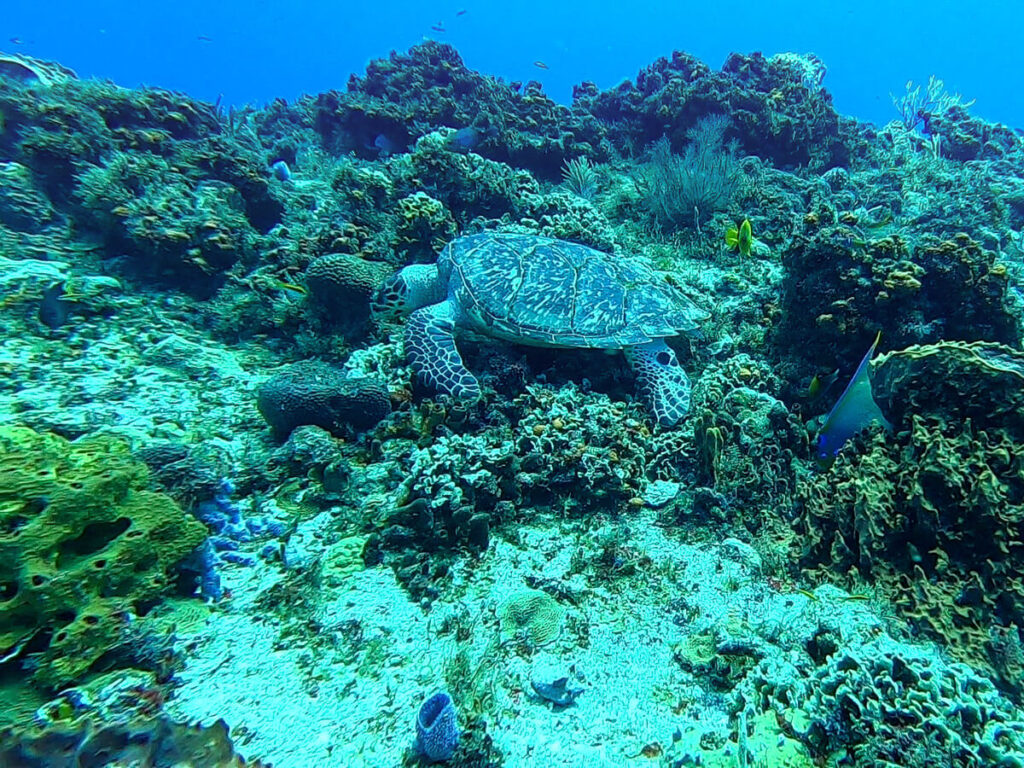
The drop-off is absolutely epic, falling away into the deep blue, and the wall itself was full of life and vibrantly coloured corals. We also saw some really exciting marine life on this dive, including our first-ever shark, a gentle sleeping nurse shark, a giant moray eel, and a huge green turtle, as well as lobster and a spider crab.
It’s better suited to intermediate divers, particularly when the current is running strongly, but we didn’t find it too challenging, especially as this was the first dive of our second day with CozuDive, and we were feeling more confident. Being carried along by the current is such an easy way to dive – you just have to keep an eye out, as there’s no fighting against it if it carries you past something exciting.
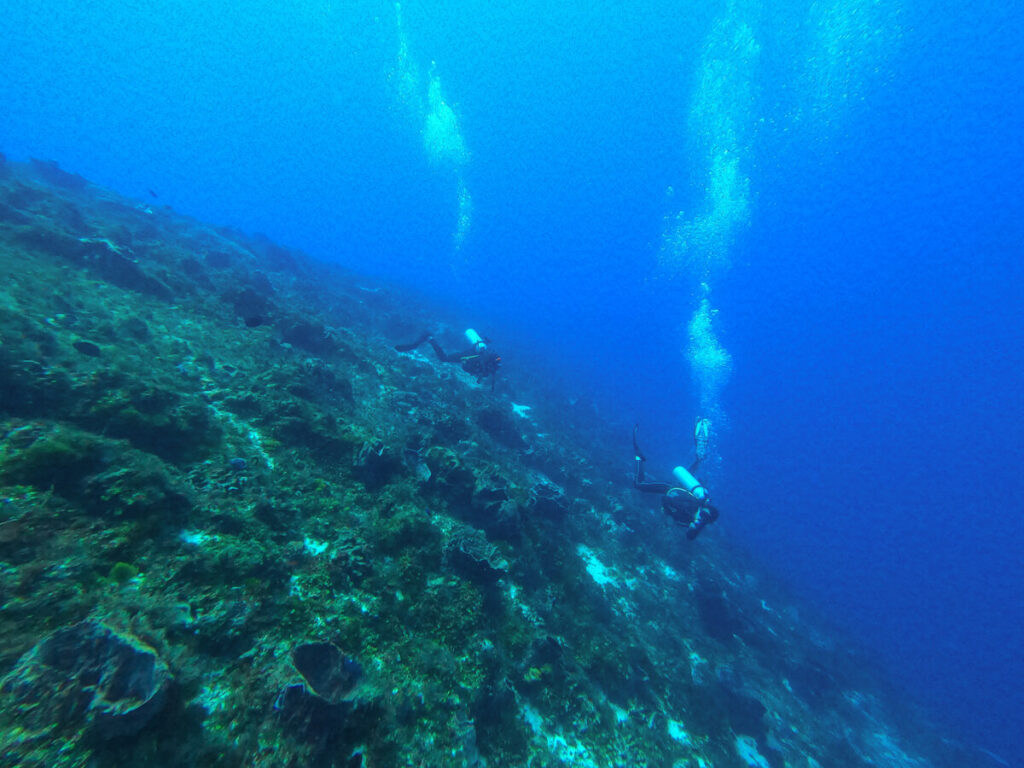


4. San Clemente
San Clemente is one of Cozumel’s shallower reef sites, generally around 5-11 metres (15-35 ft). It’s a much more relaxed dive than some of the deeper walls, with coral formations and plenty of smaller marine life. That makes it a useful option for newer divers, refresher dives, or anyone who simply wants a slower dive with plenty of bottom time.
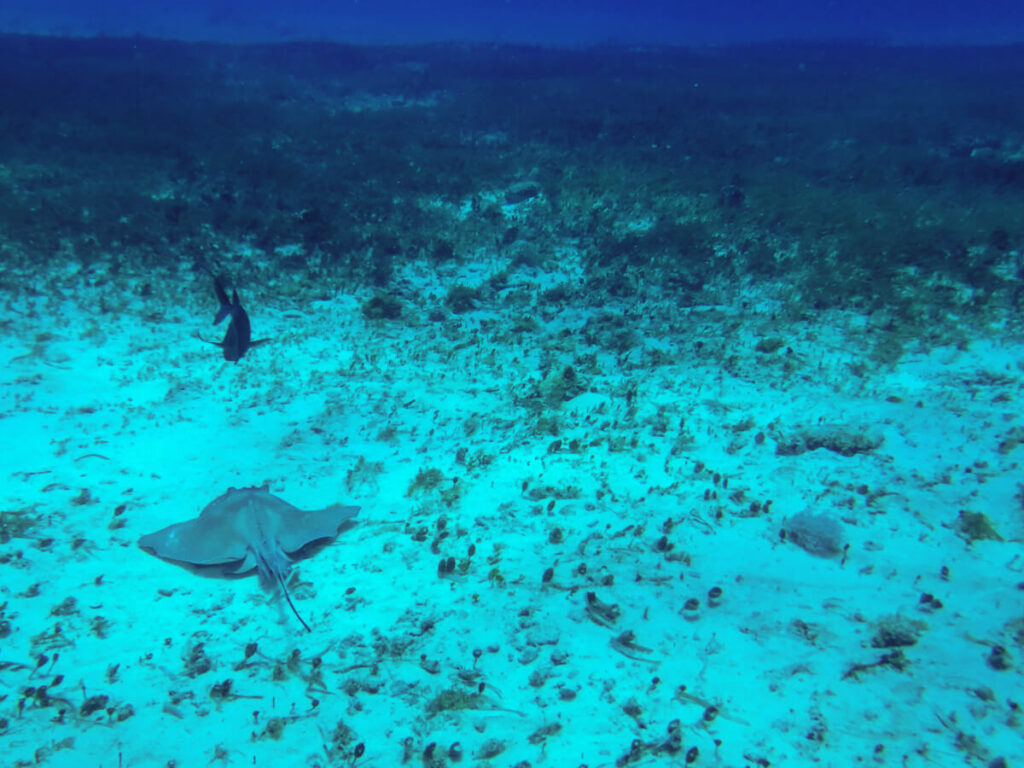
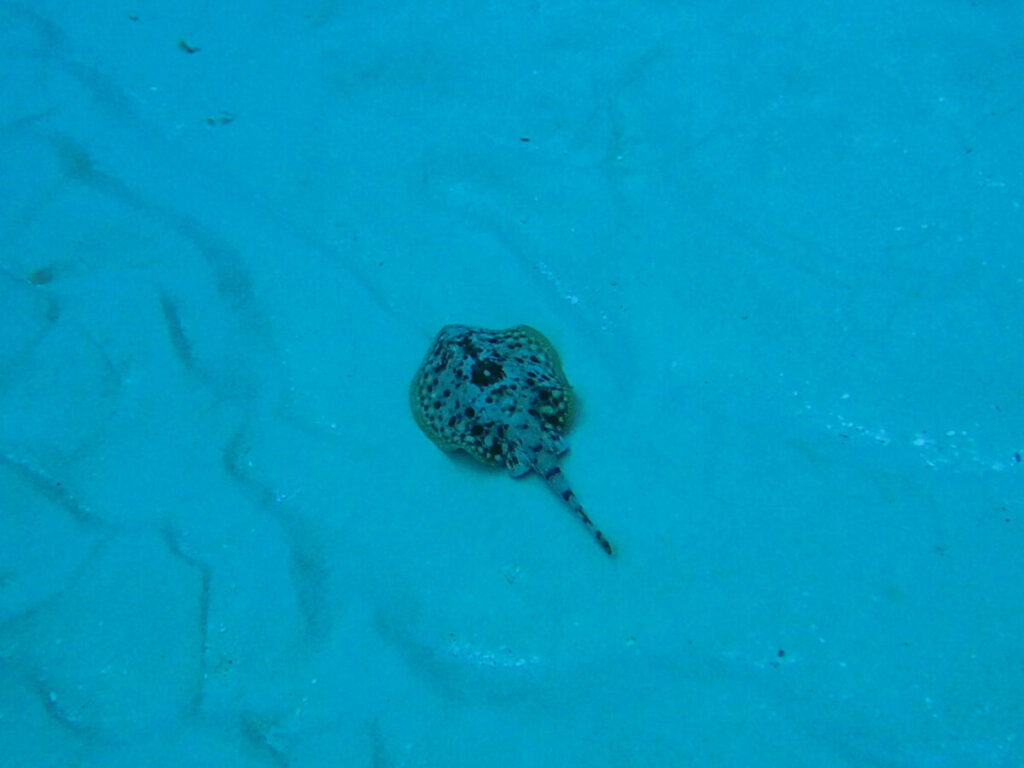
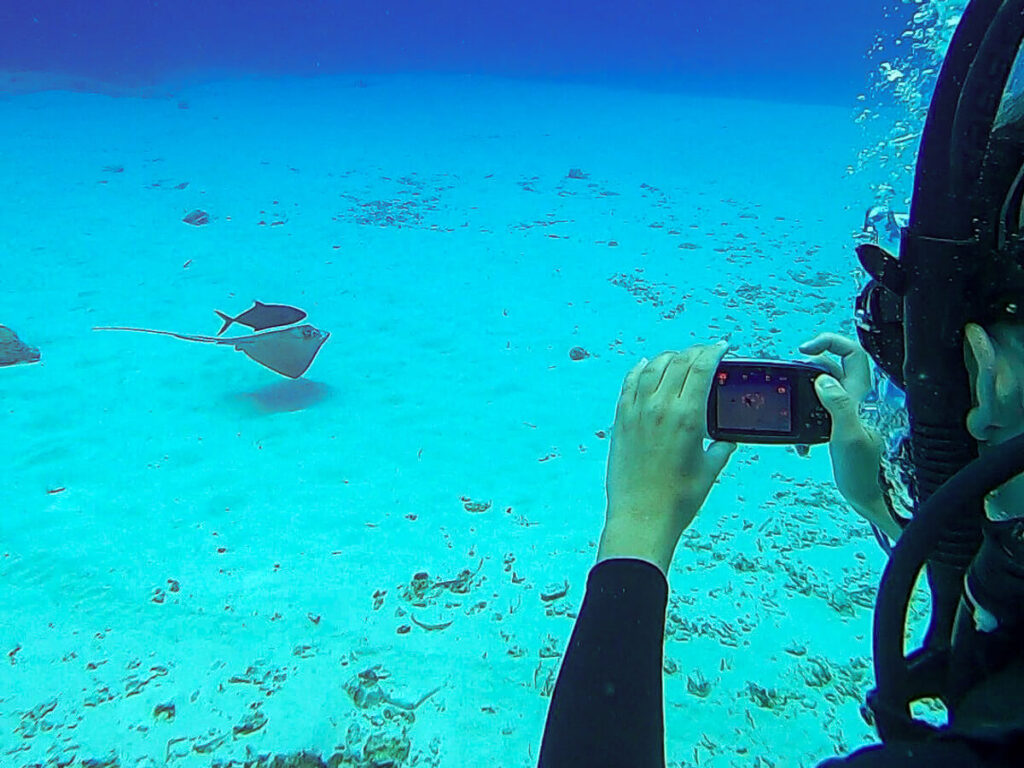
We thought it was really cool, with a nice drop-off and plenty of sandy areas. This is where we started to fall in love with shallow diving on a sandy bottom, as the light is beautiful and you often see interesting animals like rays – we spotted four southern stingrays and a yellow stingray on this dive! We also saw two pufferfish, a flatfish, a triggerfish, barracudas, shrimp, and nudibranches.


5. Paso de Cedral
Paso de Cedral combines coral formations with valleys, ledges, and swim-throughs, giving the dive plenty of variety without needing to go particularly deep. Depths vary depending on the route, with shallower sections around 10 metres (30 ft) and deeper parts reaching around 30 metres (100 ft).
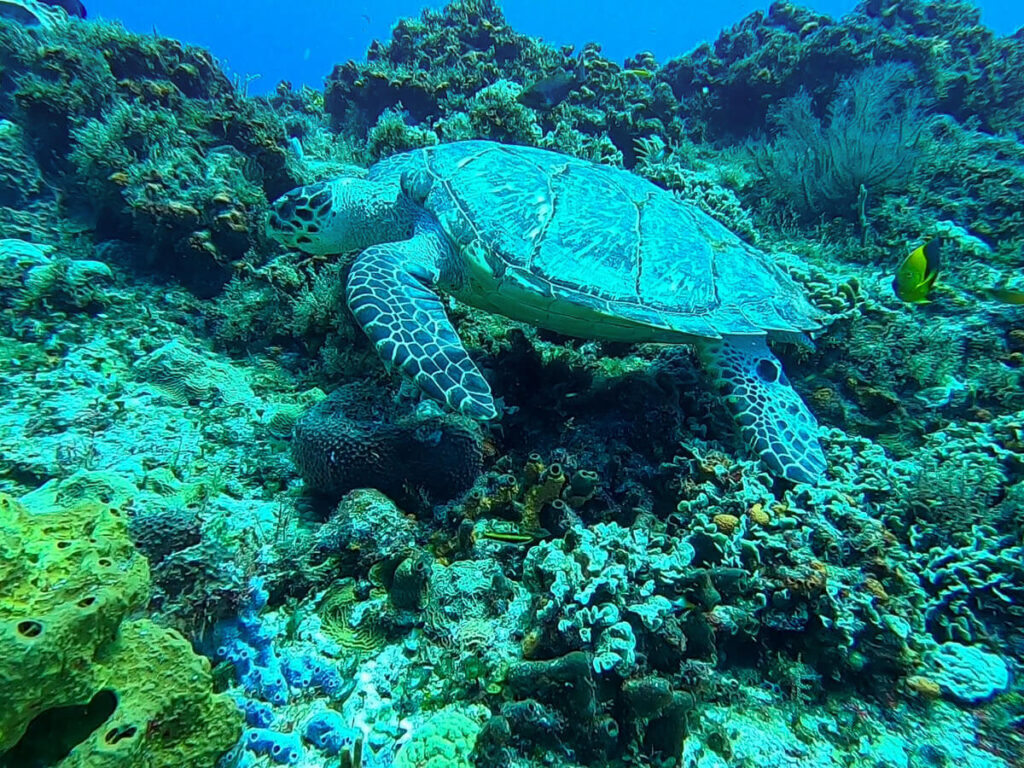
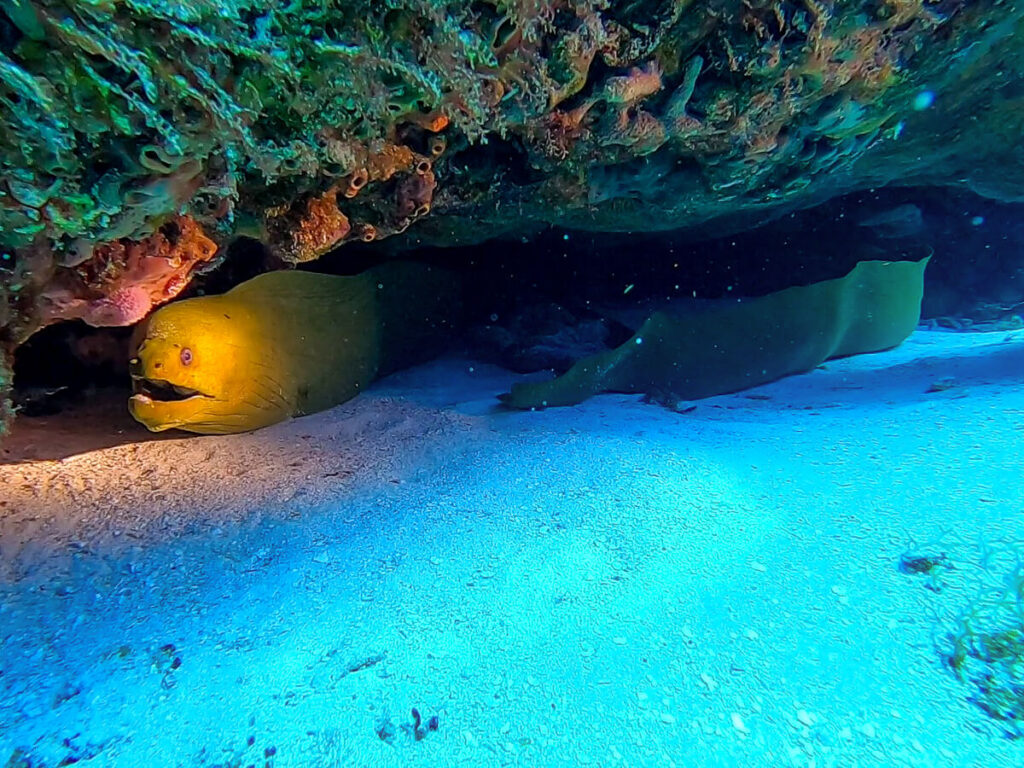
This was a wonderfully colourful coral reef with another cool drop-off – with so much bleaching across the globe, it’s nice to see sites that are still so vibrant. We saw a couple of lobsters, a big crab, angelfish, a spotted trunkfish, a large sea turtle, and three large moray eels all together, which is quite rare, as they’re typically solitary and territorial creatures.
The current can be strong, so listen carefully to your briefing, but we didn’t find it any harder than the other sites.
6. Santa Rosa Wall
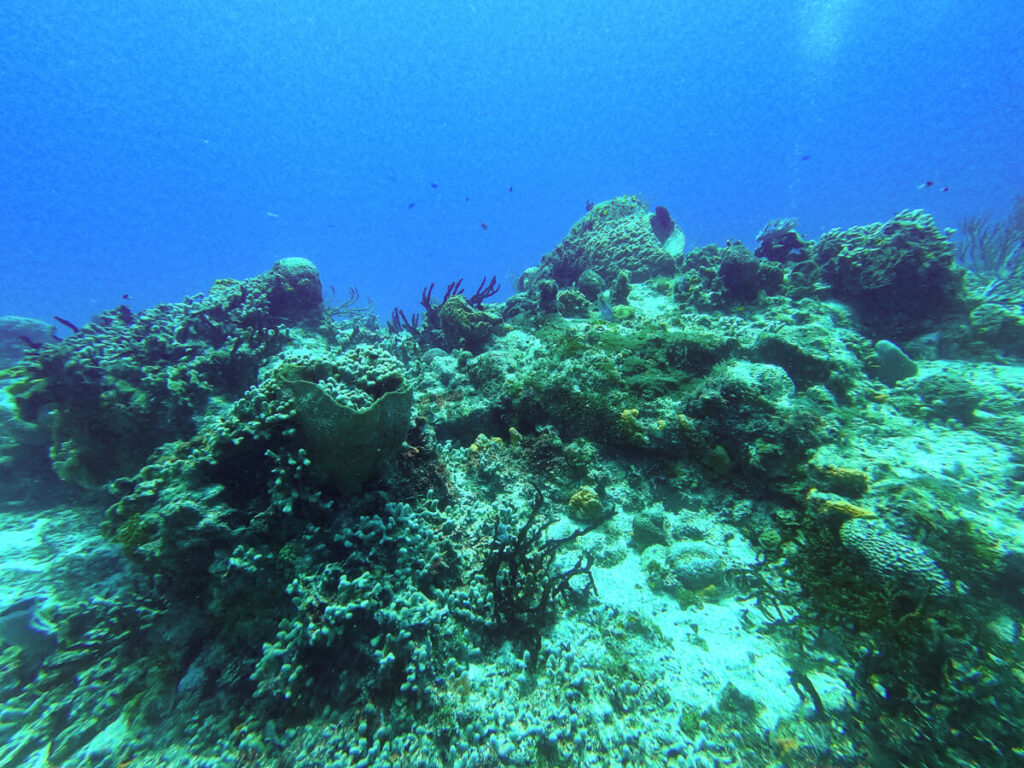
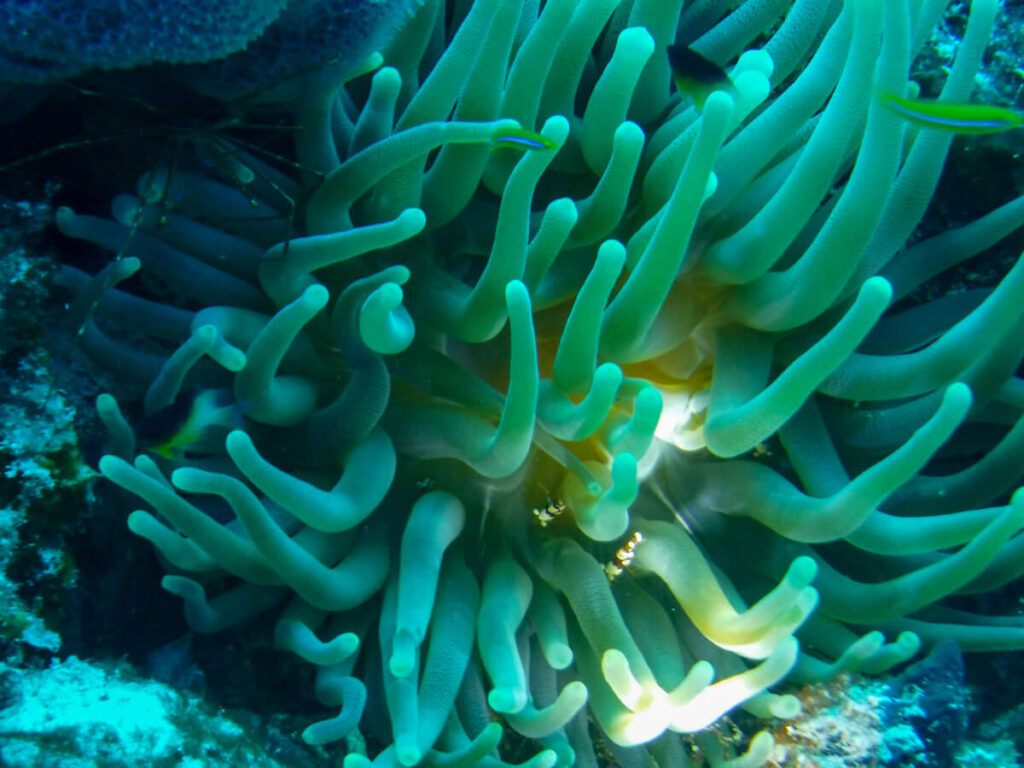
Santa Rosa Wall is one of Cozumel’s signature wall dives, with a steep coral face dropping away into the deep blue. The reef is covered in sponges, sea fans, and coral formations, while tunnels and overhangs add plenty of structure to explore.
The wall can reach well beyond recreational depths, although shallower sections are available for less experienced divers.
7. Punta Sur and Devil’s Throat
Punta Sur is one of Cozumel’s more advanced dives, with deeper reef formations and the famous Devil’s Throat passage. The site can reach around 40 metres (130 ft), making it unsuitable for beginners, so we didn’t do it, and it’s something you’ll want to discuss with your dive operator based on your certification, recent experience and comfort with current and depth.

8. Tormentos Reef
Tormentos is a relatively shallow reef, generally around 15-18 metres (50-60 ft), but the current can make it a faster-paced drift dive. The reef is covered in coral formations and supports plenty of fish, moray eels, groupers, sponges, and other Caribbean marine life.

9. Paradise Reef
Paradise Reef is one of Cozumel’s most accessible dive sites, sitting close to shore and generally reaching around 9-18 metres (30-60 ft). It’s a relatively shallow reef with plenty of coral formations, sandy patches, sponges, and tropical fish, making it a good option for beginners or anyone wanting a more relaxed dive.

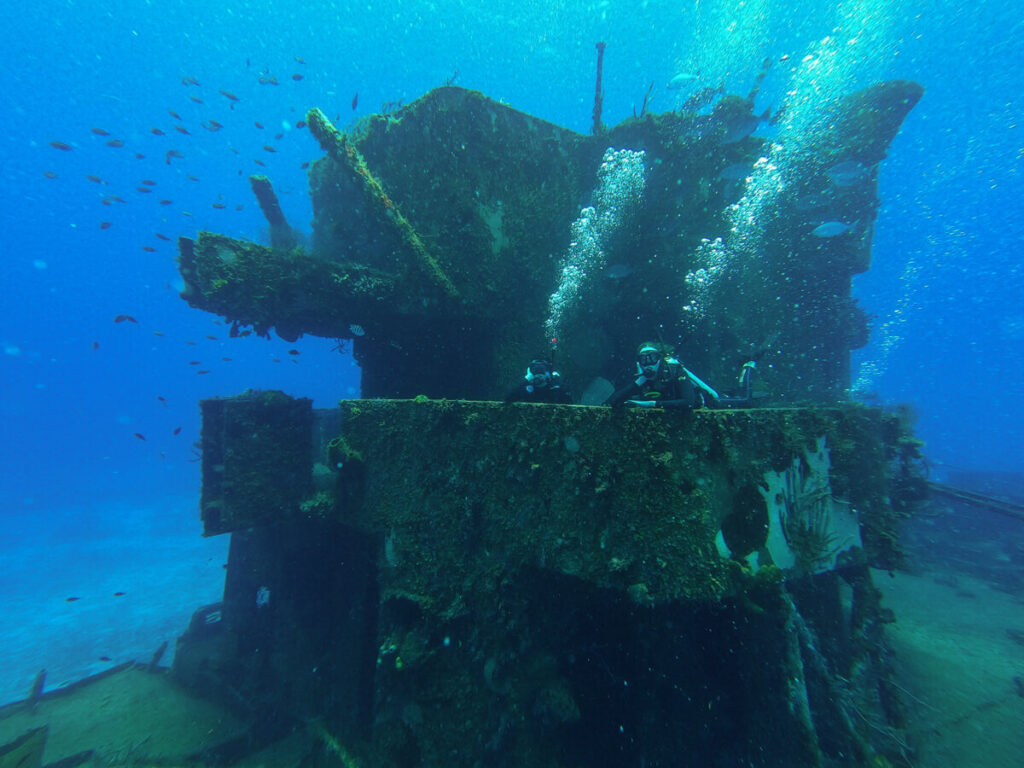
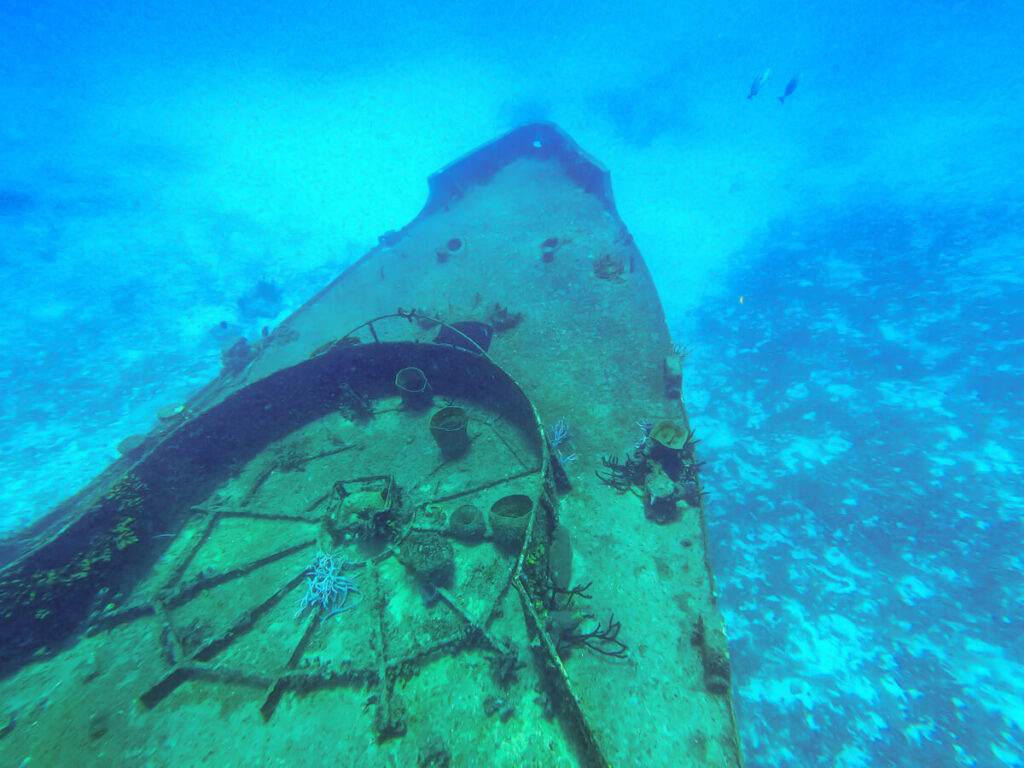
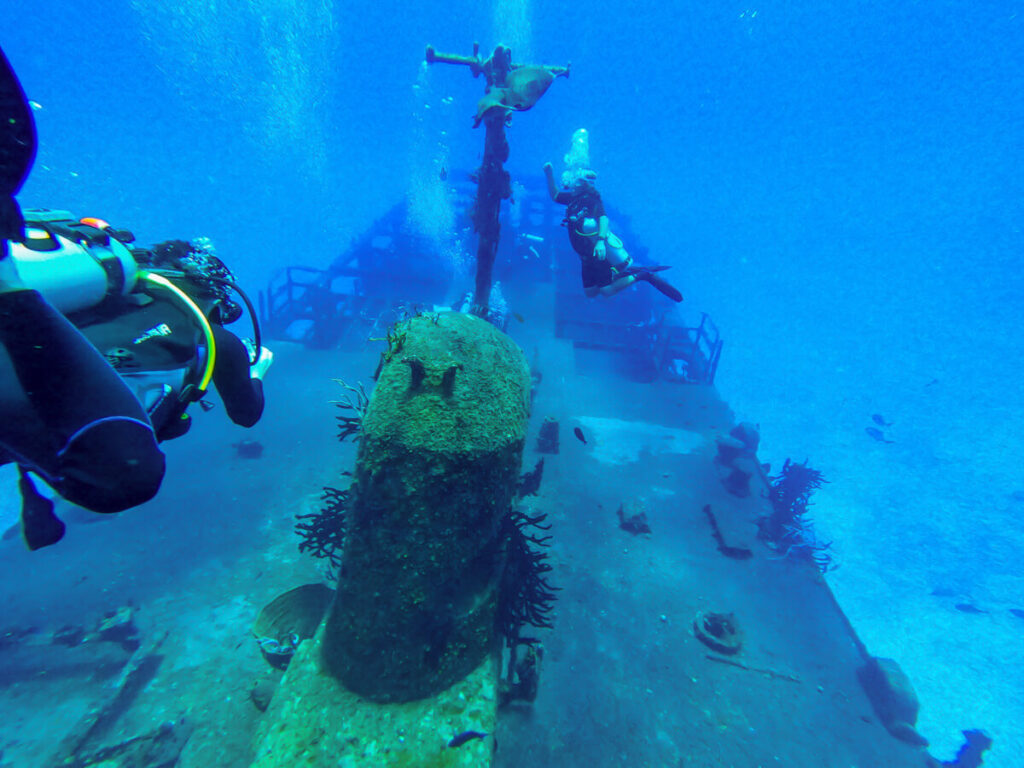
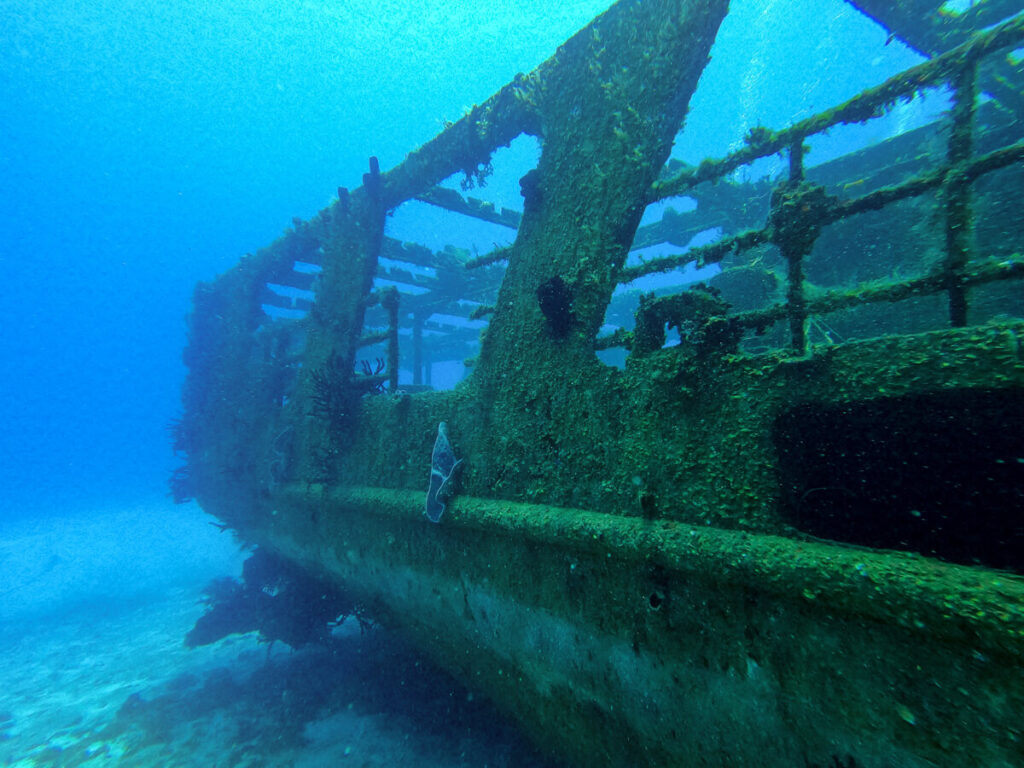
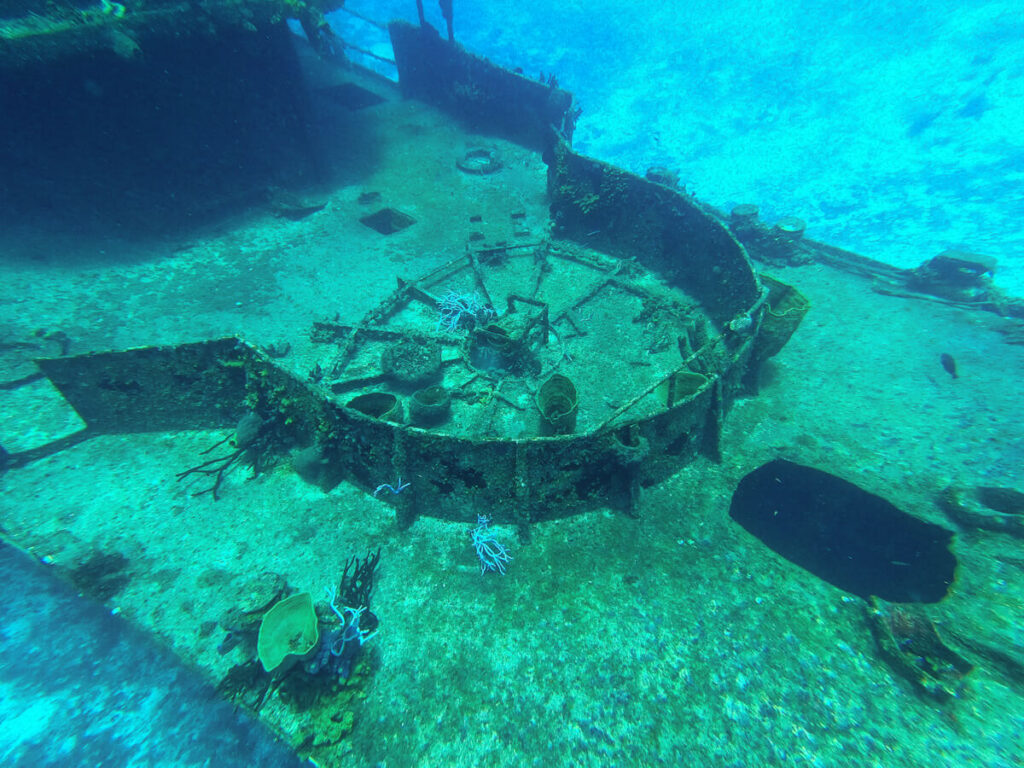
10. C-53 Felipe Xicoténcatl shipwreck
Over the centuries, numerous ships have been lost in the waters around Cozumel, but relatively few are still intact and accessible to recreational divers. The C-53 is Cozumel’s best-known recreational wreck dive.
It’s a former US Navy minesweeper that was later operated by the Mexican Navy before being intentionally sunk off Cozumel to create an artificial reef and dive site.
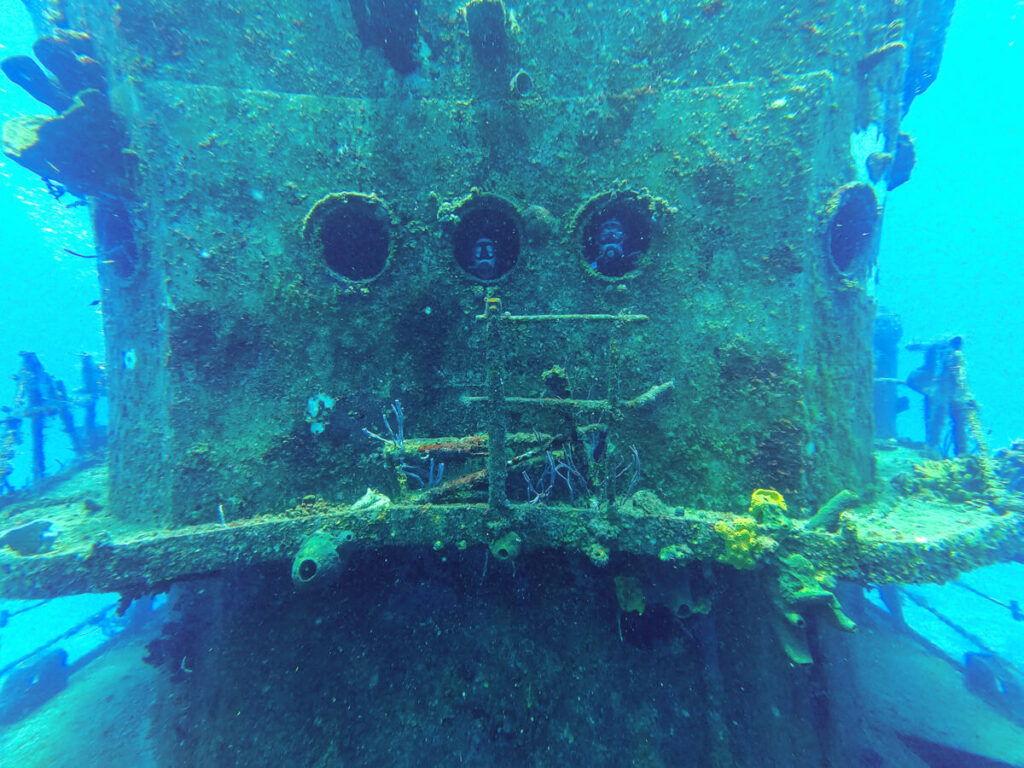
The wreck sits upright on the sandy bottom at around 23-25 metres (75-82 ft), with its upper sections considerably shallower at around 10-15 metres (33-50 ft), so you don’t have to have your Advanced certification to see it.
The wreck was prepared with large openings to make it accessible to divers, and because it’s classified as a training wreck, you’re allowed to go inside with a guide.
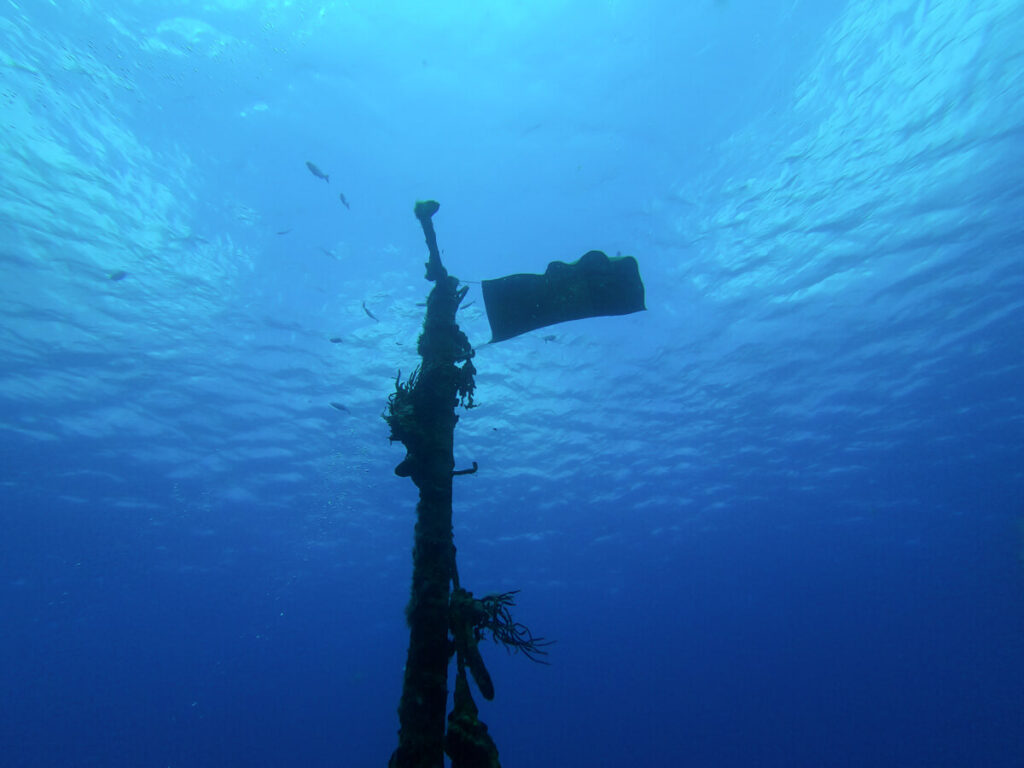
Entering an overhead environment can be daunting, so good buoyancy control and following your guide are important, but it was one of the most epic experiences we’ve had underwater. It was covered in fauna, with little schools of fish around – nature reclaiming something man-made is such a cool thing to see.
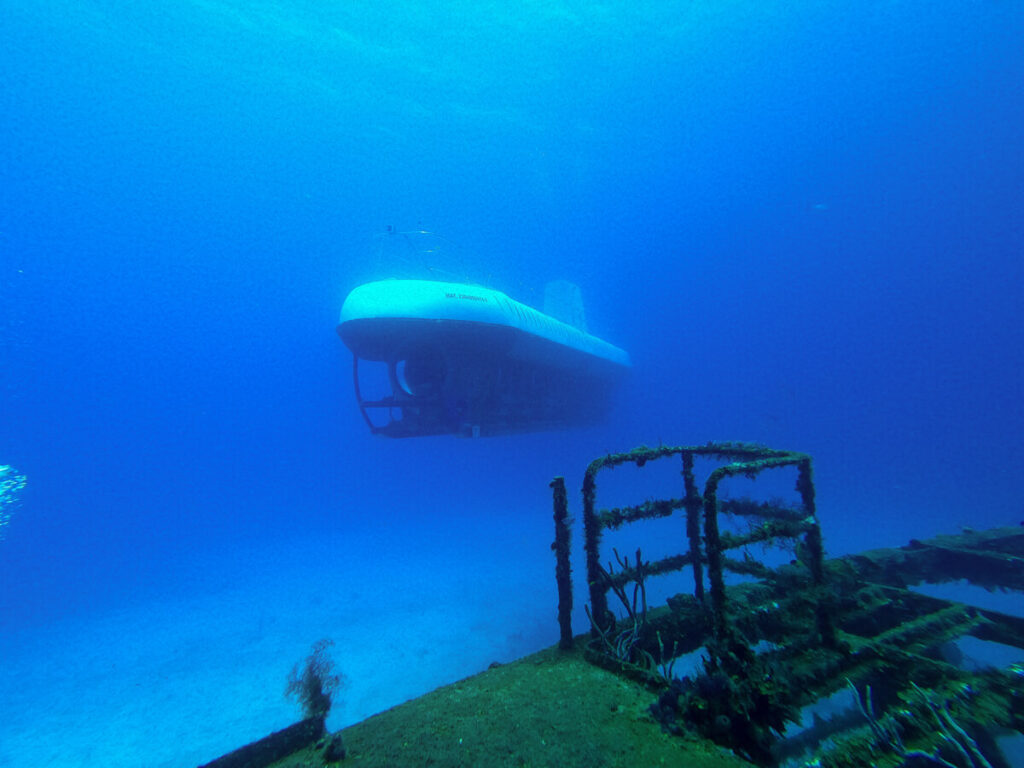
We went inside with our instructor, up a deck where there was a ladder, and around the 2nd floor, before exploring its exterior and upper deck. It’s a fun photo spot, with plenty of opportunities to recreate the iconic Titanic pose from the film. And we also saw the Atlantis Submarine go past.

What can you see SCUBA diving in Cozumel?
Cozumel’s reefs are home to a huge variety of Caribbean marine life, from colourful reef fish and enormous sponges to turtles, rays, moray eels, and the occasional nurse shark. The clear water and healthy coral formations make it particularly good for spotting smaller creatures tucked into cracks and crevices, while the deeper walls give you the chance to see larger species cruising through the blue. Here’s what you might see:
SCUBA diving in Cozumel for beginners
Cozumel is a great place for beginners to try SCUBA diving, but there’s one thing you need to get used to: drift diving. Rather than swimming around a reef at your own pace, you’ll usually let the current carry you along while your dive guide and boat follow from above. It sounds a little strange if you’ve never done it before, but once you get comfortable with it, it’s actually incredibly easy.
There are plenty of shallow sites suitable for new divers, including Paradise Reef, Chankanaab, and the shallower sections of Palancar Gardens and other reefs. Some sites stay within Open Water depths, while others have deeper sections that are better left until you’ve got more experience.
If you’re not certified, most dive centres offer a Discover SCUBA Diving experience, where you’ll learn the basics with an instructor before completing an introductory dive. If you enjoy it, you can then move on to a full Open Water course.
We were both certified before visiting, but we can see why it’d be such a great place to learn – it’s got warm, clear waters, plenty of professional operators, and a really nice culture and community vibe on the island.
The main thing we’d recommend is choosing a dive operator that takes your experience level seriously. A good operator will ask about your certification, recent dives, and comfort in current before deciding where to take you. You don’t need to be an experienced diver to enjoy Cozumel, but you shouldn’t feel pressured into a site that’s beyond your experience just because it’s one of the island’s famous reefs.
SCUBA diving in Cozumel for advanced divers
If you’re an experienced diver, this is where Cozumel really starts to get interesting. The island has plenty of deeper walls, stronger currents, swim-throughs, and more challenging sites that give advanced divers a lot more variety than the shallower reefs.
Santa Rosa Wall, Punta Tunich, Palancar Bricks, Colombia Deep, and Punta Sur are among the sites worth looking at if you’re comfortable with deeper diving and stronger currents. Some of these sites can drop well beyond recreational Open Water depths, so your certification and recent experience matter.
The famous Devil’s Throat at Punta Sur is one of the most demanding recreational dives in Cozumel. The dive begins at around 24-30 metres (80-100 ft), with the narrow cavern descending towards roughly 40 metres (130 ft) before opening onto the wall. It’s an overhead environment, too, so you need to be up for it skills-wise, too.
For advanced divers, we’d recommend talking to your dive centre before booking rather than simply asking for the “best” sites. A good operator can match the day’s conditions, your experience, and your certification to the right reef.
How much does it cost to SCUBA dive in Cozumel?
Cozumel isn’t the cheapest place we’ve dived, but it’s also by far not the most expensive. Prices are fairly reasonable considering the quality of the reefs and how easy it is to access them.
A standard two-tank morning boat dive generally costs around $110-150 USD, depending on the operator, group size, and what’s included.
Some operators include the marine park fee (218.32 pesos (~$12 USD) per person per day), while others charge it separately, so check what’s included before comparing prices.
Equipment rental is usually extra, with full kit generally costing around $20-40 USD per day. Nitrox, private guides, and some pier or marine park fees can also add to the total.
If you’re new to diving, a Discover SCUBA Diving experience generally costs around $100-200 USD, depending on what’s included.
A full PADI Open Water course is typically around $400-650 USD, while an Advanced Open Water course is generally around $350-500 USD – pretty standard prices globally.
Cozumel SCUBA diving packages
If you’re planning several days of diving, it’s worth asking about multi-day packages. These can bring the price per dive down, although make sure you compare what’s included before booking.
Most dive centres offer packages based around two-tank boat trips, with the price per day getting slightly cheaper the more you dive. You can expect to bring the price down to around $90-120 USD per two-tank trip, depending on the operator and number of days you book.#
If you’re staying for a week and want to dive most days, you can also find dive-and-stay packages that combine accommodation with several days of two-tank boat dives. These can be convenient if you want everything organised in advance, although we’d compare the total cost against booking your hotel and dives separately before committing.
If you’re staying for a week and want to dive most days, you can also find dive-and-stay packages that combine accommodation with several days of two-tank boat dives. These can be convenient if you want everything organised in advance, although we’d compare the total cost against booking your hotel and dives separately before committing.
When is the best time to go SCUBA diving in Cozumel?
Cozumel is a year-round diving destination, so there isn’t really a bad time to go. The water stays warm throughout the year, visibility is generally excellent, and the island’s protected western coast means there are plenty of diveable days. Water temperatures are roughly 24-29°C (75-84°F) depending on the season, with the coolest conditions generally occurring during winter.
December to February brings the coolest water, so we’d recommend a 3 mm wetsuit if you’re prone to getting cold. Visibility can still be excellent, and winter is a particularly good time if you’re hoping to encounter eagle rays.
March to May is a great all-round period, with warmer water and generally good diving conditions. This is a good compromise if you want comfortable temperatures without visiting during the busiest summer period. We visited for three weeks in April and have no complaints. The water was gorgeous, and the island wasn’t too busy.
June to August brings some of the warmest water of the year, often around 28-29°C (82-84°F). Conditions can be lovely, although summer is also part of the Atlantic hurricane season, so weather can occasionally disrupt dive plans.
September to November can be quieter, but this is also when you’re more likely to encounter unsettled weather. If diving is a major reason for your trip, we’d leave some flexibility in your Yucatán itinerary in case trips get cancelled or need to be rescheduled if you’re visiting during this period.
If you’re hoping to see spotted eagle rays, winter is the best time to dive in Cozumel, with sightings most common between November and March, particularly January and February (which is when we saw them off Cancún).
Bull sharks are also seen in the region during the winter months, but these encounters take place off Playa del Carmen, rather than on Cozumel’s reefs, and can be visited as a separate day trip. We skipped this specific trip, as the sharks are baited, which is a red flag of unethical wildlife tourism.

Is it worth SCUBA diving in Cozumel?
We normally like to give a balanced view of whether something is actually worth it, but in the case of Isla Cozumel, we can only give you a resounding encouragement to go diving there. Having done 25+ more dives in 5 countries, including Australia, Fiji, Belize, Honduras, and Hawaiʻi, it’s still one of our all-time favourite dive destinations, and we know we’ll be back one day.
If you love clear water, colourful coral, dramatic walls, swim-throughs, and easy drift diving, Cozumel is hard to beat. The visibility is excellent, the reefs are close to shore, and you can pack several completely different dives into a relatively short trip.
We also like that you don’t have to be an advanced diver to enjoy the island – there are plenty of shallower sites, while more experienced divers can head deeper and tackle sites like Santa Rosa Wall or Punta Sur. Even with the drift diving element, we still found it a great place to learn and practice our skills.
The main downside is that Cozumel’s diving can feel quite current-dependent. If you’re used to calmly swimming around a reef and stopping wherever you like, drift diving takes a little getting used to.
Some of the famous sites are also deep, and the stronger currents and overhead environments aren’t suitable for everyone.
It’s also worth managing your expectations around marine life. There are plenty of fish, turtles, rays, moray eels, lobsters, and other Caribbean species, but wildlife sightings are never guaranteed. You might get really lucky, or you might not see anything, and that’s just the way it goes.
If you’re keen to dive anywhere around the Yucatán Peninsula, we honestly couldn’t recommend Isla Cozumel more. But if you have very limited time and are sticking to the north, then there are some good diving options off Cancún and Isla Mujeres, too.
Is Cancún or Cozumel better for diving?
If SCUBA diving is the main reason for your trip, we’d choose Cozumel over Cancún. Cancún has some excellent diving, especially if you want to combine reefs with the MUSA Underwater Museum, cenotes, and the chance to see larger marine life, but Cozumel is much more focused on reef diving.
Isla Cozumel’s coast is lined with so many dive sites, lots of which are only a short boat ride from the island’s marinas. The diving is particularly well known for clear water, colourful coral, dramatic walls, swim-throughs, and drift diving. The Cozumel Channel’s current is a big part of what makes the diving here so distinctive, although it also means you need to be comfortable with being carried along by the current.
We will say, the diving in Cancún really impressed us. After Cozumel, we weren’t sure it was going to be worth it. But the local Manchones Reef was so colourful, the underwater museum was actually really fun and unique, and we saw our first-ever eagle rays. We’ve heard people think it’s boring in comparison to Cozumel, but if you love shallow and sandy dives as we do, it’s actually great. And it’s a great place to learn, as the conditions are often calm and clear.
Cancún is also a better choice if you want more of a vacation outside of SCUBA diving. You can combine reef dives with cenotes around the Riviera Maya, snorkelling, beaches, and a much wider choice of nightlife and other activities.
There are fun things to see and do on Isla Cozumel outside San Miguel, but you need transport or a tour to do them, whereas Cancún is more compact with better public transport.
We’d say Cozumel wins for a dedicated diving trip, whereas Cancún is a better base for a vacation-style trip with accessible diving.
Where to stay in Cozumel for diving
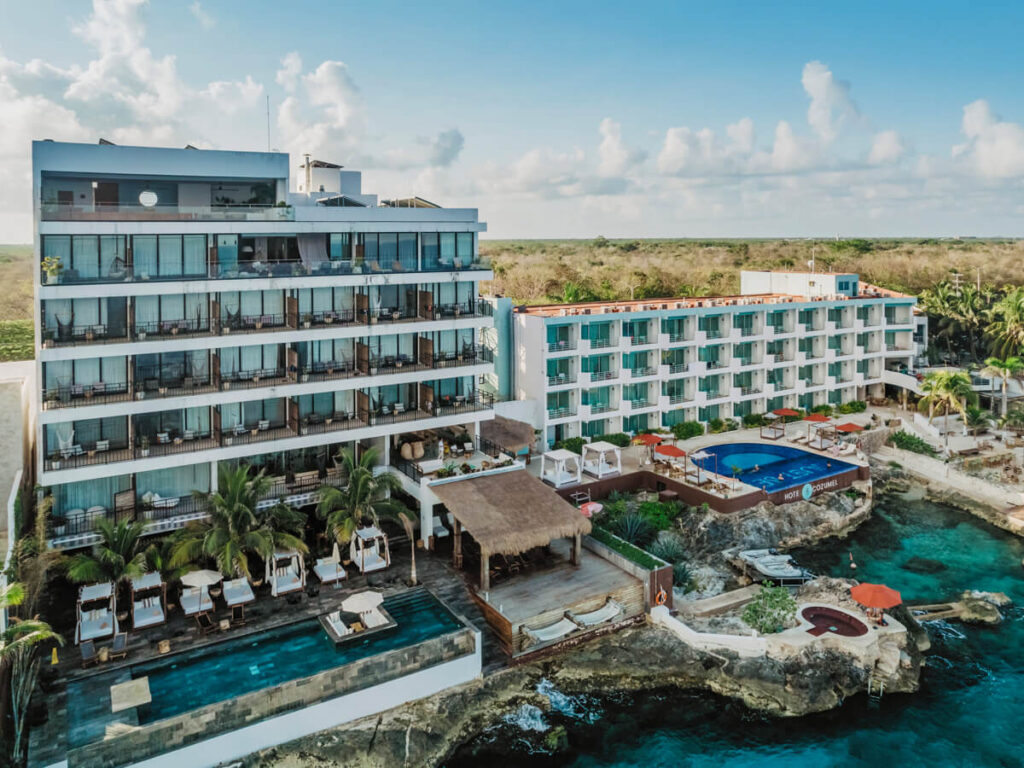
Where you stay in Cozumel can make a surprisingly big difference to a diving trip. The main choice is between staying in San Miguel, where you’ll have restaurants, shops, and plenty of independent dive operators within easy reach, or staying further south at a resort. Some of the hotels on the southern coast even have their own dive centres and private docks.
Downtown San Miguel is probably the best option if you want flexibility. You’ll be close to the Cozumel ferry terminal, restaurants, and a good selection of dive shops, so you can compare operators rather than being tied to the one at your hotel. It’s also a better choice if you’re travelling with non-divers or don’t want to eat every meal at your resort. Amigos Hostel is a great budget option, Hotel B Unique is a lovely boutique option, although slightly further north, and Coralia Hotel & Spa by MAO Hotels is our pick for a luxury hotel in town.
This is where we stayed, and we liked being in the heart of the town. But it did mean we had to take a taxi to the marina on the morning of diving days. It wasn’t a problem to flag one down from Avenida Rafael E. Melgar, the main road, or from the dedicated taxi rank, Sindicato de Taxistas de Cozumel, and it costs around $10-15 USD each way. You can also use the Eiby app.
The southwest coast is more convenient if diving is your priority. Several hotels have dive centres on site, and some have their own docks, meaning you can get from your room to the dive boat without travelling into town each morning. You’re also closer to some of the southern reef systems, including Palancar, Colombia, and Punta Sur. The InterContinental Presidente and the Iberostar Waves are good options in this region, both with on-site dive centres.
Diving in Cozumel sustainably
Cozumel’s reefs are incredibly popular with divers, so it’s important to do what we can to travel more responsibly and minimise our impact while we’re underwater. A few simple habits can make a big difference:
What to pack to dive in Cozumel
To ensure a smooth and comfortable experience while diving in Cozumel, don’t forget to pack your:
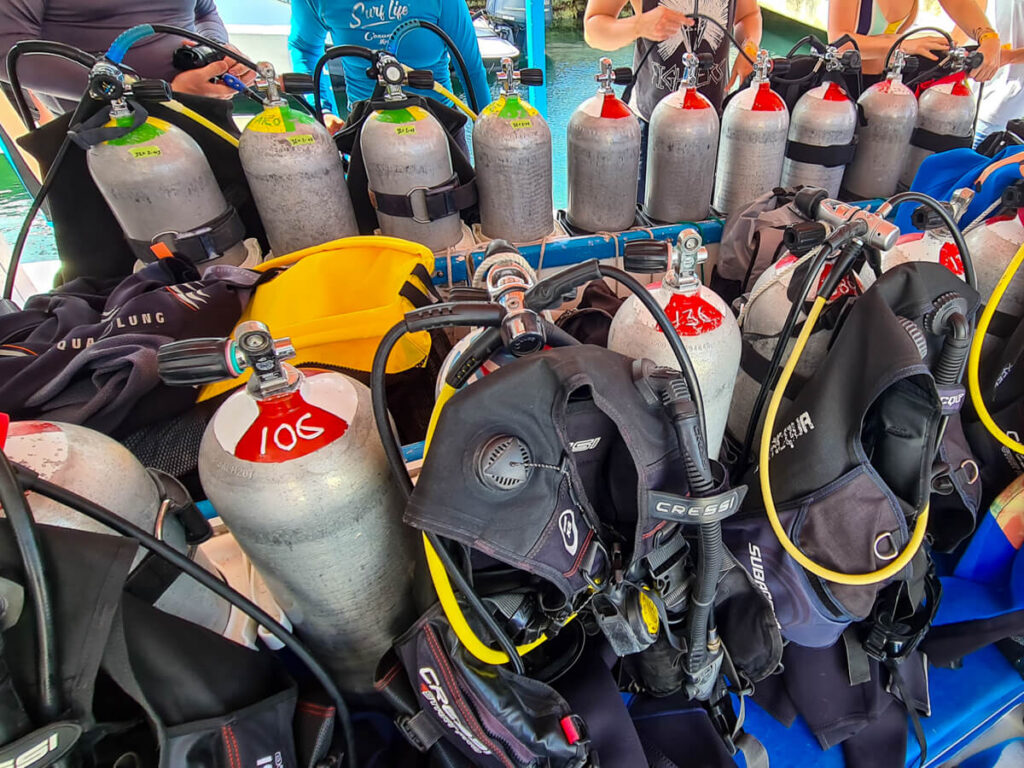
You may also want to pack any dive gear you own, like a dive computer. Most operators provide tanks and weights, so packing your own BCD and regulator is optional, but some frequent divers like to use their own equipment.
A wetsuit of 3mm is usually sufficient for Mexico’s warm waters, though some prefer a shorty, and most operators will include this in your tour price.
Don’t forget to bring your certification cards, a logbook, and a small mesh gear bag or dry bag for convenience on boats.
SCUBA Diving in Cozumel FAQs
To help you plan your diving trip to Isla Cozumel, we’ve answered these frequently asked questions.
Where in Mexico has the best diving?
Isla Cozumel is one of the best places to SCUBA dive in Mexico, especially if you enjoy drift diving, clear water, coral reefs, and wall dives. The island has more than 40 recognised dive sites, ranging from relatively shallow reefs to much deeper walls, so there’s plenty of variety for different experience levels.
Is SCUBA diving good in Cozumel?
Yes, Cozumel is an excellent place to dive, and it’s particularly well known for its drift diving. The current carries you along the reef while the boat follows above, meaning you can cover a lot of ground without constantly swimming against the current. The reefs are home to plenty of marine life, including turtles, rays, moray eels, barracuda, and Cozumel’s endemic splendid toadfish.
What is the best dive site in Cozumel?
Punta Tunich was our favourite, thanks to the combination of coral, marine life, and the feeling of drifting along the reef. We also loved Paso del Cedral and San Clemente, which both offer plenty to see without necessarily requiring the deeper, more demanding diving found at some of Cozumel’s famous walls.
What is the best month to dive in Cozumel?
There’s no single best month for everyone, but we’d choose January to April for a combination of good visibility, comfortable water temperatures, and the chance of seeing spotted eagle rays. Eagle rays are particularly seasonal in Cozumel, with sightings most common between December and March, and January and February often being the strongest months.
What is the best place to stay in Cozumel for SCUBA diving?
If diving is your main reason for visiting, we’d stay somewhere with easy access to the dive shops and marinas around San Miguel de Cozumel, or choose a dive resort with its own dock. Staying further south can be convenient if your operator departs from one of the southern marinas, while staying in town gives you a much better choice of restaurants, shops, and other facilities when you’re not underwater.
Is Roatán or Cozumel better for SCUBA diving?
Both are excellent diving destinations, but they offer a slightly different experience. Cozumel is the better choice if you specifically want drift diving, with its current-swept reefs and walls along the western side of the island, while Roatán has a greater variety of wall and shore diving and can be particularly appealing if you want to do lots of dives without relying as heavily on boat trips. We’d choose Cozumel for its effortless drift diving and Roatán if variety and easy shore access are higher priorities.
How deep is diving in Cozumel?
Cozumel has dives for a wide range of experience levels, with sites ranging from around 3 metres (10 ft) to more than 30 metres (100 ft). Many of the more accessible reefs sit between around 10-20 metres (33-66 ft), while sites such as Punta Sur and some of the deeper Palancar and Colombia sections go considerably deeper. You don’t need to dive deep to experience Cozumel’s reefs, though, and we’d recommend choosing sites based on your certification and comfort with the current rather than simply chasing depth.
Read next:
A Traveller’s Guide to Cozumel: Mexico’s Caribbean Island Paradise
11 Cool Things to Do on Isla Cozumel + 4 NOT to Do
9 Best Cozumel Dive Shops Compared + Who We Chose
How to Get to Isla Cozumel: Ferry vs Flying + Getting Around
