The Ultimate Guide to SCUBA Diving in Isla Mujeres

Discover the best SCUBA diving in Isla Mujeres, from the top sites to the best tours, in this complete guide.

This post may contain affiliate links, which means we might earn a small commission on anything purchased through these links at no extra cost to you. Learn more on our disclaimer page.
SCUBA diving in Isla Mujeres offers some of the most accessible underwater experiences in the Mexican Caribbean, from gentle reef dives to thrilling encounters with eagle rays and sea turtles. Just off the island’s shores, you’ll find clear visibility, warm water, and shallow sites perfect for beginners, alongside deeper wreck dives and unique attractions like MUSA, the underwater sculpture museum.
But with so many operators and mixed-quality tours, choosing the right dive shop is key, especially if you want safe equipment, small groups, and environmentally responsible practices. Discover the best SCUBA diving on Isla Mujeres, from the top sites and what marine life you can see to tips for picking a reputable operator and practical advice for diving safely, in this complete guide to the underwater world.
Isla Mujeres SCUBA Diving at a glance

More from Isla Mujeres
Is Isla Mujeres good for SCUBA diving?
With easy conditions, warm water, shallow, sunny reefs, and vibrant marine life, it’s no wonder Isla Mujeres is one of Mexico’s best islands and a great place to SCUBA dive. Most sites here are shallow, at around 8-15 metres (25-50 ft), so you can enjoy long bottom times, bright natural light, and colourful corals.
Isla Mujeres sits at the start of the Mesoamerican Reef, the second-largest reef system in the world. It stretches 625 miles (1000 km), all the way from Mexico to Honduras, past Belize and Guatemala, is a UNESCO World Heritage site, and a bucket list dive destination.
Visibility is usually excellent during the dry season, often reaching 20-30 metres (65-100 ft), making it perfect for beginners or for divers who enjoy relaxed reef exploration. Currents are minimal, especially on calmer days, with some gentle drift options for more advanced divers. Water temperatures stay comfortably warm year-round, generally ranging from 26-29°C (79-84°F) in the dry season and only dropping slightly in winter, so most divers don’t need more than a shortie wetsuit.
We were so surprised by how colourful the coral was at times – it felt like diving into a PADI advertorial catalogue. With walls of striped grunts so thick they obscure the reef, sandy bottoms perfect for animals like stingrays and turtles, and unique attractions like the submerged sculptures of the underwater museum, diving is one of the best things to do in Isla Mujeres.

Isla Mujeres SCUBA Diving Map
We’ve pinned the top diving sites in Isla Mujeres on the interactive map below.
The best Isla Mujeres diving tours
Your experience on an Isla Mujeres diving tour can vary greatly depending on the company. Some dive shops simply shuttle you to a reef, pack the boat with people, and rush you through the route with little-to-no information, while others actively encourage harmful practices like touching and feeding marine life. Here are our top picks with good companies:
We’ve shortlisted the top SCUBA diving tours on Isla Mujeres:

Isla Mujeres Dive Sites
Diving around Isla Mujeres is calm, colourful, and incredibly accessible, with most sites just a short boat ride from shore. It’s far more immersive than snorkelling in Isla Mujeres, with the chance to go deeper, longer, and to see more. The reefs here offer everything from shallow coral gardens to gentle drifts, ideal for beginners and casual divers.

Planning a trip to Cancún?
Mexico is a very popular destination, so be sure to book in advance as early as possible!
Top Experiences in Cancún
Top Hotels in Cancún
Transport in Cancún
Best eSIM for Cancún
1. Manchones Reef
Manchones National Park Dive Site is the classic Isla Mujeres reef dive. A wide, shallow coral garden with depths around 8-12 metres (26-40 ft), it is perfect for long, relaxed dives. This is one of the most popular sites for beginners taking a SCUBA certification course on Isla Mujeres, but as more advanced divers, we were never bored.
Visibility is usually excellent, and the reef is full of life, from schools of grunts and snappers to turtles, rays, and parrotfish grazing on the coral. The reef itself has a mix of sandy patches and coral heads. We weren’t expecting much, but we were shocked by how colourful the corals are, especially considering global bleaching that’s becoming more and more common.
Manchones Reef is also one of the best places to spot larger sponges, soft corals, and the occasional nurse shark resting under ledges. We saw a variety, including elkhorn, brain, and fan corals.

2. MUSA
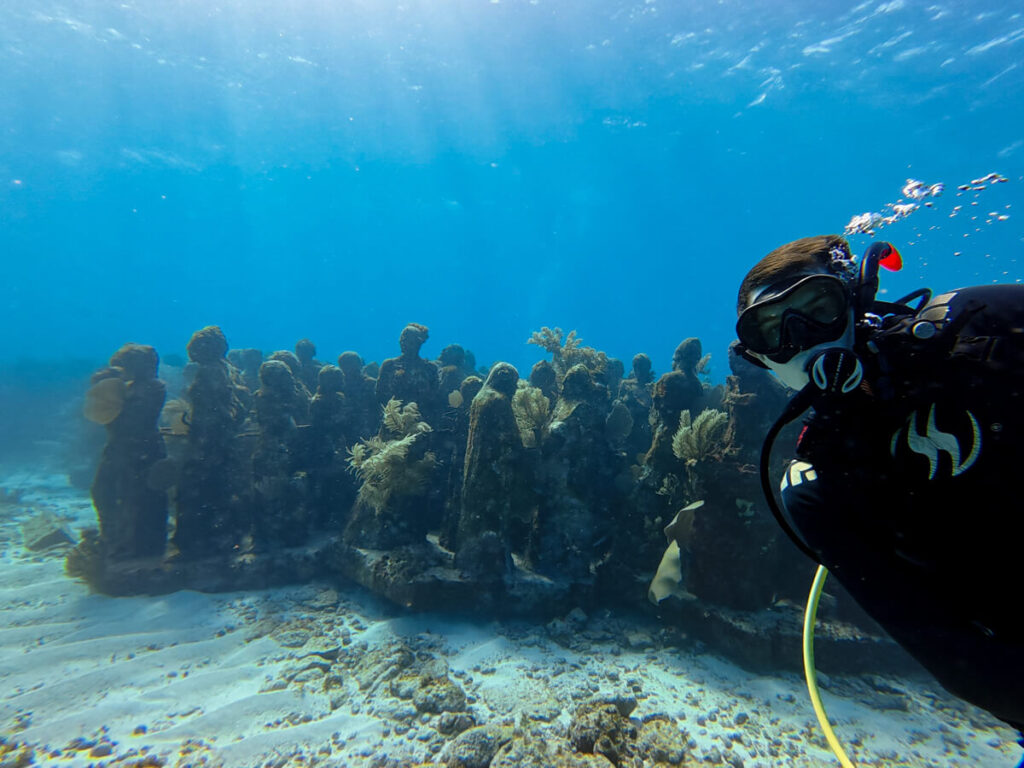
MUSA Underwater Museum is like no other dive site: a submerged museum with more than 500 sculptures, it was designed to act as an artificial reef. The statues sit near the Manchones Reef, at around 8-10 metres (26-33 ft) deep, letting you explore the installations at a relaxed pace.
Many of the sculptures are now covered in algae, sponges, and small corals, attracting schooling fish and juvenile reef species. They can be pretty eerie as they appear out of the gloom, but exploring them on a dive is a really unique experience.
MUSA is a great site for underwater photography, especially for divers who love atmospheric shots. Because it’s a sandy bottom, you might see animals like turtles and stingrays in the nearby area (we saw both on our MUSA dive).

3. Isla Contoy
While not actually at Isla Mujeres, Isla Contoy is a super underrated destination and is easily accessible from Isla Mujeres. A protected island, Isla Contoy is home to a variety of species, being a bird sanctuary and turtle nesting area (which means high chances of seeing turtles in the water). The waters around Isla Contoy sit at the very start of the Mesoamerican Reef, and are an important habitat for seasonal whale sharks and manta rays, too.
The reefs here are healthier and more vibrant than more touristy sites, with larger coral structures, sea fans, and plenty of schooling fish. Depths vary by site but still tend to be accessible, usually in the 10-18 metre (30-60 ft) range.
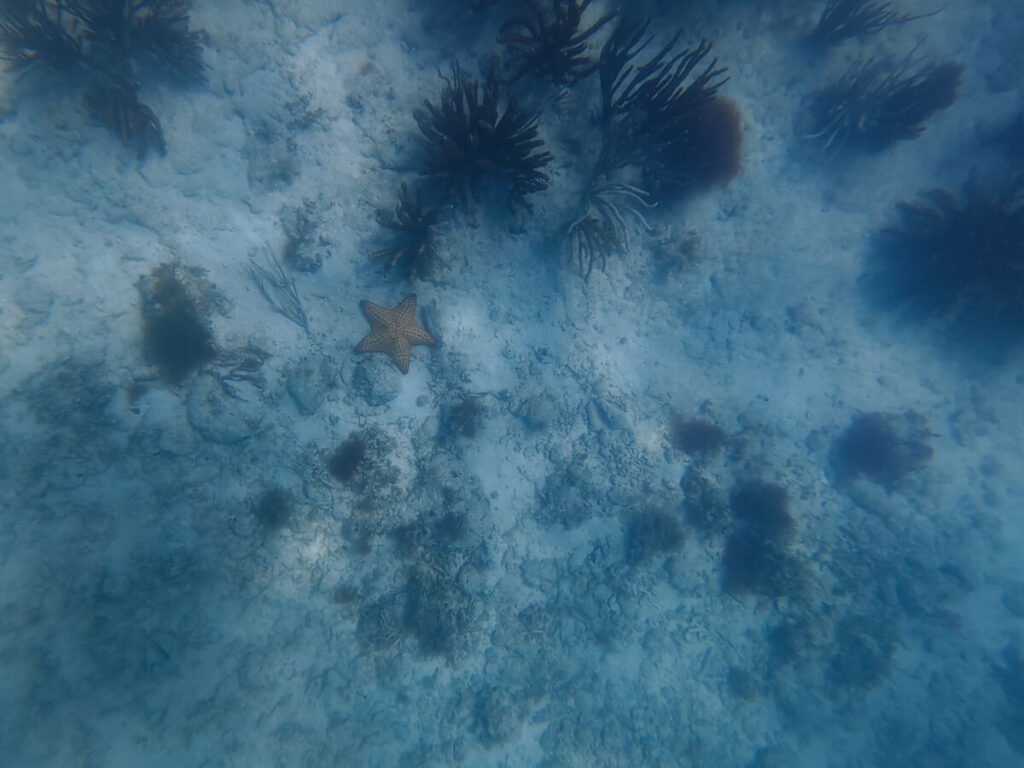
Because these reefs are inside a federally protected national park, you can only dive here with authorised operators like Ocean Tours Mexico, which helps keep the sites pristine. While we didn’t dive here, we did snorkel, so we saw some of the reef, as well as marine life like starfish and the tip of a nurse shark’s tail as it slept under a ledge.
4. Shipwrecks
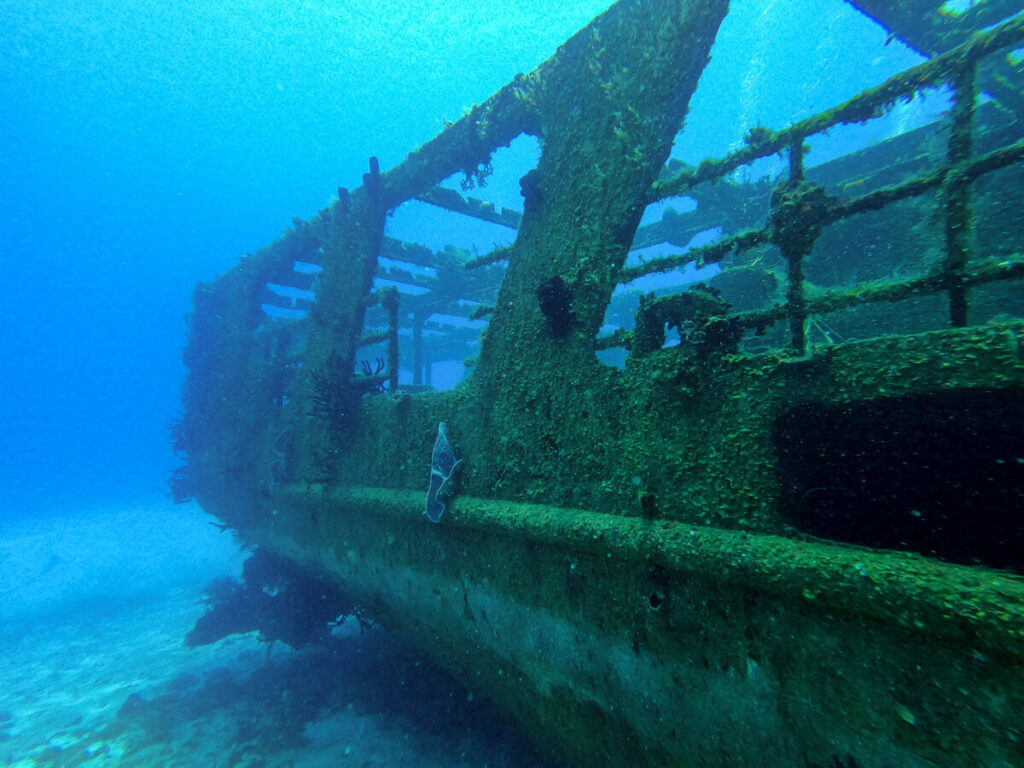
Isla Mujeres has several wreck dives scattered in its waters, including a Navy gunship. These wrecks sit deeper than the nearby reefs, often around 25-30 metres (82-100 ft), making them better suited for deeper dives and more experienced divers.
The C-58 and C-55 shipwrecks are the most popular wreck dive sites near Isla Mujeres. C-58 was intentionally sunk by the Mexican Navy, while C-55 was intentionally sunk to create an artificial reef.
Marine life tends to be bigger around the wrecks, with groupers, barracuda, and jacks often hanging around the structures. You might even see a fever of eagle rays or dolphins. Currents can be stronger than on the shallow reefs, so the dives feel a little more advanced.
5. Punta Sur
Punta Sur sits at the southern tip of Isla Mujeres and is one of the more adventurous dives in the area, known for stronger currents and more challenging conditions. The reef structure is steeper and more rugged, so it’s a drift dive more suited to advanced divers.
The deeper sections here attract larger fish and more pelagic activity – the area is particularly known for its turtle sightings.
Visibility can be excellent when the current runs clear, giving you sweeping views of the reef. Because conditions can change quickly, Punta Sur is usually only visited when the ocean is calm, so bad weather means you might not be able to access this site.

6. Sleeping Shark Cave
The Sleeping Shark Cave (Cueva de los Tiburones Dormidos) is a fascinating site that was discovered by a local fisherman and later documented by famous explorer Jacques Cousteau and Mexican diver Ramon Bravo. It’s one of the most famous dive stories in the region, known for its shallow caverns where nurse sharks were once found resting in large numbers due to low-oxygen pockets. It’s said they enter a state of drowsiness like nitrogen narcosis, due to the combination of freshwater and saltwater in the caves.
Unfortunately, this phenomenon is far less common today, and sharks are rarely seen in the caves anymore. This site probably isn’t worth visiting if you’re diving on Isla Mujeres, but it is interesting to learn about.

SCUBA diving Isla Mujeres Underwater Museum
The Isla Mujeres section of MUSA is one of the Caribbean’s most unusual dive sites, offering an easy, surreal introduction to the underwater world. It’s the deepest of MUSA’s three sites, and is made for diving.
You’ll drift between concrete figures, cars, and structures that have slowly been colonised by corals, sponges, and schools of small tropical fish. For photographers, the static subjects and bright natural light make it a dream site to practice buoyancy and framing.
Some people find MUSA really boring, and we were a bit worried it would be a tourist trap, but we were the only ones down there on our dive. Being able to explore the submerged sculptures was really fun. Most dives will visit the Volkswagen Beetle, with its ironic ‘Think Blue’ message carved into the side, and The Silent Evolution, the largest underwater sculpture installation with hundreds of life-sized human figures, created by sculptor Jason deCaires Taylor. You might also have time to see other nearby sculptures or detour off to the Manchones Reef to see coral and try to spot some animals.

What can you see SCUBA diving in Isla Mujeres?
Isla Mujeres diving is known for calm reefs, sandy-bottom sites, and occasional big-animal sightings. You might see:

SCUBA diving in Isla Mujeres from Cancún
Isla Mujeres is one of the easiest dive destinations to visit from Cancún, and many travellers base themselves on the mainland and simply hop over for the day or take a diving tour of Isla Mujeres from the Hotel Zone.
The Isla Mujeres ferry from Puerto Juárez takes around 20 minutes, and most dive shops on Isla Mujeres will schedule morning and afternoon journeys that fit easily into a day trip. Some Cancún-based dive centres also run direct boat transfers, saving you the ferry but adding to the cost.
The diving itself is much calmer than many spots along the mainland coast, making it a good match for beginners staying in Cancún hotels. Just keep in mind that weather conditions can affect ferry schedules and boat trips, so it’s best to avoid booking your itinerary up completely – leave a little flexibility to reschedule, especially in the wet season.

How much does it cost to SCUBA dive Isla Mujeres?
A typical two-tank dive on Isla Mujeres costs around $100-150 USD, depending on the operator, equipment rental, and whether marine park fees are included.
Full gear rental usually adds $15-25 USD a day, while private guides or small-group upgrades cost more.
Discover Scuba Diving (no certification required) normally ranges between $110-150 USD, including pool or shallow-water training. While certification courses (like Open Water) on the island typically fall between $420-550 USD, depending on class size and materials. It’s not as cheap as places like Utila, but it is pretty on par with the rest of Mexico, like when we went SCUBA diving in Cabo.
When is the best time to go SCUBA diving in Isla Mujeres?
The best time to dive Isla Mujeres is during the dry season from November to April, when the Caribbean Sea is calmer, visibility is at its clearest, and winds are lighter. Water temperatures hover around 26-29°C (79-84°F) most of the year, dropping just a couple of degrees in winter, meaning it’s lovely and warm.
Winter brings the chance of seeing spotted eagle rays, which migrate through deeper channels – we saw one in February.
Summer is known for its warm, glassy seas and the iconic whale shark season (roughly mid-May to mid-September), although it can be hotter on land and occasionally affected by sargassum. It’s also worth noting that you can’t dive with whale sharks – you need to book a separate snorkel tour. This is also the wet season. Rain showers are brief and rarely affect diving conditions dramatically, but larger swells can stop you from being able to dive certain more advanced sites.

Is SCUBA diving in Isla Mujeres worth it?
We absolutely think diving on Isla Mujeres is worth it – if you have the right expectations. If you enjoy warm water, easy conditions, and colourful shallow reefs, Isla Mujeres offers excellent value and very accessible diving. It’s especially worth it for beginners or anyone who prefers relaxed underwater time over deep or technical sites. Even though we aren’t beginners, we do love a shallow dive on a sandy bottom, so it fit us perfectly.
In terms of animals, you won’t find the larger pelagics that inhabit some other areas. You can’t dive with whale sharks, and you’re unlikely to see them on a dive (although it’s not impossible for one to pass by). But you’ll still see reef life like lots of fish and occasional turtles, stingrays, and eagle rays. Diving in Cozumel is better for sharks, like gentle nurse sharks, but you might spot one if you’re lucky.
However, if you’re an advanced diver, prefer deeper dives, or have lots of experience with colourful corals and large pelagic species, diving in Isla Mujeres might not be for you. The reefs aren’t as dramatic as Cozumel‘s walls or as pristine as remote atolls you might see diving in Belize, but the combination of MUSA, marine life, and calm conditions makes it a fun and varied destination. We would say it’s comparable to Roatan‘s shallow dives, but it lacks the real drop-offs and variety the island offers.
Also, because you’re that extra journey from the mainland, cenote SCUBA diving is less accessible – it’s better to go SCUBA diving in Cancún for cenotes.

What is better, Cozumel or Isla Mujeres?
Isla Mujeres and Isla Cozumel both offer incredible Caribbean water, but they’re very different diving experiences.
Cozumel is the clear winner for serious divers, with towering coral walls, fast drifts, and some of the best visibility in the region, often exceeding 30-50 metres (100-160+ ft). Isla Mujeres, on the other hand, is perfect if you want shallow diving with good visibility of around 20-30 metres (65-100 ft) or to learn as a beginner, without having to venture further than Cancún.
Isla Mujeres is better if you want:
Cozumel is better if you want:
Pick Cozumel for more variety, diving holidays, and big underwater scenery. Choose Isla Mujeres for convenience, calm diving, and a more laidback beach holiday.

Diving on Isla Mujeres sustainably
Diving around Isla Mujeres is best experienced by exploring the underwater world without harming the reef or its inhabitants. By diving responsibly, you help ensure Isla Mujeres remains a vibrant marine habitat for years to come. Here are some top tips:

What to pack to dive on Isla Mujeres
To ensure a smooth and comfortable experience while diving in Isla Mujeres, don’t forget to pack your:
You may also want to pack any dive gear you own, like a dive computer. Most operators provide tanks and weights, so packing your own BCD and regulator is optional, but some frequent divers like to use their own equipment.
A wetsuit of 3mm is usually sufficient for Mexico’s warm waters, though some prefer a shorty, and most operators will include this in your tour price.
Don’t forget to bring your certification cards, a logbook, and a small mesh gear bag or dry bag for convenience on boats.

SCUBA diving in Isla Mujeres Video
Check out our video of SCUBA diving in Isla Mujeres and be sure to follow us on Instagram for similar destinations!
SCUBA diving in Isla Mujeres FAQs
Now you know all about diving in Isla Mujeres, we’ve answered these frequently asked questions to help you plan your trip.
Are there coral reefs in Isla Mujeres?
Isla Mujeres has several healthy, shallow coral reefs nearby that are easy to access and great for both new and intermediate divers. The most famous is the Manchones system, a sprawling reef with sea fans, sponges, and plenty of colourful fish. While it’s not as dramatic as Cozumel’s walls, the coral here is vibrant in patches and ideal for relaxed reef dives. You’ll also find coral growth around artificial structures like MUSA and shipwrecks, where sculptures have developed their own mini-ecosystems.
Is SCUBA diving in Isla Mujeres safe?
SCUBA diving in Isla Mujeres is generally very safe, especially if you choose a licensed, reputable dive operator. The conditions are typically gentle, with minimal currents, good visibility, and beginner-friendly depths. That said, safety isn’t just about the ocean, it’s also about choosing an operator that prioritises proper briefings, equipment checks, and small group sizes. A responsible shop will talk you through signals, entry techniques, and emergency procedures without rushing you. It’s also essential to follow standard SCUBA rules, like not diving if you’re congested, not drinking alcohol before or after, staying hydrated, sticking close to your buddy, and monitoring your air frequently. And as always: don’t fly within 24 hours after diving – we met someone on a tour who had no idea how dangerous it was until we explained it, and he ended up rescheduling his same-day flight on the spot.
Can you learn to SCUBA dive in Isla Mujeres?
Isla Mujeres is a brilliant place to learn to dive thanks to its warm, calm, and shallow conditions. Many dive shops on the island offer PADI Open Water and Discover Scuba Diving (DSD) courses, so you can either try a beginner experience or get fully certified. Training dives usually take place on the Manchones Reef, where depths are manageable, and visibility is clear enough for new divers to feel relaxed. Instructors here are used to teaching complete beginners, so the atmosphere is very patient and low-pressure.
Is SCUBA diving in Isla Mujeres suitable for children?
Diving can be suitable for children, but it depends on their age, comfort in the water, and the operator’s policies. Most dive shops offer PADI Bubblemaker or junior programs for kids aged 8-10, which involve shallow, supervised dives in very calm conditions. Full Junior Open Water certification starts at age 10, but only with strict depth limits and close instructor supervision. Isla Mujeres’ gentle reefs and shallow sandy areas make it a better-than-average location for young divers, as there’s very little current and plenty of easy wildlife to spot.

Read next:
How to Visit the MUSA Underwater Museum
The Ultimate Guide to Snorkelling in Isla Mujeres
Is Isla Mujeres Worth Visiting? Our Travel Guide
11 Top Things to Do on Isla Mujeres + What NOT to Do
6 Best Beaches on Isla Mujeres + 5 to Avoid
