30 Animals in Mexico’s Yucatán Peninsula and Where to Find Them

Discover fascinating animals in East Mexico that you can see, and the best places to find them, in this wildlife guide.
This post may contain affiliate links, which means we might earn a small commission on anything purchased through these links at no extra cost to you. Learn more on our disclaimer page.
Mexico’s Yucatán Peninsula isn’t just good for beach resorts and Mayan ruins – it’s also home to a surprisingly diverse range of wildlife, from tropical birds and marine life to monkeys, reptiles, and even elusive big cats. But knowing where to actually see these animals (and how to do it responsibly) isn’t always obvious, especially with so many tours and attractions marketing wildlife experiences.
We’ve travelled throughout the region, from coastal areas and cenotes to jungle reserves and quieter towns, in search of the best ethical wildlife encounters. Discover the most interesting animals in the Yucatán Peninsula, and where you’re most likely to see them in the wild, in this wildlife watching guide.

More from Mexico’s Yucatán Peninsula
What animals can you see in Mexico’s Yucatán Peninsula?
With a mix of dry tropical forest, coastal wetlands, mangroves, coral reefs, and underground cave systems, the Yucatán is surprisingly diverse. Mexico‘s portion might not have the dense, untouched rainforest of Guatemala or the same reef accessibility as Belize, but it’s still home to some incredible wildlife if you know where to look.
From swimming alongside sea turtles and spotting flamingos in bright pink lagoons to hearing howler monkeys roar through the treetops and catching glimpses of crocodiles in mangroves, there’s far more here than just beaches and cenotes. Knowing when to visit Mexico’s Yucatán Peninsula for wildlife is just as important as knowing where to go. Read on to find out what cool animals you might spot on your trip and how to do it responsibly.

Marine animals in Mexico’s Yucatán Peninsula
Marine life is easily the highlight of the Yucatán, and the aspect that kept drawing us back for trip after trip. The region sits along the Mesoamerican Reef, the second-largest barrier reef system in the world, and its warm Caribbean waters attract everything from tiny reef fish to massive ocean giants. Here are some marine animals in Mexico’s Yucatán Peninsula, where to find them, and the most responsible tours you can take to see them.
1. Whale sharks
Swimming with whale sharks is one of the most famous wildlife experiences in the Yucatán, particularly around Isla Holbox, Isla Mujeres, and Isla Contoy.
These gentle giants are the largest fish in the world, and gather in a secret offshore spot to feed on plankton blooms in warm, nutrient-rich waters. Numbers peak between June and September.
Despite their size (they can grow up to 12 metres/40 ft), they’re completely harmless to humans, feeding by filtering tiny organisms through their wide mouths.
That said, whale shark tourism here has become very busy, especially in peak season. Tours usually involve heading out early in the morning, and conditions can be quite choppy, so it’s best to be a confident swimmer. Sadly, it’s not uncommon to see dozens of boats surrounding a single shark, which can disrupt their natural behaviour.
If you’re keen to do it, be sure to research companies and choose a certified, responsible operator like:
If you’re looking for a more controlled and often more ethical experience, swimming with whale sharks in La Paz in Baja California Sur is generally considered a better alternative, with stricter regulations and smaller group sizes.
It’s also worth noting that for traditional whale watching in Mexico (humpbacks, grey, and blue whales, etc.), you’ll need to head to the Pacific Coast – whale watching in Baja California Sur is far superior to anywhere else.

2. Sharks
The Yucatán’s Caribbean waters are home to several shark species, although most encounters happen while diving rather than snorkelling. Some of the species you might encounter include:
Nurse sharks are most commonly seen, especially off Isla Cozumel, where they’re often seen resting on the seabed. We saw our first nurse shark diving in Cozumel with Cozudive. You might also see them on advanced SCUBA dives off Isla Mujeres.
Caribbean reef sharks are more active and are usually spotted on deeper reef dives, particularly around Cozumel.
Bull shark dives in Playa del Carmen are particularly popular from November to March, but are baited experiences, so we’ve avoided it ourselves.
If you’re specifically interested in seeing a wider variety of sharks, Mexico’s Pacific side, especially remote areas like the Revillagigedo Archipelago or liveaboards to Cocos and Guadalupe Islands, offer far better opportunities.

3. Sea turtles
The Yucatán Peninsula is one of the most important nesting and feeding areas for sea turtles in the Caribbean. You can see several species here, including:
Places like Akumal are famous for turtle encounters, where green turtles graze on seagrass just offshore. But the experience is very popular and not well-regulated, so we don’t recommend swimming with turtles in Akumal.
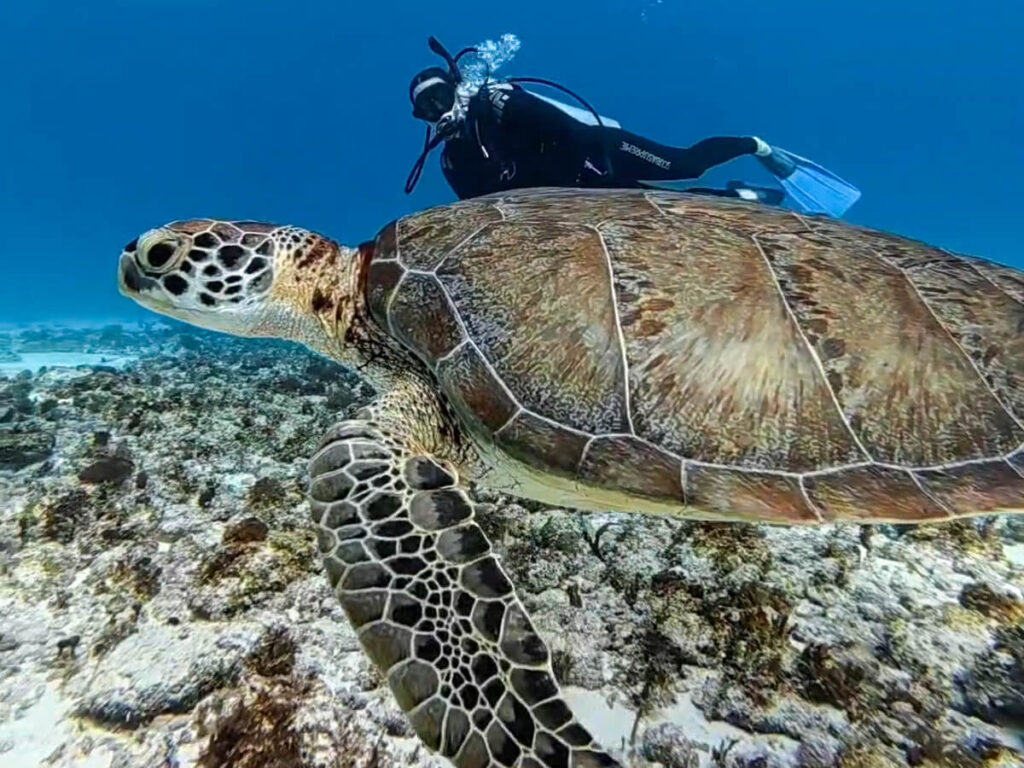
Instead, we’d recommend SCUBA diving in Cancún. We took a trip which included the MUSA Underwater Museum and local Manchones Reef and saw one crossing the sandy seafloor. Turtles can also be seen while snorkelling reefs off places like Cozumel and Puerto Morelos.
Nesting season runs roughly from May to October, when female turtles come ashore at night to lay eggs on protected beaches. Key nesting sites include Xcacel-Xcacelito, Mahahual, and parts of Tulum. Conservation programs in these areas help protect eggs from poaching and predators, but it’s important to choose ethical, regulated experiences if you’re interested in taking part in a release.
4. Dolphins
Dolphins are present along the Yucatán coast, although sightings are less predictable than in some other parts of the world.
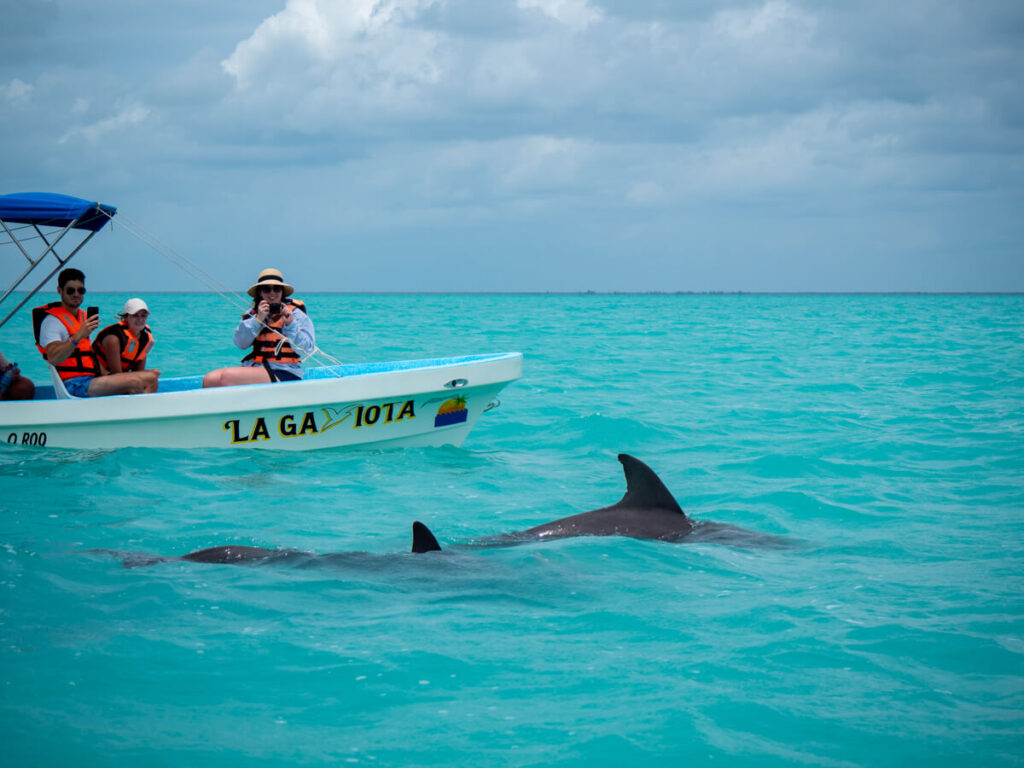
Bottlenose dolphins are the most commonly seen species and are often spotted riding the bow waves of boats or surfacing in small pods near the reef. They’re highly social animals, and if you’re lucky, you might see them leaping or playing in the wake. We saw a pod in the milky blue sea off Sian Ka’an Biosphere Reserve.
Sightings tend to be more likely during the dry season (November to May), when calmer seas make it easier to spot movement on the surface, but they’re present year-round.
It’s worth noting that captive dolphin experiences, which are still advertised in the region, are now illegal in Mexico. Wild encounters, even if less predictable, are far more rewarding and ethical.

5. Manatees
Manatees are one of the rarest animals you can see in Mexico’s Yucatán region, and spotting one is more a matter of luck than planning. The West Indian manatee lives here in calm, shallow waters where seagrass is abundant.
Your best chance of seeing one is on a Sian Ka’an Biosphere Reserve tour, where local guides are experts at spotting signs like a tiny nose surfacing to breathe (we saw 3 on one trip!).
They’re also found in the Costa Maya – in Chetumal Bay and around Laguna Guerrero, close to the Mexico-Belize border, are good spots to check out if you’re going that far south.
These animals are slow-moving and incredibly shy, often surfacing briefly for air before disappearing again. Unlike snorkelling with manatees in Belize, where visibility is amazing, sightings here usually happen from above the surface.
Boat traffic and habitat loss have impacted their numbers, which is why they remain so elusive.

6. Rays
Rays are some of the most graceful animals you can encounter in the waters off eastern Mexico, often seen gliding effortlessly over sandy seabeds or reef edges.
You don’t get the flying mobula rays of Los Cabos here, but species you might see include:
Spotted eagle rays are a highlight for many people, with their distinctive white spots and long tails. We had no idea you could see them in Mexico, but our divemaster had lots of videos of them off Cancún. They’re usually seen in deeper water or passing over reef drop-offs, sometimes in small groups.
Southern stingrays are far more common and are often spotted resting partially buried in the sand in shallow areas. If you’re snorkelling in Cancún or in calm bays along the coast, there’s a good chance you’ll see one on the seabed.
While rays have a reputation for being dangerous because of their barbed tails, they’re not aggressive and will only react if threatened – giving them space is all that’s needed.

Other marine life in East Mexico
Beyond the larger, more recognisable species, the Yucatán’s marine ecosystems are full of smaller creatures that are just as important to the reef. You’ll likely encounter:
These smaller animals form the foundation of the reef ecosystem, supporting everything from fish populations to larger predators. Even on a simple snorkelling trip, there’s a constant level of activity if you take the time to look closely.

Mammals in Mexico’s Yucatán Peninsula
Wildlife on land in Mexico’s Yucatán can feel a little more elusive compared to places like Costa Rica. But the peninsula is still part of the vast Maya Forest, one of the largest remaining tropical forest systems in the Americas, and it supports an impressive range of mammals.
7. Monkeys
The Yucatán Peninsula is home to two monkey species:
True to their name, howler monkeys are usually heard long before they’re seen. Their deep, roaring calls can travel several miles through the forest, especially in the early morning, and it’s one of those sounds that instantly makes a place feel wild. They spend most of their time resting high in the canopy, feeding on leaves and conserving energy, so sightings often involve scanning treetops rather than looking at ground level.
Spider monkeys are much more active and agile, swinging through the canopy with long limbs and prehensile tails. They move quickly and often in small groups, which makes them slightly harder to follow but more exciting to watch when you do spot them.
One of the best places to see both species of monkey is Punta Laguna Nature Reserve, where local guides lead you through the forest and know exactly where the troops tend to gather. Early morning visits give you the best chance, when the monkeys are most active and vocal.
You’ll also sometimes hear or see them around ruins like Cobá or Calakmul, where patches of forest remain relatively undisturbed.
It’s worth being cautious around so-called monkey sanctuaries in more tourist-heavy areas like Akumal. Most prioritise close encounters, tourist experience, and profit over animal welfare, and the experience can contribute to unethical wildlife tourism – very different from seeing them in the wild.

8. Coatis
Coatis, or tejones as they’re known locally, are some of the most commonly seen mammals in the Yucatán, especially around ruins and forest edges. They’re part of the raccoon family and have long, flexible snouts they use to forage for insects, fruit, and small animals. You’ll often spot them moving in groups, known as bands, made up mostly of females and juveniles. As they move through the undergrowth, they can be surprisingly noisy, rustling leaves and digging through the soil.
We didn’t see a coati until we reached Tikal in Guatemala, but we wish we’d known you can see them in Parque Ecológico Kabah in Cancún. The trails in the park cut through patches of forest where coatis are used to human presence, so sightings are fairly common, especially in the morning.
They’re also frequently seen around archaeological sites, where open spaces meet forest edges, ideal for foraging. Like in other parts of Central America, they can become a bit too comfortable around people, especially if food is involved. It’s important not to feed them, as it can lead to aggressive behaviour and health issues.

9. Agoutis and pacas
Agoutis and pacas are small, ground-dwelling mammals that you’ll usually only notice if you’re paying close attention to the forest floor. Both species play an important role in the ecosystem as seed dispersers. Agoutis are known for burying seeds and forgetting about them, which helps new trees grow, while pacas spread seeds through their diet.
Agoutis are the more commonly seen of the two. They’re slim, fast-moving rodents with long legs and a slightly deer-like appearance. Pacas, on the other hand, are larger and much more elusive. They have a stockier build and distinctive white spots along their sides, but because they’re mostly nocturnal, sightings during the day are rare.
You’ll sometimes spot them darting across trails or foraging in clearings, particularly around ruins or quieter forest paths. But most tourists won’t see one in Mexico.

10. Peccaries
Peccaries are often described as pig-like mammals, but they’re actually a separate group entirely. In the Yucatán, you’ll find two species:
Collared peccaries are more commonly seen and tend to move in smaller groups. White-lipped peccaries are larger and travel in much bigger herds, sometimes numbering in the dozens, but they’re also more sensitive to disturbance and therefore harder to encounter.
These animals are usually heard before they’re seen. As they move through the forest in groups, they create a lot of noise, snapping twigs, rustling leaves, and occasionally grunting to communicate with each other.
Calakmul Biosphere Reserve is one of the best places to potentially see them, as it offers the large, undisturbed forest areas they need. The combination of dense vegetation and limited human presence makes it one of the last strongholds for white-lipped peccaries in the region.
If you do come across a group, it’s best to keep your distance. While they’re not typically aggressive, they can be unpredictable if startled.

11. Armadillos
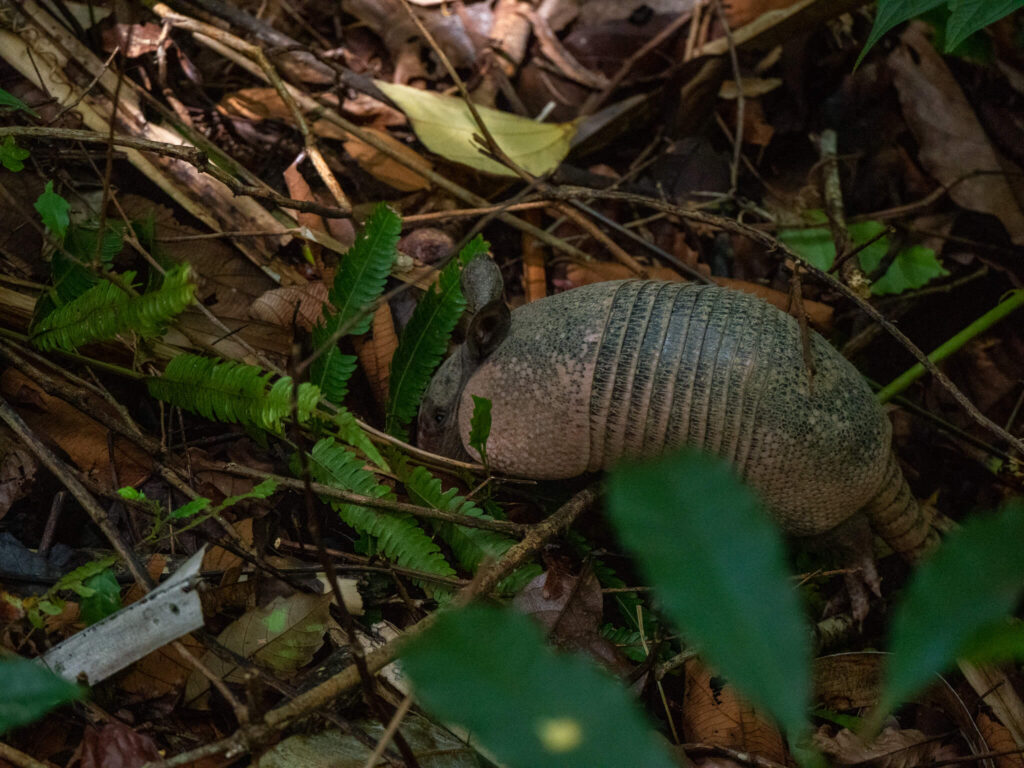
The nine-banded armadillo is found throughout the Yucatán, although sightings are relatively uncommon due to its nocturnal habits.
These small, armour-plated mammals spend most of their time digging for insects, using their strong claws to break into soil and leaf litter. You’ll often hear them before you see them – we spotted them in Manuel Antonio National Park in Costa Rica thanks to a loud rustling sound off the side of the trail.
Your best chance of spotting one in Mexico is on a night walk in forested areas or quiet reserves, where they emerge to forage. During the day, they usually remain hidden in burrows or dense undergrowth.
12. Tapir
The Central American tapir is one of the most elusive and rare animals in the Yucatán. They’re large, heavy-bodied mammals with a distinctive, flexible snout, often described as looking like a mix between a pig and a small elephant. Despite their size, they’re incredibly quiet and spend most of their time in dense forests or near water sources.
Tapirs are mostly nocturnal and solitary, which makes sightings extremely rare. Calakmul Biosphere Reserve is one of the few places in the region where they still exist in meaningful numbers, thanks to its vast, relatively undisturbed habitat.
If you do manage to see one in the wild, it’s a genuinely special encounter and far less common than almost any other large mammal in the region.

13. Deer
Two species of deer live in the Yucatán:
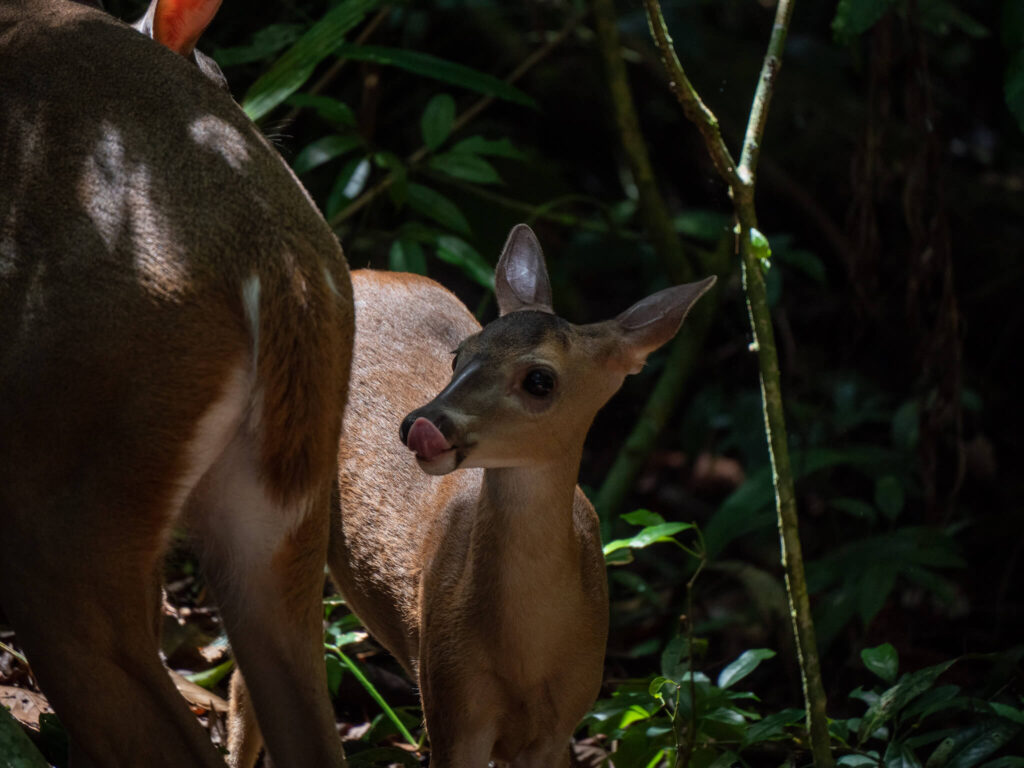
White-tailed deer are the more commonly seen of the two and are sometimes spotted at forest edges, along quiet roads, or even near archaeological sites where they’ve become slightly more accustomed to human presence.
Yucatán brocket deer are smaller, more secretive, and tend to stay deeper within forest cover, making them much harder to see.
Both species are most active during early morning and late afternoon, when temperatures are cooler and they move out to feed.
14. Big cats
The Yucatán Peninsula forms part of the greater Maya Forest, which supports all five of the region’s wild cat species:
Jaguars are the most iconic but also the most difficult to see. They require large territories and tend to avoid human activity, which means sightings are extremely rare. Most travellers will only encounter signs of their presence – tracks, scratch marks, or camera trap images. We got extraordinarily lucky and saw a jaguar cross the road in Cockscomb Basin in Belize.
In East Mexico, Calakmul Biosphere Reserve is widely considered one of the best places in Mexico for potential jaguar sightings, simply because of its size and level of protection. The vast, continuous forest provides the space and prey these big cats need.
Ocelots and margays are smaller and even more elusive, often active at night and rarely seen in the wild. Jaguarundis are unusual in that they’re more active during the day, but they’re still very difficult to spot.
Like across much of Central America, these species face pressure from habitat loss and fragmentation, which makes protected areas like Calakmul increasingly important.

Other mammals in East Mexico
We’d be here all day if we listed every animal in Mexico, but some other mammals you might encounter in Yucatán include:

Reptiles, amphibians, and insects in Mexico’s Yucatán Peninsula
Reptiles are one of the most visible and diverse wildlife groups in the Yucatán Peninsula, largely because of the region’s warm climate, coastal wetlands, mangroves, dry forests, and extensive cave and cenote systems. From crocodiles to iguanas, here are the reptiles you’re most likely to encounter in Mexico’s Yucatán Peninsula.
15. Crocodiles
Mexico’s Yucatán is home to two crocodile species:
American crocodiles are generally found in coastal environments like mangroves, lagoons, and brackish estuaries, while Morelet’s crocodiles are freshwater specialists, preferring rivers, cenotes, and inland wetlands.
One of the best places to see crocodiles is Sian Ka’an Biosphere Reserve, where mangrove channels and coastal lagoons provide ideal habitat. They can also be seen in places like Bacalar’s Lagoon system, where still, turquoise water and dense shoreline vegetation make perfect ambush territory.
They’re most active around dusk and at night, when temperatures drop and they begin hunting fish, birds, and small mammals. During the day, you’ll often see them motionless at the water’s edge, barely distinguishable from logs unless you’re looking closely. Our guide had to point one out to us, and even then, it took us a few minutes to spot!
Despite their intimidating appearance, crocodiles in the region are generally shy and avoid humans. That said, they are apex predators, so maintaining distance is essential, especially near murky water where visibility is low.

16. Lizards
Lizards are everywhere in the Yucatán and are arguably the most frequently encountered reptiles you’ll see while travelling through the region. The most common species include:
Green iguanas are especially noticeable. You’ll often see them draped across tree branches near water, perfectly still as they soak up heat. Despite their prehistoric appearance, they’re herbivores and completely harmless.
Spiny-tailed iguanas are more ground-dwelling and are often seen sprinting across open areas, especially around ruins like Tulum or Cobá, where sun-warmed stone walls create ideal basking spots.
Brown basilisks, also called Jesus Christ lizards, are particularly interesting. They’re famous for their ability to run across water for short distances when startled, using speed and surface tension to escape predators. You’ll usually find them near rivers, cenotes, and forest streams.
Geckos are the most adaptable of all, often appearing around lights at night where insects gather. Anoles, meanwhile, are small, fast-moving lizards you’ll notice darting up tree trunks or fence posts if you slow down enough to look.

17. Snakes
The Yucatán Peninsula supports a wide variety of snake species, although sightings are relatively rare because most are shy, secretive, and avoid human contact. Some of the species you might encounter include:
Boas are among the more commonly reported species and are non-venomous constrictors that typically hunt small mammals and birds. The fer-de-lance is one of the region’s most venomous snakes and is highly reclusive, preferring dense vegetation and low-traffic forest areas.
You likely won’t see one unless you go on a guided forest walk as encounters with snakes are extremely rare for most travellers, but they’re occasionally seen resting in trees or moving slowly along forest floors.

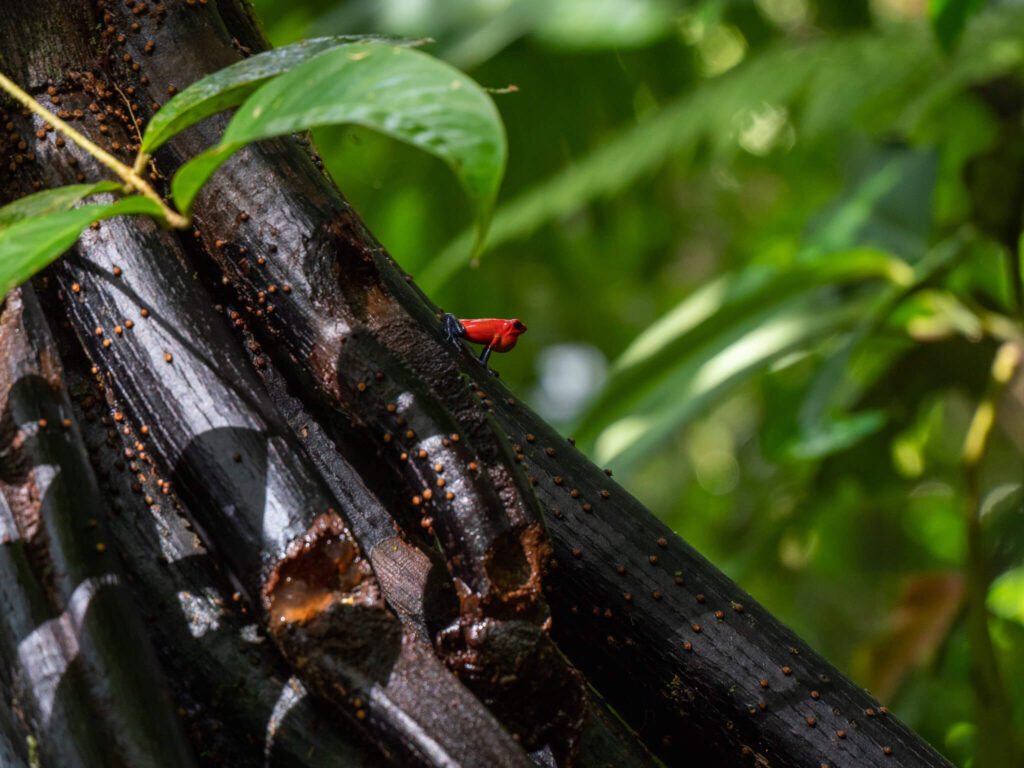
18. Frogs and toads
Amphibians in the Yucatán are closely tied to seasonal rainfall and freshwater environments, particularly cenotes, lagoons, and forest pools. Some of the species you may encounter include:
The rainy season (roughly May to October) is when amphibian activity peaks. After heavy rainfall, the forest comes alive at night with calling frogs, and cenotes often become hotspots of activity due to stable water conditions and humidity.
Cenotes are particularly interesting because they create micro-ecosystems where amphibians, bats, insects, and fish all interact in relatively isolated environments.
19. Insects
Insects are impossible to avoid in the Yucatán, no matter how hard you try, but in many ways, they’re what keep the entire ecosystem functioning. Some of the most notable groups include:
Leafcutter ants are one of the most impressive species to observe. You’ll often see long, organised trails of them carrying bright green leaf fragments back to their nests, where they use the material to farm fungus underground.
Tarantulas are more commonly encountered at night or in undisturbed forest areas, usually spotted at the entrance of burrows or crossing trails slowly. Tour guides might point them out. They’re not normally dangerous, but as an aracnaphobe, I’m glad I’ve not seen one!

20. Butterflies and moths
Mexico’s Yucatán supports a wide range of butterflies and moths, especially in forest edges, clearings, and areas with flowering plants. Some of the most commonly seen species include:
While it’s not the scale of the monarch butterfly migration outside Mexico City, they’re still pretty and colourful. Blue morphos are the most iconic – when their wings are open, they flash an iridescent electric blue, while owl butterflies are named for the large eye-like patterns on their wings.
Butterfly activity tends to peak during the wetter months when vegetation is lush and nectar sources are abundant. Early morning is often the best time to see them warming their wings in sunlit patches before becoming active.

Birds in Mexico’s Yucatán Peninsula
The Yucatán Peninsula is one of the best places in Mexico for birdwatching, thanks to its mix of coastal wetlands, mangroves, forest, and lagoons. With a bit of patience (and ideally binoculars), you can see everything from huge flocks of flamingos to tiny, fast-moving songbirds.
21. Magnificent frigatebirds
Magnificent frigatebirds are one of the easiest coastal birds to recognise, thanks to their long, angular wings and deeply forked tails. They spend most of their time soaring effortlessly above the ocean, rarely flapping, using thermals to stay airborne for hours at a time.
Males are particularly distinctive during breeding season, when they inflate a bright red throat pouch to attract females – something you might see if you visit nesting colonies on offshore islands.
One of the best places to see them is Isla Contoy, a protected island in the north, where large colonies nest in the mangroves. They’re also commonly seen along the coast, especially in the Riviera Maya and around Sian Ka’an and Holbox.

22. Flamingoes
Maybe the most surprising bird species you can see in East Mexico is the American flamingo. They are one of the most iconic birds in the Yucatán, with large flocks gathering in shallow lagoons on the coast. They’re known for their bright pink colouring, which comes from pigments in the algae and crustaceans they feed on.
The best places to see them are Río Lagartos Biosphere Reserve and Celestún (on the Gulf Coast), where thousands of birds gather in nutrient-rich, shallow waters. You’ll often see them wading in groups, sweeping their beaks upside down through the water to filter-feed. You can also see them off Isla Holbox.
Flamingos are present year-round, but numbers tend to peak between April and October. Early morning boat tours usually offer the best chance to see them in calm conditions before the heat and wind pick up.

23. Brown pelicans
Brown pelicans are a constant presence along the Yucatán’s coastline and one of the easiest birds to spot, even if you’re not actively looking for wildlife. They’re often seen gliding low over the water in lines or small groups, using ground effect to conserve energy.
They might not be very exciting to some people, but as Brits, Mexico was one of the first places we had ever seen Pelicans. We loved watching their hunting behaviour as they dived headfirst into the water from several metres up to catch fish.
You’ll see pelicans almost everywhere along the coast, from busy beaches to quiet lagoons, often perched on docks, mangroves, or fishing boats between dives.

24. Herons
Wetlands across the Yucatán are full of wading birds, especially in mangroves, lagoons, and shallow coastal waters. Common species include:
These birds are usually seen standing motionless in shallow water, waiting patiently before striking quickly at fish or small aquatic animals. Because they rely on calm, shallow environments, they’re especially abundant in places like Sian Ka’an (where we saw absolutely loads) and Bacalar.

25. Orioles
Orioles are some of the more colourful and active songbirds in the region, often heard before they’re seen. The Altamira oriole is one of the most distinctive species, with bright orange and black plumage and a habit of building long, hanging woven nests that dangle from tree branches.
They’re commonly found in open woodland, forest edges, and even around towns, especially where there are flowering trees or fruit available. We saw a few around Tulum Mayan Ruins.

26. Ospreys
Ospreys are large fish-eating raptors that are commonly seen along the Yucatán’s coastlines and lagoons. They’re often spotted hovering briefly above the water before diving feet-first to catch fish, a hunting technique that makes them fairly easy to identify even from a distance.
Because they rely on coastal and freshwater environments, you’ll frequently see them around places like Bacalar, Sian Ka’an, and coastal lagoons, often perched on tall, exposed branches or man-made structures.

27. Parrots
Several species of parrots and parakeets live in the Yucatán, adding bursts of colour and noise to the canopy. Species include:
They’re usually heard before they’re seen, moving in noisy flocks between trees, especially early in the morning or late in the afternoon when they gather to feed or roost. We saw a green Yucatán amazon parrot at Bacalar’s Lagoon of Seven Colours.
You might even see the vibrant scarlet macaw, although not in the numbers they’re found in in Honduras. Like in other parts of Central America, many bird species face pressure from habitat loss and the illegal pet trade, which makes seeing them in the wild even more meaningful.

28. Toucans
Toucans are always a highlight if you manage to spot one. The main species found in the Yucatán include:
With their oversized, colourful bills, they’re hard to miss once you see them, but they can be surprisingly well hidden in the canopy. Their croaking calls often give away their location before you actually spot them.
They’re most commonly found in forested areas, including parts of Sian Ka’an Biosphere Reserve and the deeper forest around Calakmul Biosphere Reserve, where fruiting trees are abundant.

29. Vultures and other raptors
Several birds of prey can be seen across the Yucatán, besides ospreys, particularly in open landscapes and along the coast. These include:
Vultures are especially common and are often seen circling overhead, using rising warm air currents to glide with minimal effort. While they’re sometimes overlooked, they play a crucial role in the ecosystem by cleaning up carrion. King vultures are far rarer and usually only found in more remote forest areas like Calakmul.

30. Hummingbirds
Hummingbirds are some of the smallest but most captivating birds you can see in the Yucatán, darting between flowers with rapid wingbeats and flashes of iridescent colour. Several species live in the region, including:
You’ll most often see them hovering around flowering plants in gardens, forest edges, and eco-lodges, especially in quieter areas away from heavy foot traffic. Because they feed frequently throughout the day, they’re one of the few birds you can reliably spot even outside the early morning and late afternoon windows.

Other birds in Mexico’s Yucatán
With nearly 600 bird species, there are way too many to name, but here are a few more you might spot in East Mexico:

Animals in Mexico’s Yucatán FAQs
To ensure an enjoyable experience of wildlife watching in Mexico’s Yucatán, we’ve answered some frequently asked questions.
What animals are in the Yucatán?
Common animals in Mexico’s Yucatán Peninsula that you might see include monkeys, jaguars, crocodiles, sea turtles, dolphins, flamingos, and hundreds of bird species. The region’s mix of forest, wetlands, reefs, and coastline makes it one of the most biodiverse areas in Mexico.
Where to see animals in Yucatán?
The best places to see animals in Mexico’s Yucatán include Sian Ka’an Biosphere Reserve, Calakmul Biosphere Reserve, Río Lagartos Biosphere Reserve, and areas around Bacalar and Isla Holbox. For marine life, the reef off Isla Cozumel, Cancún, and Isla Mujeres is best. These protected areas offer the highest chances of spotting wildlife in natural habitats.
What animals will I see in Riviera Maya?
In the Riviera Maya, you’re most likely to see animals like coatis, iguanas, parrots, dolphins, sea turtles, and tropical fish. Wildlife here is often found around beaches, cenotes, and coastal forest areas.
Are there jaguars in Yucatán, Mexico?
There are jaguars in the Yucatán Peninsula, especially in remote forest areas like Calakmul Biosphere Reserve. However, they are extremely elusive, and sightings are very rare.
Can you see monkeys in Yucatán?
You can see monkeys in Mexico’s Yucatán, particularly howler monkeys and spider monkeys. They’re most commonly found in jungle reserves like Punta Laguna Nature Reserve.
Are there wild monkeys in Riviera Maya?
There are wild monkeys in Riviera Maya, but they’re less commonly seen than in deeper forest areas. You’ll have a better chance of spotting them on guided tours or in reserves like Punta Laguna.
What big cats are in the Yucatán?
Big cats in the Yucatán include jaguars, pumas (mountain lions), ocelots, margays, and jaguarundis. These species live mainly in dense jungle areas and are rarely seen in the wild.
Are there sharks in Yucatán, Mexico?
There are sharks in the Yucatán, including nurse sharks, Caribbean reef sharks, bull sharks (seasonal), and blacktip sharks. They’re found offshore and around coral reefs.
Are there crocodiles in Yucatán, Mexico?
Crocodiles in Mexico’s Yucatán include American crocodiles and Morelet’s crocodiles. They live in lagoons, mangroves, and cenotes, especially in places like Sian Ka’an Biosphere Reserve.
What is the biggest predator in Mexico?
The biggest predator in Mexico is the jaguar, which is also the top land predator in the Yucatán Peninsula. In the ocean, larger predators like sharks and orcas exist, but jaguars dominate on land.
What is the most venomous animal in Mexico?
The most venomous animals in Mexico include the fer-de-lance snake and coral snakes, both found in parts of the Yucatán. Some marine species, like certain jellyfish, can also deliver painful stings.
What is the largest animal in Mexico?
The largest animal in Mexico is the whale shark, which can grow up to 12 metres (40 ft) long and is commonly seen off the Yucatán coast near Isla Mujeres and Isla Holbox.
What is the cutest animal in Mexico?
One of the cutest animals in Mexico’s Yucatán is the coati, known for its playful behaviour and curious nature. Many travellers also find spider monkeys and hummingbirds equally adorable.
What is the rarest animal in Mexico?
One of the rarest animals in Mexico is the jaguar, especially in the Yucatán, where populations are threatened and sightings are extremely uncommon. Other rare species include tapirs and certain endemic birds.
What animal is only found in Mexico?
Animals only found in Mexico include species like the Yucatán jay and several endemic reptiles and amphibians, like the Yucatán spiny-tailed iguana. These species are unique to the peninsula and nearby regions.
What is the most famous animal in Mexico?
The most famous animal in Mexico is arguably the jaguar, due to its cultural importance in ancient Mayan civilisation and its role as the country’s top predator, or the whale sharks, due to its size – swimming with them is a bucket list activity for many.

Read next:
Best Time to Visit the Yucatán Peninsula for Weather and Wildlife
A Complete Guide to Visiting Sian Ka’an Biosphere Reserve
The Truth About Swimming with Turtles in Akumal
A Responsible Travel Guide to Tulum: Worth Visiting?
A Traveller’s Guide to Cancún For First Timers
Is Isla Mujeres Worth Visiting? Our Travel Guide
A Traveller’s Guide to Bacalar
A Comprehensive Guide to Travelling Mexico’s Costa Maya
A Comprehensive Guide to Travelling Mexico’s Riviera Maya
10 Magnificent Things to Do in Mexico’s Riviera Maya + 3 NOT to Do
