The Ultimate Guide to Snorkelling in Cancún

Discover the best snorkel sites in Cancún and tours to take in this guide.

This post may contain affiliate links, which means we might earn a small commission on anything purchased through these links at no extra cost to you. Learn more on our disclaimer page.
Snorkelling in Cancún is one of the easiest ways to experience the region’s insanely turquoise water, colourful reefs, and marine life with little effort. With calm, shallow areas right off the coast and world-class reef sites just a short boat ride away, it’s a great activity for beginners, families, and confident swimmers alike. That said, not all snorkelling tours are created equal – some are overcrowded, rushed, or visit damaged reefs affected by years of mass tourism.
In this guide, you’ll find our brutally honest opinion of snorkelling in Cancún, including which tours are worth it and which absolutely aren’t, which are simply better if you SCUBA dive, and where to actually find the best snorkelling sites. We’ve covered what to expect, responsible operators, and what animals you might see, so you can enjoy Cancún’s underwater world safely and sustainably – no bleached coral, overpriced tours, or unethical practices.
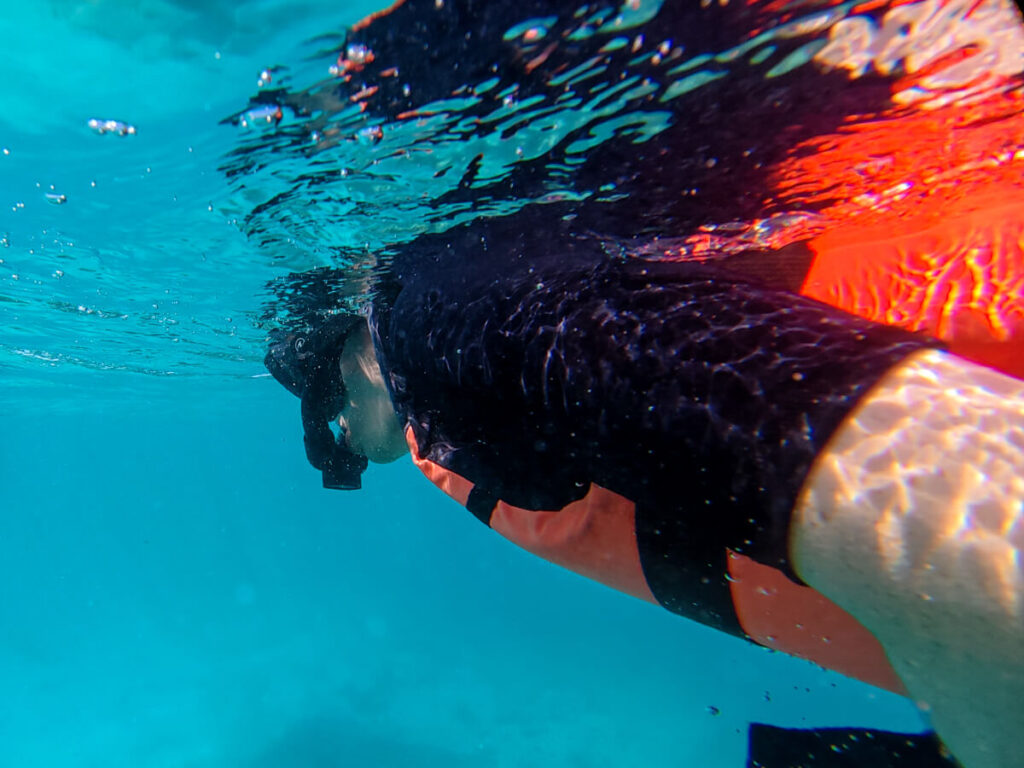
Snorkelling in Cancún at a glance
More from Cancún
Is there good snorkelling around Cancún?
The short answer is yes, Cancún does have good snorkelling. However, you need to know where to go, when to go, and who to go with in order to have a good time. We’re not going to sugarcoat it and try and sell you a tour, as we want to provide an honest overview of what it’s like to snorkel in Cancún.
Snorkelling in Cancún is easy, accessible, and great for beginners thanks to its calm Caribbean water and consistently warm temperatures year-round. With colourful coral reefs, sheltered coves, and sandy entry points, it’s easy to see why snorkelling is one of the best things to do in Cancún.
Cancún sits at the northern entrance to the Mesoamerican Barrier Reef, the second-largest reef system in the world, so even its more urban beaches benefit from healthy marine currents and bright Caribbean water. Stretching 625 miles (1000 km), all the way from Mexico to Honduras, past Belize and Guatemala, it is a UNESCO World Heritage site and a global hotspot for marine biodiversity.
Sea temperatures usually sit between 26-29°C (79-84°F), which is lovely and warm, meaning the water is comfortable year-round and you rarely need a wetsuit. Visibility can reach 20-30 metres on good days, especially along the Hotel Zone.
Some areas offer shallow coral gardens perfect for beginners, while others have deeper sections ideal for confident swimmers who want a bit more variety. We particularly like the shallow stretches with a sandy bottom – perfect for spotting turtles, rays, and schools of reef fish.
Mexico enforces strict rules around protected marine areas, which helps keep sensitive coral patches and marine life in better shape, too.
In all honesty, if you’re a seasoned or pro snorkeller, Cancún’s underwater world may feel a little tame (we delve into why and the pros and cons further down), but for travellers looking for colourful, easy, and accessible snorkelling, it is a great place to take a tour.

The best Cancún snorkelling tours
There are countless operators offering tours in Cancún, but they don’t all offer the same experience. Some simply care more about your money than your experience or respecting wildlife and the marine environment.
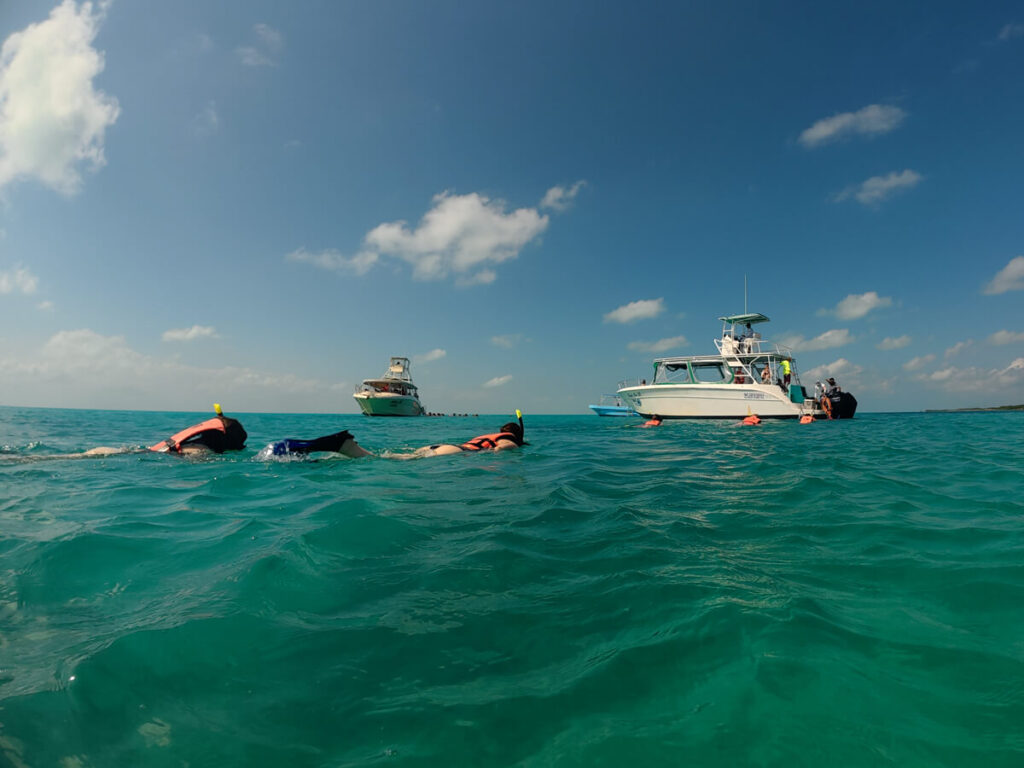
We’ve shortlisted the top snorkelling tours in Cancún from responsible operators:
What is the best place to snorkel in Cancún?
The best snorkelling in Cancún tends to be where the water is clearest, and the currents bring in plenty of fish, usually just offshore along certain sections of the Hotel Zone or via a short boat ride to nearby reef patches.
If you’re like us, you might consider snorkel locations when choosing where to stay in Cancún. But there’s no getting around it – there’s just no good shore snorkelling in Cancún, as the beaches are mostly sandy-bottomed with very little coral close to land. You can enjoy some free snorkelling in Cancún from the Hotel Zone or off the shores of Isla Mujeres, but it’s not the same as actually snorkelling on the reef, which requires a boat trip.
Conservation rules also mean some of the healthiest coral areas can only be visited with licensed guides, but those tours often give you access to quieter, better-preserved reefs.
The number of articles we read saying the best snorkelling in Cancún is in Cozumel or Holbox was actually a bit silly, so we’ve only covered the places that are actually accessible from the city, the Hotel Zone, and near Isla Mujeres in this post.

Cancún Snorkelling Map
We’ve pinned the top snorkel sites in Cancún on the interactive map below.
The best snorkelling spots in Cancún
While Cancún doesn’t have true reef-from-the-beach access, several protected areas and short boat-trip locations offer clearer water, healthy coral patches, and reliable wildlife encounters.
The best snorkelling sites in Cancún typically sit just offshore from the Hotel Zone and in the turquoise shallows between the mainland and nearby islands, where the colourful Mesoamerican reef, calm conditions, and sandy bottoms make it easy to see marine life.
1. Punta Nizuc (MUSA)
If you’re looking for snorkelling in Cancún’s Hotel Zone, Punta Nizuc is the closest you’ll find. With calm, shallow water and a surprising amount of life for being so close to shore, this snorkel spot is located at the southern tip of the Hotel Zone.
Punta Nizuc is where you’ll find part of the MUSA underwater sculpture museum, with a handful of art installations sitting just below the surface. It’s been optimised for snorkelling, so it is shallower than the other site near Isla Mujeres.
You can snorkel right off the beach in front of NIZUC Resort & Spa, one of the best hotels in Cancún, but the best part is a short boat ride out to where the underwater sculptures are submerged. Tours often include boat rides through mangroves and access to floating platforms for easy entry.
While the coral here isn’t as vibrant as further offshore, the visibility is usually good, and the protected bay often attracts small schools of fish, rays, and the occasional turtle.

2. El Meco Reef
El Meco is one of the most accessible snorkelling areas from the Hotel Zone, sitting just north of Cancún, near Puerto Juárez. It’s named after the El Meco Archaeological Site, which it sits near.
It’s one of the lesser-known snorkel spots in Cancún, but it is a great option if you want healthier coral and fewer crowds. Tours usually take small groups to shallow sections where sea fans and soft corals sway in gentle currents, making it great for beginners.
Fish life tends to be reliable – sergeant majors, damselfish, and angelfish are almost always around – and the water clarity is typically excellent. This spot is also near a handful of sculptures from MUSA at the Punta Sam site.

3. Isla Contoy
Isla Contoy is a protected island and one of the most pristine snorkelling destinations near Cancún. It sits near the very start of the Mesoamerican Reef, on the top end, and is known for its biodiversity.
Access is highly restricted – only 200 people can visit each day – which is exactly why the coral here feels so untouched, with large patches of hard coral and abundant fish in crystal-clear, turquoise water. We had loads of fun on a boat trip to Isla Contoy and Isla Mujeres with Ocean Tours Mexico, which included a snorkelling stop.
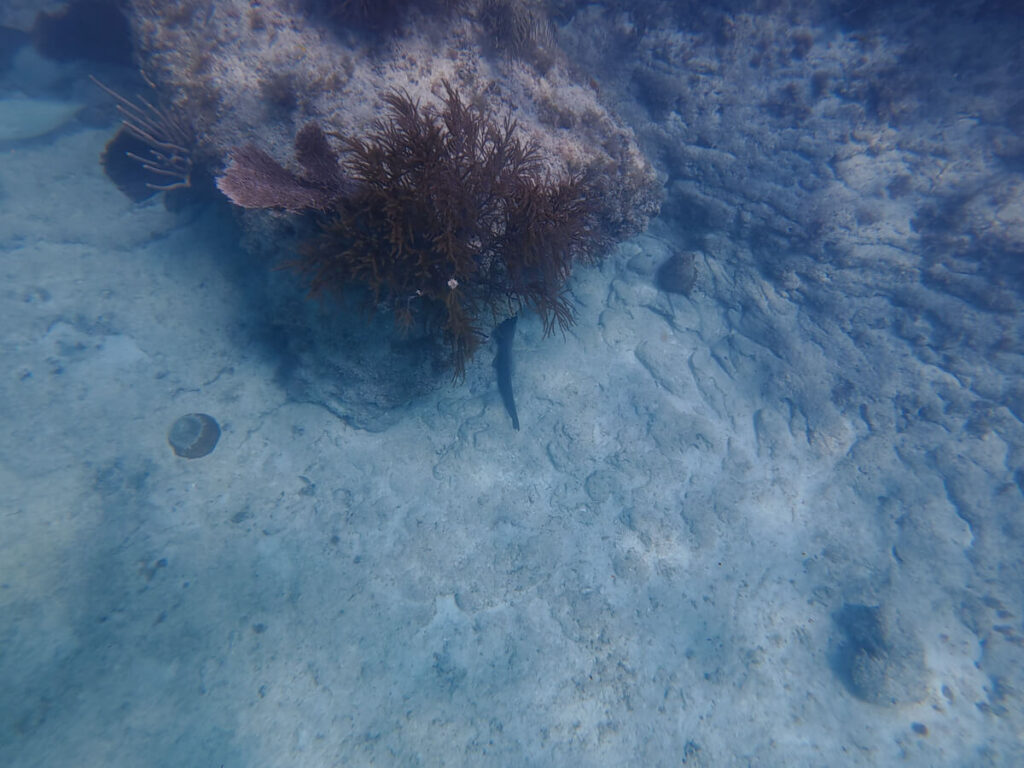
Most tours to Isla Mujeres combine time on the island with a guided snorkel stop on the offshore reef, so it’s ideal if you want a full-day eco-focused experience. We saw lots of coral, fish, and the tip of a nurse shark’s tail as it slept under a rock.
4. The whale shark zone
Cancún has access to one of the world’s largest whale shark aggregations, where the largest fish in the sea gather to feed naturally in open water from mid-May to mid-September, with the peak between June and September. The area itself isn’t a reef, but rather is in the deep, open ocean and can be choppy, so you need to be a confident swimmer.
Snorkelling with whale sharks is strictly regulated with small groups and limited time in the water. But as Cancún is a tourist hotspot, the waters can become crowded with boats with snorkellers all trying to get up close to the whale sharks. This sometimes leads to a rushed experience, limited time in the water, and challenges in maintaining proper distance and minimal disturbance to the animals.
It’s important to research companies and choose a certified, ethical operator to ensure a safe and responsible experience for both swimmers and the whale sharks. We recommend:

5. Isla Mujeres
The waters around Isla Mujeres tend to be clearer and calmer than many parts of Cancún, making snorkelling here especially appealing for beginners or anyone wanting to snorkel from the shore.
The island is super close to sites like Manchones Reef and El Farito (The Lighthouse), which have colourful coral gardens, plenty of fish, and great visibility, especially in summer. It’s also one of the best places to look for turtles, which often cruise through the shallows.
However, many snorkel tours from Cancún take you to areas that aren’t the best for snorkelling around Isla Mujeres. It’s best to visit the island on a day trip from Cancún. It’s easy to take the 20-minute ferry to Isla Mujeres, where you can then head to our top snorkel spots in Isla Mujeres – plus, it’s much cheaper than taking a tour.

The best snorkelling spots near Cancún
If you’re happy to travel a little further, some of the best snorkelling near Cancún sits just down the coast or on nearby islands, where the water is clearer, and the reef is healthier than anything directly off the Hotel Zone. Whether you prefer easy shore access, guided boat trips, or something completely different like cenote snorkelling, these destinations arguably offer better snorkelling than in Cancún.

Where not to snorkel in Cancún
Not every snorkelling spot around Cancún is worth your time or your money. Some places have poor conditions, overly strong currents, or very little to see, while others promote unethical wildlife encounters disguised as eco-experiences. These are the spots best avoided if you want to visit Cancún responsibly, and are looking for safe, ethical, and genuinely good snorkelling:

Snorkelling in Cancún for beginners
It’s so great that people are interested in learning to snorkel, being able to experience the magic of the underwater world themselves. But it’s worth acknowledging that a surprising amount of reef damage comes from beginner snorkellers who simply haven’t been taught basic skills like avoiding contact with the seabed or being educated to know not to touch wildlife.
Snorkelling tours, especially those in the open ocean (like whale shark excursions), over shallow reefs, or in marine reserves, are not the place to learn to swim – you need to arrive already confident in the water.
While snorkelling doesn’t require full-on swimming technique – you mostly float on the surface and kick gently – it does require enough confidence to stay calm, stay flat, and move with control. If you’re going to be taking a snorkelling tour in Cancún as a beginner, the best thing you can do is learn to swim first, or at the very least, practise floating and kicking in a calm, controlled environment. We’d recommend practising snorkelling in a pool or taking a beginner snorkel tour if you’re not experienced.
Here are our quick tips for beginner snorkellers, which helped us when we were learning:

What can you see snorkelling and diving in Cancún?
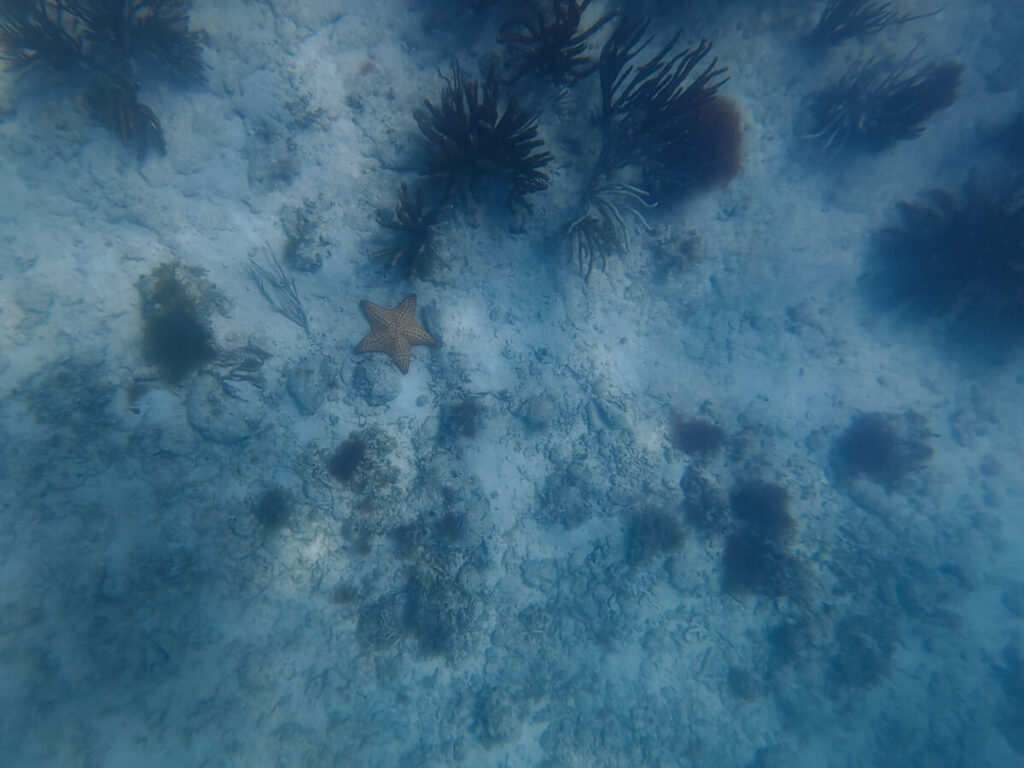
We found there was a surprising amount of marine life in Cancún. The warm, shallow waters mean you can spot wildlife year-round, and visibility often stays good enough to see everything from passing turtles to schools of colourful tropical fish. Here’s what you’re most likely to see:

Choosing a responsible operator
Picking the right snorkelling or diving operator in Cancún makes a huge difference, not only for your experience, but for the health of the reef. A good operator should prioritise marine conservation, keep group sizes small, and follow Mexico’s protected-area rules without cutting corners.
Look for companies that use licensed guides, provide proper safety briefings, avoid overcrowded sites, and actively teach guests how to avoid harming coral or disturbing wildlife. Responsible tours never let you touch animals, stand on the seabed, feed fish, or chase turtles, and they’re transparent about park fees and environmental regulations. Here are our top choices:

How much does it cost to go snorkelling in Cancún?
Snorkelling in Cancún ranges widely in price depending on whether you go from the shore (which can be free), join a small-group tour, or book a private trip.
Most standard reef tours cost $45-90 USD, which usually includes equipment, a guide, and the required marine park fees. Trips to more protected areas or farther sites, like Isla Contoy and Isla Mujeres, tend to cost $120-170 USD.
Whale shark tours are the priciest, typically $150-200 USD, because they require special permits and long boat rides.
Private snorkelling charters start around $300-450 USD for small groups.
As always, avoid anything suspiciously cheap, as cut-price tours often overload boats, skip important environmental rules, and encourage unethical practices.

When is the best time to snorkel in Cancún?
The best time to snorkel in Cancún is generally in the dry season between November to April, when the Caribbean is calmer, visibility is better, and winds are lighter. Water temperatures sit around 26-29°C (79-84°F) year-round, so you rarely need a wetsuit.
Summer brings warm, glassy seas and the famous whale shark season (roughly mid-May to September), but it’s also when sargassum is most likely to wash onto certain beaches. Winter offers the clearest water and a chance of spotting eagle rays, but there can be occasional windy days that make the surface a little choppy.

Is it worth snorkelling in Cancún?
Snorkelling in Cancún is absolutely worth it, as long as you manage your expectations and choose the right operator.
Cancún isn’t the best shore-snorkelling destination because most beaches have waves, churned-up sand, and very little reef life. If you’re keen to snorkel on your own or for free, we’d recommend picking somewhere further south along the Riviera Maya.
But just offshore, the visibility improves dramatically, and you can reach clear, shallow reef patches with colourful fish, rays, turtles, and coral gardens. Boat trips to areas like Punta Nizuc, MUSA, or the reefs between Cancún and Isla Mujeres offer the most rewarding experiences. We were so surprised by how much there is to see.
Having said that, it’s worth noting that the reef sits in protected marine areas, which means many sites require you to wear a life vest, stay with a guide, or follow fixed swimming routes. These rules are essential for conservation, but they can feel restrictive if you’re an experienced snorkeller used to diving down or exploring freely. If that’s the case, you might prefer booking a SCUBA diving trip, where you have a bit more freedom, and you can access deeper, healthier reef sections.
If you’re already planning a beach holiday in Cancún and want an easy way to see marine life, snorkelling here is absolutely worth it. If you’re a seasoned reef traveller chasing world-class coral, you may prefer the stronger sites around Cozumel or Puerto Morelos.

SCUBA diving vs snorkelling in Cancún
Snorkelling is easy, low-effort, and beginner-friendly, perfect if you just want to float over shallow reef patches, spot colourful fish, and enjoy warm Caribbean water without any training. It’s accessible to almost everyone, and boat tours take you to calm, protected sites where visibility is usually good. The downside is that Cancún’s shore snorkelling isn’t great, and protected-area rules often require life vests and surface-only swimming, which can feel limiting.
SCUBA diving, on the other hand, lets you explore the deeper, more impressive parts of the Mesoamerican Reef system. Divers get access to larger coral structures, swim-throughs, wrecks, and richer marine life that simply isn’t visible from the surface. With warm water, good visibility, and minimal currents, Cancún is a great place to get SCUBA-certified, as well as offering exciting dives for pros.
In short, snorkelling is easy, affordable, and doesn’t require a multi-day course and certification, ideal for casual explorers, families, and beginners. While diving is a more immersive experience, perfect for anyone who’s certified or interested in training, wanting to see the best of Cancún’s underwater world.

Snorkelling in Cancún sustainably
Sustainable snorkelling in Cancún means minimising your impact on the reef’s fragile marine ecosystems. Here are some top tips to follow on your underwater adventures:
What to pack to snorkel in Cancún
To ensure a smooth and comfortable experience while snorkelling in Cancún, don’t forget to pack your:

Our experience snorkelling in Cancún
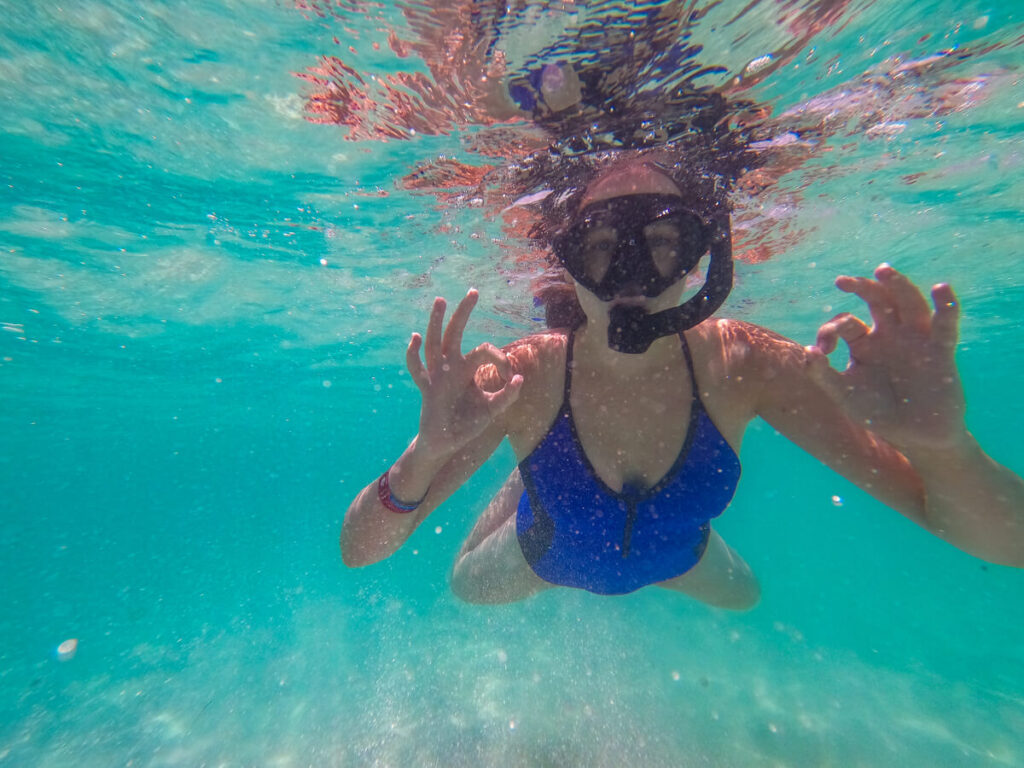
We had a really enjoyable time snorkelling in Cancún. We took several trips, sometimes staying close to shore, others going out and visiting Isla Contoy and Isla Mujeres. We also experienced snorkelling further down the coast in places like Cozumel, Sian Ka’an Biosphere Reserve, and Akumal. Despite what people say about snorkelling in Cancún, we actually thought that the water was really warm, the visibility was really good, and we saw a surprising amount of marine life.
However, we definitely preferred SCUBA diving in Cancún, where we saw more animals like turtles and eagle rays, were able to get up close to the sculptures at MUSA, and weren’t restricted by life vests and beginner-friendly spots. It is slightly disappointing not being able to snorkel from the shore, and since we have our own gear, it would have been nice to have had more free options. But if you’re simply looking for a fun way to spend a day or are more of a beginner, it’s definitely worth it.
Cancún Snorkelling FAQs
Now you know all about snorkelling in Cancún, we’ve answered these frequently asked questions to help you plan your trip.
Is there a coral reef in Cancún?
Cancún sits at the northern tip of the Mesoamerican Reef, the second-largest barrier reef system in the world. Most of the healthier coral structures lie slightly offshore in places like Manchones Reef and El Meco Reef, so reaching the best spots usually requires a short boat ride with a licensed operator.
Can you snorkel in Cancún’s Hotel Zone?
You can snorkel from certain beaches in the Cancún Hotel Zone, but shore snorkelling here isn’t particularly impressive due to waves, boat traffic, and limited coral. For proper reef snorkelling with clearer water and more marine life, you’ll want to join a boat tour.
Can I swim with sea turtles in Cancún?
Turtles occasionally pass through the waters around Cancún, but dedicated turtle-snorkelling takes place further south, mainly in Akumal. We saw a turtle while diving at MUSA off Isla Mujeres. Keep in mind that tours there are heavily regulated and often crowded, and maintaining a respectful distance from turtles is mandatory.
How safe is snorkelling in Cancún?
Snorkelling in Cancún is generally safe when you go with reputable operators who follow conservation rules and safety briefings. Conditions are usually calm, but beginners should stick to guided trips, wear life vests when required, and avoid swimming out alone from beaches with strong currents or boat lanes.
What to wear for snorkelling in Cancún?
Most people are comfortable in just swimwear because the water stays warm year-round, but a long-sleeve rash guard is ideal to protect you from the sun and reduce the need for sunscreen. Bring a well-fitting mask and snorkel, fins if you prefer them, and consider water shoes for rocky shore entries, though you won’t need them on boat trips.

Read next:
The Ultimate Guide to SCUBA Diving in Cancún
How to Visit the MUSA Underwater Museum from Cancún & Isla Mujeres
The Ultimate Guide to Snorkelling in Isla Mujeres
A Traveller’s Guide to Cancún: What to Know as a First Timer
18 Best Day Trips from Cancún + 3 That Aren’t Worth It
28 Unique Things to Do in Cancún + What NOT to Do
A Conscious Guide to Visiting Cancún Sustainably
How to Get to Cancún: Transfers, Connections, Buses + More
