How to Get Around Cancún: 10 Transportation Methods

Discover how to get around Cancún by bus, car, taxi, Uber, shuttle, and more.
This post may contain affiliate links, which means we might earn a small commission on anything purchased through these links at no extra cost to you. Learn more on our disclaimer page.
Getting around Cancún is surprisingly easy. The city has seen rapid development since 1970, becoming one of the most popular tourist hubs in Latin America, so its infrastructure is largely designed specifically with travellers in mind. Despite being a large city, there are numerous transportation methods on offer.
Between the Hotel Zone, Downtown, beaches, ferry ports, and nearby day-trip destinations from Cancún, there are several ways to get around. But not every option is equally affordable, reliable, or tourist-friendly, and first-timers often overpay or choose transport that doesn’t suit their itinerary.
We’ve visited Cancún multiple times, testing out its public transportation network and utilising private operators, from local buses and colectivos to taxis, rental cars, and private transfers. Discover the best ways to get around Cancún, what each option costs, when to use them, and what to avoid so you can travel efficiently without unnecessary stress in this guide.
Getting around Cancún at a glance

More from Cancún
What is the best way to get around Cancún?
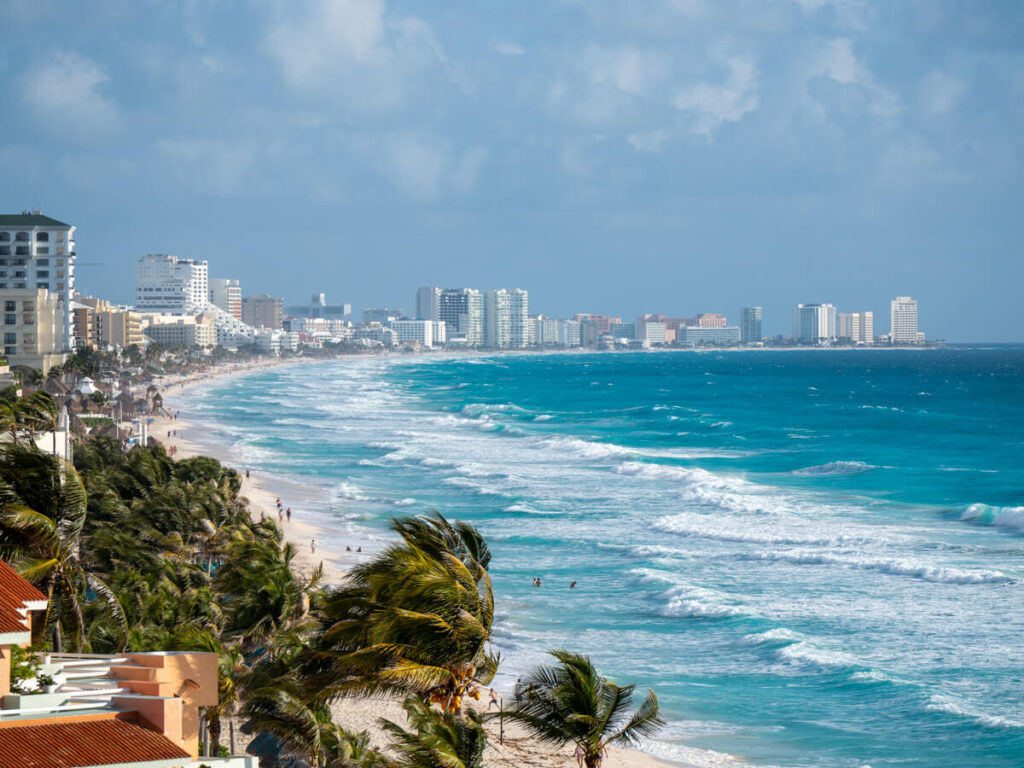
Cancún is split into two main parts: the 15-mile (25-km) long Hotel Zone, a narrow strip of resorts, beaches, malls, and restaurants built along a beautiful stretch of Caribbean coastline, and Downtown Cancún, which is the more local, lived-in part on the mainland.
The Hotel Zone is where most travellers stay because it’s designed for visitors and is incredibly easy to navigate, with beaches on one side and the Nichupté Lagoon on the other.
Downtown, on the other hand, gives you a more authentic glimpse of local culture, with more budget-friendly accommodation. Both areas are well-connected, so you can easily move between them during your trip.
The best way to move around Cancún will depend on where you’re staying, how much luggage you have, what you plan to do, how confident you are using local transport, and your budget.

Getting Around Cancún Map
We’ve pinned Cancún’s main transportation methods and public transport stops on the interactive map below.
Cancún Transportation
Common transportation methods in Cancún include:
Bookaway is amazing for booking shuttles and transport throughout Mexico. You can get 5% off with our code THOROUGHLY5.
1. On foot
Walking is one of the simplest ways to get around Cancún, allowing you to explore short distances in specific pockets of the city. It’s especially easy if you’re staying within the Hotel Zone or in a walkable part of Downtown, like Centro de Cancún.
We walked all over Cancún on multiple trips, from our hotel to the Mayan Museum Cancún and in Downtown to Parque de las Palapas. We never had any problems. The sidewalks are wide and busy near the beaches, restaurants, and malls, so you’ll rarely feel isolated or have to battle with vehicles.
That said, traffic along the Hotel Zone’s main road can be heavy and fast – be sure to stick to designated footpaths and only cross at pedestrian crossings. Footpaths near major resorts are well lit, but areas beyond the main tourist zones can feel quiet at night, so practice normal safety precautions and take public transport at night if you have a longer distance to travel.
Cancún is more spread out than it looks on the map, so walking long distances isn’t usually practical. Heat and humidity can also make midday strolls intense, so early morning and late afternoon are more comfortable.

2. By taxi
Taxis are easy to find throughout the Hotel Zone and Downtown, and they’re a quick way to get around when you don’t want to walk or wait for a bus. They don’t use meters, so fares are fixed by zone and should be agreed upon before you get in.
You can hail one directly from the street, ask your hotel to call one for you, or use an official taxi stand outside malls and major attractions. Taxis in Cancún don’t use metres – this is standard practice because fares are set by the local taxi union – so you should always confirm the price before you get in. Rates vary by zone, but expect to pay around 200-350 pesos (~$12-20 USD) for short trips within the Hotel Zone and 350-500 pesos (~$20-30 USD) to go between the Hotel Zone and Downtown.
Prices can jump at night, during peak tourist seasons (December-April), and during rush hours (between 7:00 AM-9:00 AM and 5:00 PM-7:00 PM). Some drivers quote higher rates to tourists, so don’t be afraid to politely negotiate if something feels off.
For safety, stick to official taxis, which have clear taxi numbers, a visible license plate, and an identifiable logo on the side – they typically have a green stripe and an identification number on the side. Avoid unmarked cars offering “taxi rides”. Airport taxis are notoriously expensive (often $60-90 USD just to reach the Hotel Zone), which is why most travellers book a Cancún Airport shuttle instead.

3. By Rideshare app
In the Hotel Zone and Downtown, rideshare apps are super convenient because you don’t need to negotiate a price, and your journey is tracked, giving you extra peace of mind.
Despite rumours, Uber does operate in Cancún, but availability varies depending on the area and time of day. DiDi is another popular app that works in Cancún. You’ll struggle to pick one up at the airport (as they’re not allowed to operate there), but there are plenty of other ways to get from Cancún Airport into the city.
We consistently found Uber to be about 25% cheaper than the price quoted for a taxi through hotels in Cancún. It’s also plentiful in the Hotel Zone – we never waited longer than 30 seconds to 2 minutes for our lift to arrive. Prices fluctuate depending on the time of day, so you might pay more during rush hours. A 10-minute journey cost us 140 pesos (~$7.50 USD) in the morning and 100 pesos (~$5.50 USD) in the middle of the day. The journey from our hotel at the top of the Hotel Zone to the Tren Maya train station at the airport cost 460 pesos ($~25 USD), which was cheaper than the 600 pesos (~$32 USD) offered by the hotel.
We occasionally struggled to get an Uber in Downtown, especially when we needed a lift to the airport at 5:00 AM. In the end, we hailed a taxi on the road to us.

4. By bus
Buses are the backbone of public transport in Cancún and the easiest way to travel between the Hotel Zone and Downtown. They run frequently, often every few minutes, and are incredibly affordable compared to taxis. There are several types of buses, ranging from basic city routes to long-distance coaches that travel across the Yucatán Peninsula. Most buses operate from early morning until late at night, and drivers sometimes call out major stops along the way.
R1 and R2 Buses
The R1 and R2 buses are the best way to get around Cancún on a budget. These are the main routes that connect Downtown to the Hotel Zone, making them popular with both locals and tourists. They run along Boulevard Kukulcán, the Hotel Zone’s main road, stopping at beaches, restaurants, malls, and attractions all along the strip.
These buses are simple, cheap, and fast because they run so frequently, but can get crowded, especially in the mornings and evenings. There’s not really an official timetable, but they’re typically every 5-15 minutes. The route can be a bit disorienting, so it’s worth remembering a landmark near your hotel and tracking your location on Google Maps.
Payment is made in cash to the driver, so keep small denominations handy – pesos are best to pay in, as you may not get change for US dollars. The fixed price for travel within the Hotel Zone is 12 pesos (~$0.65 USD) per person. The journey from the top of the Hotel Zone to Parque de las Palapas in Downtown cost us 20 pesos (~$1 USD) each.

ADO Buses
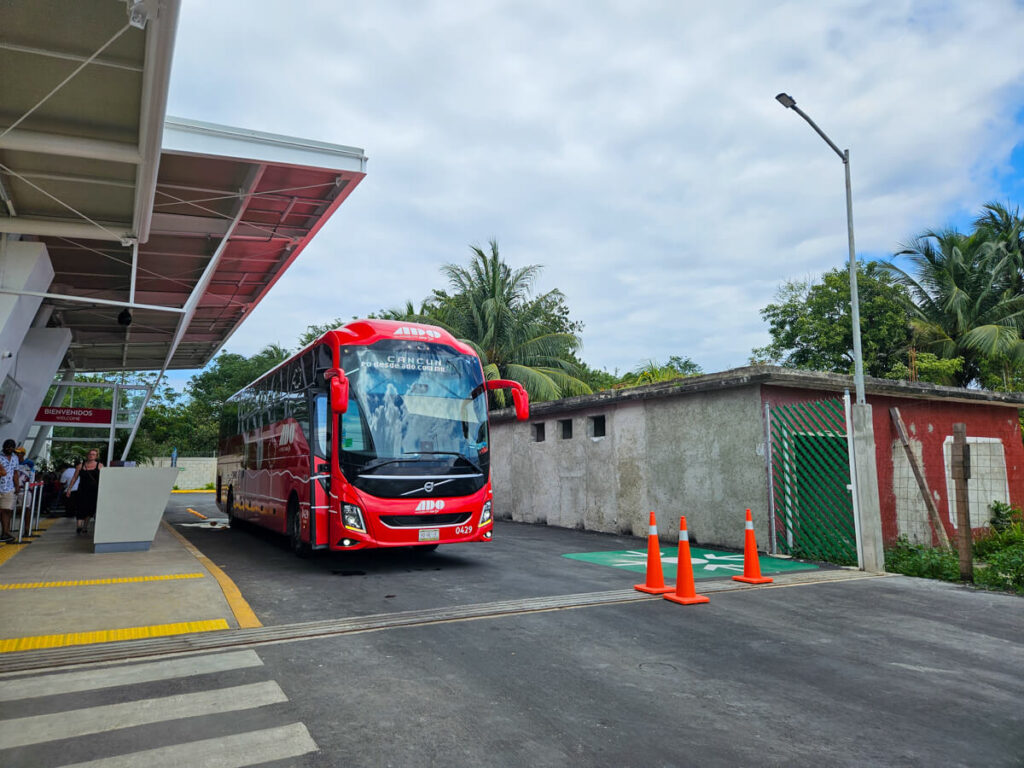
ADO buses are larger, air-conditioned coaches that operate longer distances across Quintana Roo and the broader Yucatán region. They’re much more comfortable than city buses, with assigned seating, luggage storage, and reliable timetables.
You’ll mainly only use them if you’re travelling outside of Cancún, like for travel to Playa del Carmen, Tulum, Bacalar, Valladolid, or Mérida. You can also use the ADO bus to get to the ADO Bus Terminal in Downtown Cancún from the airport, which we cover in our Getting to Cancún Guide.
Tickets can be purchased at the terminal, online, or at kiosks across the city, and are pretty affordable.
Colectivos
Colectivos are shared minivans that run fixed routes, usually between Cancún, Playa del Carmen, and Tulum. They’re most favoured by locals and are extremely cheap, but they can get crowded, especially during peak hours.
Unlike the buses, colectivos stop wherever passengers need to get on or off, so travel times can vary, with lots of stops. They don’t leave from the airport, so you’ll need to get into Downtown first if you want to use them. You’ll find them along main roads like Kukulcan Avenue (Hotel Zone) or Tulum Avenue, at designated stops like the ADO bus station, or near major landmarks.

5. By car
Renting a car in Cancún gives you the most flexibility, especially if you want to explore beaches, cenotes, or other towns beyond the city. You’ll find all the major car rental agencies here, like Hertz, Avis, Enterprise, and Budget, with a handful of independent operators in Downtown.
Rental prices vary widely, typically starting at around $25-40 USD per day, depending on the season and vehicle type. Some companies will upsell insurance quite aggressively, so read the fine print to avoid unexpected fees. If a price looks too good to be true, it probably is, and you might be surprised later with lots of hidden fees. We use DiscoverCars.com to find the best rates and use their inclusive insurance.
Driving in the Hotel Zone is straightforward – the roads are wide, flat, and well-signed, but traffic can be heavy during peak hours, and parking near popular beaches or malls fills up quickly. Highways like Highway 307 (from Tulum and Playa del Carmen) and the 180D toll road (from Mérida and Valladolid) are smooth, direct, and well-signposted.
You honestly don’t need a car to get around Cancún if you’re not roadtripping further afield. For the city, taking taxis and buses is sufficient for most people. You could always rent a car for specific days rather than your whole trip to save costs. If you do decide to drive, stick to main roads, avoid late-night travel outside tourist areas, and keep toll money handy for the highways.

6. By transfer
Pre-booked transfers are one of the easiest ways to get around Cancún if you want a smooth, no-fuss experience. They are especially popular for airport journeys, since the driver meets you at a set time, helps with luggage, and gets you straight to your hotel without the stress of taxi queues.
Prices vary depending on whether you choose a shared shuttle or a private ride, but expect around $35-60 USD one-way from the airport to the Hotel Zone. They’re a great option for first-timers and families, as the price is agreed upfront, you don’t have to worry about negotiating fares or finding a reliable taxi, and you get help with your luggage.
Once you’re in the city, transfers aren’t as necessary, but they’re handy for long-distance day trips to places like Tulum, Chichén Itzá, or cenotes if you want a more comfortable journey than public transport.

7. By tour
Joining an organised tour in Cancún is a great way to see nearby sights without needing to arrange transport or navigate the busy roads. Most tours include hotel pickup and drop-off, which makes them one of the most stress-free ways to get around, especially if you’re heading to islands like Isla Contoy, archaeological sites, or cenotes outside of town.
Tours range from group excursions to fully private experiences, so you can choose options based on your budget and travel style. They’re also a safe option for visiting more remote places where public transport isn’t practical.
The biggest perk is convenience – someone else handles the driving, parking, and logistics, leaving you free to just enjoy the best things to do in Cancún – but you’ll also learn loads about local culture and history that you might miss when exploring independently.

8. By ferry
Ferries aren’t used for getting around Cancún itself, but they’re essential if you want to visit the islands nearby, like Isla Mujeres. The most popular route for getting to Isla Mujeres is the Ultramar Ferry, which leaves from multiple terminals in Cancún’s Hotel Zone and from Puerto Juárez and makes the crossing in about 20 minutes.
The boats are large, comfortable, and run frequently throughout the day, so planning the trip is easy. If you’re staying in the Hotel Zone, you can reach the ferry terminals by bus, taxi, or rideshare.

9. By scooter
Scooters offer a fun and flexible way to explore Cancún, but they’re best suited to confident riders who are familiar with local-style traffic. Rental shops are scattered around the Hotel Zone and Downtown, and prices average 600-900 pesos (~$35-50 USD) per day.
Scooters are great for quick beach hops or getting between restaurants and viewpoints, but they aren’t ideal for long distances or carrying lots of bags.
Helmets are legally required (and very much recommended), and you’ll want to double-check your travel insurance coverage before renting. Traffic in the Hotel Zone can be fast, especially during rush hour, so stick to slower lanes and avoid riding after dark if you’re not experienced.

10. By bike
Cycling is a surprisingly enjoyable way to get around parts of Cancún, especially the quieter stretches of the Hotel Zone, where the paths open up along the lagoon. You can rent bikes from hotels, beach clubs, or independent shops, usually for 200-400 pesos (~$12-22 USD) per day. The terrain is flat, and you’ll find dedicated bike paths in some areas, but traffic can be fast in others, so stick to the safer sections and ride during daylight.
Remember to apply suncream and drink plenty of water – the humidity can be intense even early in the day. Cycling is a great way to explore the Hotel Zone at a slower pace, stop for photos, and soak up the coastal views without worrying about parking, but we wouldn’t recommend it for actually getting around the city.

Cancún Transportation FAQs
To help you plan your trip, we’ve answered these frequently asked questions about getting around Cancún.
How do tourists get around in Cancún?
Most travellers get around Cancún using a mix of buses, taxis, and rideshares, depending on where they’re staying. The Hotel Zone is incredibly easy to navigate, with frequent public buses running up and down the strip all day for just a few pesos. Taxis are everywhere, but they’re much pricier, especially around major resorts. Rideshares like Uber are available in Cancún and can be cheaper than taxis, though pickup rules vary depending on the location. Many people also choose organised tours or private transfers when heading further afield to places like Isla Mujeres, Tulum, or cenotes.
Is it safe to take public transportation in Cancún?
Taking public transportation in Cancún is generally considered safe, especially the R1 and R2 buses that run through the Hotel Zone. They’re used by both locals and tourists and operate almost constantly. Pickpocketing can happen on crowded buses, so keep your phone and wallet in a zipped pocket or bag. Late at night, it’s better to take a taxi or rideshare instead of waiting at a bus stop.
Is it easy to get around Cancún without a car?
It’s very easy to get around Cancún without a car thanks to cheap and frequent public buses, plentiful taxis, lots of bookable hotel shuttles, and walkable areas in the Hotel Zone and Downtown. You might wish to rent a car if you’re day tripping to towns further away, but you don’t need one to get around the city itself.
Is it safe to use Uber in Cancún?
Uber does operate in Cancún, and many travellers (including us) have used it safely, but there are a few things to know. Rideshare drivers sometimes can’t access certain hotel entrances or pickup points (like the Airport) due to local taxi union tensions, so you may be asked to meet your driver in a designated area nearby. Once you’re in the car, rides are typically smooth and professional, and it’s often cheaper than taking a taxi. For the airport, Uber can drop you off, but usually cannot pick you up due to strict regulations.
How much should I pay for a taxi in Cancún?
Taxi prices in Cancún aren’t metered, so fares are set by zone and should be agreed on before you get in. In the Hotel Zone, expect higher prices: around 150-300 pesos for short hops and 400-600 pesos for longer stretches. Trips between Downtown and the Hotel Zone usually fall somewhere in the 250-350 peso range, depending on traffic and where exactly you’re going. Airport taxis are notoriously expensive, often quoting $75-100 USD one way, which is why most travellers choose shuttles instead.
Are Ubers easy to get in Cancún?
In most parts of Cancún, Uber is fairly easy to get, especially around Downtown and the Hotel Zone during normal hours. Wait times are usually under 10 minutes, though they can spike during peak times or when cruise ships are in port. For late-night trips or busy weekends, demand can be high, so it’s worth checking both Uber and taxis to see which is faster. We struggled to get an Uber in Downtown in the early morning.

Read next:
A Traveller’s Guide to Cancún: What to Know as a First Timer
28 Unique Things to Do in Cancún + What NOT to Do
18 Best Day Trips from Cancún + 3 That Aren’t Worth It
A Conscious Guide to Visiting Cancún Sustainably
Where to Stay in Cancún: Hotel & Area Guide
Ultimate Guide to Snorkelling in Cancún
Ultimate Guide to SCUBA Diving in Cancún
How to Visit the MUSA Underwater Museum
Visiting Cancún’s Mayan Museum & San Miguelito Ruins
How to Visit Parque de las Palapas: Cancún’s Local Food Plaza
