A Conscious Guide to Visiting Cancún Sustainably

How to be a more responsible traveller in Cancún, from choosing sustainable hotels and ecotourism to making sure your money benefits the local community.

This post may contain affiliate links, which means we might earn a small commission on anything purchased through these links at no extra cost to you. Learn more on our disclaimer page.
Cancún is famous for its sandy beaches and bright-blue water, but its popularity comes with a heavy environmental footprint. From overcrowded shorelines and fragile coral reefs to rising waste and strain on local resources, the impact of mass tourism is becoming increasingly difficult for the region to sustain.
But with a bit of intention, it’s entirely possible to enjoy the city while supporting its ecosystems and communities rather than harming them. By choosing sustainable accommodation and eco-conscious tour operators, using reef-safe sunscreen, reducing plastic use, respecting wildlife, and seeking out locally owned businesses, small decisions add up. Discover ways to visit Cancún more sustainably, helping you experience the Caribbean responsibly while having a more positive impact, in this guide.

Can you visit Cancún sustainably?
Mexico, especially Quintana Roo, has seen a huge rise in popularity over the years and is home to world-famous vacation hotspots like Cancún, Tulum, and Playa del Carmen. But with an increase in tourism comes rapid development of infrastructure, primarily for tourist purposes. Huge all-inclusive resorts line the coast, privatising the beaches, creating enormous amounts of waste and providing very little value to local communities and the national economy.
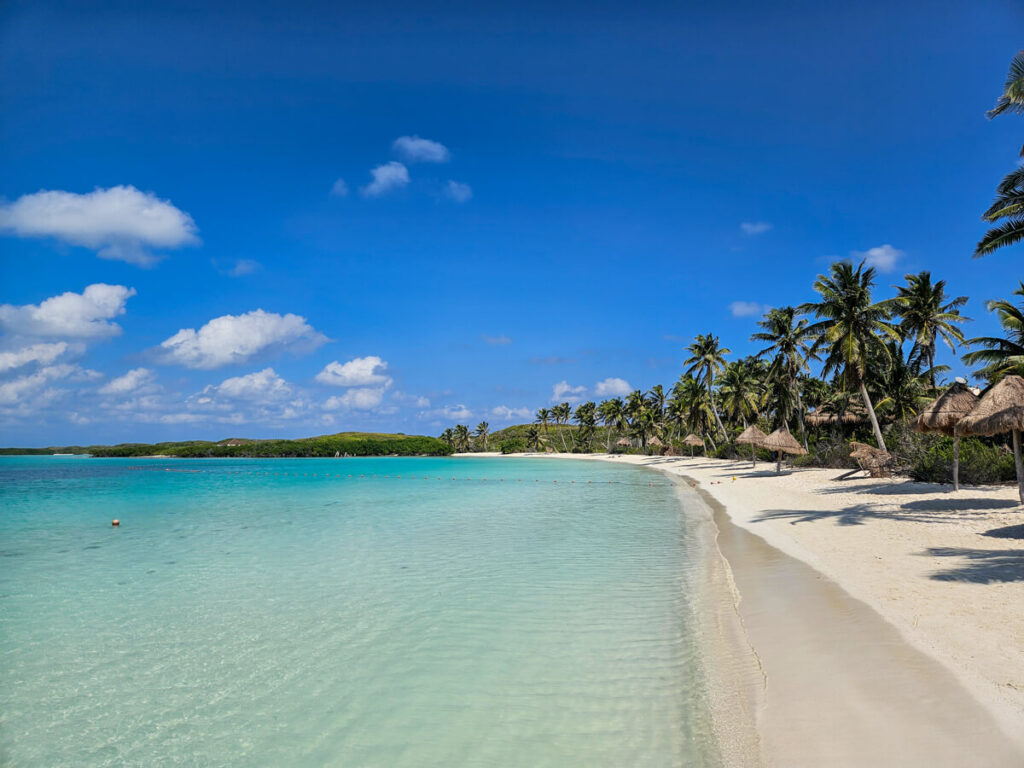
The coastline is famous for its turquoise water (a shade we’ve only seen here), soft white sand, and lively resorts, making it one of Mexico’s most visited holiday destinations. Because it’s positioned so close to the Mesoamerican Barrier Reef, the second-largest barrier reef in the world, Cancún is also a major hub for snorkelling and diving trips.
If you’re travelling anywhere in East Mexico, it’s hard to avoid Cancún at some point in your trip. You might want to spend a few days here, or you might be looking at a vacation in Cancún specifically. So the question remains: if the area is rife with unsustainable practices, can you visit sustainably?
We believe so. Sustainable travel is grounded in two guiding principles:
Achieving both means being mindful of the three pillars of sustainability: environmental (supporting conservation), social (respecting local communities), and economic (minimising tourism leakage by keeping your spending local).
Even in the busiest cities, there are small-scale, locally-owned businesses that provide a positive local impact. So, even though it might seem more sustainable to skip a destination altogether, if you’re passing through or not willing to miss out, it’s still possible to make good choices in Cancún that contribute to a more responsible kind of travel.

More from Cancún
A history of tourism in Cancún
The name Cancún only began appearing on maps in the 18th century, though its precise origin is still debated. Most interpretations trace it to a Mayan phrase commonly translated as nest of serpents, possibly referring to the area’s abundance of snakes, its serpentine shape on early maps, or symbolic associations in Maya culture.
Up until the 1960s, Cancún was essentially an uninhabited barrier island – a stretch of dunes, mangroves, and rainforest bordered by pristine beaches. Its appeal for future development was clear. With warm weather year-round, relatively few hurricanes, calm waters, and no dangerous sharks, it was the perfect tourist hotspot.
In 1968, Cancún was officially designated as the site of a purpose-built resort destination. At the centre of this effort was Antonio Enríquez Savignac, the Harvard-educated head of Infratur (the Fund for the Promotion of Tourism Infrastructure), an agency of Banco de México tasked with guiding the country’s first major foray into resort development.
In an interview, Enríquez Savignac made the government’s motivation clear. When asked why Mexico decided to build a resort from scratch, he replied:
“Money. Tourists mean money….. We knew exactly what we wanted to build—a resort that would attract a massive flow of tourists from the United States. But before we could obtain the go-ahead, we had to convince the government that tourism was the fastest-growing, most dynamic sector of economic growth in the world.”.
Antonio Enriquez Savignac
Construction on the Cancún Project began in the 1970s. Between 1975 and 1978, the first hotels took shape on the northern section of the barrier island, and by 1990, development stretched across nearly the entire zone. Growth was rapid: hotel capacity expanded from just 5,225 rooms in 1981 to 21,802 by 1998 as demand skyrocketed.
Today, Cancún stands among the world’s most visited tourist destinations, an international hub shaped by a bold, ambitious vision that transformed a stretch of wild coastline into one of the Caribbean’s most iconic resort cities.
It’s crazy to think that the city is so young, especially when you see how built up it is today. You can see some photos of the island before development in The Yucatán, and NASA has some before and after aerial pictures – it’s mindblowing to see it without any development.

Issues with Cancún’s tourism industry
Cancún’s rise as a purpose-built resort city brought rapid economic growth, but it also created a range of challenges that continue to shape the region today.
1. Coastal erosion and beach degradation
Decades of large-scale construction along the shoreline have destabilised natural dune systems. Hurricanes now cause more severe erosion, and beaches require frequent (and expensive) sand replenishment to remain usable.
2. Damage to coral reefs
Intense visitor traffic, boat anchors, pollution, and chemical-laden sunscreens have contributed to declining reef health. The Mesoamerican Barrier Reef, one of the world’s largest, faces ongoing stress from both climate change and overtourism.
3. Overuse of water and energy
Resorts consume enormous amounts of freshwater, often exceeding what local infrastructure can sustainably supply. Tourists often consume 2–3 times more water per day than local residents. High electricity use, especially for air-conditioning, adds further strain.
4. Waste management problems
Cancún produces far more waste than local facilities can process. Plastic pollution, food waste, and sewage runoff affect nearby marine and jungle ecosystems. More than 800 marine species are being affected by ocean pollution, predominantly through microplastics in Cancún.
5. Destruction of natural habitats
The expansion of hotels, golf courses, and roads has fragmented mangroves, jungles, and wetlands, critical habitats that protect biodiversity and buffer the coast from storms.
6. Overtourism and crowding
During peak seasons, infrastructure struggles to keep up with visitor volume. Crowded beaches, traffic congestion, and pressure on public services affect both residents and the visitor experience. This is something we’ve seen with our own eyes, having visited multiple times in peak season and witnessed hordes of tourists in the Hotel Zone.
7. Social and cultural tensions
Tourism often creates a divide between wealthy resort areas and surrounding communities. Locals may face higher living costs, limited access to coastal areas, and low-wage service jobs. Rapid tourism-driven development has led to rising rents and property values, forcing some long-time residents to relocate to more affordable areas outside the resort zones.
8. Economic leakage
A significant share of tourism revenue goes to international hotel chains, cruise operators, and foreign-owned businesses. This tourism leakage limits the economic benefits that stay within local communities.
9. Commodification of culture
Tourism in Cancún has led to the commercialisation of local traditions, festivals, and artisanal crafts. Cultural practices that once held deep social or spiritual meaning are often packaged and performed primarily for tourists, sometimes at the expense of authenticity. While this can provide economic opportunities, it also risks reducing rich local heritage to a marketable product.
10. Scams and overcharging
Some tourists encounter scams or overcharging for taxis, tours, goods, or services. These practices often stem from locals trying to make a living in a high-tourism economy. While usually non-violent, scams can be frustrating and contribute to negative perceptions.
11. Party culture, alcohol, and drugs
Cancún’s nightlife, spring-break culture, and club scene have contributed to high levels of alcohol consumption and recreational drug use. While most tourist areas are well-policed, these social issues can strain public services and affect both visitors and local residents. It wasn’t a local who offered us drugs on the street outside Coco Bongo, it was an American.
12. Cartel and gang activity
Authorities have reported that organised crime groups sometimes target tourism-heavy areas for illicit activities, including drug sales. While violent incidents are more common in peripheral neighbourhoods than in high-security resorts, tourists and locals alike can be affected by the wider social pressures created by gang presence. Although tourists are rarely the direct targets.
Western media often highlights incidents of violence, drug use, or crime near tourist zones, sometimes portraying Cancún as less safe than it is for the average visitor. While serious crime is relatively rare in the hotel strip and main resorts, these high-profile stories shape perceptions of general safety in Mexico abroad, influencing traveller expectations, insurance policies, and even tourism marketing. In reality, the majority of tourists experience the city safely, but sensationalised reporting can overshadow the nuance and day-to-day realities of visiting Cancún responsibly.

Greenwashing in Cancún
The answer to many of these issues lies in truly sustainable tourism – practices that genuinely reduce environmental impact, support local communities, and preserve culture. Many resorts and tour operators in Cancún advertise themselves as eco-friendly or sustainable, but the reality often falls short of these claims.
From labelling all-inclusive hotels as ‘green’ while consuming massive amounts of water and electricity, to offering ‘eco-tours’ that disturb wildlife or sensitive habitats, greenwashing is unfortunately a common tactic used in Cancún’s tourism industry. With glossy marketing and an abundance of positive-looking labels, it can be hard for travellers to know which choices actually make a difference.
Greenwashing is harmful because it creates the illusion of sustainability without addressing the real problems. This marketing can mislead tourists into thinking their visit has a smaller environmental footprint than it actually does, while the local ecosystem and communities continue to bear the costs.
How can you visit Cancún responsibly?
Ok, that’s a lot of negatives we’ve just shared: people being priced out of their homes, environmental damage, rampant economic leakage, traditions and ways of life eroded, increases in crime and drug use, police resources diverted to protect tourists, and even the commodification of local culture. It can be really overwhelming.
You might be thinking: Maybe it’s just best to skip Cancún altogether. While this is definitely an option, avoiding Cancún entirely isn’t the only way to reduce harm. By understanding these challenges, recognising greenwashing, and making conscious choices about where you stay, how you get around, and what experiences you support, you can help shift tourism toward practices that actually benefit the environment and local communities.
Let’s delve into how you can make more responsible choices while visiting Cancún, and which major tourist traps and marketing claims to be wary of.
Ecotourism in Cancún
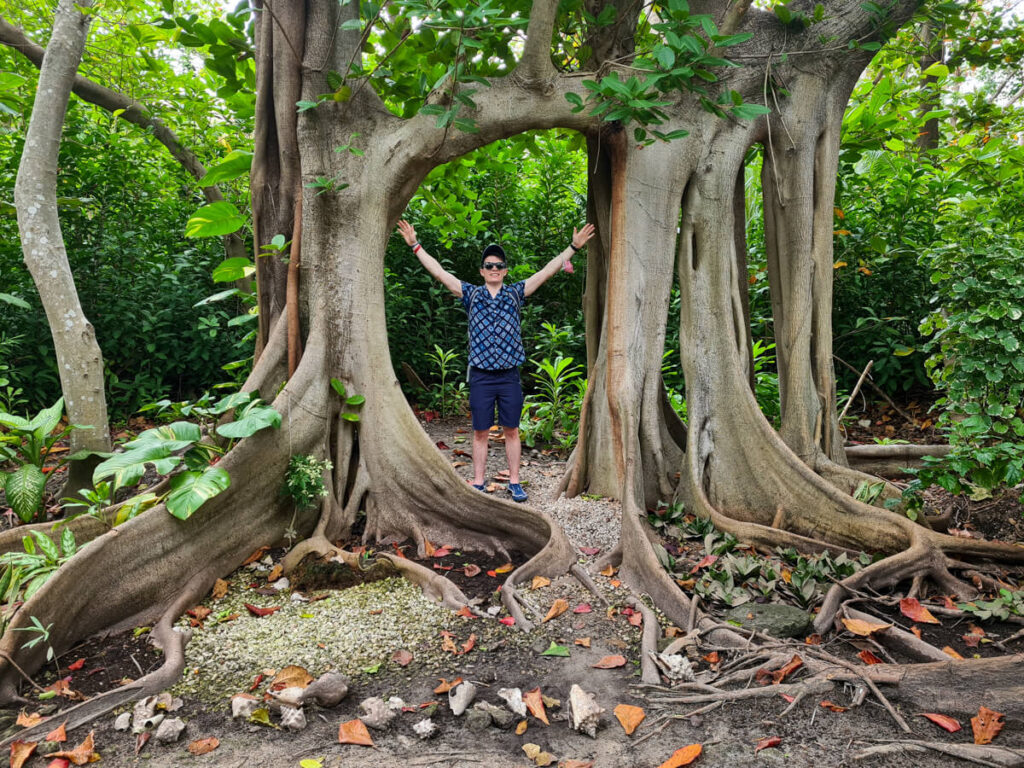
Ecotourism, by definition, is about uniting conservation, communities, and sustainable travel. It should be positive for visitors and locals, as well as the environment and animals that inhabit it.
An eco-tour is a “nature-based activity, in which the visitor’s essential motivation is to observe, learn, discover, experience and appreciate biological and cultural diversity, with a responsible attitude, to protect the integrity of the ecosystem and to promote the well-being of the local community” (UN Tourism).
It’s not just ideal, but essential for the survival of Cancún’s ecosystems and communities. Mass tourism has put immense pressure on coral reefs, mangroves, and freshwater resources, while also contributing to cultural commodification and economic leakage. By choosing eco-tours, visitors actively participate in protecting biodiversity, supporting local livelihoods, and fostering respect for the region’s natural and cultural heritage.
The best eco-tours in Cancún
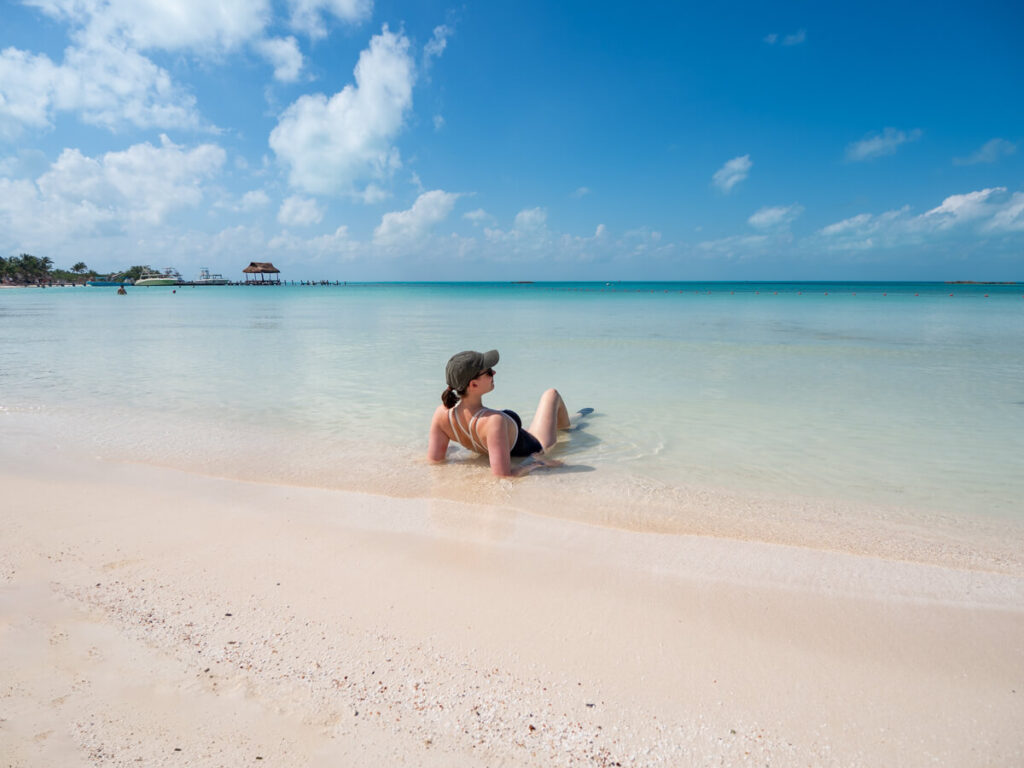
There are loads of things to do in Cancún, but not all of them are great for the environment, wildlife, or local communities. Cancún offers a variety of eco-friendly activities that allow visitors to experience the region’s natural beauty and cultural heritage. Whether you want to relax, explore, or get hands-on with conservation efforts, these tours and experiences provide sustainable ways to enjoy the area:

Sustainable tour companies in Cancún
We’ve discovered some amazing local companies on our trips to Cancún, some with great eco-conscious practices, others that are just trying to do better while showcasing the best of Cancún’s natural and cultural adventures.

Unethical activities in Cancún
From captive dolphin swims to snorkelling with declining turtle populations, there’s a pretty long list of questionable animal attractions and activities on offer in eastern Mexico.
Any activity that:
falls into the unethical category. This includes popular tour options such as:
Swimming with whale sharks in Cancún
Swimming with whale sharks is one of Cancún’s most iconic wildlife experiences. These gentle giants, which migrate along the Yucatán Peninsula from June to September, attract tourists from around the world. Swimming with them is often marketed as sustainable, thanks to strict laws and regulations set by the Mexican government to protect them.
Because whale sharks are a vulnerable species, it’s essential to approach this activity responsibly. Unfortunately, the rules aren’t always enforced.
There’s such a demand for these tours that the waters can become crowded with boats with snorkellers all trying to get up close to the whale sharks. This sometimes leads to a rushed experience, limited time in the water, and challenges in maintaining proper distance and minimal disturbance to the animals. It’s also worth noting that this experience takes place offshore in deep and sometimes choppy waters, so it isn’t suitable for beginner swimmers.
We’d recommend swimming with whale sharks in La Paz over Cancún. The tours here are typically smaller (no more than 5 people per whale shark) and more tightly regulated by local authorities to ensure sustainability and animal welfare. The number of boats and swimmers per trip is limited, which means a quieter, more personal, and less stressful experience both for visitors and whale sharks. Plus, there’s a better selection of eco-conscious tour operators.
If you’re keen to do it in Cancún, be sure to research companies and choose a certified, ethical operator to ensure a safe and responsible experience for both swimmers and the whale sharks. We recommend:

Tours and companies to avoid in Cancún
While Cancún offers many attractions, some tours and companies rely on captive animals or exploitative practices that harm wildlife and ecosystems. These experiences are heavily criticised by animal-welfare organisations and should be avoided:
Grupo Xcaret particularly markets itself on sustainability, but its parks are some of the leading offenders of animal welfare breaches, culture commodification, and environmental degradation. But they’re not the only ones.
Even facilities that advertise themselves as “interactive”, “educational”, or “conservation-minded” often fail to meet basic welfare standards. Popular tourist operators like Cancun Adventures might seem sustainable at first, but they’re just employing greenwashing. Cancun Adventures claims to be committed to sustainable practices, with beach clean-ups and a marine mammal rescue program. But they’re owned by The Adventures Company, which is one of the leading tour operators in Cabo for unethical activities like captive swim with dolphin experiences and camel rides.
Before booking with any operator, take time to read recent reviews, check independent reports, and look for transparent information about animal welfare, environmental practices, and community impact.

Eco-friendly accommodation in Cancún
Choosing independently owned accommodation is one of the most effective ways to travel sustainably. Boutique hotels and smaller properties generally have a smaller environmental footprint, and staying local ensures more of your money stays in the community rather than leaking out to international headquarters.
For a city built on the beauty of the natural landscape, there’s a shocking lack of sustainably focused accommodation in Cancún. Many of the larger chains and resorts market themselves as eco-friendly, but they are owned by massive conglomerates and often fall short of their green claims.
Some properties, like Hotel Xcaret and Xel-Há Resort, even carry sustainable tourism certifications, but these come with caveats. Both previously offered captive animal experiences, like dolphin swims, which are now banned in Mexico due to animal welfare concerns. Similarly, Hotel Barceló had a dolphinarium that was permanently closed after a breach of animal welfare laws, yet the resort continues to promote its sustainability credentials. Hello greenwashing! Unfortunately, they still promote hands-on animal encounters, like feeding and interacting with sharks and stingrays, which are kept in tiny tanks.
Other luxury hotels claim eco-friendly practices while formerly promoting tours involving captive dolphins. Chains like The Westin Resort & Spa and Hyatt Ziva Cancun have also been associated with unethical animal encounters, and because they are owned by multinational corporations, much of the revenue leaves the local economy.
In contrast, destinations like Bacalar offer examples of genuinely sustainable lodging. Eco-hotel Casa Lamat, for instance, is locally owned, minimises environmental impact, and prioritises community engagement, providing a model for responsible tourism in the region.
Cancún Sustainable Hotels
Here are the most sustainable hotels in Cancún that we could find.

Beware of timeshare presentations
Timeshare presentations are a common part of the Cancún tourism experience, often pitched as free or discounted excursions, meals, or activities in exchange for attending a sales presentation.
While some visitors may enjoy the perks, these sessions can be high-pressure and time-consuming. Many travellers feel obligated to stay longer than expected, face aggressive sales tactics, and are misled about the true costs and commitments of the timeshare. These presentations are also problematic because they typically benefit large corporate chains rather than local businesses.
To avoid stress and wasted time, it’s best to politely decline offers that require attending a sales presentation or to research the timeshare company beforehand thoroughly.

Food and drink in Cancún
Cancún is one of the best places to try traditional Yucatán cuisine. From street-side taco stands to high-end restaurants, there’s something for every palate. There are a number of ways to eat more sustainably, including:

Local restaurants in Cancún’s Hotel Zone
The Hotel Zone isn’t just resort restaurants. It’s also home to a variety of local eateries where you can enjoy authentic flavours without leaving the tourist-friendly areas.

Local restaurants in Cancún Downtown
In Downtown, Parque de las Palapas is the place to go for authentic food. This lively plaza is the heart of local Cancún social life, featuring dozens of street-food stalls, marquesita and churro vendors, craft stalls, and often live music or cultural events. It’s also super affordable – we had veg tacos (80 pesos), empanadas (80 pesos), marquesitas (60 pesos), and a margarita each (50 pesos), and our whole evening came to around $7.50 USD each!
There are also more local restaurants in Downtown than in the Hotel Zone. Many of them can be visited on a Cancún food tour, where a local guide can take you to the best spots, and you’ll learn more about the history of each dish.

Public transport in Cancún
Getting around Cancún doesn’t have to rely solely on taxis or rental cars. Much of Cancún is easily walkable, especially Downtown and the Hotel Zone’s main strip, making it simple to explore on foot. Some areas offer bike-share programs or rental shops, so you can cycle to viewpoints, too.
Using public transport is another more sustainable and affordable way to explore the city and the surrounding areas, and it’s super easy.
Buses
Frequent R1 and R2 local buses connect the Hotel Zone with downtown Cancún, running every 10–20 minutes.
Colectivos (shared minivans) are most commonly used for trips between Cancún, Playa del Carmen, and nearby towns, and offer a faster and cheaper ride.
ADO Buses, air-conditioned coaches, are also a great option for longer journeys to further destinations, like Tulum and Valladolid.
Tren Maya
Tren Maya, a major rail project connecting Cancún with other parts of the Yucatán Peninsula, has created easier travel across the region and economic benefits for local communities. However, its construction has garnered it its fair share of controversy, highlighting the complex trade-offs between development, tourism, and environmental preservation. It’s not so useful for getting around, but it is handy for getting to Cancún and exploring the wider Yucatán Peninsula.

Sustainable shopping in Cancún
Cancún offers plenty of opportunities to shop, with hundreds of tacky tourist shops selling plastic tat that’s industrially produced and imported. But it’s still possible to support local artisans, farmers, and small businesses. Choosing locally made products over mass-produced souvenirs helps keep money in the community and preserves cultural traditions.
Look for items made from natural or recycled materials rather than plastics or cheap imports. Avoid souvenirs made from coral, shells, or animal products, which can harm local ecosystems and may be illegal to export.

Climate change in Cancún
Climate change is increasingly shaping the coastline around Cancún, with rising sea levels, warmer ocean temperatures, and more frequent extreme weather affecting both beaches and marine life. We’ve noticed that even in the peak season, when it should be warm and sunny, it can be really windy and stormy. Seasonal rainfall patterns have become less predictable, with heavier downpours in the wet season and longer dry spells in between.
Warmer waters also stress the Mesoamerican Reef, contributing to coral bleaching and making reef-safe sunscreen and responsible snorkelling more important than ever. Choosing eco-friendly tours, reducing waste, and supporting conservation-minded operators genuinely helps protect the area.
Sargassum in Cancún
Sargassum is a floating seaweed that washes onto Caribbean beaches, and in recent years, it has become more common due to warming oceans and nutrient changes linked to climate shifts. While many resorts have huge clean-up efforts, you simply can’t escape it.
Cancún’s sargassum levels vary month by month. Some weeks the water is crystal clear, while others see large patches of seaweed drifting ashore, especially from April to September. It’s a natural phenomenon, not pollution, but it really stinks, and many people end up disappointed that the beaches don’t look like the pristine pictures online.

Sustainability in Cancún
Sustainability is becoming ever more important in Cancún as the region works to balance tourism with the health of its beaches, reefs, and mangrove ecosystems.
Many hotels in Cancún now follow stricter environmental practices, from reducing single-use plastics to improving wastewater treatment to protect the surrounding lagoon. Cancun has become the first destination in Mexico to join the UN Tourism Global Initiative on Tourism and Plastics. Reef-safe sunscreen is also strongly encouraged, as traditional formulas can harm corals and contribute to long-term reef decline.
Given Cancún’s history of overdevelopment, sustainability may seem like an uphill battle. True sustainability requires transparency, verified certifications, and practices that go beyond superficial labels – something that still remains limited in many high-profile tourism operations.
For travellers, sustainable travel is all about making more responsible choices. You’ll never get it right 100% of the time, and there’s no such thing as perfect, but it’s totally possible to make better choices in a place that’s seen as unsustainable. You can choose where to put your money, not only making a positive impact but also showing a demand (and lack of) for certain practices, encouraging a general shift towards sustainability overall.
The key is to weed out the conglomerates and international chains and find local businesses with sustainability at the core of their operations. Signs of a great operator include:
To verify whether an operator is genuinely sustainable, you can:

Organisations to support in Cancún
If you want your visit to have a meaningful and positive impact, consider supporting local organisations that directly benefit communities and wildlife. These groups work on the ground to address social inequality, animal welfare, and essential resource needs, areas where tourism alone cannot provide solutions.

Sustainability in Cancún FAQs
To help you plan your trip to Cancún more responsibly, we’ve answered these frequently asked questions.
Why do Americans love Cancún?
Americans love Cancún for its beautiful beaches, warm weather, all-inclusive resorts, and quick, affordable flights from many U.S. cities. Its tourism infrastructure is designed for American tourists, making it an easy, relaxing getaway with familiar amenities, English-friendly services, and a reputation for lively nightlife.
What are the environmental issues in Cancun?
Cancún faces several major environmental challenges, including coral-reef degradation, coastal erosion, mangrove loss, declining native species, overdevelopment, high water and energy consumption, sargassum (seaweed) influxes, and waste management pressures caused by mass tourism. These issues put strain on local ecosystems and require more responsible visitor choices.
What months are seaweed bad in Cancún?
Sargassum typically arrives along the Riviera Maya from around April to September, with peaks often occurring between May and August, though exact timing changes year to year based on ocean currents, temperature, and weather patterns. In some years, sargassum can appear outside these months, but winter generally sees the lowest levels.
What is the magic town near Cancún?
The closest Pueblo Mágico (Magic Town) to Cancún is Isla Mujeres, known for its laidback atmosphere, turquoise water, and local island charm. Other nearby Magic Towns include Tulum, Bacalar, and Valladolid, each offering cultural, historical, and nature-focused experiences beyond Cancún’s resort zone.

Read next:
A Traveller’s Guide to Cancún: What to Know as a First Timer
28 Unique Things to Do in Cancún + What NOT to Do
18 Best Day Trips from Cancún + 3 That Aren’t Worth It
How to Get to Cancún: Transfers, Connections, Buses + More
How to Get Around Cancún: 10 Transportation Methods
Where to Stay in Cancún: Hotel & Area Guide
Ultimate Guide to Snorkelling in Cancún
Ultimate Guide to SCUBA Diving in Cancún
How to Visit Parque de las Palapas: Cancún’s Local Food Plaza
