9 Best Cozumel Dive Shops Compared + Who We Chose

A comparison of the most popular and professional Cozumel SCUBA diving companies, which dive shop you should choose to book with, and our honest CozuDive review.

This post may contain affiliate links, which means we might earn a small commission on anything purchased through these links at no extra cost to you. Learn more on our disclaimer page.
There are over 100 dive operators in Cozumel, so choosing who to dive with can be surprisingly tricky. Prices, group sizes, boat trips, equipment, dive sites, and the overall experience of SCUBA diving in Cozumel can vary considerably, so the cheapest option isn’t necessarily the one that will give you the experience you’re looking for.
We spent hours and hours comparing the different operators before choosing who to dive with and found that there were a few things we wish we’d known before booking. In this guide, we’ll compare the best dive shops in Cozumel, including prices, group sizes, boats, equipment, dive sites, and what we thought of each option, before explaining who we ultimately recommend. We’ve included the companies we considered, what each offers, the reasons behind our own choice, and what it was really like to dive in Cozumel with CozuDive.
Cozumel Dive Shops – Our Top Picks

More from Cozumel
Who are the best dive operators in Cozumel?
Isla Cozumel is one of the best diving destinations in Mexico, with warm and clear water, colourful reefs, epic walls, and an abundance of marine life. Much of the diving here is drift diving, where the current carries you along the reef while the boat follows your bubbles, so you don’t need to constantly swim.
Conditions vary between dive sites, and every dive shop offers something slightly different – whether that’s varying group sizes, incremental prices, or set departure times – so we’d recommend choosing an operator that matches your experience level and preferences.
There are plenty of dive shops to choose from, with the biggest differences being group size, boats, departure locations, and the types of dives they offer. We’re going to go into all the things you should think about before booking a diving trip in Cozumel, plus who we shortlisted and ultimately chose and what we thought.
| Company | Group Size | Tour Cost | Times | Departure |
|---|---|---|---|---|
| CozuDive | 4 divers per instructor | $120 USD for a 2-tank dive + $25 USD a day for full gear rental | 9:00 AM | Marina ASIPONA |
| ScubaTony | 6 divers per instructor | $135 USD for a 2-tank dive + $10 USD per item gear rental | 7:30 AM & 1:00 PM | Marina ASIPONA |
| Aldora Divers | 6 divers per instructor | $100 USD for a 2-tank dive + $40 USD a day for full gear rental, excluding tax | 7:30 AM | San Miguel |
| Salty Endeavors | 6-8 divers per instructor | $105 USD for a 2-tank dive + $15-20 USD for full gear rental | 8:00 AM & 1:30 PM | Puerto Abrigo Marina |
| Maple Leaf | 6 divers per instructor | $105 USD for a 2-tank dive + $30 USD for full gear rental | 8:15 AM | Marina ASIPONA |
| Tres Pelicanos | 7-8 divers per instructor | $117 USD for a 2-tank dive + $10 USD per item gear rental, excluding tax | 8:00 AM & 1:30 PM | Marina ASIPONA |
| Eco Divers | 4 divers per instructor | Enquire for rates, expect ~$105 USD for a 2-tank dive | 9:00 AM & 1:30 PM | San Miguel |
| Roberta’s Scuba Shack | 6-8 divers per instructor | $115 USD for a 2-tank dive + gear rental (~$10-17 priced per item) + marine park fee | 8:30 AM & 1:30 PM | Carretera Costera |
| Cozumel Divers | 5-6 divers per instructor (min 4) | 2,200 pesos (~$120 USD) for a 2-tank dive + 300 pesos (~17 USD) for full gear rental | 8:30 AM & 1:30 PM | Marina ASIPONA |

What to consider when choosing a Cozumel dive shop
Choosing a Cozumel dive shop isn’t really about finding the one that calls itself the “best”. It’s about finding the operator that suits how you dive, what you want to see, and how much flexibility you need. Instead of asking “what is the best dive shop in Cozumel?” you should be asking “how do I find the best dive shop in Cozumel for me?”.
A shop that is perfect for a newly certified diver might not be the right choice for someone looking for deeper walls and smaller groups. Here are the things we’d check before booking.

Beginner vs. Advanced Support
Ask whether the shop separates divers by experience and certification level, especially if you’re travelling with people who have different abilities. We don’t mind being in a mixed group, provided the operator actually splits people up when necessary and puts them with an appropriate instructor or guide.
A newer diver may benefit from an easier site, a slower pace, and more attention from the guide. More experienced divers may be looking for deeper walls, swim-throughs, stronger current, or longer dive profiles. You don’t want to spend your entire dive holding back or not being able to go as deep as usual because the group has been put together based solely on the least experienced diver.
It’s also worth asking whether snorkellers or non-diving passengers will be sharing the boat. That’s not necessarily a problem, but it can make a difference to how much space you have and how the day is organised.

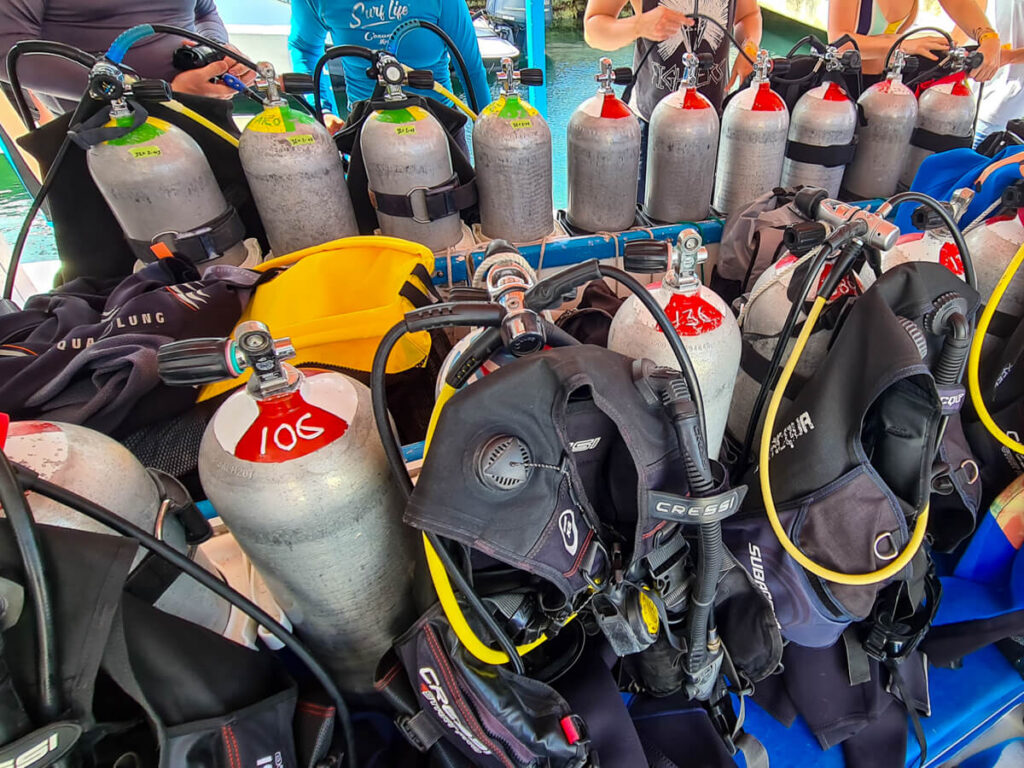
Gear quality and equipment
Don’t be afraid to ask about the rental equipment before booking. Find out how old the gear is, how regularly it is serviced, and exactly what is included.
At a minimum, check whether your package includes a BCD, regulator, wetsuit, mask, fins, weights, tanks, and dive computer, or whether some of these cost extra. If you prefer to bring your own equipment, you may only need tanks and weights.
Tank choice can also matter. Most recreational diving is done with standard aluminium 80 cu ft tanks, but some operators have high-pressure steel 100 or 120 cu ft tanks available. If you’re a larger diver, use more air than average, or simply prefer having more gas available, it’s worth asking what your options are.
Nitrox is another one to check. If you are Nitrox-certified and want to use enriched air, ask whether it is available, how much it costs, and whether the tanks need to be reserved in advance.
Boat
Small, fast boats can be excellent for Cozumel because they can get you to the southern reefs relatively quickly and give the operator more flexibility. The trade-off is usually less space, less shade, and potentially a bumpier ride.
Larger boats tend to be more comfortable, particularly if you’re travelling with newer divers, older divers, children, or people who aren’t diving. They can provide more shade, seating, storage, and room to move around, although they may take longer to reach the reefs and can carry several groups at once.
Ask about the things that actually matter to you: shade, toilets, drinking water, dry storage, entry and exit arrangements, and how many people the boat carries.

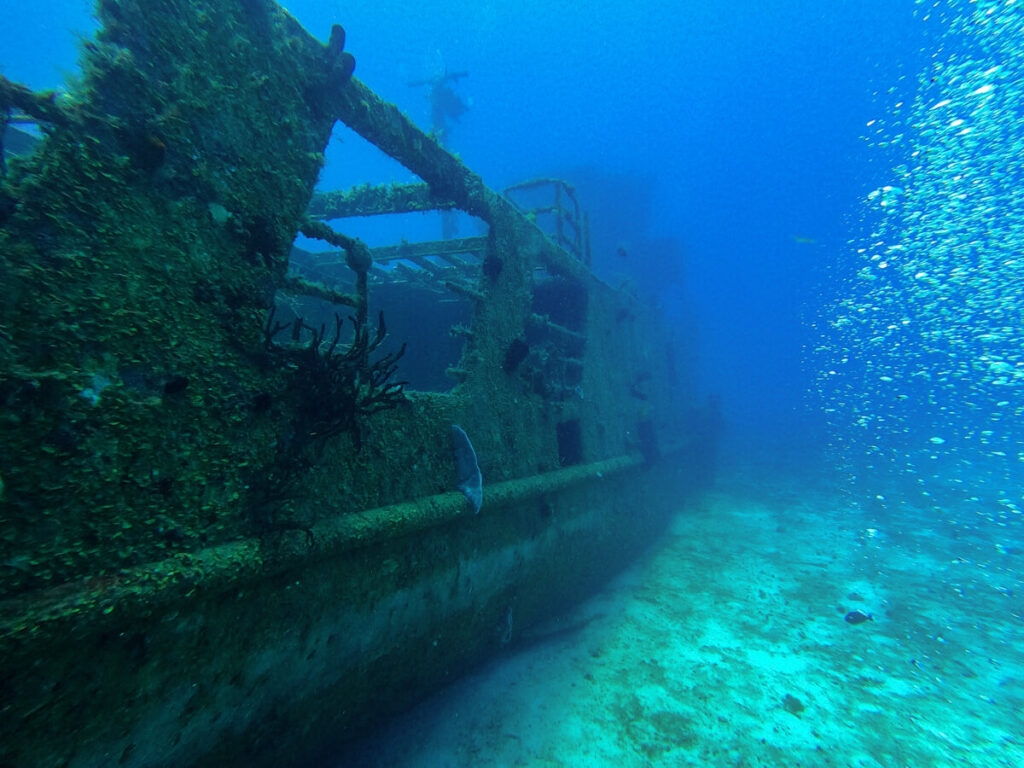
Dive sites
Some operators work from a fairly fixed schedule of dive sites, while others choose sites according to the current, weather, sea conditions, certifications, experience levels, and what their divers want to do that day.
That’s not necessarily a bad thing. In fact, we’d rather have a guide change the plan because conditions aren’t suitable than insist on visiting a particular site simply because it was advertised. We’re not very fussy divers and just tend to trust our guides, but I know some people have their heart set on a specific site, so it’s worth knowing if you’re realistically going to be able to visit it.
Ask which sites you are likely to visit, whether the itinerary is fixed, and how much say you have in the choice. Most importantly, ask how the shop decides whether a site is appropriate for your certification and experience.
Guides
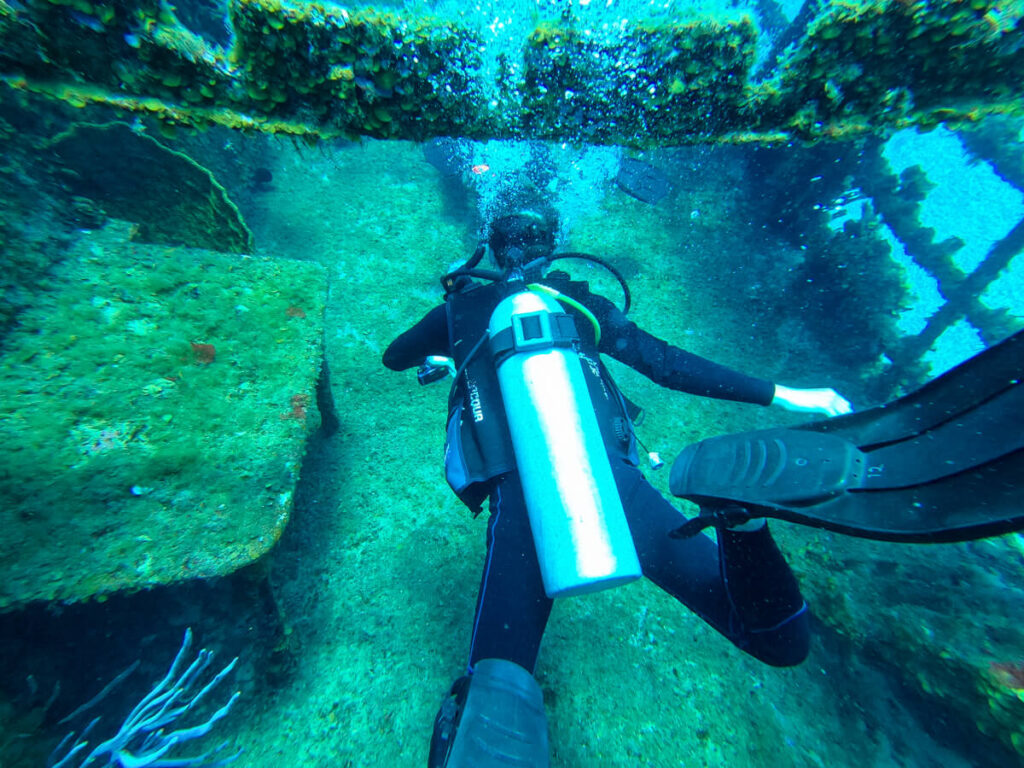
Your guide can make a huge difference to a dive, so don’t overlook this when comparing shops.
Look at the guide-to-diver ratio, but also ask about the guides themselves. How experienced are they? Do they regularly dive the sites around Cozumel? Are they instructors or divemasters? Do they speak your preferred language?
A guide who knows the local reefs well can make a dive much more interesting, particularly when it comes to finding smaller marine life or choosing the best route through a site.
If you’re interested in photography, wildlife, deeper diving, wrecks, or another particular type of diving, ask whether any of the guides have specialist experience in that area.
Safety standards
A good dive shop should be able to explain its safety procedures without making you feel awkward for asking. Before booking, find out what the dive briefing covers, including currents, maximum depth, entry and exit procedures, buddy arrangements, and what happens if weather or sea conditions deteriorate.
Check what emergency equipment is carried on the boat, including oxygen, first-aid equipment, and communications equipment, and ask how the operator deals with an emergency.
The paperwork matters too. Operators working inside the Cozumel National Park need the appropriate authorisations, and CONANP specifically advises visitors to use authorised service providers and guides. The park’s rules also include requirements around authorised boats and access to the protected area.
Group size
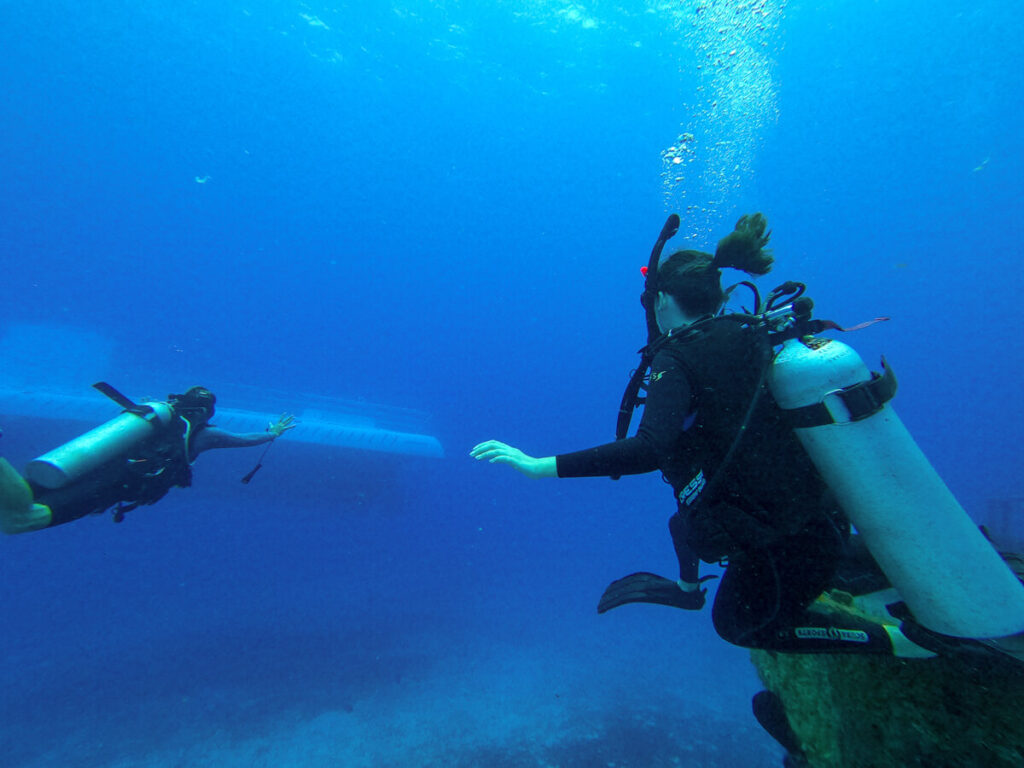
“Small groups” doesn’t tell you very much. Ask for the maximum number of divers per guide, rather than relying on vague descriptions on a website. A shop might advertise small groups while still putting eight or more divers with one guide.
For us, the important question is whether the group size suits the type of diving you’re doing. A larger group may be perfectly manageable on an easy reef, while a smaller group can make much more sense on a deeper or more current-affected site.
If you’re travelling with a mixed-ability group, also ask whether the divers are divided according to experience rather than simply kept together because they’re friends.
Departure location
Find out exactly where the boat leaves from before you book. Most operators depart from the Marina Cozumel ASIPONA, but others have different meeting points around San Miguel. Check how far the departure point is from your accommodation and whether the shop provides transport or expects you to arrange and pay for taxis, which can rack up.
This is particularly important if you’re staying outside the main town or arriving on a cruise ship. A dive shop that looks convenient when you’re comparing prices online might be considerably less convenient once you factor in getting to the boat.

Price
Don’t compare dive shops on the headline price alone. A $100 USD dive trip isn’t necessarily cheaper than a $120 USD trip if the first operator charges separately for equipment, park fees, Nitrox, transfers, taxes, or other extras.
Ask for the total price you’ll actually pay, including anything you know you’ll need, like gear.
What’s included
Before handing over a deposit, ask exactly what your price covers.
Depending on the operator and package, you may need to check whether the following are included:
It’s also worth asking whether there is drinking water on board and whether you can refill your reusable bottle rather than being given single-use plastic bottles.
Cozumel’s marine park charges access fees for recreational activities, and these can be handled differently by individual operators, so don’t assume they are included in the advertised dive price.

Accommodation
If you’re considering a dive-and-stay package, check where the accommodation actually is, what type of room you get, whether it has a private or shared bathroom, and what facilities are included. Then compare the package price with booking the room and diving separately.
Sometimes a dive package is genuinely good value. Sometimes the “discount” isn’t much of a discount once you’ve worked out exactly what you’re getting.
Refund and cancellation policy
This is particularly important with SCUBA diving because the weather and sea conditions are outside everyone’s control.
Before booking, find out what happens if the operator cancels a trip because conditions aren’t safe. Will you receive a refund, be offered another day, or receive credit towards another dive?
Also check the policy if you need to cancel or if your travel plans change. Don’t leave this until something goes wrong to find out.
Insurance
Check what insurance the dive operator carries and, just as importantly, what you are expected to have yourself.
Dive travel insurance can cover things that ordinary travel insurance may not, including diving-related medical treatment, evacuation, and other dive-specific costs. Make sure your policy covers the depths and type of diving you actually plan to do.

Ethics
A dive shop’s approach to marine life tells you a lot about the operator. Ask whether the guides encourage responsible interactions with wildlife or whether they’re more interested in getting divers as close as possible for photographs. We like to scour reviews (especially the bad ones), look at recent promo and tourist photos, and check the operator’s website for their stance on ethical wildlife tourism.
We’d avoid operators that feed, touch, chase, handle, bait, or otherwise deliberately disturb marine life for the benefit of guests. A good wildlife encounter should be about observing the animal, not controlling what it does.
Sustainable practices
Sustainable tourism is about more than putting a recycling bin in the dive shop. Look for operators that actively protect the reef, follow marine park rules, use moorings rather than damaging coral with anchors, keep groups manageable, and educate divers about good reef etiquette.
It’s also worth asking what the company does beyond simply telling guests not to touch coral. Does it support local conservation projects? Employ local staff? Reduce single-use plastic? Participate in reef monitoring or restoration?
You don’t need a perfect operator, but we’d rather give our money to a company that is making a genuine effort than one that treats sustainability as a marketing slogan.
Communication
Pay attention to how the dive shop communicates before you book. Are your questions answered clearly? Do they tell you what’s included? Do they explain where you need to meet, what equipment you need, and what happens if conditions change? Are they tired of your questions and fobbing you off, or taking them seriously and giving thorough answers?
If you’re asking several straightforward questions and getting vague answers, that’s useful information (and a red flag) in itself.
Transparency
Ultimately, a good dive shop shouldn’t make you work to figure out what you’re buying. Before booking, you should be able to get clear answers to:
If a shop can answer all of those questions clearly, you’re already much closer to finding the right operator for you – even if it isn’t the one with the most reviews or the lowest price.
Travel insurance can save you $$$ if things go wrong
Don’t forget to buy travel insurance! From lost luggage to emergency medical care abroad, travel insurance gives you peace of mind so you can solely focus on the adventure. It might not be exciting, but you’ll be very glad you have it if something goes wrong. A few of our favourite companies are:
Get 8 weeks of electronic theft coverage free with SafetyWing Travel Insurance with our code: THOROUGHLY8 (new members only). Simply click the pink camera and laptop icon on the Nomad Essential page to redeem the reward before creating a new account.
Find out more: 6 Best Travel Insurance Companies for Every Kind of Trip
The best Cozumel dive shops
There are plenty of dive shops in Cozumel, but rather than giving you a huge list, we’re going to start with the three operators we shortlisted and then mention some other popular options afterwards. These are companies that passed our research vetting, we’ve used them ourselves, or we’ve been personally recommended, and we’ve never heard bad things about them.

1. CozuDive
CozuDive is a smaller English-, French-, and Spanish-speaking Cozumel diving operator running its regular two-tank trips aboard Nemesis, departing at 9:00 AM from Marina ASIPONA (the marina formerly known as Fonatur), although south-coast hotel pier pick-up can be arranged in advance.
Their current certified prices are $120 USD for a 2-tank dive or $170 USD for a 3-tank dive, including a guide, tanks, weights, marine park fees, a light lunch, and drinks. They also offer night dives, large tanks, nitrox, and have multi-day rates, as well as equipment rentals – full gear is $25 USD a day.
If you’re interested in learning to dive, they offer Discover SCUBA experiences and a variety of courses, as well as refreshers if you’ve not been diving in a while. You can also hire a private charter with them.
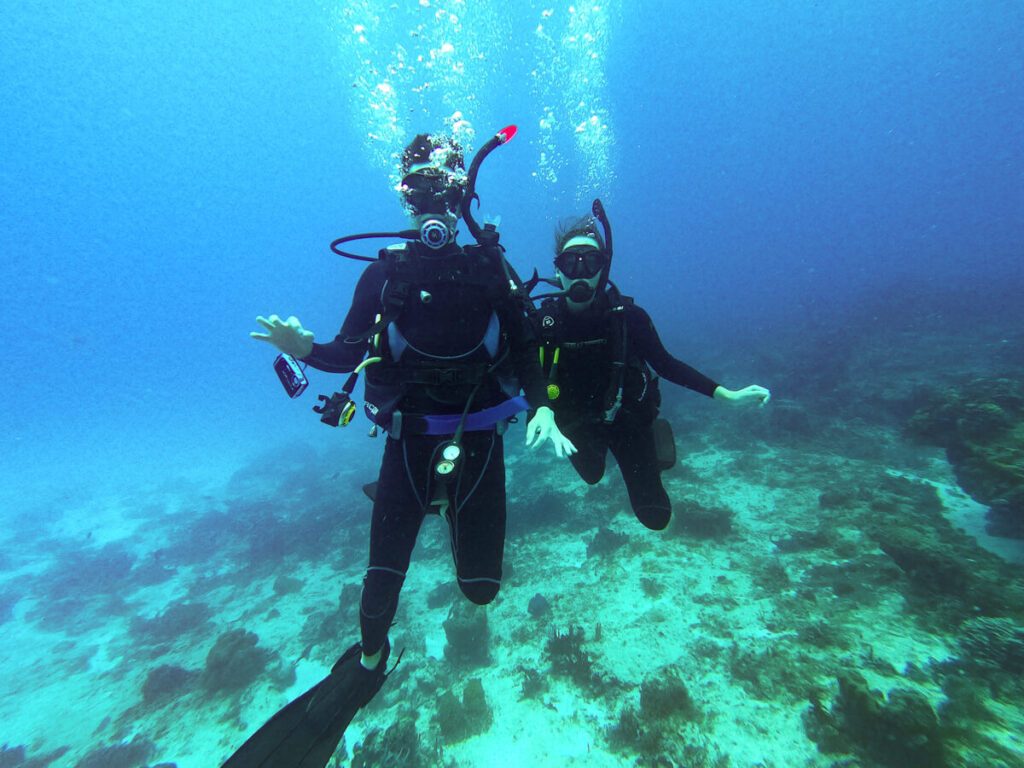
We chose to dive with CozuDive and had the absolute best time – we couldn’t recommend them any more highly. They have good quality equipment, fun and professional guides, a fast boat, and dive sites are chosen according to the conditions, currents, and experience of the group, with small groups of max 4 divers per guide – sometimes it was just the two of us.
Pros
Cons

2. ScubaTony
ScubaTony is one of the most established diving operators on Cozumel, with three small, fast boats, and a maximum of 6 passengers per boat. They offer morning departures at 7:30 AM and afternoon departures at 1:00 PM.
Their standard two-tank trip is $135 USD per person, or $125 USD per trip when you book five or more two-tank trips, with tanks, weights, marine park fees, taxes, fruit, drinks, and a professional guide included. They also offer equipment rental, with mask, fins, and snorkel being free, and then gear like a regulator, BCD, or wetsuit being $10 USD per item.
The boats leave from Marina ASIPONA, although ScubaTony also offers boat pick-up from a selection of southern hotels and resorts, sometimes for an additional fee.
We seriously considered ScubaTony, as we’ve only ever heard amazing things about them from divers who have used them.
Pros
Cons

3. Aldora Divers
Aldora Divers is another long-established Cozumel dive operator focused heavily on small-group diving and longer bottom times, with groups capped at 6 and a fleet of 8 fast boats.
Their standard two-tank morning trip costs $100 USD, departing at 7:30 AM from the downtown dock, although the advertised price excludes 16% tax and the marine park fee. Full rental equipment is also available for $40 USD or $10 USD per item.
One of Aldora’s biggest selling points is its range of high-pressure steel tanks, including 80, 100 and 120 cu ft options, which can be particularly useful if you use a lot of gas or want longer dives, while nitrox is also on offer.
They also offer private guides, private charters, twilight dives, night dives every Wednesday and Saturday, east-side trips, and courses, plus dive-and-stay packages with their own villa accommodation.
Again, we very nearly chose Aldora, and in fact, I’m still on their newsletter.
Pros
Cons
Other dive shops in Cozumel
These are some of the other Cozumel dive shops we researched and considered during our search, and they are worth looking at if the three above aren’t quite the right fit for you.

Which Cozumel dive shop should you choose?
There isn’t one Cozumel dive shop that is going to be the best choice for everyone. The right operator really comes down to how you like to dive, where you’re staying, and what matters most to you once you’re on the boat.
CozuDive is a good all-rounder if you want small groups, flexible site selection, and plenty included in the price. ScubaTony makes sense if you like small, fast boats and want to keep the group size tight. Aldora Divers is particularly appealing to experienced divers who care about longer dives, steel tanks, and a more diving-focused operation.
If you’re still unsure, we’d go back to the questions above and compare the answers. And if two shops look equally good on paper, we’d choose the one that gives you clear answers before you book.
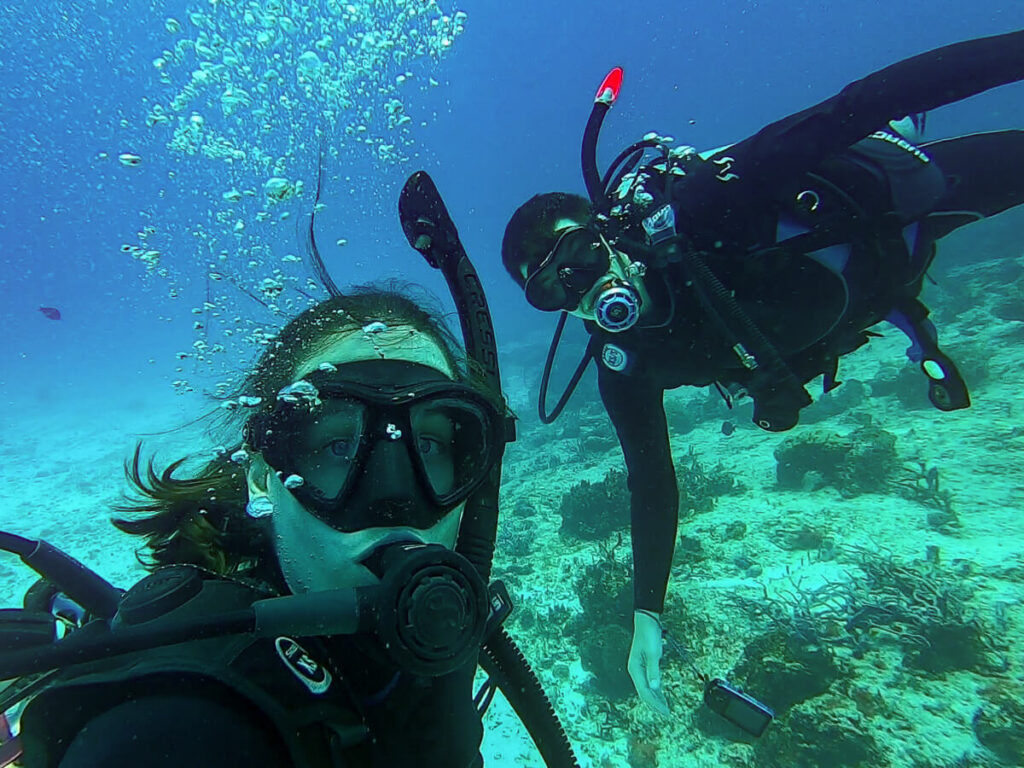
Who we picked – our CozuDive review
In the end, we chose to dive with CozuDive. When you factor in the dives, equipment rental, and inclusions, we actually did find CozuDive to be the cheapest option, although there’s a matter of 10s of dollars in it between most operators (although that adds up over multiple dive days).
What really cinched it for us, though, was the small groups of 4 divers per instructor (lower than most competitors), which was perfect for the attention we were seeking, as we were still fairly new to diving.
Another thing we liked was that the advertised trip includes loads like the marine park entrance, tanks, weights, refreshments, and a light lunch, while the team also takes care of rinsing, drying, and storing your equipment between dives. That valet service might sound like a small detail, but when you’re diving several days in a row, not having to lug wet gear around is genuinely useful.
Alvarro, Marilyn, and Memo were so professional and really good at putting us at ease, but also super fun people. They’re a big part of why we extended our stay on Cozumel several times and why we went diving so many times. Their attentiveness and direction also helped us improve so quickly that I’d also say they were pivotal in our diving journeys, helping us with our confidence and allowing us to fall in love with diving to the point that we’ve done it all over the world today.
Would we choose them again? In a heartbeat. SCUBA diving was one of our favourite activities in Cozumel, as we had such a good experience with the dive shop we chose. While we’d love to try some other operators, they’ve really earned our loyalty, and we know we’ll choose them next time too.

Cozumel Dive Shops FAQs
To help you choose who to go diving with in Cozumel, we’ve answered these frequently asked questions.
What are the best dive shops in Cozumel?
There are plenty of well-regarded dive shops in Cozumel, so the best choice depends on what you’re looking for. CozuDive, ScubaTony, and Aldora Divers are all worth considering, particularly if you value experienced guides and good reviews. Salty Endeavors, Maple Leaf, Tres Pelicanos, and Eco Divers are other good options.
Which dive resort in Cozumel is considered the best?
There isn’t one dive resort that’s best for everyone. Villa Aldora is a good choice if diving is the main focus of your trip, as it has its own dive operation and dock, while the InterContinental Presidente offers a more luxurious stay with an on-site dive operation. Iberostar Waves is another option if you want an all-inclusive resort close to the southern reefs.
Which Cozumel dive shop has the smallest groups?
CozuDive, Aldora Divers, and ScubaTony are all known for keeping their groups small, with a maximum of six divers per boat. This can be a big advantage if you prefer a more personal experience, particularly when drift diving or if you want more time with your guide.
Which Cozumel dive operator is best for experienced divers?
Aldora Divers is worth considering if you’re an experienced diver looking for smaller groups and longer dives. The operator is particularly known for its customisable approach, allowing dive sites and profiles to be matched more closely to the group’s experience and interests.
Which Cozumel dive shop is best for beginners?
Scuba Life Cozumel and Cozumel Dive School are both worth considering if you’re newer to diving or want to continue your training. We’d still recommend speaking to the operator before booking and explaining your experience, particularly if you’re not used to drift diving.
Which Cozumel dive operator is best if you’re staying in San Miguel?
Aldora Divers is perfectly located in San Miguel, while Salty Endeavors leaves from Puerto Abrigo, which is great if you’re staying north of the town in a hotel like Hotel B Unique. Staying close to your operator can make mornings considerably easier, especially if you have an early boat departure.
Read next:
A Traveller’s Guide to Cozumel: Mexico’s Caribbean Island Paradise
11 Cool Things to Do on Isla Cozumel + 4 NOT to Do
The Ultimate Guide to SCUBA Diving in Cozumel
How to Get to Isla Cozumel: Ferry vs Flying + Getting Around
